
Activated carbon materials derived from liquefied bark-phenol formaldehyde resins for high performance supercapacitors

Changshui Wang and Tingzhi Liu*
College of Papermaking Science and Technology, Tianjin University of Science & Technology, Tianjin 300457, P. R. China. E-mail: liutz@tust.edu.cn; Tel: +86 022 60601169

Received 12th August 2016 , Accepted 29th October 2016

First published on 31st October 2016


Abstract

Bark phenolic compounds have been used to partially substitute petroleum-based phenol in a resin synthesis due to their similarity. In this work, phenol-liquefied bark-phenol formaldehyde (PF) resins are first used as carbon precursors, and are transformed into activated carbon materials via a KOH activation method. The bark-PF resin based carbons were systematically characterized by scanning and transmitting electron microscopy, N2 adsorption/desorption, X-ray diffraction, Raman spectra, energy dispersive spectra and X-ray photoelectron spectra. The prepared carbons possess a large surface area and a hierarchical porosity composed of ultramicropores (<0.7 nm), supermicropores (0.7–2 nm) and small-sized mesopores (2–5 nm). As the mass ratio of KOH to bark-PF resin is 2, the activated carbon (BRC-2) shows a highest specific capacitance of up to 370 F g−1 and 251 F g−1 at 0.1 A g−1 and 10 A g−1 in KOH electrolyte, respectively. These values are much higher than many biomass-based carbon materials reported previously. The excellent capacitive performance of BRC-2 may be due to the synergistic effect of electrical double layer (EDL) capacitance and additional pseudo-capacitance. Herein, EDL capacitance is relevant to the accessible surface area to ions of electrolyte, whereas pseudo-capacitance relies directly on the content of basic O groups (phenolic hydroxyl and quinine typed O) and oxidized S groups (sulfone or sulfoxide). The results reported in this work show that bark-based resins could be used to prepare high performance carbon materials for supercapacitors.

1 Introduction

Supercapacitors lying between conventional capacitors and electrochemical batteries have been considered to be important energy storage devices for those applications requiring high power, long cycle life, operational stability, fast charge–discharge time, low level of heating, appropriate dimension/weight and low cost.1 Electrode materials, being one of the major factors that determine supercapacitors' performance, have continued to attract lots of research interest.2,3 Carbon-based materials (such as activated carbon,4,5 hierarchical porous carbon,6,7 ordered porous carbon8 and porous graphene9,10), transition metals oxide/hydroxide (such as RuO2,11 MnO2,12 NiO/Ni(OH)2,13,14 and Co(OH)2 (ref. 15)) and conducting polymers (such as polyaniline,16 polypyrrole17 and polythiophene18) are some of the commonly used electrode materials.

Up to now, activated carbons are still the most commonly used electrode materials for supercapacitors. Activated carbon is predominantly amorphous in nature and has high porosity due primarily to the production process and treatment. This material could be easily prepared by the well-known method of chemical activation. Compared to the other method, chemical activation presents comprehensive advantages which can be summarised as follows: (i) technical maturity, (ii) high efficiency in creating pores, (iii) only one step needed, (iv) achieving very high surface area activated carbons, (v) the microporosity can be well developed, controlled and maintained narrow, if desired.19 However, most of the commercial activated carbons are produced from fossil fuel based precursor (petroleum and coal) which made them to be expensive and environmentally non-friendly. With the increasing concern on fossil fuel depletion and environmental footprint, there is a strong global interest to explore renewable resources as alternative feedstocks for making carbon materials. In recent years, the used of biomass precursor to prepare activated carbon for supercapacitor have gained much attention due to their abundant availability and low cost.20,21 Many biomass materials, such as rice husk,22 waste tea-leaves,23 peanut shell,24 cotton stalk,25 camellia oleifera shell,26 distillers dried grains,27 sunflower seed shell,28 potato starch,29 alkaline bark extractive,30 fish scale,31 bagasse,32 apricot shell,33 human hair,34,35 polar wood,36 and coffee endocarp,37 have been investigated as precursors to prepare porous carbons for high performance supercapacitors.

Bark being the outermost layers of stems and roots of woody plants is a largely available residue from forest operations and mills. Bark biomass contains in varying proportion hemicellulose, cellulose and lignin that are referred to as lignocellulosic materials. Due to its high lignin content, bark is generally less used in paper making. Bark and bark phenolic compounds have been used to partially substitute petroleum-based phenol in the resin synthesis. Both phenol-liquefied bark-phenol formaldehyde (PF) resins and alkaline bark extractive-PF resins have been synthesized.38–40 In this work, we prepared several activated carbon materials by using liquefied polar bark-PF resin as precursor via a KOH activation method. The capacitive performance of the prepared carbon materials are investigated in KOH and H2SO4 electrolyte. The prepared carbons are proved to possess superior capacitive performance with high specific capacitance (370 F g−1) and excellent rate capability (67.8% retention in the range of 0.1–10 A g−1). We believe that this bark-PF based activated carbon is a kind of economical and environmentally friendly material. Additionally, the residue of liquefaction/extraction is mainly composed of cellulose and hemicellulose, and could be used in paper-making.

2 Experimental

2.1 Materials preparation

2.1.1 Bark liquefaction. The bark liquefaction was carried out according to the method reported previously.39 In a typical procedure, poplar bark was first ground into powders (80–100 mesh) and was oven-dried at 110 °C for 12 h before liquefaction. The bark powders (25 g) were then liquefied in phenol (75 g) using concentrated sulfuric acid (0.75 g) as the catalyst. The liquefaction reaction was conducted at 150 °C for 120 min. The liquefied products were diluted by acetone (150 mL) and then filtered using filter paper. The acetone soluble fraction containing liquefied bark was then subjected to rotary evaporation for acetone removal; the liquefied bark was obtained.
2.1.2 Synthesis of liquefied bark-phenol formaldehyde resin and the corresponding activated carbon materials. Liquefied bark (mainly phenol substitutes), a calculated amount of 37% formaldehyde (double molar of phenol substitutes), sodium hydroxide (10% of liquefied bark weight) and water were mixed in a three-necked flask for liquefied bark-phenol formaldehyde formulation. The reaction temperature increased from room temperature to 50 °C within 30 min and was kept at 50 °C for 30 min in an oil bath. The reaction mixture was then heated to 85 °C, quickly solidified within 10 min, and kept at 85 °C for 4 h. After the reaction, the reactor mass was cooled down to room temperature. The liquefied bark phenol formaldehyde resin was obtained as dark hydrogel. After drying at 80 °C for 24 h, the bark phenolic resin were then mixed with KOH, and were further carbonized in a tubular resistance furnace at 800 °C (heating rate: 3 °C min−1) for 2 h under N2 atmosphere. Finally, the bark-PF based activated carbons were liberated by washing with diluted HCl and deionized water to neutrality. For convenience, the final products are denoted as BRC-x, where BRC means bark-PF resin-based carbon, and x stands for weight ratio of KOH to the bark-PF resin. For comparison, a non-activated carbon material (BRC) was prepared.

2.2 Materials characterizations

Microscopic morphology of the as-prepared carbon materials was observed by a scanning electron microscope (SEM, Sirion 200 FEI Netherlands) and a transmission electron microscope (TEM, JEM2100, JEOL, Japan). Surface chemical properties were analyzed by energy dispersive spectroscopy (EDS, INCA Energy spectrometer) and X-ray photoelectron spectroscopy (XPS, Escalab 250, USA). Crystal structure of the carbon materials were analyzed by X-ray diffraction (XRD) patterns (Brucker D8 Advance diffraction with Cu Kα radiation) and Raman spectra (LabRAM HR800, Horiba). Nitrogen sorption measurements were performed on ASAP 2020 system (Micromeritics, USA) at −196 °C. The carbon materials were degassed at 350 °C overnight before sorption measurements. Brunaner–Emmett–Teller (BET) surface area (SBET) was calculated from the N2 adsorption isotherm data within the relative pressure of 0.05–0.25. Total pore volume (VTotal) was obtained at p/p0 = 0.995. Micropore volume (Vmicro) was calculated by t-plot method, and mesopore volume (Vmeso) is calculated by subtracting the micropore volume from total pore volume. Pore size distributions (PSDs) of BRC-x were determined by applying the quenched solid density functional theory (QSDFT) model on the N2 adsorption isotherms and assuming a slit-shape pore.

2.3 Electrochemical measurement

The active materials on working electrode were made up of the investigated carbon materials and polytetrafluoroethylene binder with a weight ratio of 95[thin space (1/6-em)]:[thin space (1/6-em)]5. Nickel foam and titanium mesh were used as current collector in KOH and H2SO4 electrolyte, respectively. The mass of the active materials loaded on single electrode is about 2.0 mg (8 mg cm−2). Cyclic voltammetry (CV), galvanostatic charge/discharge test and electrochemical impedance spectroscopy (EIS) were carried on a CHI660D electrochemical testing station (Chenhua Instruments Co. Ltd., Shanghai) in 6 M KOH and 1 M H2SO4 electrolytes. The galvanostatic charge/discharge test was performed on a two-electrode system to determine the specific capacitance at current densities in the range of 0.1–10 A g−1. EIS test was performed with alternate current amplitude of 5 mV in KOH electrolyte using a three-electrode system with a platinum plate electrode and a saturated calomel electrode (SCE) as the counter and reference electrode, respectively.

3 Results and discussion

3.1 Preparation and characterization of bark-PF based carbons

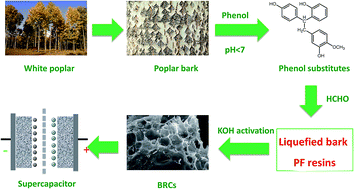
Compared with wood, bark has a similar chemical composition (cellulose, hemicellulose and lignin) but contains more lignin. Phenol has long been used in the organosolv pulping process in which lignin could be dissolved in phenol, while cellulose was less attacked which had a quality suitable for paper production. Phenol is also one of the most popular solvents in biomass liquefaction in that lignin has a similar structure to phenolic resin. Based on this similarity, it is expected that liquefied biomass, such as liquefied bark, could partially substituted the phenols, the most costly raw materials in phenol formaldehyde (PF) resin synthesis. Fig. 1 shows the schematic diagram of the preparation process of the BRC-x carbons. In brief, polar bark was ground to fine particles (80–100 mesh), mixed well with phenol and an acid catalyst at designed ratios and subjected to liquefaction. After liquefaction reaction, acetone was added to dilute the thick liquid, followed by filtration to remove un-liquefied wood residue (mainly cellulose and hemicellulose), and achieved a satisfactory liquefaction (about 60 wt% yield based on original polar bark). Phenolated products of degraded lignin mainly include triphenylethanes, diphenylmethanes, guaiacol and etc.39 Then, the filtrate was mixed with excess HCHO and NaOH catalyst for formulating bark-PF based resin. After drying, the bark phenolic resin were then mixed with KOH, and were further carbonized in a tubular resistance furnace at 800 °C for 2 h under N2 atmosphere to give the bark-PF resin based carbon materials. It is suggested that the activation of carbon with KOH proceeds as 6KOH + C → 2K + 3H2 + 2K2CO3, followed by decomposition of K2CO3 (K2CO3 → K2O + CO2) and/or reaction of K2CO3/K2O/CO2 with carbon (K2CO3 + C → K2O + 2CO, K2O + C → 2K + CO, CO2 + C → 2CO).19 These possible reactions indicate that partial carbon atoms were etched into CO to give rise to the porosity.41 Meanwhile, the generated potassium vapors, efficiently intercalating into the carbon lattices of the carbon matrix during the activation, results in the expansion of the carbon lattices, which thereby generates even more ultra-microporosity.42 After the removal of the intercalated metallic K and other K compounds by washing, the expanded carbon lattices cannot return to their previous nonporous structure and thus the high porosity is created.
image file: c6ra20373f-f1.tif
Fig. 1 Synthesis illustration of BRC-x materials.

To determine the porosity and specific surface area of the prepared carbons, we performed N2 adsorption/desorption measurements, calculated PSDs by QSDFT model (Fig. 2). The porosity parameter, including specific surface area, total pore volume, micropore and mesopore volume are also tabled (Table 1). As shown in Fig. 2a and Table 1, the activated porous carbons (BRC-x) show much higher sorption capacities, specific surface area and pore volume than the directly carbonized sample (BRC), indicating that high porosity is created by KOH activation. The nitrogen adsorption/desorption isotherms of the BRC-x are close to type I, indicating that these carbons are mainly microporous characteristics. The isotherms of BRC-2 and BRC-3 show a general increase of sorption capacity and a small hysteresis loop at medium relative pressure, which is due to the presence of small-sized mesopores in the carbon framework. As shown apparently in the PSDs plots (Fig. 2b), the BRC-x carbons present a hierarchical porosity distributed in the range of 0.5–40 nm which is made up of lots of ultramicropores (<0.7 nm), some supermicropores (0.7–2 nm) and a few small-sized mesopores (2–5 nm). As the mass ratio of KOH to bark-PF resin increases from 1 to 3, the specific surface area, total pore volume and mesopore volume generally increased. As shown in Fig. 2b, the supermicropores increases, but ultramicropores decreases. The micropores and small mesopores between the pore sizes from 1 to 5 nm of BRC-3 are generated a lot. Correspondingly, this carbon shows the largest specific surface area and total pore volume which is 2422 m2 g−1 and 1.40 cm3 g−1, respectively. When the mass ratio of KOH to bark-PF based resin increases to 4, the specific surface area and pore volume significant decreases, indicating that excess KOH is disadvantageous to develop high porosity here. All these phenomena are due to the fact that with the degree of KOH activation increasing, many micropores are formed in the carbon frameworks and the existing ultramicropores grow larger leading to the formation of more supermicropores and small mesopores.


image file: c6ra20373f-f2.tif
Fig. 2 N2 sorption measurements of BRC-x: (a) N2 sorption isotherms, (b) QSDFT pore size distributions.
Table 1 Porosity parameters and surface element composition (at%) of the prepared carbon materials
Sample SBET (m2 g−1) VTotal (m2 g−1) Vmeso (m2 g−1) Vmicro (m2 g−1) C N O S
BRC 42.7 0.03 0 0.03 85.2 0.5 13.8 1.0
BRC-1 1537 0.83 0.33 0.53 93.1 0 5.8 1.2
BRC-2 2359 1.30 0.70 0.60 93.0 0 6 1.0
BRC-3 2422 1.40 1.03 0.37 90.4 0 8.5 1.1
BRC-4 1422 0.80 0.48 0.32 93.5 0 5.6 0.9


SEM and TEM techniques are used to observe the microscopic morphology of the prepared carbon materials (Fig. 3 and S1). Under SEM observations, it could be observed that the non-activated carbon (BRC) is composed of many carbon blocks, and the activated carbons present highly porous texture in the macroscopic scale. This macroscopic porosity makes ionic diffusion easy from bulk electrolyte into inner surface of nanopores. As shown in Fig. S1, the size of carbon fragments of BRC-4 is much lower than that of other samples, which may be caused by the strong etching of excess KOH. As revealed by TEM image (Fig. 3g and h), the prepared carbons have a few spherical mesopore in the size of dozens of nanometers which may be not probed by N2 sorption measurement. High resolution TEM images clearly exhibit worm-like micropores in the carbon framework. Fig. S2 shows the XRD patterns and Raman spectra of the prepared samples. Two broad and low intensity diffraction peaks centered at 24° and 44° are observed in the XRD patterns of the BRC sample (the direct carbonized sample), which can be approximately indexed as (002) and (101) planes of standard graphite, respectively. No visible peaks are presented in the XRD patterns of the activated carbons, indicating the amorphous structure of these carbons and further demonstrate the effect of harsh KOH-activation. Raman spectra could give more insight into the crystal structure of the prepared carbons. As shown in Fig. S2b, well-resolved G and D bands centered at 1580 and 1350 cm−1 correspond to the vibration of sp2 hybridized carbon atoms in a hexagonal lattice and the defects and disorders of structures, respectively. The intensity ratio of G band to D band (IG/ID) reflects the structure ordering of the carbon materials. The IG/ID value slightly decreases as the KOH dosage increases, further indicating that the carbon frameworks are violently etched to be amorphous structure at excess KOH, which is identical with XRD results.


image file: c6ra20373f-f3.tif
Fig. 3 SEM images: (a and b) BRC, (c and d) BRC-1, (e and f) BRC-2; TEM images: (g and h) BRC-2.

Biomass is chemically composed of carbon, hydrogen, oxygen, nitrogen and traces of sulphur and chlorine. The heteroatom-species may be introduced into the carbon product, and generate possible pseudocapacitive effect on the capacitive performance of the prepared carbon.34 Thus, EDS and XPS measurements are used to analyze the elemental composition and surface chemical properties of the prepared carbons. The chemical compositions of the BRC-x were found to consist of C, O and S (Fig. 4a and Table 1), and the element distribution is homogeneous confirmed by EDS mapping (Fig. S3). As shown in Fig. 4a and Table 1, a few amount of N (0.54 at%) and very high amount of O (13.79 at%) are observed for the non-activated carbon, while no N and much less O (<9 at%) are observed for the activated carbons. That may be explained by that the potassium metals become metallic vapor at high carbonization temperature, and could easily contact with carbon surface and efficiently remove surface oxygen and nitrogen. High resolution XPS were further performed to investigate the chemical states of C, O, S-species (Fig. 4 and S4–6). C1s scans show several peaks with varying contributions. In general, the peak at 284.7 eV can be assigned to sp2 hybridized carbon in a form of C[double bond, length as m-dash]C. The shoulder peak at 285.4 eV is the carbon atoms single bonded to N, O or S in the groups of thiophene, pyrrolidonic, phenol or ether. Weak peaks in the range of 286.5–289 eV indicate the present of carbonyl, amide groups, ester or carboxylic groups.5 In the case of O-species, three types of O-containing groups could be verified on the surface of the prepared carbons, including C[double bond, length as m-dash]O, O–C–O, and O[double bond, length as m-dash]C–O, corresponding to the peaks at 531.2, 532.3 and 533.5 eV, respectively.43 In the case of sulfur, thiophenic groups (C–S–C) and oxidized sulfur groups (sulfone or sulfoxide) were determined by the peaks at about 164.7 and 168.5 eV.44 It should be noted that the oxidized sulfur groups is main for the activated carbons while the thiophenic groups is main for non-activated carbon. That may be explained by the oxygen removal effect of KOH activation.


image file: c6ra20373f-f4.tif
Fig. 4 (a) XPS spectra of BRC-x; high resolution XPS spectra of BRC-2 (b) C1s, (c) O1s, (d) S2p.

3.2 Capacitive performance of bark-PF based carbons

Due to the structural features including large specific surface area, hierarchical porosity range from 0.5 to 5 nm, and the enriched O, S functionalities, the capacitive performances of activated samples as supercapacitor electrodes are highly desirable. Fig. 5 presents the curves of cyclic voltammetry and galvanostatic charge/discharge obtained from a two-electrode system in 6 M KOH electrolyte. Standard rectangular-shaped CV curves are given by the investigated carbons, indicating a main electrical double layer (EDL) capacitive nature of the charge/discharge process. CV curves of BRC-2 at scan rates from 10 and 300 mV s−1 are shown in Fig. 5b. This sample still maintains the appearance of roughly rectangular-like shapes at a very high scan rate of 300 mV s−1, indicating that this carbon has very good power performance. The good rate capability reflects that the ions of electrolyte could transfer fast and smoothly in the nano-channels of this carbon, which is due to the well-defined hierarchical porosity. Galvanostatic charge/discharge experiments were further carried out at a large range of current density from 0.1–10 A g−1 (Fig. 5c and d). The linear discharge branches further prove the EDL capacitive performance of the prepared carbons. At the initial of discharge branches, a very low voltage drop could be found, which indicates that the prepared carbon materials possess low resistances and good conductivities. Dividing the discharge time by charge time, the coulomb efficiency is determined. At a current density of 0.3 A g−1, the coulomb efficiency of BRC-2 is only 80%. This indicates that some irreversible electrochemical reactions occur at lower current density. With the increasing of charge/discharge current density, the coulomb efficiency increased, and is close to 100% at higher than 1 A g−1. Isosceles triangle-liked charge/discharge curves indicate excellent characteristic of capacitance behavior, reversible and recycling charge/discharge, and high coulomb efficiency.
image file: c6ra20373f-f5.tif
Fig. 5 CV curves and galvanostatic charge/discharge curves in 6 M KOH electrolyte (a) CV curves of BRC-x at 10 mV s−1; (b) CV curves of BRC-2; (c) galvanostatic charge/discharge curves of BRC-x at 0.3 A g−1; (d) galvanostatic charge/discharge curves of BRC-2.

Based on the galvanostatic charge/discharge measurements, the specific capacitance at different current densities could be calculated by the following equation:

 
image file: c6ra20373f-t1.tif(1)
in which Cm (F g−1) is the gravimetric specific capacitance of the carbon samples, I (A) is the discharge current, t (s) is the discharge time, ΔV (V) is the potential window of the cell, and m (g) is the total mass of active materials in the cell. As shown in Fig. 6a, the specific capacitances are determined to 57.2, 201.3, 370.1, 330.2 and 220.0 F g−1 for BRC, BRC-1, BRC-2, BRC-3 and BRC-4 at a current density of 0.1 A g−1, respectively. Although BRC-2 possesses lower specific surface area than BRC-3, this carbon shows higher capacitance than BRC-3. This fact may be due to that BRC-2 possesses more micropores, especially ultra-micropores (<0.7 nm, Table 1 and Fig. 2b) which play a main contribution to the capacitive performance in aqueous electrolyte because the ions are much closer to the carbon surface in these very small pores.45 With the increasing of charge/discharge current, the specific capacitances of all the investigated carbons slowly decrease since the electrolyte ions could not diffusion into the entire pore surface at high charge current densities. However, BRC-2 still gives a very high specific capacitance of 251 F g−1 at 10 A g−1. The retention ratio of BRC-2 is calculated to be 67.8% in the range of 0.1–10 A g−1. Fig. 6b compares the specific capacitance and specific surface area of BRC-2 with other biomass-based activated carbons. Although the specific surface area of BRC-2 is medium among the biomass-based activated carbons illustrated in Fig. 6a, this bark-PF based carbon show higher specific capacitance than the carbon derived from others biomass,22–24,26–29,31 such as waste tea-leaves, rice husk, peanut shell, potato starch, sunflower seed shell, fish scale, and etc. The excellent capacitive performance of BRC-2 may be due to synergy effect of EDL capacitance and additional pseudo-capacitance. As is acknowledged, EDL capacitance is relevant to the accessible surface area to ions of electrolyte, whereas pseudo-capacitance relies directly on the content of redox active groups, such as basic O groups (phenolic hydroxyl and quinine typed O) and oxidized S groups (sulfone or sulfoxide) here. BRC-2 possesses a hierarchical porosity with the pore size range from 0.5 to 5 nm (larger than ion size of K+ and OH), thus ensure a high accessible surface area to KOH electrolyte. Additional, the N, O, S-groups make additional pseudo-capacitance contribution via the possible redox reactions of –CxO + K+ + e → –CxOK, –SO2 + 2e + H2O → –SO– + 2OH, and –SO– + e + H2O → –S(OH) + OH in which –CxOK represents a phenol-/hydroquinone-type groups, –SO2 and –SO– are the oxidized sulfur groups, respectively.46–48


image file: c6ra20373f-f6.tif
Fig. 6 Capacitive performance in 6 M KOH electrolyte (a) specific capacitances of BRC-x vs. discharge current density, (b) comparison of the activated carbons from biomass precursors, (c) Ragone plots of BRC-x, (d) long-term cyclic charge/discharge test of BMC-2.

Energy density (E) and powder density (P) are calculated from the galvanostatic charge/discharge test using the equations of

 
image file: c6ra20373f-t2.tif(2)
 
image file: c6ra20373f-t3.tif(3)
where the Cm, V and t are the gravimetric specific capacitance of the carbon materials, discharge voltage decrease (1.0 V here) and galvanostatic discharge time, respectively. Accordingly, the BRC-2 carbon exhibits a high energy density of about 12.7 W h kg−1 at a power density of 50 W kg−1, and retains a remarkable energy density of 8.6 W h kg−1 at a high power density of 5000 W kg−1. These good results further prove the advantage of the carbon materials designed in this work. We also investigate the long-term cyclic stability of BRC-2. After 5000 charge/discharge cycles at 5 A g−1, this carbon shows a capacitance of 244 F g−1, equal to 90% of the discharge capacitance of the first cycle (271 F g−1).

Nyquist plots of the activated carbons were measured, and were shown in Fig. 7a. The Nyquist plots could be divided into four parts, that is, intercept in horizontal axis, an uncompleted semicircle, a short incline and a vertical line in the order of frequency increasing. Those parts correspond to equivalent series resistance, charge transfer resistance, Warburg impedance and ideal EDL capacitance. The low charge transfer resistance and short Warburg slope indicate that the electrons conduct well and electrolyte ions diffuse fast in the carbon framework. The Nyquist plots are further analysed using the following equation of

 
image file: c6ra20373f-t4.tif(4)
 
image file: c6ra20373f-t5.tif(5)
 
image file: c6ra20373f-t6.tif(6)
where Z(ω) is complex impedance, Z′(ω) is real impedance, Z′′(ω) is imaginary impedance, C′(ω) is real capacitance, C′′(ω) is imaginary capacitance, f0 is a frequency corresponding to max value of C′′(ω), and τ0 is time relaxation constant (Fig. 7b and c).49,50 At a frequency of 0.3 Hz, the BRC-2 carbon remains 50% of the saturated capacitance, indicating this carbon maybe promising for low frequency alternating current application. The relaxation time constant is a strong factor of power features of supercapacitor which could be obtained from the plot of normalized C′′(ω) dependence on frequency (Fig. 7c). According to eqn (6), the time constant is determined to be only 1.2 s for BRC-2, which further confirms that these carbons are promising electrode materials for high power application. Fig. 7d shows the relationship of the phase angle vs. frequency. Theoretically, the cell behaves ideal capacitive performance when phase angle is close to −90°. The deviation of phase angle from −90° may be caused by the specific interactions between the solvent and pore surface of carbon materials.51 Thus, the value of the phase angle can be used to evaluate the effectiveness of ion diffusion in nanopores. As shown in Fig. 7d, the activated carbons present phase angle smaller than −80°, indicating these carbons possess better capacitance in KOH electrolyte.


image file: c6ra20373f-f7.tif
Fig. 7 (a) Nyquist plots, (b) specific capacitance vs. frequency, (c) normalized imaginary capacitance, (d) phase angle plots.

The capacitive performances of BRC-x are further investigated in 1 M H2SO4 electrolyte (Fig. 8 and S7). As shown in Fig. 8a, b and S7, all the activated carbons show quasi rectangle-shaped CV curves at different scanning rates and isosceles triangle-liked charge/discharge curves at different current densities, indicating that all these carbons mainly possess EDL capacitive nature in H2SO4 electrolyte. As shown in Fig. 8c, the specific capacitances are determined to be 218.3, 294.2, 314.0 and 169.4 F g−1 for BRC-1, BRC-2, BRC-3 and BRC-4 at a current density of 0.1 A g−1, respectively. These correspond to energy densities of 7.6, 10.2, 10.9 and 5.9 W h kg−1 at a power density of 50 W kg−1, respectively (Fig. 8d). Based on two recent reviews about biomass-derived carbons for supercapacitor applications,20,21 the capacitance of BRC-3 (314.0 F g−1) is higher than that of KOH-activated bamboos, CO2-activated sucrose, KOH-activated beer lees, ZnCl2-activated sugar cane and KOH-activated cherry stones, but lower than that of KOH-activated Argan seed shells, ZnCl2-acitvated Camellia oleifera shells and ZnCl2-activated coffee grounds. Comparatively, the prepared carbons show smaller specific capacitances and energy densities, and lower rate capabilities in H2SO4 electrolyte (Fig. 8c and S8). These facts may be due to the lower conductivity and the larger ions size of H2SO4 electrolyte compared with KOH electrolyte.


image file: c6ra20373f-f8.tif
Fig. 8 Capacitive performance in 1 M H2SO4 electrolyte (a) CV curves of BRC-x at 10 mV s−1; (b) galvanostatic charge/discharge curves of BRC-x at 0.1 A g−1; (c) specific capacitance vs. discharge current density; (d) Ragone plots of BRC-x.

4 Conclusions

Activated carbon materials are prepared from liquefied polar bark-phenol formaldehyde resins by a KOH activation method. The prepared carbons possess a high porosity with hierarchical pore size distribution and large surface area. This hierarchical porosity ranges from 0.5 to 5 nm, and is composed of ultramicropores, supermicropores and small-sized mesopores. Due to the synergy effect of high accessible surface area and O, S-doping, the BRC-2 presents superior capacitive performance in KOH and H2SO4 electrolyte, such as a very high specific capacitance of 370 F g−1 and 294.2 F g−1 in KOH and H2SO4, much higher than many biomass-based carbons reported previously, excellent rate capability with 67.8% retention ratio in the range of 0.1–10 A g−1, and good long-term cycle stability. In a word, the result reported in this work shows that liquefied bark could partially substituted the petroleum-based phenols in phenol formaldehyde resin synthesis, and the resulted bark-based resins could be used to prepare high performance carbon materials for supercapacitors.

Acknowledgements

This work was financially supported by Tianjin Research Program of Application Foundation and Advanced Technology (14JCZDJC40500).

Notes and references

  1. P. Simon, Y. Gogotsi and B. Dunn, Science, 2014, 343, 1210–1211 CrossRef CAS PubMed.
  2. A. Ghosh and Y. H. Lee, ChemSusChem, 2012, 5, 480–499 CrossRef CAS PubMed.
  3. J. Yan, Q. Wang, T. Wei and Z. Fan, Adv. Energy Mater., 2014, 4, 1300816 CrossRef.
  4. A. Balducci, R. Dugas, P.-L. Taberna, P. Simon, D. Plee, M. Mastragostino and S. Passerini, J. Power Sources, 2007, 165, 922–927 CrossRef CAS.
  5. X. Y. Chen, C. Chen, Z. J. Zhang, D. H. Xie, X. Deng and J. W. Liu, J. Power Sources, 2013, 230, 50–58 CrossRef CAS.
  6. J. Zhou, Z. Zhang, W. Xing, J. Yu, G. Han, W. Si and S. Zhuo, Electrochim. Acta, 2015, 153, 68–75 CrossRef CAS.
  7. D. W. Wang, F. Li, M. Liu, G. Q. Lu and H. M. Cheng, Angew. Chem., 2008, 120, 379–382 CrossRef.
  8. W. Xing, S. Qiao, R. Ding, F. Li, G. Lu, Z. Yan and H. Cheng, Carbon, 2006, 44, 216–224 CrossRef CAS.
  9. Y. Zhu, S. Murali, M. D. Stoller, K. Ganesh, W. Cai, P. J. Ferreira, A. Pirkle, R. M. Wallace, K. A. Cychosz and M. Thommes, Science, 2011, 332, 1537–1541 CrossRef CAS PubMed.
  10. T. Kim, G. Jung, S. Yoo, K. S. Suh and R. S. Ruoff, ACS Nano, 2013, 7, 6899–6905 CrossRef CAS PubMed.
  11. H. Xia, Y. S. Meng, G. Yuan, C. Cui and L. Lu, Electrochem. Solid-State Lett., 2012, 15, A60–A63 CrossRef CAS.
  12. G. Yu, L. Hu, N. Liu, H. Wang, M. Vosgueritchian, Y. Yang, Y. Cui and Z. Bao, Nano Lett., 2011, 11, 4438–4442 CrossRef CAS PubMed.
  13. X. Dong, Z. Guo, Y. Song, M. Hou, J. Wang, Y. Wang and Y. Xia, Adv. Funct. Mater., 2014, 24, 3405–3412 CrossRef CAS.
  14. S.-I. Kim, J.-S. Lee, H.-J. Ahn, H.-K. Song and J.-H. Jang, ACS Appl. Mater. Interfaces, 2013, 5, 1596–1603 CAS.
  15. F. Cao, G. Pan, P. Tang and H. Chen, J. Power Sources, 2012, 216, 395–399 CrossRef CAS.
  16. K. Zhang, L. L. Zhang, X. Zhao and J. Wu, Chem. Mater., 2010, 22, 1392–1401 CrossRef CAS.
  17. Y. Liu, Y. Zhang, G. Ma, Z. Wang, K. Liu and H. Liu, Electrochim. Acta, 2013, 88, 519–525 CrossRef CAS.
  18. S. Gnanakan, N. Murugananthem and A. Subramania, Polym. Adv. Technol., 2011, 22, 788–793 CrossRef CAS.
  19. J. Wang and S. Kaskel, J. Mater. Chem., 2012, 22, 23710–23725 RSC.
  20. A. M. Abioye and F. N. Ani, Renewable Sustainable Energy Rev., 2015, 52, 1282–1293 CrossRef CAS.
  21. L. Wei and G. Yushin, Nano Energy, 2012, 1, 552–565 CrossRef CAS.
  22. X. He, P. Ling, J. Qiu, M. Yu, X. Zhang, C. Yu and M. Zheng, J. Power Sources, 2013, 240, 109–113 CrossRef CAS.
  23. C. Peng, X.-b. Yan, R.-t. Wang, J.-w. Lang, Y.-j. Ou and Q.-j. Xue, Electrochim. Acta, 2013, 87, 401–408 CrossRef CAS.
  24. X. He, R. Li, J. Han, M. Yu and M. Wu, Mater. Lett., 2013, 94, 158–160 CrossRef CAS.
  25. M. Chen, X. Kang, T. Wumaier, J. Dou, B. Gao, Y. Han, G. Xu, Z. Liu and L. Zhang, J. Solid State Electrochem., 2013, 17, 1005–1012 CrossRef CAS.
  26. J. Zhang, L. Gong, K. Sun, J. Jiang and X. Zhang, J. Solid State Electrochem., 2012, 16, 2179–2186 CrossRef CAS.
  27. H. Jin, X. Wang, Z. Gu and J. Polin, J. Power Sources, 2013, 236, 285–292 CrossRef CAS.
  28. X. Li, W. Xing, S. Zhuo, J. Zhou, F. Li, S.-Z. Qiao and G.-Q. Lu, Bioresour. Technol., 2011, 102, 1118–1123 CrossRef CAS PubMed.
  29. S. Zhao, C.-Y. Wang, M.-M. Chen, J. Wang and Z.-Q. Shi, J. Phys. Chem. Solids, 2009, 70, 1256–1260 CrossRef CAS.
  30. J. Zhou, Z. Qiu, J. Zhou, W. Si, H. Cui and S. Zhuo, Electrochim. Acta, 2015, 180, 1007–1013 CrossRef CAS.
  31. W. Chen, H. Zhang, Y. Huang and W. Wang, J. Mater. Chem., 2010, 20, 4773–4775 RSC.
  32. P. Hao, Z. Zhao, J. Tian, H. Li, Y. Sang, G. Yu, H. Cai, H. Liu, C. Wong and A. Umar, Nanoscale, 2014, 6, 12120–12129 RSC.
  33. B. Xu, Y. Chen, G. Wei, G. Cao, H. Zhang and Y. Yang, Mater. Chem. Phys., 2010, 124, 504–509 CrossRef CAS.
  34. W. Si, J. Zhou, S. Zhang, S. Li, W. Xing and S. Zhuo, Electrochim. Acta, 2013, 107, 397–405 CrossRef CAS.
  35. W. Qian, F. Sun, Y. Xu, L. Qiu, C. Liu, S. Wang and F. Yan, Energy Environ. Sci., 2014, 7, 379–386 CAS.
  36. M.-C. Liu, L.-B. Kong, P. Zhang, Y.-C. Luo and L. Kang, Electrochim. Acta, 2012, 60, 443–448 CrossRef CAS.
  37. J. V. Nabais, J. G. Teixeira and I. Almeida, Bioresour. Technol., 2011, 102, 2781–2787 CrossRef PubMed.
  38. Y. Zhao, N. Yan and M. Feng, Int. J. Adhes. Adhes., 2010, 30, 689–695 CrossRef CAS.
  39. Y. Zhao, N. Yan and M. W. Feng, ACS Sustainable Chem. Eng., 2012, 1, 91–101 CrossRef.
  40. Y. Zhao, N. Yan and M. W. Feng, J. Adhes. Sci. Technol., 2013, 27, 2112–2126 CrossRef CAS.
  41. J. Dıaz-Terán, D. Nevskaia, J. Fierro, A. Lopez-Peinado and A. Jerez, Microporous Mesoporous Mater., 2003, 60, 173–181 CrossRef.
  42. J. Zhou, Z. Li, W. Xing, H. Shen, X. Bi, T. Zhu, Z. Qiu and S. Zhuo, Adv. Funct. Mater., 2016 DOI:10.1002/adfm.201601904.
  43. S. Biniak, G. Szymański, J. Siedlewski and A. Światkowski, Carbon, 1997, 35, 1799–1810 CrossRef CAS.
  44. W. Gu, M. Sevilla, A. Magasinski, A. B. Fuertes and G. Yushin, Energy Environ. Sci., 2013, 6, 2465–2476 CAS.
  45. E. Raymundo-Pinero, K. Kierzek, J. Machnikowski and F. Béguin, Carbon, 2006, 44, 2498–2507 CrossRef CAS.
  46. X. Zhao, Q. Zhang, C.-M. Chen, B. Zhang, S. Reiche, A. Wang, T. Zhang, R. Schlögl and D. S. Su, Nano Energy, 2012, 1, 624–630 CrossRef CAS.
  47. H. Liu, H. Song, X. Chen, S. Zhang, J. Zhou and Z. Ma, J. Power Sources, 2015, 285, 303–309 CrossRef CAS.
  48. G. Sun, D. Long, X. Liu, W. Qiao, L. Zhan, X. Liang and L. Ling, J. Electroanal. Chem., 2011, 659, 161–167 CrossRef CAS.
  49. E. Lust, A. Jänes and M. Arulepp, J. Electroanal. Chem., 2004, 562, 33–42 CrossRef CAS.
  50. P. Taberna, P. Simon and J.-F. Fauvarque, J. Electrochem. Soc., 2003, 150, A292–A300 CrossRef CAS.
  51. M. Arulepp, J. Leis, M. Lätt, F. Miller, K. Rumma, E. Lust and A. Burke, J. Power Sources, 2006, 162, 1460–1466 CrossRef CAS.

Footnote

Electronic supplementary information (ESI) available. See DOI: 10.1039/c6ra20373f

This journal is © The Royal Society of Chemistry 2016
Click here to see how this site uses Cookies. View our privacy policy here.