
DOI:
10.1039/C6RA20332A
(Paper)
RSC Adv., 2016,
6, 89642-89654
Up/down-converted green luminescence of Er3+–Yb3+ doped paramagnetic gadolinium molybdate: a highly sensitive thermographic phosphor for multifunctional applications†
Received
11th August 2016
, Accepted 13th September 2016
First published on 13th September 2016
Abstract
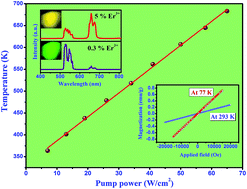
A series of Er3+–Yb3+ doped gadolinium molybdate phosphors were synthesized via hydrothermal method with varying Er3+ and Yb3+ concentrations and their thermal stability, crystal phase formation, particle morphology and photoluminescence properties were explored. The effects of rare earth doping concentration and annealing temperature on upconversion and downconversion properties have been investigated upon 980 nm and 380 nm light excitation and explained with the variation in lifetime of the 4S3/2 level of Er3+. The materials were further investigated to look into the effect of Er3+-concentration on optical temperature sensing and nano-heating behavior. Temperature sensing measurements were performed by the fluorescence intensity ratio technique using the transitions from the two thermally coupled energy levels (2H11/2/4S3/2 → 4I15/2) of Er3+. The maximum temperature sensitivity was obtained as 0.0105 K−1 (at 450 K), which is among the highest measured sensitivities for luminescence based thermometers. Moreover, the material shows very high thermal gain due to laser irradiation, resulting in a temperature rise from 364 K to 683 K as the excitation power changes from 7.0 to 65 W cm−2 and defines the present material as a highly sensitive thermographic phosphor. Additionally, the paramagnetic nature and effect of the magnetic field on upconversion properties of this phosphor have also been explored. The thermally-stable, paramagnetic Gd2Mo3O9: Er3+/Yb3+ phosphor particles seem to be potential candidates for displays, remote temperature sensing, optical heaters, magneto-optic modulators and bio-imaging applications.
1. Introduction
Upconversion (UC) emission, also known as anti-Stokes emission, is a process where low energy photons are converted into high energy photons through sequential absorption by a suitable medium. It offers many conceivable applications in optical sensors, telecommunication, solid state lasers, infrared quantum counters, displays and lightning devices including biomedical applications. The UC emission is generally achieved in lanthanide ions owing to their abundant intra-4f configurational energy levels with several metastable levels.1–6 Among all rare earth (RE) elements, the erbium (Er3+) ion is identified as the most suitable candidate for conversion of infrared to visible light through the UC process. Moreover, the absorption of 980 nm excitation radiation by Er3+ ions can be increased several times through the introduction of Yb3+ ions,7 which enhances the upconversion intensity multiple times.
The colour tuning of UC emission using sensitizer/activator combinations and by adjusting their relative concentrations have been the focus of extensive research for application in display devices.8–10 Several attempts have been devoted into this area by different groups.9,10 For instance, Solis et al.9 have reported tunability of green to red UC emission by changing the concentration of Er3+ and Yb3+ ions in ZrO2 nanocrystals. Song et al.10 have reported green to yellow colour tunability in Gd2O2S: Yb3+/Er3+ microphosphor by changing the Yb3+ concentration. Selection of host is also a way to change the emission colour as different hosts have different lattice environments. Therefore, UC process is strongly influenced by the properties of the host lattice and its interaction with the doped rare earth ions.11–13
Molybdate compounds as fluorescent medium have attracted recent interest because of their several advantages, e.g. having broad and intense absorption band due to the charge transfer (CT) transition from oxygen to metal ion in the near-UV region, high emission intensity, well dispersibility of RE ions etc.14,15 He et al.14 have reported intense red emitting Gd2(MoO4)3: Sm3+ phosphor for solid state lighting application. Zhao et al.15 have investigated red emitting Eu3+ doped Gd2Mo3O9 phosphor for white-light-emitting-diode (WLEDs) application. Zhang et al.16 have discussed the luminescence properties of Dy3+ doped Gd2Mo3O9 phosphor prepared via solid-state reaction method. All such investigations on Gd2Mo3O9 phosphor have been carried out for photoluminescence upon ultraviolet (UV) or blue light excitations (doped with Sm3+, Eu3+, Dy3+) but there are only limited studies on the UC properties of Gd2Mo3O9 phosphor.17,18 Moreover, trivalent gadolinium (Gd3+) shows magnetic property and thus makes this phosphor useful for magnetic resonance imaging (MRI).19,20 The presence of Gd3+ ions having seven unpaired 4f electrons which are closely bound to the nucleus and effectively shielded by the outer closed shells 5s25p6 makes it paramagnetic in nature. The studies on the magnetic properties of Gd3+ ion based host materials such as GdF3, GdPO4 and NaGdF4 (ref. 19–21) have been reported but the paramagnetic properties of Gd2Mo3O9 phosphor have not yet been explored. Herein, it is interesting to observe the dual emission mode of Gd2Mo3O9: Er3+/Yb3+, which can convert NIR as well as UV radiation into visible light. Another reason of selection of Er3+ ion is its capability of self-referenced temperature sensing, useful for non-contact based thermometry.22–26 Moreover, at higher excitation power RE doped phosphors show internal heating due to laser light irradiation and demands potential application in photo-thermal therapy, drilling nanoholes in organic and soft materials.27,28
In this paper, authors have investigated UC properties, temperature sensing and laser induced heat generation in Gd2Mo3O9: Er3+/Yb3+ phosphor at different rare earth doping concentration and annealing temperature. Authors have also explored the effect of magnetic field on UC emission and paramagnetic nature of the present material.
2. Experimental details
2.1 Material synthesis
The Er3+/Yb3+ doped Gd2Mo3O9 phosphors were prepared by hydrothermal method using ethylene glycol (EG) as chelating agent. The composition of the sample was as follows:
| (100 − x − y) mol% Gd2Mo3O9 + x mol% Er3+ + y mol% Yb3+ |
where, x = 0.3, 1, 2, 3, 4 and 5 mol% and y = 1, 2, 3 and 4 mol%.
The starting materials: gadolinium oxide (Gd2O3, 99.995% Merck, India), ammonium heptamolybdate tetrahydrate ((NH4)6Mo7O24·4H2O, 99% Merck, India), erbium oxide (Er2O3, 99.99%, Otto, India) and ytterbium oxide (Yb2O3, 99.99%, Otto, India) were taken in stoichiometric proportion. The synthesis procedure is described as follows: first the nitrate solutions were prepared by dissolving appropriate amount of Gd2O3, Er2O3 and Yb2O3 in concentrated nitric acid (HNO3). The excess nitric acid was removed by heating the solution at 80 °C. After that, nitrate solutions were mixed in a beaker by adding 10 ml of de-ionized water under stirring condition at room temperature. In another beaker, (NH4)6Mo7O24·4H2O was dissolved in 40 ml of de-ionized water under continuous stirring. This solution was then added up drop wise into the former solution and 25 ml of ethylene glycol (EG) was added into as-obtained solution. The pH of the solution was adjusted between 8 and 9 using NaOH under constant stirring condition. After being stirred for half an hour, the resultant milky colloidal solution was transferred into a Teflon-lined stainless steel autoclave having 80 ml capacity and heated at 200 °C for 24 h for hydrothermal treatment. After cooling down to room temperature, the precipitate was collected by centrifugation and washed with de-ionized water and ethanol for several times followed by drying in an oven at 80 °C for 6 h. The powder was further annealed at four different temperatures; 600 °C, 800 °C, 1000 °C and 1200 °C for 3 h.
2.2 Characterizations
Thermogravimetry (TG) and differential thermal analysis (DTA) were carried out on NETZSCH STA 449F3 thermal analyzer in nitrogen atmosphere at a heating rate of 5 °C min−1 in the temperature range 30–1000 °C. The X-ray diffraction (XRD) data were measured on Bruker-D8 Advanced X-ray diffractometer using Cu-Kα (1.5405 Å) radiation. Infrared absorption spectra were recorded on FTIR spectrometer (Perkin Elmer spectrum RXI) using KBr pellet technique in the wavenumber range 4000–400 cm−1. Field emission scanning electron microscopy (FESEM) images were taken on ZEISS Suppra55. Transmission electron microscopy (TEM) images of the prepared samples were inspected on Hitachi (H-7500). The electronic absorption spectra were recorded using Perkin-Elmer, Lambda 950, UV-Visible-NIR spectrophotometer in the wavelength range of 200–1200 nm. The downconversion photoluminescence measurement were carried out on Hitachi fluorescence spectrometer, model F-2500. The UC emission spectra were recorded on SP2300 grating spectrograph (Princeton Instruments, USA) using a 980 nm CW diode laser as excitation source. The lifetime measurements were performed by chopping the CW laser beam at 15 Hz and recorded the decay curves with the help of a digital storage oscilloscope. For temperature dependent UC emission study, a thermocouple was placed close to laser spot on the sample surface and the spectra were recorded on a CCD spectrometer (Model: ULS2048X64, Avantes, USA). The laser beam power was set at 15 W cm−2 and a chopper was used to chop the CW light to avoid the direct heating of the material. An electromagnet was used to study the effect of magnetic field on UC emission. The magnetic field versus magnetization measurement was conducted using a vibrating sample magnetometer at room temperature and 77 K.
3. Results and discussion
3.1 Thermal analysis
The TG/DTA curve of the as-synthesized phosphor is shown in Fig. 1. The TG curve shows three stages of weight loss. The first stage of TG curve shows a weight loss of ∼5.50%, associated with endothermic peak at 110 °C, and is attributed to the evaporation of absorbed water molecules. The second stage shows the weight loss of 4.92% in the temperature range 350–700 °C, accompanied by an exothermic peak at 350 °C and broad endothermic peak at 700 °C that can be mainly ascribed to the decomposition of nitrate into oxide and the loss of remaining organic components. Furthermore, in the third stage when the temperature exceeds 700 °C, weight loss of 2.14% is observed up to the temperature of 1000 °C accompanied by exothermic peak at 830 °C. The broad exothermic peak at 830 °C is assigned to the crystallization of Gd2Mo3O9 phase.29 Graph indicates that 800 °C temperature is enough to start the crystallization of Gd2Mo3O9 phase.
 |
| | Fig. 1 Thermogravimetry and differential thermal analysis curve of as-synthesized Gd2Mo3O9: Er3+/Yb3+. | |
3.2 X-ray diffraction analysis
The X-ray diffraction patterns of Gd2Mo3O9: Er3+/Yb3+ annealed at 800 °C, 1000 °C and 1200 °C are shown in Fig. 2(a). All the diffraction patterns are in good agreement with the standard data of JCPDS (file no. 33-0548) confirming formation of pure tetragonal phase of Gd2Mo3O9. At 800 °C annealing temperature, the sample is well crystalline and represents seven prominent peaks as shown in Fig. 2(a). As the sample is annealed at 1000 °C, the peak intensity is found to increase, indicating improvement of crystallinity. However, further annealing at 1200 °C decreases the diffraction peak intensity referring the loss of crystallinity of the sample. Therefore, the optimum annealing temperature is 1000 °C for phase formation of Gd2Mo3O9. The lattice parameters, unit cell volume and lattice strain were calculated and summarized in Table 1 which shows that the values of lattice parameters and unit cell volume decrease with increasing the annealing temperature. Moreover, the diffraction peaks slightly shifts toward the higher 2θ value for the sample annealed at 1200 °C as shown in Fig. 2(b). The shifting of diffraction peak at 1200 °C temperature is due to replacement of the lattice sites of Gd2Mo3O9 by RE ions. The ionic radii of Er3+ (0.89 Å) and Yb3+ (0.86 Å) are smaller than that of Gd3+ (1.05 Å). So, it is expected that Er3+ and Yb3+ ions substitute the Gd3+ ions, causing contraction in unit cell volume.30 The strain present in the lattice was determined from the Williamson–Hall relation31| |
 | (1) |
where, D is the crystallite size (in nm), β is full width at half maximum, θ is Bragg diffraction angle, λ is the wavelength of radiation (1.54 Å). The strain (ε) is calculated from the slope of β
cos
θ/λ vs. sin
θ/λ plot as shown in Fig. 2(c). The positive slope which indicates tensile strain is observed for the samples annealed at 800 °C and 1000 °C. The slope becomes negative at 1200 °C and tensile strain goes towards compressive strain. The compressive strain is possible when ions of larger radii (Gd3+) are replaced by smaller radii (Er3+, Yb3+).
 |
| | Fig. 2 (a) X-ray diffraction patterns of 0.3 mol% Er3+ and 3.0 mol% Yb3+ doped Gd2Mo3O9 annealed at three different temperatures with standard JCPDS data; (b) enlarged XRD patterns of (112) diffraction peak for all three samples; (c) Williamson–Hall plots of the three samples annealed at 800, 1000 and 1200 °C. The peak marked by asterisk in (a) is not assigned. | |
Table 1 Structural parameters of Gd2Mo3O9: Er3+/Yb3+ phosphor
| Gd2Mo3O9: Er3+/Yb3+ annealing temperature (°C) |
Lattice parameters (Å) |
Unit cell volume (V) (Å3) |
Lattice strain (ε) |
| 800 |
a = b = 5.198 ± 0.012, c = 11.398 ± 0.058 |
308.054 |
0.000597 |
| 1000 |
a = b = 5.192 ± 0.002, c = 11.382 ± 0.025 |
306.886 |
0.000307 |
| 1200 |
a = b = 5.160 ± 0.016, c = 11.446 ± 0.026 |
304.793 |
−0.00469 |
3.3 Fourier transform infrared (FTIR) spectroscopy
Fourier transform infrared spectra of the samples are shown in Fig. 3. The as-synthesized sample shows the presence of organic impurities like O–H, N–O and CO2. The broad absorption band around 3400 cm−1 is due to O–H stretching vibration of water molecules present in the sample. This band is not present in the annealed samples. The band observed around 2372 cm−1 is due to asymmetric stretching mode of CO2 (ref. 31) and is found in all samples. There are two possible sources of CO2: (i) impurity in as-synthesized sample, and (ii) atmospheric CO2. Since, it is present in all the samples; it is assumed that this band comes from atmospheric CO2. As-synthesized sample also shows the band around 1652 and 1350 cm−1 due to the O–H bending vibration of H2O and nitrate NO3− vibration, respectively. The impurity bands are eliminated in annealed samples. The bands at ∼670 cm−1 are assigned to the lattice vibrations of Gd2Mo3O9.
 |
| | Fig. 3 Fourier transform infrared spectra of (a) as-synthesized (b) annealed at 800 °C (c) annealed at 1000 °C (d) annealed at 1200 °C samples. No impurity band is observed in the annealed samples. | |
3.4 Microstructure analysis
The field emission scanning electron microscopy (FESEM) and transmission electron microscopy (TEM) images were used to examine the surface morphology and size of the synthesized particles. Fig. 4(a) and (b) shows the FESEM images of as-synthesized and sample annealed at 1000 °C, respectively. The particles are very small and most of the particles fall within 50–60 nm range in as-synthesized sample as shown in Fig. 4(e). The particle size distribution was calculated by plotting the histogram with Gaussian fitting. However, for annealed sample the particles get aggregated to form bigger particles. The TEM images of as-synthesized sample are shown in Fig. 4(c) and (d). In these images particles are seen to be connected by grain boundary. The energy dispersive X-ray spectroscopy (EDX) was also analyzed to investigate the chemical composition and purity of the sample as shown in Fig. 4(f). The EDX spectrum confirms the presence of gadolinium (Gd), molybdenum (Mo), oxygen (O), erbium (Er) and ytterbium (Yb) elements in the sample. The calculated weight and atomic percentage of these elements are given in the inset of Fig. 4(f). To further see the distribution of constituent elements, the elemental mapping was done for as-synthesized sample which clearly indicates homogeneous distributions of Gd, Mo and O throughout the sample (Fig. 4(g–i)). The dark hollow spots in the images are due to out of focus at sample surface. However, EPMA technique could not be able to detect the minute presence of Er3+ and Yb3+ ions.
 |
| | Fig. 4 FESEM image of (a) as-synthesized sample (b) annealed at 1000 °C sample; TEM image of as-synthesized sample (c) at 100 nm resolution (d) at 20 nm resolution; (e) histogram plot of particle size distribution in as-synthesized sample; (f) EDX spectrum; [g–i] elemental mapping of Gd, O and Mo in Gd2Mo3O9: Er3+/Yb3+ phosphor. | |
3.5 UV-visible absorption spectroscopy
The UV-Visible absorption spectrum of 0.3 mol% Er3+ and 3.0 mol% Yb3+ doped phosphor annealed at 1000 °C was recorded in diffuse reflectance mode against a reference standard of BaSO4 compound and graph is shown in Fig. 5. In the diffuse reflectance spectrum the bands are observed at 488, 521 and 656 nm due to the 4F7/2 ← 4I15/2, 2H11/2 ← 4I15/2 and 4F9/2 ← 4I15/2 transitions, respectively of Er3+ ion. The band at 978 nm is observed due to the 2F5/2 ← 2F7/2 transition of Yb3+ ion. The broad absorption band around 300 nm is assigned to the band absorption of the host. The sample is transparent to light in the range of 410–1200 nm.
 |
| | Fig. 5 The UV-Visible absorption spectrum in diffuse reflectance mode of Gd2Mo3O9: Er3+/Yb3+ annealed at 1000 °C. | |
3.6 Effect of Er3+ and Yb3+ concentrations on UC emission
Fig. 6(a) compares the 980 nm wavelength excited UC emission spectra with normalized green emission of Gd2Mo3O9: Er3+/Yb3+ at six different concentrations of Er3+ with fixed Yb3+ concentration (3.0 mol%). The emission bands at 527, 547 and 660 nm wavelengths are assigned to the 2H11/2 → 4I15/2, 4S3/2 → 4I15/2 and 4F9/2 → 4I15/2 transitions of Er3+ ion, respectively. As the Er3+ concentration increases the intensity of red emission increases. As a result, at 5 mol% Er3+ the intensity of red band dominate over the green band whereas at 0.3 mol% Er3+ doped sample the green emission is stronger than the red emission. Although, overall emission intensity decreases with increasing Er3+ concentration. The intensity ratio of red to green emission (R/G) as a function of Er3+ concentration is plotted in Fig. 6(b). The value of R/G increases monotonically from 0.30 to 2.78 (more than 9 times) as Er3+ concentration increases from 0.3 to 5 mol%. The reason behind the increase of R/G is mainly attributed to the increase of cross-relaxation process: Er3+ (4F7/2) + Er3+ (4I11/2) → Er3+ (4F9/2) + Er3+ (4F9/2)9 which increases the population of red (4F9/2) emitting level at the expense of green (2H11/2/4S3/2) level population. The inset of Fig. 6(b) shows the variation of green and red emission intensity as a function of Er3+ concentration. The visible color of the emission is tuned with Er3+ concentration and the color coordinates calculated using the 1931 CIE (Commission Internationale de I'Eclairage)31 are shown in Fig. 6(c). The CIE color coordinates (x, y) shift from (0.24, 0.73) to (0.42, 0.52) as Er3+ concentration increases from 0.3 to 5 mol% [Table 2]. It reflects that at 0.3 mol% Er3+ concentration the phosphor emits green color and with further increase in Er3+ concentration the corresponding color changes from green to yellow region due to the enhancement of red emission intensity. The photographs of UC emission upon 980 nm excitation are shown in the insets of Fig. 6(a).
 |
| | Fig. 6 (a) Green emission normalized comparative UC emission spectra of Gd2Mo3O9: Er3+/Yb3+ at various concentration of Er3+ with fixed Yb3+ concentration (3 mol%). (b) Variation of R/G with Er3+ concentration. Inset shows variation of green and red emission with Er3+ concentration; (c) CIE chromaticity diagram at different Er3+ concentrations (d) UC emission spectra of samples at different Yb3+ concentrations and at fixed Er3+ concentration (0.3 mol%). Inset shows variation of green band (527 nm) with Yb3+ concentration; (e) comparison of UC emission spectra for Gd2Mo3O9: 0.3 mol% Er3+ and Gd2Mo3O9: 0.3 mol% Er3+/3 mol% Yb3+ samples. | |
Table 2 Calculated CIE chromaticity coordinates (x, y) of Gd2Mo3O9: Er3+/Yb3+ at different Er3+ ion concentrations
| Samples |
CIE chromaticity coordinates |
| x |
y |
| Gd2Mo3O9: 0.3% Er3+/3% Yb3+ |
0.24 |
0.73 |
| Gd2Mo3O9: 1% Er3+/3% Yb3+ |
0.34 |
0.64 |
| Gd2Mo3O9: 2% Er3+/3% Yb3+ |
0.36 |
0.62 |
| Gd2Mo3O9: 3% Er3+/3% Yb3+ |
0.38 |
0.61 |
| Gd2Mo3O9: 4% Er3+/3% Yb3+ |
0.40 |
0.59 |
| Gd2Mo3O9: 5% Er3+/3% Yb3+ |
0.42 |
0.52 |
In the next step, the sensitizer (Yb3+) concentration was varied from 1 to 4 mol% keeping Er3+ concentration fixed at 0.3 mol%. The recorded spectra are shown in Fig. 6(d). The Yb3+ addition increases the green emission rapidly and optimizes at 3 mol%. Beyond this concentration, a drastic decrease in intensity is noticed due to concentration quenching. The inset of Fig. 6(d) shows the variation of green emission as a function of Yb3+ concentration.
Furthermore, the UC emission spectrum of singly Er3+ (0.3 mol%) doped sample is compared with optimized one i.e. Er3+ (0.3 mol%)/Yb3+ (3 mol%) sample as shown in Fig. 6(e). Overall enhancement of 9 and 6 times is seen for green and red emission bands, respectively. In order to investigate the number of photons involved in the UC processes, the pump power dependence of the green and red emission bands was investigated for Gd2Mo3O9: Er3+ and Gd2Mo3O9: Er3+/Yb3+ phosphors. At moderate pump powers, the intensity of UC luminescence (I) is proportional to the n-th power of the input laser power (P), i.e. I ∝ Pn, where n is the number of photons involved in the particular UC process.32 Fig. 7(a) and (b) show the ln
I versus ln
P plots for Gd2Mo3O9: Er3+ and Gd2Mo3O9: Er3+/Yb3+, respectively. For both the samples, the slopes are reduced at high pump powers. The slope, ‘n’ calculated at two pump power regions are presented in Table 3. In moderate power regime the slopes for 527, 547 and 660 nm bands are 1.83, 1.61 and 1.32, respectively for the singly Er3+ doped phosphor, whereas in Er3+/Yb3+ doped phosphor the corresponding slopes get reduced to 1.17, 0.7 and 0.5, respectively. Among these slopes, the values 0.7 (547 nm) and 0.5 (660 nm) are much lower than the expected two photon values. The decrease in slope value from the expected integer numbers in Er3+/Yb3+ doped sample is due to the increase of energy transfer (ET) from Yb3+ to Er3+ ions, resulting saturation of intermediate 4I11/2 and 4I13/2 levels. For example, when the energy transfer from Yb3+ to Er3+ is efficient, the 4I13/2 level gets populated via – Yb3+ (2F5/2) + Er3+ (4I15/2) →Yb3+ (2F7/2) + Er3+ (4I11/2) followed by non-radiative decay from 4I11/2 level. It is already reported that ET process reduces the slope values from the integer numbers.33 Despite the low slopes in Er3+/Yb3+, the intensity is found much higher compared to Er3+ doped sample. There are several theoretical models in literature where it has been proved that due to saturation mechanism of intermediate levels the number of photons decrease from the expected value.32–34 Moreover, in high pump power regime the slopes for all the emission bands decrease which has been explained by a complete theoretical description by our group in previous report on BaTiO3: Er3+/Yb3+ phosphor.33 It is concluded on the basis of previous work that the UC emission in Gd2Mo3O9: Er3+ is predominantly governed by excited state absorption (ESA) mechanism whereas in Gd2Mo3O9: Er3+/Yb3+ it is governed by energy transfer (ET) process. The excitation and emission pathways are shown in energy level diagram, Fig. 7(c).
 |
| | Fig. 7 Pump power dependence of green and red emission bands in (a) Gd2Mo3O9: Er3+ (b) Gd2Mo3O9: Er3+/Yb3+ phosphors; (c) energy level diagram of Er3+ and Yb3+ ions and the proposed UC mechanisms under 980 nm laser light excitation. | |
Table 3 Slopes of ln
P vs. ln
I plots
| Emission bands |
Gd2Mo3O9: Er3+ |
Gd2Mo3O9: Er3+/Yb3+ |
| Moderate power |
High power |
Moderate power |
High power |
| 527 nm |
1.83 |
0.8 |
1.17 |
0.55 |
| 547 nm |
1.61 |
0.4 |
0.7 |
0.06 |
| 660 nm |
1.32 |
0.2 |
0.5 |
0.02 |
3.7 Effect of annealing temperature on upconversion and downconversion (DC) emissions
In order to study the effect of annealing temperature on UC and DC emissions, the as-synthesized (ASP) sample was heat treated at 600 °C, 800 °C, 1000 °C and 1200 °C for 3 h. A comparison of upconversion spectra for the optimized sample is shown in Fig. 8(a). The intensity of both the green and red bands increases with annealing temperature upto 1000 °C. This enhancement is higher for green emission compared to the red emission. In 1000 °C annealed sample, the intensities of green and red bands are 8 and 4 times higher than that of the 600 °C annealed sample. The enhancement in intensity could be explained on the basis of FTIR result. The FTIR spectra show that the organic impurities such as OH− and CO2 are completely removed from the sample at 1000 °C annealing temperature. Subsequently, the non-radiative decay rates decrease, providing strong UC emission. Apart from this, it can be seen from the FESEM images that the particle size increases at 1000 °C annealing temperature. It may also be the reason to increase the UC intensity. However, UC intensity drastically decreases for the sample annealed at 1200 °C, which could be due to creation of defects in the sample. These defects are created due to removal of oxygen from the sample. A similar feature is also observed in previous reports.31,35 The defect chemistry could be written as:
 |
| | Fig. 8 Comparison of Gd2Mo3O9: 0.3 mol% Er3+/3 mol% Yb3+ emission (a) 980 nm excited UC emission spectra at power density of 15 W cm−2 for as-synthesized and annealed at 600, 800, 1000 and 1200 °C; (b) 380 nm excitation downconversion emission spectra at four different annealing temperatures. Inset shows the excitation spectrum at λexc = 555 nm. | |
Due to creation of lattice defect, the crystallinity of the sample is supposed to decrease and it was observed from the XRD that the intensity counts for the sample annealed at 1200 °C are lower compared to the sample annealed at 1000 °C. Moreover, the FWHM of the XRD peaks are broadened for sample annealed at 1200 °C. These two observations support the assumption of the oxygen removal from the sample.
Before the photoluminescence (PL) emission measurements, the excitation spectrum was collected for the sample annealed at 1000 °C. The PL excitation spectrum is shown in the inset of Fig. 8(b). The sharp bands in the excitation spectrum are due to absorption transitions of Er3+. The broad band around 300 nm is assigned to O2− → Mo6+ charge transfer (CT) band in which electrons are excited from the 2p orbitals of oxygen (top of the valence band) to the 4d orbitals of molybdate (bottom of the conduction band). Prominent absorption bands at 380, 407, 451, 470 and 488 nm are ascribed to the 4G11/2 ← 4I15/2, 2H9/2 ← 4I15/2, 4F5/2 ← 4I15/2, 4F3/2 ← 4I15/2 and 4F7/2 ← 4I15/2 transitions, respectively indicating efficient excitation in near-UV (380 nm) and blue (400–490 nm) regions in Gd2Mo3O9: Er3+/Yb3+ phosphor. Corresponding to intense absorption at 380 nm, the excitation wavelength was selected and the recorded emission spectra are compared with UC spectra as shown in Fig. 8(a). Similar to UC pattern, the DC emission intensity is also observed to increase with annealing temperature upto 1000 °C and thereafter decreases. Also it is noted that in DC pattern the emission intensity difference between 1000 °C and 1200 °C annealed samples is low as compared to UC case and leads us to conclude that defects play a little role in downconversion emission. The spectra show strong green emission at 530 nm and 555 nm ascribed to 2H11/2 → 4I15/2 and 4S3/2 → 4I15/2 transitions of Er3+. Interestingly, there is no emission corresponding to 4F9/2 → 4I15/2 transition. This reflects the absence of non-radiative transition from the 2H11/2(4S3/2) to 4F9/2 level.
Emission decay measurements were performed under 980 nm excitation for the 4S3/2 level of Er3+ to see the effect of annealing temperature and defects. Fig. 9(a–d) shows the decay curves for 4S3/2 → 4I15/2 transition at four different annealing temperatures: 600 °C, 800 °C, 1000 °C and 1200 °C. All the decay curves were well fitted to single exponential formula, expressed as:
| |
 | (2) |
where,
I(
t) and
I(0) denote emission intensities at time
t and 0, respectively;
t is the time and
τ is the decay time of the emitting level. The measured effective decay time for
4S
3/2 emitting level at different annealing temperatures are mentioned in the figure. The lifetime increases with annealing temperature and is maximum for the sample annealed at 1000 °C. The lifetime decreases at 1200 °C annealing temperature. This observation again correlates the defects creation in the sample.
 |
| | Fig. 9 Fluorescence lifetime curves of 4S3/2 level of Er3+ under 980 nm excitation with single exponential fitting for Gd2Mo3O9: 0.3 mol% Er3+/3 mol% Yb3+ phosphor annealed at (a) 600 °C (b) 800 °C (c) 1000 °C (d) 1200 °C. | |
Based on above observations, the mechanisms of the excitation and emission processes are schematically shown in the energy level diagram in Fig. 7(c). The two UC mechanisms are found responsible for intense green and red emission: (1) the excited state absorption (ESA) in Er3+ and (2) energy transfer upconversion (ETU) from Yb3+ to Er3+ ions. In singly Er3+ doped phosphor ESA is the dominating mechanism as slopes in pump power studies are above the value 1.5. In Er3+/Yb3+ co-doped phosphor, ET dominates over ESA and results large enhancement in UC intensity. The full description of the mechanism can be found in our earlier report.31 Based on the comparative spectra of UC and DC, it is important to discuss that red emission is absent in DC compared to UC process. In UC process the 4F9/2 level is populated through absorption of excitation photon by the 4I13/2 level or energy transfer process: Yb3+ (2F5/2) + Er3+ (4I13/2) → Yb3+ (2F7/2) + Er3+ (4F9/2). In DC, the only possible way of populating the 4F9/2 level is the non-radiative transition from 4S3/2 to 4F9/2 level. But this channel is absent in DC process resulting no red emission.
3.8 Temperature sensing and optical heating
To investigate the temperature sensing ability of the Gd2Mo3O9: Er3+/Yb3+ phosphor and to observe the effect of doping concentration on the sensing efficiency, the temperature dependent UC measurements were carried out. In Fig. 10(a–d), a comparison of intensity variation with temperature is shown for the four different concentrations of Er3+ (0.3, 1, 2 and 3 mol%). For clarity, comparison is shown only for three temperatures namely 300 K, 390 K and 460 K at a fixed excitation power of 15 W cm−2. The emission intensities of both the green emitting bands decrease with increasing temperature but the rate of decrease of 549 nm band is faster than the 524 nm band for all the samples. Fig. 10(e–h) show the variation of fluorescence intensity ratio (FIR) of the emission bands centered at 524 nm and 549 nm as a function of temperature. The FIR values increase with temperature for all the samples but rate of increment in FIR is more prominent for the sample containing lowest Er3+ concentration (0.3 mol%). The rate decreases with increase in Er3+ doping concentration. The fluorescence intensity ratio (FIR) of two thermally coupled levels, 2H11/2 and 4S3/2 of Er3+ follows Boltzmann-type population distribution and can be written using the following formula:24| |
 | (3) |
where, I524 and I549 are the integrated intensities corresponding to the 2H11/2 → 4I15/2 (524 nm) and 4S3/2 → 4I15/2 (549 nm) transitions, respectively. WH and WS are the radiative probabilities of the transitions, gH and gS are the (2J + 1) degeneracy of levels 2H11/2 and 4S3/2 respectively and hνH and hνS are the photon energies of the 2H11/2 → 4I15/2 and 4S3/2 → 4I15/2 transitions respectively, ΔE is the energy gap between the two emitting levels, kB is the Boltzmann constant and T is the absolute temperature. Eqn (3) can be expressed as follows:| |
 | (4) |
 |
| | Fig. 10 (a–d) Temperature dependent UC emission spectra for 524 nm (2H11/2 → 4I15/2) and 549 nm (4S3/2 → 4I15/2) bands of Gd2Mo3O9: Er3+/Yb3+ phosphor excited by 980 nm excitation for different concentration of Er3+ (0.3 to 3 mol%); (e–h) variation of FIR as a function of absolute temperature for all the four phosphors. | |
The plot of ln(FIR) as a function of inverse absolute temperature in the range of 300–460 K for 0.3, 1.0, 2.0 and 3.0 mol% concentrations of Er3+ are shown in Fig. 11(a–d). The experimental data is well fitted to straight line with the slopes (ΔE/k) of about – 1255, 768, 734 and 723 cm−1 for 0.3, 1.0, 2.0 and 3.0 mol% doped samples and corresponding calculated values of ΔE from the graphs are obtained as – 872, 534, 510 and 502 cm−1. In the spectra shown in Fig. 10(a), the relative intensities of Stark components of 2H11/2 and 4S3/2 levels vary with Er3+ concentrations and hence it may leads to vary the effective energy gap with Er3+ concentration. Two additional heating–cooling cycles (two heating + two cooling) were performed and a good repeatability was obtained (data are provided in ESI Fig. 1†). The experimentally observed energy gaps are used to calculate the sensor sensitivity. The values of co-efficient B were obtained according to the fitting curves of the experimental data.
 |
| | Fig. 11 (a–d) The monolog plot of the FIR (I524/I549) as a function of inverse absolute temperature for different concentrations of Er3+ (0.3 to 3 mol%) (e–h) variation of absolute temperature sensitivity (S) as a function of temperature within 300–480 K. | |
The sensor sensitivity is an important parameter for temperature sensing and is defined as the rate at which fluorescence intensity ratio changes with temperature. The absolute sensitivity (S) is expressed by the following equation:24
| |
 | (5) |
here, Δ
E is experimentally calculated value from the FIR graph. This equation shows that at a given temperature, higher value of Δ
E would give higher sensitivity. The sensor sensitivity was also evaluated for all the samples (
i.e. for 0.3, 1, 2 and 3 mol% Er
3+) as a function of temperature and plots are shown in
Fig. 11(e–h).
Fig. 11(e–h) shows that Er
3+ concentration strongly affects the sensitivity of the material. Moreover, the position of maximum sensitivity shifts towards lower temperatures with the increase in Er
3+ concentration. The maximum value of sensitivity is found as 10.57 × 10
−3 K
−1 at 450 K temperature for 0.3 mol% Er
3+ doped sample while for 3 mol% Er
3+ doping the maximum sensitivity reduces to 3.56 × 10
−3 K
−1 at 373 K temperature. The decrease of sensitivity with increasing Er
3+ concentration may be correlated with the increase of energy transfer between the Er
3+–Er
3+ ion through cross relaxation process Er
3+ (
4F
7/2) + Er
3+ (
4I
11/2) → Er
3+ (
4F
9/2) + Er
3+ (
4F
9/2) which depopulates both
2H
11/2 and
4S
3/2 levels leading to the reduction in the green emission intensity and hence in the FIR values. This energy transfer process increases with Er
3+ concentration and sensitivity goes down continuously with concentration.
Table 4 presents the comparison of sensor sensitivity and their temperature range with similar studies on different materials.
24–26,33,36–40 It is noticed that sensitivity obtained for the present Gd
2Mo
3O
9 phosphor is better than several reported works. Thus, Gd
2Mo
3O
9: Er
3+/Yb
3+ phosphor seems to be an interesting host material for temperature sensing application with high sensor sensitivity.
Table 4 The comparison of maximum value of temperature sensitivity in Er3+ based materials by FIR technique
| Materials |
Temperature range |
Maximum sensitivity |
References |
| Er–Yb: YVO4 |
300–485 K |
0.0116 K−1 at 380 K |
24 |
| Er–Yb–Mo: Al2O3 |
294–973 K |
0.0051 K−1 at 443 K |
25 |
| Er–Yb: NaGd(WO4)2 |
293–573 K |
0.0119 K−1 at 453K |
26 |
| Er–Yb–Zn: BaTiO3 |
120–505 K |
0.0047 K−1 at 430 K |
33 |
| Er: PKAZLF glass |
298–773 K |
0.0079 K−1 at 630 K |
36 |
| Er–Yb: Silicate glass |
296–723 K |
0.0033 K−1 at 296 K |
37 |
| Er–Yb: YNbO4 |
298–673 K |
0.0072 K−1 at 406K |
38 |
| Er–Yb–Gd2O3 |
298–723 K |
0.0084 K−1 at 570K |
39 |
| Er: Sr2YbF7 glass–ceramic |
300–500 K |
0.0062 K−1 at 500K |
40 |
| Er–Yb: Gd2Mo3O9 |
300–460 K |
0.0105 K−1 at 450 K |
This work (0.3 mol% Er3+) |
Furthermore, in order to examine the influence of Er3+ ion concentration on optical heating of the samples caused by the laser excitation (980 nm) and emission processes, the laser beam was focused on the sample surface within 3 mm2 area. Pump power was increased and FIR was calculated with excitation power for all above studied samples. The FIR vs. pump power plot is shown in Fig. 12(a). It is observed that on increasing the power density from 7 to 65 W cm−2 the FIR (I524/I549) value increases linearly for all the samples but the variation of FIR is the fastest for sample having 0.3 mol% Er3+ concentration. The same pattern is observed in case of FIR vs. temperature graph [Fig. 10(e–h)]. The increase in FIR is possible when sample temperature increases and it is concluded that laser excitation generates heat in the sample. The FIR values obtained at different pump power can efficiently be correlated with FIR vs. temperature graph. The temperature-gained by the sample particles due to laser excitation for various Er3+ concentrations were calculated using the following equation:41
| |
 | (6) |
where, all the terms have their usual meanings. The sample temperature due to laser induced heat for various Er
3+ concentrations was derived using the values of Δ
E and
B calculated from the temperature sensing study. The calculated sample temperatures are listed in
Table 5. Dependence of sample temperature on excitation power density was also plotted and is shown in
Fig. 12(b). The induced temperature is found to increase with increasing the pump power for all the samples. Moreover, the heat generation is the maximum for the lowest Er
3+ (0.3 mol%) doping and its value decreases as concentration increases. The heat in the sample arises due to involvement of non-radiative transitions. As concentration increases the energy migration from one Er
3+ to another Er
3+ ion increases and generates less heat in highly doped samples. This observation again supports energy migration with increasing Er
3+ concentration. The huge amount of heat generation in the present material is an exceptional achievement for optical heaters investigated so far.
24
 |
| | Fig. 12 (a) Fluorescence intensity ratio of emission bands at 524 nm and 549 nm as a function of pump power density (b) temperature variation of Gd2Mo3O9: Er3+/Yb3+ phosphor as a function of excitation power density upon 980 nm excitation. | |
Table 5 Calculated values of temperature at various pump power densities for different concentration of Er3+ ions
| Power density (W cm−2) |
0.3 mol% Er3+ |
1 mol% Er3+ |
2 mol% Er3+ |
3 mol% Er3+ |
| FIR |
Temp (K) |
FIR |
Temp (K) |
FIR |
Temp (K) |
FIR |
Temp (K) |
| 7 |
0.87 |
364 |
0.65 |
325 |
0.50 |
296 |
0.40 |
281 |
| 13 |
1.21 |
401 |
0.70 |
335 |
0.57 |
308 |
0.44 |
295 |
| 19 |
1.57 |
438 |
0.75 |
347 |
0.63 |
321 |
0.49 |
308 |
| 26 |
2.00 |
479 |
0.81 |
359 |
0.70 |
336 |
0.54 |
322 |
| 34 |
2.45 |
518 |
0.89 |
375 |
0.77 |
353 |
0.60 |
337 |
| 40 |
2.95 |
562 |
0.95 |
388 |
0.85 |
367 |
0.64 |
352 |
| 50 |
3.49 |
607 |
1.03 |
405 |
0.93 |
387 |
0.71 |
368 |
| 58 |
3.95 |
645 |
1.11 |
420 |
1.01 |
403 |
0.77 |
384 |
| 65 |
4.40 |
683 |
1.17 |
433 |
1.07 |
417 |
0.82 |
396 |
3.9 Magnetic property
The simultaneous existence of luminescence and magnetic properties in a single material is rarely available and are suitable for magnetic resonance imaging, magnetic field detection and biological sensing and detection. Therefore, these materials are of special attention for developing multifunctional materials. In order to know the magnetic nature of Gd2Mo3O9: Er3+/Yb3+ phosphor, the magnetization as a function of applied magnetic field at 293 K and 77 K temperatures were measured and recorded magnetization curves are shown in Fig. 13(a). The material exhibits paramagnetic behavior at both the temperatures, unlike the Gd3+ ions exhibit ferromagnetic behavior below room temperature. The straight line crossing the origin verifies the paramagnetic nature. The magnetic moments associated with the Gd3+ ions are all localized and non-interacting, giving rise to paramagnetism.19–21 The magnetic mass susceptibility at 293 K and 77 K were determined to be 1.38 × 10⁻⁵ emu g−1 Oe−1 and 4.86 × 10⁻⁵ emu g−1 Oe−1, respectively. Here, it is observed that the value of magnetic susceptibility increases at low temperature (77 K) due to the reduction in thermal fluctuation, which is a typical behavior in paramagnetic materials described by the Curie's law.19 The saturation magnetization value is found to be 0.27 emu g−1 at room temperature and 0.73 emu g−1 at 77 K. These obtained results are comparable to the previously reported values.19,42,43 However, the magnetic nature of the present phosphor broadens an extra feature to this material from application point of view.
 |
| | Fig. 13 (a) Magnetization versus applied magnetic field in as-synthesized Gd2Mo3O9: Er3+/Yb3+ sample (b) magnetic field dependent UC emission spectra of Gd2Mo3O9: Er3+/Yb3+ excited by 980 nm excitation. | |
We know that the degeneracy of rare earth energy levels in crystalline host materials is removed through the splitting of the energy levels by the crystal field of the host matrix. These energy levels are further split in the presence of weak magnetic field, called Zeeman effect. To know the effect of magnetic field on UC emission, the material was investigated upon 980 nm excitation under magnetic field. Fig. 13(b) compares the UC spectra at different magnetic fields (from 0 to 1 T) having fixed excitation power density (15 W cm−2). It is found that intensity of both the green and red emission bands decrease with increasing magnetic field. In the inset of Fig. 13(b), enlarged portion clearly shows the change in UC emission intensity with magnetic field. Due to application of magnetic field, the energy levels split and disturb the resonant excitation process of the system. Thus the population of the UC emitting levels decreases with increasing magnetic field resulting decrease in UC emission intensity.21,44,45 Similar findings were reported in rare earth doped GdNbO4,45 Gd2O3 (ref. 44) and NaGdF4 (ref. 21) hosts.
4. Conclusions
In conclusion, the luminescence emission in tetragonal phase of Gd2Mo3O9: Er3+/Yb3+ paramagnetic phosphor, prepared via hydrothermal method was optimized through concentration variation of Er3+ and Yb3+ ions. The enhancement in upconversion emission is noticed to increase with annealing temperature upto 1000 °C due to removal of organic impurities from the sample. However, a decrease in emission intensity in the sample annealed at 1200 °C is identified due to oxygen deficiency. The material exhibits green to yellow color tunability with Er3+ doping concentration. The FIR based temperature sensing (300–460 K) study using the thermally coupled energy levels (2H11/2 and 4S3/2 of Er3+) indicates an important role of Er3+ concentration in determining sensor sensitivity. The temperature sensitivity decreases continuously with increasing Er3+ ion concentration and the maximum sensitivity is found at 0.3 mol% Er3+ and 3.0 mol% Yb3+ doping concentration. Moreover, laser induced heat is measured in the sample and the maximum temperature of the sample particles was calculated as 683 K at 65 W cm−2 excitation power, pointing out huge amount of heat generation. The application of magnetic field on the sample has resulted decrease in upconversion emission intensity. The present Gd2Mo3O9: Er3+/Yb3+ phosphor is an interesting thermographic phosphor, offering good green up/down-converted emission and could be considered for various applications including temperature sensing, photo-thermal therapy and magnetic field sensors.
Acknowledgements
Authors are thankful to Dr V. K. Rai, and Dr R. Thangavel, Department of Applied Physics, IIT(ISM), Dhanbad for providing us to use their experimental facilities. Authors also acknowledge Prof. S. B. Rai, Department of Physics, BHU, Varanasi for extension of lifetime measurement facility. One of the authors, Ms S. Sinha is thankful to IIT(ISM), Dhanbad, for providing research fellowship. Dr K. Kumar acknowledges Council of Scientific & Industrial Research, New Delhi (project no. 03(1303)/13/EMR-II) for financial assistance.
References
- Z. Gu, L. Yan, G. Tian, S. Li, Z. Chai and Y. Zhao, Adv. Mater., 2013, 25, 3758 CrossRef CAS PubMed
. - F. Auzel, Chem. Rev., 2004, 104, 139 CrossRef CAS PubMed
. - F. Vetrone, R. Naccache, A. Zamarron, A. Juarranz de la Fuente, F. S. Rodriguez, L. M. Maestro, E. M. Rodriguez, D. Jaque, J. G. Sole and J. A. Capobianco, ACS Nano, 2010, 4, 3254 CrossRef CAS PubMed
. - F. Wang and X. Liu, Chem. Soc. Rev., 2009, 38, 976 RSC
. - G. Wang, Q. Peng and Y. Li, J. Am. Chem. Soc., 2009, 131, 14200 CrossRef CAS PubMed
. - C. Mi, J. Wu, Y. Yang, B. Han and J. Wei, Sci. Rep., 2016, 6, 22545 CrossRef CAS PubMed
. - H. Guo, N. Dong, M. Yin, W. Zhang, L. Lou and S. Xia, J. Phys. Chem. B, 2004, 108, 19205 CrossRef CAS
. - V. Mahalingam, C. Hazra, R. Naccache, F. Vetrone and J. A. Capobianco, J. Mater. Chem. C, 2013, 1, 6536 RSC
. - D. Solis, E. De la Rosa, O. Meza, L. A. Diaz-Torres and P. Salas, J. Appl. Phys., 2010, 108, 023103 CrossRef
. - Y. Song, Y. Huang, L. Zhang, Y. Zheng, N. Guo and H. You, RSC Adv., 2012, 2, 4777 RSC
. - S. K. Singh, K. Kumar and S. B. Rai, Appl. Phys. B, 2009, 94, 165 CrossRef CAS
. - A. K. Singh, S. Singh, D. Kumar, D. K. Rai, S. B. Rai and K. Kumar, Opt. Lett., 2012, 37, 776 CAS
. - S. K. Singh, K. Kumar and S. B. Rai, Appl. Phys. B, 2010, 100, 443 CrossRef CAS
. - X. He, J. Zhou, N. Lian, J. Sun and M. Guan, J. Lumin., 2010, 130, 743 CrossRef CAS
. - X. Zhao, X. Wang, B. Chen, Q. Meng, W. Di, G. Ren and Y. Yang, J. Alloys Compd., 2007, 433, 352 CrossRef CAS
. - L. Zhang, H. Zhong, X. Li, L. Cheng, L. Yao, J. Sun, J. Zhang, R. Hua and B. Chen, Phys. B, 2012, 407, 68 CrossRef CAS
. - Y. X. Pan and Q. Y. Zhang, Mater. Sci. Eng., B, 2007, 90, 138 Search PubMed
. - J. Sun, B. Xue and H. Du, Mater. Sci. Eng., B, 2013, 178, 822 CrossRef CAS
. - H. T. Wong, H. L. W. Chan and J. H. Hao, Appl. Phys. Lett., 2009, 95, 022512 CrossRef
. - T. Grzyb, A. Gruszeczka, R. J. Wiglusz, Z. Sniadecki, B. Idzikowski and S. Lis, J. Mater. Chem., 2012, 22, 22989 RSC
. - Y. Zhang, Q. Xiao, H. He, J. Zhang, G. Dong, J. Han and J. Qiu, J. Mater. Chem. C, 2015, 3, 10140 RSC
. - A. K. Singh, S. K. Singh, B. K. Gupta, R. Prakash and S. B. Rai, Dalton Trans., 2013, 42, 1065 RSC
. - R. Dey and V. K. Rai, Dalton Trans., 2014, 43, 111 RSC
. - M. K. Mahata, K. Kumar and V. K. Rai, Sens. Actuators, B, 2015, 209, 775 CrossRef CAS
. - B. Dong, B. S. Cao, Z. Q. Feng, X. J. Wang and Y. Y. He, Sens. Actuators, B, 2012, 165, 34 CrossRef CAS
. - J. Liao, L. Nie, Q. Wang, S. Liu, H. R. Wen and J. Wu, RSC Adv., 2016, 6, 35152 RSC
. - R. K. Verma and S. B. Rai, J. Quant. Spectrosc. Radiat. Transfer, 2012, 113, 1594 CrossRef CAS
. - V. K. Tikhomirov, K. Driesen, V. D. Rodriguez, P. Gredin, M. Mortier and V. V. Moshchalkov, Opt. Express, 2009, 17, 11794 CrossRef CAS PubMed
. - C. Guo, W. Zhang, L. Luan, T. Chen, H. Cheng and D. Huang, Sens. Actuators, B, 2008, 133, 33 CrossRef CAS
. - A. Boukerika and L. Guerbous, J. Lumin., 2014, 145, 148 CrossRef CAS
. - M. K. Mahata, K. Kumar and V. K. Rai, Spectrochim. Acta, Part A, 2014, 124, 285 CrossRef CAS PubMed
. - M. Pollnau, D. R. Gamelin, S. R. Luthi, H. U. Gudel and M. P. Hehlen, Phys. Rev. B: Condens. Matter Mater. Phys., 2000, 61, 3337 CrossRef CAS
. - M. K. Mahata, T. Koppe, T. Mondal, C. Brüsewitz, K. Kumar, V. K. Rai, H. Hofsass and U. Vetter, Phys. Chem. Chem. Phys., 2015, 17, 20741 RSC
. - C. Mi, J. Wu, Y. Yang, B. Han and J. Wei, Sci. Rep., 2016, 6, 22545 CrossRef CAS PubMed
. - A. K. Singh, K. Kumar, A. C. Pandey, O. Parkash, S. B. Rai and D. Kumar, Appl. Phys. B, 2011, 104, 1035 CrossRef CAS
. - N. Vijaya, P. Babu, V. Venkatramu, C. K. Jayasankar, S. F. León-Luis, U. R. Rodríguez-Mendoza, I. R. Martín and V. Lavín, Sens. Actuators, B, 2013, 186, 156 CrossRef CAS
. - L. Chengren, B. Dong, L. Shufeng and C. Song, Chem. Phys. Lett., 2007, 43, 426 Search PubMed
. - Y. Tian, Y. Tiana, P. Huang, L. Wang, Q. Shi and C. Cui, Chem. Eng. J., 2016, 297, 26 CrossRef CAS
. - Y. Tian, B. Tian, C. Cui, P. Huang, L. Wang and B. Chen, RSC Adv., 2015, 5, 14123 RSC
. - X. Li, J. K. Cao, Y. L. Wei, Z. R. Yang and H. Guo, J. Am. Ceram. Soc., 2015, 98, 3824 CrossRef CAS
. - A. Pandey, V. K. Rai, V. Kumar, V. Kumar and H. C. Swart, Sens. Actuators, B, 2015, 209, 352 CrossRef CAS
. - Z. L. Wang, J. H. Hao and H. L. W. Chan, J. Mater. Chem., 2010, 20, 3178 RSC
. - L. W. Yang, Y. Y. Zhang, J. J. Li, Y. Li, J. X. Zhong and P. K. Chu, Nanoscale, 2010, 2, 2805 RSC
. - S. K. Singh, K. Kumar, M. K. Srivastava, D. K. Rai and S. B. Rai, Opt. Lett., 2010, 35, 1575 CrossRef CAS PubMed
. - A. Dwivedi, A. K. Singh and S. B. Rai, Dalton Trans., 2014, 43, 15906 RSC
.
Footnote |
| † Electronic supplementary information (ESI) available. See DOI: 10.1039/c6ra20332a |
|
| This journal is © The Royal Society of Chemistry 2016 |
Click here to see how this site uses Cookies. View our privacy policy here.