
Preparation and performance of spherical FeF2.5·0.5H2O nanoparticles wrapped by MWCNTs as cathode material of lithium ion batteries

Shuangying Wei, Xianyou Wang*, Rui Zhang, Hai Hu, Yongqiang Shen and Jia Liu
National Base for International Science & Technology Cooperation, Key Laboratory of Environmentally Friendly Chemistry and Applications of Ministry of Education, Hunan Province Key Laboratory of Electrochemical Energy Storage and Conversion, School of Chemistry, Xiangtan University, Xiangtan 411105, Hunan, China. E-mail: wxianyou@yahoo.com; Fax: +86 731 58292695; Tel: +86 731 58293377

Received 11th August 2016 , Accepted 7th October 2016

First published on 7th October 2016


Abstract

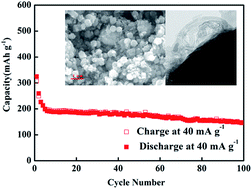
Spherical FeF2.5·0.5H2O–MWCNTs nanocomposites are synthesized via an ionic liquid (IL) based on precipitation route as a high performance cathode material for lithium ion batteries (LIBs), in which the BMMimBF4 is used as environmentally friendly fluorine source, appropriate solvent and binder. The addition of MWCNTs can not only increase the conductivity of the active material, but also play a role in designing a especial morphology where nano-sized FeF2.5·0.5H2O particles grew up. The structure, morphology and electrochemical performance of the as-prepared samples have been characterized by X-ray diffraction (XRD), Rietveld refinement of XRD pattern, scanning electron microscopy (SEM), transmission electron microscopy (TEM) and charge/discharge tests. The results show that the spherical FeF2.5·0.5H2O–MWCNTs nanocomposites present the cubic crystal structure with the cell volume of 1.13293 nm3. Furthermore, it can deliver a high initial discharge capacity of 324.7 mA h g−1 and stable cycle performance of 175.2 mA h g−1 after 50 cycles at 40 mA g−1 between 1.5 V and 4.5 V. Especially, even at a high current density of 500 mA g−1, the as-prepared material can still display a high discharge capacity of 136.0 mA h g−1.

1. Introduction

Nowadays, demands for rechargeable batteries have been increasing for applications in mobile devices, electric-powered transportation and stationary energy storage. For these applications, lithium ion batteries (LIBs) have been the most promising system due to their high energy density, high output voltage, environmental benignity and long span life.1,2 In order to master the development opportunities and challenges of large-scale electrochemical energy storage, electric vehicle (EVs) and hybrid electric vehicles (HEVs), great improvements in electrochemical performance of LIBs are very necessary.3,4 In essence, new technologies require electrodes with higher energy and power density to store and deliver more energy faster. Therefore, the development of new electrode materials that meet the requirements mentioned above is of the utmost importance.

Although typically intercalation cathode materials (LiCoO2, LiMn2O4, LiFePO4) have a good reversibility, they have a limited actual specific capacity in the range of 120–160 mA h g−1.5–7 This is largely due to the intrinsic limit of intercalation electrode materials, which typically allows no more than one Li+ per structural unit to be inserted into the host lattice.8 A universal consensus has been formed that such limitation handicaps the LIBs in terms of energy density, so that breakthroughs in performance need to develop a novel concept in materials research.9 High energy storage can be realized by utilizing conversion electrode materials as a battery cathode during the charge/discharge process.5,10–12 As a promising and representative electrode material, iron trifluoride (FeF3) has become a researched hotspot due to their high operating voltage (∼2.7 V), high theoretical capacity (712 mA h g−1 for 3e transfer), low toxicity, abundant sources, low cost and high theoretical energy density of 1950 W h kg−1.13 However, the high ionicity typically induces a large bandgap, leading to a poor electronic conductivity, making the actual specific capacity far below the theoretical capacity and limiting its practical application.14,15

In order to overcome above issues, most of works aimed at decreasing size of particles, coating or adsorption of conductive species on the surface.16 The decrease in particle size from bulk to nanoscale leads to reduced ion/electrode transport distance and increased surface area, which facilitate conversion reaction kinetics and improve the electrochemical properties of FeF3 cathodes.17–21 For example, Kim and his coworkers reported the new hierarchical nanostructure FeF3 nano-flowers on carbon nanotube (CNT) branches, it display 210 mA h g−1 at 20 mA g−1 and carry out 150 mA h g−1 even at 500 mA g−1 in a voltage range of 2.0–4.5 V.17 Chu and his coworkers reported the FeF3 nanospheres cathode material decorated by reduced graphene oxide (rGO), it show a high first discharge capacity of 476 mA h g−1 at 50 mA g−1 between 1.0 V and 4.5 V.18 Li and his groups reported that the introduction of CNTs into the wired nanostructure FeF2.5·0.5H2O and FeF3·0.33H2O electrode materials can exhibit a remarkable capacity and rate performance.19 To further improve the electrochemical performance of the iron fluoride, various endeavors have been made. Wang and his groups synthesized pre-lithiated FeF3 with extremely small size of Fe and LiF nanoparticles (both ∼6 nm) homogeneously embedded in the carbon matrix.20 Song et al. reported a porous honeycomb-like iron fluoride hybrid composite comprising iron fluoride nanocrystals (∼1–4 nm) encapsulated in separate carbon nests constructed by multi-scale pores (∼1–100 nm) was fabricated.21 Especially, our group prepared the FeF3·0.33H2O/MoS2,22 FeF3·0.33H2O/V2O5,23 FeF3·0.33H2O/ACMB (active carbon microbead),24 FeF3/G,25 FeF3·xH2O/G,26 Fe2F5·H2O/G16 and Fe2F5·H2O/rGO27 as cathode materials for LIBs and sodium ion batteries (SIBs), which showed promising results. Furthermore, a significant challenges for the FeF3 cathode is capacity fading and voltage hysteresis. Despite significant experimental and theoretical efforts have been making, complete understanding of the conversion mechanism for FeF3 cathode materials is still difficult.28–31

It's worth noting that ion conductivity is a requirement for the intercalation, multiphase transformation, and conversion reactions to take place. This defect is calling for derivative FeF2.5·0.5H2O cathode materials that are characterized by favorable Li-insertable channels. In the family of iron based fluorides, FeF2.5·0.5H2O with three-dimensional (3D) structures was the only case where the neutral and anionic clusters had a similar structure and the robust three-dimensional (3D) structure is conducive to accommodating Li+. Furthermore, the Fe atoms exhibit mixed valence states of +2 and +3 in FeF2.5·0.5H2O, which is very rare in cathode materials. Besides, FeF2.5·0.5H2O has analogous structure with FeF3·0.5H2O, but it is not a normal hydrated pyrochlore. The H2O molecules of FeF2.5·0.5H2O can't be removed without destruction of the structure.32 If the research can focus on the structure and morphology of FeF2.5·0.5H2O, it will possibly become a potential cathode material for the applications of LIBs. Though the design of expanded structures with satisfactory ion conductivity provides a new access to FeF2.5·0.5H2O cathodes, the inherent electron conductivity of such open-structured fluorides is not anticipated to be high enough to achieve excellent electrochemical properties.19 The incorporation of CNTs as a conductive additive is a useful approach to establishing an electrical percolation network in contrast to other carbonaceous materials on account of several advantages such as their high electrical conductivities,33 stable mechanical properties,34 and remarkable thermal properties.35 Therefore, effective wiring by highly conductive additive is required to complete a continuous electron transport network.30,36

In this work, considering the MWCNTs with extraordinary mechanical and electrical properties, it can be well disentangled by the interactions between IL and MWCNTs,37 we reported an ionic-liquid-assisted approach to prepare the FeF2.5·0.5H2O–MWCNTs nanocomposites. Actually, the FeF2.5·0.5H2O–MWCNTs nanocomposites have been successfully synthesized via a precipitation method, which has many advantages such as facile and environment friendly compared with traditional method.38 Moreover, the IL possesses many unique physical–chemical properties, for instance, negligible vapor pressure, low viscosity, high thermal stability and wide electrochemical window. Therein, the IL was used as environmentally friendly fluorine source, appropriate solvent and binder to promote the yield of the wired spherical FeF2.5·0.5H2O nanoparticles, while the MWCNTs were chosen as a carbon source and conductive carbon matrix to form a grid for transferring electron.39 Although graphene possesses a rough wavy structure, FeF3/G, FeF3·xH2O/G, Fe2F5·H2O/G and Fe2F5·H2O/rGO nanoparticles can only adhere to the surface of graphene. Similarly, ACMB can only mix with FeF3 in the preparation process of spherical FeF3/ACMB composite, and the pristine FeF3 is coated on the surface of ACMB. However, MWCNTs can not only uniformly wrap on the surface of particles but also enter to the interior of particles. The entanglement of MWCNTs nanowires can significantly improve the electrical conductivity of FeF2.5·0.5H2O. Meanwhile, the nanowires can also provide a three-dimensional channel to accelerate the transportation of lithium ions.40 In the prepared FeF2.5·0.5H2O–MWCNTs nanocomposites, the fluffy MWCNTs network can not only benefit to the electric transmission, but also promote in situ growth of spherical FeF2.5·0.5H2O nanoparticles.19 The physicochemical and electrochemical properties of spherical Fe2F5·H2O–MWCNTs nanocomposites are studied in detail.

2. Experimental

2.1. Synthesis of FeF2.5·0.5H2O–MWCNTs nanocomposites

The FeF2.5·0.5H2O–MWCNTs nanocomposites were synthesized using MWCNTs (outer diameter of 3–7 nm and the length of 10–30 μm, Aldrich >90%), 1-butyl-2,3-dimethylimidazolium tetrafluoroborate BMMimBF4 (IL) (Aldrich >99%) ionic liquid as a fluorine source, and iron(III) nitrate nonahydrate (Fe(NO3)3·9H2O) (Aldrich, 99.99%) as an iron source. In the typical nonaqueous precipitation synthesis of a composite material, 0.012 g MWCNTs (about 10 wt% to FeF2.5·0.5H2O) were ultrasound dispersed evenly in 1 mL DMF solution. The MWCNTs-suspended solvent was grinded in 5 mL of BMMimBF4 for 60 minutes to form a uniform black solution so as the imidazolium ion of IL can fully decorate the surface of MWCNTs. Then, 0.5 g of Fe(NO3)3·9H2O, which provides iron and hydration water for BMMimBF4 hydrolysis, was gradually added to the MWCNTs-suspended IL solvent in an agitation state. For the preparation of FeF2.5·0.5H2O–MWCNTs nanocomposites, the solution was continuously agitated at 50 °C for 12 h, until composite precipitates were fully formed. This product was washed with acetone and centrifuged at 10[thin space (1/6-em)]000 rpm six times to remove residual IL and other organic impurities, followed by subsequent drying under vacuum at 90 °C for 12 h. The bare material was produced following the same procedure without the addition of MWCNTs. The exact carbon content in wired materials was detected by a Carbon Sulfur Determinator. And a possible reaction process was showed in Scheme 1.
image file: c6ra20314k-s1.tif
Scheme 1 Schematic illustration of the synthetic process for FeF2.5·0.5H2O–MWCNTs cathode materials.

The FeF2.5·0.5H2O–MWCNTs nanocomposites are successfully synthesized via an ionic liquid (IL) based precipitation route. Fe3+ ions are generated by the decomposition of Fe(NO3)3·9H2O into the ionic liquid (BMMimBF4) at 50 °C. F ion are provided by the ionic liquid, whereas the water in the structure originates from the iron nitrate nonahydrate.

2.2. Characterizations of structure and morphology

The powder X-ray diffraction (XRD) patterns of samples were collected on a diffractometer (D/Max-3C, Rigaku), using a Cu Kα radiation (λ = 1.54178 Å) and a graphite monochromator operated at 40 mA and 40 kV between 10° and 80° (2θ) at a scan rate of 4° min−1. For Rietveld structure refinement, the diffraction patterns were collected in the scattering angle (2θ) range of 10–110° at a step size of 0.02° and a counting time of 2 s per step, and the structural analysis was carried out using the General Structure Analysis System (GSAS) program. To observe the particle size and morphologies of the FeF2.5·0.5H2O and FeF2.5·0.5H2O–MWCNTs samples, the scanning electron microscope (SEM, JEOL JSM-6610LV) and transmission electron microscopy (TEM, JEOL JEM-2100F) were carried out. The FTIR measurement of the sample was characterized via a Fourier transform infrared (FTIR) spectrometer (PerkinElmer Spectrum One) and the resolution of the apparatus is 0.09 cm−1. The four-point probe (RTS-8, Tianjin ZongKe) technique was carried out to investigate the electrical conductivities of FeF2.5·0.5H2O and FeF2.5·0.5H2O–MWCNT samples. The specific surface area and pore structure of the as-prepared material were determined by N2 adsorption/desorption isotherm at 77 K (TriStar II 3020, Micromeritics USA). The specific surface areas were evaluated by the Brunauer–Emmett–Teller (BET) method. The pore size distribution was determined from the adsorption branch of the isotherms by the Barrett–Joyner–Halenda (BJH) method.

2.3. Electrochemical measurements

The electrochemical performance of the as-synthesized material was characterized using 2025 type coin cells, in which FeF2.5·0.5H2O–MWCNTs nanocomposites were used as a cathode material and a lithium disk as anode for LIBs. The cathodes for testing cells were fabricated by mixing the cathode materials, acetylene black, and polyvinylidene fluoride (PVDF) binder with a weight ratio of 80[thin space (1/6-em)]:[thin space (1/6-em)]10[thin space (1/6-em)]:[thin space (1/6-em)]10 in N-methyl-2-pyrrolidone (NMP), which were then pasted on aluminum foil and dried overnight at 110 °C in a vacuum prior to use. A metallic lithium foil served as the counter electrode, 1 mol L−1 LiPF6 solution in ethylene carbonate (EC)–dimethyl carbonate (DMC) (1[thin space (1/6-em)]:[thin space (1/6-em)]1, v/v) as the electrolyte and porous polypropylene based membrane (Celgard 2400) as the separator. Finally, the cells were assembled in an argon-filled glove box with water and oxygen concentrations below 1 ppm. The charge/discharge cycle tests of LIBs were performed at different current densities on the Neware battery tester BTS-XWJ-6.44S-00052 (Neware, Shenzhen, China) between 1.5 and 4.5 V. The cyclic voltammogram (CV) was performed at a scan rate of 0.1 mV s−1 on the potential interval 1.5–4.5 V (vs. Li+/Li) by an electrochemical workstation (VersaSTAT3, Princeton Applied Research). The electrochemical impedance spectroscopy (EIS) measurements were performed on a PARSTAT 2273 electrochemical workstation with an AC voltage of 5 mV amplitude in the frequency range of 105 to 10−2 Hz. All the electrochemical measurements were carried out at room temperature.

3. Results and discussion

The possible route to synthesize the FeF2.5·0.5H2O–MWCNTs nanocomposites is shown in Scheme 1. MWCNTs are uniformly decorated by BMMimBF4 molecules with cation orientation toward the MWCNTs surface, which can significantly weaken the cross-link of MWCNTs, forming well dispersed suspension. The tightly interlaced MWCNTs can be directly effectively disentangled in the IL medium. As shown in Scheme 1, some of MWCNTs are divided into a single MWCNTs fiber, which can provide more nucleation sites to reduce the particles size. And some interlaced MWCNTs are expected to produce a fluffy conductive carbon network through interactions with the imidazolium ion of IL. On the other hand, the outwardly stretched BF4 component is prone to react with the surrounding iron(III) precursor to in situ form iron-based fluoride nanoparticles when the Fe(NO3)3·9H2O is added to the well dispersed suspension. Moreover, the iron-based fluoride nanoparticles on the surface of the fluffy carbon network can be wrapped by the discrete MWCNTs. It can be further proved by the SEM and TEM.

Fig. 1 displays the XRD patterns of all as-obtained samples. Fig. 1a shows a XRD pattern of FeF2.5·0.5H2O and its refined results by the Rietveld refinement method, the results show that no crystalline impurity is observed in the diffraction pattern. From the structural refinement, as described in Table 1, the lattice constants are refined to be a = 1.04248 nm and V = 1.13293 nm3 which is much larger than that of HTB-type FeF3·0.33H2O (∼0.710 nm3).41 Since the intensity, location and shape of the calculation peak can be matched well with the whole powder diffraction spectrum. And the R value is associated with texture of the sample and the conditions of data collection.42 As illustrated in Table 2, the space group of the pyrochlore FeF2.5·0.5H2O is Fd[3 with combining macron]m, while Fe occupied 16c site, F occupied 48f site and O occupied 8b site. In this typical face-centered cubic structure, Fe atoms are six fold-coordinated by F atoms, while F atoms are twofold coordinated by Fe atoms. Six FeF6 octahedras are connected one by one by sharing of vertex F atoms, which lead to the formation of hexagonal cavities and build an interconnected 3D microporous framework. The average primary particle size of FeF2.5·0.5H2O nanoparticles is 29.61 nm measured from XRD. It does not match with that measured from SEM, and the reasons are as follows: the average primary particle size of FeF2.5·0.5H2O nanoparticles measured by XRD is calculated by Scherrer's equation based on the width of half peak for the diffraction peak of crystal. The spherical FeF2.5·0.5H2O nanoparticles are composed of many smaller primary particles, and a large amount of primary particles aggregate to spherical FeF2.5·0.5H2O nanoparticles. Apparently, the particle size measured by SEM is larger than FeF2.5·0.5H2O primary particle, so it does not match exactly with the results of XRD. But, the result observed by TEM is almost agreement with XRD. As illustrated in Fig. 1b, it is very distinct to observe the marked oxygen atoms in hexagonal channel. In that condition, the marked two hexagonal channels are interconnected, and the hexagonal channel crisscross stacked one by one to form interconnected channel net. It is beneficial to store Li+ and transfer electron, achieving high discharge capacity. Besides, the XRD pattern of the spherical FeF2.5·0.5H2O–MWCNTs nanocomposites is shown in Fig. 1c, it can be seen that a small steamed bread peaks can be observed at 20–30°, which should be attributed to the MWCNTs. Meanwhile, the carbon content measured by C/S elemental analysis is ∼9.5 wt% in spherical FeF3·0.5H2O–MWCNTs nanocomposites. The measured value is slightly lower than designed one, which can be ascribed to the part loss of the MWCNT for no deposited FeF2.5·0.5H2O during the preparation process of FeF2.5·0.5H2O–MWCNTs nanocomposite. The electrical conductivities of FeF2.5·0.5H2O and FeF2.5·0.5H2O–MWCNTs are 1.348 × 10⁻⁶ S cm−1 and 3.164 × 10⁻¹ S cm−1. Obviously, the conductivity of FeF2.5·0.5H2O is significantly improved by introducing a small amount of MWCNTs. The FT-IR spectra (Fig. 1d) of pure MWCNTs and IL–MWCNTs were performed to confirm that the surface of MWCNTs was decorated by the imidazolium ion of IL. In the FT-IR spectrum of IL–MWCNTs, the peaks in the range of 2840–3000 cm−1 and 1365–1470 cm−1 belong to νC–H and δC–H vibration modes of imidazolium cation, respectively. The peak 1630 cm−1 is related to δC[double bond, length as m-dash]C vibration mode of imidazolium ring and 1574 cm−1 can be attributed to the vibration of imidazolium ring. The absorption band between 1050 cm−1 and 1100 cm−1 is attributed to BF4. The peak of 750 cm−1 is related to the C–H plane swing vibration.16,43 Therefore, the surface of the MWCNTs has been successfully decorated by the IL based on above FT-IR spectra tests.


image file: c6ra20314k-f1.tif
Fig. 1 Powder XRD pattern and the Rietveld refinement pattern of face-centered cubic FeF2.5·0.5H2O (a); structure of face-centered cubic FeF2.5·0.5H2O (b); powder XRD pattern of the FeF2.5·0.5H2O and FeF2.5·0.5H2O–MWCNTs cathode materials (c); FT-IR spectra of pure MWCNTs and IL–MWCNTs samples (d).
Table 1 Lattice parameters and cell volume for cubic FeF2.5·0.5H2O
Space group Fd[3 with combining macron]m Rwp 0.088
a (Å) 10.4248 Rp 0.0689
V3) 1132.93 CHI2 2.549


Table 2 The brief Rietveld parameters for FeF2.5·0.5H2O cathode material
Type Fractional coordinates Mult Occupancy Uiso
Fe 0 0 0 16 1 0.02018
F 0.3165 0.125 0.125 48 0.8333 0.00066
O 0.375 0.375 0.375 8 1 0.08


The morphologies of FeF2.5·0.5H2O and FeF2.5·0.5H2O–MWCNTs nanocomposites are characterized by SEM. Fig. 2a and b shows the different magnification SEM images of FeF2.5·0.5H2O sample. Obviously, it can be seen that the sphere-like particle size is about 600 nm on average and the particles composed of many tiny primary particle and have the tendency to grow into much larger micrometer-sized particles with some large voids or cracks. Besides, the SEM images of spherical FeF2.5·0.5H2O–MWCNTs nanocomposites at different magnification are displayed in Fig. 2c and d. As shown in Fig. 2c, the spherical FeF2.5·0.5H2O–MWCNTs nanocomposites maintain the original sphere morphology and the particles size reduces to 400 nm on average. It is confirmed that some of MWCNTs are divided into a single MWCNTs fiber, which can provide more nucleation sites to reduce the particles interconnected with size. And the sphere-like nanoparticles are gathered into micrometer-sized aggregation through the link of disentangled MWCNTs. As showed in Fig. 2d, it can be found that the FeF2.5·0.5H2O particles are interconnected with MWCNTs. It is anticipant to improve the electrochemical performance of the cathode materials with the surface network of MWCNTs.


image file: c6ra20314k-f2.tif
Fig. 2 SEM images of spherical FeF2.5·0.5H2O nanoparticles at different magnifications (a) and (b); SEM images of the spherical FeF2.5·0.5H2O–MWCNTs nanocomposites at different magnifications (c) and (d).

In order to further accurately observe the microstructure of the spherical FeF2.5·0.5H2O–MWCNTs nanocomposites, TEM images are shown in Fig. 3a and b. It can be clearly seen that sphere-like particles are interconnected by MWCNTs wires, and the presence of MWCNTs could be advantageous to transfer the electrons and ions to reduce the polarization.16 In addition, it can be observed that there is a fluffy MWCNTs network wrapped on the surface of nanoparticles. Meanwhile, the HRTEM image (Fig. 3c) further demonstrates that MWCNTs has entered to the interior of nanoparticles. The images of SEM and TEM reveal that the morphology of spherical FeF2.5·0.5H2O–MWCNTs nanocomposites is consistent with our design. Based on the results in Fig. 3d, the calculated BET specific surface area (Fig. 3d, inset) is as high as 190.343 m2 g−1 and the pore volume is 0.222 cm3 g−1. According to the BJH plots recorded from the nitrogen isotherms of the as-synthesized samples, the average pore diameter is 4.05 nm, which further confirms that the mesoporous structure is existed in nanocomposite material. The mesoporous structure not only allows electrolyte to penetrate easily and makes electrolyte close contact with the inner–outer surface, which results in a shorter transport path for Li+, but also serve as a good cushion for the material volume changes during Li ion insertion/extraction process, and thus enhancing the cycling performance.44 In the meantime, high specific surface area is beneficial to a reversion conversion reaction, because the high surface area of the materials can provide a large quantity of active sites for charge-transfer reactions and a high electrode/electrolyte contact area.45 Therefore, the spherical FeF2.5·0.5H2O–MWCNTs nanocomposites are expected to exhibit good rate performance and cycling stability.


image file: c6ra20314k-f3.tif
Fig. 3 Different magnification TEM ((a) and (b)) and HRTEM (c) images of the spherical FeF2.5·0.5H2O–MWCNTs nanocomposites; BJH (d) curve of the FeF2.5·0.5H2O–MWCNTs nanocomposites. The inset shows the nitrogen adsorption/desorption isotherm.

The cyclic voltammogram for the FeF2.5·0.5H2O–MWCNTs electrode is exhibited in Fig. 4a in voltage range of 1.5–4.5 V (vs. Li+/Li) at a scanning rate of 0.1 mV s−1. It clearly displays that all of the reduction and oxidation peaks are in good agreement with the galvanostatic charge/discharge profiles (Fig. 4b), measuring in the voltage range of 1.5–4.5 V at 20 mA g−1. In the first negative scan, there is a obvious reduction peaks at 1.84 V, in accordance with a discharge plateaus in Fig. 4b. But it is different from the subsequent two cycles, in which due to the rich surface defects of particles a high initial discharge capacity can be obtained (362.6 mA h g−1). As shown in Fig. 4b, the subsequent discharge capacities of the material can reach 275.2 mA h g−1 and the 3rd cycle can achieve 210 mA h g−1. In addition, the first pair of redox peaks positioned at ∼3.02 V (cathodic peak) and ∼3.35 V (anodic peak) corresponds to the Li ion intercalation/deintercalation reactions between phases containing Fe3+ and Fe2+. The second pair of redox peaks at ∼1.89 V (cathodic peak) and ∼2.62 V (anodic peak) should be attributed to the redox reactions between phases containing Fe2+ and metallic Fe0 based on chemical conversion mechanism. The subsequent cycle show consistent cathodic and anodic peak positions, demonstrating the reversibility of the conversion reaction. Although the detailed charge/discharge mechanism of the FeF2.5·0.5H2O–MWCNTs is not clear up to now, both insertion and conversion reactions are surely existence during charge/discharge process of FeF2.5·0.5H2O.


image file: c6ra20314k-f4.tif
Fig. 4 (a) The CV curves of the spherical FeF2.5·0.5H2O–MWCNTs nanocomposites at the first 3 cycles (the scan rate of CV curves is 0.1 mV s−1); (b) the corresponding charge/discharge profiles at 20 mA g−1 in the voltage range of 1.5–4.5 V.

The cycle performance of the FeF2.5·0.5H2O and FeF2.5·0.5H2O–MWCNTs cells in the voltage range of 1.5–4.5 V at a current density of 40 mA g−1 for 100 cycles are shown in Fig. 5a–c. From the charge/discharge curves of FeF2.5·0.5H2O and FeF2.5·0.5H2O–MWCNTs cells, it can be clearly seen that the discharge capacity gradually declines in the first 10 cycles, and a relatively stable capacity can be maintained during the subsequent cycles. Apparently, the FeF2.5·0.5H2O–MWCNTs cell can maintain a high discharge capacity of 146.80 mA h g−1 even after 100 cycles. On the contrary, the FeF2.5·0.5H2O cell suffers a fast capacity fading and only delivers 99.87 mA h g−1 after 100 cycles. As illustrated in Fig. 5c, the initial discharge capacity of FeF2.5·0.5H2O–MWCNTs cell reaches 324.7 mA h g−1, and the corresponding reversible discharge capacity is 259.6 mA h g−1. But the discharge capacity gradually decrease after the 2nd cycle. The FeF2.5·0.5H2O–MWCNTs cell can deliver a discharge capacity of 199.3 mA h g−1 after 5th cycles, the capacity approximately reaches 187.9 mA h g−1 at the 10th cycle and maintains 175.2 mA h g−1 after 50 cycles. As expected, the discharge specific capacity of the nanocomposites in this work is superior to those of the recently reported results. In particular, compared with other studies, for example, Rao et al.46 prepared FeF3·0.33H2O/rGO composite via a solvothermal route and obtained a discharge capacity of 165.0 mA h g−1 at 0.1C after 30 cycles. Xu et al.47 synthesized FeF3·0.33H2O/C nanocomposite by one-step solid state method, and it only delivery a low discharge capacity of 157.4 mA h g−1 at 20 mA g−1 after 50 cycles. Apparently, the spherical FeF2.5·0.5H2O–MWCNTs nanocomposites in this work has much better excellent electrochemical performances. Lithium cell made using spherical FeF2.5·0.5H2O–MWCNTs nanocomposites is measured at 200 mA g−1 for 100 cycles to test the long term cyclability of materials at the high rates, as shown in Fig. 5d. The discharge capacity reaches 151.6 mA h g−1 at the 10th cycle and still maintains at 112.4 mA h g−1 after 100 cycles, with a capacity loss of only 26%. These results greatly suggest that the excellent electrochemical performance of spherical FeF2.5·0.5H2O–MWCNTs nanocomposites can be widely employed in the research and development for LIBs improvement.


image file: c6ra20314k-f5.tif
Fig. 5 The charge/discharge curves of the (a) FeF2.5·0.5H2O and (b) FeF2.5·0.5H2O–MWCNTs cells at particular cycles; (c) the discharge capacity vs. cycle number for FeF2.5·0.5H2O and FeF2.5·0.5H2O–MWCNTs electrodes at the current density of 40 mA g−1; (d) long term cycling performance at 200 mA g−1; the charge/discharge curves of the (e) FeF2.5·0.5H2O and (f) FeF2.5·0.5H2O–MWCNTs cells at different current densities; rate capabilities of the (g) FeF2.5·0.5H2O and FeF2.5·0.5H2O–MWCNTs cells.

Rate capability is also an important parameter to evaluate electrochemical performance. As being seen in Fig. 5e–g, the rate capabilities of the FeF2.5·0.5H2O and FeF2.5·0.5H2O–MWCNTs cells have been tested from 20 to 500 mA g−1 with each rate for 10 cycles. The corresponding charge/discharge curves under different current densities are shown in Fig. 5e and f. The initial discharge capacity of FeF2.5·0.5H2O–MWCNTs cell is as high as 367.8 mA h g−1 at 20 mA g−1. And the subsequent discharge capacity retentions are about 212.0, 193.8, 183.7, 160.6 and 136.0 mA h g−1 at current density of 40, 80, 100, 200 and 500 mA g−1, respectively. Apparently, with increasing current density, FeF2.5·0.5H2O–MWCNTs cell deliveries higher discharge capacity and better rate capability than FeF2.5·0.5H2O. When the current density switches back from 500 mA g−1 to 20 mA g−1, the capacity returns to 153.6 mA h g−1, which indicates that the electrochemical reversibility and structure stability of FeF2.5·0.5H2O–MWCNTs cell are excellent even at a high current density. The improved electrochemical properties are associated with the unique spherical FeF2.5·0.5H2O–MWCNTs nanocomposites, and the fast transportation pathway for electron and lithium ion provided by MWCNTs conductive network. Long period of constant voltage has been displayed in all 1st discharge curves for FeF2.5·0.5H2O/MWCNT nanocomposite, and it can be ascribed to the following reasons.

 
Li+ + FeF3 → LiFeF3 (4.5–2.0 V) (1)
 
2Li+ + LiFeF3 → 3LiF + Fe (2.0–1.0 V) (2)

Firstly, the long period of constant voltage in all first discharge curves may be caused by the low electrochemical activity of LiF, which is electronic insulative and poor compatibility with the electrolyte, thus influencing the reversibility of eqn (2).48 Secondly, the dynamic nature of conversion reaction and the presence of metallic nanodomains may catalyze the decomposition of the electrolyte during the first discharge process.49 Furthermore, the serious solid-electrolyte-interface (SEI) layer caused by the undesirable reaction between electrode material and electrolyte during the initial discharge curve may lead to this electrochemical phenomena.50,51

The three-dimensional Nyquist plots of the spherical FeF2.5·0.5H2O nanoparticles and the spherical FeF2.5·0.5H2O–MWCNTs nanocomposites after cycling for different cycles at around 2.98 V are shown in Fig. 6a and b. The EIS is recorded during 1st to 100th charge/discharge cycles at room temperature. The EIS pattern is mainly composed of one semicircle in the high frequency region and a sloping line in the low frequency region. Nyquist plots are fitted using the equivalent circuit model (see Fig. 6c), and the fitted impedance data are listed in Table 3. Where Rs as the ohmic resistance (total resistance of the electrolyte, separator, and electrical contacts), Rct as the charge transfer resistance, Zw as the Warburg impedance of Li+ diffusion into the active materials, and CPE is the constant phase-angle element which involves double layer capacitance. Apparently, the fitting patterns are well agreement with the experimental EIS data. Nyquist plots of FeF2.5·0.5H2O electrode at different cycle numbers show a depressed semicircle in the high and intermediate frequency region, indicating notable charge transfer resistances of 65.36, 100.7 and 115.9 Ω at 1st, 50th and 100th cycles, respectively. However, the Rct values for the FeF2.5·0.5H2O–MWCNTs electrode after 1st, 50th and 100th cycles are 56.52, 61.99 and 65.13 Ω, respectively. It is explicit from Table 3 that the Rs and Rct of spherical FeF2.5·0.5H2O–MWCNTs nanocomposites are smaller than those of spherical FeF2.5·0.5H2O nanoparticles, implying that the spherical FeF2.5·0.5H2O–MWCNTs nanocomposites have higher conductivity and faster lithium ion diffusion than spherical FeF2.5·0.5H2O sample.


image file: c6ra20314k-f6.tif
Fig. 6 Three-dimensional Nyquist plots measured for (a) spherical FeF2.5·0.5H2O nanoparticles and (b) spherical FeF2.5·0.5H2O–MWCNTs nanocomposites after cycling for different cycles at 100 mA g−1 in Li half-cells; (c) the equivalent circuit model.
Table 3 Rs and Rct values of FeF2.5·0.5H2O and FeF2.5·0.5H2O–MWCNTs samples after different cycles in Li half-cells
Samples FeF2.5·0.5H2O FeF2.5·0.5H2O–MWCNTs
Cycles 1st 50th 100th 1st 50th 100th
Rs (Ω) 5.187 5.489 5.714 4.141 4.385 4.579
Rct (Ω) 65.36 100.7 115.9 56.52 61.99 65.13


4. Conclusions

The FeF2.5·0.5H2O–MWCNTs nanocomposites have been synthesized via a low temperature precipitation method. And the spherical FeF2.5·0.5H2O–MWCNTs nanocomposites are firmly bonded by residual IL and MWCNTs, in which the disentangled MWCNTs as electron transfer pathways. Furthermore, the MWCNTs conductive networks matrix on the surface of the FeF2.5·0.5H2O nanoparticles are expected to improve the conductivity of the materials and enhance their electrochemical performances. Consequently, the spherical FeF2.5·0.5H2O–MWCNTs nanocomposites process high discharge specific capacity and cycling stability. Its initial discharge capacity reaches 324.7 mA h g−1 and the corresponding reversible capacity can maintain 259.6 mA h g−1 at a current density of 40 mA g−1. Moreover, the spherical FeF2.5·0.5H2O–MWCNTs nanocomposites also show good rate performance. A stable discharge capacity of 153.6 mA h g−1 can still be resumed when the current density of 500 mA g−1 back to 20 mA g−1 after 60 cycles. The preliminary results indicate that in situ growth FeF2.5·0.5H2O nanoparticles in the MWCNTs network matrix is beneficial for improving the electrochemical performance of materials, and thus the spherical FeF2.5·0.5H2O–MWCNTs nanocomposites will be a potential cathode material for LIBs.

Acknowledgements

This work is supported financially by the National Natural Science Foundation of China under project No. 51472211, Scientific and Technical Achievement Transformation Fund of Hunan Province under project No. 2012CK1006, Key Project of Strategic New Industry of Hunan Province under project No. 2013GK4068, the Natural Science Foundation of Hunan Province under project No. 2015JJ6103 and the Program for Innovative Research Cultivation Team in University of Ministry of Education of China (1337304).

References

  1. F. Y. Cheng, J. Liang, Z. L. Tao and J. Chen, Adv. Mater., 2011, 23, 1695 CrossRef CAS PubMed.
  2. J. B. Goodenough and K.-S. Park, J. Am. Chem. Soc., 2013, 135, 1167 CrossRef CAS PubMed.
  3. D. Larcher and J.-M. Tarascon, Nat. Chem., 2015, 7, 19 CrossRef CAS PubMed.
  4. Z. G. Yang, J. L. Zhang, M. C. W. Kintner-Meyer, X. C. Lu, D. Choi, J. P. Lemmon and J. Liu, Chem. Rev., 2011, 111, 3577 CrossRef CAS PubMed.
  5. M. Armand and J. M. Tarascon, Nature, 2008, 451, 652 CrossRef CAS PubMed.
  6. S. H. Ma, H. Noguchi and M. Yoshio, J. Power Sources, 2004, 125, 228 CrossRef CAS.
  7. C. W. Sun, S. Rajasekhara, J. B. Goodenough and F. Zhou, J. Am. Chem. Soc., 2011, 133, 2132 CrossRef CAS PubMed.
  8. L. Liu, H. P. Guo, M. Zhou, Q. L. Wei, Z. H. Yang, H. B. Shu, X. K. Yang, J. L. Tan, Z. C. Yan and X. Y. Wang, J. Power Sources, 2013, 238, 501 CrossRef CAS.
  9. N. Yabuuchi, M. Sugano, Y. Yamakawa, I. Nakai, K. Sakamoto, H. Muramatsu and S. Komaba, J. Mater. Chem., 2011, 21, 10035 RSC.
  10. J. Cabana, L. Monconduit, D. Larcher and M. R. Palacin, Adv. Mater., 2010, 22, E170 CrossRef CAS PubMed.
  11. F. Wang, R. Robert, N. A. Chernova, N. Pereira, F. Omenya, F. Badway, X. Hua, M. Ruotolo, R. Zhang, L. Wu, V. Volkov, D. Su, B. Key, M. S. Whittingham, C. P. Grey, G. G. Amatucci, Y. Hu and J. Graetz, J. Am. Chem. Soc., 2011, 133, 18828 CrossRef CAS PubMed.
  12. P. Poizot, S. Laruelle, S. Grugeon, L. Dupont and J. M. Tarascon, Nature, 2000, 407, 496 CrossRef CAS PubMed.
  13. H. Li, P. Balaya and J. Maier, J. Electrochem. Soc., 2004, 151, A1878 CrossRef CAS.
  14. J. L. Tan, L. Liu, H. Hu, Z. H. Yang, H. P. Guo, Q. L. Wei, X. Yi, Z. C. Yan, Q. Zhou, Z. F. Huang, H. B. Shu, X. K. Yang and X. Y. Wang, J. Power Sources, 2014, 251, 75 CrossRef CAS.
  15. Q. X. Chu, Z. C. Xing, J. Q. Tian, X. B. Ren, A. M. Asiri, A. O. Al-Youbi, K. A. Alamry and X. P. Sun, J. Power Sources, 2013, 236, 188 CrossRef CAS.
  16. M. L. Jiang, X. Y. Wang, Y. Q. Shen, H. Hu, Y. Q. Fu and X. K. Yang, Electrochim. Acta, 2015, 186, 7 CrossRef CAS.
  17. S. W. Kim, D. H. Seo, H. Gwon, J. Kim and K. Kang, Adv. Mater., 2010, 22, 5260 CrossRef CAS PubMed.
  18. Q. X. Chu, Z. C. Xing, X. B. Ren, A. M. Asirib, A. O. Al-Youbi, K. A. Alamry and X. P. Sun, Electrochim. Acta, 2013, 111, 80 CrossRef CAS.
  19. C. L. Li, L. Gu, J. W. Tong and J. Maier, ACS Nano, 2011, 5, 2930 CrossRef CAS PubMed.
  20. X. L. Fan, Y. J. Zhu, C. Luo, T. Gao, L. L. Suo, S. Liou, K. Xu and C. S. Wang, J. Power Sources, 2016, 307, 435 CrossRef CAS.
  21. H. W. Song, G. Z. Yang, H. Cui and C. X. Wang, J. Mater. Chem. A, 2015, 3, 19832 CAS.
  22. W. Wu, X. Y. Wang, X. Wang, S. Y. Yang, X. M. Liu and Q. Q. Chen, Mater. Lett., 2009, 63, 1788 CrossRef CAS.
  23. W. Wu, Y. Wang, X. Y. Wang, Q. Q. Chen, X. Wang, S. Y. Yang, X. M. Liu, J. Guo and Z. H. Yang, J. Alloys Compd., 2009, 486, 93 CrossRef CAS.
  24. L. Liu, M. Zhou, X. Y. Wang, Z. H. Yang, F. H. Tian and X. Y. Wang, J. Mater. Sci., 2012, 47, 1819 CrossRef CAS.
  25. Y. Q. Shen, X. Y. Wang, H. Hu, M. L. Jiang, Y. S. Bai, X. K. Yang and H. B. Shu, RSC Adv., 2015, 5, 38277 RSC.
  26. Y. Q. Shen, X. Y. Wang, H. Hu, M. L. Jiang, X. K. Yang and H. B. Shu, J. Power Sources, 2015, 283, 204 CrossRef CAS.
  27. M. L. Jiang, X. Y. Wang, S. Y. Wei, Y. Q. Shen and H. Hu, J. Alloys Compd., 2016, 670, 362 CrossRef CAS.
  28. J. Cabana, L. Monconduit, D. Larcher and M. R. Palacin, Adv. Mater., 2010, 22, E170 CrossRef CAS PubMed.
  29. N. Yamakawa, M. Jiang, B. Key and C. P. Grey, J. Am. Chem. Soc., 2009, 131, 10525 CrossRef CAS PubMed.
  30. T. B. Kumar, C. Sumanth, A. V. Rao, D. Kalita, M. S. Rao, K. B. Sekhar, K. S. Kumarc and M. Pal, RSC Adv., 2012, 2, 11510 RSC.
  31. S. K. Martha, J. Nanda, H. Zhou, J. C. Idrobo, N. J. Dudney, S. Pannala, S. Dai, J. Wang and P. V. Braun, RSC Adv., 2014, 4, 6730 RSC.
  32. G. Ferey, M. Leblanc and R. D. Pape, J. Solid State Chem., 1981, 40, 1 CrossRef CAS.
  33. B. J. Landi, M. J. Ganter, C. D. Cress, R. A. DiLeo and R. P. Raffaelle, Energy Environ. Sci., 2009, 2, 638 CAS.
  34. X. F. Zhang, T. V. Sreekumar, T. Liu and S. Kumar, J. Phys. Chem. B, 2004, 108, 16435 CrossRef CAS.
  35. S. Berber, Y.-K. Kwon and D. Tomanek, Phys. Rev. Lett., 2000, 84, 4613–4616 CrossRef CAS PubMed.
  36. Y. S. Hu, Y. G. Guo, R. Dominko, M. Gaberscek, J. Jamnik and J. Maier, J. Adv. Mater., 2007, 19, 1963 CrossRef CAS.
  37. X. B. Fan, W. C. Peng, Y. X. Y. Li, S. L. Wang, G. L. Zhang and F. B. Zhang, Adv. Mater., 2008, 20, 4490 CrossRef CAS.
  38. C. L. Li, L. Gu, S. Tsukimoto, P. A. van Aken and J. Maier, Adv. Mater., 2010, 22, 3650 CrossRef CAS PubMed.
  39. T. Fukushima and T. Aida, Chem.–Eur. J., 2007, 13, 5048 CrossRef CAS PubMed.
  40. T. Fukushima, A. Kosaka, Y. Ishimura, T. Yamamoto, T. Takigawa, N. Ishii and T. Aida, Science, 2003, 300, 2072 CrossRef CAS PubMed.
  41. C. L. Li, L. Gu, J. W. Tong, S. Tsukimoto and J. Maier, Adv. Funct. Mater., 2011, 21, 1391 CrossRef CAS.
  42. Y. N. Zhou, M. Sina, N. Pereira, X. Q. Yu, G. G. Amatucci, X. Q. Yang, F. Cosandey and K. W. Nam, Adv. Funct. Mater., 2015, 25, 696 CrossRef CAS.
  43. Q. S. Zhao, Y. NuLi, T. Nasiman, J. Yang and J. L. Wang, Reversible deposition and dissolution of magnesium from imidazolium-based ionic liquids, Int. J. Electrochem., 2012, 2012, 8 Search PubMed.
  44. J. Liu, W. Liu, S. M. Ji, Y. L. Wan, M. Z. Gu, H. Q. Yin and Y. C. Zhou, Chem.–Eur. J., 2014, 20, 5815 CrossRef CAS PubMed.
  45. Y. Lu, Z. Y. Wen, J. Jin, K. Rui and X. W. Wu, Phys. Chem. Chem. Phys., 2014, 16, 8556 RSC.
  46. R. S. Rao, V. Pralong and U. V. Varadaraju, Solid State Sci., 2016, 55, 77 CrossRef CAS.
  47. X. P. Xu, S. Chen, M. Shui, L. X. Xu, W. D. Zheng, J. Shu, L. L. Cheng, L. Feng and Y. L. Ren, Ionics, 2014, 20, 1285 CrossRef CAS.
  48. H. Li, G. Richter and J. Maier, Adv. Mater., 2003, 15, 736 CrossRef CAS.
  49. A. J. Gmitter, F. Badway, S. Rangan, R. A. Bartynski, A. Halajko, N. Pereira and G. G. Amatucci, J. Mater. Chem., 2010, 20, 4149 RSC.
  50. D. L. Ma, H. G. Wang, Y. Li, D. Xu, S. Yuan, X. L. Huang, X. B. Zhang and Y. Zhang, Nano Energy, 2014, 10, 295 CrossRef CAS.
  51. L. S. Li, F. Meng and S. Jin, Nano Lett., 2012, 12, 6030 CrossRef CAS PubMed.

This journal is © The Royal Society of Chemistry 2016
Click here to see how this site uses Cookies. View our privacy policy here.