Hua Tanga,
Yanhui Fua,
Chao Yangac,
Danning Zhuab and
Jin Yang*a
aInstitute for Advanced Materials, School of Materials Science and Engineering, Jiangsu University, Zhenjiang, 212013, P. R. China. E-mail: yangjin@mail.ujs.edu.cn
bSchool of Mechanical Engineering, Jiangsu University, Zhenjiang, 212013, P. R. China
cJing Ding Engineering & Construction Co., Ltd, Beijing, 100011, P. R. China
First published on 19th September 2016
Superhydrophilic/superoleophobic materials have more obvious advantages in anti-pollution and oil/water separation, but the preparation is very challenging due to the higher surface tension of water than that of oils. Reported herein is a new superhydrophilic/superoleophobic surface that is prepared through UV irradiation of a polyelectrolyte multilayer film (PMF) with perfluorooctanoate (PFO) as the counterions on a commercially available cotton fabric. Hydrophilic defect domains along with PFO counterions on the PMF-coated fabric result in simultaneous superhydrophilicity and superoleophobicity both in air and underwater. Water can pass through the fabric by the driving force of gravity, while oils remain above the fabric without any pollution and permeation. The peculiar wetting behavior of the fabric is useful for the gravity-driven oil/water separation with excellent anti-fouling capacity and high efficiency. The recyclability and stability of the superhydrophilic/superoleophobic PMF-coated fabric were also investigated. We anticipate that this novel method could promote the application of superhydrophilic/superoleophobic materials in the field of oil/water separation.
Recently, the problem has been solved by designing novel interface materials with the hydrophilic groups and fluorinated alkyl chains.11 Water can penetrate through hydrophilic defects in the fluorinated outermost layer, while oil is hindered by this top layer. Tuteja et al. fabricated oil/water separation materials with superhydrophilicity and superoleophobicity using a blend of fluorodecyl polyhedral oligomeric silsesquioxane and cross-linked poly(ethylene glycol) diacrylate.12 Zhao et al. prepared a superamphiphobic coating with an ammonia-triggered transition to superhydrophilic and superoleophobic for oil/water separation using silica nanoparticles and heptadecafluorononanoic acid-modified TiO2 sol.13 In our previous work, we fabricated a serial of polyelectrolyte–fluorosurfactant complex-based meshes with superhydrophilicity and superoleophobicity, which can selectively separate water from oil/water mixtures with the advantages of anti-fouling and easy recycling in contrast to traditional oil/water separation materials.14,15 However, the poor solubility and film-forming performances of materials with the hydrophilic groups and fluorinated alkyl chains limit the application in the fabrication of superhydrophilic/superoleophobic surfaces.
It is well-known that layer-by-layer (LbL) deposition of the polyelectrolyte multilayer film (PMF) can be performed on virtually any textured rough surfaces in water as a simple and green surface modification method. The PMF assembled on the basis of electrostatic interactions has a strong bonding strength with the substrate, and its surface exist excess charges and associated counterions that can be capitalized to modulate the wettability of PMF.16 Recently, superoleophobicity has been achieved on the rough substrate after PMF ionpaired with fluoro-containing anions,17 and the surface of PMF is heterogeneous due to interpenetration of constituent layers and desorption of assembled molecules. Some hydrophilic defect domains are always concomitant with PMF, which can cause increased water contact angle hysteresis according to the previous report.18,19 Moreover, the amount of hydrophilic defect domains on PMF can be tuned through the external stimulus. Therefore, it is possible to obtain superhydrophilicity/superoleophobicity on the PMF via the appropriate increase of the hydrophilic defect domains.
In the present work, we report a novel method to fabricate a superhydrophilic/superoleophobic surface through UV irradiation of PMF on a commercially available cotton fabric. Hydrophilic defect domains, combined with fluoro-containing anions on the UV-irradiated PMF-coated fabric leads to a water droplet spread completely within seconds and oil droplets remain the spherical shapes with the contact angles greater than 150°. The peculiar wetting behavior of the fabric is useful for the gravity-driven oil/water separation via water permeation and oil retaining, which is completely different to the conventional techniques that selectively remove oils from bulk water.20–22 More importantly, the fabricated surface is superoleophobic both in air and underwater. No matter water or oil first contact the surface, there is no pollution and permeation of oil. This feature makes it have the obvious advantages in the field of oil/water separation in contrast to the widely reported underwater superoleophobic materials.23–25
000–350
000, 20 wt% in water) and poly(sodium 4-styrene sulfonate) (PSS, powder, average Mw ∼70
000) were purchased from Sigma-Aldrich. Sodium chloride (NaCl), sodium perfluorooctanoate (PFO, C8F15O2Na), methylene blue (MB), oil red O (C26H24N4O), and hexadecane (CH3(CH2)14CH3) were purchased from Sinopharm Chemical Reagent Co., Ltd.
![]() | ||
| Fig. 1 UV irradiation time dependence of contact angles for water and hexadecane on the PMF-coated glass slide. The inset shows a SEM image for the PMF-coated glass slide. | ||
After UV irradiation, the surface roughness of the PMF-coated glass slide is 10.1 nm and the smooth morphology shows no observable change, indicating that the UV-driven wettability transition is caused by the change of surface chemical composition. XPS analysis was performed on the PMF-coated glass slide to probe the local surface composition, and the survey spectra are shown in Fig. 2. The surface elements of the PMF are all C, F, O, and N before and after UV irradiation. The F 1s peak at 688.8 eV is assigned to the PFO counterions, and the N 1s peak at 402.8 eV is assigned to the positively charged nitrogen atoms in the QA+ groups of PDDA. However, after UV irradiation for 5 h, the content of fluorine element gradually decreases from 50.16% to 33.01%, while the content of oxygen element gradually increases from 13.90% to 21.58% (Fig. 2 inset), indicating that UV irradiation results in oxygen enrichment and simultaneous defluorination of the PMF surface. The reason may be that the PFO counterions attached to the QA+ groups could be excited under UV irradiation, and then the C–C bond between –C7F15 and –COO– group is cleaved. The perfluoroalky radical may undergo alcoholization, HF elimination, and hydrolysis to form C6F13COO–, which can be further degraded through a similar process.28
![]() | ||
| Fig. 2 XPS survey spectra of the PMF-coated glass slide before (a) and after UV irradiation for 1, 3, and 5 h (b)–(d). | ||
Additionally, high-resolution C 1s spectra for sample before and after UV irradiation are shown in Fig. 3a and b to further clarify the changes of the surface chemical composition. The C 1s peak can be deconvoluted into five peaks assigned to the –CF3, –CF2–, –COO–, –CO–, and –CH2– groups, respectively. Compared to the original sample (Fig. 3a), the spectrum for the UV-irradiated sample (Fig. 3b) has larger peaks associated with the –COO– and –CO– moieties, which once again indicates the generation of oxygen enrichment via UV irradiation. On the other hand, the great intensity of the –CF3 and –CF2– peaks confirms the presence of PFO counterions at the UV-irradiated sample surface still (Fig. 3b). With the increase of oxygen-containing groups, more hydrophilic defect domains may be formed around the PFO counterions, which as the intermolecular “hole” to lead the fast penetration of water molecules.29 Meanwhile, the PFO counterions on PMF surface still hinder the penetration of oil molecules. Therefore, the UV-irradiated PMF shows the peculiar wetting behavior that is more wettable to water than to oil.
![]() | ||
| Fig. 3 High-resolution C 1s spectrum of the PMF-coated glass slide before (a) and after (b) UV irradiation for 5 h. | ||
This peculiar wetting behavior on the smooth glass slide can be amplified by combining the UV-irradiated PMF with the rough surface. The fabrics as the typical materials with re-entrant textured structures have been used to fabricate the superoleophobic surfaces previously.30–32 A cotton fabric was assembled PDDA/PSS and absorbed PFO counterions to obtain a re-entrant textured surface with a conformal PMF. Fig. 4 shows SEM micrographs for a piece of the cotton fabric before and after the deposition of PMF. There is no apparent difference due to the individual fibers of the fabric conformally coated by the thin PMF. The contact angle values on the original and PMF-coated fabric surfaces with water and hexadecane are presented in Fig. 5. The original cotton fabric is superhydrophilic and superoleophilic with the contact angles of 0°. For the PMF-coated fabric, the contact angles for water and hexadecane increase to 156 ± 1° and 150 ± 1° respectively. The corresponding sliding angles are 16 ± 3° and 13 ± 2° (Fig. 5 inset). After being exposed to UV light, the contact angle for water gradually reduced to 0°, whereas the hexadecane contact angle has no obvious decrease and the sliding angle maintains at 12 ± 3° (Fig. 5). Moreover, for the original cotton fabric and the fabric modified with PDDA/PSS or PFO counterions, the contact angles for water and hexadecane are 0° under UV light all the time. Therefore, superhydrophilicity and superoleophobicity can be simultaneously achieved only on the UV-irradiated cotton fabric with PDDA/PSS and PFO counterions.
![]() | ||
| Fig. 4 SEM images of the cotton fabric before (a and b) and after (c and d) the LbL deposition of PMF. | ||
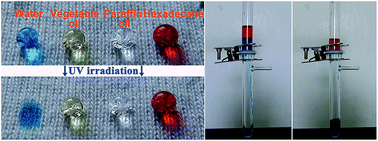
The surface wettability of the PMF-coated fabric is highlighted in Fig. 6. Droplets of water (colored with MB), vegetable oil, paraffin oil, and hexadecane (colored with oil red O) exhibit spherical shapes as they are placed onto the original PMF-coated fabric (Fig. 6a). The bright, reflective surface visible underneath the liquid droplets indicates the establishment of composite solid–liquid–air interfaces.33 For the UV-irradiated fabric (Fig. 6b), a water droplet spread over the surface within several seconds to form a fully wetted interface, which is due to the combination of hydrophilic defect domains and 3D capillary effect. Meanwhile, other oil droplets can keep the spherical shapes for 24 h without any permeation. Moreover, as shown in Fig. 6c, the oil droplets also exhibited spherical shapes on the underwater fabric with the contact angle of 165 ± 1° and sliding angle of 5 ± 2°. When we dropped liquid droplets onto the tilted fabric, hexadecane droplets rolled off the fabric easily (Fig. 6d) and water droplets spread over it rapidly (Fig. 6e). For the water-wetted fabric, droplets of hexadecane (Fig. 6f) and chloroform (Fig. 6g) can still slide easily. In other words, the UV-irradiated PMF-coated fabric exhibits superhydrophilicity and superoleophobicity both in air and underwater with excellent anti oil-fouling capacity.
The most important application for the superhydrophilic/superoleophobic materials is the separation of oil/water mixtures. As shown in Fig. 7a, a mixture of water (colored with MB) and hexadecane (colored with oil red O) was injected onto the UV-irradiated PMF-coated fabric that was fixed between two glass tubes. Water with higher density than oil can pass through the fabric by the driving force of gravity within a few minutes (Fig. 7b and c), while hexadecane was remained above the fabric without any permeation (Fig. 7d). Importantly, no matter water or hexadecane first contact the fabric in the separation process, there is no pollution and permeation of hexadecane due to its superoleophobicity both in air and underwater. The purity of hexadecane after onetime separation examined using a Karl Fischer analyzer is above 99.9%. The separation efficiency, calculated by the ratio between the mass of hexadecane before and after the separation process, was above 99.0%. The flux of separation, measured by calculating the flow volume per unit time from the valid area of the fabric, was 38 mL (cm−2 min−1). Other oils, such as vegetable oil, paraffin oil, petroleum ether, toluene, and hexane, can also be separated from oil/water mixtures efficiently, as shown in Fig. 7e. Moreover, the used fabric can be easily recovered to its superhydrophilic/superoleophobic state by being washed with water and dried, leading to that the separation for hexadecane/water mixtures could be repeated for several times with the efficiency of around 99.0% (Fig. 7f).
Additionally, mechanical and chemical stabilities of the superhydrophilic/superoleophobic PMF-coated fabric were investigated. As shown in Fig. 8 inset, a friction test was performed by dragging back and forth of 500 g weights on the fabric. The line in Fig. 8 show that the water contact angle was 0° all the time and the hexadecane contact angle gradually decreased with the sliding distance. When the sliding distance increased to 1000 cm, the contact angle of hexadecane decreased to 140 ± 1°. But the separation efficiency for the hexadecane/water mixture still maintained above 99.0% (Fig. 8 inset). For the chemical stability, the superhydrophilic/superoleophobic PMF-coated fabrics were placed in an oven at 100 °C and immersed into acetone, toluene, 5 wt% HCl, 5 wt% NaOH, and 5 wt% NaCl for 24 h, respectively. It can be seen from Table 1 that the wetting and separation properties of the fabric are hardly affect by high temperature, acetone, toluene, and HCl. But when the PMF-coated fabrics were exposed to NaOH and NaCl, the contact angle of hexadecane decreased to 0° due to the destroy of the PFO counterions attached to the QA+ groups on the PDDA.
| Treatments | Contact angle (water) [°] | Contact angle (hexadecane) [°] | Separation efficiency [%] |
|---|---|---|---|
| After preparation | 0 | 150 ± 1 | 99.4 ± 0.5 |
| 100 °C (24 h) | 0 | 153 ± 1 | 99.7 ± 0.1 |
| Acetone (24 h) | 0 | 151 ± 1 | 99.5 ± 0.3 |
| Toluene (24 h) | 0 | 148 ± 2 | 99.2 ± 0.4 |
| 5 wt% HCl (24 h) | 0 | 154 ± 1 | 99.7 ± 0.1 |
| 5 wt% NaOH (24 h) | 0 | 0 | — |
| 5 wt% NaCl (24 h) | 0 | 0 | — |
| This journal is © The Royal Society of Chemistry 2016 |