
Quantification of hot carrier thermalization in PbS colloidal quantum dots by power and temperature dependent photoluminescence spectroscopy

Wenkai Cao , Zewen Zhang , Rob Patterson , Yuan Lin , Xiaoming Wen , Binesh Puthen Veetil , Pengfei Zhang , Qiuyang Zhang , Santosh Shrestha , Gavin Conibeer and Shujuan Huang *
School of Photovoltaic and Renewable Energy Engineering, UNSW Australia, Sydney 2052, Australia. E-mail: z3169210@unsw.edu.au

Received 10th August 2016 , Accepted 14th September 2016

First published on 14th September 2016


Abstract

PbS QDs are studied as attractive candidates to be applied as hot carrier solar cell absorbers. The thermalization properties of PbS QDs are investigated with power and temperature dependent continuous wave photoluminescence (CWPL). Non-equilibrium hot carrier populations are generated by high energy laser excitation, the thermalization coefficient Q is estimated from the incident power dependent carrier temperature. A non-equilibrium hot carrier population 200 K above the lattice temperature is detected at mild illumination intensity. A higher energy carrier population and an increasing Q value are observed with rising lattice temperatures. State filling effects are proposed as a possible cause of the generation of the non-equilibrium hot carrier population and an enhanced electron–phonon coupling strength is suggested to account for the faster carrier cooling rate observed in closely packed Langmuir–Blodgett monolayer films. A thermalization coefficient, Q, as low as 6.55 W K−1 cm−2 was found for the drop cast sample and suggests that PbS QDs are good candidates for practical hot carrier absorbers.

1. Introduction

Colloidal semiconductor quantum dots (QDs) have been extensively studied within the past few decades due to their potential for applications in light emitting diodes, photo-detectors, sensors and lasers.1–4 Among these, lead chalcogenides have attracted significant interest5–7 due to their potential applications in low-cost solution processable colloidal QDs solar cells8 and the more advanced third-generation concepts9 such as multiple exciton generation (MEG)10 and hot carrier solar cells (HCSCs).11 Advanced third-generation photovoltaics focuses on new mechanisms for breaking the Shockley–Queisser limit.12 Since Ross and Nozik13 initially proposed the concept of the HCSC, numerous findings have been reported on the thermalization and hot carrier cooling properties of the III–V heterostructure of thin solid film materials.14–16

Even the most efficient single-junction solar cell loses around 50% of the incident photon energy due to thermalization of hot carriers generated at elevated energies to heat that dissipates through lattice vibrations.17,18 HCSCs operate by inhibiting the ultrafast cooling process in an engineered light absorbing material and hence maintain a high energy carrier population that could be extracted by the energy selective contacts (ESC) before they are thermalized.19 The simulated efficiency limit of HCSC is about 66% under one sun illumination and rises to 85% at 46[thin space (1/6-em)]200 suns concentration20 while the detailed balance limit (Shockley–Queisser limit) is only 33%12 for a single-junction solar cell. The major carrier energy loss mechanism in a semiconductor material happens through the carrier-longitudinal optical (LO) phonon interaction by the emission of LO phonons. This process takes place on a time scale of a few picoseconds.2 One such optical phonon quickly decays into two acoustical phonons with opposite momenta by the process, which is usually referred as Klemens anharmonic decay.21 Conibeer et al.22 have proposed the requisite properties for a hot carrier absorber to realize high efficiency including: large phononic bandgap, narrow optical phonon energy dispersion, small electronic bandgap and small optical phonon energy. Colloidal QDs are considered as attractive candidates23 for hot carrier absorbers due to the theoretical prediction of the phonon bottleneck effect.24 The widely separated discrete electron energy levels lead to the requisite of multi-phonon emission for thermalizing, which proceeds at a slower rate compared to single phonon assisted relaxation processes. Hence, this mechanism could potentially slow down the carrier cooling rate in nanostructures compared with their bulk counterparts by inhibiting the multi-phonon assisted carrier cooling process.

Closely-packed, ordered arrays of nanoparticles are referred to as a superlattice which can exhibit very different properties from their individual constituents.25 Semiconductor QDs with very uniform size distributions are good candidates as building blocks for the study of nanoparticle superlattices due to their self-assembly properties and hence the ability to form high quality superlattice arrays. According to the 3D force constant model proposed,22 complete mini-gaps in the phonon dispersion can form in the closely packed QDs with a large mass difference which would not be shown in their bulk or individual QD form. The simulation result suggests that the mini-gaps could prevent Klemens decay of the LO phonons and hence slow the hot carrier cooling rate by reheating the electron gas.26

Langmuir–Blodgett (LB) deposition is an effective way to fabricate high-quality superlattices, which enables the deposition of densely-packed monolayer films of QDs with long-range order. PbS QDs are one of the most suitable candidates for studying hot carrier cooling effects in superlattice form due to their large Bohr radius (17.4 nm)5 and very good self-assembly properties. Transient spectroscopy, including time-resolved photoluminescence (TRPL) and transient absorption (TA) have been used as effective tools to analyse the hot carrier related processes and hot carrier cooling lifetimes generally on the order of a few picoseconds.10,26,27 However, as solar cells usually operate under steady state conditions at relatively low photon fluxes, results from transient spectroscopy measurements may not always be indicative of thermalization properties under continuous illumination. In addition, the cooling rate estimated from transient spectroscopy is underestimated at least one order of magnitude compared with the steady state energy loss due to the single pulse excitation conditions.28

In this work, monodisperse colloidal PbS QDs synthesized by the hot-injection method were studied with power and temperature dependent continuous wave photoluminescence (CWPL). Drop cast and LB monolayer films are prepared and studied for comparison. A fitting method based on band-to-band recombination taking the full spectrum into account is employed to extract the hot carrier temperature from the CWPL spectra. A hot carrier population of at least 200 K above the lattice temperature has been observed in the PbS QDs films. A higher energy carrier population but a faster carrier cooling rate is observed in PbS LB film in comparison with the drop cast film at mild illumination intensity. State filling effects and enhanced electron phonon coupling strength in LB film are proposed to explain the results observed in the study.

2. Materials and methods

2.1 Synthesis of PbS colloidal QDs and purification

Monodisperse colloidal PbS QDs of 4 nm were synthesized by a hot injection synthesis recipe developed by Hines et al.29 with modifications. Firstly, 0.46 g PbO (98%) and 2 g oleic acid were added into 10 g octadecene (ODE) in a three-necked flask under nitrogen flow. The mixture was heated to 100 °C, degassed for 1 h and the temperature is then increased to 120 °C, all under nitrogen flow. Then 5 mL ODE in three-necked flask was heated to 100 °C and degassed for 1 h before being cooled to room temperature. 210 µL of bis(trimethylsilyl) sulfide (TMS) was added into the solution. 5 mL TMS-ODE solution was swiftly injected into the PbO solution at 100 °C into flask and the reaction was kept at 100 °C for 1 minute. The product solution was then centrifuged at 6000 rpm for 10 min with 30 mL acetone added. The supernatant was discarded and the precipitate was re-dispersed in hexane. This step was repeated until all excess organic ligand was removed. After the synthesis, the samples were further purified by means of size-selective precipitation using acetone as a counter-solvent. The PbS QDs were then dried and re-dispersed in hexane and stored in nitrogen box before use. The size of the synthesized PbS QDs was measured to be 4.0 ± 0.16 nm by TEM imaging as shown in Fig. S1(a) in ESI. This is in good agreement with the estimation from the optical absorption peak energy as shown in Fig. S1(b).

2.2 Preparation of drop cast film and Langmuir–Blodgett monolayer film

The drop cast sample was prepared by dropping 50 µL of PbS QDs solution in hexane with a concentration of 0.05 mg mL−1 on top of quartz substrates and drying at room temperature. For the preparation of LB film samples, 200 µL of PbS QDs of 0.05 mg mL−1 solution in hexane was gently casted droplet by droplet onto the surface of pure water in LB trough (Nima 415). After 20 min to allow for the evaporation of the hexane, the QDs left on the surface of water in the trough were compressed by closing the barriers at a rate of 5 mm min−1, while the surface pressure isotherm of the monolayer film was monitored through the Whelmy plate. When the setting surface pressure was reached, the PbS QD monolayer was transferred by pulling a quartz substrate which was immersed in the pure water in the trough before the QDs solution was deposited. The pulling rate of the substrate was 2 mm min−1. All the samples were stored in nitrogen box before characterization to prevent oxidation.

2.3 Characterization

The size of the PbS QDs was measured by transmission electron microscopy (TEM). The TEM measurements were performed on a Philips CM200 with a voltage of 200 kV. The TEM samples were prepared by drop casting the PbS QDs in hexane onto a TEM grid with an amorphous carbon membrane. Analysis of the TEM image and particle size was done by using ImageJ software. The absorbance spectra of the PbS QDs were measured using Perkin Elmer LAMBDA 1050 UV-VIS-NIR spectrophotometer.

For PL measurement, samples were mounted in a closed-cycle He cryostat with a built-in temperature controller, with excitation provided by an argon ion laser at the wavelength of 488 nm with the laser light focused onto the sample using a 125 mm focal length lens. PL emission from the sample was relayed to a SPEX 270 M scanning spectrometer with a liquid nitrogen cooled InGaAs detector array from EOSystems and a SRS lock-in amplifier (SRS) via a 4f optical telescope to a scanning spectrometer. The spectral resolution of the system is approximately 2 nm. An approximate maximum output power of 100 mW can be achieved with the laser system. The power density was adjusted from 1% to 100% for power dependent measurement. The sample temperature was adjusted from 60 to 300 K.

3. Calculation of carrier temperature and thermalization coefficients

3.1 Estimation of carrier temperature from CWPL fitting

Power dependent CWPL measurements were performed on drop cast PbS QDs and LB films at the temperature from 60 K to 300 K with an interval of 60 K. There is a blueshift about 40 meV in the emission maximum compared to the drop cast film. This feature have been previously reported by Justo et al.30 This effect is consistent with the previous report on LB film preparation of semiconductor materials and could be attributed to the recombination or emission of excitons from the very shallow traps. Desolvation of the QDs in the LB film preparation (in direct contact with the water-subphase) reduces the number of conduction band surface trap transitions, increasing the efficiency of radiative recombination, and thus results in a blueshift of the fluorescence band.31

Assuming the carriers have a Maxwell–Boltzmann like distribution over the whole PbS QDs film, one method to extract the carrier temperature from the SSPL spectra is to fit the high energy tail of the PL spectra which follows the exponential law with photon energy described as:32

 
image file: c6ra20165b-t1.tif(1)
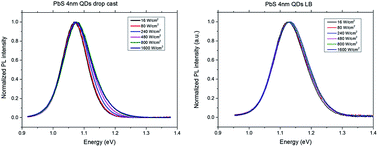
where E is the photon energy, KB is Boltzmann constant and Teh is the steady state carrier temperature. It probes the occupancy of the high energy states of the carriers. In the high energy tail region, the spectrum in Fig. 1 is very well fitted by the Maxwell–Boltzmann distribution.


image file: c6ra20165b-f1.tif
Fig. 1 PL spectra at 180 K in arbitrary units with excitation energy from 16 to 1600 W cm−2 for PbS 4 nm QDs of drop cast and LB film respectively. Asymmetric broadening could be observed at the high energy tail region, the extent of asymmetric broadening in drop cast film is higher compared to the LB film.

Though the high energy tail is very well fitted with eqn (1) and had been applied to multiple quantum well structures,14,17 the major problem with the high energy tail fitting method is the selection of the high energy tail onset. The extracted carrier temperature is strongly influenced by the tail selection and this could be one reason for the large difference in carrier temperature reported by various groups. In addition, the FWHM of the PL spectra is relatively wide compared with the III–V multiple quantum wells. Hence, in this study, a method that can employ the full PL spectrum was applied to avoid the selection of the high energy tail region.

The fitting method is based on band to band recombination in which the PL intensity can be described by the product of the absorption coefficient of the PbS QDs and the Maxwell distribution as:33,34

 
image file: c6ra20165b-t2.tif(2)
 
image file: c6ra20165b-t3.tif(3)
where α(E) describes the energy dependent absorption coefficient of the PbS QDs, which is introduced as a piecewise function divided into above bandgap and sub bandgap regions respectively. For energies above bandgap, the absorption coefficient increases with energy described by a quadratic relation originating from a Tauc plot,35,36 with n = 1/2 for PbS QDs (direct bandgap material). The parameter Γ is the energy spreading that describes the increasing rate of the absorption coefficient by assuming a parabolic conduction band. The denominator 1 + exp[(EgE)/Δ] originates from the sigmoidal form of the sub-bandgap absorption coefficient function, while Δ is used for describing the width of the sub-bandgap emission with finite spreading.33,37–39 The exponential term represents the Maxwell–Boltzmann statistical distribution describing the occupation probability at each energy level. The full spectrum Maxwell Boltzmann fitting to the PL spectra measured experimentally is presented in Fig. 2(a). As can be seen from the results, very good agreement has been achieved with this fitting method. A set of carrier temperatures can be estimated with the full spectrum fitting method described above for PbS LB and drop cast film with various lattice temperatures. The distribution of the electrons and holes vary as the interaction rate between the electrons and holes are slower than the intraband scattering rates. As a result, different quasi-fermi populations of electrons and holes should be assigned. In this study, a single carrier temperature is assigned as the contribution of the carrier temperature of different carrier types cannot be readily separated.60 The impact of different carrier population for electrons and holes on HCSCs efficiencies are studied by Takeda et al.40


image file: c6ra20165b-f2.tif
Fig. 2 (a) Full spectrum carrier temperature fitting the of PL spectrum for PbS drop cast film measured at 300 K showing very good agreement between experimental and fitted results, (b) extracted thermalization coefficient Q for 4 nm PbS QDs drop cast film at 180 K.

3.2 Estimation of thermalization coefficient Q

From the carrier temperature-absorbed power relation,14 the thermalization properties of the sample can be determined. A thermalization coefficient Q (W K−1 cm−2) is proposed to evaluate the suitability and potential to be applied as hot carrier for efficiency enhancement.15,17,41 The thermalization coefficient is defined as the thermal power dissipated per degree of temperature change of the lattice per unit area. As there is no power extraction process during the laser excitation of the sample, the only way account for the energy loss is the heat loss caused by electron–phonon interaction of lattice vibration and radiative emission.14 Hence the power lost by thermalization is the difference between the absorbed power and the emitted power. The thermalization power loss is affected by the electron–phonon interaction as we discussed in detail before. For polar materials, at a temperature above a threshold of 40 K,14 the electron–phonon interaction is dominated by the strong coupling between electrons and zone centre longitudinal optical phonons.42 The power lost by thermalization can be described as:15,17,43
 
image file: c6ra20165b-t4.tif(4)
Pth is the rate at which energy is thermalized from the carrier distribution per unit area of the sample (in the previous reports on thermalization studies of multiple quantum wells the Pth is considered as equal to absorbed power as energy radiated from the sample is small relative to the power absorbed.14,15 Here, we modify the assumption by calculating the emitted power with the Quantum Yield (QY) of the PbS QDs:
 
image file: c6ra20165b-t5.tif(5)
where Eemitted and Eexicted is the photon energy emitted and absorbed by PbS film respectively. Hence Pth is determined from the absorption percentage (1 − R% − T%) of the film, the QY of the PbS QDs and the illumination intensity at an excitation wavelength of 488 nm. The absorption coefficient of the monolayer LB film and the drop cast film are determined from experiment and compare well with values reported in previous literature.44 ΔT is the temperature difference between the carrier and the lattice. ELO is the LO phonon energy and Tc is the carrier temperature of the sample. In this study, an ELO value of 26 meV for 4 nm PbS QDs is used, consistent with previous reports.45 By plotting the Pabs/exp(ELO/KBTc) versus the temperature difference between the carrier temperature and lattice temperature, the gradient is extracted as the thermalization coefficient Q. An example of the estimation of Q value is presented in Fig. 2(b).

4. Results and discussion

4.1 Carrier temperatures and hot carrier population

Fig. 1 shows the power dependent PL spectra measured on PbS LB and drop cast film at 180 K respectively for excitation intensities ranging from 16 W cm−2 to 1600 W cm−2. Here, 180 K PbS PL spectra is shown as an example, the PL spectra of other temperatures can be found in the ESI Fig. S3. Compared with the low density of QDs which are randomly packed due to self-assembly process, the highly compressed LB film is composed of high density ordered QD arrays. The surface morphology results showing the difference between drop cast and LB film are in the ESI. For PbS films, an asymmetric broadening of the high energy tail region was observed when increasing the excitation power intensity, the broadening of the high energy tail is a characteristic of the carrier heating.46 The position of the PL peak is not largely shifted (within the temperature range of 10 K) with the increasing incident power. This suggests that the temperature change of the lattice is much smaller compared to the carrier temperature and hence any carrier heating effects should be attributed to the generation of non-equilibrium hot carriers. The lattice temperature of the sample is assumed to be in equilibrium with the ambient temperature. The carrier temperatures of PbS LB and drop cast films are estimated using eqn (2) and (3) at a series of lattice temperature from 60 K to 300 K under various excitation intensity from 16 W cm−2 to 1600 W cm−2, as shown in Fig. 3.
image file: c6ra20165b-f3.tif
Fig. 3 Carrier temperature of 4 nm PbS QDs in drop cast and LB films as a function of excitation intensity.

Fig. 3 displays the carrier temperature within PbS LB and drop cast film which are plotted as a function of excitation power. The power and temperature dependent effects on the carrier temperature are discussed first and then the differences between drop cast and LB film of PbS QDs are discussed. Several interesting points can be observed from the fitting results, (1) for both PbS LB and drop cast films, the carrier temperature evolution shows an increasing trend with higher incident power; (2) the carrier temperature showed an increasing trend with the lattice temperature, which a lower carrier temperature is observed for lower lattice temperature under similar excitation intensity; (3) a non-equilibrium hot carrier population of elevated carrier temperature of 200 K above the lattice temperature is built up even with low intensity power illumination; (4) a higher carrier temperature population is observed under low intensity illumination in PbS LB films, however, the carrier temperature increasing rate is observably slower compared to the PbS drop cast film, whereas the thermalization parameter Q of LB film is several times larger than that of the drop cast film at same lattice temperature; (5) a thermalization parameter Q as low as 6.55 W K−1 cm−2 have be estimated for PbS QDs in drop cast film at 300 K. As suggested by Le Bris et al.41 a Q < 10 W K−1 cm−2 is required for practical absorber for achieving the high efficiency HCSCs. A lower Q value corresponds to a slower thermalization rate in the material and the generation of steady state hot carrier population at lower carrier densities when integrated in device structures as hot carrier absorber, and hence more feasible to be applied as hot carrier absorbers. The generation of the hot carrier population and the continuously increasing trend of the carrier temperature with excitation intensity can be explained by state filling effects.47 Discrete energy levels are formed in the nano-structured system in which only a finite number of electrons can be present. In PbS QDS, due to the large Bohr radius of PbS (17.4 nm) as well as the small diameter (4 nm) colloidal QDs studied here, highly discrete energy states are formed due to the strong quantum confinement effects. The carriers would firstly relax to and fill up the band edge states before occupying higher energy states. Fig. 4 is the schematic drawing diagram illustrating the state filling effects in a single QD with filled states, the assumption of Maxwell–Boltzmann distribution is established over the whole PbS QDs film and only valid for solid films with coupled QDs. Upon increasing excitation intensity, the increased number of photo-excited carriers could fill the band edge states and the high energy carriers are forced to stay at high electronic states as depicted in Fig. 4(a). As a result, increasing carrier temperatures are observed with rising excitation intensity due to the state filling effects. The illustration of the state filling effects are presented with the schematic diagram in Fig. 4. The driving force from higher to lower energy states is the thermodynamic force. The number of quantum states that can be occupied is restricted by the quantum confinement effects resulting from the discrete energy levels with minimal electronic densities of states (DOS). Even at low excitation intensity (16 W cm−2), filling of the states closest to the band edge in individual QDs would lead to hindered relaxation from the excited states to the lower states in the QDs, an effect arising from finite degeneracy of QDs states. Relaxation from higher level states occupied because the states below them are full would be long, likely on the same order as the radiative relaxation time in the nanocrystal, and may appear as emitted photons in the steady-state PL. The number of photoexcited carriers in each QD in the QDs ensemble differ from each other, where the occupation of an individual QD is more likely to be described by the Poisson distribution. Here, Fig. 4 describes the state filling effects in a QD with filled states to illustrate the state filling mechanisms. The state filling effects in PbS QDs lead to a hot carrier population at high energy states of Tc of at least 200 K above the lattice temperature TL.


image file: c6ra20165b-f4.tif
Fig. 4 PL excitation, PL emission and state filling effects in individual PbS QDs with filled states, (a) state filling effects in PbS QDs at ambient temperature T and (b) with a higher excitation intensity lead to the generation of higher energy carrier population due to state filling effects, (c) and (d) describes the state filling effects at a lower ambient temperature as the carriers are less thermal activated, the change of the lattice temperature leads to a change in the thermal distribution among the QDs in the overall ensemble. The formation of a broader thermal distribution at higher lattice temperature leads to higher carrier temperatures under the same illumination intensity in PbS QDs films. This is considered to be a state-filling effect, where both thermal and optical energies contribute to filling electronic states near the conduction band edge (e) describes a complete PL excitation, state filling and PL emission process in PbS QDs.

The steady state PL excitation and emission process can be described as a mixed balance between the photo excitation of electron–hole pairs, the absorption of free carriers, thermal lattice loss (through LO phonon emission) and Auger recombination losses. Free carrier absorption and Auger recombination loss can be neglected in the system compared with the thermal lattice loss.48 For steady state PL excitation, the dynamic process inside the PbS QDs can be described with the following progresses depicted in Fig. 4(e) as: (1) an electron–hole pair is generated upon absorption of a photon (2.54 eV from laser excitation) with energy much higher than the bandgap, the hot electron generated is elevated to higher energy states due to the high photon energy; (2) then the hot carriers would quickly undergo carrier-LO phonon interaction and release the excess energy above the bandgap as lattice vibration through emission of LO phonons on the order of picoseconds; due to good surface passivation, the radiative recombination lifetime of PbS QDs is on the order of nanoseconds.49 Because of the long recombination lifetime, the electronic states near the band edge would be gradually filled under continuous wave PL excitation by thermalised carriers and saturated before recombination. Thus, a non-equilibrium hot carrier population occupying higher electronic states is formed due to the state filling effect. (3) These carriers at a higher energy state then have a chance to recombine with the holes, emitting higher energy photons compared to the band edge emission which are detected as the SSPL spectrum. The high energy photons detected by the PL detector lead to a broadened PL spectra at the high energy tail region. Hirst et al. concluded that the partial filling of the lower confined energy levels could potentially suppress the carrier-LO phonon scattering process by limiting the electron states that are not occupied.17 With increases in the excitation power intensity, the electronic states at or adjacent to the band edge are saturated leading to the filling of even higher energy states and the excited carriers are hence elevated to higher energy with an observation of the further broadened high energy tail. The generation of the hot carrier population in PbS QD solid films has indicated the ability of occupying higher energy states by these hot carriers, the emitted higher energy photons through radiative recombination suggest that energy above the bandgap could be utilized if these photons can be extracted without much entropy generation in the ESCs.

4.2 Effect of lattice temperature

The lattice temperature should have a large impact on the thermalization rate of the carriers. It is because that the lattice temperature change could influence the occupation number of the phonon modes involved (NLO) in the hot phonon decay process and hence affect the hot phonon lifetime. An increasing trend in the LO phonon lifetime with reduced lattice temperature has been predicted.48 An increasing trend of carrier temperature is observed with rising the lattice temperature and plotted in Fig. 5. The extracted thermalization coefficient Q for LB and drop cast films are plotted as a function of lattice temperature from 60 to 300 K in Fig. 6. We find an increasing trend of Q value with increase of the lattice temperature except for the PbS drop cast film at 300 K. However, the deviation of the Q value is very small in comparison with the 240 K Q value and the increasing trend is evident considering the error in estimating the carrier temperature. The trend observed for Q here is consistent with the theoretical prediction. The trend has been found in both LB and DC films. This is quite reasonable as the change of the lattice temperature doesn't affect the electron phonon coupling and hence the induced change is due to change of distribution of LO phonons only.
image file: c6ra20165b-f5.tif
Fig. 5 Carrier temperature of 4 nm PbS QDs drop cast and LB film plotted as a function of lattice temperature under excitation intensity of 16 W cm−2.

image file: c6ra20165b-f6.tif
Fig. 6 Extracted thermalization parameter Q plotted as a function of lattice temperature.

4.3 Difference between LB and drop cast films

Quite different behaviour was observed in PbS LB and drop cast films, much larger Q values were obtained compared with the drop cast film at the same lattice temperature, indicating a faster carrier cooling rate. There is a tendency in the phonon dynamics to build an equilibrium towards the lattice temperature and the phonon-carrier interaction to heat the phonon distribution with a carrier temperature Tc. The energy transfer between the carrier and the lattice is determined by the emission and absorption of LO phonons. The size of the excess hot phonon population depends on several factors including (1) carrier density, (2) electron–phonon interaction strength and (3) hot phonon lifetime. As both the samples are fabricated with PbS QDs, the carrier density should remain constant at similar excitation intensity and the hot phonon lifetime is affected mainly by the lattice temperature. The increase of the energy loss rate in PbS LB film could be mostly attributed to the enhanced electron–phonon interaction strength. The quenching or accelerating of the LO phonon emission by carriers is the decisive mechanism determining the carrier cooling rates in polar semiconductors. The electron–LO phonon coupling strength is proposed as the dominant factor that influences the hot carrier cooling rate in drop cast and LB films. A larger electron–LO phonon coupling strength is proposed to exist in LB film due to the higher packing density of QDs and reduced inter-dot distances. In Langmuir Blodgett deposition, by compressing the LB monolayer film formed at the liquid–air interface, a higher surface to area volume and packing density of QDs is formed compared to the drop cast counterparts. And the dot–dot distance could be reduced by forming a more densely closely packed film.50 Strong dipolar coupling strength in closely ordered packing LB monolayer is suggested by Geiregat et al. to explain the absorption enhancement in PbS QDs LB film.44 Previous studies on the polar NCs with both hexagonal and cubic lattice structures suggest the existence of the strong internal electric field inside the NCs.51,52 The occurrence of the internal electric field is due to the presence of large dipole moment which was attributed to surface localized electrical charges. Polarized QDs could induce a polarization field that decays quickly outside the isolated QDs,53 but neighbouring QDs in closely ordered packing films could feel the field. The polarization provided by the external electric field lead to strong dipolar coupling strength in closely packed QDs arrays. In addition, the Fröhlich interaction between LO phonons and electrons in polar semiconductors is increased due to the long range order formed in LB film compared to the isolated drop cast PbS film. The strong dipolar coupling strength together with the mutual enhancement of the electric fields of neighbouring QDs in closely packed LB film could potentially lead to the enhancement of the electron–LO phonon coupling strength.

Temperature dependent PL measurements are a simple but effective method widely used for studying the electron–phonon interaction properties of the semiconductor material.54–56 Here, a temperature dependent steady-state PL study of 4 nm PbS drop cast and LB film from 10 to 290 K are presented to calculate the electron–LO phonon coupling strength of the sample. Here we used the line shape broadening of the PL spectra to investigate the electron–phonon coupling strength of the films. Both acoustical and optical phonons contribute to the temperature dependent linewidth broadening process. The model was proposed by Cardona and co-workers,57 which have been previously applied in many semiconductor material studies,54,58 the acoustical and longitudinal optical phonon scattering strength respectively using eqn (6):

 
image file: c6ra20165b-t6.tif(6)
Γ0 represents the inhomogeneous contribution to the linewidth broadening which originate from the size distributions of the QDs. Γ0 is temperature independent and is an inherent property of the semiconductor material. ΓAC accounts for the acoustical phonon-exciton coupling strength and ΓLO represents the optical phonon-exciton interaction contribution. ELO is the optical phonon energy and KB is the Boltzmann constant. Fig. 7 displays the FWHM of the PbS drop casting and LB film as a function of temperature, the fitting results are presented as solid curves, the parameters are set as free fitting parameters. The fitting results showed very good agreement with the measured data and the fitting parameters are summarized in the table below.


image file: c6ra20165b-f7.tif
Fig. 7 FWHM of the PL spectra of 4 nm PbS QDs LB and drop cast film, the solid line is the fitting with ELO = 26 meV reported from previous literature.

From Table 1, largely enhanced LO-phonon coupling strength have been found in PbS LB film compared to the drop cast film. The electron–phonon coupling strength of PbS 4 nm LB film (128.9 meV) is two-fold larger compared with the drop cast film (67 meV). The ΓLO value (67 meV) of PbS drop cast film is comparable with the value reported for PbS QDs by Gaponenko et al.45 The ΓLO value (128.9 meV) is greatly enhanced in LB deposited film which is evidently larger than the value reported for PbS QDs with similar sizes.45,59 The experimental results clearly draw the conclusion that the exciton-LO phonon coupling strength is greatly increased with the LB film, which has a much higher packing density and reduced inter-dot distances. As the interaction between the electrons and the LO phonons are the major relaxation pathways accounting for heat lost in polar semiconductors, the enhanced carrier-LO phonon interaction strength in LB film would lead to an acceleration of the LO phonon emission rate when a hot carrier population has been created.

Table 1 Extracted parameters of 4 nm PbS drop cast and LB films
  4 nm PbS DC 4 nm PbS LB
Γ 0 (meV) 66 ± 7 132.5 ± 3.1
Γ LO (meV) 67 ± 5 128.9 ± 22
Γ AC (µeV K−1) 33.8 ± 11.9 47 ± 10


Due to the enhanced phonon emission rate, the thermalization rate is subsequently enhanced due to the rapid decay of the high energy LO phonon into acoustical phonons that are known not couple as strongly to charge carriers. Thus, the process leads to a faster hot carrier cooling rate reflected as a higher thermalization coefficient Q of the LB films. The presence of an initially high carrier temperature but higher thermalization coefficient Q in LB film seems contradictory at the first glance. However, the carrier temperature and thermalization coefficient of the material are actually independent of each other. The higher hot carrier temperature observed in the LB film could be explained by the enhanced absorption in LB film, an effect that has been discussed by Geiregat et al.,44 which results in more phenomenal state filling effect. The higher thermalization rate could be explained by the enhanced electron–phonon coupling strength as described in the manuscript. In addition, a higher non-equilibrium hot carrier population was observed in the LB film when comparing with drop cast film under the same excitation at low illumination intensities. The generation of a higher energy carrier population in LB film could be explained by the possible formation of the phononic bandgap due to the phonon folding by the closely ordered arrays. By the 3D force constant model proposed by Patterson et al.22 Mini bands in the phonon dispersion would form in the closely packed QDs with a large mass difference which would not show in their bulk or individual QD form. The formed mini-gaps could potentially prevent Klemens decay of the LO phonons and hence slow the hot carrier cooling rate by reheating the electron gas, resulting in a higher energy carrier population under same excitation intensity. However, further evidence and theoretical work are needed to provide evidence for the proof of the formation of the mini gaps in closely ordered packing QDs.

5. Conclusion

The carrier temperature and thermalization properties of PbS colloidal QDs have been studied using steady state PL spectroscopy. The thin film samples were prepared by drop cast and the LB method, respectively. A full PL spectrum fitting method based on absorption coefficient and Maxwell Boltzmann distribution have been applied to estimate the carrier temperature of PbS QDs films. The thermalization properties are compared by extracting the thermalization coefficient Q with increasing of lattice temperature from 60 to 300 K. A hot carrier population of at least 200 K above the lattice temperature have been observed in PbS solid films. An increasing trend of the carrier temperature Tc with the increase of the excitation intensity has been observed. The generation of hot carrier population in PbS QDs is explained by the state filling effects. Also, a higher energy carrier population with a faster cooling rate was observed in a PbS LB film. A stronger electron–LO phonon coupling strength may account for the difference between PbS LB and drop cast films. The comparison between LB and drop cast film suggested that the packing of the QDs could be an interesting research field to manipulate the hot carrier relaxation dynamics. The generation of the high energy non-equilibrium hot carrier population together with the ultra-low value of the thermalization parameter Q (6.55 W K−1 cm−2) reported in our study suggest that PbS QDs could be a very good candidates for fabricating hot carrier solar cell absorbers.

Acknowledgements

This Program has been supported by the Australian Government through the Australian Renewable Energy Agency (ARENA) and also by NSW Government Science Leverage Fund.

Notes and references

  1. A. J. Nozik, Annu. Rev. Phys. Chem., 2010, 10, 2735–2741 CAS.
  2. G. Conibeer, S. Shrestha, S. Huang, R. Patterson, H. Xia, Y. Feng, P. Zhang, N. Gupta, M. Tayebjee, S. Smyth, Y. Liao, S. Lin, P. Wang, X. Dai and S. Chung, Sol. Energy Mater. Sol. Cells, 2015, 135, 124–129 CrossRef CAS.
  3. P. Geiregat, Y. Justo, S. Abe, S. Flamee and Z. Hens, ACS Nano, 2013, 7(2), 987–993 CrossRef CAS PubMed.
  4. G.-H. Kim, F. P. García de Arquer, Y. J. Yoon, X. Lan, M. Liu, O. Voznyy, Z. Yang, F. Fan, A. H. Ip, P. Kanjanaboos, S. Hoogland, J. Y. Kim and E. H. Sargent, Nano Lett., 2015, 15, 7691–7696 CrossRef CAS PubMed.
  5. J. E. Murphy, M. C. Beard, A. G. Norman, S. P. Ahrenkiel, J. C. Johnson, P. Yu, O. I. Mićić, R. J. Ellingson and A. J. Nozik, J. Am. Chem. Soc., 2006, 128, 3241–3247 CrossRef CAS PubMed.
  6. F. Gesuele, M. Y. Sfeir, W. K. Koh, C. B. Murray, T. F. Heinz and C. W. Wong, Nano Lett., 2012, 12, 2658–2664 CrossRef CAS PubMed.
  7. J. J. Urban, D. V. Talapin, E. V. Shevchenko and C. B. Murray, J. Am. Chem. Soc., 2006, 128, 3248–3255 CrossRef CAS PubMed.
  8. R. R. Lunt, T. P. Osedach, P. R. Brown, J. A. Rowehl and V. Bulović, Adv. Mater., 2011, 23, 5712–5727 CrossRef CAS PubMed.
  9. G. Conibeer, Mater. Today, 2007, 10, 42–50 CrossRef CAS.
  10. A. G. Midgett, J. M. Luther, J. T. Stewart, D. K. Smith, L. A. Padilha, V. I. Klimov, A. J. Nozik and M. C. Beard, Nano Lett., 2013, 13, 3078–3085 CrossRef CAS PubMed.
  11. G. J. Conibeer, D. König, M. A. Green and J. F. Guillemoles, Thin Solid Films, 2008, 516, 6948–6953 CrossRef CAS.
  12. W. Shockley and H. J. Queisser, J. Appl. Phys., 1961, 32, 510–519 CrossRef CAS.
  13. R. T. Ross and A. J. Nozik, J. Appl. Phys., 1982, 53, 3813–3818 CrossRef CAS.
  14. A. Le Bris, L. Lombez, S. Laribi, G. Boissier, P. Christol and J. F. Guillemoles, Energy Environ. Sci., 2012, 5, 6225–6232 CAS.
  15. L. C. Hirst, M. K. Yakes, C. G. Bailey, J. G. Tischler, M. P. Lumb, M. Gonzalez, M. F. Fuhrer, N. J. Ekins-Daukes and R. J. Walters, IEEE J. Photovolt., 2014, 4, 1526–1531 CrossRef.
  16. D. König, K. Casalenuovo, Y. Takeda, G. Conibeer, J. F. Guillemoles, R. Patterson, L. M. Huang and M. A. Green, Phys. E, 2010, 42, 2862–2866 CrossRef.
  17. L. C. Hirst, M. K. Yakes, C. G. Bailey, J. G. Tischler, M. P. Lumb, M. Gonzalez, M. F. Fuhrer, N. J. Ekins-Daukes and R. J. Walters, IEEE Journal of Photovoltaics, 2014, 4(6), 1526–1531 CrossRef.
  18. L. C. Hirst and N. J. Ekins-Daukes, Prog. Photovolt: Res. Appl., 2011, 19, 286–293 CrossRef.
  19. S. K. Shrestha, P. Aliberti and G. J. Conibeer, Sol. Energy Mater. Sol. Cells, 2010, 94, 1546–1550 CrossRef CAS.
  20. M. A. Green, Third Generation Photovoltaics: Ultra-High Efficiency at Low Cost, Springer-Verlag, Berlin, 2003 Search PubMed.
  21. P. G. Klemens, Phys. Rev., 1966, 148, 845–848 CrossRef CAS.
  22. G. Conibeer, R. Patterson, L. Huang, J.-F. Guillemoles, D. Kőnig, S. Shrestha and M. A. Green, Sol. Energy Mater. Sol. Cells, 2010, 94, 1516–1521 CrossRef CAS.
  23. A. J. Nozik, Phys. E, 2002, 14, 115–120 CrossRef CAS.
  24. U. Bockelmann and G. Bastard, Phys. Rev. B: Condens. Matter Mater. Phys., 1990, 42, 8947–8951 CrossRef CAS.
  25. D. V. Talapin, E. V. Shevchenko, M. I. Bodnarchuk, X. Ye, J. Chen and C. B. Murray, Nature, 2009, 461, 964–967 CrossRef CAS PubMed.
  26. R. J. Ellingson, M. C. Beard, J. C. Johnson, P. Yu, O. I. Micic, A. J. Nozik, A. Shabaev and A. L. Efros, Nano Lett., 2005, 5, 865–871 CrossRef CAS PubMed.
  27. L. A. Padilha, J. T. Stewart, R. L. Sandberg, W. K. Bae, W.-K. Koh, J. M. Pietryga and V. I. Klimov, Acc. Chem. Res., 2013, 46, 1261–1269 CrossRef CAS PubMed.
  28. V. Klimov, P. Haring Bolivar and H. Kurz, Phys. Rev. B: Condens. Matter Mater. Phys., 1995, 52, 4728–4731 CrossRef CAS.
  29. M. A. Hines and G. D. Scholes, Adv. Mater., 2003, 15, 1844–1849 CrossRef CAS.
  30. J. Yolanda, M. Iwan, L. Karel and H. Zeger, Nanotechnology, 2010, 21, 295606 CrossRef PubMed.
  31. N. A. Kotov, F. C. Meldrum, C. Wu and J. H. Fendler, J. Phys. Chem., 1994, 98, 2735–2738 CrossRef CAS.
  32. J. Shah and R. C. C. Leite, Phys. Rev. Lett., 1969, 22, 1304–1307 CrossRef CAS.
  33. P. Zhang, Y. Feng, X. Wen, W. Cao, R. Anthony, U. Kortshagen, G. Conibeer and S. Huang, Sol. Energy Mater. Sol. Cells, 2016, 145, 391–396 CrossRef CAS.
  34. S. Lin, Y. Feng, X. Wen, T. Harada, T. W. Kee, S. Huang, S. Shrestha and G. Conibeer, J. Phys. Chem. C, 2016, 120, 10199–10205 CAS.
  35. J. Tauc, R. Grigorovici and A. Vancu, Phys. Status Solidi B, 1966, 15, 627–637 CrossRef CAS.
  36. Y. Feng, S. Lin, S. Huang, S. Shrestha and G. Conibeer, J. Appl. Phys., 2015, 117, 125701 CrossRef.
  37. J. Wu, W. Walukiewicz, W. Shan, K. M. Yu, J. W. Ager, S. X. Li, E. E. Haller, H. Lu and W. J. Schaff, J. Appl. Phys., 2003, 94, 4457–4460 CrossRef CAS.
  38. F. B. Naranjo, M. A. Sánchez-García, F. Calle, E. Calleja, B. Jenichen and K. H. Ploog, Appl. Phys. Lett., 2002, 80, 231–233 CrossRef CAS.
  39. B. Damilano, N. Grandjean, J. Massies, L. Siozade and J. Leymarie, Appl. Phys. Lett., 2000, 77, 1268–1270 CrossRef CAS.
  40. Y. Takeda, T. Ito, T. Motohiro, D. Konig, S. Shrestha and G. Conibeer, J. Appl. Phys., 2009, 105, 074905–074910 CrossRef.
  41. A. Le Bris and J.-F. Guillemoles, Appl. Phys. Lett., 2010, 97, 113506 CrossRef.
  42. B. K. Ridley, J. Phys. C: Solid State Phys., 1982, 15, 5899 CrossRef CAS.
  43. Y. Rosenwaks, M. C. Hanna, D. H. Levi, D. M. Szmyd, R. K. Ahrenkiel and A. J. Nozik, Phys. Rev. B: Condens. Matter Mater. Phys., 1993, 48, 14675–14678 CrossRef CAS.
  44. P. Geiregat, Y. Justo, S. Abe, S. Flamee and Z. Hens, ACS Nano, 2013, 7, 987–993 CrossRef CAS PubMed.
  45. M. S. Gaponenko, A. A. Lutich, N. A. Tolstik, A. A. Onushchenko, A. M. Malyarevich, E. P. Petrov and K. V. Yumashev, Phys. Rev. B: Condens. Matter Mater. Phys., 2010, 82, 125320 CrossRef.
  46. J. Shah, A. Pinczuk, A. C. Gossard and W. Wiegmann, Phys. Rev. Lett., 1985, 54, 2045–2048 CrossRef CAS PubMed.
  47. X. M. Wen, L. V. Dao, P. Hannaford, S. Mokkapati, H. H. Tan and C. Jagadish, J. Phys.: Condens. Matter, 2007, 19, 386213 CrossRef.
  48. W. Pötz and P. Kocevar, Phys. Rev. B: Condens. Matter Mater. Phys., 1983, 28, 7040–7047 CrossRef.
  49. M. C. Weidman, M. E. Beck, R. S. Hoffman, F. Prins and W. A. Tisdale, ACS Nano, 2014, 8, 6363–6371 CrossRef CAS PubMed.
  50. A. Tao, P. Sinsermsuksakul and P. Yang, Nat. Nano, 2007, 2, 435–440 CrossRef CAS PubMed.
  51. M. Shim and P. Guyot-Sionnest, J. Chem. Phys., 1999, 111, 6955–6964 CrossRef CAS.
  52. S. A. Blanton, R. L. Leheny, M. A. Hines and P. Guyot-Sionnest, Phys. Rev. Lett., 1997, 79, 865–868 CrossRef CAS.
  53. J. Jackson, Classical Electrodynamics, Wiley, New York, 3rd edn, 1999 Search PubMed.
  54. X. Wen, A. Sitt, P. Yu, Y.-R. Toh and J. Tang, Phys. Chem. Chem. Phys., 2012, 14, 3505–3512 RSC.
  55. P. Jing, J. Zheng, M. Ikezawa, X. Liu, S. Lv, X. Kong, J. Zhao and Y. Masumoto, J. Phys. Chem. C, 2009, 113, 13545–13550 CAS.
  56. X. Wen, J. A. Davis, L. Van Dao, P. Hannaford, V. A. Coleman, H. H. Tan, C. Jagadish, K. Koike, S. Sasa, M. Inoue and M. Yano, Appl. Phys. Lett., 2007, 90, 221914,  DOI:10.1063/1.2745264.
  57. S. Logothetidis, M. Cardona, P. Lautenschlager and M. Garriga, Phys. Rev. B: Condens. Matter Mater. Phys., 1986, 34, 2458–2469 CrossRef CAS.
  58. A. W. Achtstein, A. Schliwa, A. Prudnikau, M. Hardzei, M. V. Artemyev, C. Thomsen and U. Woggon, Nano Lett., 2012, 12, 3151–3157 CrossRef CAS PubMed.
  59. L. Turyanska, A. Patanè, M. Henini, B. Hennequin and N. R. Thomas, Appl. Phys. Lett., 2007, 90, 101913,  DOI:10.1063/1.2711529.
  60. A. J. Nozik, Annu. Rev. Phys. Chem., 2001, 52(1), 193–231 CrossRef CAS PubMed.

Footnote

Electronic supplementary information (ESI) available. See DOI: 10.1039/c6ra20165b

This journal is © The Royal Society of Chemistry 2016
Click here to see how this site uses Cookies. View our privacy policy here.