DOI:
10.1039/C6RA19684E
(Paper)
RSC Adv., 2016,
6, 100016-100027
Insertion behavior of imidazolium and pyrrolidinium based ionic liquids into α and β-cyclodextrins: mechanism and factors leading to host–guest inclusion complexes†
Received
4th August 2016
, Accepted 10th October 2016
First published on 11th October 2016
Abstract
Host–guest inclusion complexes formed from two ionic liquids (namely, 1-butyl-3-methylimidazolium chloride and 1-butyl-1-methylpyrrolidinium chloride) with α and β-cyclodextrin have been investigated by physicochemical and spectroscopic methods as stabilizers, carriers and regulatory releasers of the guest molecules. 1H NMR, 2D ROESY NMR, FT-IR and ESI MS studies confirm the inclusion phenomenon, whereas surface tension and conductivity studies indicate a 1![[thin space (1/6-em)]](https://www.rsc.org/images/entities/char_2009.gif) :1 stoichiometry of the inclusion complexes. The interactions of cyclodextrin with the two named ionic liquids were characterized by density, viscosity and refractive index measurements, while the binding constants have been evaluated using a non-linear programme by the conductivity method, indicating a higher degree of encapsulation in the case of α-cyclodextrin than that in β-cyclodextrin. The formation of the inclusion complexes was elucidated by hydrophobic effects, structural effects, electrostatic forces and H-bonding interactions.
:1 stoichiometry of the inclusion complexes. The interactions of cyclodextrin with the two named ionic liquids were characterized by density, viscosity and refractive index measurements, while the binding constants have been evaluated using a non-linear programme by the conductivity method, indicating a higher degree of encapsulation in the case of α-cyclodextrin than that in β-cyclodextrin. The formation of the inclusion complexes was elucidated by hydrophobic effects, structural effects, electrostatic forces and H-bonding interactions.
1. Introduction
Cyclodextrins (CDs) have been the focus of great interest in the field of modern biochemistry since the discovery for their unique property of the controlled release of enormous compounds due to the formation of inclusion complexes (ICs) with hydrophobic guest molecules.1 Thus, CDs have vast applications in various industries including pharmaceuticals, food, textiles, pesticides, cosmetics etc.2 CDs are cyclic oligomers of α-D-glucose having different numbers of glucopyranose units (6 for α-CD, 7 for β-CD and 8 for γ-CD) bound by α-(1–4) linkages.3 They have a truncated cone shape with a fairly rigid and well-defined hydrophobic cavity of varying diameter and two discrete rims; the wider rim having all secondary hydroxyl groups and the narrow rim having all primary hydroxyl groups (Scheme 1).3 Thus, the structure of CD affords a hollow cone shaped segment which is able to form stable supramolecular host–guest inclusion complexes with a variety of molecules.4 Macrocyclic CD molecules always draw attention in this field of chemistry owing to their exceptional structure and potential applications in the invention of molecular switches, molecular machines, supramolecular polymers, etc.5 The conjugation of CD with various nanoparticles improves the characteristics of the entity, helping in molecular recognition for the hosts to function as nano-sensors, drug delivery tools and recycling extraction agents.6
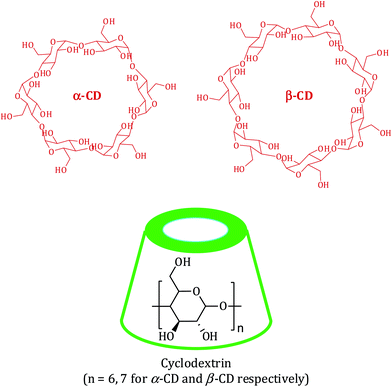 |
| | Scheme 1 Structure of cyclodextrin molecules. | |
Ionic liquids (ILs) have vast applications in chemical reactions, synthesis, cellulose processing, nuclear fuel reprocessing, waste recycling, metal air batteries etc.7 They are considered to be green solvents as they do not produce any environmental hazards.8 ILs have exceptional features such as low vapor pressure, thermal stability, solvating properties and wide liquid regions.7 Because of their distinctive properties they are attracting increasing attention in many fields such as organic chemistry, electrochemistry, catalysis, physical chemistry and applied supramolecular chemistry.9–15 In our previous works the inclusion phenomenon of various ILs with CDs have been shown and characterized.16–18
In this article the two studied ILs, namely, 1-butyl-3-methylimidazolium chloride [BMIm]Cl and 1-butyl-1-methylpyrrolidinium chloride [BMP]Cl (Scheme 2) are currently of interest in industry owing to their ability to be infinitely recycled and their ready solvation at room temperature, making them excellent green solvents.7 CD-IL ICs have wide applications in industry for their stability against atmospheric hazards and long term use without chemical modification. We investigated the formation of host–guest inclusion complexes (ICs) of these two ILs with α and β-CD particularly towards their formation, stabilization, carrying and controlled release without chemical modification by different dependable methods such as 1H NMR, 2D ROESY NMR, FT-IR, ESI MS, surface tension, conductivity, density, viscosity and refractive index measurements.
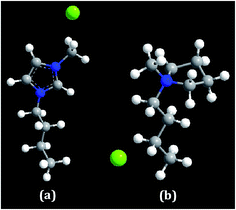 |
| | Scheme 2 Molecular structure of (a) [BMIm]Cl and (b) [BMP]Cl. | |
2. Results and discussion
2.1. 1H NMR study establishes inclusion
NMR study is the most important tool to ascertain the inclusion phenomena of the guest IL inside the host CD molecule. In this work we have studied the interactions of the two ILs (viz., [BMIm]Cl and [BMP]Cl) with α and β-CD by 1H NMR study, taking a 1:1 molar ratio of IL and CD in D2O at 298.15 K (Fig. 1 and S1†). 1H NMR data of the two ILs, two CDs and four ICs are listed in Table S1.† The protons of the CD molecule show considerable chemical shift due to the incorporation of the guest IL into the hydrophobic cavity.19 In the structure of CD, H3 and H5 are situated inside the cavity; more precisely the positions of the H3 and H5 protons are near the wider rim and the narrower rim, respectively, while the H1, H2 and H4 protons are found at the periphery of the CD molecule (Scheme 3).20,21 During the insertion of the guest IL molecule inside the cavity of CD, the H3 and H5 protons show upfield chemical shifts as a result of interaction with the guest, which confirms the formation of the host–guest inclusion complexes. The IL molecules insert into the host CD through the wider rim; as a result the H3 protons located near the wider rim show a higher shift than the H5 protons which are present near the narrower rim at the interior of CD (Scheme S1†). An upfield chemical shift is also observed for the exterior protons but to a lesser extent. The interacting protons of the two studied ILs also show upfield chemical shifts. Shifts in the butyl as well as methyl groups are found in the case of [BMP]Cl, while only a shift in the butyl group is observed in the case of [BMIm]Cl, which illustrates the mechanism of insertion as depicted in Scheme 4. Besides, the shifts of the butyl protons in [BMP]Cl are greater in comparison to that in [BMIm]Cl for both CDs, indicating that the binding affinity of the former is greater compared to the latter.
 |
| | Fig. 1 (a) 1H NMR spectra of α-CD, [BMIm]Cl and a 1:1 molar ratio of α-CD + [BMIm]Cl in D2O at 298.15 K. (b). 1H NMR spectra of α-CD, [BMP]Cl and a 1:1 molar ratio of α-CD + [BMP]Cl in D2O at 298.15 K. | |
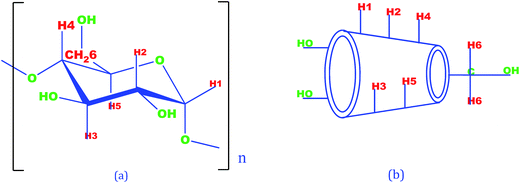 |
| | Scheme 3 (a) Stereochemical configuration and (b) truncated conical structure of α and β-cyclodextrin. | |
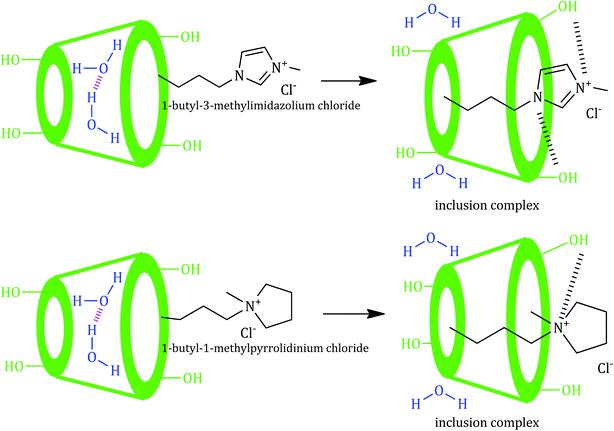 |
| | Scheme 4 Plausible schematic representation of the mechanism for the formation of 1:1 inclusion complexes of [BMIm]Cl and [BMP]Cl with both α and β-cyclodextrin. | |
2.2. 2D ROESY NMR elucidates the binding mode
2D ROESY NMR provides valuable information about the binding mode of the two ionic liquids [BMIm]Cl and [BMP]Cl with the host CD molecules and is also helpful to understanding the geometry of the inclusion complexes, as any two protons that are closely located in space within a distance of 0.4 nm can produce a nuclear overhauser effect (NOE) cross correlation in NOE spectroscopy (NOESY) or rotating-frame NOE spectroscopy (ROESY).22–25 2D ROESY NMR has been done using the four solid ICs of the ILs and CDs. Part of the contour plot of the ROESY spectrum of the [BMIm]Cl + α-CD IC and the [BMP]Cl + α-CD IC is shown in Fig. 2, whereas the spectra of the two ILs with β-CD are provided in Fig. S2 in the ESI.† As mentioned above, the H3 and H5 protons of CD are located in the hydrophobic cavity whereas the H1, H2 and H4 protons are placed outside (Scheme 3). In all four, Fig. 2(a) and (b) and S2(a) and (b),† there are appreciable correlations between the H3 or H5 protons of CD and the methylene and methyl groups of the butyl chains of the two ILs, confirming that the butyl chain in both of the guest ILs inserted into the hydrophobic cavity of the host CD molecules. The H6 protons of α and β-CD remain unaffected after the inclusion phenomena which again supports that the guest IL molecules inserted from the wider rim of the CDs.26 Thus, the 2D ROESY NMR results are in good agreement with the results obtained from 1H NMR chemical shift analysis.
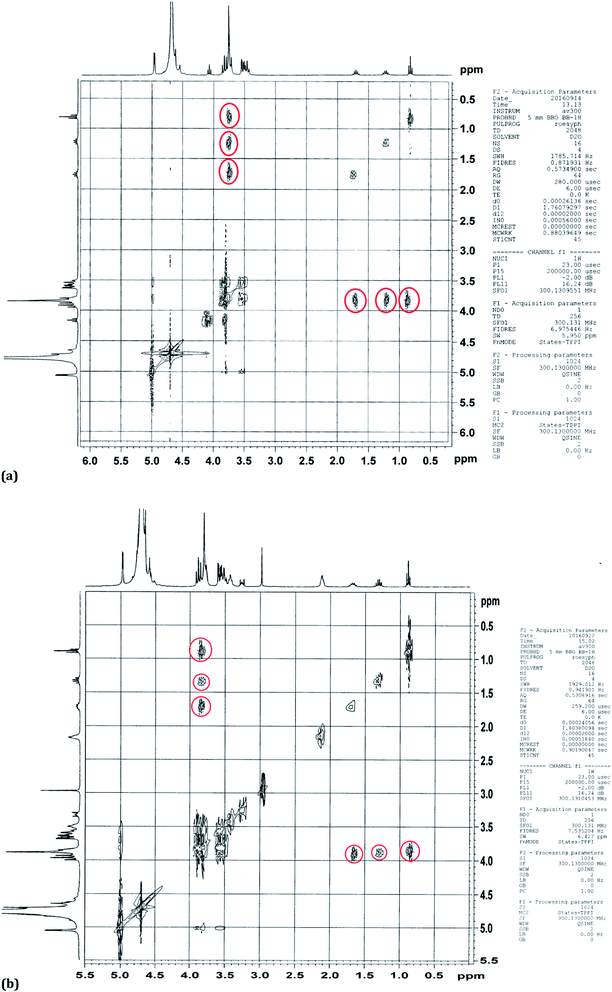 |
| | Fig. 2 (a) 2D ROESY spectra of the solid inclusion complex of [BMIm]Cl and α-CD in D2O (correlation signals are marked by red circles). (b) The 2D ROESY spectra of the solid inclusion complex of [BMP]Cl and α-CD in D2O (correlation signals are marked by red circles). | |
2.3. Surface tension study supports inclusion
Surface tension (γ) is another valuable parameter which also suggests the formation of inclusion complexes of the two studied ionic liquids with both α and β-CD.27 The addition of CD to pure water does not show any considerable change to the surface tension of water which is an indication that both cyclodextrins are almost surface inactive compounds.28 In the present study the γ of the aqueous ionic liquids was determined with increasing concentration of α and β-CD at 298.15 K (Tables S4–S7†). The γ values substantially increased for both [BMIm]Cl and [BMP]Cl with the addition of CDs, probably due to the removal of surface active ionic liquid molecules from the surface of the solution, i.e., the hydrophobic tails of the ionic liquids enter the hydrophobic cavity of α and β-CD forming the host guest inclusion complexes.29,30 All of the four curves show a single break point and after that point the γ value becomes approximately steady which confirms the formation of a 1:1 inclusion complex (Fig. 3 and S3†). More break points in the surface tension curve would indicate the formation of inclusion complexes with complex stoichiometry such as 1:2, 2:1, 2:2 etc. (Scheme S2†).31,32 The values of γ and corresponding concentration of CD and IL at each break are listed in Table 1. The breaks have been found in certain concentrations of ILs and CDs where their concentration ratio in the solution was almost 1:1. Hence this study proves the formation of 1:1 inclusion complexes. The γ value at the break point is a little higher in the case of α-CD compared with β-CD which might be due to the fact that the former is a better host than the latter.
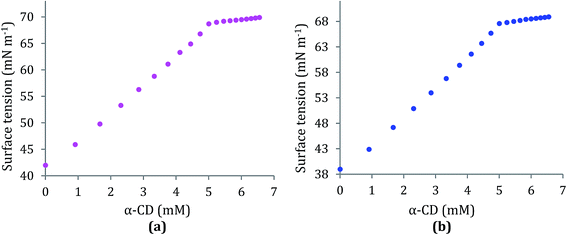 |
| | Fig. 3 Variation of surface tension of aqueous (a) [BMIm]Cl–α-CD and (b) [BMP]Cl–α-CD systems, respectively, at 298.15 K. | |
Table 1 Values of surface tension (γ) at the break point with corresponding concentrations of cyclodextrins and ionic liquids at 298.15 Ka
| |
Conc of α-CD/mM |
Conc of ionic liquid/mM |
γa/mN m−1 |
| Standard uncertainties (u): temperature: u(T) = ±0.01 K, surface tension: u(γ) = ±0.1 mN m−1. |
| [BMIm]Cl |
5.17 |
4.83 |
68.91 |
| [BMP]Cl |
5.15 |
4.85 |
67.75 |
| |
Conc of β-CD/mM |
Conc of ionic liquid/mM |
γa/mN m−1 |
| [BMIm]Cl |
5.10 |
4.90 |
68.26 |
| [BMP]Cl |
5.16 |
4.84 |
67.19 |
2.4. Conductivity study informs inclusion
The conductivity (κ) study not only confirms the formation of a host–guest inclusion complex but also gives the stoichiometry of the assembly.33–35 We have measured the conductivity of aqueous solutions of the studied two ionic liquids having initially 10 mmol L−1 concentration with the successive addition of α and β-CD at 298.15 K (Tables S4–S7†). It has been found that the conductivity of both ionic liquids decreases on a regular basis with increasing concentration of CD (Fig. 4 and S4†). This observation is in agreement with the formation of inclusion complexes. The insertion of the guest ionic liquid molecule inside the cavity of the CD molecule decreases the mobility of the former, thus the number of free ions per unit volume decreases, resulting in the reduction in conductivity of the solution. The four curves (Fig. 4 and S4†) show similar results, each having a noticeable break suggesting the formation of the IL–CD inclusion with a stoichiometry of 1:1. The values of κ and corresponding concentration of the two ILs and CDs at each break point are listed in Table 2. In both cases ([BMIm]Cl and [BMP]Cl) the conductivity values at the break points are lower for α-CD than β-CD suggesting that the former is better at encapsulating the guests than the later.
 |
| | Fig. 4 Variation of the conductivity of aqueous (a) [BMIm]Cl–α-CD and (b) [BMP]Cl–α-CD systems at 298.15 K. | |
Table 2 Values of conductivity (κ) at the break point with corresponding concentrations of cyclodextrins and ionic liquids at 298.15 Ka
| |
Conc of α-CD/mM |
Conc of ionic liquid/mM |
κa/mS m−1 |
| Standard uncertainties (u): temperature: u(T) = ±0.01 K, conductivity: u(κ) = ±1.0 μS m−1. |
| [BMIm]Cl |
5.14 |
4.86 |
2.41 |
| [BMP]Cl |
5.03 |
4.97 |
2.82 |
| |
Conc of β-CD/mM |
Conc of ionic liquid/mM |
κa/mS m−1 |
| [BMIm]Cl |
5.07 |
4.93 |
2.62 |
| [BMP]Cl |
5.01 |
4.99 |
2.97 |
2.5. Density study: interaction between host and guest
A density study may be carried out to obtain valuable information about the interaction (here inclusion) between the ionic liquids and the CD molecules. The two parameters used for this purpose are apparent molar volume (ϕv) and limiting apparent molar volume (ϕov).27 The sum of the geometric volume of the central solute molecule and changes in the solvent volume as a result of interaction with the solute around the co-sphere is termed the apparent molar volume.36 Ionic liquid + aqueous CD is a ternary solution system. The limiting apparent molar volume is used to express the solute–solvent interactions of this system (here, solute = IL and co-solvent = CD). For the present study ϕv values have been measured from the solution density using eqn (S5) as mentioned in the ESI† at 298.15 K (Table S8†). ϕov values were obtained by a least-squares treatment to the plots of ϕv versus √m using the Masson equation (ESI, eqn (S6), Table S9†).37 It is found that ϕv values regularly decrease and ϕov values constantly increase for the two studied ILs with increasing concentration of both α and β-CD. Thus, it is evident that in both cases ([BMIm]Cl and [BMP]Cl) the ion–hydrophilic group interactions are more effective than the ion–hydrophobic group interactions. The ϕov values for both the ILs and CDs at different mass fractions are depicted in Fig. 5. The ϕov values are found to be more for [BMP]Cl than [BMIm]Cl due to the greater interaction of the hydrophobic groups of the former than the latter within the cavity of the CDs. The values of ϕov increase with increasing mass fraction of both CDs and are also found to be greater for α-CD than for β-CD, indicating that the former interacts more with the ILs than the latter. This may be explained as follows: in case of [BMP]Cl, both the butyl and methyl groups can be encapsulated into the cavity of CD and the single positively charged N atom show a greater ion–hydrophilic interaction with the –OH groups of CD; in case of [BMIm]Cl, only the butyl group can be encapsulated into the cavity of CD and the ion–hydrophilic interaction is weaker because of sharing of the positive charge between the two N atoms. The smaller diameter of α-CD helps in making more compact structures with the ILs compared with β-CD with its relatively larger cavity size showing less hydrophobic interactions with the ILs.
 |
| | Fig. 5 Plot of limiting molar volume (ϕov) against mass fraction (w) of aqueous α-CD and aqueous β-CD for [BMIm]Cl (orange and green) and [BMP]Cl (blue & purple) respectively at 298.15 K. | |
2.6. Viscosity study: order of interactions
The interactions between ILs and CDs can also be interpreted using a viscosity study.38 The viscosity of the solutions shows an increasing trend with increasing concentrations of both ILs in the present ternary system (IL + aqueous CD), (Table S3†). The viscosity B-coefficients (Table S9†) signify the solute–solvent interactions (here, solute = IL and co-solvent = CD) that depend upon the size and shape of the solute molecules. For the two ILs, viz., [BMIm]Cl and [BMP]Cl, the viscosity B-coefficients are depicted in Fig. 6 and are found to be all positive. It may be observed that the viscosity B values increase with increasing concentration of CD probably due to greater IL–CD interactions and also higher solvation.29 It is again greater for α-CD than β-CD for the two ILs suggesting that inclusion is more favorable in case of the former than the latter. The comparative result of [BMIm]Cl and [BMP]Cl for the viscosity B-coefficient has been found to be similar to the density study, thus it is the structural feature of the two ILs and CDs as explained earlier for which these trends of interactions have been obtained.
 |
| | Fig. 6 Plot of viscosity B-coefficient against mass fraction (w) of aqueous α-CD and aqueous β-CD for [BMIm]Cl (orange and green) and [BMP]Cl (blue & purple), respectively, at 298.15 K. | |
2.7. Refractive index shows the compactness of the inclusion complexes
Refractive index is another valuable parameter for establishing the molecular interactions in the above mentioned ternary solution systems.27 The refractive index (nD) and molar refraction (RM) values of the solutions have been estimated using suitable equations (Tables S3 and S8†). Greater values of RM and the limiting molar refraction (ROM) signify that the medium is more compact and dense (Table S9†).28,29 Here, the ROM values show an increasing trend with increasing concentrations of both CDs, suggesting that the ICs of [BMP]Cl with both α and β-CD are more closely packed than those of [BMIm]Cl perhaps due to greater hydrophobic as well as ion–hydrophilic interactions between the guest and host as described earlier. The ROM values indicate that α-CD is more efficient than β-CD in forming the ICs (Fig. 7). The observations obtained from the refractive index data are in agreement with the density and viscosity studies.
 |
| | Fig. 7 Plot of limiting molar refraction (ROM) for [BMIm]Cl and [BMP]Cl in different mass fractions (w) of aqueous α-CD and aqueous β-CD, respectively, at 298.15 K. | |
2.8. Binding constants: non-linear isotherms determined by conductivity method
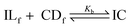
Binding constants (Kb) for the inclusion process have been determined for the four IL–CD ICs with the help of a conductivity study. Here, a non-linear programme has been used based upon the changes in conductivity as a result of encapsulation of the IL molecule inside into the apolar cavity of α and β-CD.39,40 The following equilibrium is supposed to exist between the host and the guest for a 1:1 IC:| |
 | (1) |
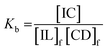
The binding constant (Kb) for the formation of IC may be expressed as:
| |
 | (2) |
here, [IC], [IL]
f and [CD]
f represent the equilibrium concentration of IC, free IL molecule and free CD, respectively. According to the binding isotherm, the binding constant (
Kb) for the formation of IC may be expressed as:
| |
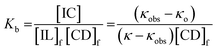 | (3) |
where,
| |
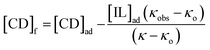 | (4) |
here,
κo,
κobs and
κ are the conductivity of IL molecule at initial state, during addition of CD and final state, respectively. [IL]
ad and [CD]
ad are the concentrations of IL and the added CD, respectively. Thus, the values of
Kb for the ICs were evaluated from the binding isotherm by applying a non-linear programme (
Table 3),
41 and they indicate that [BMP]Cl has a higher binding constant than [BMIm]Cl for ICs with both CDs, while α-CD encapsulates both ILs more tightly than β-CD does, which may be because of the narrower cavity dimension of α-CD, which structurally fits better than β-CD with the ILs investigated in this work.
Table 3 Binding constants (Kb) of various ionic liquid–cyclodextrin inclusion complexes
| Temperaturea/K |
Binding constantb Kb × 10−3/M−1 |
| [BMIm]Cl–α-CD |
[BMP]Cl–α-CD |
[BMIm]Cl–β-CD |
[BMP]Cl–β-CD |
| Standard uncertainties in temperature u are: u(T) = ±0.01 K. Mean errors in Kb = ±0.01 × 10⁻³ M−1. |
| 293.15 |
2.07 |
2.39 |
1.95 |
2.19 |
| 298.15 |
1.94 |
2.23 |
1.81 |
2.06 |
| 303.15 |
1.79 |
2.02 |
1.65 |
1.93 |
2.9. ESI-mass spectrometric analysis of the inclusion complexes
ESI-mass spectrometric analyses were carried out for the four solid ICs synthesized by the method described in the Experimental procedure section and have been shown in Fig. 8 and S5.† The observed peaks have been put into Table 4, which confirms that in all cases the desired ICs have been formed in the solid state and the stoichiometric ratio of the host and guest is 1:1.42,43
 |
| | Fig. 8 ESI mass spectra of (a) [BMIm]Cl–α-CD inclusion complex and (b) [BMP]Cl–α-CD inclusion complex. | |
Table 4 The observed peaks at different m/z with corresponding ions for the solid inclusion complexes
| [BMIm]Cl–α-CD inclusion complex |
[BMP]Cl–α-CD inclusion complex |
| m/z |
Ion |
m/z |
Ion |
| 175.10 |
[BMImCl + H]+ |
178.14 |
[BMPCl + H]+ |
| 197.08 |
[BMImCl + Na]+ |
200.12 |
[BMPCl + Na]+ |
| 995.31 |
[α-CD + Na]+ |
995.31 |
[α-CD + Na]+ |
| 1147.42 |
[BMImCl + α-CD + H]+ |
1150.45 |
[BMPCl + α-CD + H]+ |
| 1169.40 |
[BMImCl + α-CD + Na]+ |
1172.44 |
[BMPCl + α-CD + Na]+ |
| [BMIm]Cl–β-CD inclusion complex |
[BMP]Cl–β-CD inclusion complex |
| m/z |
Ion |
m/z |
Ion |
| 175.10 |
[BMImCl + H]+ |
178.14 |
[BMPCl + H]+ |
| 197.08 |
[BMImCl + Na]+ |
200.12 |
[BMPCl + Na]+ |
| 1157.36 |
[β-CD + Na]+ |
1157.36 |
[β-CD + Na]+ |
| 1309.47 |
[BMImCl + β-CD + H]+ |
1312.51 |
[BMPCl + β-CD + H]+ |
| 1331.45 |
[BMImCl + β-CD + Na]+ |
1334.49 |
[BMPCl + β-CD + Na]+ |
2.10. FT-IR spectra of solid inclusion complexes
FT-IR spectra also prove inclusion phenomena in the solid state.44–46 The characteristic IR frequencies of [BMIm]Cl, [BMP]Cl, α-CD, β-CD and solid ICs are listed in Table S10.† The FT-IR spectrum of [BMIm]Cl is characterized by the presence of peaks for the –C![[double bond, length as m-dash]](https://www.rsc.org/images/entities/char_e001.gif) N, –C–N, –CC etc. bonds, whereas [BMP]Cl is characterized by peaks for –C–N and –C–H for –CH3 and CH2 groups (Fig. 9 and S6†). Broad characteristic peaks of –OH at about 3412.10 cm−1 and 3349.84 cm−1 are present in the spectra of α and β-CD. However, several peaks of the two ILs are either absent or shifted which is due to the change in environment of the two guests after inclusion in the cavity of CDs. The –C–H stretching bands for –CH3 and –CH2 of both the ILs are absent in the inclusion spectrum. The –O–H stretch of both α and β-CD is shifted to a lower frequency in the spectrum of the four ICs possibly due to the involvement of the –O–H groups of the host molecules in hydrogen bonding with the guest molecules. The peaks for the C–N group of the guest molecules are present in the spectrum of the ICs, which is an indication of the fact that the hydrophobic side chains of both the IL molecules are encapsulated in the hydrophobic cavity of α and β-CD.
N, –C–N, –CC etc. bonds, whereas [BMP]Cl is characterized by peaks for –C–N and –C–H for –CH3 and CH2 groups (Fig. 9 and S6†). Broad characteristic peaks of –OH at about 3412.10 cm−1 and 3349.84 cm−1 are present in the spectra of α and β-CD. However, several peaks of the two ILs are either absent or shifted which is due to the change in environment of the two guests after inclusion in the cavity of CDs. The –C–H stretching bands for –CH3 and –CH2 of both the ILs are absent in the inclusion spectrum. The –O–H stretch of both α and β-CD is shifted to a lower frequency in the spectrum of the four ICs possibly due to the involvement of the –O–H groups of the host molecules in hydrogen bonding with the guest molecules. The peaks for the C–N group of the guest molecules are present in the spectrum of the ICs, which is an indication of the fact that the hydrophobic side chains of both the IL molecules are encapsulated in the hydrophobic cavity of α and β-CD.
 |
| | Fig. 9 (a) FTIR spectra of [BMIm]Cl (top), α-CD (middle) and the [BMIm]Cl–α-CD inclusion complex (bottom). (b) FTIR spectra of [BMP]Cl (top), α-CD (middle) and the [BMP]Cl–α-CD inclusion complex (bottom). | |
2.11. Structural influence of cyclodextrin
The formation of host–guest ICs between the two studied ILs and CDs not only depends upon the size of the guest molecules but also on the cavity diameter of the host. The cavity diameters of α and β-CD are 4.7–5.3 Å and 6.0–6.5 Å, respectively. Considering the size of the two ILs (the overall length of [BMIm]Cl is 5.29 Å, and that of [BMP]Cl is 4.62 Å, but the length of the inserted butyl chain is 3.08 Å), it is found that α-CD is more suitable for forming ICs with both ILs perhaps due to greater surface interaction, increasing the hydrophobic attractions, which is in agreement with spectroscopic and physicochemical observations.1 The hydrophobic butyl chains of both the ILs are encapsulated into the hydrophobic cavity of the CD molecules and no covalent bonds are formed or broken during the formation of the ICs. One of the main factors for the formation of an IC is that the hydrophobic cavity of CD is occupied by a polar water molecule which is unfavourable, so the water molecules are easily substituted by the more hydrophobic tails of the IL and the trapped water molecules are released into the bulk solution which increases the entropy of the system.47–49 This results in a more stable lower energy state of the system and also reduces the ring strain of the CD moiety.47,48 The stoichiometry of the host–guest IC is 1:1 probably because of the difficulty for the second molecule of IL to be trapped by the cavity after the inclusion of the first. The N atoms of the two ILs form H-bonds with the –OH groups at the rim of CD, thus stabilizing the whole IC.
3. Conclusion
With the help of the above mentioned spectroscopic and physicochemical studies we reached the conclusion that the two ILs, viz., [BMIm]Cl and [BMP]Cl form host–guest ICs with both α and β-CD both in solution and the solid state. 1H NMR and 2D ROESY NMR data confirm the inclusion in the apolar cavity of both CD molecules, while surface tension and conductivity measurements suggest a 1:1 stoichiometry. Density, viscosity and refractive index data are also in good agreement with the above results and also indicate the IL–CD interactions. Binding constants for the ICs have been determined with the help of a conductivity study by using a non-linear programme. Solid state characterisations have been carried out by ESI-MS and FT-IR, confirming their formation also in the solid state. The inclusion phenomenon has been found to be more fascinating in the case of α-CD and [BMP]Cl than the other combinations. Thus, the present study has miscellaneous applications in the field of nano-sensors, drug delivery tools, recycling extraction agents etc.
4. Experimental section
4.1. Source and purity of the samples
The selected ionic liquids and cyclodextrins of puriss grade were bought from Sigma-Aldrich, Germany, and used as purchased. The mass fraction purity of [BMIm]Cl, [BMP]Cl, α-cyclodextrin and β-cyclodextrin were ≥0.99, 0.99, 0.98 and 0.98, respectively.
4.2. Apparatus and procedure
The solubilities of the two CDs and the two above mentioned ionic liquids have been verified in triply distilled, deionized and degassed water. The two ionic liquids were fairly soluble in aqueous CDs. All the stock solutions of [BMIm]Cl and [BMP]Cl were prepared by mass (Mettler Toledo AG-285 with uncertainty 0.0001 g) and the working solutions were obtained by mass dilution at 298.15 K. The densities of the solutions were used to change the molarity to molality.50
1H NMR and 2D ROESY NMR spectra were recorded in D2O at 300 MHz using a Bruker Avance 300 MHz instrument at 298.15 K. Signals are cited as δ values in ppm using residual protonated solvent signals as the internal standard (HDO δ = 4.79 ppm). Data are reported as chemical shift.
The surface tensions of the solutions were measured with the help of the platinum ring detachment technique using a Tensiometer (K9, KRŰSS; Germany) at 298.15 K (accuracy ±0.1 mN m−1). The temperature of the system was maintained by circulating thermostated water through a double-wall glass vessel holding the solution.
The conductivities of the solutions were studied using a Mettler Toledo Seven Multi conductivity meter having an uncertainty of 1.0 μS m−1. The study was carried out in a thermostated water bath at 298.15 K with an uncertainty of ±0.01 K. HPLC grade water was used with a specific conductance of 6.0 μS m−1. The conductivity cell was calibrated using 0.01 M aqueous KCl solution.
The densities (ρ) of the solutions were studied by vibrating U-tube Anton Paar digital density meter (DMA 4500 M) having a precision of ±0.00005 g cm−3 and the uncertainty in temperature was ±0.01 K. The density meter was calibrated by the standard method.50
The viscosities (η) were determined using a Brookfield DV-III Ultra Programmable Rheometer with spindle size 42. The detailed information has already been reported.50
The refractive indexes of the solutions were studied with a Digital Refractometer from Mettler Toledo having an uncertainty of ±0.0002 units. The detailed information has already been described before.50
Each of the four solid inclusion complexes ([BMIm]Cl + α-CD, [BMP]Cl + α-CD, [BMIm]Cl + β-CD and [BMP]Cl + β-CD) has been prepared in a 1:1 molar ratio of the ionic liquid and cyclodextrin. In each case 1.0 mmol of cyclodextrin was dissolved in 20 mL of water and 1.0 mmol of ionic liquid was dissolved in 20 mL of ethanol and stirred separately for 3 h. Then the ethanol solution of the ionic liquid was added drop by drop to the aqueous CD solution. The mixture was then allowed to stir for 48 h at 50–55 °C. It was filtered at this temperature, then cooled to 5 °C and kept for 12 h. The resulting suspension was filtered and a white polycrystalline powder was found, which was washed with ethanol and dried in air.
HRMS analyses were executed with a Q-TOF high resolution instrument by positive mode electro-spray ionization dissolving the solid ICs in methanol.
Fourier transform infrared (FT-IR) spectra were recorded using a Perkin Elmer FT-IR spectrometer according to the KBr disk technique. Samples were prepared as KBr disks with 1 mg of complex and 100 mg of KBr. The FTIR measurements were performed in a scanning range of 4000–400 cm−1 at room temperature.
Acknowledgements
The authors would like to thank SAP, Department of Chemistry, NBU under University Grants Commission (UGC), New Delhi for financial support and instrumental facilities in order to perform the research work. Prof. M. N. Roy is grateful to University Grants Commission, New Delhi, Government of India for being awarded a one time grant under Basic Scientific Research for his active service in advanced research work.
References
- J. Szejtli, Chem. Rev., 1998, 98, 1743–1753 CrossRef CAS PubMed.
- K. A. Connors, Chem. Rev., 1997, 97, 1325–1357 CrossRef CAS PubMed.
- E. Pinho, M. Grootveld, G. Soarse and M. Henriques, Carbohydr. Polym., 2014, 101, 121–135 CrossRef CAS PubMed.
- B. Wei, Carbohydr. Polym., 2015, 134, 398–405 CrossRef CAS PubMed.
- G. Yu, B. Hua and C. Han, Org. Lett., 2014, 16, 2486–2489 CrossRef CAS PubMed.
- H. Li, D. Chen, Y. Sun, Y. B. Zheng, L. Tan, P. S. Weiss and Y. Yang, J. Am. Chem. Soc., 2013, 135, 1570–1576 CrossRef CAS PubMed.
- T. Welton, Chem. Rev., 1999, 99, 2071 CrossRef CAS PubMed.
- M. J. Earle and K. R. Seddon, Pure Appl. Chem., 2000, 72, 1391 CrossRef CAS.
- N. L. Strutt, R. S. Forgan, J. M. Spruell, Y. Y. Botros and J. F. Stoddart, J. Am. Chem. Soc., 2011, 133, 5668–5671 CrossRef CAS PubMed.
- X. Chi, M. Xue, Y. Yao and F. Huang, Org. Lett., 2013, 15, 4722–4725 CrossRef CAS PubMed.
- S. Dasgupta, A. Chowdhury and P. S. Mukherjee, RSC Adv., 2015, 5, 85791–85798 RSC.
- X. Chi, P. Wang, Y. Li and X. Ji, Tetrahedron Lett., 2015, 56, 4545–4548 CrossRef CAS.
- Y. Zhou, K. Jie, C. Thompson, N. Li and Y. Yao, Tetrahedron Lett., 2015, 56, 2091–2093 CrossRef CAS.
- C. Li, L. Zhao, J. Li, X. Ding, S. Chen, Q. Zhang, Y. Yu and X. Jia, Chem. Commun., 2010, 46, 9016–9018 RSC.
- S. Dong, J. Yuan and F. Huang, Chem. Sci., 2014, 5, 247–252 RSC.
- M. N. Roy, M. C. Roy and K. Roy, RSC Adv., 2015, 5, 56717–56723 RSC.
- M. N. Roy, K. Roy, K. Das and B. K. Barman, J. Mol. Liq., 2016, 216, 132–136 CrossRef CAS.
- B. Datta, S. Barman and M. N. Roy, J. Mol. Liq., 2016, 214, 264–269 CrossRef CAS.
- J. V. Caso, L. Russo, M. Palmieri, G. Malgieri, S. Galdiero, A. Falanga, C. Isernia and R. Iacovino, Amino Acids, 2015, 47, 2215–2227 CrossRef CAS PubMed.
- V. Sindelar, M. A. Cejas, F. M. Raymo, W. Chen, S. E. Parker and A. E. Kaifer, Chem.–Eur. J., 2005, 11, 7054–7059 CrossRef CAS PubMed.
- T. Wang, M. D. Wang, C. Ding and J. Fu, Chem. Commun., 2014, 50, 12469–12472 RSC.
- I. Correia, N. Bezzenine, N. Ronzani, N. Platzer, J. C. Beloeil and B. T. Doan, J. Phys. Org. Chem., 2002, 15, 647–659 CrossRef CAS.
- E. Bednarek, W. Bocian, J. Poznański, J. Sitkowski, N. S. Sosnowska and L. Kozerski, J. Chem. Soc., Perkin Trans. 2, 2002, 999–1004 RSC.
- T. Wang, M. D. Wang, C. Ding and J. Fu, Chem. Commun., 2014, 50, 12469–12472 RSC.
- T. Ishizu, C. Hirata, H. Yamamoto and K. Harano, Magn. Reson. Chem., 2006, 44, 776–783 CrossRef CAS PubMed.
- T. Stalin, K. Srinivasan, K. Sivakumar and S. Radhakrishnan, Carbohydr. Polym., 2014, 107, 72–84 CrossRef CAS PubMed.
- M. N. Roy, D. Ekka, S. Saha and M. C. Roy, RSC Adv., 2014, 4, 42383–42390 RSC.
- M. N. Roy, A. Roy and S. Saha, Carbohydr. Polym., 2016, 151, 458–466 CrossRef CAS PubMed.
- S. Saha, T. Ray, S. Basak and M. N. Roy, New J. Chem., 2016, 40, 651–661 RSC.
- Y. Gao, Z. Li, J. Du, B. Han, G. Li, W. Hou, D. Shen, L. Zheng and G. Zhang, Chem.–Eur. J., 2005, 11, 5875–5880 CrossRef CAS PubMed.
- A. Pineiro, X. Banquy, S. P. Casas, E. Tovar, A. Garcia, A. Villa, A. Amigo, A. E. Mark and M. Costas, J. Phys. Chem. B, 2007, 111, 4383–4392 CrossRef CAS PubMed.
- Y. Gao, X. Zhao, B. Dong, L. Zheng, N. Li and S. Zhang, J. Phys. Chem. B, 2006, 110, 8576–8581 CrossRef CAS PubMed.
- M. N. Roy, S. Saha, S. Barman and D. Ekka, RSC Adv., 2016, 6, 8881 RSC.
- A. Apelblat, E. Manzurola and Z. Orekhova, J. Solution Chem., 2007, 36, 891–900 CrossRef CAS.
- M. N. Roy, S. Saha, M. Kundu, B. C. Saha and S. Barman, Chem. Phys. Lett., 2016, 655–656, 43–50 CrossRef CAS.
- D. Ekka and M. N. Roy, RSC Adv., 2014, 4, 19831–19845 RSC.
- D. O. Masson, Philos. Mag., 1929, 8, 218–223 CrossRef CAS.
- A. Roy, S. Saha and M. N. Roy, Fluid Phase Equilib., 2016, 425, 252–258 CrossRef CAS.
- P. Thordarson, Chem. Soc. Rev., 2011, 40, 1305–1323 RSC.
- M. A. Spies and R. L. Schowen, J. Am. Chem. Soc., 2002, 124, 14049–14053 CrossRef CAS PubMed.
- A. A. Hamdan, P. Bugnon, C. Saudan, P. G. Lye and A. E. Merbach, J. Am. Chem. Soc., 2000, 122, 592–602 CrossRef.
- J. Zhang, K. Jiang, K. An, S. Ren, X. Xie, Y. Jin and J. Lin, Carbohydr. Res., 2015, 418, 20–28 CrossRef CAS PubMed.
- Y. Okada, K. Ueyama, J. Nishikawa, M. Semma and A. Ichikawa, Carbohydr. Res., 2012, 357, 68–74 CrossRef CAS PubMed.
- J. S. Negi and S. Singh, Carbohydr. Polym., 2013, 92, 1835–1843 CrossRef CAS PubMed.
- W. Zhang, X. Gong, Y. Cai, C. Zhang, X. Yu, J. Fan and G. Diao, Carbohydr. Polym., 2013, 95, 366–370 CrossRef CAS PubMed.
- S. Milovanovic, D. Markovic, K. Aksentijevic, D. B. Stojanovic, J. Ivanovic and I. Zizovic, Carbohydr. Polym., 2016, 147, 344–353 CrossRef CAS PubMed.
- E. M. M. D. Valle, Process Biochem., 2004, 39, 1033–1046 CrossRef.
- P. C. Manor and W. Saenger, J. Am. Chem. Soc., 1974, 96, 3630–3639 CrossRef CAS.
- K. K. Chacko and W. Saenger, J. Am. Chem. Soc., 1981, 103, 1708–1715 CrossRef CAS.
- D. P. Shoemaker and C. W. Garland, Experiments in Physical Chemistry, McGraw-Hill, New York, 1967, pp. 131–138 Search PubMed.
Footnote |
| † Electronic supplementary information (ESI) available: Theory, tables (Tables S1–S10), figures (Fig. S1–S6) and schemes (Schemes S1 and S2) have been provided. See DOI: 10.1039/c6ra19684e |
|
| This journal is © The Royal Society of Chemistry 2016 |
Click here to see how this site uses Cookies. View our privacy policy here. 


