Yan Lin‡
a,
Qi Liu‡b,
Jinchen Fan*a,
Kexuan Liaoa,
Jiawei Xiea,
Peng Liua,
Yihui Chena,
Yulin Min*a and
Qunjie Xu*a
aShanghai Key Laboratory of Materials Protection and Advanced Materials in Electric Power, College of Environmental and Chemical Engineering, Shanghai University of Electric Power, Shanghai 200090, People's Republic of China. E-mail: Jinchen.fan@shiep.edu.cn; minyulin@shiep.edu.cn; xuqunjie@shiep.edu.cn; Fax: +86 21 35303544; Tel: +86 21 35303544
bShanghai Aerospace Energy Co., Ltd, Shanghai 201201, People's Republic of China
First published on 14th October 2016
Multi-walled carbon nanotubes (MWCNTs) have been considered as good catalyst supporting materials, and their dispersion and functionalization are important, challenging problems for high-performance composite catalysts. Here, poly(N1,N3-dimethylbenzimidazolium)iodide (P(DMBI)-I−) was successfully synthesized by methylation of polybenzimidazole (PBI) for the dispersion and functionalization of MWCNTs. The results demonstrate that the novel P(DMBI)-I− exhibits a higher dispersion effect for MWCNTs than the original PBI in some typical organic solvents. MWCNTs were wrapped with a thin layer of P(DMBI)-I− and achieved functionalization with π–π conjugation and cation–π interaction. Benefiting from the positive charges and imidazole rings of P(DMBI)-I−, the palladium nanoparticles/P(DMBI)-I−-functionalized MWCNTs hybrid (Pd/P(DMBI)-I−-f-MWCNTs) catalyst loaded with highly dispersed palladium nanoparticles was fabricated by in situ reduction. TEM and SEM images demonstrated that when the feed weight ratio of Na2PdCl4 and P(DMBI)-I−-f-MWCNTs was 6
:
1, the Pd NPs of Pd/P(DMBI)-I−-f-MWCNTs with particle size of ∼2.9 nm were well distributed on P(DMBI)-I−-f-MWCNTs in good quantity. The amount of Pd loading on the catalyst of Pd/P(DMBI)-I−-f-MWCNTs was about 56.43 wt%. With respect to ethanol oxidation in alkaline solution, the Pd/P(DMBI)-I−-f-MWCNTs exhibited higher electrochemical performance and tolerance stability, compared to commercial Pd/C and Pd/PBI-f-MWCNTs.
Multi-walled carbon nanotubes (MWCNT) have been considered as fine heterogeneous catalyst supports, due to their unique electrical and structural properties.17,18 Pd/MWCNTs hybrid materials have been reported as highly effective catalysts for improving DEFC performance.18,19 However, pristine MWCNTs are chemically inert and need to be functionalized to ensure the uniform distribution and deposition of Pd nanoparticles (NPs) on their surfaces. To realize the effective combination of Pd NPs and MWCNTs, lots of research works have focused on the functionalization of MWCNTs.20,21 The traditional functionalization method involves the chemical treatment of pristine MWCNTs with HNO3 or H2SO4/HNO3 acid solutions. For acid-treated MWCNTs, the generated functional oxygen-containing groups and defects of the MWCNTs can be used as catalyst supports for the deposition of catalyst nanoparticles. Nevertheless, the acid treatment inevitably introduces surface defects and causes structural damage to the MWCNTs. As a consequence, non-covalent functionalization methods exhibit potential advantages, in comparison to acid-treatment.22 Through π–π stacking, ion–π interactions, electrostatic and hydrogen-bond interactions, etc., the MWCNTs can be functionalized by surfactants, polymers and other capping agents.23,24
Poly(benzimidazole) (PBI), a high-performance benzo-heterocycle polymer, has been widely used in lots of applications, including electronic and automotive components, structural resins, and DEFCs, due to its excellent mechanical properties and high thermal and chemical stability.25–28 With respect to DEFCs, PBI can act as a proton-conducting material and be used above 100 °C under dry conditions. It is supposed to be an appropriate substitution for Nafion®, used in low-temperature DEFC systems.29,30 It is noteworthy that on the strength of the aromatic structure, PBI was used for the exfoliation and dispersion of carbon nanotubes with π–π interactions.31–34 Okamoto et al. reported that the hybrids of MWCNT/PBI/Pt for use in fuel-cells exhibited good electro-catalytic activity.35 Fujigaya et al. further used PBIs as effective binding sites for the formation of platinum (Pt) nanoparticles and fabricated a ternary composite (CNT/PBIs/Pt) for oxygen reduction catalysts.36 It was found that PBI not only acts as the wrapping polymer for the exfoliation and dispersion of MWCNTs through π–π interactions, but also as a Pt or Pd ions absorber through the coordination with the aromatic nitrogen on the PBI. Although the imidazole groups of PBI can act as active adsorption sites for metal ions for growth and dispersion, the easy conglomeration of metal nanoparticles and relatively high content of the metal nanoparticles are still problems to be solved. The main reason for the problems is the poor dissolving properties derived from the rigid main chains and strong intermolecular hydrogen bonding of pure PBI.37,38
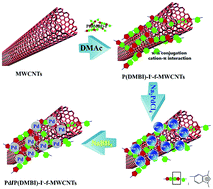
Based on the above analysis, we synthesized poly(N1,N3-dimethylbenzimidazolium)iodide (P(DMBI)-I−) by the alkylation reaction of the imidazole ring in primary polybenzimidazole (PBI). Through non-covalent functionalization of P(DMBI)-I−, the dispersion of MWCNTs was significantly improved with π–π and cation–π interactions. With the assistance of positive charges and the imidazole ring of P(DMBI)-I−, the Pd/P(DMBI)-I−-f-MWCNTs with uniformly distributed small-size Pd NPs were prepared for the first time. The obtained Pd/P(DMBI)-I−-f-MWCNTs exhibited superior electrocatalytic performance in ethanol oxidation in alkaline solution.
000 rpm, 60 min) and washing with DMAc at least 5 times. Finally, the P(DMBI)-I−-f-MWCNTs product was vacuum dried at 80 °C for 12 hours. For comparison, PBI-f-MWCNTs were obtained by the same process.The electrochemical experiments were carried out using a conventional three-electrode cell using a CHI 660E electrochemistry workstation at room temperature. Pt wire and a saturated calomel electrode (SCE) were used as the counter electrode and reference electrode, respectively. To prepare the catalyst ink, the prepared catalyst was suspended by sonication in an isopropanol/DI water mixture (1
:
4 v/v) with a 20 wt% Nafion solution (5 wt%, IonPower, Inc.). The catalysts with a Pd loading of 28 μg cm−2 were then dropped onto the polished and cleaned glassy carbon electrode (GCE, 3 mm in diameter) surface and dried. The electrolyte solutions were purged with N2 gas before use for about 1 h. Cyclic voltammetry was performed in 1 M NaOH, and a solution of 1 M NaOH with 1 M C2H5OH at a scan rate of 50 mV s−1. Chronoamperometry was carried out at −0.2 V for 3600 s.
![]() | ||
| Fig. 1 (a) Schematic diagram for the preparation of P(DMBI)-I−; (b) 1H NMR spectroscopy of as-prepared P(DMBI)-I− and (c) FT-IR spectra of PBI and P(DMBI)-I−. | ||
1H NMR was first used to characterize the P(DMBI)-I−. From Fig. 1b, compared to pure PBI, there are new chemical shifts of δ 4.2 and δ 4.13 ppm in 1H NMR spectroscopy of P(DMBI)-I−, attributed to the methyl groups bonded to the nitrogen atoms of the imidazole ring. Additionally, the peak for the N–H bond of PBI located at δ 13.3 ppm disappeared, also demonstrating the breaking of the hydrogen bonds of the N–H groups of PBI with the methylation reaction. Calculated from the integral area, the degree of methylation of the as-prepared P(DMBI)-I− was ∼95.3%. FT-IR spectra were also used for characterizing the structural change of the PBI chains. From Fig. 1c, the peak at ∼1630 cm−1 for PBI was attributed to the characteristic adsorption peak of C
N/C
C groups. The stretching vibration band for the C
C of the benzene ring was exhibited at ∼1450 cm−1. Compared to PBI, the stretching vibration peak for N–H groups at around ∼3200 cm−1 disappeared in P(DMBI)-I−, which is ascribed to the replacement of the protons of N–H groups by methyl groups during the methylation reaction. The new peak for the C–N groups in the structure of P(DMBI)-I− appeared at ∼1216 cm−1. These results demonstrated the successful methylation of PBI, which is consistent with 1H NMR spectroscopy.42
| Product | Ethanol | Acetone | THF | DMF | DMAc | DMSO | NMP |
|---|---|---|---|---|---|---|---|
| a +++: totally dissolved at R.T., ++: totally dissolved at 80 °C, +: partial dissolution at 80 °C, −: insoluble (initial concentration: 1 mg mL−1). | |||||||
| PBI | − | − | − | ++ | ++ | ++ | ++ |
| P(DMBI)-I− | + | + | + | +++ | +++ | +++ | +++ |
The stabilization and exfoliation of MWCNTs were carried out by bath sonication of the dispersion mixture of MWCNTs in typical polarity organic solvents, e.g., DMF, DMAc, NMP and DMSO. From Fig. 2a, the MWCNTs were not well dispersed in the pure solvents and almost formed granular dispersions. After the addition of PBI and P(DMBI)-I−, the colors of both MWCNTs-based dispersions changed from clear and transparent to dark and black; this proved that the PBI and P(DMBI)-I− both exhibited good dispersibility of MWCNTs in organic solvents (Fig. 2b and c). For further studying the differences in dispersing properties between PBI and P(DMBI)-I−, the concentrations of MWCNTs for MWCNTs/PBI and MWCNTs/P(DMBI)-I− dispersions were calculated from the absorbance at 500 nm with the Lambert–Beer law by UV-vis analysis.43,44 The concentration of MWCNTs (CMWCNTs, mg mL−1) was calculated using A = εCl, where A is the absorbance of PBI- and P(DMBI)-I− aided, stabilized MWCNTs dispersion at the wavelength of 500 nm; ε is the extinction coefficient, which is related to the absorbance (value: 47.04 mL mg−1 cm−1); l (value: 10−2 m) is the path length.45 As shown in Fig. 2d, the CMWCNTs for MWCNTs/PBI and MWCNTs/P(DMBI)-I− dispersions significantly improved with the existence of PBI and P(DMBI)-I−. It is worth noting that the CMWCNTs of MWCNTs/P(DMBI)-I− is higher than the CMWCNTs of MWCNTs/PBI in all organic solvents. The CMWCNTs of MWCNTs/P(DMBI)-I− in NMP and DMF reached ∼0.45 and ∼0.365 mg mL−1, nearly 5 and 4 times higher than the CMWCNTs for MWCNTs/PBI in NMP and DMF, respectively. As aromatic polymers, there are strong interactions between polymer chains and MWCNTs. The PBI and P(DMBI)-I− can be absorbed on the MWCNTs through π–π conjugation with MWCNTs, and then can achieve good dispersion of MWCNTs. However, with respect to the PBI-assisted dispersion system, the strong intermolecular hydrogen-bond interaction in PBI chains resulted in the inhomogeneous adsorption of PBI on the tube surfaces of MWCNTs, and the dispersed MWCNTs easily formed agglomerations. After methylation and iodine ionization, the P(DMBI)-I− was also absorbed on the MWCNTs by cation–π interactions, due to the positive charge of the molecular chains, while the reduced rigidity and enhanced electrostatic repulsion of the molecular chain significantly improved the stability of the MWCNTs/P(DMBI)-I− dispersion.46
In fact, during the process of P(DMBI)-I−-assisted dispersion and exfoliation of MWCNTs, the tube surfaces of MWCNTs were simultaneously non-covalently functionalized by π–π conjugation and cation–π interaction with P(DMBI)-I−. TEM images were used to characterize the P(DMBI)-I−-functionalized MWCNTs. From Fig. 3a, there are abundant windings and aggregations in the original MWCNTs. After exfoliation and dispersion by PBI and P(DMBI)-I−, the phenomena of windings and aggregations were significantly alleviated, as shown in Fig. 3b and c. From the high-magnification TEM images inset, the tube structures of MWCNTs can be clearly identified, with inner and outer diameters along the length. Nevertheless, compared to the smooth and clean surface of MWCNTs, the surfaces became rough and coated by thin polymer layers after the functionalization with PBI and P(DMBI)-I−. It is worth noting that the P(DMBI)-I−-dispersed MWCNTs exhibited a nearly monodispersed state and exhibited better dispersed state, compared to that of PBI-dispersed MWCNTs.
![]() | ||
| Fig. 3 TEM images of (a) MWCNTs, (b) PBI- and (c) P(DMBI)-I−-dispersed MWCNTs (inset of (a)–(c): high-magnification TEM images). | ||
For further characterizing the P(DMBI)-I−-dispersed MWCNTs, Raman spectroscopy was also applied. As shown in Fig. 4, the peaks of 1314 and 1570 cm−1 were ascribed to the D and G bands of MWCNTs, which originated from the defects and disorder induced modes and the in-plane E2g zone-center mode. The second prominent peak, the 2D band of MWCNTs from a double-resonance process, is located at 2612 cm−1. After non-covalent functionalization, there was an evident blue shift of the 2D band from 2612 cm−1 for MWCNTs to 2630 and 2648 cm−1 for PBI- and P(DMBI)-I−-functionalized MWCNTs, respectively, which may be attributed to axial deformation with the squeezing action of PBI- and P(DMBI)-I− on the surfaces of the MWCNTs. Notably, the blue shift of the 2D band for the P(DMBI)-I−-functionalized MWCNTs was larger than the blue shift for the PBI-functionalized MWCNTs. It demonstrated that the adhesion strength of P(DMBI)-I−-f-MWCNTs was higher than PBI-f-MWCNTs, due to π–π conjugation and cation–π interactions between MWCNTs and P(DMBI)-I−.47
After functionalization, P(DMBI)-I−-functionalized MWCNTs exhibited favorable dispersibility in some organic solvents. Here, DMAc was chosen for further growth and coating of Pd NPs on the surfaces of MWCNTs, based on the low toxicity and reducing capacity of DMAc. Firstly, the sedimentation experiments of PBI/MWCNTs and P(DMBI)-I−/MWCNTs were performed in DMAc. From the inset photograph of Fig. 5a, the MWCNTs can be well dispersed in P(DMBI)-I−/DMAc without any precipitation after standing for one month. However, there are obvious sediments in the PBI/MWCNTs/DMAc dispersion. Through high-speed centrifugal separation (20
000 rpm, 30 min), the P(DMBI)-I−-f-MWCNTs were obtained and quantitatively analyzed. The P(DMBI)-I− decomposed primarily by the step at around ∼300 °C, corresponding to the decomposition of the side methyl groups. From Fig. 5b, calculating from the weight loss at around 700 °C in nitrogen, the adsorbed P(DMBI)-I− and PBI of P(DMBI)-I−-f-MWCNTs and PBI-f-MWCNTs accounts for ∼11.29 and ∼4.97 wt%, respectively. It is clear that the amount of P(DMBI)-I− from P(DMBI)-I−-f-MWCNTs is significantly higher than the PBI from PBI-f-MWCNTs, due to the dual action of π–π conjugation and cation–π interaction between P(DMBI)-I− and MWCNTs.
TEM images were first used to characterize the Pd/P(DMBI)-I−-f-MWCNTs hybrids with different feed weight ratios of Na2PdCl4 and P(DMBI)-I−-f-MWCNTs. As shown in Fig. 7a, e and i, the Pd NPs with average particle sizes of ∼2.8 nm were successfully decorated and sparsely distributed on the surfaces of MWNTs when the feed weight ratio of Na2PdCl4 and P(DMBI)-I−-f-MWCNTs was 2
:
1. From Fig. 7b, f and j, when the ratio of Na2PdCl4 and P(DMBI)-I−-f-MWCNTs was 6
:
1, the Pd NPs were well distributed on the surfaces of MWCNTs in good quantity. The particle sizes were concentrated mainly at ∼2.9 nm. As the ratio continued to increase, agglomeration began to occur. As shown in Fig. 7c, g, k, d, h and i, there are some obvious aggregations of Pd NPs on the surfaces of MWCNTs when the feed weight ratios of Na2PdCl4 and MWNT/P(DMBI)-I− are 10
:
1 and 16
:
1. It is worth noting that the particle sizes of Pd NPs are all relatively small, mainly concentrated in the range from 2 to 4.5 nm. Actually, the imidazole groups of P(DMBI)-I− on the surfaces of MWCNTs provide lots of active sites for nucleation and crystal growth of Pd NPs. With the electrostatic interaction between PdCl42− and the electropositive polymer skeleton of P(DMBI)-I−, the precursor of Pd NPs can be uniformly adsorbed onto the surfaces of MWCNTs. By then, the Pd/P(DMBI)-I−-f-MWCNTs hybrids were successfully prepared and well distributed on the surfaces of MWCNTs after reduction.
The Pd/P(DMBI)-I−-f-MWCNTs were further characterized by HRTEM and XRD. As shown in Fig. 8a, the crystal lattice of Pd is continuous, in the same direction and 3–4 nm in grain size. Meanwhile, the HRTEM image clearly shows close contact between the Pd nanoparticles and the MWCNTs surface. It demonstrated that the precursor had already grown into Pd NPs with good crystal structure on the P(DMBI)-I− layer, followed by penetration into the P(DMBI)-I− layer to form a close contact structure with the MWCNT surfaces. From Fig. 8b, the diffraction peak of the XRD pattern for Pd/P(DMBI)-I−-f-MWCNTs at 25.9° is attributed to the C (002) reflection of MWCNTs.48 The XRD pattern also shows the characteristic peaks of the face-centered cubic Pd lattice at 2θ = 40.1°, 46.7°, 68.1° and 81.1°, corresponding to Pd (111), Pd (200), Pd (220) and Pd (311), respectively.49 The grain sizes were calculated by the Debye–Scherrer formula, according to the XRD spectra, to be about ∼4.2 nm for Pd NPs, which is consistent with the results of the TEM images.
![]() | ||
Fig. 8 (a) HRTEM image and (b) XRD pattern of Pd/P(DMBI)-I−-f-MWCNTs, with the feed weight ratio of Na2PdCl4 and P(DMBI)-I−-f-MWCNTs of 6 : 1. | ||
Obviously, the P(DMBI)-I− can well facilitate the formation and distribution of Pd NPs after methylation. For comparing and analyzing the influence of P(DMBI)-I− and PBI on the formation and distribution of Pd NPs, the Pd/MWCNTs and Pd/PBI-f-MWCNTs were also prepared with the same feed weight ratio. As shown in Fig. 9, regarding Pd/MWCNTs, the Pd NPs were unequally distributed on the surfaces of MWCNTs. Due to a lack of functional groups, the Pd NPs barely grew and deposited defect sites of un-modified pure MWCNTs on the structure, consequently resulting in lots of agglomeration. After functionalization by PBI, the distribution and agglomeration of Pd NPs on the surfaces of MWCNTs were obviously improved. However, because of the poor solubility and strong hydrogen-bonding interactions between molecular chains of PBI, the Pd NPs were not well dispersed and grown on the surfaces of MWCNTs. The Pd NPs preferentially deposited on the sites of the imidazole rings of PBI adsorbed on the surfaces of MWCNTs through π–π stacking between PBI and MWCNTs. Once the precursor is in excess, the Pd NPs tend to aggregate, induced by high surface energy. Obviously, compared to the PBI, the P(DMBI)-I− is more beneficial to the surface growth and distribution of Pd NPs. In addition, from the XRD pattern of Pd/MWNT, the intensities of diffraction peaks for Pd (220) and Pd (311) are very low, due to a lower quantity of Pd NPs.50 SEM images were also used for comparing the dispersion and growth of Pd NPs in Pd/MWCNTs, Pd/PBI-f-MWCNTs and Pd/P(DMBI)-I−-f-MWCNTs. From Fig. 10, the Pd NPs were nearly dominated by agglomeration in Pd/MWCNTs and Pd/P(DMBI)-I−-f-MWCNTs. Regarding Pd/P(DMBI)-I−-f-MWCNTs, the Pd NPs were uniformly distributed on the surfaces of MWCNTs without aggregates, which is consistent with the TEM images.
![]() | ||
Fig. 9 TEM images of (a and b) Pd/MWCNTs (6 : 1) and (d and e) Pd/PBI-f-MWCNTs-6 : 1 with different magnifications. XRD patterns of (c) Pd/MWCNTs-6 : 1 and (f) Pd/PBI-f-MWCNTs-6 : 1. | ||
![]() | ||
Fig. 10 FE-SEM images of (a) Pd/MWCNTs-6 : 1, (b) Pd/PBI-f-MWCNTs-6 : 1 and (c) Pd/P(DMBI)-I−-f-MWCNTs-6 : 1. | ||
XPS was utilized to characterize the samples of Pd/P(DMBI)-I−-f-MWCNTs. As depicted in Fig. 11, the elements of C1s, Pd3d and N1s exist in all samples of Pd/P(DMBI)-I−-f-MWCNTs, with different feed ratios. When the feed weight ratio of Na2PdCl4 and P(DMBI)-I−-f-MWCNTs was 2
:
1, the ratio of C1s/Pd3d for Pd/P(DMBI)-I−-f-MWCNTs was ∼21.03; the ratio of C1s/Pd3d increased with the increase in the feed amount of Na2PdCl4. Evidently, the ratio of C1s/Pd3d reached ∼11.37 as the feed weight ratio increased to 6
:
1. However, when the feed weight ratio of Na2PdCl4 and P(DMBI)-I−-f-MWCNTs increased to 10
:
1 and 16
:
1, the ratios of C1s/Pd3d were ∼4.58 and ∼4.61, respectively, which were nearly the same. This indicated that once the precursors of Pd NPs are in excess with respect to the surface active sites, the Pd NPs begin to stack and form aggregations with interactions of Pd NPs during the formation of Pd NPs.51 Once the amounts of Pd precursors are in excess, the loading amounts of Pd no longer increase. From the TGA curves (Fig. 12a) for P(DMBI)-I−-f-MWCNTs and Pd/P(DMBI)-I−-f-MWCNTs with different feed ratios, the residue of P(DMBI)-I−-f-MWCNTs was ∼1.72 wt% when it was heated to 850 °C in an oxygen atmosphere. The loading contents of Pd were calculated to be ∼20.48 wt%, ∼56.43 wt%, ∼64.38 wt% and ∼67.58 wt% in Pd/P(DMBI)-I−-f-MWCNTs with feed ratios of 2
:
1, 6
:
1, 10
:
1 and 16
:
1, respectively. It is obvious that with increasing amounts of Na2PdCl4, the loading amounts of Pd no longer increased after the feed ratio exceeded 10
:
1. This is in accordance with XPS analysis. Additionally, the loading amount of Pd NPs also accounted for ∼54.03 wt% in Pd/PBI-f-MWCNTs-6
:
1, determined from Fig. 12b. Although the loading amount of Pd NPs for Pd/PBI-f-MWCNTs-6
:
1 is close to that of Pd NPs for Pd/P(DMBI)-I−-f-MWCNTs, the Pd NPs for Pd/P(DMBI)-I−-f-MWCNTs exhibited better dispersion and decoration on the surfaces of MWCNTs. On the other hand, the P(DMBI)-I− was beneficial to the growth and distribution of Pd NPs. In Fig. 11, the peaks of 340.96 and 335.7 eV were identified to be the Pd3d3/2 and Pd3d5/2 of elemental palladium. It demonstrated that the Pd2+ ions were successfully reduced to Pd0.52 Through analyzing the integral areas, the proportion of valence states were 40 and 60% for Pd3d3/2 and Pd3d5/2, respectively, consistent with the literature report.48
![]() | ||
Fig. 11 XPS spectroscopy of Pd/P(DMBI)-I−-f-MWCNTs with the feed weight ratios of Na2PdCl4 and P(DMBI)-I−-f-MWCNTs: (a and b) 2 : 1, (c and d) 6 : 1, (e and f) 10 : 1, (g and h) 16 : 1. | ||
![]() | ||
Fig. 12 (a) TGA curves for P(DMBI)-I−-f-MWCNTs and Pd/P(DMBI)-I−-f-MWCNTs with different feed ratios. (b) TGA curves for PBI-f-MWCNTs and Pd/PBI-f-MWCNTs-6 : 1. | ||
:
1, the EASA of Pd/P(DMBI)-I−-f-MWCNTs was obviously higher than the EASA of Pd/PBI-f-MWCNTs. On the other hand, the loading amounts of Pd for Pd/P(DMBI)-I−-f-MWCNTs were slightly higher than that of Pd/PBI-f-MWCNTs for the same feed weight ratios. Most importantly, the better distribution of Pd NPs of Pd/P(DMBI)-I−-f-MWCNTs delivered higher EASA, compared to the Pd/P(DMBI)-I−-f-MWCNTs. It may be attributed to the higher amounts of P(DMBI)-I− of P(DMBI)-I−-f-MWCNTs providing more active sites for growth and distribution, compared to the PBI of PBI-f-MWCNTs.
| Sample | Pd loading amount (wt%) | EASA (m2 g−1) |
|---|---|---|
Pd/PBI-f-MWCNTs-2 : 1 |
22.07 | 24.01 |
Pd/PBI-f-MWCNTs-6 : 1 |
54.03 | 55.78 |
Pd/PBI-f-MWCNTs-10 : 1 |
58.56 | 47.03 |
Pd/PBI-f-MWCNTs-16 : 1 |
65.92 | 33.16 |
Pd/P(DMBI)-I−-f-MWCNTs-2 : 1 |
24.48 | 40.54 |
Pd/P(DMBI)-I−-f-MWCNTs-6 : 1 |
56.43 | 77.45 |
Pd/P(DMBI)-I−-f-MWCNTs-10 : 1 |
64.38 | 65.41 |
Pd/P(DMBI)-I−-f-MWCNTs-16 : 1 |
67.58 | 45.78 |
For further investigating the electrocatalytic performance, CV studies of commercial Pd/C, Pd/PBI-f-MWCNTs and Pd/P(DMBI)-I−-f-MWCNTs in 1 M NaOH solution containing 1 M C2H5OH were conducted. As shown in Fig. 13b, there are two characteristic peaks, and anodic and cathodic peaks are all clearly observed, indicating that the Pd/C, Pd/PBI-f-MWCNTs (6
:
1) and Pd/P(DMBI)-I−-f-MWCNTs (6
:
1) exhibit similar catalytic-activity toward ethanol oxidation in alkaline solution. The anodic and cathodic peaks were centered at around −0.2 and −0.4 V, respectively.56 The forward scan indicates the ethanol oxidation and the backward scan indicates the removal of the residual carbonaceous species. The intermediates generated in the forward scan probably diffuse into the bulk electrolyte and are fully oxidized at high potentials. The sharp increase also indicates that the peak is probably due to the oxidation of fresh ethanol, immediately after the reduction of PdO. Above all, the lower onset potential and higher peak current density are standard for evaluating the catalytic performance of catalysts. The forward peak current density of Pd/P(DMBI)-I−-f-MWCNTs was 55.98 mA cm−2, which was much higher than that of commercial Pd/C (26.28 mA cm−2) and Pd/PBI-f-MWCNTs (47.74 mA cm−2) catalysts. The ratio of If/Ib can be used to investigate the catalyst tolerance to carbonaceous species accumulation.57 The If/Ib for Pd/P(DMBI)-I−-f-MWCNTs (0.769) was higher than that of Pd/C (0.617) and the Pd/PBI-f-MWCNTs (0.764) catalyst. Obviously, the Pd/P(DMBI)-I−-f-MWCNTs exhibited highest activity for ethanol oxidation. It is quite clear that the good dispersion and small particle size of Pd NPs of Pd/P(DMBI)-I−-f-MWCNTs played a key role in electrocatalytic performance.
Further, chronoamperometric (CA) measurements were performed in 1 M NaOH solution containing 1 M C2H5OH, for a duration of 3600 s. As shown in Fig. 13c, all of Pd/C, Pd/PBI-f-MWCNTs and Pd/P(DMBI)-I−-f-MWCNTs exhibited a similar trend. All the polarization currents decay rapidly during the initial period and a pseudo-steady state is gradually achieved. The decrease in current is caused by the Pd surface poisoning induced by the COads species.58 It is obvious that Pd/P(DMBI)-I−-f-MWCNTs exhibits the lowest decay speed and is able to maintain the highest stable current, due to enough active Pd sites and the even particle distribution on the MWCNTs surface. Compared to Pd/P(DMBI)-I−-f-MWCNTs, a faster degradation is observed in Pd/PBI-f-MWCNTs, which is attributed to the clear agglomeration of Pd NPs observed in the TEM and SEM images of Pd/PBI-f-MWCNTs-6
:
1, probably deteriorating the tolerance stability in CA tests, due to the decreased active sites in the aggregated Pd NPs.
:
1, the Pd NPs in Pd/P(DMBI)-I−-f-MWCNTs are well distributed on the surfaces of MWCNTs with particle sizes of mainly ∼2.9 nm. Electrocatalytic tests of ethanol oxidation in alkaline solution demonstrated that the electrochemical performance and tolerance stability of Pd/P(DMBI)-I−-f-MWCNTs are superior to commercial Pd/C and Pd/PBI-f-MWCNTs in the same feed ratio, due to the good distribution and small particle size of Pd NPs. We therefore believe that P(DMBI)-I−, as a derivative of PBI, can be further applied in the dispersion of different carbon-based materials and metal nanoparticles for fabrication of more novel composites for catalyst and electrode material.
Footnotes |
| † Electronic supplementary information (ESI) available. See DOI: 10.1039/c6ra19256d |
| ‡ These authors contributed equally to this work. |
| This journal is © The Royal Society of Chemistry 2016 |