M. J. Feitoab,
M. C. Serranoc,
M. Oñaderraa,
M. C. Matesanza,
S. Sánchez-Salcedode,
D. Arcosde,
M. Vallet-Regíde and
M. T. Portolés*ab
aDepartment of Biochemistry and Molecular Biology I/Faculty of Chemistry, Universidad Complutense de Madrid, Spain. E-mail: portoles@quim.ucm.es
bInstituto de Investigación Sanitaria San Carlos IdISSC, Spain
cHospital Nacional de Parapléjicos Servicio de Salud de Castilla-La Mancha, Toledo, Spain
dDepartment of Inorganic and Bioinorganic Chemistry/Faculty of Pharmacy, Universidad Complutense de Madrid, Instituto de Investigación Hospital 12 de Octubre i+12, Spain
eNetworking Research Center on Bioengineering/Biomaterials and Nanomedicine, CIBER-BBN, Spain
First published on 21st September 2016
Vascular endothelial growth factor (VEGF) plays an essential role in angiogenesis and vascular homeostasis. Endothelial progenitor cells (EPCs) are primitive bone marrow cells participating in neovascularization and revascularization processes, which also promote bone regeneration. Synthetic hydroxyapatite (HA) has been widely used in bone repair and implant coatings. In HA-based materials, small levels of ionic substitution by silicon (Si) have significant effects on osteoclastic and osteoblastic responses. Moreover, nanocrystalline hydroxyapatites (nano-HA) display enhanced bioreactivity and beneficial effects in bone formation. In this work, the angiogenic potential of VEGF-121 adsorbed on crystalline and nanocrystalline HAs with different Si proportion is evaluated with endothelial-like cells derived from EPCs cultured on nano-HA, nano-SiHA0.25, nano-SiHA0.4, HA, SiHA0.25 and SiHA0.4 disks. The Si amount incorporated for x = 0.25 is enough to yield changes in the textural parameters and surface charge without decomposing the HA phase. Si substitution for x = 0.4 does not result in pure Si-substituted apatites. Si probably remains at the grain boundaries as amorphous silica in nano-SiHA0.4 and SiHA0.4 is decomposed in α-TCP and HA after 1150 °C treatment. Immobilized VEGF on nano-HA, nano-SiHA0.25, nano-SiHA0.4, HA, SiHA0.25 and SiHA0.4 maintains its function exerting a local regulation of the cell response. The crystallite size and topography of nanocrystalline HAs could produce insufficient and weak contacts with endothelial-like cells triggering anoikis. Concerning Si proportion, the best results are obtained with SiHA0.25/VEGF and nano-SiHA0.25/VEGF disks. All these results suggest the potential utility of SiHA0.25/VEGF and nano-SiHA0.25/VEGF for bone repair and tissue engineering by promoting angiogenesis.
Concerning bone tissue, the angiogenic process is a key regulatory mechanism that accompanies bone regeneration acting as limiting factor for the healing process.16 VEGF is involved in both the angiogenesis and the maturation of osteoblasts, ossification, and bone turnover. Thus, osteogenesis and vascularization are coupled during bone development and growth.17–19
Endothelial progenitor cells (EPCs) are primitive bone marrow cells participating in postnatal neovascularization/revascularization processes, which also promote bone regeneration.16 These cells can be isolated from peripheral blood, expanded and used for tissue engineering to promote revascularization of injured tissues.16,20–22 An increasing number of studies are documenting their potential use not only as repair tools but also as biomarkers in numerous diseases including cardiovascular pathologies, kidney disease, stroke and, more recently, neurodegenerative disorders.23,24 These cells are also the focus of diverse translational and clinical trials for bone regeneration.25 Concerning biomaterials for bone tissue, synthetic hydroxyapatite (HA) has been widely used in bone repair26 and for application as implant coating to improve the performance of bone implants.27 Small levels of ionic substitution by silicon (Si) have significant effects on osteoclastic and osteoblastic responses both in vitro and in vivo.28 The favourable effects of Si substitution in HA on bone cells have been related to passive and active mechanisms as material solubility increase, topographical changes, grain size reduction, surface charge modifications and ionic release of Si and Ca.29–33 On the other hand, nanocrystalline hydroxyapatites (nano-HA) display enhanced bioreactivity in vivo with respect to HA, showing beneficial effects in the early stages of bone formation.34,35
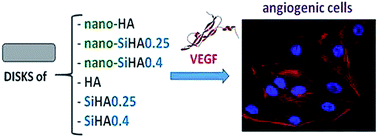
In order to know the angiogenic potential of VEGF-121 (2.5 μg) adsorbed on disks of crystalline and nanocrystalline hydroxyapatites with different Si proportion (nominal formula Ca10(PO4)6−x(SiO4)x(OH)2−x with x = 0, 0.25 and 0.40), EPCs were cultured on nano-HA, nano-SiHA0.25, nano-SiHA0.4, HA, SiHA0.25, and SiHA0.4 disks with or without immobilized VEGF-121. EPC morphology, adhesion and proliferation on the surface of all these hydroxyapatite disks were evaluated by confocal microscopy, scanning electron microscopy and cell counting. In this in vitro comparative study, three different aspects were taken into account regarding effects on EPCs: the immobilized VEGF-121 action, the influence of different Si contents and the nanocrystallinity degree. As far as we are aware, this is the first time that the effects of the silicon levels and the microstructural properties of SiHA are studied on endothelial cells, which is especially relevant for the VEGF immobilization on the surface and their potential angiogenic capabilities.
Disk-shaped pieces were investigated by scanning electron microscopy (SEM) using a field emission JEOL JSM-6335F microscope (Tokyo, Japan) at an acceleration voltage of 10 kV.
The textural properties of the materials were determined by nitrogen absorption porosimetry by using a Micromeritics ASAP 2020. To perform the N2 measurements, the samples were previously degassed under vacuum for 24 h at room temperature. The surface area was determined using the Brunauer–Emmett–Teller (BET) method.39 The pore size distribution between 0.5 and 40 nm was determined from the adsorption branch of the isotherm by means of the Barrett–Joyner–Halenda (BJH) method.40 FTIR spectra were obtained with a Thermo Nicolet nexus spectrometer, using the KBr pellet method. Zeta potential determination by electrophoretic mobility was carried out in a Zetasizer Nano ZS (Malvern Instruments) by suspending MBG particles in phosphate buffered solution at pH 7.4 (PBS).
:
1, v/v) in PBS (pH 7.2) with 0.1% BSA and 0.6% sodium citrate. Mononuclear cells (MNCs) were isolated using a density gradient formed with Histopaque-1077 solution (Sigma-Aldrich, St Louis, MO, USA) in Accuspin™ tubes (Sigma-Aldrich, St Louis, MO, USA). After centrifugation at 800g for 30 min at room temperature, the MNC layer was carefully collected and seeded in EGM-2 medium (Endothelial Growth Medium containing hydrocortisone, FGF-2, VEGF, R3-insulin-like growth factor-1, ascorbic acid, epidermal growth factor, heparin, gentamicin sulfate and amphotericin-B, Lonza, Walkersville, MD, USA) onto 75 cm2 polystyrene culture flasks (Corning, NY, USA) at a density of 2–3 × 10⁵ cells per cm2 under 5% CO2 atmosphere at 37 °C. The culture medium was replaced at 96 h and then every 48 h for three weeks. These EC1 cells were washed with PBS, harvested using 0.25% trypsin–EDTA solution and cultured on nano-HA, nano-SiHA0.25, nano-SiHA0.4, HA, SiHA0.25 and SiHA0.4 disks with or without immobilized VEGF at a density of 2 × 10⁴ cells per ml into 24 well culture plates (CULTEK S. L. U., Madrid, Spain) in EGM-2 medium under a CO2 (5%) atmosphere at 37 °C for 5 days. To evaluate cell proliferation, the attached cells were washed with PBS and harvested using 0.25% trypsin–EDTA solution for 15 min. The reaction was stopped with complete culture medium and cells were counted with a Neubauer hemocytometer.
:
40 v/v Molecular Probes) for 20 min to stain F-actin filaments. Samples were then washed with PBS and cell nuclei were stained with DAPI (4′-6-diamidino-2′-phenylindole; Molecular Probes), at 3 μM in PBS. After staining and washing with PBS, cells were examined using a Leica SP2 Confocal Laser Scanning Microscope. Rhodamine fluorescence was excited at 540 nm and measured at 565 nm. DAPI fluorescence was excited at 405 nm and measured at 420–480 nm.
Fig. 1a shows the XRD patterns of samples treated at 700 °C. In the three cases, all the diffraction maxima are assigned to a HA phase. The coherent diffraction domains, commonly named crystallite size, were calculated from the Rietveld refinements. Table 1 shows that the crystallite sizes are below 100 nm in the three samples, pointing out the nanocrystalline microstructure of these materials. The values in brackets shown in Table 1 are a measure of the degree of anisotropy and indicate that HAs and Si-substituted HAs exhibit crystallites with around a 10% of anisotropy when are prepared at 700 °C. This crystal growth anisotropy would result in needle shaped crystallites with the axial direction along the c axis of the HA unit cell, as it has been observed for very similar compounds.47
| Sample | Crystallite sizea (nm) | SBET (m2 g−1) | Pore volume (cm3 g−1) | Pore size (nm) |
|---|---|---|---|---|
| a The standard deviations appearing in the crystallite size are a measure of the degree of anisotropy, not of the estimated error. SBET: specific surface area calculated by the Brunauer–Emmett–Teller (BET) method. | ||||
| Nano-HA | 30.9 (3.1) | 17.00 | 0.040 | 8.7 |
| HA | 197.8 (4.6) | 2.05 | 0.003 | 5.2 |
| Nano-SiHA0.25 | 71.4 (7.5) | 25.90 | 0.170 | 26.8 |
| SiHA0.25 | 338.8 (46.6) | 1.23 | 0.003 | 6.4 |
| Nano-SiHA0.4 | 32.8 (4.0) | 14.60 | 0.060 | 15.8 |
| SiHA0.4 | 283.7 (43.1) | 1.40 | 0.003 | 8.3 |
Fig. 1b shows the XRD patterns of samples treated at 1150 °C. Samples HA and SiHA0.25 show well resolved diffraction maxima, which are assigned to a unique apatite-like phase. In the case of SiHA0.4, the XRD pattern show well resolved maxima corresponding to two different phases: a major HA phase and a minor alpha polymorph of tricalcium phosphate (α-TCP) phase. The phase percentages obtained from Rietveld refinements were 61% and 39% for HA and α-TCP, respectively. The decomposition of SiHA0.4 into HA and TCP can be explained in terms of the limited amount of Si that can be incorporated into the HA structure. The substitution of PO43− by SiO44− entails the formation of vacancies at the anionic positions as well as tetrahedral distortion at the P sites. When the amount of Si incorporated is too high, the subsequent thermal treatment leads to the decomposition of the apatite phase into HA and TCP. α-TCP is the high temperature phase of Ca3(PO4)2. This phase is commonly obtained with reaction temperatures between 1250 and 1500 °C.48 In our case, for a thermal treatment at 1150 °C the expected segregated phase would be β-TCP, however, α-TCP is formed as a consequence of the presence of Si, which stabilizes the formation of the alpha polymorph at temperatures below 1350 °C.49
The size and morphological features of the samples were confirmed by SEM (Fig. 2). SEM micrographs obtained for disks treated at 700 °C show porous surfaces constituted by nanoparticles. Higher magnifications (see the inset in Fig. 2e) evidence the nanometrical size of the crystallites as well as a rod-shaped morphology, indicating an anisotropic crystal growth of these samples.
Samples treated at 1150 °C show very different microstructural characteristics. In agreement with the crystallite size calculated by XRD, SEM images of crystalline samples show larger particles ranging in size between 0.2 and 1 micrometre, as a consequence of the sintering process undergone during the thermal treatment. HA and SiHA0.4 samples show some degree of porosity as a consequence of the formation of microstructural defects during the sintering process. In the case of SiHA0.4 the grain boundaries seems to be fused by a melted phase that could by associated with an excess of silica accumulated at the grain boundaries. On the contrary, SiHA0.25 (Fig. 2d) shows a well sintered surface, with grains exhibiting polyhedral shapes and lower degree of microstructural defects.
Table 1 also shows the surface area and porosity parameters for the synthesized samples. The apatites treated at low temperature show surfaces areas about 15–25 m2 g−1 and porosities in the range of 0.04 and 0.17 cm3 g−1. It must be highlighted that sample nano-SiHA0.25 showed surface area and porosity values significantly higher than the rest of the samples. As expected, the samples treated at 1150 °C undergo a reduction of surface and porosity as a consequence of the sintering process during the thermal treatment.
Fig. 3 shows the FT-IR spectra of both nano and highly crystalline samples. The absorption bands at 567 and 601 cm−1 correspond to the bending mode of O–P–O bonds, whereas the absorption bands at 962, 1033 and 1091 cm−1 correspond to the stretching vibration modes of the P–O bond of the phosphate groups. The bands at 632 and 3571 cm−1 correspond to the librational mode and stretching mode of the hydroxyl groups, respectively.
It must be highlighted that the librational mode of the hydroxyl groups is very weak in SiHA0.25 and SiHA0.4 samples. This fact can be explained in terms of the vacancies created at the OH positions when SiO44− substitutes PO43− especially after the thermal treatment at high temperature, following the mechanism proposed by Gibson et al.50
| 10Ca2+ + (6 − x)PO43− + xSiO44− + 2 − xOH− → Ca10(PO4)3−x(SiO4)x(OH)2−x□x |
The zeta potential values for samples heat-treated at 700 °C show that the surface charge changes toward more negative values as a function of the Si substitution degree (Fig. 4). These data are in full agreement with the extra negative charge introduced by silicate anions, SiO44−, when substitute phosphates, PO43−. The thermal treatment at 700 °C seems to be too low to fully incorporate silicate anions within the bulk of the apatite crystals, and most of silicate remain entrapped at the grain surface.47 Our results point out this fact, as the variation of the surface charge is almost linear respect to the Si incorporated. After the thermal treatment at 1150 °C, the surface charge of the three compositions shifts towards more negative values (Fig. 3). This fact could be explained by the loss of divalent anions such as HPO43− or residual carbonates that could remain at 700 °C, but not after being treated at 1150 °C. Curiously, the differences of zeta potential values of the three compositions become non-significant after the treatment at high temperatures, pointing out that silicate anions in samples SiHA0.25 and SiHA0.4 have been incorporated within the bulk of the apatite grains and are not concentrated at the grain surface as occurred in nano-SiHA0.25 and nano-SiHA0.4.
After characterization of nano-HA, nano-SiHA0.25, nano-SiHA0.4, HA, SiHA0.25 and SiHA0.4 disks, the VEGF adsorption on the surface of all these disk types was carried out through non-covalent binding by incubation of each disk type with 500 μl of a solution of this factor in PBS (5 μg ml−1) and the immobilized VEGF was indirectly evaluated after different times by ELISA, measuring the non-adsorbed VEGF (ng ml−1). To measure the VEGF spontaneous desorption from disks, after 24 h of incubation with this factor, VEGF/disks were incubated with 500 μl of PBS for 36 and 72 hours (60 and 96 hours after the initial time) and desorbed VEGF was also analyzed by ELISA.
As it can be observed in Fig. 5, the binding of VEGF was reached efficiently in all these materials and 2.5 μg were adsorbed on each disk after 24 h in our experimental conditions. Very low levels (lower than 2 ng ml−1) of desorbed VEGF were observed in all cases 96 hours after the initial time, thus indicating the effective immobilization of VEGF on the different disks evaluated. This dose was chosen in agreement with recent studies by others.51
It is well known that blood and interstitial fluid proteins adsorb immediately to the surface of any biomaterial after in vivo implantation, determining the implant success or failure.52,53 On the other hand, the adhesion of serum proteins to biomaterials has also been linked to the increase of both bacteria–surface interaction and platelet adhesion with risk of bacterial colonization and thrombogenicity, respectively.54–56 In the present study, the adsorption of BSA on the surface of nano-HA, nano-SiHA0.25, nano-SiHA0.4, HA, SiHA0.25 and SiHA0.4 disks was measured by spectroscopy after VEGF adsorption. As it can be observed in Fig. 6, the amount of BSA adsorbed after 4 h on the surface of crystalline HAs was significantly lower than on the surface of nanocrystalline samples in agreement with previous studies.57 No significant difference was detected between the amount of adsorbed protein after 4 h and 24 h.
In order to evaluate the angiogenic potential of VEGF (2.5 μg) adsorbed on nano-HA, nano-SiHA0.25, nano-SiHA0.4, HA, SiHA0.25 and SiHA0.4 disks, porcine endothelial-like cells at an early differentiation stage (EC1) derived from EPCs were cultured on all these disk types with or without immobilized VEGF.
EPCs are circulating premature cells which can differentiate into endothelial cells depending on the local environment and can be used as an alternative to primary endothelial cells for tissue engineering.58 These angiogenic cells were characterized in previous studies by the expression of von Willebrand factor and endothelial nitric oxide synthase.41 In the present study, cell morphology, adhesion and proliferation on the surface of these six types of HA disks with or without immobilized VEGF were evaluated by confocal microscopy, scanning electron microscopy (SEM) and cell counting. Three different aspects were compared: the immobilized VEGF action, the influence of different Si content and the nanocrystallinity.
All the disks supported EPC-derived cell adhesion and growth on their surface. As it can be observed in Fig. 7 and 8, EC1 cells spread on all these biomaterials showing a distinctive actin network and presenting their typical morphology. However, cell number on disks without VEGF was lower than on those with VEGF, thus evidencing the stability and functionality of the surface immobilized growth factor. The effects of adsorbed VEGF (2.5 μg) on the proliferation of EPC-derived cells on disks of nanocrystalline and crystalline SiHA0.25 are shown in Fig. 9A. Similar effects of adsorbed VEGF on cell proliferation were observed with the other hydroxyapatites (data not shown). Recent findings provide evidence that cell number of both primary and immortalised endothelial cells were significantly enhanced on VEGF-functionalised poly(ε-caprolactone) scaffolds showing that this growth factor displays enhanced stability and function.4
The present study demonstrates that adsorbed VEGF on nanocrystalline and crystalline HAs can exert a local regulation of the cell response in agreement with previous work by others.4–7 On the other hand, the effects of the different Si proportions and nanocrystallinity on the proliferation of EPCs when cultured on disks with adsorbed VEGF (2.5 μg) can be observed in Fig. 9B. The comparisons between each nanocrystalline and crystalline HA with different Si proportions and with adsorbed VEGF (2.5 μg) show that the cell number was higher on crystalline materials. This fact could be related to the different crystallite size and textural parameters of nanocrystalline HAs in comparison to crystalline HAs (Table 1). The topography of nanocrystalline materials could produce insufficient and weak contacts between the EPCs and the surface of nanocrystalline HAs which can trigger a kind of apoptosis defined as anoikis, that is induced by the loss of cell/matrix interactions.59 Concerning the Si proportion, the best results were obtained with SiHA/VEGF disks containing x = 0.25 of Si, with significantly superior proliferation than in any other disk type including respective nano-SiHA. In this sense, Si seems to play a beneficial role on the EPC proliferation. However, this effect is limited to certain levels of substitution in the HA structure. Nano-SiHA0.4 and SiHA0.4 samples evidence a significant decrease in cell proliferation compared with nano-SiHA0.25 and SiHA0.25. In the latest samples, the amount of Si incorporated is enough to yield changes in the textural parameters and surface charge without decompose the HA phase. However, silicon substitution for x = 0.4 did not result in pure Si-substituted apatites. Since the HA structure cannot admit such a high number of vacancies at the OH positions and crystal-chemical defects, Si probably remains at the grain boundaries as amorphous silica in nano-SiHA0.4.47 After the thermal treatment at 1150 °C, SiHA0.4 is decomposed in α-TCP and HA and resulted in materials with a higher degree of microstructural defects. None of these scenarios seemed to favour the proliferation of EPCs. On the contrary, the incorporation of smaller amounts of Si, such as x = 0.25, resulted in stable Si-substituted apatites that improved the proliferation of the endothelial cells seeded on it.
As the disks containing a proportion of 0.25 of Si more significantly promoted cell proliferation, we then explored the morphology of EPC-derived EC1 cells cultured on these disks (nano-SiHA0.25 and SiHA0.25), with or without immobilized VEGF, by SEM after 5 days of culture. Interestingly, in another study to determine the osteogenic capability of SiHA, Hing et al.60 obtained the best results with SiHA substituted with a very similar silicon content (0.8% wt) respect to our SiHA0.25 (which contains a 0.7% wt of silicon), demonstrating that these silicon levels elicited an optimal effect on the activity of bone forming and bone resorbing cells. Our studies demonstrate that, in addition to the effect on osteoblast and osteoclast, this silicon content is also optimal for the regulation of endothelial cells.
SEM images demonstrated the presence of cells attached on these four materials, with the typical morphological features of this cell type (Fig. 10 and 11). However, a higher number of cells attached on SiHA0.25 disks, rather than on nano-SiHA0.25 disks were observed with and without VEGF, showing a better EPC-derived EC1 cell adhesion to the surface of crystalline SiHA. These results could be related to the different topography of nanocrystalline SiHA0.25 inducing anchorage loss of cells on its surface. On the other hand, structures suggesting the presence of fenestrae, typical of endothelial cells,61 were observed in some of the EC1 cells growing on SiHA0.25/VEGF (Fig. 11 lower panel right). The fenestrae act as a selective barrier to control the exchange between the blood and the cells of the tissues, mainly present in the liver sinusoidal endothelial cells.61 These structures are transcytoplasmic canals which can be induced in vascular endothelial cells upon stimulation with VEGF,62,63 as observed in this work.
![]() | ||
| Fig. 10 Morphology of EPC-derived cells on disks of nano-SiHA0.25 with or without adsorbed VEGF (2.5 μg) observed by SEM after 5 days of culture. | ||
![]() | ||
| Fig. 11 Morphology of EPC-derived cells on disks of SiHA0.25 with or without adsorbed VEGF (2.5 μg) observed by SEM after 5 days of culture. | ||
| This journal is © The Royal Society of Chemistry 2016 |