Effects of hydrogen bonding between MWCNT and PPS on the properties of PPS/MWCNT composites

Maliang Zhang, Xiaotian Wang, Chenyang Li, Yali Bai, Bowen Cheng* and Zhenhuan Li*
State Key Laboratory of Separation Membranes and Membrane Processes, Tianjin Polytechnic University, 300160 Tianjin, China. E-mail: Bowen15@tjpu.edu.cn; Zhenhuanli1975@aliyun.com; Fax: +86 022 83955055; Tel: +86 022 83955358

Received 28th July 2016 , Accepted 30th August 2016

First published on 30th August 2016


Abstract

PPS/MWCNT composites were prepared from polyphenylene sulfide (PPS) and hydroxyl multi-walled carbon nanotubes (MWCNT-OH) or carboxyl multi-walled carbon nanotubes (MWCNT-COOH) by the 1-chloronaphthalene blending method, and the effects of noncovalent interaction between PPS and fillers on the properties of the composites were studied. It was found that MWCNT-COOH could be easily dispersed into PPS, which effectively improved the electrical conductivity and mechanical properties of PPS. With the increase of MWCNT-COOH content from 0.5 to 5 wt%, the conductivity of the PPS/MWCNT-COOH composite rose from 8.8 × 10⁻³ to 0.35 S cm−1, and the breaking strength and tensile modulus achieved the maximum values of 2189.5 MPa and 294.3 MPa, respectively, when the MWCNT-COOH content was 2 wt%. However, the dispersion of MWCNT-OH into PPS was relatively difficult, and the PPS/MWCNT-OH composite displayed low electrical conductivity and weak mechanical strength. It was concluded that the excellent mechanical properties and electrical conductivity of PPS/MWCNT-COOH were mainly attributed to the strong hydrogen bonding interaction between the carboxyl and sulfide.

1. Introduction

Polyphenylene sulfide (PPS) is an attractive engineering thermoplastic that is widely used in practice due to its excellent properties such as good chemical resistance, low friction coefficient, desirable mechanical behavior and thermal stability.1–3 The performance of PPS polymers can be further enhanced by the addition of micro-scale and nano-scale fillers, such as single-walled carbon nanotubes (SWCNTs),4–6 inorganic fullerene-like tungsten disulfide (IF-WS2),7 SWCNT-IF-WS2,8–10 functionalized SWCNTs,11,12 functionalized multi-walled carbon nanotubes (MWCNTs),13–16 nanoparticles of TiO2, ZnO, CuO and SiC,17,18 nano-scale alumina particles,19 graphite,20 glass fibers,21 graphene,22 nano-SiOx,23 carbon nanofibers,24 etc. However, it is reported that the performance of PPS-based composites can hardly be improved at low nanofiller loadings.8,25,26 To enhance the performance of nanofiller-reinforced composites, the filler should be dispersed homogenously in the matrix and form good interfacial adhesion with the polymer.27,28 Unfortunately, the dispersion of the filler is usually hindered by its poor solubility and strong agglomerating tendency.29 In view of this, attaching functional groups onto filler surface is proposed to prepare high performance polymer composites, and has been proven to be an effective approach.5,30,31 Another effective approach of achieving desirable filler dispersion and good interfacial adhesion with the polymer is to wrap the filler in aromatic polymers or other organic molecules (containing heteroatoms with free electron pairs), which can provide noncovalent interaction between PPS and fillers.5,32

PPS is an insulating material (with a conductivity of 10−16 S cm−1), so that its applications in certain fields such as self-health monitoring and electro-actuation have been limited to some extent.33 It is reported that the incorporation of carbon nanotubes as conductive fillers can improve the electrical performance of PPS.11,25,33 For example, SWCNT-EP/PPS-NH2 and SWCNTCOOH/PPS-NH2 both exhibit semiconducting characteristics, and the measured conductivities can reach 0.87 and 0.22 S cm−1 respectively, which are about 15 orders of magnitude higher than that of the pure matrix.11 Jeon et al. reported that 10 wt% PPS-grafted MWCNTs could increase the conductivity to 16 orders of magnitude higher than that of pure PPS.14 Besides, organic functionalized carbon nanotubes can effectively enhance the thermal conductivity of the composites because of their good dispersivity.15 However, the covalent attachment of polymer onto the surface of functionalized carbon nanotubes can disrupt the electronic continuum medium and thus reduce the electrical conductivity.34 It is reported that when pure carbon nanotubes acted as fillers, MWCNT/PPS composites displayed low electrical conductivities in the range of 10−2 to 10−3 S cm−1 with 7 to 10 wt% MWCNT loadings.26 Therefore, the conductivity loss caused by carbon nanotube functionalization should be minimized during the development of multifunctional carbon nanotube reinforced composites.

In this work, PPS/MWCNT composites were prepared from PPS and MWCNT-OH or MWCNT-COOH by the 1-chloronaphthalene blending method, and the effects of noncovalent interaction between PPS and fillers on the properties of PPS/MWCNT composites were studied. It was found that there existed strong interaction between the carboxyl and sulfide that could make MWCNT-COOH well disperse into PPS, thus endowing PPS/MWCNT-COOH composite with excellent mechanical properties, high electrical conductivity and good thermal stability.

2. Experimental

2.1 Materials

PPS (molecular weight (Mw) = 3.75 × 10⁴, density at 25 °C (ρ) ≈ 1.35 g cm−3, glass transition temperature (Tg) ≈ 90 °C, melting temperature (Tm) ≈ 280 °C) was purchased from Toray Engineering Corporation. 1-Chloronaphthalene (95%, Fluka) was purchased from J & K Chemical Co., Ltd and purified by distillation under reduced pressure before use. Hydroxyl MWCNT-OH with 1.76 wt% hydroxyl groups and MWCNT-COOH with 1.23 wt% carboxyl groups were purchased from Chengdu organic Chemical Co., Ltd and used as received. The density of hydroxyl or carboxyl groups on MWCNTs was calculated by Boehm titration.

2.2 Sample preparation

PPS/MWCNT-OH and PPS/MWCNT-COOH with 0.5 to 5 wt% filler loadings were prepared via the solution blending method. To be specific, MWCNT-OH or MWCNT-COOH was dispersed in 1-chloronaphthalene at 210 °C under stirring conditions, and a certain amount of PPS was loaded into the supernatant turbid liquid; the resulting mixture was heated at 210 °C under stirring conditions, and then the dissolvent was removed by alcohol extraction to obtain PPS/MWCNT composites. PPS/MWCNT fibers with diameters of 61.5–62.9 μm were prepared from PPS/MWCNT-OH and PPS/MWCNT-COOH at 315 °C. The prepared fibers were pretreated in water of 90 °C for 2 h, and then tested or characterized on LLY-06 tensile tester at room temperature.

2.3 Characterization and measurements

FT-IR spectra were obtained using Bruker IFS66 at room temperature. Thermal gravity analysis (TGA) was carried out on a NETZSCH STA 409 TGA analyzer, and TGA curves were recorded from room temperature to 800 °C in N2 atmosphere with a heating rate of 10 °C min−1. X-ray photoelectron spectroscopy (XPS) and X-ray diffraction (XRD) were conducted on Elmer PHI-5600 (using Mg-Kα line as the radiation source) and D8 Discover X-ray diffractometer (using Ni-filtered Cu-Kα line as the radiation source), respectively. The morphology of PPS/MWCNT was characterized by a field emission scanning electron microscope (FESEM, Hitachi 4800S, Japan). Differential scanning calorimetry (DSC) analysis was performed on a Perkin Elmer DSC-7 in N2 atmosphere. The samples were melted at 320 °C with a heating rate of 10 °C min−1 and kept at this temperature for 5 min to erase their thermal history. Subsequently, they were cooled from the melting temperature to room temperature with a cooling rate of 10 °C min−1, and then heated again up to 320 °C with a heating rate of 10 °C min−1. From the heating and cooling traces, peak melting temperature (Tm), heat of melting (ΔHm), peak crystallization temperature (Tc) and heat of crystallize (ΔHc) were obtained. Thus, the crystallinity (Xc) degree could be calculated from the following equation:
 
image file: c6ra19119c-t1.tif(1)
where ΔHc is the heat of crystallization from DSC traces, Wf is the weight fraction of the filler in composite, and ΔHf is the heat of crystallization of pure crystalline PPS, which is taken as 105 J g−1.20 The breaking strength (δt) and breaking elongation (ε) of PPS/MWCNT fibers were measured on LLY-06 tensile tester at room temperature (gage length = 1 cm). Each specimen was tested ten times to evaluate the average value. The breaking strength was calculated from the following equation:
 
image file: c6ra19119c-t2.tif(2)
where Fb is the maximum tension value (N) and d is the fiber diameter (cm). The breaking elongation was determined by the following equation:
 
image file: c6ra19119c-t3.tif(3)
where ε is the breaking elongation, L is the instantaneous length of the fiber, and L0 is the initial length of the fiber before test. The fiber tensile modulus (E, MPa) was determined by the following equation:
 
image file: c6ra19119c-t4.tif(4)

PPS/MWCNT-OH and PPS/MWCNT-COOH composites undergone melting treatment at 300 °C, and were pressed into round slices under the pressure of 2000 Pa. Then their electrical conductivities at room temperature were determined by the four-point probe method using a Scientific Equipment device (with a spacing probe of S = 0.2 cm) equipped with a DC precision power source (Model LCS-02) and a digital microvoltmeter (Model DMV-001).

3. Results and discussion

3.1 Characterization of PPS/MWCNT-OH and PPS/MWCNT-COOH composites

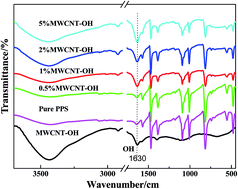
Fig. 1 and 2 show the FT-IR spectra of PPS, MWCNT-OH, PPS/MWCNT-OH MWCNT-COOH and PPS/MWCNT-COOH. As can be seen, the phenyl groups of PPS exhibit absorption peaks at 1472, 1573 and 1390 cm−1, whereas the peaks at 1011 and 554 cm−1 are attributed to aromatic C–S stretching vibrations. MWCNT-OH displays absorption peaks at 3444, 2920, 2850 and 1625 cm−1 (Fig. 1), of which the peaks at 2920 and 2850 cm−1 are attributed to the unsaturated hydrocarbons of benzene ring ([double bond, length as m-dash]C–H stretching vibrations), and the peaks at 3444 and 1625 cm−1 confirm the presence of OH groups. In the FT-IR spectrum of PPS/MWCNT-OH, as shown in Fig. 1, it is obvious that the respective characteristic peaks of MWCNT-OH and PPS remain unchanged and that no new peaks are detected, suggesting that weak hydrogen bonding exists between PPS and MWCNT-OH (Scheme 1).5
image file: c6ra19119c-f1.tif
Fig. 1 FT-IR spectra of PPS, MWCNT-OH and PPS/MWCNT-OH.

image file: c6ra19119c-f2.tif
Fig. 2 FT-IR spectra of PPS, MWCNT-COOH and PPS/MWCNT-COOH.

image file: c6ra19119c-s1.tif
Scheme 1 Different interactions between MWCNT and PPS.

For MWCNT-COOH, the characteristic peaks of COOH are located at 1724, 1644 and 3424 cm−1 (Fig. 2). After MWCNT-COOH is dispersed in PPS, the characteristic absorption peaks of COOH present in the FT-IR spectra of PPS/MWCNT-COOH. Moreover, the infrared spectrum of hydroxyl in COOH becomes wider, indicating that there is strong hydrogen bonding interaction between PPS and MWCNT-COOH (see Scheme 1).

Fig. 3A and B show the XPS analysis of C 1s for PPS, MWCNT-OH, PS/MWCNT-OH, MWCNT-COOH and PPS/MWCNT-COOH. The main peak at 284.7 eV is the characteristic C 1s peak of PPS.35 The C 1s peak of MWCNT-OH at 284.6 eV is attributed to the existence of C–OH (285.6 eV) and graphitic carbon (284.2 eV) (see Fig. 3A-b). With the increase of MWCNT-OH concentration from 0.5 to 5.0 wt%, the C 1s peak strength of C–OH gradually increases, confirming the successful incorporation of MWCNT-OH with PPS. As for PPS/MWCNT-COOH, the main C 1s peak of MWCNT-COOH at 286.0 eV is caused by C[double bond, length as m-dash]O (286.8 eV), COOH (287.3 eV) and graphitic carbon (284.2 eV),36 and the C 1s peak strength of COOH gradually increases with MWCNT-COOH concentration increasing from 0.5 to 5.0 wt%. Most importantly, the C 1s peak of COOH declines from 287.3 eV to 287.0 eV. This suggests that there is strong hydrogen bonding interaction between PPS and MWCNT-COOH. To sum up, the above XPS analysis results are consistent with those of FT-IR measurements.


image file: c6ra19119c-f3.tif
Fig. 3 (A) XPS analysis of C 1s for PPS, MWCNT-OH and PS/MWCNT-OH: (a) pure PPS, (b) MWCNT-OH, (c) 0.5% PPS/MWCNT-OH, (d) 1% PPS/MWCNT-OH, (e) 2% PPS/MWCNT-OH, and (f) 5% PPS/MWCNT-OH. (B) XPS analysis of C 1s for PPS, MWCNT-COOH and PPS/MWCNT-COOH: (a) pure PPS, (b) MWCNT-COOH, (c) 0.5% PPS/MWCNT-COOH, (d) 1% PPS/MWCNT-COOH, (e) 2% PPS/MWCNT-COOH, and (f) 5% PPS/MWCNT-COOH.

Fig. 4 shows the XRD patterns of PPS, MWCNT-OH, PS/MWCNT-OH, MWCNT-COOH and PPS/MWCNT-COOH. As can be seen, PPS shows two main diffraction peaks, which may be ascribed to (110) and (200) planes of orthorhombic structure;37 MWCNT-OH has a very strong diffraction peak around 23.5–26.0°, but MWCNT-COOH has a strong and broad diffraction peak can be observed at around 25.8°. When the content of MWCNT-OH reaches 5%, a new diffraction peak appears at 24.0–24.6°, which suggests the presence of MWCNT-OH in PPS matrix. The biggest difference in XRD patterns of PPS/MWCNT-OH and PPS/MWCNT-COOH lies in the change of PPS's characteristic peak. In PPS/MWCNT-OH, 2θ value of PPS's characteristic peak declines slightly, presumably due to lattice distortion; however, the crystal structure of PPS remains unchanged with various MWCNT-COOH contents.


image file: c6ra19119c-f4.tif
Fig. 4 (A) XRD patterns of PPS, MWCNT-OH and PPS/MWCNT-OH; (B) XRD patterns of PPS, MWCNT-COOH and PPS/MWCNT-COOH.

The SEM images of PPS/MWCNT-OH and PPS/MWCNT-COOH are shown in Fig. 5. The white spots in the figure are identified as MWCNT-OH or MWCNT-COOH nanoparticles. For PPS/MWCNT-COOH, 2 wt% MWCNT-COOH particles can be uniformly dispersed in PPS matrix, but further addition of 5 wt% MWCNT-COOH would cause the agglomeration of MWCNT-COOH, as can be seen in Fig. 5I. In contrast, only 0.5 wt% MWCNT-OH can be well dispersed in PPS. Fig. 6 shows the TEM images of PPS/MWCNT-OH and PPS/MWCNT-COOH. It can be found that MWCNT-COOH seems to be well dispersed in PPS matrix, whereas MWCNT-OH is more inclined to aggregate on PPS surface. Similar results can also be found through the cross-sectional SEM images of the composites in Fig. 7. From above discussion, it can be deduced that MWCNT-COOH can be dispersed in PPS more easily than MWCNT-OH due to their different strengths of noncovalent interaction (hydrogen bonding) between MWCNT and PPS.


image file: c6ra19119c-f5.tif
Fig. 5 SEM images: (A) PPS; (B) 0.5 wt% PPS/MWCNT-OH, (C) 1 wt% PPS/MWCNT-OH, (D) 2 wt% PPS/MWCNT-OH, (E) 5 wt% PPS/MWCNT-OH; (F) 0.5 wt% PPS/MWCNT-COOH, (G) 1 wt% PPS/MWCNT-COOH, (H) 2 wt% PPS/MWCNT-COOH, (I) 5 wt% PPS/MWCNT-COOH.

image file: c6ra19119c-f6.tif
Fig. 6 TEM images: (A) 0.5 wt% PPS/MWCNT-OH, (B) 1 wt% PPS/MWCNT-OH, (C) 2 wt% PPS/MWCNT-OH, (D) 5 wt% PPS/MWCNT-OH; (E) 0.5 wt% PPS/MWCNT-COOH, (F) 1 wt% PPS/MWCNT-COOH, (G) 2 wt% PPS/MWCNT-COOH, (H) 5 wt% PPS/MWCNT-COOH.

image file: c6ra19119c-f7.tif
Fig. 7 Cross-sectional SEM images: (A) 5 wt% PPS/MWCNT-OH, (B) 5 wt% PPS/MWCNT-COOH.

3.2 Thermal behaviors of PPS/MWCNT-OH and PPS/MWCNT-COOH composites

Fig. 8 and 9 show the thermogravimetric analysis of PPS/MWCNT-OH and PPS/MWCNT-COOH. PPS is a kind of engineering thermoplastic with outstanding thermal stability. It starts to lose weight at 465 °C, and can be completely decomposed at 585 °C. When MWCNT-OH is incorporated in PPS, the initial degradation temperature of 0.5 wt% PPS/MWCNT-OH rises up to 475 °C, and that of 5 wt% PPS/MWCNT-OH reaches 493 °C. When PPS is modified with MWCNT-COOH, the thermal stability of PPS can also be greatly improved, and the initial degradation temperature of 2 wt% PPS/MWCNT-COOH reaches 495 °C (Fig. 9). In summary, the thermal stability of PPS can be significantly enhanced when MWCNT-OH or MWCNT-COOH is incorporated,38,39 and PPS/MWCNT-COOH has better thermal stability than PPS/MWCNT-OH.
image file: c6ra19119c-f8.tif
Fig. 8 TGA curves of PPS and PPS/MWCNT-OH.

image file: c6ra19119c-f9.tif
Fig. 9 TGA curves of PPS and PPS/MWCNT-COOH.

DSC analysis results of PPS/MWCNT-OH are shown in Fig. 10 and Table 1. Based on the data from DSC test, PPS has a Tm of 280.4 °C and a ΔHm of 38.55 J g−1. For PPS/MWCNT-OH, with the increase of MWCNT-OH content, Tm slightly increases while ΔHm presents a downward trend. Fig. 10B shows the nonisothermal melt crystallization of PPS and PPS/MWCNT-OH. It can be seen that PPS exhibits a Tc of 214.5 °C and a ΔHc of 49.09 J g−1. For PPS/MWCNT-OH, the Tc values with different contents of MWCNT-OH are all higher than Tc of PPS. However, ΔHc and Tc both show a decreasing trend with the increase of MWCNT-OH content, which can be attributed to the mass barrier effect caused by the self-assembly of MWCNT-OH during crystallization.40,41 Xc of PPS is around 46.75%, but it decreases from 45.13% for 0.5 wt% PPS/MWCNT-OH to 40.45% for 5 wt% PPS/MWCNT-OH. These results can be attributed to the imperfect crystallization caused by the impeding of polymer chain mobility. Similar results have also been reported for PCL/MWCNTs.42 Besides, the nonisothermal cold-crystallization of PPS can be significantly enhanced by MWCNT-OH, indicating that MWCNT-OH plays a great role on heterogeneous nucleation.43,44 However, adding excessive MWCNT-OH in PPS would hinder the polymer chain diffusion during crystallization, thus resulting in the decrease of crystallization temperature.41,44


image file: c6ra19119c-f10.tif
Fig. 10 (A) DSC traces of PPS and PPS/MWCNT-OH with a heating rate of 10 °C min−1; (B) nonisothermal melt crystallization of PPS and PPS/MWCNT-OH.
Table 1 DSC traces for PPS, PPS/MWCNT-OH and PPS/MWCNT-COOH
MWCNT Content (wt%) Tm (°C) ΔHm (J g−1) Tc (°C) ΔHc (J g−1) Xc (%) Tg (°C)
OH 0.5 280.7 37.12 243.1 47.15 45.13 101.5
1 280.8 36.24 242.5 43.19 41.55 108.4
2 281.5 35.90 241.6 42.00 40.81 112.3
5 282.6 34.55 235.5 40.36 40.46 117.8
PPS 0 280.4 38.55 214.5 49.09 46.75 90.5
COOH 0.5 280.9 40.30 215.5 39.53 37.83 107.2
1 281.1 45.53 215.9 43.38 41.73 114.5
2 281.2 48.36 231.7 47.45 46.15 119.6
5 281.3 36.94 238.1 42.09 42.07 125.3


Fig. 11 and Table 1 provide the DSC analysis results of PPS/MWCNT-COOH. Compared with MWCNT-OH, MWCNT-COOH shows much less influence on Tm of PPS. However, Tc of PPS/MWCNT-COOH shifts gradually to higher temperatures with the increase of MWCNT-COOH content. For example, 0.5 wt% PPS/MWCNT-COOH exhibits a Tc of 215.5 °C and a ΔHc of 39.53 J g−1, while Tc of 2 wt% PPS/MWCNT-COOH shifts to 231.7 °C, with a maximum ΔHc of 47.45 J g−1; as for 5 wt% PPS/MWCNT-COOH, Tc increases to 238.1 °C and ΔHc declines to 42.09 J g−1. In the case of 2 wt% PPS/MWCNT-COOH, both ΔHm and ΔHc reach the maximum values, and Xc also reaches its maximum value of 46.15%. Compared with MWCNT-OH, MWCNT-COOH has lower heterogeneous crystallization ability, so that the existence of 5 wt% MWCNT-COOH cannot hinder the diffusion of PPS chains during crystallization because of the good dispersion of MWCNT-COOH in PPS matrix. As a result, MWCNT-COOH can effectively improve the glass transition temperature (Tg) of PPS. For instance, Tg of 5 wt% PPS/MWCNT-COOH can reach 125.3 °C. This indicates that MWCNT-COOH can effectively restrain high temperature creep of PPS.


image file: c6ra19119c-f11.tif
Fig. 11 (A) DSC traces of the PPS and PPS/MWCNT-COOH with a heating rate of 10 °C min−1; (B) nonisothermal melt crystallization process of PPS and PPS/MWCNT-COOH.

3.3 Mechanical properties and electrical conductivity of PPS/MWCNT-OH and PPS/MWCNT-COOH composites

The mechanical behaviors of PPS/MWCNT fibers were investigated by single strength tester that could provide additional information about filler/matrix and filler/filler interactions. The tensile test results (stress vs. strain) for all composites are illustrated in Fig. 12 and 13, and Table 2 gives the breaking strength, breaking elongation and tensile modulus of PPS/MWCNT fibers.
image file: c6ra19119c-f12.tif
Fig. 12 Stress–strain curves of PPS/MWCNT-OH composite fibers.

image file: c6ra19119c-f13.tif
Fig. 13 Stress–strain curves of PPS/MWCNT-COOH composite fibers.
Table 2 Mechanical properties and electrical conductivity of PPS/MWCNT-OH and PPS/MWCNT-COOH
MWCNT Content (wt%) Breaking strength (MPa) Breaking elongation (%) Tensile modulus (MPa) Electrical conductivity (S cm−1)
OH 0.5 859.1 1547.5 55.5 4.2 × 10⁻³
1 910.7 564.1 161.4 2.2 × 10⁻²
2 405.9 505.3 80.3 6.6 × 10⁻²
5 311.8 503.7 61.9 0.13
PPS 0 257.8 1314.0 8.92 10−16
COOH 0.5 343.1 1640.2 14.6 8.8 × 10⁻³
1 861.4 1221.7 70.5 3.2 × 10⁻²
2 2189.5 744.0 294.3 8.9 × 10⁻²
5 1869.4 635.0 293.4 0.35


It can be seen that the content of MWCNT has a great impact on the mechanical properties of PPS/MWCNT composites. With the increase of MWCNT content, the breaking strength and tensile modulus of PPS/MWCNT firstly increase and then decreases. For PPS/MWCNT-COOH, when the MWCNT-COOH content reaches 2 wt%, the breaking strength and tensile modulus of the composite achieve the maximum values of 2189.5 MPa and 294.3 MPa, respectively. These excellent mechanical properties can be attributed to the well dispersed MWCNT-COOH and the strong interaction between the carboxyl and sulfide. However, when the MWCNT-COOH content is 5 wt%, the breaking strength of 5 wt% PPS/MWCNT-COOH declines to 1869.4 MPa due to the agglomeration of MWCNT-COOH. In contrast, for PPS/MWCNT-OH, 0.5–1 wt% MWCNT-OH displays a better capacity to enhance the mechanical properties of PPS because of the role of MWCNT-OH in the heterogeneous nucleation of PPS, whereas the breaking strength of 2 wt% PPS/MWCNT-OH declines to 405.9 MPa due to the agglomeration of MWCNT-OH. These results are also confirmed by the SEM and TEM images of PPS/MWCNT. In addition, the enhancement of the mechanical properties may also be attributed to the alignment of PPS molecular chains and MWCNT fillers, which closely relates to the high-level applied tension and drastic reduction in cross-sectional area during fiber spinning.

It was reported that MWCNT/PPS composites, prepared by melt-blending, displayed electrical conductivities in the range of 10−2 to 10−3 S cm−1 with 7 to 10 wt% MWCNT loadings.26 In this study, PPS/MWCNT-OH composite, prepared by the 1-chloronaphthalene blending method, displays electrical conductivities in the range of 4.2 × 10⁻³ to 0.13 S cm−1 with the increase of MWCNT-OH content from 0.5 to 5 wt%. Furthermore, as MWCNT-COOH content increases from 0.5 to 5 wt%, the conductivity of PPS/MWCNT-COOH composite rises from 8.8 × 10⁻³ to 0.35 S cm−1. Although the oxygen-containing carbons in MWCNT introduce structural defects onto the surface of the composite, which disrupt the electronic continuum medium and reduce the electrical conductivity, the well dispersed MWCNT-OH or MWCNT-COOH and the strong hydrogen bonding interaction between the carboxyl and sulfide can still effectively improve the electrical conductivity of PPS. Hence, PPS/MWCNT-OH and PPS/MWCNT-COOH composites can be used in self-health monitoring and electro-actuation, and their percolation thresholds are calculated as 0.07 wt% ± 0.05 wt% and 0.04 wt% ± 0.03 wt%, respectively.22,45

4. Conclusions

In summary, PPS/MWCNT-OH and PPS/MWCNT-OH composites are prepared using the 1-chloronaphthalene blending method in this paper, and the electrical conductivity, mechanical behaviors and thermal properties of PPS/MWCNT can be effectively improved by the incorporation of MWCNT-OH or MWCNT-COOH.

With the increase of MWCNT content from 0.5 to 5 wt%, PPS/MWCNT-OH composite displays electrical conductivities in the range of 4.2 × 10⁻³ to 0.13 S cm−1 and the electrical conductivities of PPS/MWCNT-COOH composite rise from 8.8 × 10⁻³ to 0.35 S cm−1. It is concluded that MWCNT-COOH can improve the electrical conductivity of PPS more easily because of the strong hydrogen bonding interaction between the carboxyl and sulfide. For the same reason, when the MWCNT-COOH content reaches 2 wt%, the breaking strength and tensile modulus of PPS/MWCNT-COOH composite achieve the maximum values of 2189.5 MPa and 294.3 MPa, respectively. In contrast, MWCNT-OH displays poor capacity to enhance the mechanical properties of PPS due to its poor dispersivity and the weak interaction between MWCNT-OH and PPS. Furthermore, the thermal stabilities of PPS/MWCNT-OH and PPS/MWCNT-COOH composites are mainly determined by the heat conductivity and mass barrier of MWCNT, and can be enhanced significantly when appropriate amounts of MWCNT-OH and MWCNT-COOH are incorporated. In addition, the crystallization of PPS can be significantly accelerated by a trace of MWCNT-OH, whereas MWCNT-COOH has less influence on Tm and Tc.

Acknowledgements

The authors are grateful for the financial support from National Natural Science Foundation of China (No. 51603145) and Tianjin Municipal Science and Technology Commission (No. 12JCZDJC29800).

References

  1. D. G. Brady, J. Appl. Polym. Sci.: Appl. Polym. Symp., 1981, 36, 231–239 CAS.
  2. J. E. Frommer, Acc. Chem. Res., 1986, 19, 2–9 CrossRef CAS.
  3. J. T. Edmonds, J. Harold and W. Hill, US, 3354129A, 1967-03-15.
  4. A. M. Díez-Pascual and M. Naffakh, Composites, Part A, 2013, 54, 10–19 CrossRef.
  5. Z. Spitalsky, D. Tasis, K. Papagelis and C. Galiotis, Prog. Polym. Sci., 2010, 35, 357–401 CrossRef CAS.
  6. A. M. Díez-Pascual, J. W. Guan, B. Simard and M. A. Gómez-Fatou, Composites, Part A, 2012, 43, 997–1006 CrossRef.
  7. A. M. Díez-Pascual and M. Naffakh, Polymer, 2012, 53, 2369–2378 CrossRef.
  8. A. M. Díez-Pascual, M. Naffakh, C. Marco and G. Ellis, Composites, Part A, 2012, 43, 603–612 CrossRef.
  9. M. Naffakh, A. M. Díez-Pascual, C. Marco and G. Ellis, J. Mater. Chem., 2012, 22, 1418–1425 RSC.
  10. A. M. Díez-Pascual, M. Naffakh, C. Marco and G. Ellis, J. Phys. Chem. B, 2012, 116, 7959–7969 CrossRef PubMed.
  11. A. M. Díez-Pascual and M. Naffakh, Carbon, 2012, 50, 857–868 CrossRef.
  12. A. M. Díez-Pascual and M. Naffakh, Mater. Chem. Phys., 2012, 135, 348–357 CrossRef.
  13. J. M. Gonzalez-Domınguez, P. Castell, S. Bespin-Gascon, A. Anson-Casaos, A. M. Diez-Pascual, M. A. Gomez-Fatou, A. M. Benito, W. K. Masera and M. T. Martınez, J. Mater. Chem., 2012, 22, 21285–21297 RSC.
  14. I. Y. Jeon, H. J. Lee, Y. S. Choi, L. S. Tan and J. B. Baek, Macromolecules, 2008, 41, 7423–7432 CrossRef CAS.
  15. S. Y. Yang, C. C. M. Ma, C. C. Teng, Y. W. Huang, S. H. Liao, Y. L. Huang, H. W. Tien, T. M. Lee and K. C. Chiou, Carbon, 2010, 48, 592–603 CrossRef CAS.
  16. Z. Zhou, S. F. Wang, L. Lu, Y. X. Zhang and Y. Zhang, Compos. Sci. Technol., 2008, 68, 1727–1733 CrossRef CAS.
  17. S. Bahadur and C. Sunkara, Wear, 2005, 258, 1411–1421 CrossRef CAS.
  18. A. M. Díez-Pascual and A. L. Díez-Vicente, ACS Appl. Mater. Interfaces, 2014, 6, 10132–10145 Search PubMed.
  19. C. J. Schwartz and S. Bahadur, Wear, 2006, 237, 261–273 CrossRef.
  20. Y. F. Zhao, M. Xiao and S. J. Wang, Compos. Sci. Technol., 2007, 67, 2528–2534 CrossRef CAS.
  21. V. L. Shingankuli, J. P. Jog and V. M. Nadkarni, Appl. Polym. Sci., 1988, 36, 335–351 CrossRef CAS.
  22. M. L. Zhang, H. X. Wang, Z. H. Li and B. W. Cheng, RSC Adv., 2015, 5, 13840–13849 RSC.
  23. D. Lu and S. W. Pan, Polym. Eng. Sci., 2006, 46, 820–825 CAS.
  24. M. H. Cho and S. Bahadur, Tribol. Lett., 2007, 25, 237–245 CrossRef CAS.
  25. S. Z. Yu, W. M. Wong, S. Hu and Y. K. Juay, J. Appl. Polym. Sci., 2009, 113, 3477–3483 CrossRef CAS.
  26. J. Yang, T. Xu, A. Lu, Q. Zhang, H. Tan and Q. Fu, Compos. Sci. Technol., 2009, 69, 147–153 CrossRef CAS.
  27. K. Song, Y. Zhang, J. Meng, E. C. Green, N. Tajaddod, H. Li and M. L. Minus, Materials, 2013, 6(6), 2543–2577 CrossRef CAS.
  28. N. Tajaddod, K. Song, E. C. Green, Y. Zhang and M. L. Minus, Macromol. Mater. Eng., 2016, 301(3), 315–327 CrossRef CAS.
  29. A. Thess, R. Lee, P. Nikolaev, H. Dai, P. Petit, J. Robert, C. H. Xu, Y. H. Lee, S. G. Kim, A. G. Rinzler, D. T. Colbert, G. E. Scuseria, D. Tombnek, J. E. Fischer and R. E. Smalley, Science, 1996, 273, 483–487 CAS.
  30. J. W. Gu, C. Xie, H. Li, J. Dang, W. C. Geng and Q. Y. Zhang, Polym. Compos., 2014, 35(6), 1087–1092 CAS.
  31. J. W. Gu, J. J. Du, J. Dang, W. C. Geng, S. H. Hua and Q. Y. Zhang, RSC Adv., 2014, 4, 22101–22105 RSC.
  32. D. Wu, L. Wu, W. Zhou, T. Yang and M. Zhang, Polym. Eng. Sci., 2009, 49, 1727–1735 CAS.
  33. T. K. Mishra, A. Kumar, V. Verma, K. N. Pandey and V. Kumar, Compos. Sci. Technol., 2012, 72, 1627–1631 CrossRef CAS.
  34. M. Moniruzzaman and K. I. Winey, Macromolecules, 2006, 39, 5194–5205 CrossRef CAS.
  35. Q. Zhao, Wear, 1998, 217, 62–72 CrossRef CAS.
  36. T. V. Sreekumar, Chem. Mater., 2003, 15, 175–178 CrossRef CAS.
  37. B. J. Tabor, E. P. Magre and J. Boon, Eur. Polym. J., 1971, 7, 1127–1133 CrossRef CAS.
  38. Q. K. Meng, M. Hetzer and D. D. Kee, J. Compos. Mater., 2010, 45, 1145–1158 CrossRef.
  39. K. Fukushima, M. Murariu and G. Camina, Polym. Degrad. Stab., 2010, 95, 1063–1076 CrossRef CAS.
  40. C. Bao, J. Mater. Chem., 2012, 22, 6088–6096 RSC.
  41. T. Kurose, V. E. Yudin and J. U. Otaigbe, Polymer, 2007, 48, 7130–7138 CrossRef CAS.
  42. C. A. Mitchell and R. Krishnamoorti, Macromolecules, 2007, 40, 1538–1545 CrossRef CAS.
  43. R. Tenne, Nature, 1992, 360, 444–446 CrossRef CAS.
  44. K. Wang, S. Liang, J. N. Deng, H. Yang, Q. Zhang and Q. Fu, Polymer, 2006, 47, 7131–7144 CrossRef CAS.
  45. M. Majidian, C. Grimaldi, A. Pisoni, L. Forro and A. Magrez, Carbon, 2014, 80, 364–372 CrossRef CAS.

This journal is © The Royal Society of Chemistry 2016
Click here to see how this site uses Cookies. View our privacy policy here.