
Organic thin-film transistors fabricated using a slot-die-coating process and related sensing applications

Byoungchoo Park*, In-Gon Bae, O. Eun Kwon and Hong Goo Jeon
Department of Electrophysics, Kwangwoon University, Seoul 139-701, Korea. E-mail: bcpark@kw.ac.kr; Fax: +82 2943 3208; Tel: +82 2940 5237

Received 21st July 2016 , Accepted 20th October 2016

First published on 20th October 2016


Abstract

We herein present the results of a study involving the fabrication of semiconductor thin films for organic thin-film transistors (OTFTs) composed of a small molecular 6,13-bis(triisopropylsilylethynyl)-pentacene (TIPS-PEN) composite blended with a polymer binder of poly(α-methylstyrene) (PaMS), i.e., TIPS-PEN:PaMS. Thin TIPS-PEN:PaMS semiconducting films were effectively produced using a simple slot-die-coating process operating in a dip-coating mode. It is shown that the slot-die-coating process used here allows critical control of the thickness of the TIPS-PEN:PaMS film; nanoscale thin films could be produced using the downstream meniscus of the blended solution at speeds of the order of a few meters per minute. It is also shown that the slot-die-coated TIPS-PEN:PaMS OTFTs exhibited maximum field-effect mobility of 0.33 cm2 V−1 s−1 and on/off ratios which exceeded 105, both of which are superior to those of conventional spin-cast devices. We also provide an example of an application of the slot-die-coated OTFTs to demonstrate that the OTFTs investigated here can be used to operate a protein sensor device. Considering these results, we believe that the slot-die-coating method with the blended composite of TIPS-PEN:PaMS shows considerable promise for the high-throughput production of reliable, reproducible, and high-performance OTFTs.

Introduction

In recent years, numerous studies have focused on the development of new organic materials and device structures for use in organic/polymeric thin-film transistors (OTFTs) to realise economical, lightweight, flexible, large-area, and high-performance electronic devices.1–9 The major scientific and technological issues relating to such goals of OTFTs pertain to their performance, stability, and simplicity of the OTFT device fabrication process. The performance capabilities of OTFTs have been improved significantly of late with the application of newly developed organic or polymeric materials. For example, some OTFTs have shown high mobility rates which approach or even exceed those of amorphous silicon (a-Si) thin-film transistors (TFTs) in the range 0.5–1.5 cm2 V−1 s−1.5–9 Among these materials, one interesting achievement is a blended semiconductor film consisting of a small-molecule semiconductor, e.g., small molecular 6,13-bis(triisopropylsilylethynyl)-pentacene (TIPS-PEN) and a polymer dielectric, e.g., poly(α-methylstyrene) (PaMS).10–13 In such films, the TIPS-PEN semiconductor and PaMS polymer simultaneously separate vertically to form a trilayer structure10,11 or a graded junction structure12,13 during the fabrication process, which can improve the OTFT performance. These transistors have many applications in devices, such as pixel-switching elements in active-matrix display devices, electronic paper, and sensors, among others.2,14–25

Meanwhile, many studies of deposition techniques have been conducted in an effort to realise simple and reliable fabrication processes, as it is clear that the establishment of a uniform layer covering a large area is particularly important for OTFTs to perform reliably in devices. In general, during the fabrication of OTFTs, organic semiconducting layers have typically been prepared either by physical vapour deposition, via the growth of single crystals, or by a wet solution-coating process.1–25 To date, it is the solution processing of organic semiconducting layers of polymeric or small-molecule materials in particular that offers a versatile method for the easy fabrication of OTFTs.1–5,8–13,15–22 However, the performance of solution-processed OTFTs is often not as good as that of certain equivalent devices fabricated by means of single-crystal growth6,24 or the vapour-deposition method7,14,15,18,23,25 owing to the reduced ordering and poor uniformity found in solution-deposited films.26–28

Spin-coating has been the most popular means of forming organic layers in such solution-processed devices. Nevertheless, this convenient method has several disadvantages. For example, the spinning motion causes a build-up of stress. Moreover, there is poor uniformity at the edges of large areas, and a large amount of solution is typically wasted. These factors make spin-coating unsuitable for large-area active devices. Alternative means of establishing a greater degree of control over the film deposition process include aligning the layers or external fields,26–28 using vitrification agents to control the crystallisation,29 zone casting,30,31 solvent vapour annealing,32 a solvent treatment,33 zone refinement,34 or a meniscus-assisted coating process.12,13 With these solution-processing techniques, semiconducting layers of organic or polymeric materials can be formed on substrates in a controlled manner. However, these methods are also associated with several drawbacks related to the speed at which a large substrate can be coated, the inhomogeneous morphology of the solution-processed films, and the extreme difficulty of the reproducible fabrication of a high-mobility OTFT. These disadvantages may thus limit the use of these methods for high-throughput manufacturing.

In the continued search for more reliable methods, the fabrication of organic/polymeric semiconducting layers was recently demonstrated using slot-die-coating, which is considered to be a powerful and versatile method for products requiring advanced coatings.35,36 Slot-die-coating is also known as a cost-effective and easily scalable coating process for the mass production of large-area films with high throughput. It has been adopted in various industrial fields due to its reliable, accurate, and reproducible thin layer production capabilities. More importantly, this method saves raw functional materials and offers good control over the film thickness, uniformity, and batch-to-batch consistency in comparison with other coating processes, such as spin-coating.37–41 Recent reports have shown that slot-die-coating techniques can also be used to create efficient electronic devices, particularly OTFTs.35,36 However, although in several sets of tests, the resulting OTFTs outperformed (by about 1.5 cm2 V−1 s−1) conventional OTFTs fabricated using spin-coated layers,35 there is very limited scientific understanding of the link between the coating operation and the coating type in the film fabrication process and of the device performance capabilities of OTFTs thus fabricated. Therefore, despite the recent development of solution-processed devices, there is still a pressing need to find a reliable and effective means of fabricating solution-processable organic semiconducting layers with a deeper understanding of the coating operation eventually to solve the continuing difficulties associated with control of the performance of organic semiconducting layers.

We herein report the fabrication and characteristics of bottom-contact OTFTs made using a novel slot-die-coating process operating in a dip-coating mode (or a self-metered coating mode). In comparison with the conventional coating operation of the slot-die-coating method,35–40 the coating process41 studied here exhibits a distinct advantage in that the coating thickness can be controlled easily and precisely by an external parameter, in this case the coating speed. The effectiveness of the slot-die-coating process operating in the dip-coating mode was demonstrated recently in the fabrication of highly efficient solution-processable OLEDs.41 In the present study, we provide details of the slot-die-coating operation as used to form semiconducting active layers composed of TIPS-PEN blended with the PaMS polymer. We describe the device performance of the fabricated OTFTs using the slot-die-coated TIPS-PEN:PaMS active layers in a comparison with horizontal-dip-coated (H-dip-coated) TIPS-PEN:PaMS OTFTs.12,13 It is shown that TIPS-PEN:PaMS films produced using this slot-die-coating process (which exhibit average field-effect mobility of 0.248 ± 0.050 cm2 V−1 s−1) can be used in the fabrication of reproducible, high-performance OTFTs. Moreover, we deposited an insulating overlayer onto the TIPS-PEN:PaMS OTFTs and showed that the OTFTs thus fabricated can sensitively detect the adsorption of aggregates of bovine serum albumin (BSA),42 a commonly used model protein, in aqueous solutions by monitoring the variations of the drain current responses.

Experimental

TIPS-PEN (6,13-bis(triisopropylsilylethynyl)-pentacene, Sigma Aldrich) and PaMS (poly(α-methylstyrene), Aldrich) were used as received. We prepared a blended solution of TIPS-PEN and PaMS (0.3[thin space (1/6-em)]:[thin space (1/6-em)]0.7 wt%) using toluene. The viscosity of the blended solution of TIPS-PEN:PaMS was approximately 0.53–0.59 cP. To fabricate bottom-contact OTFTs, we used a 300 nm-thick SiO2 layer as the gate dielectric on a heavily doped n-type (100) Si wafer substrate (0.05 ohm cm−2). After the routine cleaning of the wafer, Cr/Au (5 nm/60 nm) source and drain electrodes with a channel length of 50 μm and a channel width of 1000 μm were deposited onto the wafer substrate by thermal evaporation at a base pressure of less than 2.7 × 10⁻⁴ Pa through a shadow mask. Prior to the deposition of the active layer, the substrates were cleaned using UV ozone. A self-assembled monolayer of pentafluorobenzenethiol (Aldrich) was formed on the Au electrodes to improve the metal/organic contact.12,13 Hexamethyldisilazane (Aldrich) was then spin-coated on the substrate at 4000 rpm and baked at 125 °C for 10 min.12,13 The TIPS-PEN:PaMS active layer was then deposited on the substrates from the blended solution by the slot-die-coating method.41

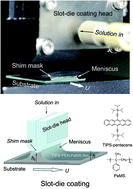
As shown in Fig. 1, the apparatus used for the slot-die-coating step had a maximum work space of 10 × 10 cm2 with a commercial slot-die coating head (FOM Technologies, shim-mask width = 12.0 mm). Also in Fig. 1, the slot-die head is shown to be hung at a specific height (h0) above a substrate attached to a horizontal carrying stage. The height of the gap h0 was adjusted vertically using two micrometer positioners, and the carrying speed U was adjusted by a computer-controlled translation stage (SGSP26-200, Sigma Koki Co., Ltd). The slot-die-coating process used in this study proceeds according to the following steps. First, the slot-die head is placed at the front edge of the substrate, which is attached to the carrying stage. The slot-die head delivers a small volume of the coating solution (ca. 6 μl) per unit coating area (1.0 cm2) from a reservoir through a slot nozzle into the gap region between the slot nozzle and the substrate via a shim-mask using a syringe pump (Pump Systems Inc. NE-1000) so that a uniform downstream meniscus of coating solution is formed on the substrate, as attracted by capillary action. Next, the substrate is transported horizontally at a given speed U while the shape of the downstream meniscus is maintained such that the slot-die head spreads the solution evenly on the transporting substrate. The transporting speed U was 2.0 cm s−1. It took about 2.5 s to coat a complete film on a substrate over an area of 1.0 × 5.0 cm2. The slot-die-coated films were then dried at 100 °C for 60 min using a heating plate to remove the residual solvent. For comparison, comparative TIPS-PEN:PaMS layers were also fabricated by the H-dip-coating method12,13 using the same blended solution.


image file: c6ra18545b-f1.tif
Fig. 1 Photograph (upper) and schematic illustration (lower) of the slot-die-coating process used, with the gap height h0, coating speed U, and meniscus with curvature Rd. The inset figure shows the chemical structures of the materials used.

In order to evaluate the quality of the fabricated film, we studied the micro/nanostructures of ca. 160 nm-thick TIPS-PEN:PaMS films using a polarised optical microscope (Model BA300Pol., Motic Co.) and an X-ray diffractometer (XRD-Rigaku D/max 2200, λ = 0.154 nm). Topographic images of the films were also obtained using an atomic force microscope (AFM, Nanosurf easyscan2 AFM, Nanosurf AG Switzerland Inc.). The transfer and output characteristics of the OTFT were recorded using a semiconductor parametric analyzer with a source meter (Keithley 2400).

In order to test the sensing performance of the slot-die-coated OTFTs for the detection of proteins in aqueous solutions, we used BSA (bovine serum albumin, Aldrich) dissolved in deionised (DI) water (pH 5.7–5.8) at three concentrations (50 nM, 500 nM, and 5 μM). The active TIPS-PEN:PaMS layer in the OTFT was covered and protected by a H-dip-coated overlayer of amorphous perfluoropolymer, Cytop (Asahi Glass Co., Ltd.), which acts as an electrical insulator and chemical barrier against ions in an aqueous solution.13 The Cytop-coated TIPS-PEN:PaMS OTFTs were dried at 100 °C for 10 min, after which the thickness of the Cytop overlayer was approximately 30 nm. On the Cytop-coated OTFT, a custom-built flow cell was constructed to confine the analyte solution to the OTFT channel region. The contact area was about 1.0 × 1.0 mm2, and the flow channel was connected to dispensers to deliver the BSA solution from the reservoirs to the OTFT sensor surface at a constant volume of ca. 3 μl. The contact area was also connected to a small gas nozzle which blew a stream of N2 gas to remove the remaining solution. A brief description of the sensing process is as follows: (1) recording of the Cytop-coated OTFT response to DI water (ca. 3 μl) dropped on the OTFT for ∼3 min (water level). (2) Recording of the response to air on the OTFT with pure N2 gas blown for ∼3 min (air level). (3) Recording of the response to a BSA solution (ca. 3 μl) at a given concentration dropped onto the channel region of the OTFT. (4) Recording of the response to the removal of the BSA solution on the OTFT by flowing DI water and then using blown nitrogen gas for ∼3 min as a cleaning/rinsing step. In the BSA sensing process, we used two types of BSA solutions – a pure BSA solution and a BSA solution pre-treated by exposure (1 min) to non-thermal, atmospheric pressure (AP) plasma (Ar/O2, 0.8% of O2) – in order to induce self-assembled aggregation of BSA protein in the solutions without serious chemical modifications.43,44 To generate the AP plasma, we used an RF plasma generator under a glow discharge condition with a 13.56 MHz RF power supply (100 W, MyPL100, Applasma).

Results and discussion

Slot-die-coating TIPS-PEN:PaMS layers

Previous studies indicated that the slot-die-coating technique is a type of pre-metered coating technique and is an effective means of producing stripes of materials because it creates a uniform flow field under uniform shear forces.40,45 Generally, the film thickness (h) produced by slot-die-coating can be described for a given flow rate, coating width, and concentration using the relationship of hU−1, where U is the carrying (coating) speed, i.e.; the film thickness decreases with an increase in the coating speed.46 In contrast to the previous conventional slot-die-coating technique,46 in the present study, we investigated the slot-die-coating method operating in the ‘dip-coating’ mode to achieve fine control of the thickness of thin films by adjusting the capillary number Ca (=μU/σ) of the coating solution. Here, μ and σ represent the viscosity and surface tension of the coating solution, respectively. Note that the slot-die-coating process studied here is quite similar to the previous H-dip-coating method.12,13 When considering the coating thickness h vs. the capillary number Ca (or coating speed U), the thickness (h) of a film fabricated in the dip-coating mode for a low capillary number (Ca ≪ 1) can be described by the associated drag-out problem proposed by Landau and Levich using the relationship12,13,47,48
 
h = k(μU/σ)2/3 /3Rd, (1)
where k is the proportionality constant and Rd represents the radius of the associated downstream meniscus.

Initially, we investigated the dependence of the thickness h of the slot-die-coated TIPS-PEN:PaMS films on the coating speed U and gap height h0 (see Fig. 2). It is clear from the figure that with an h0 value of 0.8 mm, the h value of the coated film increased continuously from ca. 50 nm to ca. 150 nm as U in the observed region increased. Furthermore, when h0 was increased to 0.9 mm, the thickness of the film coated increase more with an increase in U. These results are in good agreement with the theoretical values predicted by eqn (1), indicating that the thickness of the slot-die-coated TIPS-PEN:PaMS film could be controlled precisely by adjusting h0 and U. Note that the dependence of the thickness of the slot-die-coated film on the coating speed shows a trend nearly identical to those found previously with H-dip-coated TIPS-PEN:PaMS layers.12,13 It should also be note that the slot-die-coated process produces TIPS-PEN:PaMS thin films at a line speed on the order of a few meters per minute, which is nearly 105 times faster than the conventional zone casting method (ca. 10 μm min−1).30,31 Also note that the slot-die-coating process is an economic process because it requires only small amounts of a solution, approximately 5–10 μl per cm2 of substrate.


image file: c6ra18545b-f2.tif
Fig. 2 Thickness of the slot-die-coated TIPS-PEN:PaMS film as a function of U for two different h0s. The solid curves show the theoretical predictions.

Nano/microstructure of the slot-die-coated TIPS-PEN:PaMS layers

Fig. 3(a) shows the X-ray diffraction (XRD, θ–2θ mode) patterns of the blended TIPS-PEN:PaMS films and neat TIPS-PEN as measured to understand the nanostructures of the fabricated films. TIPS-PEN is known to form crystals with a triclinic structure with the following unit cell parameters: a = 7.55 Å, b = 7.73 Å, c = 16.76 Å, and α = 89.5°, β = 78.7°, and γ = 84.0° at a low temperature.49 By comparing these parameters and the XRD peaks with data obtained from the literature,49 we found that both the slot-die-coated and H-dip-coated TIPS-PEN:PaMS films showed peaks that were very similar to those of a neat TIPS-PEN film and the single-crystal structure of TIPS-PEN.49 Note that the neat TIPS-PEN film shows additional peaks at 11.42° (0 1 1) and 12.77° (1 0 [1 with combining macron]),49 while a neat PaMS binding polymer does not exhibit any sharp peak, as expected. From the sharp peaks observed at 2θ values of 5.36° (0 0 1), 10.74° (0 0 2), and 16.11° (0 0 3) for the blended films, we could determine the interlayer spacing of the (0 0 1) plane using Bragg's equation of 2d[thin space (1/6-em)]sin[thin space (1/6-em)]θ = , where λ = 0.154 nm and n = 1, 2, and 3. The estimated average interlayer spacing d was approximately 16.56 Å. From these XRD results, we confirmed that both the slot-die-coated and H-dip-coated TIPS-PEN:PaMS blended films showed excellent molecular ordering very similar to those of the neat TIPS-PEN and/or single-crystal structure of TIPS-PEN. This indicates that the TIPS-PEN molecules had a well-organised nanostructure in the slot-die-coated film along the bulky arms (c-axis) and had a polycrystalline structure similar to that of the H-dip-coated films.
image file: c6ra18545b-f3.tif
Fig. 3 (a) XRD patterns of the slot-die (blue curve) and the H-dip-coated (black curve) TIPS-PEN:PaMS films. For comparison, XRD patterns of the slot-die-coated neat TIPS-PEN (red curve) and PaMS (gray curve) films are also shown. (b) Polarised microscope images showing the textures of the slot-die-coated (upper) and the spin-coated (lower) TIPS-PEN:PaMS films. The white arrows indicate the coating (x) direction.

In order to gain a clear understanding of the microstructures of the slot-die-coated TIPS-PEN:PaMS films, we also observed polarised optical micrographic images of the produced TIPS-PEN:PaMS films (Fig. 3(b)). From the figure, it can be seen that the slot-die-coated film exhibited a fairly large polycrystalline structure with strongly birefringent contiguous crystalline domains (the upper panel in Fig. 3(b)). With a channel of a certain length between the source and drain electrodes, these domains in the channel region may form bridges between the electrodes. Similar domain growth is also seen in the vast majority of H-dip-coated films, in direct contrast to the spin-coated films, which show no clear microstructural domain (as in the lower panel of Fig. 3(b)). The microstructural packing of the slot-die-coated TIPS-PEN:PaMS film was mainly considered to be caused by meniscus-assisted film formation under the relatively slow evaporation of the solvent, which therefore facilitated the extensive growth of highly ordered domains during the preferential vertical phase separation, especially for the in-plane direction, parallel to the channel surface.

Next, for a closer investigation of the surface morphologies of the fabricated films, variations in the surface roughness of the fabricated films were monitored using an AFM (Fig. 4). Fig. 4(a) shows AFM images of a 10 × 10 μm2 scan of part of the slot-die-coated film, which may also confirm the considerable domain growth and related microstructural packing of the films. This also revealed the topography to be fairly uniform; the root mean square (RMS) roughness of the slot-die-coated TIPS-PEN:PaMS film was ca. 4.3 nm, which is slightly lower than that (ca. 5.3 nm) of H-dip-coated films (Fig. 4(b)). Note that the RMS roughness of the slot-die-coated film is higher than that (ca. 0.9–1.24 nm) of the spin-coated layers (not shown).12 It is also noteworthy that when we decrease the slot-die-coating speed U from 2.0 cm s−1 for the TIPS-PEN:PaMS film, not only the film thickness but also the RMS roughness of the slot-die-coated films decrease; typical values of the RMS roughness (and film thickness) of the slot-die-coated TIPS-PEN:PaMS films for coating speeds of U = 1.5 cm s−1 and U = 1.0 cm s−1 were ca. 3.2 nm (thickness: ∼150 nm) and 1.9 nm (thickness: ∼120 nm), respectively (Fig. 4(c)). This result implies that, at a low coating speed, the slot-die-coated TIPS-PEN:PaMS layer becomes smooth owing to the formation of a thin film, which may also decrease the domain size. We also observed that the coating widths of the slot-die-coated strips were nearly identical to the width (12 mm wide) of the shim mask of the slot-die-coating head, independently of the coating speeds, and that the edge defects were restricted to the narrow edge regions by measuring the cross-sectional profiles of the strip patterns. These findings indicate that the slot-die-coating method used in this study presents an acceptable coating width. More details about the edge effects will be reported elsewhere. It is thus possible to achieve reliable and uniform active layers in OTFTs using the slot-die-coating process operating in the dip-coating mode, even on a large-area substrate, due to the effective control of the undesirable flow at the top surface of the wet film via the slot-die-coating head.


image file: c6ra18545b-f4.tif
Fig. 4 AFM topographic images of a slot-die-coated film with U = 2.0 cm s−1 (a) and an H-dip-coated film with U = 2.0 cm s−1 (b). (c) Comparative topographic images of slot-die-coated films with U = 1.5 cm s−1 (upper) and U = 1.0 cm s−1 (lower).

Performance of TIPS-PEN:PaMS OTFTs fabricated by the slot-die-coating method

Next, we investigated the electrical performance capabilities of the OTFTs fabricated with the slot-die-coated TIPS-PEN:PaMS active layers. A summary of the measured results is given in Table 1. For each reported condition, we obtained average values of 10 different OTFTs. Hereafter, IDS denotes the current between the source and the drain, VGS is the gate voltage applied between the source and the gate, VDS is the voltage between the source and the drain, and VTH is the threshold voltage. Fig. 5 shows typical examples of the condition of log(IDS) and √IDS vs. VGS at VDS = −60 V (Fig. 5(a)) and of IDS vs. VDS for a range of gate voltages (Fig. 5(b)) for the slot-die-coated OTFTs. As shown in the figure, the transfer and output curves illustrate the excellent transistor characteristics of the OTFTs, thereby indicating the good coverage of the TIPS-PEN:PaMS layers. Notably, the slot-die-coated device exhibited a steep parabolic slope in its transfer curve as well as a sharp turn-on point and good saturation behaviour in its output characteristics, showing an average mobility of about 0.248 cm2 V−1 s−1 (a maximum mobility of 0.332 cm2 V−1 s−1) with a VTH value of 2.268 V and an on/off current ratio of 3.34 × 10⁵. When comparing the device performance with those of reported previously devices,12 the slot-die-coated OTFTs were consistently superior to those fabricated using the spin-casting method (with an average mobility of approximately 0.012 cm2 V−1 s−1, a VTH value of −27.9 V, and an on/off current ratio of 1.48 × 10⁴). From the comparison of the OTFT results, it is shown that the device performance of the slot-die-coated OTFT is also slightly higher than that of the H-dip-coated OTFT, exhibiting mobility of about 0.161 cm2 V−1 s−1 with a VTH voltage of −2.10 V and an on/off current ratio of 2.17 × 10⁶. This result shows the effectiveness of the slot-die-coating process, which can provide high OTFT device performance levels. It is noteworthy that our slot-die-coated OTFTs as reported here had source–drain contacts that were parallel to the coating direction. When the source–drain contacts in the OTFTs were orthogonal to the coating direction, no obvious differences were observed in the characteristics of the devices. The fact that there were no differences in the performance capabilities may stem from the random orientation of the polycrystalline domains which formed during the slot-die-coating process. It is also noted that with the blending ratio of TIPS-PEN and PaMS in the coating solution (0.3[thin space (1/6-em)]:[thin space (1/6-em)]0.7 wt% in toluene) as used here, the OTFT shows high electrical performance. For comparison purposes, with the blending ratios of 0.1[thin space (1/6-em)]:[thin space (1/6-em)]0.9 wt%, 0.2[thin space (1/6-em)]:[thin space (1/6-em)]0.8 wt%, 0.3[thin space (1/6-em)]:[thin space (1/6-em)]0.7 wt% (in this work), 0.4[thin space (1/6-em)]:[thin space (1/6-em)]0.6 wt%, and 0.5[thin space (1/6-em)]:[thin space (1/6-em)]0.5 wt% in toluene, typical mobility values for the slot-die-coated TIPS-PEN:PaMS OTFTs were approximately 0.01 cm2 V−1 s−1, 0.05 cm2 V−1 s−1, 0.25 cm2 V−1 s−1, 0.19 cm2 V−1 s−1, and 0.17 cm2 V−1 s−1, respectively. When we also change the slot-die-coating speed U when producing the TIPS-PEN:PaMS active layer, the OTFT device performance begins to decrease; typical mobility values of the slot-die-coated TIPS-PEN:PaMS OTFTs for coating speeds U of 1.5 cm s−1 and 1.0 cm s−1 were about 0.15 cm2 V−1 s−1 and 0.05 cm2 V−1 s−1, respectively, which may be due to their small domains, as shown in Fig. 4(c).
Table 1 Summary of the device performance capabilities of the OTFTs investigated
Active layer Mobility (cm2 V−1 s−1) On/off ratiob Threshold voltage (V)
a The number in parentheses in each cell is the maximum value from the observations.b When VDS = −60 V.c The values of the average and the standard deviation are lower than 1.0 × 10⁻².
Spin-coating (ref. 12) 0.01 ± 0.00c (0.01)a 0.15 × 10⁵ −27.90
H-dip-coating (our work) 0.16 ± 0.01 (0.20) 21.74 × 10⁵ −2.10 ± 6.31
Slot-die-coating (our work) 0.25 ± 0.05 (0.33) 7.91 × 10⁵ −2.98 ± 9.15


image file: c6ra18545b-f5.tif
Fig. 5 Representative transfer curves (a) and output series (b), measured for the slot-die-coated TIPS-PEN:PaMS OTFT devices.

To assess the device performance of the slot-die-coated OTFT, we also investigated the vertical distributions of the TIPS-PEN molecules in the fabricated TIPS-PEN:PaMS layers using secondary ion mass spectrometry (SIMS) and compared the layer structures in both the slot-die-coated and H-dip-coated layers. Fig. 6 shows the vertical distributions of Si ions as a marker of the TIPS-PEN molecules in the TIPS-PEN:PaMS layer and of Au ions as a marker of the electrodes of the OTFTs. In contrast to the trilayered structure (spin-coated film),10,11 the layer structure of the slot-die-coated film is similar to a graded junction structure,12,13 in which the TIPS-PEN molecules are segregated toward the top of the film. Thus, in contrast to other coating methods, the formation of a graded structure (Fig. 6) with large polycrystalline domains (Fig. 3(b)) and a uniform formation (Fig. 4(a)) of the slot-die-coated active TIPS-PEN:PaMS film could result in higher mobility and therefore improved OTFT performance. It is important to note that the value of the maximum mobility (0.332 ± 0.050 cm2 V−1 s−1) for our slot-die-coated OTFT was somewhat lower than the maximum mobility quoted in previous reports.35,36 This deviation may be caused by differences in materials, by the process used to fabricate the other functional layers, or the structure of the fabricated device, among other aspects, relative to those produced here. Thus, it is believed that the performance of our OTFTs can be improved even further if using the optimal fabricating conditions.


image file: c6ra18545b-f6.tif
Fig. 6 Depth profiles of Si and Au ions in the slot-die-coated (solid curves) and H-dip-coated (dotted curves) TIPS-PEN:PaMS OTFTs. A sputter time of zero was used at the top surface of the OTFTs.

Use of slot-die-coated TIPS-PEN:PaMS OTFTs in BSA protein-sensing applications

Next, we observed the electrical responses of the slot-die-coated TIPS-PEN:PaMS OTFTs as protein-sensing devices in aqueous media (Fig. 7(a)). The active TIPS-PEN:PaMS layer in the OTFT was covered by a Cytop overlayer which acted as an electrical insulator and a chemical barrier in an aqueous solution.13 On the Cytop-coated OTFT, a custom-built flow cell was constructed to confine the analyte solutions containing the BSA protein to the OTFT channel region. The amine terminations of BSA in the aqueous solution are expected to attach to the Cytop overlayer by means of hydrogen bonding50 and/or hydrophobic interactions.51 Thus, the chemical or physical adsorption of BSA on the Cytop-deposited OTFT may be converted to a current response (IDS) of the OTFT, which may depend on the BSA composition and concentration.13,52
image file: c6ra18545b-f7.tif
Fig. 7 (a) Schematic of a slot-die-coated OTFT sensor for detecting the BSA protein in aqueous solutions. (b) In situ monitoring of changes in the drain current of the OTFT device in aqueous BSA solutions treated with and without exposure to plasma for multiple adsorption cycles separated by the water/N2 cleaning/rinsing step.

Fig. 7(b) shows the in situ measurement of IDS using a Cytop-coated TIPS-PEN:PaMS OTFT at a constant bias (VGS = −9 V and VDS = −5 V) with monitoring of the OTFT response steps over time upon exposure to deionised (DI) water (blue arrow, recording of the water level), upon exposure to pure N2 gas (gray arrow, recording the air level), and upon exposure to the BSA solution at a given concentration (black arrow). Prior to the injection of the analyte, the baselines of IDS (the water and air levels) were recorded, after which the BSA solution was injected and changes in the IDS value were observed, compared to the baselines. It is clear from the changes in IDS that the polarity of water or BSA molecules on the Cytop surface plays a central role through the creation of charge carrier traps. Due to the isoelectric point (pI) of 4.7 for BSA, the amino acids of BSA in DI water at 25 °C form negative charges;42 thus, one may expect an increase in the current upon the adsorption of BSA onto the Cytop-coated TIPS-PEN:PaMS OTFT, as it creates another channel (top channel) in addition to the conventional bottom channel by pulling charge carriers (holes) towards the top interface region between the top insulating layer of Cytop and the TIPS-PEN:PaMS active layer, in a similar manner to dual-gate OTFTs described in the literature.13,53,54 Such a prediction of an increase in the current is clearly consistent with this observation of the sensing behaviours. It was also noted that when the BSA solution was removed by the cleaning/rinsing step with DI water and N2 gas, the current nearly returned to its original values (air and water levels), indicating that the binding or adsorption of the BSA on the Cytop overlayer is not strong or efficient. Thus, the observed sensing performance described above shows that our fabricated transistors were stable in water and functioned well even in aqueous solutions depending on the binding of BSA proteins on a Cytop surface. When we change the optimal thickness (∼30 nm) of the Cytop overlayer on the active layer the variation in the effective mobility levels of the Cytop-coated OTFTs induced by BSA adsorption and/or desorption begins to decrease. This result implies that the 30 nm-thick Cytop layer used in this study presents high sensitivity to detect BSA adsorption on the Cytop overlayer.

For more details about the adsorption of BSA on the Cytop-coated OTFTs, we observed the IDS responses of devices with BSA solutions at three different concentrations, 50 nM, 500 nM, and 5 μM, as shown in Fig. 7(b). It is clear from the figure that the measured IDS value started to increase with an increase in the concentration of BSA during the analyte injection steps, while the current levels returned to their original points at every cleaning/rinsing step. Remarkably, upon the introduction of the BSA solution at a concentration that exceeded 500 nM onto the Cytop-coated OTFT, we clearly observed that the IDS values exceeded the water level. With an increase in the negatively charged BSA concentration, the increased negative surface charge density on the Cytop-coated OTFT induces accumulating positive charges (holes) in the TIPS-PEN:PaMS active layer at the interface between the Cytop insulating overlayer and the active layer, according to the field effect. Thus, the current response increases as a result of the additional hole accumulation process at the top channel in the p-type TIPS-PEN:PaMS OTFTs studied here, as noted earlier. A similar trend in the responses of the increased drain currents in OTFT-based sensors was also reported for the detection of BSA.13

Finally, we monitored and compared the current responses of OTFTs over time upon exposure to another BSA solution pre-treated by exposure to AP plasma at a given BSA concentration (green arrow in Fig. 7(b)) and upon exposure to plasma-treated DI water (the red arrow in Fig. 7(b)) to test the detecting ability of the OTFTs studied here for BSA aggregates induced by the plasma treatment. Interestingly, it was found that the current responses of the plasma-treated BSA solutions were clearly higher than those of untreated BSA solutions, especially for BSA concentrations of 500 nM and 5 μM. In comparisons with nearly identical current levels of plasma-treated DI water (pH: ca. 6.6) and pure DI water (pH: ca. 5.8) and with nearly identical pH values of the plasma-treated BSA solutions (pH: ca. 6.5) and untreated BSA solutions (pH: ca. 5.8), increased current responses of the plasma-treated BSA solutions were noted. This is attributed mainly to changes in the surface coverage of negatively charged BSA aggregates on the Cytop-coated OTFT in the plasma-treated solutions. Thus, by setting up an appropriate discrimination current level according to the degree of BSA adsorption, the fabricated OTFTs can sensitively detect the adsorption of BSA aggregates in an aqueous solution. Therefore, it is believed that the plasma treatment of the BSA protein solution may play an important supporting role in enhancing the sensing performance of OTFT devices for aggregations of BSA protein, although more details about the underlying adsorption mechanism of the aggregates should be published. Based on this application, it is clear that the sensitive and rapid responses of the slot-die-coated TIPS-PEN:PaMS OTFTs studied here may find potential use with regard to the future development of diagnostic devices to detect many neurodegenerative diseases related to protein aggregates, such as Alzheimer's and Parkinson's diseases.

From the above observations, it is clear that the slot-die-coating process operating in the dip-coating mode allows the simple formation of a reliable and high-performance organic semiconducting film as well as critical control of the nanoscale film thickness. We also note that the performance of the OTFTs could be improved even further by selecting the optimal materials, solvents, solution concentrations, viscosities, and gap heights, among other parameters. It can therefore be expected that combining the described slot-die-coating process with the roll-to-roll method reported elsewhere will certainly lead to the realization of convenient, large-area, rapidly processed, inexpensive, and high-performance OTFTs in industrial applications such as displays and/or OTFT-based sensors.

Conclusions

In summary, we have herein described a simple slot-die-coating process which is capable of depositing organic semiconducting films of the TIPS-PEN:PaMS composite onto planar substrates. It was shown that thin TIPS-PEN:PaMS films could be successfully fabricated with a high degree of uniformity by using the slot-die-coating process while controlling the main process variables, including the gap height and the coating speed. It was also shown that bottom-contact OTFTs prepared with slot-die-coated active layers of TIPS-PEN:PaMS had mobility levels that were much higher than those of conventional spin-coated devices, thereby allowing the manufacture of cost-efficient and high-performance solution-processed OTFTs with the easy control of the crystal domain growth behaviour and versatility in large-area applications. Our results show that the slot-die-coating method is suitable to produce high-quality conformal thin films for OTFTs. We also demonstrated the possibility of using the fabricated OTFT as a sensitive BSA protein-sensing device with the help of an AP plasma exposure step. These slot-die-coated semiconducting films provide the solid foundation necessary to improve the fabrication process of various electrical organic devices, such as organic transistor arrays, special active-matrix flat-panel display devices, memory devices, and bio-sensors.

Acknowledgements

The present research was supported by the Converging Research Center Program through the Ministry of Education, Science and Technology, Republic of Korea (2010K001064).

Notes and references

  1. H. Sirringhaus, P. J. Brown, R. H. Friend, M. M. Nielsen, K. Bechgaard, B. M. W. Langeveld-Voss, A. J. H. Spiering, R. A. J. Janssen, E. W. Meijer, P. Herwig and D. M. de Leeuw, Nature, 1999, 401, 685–688 CrossRef CAS.
  2. H. E. A. Huitema, G. H. Gelinck, J. B. P. H. van der Putten, K. E. Kuijk, C. M. Hart, E. Cantatore, P. T. Herwig, A. J. J. M. van Breemen and D. M. de Leeuw, Nature, 2001, 414, 599 CrossRef CAS PubMed.
  3. Z. Bao and J. Locklin, Organic Field-Effect Transistors (Optical Science and Engineering Series), CRC Press, Boca Raton, FL, 2007 Search PubMed.
  4. H. E. Katz and C. Landis, Opt. Sci. Eng., 2007, 128, 403 CAS.
  5. S. K. Park, J. E. Anthony and T. N. Jackson, IEEE Electron Device Lett., 2007, 28, 877–879 CrossRef CAS.
  6. D. H. Kim, D. Y. Lee, H. S. Lee, W. H. Lee, Y. H. Kim, J. I. Han and K. Cho, Adv. Mater., 2007, 19, 678–682 CrossRef CAS.
  7. P. F. Baude, D. A. Ender, M. A. Haase, T. W. Kelley, D. V. Muyres and S. D. Theiss, Appl. Phys. Lett., 2003, 82, 3964–3966 CrossRef CAS.
  8. Y. Diao, L. Shaw, Z. Bao and S. C. B. Mannsfeld, Energy Environ. Sci., 2014, 7, 2145–2159 CAS.
  9. S. G. Bucella, A. Luzio, E. Gann, L. Thomsen, C. R. McNeill, G. Pace, A. Perinot, Z. Chen, A. Facchetti and M. Caironi, Nat. Commun., 2015, 6, 8394 CrossRef CAS PubMed.
  10. T. Ohe, M. Kuribayashi, R. Yasuda, A. Tsuboi, K. Nomoto, K. Satori, M. Itabashi and J. Kasahara, Appl. Phys. Lett., 2008, 93, 053303 CrossRef.
  11. T. Ohe, M. Kuribayashi, A. Tsuboi, K. Satori, M. Itabashi and K. Nomoto, Appl. Phys. Express, 2009, 2, 121502 CrossRef.
  12. B. Park, H. G. Jeon, J. Choi, Y. K. Kim, J. Lim, J. Jung, S. Y. Cho and C. Lee, J. Mater. Chem., 2012, 22, 5641–5646 RSC.
  13. J. Choi, H. G. Jeon, O. E. Kwon, I. Bae, J. Cho, Y. Kim and B. Park, J. Mater. Chem. C, 2015, 3, 2603–2613 RSC.
  14. M. Mizukami, N. Hirohata, T. Iseki, K. Ohtawara, T. Tada, S. Yagyu, T. Abe, T. Suzuki, Y. Fujisaki, Y. Inoue, S. Tokito and T. Kurita, IEEE Electron Device Lett., 2006, 27, 249–251 CrossRef CAS.
  15. J. A. Rogers, Z. Bao, K. Baldwin, A. Dodabalapur, B. Crone, V. R. Raju, V. Kuck, H. Katz, K. Amundson, J. Ewing and P. Drzaic, Proc. Natl. Acad. Sci. U. S. A., 2001, 98, 4835–4840 CrossRef CAS PubMed.
  16. F. Yan, S. M. Mok, J. Yu, H. L. W. Chan and M. Yang, Biosens. Bioelectron., 2009, 24, 1241–1245 CrossRef CAS PubMed.
  17. L. Kergoat, B. Piro, M. Berggren, G. Horowitz and M.-C. Pham, Anal. Bioanal. Chem., 2012, 402, 1813–1826 CrossRef CAS PubMed.
  18. L. Torsi, M. Magliulo, K. Manoli and G. Palazzo, Chem. Soc. Rev., 2013, 42, 8612–8628 RSC.
  19. T. Minamiki, T. Minami, R. Kurita, O. Niwa, S.-I. Wakida, K. Fukuda, D. Kumaki and S. Tokito, Appl. Phys. Lett., 2014, 104, 243703 CrossRef.
  20. T. Minamiki, T. Minami, R. Kurita, O. Niwa, S.-I. Wakida, K. Fukuda, D. Kumaki and S. Tokito, Materials, 2014, 7, 6843–6852 CrossRef CAS.
  21. T. Minami, T. Minamiki, Y. Hashima, D. Yokoyama, T. Sekine, K. Fukuda, D. Kumaki and S. Tokito, Chem. Commun., 2014, 50, 15613–15615 RSC.
  22. M. Medina-Sánchez, C. Martínez-Domingo, E. Ramon and A. Merkoçi, Adv. Funct. Mater., 2014, 24, 6291–6302 CrossRef.
  23. W. Huang, K. Besar, R. LeCover, P. Dulloor, J. Sinha, J. F. Martínez Hardigree, C. Pick, J. Swavola, A. D. Everett, J. Frechette, M. Bevand and H. E. Katz, Chem. Sci., 2014, 5, 416–426 RSC.
  24. M. Irimia-Vladu, N. S. Sariciftci and S. Bauer, J. Mater. Chem., 2011, 21, 1350–1361 RSC.
  25. T. Someya, A. Dodabalapur, A. Gelperin, H. E. Katz and Z. Bao, Langmuir, 2002, 18, 5299–5302 CrossRef CAS.
  26. M. L. Swiggers, G. Xia, J. D. Slinker, A. A. Gorodetsky, G. G. Malliaras, R. L. Headrick, B. T. Weslowski, R. N. Shashidhar and C. S. Dulcey, Appl. Phys. Lett., 2001, 79, 1300–1302 CrossRef CAS.
  27. T. Fujiwara, J. Locklin and Z. Bao, Appl. Phys. Lett., 2007, 90, 232108 CrossRef.
  28. I. O. Shklyarevskiy, P. Jonkheijm, N. Stutzmann, D. Wasserberg, H. J. Wondergem, P. C. M. Christianen, A. P. H. J. Schenning, D. M. de Leeuw, Ź. Tomović, J. Wu, K. Müllen and J. C. Maan, J. Am. Chem. Soc., 2005, 127, 16233–16237 CrossRef CAS PubMed.
  29. N. Stingelin-Stutzmann, E. Smits, H. Wondergem, C. Tanase, P. Blom, P. Smith and D. de Leeuw, Nat. Mater., 2005, 4, 601–605 CrossRef CAS PubMed.
  30. A. Tracz, J. K. Jeszka, M. D. Watson, W. Pisula, K. Müllen and T. Pakula, J. Am. Chem. Soc., 2003, 125, 1682–1683 CrossRef CAS PubMed.
  31. W. Pisula, A. Menon, M. Stepputat, I. Lieberwirth, U. Kolb, A. Tracz, H. Sirringhaus, T. Pakula and K. Müllen, Adv. Mater., 2005, 17, 684–689 CrossRef CAS.
  32. K. C. Dickey, J. E. Anthony and Y.-L. Loo, Adv. Mater., 2006, 18, 1721–1726 CrossRef CAS.
  33. T. D. Anthopoulos, F. B. Kooistra, H. J. Wondergem, D. Kronholm, J. C. Hummelen and D. M. de Leeuw, Adv. Mater., 2006, 18, 1679–1684 CrossRef CAS.
  34. C.-Y. Liu and A. J. Bard, Chem. Mater., 2000, 12, 2353–2362 CrossRef CAS.
  35. J. Chang, C. Chi, J. Zhang and J. Wu, Adv. Mater., 2013, 25, 6442–6447 CrossRef CAS PubMed.
  36. A. K. K. Kyaw, L. S. Lay, G. W. Peng, J. Changyun and Z. Jie, Chem. Commun., 2016, 52, 358–361 RSC.
  37. A. Sandström, H. F. Dam, F. C. Krebs and L. Edman, Nat. Commun., 2012, 3, 1002 CrossRef PubMed.
  38. E. J. Choinski, US Pat., 4, 938–994, 1990.
  39. J. Q. Feng, AIChE J., 1998, 44, 2137–2143 CrossRef CAS.
  40. S. Kokubo and T. Yoshikawa, JP Pat., 2003–344642, 2003.
  41. B. Park, O. E. Kwon, S. H. Yun, H. G. Jeon and Y. H. Huh, J. Mater. Chem. C, 2014, 2, 8614–8621 RSC.
  42. C. Felder and J. Sussman, Protein Dipole Moments Server, Dept. Structural Biology, Weizmann Institute, 761000 Rehovot, Israel, 2007 Search PubMed.
  43. J.-W. Lackmann, E. Edengeiser, S. Schneider, J. Benedikt, M. Havenith and J. E. Bandow, Plasma Med., 2013, 3, 115–124 CrossRef.
  44. R. Jijie, A. Demeter, V. Pohoata and I. Topala, 31st ICPIG, 2013 Search PubMed.
  45. Y.-R. Chang, H.-M. Chang, C.-F. Lin, T.-J. Liu and P.-Y. Wu, J. Colloid Interface Sci., 2007, 308, 222–230 CrossRef CAS PubMed.
  46. F. C. Krebs, Sol. Energy Mater. Sol. Cells, 2009, 93, 394–412 CrossRef CAS.
  47. B. Park and M.-Y. Han, Opt. Express, 2009, 17, 21362–21369 CrossRef CAS PubMed.
  48. L. D. Landau and V. G. Levich, Acta Physicochim. URSS, 1942, 17, 42–54 Search PubMed.
  49. J. Chen, J. Anthony and D. C. Martin, J. Phys. Chem. B, 2006, 110, 16397–16403 CrossRef CAS PubMed.
  50. A. J. Mountford, S. J. Lancaster, S. J. Coles, P. N. Horton, D. L. Hughes, M. B. Hursthouse and M. E. Light, Inorg. Chem., 2005, 44, 5921–5933 CrossRef CAS PubMed.
  51. B. W. Matthews, Encyclopedia of life science, Nature Publishing Group, 2001 Search PubMed.
  52. H. U. Khan, J. Jang, J.-J. Kim and W. Knoll, J. Am. Chem. Soc., 2011, 133, 2170–2176 CrossRef CAS PubMed.
  53. H. R. Farrah and R. F. Steinberg, IEEE Trans. Electron Devices, 1967, 14, 69–74 CrossRef CAS.
  54. G. H. Gelinck, E. van Veenendaal and R. Coehoorn, Appl. Phys. Lett., 2005, 87, 073508 CrossRef.

This journal is © The Royal Society of Chemistry 2016
Click here to see how this site uses Cookies. View our privacy policy here.