
DOI:
10.1039/C6RA18347F
(Paper)
RSC Adv., 2016,
6, 84187-84193
Chemical modification of starch with epoxy resin to enhance the interfacial adhesion of epoxy-based glass fiber composites
Received
19th July 2016
, Accepted 30th August 2016
First published on 30th August 2016
Abstract
In order to fabricate epoxy-based glass fiber composites with superior mechanical and thermal properties, starch was chemically modified by E-51 epoxy resin, as a sizing for glass fibers. The hydrophilicity of starch was enhanced after modification as the surface tension decreased from 64.98 to 47.99 mN m−1, and the contact angle between the starch suspension and slide glass decreased from 50.26° to 33.53°. Besides, the interfacial adhesion between glass fiber and epoxy resin was obviously improved with the help of the modified starch, which can be clearly observed from SEM images. Consequently, significant increases of tensile strength from about 35 MPa to over 57 MPa, bending strength from about 65 MPa to over 87 MPa, and impact strength from about 8 KJ m−2 to over 14 KJ m−2 were obtained. Moreover, with the improvement of interfacial adhesion between the modified-starch sized glass fiber and epoxy resin, the thermo-stability of the composite was also improved as demonstrated by DSC. This study suggested a simple but effective chemical modification technique using a modifier to enhance interfacial adhesion in fabricating epoxy-based glass fiber composites with superior properties.
Introduction
Fiber-reinforced polymer (FRP) composites are produced by embedding structural fibers in thermoset polymers. They have unique properties of high specific stiffness and strength to weight ratio, damping characteristics, chemical and corrosion resistance, easy formability, and low-cost.1–4 These advantages make fiber-reinforced composites indispensable, popular alternatives to metals, and cause them to be used in primary and secondary structural components.5–7 Fiber-reinforced composites are vastly applied in sporting goods, leisure goods, automobiles, precision machine parts, naval structures and components, wings, fuselages and cryogenic fuel tanks in the aircraft and aerospace engineering industry.6–10 Since advanced composite commodities still account for a relatively small percentage of the market in comparison to competitive materials such as steel and aluminum, there is a tremendous potential growth for fiber-reinforced composites in the global material market.11–16
In recent years, many studies have been performed to explore the reason that mechanical properties of fiber-reinforced composites are mainly determined by the interfacial adhesion between fiber and matrix.17–19 The fiber–matrix interface transfers stresses through the combination of chemical bonding, mechanical interlocking, and physical adhesion.20–22 However, limitations such as the lack of reactive functional groups on the fiber surface and its poor wettability, result in an ineffective transfer of load between fibers and matrix.23 Obviously, an effective interface is required to guarantee the stress transfer from the matrix to the load-bearing fibers.24,25 Hence, the research areas including both academia and industries extremely concern about the methods to enhance the interfacial adhesion between fibers and matrix. Furthermore, the properties of this interfacial adhesion region are determined by the coating applied on the fiber surface before integrating with a polymer matrix.26
Traditionally, glass fibers are coated with the so-called fiber sizing during fiber production. The sizing usually consists of a water-based formulation of coupling agent, film former and other components.27,28 Such coating can effectively lubricate the surface of the glass fiber. It also integrates hundreds of glass fiber filaments into a bundle, and changes the surface state of the glass fiber. It not only makes the glass fiber strand meet the requirement of subsequent processing, but also promotes the combination between glass fiber and matrix in the composite materials. Namely, the sizing fulfills the aim of improving the interfacial adhesion between the glass fibers and the matrix, which furthermore improves the properties of fiber-reinforced composites, like impact resistance.29–31
A good fiber sizing can protect the fiber during handling, and promote the wetting of bundles by the reacting comonomers during processing, and therefore enhance the interfacial adhesion between the glass fiber and matrix. As a biodegradable natural polymer, starch has outstanding properties, like excellent film-forming property and imporosity.32 In addition, it is non-toxic, low-cost, and possesses abundant functional groups for further modification. These merits make starch become a potential bio-polymer for materials with limited life.33,34 Physical modification, chemical modification and enzymatic modification of hydroxyl are used to modify starch. After modification, starch can be applied in more material field.35–37
Epoxy resin was used to modify starch in this study. Then the modified starch was coated on glass fiber. Finally, epoxy composite was made using the coated glass fiber. Coating on glass fiber can effectively enhance the interfacial adhesion between epoxy matrix and glass fiber. Epoxy resin was chosen to act as modifier because the matrix of the composite was epoxy resin. Namely, the same functional group would result in effective compatibility between the coating and matrix contrast to bare, paraffin-sized and native-starch sized glass fibers. The molecular structure change of starch was determined by Fourier transform infrared spectroscopy (FT-IR). Contact angle and surface tension measurements were applied to investigate the wettability. Tensile, bending, impact and DSC analysis were used to show the effect of chemical modification of starch on mechanical and thermal properties. Furthermore, fracture surface images of bare, paraffin-sized and modified-starch sized glass fiber reinforced epoxy resin composites were obtained on SEM to observe the improvement of interfacial adhesion.
Materials and methods
Materials
The native food grade corn starch, with the particle diameter about 5–25 μm and an apparent viscosity of 35 mPa s (measuring by mixing 20 g of starch and 400 mL of deionized water after complete gelatinization), was supplied by Xiadian Cornstarch Development Co, Ltd (Xian, Shanxi Province, China). After sieved by 80 mesh sieve, starch was dried at 80 °C for 24 h to remove the impurities and moisture in a vacuum oven. Then it was stored in a desiccator prior to use. Glass fibers, with the diameter about 9 μm, were kindly supplied by Sichuan fiberglass group Co., Ltd (Deyang, Sichuan Province, China). Paraffin on the surface of glass fiber was got rid of by acetone. It was placed in an airtight container with acetone. The container was soaked in water bath of 45 °C for 24 h, and then placed at room temperature for another 24 h. After cleaning up, the fiber was dried at 80 °C for 24 h and kept in a desiccator prior to use. E-51 epoxy resin was purchased from Sinopec Assets Management Corporation Baling Petrochemical Co., Ltd (Baling, Chongqing, China). Analytical pure reagents including acetone, ethanol, diethylenetriamine, and sodium hydroxide were obtained from the Aladdin Reagent (Shanghai, Chain). All the chemicals were used as received without further purification.
Modification of starch by E-51 epoxy resin
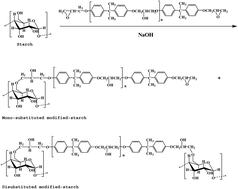
The modified starch was prepared in a three-necked flask equipped with a thermometer and a mechanical agitator. The flask was immersed in a water bath of 85 °C. Starch (20 g) and deionized water (400 mL) were charged into the flask for 2 h with continuous agitation. After complete gelatinization of starch, 10 wt% of sodium hydroxide and 10 wt% of E-51 epoxy resin (with regard to the starch) were introduced into the flask. The reaction temperature was then brought up to 95 °C. After 8 h of reaction, the system was cooled to room temperature. Portion of the reaction mixture was freeze-dried, and the obtained starch powder was washed with ethanol in Soxhlet extractor for 8 h to remove the residual sodium hydroxide and E-51 epoxy resin for further testing. The synthetic scheme was shown as the following formula (Fig. 1).
 |
| | Fig. 1 Chemical modification of starch with E-51epoxy resin. | |
Preparation of the coated glass fiber
A simulating industrial setup for glass fiber drawing process was designed, which was schematically illustrated in Fig. 2. The linear velocity of the glass fiber yarn passing through the sizing agent pool was controlled at 50 m min−1. Then the sized yarn was dried at 60 °C for 48 h, and subsequently preserved in a desiccator for further use.
 |
| | Fig. 2 Scheme of the setup for glass fiber sizing. | |
Preparation of the composite
According to Test methods for properties of resin casting body(GB/T 2567-2008), epoxy resin embedded with coated glass fiber was injection molded into four standard testing bars for further testing. Ethanol suspension with 15 wt%, 0.2 wt% of coated glass fiber and 10 wt% of diethylenetriamine (with regard to the epoxy resin) were successively introduced into a beaker with epoxy resin. Herein, diethylenetriamine acted as curing agent, and ethanol was diluent. After thorough stirring, the mixture was then degassed in a vacuum oven at 25 °C. After the degassing procedure, the complete mixture was poured into four different molds for curing. The curing process was carried out in an oven at 80 °C for 2 h, and then the samples were cooled down naturally to room temperature. The standard testing bars were placed at room temperature for a week before testing.
Characterizations
The structures of E-51 epoxy resin, native starch, modified-starch were analyzed by the Fourier transform infrared spectroscopy (FT-IR). The infrared spectra (FT-IR) were recorded on a Nicolet 5700 FT-IR spectrophotometer by the KBr-pellet method and scanned from 4000 to 400 cm−1, with a resolution superior to 0.5 cm−1.
The SEM images were obtained on a field emission scanning electron microscope (FE-SEM, Ultra-55) after the sputter coating of gold on the specimen surface. The morphologies of the fracture surface images of bare, paraffin-sized, native-starch sized and modified-starch sized glass fiber reinforced composites were obtained on this SEM.
Static contact angle measurements were carried out on a DSA30 contact angle measuring instrument (Kruss, Germany) by deposing a sizing agent drop on the surface of slide glass. Each sample was tested at least five times and the results were averaged. The surface tensions of various starch sizing agent samples were measured using a K100 Tensiometer (Kruss, Germany), with the ring method. The data reported were the averages of 10 successful tests.
According to GB/T 2567-2008(China), the samples were injection molded into dumbbell-shaped samples with a thickness of 4.0 mm for tensile test. The test was carried out on a C45.504E computer-controlled electronic universal testing machine (MTS Industrial Systems Co., Ltd China) at a rate of 5 mm min−1 based on GB/T 1040.4&5-2006 (China). Six samples for each composite were tested. These samples were conditioned at room temperature for a week prior to test.
On the basis of GB/T 2567-2008(China), the samples were injection molded into a type of rectangular solid with a dimension of 80 × 15 × 5 mm for bending test. The bending test was carried out on a C45.504E computer-controlled electronic universal testing machine (MTS Industrial Systems Co., Ltd China) at a rate of 2 mm min−1 based on GB/T 9341-2008 (China). Six samples for each composite were tested. These samples were conditioned at room temperature for a week prior to test.
Based on the GB/T 2567-2008(China), the samples were injection molded into a type of rectangular solid with a dimension of 100 × 10 × 5 mm for impact test. In order to conduct the impact test, the samples were then notched on a QYJ1251 notch marking machine (MTS Industrial Systems Co., Ltd China), the depth of notch on these samples was about 2 mm. The notch impact test was performed on a ZBC7251-B Pendulum impact testing machine (MTS Industrial Systems Co., Ltd China) based on GB/T 1843-2008 (China). In the process of notch impact test, a 2 J pendulum was used to determine the notch impact strength. These samples were conditioned at room temperature for a period of one week prior to test, and six samples for each composite were tested.
The thermal properties of the composites were characterized by differential scanning calorimetry (DSC, Q2000, TA company, America) in a purified nitrogen atmosphere with a flow of 100 mL min−1. The samples were stabilized at 20 °C for 5 min and then heated to 180 °C at a rate of 10 °C min−1, followed by the cooling back down to 0 °C at 10 °C min−1. After 2 min at 0 °C, the second scan from 20 °C to 180 °C at 10 °C min−1 was performed. The glass transition temperature (Tg) was determined from the second scan.
Results and discussion
Chemical modification of starch
The FT-IR spectra of E-51 epoxy resin, native starch and modified starch are shown in Fig. 3. Comparison of the spectra shows that two new strong absorption peaks emerge at 1610 cm−1 and 1512 cm−1, which can be assigned to skeleton deformation vibration of the aromatic ring in modified starch. It is corresponding to the absorption peaks of E-51 epoxy resin in the spectrum. A weak absorption peak locates at 669 cm−1 is due to the C–H bending vibration of aromatic rings. Another peak confirming the graft is the widened peak of 1240 cm−1 in contrast to the spectrum of native starch, which can be attributed to C–O–C stretching vibration. The typical absorption peak of the epoxide ring at 835 cm−1 can be assigned to the C–O–C stretching of epoxy group of E-51 epoxy resin and modified starch. The results indicate that E-51 epoxy resin is successfully grafted on the starch.38,39
 |
| | Fig. 3 FT-IR spectra of E-51 epoxy resin, native starch and modified starch. | |
Contact angle and surface tension of the modified-starch sizing agent
Contact angle (CA) measurements and surface tension measurements are used to estimate the wettability change of starch based sizings after modification. Sizing agent with low contact angle and low surface tension could easily infiltrate and spread on the glass fiber surface effectively.40 Lower contact angle and lower surface tension favor the wetting of sizing agent onto fibers and then reduce incomplete spreading and interfacial defects. It is beneficial for the following procedure of composite with high performance. The effect of epoxy resin content on contact angle and surface tension of the modified sizing agent is shown in Fig. 4 and Table 1.
 |
| | Fig. 4 Contact angles of starch sizing agents of (a) 0.0 wt% EP, (b) 5.0 wt% EP, (c) 7.5 wt% EP, (d) 10.0 wt% EP, (e) 12.5 wt% EP, (f) 15.0 wt% EP with regard to starch. | |
Table 1 Effects of epoxy resin content on the surface tension of sizing agent
| Content of epoxy resin (wt%) with regard to starch |
Surface tension (mN m−1) |
| 0.0 wt% |
64.98 |
| 5.0 wt% |
52.80 |
| 7.5 wt% |
51.75 |
| 10.0 wt% |
47.99 |
| 12.5 wt% |
51.22 |
| 15.0 wt% |
52.67 |
As illustrated in Table 1, the lowest surface tension (47.99 mN m−1) of the modified starch sizing agent is obtained when the addition of epoxy resin increases to 10.0 wt% of the starch. The value is far less than the pristine starch (64.98 mN m−1) in contrast. In addition, the value presents earlier decrease and later increase trend, which illustrates the optimal modification condition.
As exhibited in Fig. 4, the modified sizing agent could spread on the glass pane more effectively than pristine starch sizing agent. The contact angle reduces from 50.26° of the pristine starch solution to 33.53° of the modified solution, which is in accordance with the trend of surface tension.
The same trend of contact angle and surface tension could attribute the chemical reaction between native starch and epoxy resin. The decrease of contact angle and surface tension is mainly attributed to the introduction of long hydrophobic epoxy resin onto starch backbones.41 The main chain of epoxy resin is hydrophobic. Nevertheless, after reaction, –OH on the branched chain is hydrophilic. On the surface of the solution, hydrophilic groups enter into the water, while the hydrophobic groups rise to the surface of the water due to the upward force. Therefore, the dense water molecules on the surface of the sizing agent are separated by the hydrophobic groups. These hydrophobic groups are isolated and they reduce the interaction between water molecules, resulting in the decrease of surface tension.42 With the increase addition of epoxy resin, the reaction of starch and epoxy resin becomes more and more intense. The value of surface tension and contact angle reaches to the lowest point.
Excess addition of sodium hydroxide causes the increasing of solution ion concentration, hence the surface tension and contact angle increase. Furthermore, when excess epoxy resin is added, more hydrophobic groups are introduced into the solution. The hydrophobic interaction can be explained by conventional thermodynamics. Water molecules around the nonpolar groups are more orderly relative to the rest water molecules of the solution, forming a closed structure, namely “cage” structure. Hydrogen bonds formatting between water molecules are very fragile, which bond to the group enclosed within the structure. When hydrophobic interactions occur, the water molecules arranged in orderly formation of the “cage” structure is destroyed. This part of the water molecules enter into the “free water”. Therefore, the water molecules increase in entropy. Thus, the surface tension and contact angle increase.43 Consequently, the modified sizing agent we choose is the fourth sample, with the lowest surface tension and contact angle.
Interfacial adhesion between glass fiber and epoxy resin
Interfacial property of epoxy-based glass fiber composites would significantly influence the durability of composites.44 Fracture surfaces of glass fiber reinforced composites are analyzed to show the change of interfacial adhesion at the interface between the fiber and resin after applying the modified starch. In Fig. 5a–c and e–g, many grooves with smooth edge are observed at the fracture surfaces under SEM. Furthermore, glass fiber is pulled out a large part with little coating or epoxy on its surface. Besides, some fiber fractures are completely pulled out and scatter on the epoxy resin matrix surface. On the contrary, from Fig. 5d and h, we could see glass fiber and epoxy resin are closely combined after the modification, which is quite different from the composites using bare, paraffin-sized and native-starch sized glass fibers. The glass fiber is not completely pulled out of the epoxy matrix, but is pulled off a little portion, with no gap between glass fiber and the matrix. Because of the typical characteristic difference between glass fiber and epoxy, the compatibility and interfacial adhesion between glass fibers and epoxy is poor. However, with the modification of the starch, glass fiber is well embedded in the epoxy matrix (see Fig. 5i–l). As shown in Fig. 5i–k, there is an obvious gap between bare, paraffin-sized and native-starch sized glass fibers and the matrix. But in Fig. 5l, there is no separation between modified-starch sized glass fiber and the matrix. In addition, the surface of glass fiber is wrapped with a layer of resin, which also indicates that after modification, the interfacial adhesion of modified-starch sized glass fiber reinforced composites is improved in comparison with bare, paraffin-sized and native-starch sized glass fiber reinforced composites. The interfacial adhesion between glass fibers and epoxy resin is possibly increased by the good inter-diffusion of molecular layer between glass fiber and epoxy resin. The similar method of modifying the starch to improve the interfacial adhesion between fiber and composite matrix is also obtained by Mahmood and other researchers.45–47
 |
| | Fig. 5 Fracture surfaces of (a, e, i) bare, (b, f, j) paraffin-sized, (c, g, k) native-starch sized and (d, h, l) modified-starch sized glass fiber reinforced composites. | |
Mechanical properties of glass fiber/epoxy resin composites
The mechanical behavior of epoxy-based glass fiber composites depends on the dispersion of glass fiber and interfacial interaction among the composite constituents.48 For this study, E-51 resin with low viscosity is chosen to allow easy infusion of the composites. Fig. 6a–c illustrates the tensile, bending and impact strength of the composites. In order to compare the mechanical behavior of the composites injected with different glass fibers, pure epoxy resin composite is taken as the reference. When epoxy resin modified starch sizing agent is used, the mechanical properties of glass fiber reinforced epoxy composites including tensile, bending and impact strength at break are all greatly improved. As shown in Fig. 6a–c, the tensile strength increases by 23%, 29%, 39% and 61% compared to the pure epoxy resin composite, respectively. The bending strength of composites shows an improvement of 9%, 13%, 20% and 33%, respectively. Moreover, the impact strength indicates a rise of 20%, 31%, 49% and 73%. The addition of modified-starch sized glass fiber significantly increases the mechanical properties due to the enhanced interfacial adhesion between glass fiber and the matrix.
 |
| | Fig. 6 Mechanical properties of (A) pure epoxy resin, (B) bare, (C) paraffin-sized, (D) native-starch sized and (E) modified-starch sized glass fiber reinforced composites: (a) tensile strength, (b) bending strength, (c) impact strength. | |
Thermal properties of glass fiber/epoxy resin composites
Fig. 7 exhibits Tg results of pure epoxy resin composite, bare, paraffin-sized, native-starch sized and modified-starch sized glass fiber reinforced composites. Pure epoxy resin composite shows Tg at 81.33 °C and the value gets higher when glass fibers coated with diverse sizing agents are added. Bare, paraffin-sized, native-starch sized and modified-starch sized glass fiber reinforced composites show highest Tg at 81.36 °C, 81.50 °C, 84.57 °C and 88.64 °C, respectively. The glass transition is determined by the motion of the polymer molecule segments.49 With the addition of different sized glass fibers, different binding status of the interface is formed between the glass fibers and epoxy resin matrix. As the enhancement of the interfacial combination, glass fiber impedes the motion of the molecular chain segment of epoxy resin more efficiently. Thus, the corresponding Tg increases. In comparison with the bare glass fiber reinforced composite, Tg of the paraffin-sized, native-starch sized and modified-starch sized glass fiber reinforced composites increases 0.14 °C, 3.21 °C and 7.28 °C, respectively. It indicates the enhancement of interfacial adhesion between glass fibers and epoxy resin.
 |
| | Fig. 7 DSC curves of pure epoxy resin, bare, paraffin-sized, native-starch sized and modified-starch sized glass fiber reinforced composites. | |
Conclusions
In order to improve the interfacial adhesion between glass fiber and epoxy resin, a novel approach aimed at modifying starch and enduing glass fiber with superficial properties was successfully achieved by using of E-51 epoxy resin as the chemical modifier. Significant changes were observed in the interfacial properties. Results revealed that epoxy resin bonded onto the starch via chemical reaction could enhance the interfacial adhesion between glass fiber and epoxy resin. The improvement on fiber–matrix interface properties did not only promote the overall mechanical properties of epoxy-based glass fiber composites, but also improved the efficient thermo-stability of epoxy resin. SEM study of the composites at break also confirmed that the modified sizing agent had the important effect on enhancing the interfacial adhesion between glass fiber and epoxy resin. Sizing agent was a critical step for making high performance glass fiber composites.
Acknowledgements
We greatly appreciate the financial supports by the fund project: the national high technology research and development program of 863 project (Approval number: 2009 aa035002), China.
References
- B. K. Kandola and E. Kandare, Composites having improved fire resistance, ed. A. R. Horrocks, Woodhead Publishers, UK, 2008, pp. 398–442 Search PubMed.
- Lintel Report, Growth Opportunities in Global Composites Industry 2014-2019, Lucintel, Texas, USA, Dallas, 2014 Search PubMed.
- D. Lata, Department of Physics, National Institute of Technology Rourkela, 2000, pp. 6–7 Search PubMed.
- Z. Jin, C. Khunlavit, H. Shuai and C. H. Wang, Mater. Des., 2012, 36, 75–80 CrossRef.
- P. K. Mallic, Fiber-reinforced composites, Marcel Dekker, New York, 1989 Search PubMed.
- J. M. Park, Z. J. Wang, J. H. Jang, J. R. N. Gnidakoung, W. I. Lee and J. K. Park, Composites, Part A, 2009, 40, 1722–1731 CrossRef.
- H. Pihtili, Eur. Polym. J., 2009, 45, 149–154 CrossRef CAS.
- M. Sanchez, M. Campo, A. Jimenez-Suarez and A. Urena, Composites, Part B, 2013, 45, 1613–1619 CrossRef CAS.
- K. W. Jeon, K. B. Shin and J. S. Kim, Compos. Sci. Technol., 2010, 23, 22–29 Search PubMed.
- R. S. Sikarwar, R. Velmurugan and N. K. Gupta, Composites, Part B, 2014, 60, 627–636 CrossRef CAS.
- T. P. Sathishkumar, S. Satheeshkumar and J. Naveen, J. Reinf. Plast. Compos., 2014, 33, 1258–1275 CrossRef CAS.
- C. Soutis, Prog. Aerosp. Sci., 2005, 41, 143–151 CrossRef.
- X. Liu, L. Cheng, L. Zhang, N. Dong, S. Wu and Z. Meng, Mater. Sci. Eng., A, 2011, 528, 7524–7528 CrossRef CAS.
- G. Simeoli, D. Acierno, C. Meola, L. Sorrentino, S. Iannace and P. Russo, Composites, Part B, 2014, 62, 88–96 CrossRef CAS.
- L. A. Khan, A. H. Mahmood and Z. Khan, Polym. Compos., 2013, 4, 477–481 CrossRef.
- Y. Shindo, S. Takano, F. Narita and K. Horiguchi, Fusion Eng. Des., 2006, 8, 2479–2483 CrossRef.
- D. Pedrazzoli and A. Pegoretti, Compos. Sci. Technol., 2013, 76, 77–83 CrossRef CAS.
- A. Pegoretti and J. Karger-Kocsis, eXPRESS Polym. Lett., 2015, 9, 838 CrossRef.
- F. R. Jones, J. Adhes. Sci. Technol., 2010, 24, 171–202 CrossRef CAS.
- W. M. Chen, P. Li and Y. H. Yu, J. Appl. Polym. Sci., 2007, 107, 1493–1499 CrossRef.
- K. B. Hung, J. Li, Q. Fan and Z. H. Chen, Composites, Part A, 2008, 39, 1133–1140 CrossRef.
- F. Vautard, S. Ozcan and H. Meyer, Composites, Part A, 2012, 43, 1120–1133 CrossRef CAS.
- M. J. Hinton and A. S. Kaddour, J. Compos. Mater., 2012, 46, 2283–2294 CrossRef.
- B. Pukánszky, Eur. Polym. J., 2005, 41, 645–662 CrossRef.
- E. Mäder and E. Pisanova, Macromol. Symp., 2001, 163, 189–212 CrossRef.
- X. Wang, H. Liu, P. Fang, L. Liao, C. Pan and K. M. Liew, J. Nanosci. Nanotechnol., 2010, 10, 948–955 CrossRef CAS PubMed.
- P. Zinck, E. Maeder and J. F. Gerard, J. Mater. Sci., 2001, 36, 5245–5252 CrossRef CAS.
- S. Feih, J. Wei, P. K. Kingshott and B. F. Soerensen, Composites, Part A, 2005, 36, 245–255 CrossRef.
- N. Dilsiz and J. P. Wightman, Colloids Surf., A, 2000, 164, 325–336 CrossRef CAS.
- R. L. Zhang, Y. D. Huang and L. Liu, Mater. Des., 2012, 33, 367–371 CrossRef CAS.
- R. L. Zhang, Y. D. Huang and L. Liu, J. Appl. Polym. Sci., 2012, 125, 425–432 CrossRef CAS.
- P. Jariyasakoolroj and S. Chirachanchai, Carbohydr. Polym., 2014, 106, 255–263 CrossRef CAS PubMed.
- A. Shaabani, A. Rahmati and Z. Badri, Catal. Commun., 2008, 9, 13–16 CrossRef CAS.
- S. Doi, J. H. Clark, D. J. Macquarrie and K. Milkowski, Chem. Commun., 2002, 22, 2632–2633 RSC.
- D. J. Darensbourg and M. W. Holtcamp, Coord. Chem. Rev., 1996, 153, 155–174 CrossRef CAS.
- K. Biggadike, R. M. Angell, C. M. Burgess, R. M. Farrekk, A. P. Hancick, A. J. Harker, A. J. Irving, W. R. Irving, Ioannou, P. A. Procopiou, R. E. Shaw, Y. E. Solanke, O. M. P. Singh, M. A. Snowden, R. Stubbs, S. Walton and H. E. Weston, J. Med. Chem., 2000, 43, 19–21 CrossRef CAS PubMed.
- A. M. L. Huijbrechts, R. Haar, H. A. Schols, M. C. R. Franssen, C. G. Boeriu and E. J. R. Sudhölter, Carbohydr. Polym., 2010, 79, 858–866 CrossRef CAS.
- R. Belhassen, F. Vilaseca, P. Mutjé and S. Boufi, Ind. Crops Prod., 2014, 53, 261–267 CrossRef CAS.
- Z. Xiong, S. Q. Ma, L. B. Fan, Z. B. Tang, R. Y. Zhang, H. N. Na and J. Zhu, Compos. Sci. Technol., 2014, 94, 16–22 CrossRef CAS.
- A. K. Sugih, F. Picchioni, L. P. Janssen and H. J. Heeres, Carbohydr. Polym., 2009, 77, 267–275 CrossRef CAS.
- C. H. Zhang, D. S. Xu and Z. F. Zhu, Fibers Polym., 2014, 15, 2319–2328 CrossRef CAS.
- D. Janssen, R. D. Palma, S. Verlaak, P. Heremans and W. Dehaen, Thin Solid Films, 2006, 515, 1433–1438 CrossRef CAS.
- R. J. Good, J. Adhes. Sci. Technol., 1992, 6, 1269–1302 CrossRef CAS.
- P. J. Hine, R. A. Duckett, A. S. Kaddour, M. J. Hinton and G. M. Wells, Composites, Part A, 2005, 36, 279–289 CrossRef CAS; H. Mahmood, M. Tripathi, N. Pugno and A. Pegoretti, Compos. Sci. Technol., 2016, 126, 149–157 CrossRef.
- H. Mahmood, M. Tripathi, N. Pugno and A. Pegoretti, Compos. Sci. Technol., 2016, 126, 149–157 CrossRef CAS.
- X. P. Zhang, L. Liu, M. Li, Y. J. Chang, L. Shang, J. L. Dong, L. H. Xiao and Y. H. Ao, RSC Adv., 2016, 6, 29428–29436 RSC.
- H. J. Kong, P. Yang, C. Q. Teng and M. H. Yu, RSC Adv., 2015, 5, 58916–58920 RSC.
- D. A. Cai, G. M. Zhou and V. V. Silberschmidt, Polym. Test., 2016, 49, 1–7 CrossRef CAS.
- Y. C. Chu, Mi. H. Weng, W. Y. Lin, H. J. Tsai and W. K. Hsu, RSC Adv., 2016, 6, 21271–21276 RSC.
|
| This journal is © The Royal Society of Chemistry 2016 |
Click here to see how this site uses Cookies. View our privacy policy here.