Twisted coumarin dyes for dye-sensitized solar cells with high photovoltage: adjustment of optical, electrochemical, and photovoltaic properties by the molecular structure

Qinghua Chen, Nan Wu, Yanyan Liu, Xiaoyan Li* and Bo Liu*
College of Chemistry and Material Science, Hebei Normal University, No. 20, East Road of Nan Er Huan, Shijiazhuang 050024, P. R. China. E-mail: liubo@hebtu.edu.cn; Tel: +86-311-80787400

Received 14th July 2016 , Accepted 9th September 2016

First published on 9th September 2016


Abstract

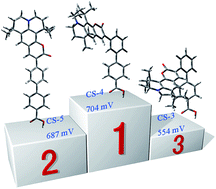
The general drawback of coumarin dye dye-sensitized solar cells (DSSCs) is their relatively low photovoltage. According to our previous experience, the twisted molecular structure is beneficial for the prevention of π-aggregation. Thus, in order to further individually evaluate the effect of twisted and curved structures on optical, electrochemical, and photovoltaic properties, herein, rational molecular design has been performed to develop three simple coumarin dyes, coded as CS-3, CS-4, and CS-5. For CS-3, overlarge dihedral angles seriously twist the molecular skeleton and affect the intramolecular charge transfer process, leading to the poorest light-harvesting capability among the three dyes. More importantly, with a highly twisted structure, the charge recombination rate of CS-3 is obviously accelerated. In contrast, with an appropriate twisted and curved structure, CS-4 shows better light-harvesting capability than CS-3, as well as a better prevention effect of charge recombination. As a result, a high photovoltage of 704 mV is obtained by CS-4 based DSSCs even without a co-adsorbent. Accordingly, our finding demonstrates that although the breakage of molecular coplanarity may weaken the light-harvesting capability and decrease the photocurrent, an appropriate twisted and curved molecular structure is still greatly favorable for the improvement of photovoltage, providing a powerful strategy for the future development of organic sensitizers with high photovoltage.

Introduction

Along with the development of dye-sensitized solar cells (DSSCs), metal-free organic sensitizers have attracted considerable attention due to their ease of synthesis and purification, rare-metal free structures, and more importantly, their tunable optical and photovoltaic properties.1–3 Although various constructions have been developed for organic sensitizers, such as D–π–A, D–D–π–A, and D–A–π–A constructions, the utilization of chromophores has still mainly focused on triphenylamine and indoline.4–15 Besides, coumarin dye was also applied in DSSCs as the sensitizer, which was firstly investigated by Grätzel's group in 1996.16 Through the introduction of π-conjugation segment into the skeleton between coumarin and acceptor parts, multiple NKX series coumarin dyes have been developed by Arakawa's group.17,18 To further improve the photovoltaic performance, molecular engineering was also performed on the π-conjugation segment of the NKX series dyes and great progress was achieved in the improvement of photocurrent.19–23 Extremely high short-circuit photocurrent density (JSC) of 18.8 mA cm−2 was obtained by NKX-2883 based device, which was comparable with that of ruthenium dye N719.24 However, the overall power conversion efficiency (PCE) of NKX-2883 was only 6.5%, being around 60% of the PCE of N719. The main drawback of NKX-2883 was its relatively low open-circuit photovoltage (VOC), which was also the general weakness of most coumarin dyes. Even with the addition of co-adsorbent (such as CDCA), the VOC values of DSSCs based on most coumarin dyes were still lower than 600 mV, such as above mentioned NKX-2883 (530 mV),23 while the VOC values of most efficient DSSCs were around 750 mV.25–27 According to the interfacial charge transfer kinetics researches, the low VOC values of coumarin dyes based DSSCs generally arise from their relatively short charge recombination lifetime.28,29 On the other hand, the use of CDCA will apparently reduce the dye-loaded amount and largely affect the photocurrent. Thus, there is still much room for the improvement of coumarin dyes to enhance the VOC value through molecular structure modification.

With our continuous interest in coumarin dye, we are also devoted to develop novel coumarin dyes with high photovoltage.30 Previously, three coumarin dyes were developed by the introduction of varies groups with different steric hindrance. The optical, electrochemical, and photovoltaic properties were carefully adjusted. Specifically, by introducing functional group with large steric hindrance, the π-aggregation was effectively prevented and the charge recombination was also prevented, thus resulting in an efficient enhancement of photovoltage.30 However, due to the introduction of different functional groups, one cannot conclude the effect of twisted structure on these properties individually. In this respect, it is still necessary to perform the individual molecular engineering to further reveal the effect of twisted structure.

Herein, using coumarin segment as the donor part, phenyl group as the linker, and benzoic acid as the acceptor, three thiophene free coumarin dyes, coded as CS-3, CS-4, and CS-5 for ortho-, meta-, and para-isomers, respectively, were designed and synthesized through quite simple synthetic route (shown in Schemes 1 and S1 in the ESI). The main purpose of this work is to individually evaluate the effect of twisted structure on optical, electrochemical, and photovoltaic performance. The optimized ground-state geometries of three dyes were also simulated by Gaussian 09 program. For ortho-isomer CS-3, overlarge dihedral angles arising from large steric hindrance between coumarin segment and benzoic acid seriously twisted the molecular skeleton, thus resulting in the short absorption peak of 407 nm and low dye-loaded amount, leading to the lowest JSC value among three isomers. On account of moving coumarin segment from ortho-position to the meta- and para-position of benzoic acid, the coplanarity and dye-loaded amount of dyes CS-4 and CS-5 were synchronously improved. Thus, a sharp increase in JSC value was achieved due to the better light-harvesting capability. However, with the improvement of coplanarity, the electron lifetime of linear molecule CS-5 was decreased compared with curved molecule CS-4. Accordingly, a highest VOC value of 704 mV was obtained by CS-4 sensitized device even without any co-adsorbent. Our findings demonstrate that appropriate twisted molecular structure is highly preferred to the efficient enhancement of photovoltage.


image file: c6ra17930d-s1.tif
Scheme 1 Chemical structures of dyes CS-3, CS-4, and CS-5 showing the dihedral angles between the coumarin and phenyl plane (C vs. P1) as well as between two phenyl planes (P1 vs. P2). Note: the dihedral angles were calculated on the basis of hybrid density functional theory (B3LYP) with the 6-31G* basis set as implemented in the Gaussian 09 program. The optimized ground-state geometries of CS-3, CS-4, and CS-5 are shown in Fig. S1 in the ESI.

Experimental

Materials

The FTO conducting glass (fluorine doped SnO2, sheet resistance < 13 Ω per square, transmission > 80% in visible region) was purchased from Dalian Heptachroma SolarTech Co., Ltd., China. TiO2 paste (PST-18NR for 20 nm and PST-400C for 400 nm) was obtained from JGC C&C Ltd. tert-Butylpyridine (TBP), 1-butyl-3-methylimidazolium iodide, lithium iodide, chenodeoxycholic acid (CDCA), titanium tetrachloride, and chloroplatinic acid were purchased from Energy chemical Co., Ltd. and used as received. All the other chemicals were produced by Alfa Aesar and used without further purification.

Synthesis and characterization

1H NMR and 13C NMR spectra of all intermediates and target sensitizers were obtained by Bruker AVIII-500 spectrometer with tetramethylsilane as an internal standard. High-resolution mass spectra (HR-MS) were recorded on a JEOL LMS-HX-110 spectrometer with 3-nitrobenzyl alcohol (NBA) as a matrix. The synthetic route of the CS dyes was shown in Scheme S1. All NMR spectra of three dyes and their intermediates were also shown in the end of the ESI (Fig. S3–S8).
Synthesis of intermediate b-3. The commercial available compound a (3.46 g, 12.7 mmol) and 4-bromophenylacetonitrile (2.72 g, 14 mmol) were dissolved in toluene (25 mL) with piperidine as the catalyst. The mixture was refluxed for 24 h under N2. After cooling to room temperature, the reaction mixture was poured into water (100 mL) and extracted by dichloromethane (30 mL × 3). Then the solvent was evaporated under vacuum. The intermediate b-3 was purified by column chromatography and obtained as the pale yellow solid in yield of 41% (2.35 g). 1H NMR (500 MHz, CDCl3, ppm): δ 7.68 (dd, J = 8.0, 1.0 Hz, 1H), 7.54 (s, 1H), 7.42 (dd, J = 7.5, 1.5 Hz, 1H), 7.37 (td, J = 7.5, 1.5 Hz, 1H), 7.23 (td, J = 8.0, 1.0 Hz, 1H), 7.14 (s, 1H), 3.34 (t, J = 6.0 Hz, 2H), 3.26 (t, J = 6.0 Hz, 2H), 1.86 (t, J = 6.0 Hz, 2H), 1.80 (t, J = 6.0 Hz, 2H), 1.63 (s, 6H), 1.33 (s, 6H). 13C NMR (125 MHz, CDCl3, ppm): δ 159.3, 153.0, 145.7, 143.8, 137.6, 132.6, 132.0, 129.4, 128.2, 127.4, 124.1, 123.9, 120.0, 114.4, 108.8, 46.9, 46.4, 39.3, 35.7, 32.04, 31.98, 30.1, 28.4. Anal. calc. for C25H26BrNO2 (%): C 66.37; H 5.79; N 3.10; found: C 66.49, H 5.74, N 3.08.
Synthesis of intermediates b-4 and b-5. Exactly same synthetic process was performed to obtain b-4 and b-5 in yield of 53% and 61%, respectively. The NMR characterizations were shown below:
b-4. 1H NMR (500 MHz, CDCl3, ppm): δ 7.89 (t, J = 1.5 Hz, 1H), 7.72 (dt, J = 8.0, 1.5 Hz, 1H), 7.67 (s, 1H), 7.45–7.47 (m, 1H), 7.29 (t, J = 8.0 Hz, 1H), 7.14 (s, 1H), 3.34 (t, J = 6.0 Hz, 2H), 3.26 (t, J = 6.0 Hz, 2H), 1.86 (t, J = 6.0 Hz, 2H), 1.80 (t, J = 6.0 Hz, 2H), 1.61 (s, 6H), 1.34 (s, 6H). 13C NMR (125 MHz, CDCl3, ppm): δ 160.0, 152.7, 145.9, 142.2, 138.6, 130.6, 130.0, 128.4, 126.7, 124.4, 121.7, 116.5, 114.1, 109.4, 46.9, 46.4, 39.2, 35.6, 32.0, 30.0, 28.3. Anal. calc. for C25H26BrNO2 (%): C 66.37; H 5.79; N 3.10; found: C 66.51, H 5.83, N 3.11.
b-5. 1H NMR (500 MHz, CDCl3, ppm): δ 7.68 (s, 1H), 7.64 (d, J = 8.5 Hz, 2H), 7.54 (d, J = 8.5 Hz, 2H), 7.17 (s, 1H), 3.34 (t, J = 6.0 Hz, 2H), 3.26 (t, J = 6.0 Hz, 2H), 1.87 (t, J = 6.0 Hz, 2H), 1.81 (t, J = 6.0 Hz, 2H), 1.61 (s, 6H), 1.34 (s, 6H). 13C NMR (125 MHz, CDCl3, ppm): δ 160.0, 152.7, 145.8, 141.7, 135.4, 131.1, 129.8, 128.4, 124.2, 120.6, 117.0, 114.2, 109.5, 46.9, 46.4, 39.2, 35.6, 32.0, 30.1, 28.3. Anal. calc. for C25H26BrNO2 (%): C 66.37; H 5.79; N 3.10; found: C 66.46, H 5.84, N 3.11.
Synthesis of compound CS-3. The intermediate b-3 (1.46 g, 3.24 mmol) and 4-carboxyphenylboronic acid (0.59 g, 3.56 mmol) were dissolved in dioxane (65 mL). Pd(PPh3)4 (0.37 g, 0.324 mmol) and K2CO3 (2.68 g, 19.42 mmol) were added into the solution under N2, and then the mixture was refluxed for 24 h. After cooling to room temperature, the reaction mixture was evaporated under vacuum and the compound CS-3 was obtained through column chromatography as the yellow solid in yield of 46% (0.74 g). 1H NMR (500 MHz, DMSO-d6, ppm): δ 7.98 (d, J = 8.0 Hz, 2H), 7.47–7.55 (m, 7H), 7.22 (s, 1H), 3.35 (t, J = 6.0 Hz, 2H), 3.27 (t, J = 6.0 Hz, 2H), 1.81 (t, J = 6.0 Hz, 2H), 1.76 (t, J = 6.0 Hz, 2H), 1.46 (s, 6H), 1.27 (s, 6H). 13C NMR (125 MHz, CDCl3, ppm): δ 160.3, 152.7, 145.6, 145.4, 141.9, 139.7, 137.0, 130.2, 129.0, 128.8, 128.3, 127.9, 127.1, 127.0, 126.8, 126.0, 124.2, 118.2, 114.2, 109.6, 46.9, 46.4, 39.3, 35.7, 32.0, 30.1, 28.4. HR-MS (FAB+, m/z): [M+] calcd for C32H31NO4, 493.2253; found, 493.2261.
Synthesis of compounds CS-4 and CS-5. Similar synthesis was performed to obtain CS-4 and CS-5 in yield of 60% and 63%, respectively. The NMR and HR-MS characterizations were shown below:
CS-4. 1H NMR (500 MHz, DMSO-d6, ppm): δ 8.16–8.18 (m, 3H), 8.11 (s, 1H), 7.88–7.90 (m, 3H), 7.71 (d, J = 8.0 Hz, 1H), 7.56 (t, J = 8.0 Hz, 2H), 7.44 (s, 1H), 3.40 (t, J = 6.0 Hz, 2H), 3.33 (t, J = 6.0 Hz, 2H), 1.87 (t, J = 6.0 Hz, 2H), 1.80 (t, J = 6.0 Hz, 2H), 1.59 (s, 6H), 1.33 (s, 6H). 13C NMR (125 MHz, CDCl3, ppm): δ 159.6, 152.5, 146.5, 145.2, 140.6, 135.1, 130.9, 129.6, 129.2, 128.8, 127.9, 127.5, 123.6, 120.2, 114.1, 109.0, 46.6, 46.1, 39.1, 35.5, 31.7, 29.9, 28.1. HR-MS (FAB+, m/z): [M+] calcd for C32H31NO4, 493.2253; found, 493.2257.
CS-5. 1H NMR (500 MHz, DMSO-d6, ppm): δ 8.16 (d, J = 8.5 Hz, 2H), 8.07 (s, 1H), 7.98 (d, J = 8.5 Hz, 2H), 7.89 (d, J = 8.5 Hz, 2H), 7.82 (d, J = 8.5 Hz, 2H), 7.45 (s, 1H), 3.41 (t, J = 6.0 Hz, 2H), 3.34 (t, J = 6.0 Hz, 2H), 1.87 (t, J = 6.0 Hz, 2H), 1.81 (t, J = 6.0 Hz, 2H), 1.59 (s, 6H), 1.34 (s, 6H). 13C NMR (125 MHz, CDCl3, ppm): δ 160.2, 152.6, 145.7, 144.8, 141.6, 138.4, 136.2, 131.8, 130.2, 128.5, 126.8, 124.2, 117.7, 114.2, 109.6, 46.9, 46.4, 39.3, 35.7, 32.0, 30.1, 28.4. HR-MS (FAB+, m/z): [M+] calcd for C32H31NO4, 493.2253; found, 493.2259.

Optical and electrochemical measurements

UV-visible spectra of the dyes both in solution and on TiO2 electrode were determined with a Shimadzu UV-2501PC spectrometer. All fluorescence spectra were recorded on Hitachi F-4600 spectrometer. The cyclic voltammograms were measured on a CHI660B electrochemical workstation (CH Instruments) using a three-electrode cell by using a dye-loaded TiO2 electrode as the working electrode, a Pt wire as the counter electrode, and a Ag/AgCl reference electrode in saturated KCl solution, while 0.1 M tetrabutylammonium hexafluorophosphoric was used as the supporting electrolyte. After the measurement, ferrocene was added as the internal reference for calibration.

Fabrication and measurement of solar cells

6 μm nanocrystalline TiO2 electrodes with a 4 μm scattering layer were used in the preparation of liquid DSSCs. All the TiO2 electrodes were prepared and modified following a previously reported procedure.31 The thickness of the TiO2 film was measured by a surface profiler (Dektak Co., Ltd, Model DAKTAK II). The dye-loaded electrodes were prepared by immersing TiO2 electrodes (5 mm × 5 mm) into around 0.3 mM dye solution (acetonitrile) without or with 5 mM CDCA for 12 h. The counter electrode was prepared by depositing the Pt catalyst on the cleaned FTO glass through coating with a drop of H2PtCl6 solution (0.02 M in 2-propanol solution) with heat treatment at 500 °C for 30 min. In this work, a mixture of 0.5 M 1-butyl-3-methylimidazolium iodide, 0.10 M LiI, 0.05 M I2, and 0.5 M tert-butylpyridine in acetonitrile was used as the liquid electrolyte.

The dye-loaded TiO2 electrodes were prepared as mentioned above except using larger TiO2 electrodes (30 mm × 30 mm) to reduce errors. The loaded dye was desorbing from the surface of TiO2 electrodes by immersing into NaOH solution (EtOH/H2O = 1/1) and analyzed by UV-visible spectrometer. The dye-loaded amount was determined by comparing the results with the absorption spectrum of dye solution in NaOH solution (EtOH/H2O = 1/1) with known concentration. The average values of five samples were shown in this paper.

IV curves were obtained with an AM 1.5 solar simulator equipped with a 150 W xenon lamp (OTENTO-SUN II, Bunkoukeiki Co., Ltd). The power of the simulated light was calibrated to 100 mW cm−2 using a reference silicon cell (BS-520, Bunkoukeiki Co., Ltd). The photocurrent action spectra were measured with a monochromator (M10-T, Bunkoukeiki Co., Ltd). The intensity of monochromic light was calibrated by a reference silicon cell (S1337-1010BQ, Bunkoukeiki Co., Ltd). Five samples were fabricated and tested for all measurements in this work. Median values were selected to be shown in this paper.

The electron lifetime and charge density in the complete DSSCs were measured by the stepped light-induced transient measurements (SLIT) of the photocurrent and voltage using a DSSC evaluation system PSL-100 (EKO Co. Ltd.).32 A laser (λ = 473 nm) was used as the light source. The transients were induced by a stepwise change in the laser intensity which was controlled by adjusting its voltage. The photocurrent and photovoltage transients were monitored using a digital oscilloscope through an amplifier. Through varying the laser intensity, the lifetime could be estimated over a range of open-circuit voltages by fitting a decay of the photovoltage transient with exp(−t/τ).32 The charge density measurements were performed as follows: the DSSC was illuminated for 5 s while a bias voltage was applied to make the cell open-circuit, then the laser was shutdown simultaneously, and the cell was switched from open to short circuit. The resulting current was measured over 25 s and then the charge density could be calculated through integrating the electric charge. All experiments were conducted at room temperature.

Theoretical calculations

All the theoretical calculation analysis was performed using Gaussian 09 program.33 The ground-state geometries of the dyes were optimized in vacuum on the basis of hybrid density functional theory (B3LYP) with the 6-31G* basis set. TDDFT excited states calculation was also performed at the B3LYP/6-31G* level with the B3LYP/6-31G* optimized ground-state geometry. Solvation effects (acetonitrile) were taken into account in the TDDFT calculations with the CPCM model implemented in Gaussian 09.

Results and discussion

Optical and electrochemical characterization

The UV-Vis absorption spectra of three coumarin dyes in acetonitrile were shown in Fig. 1a. Only one absorption band in visible region was found at λmax = 407, 414, and 420 nm for CS-3, CS-4, and CS-5, respectively, which should be attributed to the ICT peak. That is, although the donor and acceptor parts of three dyes were exactly same, the λmax was still gradually red-shifted while the coumarin segment was moved from ortho-position to meta-, and para-position of benzoic acid. As well known, the ICT process was seriously affected by the planarity of the whole molecule, while large dihedral angle would twist the molecular structure and break the ICT process. Thus, to study the effect of different molecular coplanarity on ICT process, the optimized ground-state geometries of three dyes were simulated on the basis of hybrid density functional theory (B3LYP) with the 6-31G* basis set as implemented in the Gaussian 09 program and the calculated dihedral angles were shown in Scheme 1. Due to the large steric hindrance, all three dyes showed relatively large dihedral angles, especially for the ortho-isomer CS-3. In the optimized configuration of CS-3, the dihedral angle between the coumarin group (coded as C) and phenyl linker (coded as P1) was calculated to be 46.6°, and the angle between P1 and the benzoic acid (coded as P2) was about 52.4°, suggesting the quite poor coplanarity of CS-3, thus resulting in the distinctly short λmax in absorption spectrum. When the coumarin segment was moved to the meta- and para-position of benzoic acid, the dihedral angles between C and P1 of CS-4 and CS-5 were sharply decreased from 46.6° to 33.2° and 31.5°, respectively. Meanwhile, the dihedral angles between P1 and P2 of CS-4 and CS-5 were also decreased to 38.2° and 36.0°, respectively. Accordingly, upon incorporation of coumarin unit at ortho-position of benzoic acid, the resulting twisted conformation of CS-3 is unfavorable to electron transfer from donor to acceptor part. Thus, the blue-shifts of 7 and 13 nm in absorption spectra were found for CS-3, respectively, with respect to CS-4 and CS-5. On the other hand, the molar extinction coefficients at λmax of CS-3, CS-4, and CS-5 were determined to be 6800, 21[thin space (1/6-em)]500, 37[thin space (1/6-em)]000 M−1 cm−1, respectively, suggesting the relatively low light harvesting capability of ortho-isomer CS-3, which might cause the low photocurrent compared with the other two dyes.
image file: c6ra17930d-f1.tif
Fig. 1 (a) Normalized absorption and emission spectra of CS-3, CS-4, and CS-5 in acetonitrile and (b) their absorbance while adsorbed on 6 μm TiO2 films.

While three dyes were adsorbed on TiO2 electrode, the λmax of CS-3, CS-4, and CS-5 were observed at 422, 429, and 437 nm, respectively, showing around 15 nm red-shifts compared with their absorption peaks in solution (Fig. 1b). Generally, there are two kinds of aggregation type during the adsorption: H-aggregation makes absorption spectrum blue-shift while J-aggregation makes it red-shift. Obviously, for all three dyes, H-aggregation was effectively prevented by the twisted structure and the adsorption process was dominated by J-aggregation. To be noticed, the absorbance of CS-3-loaded TiO2 electrode was quite low compared with CS-4- and CS-5-loaded TiO2 electrodes. Except for molar extinction coefficient, the dye-loaded amount also seriously affects the absorbance. As listed in Table 1, the dye-loaded amount of CS-3 was determined to be 1.17 × 10⁻⁷ mol cm−2, which was only around a half of the amount of CS-4 or CS-5, meaning that CS-3 was much more difficult to adsorb on TiO2 electrode than CS-4 or CS-5. As shown in Fig. S1 in the ESI, the height from P1 unit to coumarin segment was calculated to be 8.93 Å, which was quite similar with the height from P1 to benzoic acid (9.68 Å). That indicates during the adsorption, the coumarin segment of CS-3 might be quite close to the TiO2 surface (only 0.75 Å) and hinder the adsorption seriously. In contrast, in cases of CS-4 and CS-5, the coumarin segment was upshifted far away from the TiO2 surface, thus resulting in higher dye-loaded amounts. Accordingly, while the dyes were sensitized on TiO2 electrodes, the light-harvesting capabilities laid in order of CS-5 > CS-4 > CS-3, which would highly affect the photocurrent performance.

Table 1 Optical and electrochemical properties of CS-3, CS-4, and CS-5 measured in acetonitrile and on TiO2
  λmaxa/nm ε/M−1 cm−1 λEM/nm λmaxb/nm Dye-loaded amountc/×10−7 mol cm−2 Dihedral angle/° HOMOd/V E0–0e/V LUMOf/V
C–P1 P1–P2
a Absorption of the dyes in acetonitrile solution.b Absorption of the dyes adsorbed on 6 μm TiO2.c The dye-loaded amount was determined by desorbing the dye from surfaces of 6 μm TiO2 electrodes into NaOH solution and analyzed by UV-visible spectrometer.d Electrochemical properties of the dyes were measured by using dye-loaded TiO2 electrodes as the working electrode.e The E0–0 values were estimated from the wavelength at 10% maximum absorption intensity of the dye-loaded TiO2 electrode.f The LUMO level were calculated by followed equation: LUMO = HOMO − E0–0.
CS-3 407 6820 485 422 1.17 46.6 52.4 0.97 2.63 −1.66
CS-4 414 21[thin space (1/6-em)]500 496 429 2.12 33.2 38.2 0.99 2.49 −1.50
CS-5 420 37[thin space (1/6-em)]000 509 437 2.02 31.5 36.0 0.99 2.50 −1.51


To evaluate the possibility of electron transfer from the excited dye molecule to the conduction band (CB) of TiO2 electrode, the cyclic voltammetry measurements of CS-3, CS-4, and CS-5 were performed in acetonitrile by using dye-loaded TiO2 film as the working electrode, a saturated calomel (SCE) as the reference electrode, a platinum wire as the counter electrode, and 0.1 M TBAPF6 as the supporting electrolyte (Fig. S2 in the ESI), and the data were collected in Table 1. The oxidation potentials of three dyes were determined to be similar values of 0.97, 0.99, and 0.99 V vs. NHE, respectively, corresponding to their HOMO levels. That is, the HOMO level was not affected much by the position of coumarin segment, suggesting that the electron donation capability of the dye was independent of the twisted structure. The E0–0 values were estimated from the onset wavelength of the absorption spectra of dye-loaded TiO2 electrode. Obviously, CS-3 showed larger E0–0 value than CS-4 and CS-5 due to its narrower absorption spectrum in Fig. 1b. Thus the LUMO levels of CS-3, CS-4, and CS-5 were calculated to be −1.66, −1.50, and −1.51 V vs. NHE, respectively. In short, the twisted extent of molecular structure has little influence on HOMO level but obvious influence on E0–0 value as well as LUMO level. As a result, the HOMO levels of three dyes are more positive than I/I3, ensuring the reduction of the oxidized dyes, and the LUMO levels of three dyes are more negative than the CB of TiO2, ensuring the sufficient driving force for the injection of the excited electrons.

Theoretical approach

To further investigate the electron distribution for the frontier molecular orbitals and the electronic transition processes upon photoexcitation, the DFT and TDDFT calculations were performed with the Gaussian 09 program. The ground-state geometries of CS-3, CS-4, and CS-5 were optimized in vacuum on the basis of hybrid density functional theory (B3LYP) with the 6-31G* basis set. TDDFT excited states calculation was also performed at the B3LYP/6-31G* level on the optimized ground-state geometry. Solvation effects (acetonitrile) were taken into account in the TDDFT calculations with the CPCM model implemented in Gaussian 09.33 The TDDFT results and the frontier molecular orbitals of CS-3, CS-4, and CS-5 were shown in Table 2 and Fig. 2.
Table 2 Calculated TDDFT excitation energies for the lowest transition (eV, nm), and oscillator strengths (f)a
  State Compositionb E (eV, nm) f
a TDDFT excited states calculation was performed at the B3LYP/6-31G* level in vacuum with the B3LYP/6-31G* optimized ground-state geometry.b H = HOMO, H−1 = HOMO−1, L = LUMO, L+1 = LUMO+1.
CS-3 S1 H → L 2.9953, 413.93 0.2012
S2 H → L 3.2077, 386.52 0.5422
H → L+1
S3 H−1 → L 4.0137, 308.90 0.0046
H−1 → L+1
CS-4 S1 H → L 3.0790, 402.68 0.3331
S2 H → L 3.1390, 394.98 0.5694
H → L+1
S3 H−1 → L 3.9859, 311.06 0.0107
H−1 → L+1
CS-5 S1 H → L 2.9092, 426.18 1.0921
S2 H → L+1 3.4127, 363.30 0.0998
S3 H−2 → L 3.8509, 321.96 0.0334
H−2 → L+1


image file: c6ra17930d-f2.tif
Fig. 2 Frontier molecular orbitals of CS-3, CS-4, and CS-5 calculated at the B3LYP/6-31G* level of theory.

As shown in Fig. 2, the HOMO and HOMO−1 orbitals of CS-3, CS-4, and CS-5 were π orbitals distributed on coumarin segment, whereas the LUMO and LUMO+1 orbitals were π* orbitals distributed on the phenyl linker and benzoic acid part. The electronic transitions shown by the TDDFT calculation of three dyes were quite complicate. Taking CS-3 for example, there were three calculated lowest electronic transitions: S1: HOMO → LUMO (2.9953 eV, f = 0.2012, where f represents the oscillator strength), corresponding to the theoretical absorption band at λmax = 413.93 nm; S2: HOMO → LUMO and HOMO → LUMO+1 (3.2077 eV, f = 0.5422), corresponding to the theoretical absorption band at λmax = 386.52 nm; S3: HOMO−1 → LUMO and HOMO−1 → LUMO+1 (4.0137 eV, f = 0.0046), corresponding to the theoretical absorption band at λmax = 308.90 nm. Apparently, the observed absorption band with λmax = 407 nm should be ascribed to the joint action of S1 and S2. Due to the similar electron distribution between LUMO+1 and LUMO, the HOMO → LUMO+1 transition belong to S2 could also lead to the electron transfer from donor to acceptor part. Similarly, the HOMO−1 → LUMO and HOMO−1 → LUMO+1 transition belong to S3 could also contribute to the electron injection process. However, the oscillator strength of S3 was too low (0.0046), thus the actual contribution of S3 was negligible. Similar results were also found for CS-4 and CS-5. Therefore, all the transitions from HOMO and HOMO−1 to LUMO and LUMO+1 would contribute to an efficient electron injection into the CB of TiO2.

Photovoltaic performances

In good agreement with the absorption spectra (Fig. 1b), ortho-isomer CS-3 showed relatively narrow incident photon-to-current conversion efficiencies (IPCE) in Fig. 3a. The onset wavelength of IPCE was only around 570 nm. In contrast, the other two dyes presented much broader IPCE action area with the initial responsive wavelength over 600 nm, especially for the para-isomer CS-5. Meanwhile, the maximum IPCE value of CS-5 was observed to be 66.2% at 430 nm, which was over 2 and 1.2 times as high as those of CS-3 and CS-4, respectively. Thus, it can be predicted that CS-5 should present higher JSC value than CS-3 and CS-4. It should be mentioned that in the IPCE action spectra of three dyes, the IPCE values around 370 nm should include the own contribution of TiO2 electrode.
image file: c6ra17930d-f3.tif
Fig. 3 (a) IPCE action spectra of CS-3, CS-4, and CS-5 sensitized DSSCs and (b) IV curves of CS-4 and CS-5 sensitized DSSCs without and with 5 mM CDCA. 0.6 M 1-butyl-3-methylimidazolium iodide, 0.10 M LiI, 0.05 M I2, and 0.5 M tert-butylpyridine in acetonitrile was used as the liquid redox electrolyte.

To further elucidate the performance of the dyes, the IV curves of DSSCs sensitized by CS-3, CS-4 and CS-5 without or with 5 mM CDCA were compared in Fig. 3b and the data were collected in Table 3. Due to the poor adsorption capability, while the CDCA was added, the dye-loaded amount of CS-3 was sharply decreased and the photovoltaic parameters even could not been obtained. Thus, the data of CS-3 with 5 mM CDCA were not collected. As previously mentioned, due to the poor IPCE response, the lowest JSC value of 2.98 mA cm−2 was obtained by CS-3 sensitized solar cell without CDCA. Along with the increase of light-harvesting capabilities, the JSC values of CS-4 and CS-5 sensitized DSSCs were increased to be 4.57 and 5.63 mA cm−2, respectively, which were around 1.5 and 1.9 times as high as that of CS-3. After the addition of 5 mM CDCA, the JSC of CS-4 based device was obviously decreased by over 25% from 4.57 to 3.37 mA cm−2, meaning that there was almost no π–π aggregation on CS-4-sensitized TiO2 electrode. In contrast, the JSC value of CS-5 was slightly increased from 5.63 to 6.21 mA cm−2, suggesting the effect of aggregation prevention by CDCA. That means although the adsorption procedure was dominated by the J-aggregation (Fig. 1b), in case of CS-5, there was still obvious H-aggregation on the surface of dye-sensitized TiO2 electrode.

Table 3 Photovoltaic performance of DSSCs based on CS-3, CS-4, and CS-5
  CDCA/mM JSC/mA cm−2 VOC/mV ff η/%
CS-3 0 2.98 554 0.630 1.04
CS-4 0 4.57 704 0.724 2.33
5 3.37 693 0.705 1.64
CS-5 0 5.63 687 0.695 2.69
5 6.21 711 0.729 3.22


To be noticed, while the coumarin segment was moved from ortho-position to meta- and para-position of benzoic acid, the VOC value was sharply enhanced by around 150 mV from 554 to 704 and 687 mV, respectively, even without co-adsorbent CDCA (Table 3). While 5 mM CDCA was added, the VOC value of CS-5 sensitized solar cell was further improved to a quite high value of 711 mV, however, the VOC value of CS-4 based device was decreased. Thus, it is suggested that the twisted extent of molecular structure may affect the VOC value to a considerable extent.

As well known, VOC is dependent on the difference between the Fermi level of TiO2 (EFermi) and the redox potential of the electrolyte (Eredox), which can be illustrated by the eqn (1):34

 
image file: c6ra17930d-t1.tif(1)
where ECB is the CB edge energy level of TiO2, β is a characteristic constant of the tailing of TiO2 states, k is the Boltzmann constant, T is the temperature, n/NCB is the charge density in the CB of TiO2 electrode, and q is the elementary charge of the electrons. As a result, VOC is determined by both the ECB and the charge density in the CB of TiO2 electrode. The charge density is strongly dependent upon the injection quantity of the excited electron and more important, the charge recombination rate, which can be evaluated by the electron lifetime. Therefore, to further investigate the distinct variation in VOC of three isomers, the VOC and electron lifetime as function of charge density for three dye-sensitized DSSCs were examined by stepped light-induced transient (SLIT) measurements.32

SLIT measurements

As shown in Fig. 4a, VOC as a function of charge density was applied to study the ECB shift. Five identical devices without CDCA were tested in each case with standard deviations of less than 1%. For all three kinds of devices, the VOC values increased linearly with the logarithm of the charge density, exhibiting a similar slope. At a fixed charge density, there were around 47 and 21 mV enhancements for CS-5 with respect to CS-3 and CS-4, respectively. That means the CB edge was significantly lifted along with the upshift of coumarin segment from TiO2 electrode, which was consistent with the results of the dipole moments of the dyes. Actually, the CB shift can be expressed as eqn (2):35
 
image file: c6ra17930d-t2.tif(2)
where q is the electron charge, μnormal is the component of dipole moment of the individual sensitizer perpendicular to the TiO2 surface, γ is the surface concentration of the dye, ε0 and ε are the permittivity of the vacuum and the dielectric constant of the organic monolayer. Considering the similar dye-loaded amount of CS-4 and CS-5, obviously, a large μnormal is beneficial to the upshift of the CB edge energy. Thus, the dipole moments of all three dyes were calculated at their optimized geometry simulated by Gaussian 09 program as mentioned above. In this calculation, the dye was simulated to adsorb on TiO2 vertically.36,37 Here, in case of CS-3, due to the large steric of coumarin segment, the dye molecule could not adsorb on TiO2 vertically and its adsorption behavior was difficult to simulate. Therefore, CS-3 was not included in the followed discussion. The vertical component of dipoles of CS-4 and CS-5 possessed same direction with different magnitude (4.06 D and 6.96 D, respectively, Fig. S1 in the ESI), while a sharp increase of the dipole moment was found for CS-5. That suggests the linear molecular structure, such as para-isomer CS-5, was more beneficial to the charge separation than the curved structure. Accordingly, once adsorbed on TiO2 surface, larger dipole moment along the direction for CS-5 could lead to more charges located close to the TiO2 surface than that of CS-4, resulting in a larger CB edge upshift.

image file: c6ra17930d-f4.tif
Fig. 4 (a) Open-circuit voltage (VOC) and (b) electron lifetime as function of charge density based on CS-3, CS-4, and CS-5 sensitized solar cells (without CDCA).

On the other hand, the electron lifetime decreases with charge density following a power law relationship with the same slope, suggesting the same recombination mechanism (shown in Fig. 4b).38 At a fixed charge density, take 4 × 1017 cm−3 for example, the electron lifetimes of CS-3, CS-4, and CS-5 was determined to be 2.49, 207, and 105 ms, respectively. It's worthy to note that although the CB edge upshift of CS-5 was larger than that of CS-4, the electron lifetime of CS-5 was only a half of that of CS-4. Consequently, as an overall result of the CB edge shift and the charge recombination prevention, the VOC values of three dyes based DSSCs laid in order of CS-4 (704 mV) > CS-5 (687 mV) > CS-3 (554 mV), while the CDCA was not applied.

However, when the CDCA was cosensitized, the variation of VOC values for CS-4 and CS-5 was quite different. For CS-4, with the addition of CDCA, the dye molecules were separated by CDCA. The I3 may get more chance to attach the surface of TiO2 from the space under the coumarin segment. Therefore, the electron lifetime was decreased from 207 to 130 ms at the same charge density of 4 × 1017 cm−3, thus resulting in a decrease of 11 mV in VOC value (Fig. 5a). In case of CS-5, at the same charge density, the electron lifetime was sharply increased by almost 9 times from 105 to over 1000 ms (Fig. 5b). Moreover, after the H-aggregation of CS-5 was broken by CDCA, the injection quantity of excited electrons of CS-5 was also increased. Thus, a 24 mV enhancement in VOC value for CS-5 sensitized device could be easily understood.


image file: c6ra17930d-f5.tif
Fig. 5 Electron lifetime as function of charge density based on (a) CS-4 and (b) CS-5 sensitized solar cells (without and with 5 mM CDCA).

In short, along with the molecular structure was gradually twisted and curved, the CB edge upshift effect was gradually weakened due to the decrease of the dipole moment, while the charge recombination prevention effect was firstly enhanced and then sharply decreased. Accordingly, to improve the photovoltage, appropriate twisted and curved molecular structure is highly preferred, while excessively twisted one is still unfavourable.

At last, the aging test was performed for the DSSCs based on CS-4 and CS-5 without the addition of CDCA under 100 mW cm−2 illumination soaking at 60 °C over a period of 1000 h. As illustrated in Fig. 6, very small decreases in JSC and ff were observed for both devices, and the decrease of η was mainly caused by the decrease of VOC. As a result, only around 6% decrease were found for these two devices, suggesting similar superior stabilities for CS-4 and CS-5 sensitized DSSCs.


image file: c6ra17930d-f6.tif
Fig. 6 Aging test of CS-4 and CS-5 sensitized DSSCs under 100 mW cm−2 illumination soaking at 60 °C over a period of 1000 h.

Conclusions

In conclusion, three dyes with exactly same donor, π-linker, and acceptor parts were designed and synthesized. To individually evaluate the effect of twisted structure on optical, electrochemical, and photovoltaic properties, the donor and acceptor units of CS-3, CS-4, and CS-5 were adjusted to be ortho-, meta-, and para-position, respectively, through rational molecular design. For ortho-isomer CS-3, overlarge dihedral angles arising from large steric hindrance between coumarin segment and benzoic acid seriously twisted the molecular skeleton and broke the intramolecular charge transfer process, thus resulting in the shortest absorption peak among three isomers. In case of CS-4 and CS-5, the dihedral angles were gradually decreased due to the separation of coumarin segment and benzoic acid. Therefore, the intramolecular charge transfer processes and the absorption bands were effectively improved. According to the stepped light-induced transient measurement results, with highly twisted and curved structure, CS-3 showed poor conduction band edge upshift effect and quite fast charge recombination rate. In contrast, CS-4 with appropriate curved structure showed better charge recombination prevention effect than CS-3 and linear molecule CS-5, leading to a highest VOC value of 704 mV without any co-adsorbent, although CS-5 presented more effective conduction band edge upshift. Accordingly, our results demonstrate that although the breakage of molecular coplanarity may weaken the light-harvesting capability, appropriate twisted and curved molecular structure is greatly beneficial to the improvement of photovoltage, while excessively twisted one is still not preferred. Our finding provides a powerful strategy for the future development of efficient organic sensitizers with high photovoltage.

Acknowledgements

This work was financially supported by NSFC (21576070), Excellent Young Scientist Foundation of NSF/Hebei (B2016205075), Science Foundation for Oversea Scholars of Hebei (C201400324), and Program for the Young Talent of Hebei Province.

Notes and references

  1. B. O'Regan and M. Grätzel, Nature, 1991, 353, 737 CrossRef.
  2. S. Y. Qu, J. L. Hua and H. Tian, Sci. China: Chem., 2012, 55, 677 CrossRef CAS.
  3. Y. Z. Wu and W. H. Zhu, Chem. Soc. Rev., 2013, 42, 2039 RSC.
  4. S. Chaurasia, J.-S. Ni, W.-I. Hung and J. T. Lin, ACS Appl. Mater. Interfaces, 2015, 7, 22046 CAS.
  5. Z. Z. Sun, Q. S. Li, P. P. Sun and Z. S. Li, J. Power Sources, 2015, 276, 230 CrossRef CAS.
  6. R. Misraa, R. Maragania, D. Aroraa, A. Sharmab and G. D. Sharmac, Dyes Pigm., 2016, 126, 38 CrossRef.
  7. T. N. Murakami, N. Koumura, E. Yoshida, T. Funaki, S. Takano, M. Kimura and S. Mori, Langmuir, 2016, 32, 1178 CrossRef CAS PubMed.
  8. Q. P. Chai, W. Q. Li, S. Q. Zhu, Q. Zhang and W. H. Zhu, ACS Sustainable Chem. Eng., 2014, 2, 239 CrossRef CAS.
  9. T. Lan, X. F. Lu, L. Zhang, Y. J. Chen, G. Zhou and Z. S. Wang, J. Mater. Chem. A, 2015, 3, 9869 CAS.
  10. J. C. Liu, B. Liu, Y. Y. Tang, W. W. Zhang, W. J. Wu, Y. S. Xie and W. H. Zhu, J. Mater. Chem. C, 2015, 3, 11144 RSC.
  11. T. Debnath, P. Maity, H. Lobo, B. Singh, G. S. Shankarling and H. N. Ghosh, Chem.–Eur. J., 2014, 20, 3510 CrossRef CAS PubMed.
  12. L. Han, R. Kang, X. Y. Zu, Y. H. Cui and J. R. Gao, Photochem. Photobiol. Sci., 2015, 14, 2046 CAS.
  13. C. J. Zhong, J. R. Gao, Y. H. Cui, T. Li and L. Han, J. Power Sources, 2015, 273, 831 CrossRef CAS.
  14. Z. F. Chai, M. Wu, M. M. Fang, S. S. Wan, T. Xu, R. L. Tang, Y. J. Xie, A. Y. Mei, H. W. Han, Q. Q. Li and Z. Li, Adv. Energy Mater., 2015, 5, 1500846 CrossRef.
  15. W. H. Zhu, Y. Z. Wu, S. T. Wang, W. Q. Li, X. Li, J. Chen, Z.-S. Wang and H. Tian, Adv. Funct. Mater., 2011, 21, 756 CrossRef CAS.
  16. J. M. Rehm, G. L. McLendon, Y. Nagasawa, K. Yoshihara, J. Moser and M. Grätzel, J. Phys. Chem., 1996, 100, 9577 CrossRef.
  17. K. Hara, K. Sayama, Y. Ohga, A. Shinpo, S. Suga and H. Arakawa, Chem. Commun., 2001, 569 RSC.
  18. K. Hara, Y. Tachibana, Y. Ohga, A. Shinpo, S. Suga, K. Sayama, H. Sugihara and H. Arakawa, Sol. Energy Mater. Sol. Cells, 2003, 77, 89 CrossRef CAS.
  19. K. Hara, T. Sato, R. Katoh, A. Furube, Y. Ohga, A. Shinpo, S. Suga, K. Sayama, H. Sugihara and H. Arakawa, J. Phys. Chem. B, 2003, 107, 597 CrossRef CAS.
  20. K. Hara, Z. S. Wang, T. Sato, A. Furube, R. Katoh, H. Sugihara, T. Dan-oh, C. Kasada, A. Shinpo and S. Suga, J. Phys. Chem. B, 2005, 109, 15476 CrossRef CAS PubMed.
  21. K. Hara, K. Miyamoto, Y. Abe and M. Yanagida, J. Phys. Chem. B, 2005, 109, 23776 CrossRef CAS PubMed.
  22. Z.-S. Wang, Y. Cui, Y. Dan-oh, C. Kasada, A. Shinpo and K. Hara, J. Phys. Chem. C, 2007, 111, 7224 CAS.
  23. Z.-S. Wang, Y. Cui, K. Hara, Y. Dan-oh, C. Kasada and A. Shinpo, Adv. Mater., 2007, 19, 1138 CrossRef CAS.
  24. M. K. Nazeeruddin, S. M. Zakeeruddin, R. Humphry-Baker, M. Jirousek, P. Liska, N. Vlachopoulos, V. Shklover, C. H. Fischer and M. Grätzel, Inorg. Chem., 1999, 38, 6298 CrossRef CAS PubMed.
  25. B. Liu, B. Wang, R. Wang, L. Gao, S. H. Huo, Q. B. Liu, X. Y. Li and W. H. Zhu, J. Mater. Chem. A, 2014, 2, 804 CAS.
  26. S.-W. Wang, C.-C. Chou, F.-C. Hu, K.-L. Wu, Y. Chi, J. N. Clifford, E. Palomares, S.-H. Liu, P.-T. Chou, T.-C. Wei and T.-Y. Hsiao, J. Mater. Chem. A, 2014, 2, 17618 CAS.
  27. Y. S. Xie, Y. Y. Tang, W. J. Wu, Y. Q. Wang, J. C. Liu, X. Li, H. Tian and W. H. Zhu, J. Am. Chem. Soc., 2015, 137, 14055 CrossRef CAS PubMed.
  28. M. Miyashita, K. Sunahara, T. Nishikawa, Y. Uemura, N. Koumura, K. Hara, A. Mori, T. Abe, E. Suzuki and S. Mori, J. Am. Chem. Soc., 2008, 130, 17874 CrossRef CAS PubMed.
  29. S. E. Koops, P. R. F. Barnes, B. C. O'Regan and J. R. Durrant, J. Phys. Chem. C, 2010, 114, 8054 CAS.
  30. B. Liu, R. Wang, W. J. Mi, X. Y. Li and H. T. Yu, J. Mater. Chem., 2012, 22, 15379 RSC.
  31. S. Ito, T. N. Murakami, P. Comte, P. Liska, C. Grätzel, M. K. Nazeeruddin and M. Grätzel, Thin Solid Films, 2008, 516, 4613 CrossRef CAS.
  32. S. Nakade, T. Kanzaki, Y. Wada and S. Yanagida, Langmuir, 2005, 21, 10803 CrossRef CAS PubMed.
  33. M. J. Frisch, G. W. Trucks, H. B. Schlegel, G. E. Scuseria, M. A. Robb, J. R. Cheeseman, G. Scalmani, V. Barone, B. Mennucci, G. A. Petersson, H. Nakatsuji, M. Caricato, X. Li, H. P. Hratchian, A. F. Izmaylov, J. Bloino, G. Zheng, J. L. Sonnenberg, M. Hada, M. Ehara, K. Toyota, R. Fukuda, J. Hasegawa, M. Ishida, T. Nakajima, Y. Honda, O. Kitao, H. Nakai, T. Vreven, J. A. Montgomery, J. E. Peralta, F. Ogliaro, M. Bearpark, J. J. Heyd, E. Brothers, K. N. Kudin, V. N. Staroverov, R. Kobayashi, J. Normand, K. Raghavachari, A. Rendell, J. C. Burant, S. S. Iyengar, J. Tomasi, M. Cossi, N. Rega, J. M. Millam, M. Klene, J. E. Knox, J. B. Cross, V. Bakken, C. Adamo, J. Jaramillo, R. Gomperts, R. E. Stratmann, O. Yazyev, A. J. Austin, R. Cammi, C. Pomelli, J. W. Ochterski, R. L. Martin, K. Morokuma, V. G. Zakrzewski, G. A. Voth, P. Salvador, J. J. Dannenberg, S. Dapprich, A. D. Daniels, O. Farkas, J. B. Foresman, J. V. Ortiz, J. Cioslowski and D. J. Fox, Gaussian 09, Revision A.02, Gaussian, Inc., Wallingford CT, 2009 Search PubMed.
  34. T. Marinado, K. Nonomura, J. Nissfolk, M. K. Karlsson, D. P. Hagberg, L. Sun, S. Mori and A. Hagfeldt, Langmuir, 2010, 26, 2592 CrossRef CAS PubMed.
  35. S. Rühle, M. Greenshtein, S.-G. Chen, A. Merson, H. Pizem, C. S. Sukenik, D. Cahen and A. Zaban, J. Phys. Chem. B, 2005, 109, 18907 CrossRef PubMed.
  36. J. Krüger, U. Bach and M. Grätzel, Adv. Mater., 2000, 12, 447 CrossRef.
  37. Y. L. Liang, B. Peng and J. Chen, J. Phys. Chem. C, 2010, 114, 10992 CAS.
  38. Y. Cui, Y. Z. Wu, X. Lu, X. Zhang, G. Zhou, F. B. Miapeh, W. H. Zhu and Z.-S. Wang, Chem. Mater., 2011, 23, 4394 CrossRef CAS.

Footnote

Electronic supplementary information (ESI) available: The synthetic routes, the optimized ground-state geometries, and the cyclic voltammetry plots of three dyes were shown in ESI as well as the NMR spectra of all intermediates and target compounds. See DOI: 10.1039/c6ra17930d

This journal is © The Royal Society of Chemistry 2016
Click here to see how this site uses Cookies. View our privacy policy here.