
Oxidation state selective sorption behavior of plutonium using N,N-dialkylamide functionalized carbon nanotubes: experimental study and DFT calculation

Nishesh Kumar Guptaa, Arijit Sengupta*b, Anil Bodac, V. C. Adyab and Sk. Musharaf Alic
aNational Institute of Technology, Rourkela, Odisha, India
bRadiochemistry Division, Bhabha Atomic Research Centre, Mumbai, India. E-mail: arijita@barc.gov.in
cChemical Engineering Division, Bhabha Atomic Research Centre, Mumbai, India

Received 12th July 2016 , Accepted 13th August 2016

First published on 15th August 2016


Abstract

Selective phase separation of Pu4+ and PuO22+ was performed using N,N-dialkylamide functionalized multi-walled carbon nanotubes (AFMWCNTs). To understand the sorption kinetics, three widely accepted kinetic models (Lagergren first order kinetics, intra particle diffusion model and pseudo second order kinetics) were investigated. The sorption kinetics followed a pseudo second order kinetics with rate constants of 2.50 × 10⁻⁵ g mg−1 min−1 and 4.30 × 10⁻⁵ g mg−1 min−1 for Pu4+ and PuO22+ respectively. The analysis of the sorption mechanism through Langmuir, Freundlich, Dubinin–Rodushkevich (D–R) and Temkin isotherms revealed that the sorption proceeds via heterogeneous, non-ideal multi-layer adsorption following the Freundlich isotherm. The radiolytic stability of the AFMWCNTs and the stripping behavior of plutonium from the loaded AFMWCNTs were also investigated and finally AFMWCNTs were employed for the processing of simulated high level waste solutions originating from Research Reactors (RRs) and Fast Breeder Reactors (FBRs). Density functional theory calculation was used to understand the higher selectivity of tetra valent plutonium over hexa valent plutonium. The structural parameters of the AFMWCNT and its complexes of Pu4+ and PuO22+ were optimized along with the evaluation of their binding energy in the gas phase as well as solution phase. Orbital bonding analysis was carried out to rationalize the selectivity of Pu4+ions over PuO22+ with AFMWCNTs.

Introduction

Carbon nanotubes (CNTs) are under multidisciplinary study for their excellent electrical, mechanical and thermal properties. CNTs show promising application for energy storage,1–4 as heterogeneous catalysis,5,6 solar cells,7 microelectronics,8,9 electrochemical sensors10,11 etc. Owing to their highly porous and hollow structure, along with their strong affinity for molecules, carbon nanotubes have been considered as the most preferred solid phase sorbent material for removal of organic pollutants,12–14 heavy metals15–19 from aqueous medium and preconcentration of lanthanides20,21 and actinides22–24 from acidic aqueous medium.

Further, integration of functional groups (such as carboxylate, hydroxyl, sulfate, phosphate, amide, amino groups etc.) on adsorbent are responsible for metal binding.25–27 Also the sorption property is dependent on the concentration and type of functional groups on the sorbent surface. Surface modification due to incorporation of functional groups on sorbent can significantly enhance the adsorption capacity. Modern research in metal ion separation substantially rely on task specific functionalized multi-wall carbon nanotube.28,29

Plutonium is the second pillar of the India's three-stage nuclear program. Utilization of a mixed oxide (MOX) fuel in the fast breeder reactors (FBRs), made from Plutonium-239, recovered by reprocessing spent fuel from the first stage is prime concept of the second stage of this visionary program.30 Plutonium in aqueous solutions exists in four oxidation states: III, IV, V, and VI.31,32 Often, several oxidation states of plutonium coexist in the same solution. Therefore, oxidation state selective separation of plutonium is one of the prime interests of the radio-chemists and separation scientists.

For reprocessing of spent nuclear fuel, preconcentration of actinides from acidic nuclear waste solution is must. Sorption of actinides on to sorbent material not only requires high sorption efficiency also it is desired that the material should show good selectivity and radiolytic stability. Our previous study demonstrated that amide functionalized multiwalled carbon nanotubes could adsorb Th(IV) and U(VI) selectively, with excellent sorption efficiency even at high gamma exposure.23 In the same time, little information is available concerning multiwalled carbon nanotubes implication as a sorbent material for plutonium.22

CNTs are excellent sorbent in the field of nuclear science for the preconcentration of lanthanides and actinides. In this context, sorption behaviour of tetravalent and hexavalent plutonium onto N,N-dihexyl amide functionalized multi-walled carbon nanotube (AFMWCNT) has been investigated. The objectives of present work were: (a) to investigate sorption kinetics and analyse experimental data with different kinetic models; (b) to understand the sorption mechanism by fitting experimental data into different isotherm models; (c) to study the effects of feed acidity on Pu sorption (d) to examine selectivity, radiolytic stability and back-extraction efficiency of AFMWCNT; (e) to understand the complexation mechanism of Pu4+ and PuO22+ onto AFMWCNT theoretically.

Experimental

Reagents and instruments

Pu stock solution was prepared by dissolving spectra pure PuO2 in conc. HNO3 + 0.05 M HF. To prevent the interference from fluoride ion, it was removed by repeated evaporation to dryness. Further the acidity was adjusted using 1 M HNO3. Stock solutions of Pu(IV) and Pu(VI) were prepared by the following techniques. Pu(IV) was prepared by adding NaNO2 in aliquot of stock solution and extracting with 0.5 M thenoyl-trifluoro-acetone (HTTA) in xylene followed by stripping it with 8 M HNO3 making it suitable for further use. Pu(VI) was prepared by adding AgO in aliquot of stock solution and was used for all experiment purposes. Oxalic acid and Na2CO3 were produced from Thomas Baker Chemical limited and Qualigens fine Chemicals, Mumbai, India respectively. 99% pure AFMWCNT was procured from Global Nanotech, India and was used for sorption experiments without further treatment. All the experiments were performed using Suprapure HNO3 (E-Merck, Darmstadt, Germany), CertiPUR® solutions of individual elements (E-Merck, Darmstadt, Germany) and quartz double distilled water.

The analyses were performed using Inductively Coupled Plasma Atomic Emission Spectrometer (ICP-AES) with Charged Coupled Device (CCD) as detector procured from Spectro ARCOS, Germany. The optimized instrumental and experimental parameters were summarized in ESI Table 1. For irradiation 60Co Gamma Chamber (GB 5000), FTD, Barc, India was used.

Methods

Initially, the sorption experiment is performed in two phases. Firstly, taking AFMWCNT amount into consideration. For this 5 mg, 10 mg, 15 mg, and 20 mg of AFMWCNT were taken and to it 0.1 mL of Pu(IV) or Pu(VI) solution along with 0.9 mL of 3 M HNO3 were added. Other one was performed, taking HNO3 concentration into consideration. For this, 6 mg AFMWCNT with 0.1 mL of Pu(IV) or Pu(VI) solution and different HNO3 concentration (0.01 M, 0.1 M, 0.5 M, 1.0 M, 3.0 M, and 6.0 M) were taken. Then it was allowed to equilibrate for 2 hours. Then after complete phase separation/settlement, the aqueous phase in suitable liquid scintillator was analyzed using Liquid Scintillation Counter. The Kd values were calculated using the following equation
 
image file: c6ra17773e-t1.tif(1)
where, Kd – dimensionless distribution coefficient of plutonium in the sorbent–solution interface, C0 – the initial concentration of the metal ion, Ce – the concentration of the metal ion after equilibrium, v – the volume of the aqueous phase and w – the weight of AFMWCNT taken for the experiment.

The stripping experiments were carried out using pre-equilibrated samples from sorption experiments. The loaded AFMWCNT was separated and collected separately. Then the loaded AFMWCNT was allowed to equilibrate with 1 mL of stripping solution (1 M oxalic acid and 1 M sodium carbonate) for 2 hours and then after complete phase separation, the aqueous phase was analyzed using liquid scintillation counter.

Simulated high level waste solution (SHLW) of research reactor (RR) and fast breeder reactor (FBR) were taken under study. 1 mL SHLW was equilibrated with 6 mg of AFMWCNT for 3 hours. The aqueous phase was collected after complete settlement and 0.7 mL of sample was diluted to 7 mL with quartz double distilled water. The diluted samples were fed into the plasma for analysis. The Kd values for other analytes were calculated using eqn (1). The SHLW solution were prepared by dissolving the equivalent amount of spec pure metal nitrates.

For radiolytic degradation study, 5 mg of AFMWCNT was exposed to gamma irradiation from 60Co source for two doses: 500 kGy and 1000 kGy. The irradiated AFMWCNT was then equilibrated with 0.1 mL of Pu(IV) and Pu(VI) solution in 3 M HNO3 for 3 hours. The aqueous phase was analyzed after complete settling of these two phases and Kd values were determined.

Computational protocol

The minimum energy structures of the complexes of PuO22+ and Pu4+ ions with AFMWCNT (dihexyl amide) were obtained at the B3LYP level of theory employing split valence plus polarization (SVP) basis set using Turbomole electronic structure calculation program.33 The geometries of free AFMWCNT and their complexes with metal ions were optimized without imposing any symmetry restriction. Scalar relativistic effects were included in the present system by means of relativistic effective core potential (ECP), where 60 electrons are kept in the core of Pu atom.34 Further, hybrid B3LYP (Becke's three-parameter non-local hybrid exchange–correlation functional, Becke–Lee–Yang–Parr) functional35,36 was used to calculate the single point energies on the optimized geometries using triple zeta valence plus polarization (TZVP) basis set due to its better accuracy in predicting the energetic.37 The Conductor like Screening Model (COSMO)38,39 was used to take into account of solvation environment. For all the elements studied here, default COSMO radii were used. The value of dielectric constant of 80 was used for water. The solvation energy for metal ions was computed using implicit solvation model which was found to be doing well in our recent study.40 The visualization of various molecular geometry and structural parameters was analyzed using MOLDEN program.41

Plutonium is a radio-toxic element continuously emitting high energy alpha particle. The isotopic composition of Pu sample depends on the burn-up faced by the fuel during its lifetime in the reactor. In aged plutonium, there is a generation of high gamma dose mostly attributed to the formation of 241Am. In general, plutonium in the form of large particles produces a smaller amount of biological damage, and therefore poses a smaller risk of disease, than the same amount of plutonium divided up into smaller particles. When large particles are inhaled, they tend to be trapped in the nasal hair; this prevents their passage into the lungs. Smaller particles get into the bronchial tubes and into the lungs, where they can become lodged, irradiating the surrounding tissue. In view of these, the plutonium should be handled in a completely enclosed system with proper radiation safety precaution. The maximum body burden for plutonium is less than 50 μg.

Results and discussion

Effect of aqueous feed acidity on the Kd values of Pu4+ and PuO22+

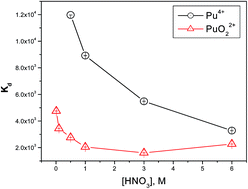
For extraction profile of Pu4+ and PuO22+, Kd values as a function of feed acidity were taken into consideration and it was observed that for both the metal ions the Kd values were found to decrease with increase in HNO3 concentration. With increase in aqueous feed acidity, the ligating carbonyl oxygen can be coordinated to the H+ ion compared to the plutonium. This may be the reason for drastic decrease in Kd values. At lower feed acidity no appreciable complexation for Pu4+ was observed due to insufficient concentration of NO3 ion for effective complexation of Pu4+ as Pu(NO3)4·AFMWCNT but was sufficient for PuO22+ as PuO2(NO3)2·AFMWCNT. At moderate feed acidity the Kd values were higher for Pu4+ compared to that of PuO22+ (Fig. 1). This was attributed to higher concentration of NO3 and were sufficient for both the ions, and the ion with higher ionic potential was expected to show higher complexation ability than the other.
image file: c6ra17773e-f1.tif
Fig. 1 Effect of feed acidity on the Kd values of Pu4+ and PuO22+.

A comparative study on sorption of Pu ions in +4 and +6 oxidation states on to different sorbent materials has been carried out to evaluate the application of AFMWCNT for the selective separation of Pu (Table 1).

Table 1 Comparative study on the sorption of Pu on different sorbent materials
Sorbent Pu Kd (mL g−1) Comment Conditions
Taunit-CMPO42 (IV) 1.60 × 10⁴ P based ligand-non incinerable, presence of Pd, Mo, Zr decrease Kd for actinides 3 M HNO3 feed acidity
Taunit-DMDOHEMA42 (IV) 1.40 × 10⁴ Not properly investigated 3 M HNO3 feed acidity
Taunit-TBP42 (IV) 1.60 × 10² P-Based ligand-non incinerable, low Kd value 3 M HNO3 feed acidity
Taunit-TOPO42 (IV) 3.30 × 10³ P-Based ligand-non incinerable, low Kd value 3 M HNO3 feed acidity
Alumina43 (IV) 7.00 × 10² Radiolytic stability and selectivity not investigated, low Kd value, equilibration time is 5 hours: slow kinetics 0.1 M Na2CO3 medium
Silica gel43 (IV) 1.00 × 10³ Radiolytic stability and selectivity not investigated, low Kd value, equilibration time is 5 hours: slow kinetics 0.1 M Na2CO3 medium
Hydrous titanium oxide43 (IV) 1.00 × 10⁴ Radiolytic stability and selectivity not investigated, equilibration time is 5 hours: slow kinetics 0.1 M Na2CO3 medium
MWCNTs22 (VI) 2.44 × 10³ Low Kd value pH 6.0, 0.1 M NaClO4 medium, 20 ± 2 °C
AFMWCNT [present investigation] (IV) 1.20 × 10⁴ Highly efficient, selective and total evaluation of sorption behaviour, kinetics, stripping, radiolytic stability, processing SHLW 0.01 M HNO3, 25 ± 2 °C
AFMWCNT [present investigation] (VI) 4.75 × 10³ Highly efficient, selective and total evaluation of sorption behaviour, kinetics, stripping, radiolytic stability, processing SHLW 0.01 M HNO3, 25 ± 2 °C


Understanding the sorption mechanism through isotherm

To understand the sorption mechanism involved, different sorption isotherms are explored as empirical models which are obtain from the regression analysis of experimental data. Present investigation deals with the fitting of sorption isotherm data for Pu4+ and PuO22+ in the four most widely accepted sorption isotherm models, Langmuir, Dubinin–Radushkevich (D–R), Freundlich and Temkin isotherms (ESI Fig. 1). The main objective behind this is to understand the sorption mechanism based on the best linear regression.

For the Pu4+ and PuO22+ sorption on AFMWCNT data, taking all the four adsorption isotherm models into consideration (Table 2) it was clear that the sorption mechanism followed Freundlich isotherm which was cooperative in nature. Hence the sorption process was heterogeneous and multi-layered. Previous work on the sorption of the Pu (in different oxidation states) on MWCNTs reported the sorption mechanism to follow Langmuir isotherm though the best fitting (χ2 closer to 1) were obtained for Freundlich isotherm.22 The conclusion of their investigation probably was based on the logic that the chemisorption should proceed via mono layer sorption. But Langmuir isotherm also neglects the interaction of neighbouring sorption sites which is only possible when neighbouring sites are situated far apart. But in the present investigation, the predominance of Freundlich isotherm is based primarily on the linear regression coefficient without imposing any such criteria.

Table 2 Sorption data for Pu4+ and PuO22+on AFMWCNT, fitted on Langmuir, D–R, Freundlich and Temkin isotherms
Langmuir isotherm
Metal ion q0 (mg g−1) b (L mol−1) χ2
Pu4+ 91.9 ± 0.6 3.29 ± 0.05 0.99997
PuO22+ 84.9 ± 0.7 1.38 ± 0.07 0.99976

D–R isotherm
Metal ion Xm (mg g−1) E (kJ mol−1) χ2
Pu4+ 93.9 ± 0.8 17.41 ± 0.11 0.96890
PuO22+ 89.1 ± 0.7 10.81 ± 0.09 0.92508

Freundlich isotherm
Metal ion Kf (mg g−1) n χ2
Pu4+ 92.0 ± 0.8 0.98 ± 0.01 1.00000
PuO22+ 102.0 ± 1 0.96 ± 0.01 0.99999

Temkin isotherm
Metal ion AT (L mg−1) b χ2
Pu4+ 48.4 ± 0.5 62.11 ± 0.97 0.99609
PuO22+ 27.8 ± 0.6 34.43 ± 0.99 0.99069


Additionally, in the present case, the linear regression coefficients for Langmuir isotherm model were also found to be very close to unity revealing the possibilities of the co-existence of this isotherm also. The chemical interaction between amide functionality and plutonium ion; and the physical interaction between the walls of carbon nanotube and plutonium ion; probably led to the co-existence of both the isotherm simultaneously.

Sorption kinetics

At present, different sorption reaction models have been developed and employed to describe the kinetic process of sorption.44–46 The fractional attainment of the equilibrium (F) can be expressed as,47
 
F = Ct/Cte (2)
where, Ct – the metal concentration on AFMWCNT at time ‘t’, Cte – the metal ion concentration on AFMWCNT at equilibrium.

The plots of (1 − F) as a function of equilibration time for Pu4+ and PuO22+ ions were shown in Fig. 2. Beyond 120 min, no appreciable change was observed in the (1 − F) values for both the Pu4+ and PuO22+ ions. This revealed that for completion of the equilibrium for both Pu4+ and PuO22+ required 120 min. Previously reported kinetic study of Pu sorption in different oxidation states onto MWCNTs showed 80–95% sorption in three hours (ref. 22) showing slower kinetics for MWCNTs compared to that in case of AFMWCNT. The kinetics data were fitted on the three different kinetics models to achieve the best fitted model.


image file: c6ra17773e-f2.tif
Fig. 2 Sorption kinetics of Pu4+ and PuO22+ on AFMWCNT.
Lagergren first order rate kinetics. The pseudo-first order rate equation of Lagergren has been widely applied to describe the kinetic process of liquid–solid phase adsorption.48 It can be formulated as,
 
image file: c6ra17773e-t2.tif(3)
where, q – the metal concentration on AFMWCNT at time ‘t’ and qe – the metal ion concentration on AFMWCNT at equilibrium condition. The rate constant kads can be calculated from the plot of log(qeq) vs.t’. The kads value for Pu4+ was found higher than that of PuO22+. The linear regression values for both Pu4+ and PuO22+ were 0.98192 and 0.99581 respectively.
Intra particle diffusion model. The intra particle diffusion model has been used to describe the sorption process occurring on a porous sorbent. A plot of the amount of sorbate adsorbed, q (mg g−1) and the square root of the time, gives the rate constant kp (slope of the plot) and C, directly proportional to the boundary layer thickness (intercept of the plot).49,50 It is expressed as,
 
q = kpt0.5 + C (4)
where, kp – the intra-particle diffusion rate constant and C – intra-particle diffusion constant. The linear relationship highlights the involvement of intra-particle diffusion in sorption process of actinides on AFMWCNT. The positive intercept revealed that the rate determining step was not only dependent on intra-particle diffusion. Probably the transport of the sorbate through the particle–sample interphase onto the pores of the particles, as well as sorption on the available surface of the sorbent, is responsible for the sorption. The kp and C value for Pu4+ was found higher compared to PuO22+. The linear regression value for Pu4+ and PuO22+ ions were 0.9881 and 0.94325 respectively.
Pseudo-second-order kinetics. In 1995, Y. S. Ho described a kinetic process of the sorption of divalent metal ions onto peat, in which the chemical bonding among the divalent metal ions and polar functional groups (such as aldehydes, ketones, acids) are responsible for the cation-exchange capacity of the peat.51 Pseudo second order kinetics can be expressed mathematically as,
 
image file: c6ra17773e-t3.tif(5)
where, k2 (g mg−1 min−1) – the pseudo-second-order rate constant.

The qe can be calculated from the slope of t/q vs. t plot and which on substitution in the intercept value, the pseudo second order rate constant can be evaluated. The linear regression value for both the Pu ions were close to unity.

The analysis of the kinetics data revealed that the sorption of Pu4+ and PuO22+ on the AFMWCNT followed the pseudo second order kinetics (Table 3, Fig. 2) while kinetic study conducted previously on sorption of Pu onto MWCNTs in different oxidation state reported that the kinetic mechanism followed pseudo-first order kinetics (other kinetic models have not yet investigated).22

Table 3 Sorption kinetics for Pu4+ and PuO22+on AFMWCNT
Lagergren first order kinetics
Metal ion qe kads χ2
Pu4+ 3217 ± 9 0.035 ± 0.001 0.98192
PuO22+ 2413 ± 5 0.033 ± 0.001 0.99581

Intra particle diffusion model
Metal ion kp (mg g−1 min−1) C χ2
Pu4+ 172.9 ± 0.8 30[thin space (1/6-em)]864 ± 8 0.9881
PuO22+ 157.6 ± 0.9 21[thin space (1/6-em)]268 ± 10 0.94325

Pseudo second order kinetics
Metal ion qe (mg g−1) k2 (mg g−1 min−1) χ2
Pu4+ (3.31 ± 0.05) × 102 (2.50 ± 0.03) × 10−5 0.99999
PuO22+ (2.33 ± 0.04) × 102 (4.30 ± 0.02) × 10−5 0.99999


Back extraction of plutonium from loaded AFMWCNT

Back extracting of the sorbed metal ions from loaded sorbent is considered most important in the application of the sorbent. In view of this, the Pu4+ and PuO22+ loaded AFMWCNT samples were treated with 1 M oxalic acid and 1 M Na2CO3 for stripping the metal ions. Stripping efficiency of oxalic acid and sodium carbonate was 95% and 84% for Pu4+, validating oxalic acid suitability for quantitative stripping of Pu4+. For PuO22+, high efficiency was observed for sodium carbonate (∼99%). Oxalic acid elution performance was too low (∼60%), making it unviable as eluent. The stripping performance for Pu4+ and PuO22+ were shown in Fig. 3. The data shown in the Fig. 3 was found to have less than 5% error.
image file: c6ra17773e-f3.tif
Fig. 3 Stripping of Pu4+ and PuO22+ from AFMWCNT.

Processing of the simulated high level waste solutions of different nuclear reactor origin

The selectivity of AFMWCNT towards other metal ions present in the Simulated High Level Waste solution (SHLW) have been investigated by processing the SHLW of fast breeder reactor (FBR) and research reactor (RR). Table 4, represent the Kd values for different metal ion in the SHLW of FBR and RR respectively. Almost no sorption was observed Al, Ag, Ba, Ca, Cd, Cr, Fe, Mg, Mn, Na, Ni, Sr, Ce, La, Pr, Nd, Sm, Zr, Ru, Mo, Pd, Gd, Dy and Eu for both the SHLW i.e., of RR and FBR. This study revealed that the AFMWCNT has excellent selectivity for Pu4+ and PuO22+ and sorption of Pu ions in the presence of all the above mentioned metal ions is efficient.
Table 4 The sorption of other metal ion present in SHLW of RR and FBR on AFMWCNT
  Analytical line (nm) FBR RR
Initial (mg L−1) Final (mg L−1) Kd Initial (mg L−1) Final (mg L−1) Kd
Al 396.152 250 230 ± 10 0.008
Ag 243.779 5 1.16 ± 0.02 0.32
Ba 455.404 70 10.6 ± 0.5 0.55 100 7.2 ± 0.3 1.27
Ca 396.847 400 394 ± 12 0.001
Cd 361.051 5 4.9 ± 0.4 0.002 300 112 ± 9 0.16
Cr 284.984 400 166 ± 8 0.14
Fe 244.451 1500 1254 ± 21 0.019
Mg 280.270 300 252 ± 9 0.018
Mn 257.611 500 193 ± 8 0.15
Na 588.995 500 463 ± 11 0.007
Ni 227.021 300 52 ± 2 0.47
Sr 407.771 30 4.7 ± 0.2 0.53 50 6.9 ± 0.4 0.62
Ce 413.380 200 195 ± 9 0.002 100 9.9 ± 0.4 0.91
La 379.478 75 12 ± 1 0.53 100 7.1 ± 0.2 1.29
Pr 414.311 50 2.13 ± 0.05 2.24
Nd 401.225 30 27.4 ± 0.5 0.009
Sm 359.26 50 8.9 ± 0.4 0.46
Zr 339.198 15 14.4 ± 0.8 0.003
Ru 245.644 10 1.61 ± 0.04 0.520 7.5 6.3 ± 0.2 0.018
Mo 281.615 1.5 0.17 ± 0.03 0.76 30 27 ± 2 0.009
Pd 324.27 5 2.73 ± 0.01 0.082
Gd 335.047 5 1.00 ± 0.02 0.39
Dy 353.170 5 0.24 ± 0.02 1.92
Eu 381.967 5 1.52 ± 0.04 0.22


Radiolytic stability of AFMWCNT

For processing the radioactive waste, it is required that the sorbent material should show good radiation stability since it is quite obvious that the sorbent will be in continuous exposure of high energy particles (alpha, beta) and photons (gamma). Due to radiation exposure, there is possibility of degradation of the material. The best material is one which shows good sorption behaviour and selectivity without any appreciable degradation in its performance. Taking this into account, AFMWCNT was exposed to different dose of gamma irradiation and sorption efficiency of the irradiated AFMWCNT for Pu4+ and PuO22+ was calculated. It was observed that the Kd value for Pu4+ decreased abruptly with the gamma exposure. For PuO22+, there was less than 5% decrease in the Kd values even at 1000 kGy gamma exposure (Fig. 4). This study revealed the higher stability of the AFMWCNT even at 1000 kGy validating its suitability for processing radioactive waste. The error associated with the data shown in Fig. 4 was found to be less than 5%.
image file: c6ra17773e-f4.tif
Fig. 4 The effect of gamma exposure on the Kd value of AFMWCNT for Pu4+ and PuO22+.

Molecular structure and structural parameters

The minimum energy structure of free AFMWCNT ligand and its complexes with PuO22+ and Pu4+ ions with nitrate ions are displayed in Fig. 5 and the calculated bond parameters are tabulated in Table 5. The calculated C[double bond, length as m-dash]O, C–C (terminal CNT carbon) and C–N bond distance in free AFMWCNT was seen to be 1.230 Å, 1.467 Å and 1.373 Å respectively. The C[double bond, length as m-dash]O bond distance was elongated to 1.280 Å in case of AFMWCNT–PuO2(NO3)2 complex, and the C–C bond was shortened to 1.436 Å compared to free AFMWCNT ligand. This is due to the interaction of “Pu” in PuO22+ ion with amide O atom of AFMWCNT. Similarly, the Pu[double bond, length as m-dash]O distance also found to be enlarged from 1.677 Å (free PuO22+ ion) to 1.734 Å. The Pu–O distance was found to be 2.279 Å. In case of AFMWCNT–Pu(NO3)4 complex, the C[double bond, length as m-dash]O bond distance was further elongated to 1.302 Å compared to PuO22+ ion complex with AFMWCNT demonstrating stronger interaction compared to PuO22+ ion. The C–C bond was reduced to 1.410 Å compared to free AFMWCNT ligand. The Pu–O distance was found to be 2.229 Å.
image file: c6ra17773e-f5.tif
Fig. 5 Optimized structures of PuO22+ and Pu4+ with AFMWCNT.
Table 5 Structural parameters of AFMWCNT and their complexes at B3LYP/SVP level of theory
Species C[double bond, length as m-dash]O (Å) C–C (Å) C–N (Å) M[double bond, length as m-dash]O (Å) M–O (C[double bond, length as m-dash]O) (Å)
AFMWCNT 1.23 1.467 1.373
AFMWCNT–PuO2(NO3)2 1.28 1.436 1.376 1.734 2.279


Binding energy/free energy of complexation in gas phase

From the experimental studies it was observed that the complexation of PuO22+ and Pu4+ ions with AFMWCNT is 1[thin space (1/6-em)]:[thin space (1/6-em)]1. So, the metal ion–ligand complexation reaction is modeled as the 1[thin space (1/6-em)]:[thin space (1/6-em)]1 (M[thin space (1/6-em)]:[thin space (1/6-em)]L) stoichiometric reaction as follows:
 
PuO22+ + 2NO3 + AFMWCNT → PuO2–AFMWCNT(NO3)2 (6)
 
Pu4+ + 4NO3 + AFMWCNT → Pu–AFMWCNT(NO3)4 (7)

The binding energy or free energy can be used to determine the selectivity for a particular metal ion over another metal ion during complexation with the ligands. Hence, the gas phase binding energy is computed for the complexation reaction of eqn (6) and (7) as follows:

 
ΔEg(PuO2) = EPuO2–AFMWCNT(NO3)2 − [EPuO22+ + 2ENO3 + EAFMWCNT] (8)
 
ΔEg(Pu) = EPu–AFMWCNT(NO3)4 − [EPu4+ + 4ENO3 + EAFMWCNT] (9)

The thermodynamic parameters have been evaluated by performing the thermal correction to the electronic energy (Eel), enthalpy (H) and free energy (G) of the present molecular system following the previously reported methodology.52

The calculated values of binding energy and free energy in the gas phase are given in Table 6. From the table it is seen that the binding energy of PuO22+ ion with AFMWCNT is −532.56 kcal mol−1 which is substantially smaller than that of Pu4+ ion with a value of −1771.82 kcal mol−1. The higher interaction energy of Pu4+ ion over PuO22+ ion is attributed to higher ionic charge on Pu (+4) over PuO2 (+2). Furthermore, the orbital population was performed using natural population analysis (NPA)53 to clarify the strong nature of bonding for both Pu4+ and PuO22+ ions. From the NPA analysis, it is seen that the residual charge on Pu atom for Pu4+ and PuO22+ complex is substantial (1.573 and 1.523 respectively) and thus support the high binding energy for both Pu4+ and PuO22+ complex. The calculated values of free energy in the gas phase also followed the similar trend like binding energies but the values are found to be smaller than the corresponding binding energy because metal–ligand complexation is structure making process.

Table 6 Gas phase energetic values (kcal mol−1) of complexes of PuO22+ and Pu4+ with AFMWCNT at B3LYP/TZVP level of theory
Complex Gas phase
ΔEg ΔHg ΔGg
PuO22+ + 2NO3 + AFMWCNT → PuO2–AFMWCNT(NO3)2 −532.56 −529.48 −496.19
Pu4+ + 4NO3 + AFMWCNT → Pu–AFMWCNT(NO3)4 −1771.82 −1765.69 −1705.54


Binding energy/free energy of complexation in solution phase

So far all the discussion was in gas phase. But in the real experiments, the metal ions are extracted from the aqueous solution, where it remains in strongly hydrated form. Hence, aqueous solvation energy of the metal ions was computed for the accurate evaluation of extraction energy. It is worth nothing that though the gas phase binding and free energy showed the experimental selectivity, it is always recommended to calculate the selectivity in the solution phase. The implicit solvation model was used to take into account of the metal ion solvation by immersing the metal ion directly in the continuum solvent using COSMO solvation model.

The calculated values of binding energy and free energy in the solution phase are shown in Table 7. From the table it is seen that the free energy of Pu4+ ion towards AFMWCNT is −280.75 kcal mol−1 much higher than that of PuO22+ ion i.e. −91.77 kcal mol−1. Similar findings were also observed for the gas phase calculations. Note, the addition of solvation effects considerably reduced the magnitude of binding and free energy values by maintaining the experimental selectivity.

Table 7 Solvent phase energetic values (kcal mol−1) of complexes of PuO22+ and Pu4+ with AFMWCNT at B3LYP/TZVP level of theory
Complex Solvent phase (implicit)
ΔEs ΔHs ΔGs
PuO22+ + 2NO3 + AFMWCNT → PuO2–AFMWCNT(NO3)2 −128.14 −125.06 −91.77
Pu4+ + 4NO3 + AFMWCNT → Pu–AFMWCNT(NO3)4 −347.02 −340.90 −280.75


Bonding analysis

In order to understand the nature of the metal–ligand bonding of the studied complexes, the natural population analysis (NPA) for these complexes are carried out at the same level of theory and the values are presented in Table 8. The small-ECP core applied in this work represents 5s25p65d105f4 6s26p6 and 5s25p65d105f2 6s26p6 for Pu4+ and PuO22+ respectively. There is a significant charge transfer to the AFMWCNT ligand which is evident from the remaining charge on the metal ion leading to high interaction energy. There is an increase of electronic population in the s, p, d and f orbitals of the metal ions after complexation demonstrating the covalent nature of bonding.
Table 8 Calculated charge and orbital population using NBO analysis in gas phase at B3LYP/TZVP level of theory
  Charge (a.u.) s p d f
AFMWCNT–PuO2(NO3)2 1.523 4.17 11.72 11.40 5.17
AFMWCNT–Pu(NO3)4 1.573 4.21 11.99 11.06 5.15


Next, in order to obtain better insights of molecular level interaction, the LUMO–HOMO energy gap of AFMWCNT and hydrated metal ion was calculated and values are given in Table 9. The high value of ELUMO–HOMO, χ and η indicates the hard nature of both the Pu4+ and PuO22+ ions. Hydrated Pu4+ ion was found to be harder than that of hydrated PuO22+ ion which is also reflected in the higher interaction of Pu4+ ion with AFMWCNT over PuO22+ ion. Furthermore, the amount of charge transfer, ΔN was also determined for the metal ion–ligand acceptor donor interaction, and the calculated values are given in Table 9. It is worth noting that the calculated large ion–ligand interaction energy can be well correlated with the higher amount of charge transfer, ΔN which is found to be higher with Pu4+ ion (2.10) over PuO22+ ion (1.35).

Table 9 Calculated quantum chemical descriptors in gas phase at B3LYP/TZVP level of theory
System ELUMO–HOMO (eV) χ η ΔN
[PuO2(H2O)5]2+ 3.22 14.771 1.61 1.35
[Pu(H2O)9]4+ 3.404 23.288 1.702 2.10
AFMWCNT 0.43 0.21 3.77  


Conclusions

The strong sorption ability of N,N-dihexyl amide functionalized multi-walled carbon nanotube for Pu4+ and PuO22+ in acidic medium has been demonstrated. The feed acidity markedly decreased the Kd value for both the Pu ions. Thorough investigation of sorption data revealed that the sorption mechanism for both Pu(IV) and Pu(VI) followed the Freundlich isotherm. Comparatively high sorption kinetics was obtained for Pu4+ and PuO22+, more than 95% sorption of Pu ions was completed within 2 hours of equilibration time. AFMWCNT showed high radiolytic stability up to 1000 kGy, with slight decrease in sorption efficiency. Also high selectivity was observed for Pu4+ and PuO22+ as almost no sorption was observed for other metal ions. Stripping efficiency of oxalic acid was 95% for Pu4+, making oxalic acid suitable for quantitative stripping of Pu4+ and for PuO22+, high efficiency was observed for sodium carbonate (∼99%). The experimental selectivity of Pu4+ ion over PuO22+ ion towards AFMWCNT has been investigated using DFT based calculations. The structural parameters of PuO22+ and Pu4+ ions with AFMWCNT were predicted using DFT calculations. Both the gas phase and solution phase binding energy and free energy values showed the selectivity Pu4+ ion towards AFMWCNT compared to PuO22+ ion as observed in the experiment. Orbital bonding analysis was carried out to rationalize the selectivity of Pu4+ ion over PuO22+ with AFMWCNT. Consideration of solvent effects using COSMO lowered the magnitude of binding and free energy values intacting the experimental selectivity.

References

  1. E. Frackowiaka and F. Béguin, Carbon, 2002, 40(10), 1775–1787 CrossRef.
  2. G. Che, B. B. Lakshmi, E. R. Fisher and C. R. Martin, Nature, 1998, 393, 346–349 CrossRef CAS.
  3. A. C. Dillon, K. M. Jones, T. A. Bekkedahl, C. H. Kiang, D. S. Bethune and M. J. Heben, Nature, 1997, 386, 377–379 CrossRef CAS.
  4. C. Liu, Y. Y. Fan, M. Liu, H. T. Cong, H. M. Cheng and M. S. Dresselhaus, Science, 1999, 286(5442), 1127–1129 CrossRef CAS PubMed.
  5. P. Serp, M. Corrias and P. Kalck, Appl. Catal., A, 2003, 253(2), 337–358 CrossRef CAS.
  6. J. M. Planeix, N. Coustel, B. Coq, V. Brotons, P. S. Kumbhar, R. Dutartre, P. Geneste, P. Bernier and P. M. Ajayan, J. Am. Chem. Soc., 1994, 116(17), 7935–7936 CrossRef CAS.
  7. J. We, Y. Jia, Q. Shu, Z. Gu, K. Wang, D. Zhuang, G. Zhang, Z. Wang, J. Luo, A. Cao and D. Wu, Nano Lett., 2007, 7(8), 2317–2321 CrossRef PubMed.
  8. A. Bachtold, P. Hadley, T. Nakanishi and C. Dekker, Science, 2001, 294(5545), 1317–1320 CrossRef CAS PubMed.
  9. W. Hoenlein, F. Kreupl, G. S. Duesberg, A. P. Graham, M. Liebau, R. V. Seidel and E. Unger, IEEE Trans. Compon. Packag. Technol., 2004, 27(4), 629–634 CrossRef CAS.
  10. A. Merkoçi, M. Pumera, X. Llopis, B. Pérez, M. del Valle and S. Alegret, TrAC, Trends Anal. Chem., 2005, 24(9), 826–838 CrossRef.
  11. Q. Zhao, Z. Gan and Q. Zhuang, Electroanalysis, 2002, 14(23), 1609–1613 CrossRef CAS.
  12. K. L. Salipira, B. B. Mamba, R. W. Krause, T. J. Malefetse and S. H. Durbach, Environ. Chem. Lett., 2007, 5(1), 13–17 CrossRef CAS.
  13. L. Hanchao, F. Suping, D. Xiaolin, Z. Nannan and L. Yongli, Energy Procedia, 2011, 5, 985–990 CrossRef.
  14. K. Pyrzynska, Sep. Purif. Technol., 2008, 37, 372–389 CrossRef CAS.
  15. C. S. Lu, H. S. Chiu and C. Liu, Ind. Eng. Chem. Res., 2006, 45(8), 2850–2855 CrossRef CAS.
  16. G. P. Rao, C. Lu and F. S. Su, Sep. Purif. Technol., 2007, 58(1), 224–231 CrossRef CAS.
  17. Y. H. Li, J. Ding, Z. Luan, Z. Di, Y. Zhu, C. Xu, D. Wu and B. Wei, Carbon, 2003, 41(14), 2787–2792 CrossRef CAS.
  18. C. Chen and X. Wang, Ind. Eng. Chem. Res., 2006, 45(26), 9144–9149 CrossRef CAS.
  19. M. Tuzen, K. O. Saygi and M. Soylak, J. Hazard. Mater., 2008, 152(2), 632–639 CrossRef CAS PubMed.
  20. C. L. Chen, X. K. Wang and M. Nagatsu, Environ. Sci. Technol., 2009, 43(7), 2362–2367 CrossRef CAS PubMed.
  21. X. L. Tan, D. Xu, C. L. Chen, X. K. Wang and W. P. Hu, Radiochim. Acta, 2008, 96(1), 23–29 CAS.
  22. S. A. Perevalov and N. P. Molochnikova, J. Radioanal. Nucl. Chem., 2009, 281, 603–608 CrossRef CAS.
  23. A. Sengupta, S. Jayabun, A. Boda and S. M. Ali, RSC Adv., 2016, 6, 39553–39562 RSC.
  24. X. Wang, C. Chen, W. Hu, A. Ding, D. Xu and X. Zhou, Environ. Sci. Technol., 2005, 39(8), 2856–2860 CrossRef CAS PubMed.
  25. G. D. Vuković, A. D. Marinković, M. Čolić, M. Đ. Ristić, R. Aleksić, A. A. Perić-Grujić and P. S. Uskoković, Chem. Eng. J., 2010, 157(1), 238–248 CrossRef.
  26. Y. J. Xu, A. Rosa, X. Liu and D. S. Su, New Carbon Mater., 2011, 26(1), 57–62 CrossRef CAS.
  27. J. Wang, X. Ma, G. Fang, M. Pan, X. Ye and S. Wang, J. Hazard. Mater., 2011, 186(2–3), 1985–1992 CrossRef CAS PubMed.
  28. Y. P. Sun, K. Fu, Y. Lin and W. Huang, Acc. Chem. Res., 2002, 35(12), 1096–1104 CrossRef CAS PubMed.
  29. T. Ramanathan, F. T. Fisher, R. S. Ruoff and L. C. Brinson, Chem. Mater., 2005, 17(6), 1290–1295 CrossRef CAS.
  30. R. Chidambaram and C. Ganguly, Curr. Sci., 1996, 70(1), 21–35 CAS.
  31. A. Kobashi, G. R. Choppin and J. W. Morse, Radiochim. Acta, 1988, 43(4), 211–215 CrossRef CAS.
  32. G. R. Choppin, Radiochim. Acta, 1999, 85, 89–95 CAS.
  33. TURBOMOLE V6.6, a development of University of Karlsruhe and Forschungszentrum Karlsruhe GmbH, 1989–2007, TURBOMOLE GmbH, since 2007, 2014available from http://www.turbomole.com Search PubMed.
  34. X. Cao and M. Dolg, J. Mol. Struct.: THEOCHEM, 2004, 673, 203–209 CrossRef CAS.
  35. A. D. Becke, J. Chem. Phys., 1993, 98, 1372–1377 CrossRef CAS.
  36. C. Lee, W. Yang and R. G. Parr, Phys. Rev. B: Condens. Matter Mater. Phys., 1988, 37, 785–789 CrossRef CAS.
  37. F. Neese, Coord. Chem. Rev., 2009, 253, 526–563 CrossRef CAS.
  38. A. Klamt, J. Phys. Chem., 1995, 99, 2224–2235 CrossRef CAS.
  39. A. Klamt and G. Schuurmann, J. Chem. Soc., Perkin Trans. 2, 1993, 799–805 RSC.
  40. A. K. Singha Deb, S. M. Ali and K. T. Shenoy, RSC Adv., 2015, 5, 80076–80088 RSC.
  41. G. Schaftenaar and J. H. Noordik, J. Comput.-Aided Mol. Des., 2000, 14, 123–134 CrossRef CAS PubMed.
  42. E. Zakharchenko, O. Mokhodoeva, D. Malikov, N. Molochnikova, Y. Kulyako and G. Myasoedova, Procedia Chem., 2012, 7, 268–274 CrossRef CAS.
  43. I. C. Pius, M. M. Charyulu, B. Venkataramani, C. K. Sivaramakrishnan and S. K. Patil, J. Radioanal. Nucl. Chem., 1995, 199(1), 1–7 CrossRef CAS.
  44. D. Kucić, I. Cosić, M. Vuković and F. Briski, Acta Chim. Slov., 2013, 60(1), 109–119 Search PubMed.
  45. Y. S. Ho, C. C. Chiang and Y. C. Hsu, Sep. Sci. Technol., 2001, 36(11), 2473–2488 CrossRef CAS.
  46. D. Wen, Y. S. Ho and X. Tang, J. Hazard. Mater., 2006, 133(1–3), 252–256 CrossRef CAS PubMed.
  47. R. Chiarizia, E. P. Horwitz and S. D. Alexandratos, Solvent Extr. Ion Exch., 1994, 12, 211–237 CrossRef CAS.
  48. R. L. Tseng, F. C. Wu and R. S. Juang, J. Taiwan Inst. Chem. Eng., 2010, 41(6), 661–669 CrossRef CAS.
  49. F. C. Wu, R. L. Tseng and R. S. Juang, Chem. Eng. J., 2009, 153(1–3), 1–8 CAS.
  50. H. Moon and W. K. Lee, J. Colloid Interface Sci., 1983, 96(1), 162–171 CrossRef CAS.
  51. Y. S. Ho and G. McKay, Process Biochem., 1999, 34, 451–465 CrossRef CAS.
  52. M. Adrian-Scotto, G. Mallet and D. Vasilescu, J. Mol. Struct.: THEOCHEM, 2005, 728, 231–234 CrossRef CAS.
  53. A. E. Reed, R. B. Weinstock and F. Weinhold, J. Chem. Phys., 1985, 83, 735–746 CrossRef CAS.

Footnote

Electronic supplementary information (ESI) available. See DOI: 10.1039/c6ra17773e

This journal is © The Royal Society of Chemistry 2016
Click here to see how this site uses Cookies. View our privacy policy here.