DOI:
10.1039/C6RA17741G
(Paper)
RSC Adv., 2016,
6, 93086-93093
Adsorptive removal of dimethyl disulfide from methyl tert-butyl ether using an Ag-exchanged ZSM-5 zeolite
Received
12th July 2016
, Accepted 13th September 2016
First published on 14th September 2016
Abstract
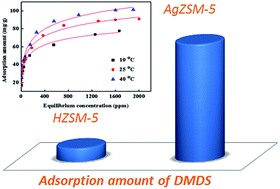
Ion-exchange modification can largely change the adsorption ability of various adsorbents of zeolite. A series of Ag-exchanged ZSM-5 zeolites were prepared using an ion-exchange method and used to remove dimethyl disulfide (DMDS) from methyl tert-butyl ether (MTBE). The structural properties and acidity of the modified zeolite were examined using X-ray diffraction, N2 adsorption, NH3-TPD and Py-IR. The effects of the ion-exchange level on DMDS adsorption were investigated. In addition, the adsorption isotherms and adsorption kinetic data were measured and interpreted. Introduction of Ag+ into ZSM-5 contributes to the adsorption ability and increases the adsorption capacity by 7.7 times through enhancing the interactions between DMDS and zeolite. Strong acidity and Lewis acid sites are considered favorable for DMDS adsorption. The adsorption isotherms and kinetics results reveal that DMDS adsorption onto AgZSM-5 was endothermic chemisorption having an activation energy of 7.4 kJ mol−1. The adsorbents can be regenerated at 300 °C in an air atmosphere.
1 Introduction
The emission of SO2 resulting from the combustion of transportation fuel leads to serious environmental problems, such as acid rain and air pollution. Therefore, solutions to reducing the sulfur content in gasoline or diesel have drawn a lot of attention both in academia and industry.1–3 Methyl tert-butyl ether, as a high octane number chemical, is also required to have low sulfur content when blending into gasoline to produce qualified fuels.4–6
Hydrodesulfurization (HDS) is the most commonly used process for the production of low-sulfur fuels.6,7 However, this process involves high-energy consumption due to the elevated operation temperature and pressure together with hydrogen consumption. Adsorption desulfurization, based on different adsorbents that can catch sulfide molecules, is considered to be effective in selectively removing sulfur components from transportation fuels.8–16 Ni–Cu/γ-Al2O3 has been applied in ultra-deep adsorption desulfurization of diesel fuel and its adsorption ability could be recovered after regeneration treatment.17 Mesoporous zeolites such as MCM-41 (ref. 18 and 19) and SBA-15 (ref. 20 and 21) are also proven to be effective in extracting thiophene derivatives from simulated petroleum feedstocks. Furthermore, zeolites modified by ion-exchange are found to be potential adsorbents according to fixed bed desulfurization of commercial gasoline and diesel based on π-complexation.22–25
Dimethyl disulfide (DMDS) is the main sulfide contained in MTBE. Our previous work26,27 has indicated that HZSM-5 was effective in removing sulfide from MTBE, however, an enhanced adsorption capacity is required in order to take forward its potential industrial applications. In this paper, the HZSM-5 zeolite was modified through Ag ion-exchange. The post-synthesized samples were characterized using XRD, N2 adsorption, EDS, NH3-TPD and Py-IR. The influence of Ag ion-exchange on the adsorption performance of ZSM-5 was evaluated. In addition, equilibrium and kinetics for DMDS adsorption onto AgZSM-5 were studied.
2 Experimental
2.1 Materials and reagents
HZSM-5 zeolite with a Si/Al ratio of 15 was purchased from the zeolite manufactory of Nankai University. Methyl tert-butyl ether (MTBE) (with higher than 99.0% purity) and AgNO3 (with 99.8% purity) were supplied by Sinopharm Chemical Reagent Co., Ltd (Shanghai, China). Dimethyl disulfide (DMDS) (with 99.88% purity) was purchased from Maya Reagent Company (Shanghai, China). DMDS-containing MTBE raw materials were prepared by adding different amounts of DMDS into MTBE.
2.2 Sample preparation
Zeolite HZSM-5 was used as the parent material. The ion-exchange solution with a certain concentration was prepared by dissolving AgNO3 powder into deionized water. The parent HZSM-5 was mixed with the AgNO3 solution (having a mass fraction from 0.05 to 0.2 mol L−1) under continuous magnetic stirring. The mixture was maintained at 90 °C for 3 h, followed by washing with deionized water at least three times and drying at 110 °C for 6 h. The whole procedure would be repeated if necessary. After that, the post-synthesized samples were calcined at 550 °C for 5 h. The samples were named with the initial Ag+ concentration of AgNO3 solution and the ion-exchange times. For example, 0.2-AgZSM-5(3) sample means that the zeolite was ion-exchanged using 0.2 mol L−1 AgNO3 solution for three times. The different samples prepared under the various reaction conditions are listed in Table 1.
Table 1 The samples prepared under different conditions
| Samples |
Initial Ag+ concentration (mol L−1) |
Ion-exchange times |
| HZSM-5 |
0 |
0 |
| 0.05-AgZSM-5(1) |
0.05 |
1 |
| 0.1-AgZSM-5(1) |
0.1 |
1 |
| 0.15-AgZSM-5(1) |
0.15 |
1 |
| 0.2-AgZSM-5(1) |
0.2 |
1 |
| 0.2-AgZSM-5(2) |
0.2 |
2 |
| 0.2-AgZSM-5(3) |
0.2 |
3 |
2.3 Sample characterization
X-ray diffraction (XRD). XRD patterns were obtained on a D8 Advance X-ray diffractometer (Bruker, Karlsruhe, Germany) with Cu Kα radiation (40 kV, 100 mA). The 2θ scanning angle range was 5–75° with a step of 0.02° s−1.
N2 adsorption. The pore structure of the zeolites was characterized by N2 adsorption using an ASAP 2020 automatic physisorption analyzer (Micromeretics, Norcross, US). The adsorption of nitrogen was performed at −196 °C using 200 mg of sample previously degassed at 200 °C for 2 h under high vacuum. The surface area was calculated using the BET method and the volume was observed using the BJH method.
Energy disperse spectroscopy (EDS). The elemental analysis of the parent HZSM-5 and ion-exchanged ZSM-5 was carried out using energy disperse spectroscopy (Falion 60S, EDAX, US).
NH3-temperature programmed desorption (NH3-TPD). NH3-TPD analysis was carried out on an AutoChem 2920 automatic temperature programmed desorption apparatus (Micromeritics, Norcross, US) equipped with a thermal conductivity detector. Samples were first heated at 300 °C for 1 h and NH3 adsorbed for 1 h at 100 °C. After degassing in vacuum for 1 h, the samples were heated to 700 °C at 10 °C min−1 and the TCD signal was recorded.
Pyridine-infrared spectroscopy (Py-IR). The amount of Bronsted and Lewis acid sites were measured via Tensor 27 Fourier transform infrared spectroscopy (Bruker, Karlsruhe, Germany). The samples adsorbed pyridine at 100 °C for 20 min after degassing under vacuum. Then, the curves were collected after the pyridine was desorbed at 250 °C for 30 min.
2.4 Static adsorption experiment
The adsorption performance of the different samples was evaluated using a batch adsorption experiment. The zeolites and MTBE containing a certain DMDS concentration were kept in a conical flask with a mass ratio of 5
:
0.2 (solution
:
solid). The flask was maintained on a rotary bed at a certain temperature (10, 25 and 40 °C) with a rotary speed of 120 r/min. The samples were picked up from the flask at predetermined times and the DMDS concentration was analyzed using a GC9560 gas chromatograph equipped with an FPD detector (Huaai Chromatography Analysis Co., Ltd., Shanghai, China).
The adsorption amount of DMDS on the different samples, q, was calculated as follows:
where
c0 and
ct are the initial mass fraction of DMDS in solution and the mass fraction at
t time, respectively, in ppm.
wsol and
wad are the mass of solution and adsorbent sample, in g.
3 Results and discussion
3.1 Zeolite characterization
Composition analysis. Energy dispersive spectroscopy (EDS) was performed to determine the chemical compositions of the parent HZSM-5 and ion-exchanged samples. As is seen in Table 2, Ag+ was successfully introduced into the zeolite via the ion-exchange process. Furthermore, multiple ion-exchange operations could lead to a high Ag content in ZSM-5. Moreover, the n(Si)/n(Al) ratio slightly decreases after the ion-exchange process, indicating that ion-exchange can reduce dealumination and increase the framework stability.28
Table 2 The elemental compositions of the parent and ion-exchanged zeolites
| Samples |
n(Ag)/n(Al) |
n(O)/n(Al) |
n(Si)/n(Al) |
| HZSM-5 |
0 |
17.35 |
14.65 |
| 0.2-AgZSM-5(1) |
0.58 |
18.55 |
13.66 |
| 0.2-AgZSM-5(2) |
0.75 |
18.26 |
13.67 |
| 0.2-AgZSM-5(3) |
0.88 |
16.98 |
13.93 |
Structural properties. The mineralogical structure of the parent and ion-exchanged zeolites was examined using XRD analysis (see Fig. 1). As can be seen from the XRD results, the ion-exchanged samples show consistent XRD patterns with that of HZSM-5. However, the patterns show a decrease in the strength of the XRD peaks after undergoing each ion-exchange process, suggesting the influence of Ag-exchange on the framework of ZSM-5 zeolite.
 |
| | Fig. 1 The X-ray diffraction patterns of the different ZSM-5 samples. | |
N2 adsorption. The mesoporous specific surface area and pore volume of the zeolites analyzed through N2 adsorption are shown in Table 3. When compared to the parent HZSM-5, the ion-exchanged zeolites have smaller specific surface areas. It is interesting that three samples prepared with different ion-exchange times show a similar surface area (around 300 m2 g−1). The result indicates the impact of Ag-exchange on the framework of ZSM-5, which is consistent with previous XRD results. In addition, 0.2-AgZSM-5(3) has a higher pore volume than the other samples.
Table 3 The structural properties of the different ZSM-5 samples
| Samples |
Specific surface area (m2 g−1) |
Pore volume (cm3 g−1) |
| HZSM-5 |
413 |
0.086 |
| 0.2-AgZSM-5(1) |
302 |
0.082 |
| 0.2-AgZSM-5(2) |
293 |
0.081 |
| 0.2-AgZSM-5(3) |
306 |
0.095 |
3.2 Acidity
The acid strength and acid strength distribution were measured using NH3-TPD analysis. The results are shown in Fig. 2. For HZSM-5, two NH3 desorption peaks were found in the curve, one at around 180 °C assigned to weak acid sites and the other at 385 °C belonging to the strong acid sites. The same two peaks also appear for the 0.2-AgZSM-5(1) sample. However, both the weak acid sites and strong acid sites move to higher temperatures. In addition, the acid strength distribution becomes wider, indicating that the acid sites were strengthened after Ag+ exchange. Both 0.2-AgZSM-5(1) and 0.2-AgZSM-5(3) showed similar weak and strong acid sites, a new peak occurring between weak acid and strong acid peaks (at around 310 °C), which may be caused by Ag+ at different ion sites. Considering the results of the composition analysis, Ag+ offers more middle and strong acid sites, which contribute to DMDS adsorption.
 |
| | Fig. 2 The NH3-TPD patterns of the parent HZSM-5 and ion-exchanged samples. | |
Py-IR was also conducted to measure the acidic type of the parent HZSM-5 and Ag+ ion-exchanged ZSM-5. The peak at 1540 cm−1 in the Py-IR spectra was assigned to the Bronsted acid sites and the peak at 1450 cm−1 to Lewis acid sites. Fig. 3 shows the Py-IR spectra of the parent HZSM-5, 0.2-AgZSM-5(1) and 0.2-AgZSM-5(3) samples. All the spectra were collected after saturation through adsorbing pyridine for 20 min at 100 °C and desorbing under vacuum at 250 °C. It can be observed that the Ag+ exchanged samples possess more Lewis acid sites and less Bronsted acid sites when compared to the parent HZSM-5. What's more, with an increase in the Ag+ content, the Bronsted acid sites decrease and Lewis acid sites increase.
 |
| | Fig. 3 The Py-IR spectra of the parent and ion-exchanged zeolites. | |
3.3 The adsorption amount of the different samples
Samples prepared with different initial Ag+ concentrations and ion-exchange times were investigated for their sulfur adsorption amount. Table 4 gives the sulfur adsorption amount of the different adsorbent samples. When compared to 5.66 mg g−1 obtained for the parent HZSM-5, the modified zeolites can reach an adsorption amount up to 49.36 mg g−1, which is 7.7 times higher than that of HZSM-5. The adsorption amount was also higher than the AgY adsorption amount of thiophene from model fuel.29 The order of adsorption amount for DMDS was, 0.2-AgZSM-5(1) > 0.15-AgZSM-5(1) > 0.1-AgZSM-5(1) > 0.05-AgZSM-5(1), indicating that the amount of sulfur adsorption increases as the initial Ag+ concentration increased. Moreover, the order of adsorption amount, 0.2-AgZSM-5(3) > 0.2-AgZSM-5(2) > 0.2-AgZSM-5(1), reveals that the multiple ion-exchanged zeolites exhibit higher sulfur adsorption amounts.
Table 4 The sulfur adsorption amount of the different zeolitesa
| Samples |
Adsorption amount (mg g−1) |
The adsorption experiments were conducted with a mass ratio of 5 : 0.2 (solution : solid) at 40 °C with an initial mass fraction of 2000 ppm. |
| HZSM-5 |
5.66 |
| 0.05-AgZSM-5(1) |
20.23 |
| 0.1-AgZSM-5(1) |
36.54 |
| 0.15-AgZSM-5(1) |
42.26 |
| 0.2-AgZSM-5(1) |
44.18 |
| 0.2-AgZSM-5(2) |
48.54 |
| 0.2-AgZSM-5(3) |
49.36 |
When combined with the acidic properties and adsorption amount data, it is known that middle-strong acid and Lewis acid sites contribute to the interaction between the adsorbents and the sulfurs atom of DMDS.30 After the introduction of Ag+, the crystallinity and specific area decrease, while the acid strength, especially the Lewis acidity, increase. What's more, the samples with higher Ag+ content performed better in the desulfurization experiments, as concluded from Table 4, revealing that Ag+ in the zeolite plays a key role in the adsorption process. It is considered that Ag+ has strong interactions with sulfur compounds31 through the lone pair of the sulfur atom.32
3.4 Adsorption equilibria
Fig. 4 represents the relationship between the sulfur concentration at equilibrium and sulfur adsorption amount per gram of zeolite. A previous study26,27 concluded that DMDS adsorption onto the parent HZSM-5 was a consequence of the specific pore structure of ZSM-5 accompanied with heat release. However, AgZSM-5 exhibits a higher adsorption amount at higher temperature, indicating that DMDS adsorption onto AgZSM-5 was endothermic.33–36 The change in the thermodynamic properties was mainly due to the existence of Ag+.
 |
| | Fig. 4 The relationship between equilibrium concentration (ppm) and adsorption amount (mg g−1) at 10, 25 and 40 °C. | |
Adsorption equilibrium can usually be described by adsorption isotherm models. The parameters of the models provide fundamental physicochemical data to better understand the adsorption process. In this study, the experimental data shown in Fig. 4 was fitted using the Langmuir, Freundlich and Toth isotherm models.
The Langmuir model can be expressed by eqn (1):
| |
 | (1) |
The model can be linearized and rewritten by eqn (2):
| |
 | (2) |
where
ce is the equilibrium concentration of DMDS in MTBE, in ppm,
qe is the equilibrium adsorption amount of DMDS onto adsorbent, in mg g
−1,
qm is the adsorption capacity, in mg g
−1 and
KL is the Langmuir constant.
The Freundlich model (see eqn (3)) is an empirical adsorption isotherm, which is usually used to describe the adsorption of organic and inorganic components in solution.
| |
 | (3) |
The linear form of the model can be expressed as follows:
| |
lg qe = lg KF + (1/n)lg C
| (4) |
where the parameters
KF and
n represent the adsorption capacity and adsorption intensity, respectively.
The Toth isotherm is a three-parameter model, which is based on the Langmuir model. The expression is given by eqn (5):
| |
 | (5) |
where
Kt,
b and
t are the Toth constants,
ce and
qe are the equilibrium sulfur concentration, in ppm, and the equilibrium adsorption amount of sulfur onto adsorbent, in mg g
−1, respectively.
The experimental data were linearly fitted using the Langmuir and Freundlich models and non-linearly fitted by the Toth model. The parameters and regression data of the isotherms for DMDS adsorption from MTBE onto 0.2-AgZSM-5(3) are presented in Table 5.
Table 5 The parameters of the different isotherm models
| Temperature (°C) |
Langmuir |
Freundlich |
Toth |
| KL (ppm−1) |
qm (mg g−1) |
R2 |
KF (mg g−1 ppm−1/n) |
n |
R2 |
KT (mg g−1 ppm−1) |
β (ppm−1) |
t |
R2 |
| 10 |
13.72 |
4.222 |
0.9398 |
17.39 |
4.856 |
0.952 |
84.22 |
0.909 |
0.285 |
0.979 |
| 25 |
13.31 |
5.014 |
0.9565 |
16.551 |
4.043 |
0.988 |
194.5 |
1.032 |
0.240 |
0.988 |
| 40 |
5.76 |
10.30 |
0.8552 |
15.598 |
3.551 |
0.994 |
295.9 |
1.077 |
0.223 |
0.993 |
From a comparison of the correlation coefficient (R2) obtained using the three models, it can be concluded that the Freunlich and Toth model can better explain the adsorption isotherms than the Langmuir model. From our previous study, the adsorption isotherms can be better explained using the Langmuir model.26 The Langmuir adsorption isotherm is based on the assumption that all adsorption sites are equivalent and independent.37 Considering that the Toth isotherm is a correction of the ideal Langmuir model for introducing the heterogeneous energetic parameter, the adsorption of DMDS onto AgZSM-5 is heterogeneous and will be influenced by the interaction between adsorbates. The well-fitting of the Freundlich model also indicates that the adsorption is correlated with the coverage degree.
3.5 Adsorption kinetics
The impact curves of contact time on the sulfur adsorption amount at three different temperatures: 10 °C, 25 °C and 40 °C are presented in Fig. 5. As can be seen, the initial slope of the uptake curve was high, indicating the adsorption rate was rather rapid in the beginning period of the adsorption. After about 20 min of contact, the uptake rate was obviously slower than in the initial period. However, the adsorption amount changed insignificantly after contact for about 80 min. The rapidly adsorption rate in the initial time is a consequence of the large ratio of active sites that are available for adsorption. As more active sites are occupied during the process, the adsorption rate slows down. Once all the active sites available are occupied by sulfide, the adsorption process reaches a dynamic equilibrium.
 |
| | Fig. 5 The effect of time on the adsorption amount at different temperatures; c0 = 2000 ppm, rotary rate 120 rpm. | |
To better understand the adsorption process, the experimental data were fitted by pseudo-first-order and pseudo-second-order models. The pseudo-first-order and pseudo-second-order rate Lagergren models are as follows:
| |
 | (6) |
| |
 | (7) |
where
qt (mg g
−1) is the amount of adsorbed sulfur on the adsorbent at time
t (min),
qe (mg g
−1) is the amount of DMDS adsorbed at equilibrium,
k1 and
k2 are rate constants of pseudo-first-order and pseudo-second-order, respectively.
One can integrate the equation above and apply the boundary conditions of qt = 0 and t = 0 as follows:
| |
 | (8) |
| |
 | (9) |
The corresponding parameters obtained for the kinetic models are listed in Table 6. It was found that the pseudo-second-order model exhibits higher corresponding coefficients than the pseudo-first-order model in explaining the adsorption process. What's more, a faster adsorption rate and higher adsorption amount are observed at higher temperature, just as k2 and qe shows, which also coincides with the experiment results shown in Fig. 4.
Table 6 The parameters of the different kinetic models obtained using the non-linear fitting method
| Temperature (°C) |
Pseudo-first-order |
Pseudo-second-order |
Elovich model |
| k1 (min) |
qe (mg g−1) |
R2 |
k2 (g mg−1 min−1) |
qe (mg−1 g−1) |
R2 |
α (mg g−1) |
β (mg g−1) |
R2 |
| 10 |
0.343 |
44.526 |
0.9596 |
0.0127 |
46.708 |
0.991 |
28.128 |
4.174 |
0.996 |
| 25 |
0.366 |
47.171 |
0.9716 |
0.0142 |
48.967 |
0.996 |
32.135 |
3.711 |
0.991 |
| 40 |
0.410 |
48.103 |
0.9855 |
0.0172 |
49.743 |
0.999 |
35.208 |
3.251 |
0.987 |
The Elovich model was introduced to further study the adsorption process. The Elovich model is one of the most useful kinetic models in describing adsorption involving chemisorption.38 The expression of the Elovich model is:
| |
qt = α + β ln(t)
| (10) |
where
qt (mg g
−1) is the amount of adsorbed sulfur on the adsorbent at time
t (min),
α and
β are the Elovich parameters.
From the Elovich parameters and corresponding coefficients listed in Table 6, it is known that the Elovich equation fits the experimental data well, suggesting that chemical adsorption is likely the rate-controlling step of the adsorption process. As the parent HZSM-5 was better fitted with the pseudo-first-order model,26 combined with the superior pseudo-second-order fitting to this experiment data, DMDS adsorption onto AgZSM-5 was assigned to chemisorption controlled by a surface reaction, which also supports our previous conclusion that Ag+ has a strong effect with sulfide containing molecules.
The influence of temperature on the sulfur adsorption rate was observed. The relationship between the sulfur adsorption rate onto AgZSM-5 and temperature was calculated using the Arrhenius equation:
| |
 | (11) |
where
k0 is the temperature independent factor (g mg
−1 min
−1),
Ea is the activation energy of adsorption (kJ mol
−1),
Rg is the universal gas constant (8.3145 J mol
−1 K
−1) and
Tk is temperature in Kelvin.
Eqn (11) can be rearranged in the following form:
| |
 | (12) |
The activation energy (Ea) can be calculated by plotting ln
k2 versus 1/T. The apparent activation energy determined for the adsorption of DMDS was 7.4 kJ mol−1. As the activation energy for physical adsorption is usually no more than 4.2 kJ mol−1,38,39 the activation energy of this adsorption process also suggests that the process belongs to chemical adsorption.
3.6 Adsorbent regeneration
Regeneration performance is important in adsorbent applications. In this work, a thermal treatment was adopted to regenerate the saturated adsorbent. The regeneration was attempted by heating the adsorbents in an air atmosphere according to a reported method.40 The adsorption amounts of the adsorbents regenerated at different temperatures are shown in Fig. 6. As is seen, the adsorption amount of adsorbents regenerated at 200 and 250 °C was much lower when compared to the fresh adsorbent. However, when the regeneration temperature was increased to above 300 °C, the adsorption amount of the regenerated adsorbent becomes very close to the fresh adsorbent. The results indicate that the Ag+ exchanged ZSM-5 could be fully regenerated and the appropriate operating temperature was 300 °C.
 |
| | Fig. 6 The adsorption amount of the adsorbents regenerated at different temperatures. | |
4 Conclusions
ZSM-5 zeolite was modified using Ag ion-exchange to enhance the adsorption removal of DMDS from MTBE. Ag ion-exchange shows both stronger acidity and more Lewis acid sites, therefore, leading to strong interactions between the Ag-exchanged ZSM-5 and DMDS. As a result, the adsorption capacity of AgZSM-5 can be increased by 7.7 times when compared to the parent HZSM-5 sample (increasing from 5.66 mg g−1 to 49.36 mg g−1). The results of the adsorption equilibrium and kinetics analyses indicate that the adsorption of DMDS onto the Ag-exchanged ZSM-5 zeolite was endothermic chemisorption having an activation energy of 7.4 kJ mol−1. The adsorbents can be regenerated at 300 °C in an air atmosphere.
Conflict of interest
The authors declare no competing financial interest.
Acknowledgements
This work is financially supported by the Natural Science Foundation of Shanghai (No. 16ZR1408100) and the Fundamental Research Funds for the Central Universities of China (No. 22A201514010).
References
- J. H. Kim, X. Ma, A. Zhou and C. Song, Ultra-deep desulfurization and denitrogenation of diesel fuel by selective adsorption over three different adsorbents: A study on adsorptive selectivity and mechanism, Catal. Today, 2006, 111, 74–83 CrossRef CAS.
- X. Ma, A. Zhou and C. Song, A novel method for oxidative desulfurization of liquid hydrocarbon fuels based on catalytic oxidation using molecular oxygen coupled with selective adsorption, Catal. Today, 2007, 123, 276–284 CrossRef CAS.
- C. Song and X. Ma, New design approaches to ultra-clean diesel fuels by deep desulfurization and deep dearomatization, Appl. Catal., B, 2003, 41, 207–238 CrossRef CAS.
- R. T. Yang, A. J. Hernández-Maldonado and F. H. Yang, Desulfurization of transportation fuels with zeolites under ambient conditions, Science, 2003, 301, 79–81 CrossRef CAS PubMed.
- C. Song, An overview of new approaches to deep desulfurization for ultra-clean gasoline, diesel fuel and jet fuel, Catal. Today, 2003, 86, 211–263 CrossRef CAS.
- I. V. Babich and J. A. Moulijn, Science and technology of novel processes for deep desulfurization of oil refinery streams: a review, Fuel, 2003, 82, 607–631 CrossRef CAS.
- H. Nava, C. Ornelas, A. Aguilar, G. Berhault, S. Fuentes and G. Alonso, Cobalt-Molybdenum sulfide catalysts prepared by in situ activation of bimetallic (Co-Mo) alkylthiomolybdates, Catal. Lett., 2003, 86, 257–265 CrossRef CAS.
- Y. Yin, D. Xue, X. Liu, G. Xu, P. Ye, M. Wu and L. Sun, Unusual ceria dispersion formed in confined space: a stable and reusable adsorbent for aromatic sulfur capture, Chem. Commun., 2012, 48, 9495–9497 RSC.
- Y. Wang and R. T. Yang, Desulfurization of liquid fuels by adsorption on carbon-based sorbents and ultrasound-assisted sorbent regeneration, Langmuir, 2007, 23, 3825–3831 CrossRef CAS PubMed.
- A. Srivastav and V. C. Srivastava, Adsorptive desulfurization by activated alumina, J. Hazard. Mater., 2009, 170, 1133–1140 CrossRef CAS PubMed.
- K. A. Cychosz, A. G. Wong-Foy and A. J. Matzger, Liquid phase adsorption bymicroporous coordination polymers: removal of organosulfur compounds, J. Am. Chem. Soc., 2008, 130, 6938–6939 CrossRef CAS PubMed.
- S. Velu, X. Ma and C. Song, Selective adsorption for removing sulfur from Jet fuel over zeolite-based adsorbents, Ind. Eng. Chem. Res., 2003, 42, 5293–5304 CrossRef CAS.
- F. Tian, W. Wu, Z. Jiang, C. Liang, Y. Yang, P. Ying, X. Sun, T. Cai and C. Li, The study of thiophene adsorption onto La(III)-exchanged zeolite NaY by FT-IR spectroscopy, J. Colloid Interface Sci., 2006, 301, 395–401 CrossRef CAS PubMed.
- L. Duan, X. Gao, X. Meng, H. Zhang, Q. Wang, Y. Qin, X. Zhang and L. Song, Adsorption, co-adsorption, and reactions of sulfur compounds, aromatics, olefins over Ce- exchanged Y zeolite, J. Phys. Chem. C, 2012, 116, 25748–25756 CAS.
- S. G. McKinley and R. J. Angelici, Deep desulfurization by selective adsorption of dibenzothiophenes on Ag+/SBA-15 and Ag+/SiO2, Chem. Commun., 2003, 2620–2621 RSC.
- F. Subhan, B. S. Liu, Q. L. Zhang and W. S. Wang, Production of ultra-low-sulfur gasoline: An equilibrium and kinetic analysis on adsorption of sulfur compounds over Ni/MMS sorbents, J. Hazard. Mater., 2012, 239–240, 370–380 CrossRef CAS PubMed.
- A. Mansouri, A. A. Khodadadi and Y. Mortazavi, Ultra-deep adsorptive desulfurization of a model diesel fuel on regenerable Ni-Cu/γ-Al2O3 at low temperatures in absence of hydrogen, J. Hazard. Mater., 2014, 271, 120–130 CrossRef CAS PubMed.
- L. Song, T. Bu, L. Zhu, Y. Zhou, Y. Xiang and D. Xia, Synthesis of organically-inorganically functionalized MCM-41 for adsorptive desulfurization of C4 hydrocarbons, J. Phys. Chem. C, 2014, 118, 9468–9476 CAS.
- S. K. Ritter, Cleaner future for fossil fuels, Chem. Eng. News, 2002, 20, 30–32 Search PubMed.
- S. G. Mckinley and R. J. Angelici, Deep desulfurization by selective adsorption of dibenzothiophenes on Ag+/SBA-15 and Ag+/SiO2, Chem. Commun., 2003, 20, 2620–2621 RSC.
- Y. Wang, R. T. Yang and J. M. Heinzel, Desulfurization of jet fuel by π-complexation adsorption with metal halides supported on MCM-41 and SBA-15 mesoporous materials, Chem. Eng. Sci., 2008, 63, 356–365 CrossRef CAS.
- A. J. Hernández-Maldonado and R. T. Yang, Desulfurization of commercial liquid fuels by selective adsorption via π-complexation with Cu(I)-Y zeolite, Ind. Eng. Chem. Res., 2003, 42, 3103–3110 CrossRef.
- A. J. Hernández-Maldonado, F. H. Yang, G. Qi and R. T. Yang, Desulfurization of transportation fuels by π-complexation sorbents: Cu(I)-, Ni(II)-, and Zn(II)-zeolites, Appl. Catal., B, 2005, 56, 111–126 CrossRef.
- A. J. Hernández-Maldonado and R. T. Yang, Desulfurization of liquid fuels by adsorption via π complexation with Cu(I)-Y and Ag-Y Zeolites, Ind. Eng. Chem. Res., 2002, 42, 123–129 CrossRef.
- R. T. Yang, A. J. Hernandez-Maldonado and F. H. Yang, Desulfurization of transportation fuels with zeolites under ambient conditions, J. Cheminf., 2003, 34, 79–81 Search PubMed.
- Y. W. Zhao, B. X. Shen, H. Sun and G. X. Zhan, Adsorption of dimethyl disulfide on ZSM-5 from methyl tert-butyl ether liquid: A study on equilibrium and kinetics, Fuel Process. Technol., 2016, 145, 14–19 CrossRef CAS.
- Y. W. Zhao, B. X. Shen and H. Sun, Chemical liquid deposition modified ZSM-5 zeolite for adsorption removal of dimethyl disulfide, Ind. Eng. Chem. Res., 2016, 55, 6475–6480 CrossRef CAS.
- S. Yu, H. Tian and J. Long, Effect of metal element modification on the hydrothermal stability of Y zeolite, J. Fuel Chem. Technol., 2011, 39, 936–943 CAS.
- A. J. Hernández-Maldonado and R. T. Yang, Desulfurization of Liquid Fuels by Adsorption via π Complexation with Cu(I)-Y and Ag-Y Zeolites, Ind. Eng. Chem. Res., 2003, 42, 123–129 CrossRef.
- D. Yi, H. Huang, M. Xuan and L. Shi, Adsorption-desorption behavior and mechanism of dimethyl disulfide in liquid hydrocarbon streams on modified Y zeolites, Appl. Catal., B, 2014, 148–149, 377–386 CrossRef CAS.
- D. Lee, E. Y. Ko, H. C. Lee, S. Kim and E. D. Park, Adsorptive removal of tetrahydrothiophene (THT) and tert -butylmercaptan (TBM) using Na-Y and AgNa-Y zeolites for fuel cell applications, Appl. Catal., A, 2008, 334, 129–136 CrossRef CAS.
- H. Wakita, Y. Tachibana and M. Hosaka, Removal of dimethyl sulfide and t-butylmercaptan from city gas by adsorption on zeolites, Microporous Mesoporous Mater., 2001, 46, 237–247 CrossRef CAS.
- A. Srivastav and V. C. Srivastava, Adsorptive desulfurization by activated alumina, J. Hazard. Mater., 2009, 170, 1133–1140 CrossRef CAS PubMed.
- B. Zohra, K. Aicha, S. Fatima, B. Nourredine and D. Zoubir, Adsorption of Direct Red 2 on bentonite modified by cetyltrimethylammonium bromide, Chem. Eng. J., 2008, 136, 295–305 CrossRef CAS.
- M. Alkan, M. Doğan, Y. Turhan, Ö. Demirbas and P. Turan, Adsorption kinetics and mechanism of maxilon blue 5G dye on sepiolite from aqueous solutions, Chem. Eng. J., 2008, 139, 213–223 CrossRef CAS.
- S. Chowdhury, R. Mishra, P. Saha and P. Kushwaha, Adsorption thermodynamics, kinetics and isosteric heat of adsorption of malachite green onto chemically modified rice husk, Desalination, 2011, 265, 159–168 CrossRef CAS.
- M. Özacar, İ. A. Şengil and H. Türkmenler, Equilibrium and kinetic data, and adsorption mechanism for adsorption of lead onto valonia tannin resin, Chem. Eng. J., 2008, 143, 32–42 CrossRef.
- M. F. Elkady, A. M. Ibrahim and M. El-Latif, Assessment of the adsorption kinetics, equilibrium and thermodynamic for the potential removal of reactive red dye using eggshell biocomposite beads, Desalination, 2011, 278, 412–423 CrossRef CAS.
- Z. Aksu, Determination of the equilibrium, kinetic and thermodynamic parameters of the batch
biosorption of nickel (II) ions onto Chlorella vulgaris, Process Biochem., 2002, 38, 89–99 CrossRef CAS.
- L. Lv, J. Zhang, C. Huang, Z. Lei and B. Chen, Adsorptive separation of dimethyl disulfide from liquefied petroleum gas by different zeolites and selectivity study via FT-IR, Sep. Purif. Technol., 2014, 125, 247–255 CrossRef CAS.
|
| This journal is © The Royal Society of Chemistry 2016 |
Click here to see how this site uses Cookies. View our privacy policy here.