DOI:
10.1039/C6RA17659C
(Paper)
RSC Adv., 2016,
6, 88727-88735
Enhanced biodiesel production from glucose-fed activated sludge microbial cultures by addition of nZVI and FeCl3†
Received
11th July 2016
, Accepted 31st August 2016
First published on 31st August 2016
Abstract
The effect of different iron additives on biodiesel production from activated sludge was investigated under an optimal lipid accumulation condition (pH = 4 & C/N = 100). Iron addition, ranging from 0.1 to 2.5 mmol L−1, had a positive effect on biodiesel production. Among separate iron tests, 0.25 mmol L−1 nZVI and 2.5 mmol L−1 FeCl3 performed the best. The gravimetric fatty acid methyl ester yields of the two treatments reached 215.3 (0.25 mmol L−1 nZVI) and 274.9 mg g−1 dry sludge (2.5 mmol L−1 FeCl3) and increased by 36.1% and 74.0% compared with control run (131.0 mg g−1 dry sludge), respectively. At the end of the culture period, the genus Gluconacetobacter (56.4%) was enriched in the sludge under the 2.5 mmol L−1 FeCl3 treatment while the other treatments were only dominated by Gluconobacter (∼80%). The accumulated lipids mainly contained around 60% of monounsaturated fatty acids, indicating the suitability for biodiesel production. Furthermore, indicators related to production costs showed iron addition could notably improve the biotechnical feasibility.
1. Introduction
Biodiesel has recently become attractive as a potential substitute for non-renewable fossil fuels. It is a mixture of fatty acid methyl esters (FAMEs) that are mainly produced by the transesterification of biological sources such as vegetable oils or animal fats with an alcohol. However, the rising price of refined feedstocks lead to higher production costs of biodiesel than that of petroleum, restricting the application of green diesel.1 Activated sludge, which is produced in large amounts from municipal wastewater treatment plants and available all year round, has turned out to be a low-cost, non-food-based lipid feedstock.2 Lipids extracted from sludge are mainly composed of polyhydroxyalkanoates (PHAs), wax esters (WEs), steryl esters (SEs), triacylglycerides (TAGs), free fatty acids (FFAs), free sterols and phospholipids (PLs). Only the saponifiable fraction of lipids, such as TAGs, can be converted into FAMEs and become biodiesel.3 However, lipid content of activated sludge by in situ transesterification is relatively low compared to conventional oil feedstocks, usually accounting for 7–10% (w/w dry sludge), thereby resulting in only 2–5% (w/w dry sludge) of biodiesel.4,5 Considering the process cost of sludge biodiesel, Dufreche et al. estimated that a biodiesel yield reaching 15% (w/w dry sludge) would make the sludge-derived lipid a more competitive feedstock in the marketplace.7 Based on previous studies, it is of great importance to increase the lipid content of sludge which could be converted to biodiesel.
A culture strategy was firstly adopted by Mondala et al. for the microorganisms in activated sludge to enhance the lipid content and the corresponding biodiesel yield.6 In their work, they found heterotrophic bacteria of activated sludge can accumulate lipids under high carbon and nitrogen-limited conditions. In this way, the need for media sterilization could also be eliminated by the application of activated sludge microbial cultures instead of pure oleaginous strains. Several studies have shown that biodiesel yield of cultured activated sludge was affected by media variables such as different carbon sources, substrate loadings, initial C
:
N ratios (C/N)6 and pH of the culture mediums.8,9 Besides this, trace metal ions, like Mg2+, Mn2+, Ca2+ and Fe3+ ions, have also been reported to stimulate lipid accumulation in various species, subsequently increasing biodiesel yield.10,11 Among these elements, iron is a crucial nutrient component for microbial growth because it participates in many intracellular metabolism activities. Thus, the relationship between iron supply and microbial lipid production has been widely investigated. Studies have shown that, due to distinct chemical or physical properties, various sources of iron play different roles in microalgae lipid accumulation. For instance, Fe(II) acted as an activator to potentially influence the activities of several enzymes in favor of the lipid synthesis pathway.12 In addition, zero-valent iron nanoparticles (nZVI) could alter lipid synthesis, which was probably attributed to its oxidative action.13 However, compared with oleaginous microalgae or yeasts, few studies have focused on the influence of iron on lipid accumulation in bacteria, which are the major factors in biodiesel production from activated sludge.
Apart from lipid content, production costs of carbon sources as well as disposal costs of biomass residues after oil extraction should be considered when adopting a culture strategy. In present studies, high-cost pure sugar materials, such as glucose, have often been utilized as fermentation substrates for microbial lipid accumulation.14,15 Therefore, a higher carbon-to-lipid conversion efficiency can be favorable for improving the feasibility of the cultivation process. Furthermore, low-cost and abundant waste materials that are rich in organic substances, such as industrial wastewater or lignocellulosic biomass from agricultural and forestry residues, have been considered future alternative carbon sources for large-scale microbial lipid production.8,16 The utilization of wastewater as culture medium presents many advantages, such as reducing the costs of substrates. Moreover, wastewater treatment and biodiesel production could also be realized simultaneously in this period. Another issue regarding disposal of biomass residues after lipid extraction could be solved by utilizing the existing anaerobic digestion operations available in many sewage treatment plants.8 Compared with most developed countries such as America and Germany, anaerobic digestion has not been popularized in developing countries like China where the sewage sludge biosolids are usually disposed of by incineration or in landfill. In these countries, the treatment costs on the residues after lipid extraction cannot be negligible. Therefore, more attention should be paid to the proliferation of sludge biomass during the fermentation process.
In this study, two species of iron, nZVI and FeCl3, were added to activated sludge and cultured in aerobic bioreactors under nitrogen-limited conditions. According to previous studies, a high glucose loading of 60 g L−1 was expected to enhance the biodiesel yield. The effect of iron on cultured sludge was investigated based on the fermentation parameters including glucose consumption, lipid accumulation and biomass production. Lipid extracts from sludge biomass were transesterified to determine biodiesel yield and fatty acid profiles. Variations in microbial composition were also analyzed using high-throughput sequencing with the aim of finding the role of the microbial community in lipid accumulation. Evaluation criterion concerning feasibility of culture strategies was proposed for subsequent investigations in biodiesel production from activated sludge.
2. Materials and methods
2.1 Enhanced biodiesel production from activated sludge cultures
Activated sludge samples were obtained from a full-scale sewage treatment plant (Shanghai, China). Prior to the fermentation experiment, activated sludge was concentrated by gravity settling at 4 °C for 24 h and sieved 2 times with an 18 mesh sieve. Sludge samples were cultivated in 500 mL flasks with working volumes of 100 mL for the batch cultivation experiments on a gyratory shaker at 200 rpm at 25 °C. The cultivation medium contained the following components (per L of deionized water): 1.95 g NaH2PO4·2H2O, 1.0 g K2HPO4, 5 mL trace mineral solution. Glucose (60 g L−1) and ammonium sulfate were added as carbon and nitrogen sources, respectively, in amounts corresponding to initial carbon-to-nitrogen ratio (C/N) based on mass. To study the effect of pH, a wide range of pH values (2, 4, 6, 8 and 10) were selected for culture mediums at C/N 70. pH values of the culture mediums were maintained approximately throughout the duration of the experiment using 8 mol L−1 NaOH and 6 mol L−1 HCl. After that, various C/N values of 20, 100, 200 and 300 were tried with the culture mediums controlled around the optimized pH obtained from the pH experiment. Based on the optimized basic culture conditions, two different species of iron, ferric trichloride and nanoscale zero valent iron (nZVI) were added to the culture media, respectively, at six concentration levels (0, 0.1, 0.25, 0.5, 1.0 and 2.5 mmol L−1). All initial sludge concentrations in mixed liquor suspended solids (MLVSS) were 2.65 g L−1. Total incubation time for the batch culture was 7 d. The culture broth samples were collected at regular time intervals, processed and analyzed according to the methods listed below.
2.2 Analytical methods
2.2.1 Biomass determination. Fifty milliliters of fermentation broth samples were centrifuged (3600 × g, 4 °C) for 20 min. After centrifugation, the supernatant layer was filtered through a 0.45 μm membrane was transferred into another centrifuge tube and stored in the freezer for further analysis. The cell pellets produced were then washed with 50 mL of 0.85% (v/v) saline solution and frozen overnight at −20 °C. After lyophilization at −50 °C for 24 h, biomass accumulation was determined by gravity weighing.
2.2.2 Glucose and ammonium (NH4+–N) concentrations. The supernatant layer filtered through a 0.45 μm membrane was used for direct residual glucose and NH4+–N determination periodically. 3,5-Dinitrosalicylic acid was used to determine the concentrations of residual glucose in the supernatant. The concentration of residual NH4+–N was determined by H2SO4 titration after distillation on a Kjeldahl determination device (K9840; Hanon Instruments Ltd, Nanjing, China). Instrument parameters were 50 mL boric acid (2%), 10 mL sodium hydroxide (40%), 6 min distillation time and 40 mL water wash.
2.2.3 Lipid extraction and FAME analysis. Dried sludge samples were weighed and then suspended in 1 mL of methanol that contained 0.5 mm diameter glass beads. After being kept at 4 °C overnight, they were disrupted by the MonoLyser™ lysing system (RotaPrep Inc., Tustin, CA, USA). For complete cell disruption, 10 mL HCl (4 mol L−1) was added followed by boiling and sudden freezing at −20 °C. After being extracted twice with 20 mL chloroform/methanol (1
:
1, v/v), the obtained extracts were washed with the same volume of a 0.1% NaCl solution, then dried by the nitrogen blowing method at 50 °C. Lipid content (%, in cell dry weight, abbreviated as CDW) was calculated gravimetrically. The FAME yield and fatty acid profile of the lipid extracts were estimated as fatty acid methyl esters (FAMEs) via transesterification, which was catalyzed using a methanolic BF3 solution. FAMEs were detected by gas chromatography using a gas chromatograph (GC) (6890N, Agilent Technologies, Santa Clara, CA, USA) equipped with a flame ionization detector (FID) and a 60 m long capillary column (260M154P, Thermo Fisher Scientific, Waltham, MA, USA) with an internal diameter of 0.25 mmol L−1, as described by He et al.17 The resulting overall yield coefficients of growth (YX/S) yield, lipid yield (YP/S) and FAME yield (YF/S) based on total glucose consumed have been calculated as follows:| |
 | (1) |
| |
 | (2) |
| |
 | (3) |
2.3 Microbial analysis of the cultured sludge based on Illumina MiSeq sequencing
2.3.1 DNA extraction and PCR amplification. Activated sludge culture samples were withdrawn on days 3 and 7 for analysis of bacteria in different culture media. Microbial DNA was extracted using TianGen DP428 (QIAGEN, Omega Bio-tek, Norcross, GA, Germany) according to the manufacturer's protocols. The V4–V5 region of the bacteria 16S ribosomal RNA gene was amplified by PCR (95 °C for 2 min, followed by 30 cycles at 95 °C for 30 s, 55 °C for 30 s, and 72 °C for 45 s and a final extension at 72 °C for 10 min) using primers 338F and 806R, where the barcode was an eight-base sequence unique to each sample. PCR reactions were performed in a triplicate 20 μL mixture containing 4 μL of 5× FastPfu buffer, 2 μL of 2.5 mmol L−1 dNTPs, 0.8 μL of each primer (5 μM), 0.4 μL of FastPfu polymerase, and 10 ng of template DNA.
2.3.2 High throughput pyrosequencing and sequence analysis. Purified amplicons were pooled in equimolar amounts and paired-end sequenced (2 × 250) on an Illumina MiSeq platform according to the standard protocols by Shanghai Majorbio Bio-pharm Biotechnology Co., Ltd. Raw fastq files were de-multiplexed and quality-filtered using QIIME (version 1.17) as follows: (i) the 300 bp reads were truncated at any site receiving an average quality score <20 over a 50 bp sliding window, discarding the truncated reads that were shorter than 50 bp. (ii) Exact barcode matching. Two nucleotide mismatch in primer matching and reads containing ambiguous characters were removed. (iii) Only sequences that overlapped by longer than 10 bp were assembled according to their overlap sequence. Reads that could not be assembled were discarded. Operational Units (OTUs) were clustered with a 97% similarity cutoff using UPARSE (version 7.1 http://drive5.com/uparse/) and chimeric sequences were identified and removed using UCHIME. The taxonomy of each 16S rRNA gene sequence was analyzed by RDP classifier (http://rdp.cme.msu.edu/) against the silva (SSU115) 16S rRNA database using a confidence threshold of 70%.18 Based on the pyrosequencing profiles, the Bray–Curtis similarity index and cluster analysis were used to evaluate the microbial community similarity of the sludge samples.
3. Results and discussion
3.1 Effect of iron on biodiesel production from glucose-fed activated sludge
Since the lipid storage in microorganisms is largely affected by pH and initial CC/N of the culture media, a proper lipid accumulation condition for the follow-up iron addition experiments should be established.19,20 Gravimetric FAME yield (mg g−1 dry sludge) as well as volumetric FAME yield (g L−1) were considered as key indexes in the selection of culture conditions. Preliminary results showed that when pH ranged from 2 to 10, the culture medium maintained at 4 or 8 could obtain higher FAME gravimetric yields (Fig. S1(b)†). Since there was no significant difference between the final biomass of pH 4 and 8, the volumetric yield of FAME of pH 8 was slightly higher than pH 4, just like the trend of the gravimetric yield (Fig. S1(a and c)†). However, the pH of culture media would drop to around 2 if not controlled, which was also reported by Mondala et al.6 In order to simplify the pH control during the whole process, pH 4 was finally chosen for the following experiments. The effect of C/N on FAME yield was investigated subsequently. When the C/N ratio increased up to 200, growth was suppressed (Fig. S2(a)†). It was found that the FAME yield of activated sludge was the highest at C/N 100 (131 mg g−1 dry sludge, 1.8 g L−1) (Fig. S2(b)†). Additionally, the resulting FAME yield of C/N 20 was the lowest among all the C/N ratio tests both gravimetrically and volumetrically (Fig. S2(a and c)†). This demonstrated that a low C/N ratio has the most inhibition effect on saponifiable lipids accumulation. Among previous studies, a maximum FAME yield of 102 mg g−1 dry sludge and the corresponding volumetric FAME yield of ∼0.8 g L−1 were obtained from the activated sludge after 6 d of fermentation under C/N 70 without pH control.6 The FAME yield obtained from those studies was still lower than that of this study, which was conducted under C/N 100 & pH 4. It can be speculated that this basal medium was more suitable for FAME yields. Thus, the fermentation pH and C/N were adjusted to 4 and 100, respectively, acting as the control compared with the iron addition treatments.
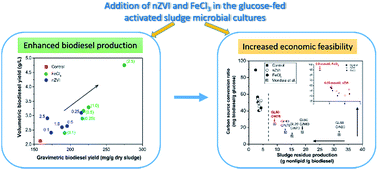
The effect of iron addition on FAME yield produced from sludge-derived lipids at the end of the fermentation process is shown in Fig. 1. Gravimetric and volumetric FAME yields both increased under various iron treatments compared with the control run. With iron addition increasing from 0.1 to 2.5 mmol L−1, the enhancement of nZVI rose first and then reduced as the treatment concentration increased (Fig. S3†). The highest gravimetric and volumetric FAME yield (215.3 mg g−1 dry sludge, 3.1 g L−1) was observed with the 0.25 mmol L−1 nZVI treatment run, increasing by 36.1% and 46.2%, respectively. While a better correlation between the enhancement and concentration of FeCl3 was found. However, compared with treatments whose concentration ranged from 0.25 to 1.0 mmol L−1, more significant enhancement was observed at the 2.5 mmol L−1 FeCl3 treatment run where the highest gravimetric and volumetric FAME yields (274.9 mg g−1 dry sludge, 4.8 g L−1) were achieved, increasing by 74.0% and 120%, respectively (Fig. S4†). This stronger enhancement for biodiesel production, related to a higher concentration of Fe(III), was also found in the lipid accumulation of the marine microalgae Chlorella vulgaris. When supplemented with the highest iron concentration (1.2 × 10⁻⁵ mmol L−1), the total lipid content of the microalgae was 3–7 fold of that in other media supplemented with lower iron concentrations.21
 |
| | Fig. 1 Gravimetric and volumetric yield of FAME from sludge treated with different concentrations of iron after 7 d of fermentation. All treatments were cultured under pH 4 & C/N 100. Values without brackets represent the concentration of nZVI (mmol L−1) while others in brackets represent that of FeCl3 (mmol L−1). Dotted arrow indicates the optimization tendency. | |
3.2 Effect of iron on the fermentation profiles of activated sludge
As demonstrated in the previous (Section 3.1), the most significant effect on FAME yield was obtained with additions of 0.25 mmol L−1 nZVI and 2.5 mmol L−1 FeCl3. Thus, the fermentation profiles of the two treatments were chosen for further study. As shown in Fig. 2a, the 2.5 mmol L−1 FeCl3 treatment run had a positive effect on overall biomass production, revealed by a relatively higher nonlipid (YX/S) and lipid (YP/S) yield based on the glucose utilization as well. Despite a gradual increase in the 2.5 mmol L−1 FeCl3 treatment run, the duration of the exponential growth phase lasted up to 3 d in all treatments, which coincided with the depletion in NH4+–N levels in the culture as shown in Fig. 2c. The glucose consumption rate (Fig. 2b) observed in the 2.5 mmol L−1 FeCl3 treatment run was also found lower than that in the control run. In the first 3 d of fermentation, 52.0% of total glucose was utilized in the 2.5 mmol L−1 FeCl3 treatment run while 73.6% in the control run.
 |
| | Fig. 2 Effect of iron on fermentation profiles of activated sludge microbial cultures for enhanced FAME yield. All treatments were cultured under pH 4 & C/N 100. | |
Although the observed lipid content (Fig. 2d) was not significantly different among various treatments during the whole fermentation period, the saponifiable fraction of the total lipids (Fig. 2e) started to increase after 3 d of fermentation, particularly in the 2.5 mmol L−1 FeCl3 treatment run, increasing from 58.6% to 80.6%. The remarkable increase in saponifiable lipids, which can be converted to biodiesel, directly contributed to the enhancement of the FAME yield (Fig. 2f) in iron treatment runs. During this enhancement period, the gravimetric FAME yield was increasing by 128.5 mg g−1 dry sludge (2.5 mmol L−1 FeCl3) and 94.0 mg g−1 dry sludge (0.25 mmol L−1 nZVI), higher than 23.6 mg g−1 dry sludge in the control run.
As shown in Table 1, the resulting overall YP/S and YF/S, based on total glucose consumed, were increased by 50.7% and 124.9% in the 2.5 mmol L−1 FeCl3 treatment run compared to the control run, indicating a higher substrate-to-lipid conversion efficiency. Additionally, YF/S was higher in the stationary phase than in the growth phase, which was contrary to YP/S. This result indicated that Fe(III) was more favorable to saponifiable lipid accumulation when nitrogen was limited. The 0.25 mmol L−1 nZVI treatment run took a more positive effect on lipid accumulation in the stationary phase since the overall YP/S and YF/S values were higher than those of growth phase. This might be attributed to the adaptation to harmful effects such as oxidative stress or cellular disruption induced by nZVI.22,23 The negative impacts of nZVI on growth were also reflected by the relatively low YX/S or YP/S in the growth phase compared with the control run. Similar yield coefficients of cultured sludge were also calculated in previous studies where the same substrate was used.6,9 As shown in Table 1, the lower yield of nonlipid biomass as well as higher yield of FAME were obtained in this study compared with others. Thus, it is suggested that the culture conditions, regardless of iron treatments, might lead to more carbon to saponifiable lipids instead of nonlipid fractions.
Table 1 Effect of iron on yield parameters estimated for lipid accumulation and FAME yield by activated cultures
| Parameters |
Iron addition (mmol L−1) |
Literature value |
| 0 (control) |
0.25 (nZVI) |
2.5 (FeCl3) |
| YX/S: growth yield coefficient, mg nonlipid biomass per g glucose. YP/S: lipid yield coefficient, mg lipid per g glucose. YF/S: FAME yield coefficient, mg FAME per g glucose. Values acquired from Mondala et al.6 n.r.: not reported. Values acquired from Sun et al.9 |
| Growth phase YX/Sa (mg g−1) |
165.60 |
159.27 |
238.84 |
n.r.e |
| Overall YX/S (mg g−1) |
104.46 |
100.87 |
131.83 |
167d |
| Growth phase YP/Sb (mg g−1) |
63.69 |
57.14 |
100.56 |
38d |
| Overall YP/S (mg g−1) |
63.46 |
66.34 |
95.63 |
66.7d |
| Growth phase YF/Sc (mg g−1) |
44.84 |
38.91 |
73.91 |
n.r.e |
| Overall YF/S (mg g−1) |
39.64 |
54.34 |
89.17 |
12.6f |
3.3 Microbial community analysis of activated sludge under different iron treatments
The sludge microbial communities in seed and cultured sludge under different iron treatments were analyzed. The composition of the microbial population in activated sludge after cultivation was completely different from that in the seed sludge, regardless of the iron addition (Fig. 3a). Similar to previous studies, the Proteobacteria phylum dominating in seed sludge increased from 42.5% to more than 90% of total sequences analyzed after 7 d of cultivation.6,9 Meanwhile, other phyla, such as the Bacteroidetes, Chloroflexi and Acidobacteria, that existed in seed sludge decreased sharply to less than 1%. The microbial population in the sludge under the 0.25 mmol L−1 nZVI treatment was similar to that in the control run. However, after 3 d of fermentation, significant differences from the control run in the microbial population were observed when treated with 2.5 mmol L−1 FeCl3. The occurrence of this structural change in microbial population was in accordance to the onset of FAME enhancement (Fig. 2f). During the period, a higher abundance of Firmicutes (10.4%) and a lower abundance of Proteobacteria (55.0%) were obtained in the 2.5 mmol L−1 FeCl3 treatment run compared with the control run. This distinction in the evolution of microbial composition might play a crucial role in the enhanced biodiesel production.
 |
| | Fig. 3 The relationship of microbial community structure among raw sludge and cultured sludge (a) in the phylum level and (b) in the genus level. O represents raw sludge, (A1), (B1) and (C1) represent sludge cultured for 3 d under control run, 2.5 mmol L−1 FeCl3 and 0.25 mmol L−1 nZVI treatment run respectively, (A2), (B2) and (C2) represent sludge cultured for 7 d under control run, 2.5 mmol L−1 FeCl3 and 0.25 mmol L−1 nZVI treatment run respectively, others represent the phylums or genuses representing <1% of the total reads. All treatments were under pH 4 & C/N 100. | |
Fig. 3b shows the microbial population at the genus level for further details. For the cultured sludge, despite the treatments, certain genii, including Gluconobacter, Gluconacetobacter, Enterobacter and Aeromonas, were enriched. The microbial population in the 0.25 mmol L−1 nZVI treatment run did not show any significant difference from that in the control run. Similar to the phylum level, the 2.5 mmol L−1 FeCl3 treatment resulted in a different microbial composition at the genus level. After 3 d of cultivation, Enterobacter (22.2%) was the most abundant bacteria and Gluconobacter (<1%) barely existed. At the end of fermentation, Gluconacetobacter (56.4%) dominated in sludge followed by Gluconobacter (26.7%). The abundance of the former genus in the other two treatment runs was only 3–4%, indicating its better acclimation with the existence of Fe(III). Among the genii found in the cultured sludge, the genii Gluconacetobacter and Gluconobacter belong to the acetic acid bacteria, which are classified in the family Acetobacteraceae and have a tolerance to acidic pH.24 In addition, the two genii are clustered with Alphaproteobacteria, resulting in its rich abundance in sludge at the end of cultivation. The enrichment in Alphaproteobacteria was also found in the study conducted by Mondala et al.6 It has been reported that certain strains belonging to the genus Gluconacetobacter or Gluconobacter were found to accumulate lipid.25 Besides, these genii mostly contained the straight-chain unsaturated acid of C18:1 as a major constituent, accounting for 60–70%.17,24 Moreover, changes in the proportion of unsaturated fatty acids were detected in Gluconacetobacter xylinus when affected by outer interference such as a direct current electric field.26 Therefore, it can be inferred that the addition of iron stimulated the saponifiable lipid accumulation in the genii Gluconacetobacter and Gluconobacter, subsequently enhancing biodiesel production.
Other studies have also shown that the supplementation of iron was responsible for the shift of microbial communities of activated sludge, affecting the performance of bioreactors. For instance, FeCl3 addition could enrich certain genii relative to methanogenesis, contributing to a higher biogas production from the anaerobic digestion of activated waste sludge.27 Other iron species like magnetic nanoparticles (NPs) as well as nZVI could change the abundance of certain bacteria to affect biological nitrogen or phosphorus removal efficiencies from activated sludge systems.28,29 In this study, a similar phenomenon was also observed where 2.5 mmol L−1 FeCl3 favored the enrichment of Gluconacetobacter, resulting in the possible enhanced accumulation of cellular saponifiable lipid, which might be the main mechanism of FeCl3 in biodiesel production. Compared with FeCl3, nZVI showed no significant impact on the microbial population, probably due to the relative low additive concentration. However, nZVI will cause an increase in the iron concentrations due to the release via iron corrosion. On the one hand, iron is known to play a vital role in most biological processes,30 the metabolism process in microorganisms related to lipid might be accelerated in the presence of iron. On the other hand, iron is not only a nutrient but a toxin to microorganisms due to the formation of reactive oxygen species.23 Stress conditions were also found to favor lipid accumulation in previous studies.14,19 Given the enhanced biodiesel production in the nZVI treatment run, other mechanisms, involving metabolism related to enhanced synthesis of intracellular lipid, might take effect. For an explicit explanation of the role that different iron sources play in saponifiable lipid accumulation, more investigations remain to be carried out in the future.
3.4 Analysis of fatty acid composition
As shown in Table 2, the saponifiable lipids were predominantly composed of palmitic acid (C16:0), stearic acid (C18:0), oleic acid (C18:1) and linoleic acid (C18:2), similar to the plant oils that were used as feedstocks for biodiesel production.31 For RAS oil, the fatty acids were mainly saturated, including palmitic acid and stearic acid. After 7 d of cultivation, the proportion of monounsaturated fatty acids increased to around 60% in all the treatments, mainly due to the dramatic increase of oleic acid whose level was about 5 times those from RAS (i.e., 50 vs. 9.5). A similar increase in the amount of oleic acid from raw sludge was also observed after glucose-fed fermentation by Mondala et al.6 This is a significant improvement for balancing cold flow and oxidative stability of sludge biodiesel, which can be attributed to oleic acid levels. Regardless of various iron additions, the fatty acid composition of lipids remained constant among the differently cultured sludges, indicating that the high quality of biodiesel produced from cultured sludge was not influenced by iron treatments. This finding will allow the application of iron to enhance cultured activated sludge for a renewable biodiesel feedstock.
Table 2 Fatty acids composition of saponifiable lipids obtained from activated sludge under different treatments
| Fatty acids (% total fatty acids) |
RASa |
Controlb |
nZVIc |
FeCl3d |
| RAS: raw activated sludge. Control: without iron treatment. Control: with 0.25 mmol L−1 nZVI added. Control: with 2.5 mmol L−1 FeCl3 added. Sum of other fatty acids detected in trace amounts. All treatments were cultured under pH 4 & C/N 100. Samples were collected after 7 d of cultivation. |
| C12:0 |
1.73 |
0.20 |
0.16 |
0.09 |
| C14:0 |
2.75 |
1.00 |
0.89 |
0.77 |
| C14:1 |
3.90 |
0.17 |
0.15 |
0.10 |
| C15:0 |
1.08 |
0.23 |
0.22 |
0.18 |
| C15:1 |
1.73 |
0.20 |
0.00 |
0.10 |
| C16:0 |
16.4 |
11.9 |
11.4 |
11.1 |
| C16:1 |
9.68 |
5.53 |
5.94 |
5.44 |
| C17:0 |
0.78 |
0.44 |
1.83 |
0.67 |
| C17:1 |
1.14 |
0.65 |
0.56 |
0.46 |
| C18:0 |
22.8 |
14.0 |
13.3 |
14.3 |
| C18:1 |
9.48 |
50.9 |
51.7 |
52.3 |
| C18:2 |
4.61 |
9.90 |
8.95 |
10.2 |
| C18:3 |
0.89 |
1.40 |
1.26 |
1.52 |
| C20:3 |
3.14 |
0.44 |
0.42 |
0.46 |
| C20:4 |
5.88 |
0.35 |
0.32 |
0.10 |
| C20:5 |
2.54 |
1.32 |
1.23 |
1.06 |
| C22:2 |
1.47 |
0.10 |
0.55 |
0.08 |
| <1%e |
10.1 |
1.31 |
1.11 |
1.12 |
| Saturated |
53.4 |
28.3 |
28.2 |
27.6 |
| Mono-unsaturated |
28.2 |
58.0 |
58.9 |
58.8 |
| Poly-unsaturated |
18.8 |
13.7 |
12.9 |
13.6 |
3.5 Assessment of biotechnical feasibility of biodiesel production from activated sludge
In the exploration for a proper cultivation condition for enhancing microbial lipid accumulation to produce biodiesel, lipid content (%, in CDW) and gravimetric biodiesel yield (mg g−1 dry sludge) are usually determined to evaluate biodiesel production.6 In the glucose-fed fermentation for sludge-derived lipids, the high cost of carbon sources and large amounts of untreated sludge residues after oil extraction are regarded as two major issues. These unsolved problems, which also exist in pure oleaginous microorganism cultivation strategies, slow down their broader commercialization in oil production.32 The cost of certain carbon sources will be reduced by increasing bioavailability in lipid accumulation during the fermentation period. Apart from that, subsequent expenses on sludge treatment can be cut down through controlling the proliferation of sludge in the cultivation stage. Thus, the carbon source conversion ratio and the sludge production ratio based on total biodiesel obtained were put forward, in order to assess biotechnical feasibility, to select a suitable culture strategy for biodiesel production.
As shown in Fig. 4, the carbon source conversion ratio and the sludge production ratio were estimated from this study and other references that focused on glucose-fed sludge fermentation. Indicators estimated from a series of experiments, which were conducted by Mondala et al.,6 revealed a significant increase in the feasibility of fermentation process under a higher C/N and glucose loading. Among these experiments, the most operable biodiesel production was carried out under C/N 70 and the glucose loading of 60 g L−1, with 24 mg biodiesel per g glucose and 9.1 g nonlipids per g biodiesel achieved, respectively. These experiments were found to efficiently decrease the nonlipid residues, whereas the carbon source conversion ratio was not significantly improved. Satisfactorily, the addition of iron brought about a remarkable improvement in carbon source conversion. The maximum conversion was acquired in the 2.5 mmol L−1 FeCl3 treatment run, reaching up to 89.7 mg biodiesel per g glucose, which was two times that of the control run (43.9 mg biodiesel per g glucose). Besides this, minimum sludge proliferation was also shown in this treatment run (Fig. 4 built-in graph). Sugars such as glucose are often used as fermentation substrates because of the suitability for cell growth and lipid accumulation. However, such pure carbon sources constitute over 60% of total production costs in typical fermentation processes.32 Therefore, low-cost carbon sources have been considered. For example, lignocellulose hydrolysis, which contains a mixture of glucose and xylose, showed a similar oil accumulation performance to that of pure glucose.8 In conclusion, the feasibility of enhanced biodiesel production via the sludge fermentation process should be assessed in a more comprehensive perspective by indicators reflecting lipid enhancement, such as lipid content and gravimetric biodiesel yield, as well as indicators relative to production costs, including the ratio of carbon source conversion and nonlipid residue production.
 |
| | Fig. 4 Carbon source conversion and sludge production assessment. Left by the dashed line are results acquired from sludge cultured for 7 d under various iron treatments in this study, magnified by a built-in figure, where the titles of axes are the same as the full graph. Circles with a cross represent values estimated from study of Mondala et al.6 GL: glucose loading of culture medium. | |
4. Conclusions
The addition of nZVI and FeCl3 could enhance biodiesel production from activated sludge. The FAME yield coefficient was increased by 124.9% in the 2.5 mmol L−1 FeCl3 treatment run compared to control run. The FeCl3 treatment influenced the microbial communities differently where a new genus, Gluconacetobacter, increased up to 56.4%. This condition may lead to more effective carbon transformation to saponifiable lipids that could be subsequently converted to biodiesel. After cultivation, the proportion of monounsaturated fatty acids increased to around 60% in the saponifiable lipids from activated sludge. This significant increase has made it a suitable feedstock for biodiesel production. Evaluation indicators relative to production costs were put forward for the selection of feasible culture strategies.
Acknowledgements
This work was supported by the National Natural Science Foundation of China (Grant No. 51678428, 51478325) and the National Science and Technology Pillar Program-China (No. 2014BAC31B01).
References
- C. Ratledge and Z. Cohen, Lipid Technol., 2008, 20, 155–160 CrossRef.
- R. Navia and M. Mittelbach, Waste Manage. Res., 2012, 30, 873–874 CrossRef PubMed.
- E. D. Revellame, R. Hernandez, W. French, W. E. Holmes, T. J. Benson, P. J. Pham, A. Forks and R. Callahan II, RSC Adv., 2012, 2, 2015–2031 RSC.
- E. Revellame, R. Hernandez, W. French, W. Holmes and E. Alley, J. Chem. Technol. Biotechnol., 2010, 85, 614–620 CrossRef CAS.
- A. Mondala, K. Liang, H. Toghiani, R. Hernandez and T. French, Bioresour. Technol., 2009, 100, 1203–1210 CrossRef CAS PubMed.
- A. H. Mondala, R. Hernandez, T. French, L. McFarland, J. W. S. Domingo, M. Meckes, H. Ryu and B. Iker, AIChE J., 2012, 58, 1279–1290 CrossRef CAS.
- S. Dufreche, R. Hernandez, T. French, D. Sparks, M. Zappi and E. Alley, J. Am. Oil Chem. Soc., 2007, 84, 181–187 CrossRef CAS.
- A. Mondala, R. Hernandez, W. Holmes, T. French, L. McFarland, D. Sparks and M. Haque, AIChE J., 2013, 59, 4036–4044 CrossRef CAS.
- Q. Sun, A. Li, M. Li and B. Hou, Int. Biodeterior. Biodegrad., 2015, 104, 224–230 CrossRef CAS.
- V. Manikan, M. S. Kalil, O. Omar, A. J. A. Kader and A. A. Hamid, Sains Malays., 2014, 43, 443–449 CAS.
- M. Farhila, W. Nawi, A. Kader, M. Wan and A. Aidil, OnLine J. Biol. Sci., 2008, 8, 62–67 CrossRef.
- Y. Li, J. Mu, D. Chen, H. Xu and F. Han, World J. Microbiol. Biotechnol., 2015, 31, 773–783 CrossRef CAS PubMed.
- K. Pádrová, J. Lukavský, L. Nedbalová, A. Čejková, T. Cajthaml, K. Sigler, M. Vítová and T. Řezanka, J. Appl. Phycol., 2015, 27, 1443–1451 CrossRef.
- J. N. Rosenberg, N. Kobayashi, A. Barnes, E. A. Noel, M. J. Betenbaugh and G. A. Oyler, PLoS One, 2014, 9, e92460 Search PubMed.
- S. Papanikolaou, M. Komaitis and G. Aggelis, Bioresour. Technol., 2004, 95, 287–291 CrossRef CAS PubMed.
- K. L. Upadhyaya, A. Mondala, R. Hernandez, T. French, M. Green, L. McFarland and W. Holmes, Environ. Technol., 2013, 34, 2171–2178 CrossRef PubMed.
- P. He, B. Mao, C. Shen, L. Shao, D. Lee and J. Chang, Bioresour. Technol., 2013, 129, 177–181 CrossRef CAS PubMed.
- K. R. Amato, C. J. Yeoman, A. Kent, N. Righini, F. Carbonero, A. Estrada, H. R. Gaskins, R. M. Stumpf, S. Yildirim and M. Torralba, ISME J., 2013, 7, 1344–1353 CrossRef CAS PubMed.
- C. Angerbauer, M. Siebenhofer, M. Mittelbach and G. Guebitz, Bioresour. Technol., 2008, 99, 3051–3056 CrossRef CAS PubMed.
- L. Zhu, M. Zong and H. Wu, Bioresour. Technol., 2008, 99, 7881–7885 CrossRef CAS PubMed.
- Z.-Y. Liu, G.-C. Wang and B.-C. Zhou, Bioresour. Technol., 2008, 99, 4717–4722 CrossRef CAS PubMed.
- J. M. De Freitas and R. Meneghini, Mutat. Res., Fundam. Mol. Mech. Mutagen., 2001, 475, 153–159 CrossRef CAS PubMed.
- B. Halliwell and J. M. Gutteridge, Methods Enzymol., 1990, 186, 1–85 CAS.
- C. Andrés-Barrao, C. Benagli, M. Chappuis, R. O. Pérez, M. Tonolla and F. Barja, Syst. Appl. Microbiol., 2013, 36, 75–81 CrossRef PubMed.
- K. H. V. Arafiles, H. Iwasaka, Y. Eramoto, Y. Okamura, T. Tajima, Y. Matsumura, Y. Nakashimada and T. Aki, Appl. Microbiol. Biotechnol., 2014, 98, 9207–9216 CrossRef CAS PubMed.
- M. Liu, C. Zhong, Y. M. Zhang, Z. M. Xu, C. S. Qiao and S. R. Jia, Front. Microbiol., 2016, 7, 331, DOI:10.3389/fmicb.2016.00331.
- B. Yu, Z. Lou, D. Zhang, A. Shan, H. Yuan, N. Zhu and K. Zhang, Bioresour. Technol., 2015, 179, 291–298 CrossRef CAS PubMed.
- S.-Q. Ni, J. Ni, N. Yang and J. Wang, Bioresour. Technol., 2013, 143, 555–561 CrossRef CAS PubMed.
- D. Wu, Y. Shen, A. Ding, Q. Mahmood, S. Liu and Q. Tu, J. Hazard. Mater., 2013, 262, 649–655 CrossRef CAS PubMed.
- B. Byers and J. Arceneaux, Met. Ions Biol. Syst., 1998, 35, 37–66 CAS.
- G. Christophe, V. Kumar, R. Nouaille, G. Gaudet, P. Fontanille, A. Pandey, C. R. Soccol and C. Larroche, Braz. Arch. Biol. Technol., 2012, 55, 29–46 CrossRef CAS.
- Q. Fei, H. N. Chang, L. Shang and J. D. R. Choi, Biotechnol. Bioprocess Eng., 2011, 16, 482–487 CrossRef CAS.
Footnote |
| † Electronic supplementary information (ESI) available. See DOI: 10.1039/c6ra17659c |
|
| This journal is © The Royal Society of Chemistry 2016 |
Click here to see how this site uses Cookies. View our privacy policy here.