Nanocomposite films based on cellulose acetate/polyethylene glycol/modified montmorillonite as nontoxic active packaging material

Nayan Ranjan Sahaa, Gunjan Sarkara, Indranil Roya, Amartya Bhattacharyyaa, Dipak Ranab, Gunaseelan Dhanarajanc, Rajdeb Banerjeed, Ramkrishna Senc, Roshnara Mishrad and Dipankar Chattopadhyay*a
aDepartment of Polymer Science and Technology, University of Calcutta, 92 A.P.C. Road, Kolkata 700009, India. E-mail: dipankar.chattopadhyay@gmail.com
bDepartment of Chemical and Biological Engineering, Industrial Membrane Research Institute, University of Ottawa, 161 Louis Pasteur St., Ottawa, ON K1N 6N5, Canada
cDepartment of Biotechnology, Indian Institute of Technology Kharagpur, West Bengal 721302, India
dDepartment of Physiology, University of Calcutta, 92 A.P.C. Road, Kolkata 700009, India

Received 6th July 2016 , Accepted 13th September 2016

First published on 21st September 2016


Abstract

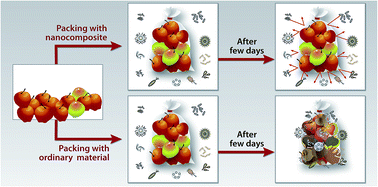
Packaging film that possess antimicrobial activity is one of the ground-breaking concepts in food packaging. The main object of this work was to develop nontoxic nanocomposite films with good antimicrobial properties. Cellulose acetate (CA), polyethylene glycol (PEG) and cetyltrimethylammonium bromide (CTAB) modified montmorillonite (OMMT) were used to prepare the nanocomposite films. OMMT is characterized using X-ray diffraction (XRD) and Fourier transform infrared analysis. The films composed of 20 wt% PEG in a CA matrix (CP20) gave optimum results in terms of mechanical properties. OMMT (1, 3 and 5 wt%) was incorporated into the CP20 matrix to prepare the nanocomposites. XRD and transmission electron microscopy analysis showed that the nanocomposites are intercalated in nature. 3 wt% OMMT loaded nanocomposite gave the best results in terms of mechanical and barrier properties. The storage modulus and thermal stability of the nanocomposites increase with the increasing concentration of OMMT from 1–5 wt%. Optical clarity of the nanocomposites is not much affected in the visible region with different loadings of OMMT. These nanocomposites possess good antimicrobial activity as well as showing no toxicity towards human blood, so can be used as active packaging material.

1. Introduction

In recent years, the packaging industry has been recognized as the utmost consumer of fossil fuel based polymers. The food packaging industry is one of the major players of packaging industries. Petroleum based polymers, e.g. high density polyethylene (HDPE), low density polyethylene (LDPE), linear low density polyethylene (LLDPE), poly(ethylene terephthalate) (PET), polypropylene (PP), poly(vinyl chloride) (PVC), polystyrene (PS), polyamides (PA), etc., are mainly used by industry for various packaging applications. Due to their admirable mechanical properties, thermal flexibility, versatility, light weight, low cost and easy processability, petroleum based polymers hold top position in the food packaging industry. However, due to the lack of proper waste management, petroleum based polymers increase non-biodegradable solid waste to the environment. As a result, from an environmental point of view, there is great interest to replace the petroleum based non-biodegradable polymers with biodegradable polymers. But most of the biodegradable polymers (e.g.), cellulose acetate (CA), hydroxypropylmethylcellulose (HPMC), methylcellulose (MC), chitosan, pectin, starch, poly(vinyl alcohol) (PVA), polyester, etc., possess poor mechanical and barrier properties, which are very important for packaging applications. Therefore, an improvement of these properties of biodegradable polymers is one of the interesting areas of research in polymer technology. Researchers have proposed many ways to overcome these drawbacks of biodegradable polymers, such as blending with other polymers,1–3 making composites by incorporation of filler materials and also by crosslinking. Introducing a small amount of inorganic filler material,4–6 e.g. metal/metal oxide nanoparticle,7 mica flakes,8 cellulose nanocrystals,9 and various types of layered silicates10–13 into a biodegradable polymer matrix is one of the most promising remedies to improve the mechanical, barrier and as well as thermal properties of biodegradable polymers. Over the last 50 years conventional reinforced polymers have been studied.14 However, the concept of polymer nanocomposites, where at least one dimension of filler materials is in a nanoscale range,13,15 was introduced in 1993 by the scientists of Toyota Motor Company.4–6 They made an exfoliated Nylon 6/organoclay nanocomposite with improved modulus, strength, toughness and also heat distortion temperature for light weight applications.

Among all the biodegradable polymers, cellulose based polymers are mostly used in packaging applications because of their better mechanical properties compared to other biodegradable polymers, and also its easy availability. Among all the cellulose derivatives, cellulose acetate (CA) holds the most interest since it is biodegradable in nature and possesses high optical clarity. CA is a thermoplastic material produced by acetate esterification of cellulose. Therefore, CA can be used to prepare films by solvent-casting and also melt-mixing techniques.16 It is water insoluble in nature which is a very important parameter for packaging applications. Moreover, it is used in versatile applications, such as reverse osmosis membrane in filters, packaging applications, paper coating, etc.17

One of the main drawbacks of CA is the brittleness, which is not desirable for packaging applications. Therefore, incorporation of plasticizer in CA is one of the ways to reduce the brittleness and make it flexible. Plasticizer reduces intermolecular forces of attraction between polymer molecules and as a result increases the mobility of polymer chains. Again incorporation of plasticizer in the polymer film may also increases the barrier properties.18

Nowadays, nano-size filler filled polymer, namely nanocomposites19 generate an utmost interest in polymer science and technology, because the same possesses better physical properties compared to virgin polymer and conventional polymer composites. Clay is one of the promising materials used in nanocomposites as it enhances mechanical, thermal and barrier properties of the matrix. There are various types of clays available in nature based on structure and some physical properties, among all the clays, montmorillonite (MMT) is mostly used to make nanocomposites for packaging applications, since it gives best results in terms of the reduction of gas permeability.20–22 MMT is a phyllosilicate that consists of an octahedral alumina sheet stacked between two tetrahedral silicate layers. MMT layers are negative in charge and so counter cations are placed in the gap of layers. It is hydrophilic in nature and generally compatible with hydrophilic polymers. Therefore, using the cation-exchange process,23 organic groups can be introduced into the gallery gap of MMT to make the MMT hydrophobic in nature and increase the compatibility with hydrophobic polymers.24 Modified MMT with ammonium cation also possess good antimicrobial activity and can be used for active food packaging application.25

In this work, we have selected cellulose acetate (CA), polyethylene glycol (PEG) of average molecular weight 600 daltons and cetyltrimethylammonium bromide (CTAB) modified sodium montmorillonite (OMMT) to make nanocomposite films by the solution casting process. The as prepared nanocomposite films are characterized using X-ray diffraction (XRD), transmission electron microscopy (TEM), thermo-gravimetric analysis (TGA), and dynamic mechanical analysis (DMA) to analyze the effects of OMMT percentage in nanocomposite films. Mechanical properties were measured to observe the effect of PEG content on ductility and OMMT content on the improvement of mechanical strength of pure CA films. Again, moister absorption and water vapor permeability (WVP) are also measured to analyze the role of PEG and OMMT in the nanocomposite films for packaging purposes. The nanocomposite films are also subjected for antimicrobial and toxicity study for applications as active packaging materials.

2. Experimental

Materials

Cellulose acetate (CA) was purchased from Loba Chemie Pvt. Ltd., Mumbai, India. Unmodified montmorillonite clay (MMT) was obtained from Nanocor, USA with a cation-exchange capacity (CEC) of 100 mequiv./100 g. Polyethylene glycol (PEG) (average molecular weight ∼600 daltons) was purchased from Central Drug House Pvt. Ltd., New Delhi, India. Cetyltrimethylammonium bromide (CTAB) was purchased from Merck (India). Materials are used without further purification.

Modification of MMT by CTAB

Modification of MMT clay by ammonium cation was prepared via cation exchange process. A measured amount of MMT was dispersed in triple distilled water with vigorous stirring for one day at room temperature for uniform suspension. A predetermined amount (100% of CEC of MMT) of CTAB was dissolved in distilled water, added drop wise to the MMT suspension and stirred vigorously at 80 °C for 24 h to carry out the exchange of Na+ of MMT by quaternary cetyltrimethylammonium cation. Then, the precipitated organo-modified MMT (OMMT) was filtered and washed several times with distilled water until the un-reacted CTAB was fully removed. Filtrate sample was taken out with regular interval and titrated against 0.1 N AgNO3 solutions. The washing was continued until no precipitate of AgBr was found. Then, the OMMT was dried under vacuum at 60 °C.

Preparation of PEG plasticized CA films

The solution mixing technique was used to prepare the plasticized CA films by mixing of PEG into CA solution with different proportions. CA solution was prepared by mixing a calculated amount of solid CA in acetone. Different amount of PEG were added into the previously prepared CA solution with vigorous stirring at room temperature. The resultant solutions were then placed into a Petri plate. Thin films of average thickness were obtained after the slow evaporation of solvent at 40 °C. The weight ratios of CA and PEG varies as 100[thin space (1/6-em)]:[thin space (1/6-em)]0, 100[thin space (1/6-em)]:[thin space (1/6-em)]10, 100[thin space (1/6-em)]:[thin space (1/6-em)]20, 100[thin space (1/6-em)]:[thin space (1/6-em)]30, 100[thin space (1/6-em)]:[thin space (1/6-em)]40, 100[thin space (1/6-em)]:[thin space (1/6-em)]50 and abbreviated as CA, CP10, CP20, CP30, CP40 and CP50, respectively.

Preparation of CA/PEG/OMMT nanocomposite films

CA/PEG/OMMT nanocomposites were prepared by the solution mixing technique. In the beginning a measured amount of OMMT (1, 3 and 5 wt%) was added into acetone to make OMMT suspension by vigorous stirring and followed by sonication. By the side, PEG was added into CA solution with an appropriate ratio. The OMMT suspension was poured into the CA/PEG solution and mixed with stirring and followed by sonication. The resultant solutions were then placed into a Petri plate. Thin films of average thickness were obtained after the slow evaporation of solvent at 40 °C. The weight ratio of CA, PEG and OMMT varies as 100[thin space (1/6-em)]:[thin space (1/6-em)]20[thin space (1/6-em)]:[thin space (1/6-em)]1, 100[thin space (1/6-em)]:[thin space (1/6-em)]20[thin space (1/6-em)]:[thin space (1/6-em)]3 and 100[thin space (1/6-em)]:[thin space (1/6-em)]20[thin space (1/6-em)]:[thin space (1/6-em)]5 abbreviated as CP20O1, CP20O3 and CP20O5, respectively.

Characterizations

Mechanical properties of PEG plasticized CA films and CA/PEG/OMMT nanocomposite films were determined using Zwick Roell (ZO10) at room temperature in regular humidity. The specimens of ∼0.1 mm thickness were cut in rectangular shape with 5 mm width, initial separation between two grips was set as 22 mm and cross head speed of 2 mm min−1 according to the ASTM method D882-95a. Tensile strength and % elongation were calculated from a stress–strain plot.11

Fourier transform infrared (FTIR) spectroscopy experiments were performed with Perkin-Elmer Spectrum Two FT-IR Spectrometer over the range 500–4000 cm−1.

X-ray diffraction was used to see the morphology of the nanocomposite films. The XRD analysis of the nanocomposite films was carried out using X-PERT-PRO Panalytical diffractometer at room temperature with a scan rate of 1° min−1. The X-ray source was Cu Kα (λ = 1.5406 nm) with a generator voltage of 40 kV and 30 mA of current. The basal spacing of MMT in the nanocomposite films was calculated by Bragg's law:26,27

Transmission electron microscopy (TEM) is one of the best techniques to explore the morphology of clay containing nanocomposites. This measurement was performed in an accelerating voltage of 200 kV using JEOL TEM (HRTEM, JEOLJEM 2100). The samples were prepared by the mixing of CA and PEG blend solution with the OMMT suspension of different ratio, while maintaining the resultant concentration at about 1 g L−1. One drop of the solution was placed on a 300 mesh carbon coated copper grid and dried at 40 °C. The grid was then used for TEM studies.

Thermo-gravimetric analysis (TGA) of pure CA, CP20 and CP20/OMMT nanocomposite films were performed in Perkin Elmer (PYRIS – 1) TGA instrument. 10–15 mg of the samples were heated from room temperature to 450 °C in alumina crucible with the heating rate of 5 °C min−1 in dinitrogen atmosphere.

The dynamic mechanical analysis (DMA) of nanocomposite films were carried out in a Perkin Elmer DMA 8000 instrument in tension rectangle mode in the temperature range of 40 to 240 °C with the heating rate of 5 °C min−1 at a frequency of 1 Hz and sinusoidal deformation at 5 μm amplitude. The samples were cut in ∼13.02 × 3 × 0.1 mm dimensions for the analysis.

Melting temperature (Tm) and the heat of fusion (ΔH) of the samples were determined using differential scanning calorimetry (DSC) (Mettler-Toledo DSC 822) at a heating rate of 10 °C min−1 in the temperature range of 40 to 245 °C under N2 flow rate of 150 mL min−1. Only the second heating curve was provided in the result.

The water vapor permeability (WVP) of CP20 and CP20/OMMT nanocomposite films was performed using the modified ASTM E96-00 (ASTM, 2000) method.28 Thin film samples were sealed on the top of a 60 mm circular opening glass container containing calcium chloride maintaining ∼0% relative humidity inside the container. Then, the glass container was placed in a 75% constant relative humidity chamber. The weight of the container was measured in interval of 24 h until the constant weight was reached. The WVP of the films were calculated using the following eqn (1),

 
image file: c6ra17300d-t1.tif(1)
where, W is the increase weight of the permeation cell every 24 h interval, L and S are the thickness (cm) and the exposed area (cm2) of the specimen. Q is the water vapor transmission rate (g per cm2 per 24 h).

The clarity of pure CA, CP20 and CP20/OMMT nanocomposite films was performed using the Perkin-Elmer Lambda 25 UV/Vis spectrophotometer. The films were scanned in the range of 300–800 nm, where a blank compartment was used as reference and plotted against the wavelength.

The antimicrobial activity and antimicrobial assay of CA, CP20 and CP20/OMMT nanocomposites were performed following the zone inhibition method.24 Bacillus subtilis (Gram positive) and Escherichia coli (Gram negative) are used as food pathogenic bacteria for antimicrobial testing.

The antimicrobial activity of the film samples was quantitatively determined using the liquid incubation method.28 Food pathogens such as B. subtilis and E. coli were used in the antimicrobial activity assay of nanocomposite films by spectrophotometric method. In this study, the growth of these 2 bacteria in nutrient soup containing the test film samples was compared against the control samples without film. For each assay, 2 pieces of film samples with dimensions of 1 × 1 cm were added to about 20 mL of nutrient soup. About 1 mL of bacteria culture was used as inoculums. The samples were incubated in a shaking incubator maintained at 150 rpm and 37 °C. The growth of these bacterial cultures was observed by taking the optical density (OD) of samples for every 4 h at 600 nm in a UV-Vis spectrophotometer (Model: SPECTRASCAN UV 2600, Chemito, Mumbai, India). Measurements were performed in triplicate and the mean value was chosen. % reduction and its logarithmic assay were calculated and plotted from the following eqn (2) & (3).

 
image file: c6ra17300d-t2.tif(2)
 
log[thin space (1/6-em)]reduction = log10A/B (3)
A is the number of viable microbes before treatment and B is the number of viable microbes after treatment.

In vitro toxicity assay was done by hemolysis (measured in term of plasma free hemoglobin)29 and lactate dehydrogenase assay. Hemolytic assay was performed by the method of Ungera et al.,29 with modification. Blood was collected from male lab volunteers (n = 6) according to an approved protocol by the Institutional Ethical Committee, Department of Physiology, University of Calcutta, Kolkata, India, with proper consent of the volunteers. This study was carried out following the ICMR (Indian Council for Medical Research) Code, 2000 on Ethical Guidelines for Biomedical Research on Human. The whole blood was mixed with the polymer nanocomposites of different concentrations (10 and 20 mg mL−1) and incubated at 37 °C for 1 h. After that the blood was centrifuged at 2000 rpm for 10 minutes. Supernatant plasma was taken out. 20 μL of plasma was then mixed with 1 mL Drabkins solution, which contains potassium cyanide and potassium ferricyanide. Plasma free hemoglobin due to red blood cell lysis were present in the plasma, which oxidize the Drabkins solution, which was measured spectrophometrically at 540 nm and absorbance of the sample was compared with the standard cyanomethemoglobin solution for determining the hemolytic effects of the sample.30,31 Plasma lactate dehydrogenase level, an important marker of cytotoxicity, was measured spectrophotometrically at 340 nm using commercial kit according to manufacturer guideline.32 The tests were done in triplicate and mean data was produced as a result.

3. Results and discussion

FTIR analysis of CTAB-modified MMT

Fig. 1 represents the FTIR spectrum of MMT and OMMT. The absorption band between 2960–2820 cm−1 corresponds to –CH2– stretching, an absorption band between 1510–1440 cm−1 corresponds to –CH2– bending in CTAB and OMMT which confirms the presence of long alkyl groups of CTAB in OMMT.16 The absorption peak at 3452 cm−1 corresponds to –OH stretching and at 1640 cm−1 corresponding to the –OH bending of the structural hydroxyl groups of pure MMT sifted to 3444 cm−1 and 1636 cm−1 in the OMMT due to the partial replacement of hydrated cations by surfactant cations.24 The other absorption peaks from OMMT are due to the oxide linkage of clay minerals, like 3627 cm−1 (Al–OH stretching), and 1033 cm−1 (Si–O stretching).16
image file: c6ra17300d-f1.tif
Fig. 1 FTIR spectra of pure MMT, pure CTAB and CTAB modified MMT.

XRD analysis of CTAB-modified MMT

Fig. 2 shows the XRD pattern of pure MMT and CTAB modified MMT (OMMT). Pure MMT shows the diffraction peak at 7.22° with corresponding basal spacing of 1.223 nm, whereas the same peak corresponding to OMMT is shifted at 4.64° leads to 1.902 nm spacing between two successive layers of OMMT. This result indicates the successful replacement of sodium ion situated in the clay galleries by the long alkyl-ammonium chain of CTAB.
image file: c6ra17300d-f2.tif
Fig. 2 XRD patterns of MMT and CTAB modified MMT.

Mechanical properties

In the future biodegradable polymers may completely replace non-biodegradable polymers in food packaging. However, there is a need to improve the mechanical strength and barrier properties of biodegradable polymers. Various techniques are available in literature, which improves the strength of polymer matrix.8,11 Furthermore some polymeric films, such as films made of CA are very brittle in nature and so cannot be used in packaging applications. Therefore, the incorporation of plasticizer into the CA film is one of the remedies to overcome the brittleness of CA and to make it flexible.14 Therefore, PEG is mixed with CA in different proportions as mentioned in Table 1.
Table 1 Mechanical properties of CA and PEG blends
Sample name CA:PEG Initial tensile modulus (0.01% strain) (GPa) Tensile strength (MPa) Elongation at break (%)
CA 100:0 0.923 ± 0.046 43.29 ± 1.23 3.83 ± 0.93
CP10 100:10 0.637 ± 0.091 39.78 ± 0.92 16.11 ± 1.04
CP20 100:20 0.623 ± 0.043 32.63 ± 1.27 31.01 ± 1.73
CP30 100:30 0.571 ± 0.058 23.77 ± 1.73 33.69 ± 1.06
CP40 100:40 0.489 ± 0.11 17.99 ± 2.01 35.81 ± 1.56
CP50 100:50 0.377 ± 0.039 11.98 ± 1.44 39.21 ± 0.63


Table 1 shows the mechanical properties of pure CA and different combinations of CA and PEG in blends. Generally, tensile modulus, tensile strength decreases and elongation increases with the incorporation of plasticizer in the polymer matrix due to the increase in mobility of the polymer chains.18,32 From Table 1, it is apparent that with the addition of PEG into the CA films, the modulus, tensile strength decreases and the flexibility of the films increases drastically up to 20 wt% of PEG loading and beyond that flexibility increases slowly. Here, PEG acts as a plasticizer in the CA films. Hence, it can be concluded that the addition of 20 wt% of PEG almost saturate the elongation property of the CA films. Therefore, CP20 is selected for further study. Organo (CTAB) modified MMT (OMMT) of different wt% was incorporated into CP20 blend for the preparation of the nanocomposites.

Fig. 3 shows the mechanical properties of CP20 and CP20/OMMT nanocomposites. Fig. 3a depicts the stress vs. strain curve and from the curves tensile strength, initial modulus (at 0.01% strain) and % elongation at break were calculated and represented in Fig. 3b–d respectively. Fig. 3b depicts the tensile strength of CP20 and CP20 nanocomposites with loading of 1, 3 and 5 wt% of OMMT. From Fig. 3b, it is apparent that with loading of OMMT of 1, 3 and 5 wt% into the CP20 matrix the tensile strength of CP20 increases from 32.6 MPa to 34.62, 40.87 and 36.78 MPa, respectively. Hence the tensile strength is enhanced by 6.19, 25.27 and 12.82% compared to CP20 film with the loading of 1, 3 and 5 wt% OMMT, respectively. Here in the case of CP20O5, the tensile strength is lower compared with CP20O3 due to agglomeration of OMMT layers in CP20O5 nanocomposite. This kind of observation was also reported previously by other authors in the case of methylcellulose,13 hydroxypropylmethylcellulose,11 cellulose acetate,14,33 agar,34 starch,35–39 chitosan,40 and soy protein.41,42 Therefore, it can be concluded that the OMMT acts as reinforcing filler in the nanocomposites and best reinforcement observed in the case of CP20O3 nanocomposite.


image file: c6ra17300d-f3.tif
Fig. 3 Mechanical properties of CP20/OMMT nanocomposite films with different concentration of OMMT (a) stress–strain curve, (b) tensile strength, (c) initial tensile modulus (0.01% strain), and (d) elongation at break.

Fig. 3c shows the initial modulus of CP20 and CP20 nanocomposites with loading of 1, 3 and 5 wt% of OMMT at 0.01% strain. From Fig. 3c, it is clear that with the loading of OMMT of 1, 3 and 5 wt% into the CP20 matrix the modulus increases from 1.2 to 1.49, 1.94 and 1.71 Gpa, respectively. Hence the modulus is enhanced 61.67% by only loading of 3 wt% OMMT in CP20 matrix compared to a virgin CP20 blend. From Fig. 3c it is also clear that the modulus of CP20O5 is lower compared with CP20O3. According to Rimdusit et al.,43 exposed areas of MMT layers into the polymer matrix perform the key role for the improvement of tensile strength and modulus. Therefore, it can be concluded that agglomeration of OMMT decreases the exposed area of clay layers in CP20O5 nanocomposite and decreases the tensile strength as well as tensile modulus compare to CP20O3 nanocomposite.

Fig. 3d displays the % elongation at break of CP20 and CP20/OMMT nanocomposites. The % elongation at break indicates the ductility of the material. From Fig. 3d, it is clear that with increasing loading of OMMT in the CP20 matrix the % elongation decreases consecutively. The % elongation of CP20 film drops from 31.6% to 30, 29 and 25.12% with loading of 1, 3 and 5 wt% OMMT. Therefore, from the result it can be concluded that in the nanocomposites, OMMT acts as a reinforcing filler and restricts the polymer chain mobility through the OMMT galleries.

Morphology analysis

Fig. 4 shows the typical X-ray diffraction patterns of OMMT, CA, CA/PEG/OMMT nanocomposites. XRD analysis is a very useful technique to verify whether the morphology of clay minerals in nanocomposites are intercalated or exfoliated in nature. In an intercalated nanocomposite, the characteristic peak of clay is shifted towards the lower value from the peak of the pure clay and in the case of exfoliated nanocomposites the main peak corresponding to the (100) plane of clay is vanished as the orientation of repeated silicate layers of clay is lost. From Fig. 4, it is clear that within this range no peak observed in CA and CP20 film, therefore the peak is observed in nanocomposites is predominantly owing to OMMT. Fig. 4 also shows that the peak of OMMT shifted towards left in case of CA/PEG/OMMT nanocomposites from 4.64 to 3.26, 3.33 and 3.38° and the basal spacing increases from 1.902 to 2.71, 2.65 and 2.61 nm with loading of 1, 3 and 5 wt% of OMMT, respectively. Hence, it can be concluded that the nanocomposites are intercalated in nature where the polymer chains are defused in the gaps between two adjacent layers of OMMT leads to the increase of the basal spacing of clay in nanocomposites.
image file: c6ra17300d-f4.tif
Fig. 4 XRD pattern of pure CA, CP20 and CP20/OMMT nanocomposite films with different concentration of OMMT.

The morphology of the nanocomposites was further investigated by transmission electron microscope (TEM). Fig. 5a–d shows the TEM images of CP20/OMMT nanocomposites with loading of 0, 1, 3 and 5 wt% of OMMT, respectively. The fibre type lines indicate the thick clay layers and the gap between two lines indicates the basal spacing of the OMMT. From Fig. 5a it is clear that pure polymer has no characteristics morphology and it seems a smooth surface/layer of polymer sheet, whereas, from Fig. 5b–d, it is apparent that OMMT layers are well oriented and mainly intercalated with some extent of exfoliation which can also be correlated with the XRD analysis results. Again from the images, it can be interpreted that with the increasing loading of OMMT in CP20 matrix, clay layers are much more agglomerated.


image file: c6ra17300d-f5.tif
Fig. 5 (a, b, c and d) TEM images of 0, 1, 3 and 5 wt% OMMT loaded CP20 films, respectively.

Thermal analysis

Thermo-gravimetric analysis. Thermo-gravimetric analysis (TGA) and first order derivatives (DTG) of weight loss of CA, CP20 and CP20/OMMT nanocomposites are depicted in Fig. 6a and b, respectively. Fig. 6a shows that the main weight loss occurs between 350 to 430 °C and the reason behind this loss of weight is the decomposition of CA chains.44 Beyond the temperature of 430 °C, the remaining residual parts are alumina and silicate layers of OMMT. From the DTG curve, it is clear that with incorporation of PEG into the CA matrix, there is a small change in the degradation temperature (in terms of 50% weight loss) from 367.75 to 366.28 °C. Here, PEG acts as a plasticizer, which is previously confirmed by mechanical property measurement. Incorporation of plasticizer into the polymer matrix reduces the interactions between polymer chains and thus reduces the thermal stability. This kind of phenomenon was previously observed in the case of glycerol plasticized chitosan film.45 Again with loading of OMMT to CP20 the matrix increases the thermal stability of CP20 blend from 366.28 to 370.3, 373.5 and 376.3 °C with loading of 1, 3 and 5 wt% OMMT, respectively. From the results, it can be concluded that the OMMT loading leads to the increase of the thermal stability of CP20 matrix because the alumina and silicate layers of OMMT act as a heat insulator and prevent to defuse the volatile material of polymer matrix through it, which is further confirmed by DSC result.
image file: c6ra17300d-f6.tif
Fig. 6 (a) TGA, and (b) DTG curves of pure CA, CP20, and CP20/OMMT nanocomposites as a function of temperature.
Dynamic mechanical analysis. Dynamic mechanical analysis (DMA) is a very useful tool for the determination of the temperature dependent storage modulus of material in dynamic condition. Fig. 7 shows the storage modulus (E′) data of CA, CP20 and CP20/OMMT nanocomposites in tension rectangle mode at 1 Hz frequency over a temperature range of 40–200 °C. Storage modulus indicates the stiffness of the materials as a function of temperature. From Fig. 7, it is apparent that with the loading of PEG into the CA film the storage modulus of CA decreases from 3278 to 3061 MPa whereas the storage modulus of CP20 increases from 3061 to 3647, 3843 and 4064 MPa with loading of 1, 3 and 5 wt% OMMT into the CP20 matrix, respectively, at 40 °C and with the increasing temperature the storage modulus gradually decreases. Thus, from the results it can be concluded that here PEG acts as a plasticizer which reduce the stiffness of the CA film46 whereas OMMT acts as reinforcing filler which restricts the mobility of CA chains and thus storage modulus increases.47
image file: c6ra17300d-f7.tif
Fig. 7 Storage modulus curves of pure CA, CP20, and CP20/OMMT nanocomposites as a function of temperature.
Differential scanning calorimetry. Differential scanning calorimetry (DSC) is used for the determination of the melting temperature (Tm) and heat of fusion (ΔH) of the polymers. From Fig. 8 and Table 2, it is clear that with loading of PEG into the CA matrix (CP20) the Tm and ΔH are decreases compared to the pure CA film, whereas incorporation of OMMT into CP20 matrix leads to increase of the Tm and ΔH of the polymer films. From the result, it can be concluded that, here PEG act as plasticizer and reduces the crystallinity, whereas OMMT increases the crystallinity of the matrix polymer and also act as a heat insulator in the nanocomposites. Therefore, it can be said that the OMMT layers restricts the mobility of polymer chains.
image file: c6ra17300d-f8.tif
Fig. 8 DSC curves of pure CA, CP20, and CP20/OMMT nanocomposites.
Table 2 Melting temperature (Tm) and the heat of fusion (ΔH) of pure CA, CP20, and CP20/OMMT nanocomposites
Sample name Melting point (Tm) (°C) ΔH (J g−1)
CA 214.8 4.22
CP20 213.9 3.34
CP20O1 215.6 5.62
CP20O3 218.1 6.24
CP20O5 220.2 7.57


UV-Visible spectroscopy

Transparency of film is very crucial for packaging purposes. Generally, intercalated nanocomposites are lesser transparent than an exfoliated nanocomposite as thick repeated layers of clay strongly scatters light. Optical clarity of CA, CP20 and CP20/OMMT nanocomposites are shown in Fig. 9. Fig. 9 shows that the incorporation of PEG and OMMT slightly affected transparency of CA film in the visible range.
image file: c6ra17300d-f9.tif
Fig. 9 Transmittance curves of pure CA, CP20, and CP20/OMMT nanocomposites as a function of temperature.

Water vapor permeability

Water vapor permeability (WVP) is one of the most important factors for food packaging applications. The quality of packaging material is inversely proportional to the value of water vapor permeability.48 Filler materials are generally incorporated to the polymer matrix to reduce the permeability of gas/moister through the polymer. The WVP of CP20 and CP20/OMMT nanocomposites are depicted in Fig. 10. From Fig. 10, it is apparent that WVP of CA decreases from 9.01 × 10⁻⁴ to 7.75 × 10⁻⁴, 5.84 × 10⁻⁴ and 6.38 × 10⁻⁴ g per cm2 per day with loadings of 1, 3 and 5 wt% OMMT into the CP20 matrix respectively, because the incorporation of clay layers into the polymer matrix create a tortuous path which decreases the diffusion of water vapor through polymer matrix.11,26,43 The WVP of CP20O5 is greater than that of CP20O3 nanocomposite due to the agglomeration of OMMT layers in CP20O5 nanocomposite which is previously established by TEM analysis.
image file: c6ra17300d-f10.tif
Fig. 10 Water vapor permeability (WVP) of CP20/OMMT nanocomposites films with different OMMT concentration.

Antimicrobial activity

The antimicrobial activity of pure CA, CP20 and CP20/OMMT nanocomposites against the food pathogenic bacteria are shown in Fig. 11. From Fig. 11, it is very clear that incorporation of CTAB modified MMT in CP20 films showed a characteristic zone inhibition against Gram-positive (B. subtilis) and also Gram-negative (E. coli) bacteria, however, pure CA and CP20 does not possess any inhibition.
image file: c6ra17300d-f11.tif
Fig. 11 Photograph of antimicrobial test results of (a) pure CA, (b) CP20, (c) CP20O1, (d) CP20O3, and (e) CP20O5 nanocomposite films against B. subtilis and E. coli.

From Table 3, it is apparent that zone of inhibition of the nanacomposites are 12.5, 14 and 15 mm against B. subtilis and 13, 15 and 16.5 mm against E. coli with loading of 1, 3 and 5 wt% of OMMT in CP20 matrix, respectively, where diameter of samples were 11 mm. From the result, it can be concluded that with increasing wt% of OMMT in the CP20 matrix the zone of inhibition increases.

Table 3 Zone of inhibition of CA, CP20, and CP20/OMMT nanocomposite film samples against B. subtilis and E. coli
Organism Zone of inhibition after incubation at 37 °C (mm)
CA CP20 CP20O1 CP20O3 CP20O5
Bacillus subtilis 12.5 14 15
Escherichia coli 13 15 16.5


Fig. 12 shows the absorbance of bacterial culture after treatment with samples at 600 nm for B. subtilis and E. coli, respectively. From the above curves, reduction (%) and log reduction were calculated and represented in Fig. 13 for B. subtilis and E. coli, respectively. From the images, it is apparent that the graph of pure CA and CP20 is like the graph of the control, that means pure CA and CP20 does not show any antimicrobial activity. Whereas, OMMT loaded nanocomposites shows distinguishable antimicrobial activity and with the increasing loading wt% of OMMT in the polymer matrix the growth of bacteria decreases.


image file: c6ra17300d-f12.tif
Fig. 12 Absorbance of bacterial culture after treatment with CP20/OMMT nanocomposites films at 600 nm for B. subtilis and E. coli.

image file: c6ra17300d-f13.tif
Fig. 13 Reduction (%) and log reduction of bacterial culture after treatment with CP20/OMMT nanocomposites films at 600 nm for B. subtilis and E. coli.

Fig. 14 and 15 show the colony culture of the B. subtilis and E. coli, respectively, with the samples. From the result, it can be concluded that the presence of OMMT is directly related to the antimicrobial activity of the nanocomposites and with increasing wt% of OMMT in the CP20 matrix the antimicrobial activity increases.


image file: c6ra17300d-f14.tif
Fig. 14 B. Subtilis colonies plated from the cultures grown in presence of polymer nanocomposites. (a) Control, (b) CA, (c) CP20, (d) CP20O1, (e) CP20O3, and (f) CP20O5.

image file: c6ra17300d-f15.tif
Fig. 15 E. coli colonies plated from the cultures grown in presence of polymer nanocomposites. (a) Control, (b) CA, (c) CP20, (d) CP20O1, (e) CP20O3, and (f) CP20O5.

Toxicity assay of nanocomposite

Fig. 16 shows the toxicity of the nanocomposite sample with various concentrations and compared with the control. Here, only CP20O5 nanocomposite is used because it possesses highest antimicrobial activity and contains maximum concentration of OMMT among all the nanocomposites. From Fig. 16, it is found that the insignificant changes in plasma free hemoglobin (p < 0.05) and lactate dehydrogenase concentration after the treatment with the CP20O5 nanocomposite, which indicates that the CP20O5 nanocomposite is not cytotoxic up to the concentration of 20 mg mL−1. Therefore, the nanocomposites can be used for active packaging application as well as food coating application.
image file: c6ra17300d-f16.tif
Fig. 16 (a) Hemolytic activity of the nanocomposite films, and (b) effect of nanocomposite films on plasma LDH level.

4. Conclusions

Finally, it can be concluded that the nanocomposites based on cellulose acetate (CA), polyethylene glycol (PEG), and cetyltrimethylammonium bromide (CTAB) modified montmorillonite (OMMT) were successfully prepared for active food packaging applications. The films composed of 20 wt% PEG in CA matrix (CP20) gave optimum results in terms of mechanical properties. It is also observed that nanocomposite films containing 3 wt% OMMT showed the best enhancement in mechanical and barrier properties. Thermal stability and storage modulus increases with the increasing concentration of OMMT from 1 to 5 wt%. Optical clarity of the nanocomposite films was not much affected with the loading of OMMT. Antimicrobial activity of the nanocomposites increases with increasing loading of OMMT from 1 to 5 wt% against both Gram positive (B. subtilis) and Gram negative (E. coli) bacteria. The in vitro toxicity assay proves that the nanocomposites are not cytotoxic at all. Therefore, nanocomposite films based on CA/PEG/CTAB modified OMMT can be used as nontoxic biodegradable active packaging material.

Acknowledgements

Nayan Ranjan Saha likes to thank the University Grant Commission (UGC), Govt. of India, for his fellowship. Gunjan Sarkar likes to thank the University Grant Commission, Govt. of India, for his fellowship under Rajiv Gandhi National Fellowship (RGNF) scheme. Indranil Roy likes to thank TEQIP, India, for his fellowship. Amartya Bhattacharyya likes to thank the Department of Science and Technology (sanction no. DST/TM/WTI/2K14/232, date: 20.04.15), India, for his fellowship. Rajdeb Banerjee of the University of Calcutta and Gunaseelan Dhanarajan of the Indian Institute of Technology Kharagpur are acknowledged for their help. Also, we like to thank the Centre for Research in Nanoscience and Nanotechnology, University of Calcutta, for providing instrumental facility. Again we like to thank HASETRI, JK Tyre, Rajasthan, India for providing TGA facility.

Notes and references

  1. I. Arvanitoyannis, C. G. Biliaderis, H. Ogawa and N. Kawasaki, Carbohydr. Polym., 1998, 36, 89–104 CrossRef CAS.
  2. M. Zhai, L. Zhao, F. Yoshii and T. Kume, Carbohydr. Polym., 2004, 57, 83–88 CrossRef CAS.
  3. S. Tripathi, G. K. Mehrotra and P. K. Dutta, Carbohydr. Polym., 2010, 79, 711–716 CrossRef CAS.
  4. Y. Kojima, A. Usuki, M. Kawasumi, A. Okada, Y. Fukushima, T. Kurauchi and O. Kamigaito, J. Mater. Res., 1993, 8, 1185–1189 CrossRef CAS.
  5. A. Usuki, Y. Kojima, M. Kawasumi, A. Okada, Y. Fukushima, T. Kurauchi and O. Kamigaito, J. Mater. Res., 1993, 8, 1179–1184 CrossRef CAS.
  6. A. Usuki, M. Kato, A. Okada and T. Kurauchi, J. Appl. Polym. Sci., 1997, 63, 137–138 CrossRef.
  7. D. Maity, M. M. R. Mollick, D. Mondal, B. Bhowmick, M. K. Bain, K. Bankura, J. Sarkar, K. Acharya and D. Chattopadhyay, Carbohydr. Polym., 2012, 90, 1818–1825 CrossRef CAS PubMed.
  8. V. D. Alves, N. Costa and I. M. Coelhoso, Carbohydr. Polym., 2010, 79, 269–276 CrossRef CAS.
  9. M. Pereda, A. Dufresne, M. I. Aranguren and N. E. Marcovich, Carbohydr. Polym., 2014, 101, 1018–1026 CrossRef CAS PubMed.
  10. X. Tang and S. Alavi, J. Agric. Food Chem., 2012, 60, 1954–1962 CrossRef CAS PubMed.
  11. D. Mondal, B. Bhowmick, M. M. R. Mollick, D. Maity, A. Mukhopadhyay, D. Rana and D. Chattopadhyay, Carbohydr. Polym., 2013, 96, 57–63 CrossRef CAS PubMed.
  12. M. Alboofetileh, M. Rezaei, H. Hosseini and M. Abdollahi, J. Food Eng., 2013, 117, 26–33 CrossRef CAS.
  13. N. R. Saha, G. Sarkar, I. Roy, D. Rana, A. Bhattacharyya, A. Adhikari, A. Mukhopadhyay and D. Chattopadhyay, Carbohydr. Polym., 2016, 136, 1218–1227 CrossRef CAS PubMed.
  14. H.-M. Park, M. Misra, L. T. Drzal and A. K. Mohanty, Biomacromolecules, 2004, 5, 2281–2288 CrossRef CAS PubMed.
  15. J.-W. Rhim, Carbohydr. Polym., 2011, 86, 691–699 CrossRef CAS.
  16. F. J. Rodríguez, M. J. Galotto, A. Guarda and J. E. Bruna, J. Food Eng., 2012, 110, 262–268 CrossRef.
  17. R. B. Romero, C. A. P. Leite and M. d. C. Gonçalves, Polymer, 2009, 50, 161–170 CrossRef CAS.
  18. D. F. Parra, C. C. Tadini, P. Ponce and A. B. Lugão, Carbohydr. Polym., 2004, 58, 475–481 CrossRef CAS.
  19. J.-W. Rhim, J. Food Sci., 2012, 77, N66–N73 CrossRef PubMed.
  20. S. S. Ray and M. Okamoto, Prog. Polym. Sci., 2003, 28, 1539–1641 CrossRef CAS.
  21. D. R. Paul and L. M. Robeson, Polymer, 2008, 49, 3187–3204 CrossRef CAS.
  22. G. Choudalakis and A. D. Gotsis, Eur. Polym. J., 2009, 45, 967–984 CrossRef CAS.
  23. H. He, Y. Ma, J. Zhu, P. Yuan and Y. Qing, Appl. Clay Sci., 2010, 48, 67–72 CrossRef CAS.
  24. D. Mondal, B. Bhowmick, M. M. R. Mollick, D. Maity, N. R. Saha, V. Rangarajan, D. Rana, R. Sen and D. Chattopadhyay, J. Appl. Polym. Sci., 2014, 131, 40079 CrossRef.
  25. J. W. Rhim, H. M. Park and C. S. Ha, Prog. Polym. Sci., 2013, 38, 1629–1652 CrossRef CAS.
  26. D. Mondal, M. M. R. Mollick, B. Bhowmick, D. Maity, M. K. Baina, D. Rana, A. Mukhopadhyay, K. Dana and D. Chattopadhyay, Prog. Nat. Sci.: Mater. Int., 2013, 23, 579–587 CrossRef.
  27. G. Sarkar, N. R. Saha, I. Roy, A. Bhattacharyya, M. Bose, R. Mishra, D. Rana, D. Bhattacharjee and D. Chattopadhyay, Int. J. Biol. Macromol., 2014, 66, 158–165 CrossRef CAS PubMed.
  28. D. Mondal, B. Bhowmick, D. Maity, M. M. R. Mollick, D. Rana, V. Rangarajan, R. Sen and D. Chattopadhyay, J. Food Sci., 2015, 80, E602–E609 CrossRef CAS PubMed.
  29. J. Ungera, G. Filippi and W. Patsch, Clin. Chem., 2007, 53, 1717–1718 Search PubMed.
  30. R. Kruszyna, R. P. Smith and L. C. Ou, Clin. Chem., 1977, 23, 2156–2159 CAS.
  31. T. Srivastava, H. Negandhi, S. B. Neogi, J. Sharma and R. Saxena, Journal of Hematology & Transfusion, 2014, 2, 1028 Search PubMed.
  32. S. Bhattacharya, M. Chakraborty, P. Mukhopadhyay, P. P. Kundu and R. Mishra, PLoS Neglected Trop. Dis., 2014, 8, e3039 Search PubMed.
  33. S. Mali, L. S. Sakanaka, F. Yamashita and M. V. E. Grossmann, Carbohydr. Polym., 2005, 60, 283–289 CrossRef CAS.
  34. H.-M. Park, X. Liang, A. K. Mohanty, M. Misra and L. T. Drzal, Macromolecules, 2004, 37, 9076–9082 CrossRef CAS.
  35. A. J. F. De Carvalho, A. A. S. Curvelo and J. A. M. Agnelli, Carbohydr. Polym., 2001, 45, 189–194 CrossRef CAS.
  36. M. Avella, J. J. De Vlieger, M. E. Errico, S. Fischer, P. Vacca and M. G. Volpe, Food Chem., 2005, 93, 467–474 CrossRef CAS.
  37. M. Huang, J. Yu and X. Ma, Carbohydr. Polym., 2006, 63, 393–399 CrossRef CAS.
  38. V. P. Cyras, L. B. Manfredi, M. T. Ton-That and A. Vázquez, Carbohydr. Polym., 2008, 73, 55–63 CrossRef CAS.
  39. H. Alamsi, B. Ghanbarzadeh and A. A. Entezami, Int. J. Biol. Macromol., 2010, 46, 1–5 CrossRef PubMed.
  40. A. Casariego, B. W. S. Souza, M. A. Cerqueira, J. A. Teixeira, L. Cruz, R. Díaz and A. A. Vicente, Food Hydrocolloids, 2009, 23, 1895–1902 CrossRef CAS.
  41. P. Kumar, K. P. Sandeep, S. Alavi, V. D. Truong and R. E. Gorga, J. Food Eng., 2010, 100, 480–489 CrossRef CAS.
  42. P. Kumar, K. P. Sandeep, S. Alavi, V. D. Truong and R. E. Gorga, J. Food Sci., 2010, 75, N46–N56 CrossRef CAS PubMed.
  43. S. Rimdusit, S. Jingjid, S. Damrongsakkul, S. Tiptipakorn and T. Takeichi, Carbohydr. Polym., 2008, 72, 444–455 CrossRef CAS.
  44. G. Arthanareeswaran, P. Thanikaivelan, K. Srinivasn, D. Mohan and M. Rajendran, Eur. Polym. J., 2004, 40, 2153–2159 CrossRef CAS.
  45. M. Lavorgna, F. Piscitelli, P. Mangiacapra and G. G. Buonocore, Carbohydr. Polym., 2010, 82, 291–298 CrossRef CAS.
  46. J.-S. Park and E. Ruckenstein, Carbohydr. Polym., 2001, 46, 373–381 CrossRef CAS.
  47. H.-B. Hsueh and C. Y. Chen, Polymer, 2003, 44, 1151–1161 CrossRef CAS.
  48. N. Benbettaïeb, M. Kurek, S. Bornaz and F. Debeaufort, J. Sci. Food Agric., 2014, 94, 2409–2419 CrossRef PubMed.

This journal is © The Royal Society of Chemistry 2016
Click here to see how this site uses Cookies. View our privacy policy here.