Anatase Mg0.05Ta0.95O1.15N0.85: a novel photocatalyst for solar hydrogen production

Honglin Gaoa, Meiming Zhaob, Shicheng Yan*b, Peng Zhoub, Zeyan Lia, Zhigang Zoub and Qingju Liu*a
aSchool of Materials Science and Engineering, Yunnan Key Laboratory for Micro/Nano Materials & Technology, Yunnan University, Kunming 650091, Yunnan, P. R. China. E-mail: qjliu@ynu.edu.cn; Fax: +86-871-65037399; Tel: +86-871-65037399
bEco-Materials and Renewable Energy Research Center (ERERC), College of Engineering and Applied Sciences, Nanjing University, Nanjing 210093, Jiangsu, P. R. China. E-mail: yscfei@nju.edu.cn; Fax: +86-025-83686632; Tel: +86-025-83686639

Received 4th July 2016 , Accepted 5th September 2016

First published on 5th September 2016


Abstract

Anatase Mg0.05Ta0.95O1.15N0.85, exhibiting a narrow band gap for solar hydrogen, is a promising visible-light-response photocatalyst for photocatalytic or photoelectrochemical water splitting. The excellent photocatalytic activity can be attributed to the satisfying light absorption and electron–hole separation rate.

Photocatalytic splitting of water into H2 using visible-light driven photocatalysts has received a great deal of attention to overcome energy shortages and serious environmental pollution.1 To use this technique for large scale applications, highly efficient photocatalysts are necessary. Transition metal oxynitrides are an important emerging class of materials that may combine both the advantages of oxides and nitrides.2 As one of the simplest members of the oxynitrides family, TaON is an active visible-light photocatalyst for oxygen evolution. However, the low performance in the reduction of water to hydrogen restricts the application of TaON in the fields of energy and the environment.

The materials with anatase-type crystal structure, for example of famous naturally occurring compound TiO2, have been used as photocatalyst,3 ferromagnetic semiconductor,4 transparent conductor,5 and resistive random-access memory.6 Recently, transition metal oxynitrides with anatase structure have attracted attention for applications of photocatalysis.7 Suzuki et al. had epitaxially grown anatase TaON thin films on lattice-matched (LaAlO3)0.3·(SrAl0.5Ta0.5O3)0.7 single crystals by using nitrogen plasma-assisted pulsed laser deposition method.8 The anatase TaON thin film exhibited good electrical conductivity and high Hall mobility. Lüdtke et al. prepared anatase-type TaON nanoparticles using ammonolysis of the amorphous oxide precursor and predicted it can be a promising photocatalyst for redox reactions.9 Unfortunately, the reported anatase TaON is metastable and not easy to obtain single-phase product. Recently, a few reports have demonstrated that the pure anantas-type TaON can be obtained by incorporating lower-valent cations such as Mg2+ or Sc3+ into crystal lattice of TaON.10,11

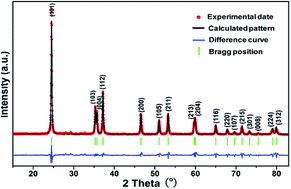
In the present work, anatase phase Mg0.05Ta0.95O1.15N0.85, with an absorption edge longer than that of TaON, was prepared by nitriding amorphous Mg0.05Ta0.95O2.425 and applied in the photocatalytic H2 evolution under visible light illumination (see ESI). In general, magnesium does not directly contribute to the formation of band but simply constructs the crystal structure of anatase TaON.12 To investigate the influence of magnesium on the crystal structure of TaON, XRD patterns of Mg0.05Ta0.95O1.15N0.85 and TaON were represented in Fig. S1 in ESI. The XRD pattern for TaON belongs to the baddeleyite phase with a 7-fold tantalum coordination and an ordered anionic sublattice as same as the reported β-TaON.13 However, the XRD pattern of Mg-doped TaON revealed a new phase structure that can be assigned to the anatase phase, implying that Mg was incorporated into the crystal structure of TaON. According to the previous report, the chemical compositions of Mg0.05Ta0.95O1.15N0.85 may be a solid solution of MgTa2O6 and TaON with the ideal stoichiometry of 1[thin space (1/6-em)]:[thin space (1/6-em)]17.10 The Rietveld refinement of the diffraction pattern using Panalytical's Highscore plusversion 4.1 was carried out to further confirm the crystal structure of Mg0.05Ta0.95O1.15N0.85. Fig. 1 presents the experimental powder XRD pattern with the results of the Rietveld refinement. X-ray diffraction analysis of Mg0.05Ta0.95O1.15N0.85 together with the calculated pattern obtained from the Rietveld refinement accompanied by the difference profile show that the anatase phase has been formed. For TaON material, to obtain the anatase phase is difficult, since it is a metastable polymorph. Otherwise, the structure analysis results indicated that doping of Mg into TaON can stabilize the anatase-type phase. The increased stabilization of the anatase phase structure of Mg0.05Ta0.95O1.15N0.85 may partially originate from magnesium ions owing to the smaller electronegativity of magnesium atoms compared to that of tantalum atoms.14


image file: c6ra17152d-f1.tif
Fig. 1 Powder XRD data and Rietveld refinement plots of the Mg0.05Ta0.95O1.15N0.85 in space-group I41/amd. The experimental data is shown in red dot, the calculated patterns in black, and the difference curves in blue. The short vertical green bars in line represent the positions of the Bragg reflections of Mg0.05Ta0.95O1.15N0.85.

For anatase structure tantalum oxynitrides, possible anion arrangements have already been investigated theoretically and experimentally.9–11,15 In this investigation, the structure parameters calculated from the Rietveld refinement are presented in Tables 1 and S1 in ESI. The N and O atoms distributions on the 8e Wyckoff position, while the Ta and Mg atoms distributions on the 4b Wyckoff position. In order to investigate the distribution of Mg atoms we calculated the super cell of Mg0.05Ta0.95O1.15N0.85 with the most stable O/N distribution. It was found that space group I41md (no. 109) is the most preferred which agree with our experimental result. Since the radius of Mg2+ (72 pm) comparable to that of Ta5+ (64 pm), Mg are suitable foreign ions for forming TaON variants. Owing to the difference in valence between the foreign and parent cations, as well as the formation of single Mg–O bond, the substitution of Mg2+ for Ta5+ concurrently causes N3−/O2− replacement to maintain the charge balance (Fig. 2). Thus, the stability of anatase phase perhaps originated from adequate intake of magnesium.

Table 1 Structural data and refinement parameters for the Mg0.05Ta0.95O1.15N0.85 calculated by Rietveld refinement of the experimental XRD powder pattern
Space group I41/amd
Crystal system Tetragonal
Lattice parameters a = 3.90662(6) (Å)
c = 10.0755(2) (Å)
c/a = 2.58
Volume of unit cell V = 155.37 × 10⁶ (pm3)
Formula units Z = 4
Diffractometer Bruker D8 advance
2θ range 15–82°
Wavelength Cu Ka1, λ = 154.053 pm
Cu Ka2, λ = 154.439 pm
Rwp 11.8%
Rexp 5.1%
RBragg 9.9%
Goodness of fitting 2.29
RIR 14.75


image file: c6ra17152d-f2.tif
Fig. 2 Possible atomic distribution of the prepared anatase Mg0.05Ta0.95O1.15N0.85.

The scanning electron microscopy (SEM) images of Mg0.05Ta0.95O1.15N0.85 and TaON are shown in Fig. S2. It can be seen that all the two samples exhibited the aggregation of nanoparticles. The particle size was estimated to be several tens of nanometers, and the doping of magnesium showed little effect on the morphology. We further investigated the microsturcture of the prepared Mg0.05Ta0.95O1.15N0.85 using TEM, and the result is shown in Fig. 3. Selected area electron diffraction analysis (Fig. 3A) reveals that the Mg0.05Ta0.95O1.15N0.85 is well crystallized for the anatase phase. The high-resolution TEM image (HRTEM) and related fast Fourier transformation (FFT) pattern (Fig. 3B) shows a lattice plane separation of 0.37 nm that corresponds to the (011) plane of anatase-phase Mg0.05Ta0.95O1.15N0.85 which is consistent with the XRD result.


image file: c6ra17152d-f3.tif
Fig. 3 SAED pattern (A) and high-resolution transmission electron microscopy (HRTEM) image (B) of the as-prepared anatase phase Mg0.05Ta0.95O1.15N0.85. The inset of (D) is the related FFT patterns from the direction along the [101] zone axis. The high-resolution X-ray photoelectron spectra of superposed Ta 4f (C) and N 1s (D) for the anatase Mg0.05Ta0.95O1.15N0.85.

XPS analyses were carried out to determine the surface composition and the elemental oxidation state in the Mg0.05Ta0.95O1.15N0.85. The high-resolution spectra for Ta 4f, Ta 4p and N 1s were shown in Fig. 3C and D. Ta 4f peak can be deconvoluted into two peaks: Ta 4f7/2 at 24.5 eV and Ta 4f5/2 26.4 eV. The Ta 4f7/2–Ta 4f5/2 spin orbit separation was 1.9 eV which demonstrated that the chemical state of Ta was Ta5+. These binding energy values are lower to Ta5+ in Ta2O5 (26.6 eV and 28.5 eV) or TaON (25 eV and 26.9 eV).16 The peaks for Ta 4f7/2 and Ta 4f5/2 of anatase phase Mg0.05Ta0.95O1.15N0.85 are shifted to lower binding energies by ca. 2.1 and 1.3 eV compared to those of Ta2O5 and TaON.16 Furthermore, the binding energy for Ta 4p2/3 and N 1s respectively located at 403.1 eV and 395.1 eV, which lower than those of TaON (Ta 4p2/3: 404, N 1s: 396 eV). This indicates that the outer electron densities of Ta and N atoms are increased when Mg was doped into TaON.17 No Mg can be detected in Mg0.05Ta0.95O1.15N0.85, indicating the amount of the Mg is too low in the surface. Since the electron density around Ta and N atoms could affect the conduction and valence band (CB and VB) positions,16a this different might change the band gap of the materials.

The optical properties of the undoped and Mg-doped TaON samples were investigated by ultraviolet-visible diffuse reflectance spectroscopy, and the results are shown in Fig. 4A. The absorption edges of the magnesium doped sample shifted significantly to longer wavelengths compared to β-TaON. The Mg0.05Ta0.95O1.15N0.85 can absorb photoenergy with a wavelength shorter than 600 nm, indicating that incorporating Mg into lattice of TaON can stabilize the anatase structure, thus improving the light absorption of TaON. For a crystalline semiconductor, the optical bandgap (Eg) can be determined from the (αhν)n/2 vs. hν plot, where α is the absorption coefficient, ν is the frequency of the light (s−1), h is Plank's constant (=6.626 × 10⁻³⁴ J s), and n is decided by the characteristics of transition in the semiconductor (indirect absorption, n = 1; direct absorption, n = 4). In this case, the Mg0.05Ta0.95O1.15N0.85 belonged to indirect bandgap semiconductor like anatase TiO2 (ref. 18) and β-TaON13 and the Eg is 2.08 eV (see inset in Fig. 4A) which is 0.34 eV smaller than 2.42 eV for TaON. According to the previous investigations, differences in the Eg values for the oxynitride might originate from the difference in anion compositions or in lattice parameters.8,19 Thus, the replacement of Ta by Mg can possibly alter lattice of Mg–Ta–O–N for decreasing the optical bang gaps.


image file: c6ra17152d-f4.tif
Fig. 4 (A) Ultraviolet-visible diffusive reflectance spectra of the Mg0.05Ta0.95O1.15N0.85 (a) and TaON (b) samples, inset shows the corresponding bandgap determined by Tauc plot method; (B) H2 evolution from methanol solution under visible light irradiation (λ ≥ 420 nm) and room temperature photoluminescence spectra (C and D).

Valence band X-ray photoelectron spectroscopy (VB XPS) spectrum of Mg0.05Ta0.95O1.15N0.85 (Fig. S3 in ESI) was measured using PHI5000 Veras Probe instrument. The result revealed that the position of valence band edge located at about 0.42 eV is slightly higher than 0.36 eV for valence band edge of TaON (Fig. S3). According to Eg = |CBM − VBM|, where CBM is conduction band minimum and VBM is valence band maximum, the conduction band edge of Mg0.05Ta0.95O1.15N0.85 was determined to be at about −1.66 eV, which is enough to reduce H+ to H2. This indicated that the band structure satisfies the energy criterion of water splitting thermodynamically. Photocatalytic activities of Mg0.05Ta0.95O1.15N0.85 and TaON were measured by monitoring the variation in hydrogen evolution rate under visible light illumination (λ > 420 nm),20 and the results are shown in Fig. 4B and S4. When the Pt was used as a cocatalyst, the H2 evolution rate over anatase type Mg0.05Ta0.95O1.15N0.85 is 3.5 μmol h−1, which is almost 4 times higher than that of TaON (0.96 μmol h−1). When Ru was used as the cocatalyst, both the Mg0.05Ta0.95O1.15N0.85 (127 μmol h−1) and TaON (61 μmol h−1) show significant increase in H2 evolution if compared to the case of Pt co-catalyst, meaning that the Ru is more efficient co-catalyst for oxynitride photocatalysts, as demonstrated in previous report.13a The photocatalytic hydrogen evolution rate decreased with increasing the cutoff wavelength of incident light, indicating that the H2 evolution reaction is driven light. Continuous H2 evolution over Mg0.05Ta0.95O1.15N0.85 with no obvious degradation was clearly observed during five reaction cycles (Fig. S5), confirming that the catalyst is stable under 30 h light irradiation. Usually, photocatalytic reactions are dominated by three processes: light absorption and formation of holes and electrons, charge migration to the surface, and surface redox to occur.1a The incorporation of Mg significantly shifted the light absorption towards longer wavelengths to absorb more visible light. Therefore, the improved hydrogen production over Mg0.05Ta0.95O1.15N0.85 can be attributed to the more light absorption.

The room temperature photoluminescence (PL) spectra of the nanocrystalline Mg0.05Ta0.95O1.15N0.85 and TaON were recorded using the excitation wavelength of 380 nm and 250 nm respectively, as shown in Fig. 4C and D. A broadened and intensive emission of photoluminescence signal at wavelengths of 530–850 nm was observed in TaON under excitation wavelength of 380 nm (Fig. 4C).21 This broad emission band can be resolved into two peaks of 629 and 704 nm (Fig. S6 in ESI). The PL peak at ca. 629 nm is closed to the band gap of 600 nm for Mg0.05Ta0.95O1.15N0.85, can be assigned to band edge recombination of excitons.22 However, the PL peak at ca. 704 nm can be attributed to the excitonic emission from the irradiate recombination of surface defects on TaON.22c Such a photoluminescence process was not observed in Mg0.05Ta0.95O1.15N0.85, indicating that the electron–hole recombination was suppressed for Mg doping into TaON (Fig. 4C), and alluding the improving photocatalytic activity for Mg0.05Ta0.95O1.15N0.85. It is worth noting that broad photoluminescence spectrum from 700 to 830 nm was observed in both of the Mg0.05Ta0.95O1.15N0.85 and TaON under excitation wavelength of 250 nm (Fig. 4D), which can also be resolved into five peaks 704, 732, 760, 799 and 827 nm, respectively (Fig. S7 in ESI). The origins of these emissions are not yet well understood, but the most reasonable explanation is possibly due to the surface structure defects. Stronger emission was observed in the Mg0.05Ta0.95O1.15N0.85 if compared to TaON, indicating that the Mg doping into TaON might induce the more surface structure defects. An efficient method to remove the surface structure defects of Mg0.05Ta0.95O1.15N0.85 is needed for improving its photocatalytic activity.

In summary, the anatase-type Mg0.05Ta0.95O1.15N0.85 with a narrow band gap of 2.08 eV was synthesized and exhibited the high performance in photocatalytic hydrogen production. Mg doping can stabilize the crystal structure of anatase-type TaON and narrows the band gap by altering the crystal lattice. Our results indicated that the anatase-type Mg0.05Ta0.95O1.15N0.85 is a promising photocatalyst for water splitting due to its narrow band gap for harvesting more sunlight.

Acknowledgements

The authors wish to thank Dr Yuan Lu of Worcester Polytechnic Institute for the help on Rietveld refinement. This research is financially supported by the National Basic Research Program of China (973 Program, 2013CB632404) and the National Natural Science Foundation of China (51572121 and 51262030), Natural Science Fund of Yunnan province (2016FB084), Key Project of the Department of Education of Yunnan Province (2015Z003), PhD Research Start up Foundation of Yunnan University (XT412004).

References

  1. (a) F. E. Osterloh, Chem. Soc. Rev., 2013, 42, 2294 RSC; (b) Y. Tachibana, L. Vayssieres and J. R. Durrant, Nat. Photonics, 2012, 6, 511 CrossRef CAS.
  2. (a) M. Yang, J. Oró-Solé, J. A. Rodgers, A. B. Jorge, A. Fuertes and J. P. Attfield, Nat. Chem., 2011, 3, 47 CrossRef CAS PubMed; (b) S. Ida, Y. Okamoto, M. Matsuka, H. Hagiwara and T. Ishihara, J. Am. Chem. Soc., 2012, 134, 15773 CrossRef CAS PubMed.
  3. H. Yang, C. Sun, S. Qiao, J. Zou, G. Liu, S. C. Smith, H. Cheng and G. Lu, Nature, 2008, 453, 638 CrossRef CAS PubMed.
  4. Y. Matsumoto, M. Murakami, T. Shono, T. Hasegawa, T. Fukumura, M. Kawasaki, P. Ahmet, T. Chikyow, S. Koshihara and H. Koinuma, Science, 2001, 291, 854 CrossRef CAS PubMed.
  5. Y. Furubayashi, T. Hitosugi, Y. Yamamoto, K. Inaba, G. Kinoda, Y. Hirose, T. Shimada and T. Hasegawa, Appl. Phys. Lett., 2005, 86, 252101 CrossRef.
  6. M. Fujimoto, H. Koyama, M. Konagai, Y. Hosoi, K. Ishihara, S. Ohnishi and N. Awaya, Appl. Phys. Lett., 2006, 89, 223509 CrossRef.
  7. (a) M. Lerch, J. Janek, K. D. Becker, S. Berendts, H. Boysen, T. Bredow, R. Dronskowski, S. G. Ebbinghaus, M. Kilo, M. W. Lumey, M. Martin, C. Reimann, E. Schweda, I. Valov and H. D. Wiemhöfer, Prog. Solid State Chem., 2009, 37, 81 CrossRef CAS; (b) Y. Liu, Y. Zhou, G. Chen, T. Guo, L. Wang, X. Huang and W. Zeng, Mater. Lett., 2015, 148, 155 CrossRef CAS.
  8. A. Suzuki, Y. Hirose, D. Oka, S. Nakao, T. Fukumura, S. Ishii, K. Sasa, H. Matsuzaki and T. Hasegawa, Chem. Mater., 2014, 26, 976 CrossRef CAS.
  9. T. Lüdtke, A. Schmidt, C. Göbel, A. Fischer, N. Becker, C. Reimann, T. Bredow, R. Dronskowski and M. Lerch, Inorg. Chem., 2014, 53, 11691 CrossRef PubMed.
  10. (a) H. Schilling, M. Lerch, A. Börger, K. D. Becker, H. Wolff, R. Dronskowski, T. Bredow, M. Tova and C. Baehtz, J. Solid State Chem., 2006, 179, 2416 CrossRef CAS; (b) H. Wolff, M. Lerch, H. Schilling, C. Bähtz and R. Dronskowski, J. Solid State Chem., 2008, 181, 2684 CrossRef CAS.
  11. A. Stork, H. Schilling, C. Wessel, H. Wolff, A. Börger, C. Baehtz, K. D. Becker, R. Dronskowski and M. Lerch, J. Solid State Chem., 2010, 183, 2051 CrossRef CAS.
  12. A. Kudo and Y. Miseki, Chem. Soc. Rev., 2009, 38, 253 RSC.
  13. (a) M. Hara, T. Takat, J. N. Kondo and K. Domen, Catal. Today, 2004, 90, 313 CrossRef CAS; (b) C. M. Fang, E. Orhan, G. A. de Wijs, H. T. Hintzen, R. A. de Groot, R. Marchand, J. Y. Saillardd and G. de With, J. Mater. Chem., 2001, 11, 1248 RSC.
  14. S. Chen, S. Shen, G. Liu, Y. Qi, F. Zhang and C. Li, Angew. Chem., Int. Ed., 2015, 54, 3047 CrossRef CAS PubMed.
  15. (a) T. Bredow, M. W. Lumey, R. Dronskowski, H. Schilling, J. Pickardt and M. Lerch, Z. Anorg. Allg. Chem., 2006, 632, 1157 CrossRef CAS; (b) H. Schilling, A. Stork, E. Irran, H. Wolff, T. Bredow, R. Dronskowski and M. Lerch, Angew. Chem., Int. Ed., 2007, 46, 2931 CrossRef CAS PubMed.
  16. (a) W. J. Chun, A. Ishikawa, H. Fujisawa, T. Takata, J. N. Kondo, M. Hara, M. Kawai, Y. Matsumoto and K. Domen, J. Phys. Chem. B, 2003, 107, 1798 CrossRef CAS; (b) Y. Chen, S. Liang, L. Wen, W. Wu, R. Yuan, X. Wang and L. Wu, Phys. Chem. Chem. Phys., 2013, 15, 12742 RSC.
  17. (a) S. Chen, J. Yang, C. Ding, R. Li, S. Jin, D. Wang, H. Han, F. Zhang and C. Li, J. Mater. Chem. A, 2013, 1, 5651 RSC; (b) S. Chen, Y. Qi, G. Liu, J. Yang, F. Zhang and C. Li, Chem. Commun., 2014, 50, 14415 RSC.
  18. H. Tang, K. Prasad, R. Sanjines, P. E. Schmid and F. Lévy, J. Appl. Phys., 1994, 75, 2042 CrossRef CAS.
  19. R. Aguiar, D. Logvinovich, A. Weidenkaff, A. Rachel, A. Reller and S. G. Ebbinghaus, Dyes Pigm., 2008, 76, 70 CrossRef.
  20. H. L. Gao, S. C. Yan, J. J. Wang and Z. G. Zou, Dalton Trans., 2014, 43, 8178 RSC.
  21. (a) J. Das and D. Khushalani, J. Phys. Chem. C, 2010, 114, 2544 CrossRef CAS; (b) Y. Chen, S. Liang, L. Wen, W. Wu, R. Yuan, X. Wang and L. Wu, Phys. Chem. Chem. Phys., 2013, 15, 12742 RSC; (c) Y. Du, L. Zhao and Y. Zhang, J. Hazard. Mater., 2014, 267, 55 CrossRef CAS PubMed.
  22. (a) Y. Zhang, Q. Pan, G. Chai, M. Liang, G. Dong, Q. Zhang and J. Qiu, Sci. Rep., 2013, 3, 1943 Search PubMed; (b) D. Shi, V. Adinolfi, R. Comin, M. Yuan, E. Alarousu, A. Buin, Y. Chen, S. Hoogland, A. Rothenberger, K. Katsiev, Y. Losovyj, X. Zhang, P. A. Dowben, O. F. Mohammed, E. H. Sargent and O. M. Bakr, Science, 2015, 347, 519 CrossRef CAS PubMed; (c) D. Zhang, S. W. Eaton, Y. Yu, L. Dou and P. Yang, J. Am. Chem. Soc., 2015, 137, 9230 CrossRef CAS PubMed.

Footnote

Electronic supplementary information (ESI) available: Experimental procedures, characterization date, XRD and SEM. See DOI: 10.1039/c6ra17152d

This journal is © The Royal Society of Chemistry 2016
Click here to see how this site uses Cookies. View our privacy policy here.