
Shi-Chao Qi,
Jun-ichiro Hayashi* and
Lu Zhang
Institute for Materials Chemistry and Engineering, Kyushu University, 6-1, Kasuga Koen, Kasuga, Fukuoka 816-8580, Japan. E-mail: junichiro_hayashi@cm.kyushu-u.ac.jp
First published on 11th August 2016
Density functional theory (DFT) has become a widely applied computational tool in most chemistry fields. Because of its applicability, DFT calculations involving metal complexes are reviewed. The achievements in the applications of DFT and the diverse DFT usage modes are shown. Developments of exchange–correlation functionals and weak interaction corrections are concisely illustrated. Moreover, practical applications of different functionals are compared and suggestions regarding the selection of functionals are presented. There are basically two methods of obtaining highly accurate exchange–correlation functionals, and borrowing the concept of orbitals from ab initio method is still unavoidable in DFT for the foreseeable future.
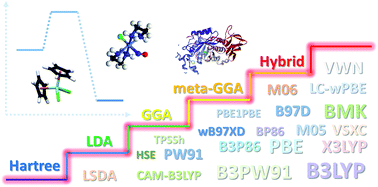
To demonstrate the applicability of DFT, we review recent calculations related to metal complexation. Calculation of metal complexes involving not only simple light elements but also several heavy atoms is possible using DFT. In addition, such calculations can fully highlight the performance and challenges associated with DFT. Moreover, metal complexes are useful in many fields such as inorganic/organic chemistry, analytical chemistry, environmental chemistry, polymer chemistry, materials and medicinal chemistry, and biosciences. In addition, several other subdisciplines, including catalysis, organometallic chemistry, chiral synthesis, photochemistry, cluster compounds, and supermolecular complexes, incorporate metal complexes.16–25
Although DFT is a useful tool, proper usage of DFT is always difficult, because as most studies on DFT that primarily focus on theory construction and development of highly accurate functionals are usually not direct guidances for practical applications.26–30 On the other hand, for many, learning how to use a DFT commercial software to do specific calculations precedes learning the underlying theory of DFT. Therefore, in certain experimental investigations, it is common to routinely perform DFT calculations using a popular code, a standard basis, and a standard functional approximation. This is one of the reasons why B3LYP functional has been widely used. In our opinion, in addition to reviewing the achievements of DFT, showing the differences among the functionals, and sharing the experiences for using DFT will be helpful to all DFT users.31–35
In Chapter 2, developments of exchange–correlation functionals and weak interaction corrections are concisely summarized. The application of DFT to metal complexes as well the performance of different functionals is discussed in Chapter 3, moreover, we propose methods for selecting these functionals. A future outlook of DFT calculations is presented in Chapter 4.
![]() | (1) |
To classify the Exc[ρ] functionals, Perdew proposed Jacob's ladder,38 which was based on the descriptions of the Hartree world without any exchange–correlation and led to extremely high chemical accuracy. The first rung of Jacob's ladder is local density approximation (LDA), followed by generalized gradient approximation (GGA), meta-GGA, and finally, hybrid functionals. Each rung on the ladder should contain functionals that are based on and perform better than the previous rungs.39
The LDA is the first stage of Exc evolution.40 Simulating the free electron gas, the mathematical form of Ex was proposed. With regard to Ec, the functionals VMN and PW92 were proposed based on LDA.41–43 LDA is accurate to describe free electron gas, but unfortunately, the electron systems of molecules are not as uniform as the free state. The GGA dramatically developed LDA via introducing the electron density gradient into Exc. There are many famous and popular GGA-Ex or -Ec functionals such as B88, PW86, PW91, PBE, and LYP.44–50 Subsequently, functionals referred to as meta-GGA were derived from the variable of kinetic energy density in Exc. For instance, BR89 eliminating the correlation of parallel-spin electrons in one-orbital systems,51,52 B95 without Coulomb electron self-interactions,53 VSXC containing 21 adjustable parameters, and TPSS, whose coefficients were defined by an accurate energy functional rather than experimental data.54,55
The hybrid functionals greatly enhanced the precision of DFT, and to some extent, DFT is nearly synonymous with the hybrid functionals. Becke originally used the adiabatic connection to reveal that the functional should include a certain proportion of EHFx and, subsequently, combined it with an LDA-Exc functional, assuming the two functionals accounted for 50%, i.e., EBHHxc = 0.5EHFx + 0.5ELDAxc, which was obviously too far from being accurate.56 Fortunately, such ideas were quickly improved by matching with experimental data to optimize the proportions of mixed functionals, and then, a series of well-performed hybrid functionals were created (Table 1),56–67 such as B3LYP, which represented or even dominated the DFT calculation to some extent.
| Acronym | Composition | Ref. | |
|---|---|---|---|
| Ex | Ec | ||
| a Δ: the density gradient.b UEG: the uniform electron gas. | |||
| BH&HLYP | 0.5(HF) + 0.5(LDA) + 0.5(ΔB88) | (LYP) | 56 |
| B3LYP | 0.2(HF) + 0.8(LDA) + 0.72(ΔB88)a | 0.81(LYP) + 0.19(VWN) | 57 |
| B3PW91 | 0.2(HF) + 0.8(LDA) + 0.72(ΔB88) | 0.81(ΔPW91nonlocal) + (PW91local) | 58 |
| B1LYP | 0.25(HF) + 0.75(UEG)b + 0.75(ΔB88) | (LYP) | 59 |
| B1PW91 | 0.25(HF) + 0.75(UEG) + 0.75(ΔB88) | (ΔPW91) | 59 |
| B3P86 | 0.2(HF) + 0.8(LDA) + 0.72(ΔB88) | 0.81(ΔP86) + (VWN) | 59 |
| PW1PW | 0.25(HF) + 0.75(LDA) + 0.75(ΔPW91) | (PW91) | 60 |
| mPW1PW | 0.25(HF) + 0.75(LDA) + 0.75(mPW) | (PW91) | 61 |
| O3LYP | 0.1161(HF) + 0.9262(LDA) + 0.8133(ΔOPTX) | 0.81(LYP) + 0.19(VWN5) | 62 |
| X3LYP | 0.218(HF) + 0.782(LDA) + 0.542(ΔB88) + 0.167(ΔPW91) | 0.871(LYP) + 0.129(VWN) | 63 |
| TPSSh | 0.1(HF) + 0.9(LDA) + 0.9(TPSS) | (ΔPW91) + (TPSS) | 64 |
| PBE1PBE | 0.25(HF) + 0.75(LDA) + 0.75(ΔPBE) | (PBEnonlocal) + (PW91local) | 65 |
| M05 | 0.28(HF) + 0.72(ΔPBE) | (tHTCH) + (ΔPW91) | 66 |
| M06 | 0.27(HF) + 0.73(ΔPBE) + 0.73(ΔVSXC) | (tHTCH) + (ΔPW91) + (ΔVSXC) | 67 |
Mg and Ca complexes are more common than those of other main group metals. Using B3LYP, Domingo et al. calculated the formation of a Mg complex in the 1,3-dipolar cycloaddition of benzonitrile oxides with acryloylpyrazolidinone.77 This reaction produced a regio- and stereo-selective induction because of the hindrance of the bulk chiral Mg complex. In their report, Mg2+ with two Cl− ligands coordinated with two O atoms of acryloyl derivate and two N atoms of bidentate bisoxazoline derivate to become hexacoordinated. What we can learn from this reference is their approximations method. As shown in Fig. 2, deleting three methyl groups of the original ligand (b), the authors used the approximation ligand (a) instead for their calculation because, theoretically, the coordination pattern of the O atoms to the Mg center was not significantly changed here. Moreover, it should be noted that the solvent effect modeled by the self-consistent reaction field (SCRF) was also considered in their study. However, only the single-point energy of the gas-phase geometry was recalculated, without considering the geometry optimization in the solvent.
Using B3PW91, Butera et al. studied the catalysis of Mg and Ca β-diketiminato silylamide complexes for the dehydrogenation of R2HNBH3,78 and they confirmed the relatively lower reactivity of the Ca complex than that of the Mg complex because of the inaccessible formation of Ca hydride caused by an increase in the cationic radius. The stretched distance between the Ca center and the BH group prevented BH from transferring to the Ca center. The result was enlightening because similar studies of new metallic catalysts with similar reactivity among congeners might not always work.
Unless chelated, main group metals seldom coordinate with monodentate ligands as complexes, whereas AlCl3 is an exception. As a strong Lewis acid, AlCl3 is generally used in electrophilic activation. Arnó et al. studied the cycloaddition of aryliden-5(4H)-oxazolone and cyclopentadiene in the absence and presence of AlCl3, respectively, at the B3LYP level.79 In their study, the global electrophilicity index, ω (ω = μ2/2η; μ, the electronic chemical potential, and η, the chemical hardness), was proved to be a powerful tool to understand the behavior of polar cycloadditions. Based on the ω, the coordination of the Lewis acid AlH3 to the oxygen of carbonyl increased the electrophilicity of the aryliden-5(4H)-oxazolone to 3.76 eV. Substitution of the AlH3 by AlCl3 or AlClMe2 increased the electrophilicity to 4.42 and 4.16 eV, respectively, in agreement with the larger acid character of AlCl3 and AlClMe2.
Although the functionals of B3-series usually perform well in calculating main group metal complexes, some reports still scrupulously refer to other newly developed functionals. For instance, Kimura and Satoh calculated the 1,3-C-H insertion of Mg carbenoid using B3LYP, and the activation energies of three reactants were yielded: 20.0, 33.8, and 47.1 kcal mol−1. The corresponding energies were 13.4, 33.3, and 42.9 kcal mol−1 when the M06-2X functional was used and 16.9, 33.9, and 45.5 kcal mol−1 when the wB97xD functional was used.80 However, such a comparison has only some meaningful reference rather than being an assessment of which functional is the most accurate for the calculated system. Meanwhile, the calculated energy values are indeed more dependent on the basis sets. Thus, to demonstrate more extensive usage and comparison of functionals, the application of DFT to the field of transition metal complexes is needed.
Kwapien and Broclawik used B3LYP to investigate the reaction pathways for oxygen insertion into the C–H bonds of benzene, aniline, and 3-methylaniline by FeO+ in the gas phase, and the intermediates and potential profiles of the sextet and quartet states, respectively.81 They implied that the reaction might occur in both sextet and quartet spin multiplicities. According to the Aufbau principle, the reaction pathway would preferably follow the sextet spin multiplicity due to the lower energies with sextet multiplicity. It is indicated that the molecular geometries is clearly influenced by the change in the spin multiplicity, and it is interesting that the geometrical parameters that do not involve the Fe atom remain unchanged, implying that the Fe atom changes its d-electrons pairing model.
The various coordination patterns of the metal center were derived not only on the basis of the coordination number of metals but also from the types of ligands, which any electron donor could replace. Using B3LYP, Straub et al. studied the cyclopropanation catalyzed by Cu(I), which was coordinated with the carbene double bond as the intermediate.82 In their study, NBO analysis was successfully applied to reveal that the copper(I) carbene complexes possess a true copper carbon double bond. The π-bond is mainly localized at the copper fragment (74.6%) with 9.5% s and 90.4% d character. The carbene carbon contributes mainly by its p orbital (95.7%). The s-bond is a dative bond of the lone pair of the singlet carbene fragment (82.6% carbon character with 30.9% s and 69.1% p contribution) to the copper fragment (17.4% copper character with 12.7% d and 87.0% s contribution). Similarly, Giammarino and Villani used B3PW91 to calculate the termination of a polyolefin catalyzed by a Ti complex.83 The calculation indicated that the terminal carbene double bond is generated via coordination with the Ti center after methylene transfers a hydrogen atom to an adjacent chelating site. Using the M06 functional, Liu et al. calculated the geometry of a six-coordinated cationic Ru carbyne complex with two liable pyridine ligands.84 Two of the coordination bonds were a lone electron pair on a carbon atom and a carbon–carbon triple bond.
To some extent, in the aforementioned cases, the ligands of the metal complexes were deemed the stabilizer of the metal center because it was the metal, namely, the vacant chelating sites that worked on electron transfer. However, in other cases, the influence of ligand was so great that the property of the metal center could be absolutely changed.
Pal and Sarkar used B3LYP to study the reduction of NO3− to NO2− catalyzed by four anionic complexes [Mo(mnt)2(X)]− (mnt2− = 1,2-dicyanoethylenedithiolate; X = –S–Ph, –S–Et, –Cl, and –Br), and the only difference among four complexes was the axial ligand X. According to the calculation, the complex could catalyze the reaction only when X = –S–Ph or –S–Et. The reason the reaction did not occur when X changed to a halide was that the participating redox orbital became energetically less accessible.85
The coordination geometry of the metal center could be changed by the variation in species or the number of ligands. This is important for the metal-catalyzed reactions because the catalysis process could be seen as a ligand substitution. Ishikawa et al. used B3LYP to investigate the coordination of unsaturated W(CO)5 with NO.86 Since NO coordinated with the W center and CO was removed and replaced, the complex successively transformed from a tetragonal pyramid W(CO)5 to an octahedral W(CO)5NO, tetragonal pyramid W(CO)4NO, octahedral W(CO)4(NO)2, and finally, a trigonal bipyramid W(CO)3(NO)2. It was interesting that the coordination pattern of the metal center could even be changed by noncoordinated remote groups. Ristović et al. used the functional OPBE to study the thermal degradation of Zn(II)–N-benzyloxycarbonylglycinato.87 When the benzyloxy and –CH2NHCO– functionalities were successively removed from the complex, the configuration of the Zn(–O–)4 center changed from a tetragonal plane to a tetrahedral and then back to the tetragonal plane.
Because of the above-mentioned good performances of DFT for predicting the geometries of metal complexes, the DFT calculation was highly useful for medicinal and molecular biology studies to obtain an in-depth understanding of the enzymatic structure–function and structure–activity relationships. Based on PBE1PBE functional calculations, Sicking et al. proposed a self-protection and self-inhibition of myeloperoxidase using Fe(III) as the center during its catalytic cycle for the conversion of Cl− to hypochlorous acid. Meanwhile, two new intermediates were naturally deduced, which were detected from UV-vis spectra but were not understood in previous reports.88 Prabhakar et al. used B3LYP to study the H2O2 formation catalyzed by nickel superoxide dismutase. The crucial role for the mechanism was cysteine-6 residue, and the proton donor forming H2O2 was histidine-1 residue.89
The calculation of an exact stationary geometry is a prerequisite for predicting material properties; the reliability of the calculated geometry is usually confirmed by comparison with spectroscopic data from X-ray, FT-IR, and NMR.90 Chen et al. studied the hydrolysis of a Ru(III) complex referred to as TzNAMI using the functional B3LYP and the basis set LanL2DZ/6-31G(d) and then compared the calculated geometry parameters with the X-ray data.91 The calculated parameters are in close proximity to the X-ray data. Using the same functional and basis set as that in Chen's research, Liu et al. calculated the geometry of (2,6-di-tbutyl-C6H3O-)3Y and compared it with X-ray data.92 The calculated parameters of the three ligands are indistinguishable because the three ligands were identical for the calculation; however, their differences are exhibited in the X-ray data. This implies that the symmetry of the molecule was geometrically distorted in the real material. Furthermore, if the geometry optimization had been performed with a larger basis set, a more accurate geometry may have been achieved. Using the B3LYP calculation and comparing the results with X-ray spectroscopy data, Banerjee et al. calculated the geometry parameters of a Pt complex, an anticancer drug referred to as AMD443.93,94 Matching between the calculation results and X-ray spectroscopy data was indeed an improvement over Chen's work because of a slightly larger basis set 6-31G(d,p) chosen for non-metallic atoms.
In addition to verification by experimental data, the result of the calculation of one functional could also be supported by the calculation of other functionals. Such a method was usually adopted when comparisons between the gas phase and the solution were needed. For instance, Ning et al. used B3LYP to perform the geometry optimization in the gas phase but then used M06 to calculate the single-point energy with the SCRF-PCM solvation model based on the gas-phase optimized geometry.95 Zhang et al. also adopted a similar comparison method, but they used the B3LYP calculation for both the gas-phase geometry optimization and the single-point energy calculation in the solvation model.96 However, the stationary geometry in the gas phase was always very different from that in the liquid phase because of the impressed field. Thus, strictly calculating a single point in the solvation model even with the same functional was farfetched, let alone replacing the functional during the calculation, which reduced the accuracy of the results. Certainly, a strict parallel calculation starting from geometry optimization with several functionals was really difficult because of the increased computation time.
In addition to calculating the geometries and properties of the ground state, it is also important for a perfect functional to accurately predict the excited states and spectroscopic properties. Time-dependent DFT (TD-DFT) is usually used to solve such problems. Using TD-DFT at B3LYP level, Cao et al. designed an efficiently phosphorescent Ir(III) complex; calculated the energy levels, energy gaps, and orbital composition distribution of the HOMO and LUMO; and then predicted its adsorption spectrum in the UV-vis band.97 According to their calculation, the delocalized energy of HOMO on the Ir center and ligand was increased; meanwhile the LUMO energy was reduced such that the HOMO–LUMO gap was notably reduced and the electron jump under visible light was feasible. In their study, the radiative rate constant (kr) of phosphorescence for transition metal complexes was deduced from the transition dipole moment (M) of the perturbed triplet state through the use of the following formula:
In addition to the ligand replacement reaction, the intramolecular reaction was common. Otto et al. used B3LYP to study the intramolecular cyclization of a tetra-coordinated Pt complex, PhC(CH3)
N(OH)–PtCl2SO(CH3)2, which involves removal of Cl− from Pt center, followed by the benzene ring coordination with the Pt atom, and then removal of H+ to form a five-membered ring.101 Gracia et al. used B3LYP to study the reaction between VO+ and NH3 to yield VNH+ and H2O. Although the reaction was initiated with a sample ion VO+, the intermediates would transform with a series of V complexes, and six pathways were proposed for the reaction.102 Another similar example came from La and Wang's research.103 They used B3LYP to derive the carbon bond activation of butanone by Ni+ in the gas phase. During the reaction, Ni+ first reacted with the butanone molecule to form two possible complexes, CH3OCNiC2H5 and CH3NiCOC2H5, followed by intramolecular hydrogen transfer to yield C2H4 with CH3CHO and CH4 with H2C
CH–CHO.
It is necessary to point out that when simulating a reaction theoretically catalyzed by a metallic crystal or metallic ionic crystal, the researchers sometimes choose only one metal atom or metal cation to derive the catalysis in the gas phase.104,105 Li and Xie also used B3LYP to study the reaction of one yttrium atom with propene in the gas phase.106 The Y atom insertion and the isomerization of the intermediates were similar to those in La and Wang's research. However, this catalyst model was very different because it was close to a homogeneous catalytic reaction rather than heterogeneous. However, the metallic catalysts always maintained a crystalline state, which was different from the gas-phase reactants.
There are many studies related to metal complexes as homogeneous catalysts; since all of them cannot be covered here, several examples are listed in Tables 2–4, summarizing the functionals they selected, the calculated systems, and the meaningful findings.107–129 Some of the most representative cases will be discussed in detail with regard to DFT. In ref. 130, the differences between the pathways with and without CuCl catalyst were clearly given for the intramolecular cyclopropanation of iodonium ylides. As shown in Fig. 3, there are two possible pathways without the catalyst, both of which have to overcome high-energy barriers to achieve intramolecular cyclization. When the catalyst was introduced, the reaction procedure became more complex because the Cu atom acted as a bridge to move carbon atoms instead of facilitating direct intramolecular cyclization. Thus, the highest barrier of the catalyzed reaction was ca. 8.5 kcal mol−1, whereas the barrier of the rate-determining step in the uncatalyzed pathways was at least 15.5 kcal mol−1. In fact, if only the cyclization steps were compared, the corresponding barriers would fall from 39.6 kcal mol−1 in the uncatalyzed pathway to 8.5 kcal mol−1 in the catalyzed one. Another example how the transition metallic catalyst played a role is provided in ref. 131, where the functional wB97XD was chosen to calculate the ethanolysis of urea catalyzed by Zn(NCO)2(NH3)2. As shown in Fig. 4, the ethyl carbamate could react with one or two ethanol molecules without a catalyst. To some extent, the second ethanol molecule acted as the catalyst by donating an electron such that the amino group could more easily obtain a hydrogen atom. This led to a decrease in the energy barrier from 44.5 kcal mol−1 to 40.9 kcal mol−1. When the catalyst was introduced, the Zn atom bonded with the ketonic oxygen, markedly increasing the electrophilic property of the adjacent amino group such that the barrier of the rate-determining step fell to 36.2 kcal mol−1.
| Functional | Catalyst and catalyzed reaction | Annotation | Ref. |
|---|---|---|---|
a . |
|||
| B3LYP | ![]() |
The insertion mechanism taking place by an insertion of the alkene moiety into the Ti–N single bond of the imido–amido complex is much more likely than the mechanism that involves an alkene insertion into a Ti–N single bond of the trisamide. The rate-determining step is the product liberation at last, involving an aminoalkene | 107 |
| B3LYP | Cp*Mn(CO)32RSH → R–S–S–R + H2 | The compound CpMnH(CO)2SR is probably existing as a key intermediate, which brings two possible pathways. Large steric repulsion between S2H2R with C C makes a 16-electron Mn complex. Ligand substitution process is the rate-determined reaction step |
108 |
| B3LYP | ![]() |
One mechanism is a six-step catalytic cycle involving oxidative addition, reduction, radical production, radical addition,– reductive elimination, and catalyst regeneration. The other mechanism includes radical production, reduction, oxidative addition, radical addition, and reductive elimination. For these two mechanisms, the radical addition between the intermediate NiII(L)(Ph)(Br) and the cyclohexyl radical is the rate-limiting step | 109 |
| B3LYP | [Ni(bipy)]3+ | The proton transfer is the rate-determining step. The unoccupied Nidx2y2 orbital is very prone to accepting the α-spin electron generated from the Ni–OH homolytic cleavage. The singly occupied Nidz2 orbital of Ni accommodates the β-spin electron generated from the homolytic cleavage of the Ni–OCHCH3 bond, giving the product CH3CHO without an oxidant auxiliary | 110 |
| CH3CH2OH → CH3CHO | |||
| BP86 | ![]() |
The methyl-substituted catalyst is able to incorporate the methyl acrylate monomer by coordinating with it through the π-system. The methyl acrylate insertion step may compete with olefin insertion. The steric effect exerted by the methyl group over the aryl ring, which in turn modifies steric congestion around the metal atom | 111 |
| B3LYP | ![]() |
Four possible reaction paths are studied. The reaction barriers of rate-determining steps from amidines to benzimidazoles under Cu(OAc)2 catalysis are calculated to be 33.29 kcal mol−1 (path 1: N–H/C–H activation), 43.00 kcal mol−1 (path 2: C–H/Cu–H agostic activation), 33.48 kcal mol−1 (path 3: C–H/N–H activation by coordination of the imine moiety), and 30.21 kcal mol−1 (path 4: N–H/C–H activation), respectively | 112 |
| BP86 | ![]() |
For alkyl-substituted terminal epoxides, the reaction is predominantly controlled by steric factors, whereas for the vinyloxirane and styrene oxide, electronic factors are more dominant. The CO2 insertion in the coordinated linear alkoxide complex is the rate-determining step | 113 |
| M05-2X | ![]() |
The reaction catalyzed by ZnEt2 with the additive EtOH proceeds through a double gaddition stepwise mechanism. The active intermediate with a four-coordinated boron center is initially formed through proton transfer from EtOH to the ethyl group of ZnEt2 mediated by the boron center of pinacol allylboronates | 114 |
| Functional | Catalyst and catalyzed reaction | Annotation | Ref. |
|---|---|---|---|
| a mdt: 1,2-dimethyl-ethene-1,2-dithiolate.b L = PH2(CH2)4PH2. | |||
| B3LYP | ![]() |
In the step of N–oxide bond cleavage in the presence of [Mo(OMe)(mdt)2]− of N-oxide reductase enzyme, oxygen atom is transferred from the nitro/aci-nitro group to the [Mo(OMe)(mdt)2]−. The estimated barrier for this step is found to be in the order of enamine > nitronic acid > imine | 115 |
| B3LYP | ![]() |
Reaction is proposed to start with the Ru–alkyne–azide complex which has four possible configurations. Among these configurations, with the terminal alkynes, in the most preferred configuration, the azide binds to Ru from its secondary nitrogen and the alkyne substituent is directed away from the azide group. The barrier of the reaction may become insignificant if the relative population of its starting configuration is low | 116 |
| PW91 | PhCH RuCl2(PCy3)2 |
The same simple models that efficiently describe the metathesis of simple substrates with a methylidene type catalyst cannot be used to describe the reaction of real systems. It is clear that the mechanism of metathesis with actual catalytic systems is complex if it is done with large substrates like 1-octene and that electronic effects cannot fully account for effects that are observed like the cis/trans isomerisation of the primary metathesis product | 117 |
1-Octene → C2H4 + CH3(CH2)5CH CH(CH2)5CH3 |
|||
| B3LYP | ![]() |
It undergoes the following steps: olefin addition and insertion into the RhOH bond, CO addition and insertion, hydrogen oxidative addition, aldehyde reductive elimination, and catalyst regeneration. The whole catalytic cycle is strongly exothermic and that the rate-limited step is an H2 oxidative addition | 118 |
| B3LYP | ![]() |
The hydrogenation goes through association of [RheEt-BisP*]+ with α-acetamidoacrylonitrile generating enamide-catalyst adducts, oxidative addition of hydrogen leading to stable six-coordinate pseudo-octahedral dihydride complexes, migratory insertion of an olefin carbon into a RhOH bond resulting in five-coordinate alkyl hydrides, reductive elimination of the COH bond from the alkyl hydride leading to product–catalyst adducts, and dissociation of product–catalyst adducts generating the product with regeneration of the catalyst. The turnover-limiting step for the hydrogenation is the oxidative addition of hydrogen | 119 |
| B3LYP | ![]() |
The reaction mechanism involving the vinylnitrene/palladium complex is energetically more favorable compared to the formation of the four-membered azapalladacyclobutene intermediate. The calculations indicate that the decarboxylation is the rate-determining step for the whole catalytic cycle with an overall barrier of 32.9 kcal mol−1 | 120 |
| B3LYP | ![]() |
The results obtained indicate the formation of trans ester isomer via palladium–hydride cycle, while palladium-amine mechanism is the key for the formation of gem isomer. The results prove the ligand simplification protocol to be non-valid in this type of investigation. The role of acetonitrile solvent in enhancing the yield and regioselectivity of the alkoxycarbonylation and aminocarbonylation reactions was mainly in improving the stability of catalytic intermediates | 121 |
| B3LYP | ![]() |
The intermolecular diamination reaction mechanism involves the dissociation of ligand, which gives active catalyst, followed by two C–N bond formation between the carbon atom of diene and nitrogen atom of urea. The coupling of the terminal carbon atoms with nitrogen atom are kinetically favored than the coupling between β-C atoms and nitrogen atom. The transition states, which form the first C–N bond, are the rate-determining steps in the reaction. | 122 |
| Functional | Catalyst and catalyzed reaction | Annotation | Ref. |
|---|---|---|---|
a . |
|||
| B3PW91 | ![]() |
The [Cp2*Eu(H)] initiator proceeds with inherently lower activation barriers for both the initial hydride-transfer step and the ring-opening second step. This is associated with the greater reorganization required in the BH4 complexes leading to kinetically slower processes for these latter systems | 123 |
| B3LYP | ![]() |
Self-cycle processes of active structures with oxalic acid ligand are more energy favorable than those without oxalic acid ligand, which demonstrates that the oxalic acid ligand plays a very significant role in promoting the catalytic reaction | 124 |
| B3LYP | ![]() |
The strong interaction between the N atom in the N(CH3)2Ph molecule and the Os atom weakens the interaction of the OsO4 species with styrene. This destabilizes the reactant complexes while inducing an increase of the electrophilic character of the resin-OsO4 species, and these two effects appear mainly responsible for the increased reactivity for the cycloaddition reactions | 125 |
| PBE | ![]() |
The presence of a free coordination site in these square planar 16-electron platinum complexes enables alkene coordination in the first step without the energetically unfavorable preliminary dissociation of a metal–ligand bond. High strength of the –PR2O–H⋯O–PR2 hydrogen bond leads to formation of a bidentate ligand in the coordination sphere of the metal. The ligand makes the geometry of the catalytic center rigid, which enhances the regioselectivity of the process | 126 |
| B3LYP | ![]() |
Initial carbocyclization is the rate-determining step, involving a moderate activation energy. The platinum(IV)cyclopentene intermediate formed in the cycloisomerization of allenynes trisubstituted at the allene moiety may evolve through two different pathways. There is a dependence on the orientation of the methyl group at the terminal allene carbon atom, which in turn simply depends upon the conformation of the initial reactant complex | 127 |
| M06L | HPtNH2PPh3 | The coordinatively unsaturated 14e T-shaped [Pt(NH2)(PPh3)H] species resulting from the dissociation of the dinuclear [{Pt(NH2)(μ-H)(PPh3)}2] complex are the active catalytic species. The oxidative addition of ammonia step, characterized by a relatively high activation barrier, corresponds to the turnover limiting step. The outer-sphere mechanism is more favored than the inner-sphere mechanism in the gas phase reactions and in dichloromethane solution | 128 |
| C2H4 + NH3 → C2H5NH2 | |||
| BLYP | ![]() |
The first step of the catalytic cycle is the cyclization of the carbonyl oxygen onto the triple bond to form a new and stable resonance structure of an oxonium ion and a carbocation intermediate. The key reaction step the catalytic cycle is the migration of the hydrogen atom to yield new organo–Au interme diates. The activation barriers of the rate-determining steps were recalculated using B3LYP and B1LYP and the activation barriers were 12.9 and 12.7 kcal mol−1, respectively | 129 |
![]() | ||
| Fig. 3 Energetic (ΔRG/kcal mol−1) and geometric profiles for the uncatalyzed (left) and CuCl-catalyzed (right) intramolecular cyclopropanation of iodonium ylides. | ||
![]() | ||
| Fig. 4 Energetic (ΔRG/kcal mol−1) and geometric profiles for the uncatalyzed (left) and Zn(NCO)2(NH3)2 catalyzed (right) ethanolysis of urea. | ||
In addition to understanding the catalytic mechanism, investigation of the formation of isomers in the presence of a catalyst is important. As shown in Scheme 2, there are two possible pathways for the catalyzed cycloisomerization of the same reactant generating two isomers.132 The divide is the step following the coordination of Pt with the acetylenic bond. One of the pathways includes increased coordination of Pt with the olefinic bond at the other end of the reactant, and the other pathway removes an adjacent H atom. In fact, both the pathways could be regarded as electron donors moving toward the Pt atom. Parallel reactions during the identification of electron donors by Pt are impossible. Certainly, although the reaction may take different pathways, the reaction might also end with the same product, which was more common. Determining the complete reaction mechanism has always been a challenge for DFT (see, e.g., ref. 104 and 133). In Fig. 5, there are three potential pathways leading to the same product and the most probable pathway contained two intermediates and three transition states.133 While in this case, it was possible to calculate pathways with fewer or even without any intermediate, the barriers would usually be much greater.
![]() | ||
| Fig. 5 Energetic (ΔRG/kcal mol−1) and geometric profiles for three pathways of [Ir(ItBu′)2]+ catalyzed dehydrogenation of NH3BH3. | ||
The role of the metal center in the complex is always focused on; therefore, when sophisticated ligands are involved, some studies usually replace the sophisticated ligands with simplified ligands to reduce the calculation burden. However, it could be deduced that an influence of the ligands on the catalytic activity of the metal center must be significant because of different electronic and steric effects of diverse ligands. Munz and Strassner reported the CH functionalization of alkanes catalyzed by palladium coordinated with bis(N-heterocyclic carbene) (NHC).134 They calculated the overall Gibbs free energy of activation and the catalytic turnover for a series of palladium bis(NHC) catalysts. As shown in Fig. 6, the activation barriers become greater when the steric hindrance of the ligands increases overall. Meanwhile, less-electron-rich benzimidazolylidene catalysts display considerably lower activity than their imidazolylidene counterparts.
![]() | ||
| Fig. 6 Catalytic activity and reaction barrier of a series of Pd–bis(NHC) complexes for the CH functionalization of alkanes. | ||
In addition to the comparison among different complexes with the same metal centers, calculations of similar complexes but with different metal centers are also common and important. Yudanov used B3LYP to calculate the olefin epoxidation in the presence of several transition metal peroxo complexes.135 It was indicated that the reaction occurred by direct electrophilic transfer from one peroxo oxygen to the olefin at the transition state, and the cleavage of the O–O bond was triggered by the interaction between the π(C–C) HOMO of the olefin and the σ*(O–O) LUMO of the peroxo group. Moreover, W and Re peroxo complexes were the most active catalysts for the reaction, and the catalysis activation barriers of ethylene epoxidation decreased in the order Cr > Mo > W. Using the M06 functional, Liu et al. studied the selective alkylation of the CH
N bond of α-diimine catalyzed by Sc, Y, and Lu complexes, respectively.136 It was indicated that the lowest barrier of rate-determining steps is set by the Y complex. Interestingly, the Sc complex, rather than the Y complex, was chosen by the author for further kinetics discussion, probably because the calculation involving Sc atom needs less computation time than that involving Y or Lu atoms. Wang et al. used B3LYP to calculate the aquation and nucleobase binding of Ru(II) and Os(II) arene complexes with purines, indicating that both Ru and Os complexes showed high discrimination between guanine and adenine, and the rate of aquation was very slow for the Os complex although its structure was similar to the Ru complex.137
In contrast to the aforementioned catalysts of metal complexes in which the active sites were primarily the metal cores, the activity on metal-centered enzymes occurred not only on the metal cores but also to a considerable extent on the ligands. Borowski et al. used B3LYP to study the catalytic mechanism of nonheme iron enzyme dependent on α-ketoglutarate. In fact, there were two coordinated H2O molecules in the initial state of the Fe(II)-centered enzyme, and the enzyme had no activity without replacing the H2O ligands with α-ketoglutarate.138 They also studied alkenyl migration catalyzed by extradiol dioxygenases.139 When the enzyme worked, one hydroxyl of the substrate would replace a ligand of the enzyme (referred to as His200+). However, the replaced His200+ was not removed from the system but instead was combined via a hydrogen bond; therefore the reaction was induced by and provided with an H atom from His200+.
All of the above discussions regarding the reaction pathways were based on the premise of an undisturbed ground state. DFT calculations inevitably must handle cases involving perturbations in the external field or excited states. Rodriguez et al. used B3LYP to study cyclotrimerization catalyzed by Cp*Co(CO)2 under microwave irradiation, indicating that the microwave irradiation could provide a strong internal magnetic-field perturbation that affected intersystem crossing in biradicals to improve the reactions.140 Starikova et al. used B3LYP to design a new spin-state switching mechanism of a series of Co(II), Ni(II), and Cu(II) complexes driven by ligand and induced by light.141 Generally, the electrons of the metal center in complexes were excited via direct photon absorption. However, the light would first induce the geometric transformation of the ligands and then force the metal center to change its electronic structure.
Note that even without any perturbation of the external field by light or magnetism, the reaction might also occur in the excited state. Such cases are difficult to be detected by experiments; however, they could be shown by the DFT calculations. Miłaczewska et al. studied the epoxidation catalyzed by (S)-2-hydroxypropylphosphonic acid epoxidase.142 They determined that an Fe(III)–O˙ species, i.e., the excited state of Fe(IV) = O, was generated when the O–O bond of the substrate was cleaved and such excited species were able to cleave the C–H bond of the substrate without any barrier. As a result, timely checking the spin multiplicities of the calculated system is strongly suggested when transition metal complexes are involved.
In DFT calculations of metal complexes, the B3-series hybrid functionals were the most popular because they can be applied to many cases. However, some researchers chose the paralleled calculation with several functionals or used other functionals instead of B3-series because of the potential defects of B3-series. In Johansson's paper,143 the author considered that dispersion interactions could not be described by the popular B3LYP functional, although such interactions were found to be important in the description of association or dissociation of ligands, substrates, and products with the catalyst. Thus, the dispersion-corrected B3LYP-D and M06 were chosen instead of the B3LYP functional.
In practice, there are some studies that still use ordinary functionals to describe weak interactions.144–146 For example, Kumar et al. attempted using B3LYP to study the weak interactions between furfuryl and the equatorial dioxime ligand in furfuryl(O2)Co(dmgH)2Py and the intermolecular hydrogen bonding along with X-ray and NMR and demonstrated that nonbonding interactions occur between the O atom in furfuryl and the methyl group in the dmgH ligand.144 Morsali used B3LYP to study the formation of a Pd(II) maleate complex. However, the distances between the Pd center and the chelating sites of maleate in some of the intermediates and transition states were obviously too long and even more than 7 Å.146 Therefore, ordinary functionals such as B3LYP are obviously not suitable for such systems.
As we mentioned in Chapter 2, the newer functionals developed in recent years always included dispersion corrections such as wB97XD. Thus, it was used instead of B3LYP in ref. 131. Moreover, if several functionals were used in parallel to calculate an identical reaction, their differences reflected in not only the energy values of certain geometries; but also the reaction pathways, i.e., some intermediates determined by one functional were likely not determined by another functional.147,148
In MNMCs, the spatial relationships among the metal cores could further be classified into metallic bonding and nonbonding. To some extent, the metallic nonbonding MNMCs could be seen as the aggregation of several mononuclear metal complexes. For instance, Castro et al. used B3PW91 to investigate the CO2 fixation to [(Me5Cp*)2Sm(III)], indicating that two molecules of the Sm complex would react with two CO2 molecules and yield a symmetrical dinuclear metallic complex in which the CO2 molecules are located in the middle of the product complex such that the two Sm atoms are separated without direct bonding interaction.149 Compared with such MNMCs, metallic bonding types are much more common.150,151 Ye et al. used B3LYP to study the reaction of [Cp*(CO)2W
GeC(SiH3)3] with ethanol and arylaldehydes.151 In this complex, the metal center electrons shifted from Ge toward W, generating an electrophilic Ge center for the substrates. In Zhu et al.'s study, two Zn atoms acted as the center of leucine aminopeptidase and bonded with each other.152 Using B3LYP, they calculated the peptide hydrolysis catalyzed by this enzyme, indicating that the activity of the Zn–Zn centered enzyme was higher than that of a Mg–Zn or Mg–Co centered enzyme. In their study, the functional M06L was also used to examine the accuracy of B3LYP.
Note that some researchers still choose B3-series hybrid functionals for calculations involving multimetals,153–155 although the number is decreasing. For example, Ribeiro et al. used B3LYP together with MPWB1K to study the catalytic process of protein phosphatase 5, which indicated that the energy value of this transition state was mostly insensitive to changes in the functionals, and the B3LYP-calculated energy was 1.2 kcal mol−1 lower than that of MPWB1K.156 It is well known that the B3LYP can underestimate the barrier because of its poor performance with regard to handling dispersion forces. Once the transition states involve weak interactions, the defect of B3LYP would appear, particularly when calculations involve biological molecules. However, there exist studies that used B3LYP to obtain higher barriers than those obtained by assisted functionals. Zhu et al. performed a comparative DFT study of B3LYP and M06 for deriving the olefin epoxidation catalyzed by binuclear complexes [SeO4WO(O2)2MO(O2)2]n− (M = TiIV, VV, TaV, MoVI, WVI, TcVII, and ReVII), demonstrating that the activation barriers of different complexes decreased in the following order: WV > WTi > WTa > WMo > WW > WTc > WRe.157 Meanwhile, compared with the B3LYP results, the M06 functional slightly underestimated the energy barriers (Table 5).
| Barrier | Functional | TiW | VW | TaW | MoW | WW | TcW | ReW |
|---|---|---|---|---|---|---|---|---|
| 1# | B3LYP | 37.91 | 40.17 | 36.95 | 34.30 | 31.79 | 25.82 | 22.53 |
| M06 | 38.04 | 38.47 | 35.81 | 33.12 | 29.87 | 26.32 | 21.44 | |
| 2# | B3LYP | 43.96 | 38.09 | 36.44 | 32.63 | 31.79 | 26.93 | 23.98 |
| M06 | 42.42 | 36.29 | 34.49 | 30.29 | 29.87 | 23.18 | 22.27 |
Chen and Liao used B3LYP to study the catalysis of trinuclear (Zn–Zn with Mg) alkaline phosphatase,158 which indicated that the Zn–Zn center was able to stabilize the transition state and its bond length did not fluctuate during catalysis. These results differed from those calculated by the semiempirical method of AM1/d-PhoT, where the Zn–Zn distance significantly varied during the reaction. Pan et al. used B3LYP to investigate the catalytic effects of ZnEt2–H2O for alternating copolymerization of CO2 with propylene oxide and then used both BPW91 and M06 to test individual points.159 In their study, the catalytic species of C2H5(ZnO)4H, a tetranuclear Zn complex, was easily formed. In fact, such MNMCs should be classified as a metal cluster rather than a complex in the next chapter. Hence, B3LYP is still applicable, although it is often conditioned by its defects.
Some researchers applied other functionals instead of B3-series hybrid functionals for MNMCs.160 Lin et al. used the BPW91 functional to study the Rh2(O2CCH3)4 catalysis during the intramolecular amidation of carbamate, proposing two pathways by assuming singlet or triplet intermediates.161 Moreover, BPW91 was chosen because it referred to the singlet and triplet energy split of the intermediates calculated using different functionals. To verify whether the functional was suitable, Zampella et al. compared the calculated geometric parameters with the X-ray data and confirmed that BP86 performed better than B3LYP in calculating a [Fe2S2]-centered model of all-iron hydrogenases.162 Pankratyev et al. adopted both the PBE1PBE functional and MP2 method to study the transmetallation of [Cp2*ZrRCl-XAliBu2] (X = H, Cl, or iBu) and indicated that the geometric parameters calculated by the two methods were quite similar to each other.163 However, differences in the nonbonding lengths calculated using the two methods were slightly high. In fact, their viewpoint that the pure and hybrid functionals were the problematic choice to describe the energetic characteristics of bridged bonds was the reason they needed to use the ab initio MP2 to examine the results.
Pan et al. used B3LYP, B3P86, B3PW91, M06, and O3LYP functionals to calculate the geometries of four zinc phenoxide complexes (Fig. 7).170 As shown in Table 6, the parameters calculated by all functionals are close to the experimental data, but M06 functional performs the best, followed by B3P86. B3LYP performs well only for the fourth complex, and this is probably because the complex contains more main group atoms (four phenyls) than the other three complexes. Krámos studied an active center model of human aromatase catalyzing the aromatization of an androstenedione model.171 In Table 7, all geometries are optimized by B3LYP. It is obvious that wB97XD always yields the lowest energies of the intermediates and the highest barriers, and B3LYP still tends to underestimate the barriers even with the dispersion correction. In Gajewy et al.'s study, B3LYP, PBE1PBE, and M06 were used to optimize all of the reaction pathways, and then M06 was used to uniformly calculate all of the individual points, rather than calculating only single points based on certain functional optimizing geometries.172 B3LYP provided the highest reaction barriers, while M06 gave the lowest relative energies of stable intermediates. Moreover, the results obtained with all the functionals were similar in terms of their optimized geometric parameters, whereas using M06 significantly increased the computation time.
| Complex | Parameter | Functional | Exp. | ||||
|---|---|---|---|---|---|---|---|
| B3LYP | B3P86 | B3PW91 | M06 | O3LYP | |||
| a Bond length is in angstrom; valence angle is in degree. | |||||||
| 1 | Zn–1O | 1.904 | 1.908 | 1.901 | 1.914 | 1.921 | 1.885 |
| 1C–1O | 1.339 | 1.332 | 1.333 | 1.327 | 1.334 | 1.330 | |
| 1O–Zn–2O | 137.1 | 134.9 | 137.6 | 136.6 | 131.6 | 134.5 | |
| 1O–Zn–1N | 103.9 | 103.3 | 103.7 | 107.1 | 104.1 | 104.8 | |
| 1N–Zn–2N | 104.6 | 114.4 | 104.6 | 102.2 | 111.1 | 102.2 | |
| 1C–1O–Zn | 132.5 | 127.8 | 131.0 | 120.1 | 132.1 | 136.5 | |
| 2 | Zn–1O | 1.874 | 1.865 | 1.874 | 1.864 | 1.877 | 1.846 |
| 1C–1O | 1.353 | 1.345 | 1.347 | 1.341 | 1.348 | 1.345 | |
| 1O–Zn–2O | 146.2 | 146.0 | 146.7 | 143.0 | 150.4 | 139.8 | |
| 1O–Zn–3O | 109.2 | 107.8 | 103.5 | 105.6 | 106.3 | 106.0 | |
| 3O–Zn–4O | 89.3 | 89.3 | 89.1 | 86.4 | 87.7 | 91.0 | |
| 1C–1O–Zn | 127.4 | 125.2 | 127.5 | 119.0 | 131.3 | 127.0 | |
| 3 | Zn–1O | 1.899 | 1.887 | 1.893 | 1.863 | 1.900 | 1.873 |
| 1C–1O | 1.345 | 1.344 | 1.344 | 1.335 | 1.346 | 1.348 | |
| 1O–Zn–2O | 143.9 | 144.8 | 144.4 | 143.2 | 143.8 | 142.9 | |
| 1O–Zn–3O | 102.5 | 102.3 | 102.2 | 102.5 | 101.2 | 101.1 | |
| 3O–Zn–4O | 95.6 | 95.4 | 95.6 | 89.0 | 94.6 | 100.3 | |
| 1C–1O–Zn | 131.4 | 129.0 | 130.1 | 134.2 | 134.9 | 134.2 | |
| 4 | Zn–1O | 1.890 | 1.884 | 1.886 | 1.870 | 1.893 | 1.864 |
| 1C–1O | 1.329 | 1.323 | 1.323 | 1.316 | 1.324 | 1.335 | |
| 1O–Zn–2O | 136.6 | 139.4 | 139.8 | 150.8 | 136.8 | 136.2 | |
| 1O–Zn–3O | 105.3 | 104.4 | 105.1 | 104.2 | 104.3 | 106.5 | |
| 3O–Zn–4O | 89.8 | 90.5 | 90.3 | 85.5 | 89.2 | 90.5 | |
| 1C–1O–Zn | 130.1 | 126.9 | 128.9 | 125.9 | 133.9 | 133.0. | |
| Object | Multiplicity | Functional | ||||
|---|---|---|---|---|---|---|
| CAM-B3LYP | M06 | TPSSH | OLYP | wB97XD | ||
a Overall reaction: . |
||||||
| 1 | Doublet | 0 | 0 | 0 | 0 | 0 |
| 1 | Quartet | 0.2 | 0.7 | 0.4 | 1.9 | 0.1 |
| TS12 | Doublet | 2.1 | 3.4 | 3.7 | 4.3 | 8.5 |
| TS12 | Quartet | 2.4 | 4.6 | 5.2 | 8.9 | 8.1 |
| 2 | Doublet | −25.6 | −29.9 | −22.7 | −21.7 | −25.2 |
| 2 | Quartet | −26.0 | −30.3 | −22.2 | −19.2 | −25.3 |
| 3 | Doublet | −62.0 | −66.5 | −50.0 | −34.9 | −72.0 |
| 3 | Quartet | −57.2 | −67.5 | −42.1 | −37.9 | −65.3 |
| TS34 | Doublet | −42.0 | −42.3 | −30.9 | −15.6 | −44.5 |
| TS34 | Quartet | −16.5 | −26.0 | −6.3 | −15.8 | −18.5 |
| 4 | Doublet | −99.2 | −97.1 | −89.7 | −88.6 | −103.7 |
| 4 | Quartet | −98.9 | −105.2 | −86.3 | −89.5 | −103.3 |
| 5 | Doublet | −92.6 | −92.5 | −79.6 | −73.5 | −97.7 |
| 5 | Quartet | −87.1 | −93.2 | −68.5 | −69.5 | −90.0 |
| 6 | Doublet | −18.6 | −18.3 | −16.8 | −14.8 | −18.9 |
| 6 | Quartet | −18.3 | −17.3 | −16.4 | −12.7 | −18.6 |
| TS67 | Doublet | −1.1 | −3.5 | 3.2 | 6.9 | 0.6 |
| TS67 | Quartet | −0.5 | −0.9 | 3.6 | 9.7 | 1.4 |
| 7 | Doublet | −9.8 | −10.1 | −10.2 | −7.3 | −13.3 |
| 7 | Quartet | −17.3 | −22.9 | −15.3 | −11.6 | −17.7 |
For the system containing metal atoms, the selection of functionals depends, to a great extent, on the number of metal atoms and the chemicals surrounding them. First, although hybrid functionals greatly improve the precision of the DFT calculation, GGA or meta-GGA pure functionals such as PW91 and PBE are still more appropriate for the calculation of MNMCs since both Ec and Ex are delocalized. Meanwhile, their long-range actions are opposite and offset each other, and the remaining local components are well described by LDA, GGA, and meta-GGA. The success of hybrid functionals is largely derived from the introduction of some H–F exchange ingredient that eliminates most of the self-interaction error; however, the delocalized Ec remains, in which case the LDA, GGA, and meta-GGA components of hybrid functionals are no longer good approximations. It is interesting that once the proportion of EHFx in hybrid functional decreases, the performance of the hybrid functional on the transition metals is improved. For instance, Siegbahn showed that the general accuracy of calculations involving transition metals may be improved when the proportion of EHFx in B3LYP decreased from 20% to 15%.173 Furthermore, for the calculation involving more than one transition metal atom, a fully local functional M06-L was developed by removing total H–F exchange from M06.174
Second, with regard to the systems involving MNMCs, the selection of functionals largely depends on the chemical surroundings of the metal centers. It is difficult to define which is the best functional for specific system, since the functionals for the calculation of metal complexes are too flexible to delimit their range of applicability. As shown in Table 8, satisfying all calculation terms of a functional with high accuracy is impossible. Thus, the selection of functionals depends on the terms that can be calculated. Note that the performance of some functionals with empirical parameters is largely related to the basis sets.
| Focus item | Functional |
|---|---|
| Thermodynamics of main group atoms, organometallics | B3LYP, B3PW91 and M06 |
| Reaction dynamics of main group atoms | B3LYP, B3PW91 M06-2X, and M06 |
| Reaction dynamics of inorganic/organometallics | TPSS, M06-L, and M06 |
| Binuclear metals | PBE, BP86, TPSS, M06-L, and M06 |
| Nuclear magnetic resonance | M06-L, VSXC, OPBE, and PBE1PBE |
| Electronic circular dichroism spectroscopy | B3LYP, and PBE1PBE |
| Two-photon adsorption | CAM-B3LYP |
| Excitation of valence shell | PBE1PBE, and M06-2X |
| Charge transfer, Rydberg excitation, adiabatic excitation | wB97XD, CAM-B3LYP, and M06-2X |
| Polarizability, hyperpolarizability | PBE1PBE, CAM-B3LYP, and HCTC |
| Gap of HOMO/LUMO | HSE, and B3PW91 |
| Weak interaction | wB97XD, and M06 |
The imprecise Exc form causes the abovementioned problems. There are basically two methods of solving these problems. In consideration of existing functionals that have yielded good results, the first method is to involve more parameters into the functionals and optimize the parameters referring to more experimental data, such as the functional VSXC, containing 21 parameters, and the famous B3LYP. The second method is to design more accurate forms of Exc without catering to experimental data and fix their parameters by fitting more potential factors, exactly like PBE and TPSS. In the future, the two abovementioned methods will probably coexist for a long time. The advantages of the first method include the shorter periods to develop the functionals and to perfect the results of analogous systems. This method is semiempirical to a certain degree and not helpful for further development of DFT; moreover, the results are unpredictable when the functional is used for a heterologous system. The second method enhances the DFT performance. Functionals without any empirical parameters can be more generally used and can obtain universal accuracy. However, development of these functionals is extremely time intensive.
Although DFT calculations involving only electron density gradients as the variables are expected and continue to be explored, DFT calculations still cannot be performed without the concept of orbitals. To obtain operability, DFT is developed from the original H–K theorem to the K–S theory by introducing the concept of orbitals. Hybrid functionals further calculate the exact H–F exchange energy to obtain accurate results. Now, double hybrid methods have been developed (the fifth rung of Jacob's ladder), such as B2PLYP, mPW2PLYP, and XYG3. The method combines exact H–F exchange energy with an MP2-like correlation to the DFT calculation, causing the calculation method to appear more like an ab initio method rather than DFT. As a result, the accuracy of the calculation is enhanced, but the computational cost is as high as that of the CCSD method. Thus, the advantage of having a low computational cost for DFT is completely lost.
| This journal is © The Royal Society of Chemistry 2016 |