
DOI:
10.1039/C6RA16047F
(Paper)
RSC Adv., 2016,
6, 85019-85025
Non-destructive means of probing a composite polyamide membrane for characteristic free volume, void, and chemical composition
Received
21st June 2016
, Accepted 2nd September 2016
First published on 2nd September 2016
Abstract
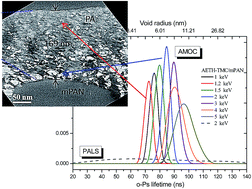
Positron annihilation spectroscopy measures free volume in membranes at the sub-nanometer scale (0.1–1 nm). In this study, we used positron annihilation age–momentum correlation (AMOC) spectroscopy coupled to a variable mono-energy slow positron beam; our objectives were to measure not only free volume but also voids that are bigger than 1 nm and to estimate the chemical composition of a composite polyamide membrane. To crosscheck these data, we also used conventional techniques: scanning electron microscopy, transmission electron microscopy, and quantum chemical calculations (QCC). AMOC showed that the free volume diameters and intensities in a polyamide layer were in the range of 0.42–0.68 nm and 9–3%, respectively, and that the void diameters and intensities were 7.2–14.1 nm and 12–18%, respectively, with the size distribution of the voids ranging from 5 to 20 nm. These results were consistent with those from TEM, indicating that the polyamide layer structure consisted of discrete voids distributed throughout a continuously dense phase. QCC validated the S parameter data taken from AMOC, which showed that a highly electronegative environment in the polyamide layer could inhibit the formation of positronium.
Introduction
Conventional techniques are commonly used to characterize membranes. Attenuated total reflectance-Fourier transform infrared1 and Raman spectroscopy2 measure the chemical properties of membranes. Nuclear magnetic resonance,3,4 electron spin resonance,5,6 and electron spectroscopy7,8 probe membranes for their chemical composition. The following instruments produce images of membranes to show their physical structure: scanning electron microscopy,9,10 transmission electron microscopy,11 atomic force microscopy,12–14 X-ray diffraction,15,16 and electron, neutron and ion diffractions.17,18 All these techniques require that composite membranes be cut or fractured to characterize their ultrathin selective layer, which is the key factor that determines the efficiency of permeation in membranes.
Positron annihilation spectroscopy (PAS) is a non-destructive technique for characterizing composite membranes. PAS is a highly sensitive instrument that probes free volume at the sub-nanoscale level.19 When positron is implanted into a membrane, it combines with an electron to form a positronium.20,21 The length of time for positron to annihilate depends on these species: para-positronium (p-Ps), free positron, and ortho-positronium (o-Ps). The annihilation ratio of p-Ps to o-Ps is 1
:
3.22 With p-Ps, positron and electron spin in opposite directions; with o-Ps, they spin in the same direction. The annihilation lifetime of o-Ps in voids is 142 ns, and it is associated with 3γ annihilation. But its annihilation lifetime in molecular substrates, accompanied by 2γ annihilation, is shortened to 1–5 ns. This reduced lifetime results from the annihilation of a triplet o-Ps in free volume, with the electron spinning in the opposite direction. Such is called pick-off annihilation, which gives information on the properties of free volume. However, PAS has limitations. It is not sensitive to measure membranes with voids. The free volume measures from 1 Å to 1 nm in size while the void is >1 nm in size. It gives one-dimensional spectra; as such, pick-off 2γ and 3γ annihilation signals appear to overlap with each other.
We used a variable mono-energy slow positron beam coupled to an age–momentum correlation (AMOC) technique to probe the ultrathin selective layer of a composite polyamide membrane, which was prepared through interfacial polymerization. AMOC produces two-dimensional spectra, where both 2γ and 3γ annihilation are displayed separately. Therefore, at low annihilation photon energies (or 3γ annihilation), the annihilation lifetime for a specific positron–electron momentum interval can be analyzed. Data reported were free volume, void, and chemical composition. These AMOC data were crosschecked with those from scanning electron microscopy, transmission electron microscopy, and quantum chemical calculations.
Experimental
Materials
Polyacrylonitrile (PAN) polymer, purchased from Tong-Hua Synthesis Fiber Co., Ltd. (Taiwan), was chosen as substrate. PAN was dissolved in a reagent-grade solvent, N-methyl-2-pyrrolidone (NMP). Two types of monomers were used for the interfacial polymerization process: organic-phase trimesoyl chloride (TMC) and water-phase 2-aminoethanethiol (AETH). These monomers were supplied by TCI Co. Distilled water was the solvent in aminothiol solution (from AETH). Reagent-grade toluene was the solvent in acyl chloride solution (from TMC).
Fabrication of membrane support
A 15 wt% PAN–NMP solution was prepared. It was cast onto a nonwoven polyester fabric with the use of a 200 μm casting knife. The cast film was immersed in a bath of water. Through such wet-phase inversion method, a PAN membrane was formed, which was then washed in water overnight, and left in the open air to dry. The membrane was hydrolyzed in a solution of 2 M NaOH(aq) at 50 °C. This procedure was to make the membrane surface more hydrophilic and to facilitate the spread of aqueous amine solution on the surface. By the hydrolysis process, –CN groups on the membrane surface are converted into –COOH groups; –CONH2 or –CONH groups are intermediate products.23 The result was a modified PAN (mPAN) membrane support. It was washed for several hours in a water bath and dried at room temperature.
Preparation of composite membranes
First, the mPAN membrane support was immersed in a 0.1 wt% aqueous aminothiol solution for 10 s. The excess solution was removed by gently pressing the membrane with a rubber tube. The next step was to contact the soaked membrane with a 0.2 wt% organic acyl chloride solution for 10 s. At this point, AETH and TMC reacted with each other by interfacial polymerization, forming a composite membrane labeled as AETH–TMC/mPAN. Detailed descriptions of the membrane preparation can be found in our previous papers.24–26
Probing the composite membrane multilayer structure
The multilayer structure of composite polyamide membrane was probed with a novel variable mono-energy slow positron beam (VMSPB). This radioisotope beam used 50 mCi of 22Na as positron source. To completely remove the charging effect caused by VMSPB on insulators,27 we sputtered the membrane with a few atomic layers of platinum (1 nm). The beam was operated in the range of 0–30 keV positron incident energy, equivalent to a mean depth of 0–10 μm. A positron enters the polymer surface, and it loses its energy as a result of inelastic collision processes within the time scale of 10−12 s. Its energy distribution can be expressed by a Makhovian implantation profile. The mean depth Z of polymeric materials, where the positron annihilation occurs, is calculated using eqn (1) (ref. 28–30)Z is expressed in nm, ρ is the density in g cm−3, and E+ is the positron incident energy in keV. With increasing E+, the corresponding distribution for the depth Z is broadened. The depth resolution is better near the surface than in the bulk.
Free-volume, void, and chemical composition
AMOC was developed to differentiate between positron lifetimes and momentum densities. It combines techniques of Doppler broadening energy spectroscopy and positron annihilation lifetime spectroscopy (PALS). Using an AMOC-VMSPB system (Fig. 1a), we use slow positron implant in materials to produce secondary electrons as a start signal, and positron annihilation in the material to produce two 0.511 MeV γ-ray as a stop signal by barium fluoride probe. For the simultaneous obtain γ-ray momentum signals by high purity germanium probe. An effective data was collected from the three signals forming the AMOC spectrum. Free volume and void in composite membranes were measured, and their chemical composition estimated.31 Raw AMOC spectra (Fig. 1b) are a function of both time and energy, and they show 3γ annihilation (blue valley) in the range of 340–490 keV and 2γ annihilation (red peak) in the range of 490–530 keV. On the basis of γ-ray energies or annihilation radiation, AMOC provides information on voids in composite membranes, as well as on the membrane's chemical composition.32,33
 |
| | Fig. 1 (a) AMOC-VMSPB setup for data analysis and (b) AMOC raw spectra for polyamide composite membrane at depth of 0.13 μm. | |
A simple quantum mechanical model is used to calculate free volume. Tao derived a relationship between the mean free volume radius (R) and the o-Ps lifetime.34 He proposed a model in which o-Ps resides in a spherical well having an infinite potential barrier of radius Ro (Ro = R + Δ R). The o-Ps lifetime is denoted as τ3, the third mean lifetime analyzed from the experimental PALS spectra. A semi-empirical equation was established by fitting the measured τ3 in a spherical infinitive potential model with known cavity sizes:34–36
| |
 | (2) |
where
τ3 is in ns and
R in Å, and Δ
R is equal to 1.656 Å.
Eqn (2) is good for free volume less than 1 nm, corresponding to
o-Ps lifetimes shorter than 10 ns. To calculate voids greater than 1 nm (
o-Ps lifetimes longer than 10 ns),
eqn (2) was modified to include 3γ from
o-Ps annihilations.
Eqn (3) is then obtained, with
Ra = 0.8 nm and
b = 0.55.
37| |
 | (3) |
Quantum chemical calculations
Structural and electronic properties of the composite polyamide membrane were predicted through quantum chemical calculations (QCCs). QCCs are based on density functional theory and time-dependent methods, and they validate AMOC data. Electron density orbitals were evaluated with DMol3 (Accelrys Software, Inc.).38,39 A geometry optimization was done to describe the minimum energy structure of the polyamide layer. The local density approximation with Perdew and Wang parameterization was applied to determine the density functional theory exchange–correlation potential. The electron density was calculated using double numeric polarization basis set for all atoms.
Morphological characterization
The morphology of the composite polyamide membrane was observed with scanning electron microscopy (SEM, Hitachi model S4700) and transmission electron microscopy (TEM, JEOL JEM-2100F, Japan). High-resolution micrographs were used to examine the membrane microstructure.
Results and discussion
Free volume and depth profile
Fig. 2 plots the o-Ps data obtained from AMOC raw spectra (Fig. 1). Data on o-Ps lifetime (τ3 and τ4) from AMOC and PALS techniques are compared in Fig. 2a; those on o-Ps intensity (I3 and I4) are compared in Fig. 2b. AMOC and PALS free volume (τ3) data give a similar trend. Free volume is smallest within 1–2 keV, a region that represents the dense polyamide layer. At positron energies higher than 3 keV, τ3 data are highest and remain constant, and they indicate the biggest free volume residing in the mPAN substrate layer region. The interface between the polyamide and the substrate refers to the transition layer, which lies in the region between 2 and 3 keV. The transition region starts from 2 keV and is equivalent to a mean depth of 151 nm, and the free volume diameter therein is 4.2 ± 0.02 Å.
 |
| | Fig. 2 Data on (a) o-Ps lifetime and (b) o-Ps intensity vs. positron incident energy, obtained from AMOC and PALS for polyamide layer (0.15 μm, green color) formed through interfacial polymerization between AETH and TMC on porous mPAN substrate. | |
Both AMOC and PALS can detect free volume variation within the different layers of a composite polyamide membrane, and the same computer program analyzes PALS and AMOC data. However, the 2D spectra of AMOC can display separately 2γ (490–530 keV) and 3γ (340–490 keV) annihilation. For the 1D spectra of PALS, 2γ and 3γ annihilation signals appear to overlap with each other, with the 2γ annihilation dominating the other. As such, τ4 data from PALS, which correspond to 3γ annihilation and represent voids, do not show any particular trend. So an analysis of these τ4 data does not give a clear description of the different regions in the composite membrane. For both AMOC and PALS, τ4 data are lowest at 1–2 keV, the region that refers to the dense polyamide layer.
In Fig. 2b, o-Ps intensity data denote the number or amount of free volume (I3) and voids (I4). The free volume (I3) data from AMOC tend to be more consistent than those from PALS. The I4 data for PALS are only 1–2%, indicating that practically no voids are measured. But for AMOC, I4 data show 12–18%, corresponding to a void size of 7.2–14.1 nm. This big difference is because PALS does not distinguish between 2γ and 3γ annihilation momentum signals. Only a small fraction of the overall spectra in Fig. 1 pertains to 3γ annihilation; 2γ annihilation is more than 3γ annihilation. A view of the PALS 1D spectra shows that 2γ and 3γ annihilation signals appear to converge. For AMOC spectroscopy, the 2D spectral analysis does not include the long lifetime 3γ annihilation at low momentum energies (<340 keV); the signal presents much noise. The reason is Compton or photoelectric effect caused by photons in such a low range.
The o-Ps intensity data show that in addition to free volume, voids also exist in the polyamide layer, which appears dense according to the SEM image (Fig. 3a). Yet for separating a feed solution of 70 wt% IPA/H2O, the composite membrane can still maintain a high permeation efficiency (99 wt% water in permeate). The reason for this high separation performance can be explained with the TEM image in Fig. 3b.
 |
| | Fig. 3 (a) SEM and (b) TEM cross-sectional images of polyamide layer formed by interfacial polymerization between AETH and TMC on porous mPAN substrate. From TEM, bright spots in polyamide layer represent voids. | |
Micrograph images for free volume and voids
Cross-sectional images (Fig. 3) display the microstructure of a composite polyamide membrane. The SEM image (Fig. 3a) shows that the ultrathin polyamide layer is dense, and its thickness is 158 nm. A dense layer results from the instantaneous contact between the aqueous-phase and the organic-phase solution during the interfacial polymerization reaction. Fig. 3a also shows that the substrate has macrovoids. In a wet-phase inversion method of preparing a substrate cast from a polymer solution, there is a rapid exchange between solvent and nonsolvent; the space occupied by the nonsolvent that goes into the polymer solution becomes the macrovoid when the nonsolvent is removed on drying the solidified polymer.
However, the TEM image (Fig. 3b) illustrates that the polyamide layer is not really dense; voids exist in the layer, but these voids are not interconnected. From TEM, the polyamide layer thickness is 169 nm, which is similar to that measured from SEM. Voids in the bottom polyamide layer are 10–20 nm, and those near the top layer are 5–8 nm in size. Bigger voids exist in the initial layer formed through interfacial polymerization, and as the layer thickness increases away from the interface (Morgan theory), the ensuing voids are smaller. The reason is because of the increasing mass transfer resistance for the aqueous-phase monomer that diffuses through the growing polyamide layer. After the polymerization reaction between the organic-phase monomer on the membrane surface and the water-phase monomer in the substrate, the space occupied by the remaining water constitutes the void in the polyamide layer. Hence, the TEM cross-sectional image shows a polyamide layer that consists of discrete voids distributed throughout a continuously dense phase.
AMOC, SEM, and TEM indicate that the polyamide layer thickness is 151 ± 12, 158 ± 14, and 169 ± 21 nm, respectively. These three different types of physical measurements give consistent results. The TEM image agrees with the AMOC voids analysis. Both show that a lot of voids do exist in the polyamide layer. However, TEM reveals that the voids are not interconnected, and that the layer has a continuously dense phase. Such a structure explains why the polyamide layer is able to maintain high membrane separation selectivity.
Void radius and distribution of voids
Apart from the depth profile in Fig. 2, AMOC also provides new information on void radius and distribution of voids (Fig. 4) as a function of o-Ps lifetime or mean depth. The data in Fig. 4 shows the longest o-Ps lifetime (τ4) distribution that is based on Fig. 1b raw AMOC spectra and we selected the 3γ annihilation (blue valley) in the range of 340–490 keV and analysis it by MELT program.40 The τ4 was calculated using eqn (3) to obtain the voids data. The voids size distribution is wider at longer o-Ps lifetimes or mean depths; it gets wider from the dense polyamide layer to the transition layer and then to the porous mPAN region. In other words, the polyamide layer has a discrete voids structure. However, the voids distribution taken from PALS (broken line in Fig. 4) nearly coincides with the x-axis. This difference emphasizes the advantage of AMOC over PALS in regard to the measurement of specific 3γ annihilation signals. That capability is not easy with PALS, but it is inherent with the AMOC technique. The distribution of voids at different mean depths of the composite polyamide membrane is valuable information on the membrane stability, which is correlated with the membrane performance.
 |
| | Fig. 4 Longest o-Ps lifetime (τ4) or voids distribution data obtained from AMOC, as compared with PALS data for polyamide layer (0.15 μm) formed by interfacial polymerization between AETH and TMC on porous mPAN substrate. | |
Chemical composition and annihilation lifetime
AMOC probes composite membranes not only in terms of physical structure and free volume information but also in relation to the effect of chemical composition on the positronium formation. Fig. 5a displays the AMOC raw spectra in the vicinity of 511 keV (enlarged view of 2γ annihilation from the overall spectra in Fig. 1). Fig. 5b plots the relationship between the positron age and an empirical S parameter within such a region. S represents the relative 2γ annihilation momentum contribution, and it is evaluated by taking the ratio of the total counts in the low momentum region to the total counts near 511 keV. In the lower part of Fig. 5b, single arrowhead lines indicate the annihilation lifetime of p-Ps, free positron, and pick-off o-Ps.
 |
| | Fig. 5 (a) AMOC raw spectra within 511 keV and (b) S value vs. positron age data for polyamide layer (0.15 μm) formed by interfacial polymerization between AETH and TMC on porous mPAN substrate. | |
At 0 annihilation time, S parameter is highest because the low momentum p-Ps self-annihilation forms a narrow momentum distribution. For positron age <0.5 ns, the S data drop is sharp. The minimum value of S is at 1 ns, and S data remain constant for positron age >1.5 ns. In the region of unbound or free positron (0.2–0.5 ns), the p-Ps annihilation disappears. When the annihilation time is longer than 1 ns, both p-Ps and unbound positron annihilations do not occur, and S is attributed to the pick-off o-Ps annihilation. Compared with the p-Ps annihilation, the pick-off o-Ps annihilation has higher momentum and wider momentum distribution, and hence gives lower S parameter.
In reference to the legend of data points in Fig. 5b, the plot also depicts the variation in S parameter at different positron implantation energies (1–5 keV). The S parameter data are lowest at 1 keV, which can refer to the polyamide layer. At 4 or 5 keV, S data are similar and highest, and this region can be considered to be the porous mPAN. The transition layer can be taken to lie between those two regions, as shown by the S parameter data at 2.5 keV being in between those at 1 and 4 or 5 keV. These results are correlated with those from QCC (Fig. 6) to describe the chemical composition within the composite membrane.
 |
| | Fig. 6 Schematic drawing of electronegativity obtained by quantum chemical calculations. Part (a) shows mPAN molecular chain, and part (b) shows molecular chain of polyamide formed by interfacial polymerization between AETH and TMC. (Broken line designates spur layer, e− is electron, and e+ is positron.) | |
Prediction of composite membrane structural and electronic properties
Fig. 6 describes the probable structural and electronic properties of the polyamide layer and the mPAN substrate. The strength of electronegativity is color-coded; red represents the highest and white the lowest electronegativity. Oxygen is the most electronegative, and hydrogen the least electronegative element. The order of elemental electronegativity is as follows: oxygen > nitrogen > sulfur > carbon > hydrogen. Fig. 6a shows the mPAN molecular chain structure; Fig. 6b shows the polyamide layer structure. The mPAN structure appears to be in the lower scale of electronegativity, as it is low in oxygen-containing groups. Therefore, the mPAN chain tends to push away electrons, because it largely consists of elements with low electronegativity. Positron is then free to combine with electron to form Ps. But the polyamide layer has more oxygen-containing groups, which are more electronegative. Hence the polyamide chain tends to pull electrons to itself, and the formation of Ps is inhibited.
The dense polyamide layer exhibits the minimum S parameter (Fig. 5) because of two reasons. First, during interfacial polymerization, the acyl amine group –NHCO– is formed, and it has a strong pulling effect of electrons. Therefore, the group is highly electronegative, which is represented as having many parts in red color (Fig. 6). Second, the organic-phase TMC monomer consists of an aromatic benzene ring structure. Although benzene is composed of the carbon element, it has high degree of sp2 conjugation and can also pull electrons, and therefore still has some electronegativity (yellow-green). The highly electronegative –NHCO– and the benzene group scavenge secondary electrons in the spur region,41 leading to decreased electron cloud density. Fewer electrons are available to combine with positron to form Ps.
Because of the PAN modification by hydrolysis to form mPAN, the –CN group is converted into –CONH2 and –COOH groups.23 Although these groups are also highly electronegative, they are only intermediate products. Therefore, the final mPAN main structure is composed of carbon and hydrogen, and it pushes electrons away. According to QCC analysis, the overall electronegativity of mPAN is weak (blue color in Fig. 6). Hence, mPAN layers at 4 and 5 keV have the highest S parameter (Fig. 5), which is associated with 2γ annihilation that occurs only when positron is annihilated or Ps is formed.
Conclusions
We used AMOC to probe free volume, void, and elemental composition in different layers of a composite polyamide membrane. AMOC size distribution data and depth profile indicated that the polyamide layer consisted of free volume with diameter of 0.42–0.68 nm and intensity of 9–13%, as well as voids with diameter of 7.2–14.1 nm and intensity of 12–18%. Through TEM images, the polyamide layer structure was visualized to consist of a continuously dense phase, in which discrete voids were distributed. Quantum chemical calculations showed that a polymer chain with more highly electronegative groups could inhibit a positron from forming positronium. The use of AMOC technique for probing membrane materials could provide useful information in regard to the membrane's separation performance.
Acknowledgements
The authors wish to sincerely thank the Ministry of Science and Technology of Taiwan (MOST 104-2221-E-033-057) for financially supporting this work.
Notes and references
- C. L. Li, C. Y. Tu, N. Inagaki, K. R. Lee and J. Y. Lai, J. Appl. Polym. Sci., 2006, 102, 909–919 CrossRef CAS.
- M. Niwa, H. Kawakami, T. Kanamori, T. Shinbo, A. Kaito and S. Nagaoka, Macromolecules, 2001, 34, 9039–9044 CrossRef CAS.
- W. Zhang, T. Sato and S. O. Smith, Prog. Nucl. Magn. Reson. Spectrosc., 2006, 48, 183–199 CrossRef CAS.
- S. V. Dvinskikh, U. H. Dürr, K. Yamamoto and A. Ramamoorthy, J. Am. Chem. Soc., 2007, 129, 794–802 CrossRef CAS PubMed.
- K. Khulbea, C. Feng, T. Matsuura, G. Lamarche and A.-M. Lamarche, Desalination, 2003, 154, 1–8 CrossRef.
- Y. Lou, M. Ge and J. H. Freed, J. Phys. Chem. B, 2001, 105, 11053–11056 CrossRef CAS.
- C. Wagner, L. Davis, M. Zeller, J. Taylor, R. Raymond and L. Gale, Surf. Interface Anal., 1981, 3, 211–225 CrossRef CAS.
- D. S. Everhart and C. N. Reilley, Anal. Chem., 1981, 53, 665–676 CrossRef CAS.
- K.-Y. Lin, D.-M. Wang and J.-Y. Lai, Macromolecules, 2002, 35, 6697–6706 CrossRef CAS.
- B. J. Cha, Y. S. Kang and J. Won, Macromolecules, 2001, 34, 6631–6636 CrossRef CAS.
- F. Hamad, K. Khulbe and T. Matsuura, J. Membr. Sci., 2005, 256, 29–37 CAS.
- C. T. McKee, W. K. Mosse and W. A. Ducker, Rev. Sci. Instrum., 2006, 77, 053706 CrossRef.
- J. A. Brant and A. E. Childress, Environ. Eng. Sci., 2002, 19, 413–427 CrossRef CAS.
- F. J. Doucet, L. Maguire and J. R. Lead, Anal. Chim. Acta, 2004, 522, 59–71 CrossRef CAS.
- H. Xiang, K. Shin, T. Kim, S. I. Moon, T. J. McCarthy and T. P. Russell, Macromolecules, 2005, 38, 1055–1056 CrossRef CAS.
- P. Pujari, D. Sen, G. Amarendra, S. Abhaya, A. Pandey, D. Dutta and S. Mazumder, Nucl. Instr. Meth. Phys. Res. B, 2007, 254, 278–282 CrossRef CAS.
- G. Torok, V. Lebedev, L. Cser, A. Buyanov and L. Revelskaya, Mater. Sci. Forum, 2000, 321–324, 470–474 CrossRef CAS.
- C. M. McQuaw, A. G. Sostarecz, L. Zheng, A. G. Ewing and N. Winograd, Appl. Surf. Sci., 2006, 252, 6716–6718 CrossRef CAS PubMed.
- Y. Jean, Microchem. J., 1990, 42, 72–102 CrossRef CAS.
- E. A. Hylleraas, Phys. Rev., 1947, 71, 491 CrossRef CAS.
- R. A. Ferrell, Phys. Rev., 1951, 84, 858 CrossRef CAS.
- D. M. Schrader and Y. C. Jean, 1988.
- C.-L. Lai, W.-C. Chao, W.-S. Hung, Q. An, M. De Guzman, C.-C. Hu and K.-R. Lee, J. Membr. Sci., 2015, 490, 275–281 CrossRef CAS.
- S.-H. Huang, W.-S. Hung, D.-J. Liaw, C.-L. Li, S.-T. Kao, D.-M. Wang, M. D. Guzman, C.-C. Hu, Y. Jean and K.-R. Lee, Macromolecules, 2008, 41, 6438–6443 CrossRef CAS.
- W.-S. Hung, M. De Guzman, S.-H. Huang, K.-R. Lee, Y. Jean and J.-Y. Lai, Macromolecules, 2010, 43, 6127–6134 CrossRef CAS.
- Q. An, W.-S. Hung, S.-C. Lo, Y.-H. Li, M. De Guzman, C.-C. Hu, K.-R. Lee, Y.-C. Jean and J.-Y. Lai, Macromolecules, 2012, 45, 3428–3435 CrossRef CAS.
- W.-S. Hung, M. De Guzman, Q. An, K.-R. Lee, Y.-C. Jean and J.-Y. Lai, Langmuir, 2011, 27, 3020–3023 CrossRef CAS PubMed.
- Y. Jean, P. Mallon and D. M. Schrader, Principles and applications of positron and positronium chemistry, World Scientific, 2003 Search PubMed.
- P. J. Schultz and K. G. Lynn, Rev. Mod. Phys., 1988, 60, 701 CrossRef CAS.
- P. G. Coleman, Positron beams and their applications, World Scientific, 2000 Search PubMed.
- H. Stoll, P. Wesolowski, M. Koch, K. Maier, A. Seeger and J. Major, Mater. Sci. Forum, 1992, 1989, 105–110 Search PubMed.
- R. Suzuki, T. Ohdaira, A. Uedono and Y. Kobayashi, Appl. Surf. Sci., 2002, 194, 89–96 CrossRef CAS.
- K. Sato, H. Murakami, K. Ito, K. Hirata and Y. Kobayashi, Macromolecules, 2009, 42, 4853–4857 CrossRef CAS.
- S. Tao, J. Chem. Phys., 1972, 56, 5499–5510 CrossRef CAS.
- M. Eldrup, D. Lightbody and J. Sherwood, Chem. Phys., 1981, 63, 51–58 CrossRef CAS.
- H. Nakanishi, S. Wang, Y. Jean and S. Sharma, Positron Annihilation Studies of Fluids, World Science, Singapore, 1988, p. 292 Search PubMed.
- K. Ito, H. Nakanishi and Y. Ujihira, J. Phys. Chem. B, 1999, 103, 4555–4558 CrossRef CAS.
- B. Delley, J. Chem. Phys., 1990, 92, 508–517 CrossRef CAS.
- B. Delley, J. Chem. Phys., 2000, 113, 7756–7764 CrossRef CAS.
- A. Shukla, M. Peter and L. Hoffmann, Nucl. Instrum. Methods Phys. Res., Sect. A, 1993, 335, 310–317 CrossRef CAS.
- O.-E. Mogensen, J. Chem. Phys., 1974, 60, 998–1004 CrossRef CAS.
|
| This journal is © The Royal Society of Chemistry 2016 |
Click here to see how this site uses Cookies. View our privacy policy here.