DOI:
10.1039/C6RA15797A
(Paper)
RSC Adv., 2016,
6, 87013-87020
Semi-bio-based aromatic polyamides from 2,5-furandicarboxylic acid: toward high-performance polymers from renewable resources
Received
17th June 2016
, Accepted 6th September 2016
First published on 7th September 2016
Abstract
2,5-Furandicarboxylic acid (FDCA) is a promise bio-based building block for construction of high-performance polymers because it is structurally similar to petroleum-based aromatic diacids. This paper described the preparation and characterizations of a series of aromatic furanic polyamides from FDCA and various aromatic diamines by direct polycondensation under optimized conditions. The chemical structures and molecular weight of polyamides were investigated by FT-IR, NMR and GPC measurements. Solubility tests demonstrated the good solubility of polymers in organic solvents, which was attributed to the disrupted hydrogen bonds among amide groups by furan rings as confirmed by FT-IR characterization of model polymers. DSC, TGA, tensile testing and DMA measurements demonstrated the good thermal and mechanical properties of furanic polyamides, and these properties varied with different polymer structures. The thermal decomposition kinetics of furanic polyamides was also investigated and compared to their petroleum-based counterparts to get more insight into the thermal behaviors of furanic polyamides.
1. Introduction
Petroleum-based monomers and polymers have made significant contribution to the progress of the modernization of our society from the last century. However, due to the desire for sustainable development and the increasing concern about our health and the environment, employing biomass as a renewable feedstock to gain chemicals and replace those derived from petroleum has drawn noteworthy interest all around the world in the last few years. In this context, several chemicals derived from biomass, such as polysaccharides and their derivatives, plant oil, terpenes, and isosorbide, etc., have been proposed as potential monomers for future polymer chemistry.1–8 Among these alternatives, sugar-derived monomers, especially for furan derivatives, are of particular attractive from polymer synthesis point of view, because they are some of the few bio-based aromatic monomers that act as potential replacements for fossil fuel-based aromatics.9–11 One outstanding monomer derived from sugar is 2,5-furandicarboxylic acid (FDCA), which can be produced in large quantity via a multistep process including acid-catalyzed hydrolysis of sugar, dehydration and selective oxidation process.12–15 FDCA possesses two carboxylic groups attached on the opposite positions of furan ring, which is similar to the chemical structure of oil-based aromatic diacids such as terephthalic acid (TPA) and isophthalic acid (IPA),16 therefore, this novel platform compound has been widely recognized as substitute for TPA or IPA in the production of step-growth aromatic polymers, and been deemed as a highly valuable building block in establishing sustainable chemical industry by the U.S. Department of Energy.17
In fact, the history of FDCA based polymers can be dated back to 1940's, British Celanese reported the first poly (ethylene 2,5-furandicarboxylate) (PEF). However, few studies about FDCA based polymers can be found in literatures from then on, which may be due to the difficult in obtaining purified FDCA. With the advancement in biotechnology and the commercialization of FDCA, a revival of interest in this field has been observed in this century. However, before the implementation of furan polymers on industry scale, a thorough investigation on the basic properties of these polymers is indispensable because the structural differences in furan ring and phenylene ring could have noticeable influence on the properties. For example, furan exhibits less aromaticity than benzene because of its π-excessive character, which could influence the reactivity of carboxyl groups; the angle between two carboxyl groups in FDCA is 129.4° as compared to 180° of that in TPA, this nonlinear character of FDCA could influence the crystallization kinetics and π-conjugation of polymers; the presence of oxygen atom in furan increases the polarizability and interchain interactions of polymer chains, which subsequently influence the chain mobility and surface energy of polymers. Accordingly, great efforts have been paid to the fabrication and investigation of FDCA based polymers with primary focus on polyesters such as PEF.16,18–23 The large amount of research works suggested that as a result of the above-mentioned differences between FDCA and TPA, the PEF possessed higher glass transition and heat deflection temperatures, improved gas barrier properties, and comparable or even better mechanical properties as compared to its petroleum-based counterparts such as poly(ethylene terephthalate) (PET). It is generally recognized that these PEF can be used as renewable alternatives for traditional PET in wide applications.
Polyamide is another kind of important polymers polymerized via step-growth mechanism from diacids/dichlorides and diamines. Aromatic polyamides, such as poly(p-phenylene terephthalamide) (PPTA) and poly(m-phenylene isophthalamide) (PMIA) (with trademarks of Kevlar® and Nomex® respectively) are of particular attractive in wide range of high-tech applications due to their high thermal stability and mechanical strength. Theoretically, the bio-based counterparts of these polymers can also be obtained by replacing diacids with FDCA during polymerization. However, in sharp contrast to the aforementioned polyester, furanic polyamide gained much less attention from researchers, although it was first synthesized at the same period of furanic polyester. Mitiakoudis and Gandini24 described the synthesis and thermal properties of some aromatic FDCA-based polyamides several decades ago, but they mainly focused on the structural characterizations at that time. To the best of our knowledge, no detailed investigations on thermomechanical properties can be found in open literatures up to now. Recently, Yeh and coworkers25 have performed computer simulations on thermal and mechanical properties of aliphatic furanic polyamide, it is showed that the furan-containing polymers have weaker hydrogen-bonding strength but stronger van der Waals interactions and more rigid structures, resulting in slightly higher glass transition temperatures and elastic modulus as compared to nylons. From model compounds of ester-amide molecules, Wilsens et al.26 have also demonstrated the depression effect of furan ring to the hydrogen bonds of amide groups. These results suggest the introduction of furan rings in aromatic polyamide should also influence the macroscopic properties. However, such influence has not been substantially understood yet. Herein, we reported the synthesis of a series of aromatic furanic polyamide by direct polycondensation of FDCA and aromatic diamines. The processability and physical properties were investigated to evaluate the potential utilizations of these polymers as high-performance materials.
2. Experimental
2.1. Materials
FDCA was purchased from Bide Pharmatech Ltd. co. and purified according to literature.27 p-Phenylenediamine (PPD), m-phenylenediamine (MPD), 4,4-diaminodiphenyl ether (ODA), 4,4-diaminodiphenyl sulphone (DDS) and 4,4′-methylenedianiline (DDM) were all purchased from J&K Chemical Technology and used as received. N-Methyl-2-pyrrolidinone (NMP) was purchased from LinFeng Chemicals co. (Shanghai, China) and distilled over CaH2, then stored over 4 Å activated molecular sieves. Pyridine and triphenyl phosphite (purchased from sigma-aldrich) were stored over 4 Å molecular sieves for more than one week before use. Lithium chloride was dried overnight in muffle under 400 °C prior to use.
2.2. General polymerization procedure
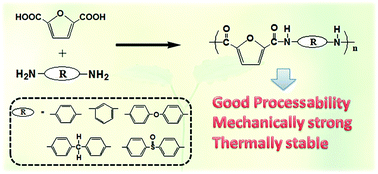
In typical polymerization procedure, polymers were synthesized in a 150 mL round-bottom flask equipped with a mechanical stirrer and nitrogen inlet. 10 mmol FDCA and 1.4 g lithium chloride were dissolved in 20 mL NMP, an equimolar amount of diamines together with 6 mL pyridine and 22 mmol TTP were added in the mixture to form homogeneous yellow solution. The mixture was then gradually heated to 130 °C and maintained at that temperature for 4 h under the protection of nitrogen. After the completion of reaction, the ropy polymer solution was precipitated in acetone and washed with acetone and distilled water for several times, after which it was immersed in abundant ethyl alcohol for several days to extracted the residual impurities. Finally, the product was dried in vacuum at 70 °C overnight. Different polymers synthesized from PPD, MPD, ODA, DDM and DDS were named as PPF, PMF, POF, PCF and PSF, respectively, as shown in Scheme 1.
 |
| | Scheme 1 Synthesis of furanic polyamides. | |
2.3. Characterizations
Specific viscosity tested by ubbelohde viscometer was employed to select an optimized experimental condition for all the phosphorylation process. 1H NMR spectra was obtained using a Bruker 400 MHz NMR spectrometer at room temperature (in DMSO-d6) with tetramethylsilane (TMS) as an internal reference. Infrared spectra were carried out on Fourier transform infrared (FTIR) spectrometer (NEXUS-670, Nicolet co.) with Attenuated Total Reflectance (ATR) on thin film. Gel permeation chromatography (GPC) was performed on a waters 5510 separation module equipped with waters 2414 refractive index and 2996 photodiode array detectors using DMF containing 70 mM NaNO3 as eluent at a flow rate of 1 mL min−1. The glass transition temperatures of polymers were tested with DSC on a TA-Q20 thermal analyzer instruments from 30 °C to 350 °C with a heating rate of 20 °C min−1. Thermal stability was investigated on a TA instrument (TG 209 F1, Netzsch) under the protection of N2 atmosphere from 30 to 900 °C at a rate of 20 °C min−1. Mechanical properties were detected on an SANS-CMT4203 electromechanical universal testing °C machine. Dynamic mechanical analysis (DMA) was carried out using a TA-Q800 series thermal analysis system at a heating rate of 10 °C min−1 with a frequency of 1 Hz.
3. Results and discussion
3.1. Optimized synthesis of furanic polyamides
Previously, Mitiakoudis et al. have compared various synthetic pathways, such as high-temperature bulk polymerization of dichlorides with diamines, low-temperature solution polymerization of dichlorides with diamines, and direct solution polycondensation of FDCA with diamines, for the synthesis of furanic polyamides, and found the direct polycondensation gave the best results.24 Therefore, the furanic polyamides were synthesized by the direct Yamazaki–Higashi phosphorylation reaction for its simpleness and efficiency in this study. However, we noted that in previous study, long reaction time was needed to obtain polymers with satisfactory molecular weight, which may be due to the low polymerization temperature and low monomer concentrations that adopted. Therefore, we first attempted to optimize these parameters while kept the molar ratio of other additives to monomers constant to promote the polymerization efficiency. PMF was selected as model polymers and their inherent viscosity (ηin) was employed as inspection standard, the results were summarized in Fig. 1. Generally, low monomer concentrations resulted in low ηin because of the low collision chance of carboxyl and amino groups, and the ηin increased almost linearly with increasing of monomer concentration, suggesting the polycondensation was first-order reaction. However, it became too viscous to stir when the monomer concentration came to 0.4 mol L−1. As a consequence, 0.35 mol L−1 was chosen as the suitable concentration. For reaction temperature, it is found that the ηin of polymers increased with elevated temperature, suggesting the positive effect of higher temperature on the reaction rate, and the ηin of polymers synthesized at 130 °C showed the highest ηin of 1.82 dL g−1. As the temperature increased to 150 °C, the ηin obviously decreased, which may be due to the effect of side reactions at this temperature. The ηin of polymer was also increased with prolonged reaction time as indicated in Fig. 1c, but the ηin did not significantly change after 4 h reaction. From these experiments, monomer concentration of 0.35 mol L−1, reaction temperature of 130 °C and reaction time of 4 h were used for the subsequent synthesis of furanic polyamides.
 |
| | Fig. 1 Effect of (a) monomer concentration, (b) reaction temperature, and (c) reaction time on the inherent viscosity of PMF. | |
3.2. Structural analysis of furanic polyamides
Five different furanic polyamides were synthesized as shown in Scheme 1, their molecular weight was measured by GPC and the results were listed in Table 1. As can be seen, PPF and PMF, the counterparts for PPTA and PMIA, achieved high weight average molecular weight (Mw) of 100 and 118 kg mol−1, and number average molecular weight (Mn) of 64.0 and 53.2 kg mol−1, with polydispersity index (PI = Mw/Mn) of 1.57 to 2.22, demonstrating our robust synthetic procedure. However, for the other three polyamides, the molecular weight varied significantly, which was attributed to the effect of the flexible groups in the diamines. ODA contained electron-donating ether group, thus improved the reactivity of amino groups toward carboxyl groups. DDM contained weaker electron-donating methylene group, thus the molecular weight of PCF was lower than that of POF. While the electron-withdrawing sulphone group in DDS further lowered the reactivity of amino groups, resulting in the lowest molecular weight of PSF, which was consistent with previous study.24 Nevertheless, all polyamides could form uniform films with good mechanical properties as will be discussed in the following sections.
Table 1 GPC results of furanic polyamides
| Samples |
PPF |
PMF |
POF |
PSF |
PCF |
| Mw (kg mol−1) |
100 |
118 |
140 |
58.8 |
70.5 |
| Mn (kg mol−1) |
64.0 |
53.2 |
83.8 |
39.3 |
40.8 |
| PI |
1.57 |
2.22 |
1.68 |
1.49 |
1.73 |
Fig. 2 presents the FT-IR spectra of furanic polyamides. The characteristic peaks for furan rings, including the C
C stretching vibrations at 1560–1580 cm−1, the C–O–C groups at around 1020 cm−1, and the out-of-plane deformation vibrations of the C–H groups at 970 and 820 cm−1, could be found in all polymers, demonstrating the introduction of furan rings in these polymers.28,29 The absence of peaks at 1720 cm−1 that corresponded to the free C
O from COOH demonstrated the full conversion of carboxylic acid to amide groups. The formation of amide groups was also confirmed by the presence of amide I, II and III complex vibration bands that located at around 1660 cm−1, 1510–1540 cm−1 and 1310 cm−1 in these polymers.30 The two peaks at 3500 cm−1 and 3285 cm−1 were attributed to the stretching vibrations of “free” and hydrogen-bonded N–H in amide groups, suggesting the presence of hydrogen bonds in these polyamides.26
 |
| | Fig. 2 FT-IR spectra of furanic polyamides. | |
The chemical structures of furanic polyamides were also characterized by 1H NMR, as shown in Fig. 3. The proton signals assigned to furan rings at about 7.40 to 7.50 ppm could be found in all polymers. The resonances at 10.33 to 11.67 ppm attributed to the protons of amide bonds. Other peaks could also be assigned to their corresponding aromatic protons as indicated in the Fig. 3. Moreover, the ratios of integral area of protons were approximately identical to the theoretical values for polymers with ideal chemical structure. For example, the Ha
:
Hb
:
Hc was 1.00
:
1.89
:
1.09 in PPF, which was consistent with its corresponding theoretical values of 1
:
2
:
1, the comparison results were similar for other polyaimides, demonstrating the successful synthesis of the anticipated furanic polyamides.
 |
| | Fig. 3 1H NMR spectra of furanic polyamides. | |
3.3. Solubility of furanic polyamides
The applications of many high-performance polymers were limited by their poor solubility in organic solvents, therefore, we have also tested our furanic polyamides in several commonly used solvents as listed in Table 2. It was found that the PCF, PSF, POF and PMF could be dissolved in some polar aprotic solvents such as NMP, DMAc, DMSO and DMF at room temperature. But the PPF could only be dissolved upon the addition of LiCl and heating, which may be due to its more rigid backbone as compared to other four polymers. Moreover, we found that commercial PPTA polymer powders were totally insoluble in all tested solvents even with the addition LiCl and heated to 100 °C, suggesting the introduction of furan rings would greatly improve the processability of aromatic polyamides.
Table 2 Solubility of polyamides in various solventsa
| Samples |
NMP |
DMAc |
DMSO |
DMF |
THF |
CHCl3 |
Methanol |
| Note: ++ soluble at room temperature; + soluble upon addition of LiCl and heating; − insoluble. |
| PCF |
++ |
++ |
++ |
++ |
− |
− |
− |
| PSF |
++ |
++ |
++ |
++ |
− |
− |
− |
| POF |
++ |
++ |
++ |
++ |
− |
− |
− |
| PMF |
++ |
++ |
++ |
++ |
− |
− |
− |
| PPF |
+ |
+ |
+ |
+ |
− |
− |
− |
It is general accepted that the atoms carrying lone pair electrons and being small in size, such as F, O and N, have strong electronegativity, thus tend to form hydrogen bonds with H atoms.31,32 In fact, Wilsens et al. have described the depression effect of furan rings on the formation of hydrogen bonds among amide groups by using small molecule compounds.26 Therefore, the improved solubility of polyamides in this study was also attributed to the weakening of interchain hydrogen bonds in polymers. To demonstrate this, we have synthesized a series copolymers of PPF-co-PPTA that containing different amount of PPTA moieties, and characterized these copolymers by FT-IR spectra as shown in Fig. 4. It is noted that with the increasing amount of PPTA in copolymers, the peaks attributed to the “free” N–H stretching vibration gradually weakened, and the peak attributed to the hydrogen-bonded N–H became sharper. Moreover, the vibration band of amide I shifted from 1660 cm−1 in PPF to 1653 cm−1 in copolymers containing 60% PPTA, and the peak of amide III gradually disappeared. All these observations suggested the increased hydrogen bonds in copolymers containing PPTA, and thus demonstrated our hypothesis that the introduction of furan rings could weaken the interchain hydrogen bonds and improve the solubility of aromatic polyamides.
 |
| | Fig. 4 FT-IR spectra of PPF-co-PPTA with difference weight percents of PPTA. | |
3.4. Thermal and mechanical properties of furanic polyamides
The thermal properties of furanic polyamides were first investigated by DSC, as shown in Fig. 5. PPF showed high glass transition temperature (Tg) of 302.4 °C. For comparison, we also measured the Tg of PPTA by DSC, it was found that the Tg of PPTA was about 344.8 °C, suggesting the strong hydrogen bonds among PPTA have prevented the thermal motion of polymer chains, thus enabled high Tg of PPTA. PMF showed relatively lower Tg of 276.5 °C due to the less rigid backbone.33 The introduction of flexible groups made the Tgs of PCF, PSF and POF decrease to 217.4, 234.7 and 218.8 °C, respectively, suggesting the tunable thermal properties of furanic polyamides by structure design.
 |
| | Fig. 5 DSC curves of furanic polyamides. | |
Probably the most distinguished property of aromatic polyamides is the high thermal decomposition temperature. Therefore, we have evaluated the thermal stability of furanic polyamides by TGA (Fig. 6). It can be seen from Fig. 6 that all polyamides exhibited high thermal stability without weight loss below 300 °C. PSF showed onset decomposition temperature (5% weight loss, T5) of 315.9 °C due to its flexible polymer chain and low molecule weight, while PPF showed the highest T5 of 394.5 °C because of its rigid backbone. Notably, the maximal decomposition temperatures (Td) of all polyamides were in the range of 433.7 to 442.1 °C without significant difference as that of T5, suggesting the decomposition of these polymers might be governed by the pyrolysis of furan moieties.
 |
| | Fig. 6 TGA thermograms of furanic polyamides. | |
To gain more insight into the thermal behavior of furanic polyamides and understand the influence of furan rings on the decomposition behavior of polyamides, we have investigated the thermal decomposition kinetics of PPF and compared with that of PPTA by TGA and differential thermogravimetry (DTG) (Fig. 7). Both PPF and PPTA exhibited a single decomposition step. For dynamic heating experiments, the well-known Kissinger method was frequently used to determine the Ea of solid state reactions,34–36
| |
 | (1) |
where
β is the heating rate (K min
−1),
TP is the peak temperature from DTG,
A is frequency factor (s
−1),
R is the universal gas constant (8.314 J mol
−1 K
−1),
Ea is apparent activation energy (kJ mol
−1),
α is defined as the fractional conversion at any time
t, and
n is reaction order. Kissinger assumed that at the maximum decomposition temperature,
n(1 −
α)
n−1 = 1, therefore, the equation can be simplified as:
| |
 | (2) |
the
Ea can thus be obtained by plotting ln(
β/
TP2)
versus 1/
TP, as shown in
Fig. 7e. From the slope of the line, we can calculate the
Ea of PPF was 148.6 kJ mol
−1, while the
Ea of PPTA was 265.9 kJ mol
−1. We can also gain the reaction order
n by Crane
eqn (3),
| |
 | (3) |
when
Ea/
nR ≫ 2
TP, the slope of linear fitting of ln(
β)
vs. 1/
TP (
Fig. 7f) can be approximately considered as
Ea/
nR, we thus calculate the reaction orders of PPF and PPTA were 0.93 and 0.95, suggesting both the decomposition of PPF and PPTA were first order reaction.
 |
| | Fig. 7 The kinetics of thermal degradation of PPF and PPTA. (a and b) TGA and DTG curves of PPF. (c and d) TGA and DTG curves of PPTA. (e and f) Linear fitting according to Kissinger and Crane equation. | |
The above analysis suggested that it needed more energy to decompose PPTA than PPF, which was reflected by the Td of these two polymers. PPTA showed Td around 573.5 to 593.6 °C at different heating rate, which were about 150 °C higher than those of PPF. Several reasons might be accounted for this phenomena: (1) the degradation of furanic units were easier than that of benzenic units, as suggested by previous studies.37,38 (2) The very strong hydrogen bonds among polymer chains prevented the thermal motion and decomposition of PPTA. (3) The relatively lower molecular weight of our PPF as compared to commercial PPTA as used in this study. These results suggested that if we want to further improve the heat resistance of furanic polyamides, we could develop novel polymerization techniques to improve the molecular weight because the first two reasons were the intrinsic characteristics of furanic polyamides. Nevertheless, the thermal stability of furanic polyamides such as PPF was still high enough for some high-temperature applications. Interestingly, it is found that although the thermal stability of PPF was inferior to that of PPTA, the char yield of PPF at 700 °C (about 60%) was much higher than that of PPTA (about 45%), suggesting the hetero atoms might promote the carbonization of polyamides, which was helpful to prepare nitrogen and oxygen-doped carbons.39
Because of the good solubility of furanic polyamides, it is facile to process them into desired forms for applications. As an example, Fig. 8 shows the appearance of an uniform, transparent and flexible PPF film. The films were subsequently used for tensile testing, the typical stress–strain curves were presented in Fig. 9, and the Young's modulus (E), tensile strength (σ) and elongation at break (ε) were extracted in Table 3. Generally, polyamides with flexible groups in their main chains possessed lower E, PSF had the lowest E of 998 MPa because of its low molecular weight. PPF again showed the highest E of 1635 MPa and σ of 93.7 MPa, which were comparable to some other high-performance polymers.40,41 Because of the insolubility of PPTA in common organic solvents, it is very difficult to prepare uniform PPTA films for tensile testing. Therefore, we have prepared PMIA films from commercialized PMIA to compare the mechanical properties of furanic polyamides and traditional polyamides. It is found that the E and σ of PMIA were about 1753 MPa and 105.8 MPa, which were higher than those of PMF (1504 MPa and 87.5 MPa). Such comparison suggested that the depression effect of furan rings on the hydrogen bonds among amide groups might have some negative effect on mechanical properties of polyamides because of the weaker interchain interactions. Nevertheless, the above tensile testing demonstrated the relatively high mechanical properties and the potential of these furanic polyamides for practical use as engineering plastics.
 |
| | Fig. 8 Photographs of PPF films. | |
 |
| | Fig. 9 Typical stress–strain curves of furanic polyamides. | |
Table 3 Physical properties of furanic polyamides
| Samples |
PCF |
PSF |
POF |
PMF |
PPF |
| Tg (DSC) (°C) |
217.4 |
234.7 |
218.8 |
276.5 |
302.4 |
tan δ (°C) |
195.2 |
236.7 |
208.4 |
256.8 |
311.5 |
| T5 (°C) |
335.0 |
315.9 |
342.2 |
369.5 |
394.5 |
| Td (°C) |
442.1 |
440.9 |
433.7 |
438.5 |
441.8 |
| Char yield at 700 °C (%) |
54.7 |
44.6 |
56.9 |
57.2 |
58.9 |
| E (MPa) |
1283 ± 82 |
998 ± 52 |
1361 ± 81 |
1504 ± 39 |
1635 ± 112 |
| σ (MPa) |
77.7 ± 1.3 |
71.4 ± 1.7 |
83.9 ± 2.9 |
87.5 ± 3.1 |
94.77 ± 1.5 |
| ε (%) |
7.45 ± 0.23 |
10.97 ± 0.81 |
11.12 ± 0.83 |
9.46 ± 1.03 |
9.13 ± 0.25 |
| G′ at 50 °C (MPa) |
2044 |
1919 |
2002 |
2831 |
2747 |
The thermomechanical properties of furanic polyamides were also investigated by DMA, as shown in Fig. 10. The storage modulus (G′) (Fig. 10a) of PPF and PMF were 2831 and 2747 MPa, respectively, which were higher than those of PCF, PSF, and POF, because of the flexible groups presented in the later three polyamides. Moreover, the peak temperature of tan
δ, which reflected the Tg of polymers (Fig. 10b), were also listed in Table 3. Although there were some deviations in Tg for the same polymer obtained from DSC and DMA, the variation tendency of Tgs for the five samples were similar in these two sets of measurement, that is, the PPF showed the highest Tg, while the introduction of flexible groups increased the chain mobility and thus lowered the Tgs of polyamides.
 |
| | Fig. 10 Storage modulus (a) and tan δ (b) of furanic polyamides. | |
4. Conclusions
Partial bio-based polyamides were prepared by high-temperature solution polycondensation from renewable resources FDCA and various aromatic diamines. Because of the depression effect of furan rings on the hydrogen bonds between amide groups, all five furanic polyamides showed good solubility in traditional organic solvents, which facilitated their solution processing. Furanic polyamides exhibited satisfactory mechanical and thermal properties with PPF showed the best results because of its relatively high molecular weight and rigid backbone. For example, PPF showed Tg, Td, E, σ, and ε of 302.4 °C, 441.8 °C, 1635 MPa, 93.7 MPa and 9.13%, respectively, demonstrating its great promise for utilization as engineering plastics. However, the thermal stability of furanic polyamides were still inferior to their petroleum-based counterparts as revealed by the comparison of PPF and PPTA, suggesting efforts were still needed to further improve the properties of furanic polyamides. Nevertheless, this study provided detailed investigation on the preparation and characterization of aromatic furanic polyamides, and the results presented here might serve as clues for future development of bio-based high-performance polymers.
Acknowledgements
The authors gratefully acknowledge the National Natural Science Foundation of China (No. 51473031), the National 863 Project of China (No. 2012AA03A212), and Science and Technology Commission of Shanghai Municipality (No. 14DZ2261000) for support.
Notes and references
- U. Biermann, U. Bornscheuer, M. A. R. Meier, J. O. Metzger and H. J. Schäfer, Angew. Chem., Int. Ed., 2011, 50, 3854–3871 CrossRef CAS PubMed.
- W. Lu, J. E. Ness, W. Xie, X. Zhang, J. Minshull and R. A. Gross, J. Am. Chem. Soc., 2010, 132, 15451–15455 CrossRef CAS PubMed.
- G. Chen and M. K. Patel, Chem. Rev., 2012, 112, 2082–2099 CrossRef CAS PubMed.
- A. Gandini, T. M. Lacerda, A. J. F. Carvalho and E. Trovatti, Chem. Rev., 2016, 116, 1637–1669 CrossRef CAS PubMed.
- G. Yang, R. Zhang, H. Huang, L. Liu, L. Wang and Y. Chen, RSC Adv., 2015, 5, 67574–67582 RSC.
- C. Vilela, A. F. Sousa, A. C. Fonseca, A. C. Serra, J. F. J. Coelho, C. S. R. Freire and A. J. D. Sivestre, Polym. Chem., 2014, 5, 3119–3141 RSC.
- A. Gandini and T. M. Lacerda, Prog. Polym. Sci., 2015, 48, 1–39 CrossRef CAS.
- K. Yao and C. Tang, Macromolecules, 2013, 46, 1689–1712 CrossRef CAS.
- A. A. Rosatella, S. P. Simeonov, R. F. M. Frade and C. A. M. Afonso, Green Chem., 2011, 13, 754–793 RSC.
- J. Deng, X. Liu, C. Li, Y. Jiang and J. Zhu, RSC Adv., 2015, 5, 15930–15939 RSC.
- A. Gandini, Polym. Chem., 2010, 1, 245–251 RSC.
- W. P. Dijkman, D. E. Groothuis and M. W. Fraaije, Angew. Chem., Int. Ed., 2014, 53, 6515–6518 CrossRef CAS PubMed.
- F. Koopman, N. Wierckx, J. H. de Winde and H. J. Ruijssenaars, Bioresour. Technol., 2010, 101, 6291–6296 CrossRef CAS PubMed.
- C. Sievers, M. B. Valenzuela, T. Marzialetti, I. Musin, P. K. Agrawal and C. W. Jones, Ind. Eng. Chem. Res., 2009, 48, 1277–1286 CrossRef CAS.
- B. Liu, Y. Ren and Z. Zhang, Green Chem., 2015, 17, 1610–1617 RSC.
- S. K. Burgess, J. E. Leisen, B. E. Kraftschik, C. R. Mubarak, R. M. Kriegel and W. J. Koros, Macromolecules, 2014, 47, 1383–1391 CrossRef CAS.
- J. J. Bozell and G. R. Petersen, Green Chem., 2010, 12, 539–554 RSC.
- R. J. I. Knoop, W. Vogelzang, J. van Haveren and D. S. van Es, J. Polym. Sci., Part A: Polym. Chem., 2013, 51, 4191–4199 CrossRef CAS.
- L. Diao, K. Su, Z. Li and C. Ding, RSC Adv., 2015, 5, 15930–15939 RSC.
- V. Tsanaktsis, G. Z. Papageorgiou and D. N. Bikiaris, J. Polym. Sci., Part A: Polym. Chem., 2015, 53, 2617–2632 CrossRef CAS.
- Y. Jiang, A. J. J. Woortman, G. O. R. A. van Ekenstein and K. Loos, Polym. Chem., 2015, 6, 5198–5211 RSC.
- V. Tsanaktsis, Z. Terzopoulou, S. Exarhopoulos, D. N. Bikiaris, D. S. Achilias and D. G. Papageorgiou, et al., Polym. Chem., 2015, 6, 8284–8296 RSC.
- V. Tsanaktsis, D. N. Bikiaris, N. Guigo, S. Exarhopoulos, D. G. Papageorgiou, N. Sbirrazzuoli and G. Z. Papageorgiou, RSC Adv., 2015, 5, 74592–74604 RSC.
- A. Mitiakoudis and A. Gandini, Macromolecules, 1991, 24, 830–835 CrossRef CAS.
- I. C. Yeh, B. C. Rinderspacher, J. W. Andzelm, L. T. Cureton and J. L. Scala, Polymer, 2014, 55, 166–174 CrossRef CAS.
- C. H. R. M. Wilsens, Y. S. Deshmukh, B. J. Noordover and S. Rastogi, Macromolecules, 2014, 47, 6196–6206 CrossRef CAS.
- B. Wu, Y. Xu, Z. Bu, L. Wu, B. Li and P. Dubois, Polymer, 2014, 55, 3648–3655 CrossRef CAS.
- Y. Jiang, A. J. J. Woortman, G. O. R. A. van Ekenstein, D. M. Petrović and K. Loos, Biomacromolecules, 2014, 15, 2482–2493 CrossRef CAS PubMed.
- M. Jiang, Q. Liu, Q. Zhang, C. Ye and G. Zhou, J. Polym. Sci., Part A: Polym. Chem., 2012, 50, 1026–1036 CrossRef CAS.
- D. J. Skrovanek, S. E. Howe, P. C. Painter and M. M. Coleman, Macromolecules, 1985, 18, 1676–1683 CrossRef CAS.
- I. Rozas, I. Alkorta and J. Elguero, J. Am. Chem. Soc., 2000, 122, 11154–11161 CrossRef CAS.
- J. M. García, F. C. García, F. Serna and J. L. de la peña, Prog. Polym. Sci., 2010, 35, 623–686 CrossRef.
- A. F. Sousa, C. Vilela, A. C. Fonseca, M. Matos, C. S. R. Freire, G. J. M. Gruter, J. F. J. Coelho and A. J. D. Silvestre, Polym. Chem., 2015, 6, 5961–5983 RSC.
- K. P. Pramoda, T. S. Chung, S. L. Liu, H. Oikawa and A. Yamaguchi, Polym. Degrad. Stab., 2000, 67, 365–374 CrossRef CAS.
- A. C. Lua and J. Su, Polym. Degrad. Stab., 2006, 91, 144–153 CrossRef CAS.
- V. Tsanaktsis, E. Vouvoudi, G. Z. Papageorgiou and D. G. Papageorgiou, J. Anal. Appl. Pyrolysis, 2015, 112, 369–378 CrossRef CAS.
- A. F. Sousa, M. Matos, C. S. R. Freire, A. J. D. Silvestre and J. F. J. Coelho, Polymer, 2013, 54, 513–519 CrossRef CAS.
- G. Z. Papageorgiou, V. Tsanaktsis and D. N. Bikiaris, Phys. Chem. Chem. Phys., 2014, 16, 7946–7958 RSC.
- A. Sánchez-Sánchez, F. Suárez-García, A. Martínez-Alonso and J. M. D. Tascón, Carbon, 2014, 70, 119–129 CrossRef.
- A. Kumar, S. Tateyama, K. Yasaki, M. A. Ali, N. Takaya, R. Singh and T. Kaneko, Polymer, 2016, 83, 182–189 CrossRef CAS.
- D. Liaw, K. Wang, Y. Huang, K. Lee, J. Lai and C. Ha, Prog. Polym. Sci., 2012, 37, 907–974 CrossRef CAS.
|
| This journal is © The Royal Society of Chemistry 2016 |
Click here to see how this site uses Cookies. View our privacy policy here.