Valence and electronic trap states of manganese in SrTiO3-based colossal permittivity barrier layer capacitors

Kosuke Tsuji*a, Wei-Ting Chenab, Hanzheng Guoa, Xiao-Ming Chenc, Tai-Kuang Leeb, Wen-Hsi Leeb and Clive A. Randalla
aCenter for Dielectrics and Piezoelectrics, Materials Research Institute, Department of Material Science and Engineering, The Pennsylvania State University, University Park, Pennsylvania 16802, USA. E-mail: tuk152@psu.edu
bDepartment of Electrical Engineering, National Cheng Kung University, Taiwan No. 1, University Road, Tainan City 701, Taiwan, Republic of China
cSchool of Physics and Information Technology, Shaanxi Normal University, Xi'an, 710119, P. R. China

Received 22nd June 2016 , Accepted 22nd September 2016

First published on 23rd September 2016


Abstract

In this study, colossal effective permittivity (ε′ ∼ 50[thin space (1/6-em)]000) dielectrics are attained in Mn and Nb co-doped SrTiO3-based capacitors, and the effective permittivity is explained in terms of an internal barrier layer (IBL) effect. Here, we use a combination of characterization techniques, including scanning transmission electron microscopy (STEM), electron energy loss spectroscopy (EELS), energy dispersive X-ray spectroscopy (EDS), and charge Deep Level Transition Spectroscopy (Q-DLTS) to confirm the presence of interfacial electronic traps in an air co-fired capacitor with Pt internal electrodes. The IBL was developed by an oxidative annealing process, leading to improved dielectric loss and breakdown voltages. The elemental mapping confirms that the dopant has a Mn-rich segregation layer in the grain boundaries and also at the electrode/ceramic interface. The EELS results reveal the valence change of manganese changed from a mixed Mn2+/Mn3+ to a mixed Mn3+/Mn4+ during an annealing process. The valence changes helps to enhance the Schottky barrier height at the grain boundaries, and this is quantified by a Capacitance–Voltage (CV) analysis. Moreover, Q-DLTS results are presented to show the three electronic traps existing at IBL. All these changes with oxidative annealing are also discussed and related to the electrical and dielectric property trends.

Introduction

It is of interest to search for colossal permittivity (CP, ε′ > 104) materials with low dielectric loss for microelectronics applications.1,2 Recently, CP materials have been reported in several material systems such as doped-BaTiO3,3 CaCu3Ti4O12,4,5 doped-NiO,6 CuO,7 La2−xSrxNiO4,8 and doped-TiO2.9–11 Strontium titanate (SrTiO3)-based ceramics are still one of the most widely used materials for grain boundary barrier layer capacitors because of low dielectric loss, temperature stability with large dielectric constant.12–17 Such novel properties are explained in terms of the back-to-back Schottky barriers at the grain boundaries resulting from interfacial electronic traps with n-type grains. It has been proposed that the nature of the traps could be related to cation vacancies,18,19 or chemisorbed oxygen.20–22 Also a segregated acceptor solute, such as Cu, Fe or Mn, is known to have an additional influence on the interfacial state.18,23,24 In fact, the Mn additive is often used to improve a variety of the properties in the electroceramics, such as PTCR thermistor,25,26 capacitors,26 and varistors.27–29 Although a comprehensive understanding has not been reported to date, Mn is thought to be particularly effective because it forms an additional deeper trap state18,30 or it affects the oxidation rate at the grain boundaries by changing its valence state.22,31 Therefore it would be important for the development of ceramics capacitors to understand the role of the dopant Mn and the oxidative heat treatment, and how they affect microstructure and electronic structure change.

In the present study, we systematically consider the effect of the oxidative annealing and characterize the valence states of Mn on the macroscopic dielectric properties. First, Mn and Nb co-doped SrTiO3 single layer capacitors with Pt internal electrodes were prepared by sintering under a reducing condition and underwent a subsequent oxidative annealing with varying times. Our sintering condition produces lower valence states of Mn, and then an oxidative annealing introduces higher valence states.32 Detailed studies of microstructure, local valence states, and interfacial electronic states were performed. The structure – property – processing relations give insights into the development of high performance barrier layer capacitors or colossal permittivity dielectrics.

Experimental

Sample preparation

The specimens were prototyped by a conventional mixed oxide process.33 The starting materials used in this study were reagent-grade SrCO3 and TiO2 (99% and 99.99% purity, respectively; Alfa Aesar). The starting materials were dried at 120 °C for 24 h to remove absorbed water. These dried powders were then accurately weighed to a stoichiometric composition of SrTiO3 and mixed with 0.6 mol% Nb2O5, 1 mol% TiO2, 1.0 mol% MnO2, and 10 wt% ZnO–B2O3 flux with zirconia milling media and ethanol by ball milling for 24 h. The powders were deflocculated and were prepared in a two-step typical tape fabricating procedure. First, the mixture was ball milled with vehicle A (5 wt% polyvinyl butyral and 95 wt% MEK/ETOH organic solvents) for 24 hours to well disperse powder in vehicle to become slurry. Second, the slurry was ball milled with vehicle B (22 wt% polyvinyl butyral, 10 wt% plasticizer and 68 wt% MEK/ETOH organic solvents) for 24 h. The resultant so-called slip was then tape-casted to a green sheet of 35 μm in thickness using doctor-blade method. Platinum paste was screen printed as the internal electrode onto green sheets, using 350 mesh stainless steel screen. Printed sheets were then stacked and pressed at 55 °C in a square mold, successively using isostatic laminators. The green chips were cut to the size corresponding to 5 mm × 3.5 mm final chip size which contains one active layer. After debinding at 550 °C for 8 h, the green chips were sintered at 1400 °C for 5 hours in the in a 5% H2/95% N2 forming gas (pO2 ∼ 10−13 atm). The as-sintered samples underwent reoxidation in a cube furnace at 1200 °C for 50 minutes to 10 hours at a heating and cooling rate of 3 °C min−1 in air. In addition, (1.0 mol% Mn)-doped SrTiO3 and (0.6 mol% Nb)-doped SrTiO3, without adding Nb2O5 and MnO2, were also prepared under the same conditions, respectively. Disk-shaped samples without inner electrodes were also prepared for X-ray diffraction measurement. The powder was prepared by the same process described above and then pressed into disk-shaped pellet without any binders. The pellets were further pressed using cold isostatic pressing. The disk-shaped samples were reoxidized in air for 60 and 600 min after the sintering process.

Electrical and dielectric characterization

Capacitance of the samples was measured over a frequency range of 100 Hz to 1 MHz using a computer-controlled LCR meter (HP4284A, Hewlett-Packard, USA) at room temperature. The d.c. current–voltage characteristics were measured at room temperature with a pA meter (HP 4140B, Hewlett Packard, USA). The current was measured after applying the d.c. bias for 1 (min). Q-DLTS characterization was performed in a home-made charge measurement system.34 Partially doped samples were used in addition to (Mn, Nb) doped-SrTiO3 in order to investigate the nature of trap. In this study, 100 μs duration of pulse voltage was applied with 1 V of magnitude.

Microstructure characterization

X-ray diffractometer (XRD) (PANalytical Empyrean) with CuKα1 radiation (λ = 1.5406 Å) was utilized to identify the crystal structure. The sintered surface of the samples was first polished and then scanned at 0.02° intervals of 2θ in the range of 10–70°. Microstructural and chemical studies were performed on both segregation layer and grain region using a TITAN (FEI, TITAN G2 60–300 kV) microscopy equipped with an Electron Energy Loss Spectrum (EELS) system operating at an accelerating voltage of 200 kV. The samples annealed for 60 and 600 (min) were chosen to understand the change during the annealing. Cross section specimens for transmission electron microscopy (TEM) were prepared via standard procedures, including mechanical thinning, polishing, and ion milling. The specimens were polished down to 20 μm, and then mounted on molybdenum grids. The foils were further thinned with an Ar-ion mill (Gatan, PIPS II) until an electron transparent perforation was formed. A cryogenic stage was used to cool the specimen to the liquid N2 temperature during ion milling to minimize structural damage and artifacts. Microstructural and chemical studies were performed on a TITAN (FEI, TITAN G2 60–300 kV) microscopy equipped with an Energy Dispersive X-ray Spectroscopy (EDS) system and an Electron Energy Loss Spectrum (EELS) system operating at an accelerating voltage of 200 kV. The EDS mapping and EELS measurements were achieved under scanning transmission electron microscopy (STEM) mode. Monochromator was used to ensure the energy resolution of EELS experiments, and the half-maximum height of the zero-loss peak was 0.175 eV. The relative sample thickness, as estimated from t/λ of the zero-loss spectrum, was between 0.3–0.5 (λ is the inelastic scattering mean free path). To accurately monitor the random fluctuations of the signal along the energy loss scale, zero-loss peak was also simultaneously recorded by employing the attached dual-EELS instrument, and then the drifting of the obtained white lines was corrected.

Results and discussion

Fig. 1 shows XRD pattern of the disc-shaped (1% Mn + 0.6% Nb)-doped SrTiO3 capacitors annealed for 60 and 600 min. A cubic symmetry of SrTiO3 is detected in the both specimens and any secondary phase was not observed.
image file: c6ra15635e-f1.tif
Fig. 1 Measured XRD data for disc-shaped (1% Mn + 0.6% Nb)-doped SrTiO3 capacitors annealed for 60 min, and 600 min.

Fig. 2 shows frequency dependence of dielectric properties of the (1% Mn + 0.6% Nb)-doped SrTiO3 capacitor with different annealing time. Colossal effective permittivity (ε′ > 104) was obtained in all the samples. The values were almost invariant to frequency (from 100 Hz to 1 MHz) and decreased with the increase in the annealing time. This would be consistent with the barrier layer width increasing by the annealing, and thus barrier layer capacitance was thereby decreased. The same trend in the dielectric loss (tan[thin space (1/6-em)]δ) at the low frequency regime also indicates the thicker barrier layers, which leads to higher grain boundary resistance. The minimum value of tan[thin space (1/6-em)]δ is found to be ∼0.008 at ∼8 kHz in the 600 (min) annealed samples while tan[thin space (1/6-em)]δ < 0.03 was maintained in the range from 500 to 3.5 × 10⁵ Hz. These dielectric properties are superior or/and comparative to existing IBLCs.5–7 It is also noted these can be further improved by modifying the oxidative annealing conditions.


image file: c6ra15635e-f2.tif
Fig. 2 Dielectric properties in terms of a relative permittivity in (1% Mn + 0.6% Nb)-doped SrTiO3 capacitors with different annealing time: (□) 50, (△) 100, (○) 200 and (▽) 600 (min).

Fig. 3 shows the result of current density–electric filed (JE) characteristics of (1.0% Mn + 0.6% Nb)-doped SrTiO3 capacitors annealed for different times. The non-linear characteristics were clearly observed in all the samples, suggesting that IBLC effect plays important role in these specimens.27,35,36 Both insulation resistance and breakdown voltage (VB at J ∼ 1 mA cm−2) improve with the increase of the annealing time. This could be also explained in terms of the change in the barrier layer width. Detail discussion is made in the later section.


image file: c6ra15635e-f3.tif
Fig. 3 Current density–electric filed (JE) characteristics of (1.0% Mn + 0.6% Nb)-doped SrTiO3 capacitors annealed for different times: (□) 50, (△) 100, (○) 200 and (▽) 600 (min).

Fig. 4a and b show the elemental mapping near the grain boundary in the samples annealed for 60 and 600 (min). It reveals a Mn and Nb rich phase at the grain boundary in the 60 (min) annealed samples, as shown in the Fig. 4a. Such a phase was barely observed at the grain boundary after annealing for 600 (min), though a small amount of Mn still remained (Fig. 4b). Thus, 600 (min) of oxidative annealing would be long enough for dopants to diffuse into the grains.


image file: c6ra15635e-f4.tif
Fig. 4 Elemental mapping at the grain boundary region for the sample annealed for 60 (min) (a) and 600 (min) (b), and at the interface with electrode for the sample annealed for 60 (min) (c),and 600 (min) (d).

Fig. 4c and d show the elemental mapping near the electrode/ceramic interface in the samples annealed for 60 and 600 (min). The Mn was heavily segregated from the grain region and formed Mn-rich layer near the electrode/ceramic interface. Meanwhile, Sr is found to be depleted from electrode/ceramic interface while both Ti and O still remained. Minor differences in the microstructure between 60 (min) and 600 (min) annealing samples near the electrode/ceramic interface are found.

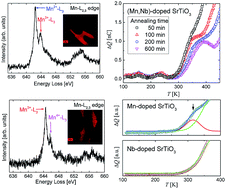
Fig. 5 shows an EELS spectra of O-K, Ti-L2,3, and Mn-L2,3 edges in the samples annealed for 60 (min) and 600 (min) at the electrode/ceramic segregation area and at the grain region. The Mn-L3 edge in the Fig. 5a and d exhibits a double peak, which can be interpreted as mixed valence states.37 The peaks locate at ∼642.5 (eV) and ∼643.9 (eV) for the 60 (min) annealed sample and at ∼644.5 (eV) and ∼645.8 (eV) for the 600 (min) annealed sample. Rask et al.,38 reported that the position of Mn-L3 edge is at 642.44 (eV) for Mn2+, 643.82 (eV) for Mn3+ and 646.45 (eV) for Mn4+. Therefore, it is likely that the two peaks in the 50 (min) annealed sample correspond to Mn2+ and Mn3+, respectively. For the sample annealed for 600 (min), the peak corresponding to Mn2+ disappears, while the Mn4+ state is observed. This may be due to the initial sintering condition producing a Mn2+ state, and it still remained even after annealing for 60 (min).


image file: c6ra15635e-f5.tif
Fig. 5 EELS spectra of Mn-L2,3 edge, Ti-L2,3 edge and O-K edge for the (1.0% Mn + 0.6% Nb)-doped SrTiO3 capacitors with 60 (min) ((a)–(c)) and 600 (min) ((d)–(f)) annealing times. EELS was performed on the segregation layer (Seg) and the grain region (STO). Mn-L2,3 edge was obtained only from the segregated layer.

In Fig. 5b and e, both Ti-L2 and L3 edge show clear peak splitting. The number of peaks and their shape depend on valence state, coordination, and site symmetry of the Ti cations.39 The peak position, on the energy axis is highly related to local nonstoichiometry, in which oxygen deficiency leads to lower energy loss position.40 The measured Ti-L2,3 spectra from both segregation layer and grain region are shifted to higher position with increasing annealing time. It is clearly consistent with the Ti4+ ion being generated by annealing, which also annihilates oxygen vacancies.

Fig. 5c and f shows O-K edge at the segregation and grain region. In the grain region, the intensity of O-K edge increased with the increase in the annealing time. It has been reported40 that higher oxygen vacancy would lead to weaker O-K edge intensity. The peak shape of O-K edge from the grain region is very similar to the reported result.40 Interestingly, the O-K edge from the segregation layer in the Fig. 5c and f is quite different from the one from the grain region. This remarkable difference can be seen at ∼540 (eV) in Fig. 5f. The absence of one peak has been reported in TixOy system.39,41 Thus, the difference of O-K edge could be explained if a non-perovskite structure of the segregation layer is assumed. The TixOy phase can be commonly found in the SrTiO3 system,42,43 and the elemental mapping also confirmed the absence of Sr in these Mn-rich segregated regions (Fig. 4). This secondary phase was not observed by the XRD measurement because TixOy phase exist near the electrode so that it should be caused by the co-firing with inner electrodes.

A CV analysis was carried out to characterize the potential barrier at the grain boundary. For the double Schottky barriers at the grain boundaries, the bias dependence of capacitance can be expressed as:44

 
image file: c6ra15635e-t1.tif(1)
where C is the capacitance per unit area, q is the electronic charge, ε is the permittivity of the grain, Nd is the donor concentration in the grain, ϕ is the Schottky barrier height, and C0 is the capacitance per unit area without the bias voltage. The density of surface states (Ns) and depletion layer width (L) can be estimated by:
 
image file: c6ra15635e-t2.tif(2)
 
Ns = NdL (3)

(1/C − 1/C0)2 plot is shown in the Fig. 6. The parameters in the Table 1 are calculated from the slope and intercept of the data shown in Fig. 6. The values are comparable to reported values in the SrTiO3-based varistor.27,45 It was found that ϕ and L continuously increased with increased annealing time, which can be associated with the decrease in Nd, based on eqn (2) and (3). The oxygen vacancies are known to act as donor in the semiconductor. As discussed above, the EELS showed that the oxygen vacancy concentration decreased with the increase in the annealing time, while the Mn valence state increased. Thus, oxidative annealing was effective in that it increased ϕ and L by decreasing Nd. It is also possible that Mn promoted oxidation at the grain boundaries by changing its valence state.31 Overall, the increase of the barrier height is consistent with the change of the breakdown voltage with increasing the annealing time (Fig. 3). The increase in L with increased annealing time could lead to the decreased effective permittivity (Fig. 2). The macroscopic dielectric and electrical properties is explained in terms of modification of internal barrier properties (ϕ and L).


image file: c6ra15635e-f6.tif
Fig. 6 CV measurements of (1.0% Mn + 0.6% Nb)-doped SrTiO3 capacitors with different annealing time: (□) 50, (△) 100, (○) 200 and (▽) 600 (min). Less voltage was applied on the 50 (min) annealing sample because the breakdown was expected above Vg = 1 (V).
Table 1 Summary of CV and Q-DLTS result
Annealing time (min) ΔET1 [eV] ΔET2 [eV] ΔET3 [eV] Nd [cm−3] ϕb [eV] Ns [cm−2] L [nm]
a ΔET3 of the sample annealed for 50 min was not obtained due to its weak signal.
50 0.50 0.56 a 7.6 × 10¹⁹ 2.1 2.3 × 10¹⁴ 30
100 0.47 0.54 0.64 5.2 × 10¹⁹ 2.2 1.9 × 10¹⁴ 37
200 0.49 0.53 0.73 4.1 × 10¹⁹ 3.3 2.1 × 10¹⁴ 51
600 0.48 0.58 0.76 3.1 × 10¹⁹ 4.6 2.2 × 10¹⁴ 69


Finally, Q-DLTS was performed in order to investigate the trap states at the interface. DLTS signal is defined as the charge released during the time interval from t1 to t2.

 
image file: c6ra15635e-t3.tif(4)
where Q0 is a constant and τ is the time constant. When ΔQ = ΔQmax, τ is simply given by
 
τm = (t2t1)/ln(t2/t1) (5)

Under these conditions, the trap level ΔET can be described in terms of τm and temperature T as follows:46,47

 
image file: c6ra15635e-t4.tif(6)
where Γ is a material constant. Fig. 7 shows the DLTS signal of the samples annealed for 50, 100, 200, and 600 min. Three DLTS peaks were found at ∼160, 230 and 350 K, respectively, indicating multiple trap states. The trap states, which is essential for the formation of back-to-back Schottky barriers,48 are successfully detected. The values of each of the trap levels were obtained from an Arrhenius plot using eqn (6) and are shown in Table 1. The trap levels corresponding to the first and second peak were found to be insensitive to the annealing time, while the third trap formed at deeper level as annealing time increased. To further investigate the nature of trap, DLTS was applied to partially doped SrTiO3 capacitors. Fig. 8 shows the DLTS signal of (0.6 mol% Nb)-SrTiO3 and (1.0 mol% Mn)-SrTiO3 capacitors annealed for 50 (min). Though signals were weak, all three peaks in (1.0 mol% Mn)-doped SrTiO3 were observed almost at the same peak position in (1.0 mol% Mn + 0.6% Nb)-doped SrTiO3, as shown in Fig. 7 and 8a. However, the third peak, which was found at ∼350 K in both (Mn, Nb)-doped and Mn-doped-SrTiO3, was clearly suppressed in (0.6 mol% Nb)-SrTiO3 as shown in Fig. 8b. Therefore, the third peak is then deduced to be attributed to Mn-doping. Based on the EELS result, the deeper trap state might be owing to the change of valence state of Mn and hence contributed to the increase of barrier height. Moreover, the first and second peak were observed in all samples despite the dopant difference. These trap states should be created by an intrinsic defect, such as cation vacancies or chemisorbed oxygen, as mentioned in the previous section.


image file: c6ra15635e-f7.tif
Fig. 7 DLTS signal of (1.0% Mn + 0.6% Nb)-doped SrTiO3 capacitors with different annealing times. The gate time was set to t1/t2 = 48 μs/480 μs.

image file: c6ra15635e-f8.tif
Fig. 8 DLTS signal of (1.0% Mn)-doped SrTiO3 (a), and (0.6% Nb)-doped SrTiO3 capacitor (b) with t1/t2 = 48 μs/480 μs. The symbols are the experimental data and the solid lines are the fitting curves. The insets show the lower temperature region with higher magnitude.

Conclusions

In summary, we report on the correlations between microstructure, chemical valence state, and electrical properties with increasing oxidative annealing time in the SrTiO3-based barrier layer capacitor, which possessed very high 104 effective permittivity. Elemental mapping confirmed Mn was heavily segregated to electrode/ceramics interfaces. EELS analysis revealed that the ratio of mixed valence state of Mn with the increase in the annealing time, while oxygen was incorporated into grains. During these change, all of the Schottky barrier height at the grain boundaries, depletion width, and trap level of Mn were increased. These results correlate with the changes in the dielectric and electric properties with increasing annealing time and can be used to guide optimization of colossal permittivity or barrier layer dielectric design.

Acknowledgements

This work is supported by the National Science Foundation, as part of the Center for Dielectrics and Piezoelectrics under Grant No. IIP-1361571 and 1361503. Authors are grateful to Materials Characterization Lab staff at The Pennsylvania State University, and Mr Okamoto at Murata Manufacturing Co., Ltd. for their helpful discussions. K. Tsuji would like to thank ITO Foundation for International Education Exchange for the financial support. W. T. Chen would like to thank MOST 104-2622-E-006-038-CC3 Ministry of Science and Technology R.O.C. for the financial support.

References

  1. S. Krohns, P. Lunkenheimer, S. Meissner, A. Reller, B. Gleich, A. Rathgeber, T. Gaugler, H. U. Buhl, D. C. Sinclair and A. Loidl, Nat. Mater., 2011, 10, 899–901 CrossRef CAS PubMed.
  2. C. C. Homes and T. Vogt, Nat. Mater., 2013, 12, 782–783 CrossRef CAS PubMed.
  3. C. Pecharroman, F. Esteban-Betegon, J. F. Bartolome, S. Lopez-Esteban and J. S. Moya, Adv. Mater., 2001, 13, 1541–1544 CrossRef CAS.
  4. A. P. Ramirez, M. A. Subramanian, M. Gardel, G. Blumberg, D. Li, T. Vogt and S. M. Shapiro, Solid State Commun., 2000, 115, 217–220 CrossRef CAS.
  5. T. Adams, D. Sinclair and A. West, Adv. Mater., 2002, 14, 1321–1323 CrossRef CAS.
  6. J. Wu, C.-W. Nan, Y. Lin and Y. Deng, Phys. Rev. Lett., 2002, 89, 217601 CrossRef PubMed.
  7. S. Sarkar, P. K. Jana, B. K. Chaudhuri and H. Sakata, Appl. Phys. Lett., 2006, 89, 2004–2007 CrossRef.
  8. S. Krohns, P. Lunkenheimer, C. Kant, A. V. Pronin, H. B. Brom, A. A. Nugroho, M. Diantoro and A. Loidl, Appl. Phys. Lett., 2009, 94, 1–4 CrossRef.
  9. W. Hu, Y. Liu, R. L. Withers, T. J. Frankcombe, L. Norén, A. Snashall, M. Kitchin, P. Smith, B. Gong, H. Chen, J. Schiemer, F. Brink and J. Wong-Leung, Nat. Mater., 2013, 12, 821–826 CrossRef CAS PubMed.
  10. Z. Gai, Z. Cheng, X. Wang, L. Zhao, N. Yin, R. Abah, M. Zhao, F. Hong, Z. Yu and S. Dou, J. Mater. Chem. C, 2014, 2, 6790 RSC.
  11. H. Han, P. Dufour, S. Mhin, J. H. Ryu, C. Tenailleau and S. Guillemet-Fritsch, Phys. Chem. Chem. Phys., 2015, 17, 16864–16875 RSC.
  12. S. Waku, US pat., 3,473,958, 1969.
  13. P. E. C. Franken, J. Am. Ceram. Soc., 1981, 64, 687–690 CrossRef CAS.
  14. R. Wernicke, in Advances in Ceramics, ed. L. M. Levinson, American Ceramic Society, Columbus, OH, 1981, pp. 261–271 Search PubMed.
  15. N. Yamaoka, K. Murase and S. Tsunoda, Jpn. J. Appl. Phys., 1983, 22, 80–82 CrossRef CAS.
  16. M. Fujimoto, Y.-M. Chiang, A. Roshko and W. D. Kingery, J. Am. Ceram. Soc., 1985, 68, C-300–C-303 CrossRef.
  17. H. Shen, Y. Song, H. Gu, P. Wang and Y. Xi, Mater. Lett., 2002, 56, 802–805 CrossRef CAS.
  18. Y.-M. Chiang and T. Takagi, J. Am. Ceram. Soc., 1990, 73, 3286–3291 CrossRef CAS.
  19. S. B. Desu and D. A. Payne, J. Am. Ceram. Soc., 1990, 73, 3416–3421 CrossRef CAS.
  20. Y. Nakano and N. Ichinose, J. Mater. Res., 1990, 5, 2910–2922 CrossRef CAS.
  21. Y. Nakano, M. Watanabe and T. Takahashi, J. Appl. Phys., 1991, 70, 1539 CrossRef CAS.
  22. J. Li, S. Li, F. Liu, M. a. Alim and G. Chen, J. Mater. Sci.: Mater. Electron., 2003, 14, 483–486 CrossRef CAS.
  23. N. Wilcox, V. Ravikumar, R. P. Rodringues, V. P. Dravid, M. Vollmann, R. Waser, K. Soni and A. Adriaens, Solid State Ionics, 1995, 75, 127–136 CrossRef CAS.
  24. N. D. Browning, J. P. Buban, H. O. Moltaji, S. J. Pennycook, G. Duscher, K. D. Johnson, R. P. Rodrigues and V. P. Dravid, Appl. Phys. Lett., 1999, 74, 2638 CrossRef CAS.
  25. H. Ueoka and M. Yodogawa, IEEE Trans. Manuf. Technol., 1974, 3, 77–82 CrossRef.
  26. H. Igarashi, T. Ishiya and S. Tashiro, Ferroelectrics, 1997, 195, 51–54 CrossRef CAS.
  27. S. H. Kim, H. W. Seon, H. T. Kim, J. G. Park, Y. Kim and J. D. Byun, Mater. Sci. Eng., B, 1999, 60, 12–20 CrossRef.
  28. J. Han, A. M. R. Senos and P. Q. Mantas, J. Eur. Ceram. Soc., 2002, 22, 1653–1660 CrossRef CAS.
  29. D. P. Shay, N. J. Podraza, N. J. Donnelly and C. A. Randall, J. Am. Ceram. Soc., 2012, 95, 1348–1355 CrossRef CAS.
  30. H. Ihrig, J. Am. Ceram. Soc., 1981, 64, 617–620 CrossRef CAS.
  31. P. R. Bueno, E. R. Leite, M. M. Oliveira, M. O. Orlandi and E. Longo, Appl. Phys. Lett., 2001, 79, 48–50 CrossRef CAS.
  32. S. Fritsch and A. Navrotsky, J. Am. Ceram. Soc., 1996, 79, 1761–1768 CrossRef CAS.
  33. M. J. Pan and C. A. Randall, IEEE Electrical Insulation Magazine, 2010, 26, 44–50 CrossRef.
  34. T. Okamoto, J. Long, R. H. T. Wilke, J. Stitt, R. Maier and C. A. Randall, Jpn. J. Appl. Phys., 2016, 55, 026601 CrossRef.
  35. S.-Y. Chung, I.-D. Kim and S.-J. L. Kang, Nat. Mater., 2004, 3, 774–778 CrossRef CAS PubMed.
  36. J. Li, F. Li, C. Li, G. Yang, Z. Xu and S. Zhang, Sci. Rep., 2015, 5, 8295 CrossRef CAS PubMed.
  37. L. A. J. Garvie and A. J. Craven, Ultramicroscopy, 1994, 54, 83–92 CrossRef CAS.
  38. J. H. Rask, B. A. Miner and P. R. Buseck, Ultramicroscopy, 1987, 21, 321–326 CrossRef CAS.
  39. E. Stoyanov, F. Langenhorst and G. Steinle-Neumann, Am. Mineral., 2007, 92, 577–586 CrossRef CAS.
  40. D. A. Muller, N. Nakagawa, A. Ohtomo, J. L. Granzul and H. Hwang, Nature, 2004, 430, 657–661 CrossRef CAS PubMed.
  41. S. Stemmer, S. K. Streiffer, N. D. Browning and A. I. Kingon, Appl. Phys. Lett., 1999, 74, 2432–2434 CrossRef CAS.
  42. M. Fujimoto and W. D. Kingery, J. Am. Ceram. Soc., 1985, 68, 169–173 CAS.
  43. M. Fujimoto and M. Watanabe, J. Mater. Sci., 1985, 20, 3683–3690 CrossRef CAS.
  44. K. Mukae, K. Tsuda and I. Nagasawa, J. Appl. Phys., 1979, 50, 4475–4476 CAS.
  45. M. Fujimoto, N. Yamaoka and S. Shirasaki, Jpn. J. Appl. Phys., 1987, 26, 1594–1595 CAS.
  46. K. I. Kirov and K. B. Radev, Phys. Status Solidi, 1981, 63, 711–716 CrossRef.
  47. J. W. Farmer, C. D. Lamp and J. M. Meese, Appl. Phys. Lett., 1982, 41, 1063–1065 CrossRef CAS.
  48. W. Heywang, J. Am. Ceram. Soc., 1964, 47, 484–490 CAS.

This journal is © The Royal Society of Chemistry 2016
Click here to see how this site uses Cookies. View our privacy policy here.