Multi-faceted design of a silicon anode for high performance lithium ion batteries using silicon nanoparticles encapsulated by a multiple graphene aerogel electrode material and a tryptophan-functionalized graphene quantum dot–sodium alginate binder

Kong Lijuana, Li Ruiyia, Yang Yongqiangc and Li Zaijun*ab
aSchool of Chemical and Material Engineering, Jiangnan University, Wuxi 214122, China. E-mail: zaijunli@jiangnan.edu.cn
bKey Laboratory of Food Colloids and Biotechnology, Ministry of Education, Wuxi 214122, China
cJiangsu Graphene Inspection Technology Key Laboratory, Jiangsu Province Special Equipment Safety Supervision and Inspection Institute Branch of Wuxi, 214122, China

Received 12th June 2016 , Accepted 30th July 2016

First published on 1st August 2016


Abstract

Silicon has great potential to revolutionize the energy storage capacities of lithium ion batteries (LIBs) to meet the ever increasing power demands of next generation technologies. The study reports a multi-faceted design of a silicon anode for high performance LIBs. First, silicon nanoparticles (Si) were encapsulated in three-dimensional interconnected networks of multiple graphene aerogel (MGA-n, inner shell). The inner shell offers a much higher mechanical strength and electronic conductivity compared to common graphene aerogel. Then, MGA-n/Si was embedded in the binder layer (outside shell) composed of tryptophan-functionalized graphene quantum dots (Trp-GQD) and sodium alginate. The introduction of Trp-GQD greatly improves the mechanical strength, elasticity and electronic conductivity of the outside shell. The integration of the inner shell with the outside shell achieves simultaneously good structural integrity, SEI stability at the silicon–electrolyte interface and high ionic/electronic conductivity of the silicon anode. As a result, the Trp-GQD@MGA-n/Si electrode exhibits excellent electrochemical performance for LIBs. The specific capacity is 1427 mA h g−1 at 100 mA g−1, 1115 mA h g−1 at 1000 mA g−1 and 637 mA h g−1 at 4200 mA g−1. The capacity retention is more than 93.3% after 100 cycles at 100 mA g−1 with a high columbic efficiency of about 99.8%. Such a multi-faceted design can also be used for the fabrication of other large-volume-change electrodes for LIBs.

1 Introduction

The development of lithium ion batteries (LIBs) with improved performance is necessary to fulfill the requirements of future consumer electronics, electric vehicles and renewable energy storage grids.1 The characteristics of current commercialized graphite anodes, including low theoretical capacity (372 mA h g−1) and rate-capability, are not enough for a suitable anode material for high-performance LIBs.2 Great effort has been dedicated to developing new carbonaceous materials3 and high-capacity non-carbonaceous materials such as tin-,4 silicon-,5 and metal–oxide-based anode materials.6 To date, silicon is one of the most appealing anode materials for next generation LIBs. The theoretical specific capacity of silicon crystal reaches 4200 mA h g−1, which is ten times higher than that of graphite. However, there is one major challenge impeding the commercial utilization of silicon anodes: large volumetric and structural changes of the silicon material which occur during lithium alloying and dealloying. The physical change often leads to the mechanical fracture of the silicon structure, rapid capacity decay during the cycling process and exacerbates irreversible side reactions. Silicon electrode failure occurs due to various modes such as the pulverization of active material, the loss of electrical pathways following electrode structural rearrangement, continuous instability of solid-electrolyte interfacial layer (SEI).7 In addition, a low intrinsic electronic conductivity of silicon materials further compromises its cyclic stability and rate performance.8 It is clearly necessary that an electrode formulation be developed which can overcome all of these issues.9

Three strategies have been successfully used for improving the electrochemical properties of silicon anode in the recent years. First strategy is to design new nanostructures of silicon to mitigate the electrochemical cycling-induced breaking and fracturing of silicon active material itself. Now, many silicon nanostructures such as silicon nanowire,10 silicon nanotube,11 silicon nanoparticle,12 and porous silicon13 have been designed and tested as the negative electrodes with promising results. Although the use of these nanostructures can reduce the lithium ion diffusion distance and relieve the stress associated with the volume change during the electrochemical alloying, but its practical effect is very limited for LIBs. On the one hand, the reduce of particle size does not really decrease the volume change ratio of silicon materials, the strategy is impossible to fundamentally eliminate the problem of electrode powder caused by the volume change of silicon material. On the other hand, the reduce of silicon particle size will result in a relatively bigger specific surface area. This make more silicon atoms can react with the electrolyte molecules to form more by-products, leading to a faster capacity decay.14 Second strategy is to adopt an appropriate polymer as the binder for preparation of the silicon electrode. As an essential component of electrode, the binder has especially for large-volume-change electrodes such as silicon, where binder could dominate the cycle stability. Up to now, sodium carboxymethyl cellulose,15 poly(vinyl alcohol),16 polyacrylonitrile,17 polyimide,18 sodium alginate19 and poly(vinylidene fluoride)20 have been examined as the binders of silicon anode for LIBs. Among these, sodium alginate as a new binder posses several critical properties for silicon anode, including little-to-no interaction between binder and electrolyte, high ionic conductivity via a hopping of lithium ions between the adjacent carboxylic sites, and maintaining an almost unchanged surface.21 The investigations verifies have that sodium alginate as the binder contributes to building on stable and highly conductive SEI during the first several cycles, improving the columbic efficiency and structural stability. Third strategy is to use new conductive materials for the fabrication of silicon-based composite. A surface coating structure in which silicon is coated with amorphous carbon,22 or a core–shell structure whereby nano-silicon is encapsulated within hollow spheres.23 Regardless of the specific structure, the additional conductive component serves to improve the electronic conductivity, while also restricts or accommodates the large volume change of silicon crystal. In this regard, the silicon/carbon composite presents an effective solution owing to the inherently high electronic conductivity. Despite these progresses, a great challenge for silicon anode still remains to simultaneously achieve high specific capacity, rate-capacity and cycle stability.

Graphene aerogel possesses much high electronic conductivity since the constituent graphene sheets are chemically bonded, facilitating fast charge transport across graphene sheet junctions.24,25 To further improve the electrochemical properties, our group developed a high density graphene aerogel.26 The high density graphene aerogel offers a much better electronic conductivity compared to common graphene aerogel. However, high density graphene aerogel still contains rich of meso- and macro-porous structures. If it was used for the modification of silicon anode, the existence of these pores increases the chance that the silicon surface directly contacts with the electrolyte molecules to produce the continuous formation of SEI, leading to a relatively low cycling stability. Unlike classical graphene, graphene quantum dots (GQD) have a very small size (1–3 nm) and rich of hydrophilic groups.27 By the hydrogen bond and van der Waals' force, graphene sheets in the GQD are easier to firmly adsorb on the surface of hydrophilic silicon particles.28 However, the electrode containing GQD often displays a lower rate-capacity for LIBs compared to classical graphene. Based on the above analysis, we believe that the full use of the advantages of two kinds of graphene materials is very likely to achieve an obvious improvement in the electrochemical performance of silicon anode.

In the study, we reported a novel multi-faceted design of silicon anode for high performance LIBs using silicon nanoparticles (Si) encapsulated by multiple graphene aerogel (MGA-n) electrode material and tryptophan-functionalized graphene quantum dots (Trp-GQD)–sodium alginate binder. The design achieves to high structural integrity, SEI stability at silicon–electrolyte interface and ionic/electronic conductivity of silicon anode. The resulted Trp-GQD@MGA-n/Si anode provides a prominent advantage of specific capacity, high-rate performance and cycle stability.

2 Experimental

2.1 Tryptophan-functionalized graphene quantum dots (Trp-GQD) synthesis

Trp-GQD was prepared by pyrolysis of the mixture of citric acid with tryptophane.28 In a typical synthesis, citric acid (100 mmol) and tryptophan (90 mmol) were dissolved in ultra pure water (50 ml). The mixed solution was evaporated at 80 °C until dry, then heated at 180 °C for 3 h and finally cooled to room temperature. The obtained Trp-GQD sample was dissolved in ultra pure water to form a transparent Trp-GQD solution (40 mg ml−1). The solution was dialyzed in a dialysis bag with a 3 kDa cut-off molecular weight with change of water every 6 h before the precipitate occurred in the bag. To obtain Trp-GQD solid sample, the solution in the bag was dried by free-drying.

2.2 Multiple graphene aerogel/silicon nanoparticles (MGA/Si) preparation

The preparation of MGA/Si includes four assembly processes. (1) The graphene oxide (GO) prepared from natural graphite via a modified Hummers' method29 (0.6 g) was dispersed in ultra pure water (300 ml) by the ultrasonication. Followed by adding ascorbic acid (1.5 g) and then heating (70 °C) for 15 min to form an uniform and viscous GO paste; (2) the silicon powder (0.5 g) was dispersed in the mixed solution of acetone, ethanol and water with the volume ratio of 1[thin space (1/6-em)]:[thin space (1/6-em)]1[thin space (1/6-em)]:[thin space (1/6-em)]1. Followed by the treatment with ultrasonic wave for 40 min and centrifugal separation. The collected silicon powder was immersed in the HF solution (4%) for 2 min. After washed with ultra pure water for two times, the silicon powder was dispersed in the mixed solution of NH3·H2O (30%), H2O2 (30%) and water with the volume ratio of 1[thin space (1/6-em)]:[thin space (1/6-em)]1[thin space (1/6-em)]:[thin space (1/6-em)]5. Flowed by heating at 100 °C for 30 min and then washing with ultra pure water for three times to obtain hydrophilic silicon powder; (3) the obtained hydrophilic silicon powder (0.5 g) and the prepared GO paste (100 ml) was mixed under stirring. The mixed solution was transferred into high-pressure vessel (500 ml). The vessel was sealed and then heated at 180 °C for 5 h. To obtain GOA/Si, the resulting hydrogel was dried in air at 80 °C and finally grinded into powder; (4) with the collected GOA/Si instead of hydrophilic silicon powder, the procedure in the third process was repeated until number of the cycle reaches a desired value. The collected aerogel was soaked in 0.5 M H3PO4 for 24 h, then dried and finally reduced by the thermal annealing at 500 °C in Ar/H2 (95[thin space (1/6-em)]:[thin space (1/6-em)]5) for 4 h. Based on number (n) of the GO gelation during the synthesis, corresponding sample is designated as MGA-n/Si. In addition, the thermogravimetric analysis also was used for the determination of the mass of silicon nanoparticles in the MGA-3/Si.5 The result shows that the mass of silicon nanoparticles was 61.7% in the composite.

2.3 General characterization

Atomic force microscope (AFM) analysis were performed using Quesant atomic force microscope (Aguora Hills, CA) operating in tapping mode in air in room temperature, with standard silicon tips (NanoAndMore Gmbh, Wetzlar, Germany) and with the constant force of 40 N m−1. Infrared spectra (IR) were recorded on a Nicolet FT-IR 6700 spectrometer and Raman measurements were carried out on the InVia laser micro-Raman spectrometer. X-ray diffraction (XRD) patterns were measured on a X-ray D8 Advance instrument operated at 40 kV and 20 mA and using Cu Kα radiation source with λ = 0.15406 nm. Scanning electron microscope (SEM) was performed in a HITACHI S4800 field emission scanning electron microscope. SEM samples were done by slowly dropping diluted ethanol dispersion of the products on a copper sheet attached to an aluminum sample holder, and the solvent need to be completely evaporated at room temperature. Transmission electron microscope (TEM) analysis was carried out on a JEOL 2010 (HR) transmission electron microscope at 200 keV. The samples were prepared by dispersing small amount of powder-like products into absolute ethanol. Then, one drop of above suspension was dropped on the 300 mesh copper surface and was dried under infra-red lamp for volatilizing ethanol.

2.4 Electrochemical measurement

Electrochemical properties of silicon-based materials were evaluated using 2016 coin cells and three-electrode cells. The active material (MGA-n/Si or Si), acetylene black, Trp-GQD and sodium alginate (2%) were mixed based on a mass ratio of 80[thin space (1/6-em)]:[thin space (1/6-em)]10[thin space (1/6-em)]:[thin space (1/6-em)]1.5[thin space (1/6-em)]:[thin space (1/6-em)]8.5 under vigorous ultrasonication to form a homogeneous slurry, which were then coated on copper foils. The loading density of active materials was about 3.0 mg cm−2. Subsequently dried in a vacuum oven at 120 °C overnight and rolled by using a rolling machine. The copper foil was placed on the specialized slicing machine to prepare the working electrode. The working electrodes was incorporated into a 2016 coin cell, in which Li foils were serviced as the counter and reference electrode, Celgard 2400 as the separator, and a mixed solvent of ethylene carbonate, dimethyl carbonate and diethylene carbonate (1[thin space (1/6-em)]:[thin space (1/6-em)]1[thin space (1/6-em)]:[thin space (1/6-em)]1) containing of 1 M LiPF6 as the electrolyte. The above working electrode, counter electrode, separator and electrolyte were also used to made a three-electrode cell (shown in Fig. s1). The three-electrode cell used a Li foil as the reference electrode that the diameter of the reference electrode is about 1/3 of the working electrode, which is set outside the working electrode and counter electrode. The assembly process of both the coin cell and the three-electrode cell was conducted in an argon-filled glove box having O2 and H2O contents below 0.1 ppm. The cells were cycled in the potential range of 0.001–2.5 V (vs. Li/Li+) with specific currents between 50 mA g−1 and 4200 mA g−1 using a CT2001A LAND Battery Test System. All cells were kept at open circuit potential for 24 h before starting galvanostatic cyclations, in order to allow an appropriate wetting of the electrodes. Electrochemical impedance spectroscopy (EIS) measurements were carried out on the three-electrode cell using a CHI 660D Electrochemical Workstation. A potential amplitude of ±5 mV and a frequency range of 0.01 to 105 Hz were adopted. For the sake of comparison, all specific capacity, current and resistance values are normalized to overall active material mass.

3 Results and discussion

3.1 Synthesis of MGA-n/Si

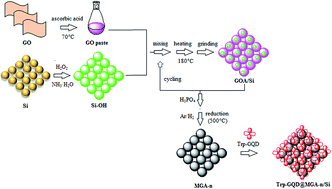
Synthesis of MGA-n/Si includes four assembly processes (shown in Fig. 1). First process is to make GO paste. GO was dispersed in ultra pure water by the ultrasonication and then partly reduced at 70 °C in the presence of ascorbic acid to form GO paste. As the silicon powder and the GO dispersion exist an obvious difference in the density, a simple mixing of silicon powder with the GO dispersion is difficult to form a stable dispersion system. Consequently, one step for increasing GO viscosity is strongly required prior to their mixing. However, an appropriate viscosity of the GO paste is a key factor to obtain good dispersion in the final product. Often, GO can be slowly reduced into graphene by heating. The partly reduced GO sheets offers a lower water-solubility owing to the loss of some hydrophilic groups compared to pristine GO dispersion, resulting in an obvious increase in the viscosity. With the increase of the gelation degree, the viscosity will rapidly increase and leads to finally form a monolithic structure of GO hydrogel. In the process, ascorbic acid was used as a moderate reducing agent for accelerating the reduction of GO. After added ascorbic acid, colour of the GO dispersion will rapidly change into black from yellow, indicating the formation of graphene. When the heating time is more than 0.5 h, the formation of GO hydrogel will complete (shown in Fig. s2). In the case, silicon particles are difficult to enter into internal of the formed hydrogel structure during the mixing process if the pore size is less than the particle size of silicon. The result shows that an excessive gelation will lead to only produce the mixture of graphene and silicon, in which graphene and silicon exist alone and are not well mixed to form a real composite.
image file: c6ra15257k-f1.tif
Fig. 1 Procedure for the fabrication of Trp-GQD@MGA-n/Si electrode.

More seriously, the mixing of GO hydrogel with silicon powder will destroy the monolithic structure of frame network of graphene during the agitating. This will greatly reduce the mechanical strength and electronic conductivity of the graphene frame network. Hence, strict control of the reaction temperature and time is need in order to obtain an optimal gelation level. In the process, the temperature of 70 °C and the reaction time of 15 min were adopted to prepare the GO paste.

Second process is to change hydrophobic silicon powder (Si) into hydrophilic silicon powder (Si–OH). Si was dispersed in the mixed solution of acetone, ethanol and water. Followed by the ultrasonic treatment to strip away greasy dirt on the Si surface. Then, the Si was immersed in the HF solution to remove silicon dioxide on the Si surface. Finally, the treated Si was partly oxidized by H2O2 in NH3·H2O. The oxidization leads to the formation of large hydrophilic groups on the surface of silicon spheres such as –OH, improving the water-solubility. Therefore, the obtained Si–OH can be well dispersed in water to form a stable dispersion.

Third process is to fabricate graphene oxide aerogel/Si composite (GOA/Si). The prepared Si–OH was mixed with the amounts of GO paste under vigorous agitation. Followed by the hydrothermal reaction to form the gel. By mechanical stirring, high viscosity of the GO paste make it is easy to firmly adhere on the surface of silicon nanoparticles. As a result, the GOA/Si exhibits a relatively good dispersion. During the hydrothermal reaction, the GO sheets will be further reduced and result in a higher gelation degree. Because the most of hydrophilic groups on the GO sheets were exfoliated during the hydrothermal reaction, the GOA/Si become insoluble in water and finally precipitated from the system. At the same time, the volume of gel is largely compressed under the high pressure and high temperature. The treatment achieves to firmly block silicon particles in porous structure of the gel. In addition, the action also reduces the distance between silicon and graphene sheets, leading to an improved the electronic conductivity and high tap density. In the process, the grinding is another key step to obtain high quality of the final product. As GOA/Si has a dense and smooth surface with few open holes and high hydrophobic property, the GO dispersion is difficult to enter into the interior of GOA/Si in the next process, which limits the formation of MGA-n. However, the problem can be well resolved by a simple grinding. During the grinding, the most of closed pores in the GOA/Si internal were opened, which creates a great number of open holes. These open holes make the GO dispersion is easy to reach almost all parts of GOA/Si. In the next cycle process, new graphene framework will form in situ in the old graphene framework. New framework and old framework intertwines each other to form a whole network structure. The resulted dense graphene sheets and robust graphene frame network in the MGA-n/Si largely improves the mechanical strength, elasticity and electronic conductivity of the graphene layer. At the same time, big pores in the GOA/Si will be changed into small pores. With increasing number of the cycle, MGA-n/Si displays a smaller and denser porous structure with narrow pore size distribution, leading to an increased tap density and reduced chance that silicon particles encounter the electrolyte molecules during the electrode reaction process.

Fourth process is to fabricate multiple graphene aerogel/Si composite (MGA-n/Si). The procedure in the third process was repeated until number of the cycle reaches a desired value, in which the Si–OH was replaced by the collected GOA/Si. Followed by soaking in H3PO4, drying and thermal reduction in Ar/H2 (95[thin space (1/6-em)]:[thin space (1/6-em)]5) to obtain MGA-n/Si composite. In the process, we present a facile and efficient route to introduce nanoscaled pores on graphene sheets by activation of graphene sheets with H3PO4. The use of H3PO4 as a mild activation agent to create nanopores avoids the severe corrosion to experimental devices.30 Moreover, the thermal annealing was also used for removing unstable functional groups from the graphene sheets. This will greatly improve the electronic conductivity and reduce the irreversible capacity for LIBs.

3.2 Material characteristics

The as-prepared MGA-3/Si was characterized by SEM, TEM, Raman spectrum and XRD. As shown in Fig. 2, the each of three MGA-n/Si samples contains a three-dimensional interconnected frame networks of graphene, demonstrating efficient assembly of GO sheets during the hydrothermal reaction, and silicon nanoparticles were dispersed on the surface of graphene sheets. For the MGA-1/Si, many silicon nanoparticles are exposed to the outside. These silicon nanoparticles may directly contact with the electrolyte molecules to form the SEI film during the electrode reaction process, leading to a rapid capacity decay. However, with the increase of cycle times the number of exposed silicon nanoparticles rapidly decrease. When n is equal to three, almost all silicon nanoparticles are embedded by graphene sheets. Because the new graphene framework was formed in situ in the old graphene framework during the each of GO gelation cycles. The new framework and old framework intertwine each other to form a whole structure. The graphene network becomes more dense and robust with increasing cycle number of the GO gelation. Hence, the MGA-n with a bigger n value shows a smaller and denser porous structure with a relatively narrower pore size distribution compared with the MGA-n with a smaller n value. The robust graphene frame network as the inner shell of silicon particles plays an important roles in improving the electrochemical performance of silicon anode. On the one hand, the inner shell offers very high mechanical strength and elasticity. The characteristic make it can accommodate the volumetric change of silicon without network disconnections or deficiencies, which is beneficial to avoid electrochemical cycling-induced breaking and fracturing of silicon active material itself. On the other hand, the inner shell provides a high electronic conductivity. This will result in an enhanced rate-capacity for LIBs. Further, the TEM analysis reveals that silicon nanoparticles have good dispersion in the frame network of graphene. The existence of a relatively big distance between silicon nanoparticles leaves the enough space for volume change of silicon. This may avoid the occurrence of extrusion and cracking of silicon particles caused by its large volume change during the charge/discharge process, leading to a high structural stability.
image file: c6ra15257k-f2.tif
Fig. 2 SEM images of MGA-1/Si (a), MGA-2/Si (b) and MGA-3/Si (c) and TEM image of MGA-3/Si (d).

To further evaluate the effect of graphene on the electronic conductivity, a four-probe method was used for the electronic conductivity measurement of MGA-n/Si composites and silicon powder. Often, the electronic conductivity of powder sample will increase with increase of the pressure (shown in Fig. 3). The electronic conductivity lends to the constant when exceeded a certain pressure. Our investigation shows that the electronic conductivity remains almost unchanged when the pressure is more than 20 atmospheres for the composite and pure silicon powder. Thus, the pressure of 20 atmospheres was used for the electronic conductivity measurement. The electronic conductivity of MGA-3/Si was found to be 28.4 S m−1, which is more than 1.5-fold that of MGA-2/Si, 4-fold that of MGA-1/Si and 18[thin space (1/6-em)]205-fold that of the pristine silicon powder. The great improvement could be attributed that the graphene sheet junctions facilitates a much fast charge transport. In addition, the above result also verifies that the electronic conductivity can be further improved by increasing number of the graphene oxide gelation.


image file: c6ra15257k-f3.tif
Fig. 3 The electronic conductivities of different materials.

Fig. 4 presents Raman spectroscopy and XRD patterns of MGA-3/Si. There are three main peaks on the Raman spectroscopy. The peak at about 500 cm−1 could be attributed to the elemental silicon. As the silicon crystal has not any Raman peaks appearing in the range of 1000–2500 cm−1, two peaks at 1385 and 1575 cm−1 could be assigned to graphene material in the composite. Raman spectrum of carbon materials is characterized by two main features: G band arising from the first order scattering of the E1g phonon of sp2 carbon atoms, and D band arising from a breathing mode of point photons of A1g symmetry.31 Fig. 4A shows that two typical Raman peaks of graphene, including D band (1385 cm−1) and G band (1575 cm−1). The result confirms the existences of graphene in the MGA-3/Si again. Currently, a relative intensity of the “disorder” D-band and the crystalline G-band (ID/IG) value was used for evaluating the structural defects and the disorder degree of carbon materials. With decrease of the crystallization degree of carbon materials, the peak intensity of D band increases and the intensity of G band decreases. Based on the data in Fig. 4A, ID/IG value of the graphene in the composite was calculated. The ID/IG is about 1.73, indicating that the graphene sheets in the MGA-3/Si have been fully dispersed in the composite. On the XRD pattern there are six main diffraction peaks in Fig. 4B. A relatively strong diffraction peak at 26° could be assigned to graphene, corresponding to crystal plane graphene (002). Due to low degree of crystallization, graphene often exhibits a weak and wide diffraction peak at 26°. The diffraction peaks at 28.6°, 47.4°, 56.3°, 69.2° and 76.3° could be attributed to silicon in the composite, corresponding to the (111), (220), (311), (400) and (331) planes of silicon crystal,32 respectively. These diffraction peaks are considerably sharp, suggesting highly crystalline nature of silicon particles. The crystalline feature will help to increase the electrical conductivity, leading to a high electrochemical performance for LIBs. After coated graphene, the above diffraction peaks still remain unchanged in the terms of position and but decrease in intensity. In the work, the peak at (111) is taken to evaluate the crystallite size of MGA-3/Si and pristine silicon. The crystallite sizes are calculated via the Scherrer's eqn (1):

 
image file: c6ra15257k-t1.tif(1)
where d is the crystallite size, λ is the wavelength of X-ray, k is 0.89 as the shape factor, θ is the diffraction angle of the peak, and β is the true half-peak width. According to the calculated results, the MGA-3/Si and Si possess the crystalline size of 48.37 nm and 48.41 nm, respectively. The result also demonstrates that the introduction of graphene don't change on the crystal structure of silicon.


image file: c6ra15257k-f4.tif
Fig. 4 Raman spectrum (A) and XRD pattern (B) of MGA-3/Si.

The as-prepared Trp-GQD was characterized by TEM, high-resolution TEM (HRTEM), fast Fourier transform pattern (FFTP), atomic force microscope (AFM) and IR analysis. Fig. 5 shows that the Trp-GQDs exhibit approximately two-dimensional sheet shape with a low degree of the agglomeration. The particle size distribution histogram is obtained using an image processing software. The size of graphene sheets in the Trp-GQD is distributed in narrow range of 2–10 nm with the average particle size of 4.2 nm. The HRTEM and FFTP analysis prove that the Trp-GQD offers a crystalline hexagonal structure. The lattice spacings of 0.23 nm is corresponded to the (110) planes of Trp-GQD crystal. In addition, AFM image of the Trp-GQD in Fig. 5c and d indicates that their heights are less than 1.2 nm, suggesting that there are one to three layers of graphene oxide-like structures.33 The above results also demonstrate that we obtained graphene quantum dots by the pyrolysis of the mixture of citric acid with tryptophan.


image file: c6ra15257k-f5.tif
Fig. 5 TEM (a), HRTEM (b), FFTP in the inert in (b) and AFM images (c and d) of Trp-GQD.

Fig. s3 presents the Raman spectrum of Trp-GQD. It can be seen that Raman spectrum of the Trp-GQD has two typical peaks at 1398 cm−1 and 1620 cm−1. The G band was related to the vibration of the sp2-bonded C atoms in the graphene material; and the D band corresponded to the destruction of the sp2 network by the sp3-bonded C atoms.

The IR spectra of Trp-GQD and Trp are shown in Fig. 6. On the IR spectrum of Trp-GQD, there are many strong IR absorption peaks or bands. The peak at about 3550 cm−1 is the symmetric stretching vibration absorption of the OH. The peak at 3400 cm−1 is the symmetric stretching vibration IR absorption of NH2. The peak at 1701 cm−1 could be assigned to the C[double bond, length as m-dash]O stretch vibration. The peak at about 1391 cm−1 could be attributed to C–H stretching vibration, suggesting the presence of carbonyl and C–H group. The band at 1566 cm−1 and 3450 cm−1 could correspond to the stretching vibrations of COO–, NH2 and OH groups. Consequently, Trp-GQD is easy to dissolve in water and indicates good water-solubility. Owing to its rich of hydrophilic groups, Trp-GQD will strongly interact with sodium alginate to form the composite, which will largely improve the mechanical properties of the binder film. The comparison with the IR spectra of tryptophan, we find that many characteristic IR absorption of the functional groups in the tryptophan also appears in the IR spectrum of Trp-GQD. The fact confirms that some functional groups in the tryptophan can be retained during the pyrolysis of citric acid and tryptophan.34


image file: c6ra15257k-f6.tif
Fig. 6 IR spectra of Trp-GQD (A) and tryptophan (B).

3.3 Electrochemical performance

To demonstrate the potential application of Trp-GQD@MGA-3/Si as the anode for LIBs, we conducted a series of investigations to determine the electrochemical performance. The anodes were assembled into the coin cells with a lithium counter electrode and underwent the galvanostatic charge/discharge cycling. The charge/discharge curves of Trp-GQD@MGA-3/Si coin cell in the potential range of 0.001–2.5 V at the current of 100 mA g−1 are presented in Fig. 7. It can be seen that first discharge capacity is more than corresponding charge capacity. The increased discharge capacity is mainly attributed to the formation of SEI.31 The charge capacity and discharge capacity are 1514 mA h g−1 and 1618 mA h g−1. The columbic efficiency is about 93.6%, which is much higher than that of Si electrode (about 73.5%). This is because the silicon surface in the Si electrode can fully contact with the electrolyte molecules to form the SEI film and leads to an increased discharge capacity with low columbic efficiency. However, there are two isolation layers between the silicon particles and the electrolyte (inner shell and outside shell) on the outside of the silicon sphere. These shells can effectively prevent the direct contact of the silicon surface with the electrolyte molecules. This will reduce the number of the silicon atoms that can react with the electrolyte to form the SEI film, leading to an enhanced columbic efficiency. In addition, we note that columbic efficiency of the second cycle increases to 98.2%. In the next cycle, the columbic efficiency remains between 99.5% and 100%, indicating that a stable SEI has been formed after the first cycle. Such a high columbic efficiency confirms that further reaction of the silicon with the electrolyte molecules has been effectively prevented during the electrode reaction process.
image file: c6ra15257k-f7.tif
Fig. 7 The charge/discharge curves of Trp-GQD@MGA-3/Si for four cycles.

The charge and discharge curves of Trp-GQD@MGA-3/Si electrode at different current densities from 50 mA g−1 to 4200 mA g−1 are presented in Fig. 8. The first discharge capacity is 1682 mA h g−1 at 50 mA g−1. Often, at low current density almost all active surface area of the electrode can well contact with lithium ions to react completely, leading to a relatively high capacity. The effective interaction between lithium ions and the electrode material is reduced at high current density, leading to a decreased capacity. Hence, the capacity will slowly decrease with the increase of current density. However, the capacity retention ratio of Trp-GQD@MGA-3/Si electrode is a much better that of Si cell (shown in Fig. s4). When the current density reaches 1000 mA g−1, the capacity retention ratio of Trp-GQD@MGA-3/Si electrode is about 70%, while the capacity retention ratio of Si electrode is about 5.2%. Even if the current density reaches up to 4200 mA g−1, the capacity of Trp-GQD@MGA-3/Si electrode still remains 39%. The result demonstrates that the Trp-GQD@MGA-3/Si electrode provides a high rate-capacity for LIBs. The improvement of the rate-capacity could be attributed to the introduction of MGA-3 and Trp-QDD. The perfect combination of MGA-3 with the Trp-GQD binder layer achieves to excellent electronic/ionic conductivity of the whole electrode, leading to an enhanced rate-capacitive behaviour. In addition, Fig. 8B also shows that the capacity of Trp-GQD@MGA-3/Si electrode can be well restored after the low current rate of 100 mA g−1 is used again, indicating good cycle performance and electrochemical stability. This could be attributed that the combination of the inner shell with the outside shell, which greatly avoids the loss of electrode active substance caused by the continuing formation of SEI film during the charge and discharge process.


image file: c6ra15257k-f8.tif
Fig. 8 The first charge/discharge curves (A) at 50, 100, 200, 500, 1000, 1500, 2000, 2500 and 4200 mA h g−1 (from right to left) and the specific discharge capacities (B) of Trp-GQD@MGA-3/Si at different current density.

The Si electrode exhibits a flat operation potential plateau when the charged/discharge is at low rates such as 50 mA g−1 and 100 mA g−1. The potential plateau of silicon electrode becomes shorter and gradually bends down with the rate increased, while that of Trp-GQD@MGA-3/Si electrode still remains straight line shape. This is because the polarization of Si electrode would be increased at an increased rate. A comparison of potential difference (ΔE) between the charge and discharge plateau potentials was taken for the Trp-GQD@MGA-3/Si electrode and Si electrode. The results were listed in Table 1. The ΔE value represents the degree of polarization of the electrode. A bigger ΔE value means a bigger polarization and poor reaction kinetics, while a small ΔE value means a lower polarization and better reaction kinetics. Table 1 shows that the ΔE for the Trp-GQD@MGA-3/Si electrode is far less than that of the Si electrode at all discharge rates, indicating a lower polarization and better reaction kinetic.

Table 1 The charge and discharge plateau potential difference of different electrode at various rates
Materials Charge and discharge plateau potential difference (V) at different rates (mA g−1)
50 100 200 500 1000 1500 2000
Trp-GQD@MGA-3/Si 0.32 0.33 0.34 0.42 0.42 0.42 0.42
Si 0.39 0.43 0.47 0.50 0.73 1.15 1.7


Fig. 9 presents the cyclic performance of Trp-GQD@MGA-3/Si and Si electrodes at the current density of 100 mA g−1. A drastic decrease in the capacity of Si electrode was observed from the beginning and ultimately becomes a very low capacity after 10 cycles. This is because the silicon atoms on the silicon surface directly contact with the electrolyte to form the SEI. The loss of the electrode active substance rapidly increases with the increase of cycling number and leads to a rapid capacity decay. The cyclic capacity of Si electrode continuously decrease and retains only 3.5% at 100th cycle from the second cycle. However, Trp-GQD@MGA-3/Si electrode exhibits a high capacity retention of 93.3% at 100th cycle, which is more than 26-fold that of Si electrode. In addition, the cycle stability also is much better than that of the reported silicon–graphene composites in literatures.35 The improvement of cycling performance could be attributed to the existence of its two isolation layers (inner shell and outside shell). As the combination of inner shell and outside shell effectively prevents the direct contact of the silicon surface with the electrolyte molecules, greatly reducing the loss of the electrode active substance caused by the formation of SEI. The mechanical stability of Trp-GQD@MGA-3/Si electrode was further researched by SEM imaging for electrodes that was removed from a cell after 100 cycles. Fig. s5 shows that no disassembly or cracking of the Trp-GQD@MGA-3/Si electrode was found, which indicates that the silicon was still uniformly anchored on the electrode after cycling.


image file: c6ra15257k-f9.tif
Fig. 9 The cyclic performance of the coin cell with Trp-GQD@MGA-3/Si and Si working electrodes at 100 mA g−1.

3.4 Roles of MGA-n and Trp-GQD

MGA-n and Trp-GQD have different properties and structure characteristics. As a consequence, their roles in improving the electrochemical performances of silicon anode for LIBs exist an obvious difference. The capacity retention ratios of Si, MGA-3/Si and Trp-GQD@MGA-3/Si electrodes at a relatively high current density from 1000 mA g−1 to 4200 mA g−1 are presented in Fig. 10. It can be seen from Fig. 10 that MGA-3/Si electrode offers a much better the capacity retention ratio at all current densities compared to Si electrode. The capacity retention ratio of MGA-3/Si electrode reaches 19.3% at 4200 mA g−1. The value is more than 258-fold that of Si electrode (0.063%), verifying that the introduction of MGA-3 greatly improves the rate-capacity of silicon anode. The improvement could be attributed to high electronic conductivity of MGA-3. Compared to MGA-3/Si electrode, Trp-GQD@MGA-3/Si electrode displays a better capacity retention ratio. The capacity retention ratio of Trp-GQD@MGA-3/Si electrode at 4200 mA g−1 is up to 39.8% that is about 2.4-fold that of MGA-3/Si electrode, indicating that the addition of Trp-GQD further improves the rate-capacity. However, we can also draw another conclusion from the above results that the contribution of Trp-GQD to the improvement of rate-capacity performance was significantly lower than that of MGA-3. This is because the electronic conductivity of Trp-GQD as a semiconductor material provides a much higher than that of pure sodium alginate, leading to an improved rate-capacity compared with pure sodium alginate, and far less than MGA-3, resulting in a relatively low the contribution to the rate-capacity performance compared with MGA-3 electrode.
image file: c6ra15257k-f10.tif
Fig. 10 The capacity retention ratios of different electrodes at different current densities.

Fig. 11 presents the cycle performances of Si, GMA/Si and Trp-GQD/Si electrodes. For the Si electrode, its silicon surface is fully exposed to the electrolyte. The reaction of silicon atoms on the surface with the electrolyte molecules produces the continuous formation of SEI during the cycle process, leading to large loss of electrode active material and rapid capacity decay. As a consequence, Si electrode gives the worst cycle performance among three electrodes. After the silicon surface was coated by GMA-3, its cycle performance was greatly improved. On the one hand, the existence of GMA-3 partly prevents the direct contact of silicon surface with the electrolyte to form the SEI and reduces the loss of electrode active material during the cycling process. On the other hand, MGA-n is of a much better mechanical strength and elasticity compared to classical graphene aerogel, owing to its denser graphene sheets and more robust frame structure. The characteristic make the MGA-3 shell can well accommodate the volumetric changes of silicon crystal without network disconnections or deficiencies, which can effectively avoid the electrochemical cycling-induced breaking and fracturing of silicon active material itself. The above two factors lead to an obvious improved cycle performance for LIBs. Interestingly, Trp-GQD/Si electrode displays the best the cycle stability among three electrodes. This fact proves that the introduction of Trp-GQD is more effective method than MGA-3 for the improvement of cycle performance. The could be attributed to the small size (about 4 nm) and rich of hydrophilic groups of graphene sheets in the Trp-GQD. The small size of graphene sheets make the formed Trp-GQD/sodium alginate composite has a very dense microstructure without any macropores. Hence, the binder film can better prevent the direct contact between the silicon surface and the electrolyte molecules, which will greatly reduce the loss of the electrode active material caused by the continuous formation of SEI. The rich of hydrophilic groups of graphene sheets in the Trp-GQD make the binder film has higher mechanical properties due to strong interaction of Trp-GQD with sodium alginate between their hydrophilic groups. The robust binder film can largely improve the structural integrity of silicon anode. For the above two factors, the Trp-GQD/Si electrode exhibits excellent capacity retention during the charge and discharge process.


image file: c6ra15257k-f11.tif
Fig. 11 The capacity retention ratios of different electrodes at 100 mA g−1.

To understand the role of Trp-GQD, we prepared a series of Trp-GQD–sodium alginate films containing different amounts of Trp-GQDs, and their morphologies, and mechanical and electrical properties were examined in the laboratory. Fig. 12 presents typically SEM images of the film with different amounts of Trp-GQD. In the absence of Trp-GQD, the film indicates a flat and smooth appearance. When the amounts of Trp-GQD reaches 5%, many stripes appear on the film surface. This is because the interaction of sodium alginate with Trp-GQD is much stronger than the force between sodium alginate molecules. Thus, the area containing Trp-GQDs will appear sunken, leading to the formation of stripes. The stripes become more dense, and eventually form a uniform and flat film again, however, its thickness is obviously smaller than that of the film without Trp-GQD. To further evaluate the effect of Trp-GQD on the mechanical properties, the elasticity modulus of the films with different amounts of Trp-GQD were measured and presented in Fig. 13A. With 2.5% Trp-GQD incorporation, the elasticity modulus achieves to 1905.7 MPa. The value is a higher that of neat sodium alginate film (1207.2 MPa), indicating that the addition of Trp-GQD enhances the mechanical strength and elasticity of the binder layer. The outstanding mechanical strength and satisfactory elasticity could be attributed to the strong hydrogen bonding interactions between the graphene sheets in the Trp-GQD and the sodium alginate chains. With the increase of Trp-GQD content, the elasticity modulus rapidly increases when the amounts is less than 15%. At the Trp-GQD of 15%, the elasticity modulus reaches the maximum value (5633.4 MPa). However, the elasticity modulus will decrease with continuing increasing Trp-GQD content. Often, the use of excessive Trp-GQDs brings the serious aggregation of graphene sheets. This will weaken the interacting force between the Trp-GQD and the sodium alginate, leading to a decreased elasticity modulus. To obtain a high mechanical strength and elasticity, the Trp-GQD of 15% was employed for the fabrication of the binder film. For silicon anode, the improvement of mechanical properties is very important to avoid the electrochemical cycling-induced breaking and fracturing of silicon active material itself, which helps to improve the cycle stability for LIBs.


image file: c6ra15257k-f12.tif
Fig. 12 SEM images of the sodium alginate film in the absence (a), the presence of 5% (b), 10% (c) and 15% Trp-GQD (d).

image file: c6ra15257k-f13.tif
Fig. 13 (A) The elasticity modulus of the sodium alginate films with different amounts of Trp-GQD. (B) The AC impedance spectra of the three-electrode cell using the sodium alginate film without Trp-GQD (a) or with 15% Trp-GQD (b) as the working electrode. The inert in (B) is equivalent circuit.

Electrochemical impedance spectroscopy (EIS) measurement was used to study on the kinetic process of the electrode reaction. Because two-electrode impedance studies have an obvious disadvantage in that it is difficult to distinguish the impedance of anode and cathode from a combined spectra. To measure accurately how a single electrode changes with cycling tests, three-electrode impedance studies are necessary.36 In the work, the EIS curves of Si electrode and Trp-GQD/Si electrode were measured using three-electrode cell. Fig. 13B indicates that Nyquist spectra of two anodes compose of one semicircle in high frequency and a subsequent inclined line at the low frequency end. The semicircle in high frequency region is related to the ionic conduction through the electrolyte and electrical conduction between the substrate and the active material. With decreasing the frequency, the spectrum is dominated by the formation of SEI film. Meanwhile, the sloping straight line corresponds to the lithium ion diffusion in the bulk materials.37 Such a pattern of the EIS can be fitted by the equivalent circuit shown in the inset of Fig. 13B. In the equivalent circuit, Rs is the bulk electrolyte resistance, Rct is the electron and charge transfer resistance, Ci is the interfacial capacitance and, Zw is Warburg resistance related to a combination of the diffusional effects of lithium ion on the interface between the active material particles and electrolyte, which is generally indicated by a straight sloping line at low frequency end. In general, the combination of Rct and Zw is called faradic impedance, which reflects kinetics of the cell reaction, and low Rct corresponds to a fast kinetics of the faradic reaction. As shown in Table 2, the Rct of Trp-GQD/Si electrode offers much lower than that of Si electrode, indicating a faster cell reaction. The result verifies that the introduction of Trp-GQD speeds up the faradic reaction of the electrode.

Table 2 Impedance parameters calculated from equivalent circuits
Materials (cycle number) Rs (Ω) Rct (Ω) DLi+ (cm2 s−1)
Sodium alginate 127.3 204.4 8.150 × 10⁻¹⁴
Trp-GQD–sodium alginate 33.7 122.4 1.128 × 10⁻¹³


Based on the electrochemical impedance results, the diffusion coefficients of lithium ions (DLi+) in the each cell were calculated by the eqn (2):38

 
image file: c6ra15257k-t2.tif(2)
where R is the gas constant, T is the temperature, n is the number of electrons transferred, A is the surface area of the electrode, F is the Faraday constant, and C is the concentration of reactants. The value of parameter σ is the slope of real part of impedance (Zre) versus inverse square root of radial frequency (ω−1/2) in the Warburg region. The diffusion coefficients on the interface between the active material particles and the electrolyte are calculated to be 8.15 × 10⁻¹⁴ cm2 s−1 for the sodium alginate electrode and 1.128 × 10⁻¹³ cm2 s−1 for the Trp-GQD–sodium alginate. These data indicate that the introduction of Trp-GQD can greatly speed up the lithium ion diffusion between the silicon and the electrolyte. The diffusion coefficient depends on the lithium ion transport through the alginate film. The proposed mechanism of ion transport through the alginate film is via hopping of lithium ions between the adjacent carboxylic cites, similarly to alginate's function for the ion transport in the algae cell.21 For the Trp-GQD@Si electrode, there is one Trp-GQD/sodium alginate film outside the silicon. Compared with neat sodium alginate film, the composite film provides a more active groups for the lithium ion diffusion. As a result, it is easier to combine with lithium ions to realize a faster lithium ion transport during the electrode reaction. In addition, high strength and elasticity of the composite film ensures the structural stability of channels for the lithium ion transport, so that the electrolyte transport is blocked due to the swelling of the film under the long-term immersion of the electrolyte. The Trp-GQD layer also improved the conduction of the electron and simultaneously acted as the mechanical buffer for the expansion. These positive effects of the GQD give rise to low charge transfer resistance, high rate-capability and good cyclic stability.

4 Conclusions

We have demonstrated a facile approach for the fabrication of multiple graphene aerogel-encapsulated silicon nanoparticles/tryptophane-functionalized graphene quantum dots–sodium alginate electrode for high performance lithium ion batteries. The study reveals that the multiple graphene aerogel as the inner shell on the surface of silicon core has a much higher mechanical strength, elasticity and electronic conductivity compared to common graphene aerogel. The inner shell can accommodate the volumetric changes of silicon crystals and improve the electronic conductivity between different silicon particles. The tryptophane-functionalized graphene quantum dots–sodium alginate composite as the outside shell on the surface of the multiple graphene aerogel-encapsulated silicon exhibits a much better mechanical and electrical properties compared to pure sodium alginate. The outside shell can effectively prevents the direct contract of silicon surface with the electrolyte and enhance the electronic/ionic conductivity of the binder layer. The integration of inner shell with outside shell achieves to simultaneously good structural integrity, SEI stability at the silicon–electrolyte interface and high ionic/electronic conductivity of whole silicon anode. The multi-faceted design can be also used for fabrication of other large-volume-change electrodes for lithium ion batteries.

Acknowledgements

The authors acknowledge the financial support from the National Natural Science Foundation of China (No. 21576115). Prospective Joint Research Project: Cooperative Innovation Fund (No. BY2014023-01 and No. BY2015019-26) and MOE & SAFEA for the 111 Project (B13025).

Notes and references

  1. N. Liu, Z. D. Lu, J. Zhao, M. T. McDowell, H. W. Lee, W. T. Zhao and Y. Cui, Nat. Nanotechnol., 2014, 9, 187–192 CrossRef CAS PubMed.
  2. S. B. Ni, J. J. Ma, J. C. Zhang, X. L. Yang and L. L. Zhang, J. Power Sources, 2015, 282, 65–69 CrossRef CAS.
  3. R. Raccichini, A. Varzi, S. Passerini and B. Scrosati, Nat. Mater., 2015, 14, 271–279 CrossRef CAS PubMed.
  4. Y. Zhao, X. F. Li, B. Yan, D. J. Li, S. Lawes and X. L. Sun, J. Power Sources, 2015, 274, 869–884 CrossRef CAS.
  5. X. F. Gao, J. Y. Li, Y. Y. Xie, D. S. Guan and C. Yuan, ACS Appl. Mater. Interfaces, 2015, 7, 7855–7862 CAS.
  6. H. B. Wu, J. S. Chen, H. H. Hng and X. W. D. Lou, Nanoscale, 2012, 4, 2526–2542 RSC.
  7. S. J. Park, H. Zhao, G. Ai, C. Wang, X. Song, N. Yuca, V. S. Battaglia, W. L. Yang and G. Liu, J. Am. Chem. Soc., 2015, 137, 2565–2571 CrossRef CAS PubMed.
  8. L. Gan, H. J. Guo, Z. X. Wang, X. H. Li, W. J. Peng, J. X. Wang, S. L. Huang and M. R. Su, Electrochim. Acta, 2013, 104, 117–123 CrossRef CAS.
  9. C. David, M. Maria, P. Pep, P. John and S. Alison, Nat. Mater., 2015, 14, 260 Search PubMed.
  10. E. Peled, F. Patolsky, D. Golodnitsky, K. Freedman, G. Davidi and D. Schneier, Nano Lett., 2015, 15, 3907–3916 CrossRef CAS PubMed.
  11. A. T. Tesfaye, R. Gonzalez, J. L. Coffer and T. Djenizian, ACS Appl. Mater. Interfaces, 2015, 7, 20495–20498 CAS.
  12. D. F. He, F. J. Bai, L. X. Li, L. M. Shen and H. H. Kung, Electrochim. Acta, 2015, 169, 409–415 CrossRef CAS.
  13. Z. D. Lu, N. Liu, H. W. Lee, J. Zhao, W. Y. Li, Y. Z. Li and Y. Cui, ACS Nano, 2015, 9, 2540–2547 CrossRef CAS PubMed.
  14. L. L. Luo, P. Zhao, H. Yang, B. R. Liu, J. G. Zhang, Y. Cui, G. H. Yu, S. L. Zhang and C. M. Wang, Nano Lett., 2015, 15, 7016–7022 CrossRef CAS PubMed.
  15. U. S. Vogl, P. K. Das, A. Z. Weber, M. Winter, R. Kostecki and S. F. Lux, Langmuir, 2014, 30, 10299–10307 CrossRef CAS PubMed.
  16. H. K. Park, B. S. Kong and E. S. Oh, Electrochem. Commun., 2011, 13, 1051–1053 CrossRef CAS.
  17. L. Y. Shen, L. Shen, Z. X. Wang and L. Q. Chen, ChemSusChem, 2014, 7, 1951–1956 CrossRef CAS PubMed.
  18. J. S. Kim, W. C. Choi, K. Y. Cho, D. J. Byun, J. C. Lim and J. K. Lee, J. Power Sources, 2013, 244, 521–526 CrossRef CAS.
  19. B. Koo, H. Kim, Y. Cho, K. T. Lee, N. S. Choi and J. Cho, Angew. Chem., Int. Ed., 2012, 51, 8762–8767 CrossRef CAS PubMed.
  20. X. Y. Huang, S. S. Zeng, J. J. Liu, T. He, L. Y. Sun, D. H. Xu, X. Y. Yu, Y. Luo, W. Y. Zhou and J. F. Wu, J. Phys. Chem. C, 2015, 119, 27882–27891 CAS.
  21. I. Kovalenko, B. Zdyrko, A. Magasinski, B. Hertzberg, Z. Milicev, R. Burtovyy, I. Luzinov and G. Yushin, Science, 2011, 334, 75–79 CrossRef CAS PubMed.
  22. F. Zhang, X. Yang, Y. Q. Xie, N. B. Yi, Y. Huang and Y. S. Chen, Carbon, 2015, 8, 161–167 CrossRef.
  23. L. W. Su, Y. Jing and Z. Zhou, Nanoscale, 2011, 3, 3967–3983 RSC.
  24. T. T. Yang, R. Y. Li, X. H. Long, Z. J. Li, Z. G. Gu, G. L. Wang and J. K. Liu, Electrochim. Acta, 2016, 187, 143–152 CrossRef CAS.
  25. H. Tang, J. Zhang, Y. J. Zhang, Q. Q. Xiong, Y. Y. Tong, Y. Li, X. L. Wang, C. D. Gu and J. P. Tu, J. Power Sources, 2015, 286, 431–437 CrossRef CAS.
  26. R. Y. Li, L. Liu, H. X. Bei and Z. J. Li, Biosens. Bioelectron., 2016, 79, 457–466 CrossRef CAS PubMed; R. Y. Li, J. J. Wang, L. Liu and Z. J. Li, Mikrochim. Acta, 2016, 1–9 Search PubMed.
  27. R. Sekiya, Y. Uemura, H. Murakami and T. Haino, Angew. Chem., Int. Ed., 2014, 53, 5619–5623 CrossRef CAS PubMed; X. Wu, F. Tian, W. X. Wang, J. Chen, M. Wu and J. X. Zhao, J. Mater. Chem. C, 2013, 1, 4676–4684 RSC.
  28. R. Y. Li, Y. Y. Jiang, X. Y. Zhou, Z. J. Li, Z. G. Gu, G. L. Wang and J. K. Liu, Electrochim. Acta, 2015, 178, 303–311 CrossRef CAS; L. J. Kong, Y. Q. Yang, R. Y. Li and Z. J. Li, Electrochim. Acta, 2016, 198, 144–155 CrossRef.
  29. W. S. Hummers and R. E. Offeman, J. Am. Chem. Soc., 1958, 80, 1339 CrossRef CAS.
  30. X. X. Sun, P. Cheng, H. J. Wang, H. Xu, L. Q. Dang, Z. H. Liu and Z. B. Lei, Carbon, 2015, 92, 1–10 CrossRef CAS.
  31. A. C. Ferrari and J. Robertson, Phys. Rev. B: Condens. Matter Mater. Phys., 2000, 61, 14095–14099 CrossRef CAS.
  32. J. H. Jeong, K. H. Kim, D. W. Jung, K. Kim, S. M. Lee and E. S. Oh, J. Power Sources, 2015, 300, 182–189 CrossRef CAS.
  33. M. Bacon, S. J. Bradley and T. Nann, Part. Part. Syst. Charact., 2014, 31, 415–428 CrossRef CAS.
  34. G. D. S. Mello, A. D. P. Cardoso, E. W. R. S. Oliveira and A. B. Siqueira, J. Therm. Anal. Calorim., 2015, 122, 1395–1401 CrossRef CAS.
  35. B. H. Xu, H. Wu, C. X. Lin, B. Wang, Z. Zhang and X. S. Zhao, RSC Adv., 2015, 5, 30624–30630 RSC; D. F. He, F. J. Bai, L. X. Li, L. M. Shen, H. H. Kung and N. Z. Bao, Electrochim. Acta, 2015, 169, 409–415 CrossRef CAS; X. F. Gao, J. Y. Li, Y. Y. Xie, D. S. Guan and C. Yuan, ACS Appl. Mater. Interfaces, 2015, 7, 7855–7862 Search PubMed.
  36. M. Itagaki, N. Kobari, S. Yotsuda, K. Watanabe, S. Kinoshita and M. Ue, J. Power Sources, 2004, 135, 255–261 CrossRef CAS.
  37. Y. Hoshi, Y. Narita, K. Honda, T. Ohtaki, I. Shitanda and M. Itagaki, J. Power Sources, 2015, 288, 168–175 CrossRef CAS.
  38. M. D. Levi and D. Aurbach, J. Phys. Chem. B, 1997, 101, 4630–4640 CrossRef CAS.

Footnote

Electronic supplementary information (ESI) available. See DOI: 10.1039/c6ra15257k

This journal is © The Royal Society of Chemistry 2016
Click here to see how this site uses Cookies. View our privacy policy here.