
Graphene nanosheets/E-glass/epoxy composites with enhanced mechanical and electromagnetic performance

Qing Yuchang*, Wang Jie, Wang Hongyu, Luo Fa and Zhou Wancheng
State Key Laboratory of Solidification Processing, School of Materials Science and Engineering, Northwestern Polytechnical University, Xi'an 710072, China. E-mail: qtvbgyta@163.com; Fax: +86 29 8849 4574

Received 10th June 2016 , Accepted 18th August 2016

First published on 18th August 2016


Abstract

Microwave absorbing composites with superior mechanical properties and electromagnetic absorption characteristics were fabricated using E-glass/epoxy composites containing graphene nanosheets (GNs). Compared with the composites without GNs, the incorporation of 2.0 wt% GNs enhanced the mechanical properties; the flexural strength and elastic modulus were improved by about 58.4 and 78.8%, respectively. Both the real and imaginary parts of the complex permittivity in the Ku-band increased with increasing GN content. Based on the complex permittivity of the composites, single and double layer absorbing composites were designed to obtain a wide reflection loss (RL) bandwidth below −10 dB. RL values less than −13 dB (larger than 95% absorption) can be obtained in the whole Ku-band for a double layer composite with a sample thickness of 3.4 mm.

Introduction

Microwave absorbing materials (MAMs) have been actively researched to provide electromagnetic (EM) absorption and shielding in the GHz frequency region due to their military and civil applications.1–4 The absorbers in MAMs can cause the attenuation of EM waves in the form of heat when exposed to an EM field, and the effectiveness mainly depends on the EM characteristics, absorber thickness and frequency. Dielectric and/or magnetic absorbers with matching complex permittivity and permeability have been developed to design MAMs during the past decades.1–15 Magnetic absorbers, including ferrites, carbonyl iron and other magnetic metallic particles, with width absorption band can be obtained under high mixing ratios. However, most of the magnetic absorbers have high aerial weight, which limits the utility of magnetic absorbers for range of applications, such as on airborne systems. Compared with the magnetic fillers, the carbon based dielectric absorbers with relatively low density and mixing ratios act as an alternative effectively absorber to fabricated MAMs. However, the carbon based absorbers can only control the complex permittivity and resulted in narrow absorbing bandwidth.7 Thus, it is still a challenge to design and fabricate MAMs with low density and wide absorption bandwidth.

According to the fact whether the composites can bear the load, the MAMs can be divided into two categories: microwave absorbing coatings and microwave absorbing structures (MASs).8 Microwave absorbing coatings with the strong advantage of being easily applied to the surfaces of existing structures, by using different dielectric, magnetic or hybrid filler as EM absorbers, have been attracted a great deal of attention.1–6 Recent investigations have shown that using MASs as absorbing material not only have excellent absorbing properties but also can overcome the mechanical limitation of microwave absorbing coatings. The MASs with superior load bearing capacity and EM absorption characteristics have been developed by blending the microwave absorbers with the binder matrix of the fiber reinforced polymer composite.8–15 E-Glass/carbon nano-materials/polymer composites were widely studied because of its good structural and chemical performance, and the EM properties of such composites can be adjusted by changing the size, geometry and content of the carbon nano-materials. Therefore, E-glass/epoxy single layer absorbing composite were fabricated by adding different carbon nano-materials, such as carbon black, carbon nanofibers and multi-wall carbon nanotubes (MWCNTs). The theoretical −10 dB absorption bandwidths (<−10 dB) were limited into about 3 GHz with an absorber thickness of 2–3 mm in the X-band (8.2–12.4 GHz).8 The reflection losses (RL) of the carbon black/E-glass/polyester composites were investigated in the X-band, the single layer composites showed −10 dB absorbing bandwidth of 3.7 GHz with a thickness of 2.93 mm.14 The MWCNTs was added into glass/epoxy plain-weave composites to fabricate the materials used for radar absorbing materials, and a two-layered materials was designed with 90% absorption of EM energy for the entire X-band.15 Therefore, the unique structure and excellent properties of carbon nanostructures has prompted intensive study for potential engineering applications because of their light weight, resistance to corrosion, flexibility and processing advantages.

Graphene and graphene nanosheets (GNs), with good electrical conductivity, large specific surface area, high tensile modulus and ultimate strength values, were often serve as fillers for the enhancement of mechanical and electrical properties in composite material.16–20 An ultralow percolation threshold as low as 0.033 vol% was observed for reduced graphene oxide (rGO)/polypropylene composites.18 Solution-processable functionalized graphene with a low percolation threshold of 0.52 vol% have been fabricated, and 21 dB shielding efficiency was obtained for 15 wt% (8.8 vol%) loading over the X-band, which indicating that they may be used as lightweight, effective EM interference shielding materials.19 Simulation studies showed that 10 wt% of GO in rubber matrix exhibits high values of RL (<−10 dB) over a wide frequency range 7.5–12 GHz and maximum loss is 57 dB at 9.6 GHz with a thickness of 3 mm.20 Despite the success of several studies in development of graphene/polymer coatings with high RL at specific frequency, there are still seldom reports about using GNs as absorber to prepare glass fabric reinforced epoxy composites and then investigated the mechanical properties and microwave absorption of such composites.

The aim of this work is to characterize the MASs, which are thin, wideband absorption in nature and also can bear the load, containing GNs in the glass fabric reinforced epoxy composites. In particular, the effect of GN content on the microwave absorbing performance of such epoxy composites reinforced with glass fabric has been addressed. The absorption performance of single and double layer MASs has been studied and the RL results demonstrated the potential of using the GNs filled E-glass/epoxy composites as MASs with broadband absorption and good mechanical properties.

Materials and methods

The epoxy resin used as matrix and polyamide resin used as curing agent were supplied by Xi'an Leeo Technological Co., Shannxi Province, China. The GNs obtained by exfoliation of expanded graphite, which produced by chemical oxidation using a sulfuric and nitric acid solution (4[thin space (1/6-em)]:[thin space (1/6-em)]1, v/v) and a rapid heat-treatment at 1000 °C for 2 min, via ultrasonic treatment of expanded graphite in acetone for 6 h. The E-glass fabric mat supplied by Wuhan technophile Co., Ltd., Hubei Province, China. The fabric mat is the plain weave type, prepared by processes of epoxy resin infiltration, thermal and damp-proof treatment, with the fiber diameter about 7 μm, the fiber aerial weight is about 100 g m−2, and the nominal thicknesses are about 0.1 mm.

Each type of specimen was denoted by the weight percentage of GN, as shown in Table 1. The fabrication process of the composites was designed according to the following steps: first, the GN was dispersed in acetone (about 0.1 g GN for 50 ml acetone) using an ultrasonic bath, at room temperature, for 4 h. Subsequently, the epoxy resin and polyamide resin mixture with a weight ration of 4[thin space (1/6-em)]:[thin space (1/6-em)]1 was added, followed by stirring at 2000 rpm for 1 h. In order to reduce the voids, which could detrimentally affect the properties of the final sample, the bubbles should avoid with the solvent properly evaporated by following steps: the mixture of the resin and GNs preheated to 60 °C in a vacuum drying oven to reduce its viscosity, evaporate acetone and eliminate the entrapped air, which make the mixture can be uniformly impregnated into the E-glass mat. Then, the E-glass mat was cured at 80 °C for 2 h in order to avoid the re-aggregation of GNs. Finally, samples were post-cured at 120 °C for 4 h under the pressure of 1.5 MPa so as to fabricate planar composite specimens.

Table 1 The composition and mechanical properties of the GNs/glass/epoxy composite
Sample GNs content (wt%) Flexural strength (MPa) Elastic modulus (GPa)
0 0 197 ± 10 1.32 ± 0.07
1 0.5 231 ± 12 1.57 ± 0.08
2 1.0 258 ± 14 1.92 ± 0.10
3 1.5 283 ± 15 2.14 ± 0.10
4 2.0 312 ± 18 2.36 ± 0.12


The morphological of the composite were observed using SEM (Model VEGA3 SBH, TESCAN, Brno, Czech Republic). The flexural properties of the composites were tested on CSS-4200 test machine using the three point bending method at room temperature with sample size was 50 mm × 4 mm (B) × 3 mm (H). The values of the flexural strength and elastic modulus of the composites were calculated as follows: σ = 3PL/2bd2 and E = L3Δp/3bd3Δm. Where P is the applied load, L is the span length, b is the width of the specimen, d is the thickness of the sample, Δp is the change in force in the linear portion of the load-deflection curve, and Δm is the change in deflection corresponding to Δp. The complex permittivity of the composites was measured by a vector network analyzer (Agilent technologies E8362B) in the frequency range of 12.4–18 GHz. The RL of single layer coating can be calculated according to the transmission line theory, based on the measured values of ε′ and ε′′.11–15 The RL of the double-layer samples was measured using Agilent Technologies E8362B by comparing the signals transmitted by the samples and those reflected from its input. The sample with desired thickness for the RL measurement was mounted on an aluminum substrate (microwave reflector) with the same size (180 mm × 180 mm). Each designed composites was used to prepare single-layer samples that were characterized in terms of RL. The double-layer structures were composed of two layers of these materials.

Results and discussions

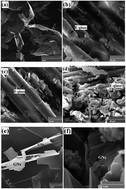
As showed in Fig. 1a, it is clear that two dimensional GNs with a lamellar structure of alternating plates, and with typical thickness and lateral dimensions about 1–5 nm and 5–15 μm, respectively. High power dispersion methods, such as ultrasound and high-speed shearing, are the simplest and most convenient methods to improve the dispersion of carbon nano-materials filled polymer composites.13,14 The components were mixed using ultrasonic treatment, mechanical stirring, with the optimized curing procedure, resulted in the uniform dispersion of GNs in such composites. Fig. 1b–d shows the cross sectional configuration of the GNs filled E-glass/epoxy composite plates. Some results can be obtained: (1) the GNs were distributed mainly in the resin matrix rich region; (2) the failure surface of the composite containing GNs is rougher, with mostly GNs protrude out or exfoliate from the fracture surface the resin matrix, as showed in Fig. 1e and f; (3) the GNs did not penetrate far into the fiber yarns. GNs have high tensile and modulus than epoxy matrix, which would act as particles reinforcement and then contribute to the improvement of the mechanical properties of the glass/epoxy composites. As mentioned above, the well distribution of GNs in the resin matrix, and the good connection of epoxy matrix and glass fiber made the composite have good mechanical properties. Furthermore, the uneven distribution of GNs and glass fiber yarns is expected to induce a high dielectric loss by multi-reflection in such composites.14
image file: c6ra15116g-f1.tif
Fig. 1 (a) The SEM image of the GNs. Typical SEM image to show the dispersion of the GNs in the GNs/E-glass/epoxy microwave absorbing composites (b) 1.0 wt%, (c) 1.5 wt%, (d) 2.0 wt% (the black arrows for the GNs). (e and f) Typical fracture surface SEM image to show the pull out of the GNs from the epoxy matrix.

Typical stress–strain curves of the GNs filled glass/epoxy composites are shown in Fig. 2. The epoxy matrix is thermosetting polymer, thus the stress–strain curves exhibits brittle characteristics, failed immediately after the tensile stress reached the maximum value without obvious yield point in the curves.21–24 With the addition of GNs in the glass/epoxy composite, the curves show considerable non-linear deformation, and the irregularities in the curves are attributed to random filament breakage during loading.22 The stress–strain curves also indicate that the composites have good toughness as compared with the glass/epoxy composites without GNs. As can be seen in the Table 1, the flexural strength and elastic modulus of the glass/epoxy composites without GNs filler are 197 MPa and 1.32 GPa, respectively. Both of the flexural strength and elastic modulus enhanced with increasing GN content. Compared with the composite without GNs, the flexural strength and elastic modulus of the absorber filled with 2.0 wt% GNs, are 312 MPa and 2.36 GPa, improving about 58.4% and 78.8%, respectively.


image file: c6ra15116g-f2.tif
Fig. 2 Typical stress–strain curves of the GNs filled glass/epoxy composites.

As can be seen in the Table 1, the flexural strength and elastic modulus of the glass/epoxy composites without GNs filler are 197 MPa and 1.32 GPa, respectively. Both of the flexural strength and elastic modulus enhanced with increasing GN content. Compared with the composite without GNs, the flexural strength and elastic modulus of the absorber filled with 2.0 wt% GNs, are 312 MPa and 2.36 GPa, improving about 58.4% and 78.8%, respectively. The enhancement of mechanical properties of the GNs filled glass/epoxy composites can be ascribe to these reasons: firstly, the high surface area, high aspect ratio, high modulus and strength of GNs gives large contact areas and strong interaction with epoxy matrix, as shown in the Fig. 1e, which enhanced the mechanical properties through particles enhancement effect.23 The second reason is that the GNs increases the crack propagation resistance by the bridging effect, thus may causes the matrix cracks deflect, when the crack meet the GNs fillers during fracture process of the composites, which improves the mechanical properties of the composites.25

The EM properties of the GNs/glass/epoxy composites were measured in the Ku-band, as showed in Fig. 3. The value of real (ε′) and imaginary (ε′′) parts of complex permittivity of the glass/epoxy matrix at 12.4 GHz is about 2.97 and 0.14, respectively. The value of ε′ at 12.4 GHz increases from 2.97 to 26.45 and ε′′ increases from 0.14 to 11.87 when the content of GNs increases to 2.0 wt%. Furthermore, the values of complex permittivity is almost independent on the frequencies in the measured frequency range with lower GNs loadings, while values of the complex permittivity intend to decrease with increasing of frequency and show frequency-dependence phenomenon at higher loading (2.0 wt%).


image file: c6ra15116g-f3.tif
Fig. 3 The (a) real and (b) imaginary parts of complex permittivity of the GNs/glass/epoxy composites.

The increase of the ε′ can be mainly ascribed to dielectric relaxation and space charge polarization effect.15 With the increase of GN content in the composites, the π electrons of GNs can travel freely within the GNs and accumulated at the GNs–polymer interface, which generates the interfacial electric dipolar polarization and thus increased the values of ε′.11 The increased values of the ε′′ of such composites can be attributed to the polarization relaxation loss and conduction loss which can be evaluated by the following equation: ε = ε′′relax + σ/ωε0, where ε′′relax is electron relaxation polarization in this case, σ is the electrical conductivity, ε0 is the dielectric constant in vacuum, and ω is the angular frequency. Therefore, both ε′′relax and σ can affect the value and frequency dependence of ε′′ of the GNs filled composite. The component σ/(ωε0) is small in the GHz frequency range when the electrical conductivity of the glass/epoxy composite is low (about 8.73 × 10⁻⁸ S cm−1).

Therefore, the main term affecting the ε′′ is the interfacial polarization and its associated relaxation while the conductivity term plays a secondary role when a sample is filled with low content of GNs. When the content of GNs up to 2.0 wt%, the electrical conductivity of the resulting composite is, about 5.96 × 10⁻³ S cm−1, approximately five orders of magnitude larger than that of the glass/epoxy composite, mainly due to the intrinsic high conductivity of the GNs. The enhancement of the conductivity with the increasing GN content will lead to the formation conduction current due to the presence of free electrons in the GNs and thus caused dielectric loss. This means that the electrical conductivity also can affect the values and frequency dependencies of the ε′′ of such composites as the content of GNs up to 2.0 wt%. Furthermore, the composites with higher GN content have higher number of interfacial electric dipolar polarization and the system will require larger relaxation time at tested frequency range. Therefore, higher values and frequency dependence of ε′′ can be obtained under the higher electrical conductivity of such composites, as showed in the Fig. 3b. The obvious increase of the complex permittivity when the content of GNs is 2.0 wt% is believed to originate from a buildup of the conductive network with the increasing GNs content, similar phenomenon has been reported by Lee et al.12 The complex permittivity of the GNs/glass/epoxy composites is higher than that of CB,13 MWCNTs and CNF15 as filler in glass/epoxy matrix under the same loading, due to the high conductivity of GNs, large specific surface area and low percolation threshold as compared to other carbon nano-materials. Therefore, the GNs/glass/epoxy composites with high complex permittivity and dielectric loss indicated that such composites could be used as MAMs in the measured frequency region.

The RL of GNs filled glass/epoxy single layer composites including different content of GNs are calculated according to the transmission line theory. The real and imaginary part complex permeability of the glass/epoxy matrix and GNs is almost 1 and 0 in the whole measured frequency range, due to the weak magnetic characteristics of both glass/epoxy and GNs materials. Therefore, the microwave absorption of the GNs/glass/epoxy is mainly attributed to their dielectric properties. Fig. 4 shows the calculated color-filling patterns of RL values of the GNs filled glass/epoxy composites with different sample thickness and GN content. In order to design an optimum absorbing structure, the 10 dB absorbing bandwidths (90% absorption) is one of the most important elements for evaluating the microwave absorption. Obviously, the RL of the composites with low GN content (1.0 wt% content) is very poor due to the low complex permittivity and dielectric loss. The RL below −10 dB cannot be obtained at the whole test frequency range for 0.5 and 1.0 wt% GNs. The optimum RL bandwidth below −10 dB is 2.6 GHz with the thickness of 1.3 mm when the GN content is 1.5 wt%. Though the 10 dB absorbing bandwidths can achieve for the 2.0 wt% GNs, the bandwidth is too narrow due to the inappropriate impedance matching. Thus for the single layer microwave absorbers, the good absorbing property is obtained with 1.5 wt% GNs among the four samples. In addition, the matching thickness decreases with the amount of GNs for the composites, and the matching thickness decreases from 2.5 to 1.0 mm with the GN content increases from 0.5 to 2.0 wt%. As seen from the above result, the single layer absorbers based on the GNs filled glass/epoxy composites have poor absorption properties, especially for the narrow absorption bandwidths below −10 dB.


image file: c6ra15116g-f4.tif
Fig. 4 The calculated color-filling patterns of microwave absorption values of the GNs filled glass/epoxy composites with different GNs content, (a) 0.5 wt%, (b) 1.0 wt%, (c) 1.5 wt% and (d) 2.0 wt%.

Carbon nano-materials filled composites can be used to minimize microwave radiations and interferences under relatively low density and mixing ratios. However, single carbon nano-materials filled composites could not meet the demands of ideal MAMs because the intrinsic high permittivity and low permeability, which lead to poor impedance matching and thus affecting its absorbing properties. The effectiveness of a MAM is mainly depended on its electromagnetic (EM) characteristics (such as complex permittivity and permeability), so the key point to obtain thin-layer broadband GNs-filled MAMs is the control of the EM properties of such composites. As showed in Fig. 3, the values and frequency dependent of ε′ and ε′′ of the GNs filled composites depended on the content of GNs. When the composites filled with lower GN content, the dielectric loss is lower and the then results lower RL (Fig. 4a). As the GN content increased, both the values of ε′ and ε′′ of the GNs filled composites enhanced, and the RL improved. However, too larger complex permittivity is undesirable in terms of impedance matching for microwave absorption (Fig. 4d). Therefore, the reflection effectiveness of GNs filled composite was not considered and the absorption could not be effectively improved by simply changing the content of the GNs, because the values of the ε′ and ε′′ increased rapidly as the GN content increased, especially in the high frequency range, which can deteriorated the level of impedance matching and resulted in lower RL.

Commonly, the first approach to improve the RL of GNs filled composites is control of the EM properties when both of the values of ε′ and ε′′ meet the impedance match. An effective approach to control the complex permittivity of GN filled composite is introduce the secondary particles with the dual purposes of as absorber and improving the dispersion of GNs, which resulted the enhancement of the microwave absorption of such composites. The effect of the ceramic particles (such as Al2O3 and BaTiO3 particles) on the EM properties of CNTs–epoxy composites was investigated.26 The results showed that the incorporation of ceramic particles can enhanced the electrical conductivity and then changed the values and frequency dependence of the complex permittivity, which significantly improved the microwave absorption. Another effective approach to control the EM properties of the GN filled composite is directed toward adding magnetic materials to enhance their complex permeability. The EM properties of the GN filled composite can be optimization by reasonable incorporating magnetic particles with different EM properties, particle sizes and microstructures. Therefore, enhanced microwave absorptions of GNs/magnetic particles filled composites are mainly due to the increased magnetic loss and the unique microstructure as a result of the presence of magnetic particles.27–29

As mentioned above, the designing principia of EM absorbing material need to consider both EM absorption capability and impedance matching characteristic. The impedance matching characteristic is that the intrinsic impedance of absorber is made equal to the impedance of free space while the attenuation characteristic is that the incidence EM waves must enter and get attenuated rapidly through the absorber layer, thus reducing the emerging wave to an acceptable low magnitude.12 It also has been indicated that the design of microwave absorbers with multi-layer structures has a great effect on the absorption properties and thus can be used to improve their microwave absorption. Using a multi-layer absorber design, a wideband microwave absorber can be obtained by optimizing the impedance matching and attenuation characteristic of the absorber. A suitable matching layer, which can achieve a good impedance matching with the free space and allow an incidence EM waves enter into the absorbing layer, is often employed for design multi-layer microwave absorber with a good absorption performance.15 A higher absorption layer is also often employed for design microwave absorber, which possess higher magnetic and/or dielectric loss and dissipate an incidence electromagnetic wave into heat.30–52 Two layered absorber structures were adopted to effectively enhance the microwave absorption of the GN filled glass/epoxy composites, based on the complex permittivity of different GN content filled glass/epoxy composites. From the values of the ε′ and ε′′ of the GNs filled glass/epoxy composites, we can conclude that the sample 0 and sample 4 are speculate for using as matching layer and absorbing layer, so the measured RL of the double layered microwave absorber as a function of frequency are shown in Fig. 5a and b.


image file: c6ra15116g-f5.tif
Fig. 5 The measured RL of the GNs filled glass/epoxy composites fabricated with the sample 0 using as matching layer and sample 4 as absorbing layer. (a) Effect of matching layer thickness on the RL under the total composite thickness is designed to 3 mm. (b) Effect of matching layer thickness on the RL under the thickness of the absorbing layer is designed to 1 mm.

Fig. 5a shows the effect of matching layer thickness on the RL of GNs filled glass/epoxy composites. When the total composite thickness is designed to 3 mm, the changing thicknesses of matching and absorbing layer have big influence on the RL. The bandwidth of the RL below −10 dB can be obtained in the frequency range of 12.7–18 GHz with the matching layer thickness is 0.9 mm. The optimum RL bandwidth (RL ≤ −10 dB) can be reach at the whole measured frequency range when the matching layer thickness is 1.0 mm with good microwave absorption (the minimum RL is −23.5 dB at 13.2 GHz). Furthermore, the RL bandwidth decreases as the matching layer thickness further increased due to the decrease of impedance matching degree in the high frequency range.

The influence of matching layer thickness of on the RL of the MASs under the absorbing layer thickness designed to 1 mm is depicted in Fig. 5b. The minimum RL first increases and then decreases with increasing matching layer thickness from 1.0 to 2.8 mm. The absorption bandwidths below −10 dB can be obtained at the whole test frequency range with the matching layer varies from 2.0 to 2.4 mm. Especially, the RL values less than −13 dB (larger than 95% absorption) can be obtained in the whole Ku-band for a double layer composite with a thickness of 3.4 mm. The absorbing properties of double layer MASs are better than that of the carbon black/glass/epoxy matrix double layer MASs (the absorption bandwidths below −10 dB was 3.1 GHz).13 These results suggest that the using GNs as absorber added into glass/epoxy matrix to fabricate double layered absorbers is promising MASs with both good mechanical properties and microwave absorption. Furthermore, deeper investigation of the effects of second particles (such as dielectric ceramic particles, magnetic particles) on the EM properties, by optimizing the absorber content, and combining the double layer structure design to further improve the RL of such MASs is still needed, which is also the key element for designing GNs filled glass/epoxy composites with optimum performance for practice application.

Conclusions

Mechanical properties and microwave absorption of the GN filled glass/epoxy composites were investigated. The addition of GNs enhanced the mechanical properties of the composites as compared to the glass/epoxy composite. The complex permittivity of the glass/epoxy matrix is 2.97 + 0.14i at 12.4 GHz, the value of ε′ increases from 2.97 to 26.45 and ε′′ increases from 0.14 to 11.87 when the content of GNs increases to 2.0 wt%. For single layer absorbing composites, the optimum RL bandwidth below −10 dB is 2.6 GHz with a thickness of 1.3 mm when the GNs content is 1.5 wt%. The absorption bandwidths below −10 dB can be obtained in the whole measured frequency range with the matching layer thickness varies from 2.0 to 2.4 mm and absorbing layer thickness is 1 mm for double layer absorbing material. The proposed GNs filled glass/epoxy composites with good absorbing properties and mechanical properties will practicably broadening the scope of microwave absorbing materials and possess strong application potentials in aerospace, civil and electrical industry.

Acknowledgements

This work was financially supported by National Natural Science Foundation of China (No. 51402239), State Key Laboratory of Solidification Processing (NWPU), China (Grant No. KP201422 and KP201604), Fundamental Research Funds for the Central Universities (No. 3102014JCY01002).

Notes and references

  1. J. Liu, W. Q. Cao, H. B. Jin, J. Yuan, D. Q. Zhang and M. S. Cao, J. Mater. Chem. C, 2015, 3, 4670 RSC.
  2. X. Liu, X. Cui, Y. Chen, X. J. Zhang, R. Yu, G. S. Wang and H. Ma, Carbon, 2015, 95, 870 CrossRef CAS.
  3. T. Liu, Y. Pang, H. Kikuchi, Y. Kamada and S. Takahashi, J. Mater. Chem. C, 2015, 3, 6232 RSC.
  4. L. B. Kong, Z. W. Li, L. Liu, R. Huang, M. Abshinova and Z. H. Yang, et al., Int. Mater. Rev., 2013, 58, 203 CrossRef CAS.
  5. D. L. Zhao, X. Li and Z. M. Shen, Compos. Sci. Technol., 2008, 68, 2902 CrossRef CAS.
  6. Z. Wang and G. L. Zhao, J. Mater. Chem. C, 2014, 2, 9406 RSC.
  7. Y. C. Qing, W. C. Zhou, F. Luo and D. M. Zhu, Carbon, 2010, 48, 4074 CrossRef CAS.
  8. J. B. Kim, S. K. Lee and C. G. Kim, Compos. Sci. Technol., 2008, 68, 2909 CrossRef CAS.
  9. H. T. Liu and H. Tian, J. Eur. Ceram. Soc., 2012, 32, 2505 CrossRef CAS.
  10. H. T. Liu, H. F. Cheng and H. Tian, Mater. Sci. Eng., B, 2014, 179, 17 CrossRef CAS.
  11. H. Tian, H. T. Liu and H. F. Cheng, Compos. Sci. Technol., 2014, 90, 202 CrossRef CAS.
  12. S. E. Lee, J. H. Kang and C. G. Kim, Compos. Sci. Technol., 2006, 76, 397 Search PubMed.
  13. K. Y. Park, S. E. Lee, C. G. Kim and J. H. Han, Compos. Sci. Technol., 2006, 66, 576 CrossRef CAS.
  14. J. H. Oh, K. S. Oh, C. G. Kim and C. S. Hong, Composites, Part B, 2004, 35, 49 CrossRef.
  15. W. S. Chin and D. G. Lee, Composite Structures, 2007, 77, 457 CrossRef.
  16. M. S. Cao, X. X. Wang, W. Q. Cao and J. Yuan, J. Mater. Chem. C, 2015, 3, 6589 RSC.
  17. Y. Zhu, S. Murali, W. Cai, X. Li, J. W. Suk, J. R. Potts and R. S. Ruoff, Adv. Mater., 2010, 22, 3906 CrossRef CAS PubMed.
  18. D. Wang, X. Zhang, J. Zha, J. Zhao, Z. Dang and G. Hu, Polymer, 2013, 54, 1916 CrossRef CAS.
  19. J. Liang, Y. Wang, Y. Huang, Y. Ma, Z. Liu and J. Cai, et al., Carbon, 2009, 47, 922 CrossRef CAS.
  20. V. K. Singh, A. Shukla, M. K. Patra, L. Saini, R. K. Jani, S. R. Vadera and N. Kumar, Carbon, 2012, 50, 2202 CrossRef CAS.
  21. Q. Zhao and S. V. Hoa, J. Compos. Mater., 2007, 41, 201 CrossRef CAS.
  22. Y. X. Zhou, P. Farhana, V. Rangari and S. Jeelani, Mater. Sci. Eng., A, 2006, 426, 221 CrossRef.
  23. Y. K. Choi, K. Sugimoto, S. M. Song, Y. Gotoh, Y. Ohkoshi and M. Endo, Carbon, 2005, 43, 2199 CrossRef CAS.
  24. Y. Zhou, F. Pervin, L. Lewis and S. Jeelani, Mater. Sci. Eng., A, 2008, 475, 157 CrossRef.
  25. K. S. Kim, K. E. Choi and S. J. Park, Carbon Lett., 2009, 10, 335 CrossRef.
  26. Y. C. Qing, X. Wang, Y. Y. Zhou, Z. B. Huang, F. Luo and W. C. Zhou, Compos. Sci. Technol., 2014, 102, 161 CrossRef CAS.
  27. Y. C. Qing, D. D. Min, Y. Y. Zhou, F. Luo and W. C. Zhou, Carbon, 2015, 86, 98 CrossRef CAS.
  28. Z. Zhu, X. Sun, H. Xue, H. Guo, X. Fan and X. Pan, et al., J. Mater. Chem. C, 2014, 2, 6582 RSC.
  29. Y. Chen, Z. Lei, H. Wu, C. Zhu, P. Gao and Q. Ouyang, et al., Mater. Res. Bull., 2013, 48, 3362 CrossRef CAS.
  30. K. Y. Park, S. E. Lee, C. G. Kim and J. H. Han, Compos. Sci. Technol., 2006, 66, 576 CrossRef CAS.
  31. Y. C. Qing, W. C. Zhou, S. Jia, F. Luo and D. M. Zhu, Appl. Phys. A, 2010, 100, 1177 CrossRef CAS.
  32. M. Han and L. Deng, Appl. Phys. Lett., 2007, 90, 011108 CrossRef.
  33. C. C. Wang and L. W. Zhang, Phys. Rev. B: Condens. Matter Mater. Phys., 2006, 74, 024106 CrossRef.
  34. S. Ke, H. Huang and H. Fan, Appl. Phys. Lett., 2006, 89, 182904 CrossRef.
  35. B. Wen, X. X. Wang, W. Q. Cao, H. L. Shi, M. M. Lu and G. Wang, et al., Nanoscale, 2014, 6, 5754 RSC.
  36. F. Qin and C. Brosseau, J. Appl. Phys., 2012, 111, 061301 CrossRef.
  37. Y. C. Qing, Q. L. Wen, F. Luo, W. C. Zhou and D. M. Zhu, J. Mater. Chem. C, 2016, 4, 371 RSC.
  38. D. Ponnamma, K. K. Sadasivuni, Y. Grohens, Q. P. Guo and S. Thomas, J. Mater. Chem. C, 2014, 2, 8446 RSC.
  39. Y. C. Qing, Q. L. Wen, F. Luo and W. C. Zhou, J. Mater. Chem. C, 2016, 4, 4853 RSC.
  40. J. Liu, W. Q. Cao, H. B. Jin, J. Yuan, D. Q. Zhang and M. S. Cao, J. Mater. Chem. C, 2015, 3, 4670 RSC.
  41. X. Li, J. Feng, Y. Du, J. Bai, H. Fan and H. Zhang, et al., J. Mater. Chem. A, 2015, 3, 5535 CAS.
  42. B. Wen, M. S. Cao, M. M. Lu, W. Q. Cao, H. L. Shi and J. Liu, et al., Adv. Mater., 2014, 26, 3484 CrossRef CAS PubMed.
  43. F. Qin and C. Brosseau, J. Appl. Phys., 2012, 111, 061301 CrossRef.
  44. Y. F. Zhu, Q. Q. Ni and Y. Q. Fu, RSC Adv., 2015, 5, 3748 RSC.
  45. G. M. Li, L. C. Wang, W. X. Li and Y. Xu, RSC Adv., 2015, 5, 8248 RSC.
  46. L. Zhang, X. H. Zhang, G. J. Zhang, Z. Zhang, S. Liu and P. F. Li, et al., RSC Adv., 2015, 5, 10197 RSC.
  47. R. Dhawan, S. Kumari, R. Kumar, S. K. Dhawan and S. R. Dhakate, RSC Adv., 2015, 5, 43279 RSC.
  48. J. Y. Fang, Z. Chen, W. Wei, Y. Li, T. Liu and Z. Liu, RSC Adv., 2015, 5, 50024 RSC.
  49. Y. C. Qing, W. C. Zhou, S. Jia, F. Luo and D. M. Zhu, J. Mater. Sci., 2010, 45, 1885 CrossRef CAS.
  50. X. L. Zheng, J. Feng, Y. Zong, H. Miao, X. Y. Hu, J. T. Bai and X. H. Li, J. Mater. Chem. C, 2015, 3, 4452 RSC.
  51. J. Feng, F. Z. Pu, Z. X. Li, X. H. Li, X. Y. Hu and J. T. Bai, Carbon, 2016, 104, 214 CrossRef CAS.
  52. X. Li, J. Feng, H. Zhu, C. Qu, J. Bai and X. Zheng, RSC Adv., 2014, 4, 33619 RSC.

This journal is © The Royal Society of Chemistry 2016
Click here to see how this site uses Cookies. View our privacy policy here.