DOI:
10.1039/C6RA15111F
(Paper)
RSC Adv., 2016,
6, 76298-76306
Ultrahigh capacitance of amorphous nickel phosphate for asymmetric supercapacitor applications
Received
10th June 2016
, Accepted 29th July 2016
First published on 29th July 2016
Abstract
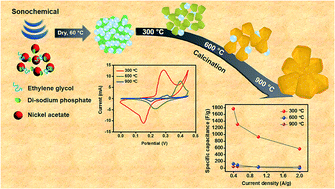
This article presents the effect of different calcination temperatures on the structural, morphological and capacitance of nickel phosphate (Ni3(PO4)2) as an electrode material for supercapacitor applications. Ni3(PO4)2 was synthesized via a sonochemical method followed by calcination at different temperatures (300, 600 and 900 °C, denoted as N300, N600 and N900, respectively). The phase structure and purity of Ni3(PO4)2 were confirmed by X-ray diffraction (XRD) and Fourier transform infrared (FTIR) analysis. The surface morphologies showed that the particle size increased with increasing the calcination temperatures. The electrochemical performance of N300, N600 and N900 were investigated using cyclic voltammetry (CV) and galvanostatic charge–discharge (GCD) in a 1 M KOH electrolyte. It was found that N300 exhibited the maximum specific capacity of 620 C g−1 at 0.4 A g−1, which was significantly higher than N600 (46 C g−1) and N900 (14 C g−1). Here, the enhanced electrochemical performance was obtained due to the amorphous structure and augmentation of the redox active sites of the N300 particles. Additionally, the fabricated N300//activated carbon based asymmetric supercapacitor can be cycled reversibly at a cell voltage of 1.45 V. The device exhibited an energy density of 76 W h kg−1 and a power density of 599 W kg−1 with life cycles of 88.5% capacitance retention after 3000 cycles.
1. Introduction
The demand for electrochemical energy storage devices has increased in the past few years. Among the energy storage devices, supercapacitors (SCs) are considered one of the most promising device due to their specific power being as high as conventional capacitors and a specific energy close to that of batteries, as well as their other advantages: eco-friendly and relatively low cost.1,2 In general, SCs can be classified into three types based on their charge-storage mechanism: pseudocapacitor, electric double layer capacitor (EDLC), and hybrid supercapacitor. For a pseudocapacitor, the energy is stored through a faradaic redox process. For a EDLC, it stores energy in the double layer at the interface between the electrode and electrolyte without a faradaic process. For a hybrid supercapacitor, it utilizes both faradaic and non-faradaic processes for energy storage.3,4
However, the realization of outstanding performance in electrode materials for a supercapacitor is still demanding. In this aspect, nickel-based materials play a significant role in energy storage applications. Zheng et al. reported the synthesize of nickel oxide (NiO) via a hydrothermal method with a specific capacitance of 137.7 F g−1,5 Zhu et al. stated synthesized hierarchical nickel sulphide hollow spheres by a template-engaged conversion method with a specific capacitance of 583–927 F g−1,6 and recently, Raju et al. reported the fabrication of 1-D microrod structures of ammonium nickel phosphate hydrate as a pseudocapacitor with an energy of 21.2 mW h cm−2 and power of 12.7 mW cm−2.7 Other types of nickel based work on nickel phosphate (Ni3(PO4)2) is still scarce in energy storage applications. Ni3(PO4)2 is formed by an interaction between nickel cations with anionic PO4 tetrahedra, which are used as catalysts,8 pigments,9 bioceramic materials10 and active substances for corrosion protecting materials11 owing to their high ion-exchange capability, capability to uptake water, as well as high chemical and thermal stability.12 Due to their physico-chemical properties and potential in various applications, it would be desirable to synthesize Ni3(PO4)2 materials for exploring their potential in energy storage systems.
The sonochemical method is a method that applies acoustic cavitation for achieving a chemical conversion. During the synthesis reaction, bubbles are created, which oscillate and accumulate the ultrasonic energy. The bubbles are subsequently overgrow and collapse, releasing the concentrated energy stored in the liquid medium within a very short time. This process induces a high velocity of inter-particle collisions, which could greatly affect the morphology and particle size of the nanostructured materials.13 The advantages of this method over other synthesis methods (i.e. hydrothermal, co-precipitation, solvothermal) are that it offers a short reaction duration, uniform particle size with lesser aggregation and a high surface area for the synthesized metal particles.14 There are numerous reports on using sonochemical as a synthesis method such as for Ag,15 TiO2,16 and CuO.17 In addition to the sonochemical reaction, calcination is another process (heating the materials at elevated temperatures), which can modify the physico-chemical properties of the products. Moreover, calcination is a common step to increase the conductivity of the materials as well as to eliminate the presence of adsorbed water and other volatile substances.18,19
In view of abovementioned facts, we synthesize Ni3(PO4)2 particles using a sonochemical method to agitate the precursor solution and avoid particles aggregation during the chemical precipitation, and followed the synthesis with calcination at different temperatures. The synthesized Ni3(PO4)2 at different calcination temperatures (300, 600 and 900 °C) are represented as N300, N600 and N900, respectively. The structural crystallinity, surface morphologies and electrochemical performance of the synthesized Ni3(PO4)2 are examined via X-ray diffraction, FT-IR and electrochemical work station.
2. Materials and method
2.1. Materials
Nickel(II) acetate tetrahydrate (Ni(CH3COO)2·4H2O), anhydrous di-sodium hydrogen phosphate (Na2HPO4), and ethylene glycol were purchased from Friendemann Schmidt, Malaysia. Potassium hydroxide, acetylene black, activated carbon (AC), and polyvinylidene fluoride (PVdF) were received from Sigma-Aldrich, Malaysia. All chemicals used were of analytical grade. Deionized water was used throughout the experiment.
2.2. Synthesis of nickel phosphate (Ni3(PO4)2)
Ni3(PO2)4 was synthesized via a sonochemical method followed by a calcination process. A 15 mM Na2HPO4 solution was added dropwise into a 15 mM solution of Ni(CH3COO)2·4H2O and sonicated (with a power of 950 W) for 30 min until light green colloidal precipitates were formed. The product was washed several times with deionized water and dried at 60 °C. Then, it was calcined at 300 °C in a furnace for 3 hours and designated as N300. For comparison, the procedure was repeated for different calcination temperatures (600 and 900 °C) and designated as N600 and N900, respectively. The product before calcination designated as N0.
2.3. Characterization of the samples
2.3.1. Structural analysis. The crystalline phases of the samples were determined via X-ray diffraction (XRD; D5000, Siemens), using copper Kα radiation (λ = 1.5418 Å) at a scan rate of 0.02° s−1. The morphological studies of the synthesized Ni3(PO2)4 samples were carried out by field emission scanning electron microscopy (FESEM) using a JEOL JSM-7600F. Fourier transform infrared spectroscopy (FTIR, Thermo Scientific Nicolet ISIO Smart ITR) analysis was used to study the presence of functional groups and purity of the samples, which was scanned in the region from 500 to 4000 cm−1 at a resolution of 1 cm−1.
2.3.2. Electrochemical studies. A N300 electrode was fabricated by mixing 75 wt% of the active material, 15 wt% of acetylene black and 10 wt% of PVdF in NMP solvent until a homogeneous slurry was achieved. Then, the cleaned nickel foam (1 × 1 cm2 area) was coated with the slurry and dried in an oven at 90 °C overnight. The mass loading of the active material (N300) on the electrode was approximately 3.8 mg. A standard three-electrode cell system was used to examine the electrochemical measurements. The N300 coated Ni foam was used as the working electrode, Ag/AgCl and platinum wire were used as the reference and counter electrodes, respectively. The measurements were conducted in 1 M KOH at room temperature. Cyclic voltammetry (CV), galvanostatic charge–discharge (GCD) and electrochemical impedance spectroscopy (EIS) with a frequency range from 0.01 Hz to 100 kHz were conducted using a Gamry Instrument Interface 1000. For comparison, the same experiment was repeated using N600 and N900 as the active electrode materials.
3. Results and discussion
3.1. X-ray diffraction (XRD)
The structural crystallinity and phase purity of the synthesized materials were investigated by X-ray diffraction (XRD) analysis. The XRD of N0, N300, N600 and N900 are represented in Fig. 1a. Fig. 1b showed the comparison of the characteristic diffraction peaks of N0, N300 and N600. N0 showed two broad humps at 2θ value of 28° and 37°, whereas N300 showed one broad peak between 30° and 40° due to calcinate at 300 °C. This broad peak confirmed that Ni3(PO2)4 exhibited an amorphous nature.20 The high intensity amorphous peak was retained at a calcination temperature of 600 °C.21 The transformation from amorphous to crystalline was clearly observed after calcination at 900 °C, where N900 exhibited sharp diffraction peaks, revealing its highly crystalline structure.22 The peaks at 2θ value of 15.2°, 23.6°, 26.2°, 29.8°, 30.8°, 32.8°, 36.2°, 37.3°, 53.4°, and 58.8° are assigned to the (001), (201), (111), (−211), (211), (310), (311), (−112), (222) and (313) planes of the monoclinic structure of nickel phosphate (JCPDS card no. 038-1473 with a space group of P21/1), respectively.
 |
| | Fig. 1 (a) XRD patterns of N0, N300, N600 and N900. (b) Comparison of XRD patterns between N0, N300 and N600. | |
3.2. FTIR spectroscopy
The FTIR spectra of N0, N300, N600 and N900 are shown in Fig. 2a. The PO4 group, which can be seen in the spectrum of N900, can be split into different vibrational bands: ν4(F2)PO43− in the range of 520–640 cm−1, ν3(F2)PO43− at 1068 cm−1 and ν1(A1)PO43− in the range 850–960 cm−1. However, these bands are not distinguished in the spectrum of N0, N300 and N600 because of the band superimposition and broadening characteristics of the amorphous structure, which is in agreement with the XRD results.23 In addition, the band at 765 cm−1 was assigned to the stretching of P–O–P linkages.24 On the other hand, the bands around 3000–3700 cm−1 and 1635 cm−1 belong to ν1(A1)H2O and ν2(A1)H2O, respectively, which were weakened with the increase of calcination temperature, as represented in Fig. 2b. This proposes that the adsorbed water molecules are gradually reduced after being subjected to increased calcination temperatures.25
 |
| | Fig. 2 FTIR spectra of N0, N300, N600 and N900 in the range of (a) 500–2000 cm−1 and (b) 1600–3600 cm−1. | |
3.3. FESEM or surface morphology
The effect of calcination temperature on particle growth is depicted in Fig. 3. The images revealed that the grain size increases with increasing calcination temperature. Before the calcination, the particles displayed irregular-shapes. However, the particles were not well separated and had a high degree of agglomeration (Fig. 3a). Fig. 3b showed the morphology of N300, where the particles were less agglomerated with an average particle size of 70 nm. As the calcination temperature of the particles was increased to 600 °C (shown in Fig. 3c), the morphology showed a densely packed particle distribution. The particles started interacting with each other, leading to the occurrence of inter-particle necking process (Fig. 3c (inset)). Moreover, the particle size became larger, with an average size of 110 nm. With a further increase of calcination temperature (900 °C), the particles grew significantly with an average size of 3 μm (Fig. 3d (inset)) and were aggregated forming large non-porous, solid particles (Fig. 3d), reducing the number of active sites. In addition, the cavities between sets of aggregated particles were much larger than the other samples, leading to increase in the resistivity of N900.26 An insignificant increase in the particle size from 300 °C to 600 °C was related to the presence of water molecules, which was confirmed by the FTIR results.27 The formation mechanisms of N0, N300, N600 and N900 are illustrated in Fig. 4.
 |
| | Fig. 3 FESEM image of (a) N0 (b) N300 (c) N600 and (d) N900; inset shows the large scale image of N900. | |
 |
| | Fig. 4 Illustration of the formation mechanisms of N0, N300, N600 and N900 at different calcination temperatures. | |
3.4. Surface area measurements
Brunauer–Emmett–Teller (BET) measurements were also tested to gain further insight into the sample structure. Fig. 5a–d showed the adsorption–desorption isotherms of N0, N300, N600 and N900. According to the International Union of Pure and Applied Chemistry (IUPAC) classification, the isotherm of all samples can be categorized as type IV with a hysteresis loop. The appearance of a hysteresis loop between P/P0 = 0.9 and 1 in the isotherms indicate the mesoporous nature of N0, N300 and N600. The calculated BET surface area from adsorption isotherms showed that N300 had the largest value of 16.96 m2 g−1 among the other samples (15.33, 12.34 and 2.01 m2 g−1 for N0, N600 and N900, respectively). Moreover, Fig. 5a–d (inset) illustrates that the mesopore size distribution of N0, N300 and N600 centered around 9, 12.4 and 11.5 nm, respectively, whereas N900 displayed a macropore size around 155 nm. This confirmed that the varying calcination temperature affected the surface area, which was supported by the morphology shown in the FESEM images.
 |
| | Fig. 5 N2 adsorption–desorption measurements of N0, N300, N600 and N900. | |
3.5. Electrochemical characterization
3.5.1. Cyclic voltammetry (CV) analysis using three electrode systems. CV was used to analyze the electrochemical performance of the N300, N600 and N900 electrodes in a potential range of 0.0–0.45 V using a 1 M KOH electrolyte. Fig. 6a–c showed the CV curves of the electrodes with various scan rates (1 mV s−1 to 50 mV s−1). Two strong peaks can be seen, which indicates that the materials are battery-type electrode materials.28 The possible redox reaction for Ni3(PO4)2 in an alkaline medium is based on eqn (1):29,30| | |
Ni3(PO4)2 + OH− ↔ Ni3(OH)(PO4)2 + e−
| (1) |
 |
| | Fig. 6 Cyclic voltammogram of (a) N300 (b) N600 and (c) N900 at different scan rates. (d) Cyclic voltammogram of N300, N600 and N900 at a scan rate of 1 mV s−1. | |
It was observed that the voltammetric currents were augmented with scan rates and that the anodic and cathodic peaks shifted towards higher and lower potentials, respectively. This was due to the strengthened electric polarization and the possible kinetic irreversibility of electrolyte ions at the electrode surface.31 Fig. 6d showed a comparison curve between N300, N600 and N900 at a fixed scan rate of 1 mV s−1. Among the three electrodes, N300 showed the largest integrated area, suggesting a maximum capacitance.32,33 The specific capacity of the electrodes corresponding to the CV curve was calculated by the following eqn (2);
| |
 | (2) |
where
Qs is the specific capacity of sample electrode (C g
−1),

is integral area under the CV curve,
m is the mass of the active material that was coated on the nickel foam (g), and
ν is the scan rate of the system (mV s
−1). The calculated specific capacities of N300, N600 and N900 at the scan rate of 1 mV s
−1 were 608, 245 and 45 C g
−1, respectively.
3.5.2. Charge–discharge study. The electrochemical performance of the electrodes was further evaluated using galvanostatic charge–discharge (GCD) analysis. Galvanostatic discharge curves of N300, N600 and N900 at different current densities (0.4–2.0 A g−1) in the potential range of 0.0–0.36 V are represented in Fig. 7a–c. The discharge curves illustrated an obvious discharge plateau in every curve, which revealed a faradaic behavior.34 When the current density was increased, the discharge time decreased, suggesting the specific capacitance value was inversely proportional to the current densities. This can be explained by the time constraints for OH− ion diffusion through an electrode material at a high current density. When the current density was low, the OH− ions would have sufficient time to access the electrode material.35 The results showed that N300 had a longer discharge time than the other electrodes. The specific capacities, Qs, of the electrodes were calculated from the galvanostatic discharge curves using the following eqn (3);| |
 | (3) |
where I is the current (A), Δt is the discharge time (s) and m is the mass of active material (g). At all the current densities (Fig. 7d), N300 exhibited the best performance, achieving a remarkable specific capacity of 620 C g−1 at a current density of 0.4 A g−1 as compared to N600 (46 C g−1) and N900 (14 C g−1). The highest capacitance achieved was due to several factors; (i) the small particle size of N300 with less particle aggregation. For smaller particle sizes, the effective surface area will be larger leading to an augmentation in its redox active sites for OH− interaction to initiate the redox process. The lower values in specific capacitance shown by N600 and N900 were because of the reduction in redox sites caused by the growth of particle size and tightly packed particles at elevated calcination temperatures,36 (ii) irregular surfaces of the nanostructured N300 provided a larger surface area as compared to the smooth surface possessed by N600 and N900, which increases the electrolyte/N300 interfacial area,37 (iii) the amorphous structure of N300 brings more transportation channels for OH− diffusion than a crystalline structure due to its high structural disorder. The disordered structure of an amorphous material forms active diffusion channels, which allows for easier electrolyte ion penetration, resulting in deeper diffusion through the material. However, in the crystalline structure, only the outermost surface layer reacts with electrolyte ions. Other than that, the presence of adsorbed water in the amorphous structure material may also be a driving difference in electrochemical performance. It can tune the ionic transport pathways by expanding the inter-particle distance, thus delivering enhanced capacitance.38–40 The crystalline structure, average particle size and specific capacitance based on GCD results for N300, N600 and N900 are summarized in Table 1.
 |
| | Fig. 7 Galvanostatic discharge curves of (a) N300 (b) N600 and (c) N900 at different current densities. (d) Specific capacitance with respect to current densities. | |
Table 1 The structure, particle size and specific capacitance calculated from the discharge time of N300, N600 and N900
| Sample |
N300 |
N600 |
N900 |
| Structure |
Amorphous |
Amorphous |
Crystalline |
| Average particle size (nm) from FESEM |
70 |
110 |
3000 |
| Current density (A g−1) |
Cs (F g−1) |
Cs (F g−1) |
Cs (F g−1) |
| 0.4 |
1771 |
130 |
40 |
| 0.5 |
1301 |
90 |
39 |
| 1 |
931 |
23 |
34 |
| 2 |
571 |
1 |
29 |
3.6. Asymmetric two electrode cell assembly and electrochemical characterization
Besides the nano-sized structure and high specific capacitance, an increase in the operation voltage window was another factor that would improve the energy density of a real capacitor condition according to the equation of stored energy: E = 0.5 CV.2,41 Due to these factors, N300 was chosen and fabricated as the positive electrode and activated carbon (AC) as the negative electrode for testing its performance in an asymmetric supercapacitor, denoted as N300//AC. as shown in Fig. 8a. Prior to the fabrication of the asymmetric supercapacitor, CVs of AC and N300 were recorded in a three electrode cell to determine the maximum working potential window of the asymmetric supercapacitor. It can be observed that the potential window of N300 and AC was from 0 to 0.45 V and −1 to 0 V, respectively, at a scan rate of 10 mV s−1 (Fig. 8b). As expected, the stable potential window of the supercapacitor can be extended to 1.45 V at a scan rate of 20 mV s−1, as illustrated in Fig. 8c. The asymmetric supercapacitor device exhibited a capacitive behavior with an almost rectangular shape. In addition, the observed broad peaks indicate a pseudocapacitance behavior in N300. Fig. 8d exhibited the CV curves of the supercapacitor device at different scan rates. The shape of the CV curves was well maintained, which suggests a good rate capability for the device.
 |
| | Fig. 8 (a) Schematic of the assembled asymmetric supercapacitor. (b) Comparative CV curves of N300 as a positive electrode and AC as a negative electrode performed at a scan rate of 10 mV s−1 in a three-electrode cell using 1 M KOH electrolyte. (c) CV curves of N300//AC supercapacitor measured at different potential windows with a scan rate of 20 mV s−1. (d) CV curves of N300//AC supercapacitor measured at different scan rates. | |
The GCD curves at different current densities are shown in Fig. 9a. The fabricated asymmetric device exhibited a highly reversible electrochemical behavior.42 The specific capacitance from the charge–discharge curve was calculated according to the following equation;
| |
 | (4) |
where
I is the applied discharge current (A),
m is the mass of active material (g) and Δ
t is the discharge time after
IR drop (s). The specific capacity of N300//AC was 355 C g
−1 at a current density of 0.4 A g
−1 (
Fig. 9b). Furthermore, the fabricated device showed a good rate performance with 60% of the specific capacitance retained when the current density increased from 0.4 A g
−1 to 2 A g
−1.
 |
| | Fig. 9 (a) Galvanostatic charge/discharge curves of N300//AC supercapacitor at different current densities (b) specific capacitance of the asymmetric supercapacitor at different current densities (c) Ragone plot compared with other electrode materials reported in literatures (d) cycling stability of N300//AC supercapacitor. | |
The Ragone plot of the device, which describes the relationship between energy density (E) and power density (P), is shown in Fig. 9c. The E and P values were calculated using the following equations:
| |
 | (5) |
| |
 | (6) |
where
C is the specific capacitance, Δ
V is the potential window and
td is the discharge time. The fabricated device stored a maximum energy density of 76 W h kg
−1 at a power density of 599 W kg
−1, with the energy density value decreasing to 21 W h kg
−1 at a power density of 2438 W kg
−1. These values were higher than in recently a reported work such as in Fe
2O
3@GO//Ni
3(PO
4)
2@GO (67.2 W h kg
−1 at 282.4 W kg
−1),
43 Ni
3S
2/CNT//AC (19.8 W h kg
−1 at 798 W kg
−1),
44 NiO//AC (30 W h kg
−1 at 330 W kg
−1),
45 and NiO/GF//HPNCNT (32 W h kg
−1 at 700 W kg
−1).
46 Since the long-term cyclic stability was another crucial parameter in practical applications, the fabricated asymmetric N300 was subjected to 3000 continuous cycles of charging–discharging at a current density of 0.8 A g
−1.
Fig. 9d displayed the capacitance retention of the fabricated asymmetric supercapacitor as a function of the cycle numbers. Noticeably, the capacity percentage was increased up to 113% before 200 cycles, which was due to the progressive activation process of the device. After that, the capacity retention slightly decayed gradually to 88.5% after 3000 cycles. This result suggests the superior electrochemical stability of the asymmetric supercapacitor device.
4. Conclusion
Ni3(PO4)2 samples with different particle sizes are synthesized using a sonochemical method, followed by calcination at different temperatures. The ultrasonic waves induced the energy for initial nucleation during the synthesis. The crystallinity and structure are confirmed by XRD and FTIR analysis, respectively. It has been observed that the calcination temperature is an important parameter, which can affect the structure, growth and electrochemical performance of the particles. With increasing calcination temperature, the structure changed from amorphous to crystalline and the particle size increased. The amorphous structure of Ni3PO4 (N300) exhibited the highest specific capacity of 620 C g−1 at a current density of 0.4 A g−1 in 1 M KOH electrolyte as compared to its counterparts. This is due to the smaller particle size with less aggregation of the particles as well as the amorphous structure, which combined provided a high number of redox sites and more transportation channels for ion diffusion. Moreover, the fabricated asymmetric supercapacitor delivered a high energy density of 76 W h kg−1 at a power density of 559 W kg−1, which was attributed to the combination of N300 with AC. In addition, the device showed a superior long-term stability, which retained 88.5% of the initial capacitance after 3000 cycles.
Acknowledgements
This study was supported by the High Impact Research Grant (H-21001-F000046) and the Fundamental Research Grant Scheme (FP012-2015A) from the Ministry of Education, Malaysia and Postgraduate Research Grant (PG034-2015A). One of the authors, Dr Navaneethan Duraisamy, acknowledges UGC-Dr D.S. Kothari Postdoctoral Fellowship (Ref no. No.F.4-2/2006 (BSR)/EN/15-16/0031).
References
- F. X. Wang, S. Y. Xiao, Y. S. Zhu, Z. Chang, C. L. Hu, Y. P. Wu and R. Holze, J. Power Sources, 2014, 246, 19–23 CrossRef CAS.
- A. Numan, N. Duraisamy, F. S. Omar, Y. K. Mahipal, K. Ramesh and S. Ramesh, RSC Adv., 2016, 6, 34894–34902 RSC.
- M. S. Halper and J. C. Ellenbogen, Supercapacitors: A Brief Overview, 2006 Search PubMed.
- E. Lim, C. Jo and J. Lee, Nanoscale, 2016, 8, 7827–7833 RSC.
- Y. Zheng, H. Ding and M. Zhang, Mater. Res. Bull., 2009, 44, 403–407 CrossRef CAS.
- T. Zhu, Z. Wang, S. Ding, J. S. Chen and X. W. (David) Lou, RSC Adv., 2011, 1, 397–400 RSC.
- K. Raju and K. I. Ozoemena, Sci. Rep., 2015, 5, 17629 CrossRef CAS PubMed.
- A. Aaddane, M. Kacimi and M. Ziyad, Catal. Lett., 2001, 73, 47–53 CrossRef CAS.
- S. Meseguer, M. A. Tena, C. Gargori, J. A. Nadenes, M. Llusar and G. Monros, Ceram. Int., 2007, 33(5), 843–849 CrossRef CAS.
- R. D. Gaasbeek, H. G. Toonen, R. J. Can Heerwaarden and P. Buma, Biomaterials, 2005, 26, 6713 CrossRef CAS PubMed.
- M. A. Deyab, K. Eddahaoui, R. Essehli, S. Benmokhtar, T. Rhadfi, A. De Riccardis and G. Mele, J. Mol. Liq., 2016, 216, 699–703 CrossRef CAS.
- J. Zhao, S. Wang, Z. Run, G. Zhang, W. Du and H. Pang, Part. Part. Syst. Charact., 2015, 32, 880–885 CrossRef CAS.
- N. Duraisamy, A. Numan, S. O. Fatin, K. Ramesh and S. Ramesh, J. Colloid Interface Sci., 2016, 471, 136–144 CrossRef CAS PubMed.
- F. S. Erta, R. Ka, U. Ünal and Ö. Birer, J. Solid State Electrochem., 2017, 17, 1455–1462 CrossRef.
- H. Arami, M. Mazloumi, R. Khalifehzadeh and S. K. Sadmezhaad, Mater. Lett., 2007, 61, 4559–4561 CrossRef CAS.
- R. F. Elsupikhe, K. Shameli, M. B. Ahmad, N. A. Ibrahim and N. Zainudin, Nanoscale Res. Lett., 2015, 10, 302 CrossRef PubMed.
- N. Wongpisutpaisan, P. Charoonsuk, N. Vittayakorn and W. Pecharapa, Energy Procedia, 2011, 9, 404–409 CrossRef CAS.
- R. C. Singh, M. P. Singh, O. Singh and P. S. Chandi, Sens. Actuators, B, 2009, 143, 226–232 CrossRef.
- P. Ruckdeschel, T. W. Kemnitzer, F. A. Nutz, J. Senker and M. Retsch, Nanoscale, 2015, 7, 10059–10070 RSC.
- H. B. Li, M. H. Yu, F. X. Wang, P. Liu, Y. Liang, J. Xiao, C. X. Wang, Y. X. Tong and G. W. Yang, Nat. Commun., 2013, 4, 1894 CrossRef CAS PubMed.
- Y. Tang, Z. Liu, W. Guo, T. Chen, Y. Qiao, S. Mu, Y. Zhao and F. Gao, Electrochim. Acta, 2016, 190, 118–125 CrossRef CAS.
- J. P. Sibilia, A Guide to Materials Characterization and Chemical Analysis, 1996 Search PubMed.
- C. Combes and C. Rey, Acta Biomater., 2010, 6, 3362–3378 CrossRef CAS PubMed.
- C. M. Julien, Proceedings of the International Workshop, 2004, 1–14 Search PubMed.
- L. Berzina-Cimdina and N. Borodajenko, Infrared Spectrosc.: Mater. Sci., Eng. Technol., 2012, 123–148 CAS.
- S. K. De and J. R. White, Short Fibre-Polymer Composites, 1996 Search PubMed.
- A. Gaber, M. A. Rahim and M. N. Abdel-salam, Int. J. Electrochem. Sci., 2014, 9, 81–95 Search PubMed.
- T. Brousse and B. Daniel, J. Electrochem. Soc., 2015, 162, 5185–5189 CrossRef.
- N. Duraisamy, A. Numan, K. Ramesh, K.-H. Choi, S. Ramesh and S. Ramesh, Mater. Lett., 2015, 161, 694–697 CrossRef CAS.
- Y. Tanga, Y. Liua, S. Yua, W. Guoa, S. Mub, H. Wanga, Y. Zhaoa, L. Houa, Y. Fana and F. Gaoa, Electrochim. Acta, 2015, 161, 279–289 CrossRef.
- E. Umeshbabu, G. Rajeshkhanna, P. Justin and G. R. Rao, RSC Adv., 2015, 5, 66657–66666 RSC.
- N. Hu, L. Zhang, C. Yang, J. Zhao, Z. Yang, H. Wei, H. Liao, Z. Feng, A. Fisher, Y. Zhang and Z. J. Xu, Sci. Rep., 2016, 6, 19777 CrossRef CAS PubMed.
- X. Ge, C. Gu, Z. Yin, X. Wang, J. Tu and J. Li, Nano Energy, 2016, 20, 185–193 CrossRef CAS.
- C. Gu, X. Ge, X. Wang and J. Tu, J. Mater. Chem. A, 2015, 3, 14228–14238 CAS.
- S. Pilban Jahromi, A. Pandikumar, B. T. Goh, Y. S. Lim, W. J. Basirun, H. N. Lim and N. M. Huang, RSC Adv., 2015, 5, 14010–14019 RSC.
- Y. Liu, R. Wang and X. Yan, Sci. Rep., 2015, 5, 11095 CrossRef PubMed.
- H. Y. Wu and H. W. Wang, Int. J. Electrochem. Sci., 2012, 7, 4405–4417 CAS.
- E. Uchaker, Y. Z. Zheng, S. Li, S. L. Candelaria, S. Hu and G. Z. Cao, J. Mater. Chem. A, 2014, 2, 18208–18214 CAS.
- J. P. Zheng, C. K. Huang, I. D. Raistrick, T. E. Society, C. Hunter, T. Journal, I. D. Raistrick, T. Journal, L. A. Murphy, T. Journal, E. Passalacqua, V. Recupero, M. Vivaldi, E. Passalacqua, V. Alderucci, P. Staiti, L. Pino, H. Mirzaian, E. J. Taylor, G. Wilemski, P. Stonehart and T. Journal, J. New Mater. Electrochem. Syst., 2002, 5, 41–46 CAS.
- M. W. Xu, D. D. Zhao, S. J. Bao and H. L. Li, J. Solid State Electrochem., 2007, 11, 1101–1107 CrossRef CAS.
- D. P. Dubal, G. S. Gund, C. D. Lokhande and R. Holze, Energy Technol., 2014, 2, 401–408 CrossRef CAS.
- Z. Li, Z. Zhou, G. Yun, K. Shi, X. Lv and B. Yang, Nanoscale Res. Lett., 2013, 8, 1–9 CrossRef CAS PubMed.
- J.-J. Li, M.-C. Liu, L.-B. Kong, D. Wang, Y.-M. Hu, W. Han and L. Kang, RSC Adv., 2015, 5, 41721–41728 RSC.
- C.-S. Dai, P.-Y. Chien, J.-Y. Lin, S.-W. Chou, W.-K. Wu, P.-H. Li, K.-Y. Wu and T.-W. Lin, ACS Appl. Mater. Interfaces, 2013, 5, 12168–12174 CAS.
- V. Ganesh, S. Pitchumani and V. Lakshminarayanan, J. Power Sources, 2006, 158, 1523–1532 CrossRef CAS.
- H. Wang, H. Yi, X. Chen and X. Wang, J. Mater. Chem. A, 2014, 2, 3223 CAS.
|
| This journal is © The Royal Society of Chemistry 2016 |
Click here to see how this site uses Cookies. View our privacy policy here.