
Carbon dot-assisted hydrothermal synthesis of flower-like MoS2 nanospheres constructed by few-layered multiphase MoS2 nanosheets for supercapacitors

Jinzhu Wu*a, Jun Daia, Yanbin Shaob, Meiqi Caoa and Xiaohong Wu*a
aDepartment of Materials Chemistry, School of Chemistry and Chemical Engineering, Harbin Institute of Technology, 92 West Dazhi Street, Nan Gang District, Harbin 150001, People's Republic of China. E-mail: wujinzhu@hit.edu.cn; wuxiaohong@hit.edu.cn; Tel: +86-451-86413753
bThe Academy of Fundamental and Interdisciplinary Sciences, Harbin Institute of Technology, 92 West Dazhi Street, Nan Gang District, Harbin 150001, People's Republic of China

Received 10th June 2016 , Accepted 7th August 2016

First published on 8th August 2016


Abstract

Molybdenum disulfide (MoS2) has emerged as a promising electrode material for supercapacitors. Elaboration of MoS2 with desired structures, morphologies and compositions as well as fabrication of MoS2-based hybrids are current research directions. Herein, we demonstrate engineering MoS2 with a multiphase structure including 2H and 1T phases as well as edge-rich nanospherical morphology via a hydrothermal route with the assistance of carbon dots (CDs) for the first time. The resultant MoS2 3D nanospheres are formed through the self-assembly of MoS2 2D nanosheets consisting of a few atomic layers stacked along the (002) direction with an enlarged interlayer spacing. The introduced CDs not only involve the growth of the few-layered multiphase MoS2 nanosheets but also mediate the formation of MoS2 nanospheres, whilst the residual CDs may intersperse onto the surfaces of MoS2 nanospheres. The novel MoS2 nanospheres-based electrode exhibits favorable electrochemical responses in an aqueous electrolyte, such as high specific capacitance (145 F g−1), good rate capability and excellent cyclic stability (90% capacity retention after 2000 cycles) owing to enhanced ionic intercalation and improved electrical conductivity associated with the specific structures and morphologies. This work would pave a new pathway through the structural, morphological and compositional design for improving the electrochemical properties of transition metal dichalcogenides (TMDs) applicable as alternative energy storage materials.

1. Introduction

Supercapacitors are a new type of electrochemical energy storage device which can store a large amount of charge and deliver it at high power ratings. Among three types of supercapacitors, pseudocapacitances possess much higher specific capacitance than electrical double-layer capacitances and thus have attracted tremendous attention in recent years. Efficient ions intercalation and transportation in the electrode materials are essential for the electrochemical storage performances of the supercapacitors.1

Two-dimensional (2D) atomically-thick materials, exemplified by graphene and few-layered transition metal dichalcogenides (TMDs), have shown promise as new-generation energy materials.2–6 For instance, high volumetric specific capacitances of ∼300 F cm−3 have been obtained for restacked graphene nanosheets.3 Huang et al. reported that a layered MoSe2/graphene composite presents superior electrochemical performance as a supercapacitor electrode material.4

The bulk MoS2 is similar to graphite, in which one Mo layer is sandwiched between two S layers through strong covalent bonding while the resulting S–Mo–S trilayers are stacked by weak van der Waals forces. Due to its anisotropic structure, MoS2 is prone to form 2D morphology with large surface area and permeable channels for ions adsorption, intercalation and transportation especially in ultrathin forms.7,8 However, the poor intrinsic electrical conductivity of the bulk MoS2 associated with the indirect bandgap (1.2 eV) significantly limits its practical applications as an electrode material.7 To enhance the electrical conductivity, MoS2-based hybrids composing of conductive materials have been fabricated.9–14 Theoretical calculation can predict transition from indirect to direct bandgap when MoS2 becomes thin enough, rendering improved electrical conductivity from the pristine semiconductivity.15 Recent studies reveal that the single- and few-layered MoS2 nanosheets exhibit significantly improved electronic activity compared with the bulk MoS2, such as high charge-carrier mobility, tunable charge-carrier types and high on/off ratio.8,16 To prepare these ultrathin MoS2 nanosheets, several strategies have been developed.17

Generally, the bulk MoS2 possesses two polymorph structures of 2H phase and 1T phase depending on the arrangement of Mo and S atoms. In the 2H structure, Mo atom coordination is trigonal prismatic and the corresponding material is semiconductive. In the 1T structure, Mo atom coordination is octahedral offering the material a metal character. Most recently, the metallic 1T phase MoS2 was obtained from the semiconductive 2H phase MoS2,18 which is 107 times more conductive than the 2H counterpart. In addition, the minor 1T phase does not change the distributions of Mo atoms in the 2H phase MoS2 host and thus does not hamper its practical applications.

Carbon dots (CDs) are novel carbon nanomaterials and possess unique properties such as hydrophilicity, stability, low cytotoxicity, and photoluminescence.19 Recently, CDs have been used as stabilizers to facilitate the exfoliation of graphite to graphene in an aqueous medium.20 Herein, with the assistance of CDs, we successfully introduced the metallic 1T phase into the host of the few-layered 2H phase MoS2 in a simple one-pot hydrothermal route. Without further exfoliation and restack treatment, the obtained MoS2 nanostructures were directly used as an electrode for the supercapacitor and exhibit improved electrochemical characteristics, which can be ascribed to the synergistic contribution of the ultrathin 2D lamellar nanostructure with the expanded interlayer distance, edge-rich 3D nanospherical morphology, incorporation of the metallic 1T phase and semiconductive 2H phase, and the anchored CDs.

2. Experimental

2.1 Hydrothermal synthesis of CDs

Carbon dots (CDs) were synthesized by a hydrothermal method. In a typical route, 0.1 g of folic acid was added into 15 ml of deionized water, and then 1.0 ml of glycerol was dropped under vigorous stirring for 30 min at room temperature. The resulting solution was loaded into a Teflon-lined stainless steel autoclave (50 ml capacity) and heated at 200 °C for 12 h. A yellow-brownish CDs colloidal solution was obtained and characterized by UV-Vis absorption spectroscope (Hitachi U-4100), photoluminescence spectroscope (PL, GangDong F-280 Fluorospectrophotometer) and X-ray diffractometer (XRD, Rigaku D/max-r B diffractometer with Cu Kα radiation) as shown in Fig. S1.

2.2 CDs-assisted hydrothermal synthesis of MoS2

The synthetic procedure was designed as follows: 0.6 mmol of ammonium molybdate and 18.0 mmol of thiourea were dissolved in 20 ml of deionized water, followed by addition of the purified CDs after dialysis treatment (i.e., 5 mg, 10 mg and 20 mg), and the resulting solution was transferred into a Teflon-lined stainless steel autoclave (50 ml capacity). The hydrothermal reaction was carried out at 150 °C for 12 h. The resultant black precipitates were collected, washed respectively with deionized water and absolute ethanol, and dried at 60 °C overnight. For comparison, MoS2 was synthesized by the same route in the absence of CDs, so-called pure MoS2. A series of reactions are involved as follows:
 
(NH4)6Mo7O24(aq) + 3H2O(l) → 7MoO3(s) + 6NH3·H2O(l) (1)

CS(NH2)2(aq) + 2H2O(l) → 2NH3(g) + H2S(g) + CO2(g)

CS(NH2)2(aq) + H2O(l) → CH3CONH2(l) + H2S(g)

4MoO3(s) + 2H2S(g) → 4MoO2(s) + S(s) + SO2(g) + 2H2O(l)

MoO2(s) + 2H2S(g) → MoS2(s) + 2H2O(l)

2.3 Characterizations

The morphologies, phase structures and chemical compositions of the resultant MoS2 nanostructures were analyzed using field emission scanning electron microscope (FE-SEM, Hitachi SU-8010), transmission electron microscope (TEM) and high resolution TEM (HRTEM, Hitachi H-7650), X-ray diffractometer, Raman spectroscope (Renishaw inVia with 532 nm laser), energy dispersive spectrometer (EDS, Hitachi H-7650), and X-ray photoelectron spectroscope (XPS, PHI 5000 Versa Probe with Mg Kα radiation).

2.4 Electrochemical measurements

The electrochemical properties were examined by an electrochemical workstation (CHI660D). Typically, 20.0 mg of the as-prepared MoS2, 2.5 mg of polytetrafluoroethylene solution (10 wt%) and 2.5 mg of acetylene black were dispersed in 10 ml of alcohol and then ground for 2 h to produce paste. The resulting paste was then pressed as a film (0.5 × 0.5 cm2). Cyclic voltammetry (CV) within a scan rate range of 5 to 300 mV s−1 was conducted in 0.5 M Na2SO4 using a Ag/AgCl reference electrode (in 3 M KCl solution), a platinum wire (99.99%) counter electrode, and the above film working electrode. Nyquist plots were measured within a frequency range of 1000 kHz to 0.001 Hz at an overpotential of 50 mV. Galvanostatic charge/discharge (GCD) was measured at current densities from 0.5 to 8 A g−1.

3. Results and discussion

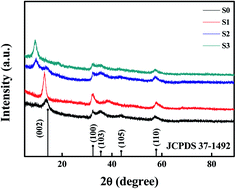
XRD technique was used to explore the structural information of the as-prepared MoS2. The obvious evolution of XRD patterns of different MoS2 is displayed (Fig. 1). For the pure MoS2 (S0) obtained without CDs, all diffraction peaks are well indexed to the standard bulk 2H phase MoS2 (JCPDS 37-1492). With the assistance of 5 mg of CDs, the synthesized MoS2 (S1) exhibits improved crystallinity in comparison to the pure MoS2, as evidenced by intensified characteristic peaks at 14.4°, 32.7° and 58.3° corresponding to (002), (100) and (110) planes of the 2H phase MoS2, respectively. Further addition of CDs (10 mg (S2) and 20 mg (S3)), however, leads to a newly emerged peak at 9.1°, the obviously weakened peak of the (002) plane and almost unchanged peaks of the (100) and (110) planes compared with the pure MoS2. Generally, the (002) reflection in lamellar materials can be ascribed to atomic layers stacked along the (002) direction. The newly emerged peak can be assigned to the (002) plane but with an enlarged interlayer spacing of 9.4 Å instead of pristine 6.2 Å. At present, much effort has been devoted to tailor the dominant (002) plane of MoS2.7,21 From our findings, a novel MoS2 with the expanded (002) interlayer distance is identified, which could be manipulated by CDs introduced in the synthetic solution.
image file: c6ra15074h-f1.tif
Fig. 1 XRD patterns of MoS2 synthesized in the absence of CDs (S0) and with the assistance of CDs of 5 mg (S1), 10 mg (S2) and 20 mg (S3) compared with standard bulk MoS2 (JCPDS 37-1492) shown at the bottom.

FE-SEM micrographs of different MoS2 were captured. The morphologies of the pure MoS2 demonstrate that it is disordered agglomerate built up with uneven MoS2 nanosheets randomly overlapped (Fig. 2(a)). In addition, these MoS2 nanosheets present obscure and rough edges, indicating insufficient crystallization (Fig. 2(b)). However, the as-prepared MoS2 with the assistance of CDs (10 mg) exhibits uniform flower-like nanospheric morphologies with dense stretching petal-like edges (Fig. 2(c)), which correspond to the ultrathin MoS2 nanosheets with the lateral sizes of ∼10 nm (Fig. 2(d)). EDS elemental maps of the latter MoS2 nanospheres were acquired (Fig. 2(e)–(g)). The calculated atomic ratio of Mo and S is 1[thin space (1/6-em)]:[thin space (1/6-em)]2.03, close to the theoretical stoichiometric ratio of a MoS2 molecule (1[thin space (1/6-em)]:[thin space (1/6-em)]2). According to the relatively sparse and uneven distribution of C compared with the full and homogeneous spread of Mo and S, we hypothesize that the introduced CDs probably play multiple roles in the synthesis of MoS2 nanospheres because of their unique structures and properties. CDs may not only involve the growth of the 2D MoS2 nanosheets but also tailor the construction of the 3D MoS2 nanospheres, or some may just be absorbed into MoS2 nanospheres.


image file: c6ra15074h-f2.tif
Fig. 2 FE-SEM micrographs of MoS2 synthesized without CDs (a and b) and with 10 mg of CDs (c and d). EDS mapping images of the latter, showing C (e), Mo (f) and S (g).

TEM image (Fig. 3(a)) of the as-prepared MoS2 in the presence of CDs (10 mg) clearly displays sponge-like nanostructures constructed by the ultrathin nanosheets, well consistent with the above FE-SEM observation. The incorporated CDs were distinguishable when observing under high magnification (Fig. 3(a) inset). HRTEM image (Fig. 3(b)) shows the clear lattice fringes of the lamellar MoS2 nanosheets with the interlayer spacing of 9.4 Å, well in accordance with the above XRD result. HRTEM observation also reveals that the current MoS2 nanosheets consist of few layers. Raman spectra further confirm that the most MoS2 nanosheets compose of about 4 layers (Fig. S2). This is derived from the fact that the difference between representative E12g Raman shift at 381 cm−1 and A1g Raman shift at 405 cm−1 is close to that (24.3 cm−1) of the quadri-layered MoS2 nanosheets.22–24 It is well recognized that the difference between characteristic Raman shifts could be indicative of the layer numbers of the few-layered MoS2 nanosheets.22–24 Furthermore, the intensities of both E12g and A1g peaks were decreased with increasing CDs contents, which could be due to the reduced interlayer interactions and dielectric screening of long-range Coulomb forces with decrease of the layer numbers.25,26 SAED pattern (Fig. 3(c)) reveals the polycrystalline nature of the as-prepared MoS2 with CDs. Although CDs were not actually verified by XRD and Raman analysis owing to their tiny amount and small sizes, their existence and distribution were clearly verified by EDS elementary analysis and TEM microscopic observation.


image file: c6ra15074h-f3.tif
Fig. 3 (a) TEM and (b) HRTEM images of MoS2 nanospheres obtained with CDs (10 mg). The inset in (a) shows an enlarged TEM micrograph under high magnification. (c) Selected area electron diffraction (SAED) pattern of a representative MoS2.

Currently, there are two manipulative growth and evolution mechanisms of the crystalline nanoflowers: the initial structures are nanosheets as petals which curl and tangle to form nanoflowers, or the final nanoflowers are based on nuclei, followed by an outward growth of the petal-like nanosheets.27–29 To elucidate the effects of CDs on the evolution of MoS2 nanostructures, individual time-dependent synthesis of MoS2 in the presence or absence of CDs were carried out as shown in Fig. S3. For the synthesis with CDs, after 1.5 h, MoS2 nanosheets were initially formed owing to the intrinsic anisotropic property of MoS2 (Fig. S3(a)). After 2.0 h, more and more nanosheets were produced, tangling each other (Fig. S3(c)). After 2.5 h, the flower-like MoS2 nanospheres with dense petals were constructed (Fig. S3(e)). Comparatively, for the synthesis without CDs, after 1.5 h, amorphous clusters were firstly formed (Fig. S3(b)). After 2.0 h, some MoS2 nanosheets with uneven dimensional and lateral sizes were obtained (Fig. S3(d)). After 2.5 h, more and more nanosheets were produced, which randomly stack (Fig. S3(f)). The above findings reveal that CDs effectively facilitate growth of 2D MoS2 nanosheets and construction of 3D MoS2 nanospheres within short synthetic time. A schematic evolution process of MoS2 obtained in the presence of CDs is thus proposed (Fig. 4). Initially, MoS2 prefers to grow into 2D nanosheets, in which the zero-dimensional CDs (ca. 2.5 nm in size) with high surface energy readily function as exogenous nuclei/seeds, besides the resultant MoS2 micelles as endogenous nuclei. Consequently, both synthetic energy and time are reduced. According to the sponge-like MoS2 nanostructures without a dense core (Fig. 3(a)), we suppose that the final 3D nanoflowers are assembled by the 2D nanosheets.30 Similar proposal for formation mechanism of Mo(SxSe1−x)2 nanoflowers has been reported.27 Moreover, the remaining CDs with high surface energy readily adhere on MoS2 nanospheres as observed by TEM (Fig. 3(a) inset).


image file: c6ra15074h-f4.tif
Fig. 4 The schematic illustration of the formation mechanism of the flower-like MoS2 nanospheres.

In order to examine the chemical compositions and valence states of MoS2 nanospheres synthesized with CDs (10 mg), XPS analysis was performed (Fig. 5). From the survey spectrum (Fig. 5(a)), the elements of Mo, S, C and O are identified. The high-resolution scan of Mo 3d electrons depicts two major peaks arising from Mo4+ 3d5/2 and Mo4+ 3d3/2 orbitals located at 229.1 and 232.1 eV, respectively (Fig. 5(b)), suggesting the existence of the dominant 2H phase.31 Meanwhile, the 1T components with the binding energies of ∼0.8 eV lower than the 2H counterparts appear (Fig. 5(b)),16,32 together with a minor peak at 225.7 eV corresponding to S 2s of MoS2. Overall, the obtained MoS2 exclusively consists of the multiphase of the major 2H phase and minor 1T phase. It has been well known that the metallic 1T phase MoS2 is 107 times more electrically conductive than the semiconductive 2H phase MoS2.18 Therefore, the incorporation of the 1T phase into the 2H phase could be beneficial to the electrochemical performances of MoS2 as an electrode material. The S 2p XPS spectrum (Fig. 6(c)) shows typical S 2p3/2 and S 2p1/2 doublet of S2−.7 All the XPS findings suggest the successful synthesis of the multiphase MoS2. Moreover, according to C 1s peak shape as shown in Fig. 5(d), the carbon atom may exist in different forms, including a major C–C bond centered at 284.5 eV and few oxidized C-containing bonds at the higher binding energies over 284.5 eV.


image file: c6ra15074h-f5.tif
Fig. 5 XPS survey spectrum (a) and high-resolution XPS Mo 3d (b), S 2p (c) and C 1s spectra (d) of MoS2 obtained with the assistance of 10 mg of CDs.

image file: c6ra15074h-f6.tif
Fig. 6 (a) Cyclic voltammogram (CV) curves of the pure MoS2 obtained without CDs and MoS2 nanospheres synthesized with CDs (10 mg) at a scan rate of 5 mV s−1; (b) CV curves of MoS2 nanospheres with different scan rates. (c) Galvanostatic charge/discharge (GCD) profiles of MoS2 nanospheres at various current densities. (d) Specific capacitance of different MoS2 as a function of current density. (e) Cyclic stability at 1 A g−1 of different MoS2. (f) Nyquist plots of different MoS2. Insets in (f) are the corresponding Nyquist plots at high and medium frequencies and the proposed equivalent electrical circuit.

Nanostructures offering the advantages of large surface-to-volume ratio, favorable transport property, and high feasibility for volume change upon ion insertion/extraction and other reactions, show promising as potential electrode materials for next-generation supercapacitors.33 Fig. 6(a) compares the CV curves of different MoS2 obtained without CDs or with 10 mg of CDs at a low scan rate of 5 mV s−1 over a potential window of −0.65 to 0.35 V. Redox peaks are clearly distinguishable for the current MoS2 nanospheres instead of the pure MoS2, suggesting MoS2 nanospheres possess typical pseudocapacitive characteristics associated with the variable valences of Mo especially at the edges during the electrochemical processes.34 In addition, the more symmetric rectangular shape and larger integral area of the CV curves of MoS2 nanospheres in comparison to the pure MoS2 reveal that they have good typical electrostatic double-layer capacitive behavior with small contact resistance. The CV curves for MoS2 nanospheres at different scan rates were examined (Fig. 6(b)). It could be found that all the CV curves retain similar rectangular shapes within the experimental scan rates, indicating MoS2 nanospheres possess high rate capability and ideal supercapacitor behavior.

Fig. 6(c) displays the GCD curves of MoS2 nanospheres with different current densities. The symmetric triangular-shape charge/discharge circles especially at high current densities further confirm the ideal supercapacitive characteristics and superior reversible redox property, which is in good agreement with the above CV curves. Accordingly, the gravimetric specific capacitance was then calculated and plotted (Fig. 6(d)) using the discharge portion of the individual GCD profiles. At 0.5 A g−1, MoS2 nanospheres deliver a high gravimetric specific capacitance of 145 F g−1, which is larger than that (120 F g−1) of the pure MoS2 and comparable to 148 F g−1 for a MoS2–graphene hybrid.7 With increase of the current density to 8 A g−1, MoS2 nanospheres can preserve about 50% specific capacitance, which further confirms the high rate capability and is comparable to other ideal electrostatic double-layer capacitive.33,35 The good rate capability and high specific capacitance can be ascribed to the high specific surface area (18.08 m2 g−1) associated with the flower-like and edge-rich morphology as well as improved electrical conductivity of MoS2 nanospheres due to the incorporated metallic 1T phase.

MoS2 nanospheres exhibit excellent cyclic stability in comparison to the pure MoS2; giving about 90% capacity retention after 2000 charge/discharge cycles (Fig. 6(e)). The remarkable cycling stability and desirable reversible capacity of the current MoS2 nanospheres are comparable to the reported MoS2-based hybrids with excellent electrochemical performances.4–6,36 The underlying reason can be attributed to the synergistic effects of the special 2D microstructure with enlarged lattice spacing and few layer numbers allowing more efficient ions intercalation and transportation,37 unique 3D morphologies with more edges enabling the reversible electrochemical reactions, and 1T phase incorporation enhancing the electrical conductivity.

Fig. 6(f) and inset (up) compare Nyquist plots of the pure MoS2 and MoS2 nanospheres. It can be seen that both Nyquist plots consist of a semicircle arc at high frequencies and straight lines at medium and low frequencies. Compared with the pure MoS2, MoS2 nanospheres demonstrate a slightly reduced semicircle at the high frequencies, which can be an indicator for the enhanced kinetics of the electrode reaction (Fig. 6(f) inset (up)). Furthermore, the angle of the straight line at the low frequencies for MoS2 nanospheres is 75° in comparison to 60° for the pure MoS2, close to ideal supercapacitor (phase angle is about 90°), further suggesting MoS2 nanospheres possess typical supercapacitive behavior. The corresponding equivalent electric circuit was established (Fig. 6(f) inset (down)). Here, R1 represents liquid phase resistance, Rct and Zw correspond to the charge transfer resistance at the electrolyte/electrolyte interface and solid-state diffusion resistance, while Cd denotes double-layer capacitance. According to the diameter of the semicircle arc, the Rct value for MoS2 nanospheres is about 15 Ω. The small Rct value means the good electrical conductivity and low resistance of the electrode material. Overall, all the electrochemical measurements reveal that the current MoS2 nanospheres possess the excellent structural stability and efficient electronic/ionic transportation capacity, and in return, high storage capacities and stable cycling life.

To further clarify the reason behind the electrochemical performances of different MoS2, textural properties were investigated. N2 adsorption and desorption isotherms and Barrette Joynere Halenda (BJH) cumulative pore-size distributions of different MoS2 obtained without or with CDs (10 mg) are displayed in Fig. S4(a) and (b), respectively. Both samples present type IV isotherms according to IUPAC nomenclature (Fig. S4(a)), indicating the existence of micropores and/or mesopores. The hysteresis loop of MoS2 nanospheres shifts to the lower pressure region compared with the pure MoS2, suggesting the presence of relatively more small pores. The pore size distribution curves as shown in Fig. S4(b) are well consistent with the above isothermal behavior. As can be seen, the pure MoS2 mainly has mesopores of 2.8 nm pore size, while MoS2 nanospheres are of complicated pore structures including different mesopores (2.2, 3.5 nm and the larger sizes). In addition, MoS2 nanospheres possess the larger surface area (18.08 m2 g−1) than the pure MoS2 (16.06 m2 g−1). The larger surface area and complicated pore structure of MoS2 nanospheres associated with the specific morphologies and multiphase structure can be beneficial for the improved electrochemical performances.

4. Conclusions

In this study, the novel flower-like MoS2 nanospheres constructed by the few-layered 2H MoS2 nanosheets incorporated with 1T phase were successfully synthesized via a facile CDs-assisted hydrothermal route within short synthetic time for the first time. The obtained MoS2 achieved remarkable electrochemical performances including high specific capacitance of 145 F g−1, superior rate capability, and good cycling stability, enabling them potential as a pseudocapacitive electrode material. The synergistic effects of the incorporated metallic 1T phase, the ultrathin 2D nanosheets with the enlarged interlayer spacing, the embedded/anchored CDs, the edge-rich 3D nanoflowers, and the large surface area and complex pore structure contribute to the improved electrochemical performances of MoS2 nanospheres obtained with the assistance of CDs. It is believed that such a simple and efficient strategy would open up a new pathway for the large-scale production of various TMDs applicable in the fields of the energy storage.

Acknowledgements

This work was financially supported by the Scientific Research Foundation for the Postdoctorals, Heilongjiang Province (AUGA4110005410), the Fundamental Research Funds for the Central Universities (Grant No. HIT. IBRSEM. 201331), and the Fundamental Research Funds for the Central Universities and Program for Innovation Research of Science in Harbin Institute of Technology (Grant No. PIRS of HIT 201411).

References

  1. P. Simon and Y. Gogotsi, Materials for electrochemical capacitors, Nat. Mater., 2008, 7(11), 845–854 CrossRef CAS PubMed.
  2. M. Chhowalla, Z. Liu and H. Zhang, Two-dimensional transition metal dichalcogenide (TMD) nanosheets, Chem. Soc. Rev., 2015, 44(9), 2584–2586 RSC.
  3. X. W. Yang, C. Cheng, Y. F. Wang, L. Qiu and D. Li, Liquid-Mediated Dense Integration of Graphene Materials for Compact Capacitive Energy Storage, Science, 2013, 341(6145), 534–537 CrossRef CAS PubMed.
  4. K. J. Huang, J. Z. Zhang and J. L. Cai, Preparation of porous layered molybdenum selenide–graphene composites on Ni foam for high-performance supercapacitor and electrochemical sensing, Electrochim. Acta, 2015, 180, 770–777 CrossRef CAS.
  5. K. J. Huang, H. L. Shuai and J. Z. Zhang, Ultrasensitive sensing platform for platelet-derived growth factor BB detection based on layered molybdenum selenide–graphene composites and Exonuclease III assisted signal amplification, Biosens. Bioelectron., 2016, 77, 69–75 CrossRef CAS PubMed.
  6. H. L. Shuai, K. J. Huang and Y. X. Chen, A layered tungsten disulfide/acetylene black composite based DNA biosensing platform coupled with hybridization chain reaction for signal amplification, J. Mater. Chem. B, 2016, 4(6), 1186–1196 RSC.
  7. J. Xie, J. Zhang, S. Li, F. Grote, X. Zhang and H. Zhang, et al., Controllable disorder engineering in oxygen-incorporated MoS2 ultrathin nanosheets for efficient hydrogen evolution, J. Am. Chem. Soc., 2013, 135(47), 17881–17888 CrossRef CAS PubMed.
  8. C. N. R. Rao, U. Maitra and U. V. Washmare, Extraordinary attributes of 2-dimensional MoS2 nanosheets, Chem. Phys. Lett., 2014, 609(11), 172–183 CrossRef CAS.
  9. J. Guo, F. Li, Y. Sun, X. Zhang and L. Tang, Oxygen-incorporated MoS2 ultrathin nanosheets grown on graphene for efficient electrochemical hydrogen evolution, J. Power Sources, 2015, 291, 195–200 CrossRef CAS.
  10. L. Hu, Y. Ren, H. Yang and Q. Xu, Fabrication of 3D hierarchical MoS(2)/polyaniline and MoS(2)/C architectures for lithium-ion battery applications, ACS Appl. Mater. Interfaces, 2014, 6(16), 14644–14652 CAS.
  11. E. G. D. Firmiano, A. C. Rabelo, C. J. Dalmaschio, A. N. Pinheiro, E. C. Pereira and W. H. Schreiner, et al., Supercapacitor Electrodes Obtained by Directly Bonding 2D MoS2 on Reduced Graphene Oxide, Adv. Energy Mater., 2014, 4(6), 175–178 Search PubMed.
  12. K. J. Huang, L. Wang, Y. J. Liu, H. B. Wang, Y. M. Liu and L. L. Wang, Synthesis of polyaniline/2-dimensional graphene analog MoS2 composites for high-performance supercapacitor, Electrochim. Acta, 2013, 109(11), 587–594 CrossRef CAS.
  13. K. J. Huang, L. Wang, J. Z. Zhang, L. L. Wang and Y. P. Mo, One-step preparation of layered molybdenum disulfide/multi-walled carbon nanotube composites for enhanced performance supercapacitor, Energy, 2014, 67(4), 234–240 CrossRef CAS.
  14. C. N. R. Rao, K. Gopalakrishnan and U. Maitra, Comparative study of potential applications of Graphene, MoS2, and other two-dimensional materials in energy devices, sensors, and related areas, ACS Appl. Mater. Interfaces, 2015, 7(15), 7809–7832 CAS.
  15. K. F. Mak, C. Lee, J. Hone, J. Shan and T. F. Heinz, Atomically Thin MoS2: A New Direct-Gap Semiconductor, Phys. Rev. Lett., 2010, 105(13), 474–479 CrossRef PubMed.
  16. G. Eda, H. Yamaguchi, D. Voiry, T. Fujita, M. Chen and M. Chhowalla, Photoluminescence from Chemically Exfoliated MoS2, Nano Lett., 2011, 11(12), 5111–5116 CrossRef CAS PubMed.
  17. X. Huang, Z. Zeng and H. Zhang, Metal dichalcogenide nanosheets: preparation, properties and applications, Chem. Soc. Rev., 2013, 42(5), 1934–1946 RSC.
  18. M. Acerce, D. Voiry and M. Chhowalla, Metallic 1T phase MoS2 nanosheets as supercapacitor electrode materials, Nat. Nanotechnol., 2015, 10(4), 313–318 CrossRef CAS PubMed.
  19. A. D. Zhao, Z. W. Chen and C. Q. Zhao, Recent advances in bioapplications of C-dots, Carbon, 2015, 85, 309–327 CrossRef CAS.
  20. M. H. Xu, W. Zhang, Z. Yang, F. Yu, Y. J. Ma and N. T. Hu, et al., One-pot liquid-phase exfoliation from graphite to graphene with carbon quantum dots, Nanoscale, 2015, 7(23), 10527–10534 RSC.
  21. M. R. Gao, M. K. Chan and Y. Sun, Edge-terminated molybdenum disulfide with a 9.4-A interlayer spacing for electrochemical hydrogen production, Nat. Commun., 2015, 6, 1–8 Search PubMed.
  22. Y. Zhao, X. Luo, H. Li, J. Zhang, P. T. Araujo and C. K. Gan, et al., Interlayer breathing and shear modes in few-trilayer MoS2 and WSe2, Nano Lett., 2013, 13(3), 1007–1015 CrossRef CAS PubMed.
  23. X. Fan, P. Xu, D. Zhou, Y. Sun, Y. C. Li and M. A. Nguyen, et al., Fast and Efficient Preparation of Exfoliated 2H MoS2 Nanosheets by Sonication-Assisted Lithium Intercalation and Infrared Laser-Induced 1T to 2H Phase Reversion, Nano Lett., 2015, 15(9), 5956–5960 CrossRef CAS PubMed.
  24. H. Li, Q. Zhang, C. C. R. Yap, B. K. Tay, T. H. T. Edwin and A. Olivier, et al., From Bulk to Monolayer MoS2: Evolution of Raman Scattering, Adv. Funct. Mater., 2012, 22(7), 1385–1390 CrossRef CAS.
  25. S. Y. Tai, C. J. Liu, S. W. Chou, F. S. S. Chien, J. Y. Lin and T. W. Lin, Few-layer MoS2 nanosheets coated onto multi-walled carbon nanotubes as a low-cost and highly electrocatalytic counter electrode for dye-sensitized solar cells, J. Mater. Chem., 2012, 22(47), 24753–24759 RSC.
  26. Y. X. Fang, S. J. Guo, D. Li, C. Z. Zhu, W. Ren and S. J. Dong, et al., Easy Synthesis and Imaging Applications of Cross-Linked Green Fluorescent Hollow Carbon Nanoparticles, ACS Nano, 2012, 6(1), 400–409 CrossRef CAS PubMed.
  27. O. E. Meiron, L. Houben and M. Bar-Sadan, Understanding the formation mechanism and the 3D structure of Mo(SxSe1−x)(2) nanoflowers, RSC Adv., 2015, 5(107), 88108–88114 RSC.
  28. X. L. Zhou, J. Jiang, T. Ding, J. J. Zhang, B. C. Pan and J. Zuo, et al., Fast colloidal synthesis of scalable Mo-rich hierarchical ultrathin MoSe2−x nanosheets for high-performance hydrogen evolution, Nanoscale, 2014, 6(19), 11046–11051 RSC.
  29. D. Sun, S. M. Feng, M. Terrones and R. E. Schaak, Formation and Interlayer Decoupling of Colloidal MoSe2 Nanoflowers, Chem. Mater., 2015, 27(8), 3167–3175 CrossRef.
  30. P. Ilanchezhiyan, G. Mohan Kumar and T. W. Kang, Electrochemical studies of spherically clustered MoS2 nanostructures for electrode applications, J. Alloys Compd., 2015, 634, 104–108 CrossRef CAS.
  31. Q. Weng, X. Wang, X. Wang, C. Zhang, X. Jiang and Y. Bando, et al., Supercapacitive energy storage performance of molybdenum disulfide nanosheets wrapped with microporous carbons, J. Mater. Chem. A, 2015, 3(6), 3097–3102 CAS.
  32. C. A. Papageorgopoulos and W. Jaegermann, Li intercalation across and along the van-der-waals surfaces of MoS2 (0001), Surf. Sci., 1995, 338(1–3), 83–93 CrossRef CAS.
  33. X. Wang, J. Ding, S. Yao, X. Wu, Q. Feng and Z. Wang, et al., High supercapacitor and adsorption behaviors of flower-like MoS2 nanostructures, J. Mater. Chem. A, 2014, 2(38), 15958–15963 CAS.
  34. J. Wu, H. Li, Z. Y. Yin, H. Li, J. Q. Liu and X. H. Cao, et al., Layer thinning and etching of mechanically exfoliated MoS2 nanosheets by thermal annealing in air, Small, 2013, 9(19), 3314–3319 CAS.
  35. B. Lei, G. R. Li and X. P. Gao, Morphology dependence of molybdenum disulfide transparent counter electrode in dye-sensitized solar cells, J. Mater. Chem. A, 2014, 2(11), 3919–3925 CAS.
  36. C. Hao, F. Wen, J. Xiang, L. Wang, H. Hou and Z. Su, et al., Controlled Incorporation of Ni(OH)2 Nanoplates Into Flowerlike MoS2 Nanosheets for Flexible All-Solid-State Supercapacitors, Adv. Funct. Mater., 2014, 24(42), 6700–6707 CrossRef CAS.
  37. X. Rui, H. Tan and Q. Yan, Nanostructured metal sulfides for energy storage, Nanoscale, 2014, 6(17), 9889–9924 RSC.

Footnote

Electronic supplementary information (ESI) available. See DOI: 10.1039/c6ra15074h

This journal is © The Royal Society of Chemistry 2016
Click here to see how this site uses Cookies. View our privacy policy here.