
DOI:
10.1039/C6RA14837A
(Paper)
RSC Adv., 2016,
6, 61837-61847
Halogen bonding in drug-like molecules: a computational and systematic study of the substituent effect†
Received
7th June 2016
, Accepted 15th June 2016
First published on 15th June 2016
Abstract
Halogen bonding (XB) is a noncovalent interaction that has been increasingly used in molecular recognition, and more recently, in protein–ligand binding. We have studied and quantified, using density functional theory (DFT) calculations, the substituent effect of fourteen chemical groups in the chloro-, bromo- and iodobenzene⋯N-methylacetamide (NMA) complexes, which serve as a model of a common arrangement of XB in biological systems. A total of 126 halobenzene⋯NMA complexes have been optimized and examined regarding their relative energy, molecular electrostatic potential, topological analysis of electron density and charge transfer. The extent of substituent effect was found to be up to 1.5 kcal mol−1, where electron-withdrawing groups increase the XB strength while electron-donating substituents reduce it. Excellent statistical correlations (R2 > 0.9) were obtained for the comparison between XB interaction energy and the computed electronic properties (electron density, molecular electrostatic potential, and NBO charges), suggesting that the substituent effect was mainly due to the electrostatic interaction, and resonance effects were negligible. Furthermore, a positive cooperativity effect, in the strengthening of the XB, was observed in NMA complexes with di-, tri- and tetrafluoro-iodobenzenes.
Introduction
Noncovalent interactions play a significant role in the formation and stabilization of complex molecular systems.1 A great deal of interest, in the study and exploitation of halogen bonding (XB), has been growing outstandingly fast in the last ten years due to its potential applications in the fields of supramolecular chemistry,2,3 crystal engineering,4 and molecular biology,5,6 with an increasing number of articles from an experimental and a computational point of view.7 XB is a noncovalent interaction between covalently-bound halogens and another negatively charged site such a Lewis base.8,9 The driving force of the interaction is the electrostatic attraction of a positively charged region of the halogen (so-called σ-hole10) and the interacting negative site. The σ-hole lies in the outermost portion of the elongation of the halogen covalent bond, and it is caused by a reduced occupation of the outer lobe of the p-orbital involved in the bond.11 This phenomenon is more pronounced as more polarizable and less electronegative the halogen is. Specifically, the magnitude and size of the σ-hole increases when going from lighter to heavier halogens, in the order F ≪ Cl < Br < I.11–13 Numerous studies have shown that strength and directionality of XBs are co-determined by the magnitude and size of the σ-hole.14,15 This correlation demonstrates that electrostatic interaction plays a dominant role in the formation of XB.16 Additionally, dispersion and induction effects have varying contributions depending on the molecular system.16–18 In general, XB is an example of a broader class of noncovalent interactions, where the σ-hole has also been found in other covalently bound atoms of groups IV–VI.19–22 Several comprehensive reviews have been published very recently about this kind of noncovalent interactions that can be consulted for an in-depth examination of their physical nature and comparative computational studies.7,23–26
Owing to the ubiquitous nature of halogens in medicinal chemistry,27 XBs have been recently exploited for improving the binding affinity in structure-based drug design investigations.28–34 In fact, XBs have been found in a wide range of biological systems, particularly in the molecular recognition of drug-like molecules when bound to their target.5,6,35 In this regard, the most common XB occurring in macromolecules is formed between a halogenated ligand—usually presenting chlorine, bromine or iodine—and the carbonyl moiety of the protein backbone.5,6,35–37 Despite this, there are only a few quantum mechanics (QM) studies addressing XB in biological systems. For instance, Wilcken et al.38 performed a systematic analysis of a series of halogen-bonded systems comprised of chloro-, bromo- and iodobenzene molecules in complex with N-methylacetamide (NMA) as protein backbone surrogate, which is a molecular scaffold that has also been used in similar studies.39 In such work, the authors obtained energetic and geometric trends that have been used for designing novel compounds30,31 and for the development of scoring functions40,41 and force fields42 that account for XB.
Halogen bonding is extremely tunable, meaning that the chemical environment—neighboring atoms or chemical groups—has a strong influence on the physical properties of the σ-hole, which in turn modulate the interaction strength.43 Electron-withdrawing groups bound in the vicinity of the halogen atom strengthen the XB by making the magnitude of the σ-hole more positive. This effect becomes stronger as less electronegative the halogen is. Several investigations focusing on the substituent effects on XB involving halogenated aromatic scaffolds have been published in the last years,16,43–48 where a significant agreement between QM-derived molecular properties (e.g., electrostatic potential) and the interaction energies has been found. Additionally, non-additive effects proved to be a major feature of XB,47,49–52 showing a positive cooperativity when two or more XB or other noncovalent interactions are established simultaneously; effect that has been found to be mainly caused by the electrostatic attraction. On the other hand, Tang and Li53 studied the effect of multiple fluorine substitutions in the iodobenzene⋯NCH (hydrogen cyanide) complex by gradually replacing the aromatic hydrogens with fluorine atoms. They evidenced that each additional F atom strengthens the XB, but the average contribution of each F atom to the interaction energy decreased with the number of substitutions, indicating a negative cooperativity on the substituent effect.
Most of the theoretical studies about substituent effect on XB have been focused on complexes that do not occur in biological systems. In the present work, we studied the substituent effect of fourteen diverse chemical groups on the interaction energies of chloro-, bromo- and iodobenzene in complex with NMA, thereby emulating XB with the protein backbone. Also, the cooperativity on optimal geometries of di-, tri- and tetrafluoro-iodobenzene⋯NMA complexes was evaluated. These effects were investigated by analyzing changes in the molecular electrostatic potential (MEP), together with the atomic charges and charge transfer derived from the natural bond orbital (NBO)54 methodology. The NCI (noncovalent interactions) method55 was also employed to identify XBs and other noncovalent interactions, as well as to evaluate its use as an XB interaction strength predictor. To the best of our knowledge, this is the first QM investigation on the study of substituent effects on XB solely focused in a biological context.
Methodology
Choice of model systems
As aromatic halogenated ligands usually carry at least one halogen atom, halobenzene was employed as ligand model. To verify that this substituted aromatic scaffold is the most common halogenated moiety in drug-like compounds, a survey of the ZINC database56 was performed to determine its occurrence and substituent frequency. In particular, a search for the halobenzene moiety was carried out in the drug-like subset—which contains 17
900
742 molecules as of September 2015—via SMARTS pattern matching using the RDKit chemoinformatics Python package.57 The total and relative frequencies are listed in Table 1. Almost ten million compounds presented at least one halogen atom, which comprises about 55% of the total number of molecules surveyed. In order of occurrence, fluorine is the most frequent halogen (∼60%), followed by chlorine (∼32%), bromine (∼9%), and iodine with less than 1%. Among halogenated molecules, roughly half (4
898
780) presented the halobenzene moiety, following the same halogen occurrence trend. Interestingly, the accumulated frequency of the halobenzene moiety is greater than the total number of compounds exhibiting this structural pattern by about 30%, which indicates that several ligands include more than one halogen atom in the aromatic ring. These results corroborate that halobenzene is the most frequent moiety in halogenated ligands.
Table 1 Frequencies of halogens and the halobenzene moiety in the ZINC databasea
| Halogen |
Nhalogen |
Nhalobenzene |
| Frequency |
% |
Frequency |
% |
| Relative frequencies are given with respect to the accumulated count. Relative frequency (%) is with respect to the total count. Number of compounds that present at least one halobenzene moiety. |
| F |
5 744 887 |
58.5 |
3 187 284 |
50.2 |
| Cl |
3 087 871 |
31.5 |
2 454 941 |
38.6 |
| Br |
917 147 |
9.3 |
660 923 |
10.4 |
| I |
66 004 |
0.7 |
51 284 |
0.8 |
| Accum |
9 815 909 |
54.8b |
6 354 432 |
129.7b |
| Totals |
17 900 741 |
|
4 898 780c |
|
A list of the most common substituents attached to the halobenzene moiety at each substitution position—that is, ortho, meta, and para—was put together using the same approach. The results are summarized in the ESI material section as Table S1.† It was found that fifteen chemical groups, namely: Br, CF3, CH3, Cl, CN, F, I, N(CH3)2, NH2, NHCOCH3, NO2, OCH3, OCH2CH3, OH and 4-fluorophenyl; account for around 85% of the total diversity of substituents in any of the three substitution positions. F, Cl, and OCH3 are by far the most frequent ones. Similar QM investigations in organic systems have chosen a subset of the collected substituent list,45,47,50 mostly due to the broad range of the polar effect produced by these chemical groups, thus suggesting that this superset may be suitable to study the substituent effect.
Given these results, fourteen chemical groups (excluding 4-fluorophenyl due to its size) were considered as substituents on chloro-, bromo- and iodobenzene⋯NMA complexes, located at the ortho, meta and para positions. Thus, a total of 126 systems were examined using a QM-based methodology.
Computational details
Recent benchmarks demonstrated that the M06-2X hybrid DFT functional,58 and the Dunning augmented triple-ζ basis set, aug-cc-pVTZ, provide excellent geometries and energies for studying XBs and other noncovalent interactions at a moderate computational cost.59,60 Consequently, this level of theory has been employed in similar investigations.7,41,51,61 Aiming at the application of the proposed methodology to protein–ligand systems in future work, we have tested a smaller basis set, cc-pVTZ(-f)+, to speed up the calculations. This basis set yield an excellent agreement (R2 = 0.99 with fit function's slope close to 1, and Kendall's τ coefficient of 0.95) with the interaction energies calculated at the higher-level aug-cc-pVTZ basis set (see ESI material, Tables S2–S4†). Furthermore, the mean unsigned error was less than 0.5 kcal mol−1, demonstrating that this smaller basis set also provides suitable energetics for halogen-bonded complexes.
Thus, the geometries of the isolated monomers and complexes were optimized at the M06-2X/cc-pVTZ(-f)+ level of theory, where an effective core potential (ECP) was used to account for relativistic effects of bromine and iodine, namely, cc-pVTZ-PP(-f)+. Frequency calculations were carried out at the same level to ensure that the optimized structures corresponded to energy minima. No imaginary frequencies were found for any of the determined structures, so they are true minima. All calculations were performed using the Jaguar software (Jaguar, version 8.8, Schrödinger, LLC, New York, NY, 2015).62,63 The pseudospectral method implemented in Jaguar (keyword nops = 1) was disabled due to convergence issues during the geometry optimizations, therefore switching to fully analytical integral evaluation. It is noteworthy that all results presented in this paper were obtained using the M06-2X/cc-pVTZ-PP(-f)+ calculation model.
The starting tridimensional structures of the halobenzene⋯NMA complexes were sketched with Maestro visualization software64 in an idealized XB geometry: C
O⋯X angle = 120° (acceptor angle),
O⋯X–C angle = 180° (donor angle). The
O⋯X intermolecular distance was set to the sum of the vdW radii of the interacting atoms. The NMA was held rigid during the geometric optimization. Two dihedral harmonic constraints θ1 and θ2 (see ESI material, Fig. S1†) were added with a force constant of 0.005 kcal mol−1 Å−2 to restrict the drifting of the halobenzene to the upper and lower regions of the carbonyl group, and to avoid possible spins of the aromatic ring, respectively. When the optimization failed to converge, mostly in systems with Br and NO2 substituents at the ortho position, an additional harmonic constraint was added to the C–O⋯X angle with a force constant varying from 0.001 to 0.005 kcal mol−1 Å−2.
The interactions energies (Eint) were computed as the differences between the total energy of the molecular complex and the sum of the monomers in the complex geometry. The Eint were corrected with the Boys–Bernardi counterpoise procedure65 for the basis set superposition error (BSSE). For the case of multiple fluoro-substituted iodobenzenes, the cooperative energy Ecoop was calculated using eqn (1):
| | |
Ecoop = Eint − Eaddint
| (1) |
| Eaddint = E0int + ∑ΔEiint |
where
Eint is the interaction energy of the substituted complex,
Eaddint is the estimated interaction energy assuming additivity of the contributions of each substituent in the mono-substituted iodobenzene,
E0int is the interaction energy for the unsubstituted iodobenzene, and Δ
Eiint is the contribution of the F substitution to the interaction energy in the i-fluoro-iodobenzene⋯NMA complex.
A topological analysis of the electron density was carried out using the NCI method,55 which identifies noncovalent interactions by looking for domains of weak electron density and where the reduced density gradient is close to zero. This method has been effective in locating XB in organic systems—particularly in protein–ligand complexes—and the electron density p at the identified bond critical points has been correlated with the Eint of XBs.59,66–69 In this context, the interaction strength can be estimated as sign(λ2) × ρ, where a negative λ2 is a sign of an attractive force. The most positive value of the MEP for the σ-hole region of the halogen atom on the 0.001 electrons bohr−3 electron density isosurface (VS,max) was also calculated. Considering that XB is mainly electrostatic in nature12,16,70 and its strength greatly depends on the magnitude and size of the σ-hole,15 this estimate has been recently used as an interaction ranker.71 Finally, the NBO analysis54 was performed to obtain atomic charges (q) and charge transfer (CT) using the NBO6.0 version72,73 within the Jaguar program at the same level of theory as the optimization process. All input files, in Cartesian coordinates, can be found as a compressed archive in the ESI material.†
Results and discussion
Interactions of un- and substituted halobenzenes
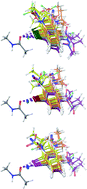
The geometric and energetic features of the XB established in the 126 complexes are summarized in Table 2 and listed in the ESI material, Tables S2–S4.† In addition, all of the geometries are available in mol2 file format in the ESI material.† The optimized structures for un- and substituted halobenzenes are shown in Fig. 1. As expected, according to the halogen polarizability order and therefore the magnitude and size of σ-hole, iodobenzene displayed the strongest interaction with −4.04 kcal mol−1, followed by bromo- and chlorobenzene with −2.49 and −1.19 kcal mol−1, respectively. All intermolecular distances are less than the sum of vdW radii of the two interacting atoms participating in XB, being notably shorter for iodine in relative terms (85%), indicating a strong attractive force. Likewise, iodobenzene showed a nearly ideal geometry for XB (acceptor and donor angles close to 120° and 180°, respectively), whereas bromo- and chlorobenzene slightly deviate from the optimal geometry. These results are consistent with similar experiments.38
Table 2 Mean values of the energetic and geometric features of halogen bond in un- and substituted (R′) halobenzene⋯NMA complexesa
| R′ |
Eint |
Re |
αdonor |
αacc |
| AUD |
% |
| The energetic values are the average unsigned difference (AUD) and the relative average unsigned difference (%) of the interaction energies (Eint, kcal mol−1). Interaction energies are shown for unsubstituted complexes as references. Geometry properties are equilibrium distances (Re, Å), and donor (O⋯X–C, αdonor) and acceptor (C–O⋯X, αacc) angles. Energies calculated at the M06-2X/aug-cc-pVTZ(-PP) level of theory for comparison. Percentage of the sum of the van der Waals radii of the two interacting atoms. |
| Chlorobenzene |
−1.19 (−0.92)b |
3.02 (92%)c |
177.9 |
112.9 |
| para |
0.39 |
29 |
2.95 ± 0.03 |
177.84 ± 2.31 |
113.78 ± 2.13 |
| meta |
0.28 |
21 |
2.93 ± 0.03 |
178.36 ± 0.78 |
118.61 ± 4.55 |
| ortho |
0.30 |
23 |
2.91 ± 0.04 |
176.86 ± 2.29 |
121.16 ± 7.49 |
| Bromobenzene |
−2.49 (−2.12)b |
2.95 (88%)c |
178.8 |
117.0 |
| para |
0.47 |
17 |
3.02 ± 0.04 |
178.84 ± 0.58 |
117.26 ± 1.23 |
| meta |
0.39 |
14 |
2.98 ± 0.04 |
178.86 ± 0.58 |
120.54 ± 2.57 |
| ortho |
0.43 |
15 |
2.96 ± 0.04 |
178.54 ± 0.75 |
121.83 ± 3.52 |
| Iodobenzene |
−4.04 (−3.39)b |
3.00 (85%)c |
178.4 |
120.8 |
| para |
0.57 |
13 |
2.99 ± 0.03 |
178.62 ± 0.43 |
121.58 ± 1.09 |
| meta |
0.50 |
12 |
2.96 ± 0.03 |
179.01 ± 0.51 |
124.47 ± 1.94 |
| ortho |
0.58 |
13 |
2.94 ± 0.04 |
178.58 ± 0.64 |
125.83 ± 3.85 |
 |
| | Fig. 1 Optimized geometries of substituted (a) chloro-, (b) bromo- and (c) iodobenzenes in complex with NMA. Carbon atoms are colored by the corresponding substitution position: para (maroon), meta (orange) and ortho (yellow). Unsubstituted halobenzenes are shown in thick tubes with gray carbons. Halogen bonds identified by geometrical criteria are displayed in purple dashed lines. NCI surfaces are shown for unsubstituted halobenzenes colored by ρ × sign(λ2) with a blue-green-red color scheme ranging from −0.02 to +0.02 a.u. | |
The change in the interaction energies (Eint) due to the presence of the substituent was observed to range from 0.02 to 1.48 kcal mol−1. In general, the substituent effect is larger in iodobenzene, then bromobenzene and smaller in chlorobenzene, as indicated by the average unsigned difference (AUD) values of 0.54, 0.42 and 0.32 kcal mol−1, respectively. This ranking agrees well with the electronic polarizability of the halogens. Interestingly, the relative average unsigned difference (RAUD) shows that the extent of the effect exerted by the substituents is very similar for the two heavier halogens (∼15%). Moreover, iodobenzene exhibited Eint about 1.5 kcal mol−1 more negative than bromobenzene, suggesting a higher susceptibility of iodine to substituent effects. The RAUD estimate for chlorobenzene almost double the others, but this is probably due to the small Eint in comparison with iodobenzene (−1.19 vs. −4.04 kcal mol−1, respectively). On the other hand, the geometries of chlorobenzene⋯NMA complexes exhibited more variability compared to other the halogens, particularly for the ortho substitution position, where the arrangements are closer to an ideal XB as in the case of the iodobenzene. The latter could indicate that simple addition of a favorable chemical group (see below) closer to the chlorine may promote and enhance the formation of a XB, which otherwise is very weak.
Besides the nature of the chemical group, the substitution position also regulates the extent of the substituent effects. From Tables 2 and S2–S4,† it was evidenced that halobenzenes substituted at the meta position displayed a lower AUD for the three halogens, while the para and ortho positions showed a comparable effect upon the Eint. In contrast, the geometries showed a progressive adjustment towards an ideal XB when going from para to the ortho position, particularly for chlorobenzene, albeit the substitutions at ortho produced a greater variability in the acceptor angle.
Interactions of para-substituted halobenzenes
A closer inspection at the interaction energy contributions for each substitution is shown in Fig. 2. It was observed that substitution of the para-hydrogen by strong electron donating groups (EDG) such as tertiary and primary amines (–N(CH3)2 and –NH2) diminishes the XB strength by 0.42 to 0.71 kcal mol−1 depending on the halogen atom (Tables S2–S4†). The magnitude of this effect is larger for iodine as indicated by the AUD estimate (Table 2). Likewise, moderate to weak EDGs, comprising hydroxyl, ethers (–OCH3 and –OCH3CH2), methyl and amides (–NHCOCH3), decreases the attraction only slightly. ΔEint (the difference between the Eint for the substituted and unsubstituted halobenzene) values were less than 0.5 kcal mol−1, where –OH, –CH3 and –NHCOCH3 produce almost negligible effects (ΔEint ≈ 0.1 kcal mol−1). Conversely, the substitution at the para position by halogen atoms—considered as weak electron withdrawing groups (EWGs)—enhances the attraction by about −0.35, −0.45 and −0.60 kcal mol−1 for chloro-, bromo- and iodobenzene, respectively. Heavier halogens produced a comparable change in the Eint; fluorine, however, exhibited lower ΔEint by ∼0.1 kcal mol−1 in all cases. Strong EWGs like –CF3, –CN and –NO2 further increases the XB strength with ΔEint equal to −0.61 to −0.93 kcal mol−1, −0.87 to −1.29 kcal mol−1, and −1.00 to −1.48 kcal mol−1, respectively. This overall behavior agrees well with the Hammett's σpara substituent constants74 showed as a trend line in Fig. 2 (top). Furthermore, excellent linear relationships between the Eint and the σpara parameter were obtained (R2 = 0.95, 0.96 and 0.96 for chloro-, bromo- and iodobenzene⋯NMA complexes, respectively; see ESI material, Fig. S2†). Consequently, it can be inferred that the influence of the para-substituents on the Eint is primarily due to inductive effects and that resonance effects may be negligible. This assumption is consistent with previous results.45,75
 |
| | Fig. 2 Interaction energy contributions (in kcal mol−1) of the fourteen studied substituents. Bars are color-coded by halogen: chlorine (green), bromine (dark red) and iodine (violet). Hammett's σ constants (extracted from ref. 74) are shown for para and meta substitution positions as a negative trend line (−σ). | |
Interactions of meta-substituted halobenzenes
A similar outcome was obtained for the meta-substitutions, although the magnitude of the ΔEint is less than that of the para position by ∼0.1 kcal mol−1. Strong EDGs also decreases the interaction strength, with ΔEint ranging from 0.18 to 0.50 kcal mol−1, that is, almost half of the change in the Eint for the same chemical groups at the para position. The ΔEint values for –OH, –OCH3, –OCH2CH3 and –CH3 are again very small, 0.03 to 0.25 kcal mol−1, preserving the same order as in the para position. However, the amide group (–NHCOCH3) produced a non-negligible enhancement of the attraction at the meta position, with an average ΔEint of −0.3 kcal mol−1. The substitution of a meta-hydrogen atom by a halogen atom also strengthens the XB, where the ΔEint are around −0.26, −0.40 and −0.54 kcal mol−1 for chloro-, bromo- and iodobenzene, respectively. In this case, however, the choice of the halogen does not largely change the Eint, especially for iodobenzene (−0.52, −0.55, −0.55 and −0.54 kcal mol−1 for F, Cl, Br and I, respectively). Finally, strong EWGs increases the ΔEint (−0.33 to −1.29 kcal mol−1), but the strengthening of the XB was slightly less than that of para-substituted halobenzenes by these same groups. As in the case of the para-substitutions, good linear relationships were obtained between the Eint and the Hammett's σmeta parameter74 (R2 = 0.85, 0.92 and 0.94 for chloro-, bromo- and iodobenzene⋯NMA complexes, respectively; see ESI material, Fig. S2†) for the meta substitutions. These correlations again could suggest that inductive effects are predominant.
Interactions of ortho-substituted halobenzenes
The substituent contributions to the halogen bond Eint displayed a more erratic influence at the ortho position. The strongest EDG studied, –N(CH3)2, continues to decrease the interaction strength but to a lesser extent than in the meta- and para-substituted halobenzene (the ΔEint values were −0.12 to −0.30 kcal mol−1). Among the moderate to weak EDGs, the methoxy and ethoxy (–OCH3 and –OCH3CH2) groups also diminished the attraction, where the weakening of the XB was greater than that of the meta- and para-substitutions by these chemical groups. An unexpected outcome was evidenced for the –OH and –NHCOCH3 groups, which significantly strengthen the interaction (ΔEint about −0.80 and −1.05 kcal mol−1, respectively). Such enhancement is especially large in chlorobenzene where the ΔEint values were comparable and even greater than that of bromo- and iodobenzene (ΔEint values were −0.81, −0.85 and −0.79, respectively, for –OH, and −1.16, −1.05 and −0.98 kcal mol−1 for –NHCOCH3). The primary amine –NH2 also displayed this effect, but the ΔEint values were much lower (−0.06 to −0.37 kcal mol−1). The substitution at the ortho-position by a halogen atom increases the interaction strength for bromo- and iodobenzene (AUD of 0.27 and 0.57 kcal mol−1, respectively). This enhancement was slightly larger than that at the para- and meta-positions for iodobenzene, where the more electronegative halogens produced a more substantial energy change. In contrast, almost negligible effects (ΔEint less than 0.1 kcal mol−1) were observed in chlorobenzene, where chlorine and bromine decrease the XB strength. Lastly, strong EWGs again strengthen the attraction considerably but only in the cases of bromo- and iodobenzene, with AUDs of 0.59 and 0.98 kcal mol−1, respectively. Remarkably, the difference in polarizability of the interacting halogens was much more pronounced that in the para- and meta-positions. The ΔEint values for iodine almost double that of bromine, and were even four times greater than that of chlorine, as in the case of the strongest EWG, –NO2. No relationship with the Hammett's substituent constants was possible since there were no widely available values for the ortho substitution position due to steric effects between substituents and the carboxyl group of the benzoic acid. However, no atomic overlap or steric hindrance could be identified in the present study probably because halogens are much less bulky that the carboxyl group.
QM-based descriptors for halogen bonding
To understand these results, different descriptors that have been used in the literature47,53,59,66,67,76 to estimate the physical contributions to XB, and to describe the nature of the σ-hole, were calculated. The most widely used molecular descriptor for XB is the molecular electrostatic potential (MEP), from which the anisotropic distribution of the electron density around the halogen atom can be observed.8,14,20 In particular, it is possible to recognize the region of positive electrostatic potential at the tip of the halogen, namely σ-hole, which is surrounded by a negative region that has been implicated in halogen side interactions.77 Therefore, the most positive values of MEP (VS,max) around the halogen atom, as an indicator of the σ-hole magnitude, were computed, and they are summarized in Table 3 (values are listed in the ESI material, Tables S2–S4†). The relationship between the Eint and the VS,max values was plotted in Fig. 3. Excellent linear relationships were obtained for the studied halobenzene⋯NMA complexes (R2 = 0.80, 0.96 and 1.00 for chloro-, bromo- and iodobenzene, respectively). In Table 3, it can be seen that the VS,max of the ortho-substituted chlorobenzenes are much less correlated with the Eint (R2 = 0.55), thus diminishing the overall correlation. This result may be caused by side interactions established by the negative region of the chlorine atom, thus disturbing the Eint that otherwise should be solely due to the XB. Nonetheless, this linear relationship indicates that electrostatic effects predominantly caused the changes evidenced on Eint, as a result of the substitution by the studied chemical groups. However, the slope of the fit function is different from 1, meaning that there are also other contributions in the XB formation. These results are in agreement with recent reports for several series of halogen-bonded complexes.43,45,47,53
Table 3 Mean values and coefficients from determination of molecular properties of un- and substituted (R′) halobenzene⋯NMA complexesa
| R′ |
102 × ρ |
R2 |
10−1 × VS,max |
R2 |
102 × CT |
R2 |
| Molecular properties are the electron density at the X⋯O bond CP (sign(λ2) × ρ, a.u.), the most positive MEP value on the halogen atom (VS,max, kcal mol−1) and the charge transfer (CT, e). |
| Chlorobenzene |
−1.01 |
|
0.55 |
|
0.38 |
|
| para |
−1.01 ± 0.09 |
0.88 |
0.72 ± 0.49 |
0.99 |
0.39 ± 0.09 |
0.87 |
| meta |
−1.07 ± 0.07 |
0.78 |
0.76 ± 0.40 |
0.94 |
0.45 ± 0.07 |
0.81 |
| ortho |
−1.11 ± 0.08 |
0.10 |
0.81 ± 0.37 |
0.55 |
0.48 ± 0.08 |
0.15 |
| Bromobenzene |
−1.35 |
|
1.19 |
|
0.84 |
|
| para |
−1.35 ± 0.08 |
0.95 |
1.36 ± 0.48 |
0.99 |
0.88 ± 0.13 |
0.97 |
| meta |
−1.41 ± 0.08 |
0.95 |
1.40 ± 0.42 |
0.98 |
0.94 ± 0.12 |
0.97 |
| ortho |
−1.45 ± 0.10 |
0.40 |
1.46 ± 0.37 |
0.90 |
1.00 ± 0.15 |
0.44 |
| Iodobenzene |
−1.52 |
|
1.74 |
|
1.32 |
|
| para |
−1.55 ± 0.09 |
0.96 |
1.92 ± 0.48 |
1.00 |
1.40 ± 0.18 |
0.97 |
| meta |
−1.59 ± 0.08 |
0.94 |
1.95 ± 0.41 |
1.00 |
1.46 ± 0.16 |
0.97 |
| ortho |
−1.64 ± 0.10 |
0.76 |
2.03 ± 0.38 |
1.00 |
1.54 ± 0.19 |
0.76 |
 |
| | Fig. 3 Regression plot of the most positive MEP value on the halogen atom (VS,max) versus the interaction energies. Data points are coded by halogen: chlorine (green), bromine (dark red) and iodine (violet), and by substitution position: para (circle, ●), meta (square, ■) and ortho (triangle, ▲). Values for unsubstituted halobenzenes are shown as black crosses (+). | |
The atoms in molecules (AIM) methodology has been used to characterize XB in several molecular systems,7 where the electron density (ρ) at the bond critical point (BCP) represents a meaningful measure of bond strength.78 An alternative topological analysis is the noncovalent interaction (NCI) method,55 which identifies a variety of noncovalent interactions as tridimensional surfaces in real-space based on properties of the electron density. A few applications of the NCI index to study XB has been reported,59 where ρ values correlated with the interaction strength as in the AIM method. A disc-like surface—characteristic of a pairwise interaction—was found between the halogen and oxygen atoms in all studied complexes (Fig. 1). The ρ values for the X⋯O halogen bond (summarized in Table 3 and listed in Tables S2–S4†) ranged from 0.009 to 0.018 a.u. and λ2 was negative in all cases, indicating a moderate to strong attractive interaction. In Fig. 4 the linear relationship between the Eint and the ρ values is represented. A strong correlation for all complexes, with a regression coefficient R2 = 0.90, was obtained. Notably, complexes were clearly segregated by the interacting halogen atom: iodobenzene complexes are located at the bottom left corner (stronger interactions), bromobenzene complexes at the middle, and chlorobenzene complexes are located at the top right corner (weaker interactions). Again, ortho-substituted complexes deviate the most from the regression fit, similar to the case of the MEP property.
 |
| | Fig. 4 Regression plot of the electron density at the X⋯O bond CP versus the interaction energies. Data points are coded by halogen: chlorine (green), bromine (dark red) and iodine (violet), and by substitution position: para (circle, ●), meta (square, ■) and ortho (triangle, ▲). Values for unsubstituted halobenzenes are shown as black crosses (+). | |
Linear relationships per substitution position and per halogen atom are listed in Table 3 and shown in the ESI material, Fig. S3.† Electron densities for para- and meta-substitutions displayed excellent correlations with the Eint values for bromo- and iodobenzene (R2 ≈ 0.95), where the relationship deteriorates for the ortho substitution position (R2 = 0.40 and 0.76, respectively). Chlorobenzene complexes showed an overall R2 = 0.37. However, it is clear that this weak correlation was mainly due to the large dispersion of the ortho-substituted complexes (R2 = 0.10). Otherwise, good relationships were obtained (R2 = 0.78 and 0.88 for the meta and para positions, respectively). An analysis of the NCI surfaces and bonds revealed that the interacting halogen atom, especially in the case of chlorine, forms one or more weak contacts (about half of the weakest XB found in the studied complexes, ρ ≈ 0.005 a.u.) with the aliphatic hydrogen atoms of NMA. These side interactions are predominately established in the ortho-substituted complexes. The negative ring that surrounds the σ-hole present in the halogens has some nucleophilic power, and it has found that it can provide an extra stabilization to XB.76,77 The fact that such interactions also contribute to the Eint may be one of the causes for the poor correlations obtained for the calculated physical properties, VS,max and ρ values. An interaction index, derived from the NCI analysis, which accounts for multiple interactions may yield better linear relationships. To our knowledge, however, there is no meaningful way to calculate a total ρ value from multiple interactions.
Furthermore, a natural bond orbital (NBO) analysis for the X⋯O halogen bond was performed. In particular, the NBO atomic charges (q) of the oxygen atom of the NMA (listed in the ESI material, Table S5†) were calculated, which yield an excellent linear relationship with the Eint (R2 = 0.97). Once again, this suggests that the XB in the studied systems is almost due to pure electrostatics. Lastly, the charge transfer (CT) in the halogen-bonded complexes was estimated, which has been demonstrated to be important in XB in some molecular systems.47,53 CT values are summarized in Table 3 and listed in the ESI material, Tables S2–S4.† Indeed, an excellent linear relationship between the Eint values and CT (R2 = 0.96) was found as it is shown in Fig. 5. However, the small magnitude of CT (about 0.01 a.u., and even less than 0.005 a.u. in chlorobenzene) may suggest that the contribution of this interaction might not be significant for XB in the studied complexes. This assumption has been showed to hold true in similar halogen-bonded complexes through the decomposition of the interaction energies using the LMOEDA method, where the electrostatic contribution dominates almost completely.53 However, since there is no physically rigorous or correct way to make a decomposition of the interaction energies, several procedures have been proposed that can sometimes lead to quite contradictory results.79 In particular, a recent examination of the physical characteristics of σ-hole bonding stated that charge transfer can be viewed as simply polarization.80 This was demonstrated by the prediction of both blue and red shifts of the covalent bonds to the atoms having the σ-holes without the need of orbital factors.81,82 In any case, the contribution of the here called “charge transfer” was found to be negligible for XB.
 |
| | Fig. 5 Regression plot of the charge transfer (CT) versus the interaction energies. Data points are coded by halogen: chlorine (green), bromine (dark red) and iodine (violet), and by substitution position: para (circle, ●), meta (square, ■) and ortho (triangle, ▲). Values for unsubstituted halobenzenes are shown as black crosses (+). | |
Additivity of substituent effect
It is quite common that the benzene moiety is substituted with multiple chemical groups at different positions. Consequently, it may be expected that non-additive effects may occur in such molecular systems. In fact, few investigations have addressed this issue,53,75 finding small cooperative effects when two or more substituents are present. The importance of cooperativity in the 2,3,5,6-tetrafluoro-iodobenzene⋯NMA complex was estimated by progressively replacing each aromatic hydrogen by a fluorine atom, and applying the same methodology as in the mono-substituted halobenzenes to each complex. The interaction energies, geometric features, and molecular descriptors are listed in Table 4. In the previous section, it was shown that the enhancement of the XB, caused by F substitution at the ortho position, was slightly larger than that at the meta position (Eint = −4.66 vs. −4.56 kcal mol−1, respectively). It seems that the XB becomes stronger as the closer the F substituent is to the iodine atom. The addition of more F atoms steadily increases the attraction by about 0.7 kcal mol−1 and shortens the X⋯O intermolecular distances as well. Accordingly, the stronger XB was found in 2,3,5,6-tetrafluoro-iodobenzene⋯NMA with Eint equal to −7.02 kcal mol−1. This interaction energy was 1.5 kcal mol−1 more negative than that of the strongest XB found among the mono-substituted iodobenzenes, that is, 4-nitro-iodobenzene (Eint = −5.52 kcal mol−1). Moreover, the cooperative energy, Ecoop, was calculated using eqn (1) by assuming the additivity of the contributions of each substituent in the mono-substituted iodobenzene as in previous investigations.75 A negative Ecoop denotes a positive cooperativity, that is, the substituents enhance each other's effects. The Ecoop values were non-zero in all complexes, indicating non-additive effects for the F substituents. However, this non-additivity seems to be connected to the substitution position of the F atom. For instance, the Ecoop value for 2,3-difluoro-iodobenzene was positive, 0.06 kcal mol−1, but it was −0.51 kcal mol−1 in the 2,6-difluoro-iodobenzene. Moreover, further addition of a F atom at the meta position does not alter the Ecoop (−0.50 kcal mol−1 for 2,3,6-trifluoro-iodobenzene). Surprisingly, the Ecoop for 2,3,5,6-tetrafluoro-iodobenzene further increases to −0.70 kcal mol−1. It seems that when two F substituents are adjacent to each other (meta and ortho positions are both substituted), there is a small negative non-additive effect. Otherwise, a significant positive cooperativity occurs. This outcome may be explained by looking at the NBO charges of the F groups (qF) at each position (Table 4). The qF in the 2- and 3-fluoro-iodobenzene were −3.34 and −3.39 a.u., respectively. The qF of a given F substituent decreased to about −3.14 a.u. when there was an adjacent F atom suggesting a redistribution of the charge among neighboring F substituents, thus diminishing their effects on the XB. This lessening of the substituent influence could be observed in the changes in q and VS,max of the iodine atom, where the difference was larger in the 2,6-difluoro-iodobenzene compared to 2-fluoro-iodobenzene. Despite this dependency on the substitution position, the average contribution of each F atom had an increasing trend with the number of substitutions, demonstrating a global positive cooperativity of the substituent effect.
Table 4 Energetic values, geometric features and molecular properties of optimized structure of F-substituted iodobenzene⋯NMA complexesa
| R′ |
Eint |
Ecoop |
Re |
αdonor |
αacc |
102 × ρ |
10−1 × VS,max |
102 × CT |
101 × q |
| I |
2F |
3F |
5F |
6F |
| Interaction energies (Eint) and cooperative energies (Ecoop) are in kcal mol−1. Geometries features are equilibrium distances (Re, Å), and donor (O⋯I–C, αdonor) and acceptor (C–O⋯I, αacc) angles. Molecular properties are the electron density at the I⋯O bond CP (sign(λ2) × ρ, a.u.), the most positive MEP value on the halogen atom (VS,max, kcal mol−1), the charge transfer (CT, e) and the NBO charges (q, e) on the iodine and fluorine atoms. |
| H |
−4.04 |
|
3.00 |
178.4 |
120.8 |
−1.52 |
1.74 |
1.32 |
1.99 |
|
|
|
|
| 2-Fluoro |
−4.66 |
|
2.92 |
178.8 |
125.3 |
−1.70 |
2.13 |
1.63 |
2.38 |
−3.34 |
|
|
|
| 3-Fluoro |
−4.56 |
|
2.95 |
179.2 |
124.9 |
−1.63 |
2.12 |
1.52 |
2.17 |
|
−3.39 |
|
|
| 2,3-Difluoro |
−5.12 |
0.06 |
2.90 |
179.3 |
129.2 |
−1.75 |
2.47 |
1.75 |
2.52 |
−3.14 |
−3.20 |
|
|
| 2,6-Difluoro |
−5.79 |
−0.51 |
2.88 |
177.6 |
122.5 |
−1.84 |
2.53 |
1.96 |
2.71 |
−3.29 |
|
|
−3.32 |
| 2,3,6-Trifluoro |
−6.30 |
−0.50 |
2.85 |
179.5 |
126.0 |
−1.92 |
2.88 |
2.15 |
2.85 |
−3.10 |
−3.19 |
|
−3.31 |
| 2,3,5,6-Tetrafluoro |
−7.02 |
−0.70 |
2.85 |
177.6 |
122.9 |
−1.97 |
3.24 |
2.32 |
2.96 |
−3.10 |
−3.14 |
−3.14 |
−3.13 |
As a final point, the extent of the substituent effect of the selected chemical groups on the halobenzene⋯NMA complexes was found to reach up to 1.5 kcal mol−1, as in the case of 2-nitro-iodobenzene. The observed differences in the interaction energies can be quite significant in terms of binding affinity in drug design, considering that each order of magnitude change in binding affinity of a given compound is equivalent to about 1.4 kcal mol−1 in Gibbs free energy. The latter implies that the substitution of an aromatic hydrogen adjacent to a halogen atom by favorable chemical groups (i.e., EWGs) could potentially produce a 10-fold increase in the biological activity. In fact, a few experimental studies have shown that the addition or enhancement of XB on aromatic ligands yielded an increase up to 100-fold in the binding affinity on several proteins.30,83–85 These results demonstrate that careful modification of the chemical structure of a halogenated ligand can significantly improve its potency, where the presented trends of the substituent effect could prove to be valuable information for the rationalization behind the design of novel, more potent compounds.
Conclusions
The substituent effect on halobenzene⋯NMA complexes, a molecular system that models the most common XB in biological systems, was systematically investigated. For this purpose, fourteen chemical groups, which accounts for about 85% of the total diversity found in drug-like compounds, were chosen. In agreement with several reports, iodobenzene showed the strongest XBs, followed by bromo- and chlorobenzene, where the iodobenzene was also more susceptible to modulation due to the presence of chemical groups. The extent of the observed substituent effects ranges from 0.02 to 1.48 kcal mol−1, where electron-withdrawing groups (e.g., CN and NO2) increased the interaction strength while electron-donating groups (e.g., NH2 and CH3) did the opposite. When halogen atoms are considered as substituents, they also increase the XB strength at all three substitutions positions. The position of the substituent in the aromatic ring slightly affects the strength of the XB, where some ortho-substituted complexes displayed side interactions. Summing up, this demonstrated that resonance effects are not significant for XB in the studied systems.
Excellent-to-good linear relationships were obtained with several physical parameters such as the magnitude of the σ-hole measured as the most positive MEP value around the interacting halogen, the electron density at the BCP obtained from the NCI method, NBO atomic charges, and charge transfer. In particular, the NCI index showed high correlations with the interaction energies (R2 > 0.9), displaying a great potential to be used as an interaction ranker that depends on the halogen-bonded complex itself and not just on the molecular properties of the isolated monomers. The dependence on the XB geometry is of great importance for non-periodic systems such as protein–ligand complexes, where XBs may not always present an ideal arrangement. Taken all together, these results showed that the substituent effects in halobenzene⋯NMA substituted complexes are mainly electrostatic in nature, where other interactions such as charge transfer have small contributions as well. It was also found significant and positive cooperative effects between the F substituents in the di-, tri- and tetrafluoro-iodobenzene⋯NMA molecular systems, which may be further enhanced by the inclusion of stronger electro-withdrawing groups. We expect that present study may be useful on two fronts: first, as a computational protocol to efficiently characterize—through different DFT derived quantum descriptors—the XB and its cooperative effects in drug-like compounds. Secondly, the present results may be used as a guideline for medicinal chemists to have a finer control over the tunability of XB, and thus being able to design novel compounds that could establish strong XBs, helping to the discovery of more potent drugs. Ongoing work is being performed at our computational laboratory to extend the application of this protocol to several protein–ligand systems, where XB has shown to be relevant for the improvement of the affinity of halogenated ligands.
Acknowledgements
F. A.-C. and C. M.-G. acknowledge support from doctoral fellowships CONICYT-PCHA/Folios 21120213 and 21120214, respectively. J. A.-M. thanks financial support through project FONDECYT No. 1140618. The authors also thank Dr Joel Ireta (UAM-Iztapalapa, D.F., México) and Dr Juliana Murillo-López (CBSM, Talca, Chile) for their valuable comments during the drafting of the manuscript.
References
- P. Hobza and K. Muller-Dethlefs, Non-Covalent Interactions: Theory and Experiment, The Royal Society of Chemistry, 2009 Search PubMed.
- L. C. Gilday, S. W. Robinson, T. A. Barendt, M. J. Langton, B. R. Mullaney and P. D. Beer, Chem. Rev., 2015, 115, 7118–7195 CrossRef CAS PubMed.
- B. Li, S.-Q. Zang, L.-Y. Wang and T. C. W. Mak, Coord. Chem. Rev., 2016, 308, 1–21 CrossRef CAS.
- F. Meyer and P. Dubois, CrystEngComm, 2013, 15, 3058–3071 RSC.
- Z. Xu, Z. Yang, Y. Liu, Y. Lu, K. Chen and W. Zhu, J. Chem. Inf. Model., 2014, 54, 69–78 CrossRef CAS PubMed.
- S. Sirimulla, J. B. Bailey, R. Vegesna and M. Narayan, J. Chem. Inf. Model., 2013, 53, 2781–2791 CrossRef CAS PubMed.
- M. H. Kolář and P. Hobza, Chem. Rev., 2016, 116, 5155–5187 CrossRef PubMed.
- P. Politzer and J. S. Murray, ChemPhysChem, 2013, 14, 278–294 CrossRef CAS PubMed.
- G. R. Desiraju, P. S. Ho, L. Kloo, A. C. Legon, R. Marquardt, P. Metrangolo, P. Politzer, G. Resnati and K. Rissanen, Pure Appl. Chem., 2013, 85, 1711–1713 CrossRef CAS.
- T. Clark, M. Hennemann, J. S. Murray and P. Politzer, J. Mol. Model., 2007, 13, 291–296 CrossRef CAS PubMed.
- T. Clark, Wiley Interdiscip. Rev.: Comput. Mol. Sci., 2013, 3, 13–20 CAS.
- P. Politzer, J. S. Murray and T. Clark, Phys. Chem. Chem. Phys., 2010, 12, 7748 RSC.
- M. H. Kolář, P. Carloni and P. Hobza, Phys. Chem. Chem. Phys., 2014, 16, 19111–19114 RSC.
- M. H. Kolář, P. Deepa, H. Ajani, A. Pecina and P. Hobza, in Halogen Bonding II: Impact on Materials Chemistry and Life Sciences, ed. P. Metrangolo and G. Resnati, Springer International Publishing, Cham, 2014, pp. 1–25 Search PubMed.
- M. Kolář, J. Hostaš and P. Hobza, Phys. Chem. Chem. Phys., 2014, 16, 9987–9996 RSC.
- A. J. Stone, J. Am. Chem. Soc., 2013, 135, 7005–7009 CrossRef CAS PubMed.
- K. E. Riley, J. S. Murray, J. Fanfrlík, J. Řezáč, R. J. Solá, M. C. Concha, F. M. Ramos and P. Politzer, J. Mol. Model., 2013, 19, 4651–4659 CrossRef CAS PubMed.
- K. E. Riley and P. Hobza, Phys. Chem. Chem. Phys., 2013, 15, 17742–17751 RSC.
- J. S. Murray, P. Lane, T. Clark, K. E. Riley and P. Politzer, J. Mol. Model., 2012, 18, 541–548 CrossRef CAS PubMed.
- P. Politzer, J. S. Murray and T. Clark, Phys. Chem. Chem. Phys., 2013, 15, 11178–11189 RSC.
- W. Wang, B. Ji and Y. Zhang, J. Phys. Chem. A, 2009, 113, 8132–8135 CrossRef CAS PubMed.
- S. Scheiner, Acc. Chem. Res., 2013, 46, 280–288 CrossRef CAS PubMed.
- L. P. Wolters, P. Schyman, M. J. Pavan, W. L. Jorgensen, F. M. Bickelhaupt and S. Kozuch, Wiley Interdiscip. Rev.: Comput. Mol. Sci., 2014, 4, 523–540 CAS.
- H. Wang, W. Wang and W. J. Jin, Chem. Rev., 2016, 116, 5072–5104 CrossRef CAS PubMed.
- A. Bauzá, T. J. Mooibroek and A. Frontera, ChemPhysChem, 2015, 16, 2496–2517 CrossRef PubMed.
- S. Scheiner, Int. J. Quantum Chem., 2013, 113, 1609–1620 CrossRef CAS.
- M. Hernandes, S. M. Cavalcanti, D. R. Moreira, W. de Azevedo Junior and A. C. Leite, Curr. Drug Targets, 2010, 11, 303–314 CrossRef CAS PubMed.
- M. Rosa, G. Caltabiano, K. Barreto-Valer, V. Gonzalez-Nunez, J. C. Gómez-Tamayo, A. Ardá, J. Jiménez-Barbero, L. Pardo, R. E. Rodríguez, G. Arsequell and G. Valencia, ACS Med. Chem. Lett., 2015, 6, 872–876 CrossRef CAS PubMed.
- H. Liu, S.-F. Dou, X. Zhang, Y. Wang, Q.-L. Wen and Y.-N. Mu, Int. J. Pept. Res. Ther., 2016, 1–6 Search PubMed.
- J. Ren, Y. He, W. Chen, T. Chen, G. Wang, Z. Wang, Z. Xu, X. Luo, W. Zhu, H. Jiang, J. Shen and Y. Xu, J. Med. Chem., 2014, 57, 3588–3593 CrossRef CAS PubMed.
- A. Lange, M. O. Zimmermann, R. Wilcken, S. Zahn and F. M. Boeckler, J. Chem. Inf. Model., 2013, 53, 3178–3189 CrossRef CAS PubMed.
- J. Fanfrlík, M. Kolář, M. Kamlar, D. Hurný, F. X. Ruiz, A. Cousido-Siah, A. Mitschler, J. Řezáč, E. Munusamy, M. Lepšík, P. Matějíček, J. Veselý, A. Podjarny and P. Hobza, ACS Chem. Biol., 2013, 8, 2484–2492 CrossRef PubMed.
- S. Baumli, J. A. Endicott and L. N. Johnson, Chem. Biol., 2010, 17, 931–936 CrossRef CAS PubMed.
- M. O. Zimmermann and F. M. Boeckler, Med. Chem. Commun., 2016, 7, 500–505 RSC.
- R. Wilcken, M. O. Zimmermann, A. Lange, A. C. Joerger and F. M. Boeckler, J. Med. Chem., 2013, 56, 1363–1388 CrossRef CAS PubMed.
- P. Auffinger, F. A. Hays, E. Westhof and P. S. Ho, Proc. Natl. Acad. Sci. U. S. A., 2004, 101, 16789–16794 CrossRef CAS PubMed.
- J. Poznański and D. Shugar, Biochim. Biophys. Acta, Proteins Proteomics, 2013, 1834, 1381–1386 CrossRef PubMed.
- R. Wilcken, M. O. Zimmermann, A. Lange, S. Zahn and F. M. Boeckler, J. Comput.-Aided Mol. Des., 2012, 26, 935–945 CrossRef CAS PubMed.
- V. Vasylyeva, S. K. Nayak, G. Terraneo, G. Cavallo, P. Metrangolo and G. Resnati, CrystEngComm, 2014, 16, 8102 RSC.
- M. O. Zimmermann, A. Lange and F. M. Boeckler, J. Chem. Inf. Model., 2015, 55, 687–699 CrossRef CAS PubMed.
- Z. Yang, Y. Liu, Z. Chen, Z. Xu, J. Shi, K. Chen and W. Zhu, J. Mol. Model., 2015, 21, 138 CrossRef PubMed.
- M. R. Scholfield, M. C. Ford, C. M. Vander Zanden, M. M. Billman, P. S. Ho and A. K. Rappé, J. Phys. Chem. B, 2015, 119, 9140–9149 CrossRef CAS PubMed.
- K. E. Riley, J. S. Murray, J. Fanfrlík, J. Řezáč, R. J. Solá, M. C. Concha, F. M. Ramos and P. Politzer, J. Mol. Model., 2011, 17, 3309–3318 CrossRef CAS PubMed.
- O. I. Titov, D. A. Shulga, V. A. Palyulin and N. S. Zefirov, Mol. Inf., 2015, 34, 404–416 CrossRef CAS PubMed.
- A. Bauzá, D. Quiñonero, A. Frontera and P. M. Deyà, Phys. Chem. Chem. Phys., 2011, 13, 20371 RSC.
- H. Torii and M. Yoshida, J. Comput. Chem., 2010, 31, 107–116 CrossRef CAS PubMed.
- M. Solimannejad, M. Malekani and I. Alkorta, J. Phys. Chem. A, 2013, 117, 5551–5557 CrossRef CAS PubMed.
- S. Tsuzuki, T. Uchimaru, A. Wakisaka, T. Ono and T. Sonoda, Phys. Chem. Chem. Phys., 2013, 15, 6088–6096 RSC.
- J. George, V. L. Deringer and R. Dronskowski, J. Phys. Chem. A, 2014, 118, 3193–3200 CrossRef CAS PubMed.
- M. D. Esrafili, M. Ghanbari and F. Mohammadian-Sabet, J. Mol. Model., 2014, 20, 2436 CrossRef PubMed.
- Q. Zhao, J. Mol. Model., 2016, 22, 5 CrossRef PubMed.
- T. Lang, X. Li, L. Meng, S. Zheng and Y. Zeng, Struct. Chem., 2015, 26, 213–221 CrossRef CAS.
- Q. Tang and Q. Li, Comput. Theor. Chem., 2015, 1070, 21–26 CrossRef CAS.
- A. E. Reed, L. A. Curtiss and F. Weinhold, Chem. Rev., 1988, 88, 899–926 CrossRef CAS.
- E. R. Johnson, S. Keinan, P. Mori-Sánchez, J. Contreras-García, A. J. Cohen and W. Yang, J. Am. Chem. Soc., 2010, 132, 6498–6506 CrossRef CAS PubMed.
- J. J. Irwin, T. Sterling, M. M. Mysinger, E. S. Bolstad and R. G. Coleman, J. Chem. Inf. Model., 2012, 52, 1757–1768 CrossRef CAS PubMed.
- RDKit, http://www.rdkit.org.
- Y. Zhao and D. G. Truhlar, Theor. Chem. Acc., 2008, 120, 215–241 Search PubMed.
- S. Kozuch and J. M. L. Martin, J. Chem. Theory Comput., 2013, 9, 1918–1931 CrossRef CAS PubMed.
- A. Li, H. S. Muddana and M. K. Gilson, J. Chem. Theory Comput., 2014, 10, 1563–1575 CrossRef CAS PubMed.
- A. L. Kantsadi, J. M. Hayes, S. Manta, V. T. Skamnaki, C. Kiritsis, A.-M. G. Psarra, Z. Koutsogiannis, A. Dimopoulou, S. Theofanous, N. Nikoleousakos, P. Zoumpoulakis, M. Kontou, G. Papadopoulos, S. E. Zographos, D. Komiotis and D. D. Leonidas, ChemMedChem, 2012, 7, 722–732 CrossRef CAS PubMed.
- A. D. Bochevarov, E. Harder, T. F. Hughes, J. R. Greenwood, D. A. Braden, D. M. Philipp, D. Rinaldo, M. D. Halls, J. Zhang and R. A. Friesner, Int. J. Quantum Chem., 2013, 113, 2110–2142 CrossRef CAS.
- Jaguar, version 8.7, Schrödinger, LLC, New York, NY, 2015 Search PubMed.
- Maestro, version 10.1, Schrödinger, LLC, New York, NY, 2015 Search PubMed.
- S. F. Boys and F. Bernardi, Mol. Phys., 1970, 19, 553–566 CrossRef CAS.
- Z. Alamiddine, B. Selvam, J. P. Cerón-Carrasco, M. Mathé-Allainmat, J. Lebreton, S. H. Thany, A. D. Laurent, J. Graton and J.-Y. Le Questel, J. Comput.-Aided Mol. Des., 2015, 29, 1151–1167 CrossRef CAS PubMed.
- R. Lo and B. Ganguly, J. Mol. Graphics Modell., 2015, 55, 123–133 CrossRef CAS PubMed.
- A. Varadwaj, P. R. Varadwaj and B.-Y. Jin, Int. J. Quantum Chem., 2015, 115, 453–470 CrossRef CAS.
- J. P. Cerón-Carrasco, D. Jacquemin, J. Graton, S. Thany and J.-Y. Le Questel, J. Phys. Chem. B, 2013, 117, 3944–3953 CrossRef PubMed.
- S. J. Grabowski, Phys. Chem. Chem. Phys., 2013, 15, 7249–7259 RSC.
- C. B. Aakeröy, T. K. Wijethunga and J. Desper, J. Mol. Struct., 2014, 1072, 20–27 CrossRef.
- E. D. Glendening, C. R. Landis and F. Weinhold, J. Comput. Chem., 2013, 34, 1429–1437 CrossRef CAS PubMed.
- E. D. Glendening, J. K. Badenhoop, A. E. Reed, J. E. Carpenter, J. A. Bohmann, C. M. Morales, C. R. Landis, and F. Weinhold, NBO 6.0, Theoretical Chemistry Institute, University of Wisconsin, Madison, WI, 2013, http://nbo6.chem.wisc.edu Search PubMed.
- C. Hansch, A. Leo and R. W. Taft, Chem. Rev., 1991, 91, 165–195 CrossRef CAS.
- S. Tsuzuki, T. Uchimaru, A. Wakisaka, T. Ono and T. Sonoda, Phys. Chem. Chem. Phys., 2013, 15, 6088–6096 RSC.
- O. a. Syzgantseva, V. Tognetti and L. Joubert, J. Phys. Chem. A, 2013, 117, 8969–8980 CrossRef CAS PubMed.
- P. Zhou, J. Lv, J. Zou, F. Tian and Z. Shang, J. Struct. Biol., 2010, 169, 172–182 CrossRef CAS PubMed.
- Y.-X. Lu, J.-W. Zou, Y.-H. Wang, Y.-J. Jiang and Q.-S. Yu, J. Phys. Chem. A, 2007, 111, 10781–10788 CrossRef CAS PubMed.
- Y. Mo, P. Bao and J. Gao, Phys. Chem. Chem. Phys., 2011, 13, 6760 RSC.
- P. Politzer, J. S. Murray and T. Clark, in Topics in Current Chemistry, 2014, vol. 358, pp. 19–42 Search PubMed.
- W. Wang, N.-B. Wong, W. Zheng and A. Tian, J. Phys. Chem. A, 2004, 108, 1799–1805 CrossRef CAS.
- J. S. Murray, M. C. Concha, P. Lane, P. Hobza and P. Politzer, J. Mol. Model., 2008, 14, 699–704 CrossRef CAS PubMed.
- Z. Xu, Z. Liu, T. Chen, T. Chen, Z. Wang, G. Tian, J. Shi, X. Wang, Y. Lu, X. Yan, G. Wang, H. Jiang, K. Chen, S. Wang, Y. Xu, J. Shen and W. Zhu, J. Med. Chem., 2011, 54, 5607–5611 CrossRef CAS PubMed.
- L. A. Hardegger, B. Kuhn, B. Spinnler, L. Anselm, R. Ecabert, M. Stihle, B. Gsell, R. Thoma, J. Diez, J. Benz, J.-M. Plancher, G. Hartmann, Y. Isshiki, K. Morikami, N. Shimma, W. Haap, D. W. Banner and F. Diederich, ChemMedChem, 2011, 6, 2048–2054 CrossRef CAS PubMed.
- L. A. Hardegger, B. Kuhn, B. Spinnler, L. Anselm, R. Ecabert, M. Stihle, B. Gsell, R. Thoma, J. Diez, J. Benz, J.-M. Plancher, G. Hartmann, D. W. Banner, W. Haap and F. Diederich, Angew. Chem., Int. Ed., 2011, 50, 314–318 CrossRef CAS PubMed.
Footnote |
| † Electronic supplementary information (ESI) available. See DOI: 10.1039/c6ra14837a |
|
| This journal is © The Royal Society of Chemistry 2016 |
Click here to see how this site uses Cookies. View our privacy policy here.