
Development of a novel Brønsted acid UiO-66 metal–organic framework catalyst by postsynthetic modification and its application in catalysis

Zongcheng Miaoa, Chao Qib, Allison M. Wensleyb and Yi Luan*b
aXijing University, Xi'an, Shaanxi Province 710123, P. R. China
bSchool of Materials Science and Engineering, University of Science and Technology Beijing, 30 Xueyuan Road, Haidian District, Beijing 100083, P. R. China. E-mail: yiluan@ustb.edu.cn

Received 2nd June 2016 , Accepted 9th July 2016

First published on 11th July 2016


Abstract

A novel Brønsted acid derived metal–organic framework (MOF) has been developed to serve as an efficient heterogeneous catalyst for the acetalization and Morita–Baylis–Hillman reaction. Aromatic sulfonic acid groups were successfully incorporated to the framework of UiO-66 by post-synthetic modifications using commercially available anhydridic reagents. The UiO-66-RArSO3H Brønsted acid catalyst was fully characterized using SEM, PXRD, FTIR, TGA and N2 adsorption/desorption isotherms. Furthermore, efficient acetalization and Morita–Baylis–Hillman reactions were evaluated to demonstrate the high catalytic performance of the UiO-66-RArSO3H catalyst. The UiO-66-RArSO3H catalyst is compatible with a variety of substituted substrates and can be recycled five times without a compromise in the yield or selectivity.

Introduction

Although mineral Brønsted acids, such as H2SO4 and HCl, have been commonly used for industrial chemical production for more than a century, homogeneous Brønsted acids suffer from difficulty in catalyst recycling, severe equipment corrosion, as well as environmental pollution during the catalysis application.1 Heterogeneous Brønsted acid catalysts are desirable alternatives to traditional homogeneous ones, which are subjected to the intrinsic limitations listed above.2 Solid supports, such as organic polymers3 and porous materials,4 have exhibited advantages as catalyst carriers, such as ease of recovery.5 Recently, metal–organic frameworks (MOFs) have emerged as a new class of heterogeneous catalyst carriers, taking advantage of their highly tailorable nature, porous structure and large surface area.6 Several functionalized Brønsted acid MOFs have been developed.7 However, the number of successful Brønsted acid MOFs is limited due to the narrow range of available carboxylate ligands bearing a pre-installed sulfonic group.8 As a result, more approaches for the formation of Brønsted acid MOF structures are necessary for the generation of low pKa MOF catalytic materials.9

Postsynthetic modification (PSM) of porous MOFs could generate a wide variety of functionalized MOF scaffolds through stable covalent bonds.10 In this way, Brønsted acidic moieties can be introduced easily and rapidly.11 Yaghi12 developed a PSM method using 1,3-propanesultone to synthesize an IRMOF-3 derived Brønsted acid MOF. Wang et al.13 applied this PSM strategy to the synthesis of a Brønsted acid MOF catalyst. Cohen has developed an anhydride approach for the modification of amino-functionalized MOFs and applied the modified MOFs to an organocatalytic epoxide opening reaction.14 For the installation of a highly acidic sulfonic acid group, the choice of PSM reagent is highly important. For example, the use of chlorosulfonic acid as sulfonating agent could lead to the complete collapse of the crystalline structure.15 It would be valuable to identify a commercially available reagent that could allow for introduction of the sulfonic acid moiety under mild conditions, to keep the MOF structure intact.16

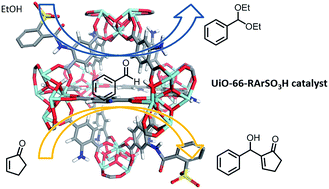
In this work, we wish to report a novel Brønsted acid metal–organic framework for highly efficient, catalytic acetalization and Morita–Baylis–Hillman (MBH) reactions. This newly synthesized UiO-66-RArSO3H MOF catalyst, bearing aromatic sulfonic acid groups, was obtained using commercially available o-sulfobenzoic acid anhydride, a reagent not previously utilized as a sulfonic acid MOFs precursor. A variety of aromatic aldehydes were tolerated under the optimal reaction conditions for acetalization or Morita–Baylis–Hillman reaction. Furthermore, the synthesized UiO-66-RArSO3H catalyst can be readily filtered and separated from the reaction solution, allowing for recycling of the catalyst five times without compromising yield or selectivity.

Results and discussion

UiO-66-NH2 was prepared from 2-aminoterephthalic acid (NH2-H2BDC), according to a literature procedure.17 Subsequently, UiO-66-NH2 was modified post-synthetically using o-sulfobenzoic acid anhydride in a chloroform solution to give UiO-66-RArSO3H. UiO-66-RArSO3H was characterized and found to be topologically identical to its precursor UiO-66-NH2 (Scheme 1).
image file: c6ra14365b-s1.tif
Scheme 1 Schematic illustration of the post-synthetic modification of UiO-66-NH2.

UiO-66-NH2 crystals appear to adopt an octahedral morphology with diameters of 160 nm as witnessed by SEM (Fig. 1a). No change in the octahedral morphology of the crystals could be observed in the Scanning Electron Microscope (SEM) images acquired after the post-synthetic modification with o-sulfobenzoic acid anhydride (Fig. 1b).


image file: c6ra14365b-f1.tif
Fig. 1 SEM of (a) UiO-66-NH2 and (b) UiO-66-RArSO3H.

Powder X-ray diffraction (PXRD) studies were performed to confirm the successful synthesis of UiO-66-NH2 MOFs.17 The PSM using o-sulfobenzoic acid anhydride did not cause the destruction of the UiO-66-NH2 crystalline structure, which makes the UiO-66-NH2 derived Brønsted acid a more stable MOF acid catalyst than that of the zinc derived IRMOF-3.18

The modification ratio of aromatic sulfonic moieties on UiO-66-RArSO3H was measured by 1H NMR integration, which was compared with 1H NMR spectrum of UiO-66-NH2. 1H NMR studies of the digested sample indicated that 20 mol% of UiO-66-NH2 amino groups were post-synthetically functionalized (Fig. 3). This observation was similar to the previous literature report, which also reported a partial NH2 group conversion.19


image file: c6ra14365b-f2.tif
Fig. 2 PXRD of (a) UiO-66-NH2, (b) UiO-66-RArSO3H and (c) recycled UiO-66-RArSO3H.

image file: c6ra14365b-f3.tif
Fig. 3 1H NMR spectra of digested (a) UiO-66-NH2 and (b) UiO-66-RArSO3H.

UiO-66-NH2 is a highly porous MOF material with a BET surface area of 1273 m2 g−1 (Fig. 4), calculated by nitrogen adsorption isotherms collected for the UiO-66-NH2 MOF. Upon post-synthetic modification, the surface area was reduced to 840 m2 g−1 for UiO-66-RArSO3H, presumably due to the occupation of the pore structure caused by the aromatic sulfonic functional groups. However, UiO-66-RArSO3H with reduced BET surface area performed exceptionally in our catalysis study, because the highly porous structure and the flexibility of the newly installed organic functional group allows for free entry and exit of the reaction substrate.


image file: c6ra14365b-f4.tif
Fig. 4 Nitrogen adsorption/desorption isotherms of (a) UiO-66-NH2 and (b) UiO-66-RArSO3H.

Additionally, the thermal and structural stability of UiO-66-NH2 and UiO-66-RArSO3H was examined by thermal gravimetric analysis (TGA). A weight loss at 270 °C was observed according to the TGA of UiO-66-NH2. The weight loss of the modified UiO-66-RArSO3H sample started at slightly lower temperature, which is common for modified MOF materials (Fig. S1).20 The TGA result proved the high thermal stability of the UiO-66-RArSO3H sample, which ensures its stability in the catalytic reaction temperature range.

Our investigation on the acetalization reaction of benzaldehyde 1a was initiated at room temperature in the absence of additional solvent (Table 1). The control experiment showed there is no formation of desired acetal product in the absence of catalyst (Table 1, entry 1). In the literature, the acetalization reaction can be promoted by certain MOF structures, such as Cu3(BTC)2 (BTC = 1,3,5-benzenetricarboxylate) via a Lewis acid activation mechanism using a high loading of catalyst. However, Cu3(BTC)2 functioned extremely poorly under 0.1 mol% catalyst loading, which suggested low acidity of the MOF metal site (Table 1, entry 2). UiO-66-NH2 showed even lower reactivity at room temperature after 12 h, presumably because of the basic amino functional groups (Table 1, entry 3). Strong Brønsted acids were able to promote the acetalization of benzaldehyde (Table 1, entries 4 and 5). 2-(Phenylcarbamoyl)benzenesulfonic acid (Cat. 2) showed an improved catalytic performance over pTsOH (Cat. 1), likely due to the electron-withdrawing effect from the carbamoyl group (Table 1, entry 5). A previously synthesized Brønsted acid MOF catalyst was also tested under the current reaction conditions (Table 1, entry 6). Unfortunately, only a moderate yield was obtained using Cat. 3 at 0.1 mol% catalyst loading. The turn-over number (TON) of Cat. 3 was calculated to be 470 and turn-over frequency (TOF) was calculated to be 235 h−1. This observation indicated the relatively low acidity of alkyl sulfonic acid in comparison to aromatic sulfonic acid. Remarkably, UiO-66-RArSO3H catalyst bearing an aromatic sulfonic acid group gave the desired benzaldehyde acetal product in quantitative yield after 2 h (Table 1, entry 8). The great catalytic activity of the UiO-66-RArSO3H suggested a higher utilization rate of the MOF surface and pores, which efficiently reduced the diffusional limitations for movement of the catalyst and substrates in liquid phase catalysis.21 The high activity of the UiO-66-RArSO3H, which gave a TON of 980 and TOF of 490 h−1, is comparable to homogeneous sulfonic acid as shown in Table 1, entries 4 and 5. The TON of UiO-66-RArSO3H catalyst in the acetalization reaction is also significantly higher than existing MOF sulfonic acid catalysts reported in the literature.22 Furthermore, we carried out the kinetic profile of the reaction between benzaldehyde and ethanol in the presence of UiO-66-RArSO3H catalyst. The full conversion of benzaldehyde substrate was achieved at 2 h, and the acetalization reaction did not proceed further when the solid acid catalyst was removed from the system (Fig. S3).

Table 1 Benzaldehyde acetalization with different catalystsa

image file: c6ra14365b-u1.tif

Entry Catalyst Yieldb TON TOF (h−1)
a Reaction conditions: benzaldehyde (1.0 mmol), 0.1 mol% catalyst, ethanol (0.5 mL) at 23 °C for 2 h.b Determined by GC-MS using nitrobenzene as the internal standard.
1 0%
2 Cu3(BTC)2 8% 80 40
3 UiO-66-NH2 3% 30 15
4 Cat. 1 78% 780 390
5 Cat. 2 92% 920 460
6 Cat. 3 47% 470 235
7 UiO-66-RArSO3H 98% 980 490


The protocol was compatible with a series of aromatic aldehydes and used to convert them into commercially important acetals in good yields. The aforementioned conditions were successfully applied to a range of acetalization reactions using 0.1 mol% of UiO-66-RArSO3H solid catalyst (Table 2). Ethylene diol 2b can also act as an acetalization reagent to form five-membered ring acetal (Table 2, entry 2). Other substituted aromatic aldehydes were evaluated to show the general application of our solid sulfonic acid catalyst. Fluorinated aldehydes 1b and 1c gave 92% and 90% yield, respectively, in the presence of 0.1 mol% catalyst (Table 2, entries 3 and 4). Para-methoxy benzaldehyde 1d, an electron-rich substrate that is generally inert under many acetalization conditions, provided 3d in good yield under our UiO-66-RArSO3H catalyzed conditions (Table 2, entry 5).23 Heteroaromatic aldehyde, thiophene-2-carbaldehyde 1e, also gave the desired product in good yield (Table 2, entry 6). This observation further proves the outstanding activity of the acidic UiO-66-RArSO3H catalyst.

Table 2 UiO-66-RArSO3H catalyzed acetalization reactiona

image file: c6ra14365b-u2.tif

Entry Substrate Alcohol Product Yieldb
a Reaction conditions: aldehyde (1.0 mmol), 0.5 mL ethanol and 0.1 mol% of UiO-66-RArSO3H at 23 °C for 2 h.b Determined by GC-MS using nitrobenzene as the standard.
1 image file: c6ra14365b-u3.tif EtOH 2a image file: c6ra14365b-u4.tif 98%
2 R1 = H, 1a image file: c6ra14365b-u5.tif 3ab 88%
3 R1 = 4-F, 1b EtOH 2a 3b 92%
4 R1 = 2-F, 1c EtOH 2a 3c 90%
5 R1 = 4-MeO, 1d EtOH 2a 3d 83%
6 image file: c6ra14365b-u6.tif EtOH 2a image file: c6ra14365b-u7.tif 89%


Morita–Baylis–Hillman reactions of substituted aromatic aldehydes and 2H-cinnamaldehyde were also evaluated with 2-cyclohexene-1-one 4 as the nucleophile and 1,4-diazabicyclo [2.2.2]octane as the Lewis basic promoter (Table 3). A control experiment demonstrated there was no reactivity in the absence of catalyst and DABCO (Table S1). DABCO was able to promote the MBH reaction of 4, however, in a very slow reaction rate (Table S1, entry 2). Using MBH reaction of benzaldehyde as the model reaction, an excellent yield was obtained with only 0.1 mol% catalyst loading and 0.5 eq. of DABCO (Table 2, entry 1). This amount of catalyst is significantly lower than the catalyst loading in previous reports.24 To further extend the utility of the UiO-66-RArSO3H catalyst, substituted benzaldehydes, such as 4-methylbenzaldehyde 1b and 4-fluorobenzaldehyde 1c, were tested under the optimal reaction conditions. 91% and 90% yields were obtained respectively, which indicated the great efficiency and substrate compatibility of the UiO-66-RArSO3H catalyst (Table 2, entries 2 and 3). 2-Naphthaldehyde 1d also reacted with 2-cyclohexene-1-one 4 nucleophile smoothly, despite its greater steric bulk (Table 2, entry 4). Furthermore, 2H-cinnamaldehyde 1f was also tested as a non-aromatic aldehyde and 86% yield was obtained (Table 2, entry 5).

Table 3 Morita–Baylis–Hillman reaction promoted by UiO-66-RSO3Ha,b

image file: c6ra14365b-u8.tif

Entry Substrate Product Yield
a Reaction conditions: aldehyde (1.0 mmol), 2-cyclopenten-1-one (2.0 mmol), 1,4-diazabicyclo [2.2.2]octane (0.5 mmol). UiO-66-RArSO3H catalyst (0.1 mol%), were stirred at 23 °C for 6 h.b The product was purified by column chromatography on silica gel and the yield was based on isolated product.
1 image file: c6ra14365b-u9.tif image file: c6ra14365b-u10.tif 92%
2 image file: c6ra14365b-u11.tif image file: c6ra14365b-u12.tif 91%
3 image file: c6ra14365b-u13.tif image file: c6ra14365b-u14.tif 90%
4 image file: c6ra14365b-u15.tif image file: c6ra14365b-u16.tif 90%
5 image file: c6ra14365b-u17.tif image file: c6ra14365b-u18.tif 86%


The UiO-66-RArSO3H was isolated and reused five times for the examination of its recyclability for the catalysis of acetalization and MBH reactions. During the acetalization reaction recycling, the catalyst was centrifuged from the reaction solution and washed with ethanol. The strong covalent bond between the aromatic sulfonic acid moiety and the amino group on UiO-66-RArSO3H ensures the chemical stability of the active acidic sites, which demonstrated the great advantage of our strategy over other approaches using coordination bonds. The UiO-66-RArSO3H catalyst remains intact after five reuses of the same catalyst batch, affording up to 99% yield of (diethoxymethyl)benzene 3a (Fig. 5). Furthermore, the acetalization reaction recycle was performed at a lower catalyst loading (0.01 mol%) to reveal the good recyclability of UiO-66-RArSO3H catalyst. Furthermore, the supernatant liquid of the ethanol suspension showed no catalytic reactivity toward the benzaldehyde, which is evidence for no leakage of acidic sites on the UiO-66-RArSO3H catalyst. The conversion of benzaldehyde paused after the solid catalyst was filtered out of the solution, which further suggested a lack of catalyst leakage (Fig. S3). The X-ray powder diffraction pattern spectrum of the UiO-66-RArSO3H catalyst after five uses was indistinguishable from that of the fresh catalyst (Fig. 2c). This observation clearly demonstrates that there was no leaching or catalyst decomposition over the catalytic process or isolation. Furthermore, our UiO-66-RArSO3H material behaved similarly in the MBH reaction catalyst reuse, again demonstrating good recycling capability (Fig. S4).


image file: c6ra14365b-f5.tif
Fig. 5 The catalyst recycling of UiO-66-RArSO3H in the acetalization reaction of 1a to 3a.

Conclusions

In conclusion, a novel heterogeneous UiO-66-RArSO3H catalyst bearing an aromatic sulfonic acid group was synthesized in this research. The structural morphology of UiO-66-RArSO3H was well retained after post-synthetic modification using commercial available o-sulfobenzoic acid anhydride reagent. The newly developed UiO-66-RArSO3H showed high activity and selectivity in the acetalization and MBH reactions at only 0.1 mol% catalyst loadings, which provides higher TONs and TOFs than several other heterogeneous Brønsted acid catalysts. The UiO-66-RArSO3H catalyst was chemically stable, due to its strong covalent bond, and did not suffer from a leaching problem during liquid catalysis. Further studies involving new applications of the UiO-66-RArSO3H catalyst are in progress.

Acknowledgements

We thank the National Natural Science Foundation of China (No. 51503016), Fundamental Research Funds for the Central Universities FRF-TP-15-001A2 and Key Laboratory of Photochemical Conversion and Optoelectronic Materials, TIPC, CAS for financial support.

Notes and references

  1. (a) C. H. Cheona and H. Yamamoto, Chem. Commun., 2011, 47, 3043 RSC; (b) S. Liang, G. B. Hammond and B. Xu, Chem. Commun., 2015, 51, 903 RSC; (c) T. Akiyama, J. Itoh and K. Fuchibe, Adv. Synth. Catal., 2006, 348, 999 CrossRef CAS.
  2. (a) S. M. George, Chem. Rev., 1995, 95, 475 CrossRef CAS; (b) Y. Chang and C. Bae, Curr. Org. Synth., 2011, 8, 208 CrossRef CAS; (c) O. Kwon, S. Park and G. Seo, Chem. Commun., 2007, 4113 RSC; (d) C. Qi, H. Cong, K. Cahill, P. Müller and J. A. Porco Jr, Angew. Chem., Int. Ed., 2013, 52, 8345 CrossRef CAS PubMed; (e) S. Liang, J. Jasinski, G. B. Hammond and B. Xu, Org. Lett., 2015, 17, 162 CrossRef CAS PubMed; (f) X. Huang, A. Goswami, X. Zou, S. Hayes, V. Shah, T. Minko, Z. Tao and T. Asefa, BioNanoScience, 2014, 4, 27 CrossRef; (g) C. Qi, T. Qin, D. Suzuki and J. A. Porco Jr, J. Am. Chem. Soc., 2014, 136, 3374 CrossRef CAS PubMed; (h) Y. Luan and S. E. Schaus, J. Am. Chem. Soc., 2012, 134, 19965 CrossRef CAS PubMed; (i) Y. Luan, K. S. Barbato, P. N. Moquist, T. Kodama and S. E. Schaus, J. Am. Chem. Soc., 2015, 137, 3233 CrossRef CAS PubMed.
  3. H. Jiang, S. Lu, X. Zhang, H. Peng, W. Dai and J. Qiao, Catal. Sci. Technol., 2014, 4, 2499 CAS.
  4. P. Kaur, J. T. Hupp and S. T. Nguyen, ACS Catal., 2011, 1, 819 CrossRef CAS.
  5. (a) Y. Luan, Y. Qi, J. Yu, H. Gao and S. E. Schaus, RSC Adv., 2014, 4, 34199 RSC; (b) C. Qi, Y. Xiong, V. Eschenbrenner-Lux, C. Cong and J. A. Porco Jr, J. Am. Chem. Soc., 2016, 138, 798 CrossRef CAS PubMed.
  6. (a) A. Corma, H. Carcia and F. X. L. I. Xamena, Chem. Rev., 2010, 110, 4606 CrossRef CAS PubMed; (b) J. Gascon, A. Corma, F. Kapteijn and F. X. L. I. Xamena, ACS Catal., 2014, 4, 361 CrossRef CAS; (c) A. H. Chughtai, N. Ahmad, H. A. Younus, A. Laypkovc and F. Verpoor, Chem. Soc. Rev., 2015, 44, 6804 RSC; (d) J. Wang, C. Qi, Z. Ge, T. Chen and R. Li, Chem. Commun., 2010, 46, 2124 RSC.
  7. (a) J. Juan-Alcaniz, R. Gielisse, A. B. Lago, E. V. Ramos-Fernandez, P. Serra-Crespo, T. Devic, N. Guillou, C. Serre, F. Kapteijn and J. Gascon, Catal. Sci. Technol., 2013, 3, 2311 RSC; (b) Y. D. Zang, J. Shi, F. M. Zhang, Y. J. Zhong and W. D. Zhu, Catal. Sci. Technol., 2013, 3, 2044 RSC; (c) Y. X. Zhou, Y. Z. Chen, Y. Hu, G. Huang, S. H. Yu and H. L. Jiang, Chem.–Eur. J., 2014, 20, 14976 CrossRef CAS PubMed; (d) M. Zheng, Y. Liu, C. Wang, S. Liub and W. Lin, Chem. Sci., 2012, 3, 2623 RSC; (e) Y. Liu, X. Xi, C. Ye, T. Gong, Z. Yang and Y. Cui, Angew. Chem., Int. Ed., 2014, 53, 13821 CrossRef CAS PubMed; (f) B. Li, K. Leng, Y. Zhang, J. J. Dynes, J. Wang, Y. Hu, D. Ma, Z. Shi, L. Zhu, D. Zhang, Y. Sun, M. Chrzanowski and S. Ma, J. Am. Chem. Soc., 2015, 137, 4243 CrossRef CAS PubMed; (g) J. Wang, Q. Li, C. Qi, Z. Ge and R. Li, Org. Biomol. Chem., 2010, 8, 4240 RSC.
  8. J. Jiang and O. M. Yaghi, Chem. Rev., 2015, 115, 6966 CrossRef CAS PubMed.
  9. (a) M. B. Gawande, A. K. Rathi, I. D. Nogueira, R. S. Varma and P. S. Branco, Green Chem., 2013, 15, 1895 RSC; (b) M. G. Goesten, J. Juan-Alcaniz, E. V. Ramos-Fernandez, K. B. S. S. Gupta, E. Stavitski, H. van Bekkum, J. Gascon and F. Kapteijn, J. Catal., 2011, 281, 177 CrossRef CAS.
  10. S. M. Cohen, Chem. Rev., 2012, 112, 970 CrossRef CAS PubMed.
  11. K. K. Tanabe and S. M. Cohen, Chem. Soc. Rev., 2011, 40, 498 RSC; V. Valtchev, G. Majano, S. Mintova and P. Ramirez, Chem. Soc. Rev., 2013, 42, 263 RSC.
  12. D. Britt, C. Lee, F. J. Uribe-Romo, H. Furukawa and O. M. Yaghi, Inorg. Chem., 2010, 49, 6387 CrossRef CAS PubMed.
  13. (a) Y. Luan, N. Zheng, Y. Qi, J. Yu and G. Wang, Eur. J. Inorg. Chem., 2014, 4268 CrossRef CAS; (b) Y. Luan, J. Yu, X. Zhang, S. E. Schaus and G. Wang, J. Org. Chem., 2014, 79, 4694 CrossRef CAS PubMed.
  14. S. J. Garibay, Z. Wang and S. M. Cohen, Inorg. Chem., 2010, 49, 8086 CrossRef CAS PubMed.
  15. C. G. Piscopo, A. Polyzoidis, M. Schwarzer and S. Loebbecke, Microporous Mesoporous Mater., 2015, 208, 30 CrossRef CAS.
  16. (a) M. G. Goesten, J. Juan-Alcaniz, E. V. Ramos-Fernandez, K. B. Sai Sankar Gupta, E. Stavitski, H. van Bekkum, J. Gascon and F. Kapteijn, J. Catal., 2011, 281, 177 CrossRef CAS; (b) Y. Luan, N. Zheng, Y. Qi, J. Tang and G. Wang, Catal. Sci. Technol., 2014, 16, 2520 Search PubMed.
  17. M. Pintado-Sierra, A. M. Rasero-Almansa, A. Corma, M. Iglesias and F. Sanchez, J. Catal., 2013, 299, 137 CrossRef CAS.
  18. Y. Luan, Y. Qi, H. Gao, N. Zheng and G. Wang, J. Mater. Chem. A, 2014, 2, 20588 CAS.
  19. S. J. Garibay, Z. Wang, K. K. Tanabe and S. M. Cohen, Inorg. Chem., 2009, 48, 7341 CrossRef CAS PubMed.
  20. Y. Luan, Y. Qi, H. Gao, R. S. Andriamitantsoa, N. Zheng and G. Wang, J. Mater. Chem. A, 2015, 3, 17320 CAS.
  21. (a) S. Velusamy and T. Punniyamurthy, Tetrahedron Lett., 2004, 45, 4917 CrossRef CAS; (b) M. Kotke and P. R. Schreiner, Tetrahedron, 2006, 62, 434 CrossRef CAS.
  22. (a) A. Dhakshinamoorthy, M. Alvaro and H. Garcia, Adv. Synth. Catal., 2010, 352, 3022 CrossRef CAS; (b) A. Dhakshinamoorthy, M. Alvaro, P. Horcajada, E. Gibson, M. Vishnuvarthan, A. Vimont, J. M. Greneche, C. Serre, M. Daturi and H. Garcia, ACS Catal., 2012, 2, 2060 CrossRef CAS; (c) F. Gandara, B. Gomez-Lor, E. Gutierrez-Puebla, M. Iglesias, M. A. Monge, D. M. Proserpio and N. Snejko, Chem. Mater., 2008, 20, 72 CrossRef CAS.
  23. S. K. De and R. A. Gibbs, Tetrahedron Lett., 2004, 45, 8141 CrossRef CAS.
  24. (a) Y. Wei and M. Shi, Chem. Rev., 2013, 113, 6659 CrossRef CAS PubMed; (b) M. Terada, S. Fukuchi, K. Amagai, M. Nakano and H. Ube, ChemCatChem, 2012, 4, 963 CrossRef CAS; (c) A. Bugarin and B. T. Connell, J. Org. Chem., 2009, 74, 4638 CrossRef CAS PubMed.

Footnote

Electronic supplementary information (ESI) available. See DOI: 10.1039/c6ra14365b

This journal is © The Royal Society of Chemistry 2016
Click here to see how this site uses Cookies. View our privacy policy here.