
Microwave-assisted synthesis of carbon dots–zinc oxide/multi-walled carbon nanotubes and their application in electrochemical sensors for the simultaneous determination of hydroquinone and catechol

Yaru Yan a, Qitong Huang bc, Chan Wei a, Shirong Hu *a, Hanqiang Zhang a, Wuxiang Zhang a, Weize Yang a, Peihui Dong a, Menglin Zhu a and Zhaoming Wang a
aCollege of Chemistry and Environment, Minnan Normal University, Zhangzhou 363000, P. R. China. E-mail: Hushirong6666@163.com; Fax: +86 596 2528075; Tel: +86 596 2528075
bDepartment of Food and Biological Engineering, Zhanzhou Institute of Technology, Zhangzhou 363000, P. R. China
cThe Application Technology of Collaborative Innovation Center for Fine Chemicals in Fujian Province, Zhangzhou 363000, P. R. China

Received 2nd June 2016 , Accepted 22nd November 2016

First published on 6th December 2016


Abstract

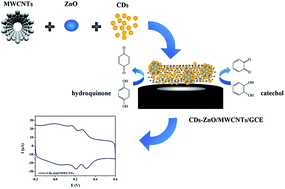
A facile, efficient, and rapid microwave-assisted synthesis was developed to prepare carbon dots–zinc oxide/multi-walled carbon nanotubes (CDs–ZnO/MWCNTs) composite. The CDs–ZnO/MWCNT material was characterized by scanning electron microscopy (SEM), high-resolution transmission electron microscopy (HRTEM), Fourier transform infrared spectroscopy (FT-IR), and X-ray diffraction (XRD). The electrode modified with the CDs–ZnO/MWCNTs composite was applied for the simultaneous determination of hydroquinone (HQ) and catechol (CC) in 0.1 M phosphate buffer solution (PBS, pH = 4.5). The anodic potential difference (ΔEpa) between HQ and CC was 104 mV, which indicated that the modified electrode could simultaneously detect HQ and CC. The calibration curves for both HQ and CC were obtained in the range from 5.0 to 200 μM, and the detection limits (S/N = 3) were 0.02 μM and 0.04 μM, respectively. The modified electrode was applied to determine HQ and CC in tap water and the recovery rates were 99.3–105.4% for HQ and 104.3–110.1% for CC.

1. Introduction

Hydroquinone (HQ) and catechol (CC) have been widely used in tanning, dyes, chemicals, photostabilizers, pesticides, and some other substances common in daily life.1,2 However, they are also widely present in the environment and have been considered as a kind of important environmental pollutants by the US Environmental Protection Agency (EPA) and the European Union (EU) because of their high toxicity and difficult degradation in the ecological system.3 They can enter the human body and erode the skin and mucosae and even inhibit the central nervous system.4,5 Nowadays, many methods, such as gas chromatography/mass spectrometry,6,7 high performance liquid chromatography,8,9 synchronous fluorescence,10 and electrochemical methods, have been used to simultaneously determine HQ and CC.11,12 However, chromatography equipment is expensive and the operation is trivial. On the other hand, the accuracy of synchronous fluorescence needs improvement. In recent years, electrochemical methods have attracted significant attention of the scientists because of their fast response, low-cost, high sensitivity and selectivity.1,13,14 However, it is a challenge to simultaneously determine HQ and CC due to their similar structures, physicochemical properties, and coexistence in the environmental samples.15,16 Because their redox peaks usually appear overlapped, they cannot be distinguished with the conventional electrodes, such as a glassy carbon electrode (GCE).15,17 Therefore, it is urgently required to develop an innovative modified electrode with a good catalytic activity and conductivity.

As a kind of one-dimensional (1D) material, multi-walled carbon nanotubes (MWCNTs) can be considered as several concentric tubes of graphene, fitted one inside the other.18,19 Owing to their high electrical conductivity, good mechanical properties, and interesting electrocatalytic compatibility with electroactive varieties, MWCNTs have been applied in electrochemistry for a long time.18,20 MWCNTs can improve the electrochemical performance by promoting the electron transfer reactions of various molecules and increasing the electroactive surface area of the modified electrode.21,22 Sensors based on MWCNTs have been successfully applied to detect a range of significant analytes such as urea and other important electroactive species.23,24 However, pristine MWCNTs are insoluble in routine solvents due to the intrinsic van der Waals interactions between the carbon nanotubes.25,26 Therefore, before connecting with other materials, MWCNTs have to be modified. In this study, we used a conventional method to acidize MWCNTs with a mixture of H2SO4 and HNO3 (3[thin space (1/6-em)]:[thin space (1/6-em)]1, v/v).27,28 As another carbon material, carbon dots (CDs) have attracted considerable attention owing to their small sizes, excellent water solubility, biocompatibility, photostability, and non-toxicity.29–31 Moreover, there are a number of carboxyl groups at the CDs' surface, which makes it easier to connect to other materials and enhance the redox response of HQ and CC. Since there are only few reports on the application of CDs in the electrochemistry field,32 it is a challenge to develop electrochemical sensors based on CDs.

To date, various nanometallic oxide materials have been applied in electrochemistry. ZnO nanostructures, as a kind of semiconductor materials, play an important role in the material synthesis due to their unique properties such as non-toxicity, high chemical stability, good electronic communication, electrochemical activity, and good piezoelectric properties.23,33 Moreover, there are many different morphologies of ZnO nanostructures such as nanowires,34 nanotubes,35 and nanoparticles.36 In this study, we synthesized ZnO nanoparticles because they are easier to link with CDs and MWCNTs across the space.

Herein, we developed a facile, efficient, and convenient microwave synthetic method to fabricate the CDs–ZnO/MWCNTs composite. FT-IR data confirmed the synthetic route for CDs–ZnO/MWCNTs. Due to the abovementioned unique properties of CDs, ZnO, and MWCNTs, the modified CDs–ZnO/MWCNTs electrode could clearly enhance the electrochemical performance for the simultaneous detection of HQ and CC. The electrochemical properties of the CDs–ZnO/MWCNTs/GCE were characterized by cyclic voltammetry (CV) and differential pulse voltammetry (DPV). The peak current exhibited a linear relationship with the concentrations of both HQ and CC, and the proposed sensor was applied for the successfully detection of the amount of HQ and CC in a real tap water sample.

2. Experimental

2.1 Chemical reagents and instrumentation

HQ was obtained from DA hao fine chemicals Co., LTD (Shantou, Guangdong, China) and CC was purchased from Sinopharm Chemical Reagent Shanghai Co., Ltd. (China). MWCNTs were obtained from Shenzhen Nanotech Port Co., Ltd. Anhydrous ethanol, nitric acid, sulfuric acid, glucose, polyethylene glycol-200 (PEG-200), and zinc nitrate hexahydrate (Zn(NO3)2·6H2O) were purchased from Xilong Chemical Co., Ltd. (Guangdong, China). The phosphate buffer solution (PBS) with pH = 4.5 was obtained by mixing stock standard solutions of Na2HPO4·12H2O (0.1 mol L−1), NaH2PO4·2H2O (0.1 mol L−1), and KCl (1 mmol L−1). The perfluorinated resin solution (Nafion) was purchased from Sigma-Aldrich, Co., (USA). All solutions were prepared using ultrapure water.

The MWCNTs was acidized in a WH-200 ultrasonic cleaning machine. A Monowave 300 (Anton Pear Gmbh, Austria) was used for the microwave irradiation synthesis of CDs and CDs–ZnO/MWCNTs. A vacuum rotary evaporator (Guangzhou IKA laboratory technology Co., LTD) was used to remove water from the CD solution. Fourier transform infrared spectra (FT-IR) were obtained using a Thermo NICOLET IS 10 (Thermo Fisher Scientific, America). Both cyclic voltammetry (CV) and differential pulse voltammetry (DPV) were performed using a CHI 660E electrochemical workstation (Shanghai Chen Hua Instruments Co., China) in a three-electrode system. All electrochemical experiments were conducted in a 10 mL of 0.1 M PBS (pH = 4.5) at room temperature. An AE240 electronic analytical balance (Shanghai Mettler-Toledo Instruments Co., Ltd) was used for accurate weighing.

2.2 Synthesis of CDs–ZnO/MWCNTs

The CDs were prepared by microwave method with the help of Monowave 300. First, 2.0000 g of glucose was dissolved in a 3 mL of ultrapure water by ultrasonication, followed by the addition of 10 mL of PEG-200. Second, the mixture was placed in the Monowave 300 reactor and heated at 180 °C for 3 min to obtain a brownish red solution. Third, the solution was dialyzed for 24 h using dialysis membranes with a cut-off of 1000. Since the size of the ZnO particles was affected by the ethanol/water ratio, the aqueous solution of CDs was concentrated in a vacuum rotary evaporator. The solid product was dissolved in a 60 mL of anhydrous ethanol. Finally, the ethanolic solution of CDs was stored at 4 °C, which was ready for future use. The MWCNTs were acidized by refluxing in the mixture of sulfuric acid[thin space (1/6-em)]:[thin space (1/6-em)]nitric acid (3[thin space (1/6-em)]:[thin space (1/6-em)]1, v/v) at 140 °C for 2 h.8 Then, the product was diluted and filtered with a cellulose membrane filter (pore size of 0.25 μm) and washed with distilled water several times until a pH value close to 7 was achieved. The acidized MWCNTs were filtrated and dried at 100 °C.

A solution of 0.25 M zinc nitrate hexahydrate (Zn(NO3)2·6H2O) and 0.0500 g of acidized MWCNTs was placed in a 30 mL glass vial (G30) before adding 10 mL of the ethanolic solution of CDs, and then dispersed by ultrasonication. The mixture was placed in the Monowave 300 reactor and heated for 3 min at 180 °C and a sediment was obtained. The product was washed with water and anhydrous ethanol several times to remove the impurities. Then, the purified product was dried at 100 °C in an air-dry oven and the CDs–ZnO/MWCNTs composite was obtained. The possible mechanism for the formation could be the –COOH groups in CDs and MWCNTs forming the –COOZnOH complex as they reacted with ZnO.

2.3 Electrode preparation

A bare glassy carbon electrode (GCE) was sequentially polished with 1.0 μm, 0.3 μm, and 0.05 μm alumina powder, and then successively washed with distilled water, ethanol, and distilled water in an ultrasonic bath, followed by blowing with nitrogen.

The CDs–ZnO/MWCNTs composite (0.0050 mg) was dispersed in a 2 mL of ultrapure water, and then placed in a WH-200 ultrasonic cleaning machine to obtain the CDs–ZnO/MWCNT solution. Then, 5 μL of the CDs–ZnO/MWCNTs composite solution was deposited on the GCE surface. After the modified electrode was dried in air, 5 μL of Nafion diluent was deposited on the electrode to prevent dissolution. The synthesis route for CDs–ZnO/MWCNTs modified electrode is shown in Fig. 1. The CDs–ZnO composite was attached to the MWCNTs to fabricate the CDs–ZnO/MWCNTs composite. Since there are a number of carboxyl groups on the surface of CDs and MWCNTs, and a number of hydroxyl groups on the surface of ZnO, they can easily react with each other. The reaction mechanism was further demonstrated by the FT-IR spectroscopy.


image file: c6ra14363f-f1.tif
Fig. 1 Assembly mechanism for CDs–ZnO/MWCNT.

3. Results and discussion

3.1 Characterization of CDs, CDs–ZnO, and CDs–ZnO/MWCNTs

The morphologies of CDs, CDs–ZnO, and CDs–ZnO/MWCNTs were analyzed by transmission electron microscope (TEM) and scanning electron microscope (SEM), and are shown in Fig. 2A–D. The CDs had a size below 5 nm and the ZnO nanoparticles were nearly 50 nm. Actually, the CDs–ZnO/MWCNTs were interconnected with each other. In the enlarged TEM image of the CDs–ZnO/MWCNTs, it can be seen that CDs–ZnO were attached to the MWCNTs. The X-ray diffraction (XRD) images of CDs–ZnO and CDs–ZnO/MWCNTs are shown in Fig. 3, further confirming their compositions. The characteristic diffraction peaks of the ZnO nanoparticles in the XRD pattern corresponded to the typical wurtzite ZnO phase (JCPDS 36-1451).37 The XRD pattern of the CDs, shown in Fig. 3A, displays a peak centered at 25.6°, corresponding to the plane (002).33,38,39 The XRD pattern of the MWCNTs, as shown in Fig. 3B, contains a broad peak centered at 26.5°, also corresponding to the plane (002).40 For the CDs, the peak was affected by the MWNCTs due to their close position.
image file: c6ra14363f-f2.tif
Fig. 2 TEM images of CDs (A), CDs–ZnO (B), CDs–ZnO/MWCNTs (D), and SEM image of CDs–ZnO/MWCNTs (C); inset: enlarged TEM image of CDs–ZnO/MWCNTs.

image file: c6ra14363f-f3.tif
Fig. 3 The XRD pattern of CDs–ZnO (A) and CDs–ZnO/MWCNTs (B). Insets show the XRD patterns of CDs and MWCNTs, respectively.

The Fourier transform infrared spectra (FT-IR) of CDs, ZnO, MWCNTs, CDs–ZnO, and CDs–ZnO/MWCNTs are shown in Fig. 4. In the CD spectrum, the peaks at 3262 cm−1 and 1646 cm−1 correspond to the stretching vibrations of O–H and C[double bond, length as m-dash]O, respectively. The peaks within the range of 1000–1300 cm−1 were attributed to the C–OH stretching and O–H bending vibrations.41,42 Moreover, the abovementioned peaks imply the existence of large numbers of carboxyl groups in the aqueous solution of CDs. In the ZnO spectrum, the peak at nearly 500 cm−1 was attributed to the stretching of ZnO.43,44 In the MWCNT spectrum, the peak at 1699 cm−1 was attributed to the stretching vibrations of C[double bond, length as m-dash]O, which could prove the successful acidification of MWCNTs. In the spectrum of CDs–ZnO, sharp peaks within the range of 3400–3600 cm−1 demonstrated the intermolecular association via hydrogen bonding between CDs and ZnO. The peaks within the range of 1620–1500 cm−1 were ascribed to the C[double bond, length as m-dash]O and –COO– stretching vibrations of the –COOH groups. Due to the interaction between these groups, especially the structure of MWCNTs in the conjugate system, the peak corresponding to the stretching vibrations of C[double bond, length as m-dash]O was shifted to 1591 cm−1 in the spectrum of CDs–ZnO/MWCNTs. The data indicated that the –COOH groups of CDs and MWCNTs had formed the –COOZnOH complex upon interaction with ZnO. The FT-IR data further confirmed the synthetic route for the CDs–ZnO/MWCNTs.


image file: c6ra14363f-f4.tif
Fig. 4 Fourier transform infrared spectra (FT-IR) of CDs (A), ZnO (B), CDs–ZnO (C), MWCNTs (D), and CDs–ZnO/MWCNTs (E).

3.2 Cyclic voltammetric and electrochemical impedance spectroscopic responses of CDs–ZnO/MWCNTs to HQ and CC

In Fig. 5A, the electrochemical behaviors of bare GCE, Nafion/CDs, Nafion/CDs–ZnO, Nafion/ZnO/MWCNTs, and Nafion/CDs–ZnO/MWCNTs were investigated by cyclic voltammetry (CV) in a 1.0 mM K3[Fe(CN)6] solution containing 0.1 M KCl. The electrode modified with the CDs–ZnO/MWCNTs composite showed the highest redox peak current. By studying the CV of the Nafion/CDs–ZnO/MWCNTs/GCE in K3[Fe(CN)6] at different scan rates, the linear regression between the peak current and the square root of the scan rate can be described by the Randles–Sevcik equation.45
Ipa = 2.69 × 10⁵n3/2AC01/2

image file: c6ra14363f-f5.tif
Fig. 5 CV (A) and EIS (B) of 1.0 mM K3[Fe(CN)6]3−/4− solution obtained with the bare GCE, and the Nafion/GCE, Nafion/CDs, Nafion/CDs–ZnO, Nafion/MWCNTs, Nafion/ZnO/MWCNTs, and Nafion/CDs–ZnO/MWCNTs electrodes.

In this equation, Ipa is the anodic peak current, n is the electron transfer number, A is the surface area of the electrode, D is the diffusion coefficient, C0 is the initial concentration of K3[Fe(CN)6], and ν is the scan rate. The 1.0 mM K3[Fe(CN)6] solution contained 0.1 M KCl, n = 1 and D = 7.6 μcm s−1. From the slope of the Ipavs. ν1/2 plot, the surface area of bare GCE was found to be 0.024 cm2 and the CDs–ZnO/MWCNTs/GCE area was calculated to be 0.03 cm2, which increased nearly 1.25 times.

Electrochemical impedance spectroscopy (EIS) was also performed for the investigation of the modified electrodes, which can exhibit the impedance changes of the modification process. The value of the electrode-transfer resistance (Ret) depends on the dielectric and insulating properties at the electrode/electrolyte interface. Fig. 5B shows the EIS of different electrodes in 1.0 mM [Fe(CN)6]3−/4− and 0.1 M KCl solution. On the GCE, the Ret value was 140 Ω, whereas on the Nafion/GCE, the Ret value increased to 148 Ω. However, on the Nafion/CDs/GCE, the Ret value decreased to 96 Ω, which could be attributed to the presence of highly conductive CDs in the composite film, which could accelerate the electron transfer rate of [Fe(CN)6]3−/4−. On the Nafion/CDs–ZnO/GCE, the Ret value decreased to 57 Ω, indicating that the electrochemical performance of Nafion/CDs–ZnO was better than that of the Nafion/CDs/GCE. The Ret values of the Nafion/MWCNTs, Nafion/ZnO/MWCNTs, and Nafion/CDs–ZnO/MWCNT electrodes were 40 Ω, 34 Ω, and 22 Ω, respectively. The results showed that the Nafion/CDs–ZnO/MWCNT electrode exhibited the best electrochemical performance. Hence, it was strongly proved that the Nafion/CDs–ZnO/MWCNTs could provide a promising electrochemical platform for sensing.

As shown in Fig. 6, the electrochemical behaviors of HQ and CC at different electrodes were investigated by cyclic voltammetry at a scan rate of 0.1 V s−1 in a 0.1 M PBS (pH = 4.5) containing 0.1 mM HQ and 0.1 mM CC. As shown in the inset of Fig. 6, there was only one peak for bare GCE, Nafion/GCE, Nafion/CDs/GCE, and Nafion/CDs–ZnO/GCE. Although Nafion has an excellent film-forming ability, the peak current of Nafion/GCE was significantly decreased due to its poor electrical conductivity. After modifying the GCE with Nafion/CDs, the electrochemical performance increased, and when depositing Nafion/CDs–ZnO on the GCE, the electrochemical performance was better than that of the Nafion/CDs/GCE, which indicated that both CDs and ZnO improve the electrochemical performance of this system. Both the different space resistances of HQ and CC and the fast electrochemical reaction kinetics of CDs–ZnO/MWCNTs contributed in the separation of HQ and CC. The electron cloud density of the HQ molecule is higher than that of CC, leading to a decrease in the oxidation activity at the electrode surface for the latter.17,41 Different electron cloud densities between HQ and CC lead to their different oxidation potential. Therefore, the voltammetric waves of HQ and CC could be separated.23,46,47 The CDs–ZnO/MWCNT-modified electrode displayed the largest electrochemical signals with two independently well-defined oxidation peaks at 0.207 V and 0.311 V for HQ and CC, respectively. The anodic potential difference (ΔEpa) between HQ and CC of CDs–ZnO/MWCNTs was 0.104 V, which indicated that the modified electrode could simultaneously detect HQ and CC with high sensitivity.


image file: c6ra14363f-f6.tif
Fig. 6 CV of 0.1 mM HQ and 0.1 mM CC obtained with a bare GCE, and Nafion/GCE, Nafion/CDs, Nafion/CDs–ZnO, Nafion/MWCNTs, Nafion/ZnO/MWCNTs and Nafion/CDs–ZnO/MWCNT electrodes in PBS (pH = 4.5) at a scan rate of 0.1 V s−1; inset is the CV of the bare GCE, and Nafion, Nafion/CDs, and Nafion/CDs–ZnO electrodes.

3.3 Effect of pH and scan rate

As shown in Fig. 7, the electrochemical behaviors of HQ and CC were investigated by CV in PBS solution within a pH range from 3.5 to 8.5. When the pH was 4.5, the oxidation current reached a maximum. Thus, a pH value of 4.5 was chosen as the appropriate value for the investigation. As shown in Fig. 7B, as pH increased, the peak potentials of HQ and CC negatively shifted, which indicated that the proton was directly involved in the electrochemical redox process.27,48 The linear regression equations between the peak potentials and pH of HQ and CC were Epa (V) = 0.453 − 0.052pH (R = 0.9927) and Epa (V) = 0.534 − 0.049pH (R = 0.9920), respectively. According to the Nernst equation (dEp/dpH = 2.303mRT/nF), the electrochemical redox reaction of HQ and CC at the modified electrode should be a two electrons and two protons process.
image file: c6ra14363f-f7.tif
Fig. 7 (A) Effect of pH on the redox behavior of HQ (0.1 mM) and CC (0.1 mM) in 0.1 M PBS (pH = 4.5) at the ZnO–CDs/MWCNT electrode (pH values, (a–k) 3.5, 4.0, 4.5, 5.0, 5.5, 6.0, 6.5, 7.0, 8.0, 8.5). (B) Plots of peak potential versus pH.

The effect of the scan rate was investigated by CV in a 0.1 M PBS (pH = 4.5) with the CDs–ZnO/MWCNT-modified electrode from 0.1 V s−1 to 0.5 V s−1. As shown in Fig. 8, the redox peak current gradually increased as the scan rate increased. The regression equations for HQ and CC were Ipa (μA) = 54.743 − 7.706ν1/2 (mV s−1) (R = 0.9956), and Ipa (μA) = 46.305 − 6.841ν1/2 (mV s−1) (R = 0.9954), respectively. The peak current was linearly associated with the square root of the scan rate, which indicated that the redox reaction of HQ and CC at the CDs–ZnO/MWCNTs/GCE was a typical diffusion-controlled process.


image file: c6ra14363f-f8.tif
Fig. 8 (A) Effect of scan rate on the redox behavior of HQ (0.1 mM) and CC (0.1 mM) in 0.1 M PBS (pH = 4.5) with the CDs–ZnO/MWCNT electrode (scan rates, (a–i) 0.1, 0.15, 0.2, 0.25, 0.3, 0.35, 0.4, 0.45, 0.5 V s−1). (B) Plot of the peak current versus the square root of the scan rate (ν: 0.1–0.5 V s−1) for HQ and CC.

3.4 Simultaneous determination of HQ and CC

The simultaneous and quantitative determination of HQ and CC at the CDs–ZnO/MWCNTs/GCE was studied by differential pulse voltammetry (DPV). Individual determinations of HQ and CC in their mixture solution were achieved by changing the concentration of one of the species while keeping the other constant. Fig. 9A shows that on increasing the concentration of HQ from 5.0 to 200 μM while keeping the concentration of CC at 100 μM, the peak current of HQ proportionally increased. Similarly, the peak current of CC also proportionally increased as its concentration was increased, as shown in Fig. 9B. Moreover, the linear regression equations between the oxidation peak current and the HQ or CC concentration exhibited a good linear relationship: Ipa (HQ) (μA) = −64.24 − 0.284c (μM) (R = 0.9950) or Ipa (CC) (μA) = −44.15 − 0.385c (μM) (R = 0.9970). The detection limit for HQ and CC was calculated to be 0.02 μM and 0.04 μM (S/N = 3), respectively. The error bars for HQ and CC were below 1%. This experiment illustrated that the CDs–ZnO/MWCNT-modified electrode could improve the electrochemical current and enhance the catalytic separation performance (Fig. 10).
image file: c6ra14363f-f9.tif
Fig. 9 DPVs with the CDs–ZnO/MWCNT electrode (A) in the presence of 0.1 mM CC containing different concentrations of HQ ((a–h) 5.0, 7.0, 10, 30, 50, 70, 100, 200 μmol L−1), (B) in the presence of 0.1 mM HQ containing different concentrations of CC ((a–h) 5.0, 7.0, 10, 30, 50, 70, 100, 200 μmol L−1); (C) calibration plot of HQ ((a–h) 5.0, 7.0, 10, 30, 50, 70, 100, 200 μmol L−1); (D) calibration plot of CC ((a–h) 5.0, 7.0, 10, 30, 50, 70, 100, 200 μmol L−1).

image file: c6ra14363f-f10.tif
Fig. 10 The stability of the DPV response for HQ (0.1 mM) and CC (0.1 mM) in 0.1 M PBS (pH = 4.5) with the ZnO–CDs/MWCNT-modified electrode, assessed by repeated measurements.

3.5 Interference effect

The influence of interferences in the detection of HQ and CC in a real sample was evaluated. For this investigation, interfering substances were added in the 0.1 mM HQ and 0.1 mM CC mixture. The change in the current caused by 1000-fold Na+, K+, Mg2+, Cu2+, Zn2+, Cl, SO42−, NO3, and 0.1 mM resorcinol was less than 5%, which indicated the excellent selectivity and sensitivity of the CDs–ZnO/MWCNT-modified electrode.

3.6 Sample analysis

A comparison of different electrochemical sensors with different modified electrodes is shown in Table 1. To validate the proposed method, the CDs–ZnO/MWCNT electrode was applied for the determination of HQ and CC in tap water. The standard solution was added to a tap water sample to obtain the recovery rate. The analytical results are displayed in Table 2, showing that the recovery rates for HQ and CC were 99.3–105.4% and 104.3–110.1%, respectively. The recovery rates indicated that the CDs–ZnO/MWCNT-modified electrode has a practical applicability and good accuracy in the simultaneous determination of HQ and CC.
Table 1 Comparison of different electrochemical sensors for the determination of HQ and CC
Electrode Linear range (μM) Detection limit (μM) Ref.
HQ CC HQ CC
N-GCE 5–260 5–260 0.2 0.2 4
MWCNTs–PDDA–GR 0.5–400 0.5–400 0.02 0.018 49
(CMWNTs-NHCH2CH2NH)6/GCE 10–120 5–80 2.3 1.0 50
Pt/ZrO2–RGO/GCE 1–1000 1–400 0.4 0.4 51
CDs–ZnO/MWCNTs 5–200 5–200 0.02 0.04 This work


Table 2 Results of the determination of HQ and CC in tap water samples
Samples   Added (μL) Found (μL) Recovery (%)
HQ CC HQ CC HQ CC
Tap water 1 20.0 20.0 18.2 23.2 99.3 102.4
2 50.0 50.0 50.5 57.4 100.2 104.5
3 80.0 80.0 72.8 76.5 97.6 98.2


3.7 Stability and reproducibility

The stability and reproducibility of the CDs–ZnO/MWCNT-modified electrode were investigated by DPV with a solution containing 0.1 mM HQ and 0.1 mM CC, and six parallel determinations were performed. The relative standard deviation (RSD) for the HQ and CC determinations were 0.206% and 0.176%, respectively. Therefore, the CDs–ZnO/MWCNTs electrode has an excellent stability and reproducibility.

4. Conclusions

In this study, a CDs–ZnO/MWCNTs composite material was fabricated by a simple and convenient microwave synthesis with the help of Monowave 300. In summary, the CDs–ZnO/MWCNT-modified electrode was sensitive and selective for the simultaneously determination of HQ and CC. The redox peaks of HQ and CC were well separated by more than 100 mV. The detection limits for HQ and CC were 0.02 μM and 0.04 μM (S/N = 3), respectively. The CDs–ZnO/MWCNT electrode exhibited an excellent stability and anti-interference ability. Finally, this electrochemical method could be applied for the simultaneous determination of HQ and CC in a real water sample.

Acknowledgements

This study was supported by the Science and Technology Foundation of the National General Administration of Quality Supervision of the Fujian province, China (No. 2012QK053), the Natural Science Foundation (No. 2012D136), the Education Bureau of the Fujian province, China (No. JA13195, JAT160875 and JAT160302), the Natural Science Foundation of Zhangzhou (No. ZZ2016J31), the Science and Technology Foundation of the Fujian provincial bureau of quality and technical supervision (No. FJQI2012029, No. FJQI2013108), and the Training Programme Foundation for Excellent Youth Research Talents of the Fujian's Universities (Fujian Education Section, 2016, No. 23).

References

  1. S. Zhu, W. Gao, L. Zhang, J. Zhao and G. Xu, Sens. Actuators, B, 2014, 198, 388–394 CrossRef CAS.
  2. T. C. Canevari, L. T. Arenas, R. Landers, R. Custodio and Y. Gushikem, Analyst, 2013, 138, 315–324 RSC.
  3. X. Li, G. Xu, X. Jiang and J. Tao, J. Electrochem. Soc., 2014, 161, H464–H468 CrossRef CAS.
  4. G. Zhao, M. Li, Z. Hu, H. Li and T. Cao, J. Mol. Catal. A: Chem., 2006, 255, 86–91 CrossRef CAS.
  5. X. Wang, M. Xi, M. Guo, F. Sheng, G. Xiao, S. Wu, S. Uchiyama and H. Matsuura, Analyst, 2016, 141, 1077–1082 RSC.
  6. S. C. Moldoveanu and M. Kiser, J. Chromatogr. A, 2007, 1141, 90–97 CrossRef CAS PubMed.
  7. P. Nagaraja, R. A. Vasantha and K. R. Sunitha, J. Pharm. Biomed. Anal., 2001, 25, 417–424 CrossRef CAS PubMed.
  8. H. Cui, C. He and G. Zhao, J. Chromatogr. A, 1999, 855, 171–179 CrossRef CAS PubMed.
  9. A. Asan and I. Isildak, J. Chromatogr. A, 2013, 988, 145–149 CrossRef.
  10. M. F. Pistonesi, N. M. S. Di, M. E. Centurión, M. E. Palomeque, A. G. Lista and B. B. S. Fernández, Talanta, 2006, 69, 1265–1268 CrossRef CAS PubMed.
  11. X. Yue, S. Pang, P. Han, C. Zhang, J. Wang and L. Zhang, Electrochem. Commun., 2013, 34, 356–359 CrossRef CAS.
  12. M. A. Ghanem, Electrochem. Commun., 2007, 9, 2501–2506 CrossRef CAS.
  13. J. Liu, M. D. Morris, F. C. Macazo, L. R. Schoukroun-Barnes and R. J. White, J. Electrochem. Soc., 2014, 161, H301–H313 CrossRef CAS.
  14. J. Liu, S. Wagan, M. D. Morris, J. Taylor and R. J. White, Anal. Chem., 2014, 86, 11417–11424 CrossRef CAS PubMed.
  15. T. Lai, W. Cai, W. Dai and J. Ye, Electrochim. Acta, 2014, 138, 48–55 CrossRef CAS.
  16. X. Zhou, Z. He, Q. Lian, Z. Li, H. Jiang and X. Lu, Sens. Actuators, B, 2014, 193, 198–204 CrossRef CAS.
  17. X. Feng, W. Gao, S. Zhou, H. Shi, H. Huang and W. Song, Anal. Chim. Acta, 2013, 805, 36–44 CrossRef CAS PubMed.
  18. F. C. Moraes, M. F. Cabral, L. H. S. Mascaro and A. S. Machado, Surf. Sci., 2011, 605, 435–440 CrossRef CAS.
  19. A. T. Masheter, P. Abiman, G. G. Wildqoose, E. Wong, L. Xiao, N. V. Rees, R. Taylor, G. A. Attard, R. Baron, A. Crossley, J. H. Jones and R. G. Compton, J. Mater. Chem., 2007, 17, 2616–2626 RSC.
  20. D. Yuan, S. Chen, R. Yuan, J. Zhang and W. Zhang, Analyst, 2013, 138, 6001–6006 RSC.
  21. W. Lian, S. Liu, J. Yu, J. Li, M. Cui, W. Xu and J. Huang, Biosens. Bioelectron., 2013, 44, 70–76 CrossRef CAS PubMed.
  22. Y. Quan, Z. Xue, H. Shi, X. Zhou, J. Du, X. Liu and X. Lu, Analyst, 2012, 137, 944–952 RSC.
  23. M. Tak, V. Gupta and M. Tomar, J. Mater. Chem. B, 2013, 1, 6392–6401 RSC.
  24. M. R. Shahmiri, A. Bahari, H. Karimi-maleh, R. Hosseinzadeh and N. Mirnia, Sens. Actuators, B, 2013, 177, 70–77 CrossRef CAS.
  25. Y. Gao, Y. Cao, D. Yang, X. Luo, Y. Tang and H. Li, J. Hazard. Mater., 2012, 199–200, 111–118 CrossRef CAS PubMed.
  26. Y. E. Shih and R. J. Jeng, Biodegradable poly(butylene succinate)/multi-walled carbon nanotube nanocomposites, Oxford University Press Inc., New York, 2011, pp. 101–122 Search PubMed.
  27. F. Avilés, J. V. Gauich-Rodríguez, L. Moo-Tah, A. May-Pat and R. Vargas-Goronado, Carbon, 2009, 47, 2970–2975 CrossRef.
  28. Y. Li, S. Feng, S. Li, Y. Zhang and Y. Zhong, Sens. Actuators, B, 2014, 190, 999–1005 CrossRef CAS.
  29. Q. Huang, X. Lin, F. Li, W. Weng, L. Lin and S. Hu, Progress in Chemistry, 2015, 27, 1604–1614 Search PubMed.
  30. Q. Huang, X. Lin, C. Lin, Y. Zhang, S. Hu and C. Wei, RSC Adv., 2015, 5, 54102–54108 RSC.
  31. Y. Du and S. Guo, Nanoscale, 2016, 8, 2532–2543 RSC.
  32. Q. Huang, H. Zhang, S. Hu, F. Li, W. Weng, J. Chen, Q. Wang, Y. He, W. Zhang and X. Bao, Biosens. Bioelectron., 2014, 52, 277–280 CrossRef CAS PubMed.
  33. A. Umar, M. M. Rahman, M. Vaseem and Y. B. Hahn, Electrochem. Commun., 2009, 11, 118–121 CrossRef CAS.
  34. J. Liu, C. Guo, C. M. Li, Y. Li, Q. Chi, X. Huang, L. Liao and T. Yu, Electrochem. Commun., 2009, 11, 202–205 CrossRef CAS.
  35. R. Ahmad, N. Tripathy, S. H. Kim, A. Umar, A. Al-Hajry and Y. Hahn, Electrochem. Commun., 2014, 38, 4–7 CrossRef CAS.
  36. M. Yu, D. Shao, F. Lu, X. Sun, H. Sun, T. Hu, G. Wang, S. Sawyer, H. Qiu and J. Lian, Electrochem. Commun., 2013, 34, 312–315 CrossRef CAS.
  37. H. Yu, H. Zhang, H. Huang, Y. Liu, H. Li, H. Ming and Z. Kang, New J. Chem., 2012, 36, 1031–1035 RSC.
  38. D. Sun, R. Ban, P. Zhang, G. Wu, J. Zhang and J. Zhu, Carbon, 2013, 64, 424–434 CrossRef CAS.
  39. Q. Huang, L. Zou and D. Chen, RSC Adv., 2016, 6, 82294–82297 RSC.
  40. S. Banerjee and S. S. Wong, J. Am. Chem. Soc., 2003, 125, 10342–10350 CrossRef CAS PubMed.
  41. B. Chen, F. Li, S. Li, W. Weng, H. Guo, T. Guo, X. Zhang, Y. Chen, T. Huang, X. Hong, S. You, Y. Lin, K. Zeng and S. Chen, Nanoscale, 2013, 5, 1967–1971 RSC.
  42. M. L. Bhaisare, A. Talib, M. S. Khan, S. Pandey and H. Wu, Microchim. Acta, 2015, 182, 2173–2181 CrossRef CAS.
  43. F. Hassan, M. S. Miran, H. A. B. H. Susan and M. Y. A. Mollah, Bangladesh J. Sci. Ind. Res., 2015, 50, 21–28 CrossRef.
  44. M. Tak, V. Gupta and M. Tomar, J. Mater. Chem. B, 2013, 1, 6392–6401 RSC.
  45. B. Rezaei and S. Damiri, Sens. Actuators, B, 2008, 134, 324–331 CrossRef CAS.
  46. X. Feng, W. Gao, S. Zhou, H. Shi, H. Huang and W. Song, Anal. Chim. Acta, 2013, 805, 36–44 CrossRef CAS PubMed.
  47. D. W. Li, Y. T. Li, W. Song and Y. T. Long, Anal. Methods, 2010, 2, 837–843 RSC.
  48. Z. Liu, Z. Wang, Y. Cao, Y. Jing and Y. Liu, Sens. Actuators, B, 2011, 157, 540–546 CrossRef CAS.
  49. D. Song, J. Xia, F. Zhang, S. Bi, W. Xiang, Z. Wang, L. Xia, Y. Xia, Y. Li and L. Xia, Sens. Actuators, B, 2015, 206, 111–118 CrossRef CAS.
  50. S. Feng, Y. Zhang, Y. Zhong, Y. Li and S. Li, J. Electroanal. Chem., 2014, 733, 1–5 CrossRef CAS.
  51. A. T. E. Vilian, S. M. Chen, L. H. Huang, M. A. Ali and F. M. A. Al-Hemaid, Electrochim. Acta, 2014, 125, 503–509 CrossRef CAS.

Footnote

These authors contributed equally to this work.

This journal is © The Royal Society of Chemistry 2016
Click here to see how this site uses Cookies. View our privacy policy here.