DOI:
10.1039/C6RA14344J
(Paper)
RSC Adv., 2016,
6, 56831-56838
Synthesis of blocked waterborne polyurethane polymeric dyes with tailored molecular weight: thermal, rheological and printing properties†
Received
2nd June 2016
, Accepted 7th June 2016
First published on 7th June 2016
Abstract
A series of polymeric dyes based on blocked waterborne polyurethanes (BWPUs) with varied molecular weights have been synthesized successfully. The influence of molecular weight on the thermal, rheological, and printing properties of the BWPUs are mainly investigated. The molecular weight of the BWPUs are tailored in the range of 2860–24
600 by selecting different chain lengths of polyethylene glycol (PEG0/400/600/1000/2000) as soft segments. The glass transition temperature (Tg) of the BWPUs decreased from 5.1 °C to −52.6 °C with increasing molecular weight of the soft segment, which implied a better film-forming property. Additionally, BWPUs with higher molecular weight offered better thermal stability. It is also found that BWPUs with a higher molecular weight show a more distinct shear thinning behavior and viscous behavior. The synthesized BWPUs were further applied in textile printing as both a colorant and adhesive to investigate their application performances. The printing viscosity index (PVI) values of all BWPUs pastes are below 0.3, suggesting that they are preferred for printing fine patterns on hydrophilic fibers. The color fastness of the printed cotton fabrics was found to be improved to 4–5 grade as the molecular weight of the BWPUs and baking temperature were increased. Consequently, the polymeric dyes could provide a novel route for obtaining high-quality printing products and shortening the textile coloring process.
Introduction
Printing paste is a critical factor in determining the printing quality and performance. It is mainly composed of colorant, thickener, binder and other auxiliaries.1 The commonly used colorants in printing pastes include all types of dyes and pigments, which usually are micromolecules. However, these colorants are generally mixed physically with pigment pastes, which often show poor migration resistance, abrasion resistance and agglomeration of the binders and colorant particles.2 The color paste usually shows poor storage stability. The preparation and application processes of the color paste are complex and time-consuming. Additionally, dye printing presents many problems such as low dye utilization efficiency, poor repeatability and wastewater treatment, which may not meet the environmental requirements. As for pigment printing, color fastness and wearability are relatively poor, although it shows environmental performance.
Polymeric dyes that chemically linking chromophore moieties and polymers in main or side chains may be considered as an effective candidate for addressing these issues. Due to the combination in molecular levels of chromophores and polymers, polymeric dyes present chromaticity, transparency, processibility, outstanding thermal stability, chemical stability, and solvent and migration resistances.3 Moreover, polymeric dyes are safe and nontoxic for humans because they cannot be absorbed by skin owing to their large molecular dimension.4 They can act as colorants, binders and crosslinker, which can effectively enhance colorfastness. For example, a water-soluble crosslinking polymeric dye containing flavone moiety was used to dye silk and cotton and the rubbing and washing fastness can be reached above 4–5 grade.5 A self-curable aqueous polymeric dye containing direct dye showed excellent colorfastness, water proof and solvent resistant.4 As a result, polymeric dyes are promising alternatives for dyeing, printing, coating and finishing in textiles. Among available polymer skeletons, waterborne polyurethanes (WPUs) have attracted long-lasting interest due to its flexible tailoring of molecular weight, soft and hard segment structures.6–8 Polymeric dyes based on WPUs offer outstanding colorfastness, thermal migration, chemical stability, high abrasion resistance, excellent elasticity and broad substrate suitability.9 Current studies about polymeric dyes based on WPUs were mainly focused on filtering or synthesizing novel micromolecular chromophores (anthraquinone, stilbene, spiropyrans, azo units) to develop novel polymeric dyes for application in textiles, functional coatings, leather, optical devices, smart materials and other fields.10,11 However, in textile application, few reports are related to investigating the relationships among molecular weight of polymeric dyes, rheological properties and printing effects.
The rheological property is an important parameter of printing pastes, which is responsible for controlling dye penetration, depth of shade, sharpness of the print and levelness. To obtain defined patterns, high viscosity, certain pseudo-plasticity and thixotropy are required so that the paste does not penetrate but can successfully go through the mesh. The rheological property is greatly influenced by many factors, involving molecular structure, molecular weight, component concentration, segment density, solvent property and temperature.12,13 The rheological behavior of color paste mainly depends on thickener and binder. Consequently, it is of great interest to investigate the rheological properties of the printing pastes.14
In a previous study,15 we successfully synthesized a novel polymeric dye based on blocked waterborne polyurethane which is able to synchronously realize coloring and finishing of textiles and improve colorfastness. In this work, the blocked waterborne polyurethane based polymeric dyes (BWPUs) with varied molecular weight were synthesized. It was aimed at investigating the influences of the molecular weight for the synthesized polymeric dyes on thermal property, rheological behavior and printing performance. The colorfastness of the fabrics printed with these polymeric dyes was also discussed in detail.
Experimental
Materials
Isophorone diisocyanate (IPDI) was purchased from Huaxia (Chengdu) Co., Ltd. Disperse Blue 3 (DB, as shown in Scheme 1) which is raw power was available from FILO Color & Chemicals (Wuxi) Co., Ltd. Methyldiethanolamine (MDEA), polyethylene glycol (PEG, Mn = 400, 600, 1000, 2000) and glacial acetic acid (HAc) were products from Sinopharm Chemical Reagent Co., Ltd. Methyl ethyl ketoxime (MEKO) was supplied by Aladdin (Shanghai) Co., Ltd. MDEA and PEG were thoroughly dehydrated at 120 °C for about 24 h before use. Acetone bought from Sinopharm Chemical Reagent Co., Ltd., was dried and always kept with 4A molecular sieve before utilization.
 |
| | Scheme 1 Synthesis of BWPUs. | |
Synthesis of BWPUs
The synthesis process and theoretical composition for BWPUs were shown in Scheme 1 and Table 1. PEG (PEG0, PEG400, PEG600, PEG1000, PEG2000) was added into a three-necked flask equipped with a mechanical stirrer and a reflux condenser, followed by slowly dropping IPDI. The pre-polymerization was continued at 70 °C for 2 h to obtain isocyanate-terminated prepolymer. Afterwards, DB chromophore was added and react with the prepolymer at 70 °C for another 3 h, MDEA as hydrophilic chain extender was dissolved in anhydrous acetone (10–15 mL) and then dropwise added into the reaction mixture. The chain extension was performed at 70 °C for 2 h. Next, blocking agent MEKO was added and reacted at 70 °C for additional 2 h. The reaction mixture was then cooled to 50 °C, followed by adding HAc to completely neutralize the amino group in the chain for 0.5 h to obtain BWPUs. Then, deionized water (100 mL) was added to obtain dispersion of BWPUs after acetone was removed via vacuum distillation. The dispersion then stands at room temperature for 12 h to remove the unreacted reactants and insoluble product. Finally, deionized water was also removed via vacuum distillation. The synthesized BWPUs are labeled as BWPU-PEG0, BWPU-PEG400, BWPU-PEG600, BWPU-PEG1000, and BWPU-PEG2000.
Table 1 Theoretical composition of BWPUsa
| Samples |
Molar (mmol) |
IPDI content (wt%) |
| IPDI (Mn = 222) |
PEG |
DB (Mn = 296) |
MDEA (Mn = 119) |
MEKO (Mn = 87) |
Note: the IPDI content is calculated by the following formula:  |
| BWPU-PEG0 |
25 |
— |
2 |
16 |
14 |
60.75 |
| BWPU-PEG400 |
25 |
10 |
2 |
6 |
14 |
46.92 |
| BWPU-PEG600 |
25 |
10 |
2 |
6 |
14 |
40.36 |
| BWPU-PEG1000 |
25 |
10 |
2 |
6 |
14 |
31.54 |
| BWPU-PEG2000 |
25 |
10 |
2 |
6 |
14 |
20.39 |
Preparation of printing fabrics
BWPUs (29 wt%), thickener agent PFL (14 wt%) and deionized water (57 wt%) were mixed and stirred to obtain uniform color pastes. The screen netting for printing was put on cotton fabrics. Subsequently, the pastes were added onto the screen netting, and then the pastes were squeegeed onto the fabrics with a doctor. The squeegee process was repeated for three times (one time = back and forth). Finally, the printed fabrics were dried at 60 °C for 30 min and then cured at 110–170 °C for 5 min.
Characterization
The molecular weight and polydispersity index (PDI) were measured by gel permeation chromatography (GPC, Waters THF, USA) with tetrahydrofuran (THF) as eluent and calibrated with polystyrene standard. All samples were dissolved in THF at a concentration of 5 g L−1 and were used wide-distribution sample injection.
Differential scanning calorimetry (DSC) was conducted on a TA-Q200 DSC apparatus. Tests were performed using aluminium hermetic pan crucible within a temperature range of −80 to 300 °C at a heating rate of 10 °C min−1 and cooling rate of 20 °C min−1.
The thermal stability of BWPU was examined by thermogravimetric analysis (TGA) and derivative of thermogravimetric (DTG) analysis (TGA/SDTA851e, Mettler Toledo, Switzerland) under a nitrogen flow of 20 mL min−1. Samples (5 mg each) were heated in Pt pans in the range of 25–600 °C at a heating rate of 10 °C min−1.
The variation of the viscosity for BWPUs as a function of shear rate was measured by a Physica MCR301 rheometer (Anton Paar, Austria) under shear flow mode at 25 °C. The dependence of storage and loss moduli on frequency was tested under dynamic oscillatory mode at 25 °C.
The printing viscosity index (PVI) and shear thinning index (STI) were calculated with the following formulas, respectively,
| |
 | (1) |
where
η1 is the apparent viscosity at a low shear rate (
γ1), and
η10 is the apparent viscosity at another shear rate (
γ10). Here,
γ10 is tenfold of
γ1.
The color parameters (K/S value, L*, a*, b*, C*, h°) of the printed cotton fabrics with BWPUs were recorded on an Xrite-8400 spectrophotometer under the illuminant D65 using a 10° standard observer. The K/S value represents apparent color yield.
The penetration ratio of printed cotton fabrics was calculated using formula below:
| |
 | (3) |
where (
K/
S)
f and (
K/
S)
b are the front and back color yields of printed cotton fabrics.
The rubbing fastness of the printed cotton fabrics was measured according to AATCC 8-2007 by a crocking fastness tester (Y571, Electron Instrument Co., Ltd., Laizhou, China). The washing fastness was tested on the basis of AATCC Test Method 61-2006 standard by a washing fastness tester (Wenzhou Darong Textile Instrument Co., Ltd., China).
Results and discussion
Molecular weight
In order to investigate the molecular weight and printing property of textiles, the molecular weight of the BWPUs was tailored by adjusting the molecular weight of soft segments. As summarized in Table 2, the average number molecular weights (Mn) and polydispersity indexes (PDI) of BWPUs were in the range of 2860–24
600 and 1.17–1.51, respectively. The molecular weights of BWPUs increased with increasing PEG chain length. According to Mn data, the BWPUs are composed of about 3–9 repeat units.
Table 2 Molecular weights of BWPUs
| Samples |
BWPU-PEG0 |
BWPU-PEG400 |
BWPU-PEG600 |
BWPU-PEG1000 |
BWPU-PEG2000 |
| Mn (103) |
2.86 |
4.22 |
6.72 |
11.8 |
24.6 |
| Mw (103) |
3.36 |
5.62 |
8.65 |
14.9 |
37.1 |
| PDI |
1.17 |
1.33 |
1.29 |
1.26 |
1.51 |
| Repeat units |
3 |
4 |
5 |
7 |
9 |
Thermal property
It is reported that the glass transition temperature (Tg) of PU determines the minimum film formation temperature (MFFT) of PU dispersion and also the difficulty of film-forming at a particular printing temperature. The higher the Tg is, the higher the MFFT is, and thus it is more difficult to form the film. The influences of molecular weights on glass transition temperature and melting temperature of BWPUs were examined by DSC, as shown in Fig. 1. The BWPU-PEG0 only showed melting temperature of hard segment (Tmh) at 68.4 °C. However, as soft segments were added, two peaks appeared. The glass transition temperatures of soft segment (Tgs) for BWPU-PEG400/600/1000/2000 were 5.1 °C, −19.4 °C, −42.0 °C and −52.6 °C, respectively. This indicates that the polymeric dyes with longer PEG chain tend to form softer segment domains on account of higher chain mobility, resulting in lower Tgs. Additionally, crystallization temperature (Tc = −24.7 °C) and melting temperature of soft segment (Tms = 25 °C) were detected in BWPU-PEG2000 due to the presence of the semi-crystalline PEG-2000. The longer soft segment enhances the micro-phase separation between the soft and hard phases, as found in many other cases.16 Furthermore, it is reported that urethanes can form hydrogen bond association with other urethanes and ether groups.17,18 As the molecular weight of PEG is increased, more hydrogen bonds are probably formed among polyurethane chains. As a result, the Tmh of hard segment for BWPUs is increased.
 |
| | Fig. 1 DSC curves of BWPUs. | |
Considering that thermal curing process is essential as the polymeric dyes are applied in textile printing, the thermal stability of BWPUs with different molecular weights was investigated by TGA and DTG, as shown in Fig. 2. All BWPUs presented two or three stages of thermal decomposition. The thermal degradation domain below 200 °C was mainly ascribed to the dissociation of de-blocking of MEKO blocking agent. The decomposition in the range of 200–350 °C is associated with the urethane bonds. The urethane bond amount was determined by the weight percentage of IPDI in the polymer chains.19 Calculated from this decomposition stage, the IPDI contents in BWPUs are 53.63%, 47.73%, 40.13%, 27.72% and 20.40%, respectively, which are consistent with IPDI dosage used in the synthesis process as listed in Table 1.20 The result shows that BWPUs with higher molecular weight underwent lower weight loss below 350 °C. The last weight loss stage of BWPUs in 300–430 °C can be attributed to chain scission of soft segments and dissociation of anthraquinone structure. The temperatures of 10% weight loss (T10) and 50% weight loss (T50) for BWPUs are listed in the embedded table in Fig. 2. The results suggest that BWPUs with higher molecular weight show better thermal stability.
 |
| | Fig. 2 TGA and DTG traces of BWPUs. | |
Rheological properties
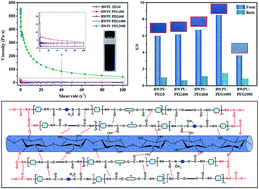
The printing process enables color paste transferring onto fabric surface under shear stress. Therefore, the viscosity variation plays a vital role in affecting the printing quality when the color paste undergoes shear stress. Here, the shear-dependent viscosity variation of BWPUs at 25 °C is investigated, as illustrated in Fig. 3. The viscosity of BWPUs drops as the shear rate increases (especially in low shear rate range), which is known as shear thinning behavior or pseudo-plastic characterization. This phenomenon is usually pronounced in medium concentrated polymer and most printing pastes. The shear thinning behavior occurs because van der Waals force or hydrogen-bond interaction are destroyed as the polymer is subjected to mechanical action, which leads to lower frictional resistance and lower viscosity.21 It is also noted that the viscosity of BWPU-PEG0/400/600 samples reduces slightly which are closer to newtonian fluid. This is understandable in consideration of the low molecular weight of these oligomer samples. However, the other two BWPUs (especially BWPU-PEG2000) show distinct shear thinning behavior, which is considered beneficial for printing fine patterns.
 |
| | Fig. 3 Dependence of viscosity on shear rate for BWPUs. | |
Viscoelastic properties including storage modulus (G′) and loss modulus (G′′) have been widely employed to investigate the microstructure and the processing conditions of thermoplastic and thermosetting polymers, polymer dispersions and polymer composites.22,23 The G′ and G′′ for BWPUs as a function of frequency at 25 °C are shown in Fig. 4 and 5. Similar frequency evolution of G′ and G′′ (moduli increasing with frequency) was observed for all BWPUs. Moreover, for BWPU-PEG0, more elastic character (G′′ < G′) in the whole frequency range can be observed. For BWPU-PEG400, G′′ is slightly smaller than G′ in low frequency range, showing more elastic behavior; however, G′′ becomes much larger than G′ in high frequency range, indicating more viscous character. Other BWPU samples all show evident viscous behavior characterized with G′′ ≫ G′. BWPU-PEG0 is simply consisted of hard segment and its chain is short and rigid, which may result in solid-like feature. However, as soft segment is added and the molecular weight increases, BWPUs are supposed to be more entangled, possibly leading to liquid-like character.
 |
| | Fig. 4 Storage modulus as a function of frequency for BWPUs. | |
 |
| | Fig. 5 Loss modulus as a function of frequency for BWPUs. | |
Printing viscosity index
PVI is usually used to correlate with the rheological performance of color pastes which has important significance on printing property. The relevant PVI of BWPUs are listed in Table 3. The results show that the PVI values of the thickener PFL and all BWPUs pastes are below 0.3, indicating they are featured with very high structural viscosity. Compared with the pure thickener PFL, PVI values of the color pastes reduce slightly. A possible explanation is that lots of intermolecular forces and hydrogen bonds between the thickener and BWPUs form unstable network structure which absorbs abundant free water molecules, thereby generating high structural viscosity. Additionally, the structural viscosity is generally associated with molecule volume and intermolecular chain entanglement as revealed in previous literature.12 Consequently, the color pastes containing high-molecular-weight BWPUs show larger structural viscosity possibly due to the entanglement of the long chains.
Table 3 Rheological property of BWPUs color pastea
| Samples |
Thickener PFL |
BWPU-PEG0 |
BWPU-PEG400 |
BWPU-PEG600 |
BWPU-PEG1000 |
BWPU-PEG2000 |
| Note: η1 and η10 present the viscosity at shear rate of 6 s−1 and 60 s−1, respectively. |
| η6 |
5.62 |
12.81 |
26.67 |
26.67 |
13.08 |
34.10 |
| η60 |
1.51 |
3.01 |
6.54 |
6.54 |
2.41 |
6.28 |
| PVI |
0.27 |
0.23 |
0.25 |
0.25 |
0.18 |
0.18 |
| STI |
−0.57 |
−0.63 |
−0.61 |
−0.61 |
−0.73 |
−0.73 |
Furthermore, BWPU-PEG1000 as representative was employed in fabric printing (Fig. 6). It can be seen that the printed patterns of cotton fabric are clear, while those of polyester are vague. This phenomenon suggests that the synthesized polymeric dyes are preferred for printing fine patterns on hydrophilic fibers.
 |
| | Fig. 6 Printed patterns of BWPU-PEG1000 (a) cotton, (b) polyester. | |
Printing performances
The printing performances of cotton fabrics printed by BWPUs are comparatively analyzed, as shown in Fig. 7. The K/S values of front and back printed fabrics are measured at the maximum wavelength 600 nm. It is found that the K/S values of front printed fabrics are improved from 6.01 to 8.50 when the molecular weight of BWPUs is increased, indicating the color strength is enhanced. However, the color strength drops to 3.63 as the cotton fabric is printed with BWPU-PEG2000. The reason for this is that the dye chromophore scatteredly distributes in the long polymer chain and its relative content is somewhat low, resulting in low color yield. In addition, high-molecular-weight BWPUs are apt to be shear thinning which is conducive to penetrating into fabrics. As a result, BWPUs containing longer chain of PEG (except BWPU-PEG0) show slightly higher penetration.
 |
| | Fig. 7 Print effects of BWPUs printed cotton fabrics. | |
Other chromatic values including L*, a*, b*, C*, and h° for printed cotton fabrics with BWPUs are summarized in Table 4. As the molecular weight of BWPUs rises up (except BWPU-PEG2000), the color lightness (L*) decreases, red color value (a*) becomes lager and blue color value (b*) turns smaller, indicating that the printed fabrics show minor more red light and blue light. Both color chroma (C*) and hues (h°) of printed fabrics increase slightly, which suggest that the colors of the printed fabrics become slightly bright.
Table 4 Chromatic values of BWPUs printed cotton fabricsa
| Printed cotton fabrics |
L* |
a* |
b* |
C* |
h° |
| Note: L* represents color lightness (L* = 0 for black and L* = 100 for white), a* is the green (−)/red (+) axis, and b* is the blue (−)/yellow (+) axis. The parameter C* (chroma) and h° (hue angle) are color saturation and degrees & ranges from 0 to 360, respectively. |
| BWPU-PEG0 |
Front |
45.32 |
−0.35 |
−36.92 |
36.92 |
269.46 |
| Back |
66.38 |
−4.14 |
−19.06 |
19.50 |
257.75 |
| BWPU-PEG400 |
Front |
45.93 |
0.16 |
−39.22 |
39.22 |
270.23 |
| Back |
70.57 |
−3.01 |
−14.69 |
14.99 |
258.43 |
| BWPU-PEG600 |
Front |
43.31 |
2.76 |
−39.71 |
39.81 |
273.98 |
| Back |
63.91 |
−2.79 |
−19.94 |
20.14 |
262.04 |
| BWPU-PEG1000 |
Front |
38.83 |
5.29 |
−39.18 |
39.53 |
277.69 |
| Back |
59.18 |
−1.48 |
−21.05 |
21.10 |
265.98 |
| BWPU-PEG2000 |
Front |
50.98 |
4.13 |
−39.14 |
39.35 |
276.02 |
| Back |
66.49 |
1.08 |
−21.24 |
21.27 |
272.91 |
Color fastness of printed fabrics
Furthermore, the color fastness of cotton fabrics printed by BWPUs at varied baking temperatures for 5 min were also discussed and shown in Table 5. The results reveal that improving baking temperature has a pronounced influence on the color fastness of all printed cotton fabrics. The printed fabrics with the same BWPU showed dry, wet rubbing fastness and discoloring fastness below 3–4 grade, 3 grade and 3–4 grade as baked at 110–130 °C, respectively. When the baking temperature was further increased to 150–170 °C, the dry, wet rubbing fastness and discoloring fastness rank in the range of 4 to 4–5 grade. This can be explained that more blocking agents were de-blocked, re-generating more NCO groups to crosslink with functional OH groups in cellulose fibers at higher baking temperature. Consequently, the combination between the polymeric dyes and fibers became much stronger, resulting in enhanced color fastness.
Table 5 Color fastness of BWPUs printed cotton fabrics
| Baking temperature (°C) |
Samples |
Rubbing fastness |
Washing fastness |
| Dry |
Wet |
Discoloring |
Staining |
| 110 |
BWPU-PEG0 |
3 |
1–2 |
3 |
4–5 |
| BWPU-PEG400 |
3 |
2 |
3 |
4–5 |
| BWPU-PEG600 |
3 |
2–3 |
3–4 |
4–5 |
| BWPU-PEG1000 |
3–4 |
2–3 |
3 |
4–5 |
| BWPU-PEG2000 |
3–4 |
3 |
3 |
4–5 |
| 130 |
BWPU-PEG0 |
3–4 |
2 |
3–4 |
4–5 |
| BWPU-PEG400 |
3–4 |
2–3 |
3–4 |
4–5 |
| BWPU-PEG600 |
3–4 |
3 |
4 |
4–5 |
| BWPU-PEG1000 |
4 |
3 |
3–4 |
4–5 |
| BWPU-PEG2000 |
3–4 |
3 |
3 |
4–5 |
| 150 |
BWPU-PEG0 |
3 |
4 |
4 |
4–5 |
| BWPU-PEG400 |
3–4 |
4 |
4 |
4–5 |
| BWPU-PEG600 |
3–4 |
4 |
4 |
4–5 |
| BWPU-PEG1000 |
4 |
4 |
4 |
4–5 |
| BWPU-PEG2000 |
4 |
4 |
4 |
4–5 |
| 170 |
BWPU-PEG0 |
4 |
3–4 |
4 |
4–5 |
| BWPU-PEG400 |
4–5 |
4–5 |
4–5 |
4–5 |
| BWPU-PEG600 |
4–5 |
4–5 |
4–5 |
4–5 |
| BWPU-PEG1000 |
4–5 |
4–5 |
4–5 |
4–5 |
| BWPU-PEG2000 |
4–5 |
4–5 |
4–5 |
4–5 |
In addition, the printed cotton fabrics with high-molecular-weight BWPUs offer slightly better color fastness than those with low-molecular-weight BWPUs under the same baking condition, which agrees with the results in the literature.24 For example, the washing fastness can be improved to 4 grade at 150 °C as PEG600/1000/2000 was substituted for BWPU-PEG0/400 as soft segment. This phenomenon may be due to formation of compact film on the printed cotton fabrics and strong forces between the BWPU film and cellulosic substrates. The low-molecular-weight BWPUs show poor film-forming property and the films are brittle and discontinuous, even powdered (e.g., BWPU-PEG0). On the other side, urethanes could form hydrogen bond association with ether groups. As a result, the BWPUs containing longer PEG soft segment show better color fastness due to abundant ether bonds and urethane groups which enhance the interaction between polyurethane chains and cellulose. The interaction between BWPUs and cotton fabrics is illustrated in Scheme 2.
 |
| | Scheme 2 Interaction between BWPUs and cotton fibers. | |
Conclusions
A series of BWPUs with varying molecular weights were prepared to investigate their characteristics for application in textile printing as both adhesive and colorant. The influences of molecular weights on thermal, rheological and printing properties of BWPUs were discussed in detail. The molecular weights of the polymeric dyes were tuned by varying the PEG soft segments. BWPU-PEG0 only presents a Tm of hard segment at 68.4 °C, whereas other BWPUs show Tg values below 0 °C which decrease with the incorporation of longer PEG chains. BWPUs with higher molecular weight show better thermal stability. The viscosity of BWPUs is sensitive to shear rate, showing shear thinning behavior. Furthermore, PVI values of all BWPUs pastes are below 0.3, indicating that they are suitable for printing fine patterns. The color fastness of the printed cotton fabrics can be enhanced as molecular weight and baking temperature increase. Consequently, BWPUs as both adhesive and colorant have a promising application in textile printing, coating and other fields.
Acknowledgements
The authors are grateful to the financial support of the National Natural Science Foundation of China (21174055), the Graduate Students Innovation Project of Jiangsu Province in China (CXZZ13_0753), and A Project Funded by the Priority Academic Program Development of Jiangsu Higher Education Institutions.
References
- L. Wang, F. Zhu, Q. Yang and D. Lu, Cellulose, 2013, 20, 2125–2135 CrossRef CAS.
- M. Elgammal, S. Prévost, R. Schweins, R. Schneider and M. Gradzielski, Colloid Polym. Sci., 2014, 292, 1487–1500 CAS.
- E. C. Buruiana and T. Buruiana, Eur. Polym. J., 2001, 37, 2505–2511 CrossRef CAS.
- C.-T. Huang and K.-N. Chen, J. Appl. Polym. Sci., 2006, 100, 1919–1931 CrossRef CAS.
- L. Tang, B. Tang and S. Zhang, Chin. J. Chem. Eng., 2011, 19, 661–665 CrossRef CAS.
- Q. B. Meng, S.-I. Lee, C. Nah and Y.-S. Lee, Prog. Org. Coat., 2009, 66, 382–386 CrossRef CAS.
- A. M. Nelson and T. E. Long, Macromol. Chem. Phys., 2014, 215, 2161–2174 CrossRef CAS.
- H. Sardon, J. M. W. Chan, R. J. Ono, D. Mecerreyes and J. L. Hedrick, Polym. Chem., 2014, 5, 3547 RSC.
- Y. Xiao, X. Fu, Y. Zhang, Z. Liu, L. Jiang and J. Lei, Green Chem., 2016, 18, 412–416 RSC.
- L. H. Bao, J. H. Sun and Q. Li, J. Polym. Res., 2014, 21, 575–581 CrossRef.
- J. Li, X. Zhang, J. Gooch, W. Sun, H. Wang and K. Wang, Polym. Bull., 2015, 72, 881–895 CrossRef CAS.
- A. Asif, L. Hu and W. Shi, Colloid Polym. Sci., 2009, 287, 1041–1049 CAS.
- D. Filip and S. Vlad, Polym. Int., 2014, 63, 1944–1952 CrossRef CAS.
- M. Elmolla and R. Schneider, Dyes Pigm., 2006, 71, 130–137 CrossRef CAS.
- H. Mao, F. Yang, C. Wang, Y. Wang, D. Yao and Y. Yin, RSC Adv., 2015, 5, 30631–30639 RSC.
- A. Eceiza, M. D. Martin, K. de la Caba, G. Kortaberria, N. Gabilondo, M. A. Corcuera and I. Mondragon, Polym. Eng. Sci., 2008, 48, 297–306 CAS.
- S. Sami, E. Yildirim, M. Yurtsever, E. Yurtsever, E. Yilgor, I. Yilgor and G. L. Wilkes, Polymer, 2014, 55, 4563–4576 CrossRef CAS.
- I. Yilgör, E. Yilgör and G. L. Wilkes, Polymer, 2015, 58, A1–A36 CrossRef.
- R. Chen, C. Zhang and M. R. Kessler, RSC Adv., 2014, 4, 35476–35483 RSC.
- P. Sun, J. Wang, X. Yao, Y. Peng, X. Tu, P. Du, Z. Zheng and X. Wang, ACS Appl. Mater. Interfaces, 2014, 6, 12495–12504 CAS.
- E. Głowińska and J. Datta, Ind. Crops Prod., 2014, 60, 123–129 CrossRef.
- G. Jaber Nasrollah, A. Hossein, S. Gity Mir Mohamad and Z. Farhad, J. Appl. Polym. Sci., 2014, 131, 41158–41166 Search PubMed.
- A. Deka and N. Dey, J. Coat. Technol. Res., 2012, 10, 305–315 CrossRef.
- S. Tabasum, M. Zuber, A. Jabbar and K. M. Zia, Carbohydr.
Polym., 2013, 94, 866–873 CrossRef CAS PubMed.
Footnote |
| † Electronic supplementary information (ESI) available. See DOI: 10.1039/c6ra14344j |
|
| This journal is © The Royal Society of Chemistry 2016 |
Click here to see how this site uses Cookies. View our privacy policy here.