Hexaphenylbenzene and hexabenzocoronene-based porous polymers for the adsorption of volatile organic compounds

Arosha A. K. Karunathilakea, James Changb, Christina M. Thompsona, Cathy U. Nguyena, Dorothy Q. Nguyena, Aditya Rajana, Anjali Sridharana, Megha Vyakaranama, Nathaniel Adegboyegab, Sung Joon Kim*b and Ronald A. Smaldone*a
aDepartment of Chemistry and Biochemistry, The University of Texas, 800 W. Campbell Rd. Richardson, Dallas, Texas 75080, USA. E-mail: ronald.smaldone@utdallas.edu
bBaylor University, Department of Chemistry & Biochemistry, 101 Bagby Ave., Waco, TX 76706, USA. E-mail: Sung_J_Kim@baylor.edu

Received 1st June 2016 , Accepted 5th July 2016

First published on 6th July 2016


Abstract

Toxic volatile organic compounds (VOCs) including benzene and toluene that are emitted from industrial chemical processes and outdoor or indoor chemical applications are harmful to the environment and threaten human health. Porous organic polymers (POPs), which have attracted much interest during the last decade as materials for gas adsorption and separation, have only recently gained attention for the adsorption of VOCs. We synthesised two POPs based on hexaphenylbenzene (HEX-POP-93) and hexabenzocoronene (HBC-POP-98) and studied the adsorption of organic vapours. Interestingly, while both POPs have moderate BET surface areas (687 and 548 m2 g−1 respectively), they both show an excellent affinity for organic vapours over water, with a high benzene adsorption capacity of 99.9 wt% for HEX-POP-93.

Introduction

Volatile organic compounds (VOCs) such as benzene, toluene, ethylbenzene, xylenes (BTEX), cyclohexane, and halogenated hydrocarbons are important industrial chemicals for a wide variety of applications including paints, cleaners, lubricants, and petrochemical fuels.1 Despite their ubiquitous use, the presence of these compounds in the atmosphere can pose a direct risk to both human health and the environment, even at low concentrations.2–5 Prolonged exposure to these compounds can cause various skin and eye irritations, asthma or even cancer.6–8 VOCs can also contribute to the formation of secondary organic aerosols, ground level ozone, and smog.9–11

Hence, during the last two decades, the removal of VOCs has gained increasing attention.12,13 Among various possible removal methods including thermal or catalytic oxidation, biofiltration, and condensation, recovery of VOCs by adsorption is considered to be an efficient, convenient and economical method. Activated carbon (AC) and its derivatives14–16 are the most studied adsorbents for this purpose. Recently, metal organic frameworks (MOFs)17–19 and porous organic polymers (POPs)20–22 have been investigated as alternative adsorbents. ACs and MOFs are good adsorbents for many gases and vapours, but the hydroscopicity of ACs and poor moisture stability of most MOFs limit their practical applications.

In contrast, POPs, which consist of purely organic structures linked via covalent bonds, are exceptionally stable in water and other corrosive solvent conditions, while maintaining their sorption capability.23 Numerous POPs have been reported over the last decade utilizing a diverse set of monomers and covalent linkages, allowing for the design of POP structures for specific applications.23–28 Our group has previously reported the synthesis and gas sorption properties of POPs and an azine COF containing the polycyclic aromatic hydrocarbon monomers hexaphenylbenzene (HEX) and hexabenzocoronene (HBC).29–31 HBC is a planar molecule with extended π-conjugation where as HEX has a propeller-like non-planar conformation due to steric interactions between neighbouring phenyl groups (Fig. 1). Because of their shape, symmetry and aromatic structure both are interesting structural motifs for the construction of organic materials.32–36 However, there are only a few examples of HEX and HBC-based porous materials, and none of them have been studied for VOCs adsorption.29–31,37–42 Herein, we are reporting the synthesis and gas/vapour adsorption properties of two new POPs synthesised via Sonogashira copolymerization of tetrakis-4-ethynyl tetraphenylmethane (TPM) with hexaiodide functionalized monomers: HEX-6I and HBC-6I (Fig. 2).


image file: c6ra14263j-f1.tif
Fig. 1 Structure of hexaphenylbenzene (HEX) and hexabenzocoronene (HBC).

image file: c6ra14263j-f2.tif
Fig. 2 Reaction conditions for the synthesis of HEX-POP-93 and HBC-POP-98.

Experimental

Materials and methods

All reagents were purchased from commercial suppliers (Sigma-Aldrich and Fisher Scientific) and used as received. Low-pressure gas and vapour adsorption experiments (up to 760 torr) were carried out on a Micromeritics ASAP 2020 analyser. Ultrahigh purity grade N2 and CO2 were obtained from Airgas Corporation and benzene, cyclohexane, toluene, and methanol were obtained from Fisher Scientific. Filtered, deionized H2O was used in adsorption measurements. Samples were degassed under dynamic vacuum for 12 h at 100 °C prior to each measurement. N2 isotherms were measured using a liquid nitrogen bath (77 K). CO2, benzene, toluene, cyclohexane, methanol, and water isotherms were measured in a room temperature water bath (298 K). CO2 isotherms were also measured using an ice water bath (273 K). Pore size distributions were calculated from the adsorption branch with the nonlocal density function theory (NLDFT) carbon slit-pore model in the Micromeritics software package. Fourier transform infrared (FT-IR) spectra were taken on a Nicolet 380 FT-IR with a Smart Orbit diamond attenuated total reflectance (ATR) cell. The thermogravimetric analyses (TGA) were performed using a TA Instrument SDT Q600 Analyzer under nitrogen atmosphere with a heating rate of 10 °C min−1 from 30 to 670 °C. Powder X-ray diffraction (PXRD) of polymers was carried out on a Bruker D8 Advance diffractometer with a sealed tube radiation source (Cu Kα, λ = 1.54184 Å), a no background sample holder, and a Lynxeye XE detector. Energy dispersive X-ray spectroscopy (EDX) analysis was carried out using scanning electron microscope (SEM) images acquired on a Zeiss SUPRA40 SEM instrument. EDX mapping was carried out using an Oxford Instruments EDX detector with Zeiss-LEO model 1530 SEM instrument. The samples were prepared on 15 mm aluminum stubs using double-sided adhesive copper tapes. The uncoated samples were imaged at a working distance of 10 mm and a voltage of 15 kV using a secondary electron detector. Solid state NMR 13C-cross-polarization at magic-angle spinning (CPMAS) and 13C-non-quaternary carbon suppression (NQS) NMR measurements were performed on 7.1-T (proton radio frequency of 300 MHz) on Bruker Avance III with a double resonance HX probe. The samples are contained in 4 mm outer diameter zirconia rotor with Kel-F end-cap spinning at 12 kHz. Proton-carbon matched ramped-amplitude cross polarization, center at 50 kHz, was performed with 2 ms contact time. The proton dipolar decoupling was achieved by applying two-pulse phase modulation (TPPM15) on the 1H channel during the acquisition. The π pulse length was 5 μs for 13C and the recycle delay was 3 s. The line broadening for spectrum was 20 Hz.

Synthetic procedures

The synthesis of tetrakis(4-ethynyl)-tetraphenylmethane (TPM),43 hexa(4-iodophenyl)benzene44 (HEX-6I) and hexakis(4-iodo)-peri-hexabenzocoronene33 (HBC-6I) were performed using previously reported protocols (Fig. S1).
HEX-POP-93. To a pressure tube containing HEX-6I (100 mg, 0.078 mmol) and TPM (48.4 mg, 0.116 mmol) was added THF (3 mL) and Et3N (1 mL). This was purged with nitrogen for 10 min before Pd(PPh3)4 (13.4 mg, 0.012 mmol) and CuI (2.2 mg, 0.012 mmol) were added and the tube was sealed. The reaction was then heated at 60 °C for 20 h. After that time a brown solid had formed which was collected by filtration, and washed with THF (100 mL), followed by hot DMSO (200 mL) until the filtrate was colorless. The polymer was then soaked in THF overnight. The solid was then collected by filtration again and washed with CH2Cl2 (200 mL), and acetone (200 mL) until the filtrate was colorless (87.4 mg, 98%).
HBC-POP-98. This procedure was adapted from a previously reported protocol for Sonogashira couplings using HBC-6I.33 To a pressure tube containing HBC-6I (60 mg, 0.047 mmol) and TPM (29.3 mg, 0.071 mmol) was added piperidine (4 mL). This was purged with nitrogen for 10 min before Pd(PPh3)4 (8.1 mg, 0.070 mmol) and CuI (1.3 mg, 0.070 mmol) were added and the tube was sealed. The reaction was then heated at 52 °C for 20 h. After that time the reaction was filtered, and the resulting light brown solid was washed with 1 M HCl (20 mL) followed by water (100 mL), hot DMSO (200 mL), CH2Cl2 (200 mL), and acetone (200 mL) until the filtrate was colorless (46.7 mg, 88%).

Results and discussion

Synthesis and characterization

HPB-POP-93 and HBC-POP-98 were synthesized from HEX-6I and HBC-6I (Fig. 2) respectively via co-polymerization with TPM. The products were insoluble in common organic solvents indicating the formation of a hyper-crosslinked skeletal structure. FT-IR spectra shows a significant reduction of alkyne C–H stretching in each of the two POPs compared to pre-polymerized TPM (Fig. S2). This confirms the polymerization and indicates that there is little unreacted alkyne in the POP samples. In order of confirm their structures two POPs were characterized with solid state NMR. Fig. 3 shows 13C-CPMAS (Fig. 3, solid line) and 13C-NQS (Fig. 3, red line) spectra. The difference spectrum, which is a result of spectral subtraction of NQS from CPMAS, is shown as dotted line in the figure. 13C-NQS selects for the quaternary carbons and carbons without proton attached. NQS and difference spectra were used to confirm chemical shift assignments. EDX analysis (Fig. S3 and Table S1) indicates there are on average 0.91 and 0.86 unreacted iodine atoms per HEX or HBC units, respectively, in the polymers. The presence of unreacted iodides and alkynes is not unexpected owing to the steric hindrance of the TPM units which cause some of the halides to become too confined to react further.45 The TGA show that the 10% weight loss of HEX-POP-93 and HBC-POP-98 take place at 417 and 359 °C, respectively (Fig. S4).
image file: c6ra14263j-f3.tif
Fig. 3 Solid state 13C-CPMAS and 13C-NQS NMR spectra.

The PXRD diffraction patterns (Fig. S5) show both POPs to have largely amorphous structures. Interestingly, HBC-POP-98 shows a broad reflection at 2θ ∼ 26°. Our previous HBC-POPs29,30 also showed this peak which is likely due to long range order arising from the face-to-face π-stacking between the planar HBC components of the polymers. Face-to-face π-stacking of HBC is expected in both the solution and solid-state. Even with a tetrahedral linker the HBC units may be able to adopt face-to-face π-stacking interactions as observed in our previous work.29,30 As expected, HEX-POP-93 did not show this peak, since the propeller shape of the HEX is less likely to participate in this kind of stacking.

Porosity measurements and gas uptake

The accessible surface areas and pore size distributions were determined for both HEX-POP-93 and HBC-POP-98 using N2 adsorption measurements at 77 K (Fig. 4). As seen in Fig. 3, HEX-POP-93 and HBC-POP-98 have similar N2 uptake capacities of 246 cm3 g−1 and 242 cm3 g−1, respectively. The N2 isotherms show rapid N2 uptake at low relative pressures (P/P0 < 0.01), which is typical for microporous materials. Pore size distributions (Fig. 5) also indicate both POPs are predominantly microporous (pore width < 2 nm), possessing two major micropore centers of approximately 1.2 nm and 1.7 nm. The Brunauer, Emmett and Teller (BET) and Langmuir surface areas for both POPs were calculated using the N2 adsorption in the low pressure range (P/P0 0.01–0.1) (Table 1). Both HPB and HBC POPs show moderate BET surface areas of 687 m2 g−1 for HEX-POP-93 and 548 m2 g−1 for HBC-POP-98. These surface areas are consistent with previously reported HEX and HBC based Sonogashira polymers.29,30,37
image file: c6ra14263j-f4.tif
Fig. 4 Nitrogen adsorption (solid symbols) and desorption (open symbols) isotherms at 77 K.

image file: c6ra14263j-f5.tif
Fig. 5 Pore size distribution (line) and cumulative pore volume (circles).
Table 1 Surface area and pore structure properties of polymers obtained by N2 adsorption
Sample name BET surface area (m2 g−1) Langmuir surface area (m2 g−1) Horvath–Kawazoe pore volume (cm3 g−1)
HEX-POP-93 687 740 0.38
HBC-POP-98 548 589 0.41


The CO2 adsorption isotherms for the two polymers were measured at 273 K and 298 K (Fig. 6). The amount of CO2 adsorbed continually increases with the pressure, implying that the CO2 adsorption by the porous network has not reached its equilibrium or saturated state in the measured pressure range. Both POPs demonstrate similar uptake capacities of CO2. HEX-POP-93 and HBC-POP-98 show CO2 uptake of 45 cm3 g−1 (8.8 wt%) and 41 cm3 g−1 (8.0 wt%), respectively at 273 K and 900 mmHg.


image file: c6ra14263j-f6.tif
Fig. 6 CO2 adsorption isotherms at 273 K (circle) and 298 K (triangle).

Vapour adsorption measurements

In order to analyse the organic vapour adsorption properties of these two novel polymers, adsorption isotherms of benzene, toluene, cyclohexane and methanol were measured at 298 K. The adsorption isotherm of water vapour at the same temperature was also measured for comparison. Both polymers exhibit good uptake of organic vapours while the water adsorption capacities are exceptionally low (1% and 0.5% for HEX-POP-93 and HBC-POP-98, respectively) (Fig. 7 and 8).
image file: c6ra14263j-f7.tif
Fig. 7 Adsorption isotherms of cyclohexane, benzene, toluene, methanol and water vapors at 298 K for (a) HEX-POP-93 and (b) HBC-POP-98.

image file: c6ra14263j-f8.tif
Fig. 8 Adsorption weight percent of cyclohexane, benzene, toluene, methanol and water vapors at 298 K for HEX-POP-93 (red) and HBC-POP-98 (blue).

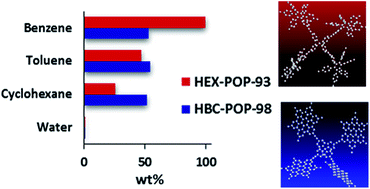
The adsorption capacities for benzene, toluene and cyclohexane with HEX-POP-93 are 99.9, 47.1 and 25.4 wt%, respectively (Fig. 7a and 8). HEX-POP-93 displays remarkably high adsorption capacity for benzene that is nearly four times that of its aliphatic counterpart cyclohexane and two times that of toluene. The sorption capacity of HEX-POP-93 for benzene compares favorably with many other phenyl, biphenyl or naphthalene-based MOFs and POPs (Tables 2 and S2). However, many of them possess higher surface areas and higher water adsorption capacities than that of HEX-POP-93. High adsorption capacity for benzene compared to low surface area can be explained by the large amount of accessible π–π interactions available between the HEX units and benzene. The adsorption capacity for toluene is less than that of benzene, probably due to the slightly larger kinetic diameter of toluene (6.1 Å) compared with benzene (5.9 Å).

Table 2 Benzene adsorption by weight percent compared with surface area for POPs in this work and other previously reported materials
Material Benzene adsorption wt% SABET (m2 g−1)
a In this work.b Calculated from given mg g−1 values.
HEX-POP-93a 99.9 687
HBC-POP-98a 53.0 548
NPI-1 (ref. 47) 90.5 721
PCN-AD48 98.0 843
PI-ADPM49 99.2 868
MPI-1 (ref. 50) 119.8 1454
PAF-1 (ref. 51) 130.6b 5600
SMPI-0 (ref. 52) 134.7 574.4


The adsorption capacities for benzene, toluene and cyclohexane with HBC-POP-98 are 53.0, 54.6 and 51.7 wt%, respectively. The surface area of HBC-POP-98 is slightly lower than HEX-POP-93, but the benzene adsorption capacity is nearly half. As indicated from the PXRD, HBC-POP-98 displays some long range order, likely arising from π–π interactions between HBC units. This arrangement could possibly reduce the amount of benzene adsorption in the polymer via π–π interactions, leading to the lower observed adsorption capacity in HBC-POP-98. The pore volume of HBC-POP-98 is slightly larger than HEX-POP-93, which may account for the slightly higher adsorption of toluene and better adsorption of cyclohexane by HBC-POP-98 than that of HEX-POP-93.

After each adsorption isotherm was measured, the samples were resubjected to the activation conditions (120 °C, vacuum, 12 h) to remove the adsorbed solvent molecules. The adsorbed solvents could be completely removed as confirmed by measuring the mass of the sample before and after the adsorption analysis. Previous work has indicated that irreversible adsorption can potentially occur, even in cases where only physisorption is expected.46 However, as the polymers are synthesized in organic solvents, we expect that if such sites were to exist in these materials, they would have become occupied during the polymerization reaction.

Interestingly, though both the polymers have poor water uptake capacities, they have good adsorption capacities for methanol (36.2 wt% and 34.0 wt% for HEX-POP-93 and HBC-POP-98, respectively). The adsorption of methanol for both is high (254 cm3 g−1 and 238 cm3 g−1) and much larger than those of other organic vapours. This may be due to methanol having the smallest size among all four organic adsorbents.

Conclusions

In summary, we have successfully synthesized two novel porous organic polymers: HEX-POP-93 and HBC-POP-98 via a Sonogashira copolymerization reaction and confirmed it to be microporous by N2 adsorption measurements. Both polymers possess moderate surface areas, but good organic vapour adsorption capacities. Moreover HEX-POP-93 exhibits excellent adsorption capacity (99.9 wt%) and preference for benzene over cyclohexane, toluene and water. HBC-POP-98 shows high adsorption capacities for benzene, toluene and cyclohexane. In contract, the water adsorption capacities were very low (<1 wt%), making these POPs promising materials for adsorbing VOCs under practical conditions where water is present.

Acknowledgements

This research was carried out with support from the University of Texas, Dallas, and the American Chemical Society Petroleum Research Fund (52906-DNI10). We would like to acknowledge Dr Gregory McCandless for assistance obtaining PXRD, Sahila Perananthan for assistance with thermal analysis, and Dr William Hockaday for assistance with NQS analysis.

References

  1. T. Salthammer, in Emissions of Volatile Organic Compounds from Products and Materials in Indoor Environments, ed. P. Pluschke, Springer Berlin Heidelberg, 2004, p. 37 Search PubMed.
  2. The original list of hazardous air pollutants http://www3.epa.gov/airtoxics/188polls.html, accessed November, 2015.
  3. A. L. Bolden, C. F. Kwiatkowski and T. Colborn, Environ. Sci. Technol., 2015, 49, 5261–5276 CrossRef CAS PubMed.
  4. R. Atkinson, Atmos. Environ., 2000, 34, 2063–2101 CrossRef CAS.
  5. D. Perez-Rial, P. Lopez-Mahia, S. Muniategui-Lorenzo and D. Prada-Rodriguez, J. Environ. Monit., 2009, 11, 1216–1225 RSC.
  6. M. Kampa and E. Castanas, Environ. Pollut., 2008, 151, 362–367 CrossRef CAS PubMed.
  7. K. Kim, S. A. Jahan and E. Kabir, Environ. Int., 2013, 59, 41–52 CrossRef CAS PubMed.
  8. C. Wu, S. Wu, Y. Wu, A. C. Cullen, T. V. Larson, J. Williamson and L.-J. S. Liu, Environ. Int., 2009, 35, 516–522 CrossRef CAS PubMed.
  9. K. M. Mullaugh, J. M. Hamilton, G. B. Avery, J. D. Felix, R. N. Mead, J. D. Willey and R. J. Kieber, Chemosphere, 2015, 134, 203–209 CrossRef CAS PubMed.
  10. R. Volkamer, J. L. Jimenez, F. San Martini, K. Dzepina, Q. Zhang, D. Salcedo, L. T. Molina, D. R. Worsnop and M. J. Molina, Geophys. Res. Lett., 2006, 33, L17811 CrossRef.
  11. M. Hallquist, J. C. Wenger, U. Baltensperger, Y. Rudich, D. Simpson, M. Claeys, J. Dommen, N. M. Donahue, C. George, A. H. Goldstein, J. F. Hamilton, H. Herrmann, T. Hoffmann, Y. Iinuma, M. Jang, M. E. Jenkin, J. L. Jimenez, A. Kiendler-Scharr, W. Maenhaut, G. McFiggans, T. F. Mentel, A. Monod, A. S. H. Prévôt, J. H. Seinfeld, J. D. Surratt, R. Szmigielski and J. Wildt, Atmos. Chem. Phys., 2009, 9, 5155–5236 CrossRef CAS.
  12. F. I. Khan and A. K. Ghoshal, J. Loss Prev. Process Ind., 2000, 13, 527–545 CrossRef.
  13. S. Ojala, N. Koivikko, T. Laitinen, A. Mouammine, P. Seelam, S. Laassiri, K. Ainassaari, R. Brahmi and R. Keiski, Catalysts, 2015, 5, 1092–1151 CrossRef CAS.
  14. M. E. Ramos, P. R. Bonelli, A. L. Cukierman, M. M. Ribeiro Carrott and P. J. Carrott, J. Hazard. Mater., 2010, 177, 175–182 CrossRef CAS PubMed.
  15. G. Baur, I. Yuranov, A. Renken and L. Kiwi-Minsker, Adsorption, 2015, 21, 479–488 CrossRef CAS.
  16. D. Das, V. Gaur and N. Verma, Carbon, 2004, 42, 2949–2962 CrossRef CAS.
  17. S. Jhung, J.-H. Lee, J. Yoon, C. Serre, G. Férey and J.-S. Chang, Adv. Mater., 2007, 19, 121–124 CrossRef CAS.
  18. K. Yang, Q. Sun, F. Xue and D. Lin, J. Hazard. Mater., 2011, 195, 124–131 CrossRef CAS PubMed.
  19. J. Cheng, P. Wang, J. Ma, Q. Liu and Y. Dong, Chem. Commun., 2014, 50, 13672–13675 RSC.
  20. D. Tan, W. Fan, W. Xiong, H. Sun, A. Li, W. Deng and C. Meng, Eur. Polym. J., 2012, 48, 705–711 CrossRef CAS.
  21. L. Zhang, X. Song, J. Wu, C. Long, A. Li and Q. Zhang, Chem. Eng. J., 2012, 192, 8–12 CrossRef CAS.
  22. H. Ren, T. Ben, F. Sun, M. Guo, X. Jing, H. Ma, K. Cai, S. Qiu and G. Zhu, J. Mater. Chem., 2011, 21, 10348–10353 RSC.
  23. R. Dawson, A. I. Cooper and D. J. Adams, Prog. Polym. Sci., 2012, 37, 530–563 CrossRef CAS.
  24. Y. Xu, S. Jin, H. Xu, A. Nagai and D. Jiang, Chem. Soc. Rev., 2013, 42, 8012–8031 RSC.
  25. Q. Liu, Z. Tang, M. Wu and Z. Zhou, Polym. Int., 2014, 63, 381–392 CrossRef CAS.
  26. T. Ben and S. Qiu, CrystEngComm, 2013, 15, 17–26 RSC.
  27. N. B. McKeown, ISRN Mater. Sci., 2012, 16 Search PubMed.
  28. Y. Byun and A. Coskun, Chem. Mater., 2015, 27, 2576–2583 CrossRef CAS.
  29. C. M. Thompson, F. Li and R. A. Smaldone, Chem. Commun., 2014, 50, 6171–6173 RSC.
  30. C. M. Thompson, G. T. McCandless, S. N. Wijenayake, O. Alfarawati, M. Jahangiri, A. Kokash, Z. Tran and R. A. Smaldone, Macromolecules, 2014, 47, 8645–8652 CrossRef CAS.
  31. S. B. Alahakoon, C. M. Thompson, A. X. Nguyen, G. Occhialini, G. T. McCandless and R. A. Smaldone, Chem. Commun., 2016, 52, 2843–2845 RSC.
  32. Z. Wang, F. Dötz, V. Enkelmann and K. Müllen, Angew. Chem., Int. Ed., 2005, 44, 1247–1250 CrossRef CAS PubMed.
  33. J. Wu, M. Baumgarten, M. G. Debije, J. M. Warman and K. Müllen, Angew. Chem., 2004, 116, 5445–5449 CrossRef.
  34. A. C. Grimsdale, J. Wu and K. Mullen, Chem. Commun., 2005, 2197–2204 RSC.
  35. L. Wang, J. Sun, Z. Huang and Q. Zheng, CrystEngComm, 2013, 15, 8511–8521 RSC.
  36. Y. M. Chabre and R. Roy, Chem. Soc. Rev., 2013, 42, 4657–4708 RSC.
  37. Q. Chen, M. Luo, T. Wang, J. Wang, D. Zhou, Y. Han, C. Zhang, C. Yan and B. Han, Macromolecules, 2011, 44, 5573–5577 CrossRef CAS.
  38. R. Short, M. Carta, C. G. Bezzu, D. Fritsch, B. M. Kariuki and N. B. McKeown, Chem. Commun., 2011, 47, 6822–6824 RSC.
  39. M. Carta, P. Bernardo, G. Clarizia, J. C. Jansen and N. B. McKeown, Macromolecules, 2014, 47, 8320–8327 CrossRef CAS.
  40. C. Zhang, L. Peng, B. Li, Y. Liu, P. Zhu, Z. Wang, D. Zhan, B. Tan, X. Yang and H. Xu, Polym. Chem., 2013, 4, 3663–3666 RSC.
  41. S. Dalapati, M. Addicoat, S. Jin, T. Sakurai, J. Gao, H. Xu, S. Irle, S. Seki and D. Jiang, Nat. Commun., 2015, 6, 7786 CrossRef CAS PubMed.
  42. P. T. K. Nguyen, H. T. D. Nguyen, H. Q. Pham, J. Kim, K. E. Cordova and H. Furukawa, Inorg. Chem., 2015, 54, 10065–10072 CrossRef CAS PubMed.
  43. P. Pandey, O. K. Farha, A. M. Spokoyny, C. A. Mirkin, M. G. Kanatzidis, J. T. Hupp and S. T. Nguyen, J. Mater. Chem., 2011, 21, 1700–1703 RSC.
  44. T. Hirose, Y. Miyazaki, M. Watabe, S. Akimoto, T. Tachikawa, K. Kodama and M. Yasutake, Tetrahedron, 2015, 71, 4714–4721 CrossRef CAS.
  45. U. H. F. Bunz, K. Seehafer, F. L. Geyer, M. Bender, I. Braun, E. Smarsly and J. Freudenberg, Macromol. Rapid Commun., 2014, 35, 1466–1496 CrossRef CAS PubMed.
  46. A. Planchais, S. Devautour-Vinot, S. Giret, F. Salles, P. Trens, A. Fateeva, T. Devic, P. Yot, C. Serre, N. Ramsahye and G. Maurin, J. Phys. Chem. C, 2013, 117, 19393–19401 CAS.
  47. G. Li and Z. Wang, J. Phys. Chem. C, 2013, 117, 24428–24437 CAS.
  48. C. Shen, H. Yu and Z. Wang, Chem. Commun., 2014, 50, 11238–11241 RSC.
  49. C. Shen, Y. Bao and Z. Wang, Chem. Commun., 2013, 49, 3321–3323 RSC.
  50. G. Li and Z. Wang, Macromolecules, 2013, 46, 3058–3066 CrossRef CAS.
  51. T. Ben, H. Ren, S. Ma, D. Cao, J. Lan, X. Jing, W. Wang, J. Xu, F. Deng, J. Simmons, S. Qiu and G. Zhu, Angew. Chem., Int. Ed., 2009, 48, 9457–9460 CrossRef CAS PubMed.
  52. Y. Yang, Q. Zhang, Z. Zhang and S. Zhang, J. Mater. Chem. A, 2013, 1, 10368–10374 CAS.

Footnote

Electronic supplementary information (ESI) available. See DOI: 10.1039/c6ra14263j

This journal is © The Royal Society of Chemistry 2016
Click here to see how this site uses Cookies. View our privacy policy here.