DOI:
10.1039/C6RA13995G
(Paper)
RSC Adv., 2016,
6, 73006-73012
Synthesis of silsesquioxane-based element-block amphiphiles and their self-assembly in water†
Received
30th May 2016
, Accepted 15th July 2016
First published on 20th July 2016
Abstract
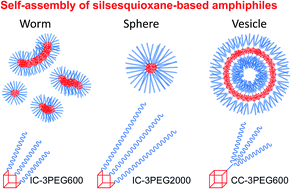
Incompletely condensed (IC) and completely condensed (CC) polyhedral oligomeric silsesquioxanes (POSSs) tethered with hydrophilic poly(ethylene glycol) (PEG) chains were synthesized and used as novel organic–inorganic amphiphilic element-block molecules toward self-assembly nanomaterials. The association behavior of these element-block molecules in water can be controlled based on their chemical structures. The eight PEG chains-containing CC-POSS, with a structure of the hydrophobic CC-POSS center covered with hydrophilic PEG chains, is hydrophilic and can molecularly dissolve in pure water. IC-POSS, which carries three PEG chains with a molecular weight of 2000, is an amphiphilic compound and forms spherical micelles consisting of a hydrophobic IC-POSS core and hydrophilic PEG chain shell. IC-POSS, which carries three PEG chains with a molecular weight of 600, forms polydisperse worm-shaped micelle aggregates, because the hydrophilic PEG chains are very short for stable dispersion of independent spherical micelles. Amphiphilic CC-POSS, which carries branched PEG chains with a molecular weight of 600, forms a vesicle structure, although IC-POSS carrying three PEG chains forms solid micelles in spite of the same PEG number and length. These results strongly indicate that the length of the PEG chain and the shape of the POSS head group play a crucial role in determining the self-assembly structures.
Introduction
Nanomaterials with advanced properties have been gaining considerable interest in wide research areas, including chemistry, physics, biology, medicine and materials science.1–3 Amphiphilic molecules with a block-type architecture are powerful building blocks to form nanomaterials with various morphologies by self-assembly.4–6 These morphologies include spherical micelles,7,8 worm-like micelles (worms),9–11 jellyfish,11 rod-like micelles,12–14 vesicles,15–19 nanotubes20 and toroids21 and can be controlled by various parameters such as molecular architecture, concentration, and solvent and space where self-assembly occurs. To date, the formation of these nano-objects via the self-assembly of molecules has been conducted using organic block-type molecules; moreover, recently, there has been increasing interest in studies using organic–inorganic hybrid block-type molecules.22–25 Organic–inorganic hybrid materials show numerous promising properties such as enhanced mechanical and thermal properties, oxidation resistance and reduced flammability due to the introduction of properties derived from the inorganic component to organic component, and these hybrid nanomaterials could be useful key blocks toward the fabrication and modification of functional materials.26
Polyhedral oligomeric silsesquioxanes (POSSs) are suitable building blocks for the construction of organic–inorganic hybrid (element-block) materials by self-assembly because of their well-defined chemical structure and high stability.27–31 Thus far, the self-assembly of amphiphilic POSSs tethered with synthetic organic tails, such as poly(ethylene glycol) (PEG),32 poly(acrylic acid),33 polystyrene,34 and diethylene glycol,35 have been investigated.36 Previous studies clearly show that the bulky cubic structure of the POSS head group has striking effects on the morphologies of the resulting self-assembly nanomaterials. In addition to the completely condensed bulky cubic POSSs (CC-POSSs), incompletely condensed POSSs (IC-POSSs), which are easily synthesized and usually used for the construction of mono-functionalized POSSs via corner capping condensation reactions, are gaining increasing interest for the synthesis of amphiphilic organic–inorganic element-block molecules.37–42 The high symmetry and crystallinity of POSSs can be drastically reduced by employing IC-POSSs, thus leading to the control of various self-assembly structures. Although the IC-POSS head group also strongly affects the self-assembly structures, there have been few investigations on the effects of structure of IC-POSS-based molecules on the resulting self-assembly nanomaterials and the relationship between the structure of the POSS head group (CC-POSS or IC-POSS), and the resulting self-assembly nanomaterials have been rarely investigated. Herein, we systematically synthesize CC- and IC-POSSs tethered with PEG chains and fabricate nanomaterials by the self-assembly of POSSs in aqueous media. The relationship between the following parameters and the final nanomaterials morphology is extensively investigated using dynamic light scattering, static light scattering and transmission electron microscopy: (i) structure of POSS head group (CC- and IC-POSSs), (ii) chain length of PEG and (iii) tethered mode of PEG to POSS head group.
Experimental
Materials
Tetrahydrofuran (THF), chloroform (CHCl3), triethylamine (NEt3) and anhydrous magnesium sulfate (MgSO4) were purchased from Nacalai Tesque (Kyoto, Japan). Distilled water was purchased from Wako Pure Chemical Industry (Osaka, Japan). Allyltrichlorosilane (1) was purchased from Tokyo Chemical Industry (Tokyo, Japan). Xylene solutions (0.1 M) of platinum(0)-1,3-divinyl-1,1,3,3-tetramethyldisiloxane (Pt(dvs)) and PEG monomethyl ethers (PEG-OMe, Mn = 550) were purchased from Sigma-Aldrich (Hattiesburg, Mississippi, USA). Heptaisobutyl POSS and amphiphilic POSSs (IC-3PEG600 and IC-3PEG2000) were synthesized following a literature procedure.42
Instruments
1H (400 MHz) and 13C (100 MHz) nuclear magnetic resonance (NMR) spectra were obtained on a Bruker DPX-400 spectrometer (Bruker Biospin GmbH, Rheinstetten, Germany) in CDCl3 using Me4Si as an internal standard. The following abbreviations are used: s, singlet; sep, septet; m, multiplet; and br, broad. Preparative high-performance liquid chromatography (HPLC) for purification was performed on an LC-6AD (SHIMADZU) with a tandem column system of two columns selected from Shodex KF-2001 and KF-2003 (SHOWADENKO, Tokyo, Japan) using chloroform as the eluent.
Light scattering measurements were performed using an Otsuka Electronics Photal DLS-7000HL light scattering spectrometer equipped with a multi-τ digital time correlator (ALV-5000E). An He–Ne laser (10.0 mW at 632.8 nm) was used as the light source. In dynamic light scattering (DLS) measurements, to obtain the relaxation time distribution, τA(τ), inverse Laplace transform (ILT) analysis was performed using the algorithm REPES.43 The relaxation rate (Γ = τ−1) is a function of θ.44 The diffusion coefficient in the limit of zero angle (D) was calculated using D = (Γ/q2)q→0. The hydrodynamic radius (Rh) is given by the Stokes–Einstein equation, Rh = kBT/(6πηD), where kB is the Boltzmann constant, T is the absolute temperature, and η is the solvent viscosity.
In static light scattering (SLS) measurements, the weight-average molecular weight (Mw), z-average radius of gyration (Rg), and the second virial coefficient (A2) values were estimated from the relation:
| |
 | (1) |
where
Rθ is the difference between the Rayleigh ratio of the solution and that of the solvent,
K = 4π
2n2(d
n/d
Cp)
2/
NAλ (
ref. 4) in which d
n/d
Cp is the refractive index increment against
Cp and
NA is Avogadro's number, and
q is the magnitude of the scattering vector. The
q value is calculated from
q = (4π
n/
λ)sin(
θ/2), where
n is the refractive index of the solvent,
λ is the wavelength of the light source (= 632.8 nm), and
θ is the scattering angle. By measuring
Rθ for a set of
Cp and
θ, values of
Mw,
Rg and
A2 were estimated from the Zimm plots. The known Rayleigh ratio of toluene was used for the calibration of the instrument. Values of d
n/d
Cp at 633 nm were determined using an Otsuka Electronics Photal DRM-3000 differential refractometer.
Transmission electron microscopy (TEM) measurements were performed on a JEOL TEM-2100 electron microscope operated at an accelerating voltage of 200 kV. Samples for TEM were prepared by placing one drop of aqueous solution on a copper grid coated with thin films of Formvar. Excess water was blotted using a filter paper. The samples were stained with sodium phosphotungstate and dried under vacuum for one day.
Synthesis and sample preparation
Tris(poly(ethylene glycol)) allylsilane (2). A dry THF solution (20 mL) of PEG-OMe (Mn = 550, 6.60 g, 12.0 mmol) and NEt3 (2.8 mL, 20 mmol) was cooled to 0 °C under N2. Subsequently, a dry THF solution (5 mL) of 1 (0.29 mL, 2.0 mmol) was added dropwise. After stirring at 0 °C for 1 h, the reaction mixture was warmed to room temperature. After stirring overnight, distilled water (4 mL) was added to the reaction mixture to quench the reaction, and the volatiles were removed in vacuo. The residue was extracted by CHCl3, and the solution was washed with distilled water. The organic layer was dried over MgSO4, and after filtration, the solvents were removed in vacuo to obtain crude products (6.71 g). Due to the limitation of the amount of loadable sample, a portion of the product (297.1 mg) was subjected to preparative HPLC to give 2 (39.5 mg, 0.0232 mmol, 26%). 1H NMR (CDCl3, 400 MHz): δ 5.85–5.76 (m, 2H), 5.00–4.89 (m, 2H) 3.92–3.80 (m, 6H), 3.79–3.54 (m, 79H), 3.38 (s, 9H), 1.72–1.67 (m, 2H) ppm (Fig. S1†). 13C NMR (CDCl3, 100 MHz): δ 132.6, 114.9, 72.6, 72.2, 71.9, 70.6, 70.5, 70.3, 62.3, 59.0, 18.0 ppm (Fig. S2†). Unfortunately, 29Si NMR spectrum could not be obtained successfully because of the overlap with peaks due to NMR tube.
Tris(poly(ethylene glycol)) CC-POSS (CC-3PEG600). To a dry THF solution of 2 (346 mg, 0.2 mmol) and heptaisobutyl POSS (327 mg, 0.4 mmol), a xylene solution of Pt(dvs) (0.1 M, 50 μL, 5 μmol) was added under N2. The reaction mixture was refluxed for 6 h. The volatiles were removed in vacuo to obtain crude products (689 mg). Due to the limitation of the amount of a loadable sample, a portion of the product (217 mg) was subjected to preparative HPLC to give CC-3PEG600 (87.6 mg, 0.035 mmol, 55%). 1H NMR(CDCl3, 400 MHz): δ 3.89–3.88 (br, 6H), 3.66–3.54 (m, 176H) 3.80 (s, 9H), 1.84 (m, 9H), 1.48 (m, 2H), 0.96 (d, J = 6.4 Hz, 42H), 0.60–0.59 (m, 16H) ppm (Fig. S3†). 13C NMR (CDCl3, 100 MHz): δ 72.5, 72.2, 70.5, 70.4, 70.3, 61.9, 61.6, 59.0, 25.7, 23.8, 22.4 ppm (Fig. S4†). Unfortunately, the 29Si NMR spectrum could not be obtained successfully because of the overlap with peaks due to the NMR tube.
Preparation of aqueous solutions. IC-3PEGH600, IC-3PEG2000, and CC-8PEG640 were directly dissolved in pure water at a polymer concentration (Cp) of 10 g L−1. Sample solutions were filtrated with a 0.2 μm pore size membrane filter. CC-3PEG600 cannot be dissolved in pure water directly and a white turbid aqueous dispersion was obtained. Optical microscopy studies indicate the formation of micrometer-sized, atypical and polydisperse particles (Fig. S5†). Therefore, CC-3PEG600 was dissolved in THF at Cp = 1 g L−1. The solution was transferred to a dialysis bag (molecular weight cut off 14
000, EIDIA Co., Ltd.), which was dialyzed against pure water for 47 h. The final Cp of the solution was 0.365 g L−1. Sample solutions were filtrated with a 0.8 μm pore size membrane filter prior to measurements.
Results and discussion
Preparation of amphiphilic POSS derivatives
A series of amphiphilic POSS derivatives having PEG chains were prepared as building blocks toward nanomaterials (Chart 1). IC-POSSs were synthesized with two PEG chain lengths (Mn = 600 and 2000), denoted as IC-3PEG600 and 2000, respectively, following our previous paper.42 CC-POSS with eight PEG chains (Mn = 640), CC-8PEG640, is a commercially available molecule. CC-POSS with three branched PEG chains (Mn = 600), CC-3PEG600, was newly synthesized, as shown in Scheme 1. Allyltrichlorosilane (1) and PEG methyl ether (Mn = 600) were reacted under basic conditions to obtain the allyl trialchoxysilane derivative 2. Platinum-catalyzed hydrosilylation45,46 of 2 and heptaisobutyl POSS were employed for the synthesis of CC-3PEG600. Purification of 2 and CC-3PEG600 was carried out via preparative HPLC to remove low molecular weight impurities. All chemical structures were determined via NMR spectroscopy.
 |
| | Chart 1 Amphiphilic POSS derivatives synthesized in this study. | |
 |
| | Scheme 1 Synthesis of CC-3PEG600. | |
DLS measurements
Water solutions of IC-3PEG600, IC-3PEG2000, and CC-8PEG640 were clear at Cp = 10 g L−1. On the other hand, the water solution of CC-3PEG600 was whitely turbid. This turbidity indicates self-assembly with sizes close to/larger than 100 nm, which can scatter visible light effectively. The prepared aqueous solutions were stable without precipitation for at least one month.
Fig. 1 shows the Rh distributions measured by DLS for the self-assembly samples in pure water. Rh and polydispersity index (PDI) values are summarized in Table 1. The Rh value for IC-3PEG600 is 16.5 nm, which is larger than that for IC-3PEG2000 (6.8 nm). The IC-3PEG series is composed of hydrophobic IC-POSS and three hydrophilic PEG chains, and therefore IC-3PEG600 and IC-3PEG2000 could form micelle-type self-assemblies composed of the hydrophobic IC-POSS core and hydrophilic PEG shells in water. The PDI values were determined to be 0.502 and 0.115 for IC-3PEG600 and IC-3PEG2000, respectively, which suggest that IC-3PEG2000 forms uniform micelles with a narrow size distribution. The larger size distribution for IC-3PEG600 could be due to the occurrence of inter-micellar aggregation. It was difficult to measure the Rh distribution for CC-8PEG640 because the scattering intensity was very low at 10 g L−1. Therefore, the concentration of CC-8PEG640 was increased to 50 g L−1, and the Rh value was determined to be 1.5 nm with a narrow DPI (= 0.101). CC-8PEG640 can dissolve molecularly without any aggregation in water because the hydrophobic CC-POSS core is surrounded with eight hydrophilic PEG chains and CC-8PEG640 can behave as a hydrophilic molecule. The Rh value and PDI for CC-3PEG600 were determined to be 73.6 nm and 0.470, respectively, which are significantly larger than that for the IC-3PEG series and CC-8PEG640. These results indicate that it forms inter-micellar aggregates, worm-shaped micelles or vesicles due to strong hydrophobic interactions with the CC-POSS part.
 |
| | Fig. 1 Typical examples of the hydrodynamic radius (Rh) distribution (intensity-distribution) for (a) IC-3PEG600 at Cp = 10 g L−1, (b) IC-3PEG2000 at Cp = 10 g L−1, (c) CC-8PEG640 at Cp = 50 g L−1 and (d) CC-3PEG600 at Cp = 0.365 g L−1 in pure water at 25 °C. | |
Table 1 Molecular weight (Mw), hydrodynamic radius (Rh), polydispersity index (PDI), and radius estimated from TEM (RTEM) for the samples in pure water
| Sample |
Mwa × 10−3 (g mol−1) |
Rh (nm) |
PDI |
RTEM (nm) |
| Molecular weight of one molecule. |
| IC-3PEG600 |
2.59 |
16.5 |
0.502 |
20.5 |
| IC-3PEG2000 |
6.79 |
6.8 |
0.155 |
12.3 |
| CC-8PEG640 |
5.54 |
1.5 |
0.101 |
— |
| CC-3PEG600 |
2.69 |
73.6 |
0.470 |
24.9 |
SLS measurements
In order to obtain further information on the structure of the nanomaterials, we conducted SLS measurements for IC-3PEG600, IC-3PEG2000, and CC-3PEG600 in pure water (Fig. 2). Table 2 summarizes the light scattering data for the samples. Aggregation number (Nagg), which is defined as the total molecular number in one aggregate, was calculated by dividing Mw(SLS) by the molecular weight of each sample. The Nagg values for IC-3PEG2000 and IC-3PEG600 were 17 and 529, respectively, and Nagg for IC-3PEG600 is higher than that for IC-3PEG2000. Nagg for IC-3PEG2000 is comparable to that for the conventional surfactant, sodium dodecyl sulfate, (Nagg ∼ 50), and it is expected that near-spherical micelles were formed.47 The higher Nagg value for IC-3PEG600 may indicate the occurrence of inter-micellar aggregation, as expected from DLS studies. The Nagg value for CC-3PEG600 was largest (Nagg = 7958) among the three samples, which again suggests the formation of inter-micellar aggregates, worm-shaped micelles or vesicle structures.
 |
| | Fig. 2 Zimm plots for (a) IC-3PEG600, (b) IC-3PEG2000, and (c) CC-3PEG600 in pure water at 25 °C. | |
Table 2 Static light scattering data for IC-3PEG600, IC-3PEG2000, and CC-3PEG600 in pure water
| Sample |
Mw(SLS) × 10−5 (g mol−1) |
Nagg |
Rg (nm) |
Rg/Rh |
A2 × 105 (mL mol g−2) |
da (g cm−3) |
| Density for the aggregate estimated from eqn (2). Rg is too small to estimate by SLS, i.e., <10 nm. |
| IC-3PEG600 |
15.6 |
529 |
37.4 |
2.27 |
2.56 |
0.138 |
| IC-3PEG2000 |
1.12 |
17 |
—b |
—b |
10.6 |
0.141 |
| CC-3PEG600 |
206 |
7958 |
73.6 |
1.00 |
−4.95 |
0.0205 |
The Rg values for IC-3PEG600 and CC-3PEG600 can be estimated to be 37.4 and 73.6 nm, respectively. Unfortunately, the Rg value for IC-3PEG2000 was very small to be estimated with SLS, i.e., less than 10 nm. The Rg/Rh value is useful to characterize the shape of molecular assemblies. The theoretical Rg/Rh value for a homogeneous hard sphere is 0.778, and this value increases with a decrease in density and polydispersity in size; for example, Rg/Rh = 1.5–1.7 for flexible linear chains and Rg/Rh ≥ 2 for a rigid rod/worm.48–50 As shown in Table 2, the Rg/Rh value for IC-3PEG600 is 2.27, which suggests the formation of polydisperse worm-shaped aggregates. The Rg/Rh value for CC-3PEG600 is 1.00, which suggests the formation of spherical self-assembly.
It is known that the solubility of molecules in a solvent decreases with a decrease in the A2 value.51,52 The solubility of IC-3PEG2000 in pure water is much higher than that of the other two samples (Table 2) because it has the longest hydrophilic PEG chains. The negative A2 value for CC-3PEG600 suggests the low solubility of these molecules in water. The density (d) of the aggregate was calculated using the following equation:
| |
 | (2) |
where
Mw(SLS) is a weight-average molecular weight for the aggregate and
NA is Avogadro's number. The
d values are summarized in
Table 2. The
d values for IC-3PEG600 and IC-3PEG2000 were almost the same value (∼0.14 g cm
−3) and that for CC-3PEG600 was determined to be 0.0205 g cm
−3, which is one order of magnitude smaller than those for IC-3PEG600 and IC-3PEG2000. These results suggest the formation of solid micelle structures for IC-3PEG600 and IC-3PEG2000 and a hollow vesicle structure for CC-3PEG600.
TEM observation
TEM is a powerful method used to characterize nanomaterial morphologies visually in the nanometer order. Fig. 3 shows TEM images of self-assemblies prepared using IC-3PEG600, IC-3PEG2000, and CC-3PEG600. Thanks to the higher electron scattering ability of the inorganic POSS component compared to the organic component, the self-assembly structures could be observed with relatively clear contrast. The average radius values estimated from TEM (RTEM) are summarized in Table 1. For the IC-3PEG600 and IC-3PEG2000 systems, the formation of solid micelles was confirmed. Interestingly, IC-3PEG600 formed polydisperse non-spherical micelles (Fig. 3a), although IC-3PEG2000 formed relatively monodisperse near-spherical micelles (Fig. 3b). As suggested by SLS studies, worm-shaped micelles could be observed in the TEM images of the IC-3PEG600 self-assembly. The number-average diameter of the near-spherical solid micelles obtained from IC-3PEG2000 was measured to be 24.6 ± 5.6 nm, which supports the formation of a POSS core and PEG shell morphology. Numerical analysis using the ChemBio3D version 14 software (MM2 calculation mode) indicates that the diameter of IC-POSS and a length of PEG with a molecular weight of 2014 are 1.7 nm and 16.0 nm, respectively, assuming that the PEG molecule has an extended chain structure (Fig. S6†). Provided that IC-3PEG2000 self-assembles to form micelles with a hydrophobic IC-POSS core and hydrophilic PEG shell morphology, the micelle diameter can be calculated to be 35.4 nm. Diameter of gyration for the PEG2000 was calculated to be 3.6 nm,53 and the diameter of the micelles is calculated to be 10.6 nm, assuming that PEG chain forms random coil conformation. The diameter determined by TEM studies exists between that calculated assuming extended and random coil conformations, which could be due to the formation of a quasi-extended conformation of PEG near the IC-POSS core and quasi-random coil conformation of PEG at a distance from the IC-POSS core. Inter-micellar aggregation of IC-POSS with longer PEG2000 chains should be restricted because of the higher excluded volume effect of the PEG chains in the shell and valid steric stabilization effect. The RTEM estimated from TEM for IC-3PEG2000 was 12.3 nm, which is larger than the Rh value (= 6.8 nm) estimated from DLS. One possibility is that the TEM sample may be in a flattened state. The other is that the IC-3PEG2000 micelles may aggregate during the preparation of the TEM samples.
 |
| | Fig. 3 TEM images of (a) IC-3PEG600, (b) IC-3PEG2000, and (c) CC-3PEG600. | |
In the case of CC-3PEG600, TEM studies confirm the formation of vesicle structures (Fig. 3c). Some vesicles had flattened ball-like morphology, which could be formed during the drying of the aqueous solutions of the near-spherical vesicles containing water inside. The wall thickness was estimated to be 7.93 ± 3.2 nm, which is reasonable for a CC-3PEG600 bilayer: numerical analysis indicates that the diameter of the CC-POSS core and length of PEG with a molecular weight of 587 are 1.8 nm and 4.8 nm, respectively, and the thickness of the bilayer can be calculated to be 13.2 nm (ESI†). RTEM (= 24.9 nm) for CC-3PEG600 is smaller than that (= 73.6 nm) estimated from DLS measurements. This difference should be attributed to the effect of the hydration degree of the PEG chains and polydispersity in size. PEG chains are hydrated and non-hydrated in water and under vacuum, respectively, and DLS is biased toward larger particles in the size distribution. IC-3PEG600 aqueous solution with high concentration such as 10 g L−1 can be prepared because IC-3PEG600 directly dissolves in water. The diluted IC-3PEG600 aqueous solution at Cp = 1 g L−1 can be prepared to measure Rh (Fig. S7†). The Rh values at Cp = 10 and 1 g L−1 were 16.5 nm and 11.6 nm, respectively. This observation suggests that the intermicellar IC-3PEG600 aggregates may be dissociated to form single micelles due to the dilution of Cp. It is difficult to prepare a CC-3PEG600 aqueous solution with a high Cp, because the concentration of the aqueous solution became 0.365 g L−1 due to the use of the dialysis method to prepare the sample solution. Therefore, the concentration dependence on Rh value of CC-3PEG600 was measured below Cp = 0.365 g L−1 (Fig. S8†). The Rh values of CC-3PEG600 were almost constantly independent of dilution, suggesting that the CC-3PEG600 vesicle was not dissociated in this Cp region.
It is worth noting that different shaped self-assemblies were formed from IC-3PEG600 and CC-3PEG600 in pure water, although they have the same number of hydrophilic PEG chains with the same chain length. In general, surfactants with large hydrophobic block tend to form vesicles rather than spherical micelles.54 Considering that both IC-3PEG600 and CC-3PEG600 have 7 i-butyl groups on the POSS center and they are expected to have similar hydrophobicity, our results should indicate that the “shape” of the POSS head group plays a crucial role in determining the self-assembly structure. CC-POSS tethered with dimethylsilane forms more stable crystals with a melting point of 130 °C than IC-POSS tethered with dimethylsilane with a melting point of −18 °C 42 and it could be expected that the difference in structure and mobility of self-assembled POSS aggregates plays a crucial role in determining the morphology of the self-assemblies of the POSS-PEG molecules.
Based on the DLS, SLS and TEM studies, conceptual illustrations for the nanomaterials formed from IC-3PEG600, IC-3PEG2000, and CC-3PEG600 in pure water are displayed in Fig. 4. IC-3PEG600 forms spherical and worm-like inter-micellar nanomaterials. IC-3PEG2000 forms simple core–shell spherical micelles and CC-3PEG600 forms vesicle structures.
 |
| | Fig. 4 Schematic of the aggregates formed from (a) IC-3PEG600, (b) IC-3PEG2000, and (c) CC-3PEG600 in pure water. | |
Conclusions
IC- and CC-POSS tethered with hydrophilic polymers can work as novel organic–inorganic amphiphilic molecules toward functional nanomaterials. The association behaviour of hydrophobic POSS-containing compounds tethered with hydrophilic PEG chains can be controlled based on their chemical structures. Eight PEG chains-containing CC-POSS, CC-8PEG640, with the structure of the hydrophobic CC-POSS part covered with hydrophilic PEG chains is hydrophilic and can molecularly dissolve in pure water. IC-3PEG2000 is an amphiphilic compound, which forms core–shell spherical micelles in pure water. The core is the hydrophobic IC-POSS, and shell is the hydrophilic PEG chains. IC-3PEG600 may form micelles; however, the hydrophilic PEG chains are too short to keep a stable dispersion of the independent spherical micelles. Therefore, inter-micellar aggregates occur due to hydrophobic interactions with the IC-POSS parts. Amphiphilic CC-3PEG600 forms vesicle structures, although IC-3PEG600 did not form vesicles in spite of the same PEG number and length. These results strongly indicate that the shape of the POSS head group plays a crucial role in determining the self-assembly structures.
The principles investigated in this study should be applicable when predicting the morphologies of POSS-based molecule self-assemblies. Micelles and vesicles consisting of organic–inorganic components at the molecular level may have potential applications in food manufacturing, cosmetic formulations and personal care products.
Acknowledgements
The authors are grateful to Dr Kenichi Sakai (Tokyo University of Science) for valuable comments on relationship between the structure of POSS-based molecules tethered with PEG and morphologies of the resulting nanomaterials. This study was also supported by a Grant-in-Aid for Scientific Research on Innovative Areas “New Polymeric Materials Based on Element-Blocks (JSPS KAKENHI Grant Numbers JP15H00767 and JP24102003)”, “Engineering Neo-Biomimetics (JSPS KAKENHI Grant Number JP15H01602)” and “Molecular Soft-Interface Science (JSPS KAKENHI Grant Numbers JP23106720 and JP23106717)”.
Notes and references
- G. A. Ozin, A. C. Arsenault and L. Cademartiri, Nanochemistry: A Chemical Approach to Nanomaterials, Royal Society of Chemistry, 2009 Search PubMed.
- The Chemistry of Nanomaterials: Synthesis, Properties and Applications, ed. C. N. R. Rao, A. Müller and A. K. Cheetham, Wiley-VCH, 2004 Search PubMed.
- Manipulation of Nanoscale Materials: An Introduction to Nanoarchitectonics, ed. K. Ariga, Royal Society of Chemistry, 2012 Search PubMed.
- N. J. Warren and S. P. Armes, J. Am. Chem. Soc., 2014, 136, 10174 CrossRef CAS PubMed.
- S. E. Mastroianni and T. H. Epps III, Langmuir, 2013, 29, 3864 CrossRef CAS PubMed.
- K. Nakashima and P. Bahadur, Adv. Colloid Interface Sci., 2006, 75, 123 Search PubMed.
- S. Forster, M. Zisenis, E. Wenz and M. Antonietti, J. Chem. Phys., 1996, 104, 9956 CrossRef.
- R. Gérard, Prog. Polym. Sci., 2003, 28, 1107 CrossRef.
- Y. Geng, P. Dalhaimer, S. Cai, R. Tsai, M. Tewari, T. Minko and D. E. Discher, Nat. Nanotechnol., 2007, 2, 249 CrossRef CAS PubMed.
- Y.-Y. Won, H. T. Davis and F. S. Bates, Science, 1999, 283, 960 CrossRef CAS PubMed.
- A. Blanazs, J. Madsen, G. Battaglia, A. J. Ryan and S. P. Armes, J. Am. Chem. Soc., 2011, 133, 16581 CrossRef CAS PubMed.
- J. B. Gilroy, T. Gadt, G. R. Whittell, L. Chabanne, J. M. Mitchels, R. M. Richardson, M. A. Winnik and I. Manners, Nat. Chem., 2010, 2, 566 CrossRef CAS PubMed.
- S. K. Patra, R. Ahmed, G. R. Whittell, D. J. Lunn, E. L. Dunphy, M. A. Winnik and I. Manners, J. Am. Chem. Soc., 2011, 133, 8842 CrossRef CAS PubMed.
- N. Petzetakis, A. P. Dove and R. K. O'Reilly, Chem. Sci., 2011, 2, 955 RSC.
- M. Antonietti and S. Forster, Adv. Mater., 2003, 15, 1323 CrossRef CAS.
- G. Battaglia and A. J. Ryan, Nat. Mater., 2005, 4, 869 CrossRef CAS PubMed.
- B. M. Discher, Y.-Y. Won, D. S. Ege, J. C.-M. Lee, F. S. Bates, D. E. Discher and D. A. Hammer, Science, 1999, 284, 1143 CrossRef CAS PubMed.
- D. E. Discher and A. Eisenberg, Science, 2002, 297, 967 CrossRef CAS PubMed.
- J. Du, Y. Tang, A. L. Lewis and S. P. Armes, J. Am. Chem. Soc., 2005, 127, 17982 CrossRef CAS PubMed.
- S. Stewart and G. Liu, Angew. Chem., Int. Ed., 2000, 39, 340 CrossRef CAS.
- H. Cui, Z. Chen, S. Zhong, K. L. Wooley and D. J. Pochan, Science, 2007, 317, 647 CrossRef CAS PubMed.
- P. Yin, D. Li and T. Liu, Chem. Soc. Rev., 2012, 41, 7368 RSC.
- D. Li, P. Yin and T. Liu, Dalton Trans., 2012, 41, 2853 RSC.
- A. Chemtob, L. Ni, C. Croutxé-Barghorn and B. Boury, Chem.–Eur. J., 2014, 20, 1790 CrossRef PubMed.
- J. Du and Y. Chen, Angew. Chem., Int. Ed., 2004, 43, 5084 CrossRef CAS PubMed.
- M. Sasidharan, S. Fujita, M. Ohashi, Y. Goto, K. Nakashima and S. Inagaki, Chem. Commun., 2011, 47, 10422 RSC.
- R. M. Laine, J. Mater. Chem., 2005, 15, 3725 RSC.
- D. B. Cordes, P. D. Lickiss and F. Rataboul, Chem. Rev., 2010, 110, 2081 CrossRef CAS PubMed.
- S. W. Kuo and F. C. Chang, Prog. Polym. Sci., 2011, 36, 1649 CrossRef CAS.
- K. Tanaka and Y. Chujo, J. Mater. Chem., 2012, 22, 1733 RSC.
- Y. Chujo and K. Tanaka, Bull. Chem. Soc. Jpn., 2015, 88, 633 CrossRef CAS.
- R. Knischka, F. Dietsche, R. Hanselmann, H. Frey, R. Mülhaupt and P. J. Lutz, Langmuir, 1999, 15, 4752 CrossRef CAS.
- W. Zhang, B. Fang, A. Walther and A. H. E. Müller, Macromolecules, 2009, 42, 2563 CrossRef CAS.
- X. Yu, S. Zhong, X. Li, Y. Tu, S. Yang, R. M. Van Horn, C. Ni, D. J. Pochan, R. P. Quirk, C. Wesdemiotis, W.-B. Zhang and S. Z. D. Cheng, J. Am. Chem. Soc., 2010, 132, 16741 CrossRef CAS PubMed.
- M. Takeda, K. Kuroiwa, M. Mitsuishi and J. Matsui, Chem. Lett., 2015, 44, 1560 CrossRef CAS.
- W.-B. Zhang, W. Yu, C.-L. Wang, H.-J. Sun, I.-F. Hsieh, Y. Li, X.-H. Dong, K. Yue, R. V. Horn and S. Z. D. Cheng, Macromolecules, 2014, 47, 1221 CrossRef CAS.
- J. F. Brown and L. H. Vogt, J. Am. Chem. Soc., 1965, 87, 4313 CrossRef CAS.
- J. F. Brown, J. Am. Chem. Soc., 1965, 87, 4317 CrossRef CAS.
- F. J. Feher, D. A. Newman and J. F. Walzer, J. Am. Chem. Soc., 1989, 111, 1741 CrossRef CAS.
- F. J. Feher, T. A. Budzichowski, R. L. Blanski, K. J. Weller and J. W. Ziller, Organometallics, 1991, 10, 2526 CrossRef CAS.
- F. J. Feher, R. Terroba and J. W. Ziller, Chem. Commun., 1999, 2309 RSC.
- H. Imoto, Y. Nakao, N. Nishizawa, S. Fujii, Y. Nakamura and K. Naka, Polym. J., 2015, 47, 609 CrossRef CAS.
- J. Jakes, Czech J. Phys., 1988, 38, 1305 CrossRef.
- W. H. Stockmayer and M. Schmidt, Pure Appl. Chem., 1982, 54, 407 CrossRef CAS.
- J. L. Speier, J. A. Webster and G. H. Barnes, J. Am. Chem. Soc., 1957, 79, 974 CrossRef CAS.
- K. Itami, K. Mitsudo, A. Nishino and J. Yoshida, J. Org. Chem., 2002, 67, 2645 CrossRef CAS PubMed.
- P. Lianos and J. Lang, J. Colloid Interface Sci., 1983, 96, 222 CrossRef CAS.
- K. Huber, S. Bantle, P. Lutz and W. Burchard, Macromolecules, 1985, 18, 1461 CrossRef CAS.
- A. Z. Akcasu and C. C. Han, Macromolecules, 1979, 12, 276 CrossRef CAS.
- T. Konishi, T. Yoshizaki and H. Yamakawa, Macromolecules, 1991, 24, 5614 CrossRef CAS.
- J. R. Quintana, M. D. Jánez, M. Villacampa and I. Katime, Macromolecules, 1995, 28, 4139 CrossRef CAS.
- M. Villacampa, E. D. Apodaca, J. R. Quintana and I. Katime, Macromolecules, 1995, 28, 4144 CrossRef CAS.
- R. Bhat and S. N. Timasheff, Protein Sci., 1992, 1, 1133 CrossRef CAS PubMed.
- J. Huang, C. Bonduelle, J. Thévenot, S. Lecommandoux and A. Heise, J. Am. Chem. Soc., 2012, 134, 119 CrossRef CAS PubMed.
Footnote |
| † Electronic supplementary information (ESI) available: Numerical analysis of molecules using a ChemBio3D ver 14 software. See DOI: 10.1039/c6ra13995g |
|
| This journal is © The Royal Society of Chemistry 2016 |
Click here to see how this site uses Cookies. View our privacy policy here.