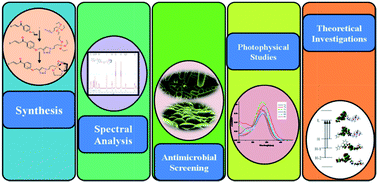
Heteroaryl chalcone allied triazole conjugated organosilatranes: synthesis, spectral analysis, antimicrobial screening, photophysical and theoretical investigations

Gurjaspreet Singh*a, Aanchal Aroraa, Sunita Rania, Indresh Kumar Mauryab, Darpandeep Aulakhc and Mario Wriedt*c
aDepartment of Chemistry and Centre of Advanced Studies, Panjab University, Chandigarh, 160014, India. E-mail: gjpsingh@pu.ac.in
bDepartment of Microbial Biotechnology, Panjab University, Chandigarh, 160014, India
cFunctional Materials Design & X-ray Diffraction Lab, Department of Chemistry & Biomolecular Science, Clarkson University, Box 5810, Potsdam, NY 13699, USA. E-mail: mwriedt@clarkson.edu

Received 29th May 2016 , Accepted 15th August 2016

First published on 18th August 2016


Abstract

A series of heteroaryl tethered triazole conjoined organosilatranes were synthesized following an archetypal click reaction. The reaction sequence follows the initial generation of acetylinic Schiff bases (3a–3c, 4a–4c) which undergo 3 + 2 cycloaddition with 3-azidopropyltriethoxysilane (3-AzPTES) to give organotriethoxysilanes (5a–5c, 6a–6c) which were ultimately amended into their five-membered organosilatrane descendants (7a–7c, 8a–8c). The synthesized compounds were fully characterized by IR, 1H, 13C, mass spectrometry techniques and elemental analysis. Also, the complete structure elucidation of 7a and 8a was achieved via X-ray crystallography. The photophysical studies of the entire sequence of organosilatranes were performed in solvents of varying polarity to gain an insight into their solvatochromic behaviour. The results reveal that the molecules display trivial positive solvatochromism suggesting a high dipole moment of the excited state that has also been concurrently supported by the results derived from the Lippert–Mataga equation. Further, the molecular structures and photophysical properties of the organosilatranes were also studied theoretically by applying the IEFPCM model that mimics the desired solvent in combination with the TDDFT approach. Theoretical results were found to be in absolute accord with the experimental values. Additionally, several DFT based reactivity descriptors are reported presenting a meticulous view into the relative stability and reactivity of the chalcone linked organosilatranes. Further, all the organosilatranes were screened for their physiochemical and pharmacokinetic delineation by computational analysis and then investigated for their antimicrobial activities against different strains of bacteria and fungi. Compounds 8b and 8c were found to be the most potent antibacterial and antifungal agents, respectively.

Introduction

Silatranes, intracomplex compounds of triethanolamine with an unusual trigonal bipyramidal structure are attracting ample attention owing to their peculiar stereoelectronic and molecular structures.1–3 The silatranes possess a unique transannular interaction between silicon and bridgehead nitrogen that is responsible for their strange behaviour.4 The potential application in the fields of medicine, agriculture and material science has stimulated much research into silatranes.5,6 Despite the amount of research in this area, the science of silatranes is still not fully understood. The derivatization of silatranes from their alkoxy analogues is beneficial both from the material and stability perspectives.7 The modification of the axial substituent of the silatranyl moiety has a remarkable effect on the structure and properties of the resulting species.8

Chalcones are naturally occurring imperative molecular scaffolds consisting of two phenyl or other heterocyclic rings joined by a three carbon unsaturated chain and a carbonyl group.9 The idea of incorporating chalcones stems from their diverse biological activities, interesting optical and spectral properties and synthetic feasibility.10–13 Their high sensitivity to UV irradiation endows them with varied applications in the field of material science such as non-linear optics (NLO), electrochemical sensing, polymer physics and in holographic recording technologies.14–16 Non-linear optical materials having 5-membered heteroaromatic rings are of benign importance in medicinal and organic chemistry and are thus considered as impressive candidates to be introduced at the π-conjugation bridge of the chalcone template.17 Such materials show potential applications in photonic technologies, data processing, manipulation of electric fields and optoelectronics.

1,2,3-Triazoles are key heterocycles with broad applications in biochemical, pharmaceutical and material sciences.18–20 They display certain indubitable properties like metabolic stability, hydrogen bonding ability and strong dipole moment which improve their water solubility and binding to biomolecular targets.21–23 Besides their tremendous bioactivity, they play an important role in synthetic organic chemistry, combinatorial chemistry and as bioisosteres for amides and peptides.24,25 Consequently, 1,2,3-triazoles are advantageously employed as metal sensors, optical brighteners, photostabilizers and anti-corrosive agents.26,27 Sharpless–Huisgen's click chemistry has emerged as a robust strategy for tethering alkynes and azides to provide 1,2,3-triazoles. High efficiency, mild reaction conditions, superior functional group tolerance and quantitative reaction yields have led to the expeditious research in this field.28–30

In continuation to our studies in atrane chemistry,31 we have introduced the heteroaryl chalcones with the triazole linker as the exocyclic substituent of the silatrane cage. The objective behind this work is to augment the activity of chalcones by pairing them with other potential elements of silatranes and 1,2,3-triazoles. Additionally, the absorption behaviour of the chalcone functionality is imparted to the virtually non-active silatranyl moiety.32 The synthesized compounds were characterized by IR, 1H, 13C, elemental analysis, mass spectrometry techniques and complete structure elucidation of 7a and 8a by single crystal X-ray crystallography. Furthermore, absorption and emission studies were carried out shedding light on the photophysical behaviour of the synthesized compounds. The photophysical properties of these charge transfer compounds strongly depend on the solvent polarity that prompted us to bring about the solvatochromic investigations in solvents of varying polarity.33 Harnessing solvatochromism is constructive for variety of applications in the field of molecular optics and designing of new materials.34 To further support the practical results, theoretical analysis applying time dependent density functional theory (TDDFT) approach coupled to other solvation approaches is carried out. Additionally, theoretical studies were aimed at providing an extensive outlook of electronic distribution, DFT based molecular descriptors and the most important electronic transitions involved in the absorption process. Hitherto for the first time, the solvatochromic behaviour of the chalcone linked triazole conjugated organosilatranes is intricately discussed from the theoretical perspective upholding the experimental data. Taking into consideration the diverse therapeutic activities of chalcones, 1,2,3-triazoles and silatranes, the synthesized templates were also screened for their antibacterial and antifungal activities.

Experimental

Materials and equipments

Propargyl bromide (80% in toluene) (Aldrich), o/m/p-hydroxyacetophenones (AVRA), 2-furaldehyde (AVRA), 2-thiophenecarboxaldehyde (AVRA), potassium carbonate (Thomas), sodium hydroxide (LOBA Chemie), sodium sulphate (Finar), sodium azide (AVRA), 3-chloropropyltriethoxysilane (Aldrich), bromotris(triphenylphosphine)copper(I) [CuBr(PPh3)3] (Aldrich), triethanolamine (LOBA Chemie), potassium hydroxide (Finar) were used as received. The organic solvents were dried according to standard procedures. 3-Azidopropyltriethoxysilane (3-AzPTES) was synthesized from 3-chloropropyltriethoxysilane by known procedure from literature (ESI).35

Infrared spectrum was obtained as neat on a Thermo Scientific Fischer spectrometer. The NMR spectra (1H and 13C) were recorded on a JEOL (AL 300 MHz) and BRUKER (400 MHz) spectrometer using CDCl3 as internal reference and chemical shifts were reported relative to tetramethylsilane. J values are given in Hz. The following abbreviations are used: s, singlet; d, doublet; q, quartet; t, triplet; m, multiplet. Melting points were measured in a Mel Temp II device using sealed capillaries and were uncorrected. CHN analysis was obtained on Perkin Elmer Model 2400 CHNS elemental analyzer and Thermo Scientific Flash 2000 organic elemental analyzer. Mass spectral measurements (TOF MS ESp 1.38 eV) were carried out on Waters Q-TOF Micro Mass spectrometer. Electronic spectra were measured using JASCO V-530 double beam spectrophotometer and RF 5301 fluorescence spectrophotometer. Column chromatography was performed with E. Merck silica gel (Kieselgel 60, 230–400 mesh). Analytical thin layer chromatography was performed employing 0.2 mm coated commercial silica gel plates (E. Merck, DC-Aluminium sheets, Kieselgel 60 F254).

The quantum mechanical calculations were performed on the Gaussian 03 series programs.36 Geometries were optimized at Density Functional Theory (DFT), using Becke's three parameter hybrid exchange functional and the correlation functional of Lee, Yang and Parr (B3LYP) with basis set at 6-31G(d) level.

General procedure for the synthesis of alkyne terminated acetophenones 2a–2c

1.0 equiv. of o/m/p-hydroxyacetophenone 1a–1c was dissolved in a minimum amount of DMF followed by the addition of 1.5 equiv. of anhydrous K2CO3 as catalyst. 1.3 equiv. of propargyl bromide was subsequently added dropwise to the suspension cooled to 0 °C and the resulting mixture was then allowed to stir at 25 °C for 16 h. The reaction was monitored by TLC and on consumption of starting materials, quenched by ice cold water resulting into the formation of precipitate. The precipitate so obtained was filtered, washed with water and recrystallized from methanol to afford the crystalline product (2a–2c) in excellent yield. The spectroscopic data of the resulting compounds correlate well with the literature reports.

General procedure for the synthesis of acetylinic chalcones 3a–3c, 4a–4c

1.0 equiv. of the acetylinic acetophenone 2a–2c was dissolved in methanol (10 ml) with the subsequent addition of 5 ml of methanolic NaOH (3% w/v) leaving the resulting mixture to stir at 25 °C for 30 min. 1.0 equiv. of the commercially available substituted aldehyde was separately dissolved in 10 ml of methanol and added dropwise to the above reaction mixture. And the mixture was left under stirring for a period of 16 h at the same temperature. The reaction was monitored by TLC and on consumption of starting materials, quenched by ice cold water resulting into the formation of precipitate (for 3a, 3c, 4a–4c). The precipitate so obtained was filtered, washed with water and recrystallized from methanol to afford the crystalline product. For the reaction in which no precipitation occurred (for 3b), the product mixture was diluted with water, neutralized with 10% HCl and then extracted with ethyl acetate (20 ml) and the combined organic layers were washed twice with ice cold water (2 × 20 ml). The organic layer was dried over anhydrous Na2SO4 and the solvent was evaporated under reduced pressure to afford viscous brown oil. The crude was then subjected to column chromatography with EtOAc/hexane 3[thin space (1/6-em)]:[thin space (1/6-em)]7, as eluent. The spectroscopic data of the alkyne terminated heteroaryl chalcones 3a–3c and 4a–4c is listed below.
(E)-3-(Furan-2-yl)-1-(4-(prop-2-yn-1-yloxy)phenyl)prop-2-en-1-one 3a. The quantities used were as: 1a (1.0 g, 5.74 mmol), 2-furaldehyde (0.55 g, 5.74 mmol). Yellow solid, yield: 97%, 1.40 g, 5.57 mmol, M.P.: 134–136 °C. IR (neat, cm−1): 1176, 1264 (O–CH2), 1654 (C[double bond, length as m-dash]O), 2104 (C[triple bond, length as m-dash]C), 3204 (C[triple bond, length as m-dash]C–H). 1H NMR (300 MHz, CDCl3): δ = 2.43 (t, J = 2.4 Hz, 1H, C[triple bond, length as m-dash]CH), 4.69 (d, J = 2.4 Hz, 2H, OCH2), 6.42 (m, 1H, H8), 6.61 (d, J = 3.2 Hz, 1H, H9), 6.96 (d, J = 8.9 Hz, 2H, H2, H6), 7.37 (d, J = 15.3 Hz, 1H, Hα), 7.43 (s, 1H, H7), 7.49 (d, J = 15.3 Hz, 1H, Hβ), 7.97 (d, J = 8.9 Hz, 2H, H3, H5). 13C NMR (75 MHz, CDCl3): δ = 56.0 (OCH2), 76.5 (C[triple bond, length as m-dash]CH), 78.7 (C[triple bond, length as m-dash]CH), 112.9 (C8), 115.0 (C9), 115.9 (C2, C6), 130.3 (Cα), 131.0 (C4), 133.0 (C3, C5), 134.8 (Cβ), 144.8 (C7), 148.3 (C10), 169.9 (C1), 185.4 (C[double bond, length as m-dash]O). Anal. calcd for C16H12O3: C, 76.18; H, 4.79. Found: C, 76.07; H, 4.62.
(E)-3-(Furan-2-yl)-1-(2-(prop-2-yn-1-yloxy)phenyl)prop-2-en-1-one 3b. The quantities used were as: 1b (1.0 g, 5.74 mmol), 2-furaldehyde (0.55 g, 5.74 mmol). Brown oil, yield: 95%, 1.38 g, 5.46 mmol. IR (neat, cm−1): 1172, 1256 (O–CH2), 1651 (C[double bond, length as m-dash]O), 2124 (C[triple bond, length as m-dash]C), 3274 (C[triple bond, length as m-dash]C–H). 1H NMR (300 MHz, CDCl3): δ = 2.42 (s, 1H, C[triple bond, length as m-dash]CH), 4.72 (s, 2H, OCH2), 6.40–6.58 (m, 2H, H2, H8), 7.00–7.54 (m, 7H, H3–H5, H7, H9, Hα, Hβ). 13C NMR (75 MHz, CDCl3): δ = 56.8 (OCH2), 76.6 (C[triple bond, length as m-dash]CH), 78.6 (C[triple bond, length as m-dash]CH), 112.9 (C9), 113.9 (C8), 115.7 (C2), 122.3 (C6, C4), 125.2 (Cα), 129.8 (C5), 131.2 (Cβ), 133.0 (C3), 145.0 (C7), 152.5 (C10), 156.6 (C1), 191.9 (C[double bond, length as m-dash]O).
(E)-3-(Furan-2-yl)-1-(3-(prop-2-yn-1-yloxy)phenyl)prop-2-en-1-one 3c. The quantities used were as: 1c (1.0 g, 5.74 mmol), 2-furaldehyde (0.55 g, 5.74 mmol). Yellow solid, yield: 93%, 1.35 g, 5.34 mmol, M.P.: 126–128 °C. IR (neat, cm−1): 1175, 1266 (O–CH2), 1654 (C[double bond, length as m-dash]O), 2124 (C[triple bond, length as m-dash]C), 3268 (C[triple bond, length as m-dash]C–H). 1H NMR (300 MHz, CDCl3): δ = 2.42 (m, 1H, C[triple bond, length as m-dash]CH), 4.68 (d, J = 2.2 Hz, 2H, OCH2), 6.43 (m, 1H, H8), 6.63 (m, 1H, H9), 7.09 (m, 1H, H2), 7.30–7.37 (m, 2H, H3, H6), 7.43–7.48 (m, 2H, H5, Hα), 7.51–7.59 (m, 2H, H7, Hβ). 13C NMR (75 MHz, CDCl3): δ = 56.4 (OCH2), 76.4 (C[triple bond, length as m-dash]CH), 78.8 (C[triple bond, length as m-dash]CH), 113.2 (C8), 114.6 (C9), 116.6 (C6), 120.1 (C3), 120.6 (C2), 122.4 (Cα), 130.2 (C4), 131.2 (C5), 145.3 (Cβ), 145.4 (C7), 152.5 (C10), 158.6 (C1), 189.4 (C[double bond, length as m-dash]O). Anal. calcd for C16H12O3: C, 76.18; H, 4.79. Found: C, 76.13; H, 4.72.
(E)-1-(4-(Prop-2-yn-1-yloxy)phenyl)-3-(thiophen-2-yl)prop-2-en-1-one 4a. The quantities used were as: 2a (1.0 g, 5.74 mmol), 2-thiophenealdehyde (0.64 g, 5.74 mmol). Yellow solid, yield: 96%, 1.48 g, 5.51 mmol, M.P.: 133–135 °C. IR (neat, cm−1): 1174, 1264 (O–CH2), 1650 (C[double bond, length as m-dash]O), 2103 (C[triple bond, length as m-dash]C), 3201 (C[triple bond, length as m-dash]C–H). 1H NMR (300 MHz, CDCl3): δ = 2.43 (s, 1H, C[triple bond, length as m-dash]CH), 4.69 (d, J = 2.2 Hz, 2H, OCH2), 6.90–7.01 (m, 3H, H2, H6, H8), 7.19–7.31 (m, 3H, H7, H9, Hα), 7.83 (d, J = 15.4 Hz, 1H, Hβ), 7.94 (d, J = 8.8 Hz, 2H, H3, H5). 13C NMR (75 MHz, CDCl3): δ = 56.0 (OCH2), 76.5 (C[triple bond, length as m-dash]CH), 78.2 (C[triple bond, length as m-dash]CH), 115.0 (C2, C6), 121.0 (C9), 128.5 (Cα), 128.6 (C8), 131.0 (C4), 132.0 (C3, C5, C7), 132.3 (Cβ), 136.8 (C10), 168.7 (C1), 187.6 (C[double bond, length as m-dash]O). Anal. calcd for C16H12O2S: C, 71.62; H, 4.51. Found: C, 71.53; H, 4.52.
(E)-1-(2-(Prop-2-yn-1-yloxy)phenyl)-3-(thiophen-2-yl)prop-2-en-1-one 4b. The quantities used were as: 2b (1.0 g, 5.74 mmol), 2-thiophenealdehyde (0.64 g, 5.74 mmol). Yellow solid, yield: 92%, 1.42 g, 5.28 mmol, M.P.: 124–126 °C. IR (neat, cm−1): 1164, 1274 (O–CH2), 1654 (C[double bond, length as m-dash]O), 2132 (C[triple bond, length as m-dash]C), 3301 (C[triple bond, length as m-dash]C–H). 1H NMR (400 MHz, CDCl3): δ = 2.45 (t, J = 2.2 Hz, 1H, C[triple bond, length as m-dash]CH), 4.69 (d, J = 2.3 Hz, 2H, OCH2), 6.95–7.02 (m, 3H, H2, H4, H8), 7.13 (d, J = 15.6 Hz, 1H, Hα), 7.21 (d, J = 3.4 Hz, 1H, H9), 7.29 (d, J = 5.0 Hz, 1H, H7), 7.38 (t, J = 8.6 Hz, 1H, H3), 7.55 (d, J = 7.6 Hz, 1H, H5), 7.66 (d, J = 15.5 Hz, 1H, Hβ). 13C NMR (75 MHz, CDCl3): δ = 56.9 (OCH2), 76.8 (C[triple bond, length as m-dash]CH), 78.7 (C[triple bond, length as m-dash]CH), 114.0 (C2), 122.5 (C4), 126.7 (C5), 128.7 (Cα), 128.9 (C8), 130.7 (C9), 131.4 (C7), 131.8 (C6), 133.2 (Cβ), 136.1 (C3), 141.5 (C10), 156.7 (C1), 191.8 (C[double bond, length as m-dash]O). Anal. calcd for C16H12O2S: C, 71.62; H, 4.51. Found: C, 71.58; H, 4.43.
(E)-1-(3-(Prop-2-yn-1-yloxy)phenyl)-3-(thiophen-2-yl)prop-2-en-1-one4c. The quantities used were as: 2c (1.0 g, 5.74 mmol), 2-thiophenecarboxaldehyde (0.64 g, 5.74 mmol). Yellow solid, yield: 94%, 1.45 g, 5.39 mmol. M.P.: 126–128 °C. IR (neat, cm−1): 1177, 1273 (O–CH2), 1651 (C[double bond, length as m-dash]O), 2120 (C[triple bond, length as m-dash]C), 3260 (C[triple bond, length as m-dash]C–H). 1H NMR (400 MHz, CDCl3): δ = 2.49 (t, J = 2.4 Hz, 1H, C[triple bond, length as m-dash]CH), 4.70 (d, J = 2.4 Hz, 2H, OCH2), 7.02 (dd, J = 5.0, 3.7 Hz, 1H, H8), 7.13 (dd, J = 8.2, 2.6 Hz, 1H, H2), 7.23 (d, J = 15.3 Hz, 1H, Hα), 7.29 (d, J = 3.4 Hz, 1H, H9), 7.34–7.38 (m, 2H, H4, H6), 7.53–7.57 (m, 2H, H3, H7), 7.87 (d, J = 15.3 Hz, 1H, Hβ). 13C NMR (75 MHz, CDCl3): δ = 56.4 (OCH2), 76.5 (C[triple bond, length as m-dash]CH), 78.7 (C[triple bond, length as m-dash]CH), 114.7 (C6), 120.6 (C3), 121.4 (C2), 122.3 (Cα), 128.9 (C8), 129.2 (C9), 130.2 (C5), 132.5 (C7), 137.8 (C4), 140.3 (Cβ), 141.2 (C10), 158.6 (C1), 189.4 (C[double bond, length as m-dash]O). Anal. calcd for C16H12O2S: C, 71.62; H, 4.51. Found: C, 71.54; H, 4.47.

General procedure for the synthesis of heteroaryl chalcone linked organotriethoxysilanes 5a–5c, 6a–6c

As a general procedure, 1.0 equiv. of acetylinic chalcone (3a–3c, 4a–4c) was taken in a two-neck round bottomed flask to which was added 1[thin space (1/6-em)]:[thin space (1/6-em)]1 solvent mixture of THF/Et3N and the mixture was stirred for 15 min at room temperature. Then, 1.0 equiv. of 3-AzPTES was added dropwise followed by catalyst [CuBr(PPh3)3] (0.01 mmol) loading. The reaction mixture was allowed to stir at 60 °C for 5 h after which the solvents were evaporated under reduced pressure followed by the addition of hexane. The reaction mixture was then filtered and concentration of filtrate under reduced pressure afforded the viscous brown silane in excellent yield.
(E)-3-(Furan-2-yl)-1-(4-((1-(3-(triethoxysilyl)propyl)-1H-1,2,3-triazol-4-yl)methoxy)phenyl)prop-2-en-1-one 5a. The quantities used were as: 3a (1.0 g, 3.96 mmol), 3-AzPTES (0.98 ml, 3.96 mmol). Brown oil, yield: 92%, 1.82 g, 3.65 mmol. IR (neat, cm−1): 747, 1073 (Si–O), 1652 (C[double bond, length as m-dash]O), 2971 (C[double bond, length as m-dash]C–H). 1H NMR (300 MHz, CDCl3): δ = 0.47 (m, 2H, –SiCH2–), 1.14 (t, J = 7.0 Hz, 9H, –OCH2CH3), 1.96 (m, 2H, –CCH2C–), 3.71 (q, J = 7.0 Hz, 6H, –OCH2CH3), 4.29 (t, J = 7.1 Hz, 2H, –N3CH2–), 5.22 (s, 2H, –OCH2–), 6.40–6.42 (m, 1H, H8), 6.59 (d, J = 3.1 Hz, 1H, H9), 6.97 (d, J = 8.7 Hz, 2H, H2, H6), 7.35 (d, J = 15.4 Hz, 1H, Hα), 7.42 (s, 1H, Tz-H), 7.46 (d, J = 15.4 Hz, 1H, Hβ), 7.51 (m, 1H, H7), 7.94 (d, J = 8.7 Hz, 2H, H3, H5). 13C NMR (75 MHz, CDCl3): δ = 7.8 (SiCH2), 18.7 (OCH2CH3), 24.5 (CCH2C), 52.6 (N3CH2), 58.7 (OCH2CH3), 62.7 (OCH2), 112.8 (C9), 114.9 (C8), 115.1 (C2, C6), 123.6, 143.8 (Tz-C), 129.0 (Cα), 131.1 (C4), 131.2 (C3, C5), 132.1 (Cβ), 144.6 (C7), 152.5 (C10), 162.4 (C1), 187.3 (C[double bond, length as m-dash]O). MS: m/z (relative abundance (%)): 522 (61).
(E)-3-(Furan-2-yl)-1-(2-((1-(3-(triethoxysilyl)propyl)-1H-1,2,3-triazol-4-yl)methoxy) phenyl)prop-2-en-1-one 5b. The quantities used were as: 3b (1.0 g, 3.96 mmol), 3-AzPTES (0.98 ml, 3.96 mmol). Brown oil, yield: 89%, 1.76 g, 3.53 mmol. IR (neat, cm−1): 750, 1073 (Si–O), 1630 (C[double bond, length as m-dash]O), 2974 (C[double bond, length as m-dash]C–H). 1H NMR (300 MHz, CDCl3): δ = 0.43 (m, 2H, –SiCH2–), 1.14 (t, J = 7.0 Hz, 9H, –OCH2CH3), 1.78 (m, 2H, –CCH2C–), 3.71 (q, J = 7.2 Hz, 6H, –OCH2CH3), 4.15 (t, J = 7.1 Hz, 2H, –N3CH2–), 5.26 (s, 2H, –OCH2–), 6.43–6.59 (d, 2H, H8, H2), 6.96–7.07 (m, 2H, H9, H4), 7.20–7.29 (m, 2H, Hα, Tz-H), 7.35–7.44 (m, 2H, H3, H5), 7.52–7.57 (m, 2H, H7, Hβ). 13C NMR (101 MHz, CDCl3): δ = 7.5 (SiCH2), 18.3 (OCH2CH3), 24.1 (CCH2C), 52.5 (N3CH2), 58.5 (OCH2CH3), 63.1 (OCH2), 112.4 (C8), 113.0 (C9), 114.6 (C2), 121.4 (C4), 122.8, 140.5 (Tz-C), 126.3 (C5), 128.6 (Cα), 131.6 (C6), 133.2 (Cβ), 135.1 (C3), 143.6 (C7), 151.2 (C10), 156.9 (C1), 191.7 (C[double bond, length as m-dash]O).
(E)-3-(Furan-2-yl)-1-(3-((1-(3-(triethoxysilyl)propyl)-1H-1,2,3-triazol-4-yl)methoxy) phenyl)prop-2-en-1-one 5c. The quantities used were as: 3c (1.0 g, 3.96 mmol), 3-AzPTES (0.98 ml, 3.96 mmol). Brown oil, yield: 91%, 1.80 g, 3.61 mmol. IR (neat, cm−1): 790, 1075 (Si–O), 1660 (C[double bond, length as m-dash]O), 2975 (C[double bond, length as m-dash]C–H). 1H NMR (400 MHz, CDCl3): δ = 0.49 (m, 2H, –SiCH2–), 1.10 (t, J = 7.0 Hz, 9H, –OCH2CH3), 1.93 (m, 2H, –CCH2C–), 3.69 (q, J = 7.0 Hz, 6H, –OCH2CH3), 4.26 (t, J = 7.0 Hz, 2H, –N3CH2–), 5.14 (s, 2H, –OCH2–), 6.38–6.61 (m, 2H, H2, H8), 7.09 (d, J = 8.1 Hz, 1H, H4), 7.28 (t, J = 7.8 Hz, 1H, H3), 7.32 (s, 1H, TzH), 7.41–7.53 (m, 4H, Hα, H9, Hβ, H7), 7.61 (s, 1H, H6). 13C NMR (101 MHz, CDCl3): δ = 6.4 (SiCH2), 17.2 (OCH2CH3), 23.2 (CCH2C), 51.4 (N3CH2), 57.4 (OCH2CH3), 61.1 (OCH2), 111.7 (C8), 113.0 (C9), 115.3 (C6), 118.1 (C3), 118.6 (C2), 120.3, 138.5 (Tz-C), 127.5 (Cα), 128.7 (C5), 129.7 (C4), 130.9 (Cβ), 144.0 (C7), 150.5 (C10), 157.5 (C1), 188.2 (C[double bond, length as m-dash]O).
(E)-3-(Thiophen-2-yl)-1-(4-((1-(3-(triethoxysilyl)propyl)-1H-1,2,3-triazol-4-yl)methoxy) phenyl)prop-2-en-1-one 6a. The quantities used were as: 4a (1.0 g, 3.72 mmol), 3-AzPTES (0.92 ml, 3.72 mmol). Brown oil, yield: 93%, 1.78 g, 3.46 mmol. IR (neat, cm−1): 754, 1078 (Si–O), 1654 (C[double bond, length as m-dash]O), 2974 (C[double bond, length as m-dash]C–H). 1H NMR (300 MHz, CDCl3): δ = 0.48 (m, 2H, –SiCH2–), 1.14 (t, J = 6.9 Hz, 9H, –OCH2CH3), 1.95 (m, 2H, –CCH2C–), 3.71 (q, J = 6.8 Hz, 6H, –OCH2CH3), 4.29 (s, 2H, –N3CH2–), 5.20 (s, 2H, –OCH2–), 6.95–6.99 (m, 3H, H2, H6, H8), 7.19–7.29 (m, 3H, H7, H9, Hα), 7.54 (s, 1H, Tz-H), 7.77–7.93 (m, 3H, H3, H5, Hβ). 13C NMR (75 MHz, CDCl3): δ = 8.0 (SiCH2), 18.9 (OCH2CH3), 24.7 (CCH2C), 52.9 (N3CH2), 59.0 (OCH2CH3), 62.8 (OCH2), 115.3 (C2, C6), 121.2, 143.9 (Tz-C), 123.2 (C9), 128.8 (Cα), 131.2 (C8), 131.3 (C4), 132.2 (C7), 137.0 (C3, C5), 141.4 (Cβ), 143.9 (C10), 162.6 (C1), 187.9 (C[double bond, length as m-dash]O).
(E)-3-(Thiophen-2-yl)-1-(2-((1-(3-(triethoxysilyl)propyl)-1H-1,2,3-triazol-4-yl)methoxy) phenyl)prop-2-en-1-one 6b. The quantities used were as: 4b (1.0 g, 3.72 mmol), 3-AzPTES (0.92 ml, 3.72 mmol). Brown oil, yield: 88%, 1.69 g, 3.28 mmol. IR (neat, cm−1): 759, 1102 (Si–O), 1642 (C[double bond, length as m-dash]O), 2966 (C[double bond, length as m-dash]C–H). 1H NMR (400 MHz, CDCl3): δ = 0.53 (m, 2H, –SiCH2–), 1.20 (t, J = 7.0 Hz, 9H, –OCH2CH3), 1.91 (m, 2H, –CCH2C–), 3.79 (q, J = 7.0 Hz, 6H, –OCH2CH3), 4.19 (t, J = 7.3 Hz, 2H, –N3CH2–), 5.31 (s, 2H, –OCH2–), 7.04–7.08 (m, 2H, H4, H8), 7.14 (d, J = 8.3 Hz, 1H, H2), 7.22 (d, J = 15.5 Hz, 1H, Hα), 7.28 (d, J = 3.5 Hz, 1H, H9), 7.38–7.50 (m, 2H, H3, H7), 7.57 (s, 1H, Tz-H), 7.65 (d, J = 7.6 Hz 1H, H5), 7.73 (d, J = 15.6 Hz, 1H, Hβ). 13C NMR (101 MHz, CDCl3): δ = 7.4 (SiCH2), 18.2 (OCH2CH3), 24.0 (CCH2C), 52.4 (N3CH2), 58.4 (OCH2CH3), 63.0 (OCH2), 112.9 (C2), 121.4 (C4), 122.7 (C5), 126.2, 143.5 (Tz-C), 128.3 (C8), 128.5 (C9), 129.3 (Cα), 130.5 (C6), 131.5 (C7), 133.1 (C3), 135.1 (Cβ), 140.4 (C10), 140.4 (C5), 156.8 (C1), 191.7 (C[double bond, length as m-dash]O).
(E)-3-(Thiophen-2-yl)-1-(3-((1-(3-(triethoxysilyl)propyl)-1H-1,2,3-triazol-4-yl)methoxy) phenyl)prop-2-en-1-one 6c. The quantities used were as: 4c (1.0 g, 3.72 mmol), 3-AzPTES (0.92 ml, 3.72 mmol). Brown oil, yield: 92%, 1.77 g, 3.43 mmol. IR (neat, cm−1): 722, 1076 (Si–O), 1659 (C[double bond, length as m-dash]O), 2976 (C[double bond, length as m-dash]C–H). 1H NMR (300 MHz, CDCl3): δ = 0.54 (m, 2H, –SiCH2–), 1.14 (t, J = 6.9 Hz, 9H, –OCH2CH3), 1.97 (m, 2H, –CCH2C–), 3.74 (q, J = 7.0 Hz, 6H, –OCH2CH3), 4.31 (t, J = 7.2 Hz, 2H, –N3CH2–), 5.21 (s, 2H, –OCH2–), 7.02–7.04 (m, 1H, H8), 7.15 (d, J = 8.1 Hz, 1H, H2), 7.20 (s, 1H, Tz-H), 7.24 (d, J = 15.3 Hz, 1H, Hα), 7.30–7.37 (m, 2H, H3, H4), 7.53–7.57 (m, 2H, H7, H9), 7.60 (s, 1H, H6), 7.88 (d, J = 15.3 Hz, 1H, Hβ). 13C NMR (101 MHz, CDCl3): δ = 7.5 (SiCH2), 18.4 (OCH2CH3), 24.3 (CCH2C), 52.6 (N3CH2), 58.6 (OCH2CH3), 62.2 (OCH2), 114.2 (C6), 119.6 (C2), 120.7, 143.6 (Tz-C), 121.5 (C4), 128.5 (Cα), 129.0 (C9), 129.8 (C8), 132.1 (C4), 132.3 (C7), 137.5 (Cβ), 139.6 (C10), 140.4 (C5), 158.6 (C1), 189.6 (C[double bond, length as m-dash]O).

General procedure for the synthesis of organosilatranes 7a–7c, 8a–8c

1.0 equiv. of organotriethoxysilane (5a–5c, 6a–6c) was taken in a two necked round bottomed flask fitted with a dean stark assembly. 30 ml of toluene was added to the silane followed by the slow addition of 1.0 equiv. of triethanolamine and catalytic amount of KOH. The mixture was refluxed for 4 h in order to azeotropically remove ethanol formed during the reaction. Then the solvent was removed under vacuum followed by the addition of 15 ml hexane. The contents were left for overnight stirring after which the product was isolated as yellow solid which was filtered under nitrogen and dried under vacuum.
(E)-3-(Furan-2-yl)-1-(4-((1-(3-(silatranyl)propyl)-1H-1,2,3-triazol-4-yl)methoxy)phenyl) prop-2-en-1-one 7a. The quantities used were as: 5a (1.0 g, 2.0 mmol), triethanolamine (0.30 g, 2.0 mmol). Yellow solid, yield: 90%, 0.92 g, 1.80 mmol. M.P.: 210–212 °C. IR (neat, cm−1): 579 (N→Si), 745, 1087 (Si–O), 949 (C–C), 1133, 1230 (O–CH2), 1326 (CH2–N), 1648 (C[double bond, length as m-dash]O), 2945 (C[double bond, length as m-dash]C–H). 1H NMR (300 MHz, CDCl3): δ = 0.29 (m, 2H, –SiCH2–), 1.89 (m, 2H, –CCH2C–), 2.70 (t, J = 5.7 Hz, 6H, –CH2N–), 3.64 (t, J = 5.7 Hz, 6H, –OCH2CH2–), 4.25 (t, J = 7.2 Hz, 2H, –N3CH2–), 5.21 (s, 2H, –OCH2–), 6.42–6.60 (m, 2H, H8, H9), 6.98 (d, J = 8.8 Hz, 2H, H2, H6), 7.25 (s, 1H, Tz-H), 7.37 (d, J = 15.3 Hz, 1H, Hα), 7.47 (d, J = 15.4 Hz, 1H, Hβ), 7.55 (m, 1H, H7), 7.94 (d, J = 8.8 Hz, 2H, H3, H5). 13C NMR (75 MHz, CDCl3): δ = 12.7 (SiCH2), 25.9 (CCH2C), 50.7 (CH2N), 53.1 (OCH2CH2), 57.2 (CH2CH2N), 62.0 (OCH2), 112.3 (C9), 114.5 (C8), 115.4 (C2, C6), 119.1, 142.5 (Tz-C), 122.5 (Cα), 129.7 (C4), 130.5 (C3, C5), 131.2 (Cβ), 144.4 (C7), 151.8 (C10), 162.0 (C1), 187.5 (C[double bond, length as m-dash]O). Anal. calcd for C25H30N4O6Si: C, 58.81; H, 5.92; N, 10.97. Found: C, 58.78; H, 5.82; N, 10.93. MS: m/z (relative abundance (%)): 511 (100).
(E)-3-(Furan-2-yl)-1-(2-((1-(3-(silatranyl)propyl)-1H-1,2,3-triazol-4-yl)methoxy)phenyl) prop-2-en-1-one 7b. The quantities used were as: 5b (1.0 g, 2.0 mmol), triethanolamine (0.30 g, 2.0 mmol). Yellow solid, yield: 86%, 0.88 g, 1.72 mmol. M.P.: 195–197 °C. IR (neat, cm−1): 575 (N→Si), 748, 1085 (Si–O), 942 (C–C), 1117, 1264 (O–CH2), 1332 (CH2–N), 1639 (C[double bond, length as m-dash]O), 2933 (C[double bond, length as m-dash]C–H). 1H NMR (300 MHz, CDCl3): δ = 0.27 (m, 2H, –SiCH2–), 1.82 (m, 2H, –CCH2C–), 2.72 (t, J = 5.5 Hz, 6H, –CH2N–), 3.66 (t, J = 5.8 Hz, 6H, –OCH2CH2–), 4.11 (m, 2H, –N3CH2–), 5.25 (s, 2H, –OCH2–), 6.42–6.58 (m, 2H, H2, H8), 6.95–7.13 (m, 2H, H4, H9), 7.26–7.42 (m, 3H, H3, H5, Hα), 7.48 (s, 1H, Tz-H), 7.54–7.59 (m, 2H, H7, Hβ). 13C NMR (75 MHz, CDCl3): δ = 13.3 (SiCH2), 26.5 (CCH2C), 51.2 (CH2N), 53.6 (OCH2CH2), 57.8 (CH2CH2N), 63.5 (OCH2), 112.4 (C8), 113.0 (C9), 113.4 (C2), 121.7 (C4), 122.9, 143.6 (Tz-C), 129.3 (Cα), 131.0 (C5), 132.5 (C6), 133.5 (C3), 137.8 (Cβ), 145.2 (C7), 152.2 (C10), 166.1 (C1), 189.7 (C[double bond, length as m-dash]O). Anal. calcd for C25H30N4O6Si: C, 58.81; H, 5.92; N, 10.97. Found: C, 58.74; H, 5.86; N, 10.91. MS: m/z (relative abundance (%)): 533 (100), 511 (82).
(E)-3-(Furan-2-yl)-1-(3-((1-(3-(silatranyl)propyl)-1H-1,2,3-triazol-4-yl)methoxy)phenyl) prop-2-en-1-one 7c. The quantities used were as: 5c (1.0 g, 2.0 mmol), triethanolamine (0.30 g, 2.0 mmol). Yellow solid, yield: 88%, 0.90 g, 1.76 mmol. M.P.: 198–200 °C. IR (neat, cm−1): 581 (N→Si), 758, 1094 (Si–O), 934 (C–C), 1121, 1277 (O–CH2), 1308 (CH2–N), 1659 (C[double bond, length as m-dash]O), 2933 (C[double bond, length as m-dash]C–H). 1H NMR (400 MHz, CDCl3): δ = 0.29 (m, 2H, –SiCH2–), 1.94 (m, 2H, –CCH2C–), 2.83 (t, J = 5.8 Hz, 6H, –CH2N–), 3.71 (t, J = 5.8 Hz, 6H, –OCH2CH2–), 4.30 (m, 2H, –N3CH2–), 5.21 (s, 2H, –OCH2–), 6.55 (dd, J = 3.4, 1.8 Hz, 1H, H8), 6.84 (d, J = 3.4 Hz, 1H, H9), 7.23 (d, J = 9.2 Hz, 1H, H2), 7.40–7.45 (m, 2H, H4, Hα), 7.55 (d, J = 15.4 Hz, 1H, Hβ), 7.59–7.62 (m, 3H, H3, H7, Tz-H), 7.84 (s, 1H, H6). 13C NMR (101 MHz, CDCl3): δ = 13.1 (SiCH2), 26.1 (CCH2C), 50.2 (CH2N), 52.8 (OCH2CH2), 56.8 (CH2CH2N), 61.5 (OCH2), 112.4 (C8), 113.7 (C9), 116.1 (C3), 118.8 (C6), 119.2 (C2), 120.7, 142.1 (Tz-C), 123.1 (Cα), 129.4 (C5), 130.3 (C4), 139.0 (Cβ), 144.9 (C7), 151.0 (C10), 158.2 (C1), 188.5 (C[double bond, length as m-dash]O). Anal. calcd for C25H30N4O6Si: C, 58.81; H, 5.92; N, 10.97. Found: C, 58.75; H, 5.87; N, 10.94. MS: m/z (relative abundance (%)): 511 (100), 533 (95).
(E)-3-(Thiophen-2-yl)-1-(4-((1-(3-(silatranyl)propyl)-1H-1,2,3-triazol-4-yl)methoxy) phenyl)prop-2-en-1-one 8a. The quantities used were as: 6a (1.0 g, 1.94 mmol), triethanolamine (0.29 g, 1.94 mmol). Yellow solid, yield: 90%, 1.77 g, 3.35 mmol. M.P.: 224–226 °C. IR (neat, cm−1): 577 (N→Si), 757, 1086 (Si–O), 938 (C–C), 1133, 1238 (O–CH2), 1368 (CH2–N), 1640 (C[double bond, length as m-dash]O), 2937 (C[double bond, length as m-dash]C–H). 1H NMR (300 MHz, CDCl3): δ = 0.30 (m, 2H, –SiCH2–), 1.90 (m, 2H, –CCH2C–), 2.71 (t, J = 5.7 Hz, 6H, –CH2N–), 3.65 (t, J = 5.7 Hz, 6H, –OCH2CH2–), 4.26 (t, J = 7.2 Hz, 2H, –N3CH2–), 5.21 (s, 2H, –OCH2–), 6.99 (d, J = 8.5 Hz, 2H, H2, H6), 7.26–7.32 (m, 4H, Hα, H7–H9), 7.57 (s, 1H, Tz-H), 7.83 (d, J = 15.2 Hz, 1H, Hβ), 7.93 (d, J = 8.5 Hz, 2H, H3, H5). 13C NMR (75 MHz, CDCl3): δ = 13.4 (SiCH2), 26.5 (CCH2C), 51.3 (CH2N), 53.7 (OCH2CH2), 57.8 (CH2CH2N), 62.6 (OCH2), 115.1 (C2, C6), 121.0, 141.0 (Tz-C), 123.2 (Cα), 128.8 (C8), 130.5 (C9), 131.1 (C4), 132.2 (C7), 136.8 (C3, C5), 139.3 (Cβ), 143.2 (C10), 167.1 (C1), 189.9 (C[double bond, length as m-dash]O). Anal. calcd for C25H30N4O5SSi: C, 57.01; H, 5.74; N, 10.64. Found: C, 56.95; H, 5.80; N, 10.56. MS: m/z (relative abundance (%)): 527 (100).
(E)-3-(Thiophen-2-yl)-1-(2-((1-(3-(silatranyl)propyl)-1H-1,2,3-triazol-4-yl)methoxy) phenyl)prop-2-en-1-one 8b. The quantities used were as: 6b (1.0 g, 1.94 mmol), triethanolamine (0.29 g, 1.94 mmol). Yellow solid, yield: 84%, 1.65 g, 3.13 mmol. M.P.: 200–202 °C. IR (neat, cm−1): 575 (N→Si), 749, 1083 (Si–O), 944 (C–C), 1119, 1286 (O–CH2), 1370 (CH2–N), 1637 (C[double bond, length as m-dash]O), 2937 (C[double bond, length as m-dash]C–H).1H NMR (400 MHz, DMSO): δ = 0.18 (m, 2H, –SiCH2–), 1.83 (m, 2H, –CCH2C–), 2.60 (t, J = 5.9 Hz, 6H, –CH2N–), 3.66 (t, J = 5.9 Hz, 6H, –OCH2CH2–), 4.20 (t, J = 7.5 Hz, 2H, –N3CH2–), 5.34 (s, 2H, –OCH2–), 7.13 (t, J = 7.1 Hz, 1H, H4), 7.19–7.21 (m, 1H, H8), 7.30 (d, J = 15.6 Hz, 1H, Hα), 7.42–7.46 (m, 1H, H2), 7.55 (d, J = 3.5 Hz, 1H, H9), 7.60–7.68 (m, 2H, H7, H3), 7.68 (s, 1H, Tz-H), 7.73 (d, J = 15.6 Hz, 1H, Hβ), 8.09–8.14 (m, 1H, H5). 13C NMR (101 MHz, DMSO): δ = 14.0 (SiCH2), 26.7 (CCH2C), 49.9 (CH2N), 52.7 (OCH2CH2), 57.1 (CH2CH2N), 61.9 (OCH2), 113.5 (C2), 120.9, 141.7 (Tz-C), 124.2 (Cα), 125.4 (C4), 128.4 (C5), 128.5 (C8), 129.7 (C9), 130.0 (C6), 132.3 (C7), 133.4 (C3), 134.8 (Cβ), 139.8 (C10), 156.8 (C1), 190.3 (C[double bond, length as m-dash]O). Anal. calcd for C25H30N4O5SSi: C, 57.01; H, 5.74; N, 10.64. Found: C, 56.93; H, 5.71; N, 10.53. MS: m/z (relative abundance (%)): 527 (100).
(E)-3-(Thiophen-2-yl)-1-(3-((1-(3-(silatranyl)propyl)-1H-1,2,3-triazol-4-yl)methoxy) phenyl)prop-2-en-1-one 8c. The quantities used were as: 6c (1.0 g, 1.94 mmol), triethanolamine (0.29 g, 1.94 mmol). Yellow solid, yield: 88%, 1.73 g, 3.28 mmol. M.P.: 214–216 °C. IR (neat, cm−1): 584 (N→Si), 767, 1082 (Si–O), 935 (C–C), 1119, 1254 (O–CH2), 1353 (CH2–N), 1662 (C[double bond, length as m-dash]O), 2937 (C[double bond, length as m-dash]C–H). 1H NMR (400 MHz, CDCl3): δ = 0.43 (m, 2H, –SiCH2–), 2.01 (m, 2H, –CCH2C–), 2.81 (t, J = 5.8 Hz, 6H, –CH2N–), 3.76 (t, J = 5.8 Hz, 6H, –OCH2CH2–), 4.34 (t, J = 7.5 Hz, 2H, –N3CH2–), 5.26 (s, 2H, –OCH2–), 7.10 (m, 1H, H2), 7.22 (d, J = 8.2 Hz, 1H, H4), 7.31 (d, J = 15.4 Hz, 1H, Hα), 7.36–7.44 (m, 3H, Tz-H, H8, H9), 7.59–7.64 (m, 2H, H7, H3), 7.68 (s, 1H, H6), 7.94 (d, J = 15.4 Hz, 1H, Hβ). 13C NMR (101 MHz, CDCl3): δ = 13.4 (SiCH2), 26.4 (CCH2C), 50.1 (CH2N), 52.7 (OCH2CH2), 57.0 (CH2CH2N), 61.4 (OCH2), 113.9 (C6), 119.3 (C3), 120.3 (C2), 120.8, 142.0 (Tz-C), 123.7 (Cα), 128.3 (C8), 129.5 (C9), 129.6 (C5), 132.1 (C7), 136.6 (C4), 139.0 (Cβ), 139.7 (C10), 158.3 (C1), 188.3 (C[double bond, length as m-dash]O). Anal. calcd for C25H30N4O5SSi: C, 57.01; H, 5.74; N, 10.64. Found: C, 56.98; H, 5.64; N, 10.57. MS: m/z (relative abundance (%)): 565 (100), 527 (62).

X-ray crystallography

Data collections were performed on single crystals coated with Paratone-N oil and mounted on Kapton loops. Single crystal X-ray data of all compounds were collected on a Bruker Kappa Apex II X-ray diffractometer outfitted with a Mo X-ray source (sealed tube, λ = 0.71073 Å) and an APEX II CCD detector equipped with an Oxford Cryosystems Desktop Cooler low temperature device. The APEX-II software suite was used for data collection, cell refinement, and reduction.37 Absorption corrections were applied using SADABS.38 Space group assignments were determined by examination of systematic absences, E-statistics, and successive refinement of the structures. Structure solutions were performed with direct methods using SHELXT-2014, and structure refinements were performed by least-squares refinements against |F|2 followed by difference Fourier synthesis using SHELXL-2014.39–41 All non-hydrogen atoms were refined with anisotropic displacement parameters. The C–H atoms were positioned with idealized geometry and were refined with fixed isotropic displacement parameters [Ueq(H) = −1.2Ueq(C)] using a riding model with dC–H = 0.95 Å (aromatic) and 0.99 Å (methylene). In 8a, the carbons of –CH2CH2O– units are strongly disordered over two positions: C2 and C2′, C4 and C4′, C6 and C6′ with site occupancy factors of 0.6 and 0.4. Details of the structure determination are given in Table 1. Selected bond lengths and angles are reported in Table S1. Single crystals of 7a and 8a were found to diffract very weakly, which in particular impacted the high-resolution data. Additional comments on handling these data sets are given in ESI.
Table 1 Selected crystal data and details on the structure determinations from single crystal data for compound 7a and 8a
Compound 7a 8a
Formula C25H28N4O6Si C25H24N4O5SSi
MW [g mol−1] 508.60 520.63
Wavelength 0.71073 0.71073
Crystal system Monoclinic Monoclinic
Space group P21/c P21/c
a [Å] 15.465(4) 16.2440(17)
b [Å] 14.136(4) 13.0978(10)
c [Å] 11.506(3) 11.7360(12)
α [deg] 90 90
β [deg] 90.140(7) 90.611(5)
γ [deg] 90 90
V3] 2515.4(11) 2496.8(4)
T [K] 170(2) 170.15
Z 4 4
ρcalc [g cm−3] 1.343 1.385
μ [mm−1] 0.141 0.222
F(000) 1072 1088
Crystal size 0.24 × 0.15 × 0.12 0.12 × 0.09 × 0.06
Theta ranges for data collection (°) 1.317–28.453 1.254–28.298
Min/max transmission 0.978/0.986 0.977/0.989
Reflection collected/unique 35[thin space (1/6-em)]925/6281 14[thin space (1/6-em)]297/6075
Data/restraints/parameters 6281/0/313 6075/0/334
Final R indices [I > 2σ(I)] R1 = 0.0762 R1 = 0.0609
wR2 = 0.1858 wR2 = 0.1268
R indices (all data) R1 = 0.3394 R1 = 0.2461
wR2 = 0.2804 wR2 = 0.1669
GOF 0.774 1.028
Δρmaxρmin [e Å−3] 0.339/−0.253 0.346/−0.269
CCDC number 1450057 1450058


CCDC-1450057 (7a) and 1450058 (8a) contain the supplementary crystallographic data for this paper. The detailed crystallographic data and structure refinement parameters for 7a and 8a are summarized in Table 1.

Biological assays

Microbial strains and growth media. The bacterial and fungal strains used in the study were procured from National Collection of Pathogenic Fungi (NCPF), Post Graduate Institute of Medical Education and Research (PGIMER), Chandigarh and Institute of Microbial Technology (MTCC-IMTECH), Chandigarh. Human embryonic kidney cells (Hek-293) were obtained from American type culture collection (ATCC-CRL1573). The pathogenic bacterial strains Escherichia coli (E. coli) MTCC2961, Staphylococcus aureus (S. aureus) MTCC3160, Enterococcus faecalis (E. faecalis) MTCC 439, Vibrio cholera (V. cholera) MTCC 3906, Streptococcus pyogenes (S. pyogenes) MTCC 442, Listeria monocytogens (L. monocytogens) MTCC839 were cultured in Muller Hinton broth (MHB, HiMedia, India). The pathogenic fungal strains Candida albicans (C. albicans) NCPF400034, Candida glabrata (C. glabrata) MTCC3019, Candida krusei (C. krusei) NCPF44002, Candida parapsilosis (C. parapsilosis) NCPF450002, Candida keyfer (C. keyfer) NPCPF410004, Candida tropicalis (C. tropicalis) NPCPF420007, Cryptococcus neoformans (C. neoformans) NCPF250316 were cultured in yeast extract-peptone-dextrose (YEPD broth, HiMedia, India) and RPMI 1640 media (HiMedia, India). For agar plates, bacteriological agar (2.5% w/v, HiMedia, India) was added to the medium. The strains were stored with glycerol (15%) at −80 °C as frozen stocks. The cells were freshly revived on respective agar plates from the stock before each experiment.

Antimicrobial assay

Antibacterial activity. All the bacterial strains (E. coli, S. aureus, E. faecalis, V. cholera, S. pyogenes, L. monocytogens) were grown overnight and were diluted in Mueller Hinton Broth (MHB) to a cell density of 105 cells. 100 μl of this culture and compounds (7a–7c and 8a–8c) (250–0.112 μM) dissolved in DMSO, were added into the 96-well flat bottomed microtitre plate (Tarson, India). The plate was incubated for 24 h at 37 °C. The optical density was 600 nm and visual was measured using microplate reader (BioRed, Model 680). The minimum inhibitory concentration (MIC) was defined as the concentration of the antimicrobial agent that inhibits >99% growth. Rifampicin, a standard drug was used as a positive control.42

Antifungal activity

The antifungal activities of compounds against fungal species (C. albicans, C. glabrata, C. krusei, C. parapsilosis, C. keyfer, C. tropicalis and C. neoformans) were performed according to the Clinical and Laboratory Standards Institute (CLSI, formerly NCCL) in RPMI-1640 medium by broth microdilution methods. The concentrations of compounds (7a–7c and 8a–8c) ranged between 250 μM and 0.97 μM. The 96 well flat bottom microtitre plates were incubated without shaking at 30 °C for 48 h. The visual and optical density at OD600 nm was used to evaluate growth inhibition (Thermo microplate reader, Model 680). Amphotericin B, a known antifungal drug was used as a positive control.43

Cytotoxicity assay

To determine the cell viability effect of the synthesized compounds, the MTT (3-(4,5)-dimethylthiazol-2-yl)-2,5-diphenyl tetrazolium bromide assay was used for toxicity of compounds (7a–7c, 8a–8c) against human embryonic kidney cells (Hek-293) and human cervical cancer cells (HeLa). The cells (104 per well) were culture in RPMI 1640 medium containing with 10% foetal bovin serum in 96 well microtitre plate at 37 °C for overnight. The next day, compounds (7a–7c, 8a–8c) at conc. 250 μM, 125 μM, 62.5 μM, 31.5 μM, 15.75 μM, 7.37 μM and 3.68 μM were added to the cells in separate wells and incubated at 37 °C for 18 h. Further, the cells were incubated for 3 h in 20 μl of MTT solution (5 mg ml−1) in PBS. 120 μl supernatant was removed and 100 μl DMSO was added, and the resulting suspension was mixed to dissolve the formosan crystals. The percent viability of cells was calculated by the ratio of OD570 of treated cells to the OD570 of untreated cells. 10% DMSO and untreated cells were taken as positive and negative control respectively for cytotoxicity assay.44

Results and discussion

Synthesis of heteroaryl chalcone substituted organosilatranes

Amongst various competitive protocols for the synthesis of 1,2,3-triazoles, Huisgen (3 + 2) copper catalysed azide–alkyne cycloaddition (CuAAC) is elegantly suited for the purpose. Firstly, acetylinic acetophenones (2a–2c) were synthesized by the O-alkylation of the hydroxy group of 2/3/4-hydroxyacetophenones (1a–1c) with propargyl bromide as the alkylating agent and anhydrous potassium carbonate as catalyst in dimethylformamide as solvent medium. These terminal alkynes were then allowed to undergo base catalysed aldol condensation with 2-furaldehyde and 2-thiophenecarboxaldehyde to finally derive to heteroaryl acetylinic chalcones (3a–3c/4a–4c). Alkyne terminated chalcones were then subjected to a sturdy ligation with 3-AzPTES in THF/Et3N solvent medium and [CuBr(PPh3)3] as catalyst resulting into triazole allied organotriethoxysilanes (5a–5c/6a–6c) in which the azide group of 3-AzPTES becomes part of the triazole core. The last modification was the introduction of hypervalent silicon in conjunction with chalcone and triazole moiety by the transesterification reaction of the triethoxysilanes resulting into corresponding organosilatranes (7a–7c/8a–8c) (Scheme 1).
image file: c6ra13949c-s1.tif
Scheme 1 Reagents and conditions: (i) propargyl bromide, K2CO3, DMF, 25 °C, 16 h; (ii) substituted aldehydes, methanolic NaOH, rt, 24 h; (iii) NaN3, DMF, 90 °C, 4 h; (iv) CuBr(PPh3)3, THF/Et3N, 60 °C, 5 h; (v) triethanolamine, KOH, toluene, reflux, 5 h.

Spectral characteristics of acetylinic chalcones, triazole-linked organotriethoxysilanes and organosilatranes

1H and 13C NMR spectra of the synthesized compounds are well consistent with the predicted values and completely support the desired synthesis. Hα and Hβ corresponding to the vinylic protons of the chalcone moiety appear in the NMR spectra of all the compounds in the range of 7.13–7.48 ppm and 7.46–7.94 ppm respectively with high J values of around 15.2–15.6 Hz confirming the presence of trans alkene bond. Acetylinic proton of the alkyne terminated chalcones (3a–3c, 4a–4c) springs from 2.42–2.49 ppm to 7.20–7.57 ppm upon cyclisation with 3-AzPTES. Also, the –OCH2 protons of alkynes exhibit a shift from 4.68–4.72 ppm to 5.14–5.31 ppm affirming the formation of cyclised 1,2,3-triazole linked organotriethoxysilanes (5a–5c, 6a–6c). The ethoxy groups of the silanes display a triplet and a quartet in the range 1.10–1.20 ppm and 3.69–3.79 ppm respectively. The two triplets around 2.60–2.83 ppm and 3.64–3.76 ppm in the NMR spectra of organosilatranes (7a–7c, 8a–8c) are attributed to the –NCH2 and –OCH2 protons of the silatranyl fragment.

The shifts analogous to the 1H spectra appear in the 13C spectra. The carbonyl carbon and the vinylic carbons Cα and Cβ of the enone functionality show up at 185.4–191.9 ppm, 122.3–130.3 ppm and 130.9–145.3 ppm respectively. The acetylinic carbons –C[triple bond, length as m-dash]CH (3a–3c, 4a–4c) in the range of 76.4–76.8 ppm and 78.2–78.8 ppm shift to 119.1–126.2 ppm and 138.5–143.9 ppm on switching into organotriethoxysilanes (5a–5c, 6a–6c). The carbons –OCH2CH3 and –OCH2 defining the ethoxy groups appear at 17.2–18.9 ppm and 57.4–59.0 ppm respectively which then budge towards 52.7–53.7 ppm and 56.8–57.8 ppm assigned to –OCH2 and –NCH2 carbons of final organosilatranes (7a–7c, 8a–8c).

Photophysical studies

Absorption spectra. The electronic absorption spectra of all the organosilatranes 7a–7c, 8a–8c were primarily recorded in chloroform with 10 μM compound concentration (Fig. 1). The compounds absorb in the range of 334–342 nm attributable to π–π* transitions. The analysis of the absorption spectrum shows a slender difference in the absorption values for o, m and p isomers. As can be seen from Table 2, a slight red shift was observed on proceeding from ortho to meta and then to para isomers. It is worth noting that although the conjugation backbone of the three isomers is exactly same, the linkage position of the branches affect their absorption behaviour. This shift may be ascribed to the decrease in stearic hindrance and more planar configuration of the para-isomer. The o-isomer may be experiencing lack of planarity reducing the area of light accumulation.
image file: c6ra13949c-f1.tif
Fig. 1 Absorption spectra of organosilatranes 7a–7c, 8a–8c (10 μM) in CHCl3.
Table 2 Absorption maxima (λmax), emission maxima (λem) and Stokes shifts (ΔνStokes) of organosilatranes 7a–7c, 8a–8c in solvents of different polarity with solution concentration of 10 μM
Organosilatranes 7a 7b 7c 8a 8b 8c
Solvents λmax (nm) λem (nm) ΔνStokes (cm−1) λmax (nm) λem (nm) ΔνStokes (cm−1) λmax (nm) λem (nm) ΔνStokes (cm−1) λmax (nm) λem (nm) ΔνStokes (cm−1) λmax (nm) λem (nm) ΔνStokes (cm−1) λmax (nm) λem (nm) ΔνStokes (cm−1)
MeOH 341 452 7200 334 455 7962 341 468 7958 342 453 7165 341 460 7586 341 458 7491
EtOH 343 429 5844 335 466 8392 341 466 7866 344 467 7656 341 464 7773 340 430 6156
ACN 343 481 8364 334 492 9615 341 509 9679 342 486 8664 342 507 9516 337 471 8442
DMF 341 459 7539 334 489 9490 341 508 9640 343 471 7923 341 457 7443 341 456 7395
DCM 341 468 7958 333 461 8338 339 483 8795 340 468 8044 337 467 8260 341 464 7773
CHCl3 336 458 7928 329 456 8465 335 496 9690 337 489 9223 338 461 7894 341 458 7491
EtOAc 333 455 8052 328 454 8462 333 494 9787 336 464 8210 334 456 8010 333 455 8052
THF 335 453 7776 330 455 8322 334 472 8754 337 453 7598 334 455 7962 337 453 7598
Tol 335 429 6541 330 429 6990 334 429 6630 337 430 6417 335 428 6486 337 429 6363


This effect became more evident from the molar extinction coefficient values that vary from 6.08 × 10⁴ to 9.96 × 10⁴ M−1 cm−1. Among the o, m and p-isomers, the one with the chalcone moiety at the ortho position displayed the highest molar absorptivity that could be in consequence of their confined electronic distribution. The values increased in the order of 7a (p) <7c (m) <7b (o) and 8a (p) <8c (m) <8b (o) as can be seen from the values mentioned in Table 3. Further, concentration variation was studied by increasing the concentration of compound 8b and it was observed that there was no change in the shape or position of the absorption bands thus confirming the non-aggregation of the compound (Fig. S1). This property favours the application of molecules in the field of lasers.45

Table 3 Solvent parameters and molar absorptivity co-efficient (εmax) of organosilatranes 7a–7c, 8a–8c
Solvents Δf(ε,η) ET(30) ε × 104, 7a ε × 104, 7b ε × 10, 7c ε × 104, 8a ε × 104, 8b ε × 104, 8c
MeOH 0.309 55.4 8.10 8.34 9.18 7.50 7.65 8.00
EtOH 0.289 51.9 8.65 7.43 8.51 8.87 9.23 1.01
ACN 0.307 45.6 6.08 9.96 6.91 7.38 5.29 9.56
DMF 0.27 43.2 5.98 9.70 9.51 6.20 5.75 6.37
DCM 0.217 40.7 1.01 7.01 9.16 1.03 8.23 6.37
CHCl3 0.148 39.1 7.41 8.76 1.08 8.50 7.66 9.82
EtOAc 0.19 38.1 8.23 6.61 7.00 8.24 8.03 5.06
THF 0.12 37.4 8.58 7.44 7.95 9.78 9.68 5.45
Tol 0.013 33.9 9.46 8.58 6.94 7.27 8.06 8.96


Solvatochromism is one of the many methods that have been used to study the intermolecular interactions arising inside the liquids. It has been observed that the spectral properties are intimately connected with the solvent environment.46 In solution phase, the solvent brings important changes in the electro-optical properties such as dipole moments or polarizabilities of spectrally active molecules in contrast to those in their gaseous phase.47 Solvent effects are manifested mainly through the change in the shapes, positions as well as intensities of the absorption bands. Usually, the shift in the absorption frequencies depends on the solute–solute and solute–solvent interactions in the ground and the excited states. Interactions may be in the form of H-bonding or dipole–dipole interactions which assist electron-migration in the molecules. Further, the magnitude of the shift depends on the strength of these interactions between the solute and the solvent molecules.48

To investigate the effect of solvents on absorption maxima of organosilatranes, their absorption spectra were measured in a series of solvents like methanol, ethanol, acetonitrile, DMF, DCM, chloroform, ethylacetate, THF and toluene (Fig. 2). Dimroth and Reichardt polarity scale is used for the estimation of solvatochromic effect of the solvents.49


image file: c6ra13949c-f2.tif
Fig. 2 Absorption spectra of organosilatranes in solvents of different polarity.

The solvents differ considerably in their polarity as well as in their ability to form H-bonds. From the results summarized in Table 2, it can be exemplified that the polar solvents like acetonitrile, ethanol and methanol show minute bathochromic shift of 3–8 nm in the absorption spectra relative to the non-polar solvents like THF and toluene whereas the solvents with intermediate polarities as DMF, DCM, chloroform and ethylacetate occupy the midway position. However, no specific trend can be delineated among the polar or non-polar solvents. These spectral shifts can be rationalised in terms of H-bonding interactions, dappled contribution from π-conjugated electronic systems and the relative polarities of the ground and the excited states.50 The red shift of the spectra on increasing the medium polarity suggests that the excited state is more polar and hence better stabilized than the ground state thus leading to decline in the transition energies. Based on the observations, it can be inferred that the heteroaryl chalcone linked organosilatranes exhibit positive solvatochromism. On the whole, we can say that the less pronounced shifts are observed in the absorption spectra suggesting that the ground state of the chalcones is not affected to a greater extent perhaps due to less polar nature of the ground state.

To have an overview of the consequence of different isomers on the solvent effect, the absorption maxima of all the compounds were compared through scattergrams plotted in Fig. 3. The linearity of the plot reveals that there is no change in the solvation pattern in different isomers. It means the structure of the solvated molecule remains same in isomeric compounds. Also, the scattergram of 8a vs. 7a shows a straight line portraying the similar solvation behaviour even on reinstating thiophene with furan functionality.


image file: c6ra13949c-f3.tif
Fig. 3 Plot of UV-Vis absorption maxima of 7b and 7c vs. 7a.

Emission spectra

Fluorescence technique acts as a constructive tool to study the chemical environment around the solute molecules. The solvent sensitivity of the fluorophore is exploited to infer the polarity of its surroundings. The shifts in emission wavelengths or variations in fluorescence intensities endow us with valuable information regarding the solute's local environment.51 The solvatochromism can be explained through different solvation of the ground and Franck–Condon excited state.52 Different situations can arise upon excitation like the excited molecule may remain immobilized or it may undergo molecular diffusion and likewise solvent molecules may remain in their fixed orientation with the solute in the ground state or they may rearrange to varying extents with the solute in the excited state.53 Several intermolecular forces such as electrostatic forces, polarization forces as well as hydrogen bonding interactions between the solute and the surrounding solvent molecules are also responsible for differential solvation of solute molecules. The presence of specific and non-specific solute–solvent interactions is accountable for the changes in electronic structure, molecular geometry and dipole moment of the molecule in the excited state.54

Emission behaviour of the electronically excited molecules is thus recorded in solvents of varying polarity to study the effect of solvents on the excited state of the molecule. Fig. 4 shows the outcome of solvent polarity on the emission profiles of different fluorophores upon excitation at 400 nm. The solvatochromic fluorescence bands are more sensitive to solvent polarity changes as compared to the absorption bands indicating that the energy distribution is more affected in the excited state. From the figure, it can be inferred that the compounds 7a–7c and 8a–8c show the higher value of emission wavelength in the range of 456–509 nm in polar solvents like DMF, DCM, chloroform and acetonitrile as compared to 428–494 nm in the non polar solvents like ethylacetate, THF and toluene (Table 2). Thus, the excited state is energetically better stabilized than the ground state by the polar solvents leading to smaller transition energies, thereby suggesting the higher polarity of the excited state than the ground state while in non polar solvents, there is no intramolecular charge transfer (ICT) and the molecules exist in non polar structure in these solvents. However, in solvents like methanol and ethanol, the emission spectrum shows a hypsochromic shift presumably due to hydrogen bonding interactions with the solute molecules. This shows that the hydrogen bond donating solvents interact with the carbonyl group of the chalcones thus playing an important role in determining the emission wavelength. Also, the polar solvents show a single broad and structureless emission peak compared to the low polarity solvent toluene indicating that the excited states are vibronically decoupled in non-polar solvents whereas immediate formation of an ICT state occurs after excitation in polar solvents. However, there is no observable trend in the emission spectra on moving from ortho to meta to para isomers.


image file: c6ra13949c-f4.tif
Fig. 4 Emission spectra of organosilatranes in various solvents.

To further study the effect of solvent polarity, Stokes shift of the organosilatranes was plotted against the solvent polarity parameter Δf(ε,η) (Fig. 5) following the classical Lippert–Mataga equation,55

 
νabsνem = ΔνStokes (cm−1) = mΔf + constant (1)
where
 
image file: c6ra13949c-t1.tif(2)
and
 
image file: c6ra13949c-t2.tif(3)
where μg and μe are ground and excited state dipole moments, c is the velocity of light, h is the Planck's constant, a is the Onsager cavity radius swept out by the fluorophore. Molecular volume of the compounds is measured using mole inspiration software from which Onsager cavity radius has been calculated. Orientation polarizability Δf(ε,η) is related to the solvent's dielectric constant (ε) and the refractive index of the corresponding solvent (η). Solvent polarity parameters are listed in Table 3.


image file: c6ra13949c-f5.tif
Fig. 5 Plot of Stokes shift against solvent polarity parameter, Δf(ε,η) using Lippert–Mataga plot.

Slope of the eqn (1) gives the change in the dipole moment of the molecule which illustrates the extent of charge separation on electronic excitation of compounds. The Stokes shift in hydrogen bond donor solvents like methanol and ethanol are excluded from the plot due to higher order interactions between these solvents and carbonyl moiety of chalcone linked silatranes. The low value of the correlation coefficients (r = 0.41–0.94) for the linear regression analysis of Stokes shift against solvent polarity parameter concludes that there is only a trivial positive solvatochromism thus pointing to the existence of specific solute–solvent interactions (Fig. 5).

The ground state dipole moments in the gas phase listed in Table 4 are obtained from DFT calculations at B3LYP/6-31G(d) level. These values suggest that the meta isomers have higher dipole moment than the o/p-isomers while the thiophene substitution as the ring-B of chalcone lowers the value of the dipole moment. By exploiting these values, the excited state dipole moments can be evaluated using eqn (1) and (2). If the solute dipole moment is higher in the excited state (μg < μe), a positive solvatochromism results while the decrease of the solute dipole moment upon excitation (μg > μe), results in negative solvatochromism. The results reveal that the molecules possess higher value of excited state dipole moment thus entailing positive solvatochromism in chalconyl silatranes.

Table 4 Ground and excited state dipole moments of organosilatranes calculated in gas phase
  Molecule 7a 7b 7c 8a 8b 8c
Dipole moment (Debye) Ground state 10.789 9.177 11.436 10.109 7.518 10.683
Excited state 18.146 18.920 21.630 16.615 16.734 18.642


Empirical solvent polarity scale ET(30), developed by Reichardt, generated from intramolecular charge-transfer band of a pyridinium N-phenolate betaine dye was also used to correlate the solvent dependence with the spectral properties of the chalcones.56 This scale accounts for the solvent's dielectric properties as well as its hydrogen bonding acidity but does not include its hydrogen bonding basicity. Stokes shift can also be correlated with empirical solvent polarity parameter ET(30) for the calculation of excited-state dipole moment irrespective of the corresponding ground state orientation. It can be seen from Fig. 6 that a linear correlation with approximately similar correlation coefficient as for Lippert–Mataga plot was observed between ΔνStokes and ET(30). For the protic solvents like methanol and ethanol, smaller Stokes shift than expected from ET(30) scale suggests the lower contribution of hydrogen bonding towards solvation as compared to betaine dye used in ET(30) scale.


image file: c6ra13949c-f6.tif
Fig. 6 Plot of Stokes shift versus ET(30) for organosilatranes 7a–7c and 8a–8c.

Theoretical investigations

Quantum chemical calculations. To gain a deeper understanding of the electronic structures and transitions of compounds, we first computed the energy and shape of their MO by means of DFT calculations at the B3LYP/6-31G(d) level of theory. The optimized geometry of all the organosilatranes is shown in Fig. 7. The corresponding energy levels are plotted in Fig. 8, together with the calculated HOMO–LUMO energy gaps. In the pictorial representation, the positive and negative phase is expressed in red and green colour respectively.
image file: c6ra13949c-f7.tif
Fig. 7 Optimized structures of organosilatranes.

image file: c6ra13949c-f8.tif
Fig. 8 Molecular orbital diagram of organosilatranes 7a–7c, 8a–8c with HOMO–LUMO density plot and ΔEHOMO–LUMO calculated at B3LYP/6-31G(d) level of theory.

As shown in the figure, the HOMO of all the organosilatranes is delocalized mainly over the silatranyl fragment and nitrogens of the triazole ring except for 8b in which the entire delocalization is over the triazole system, ring-A of chalcone and the enolic fragment. The LUMO on the contrary is distributed exclusively on the integrated chalcone arrangement.

The HOMO and LUMO are important parameters in quantum studies. The HOMO has the ability to donate an electron while the LUMO acts as an electron acceptor. The values of HOMO, LUMO and the ΔEHOMO–LUMO energy gap summarized in Table 5 can decide various factors like bio-activity, chemical reactivity, electrical and optical properties of the molecule.57 A large value of energy gap signifies higher molecular stability due to its lower reactivity while the lower value indicates less stable, reactive and highly polarizable soft molecule. Thus, ΔEHOMO–LUMO marks the criteria of stability index. Recent DFT studies on chalcone derivatives reveal that the trans-isomer is more stable than the cis-isomer. Thus, all the chalconyl silatranes are studied in their more stabilized trans-geometry at the enolic position. The energy values show that the furan linked chalcones are better stabilized than their thiophene counterparts. Among the o/m/p-isomers, meta-isomer has the lowest value of H–L energy gap.

Table 5 Ground state molecular orbital energies (EHOMO, ELUMO) and energy gap (ΔEHOMO–LUMO; in eV) of organosilatranes calculated in gas phase
Molecule EHOMO (eV) ELUMO (eV) ΔEHOMO–LUMO (eV)
7a −5.849 −2.033 3.816
7b −5.513 −1.931 3.582
7c −5.584 −2.121 3.463
8a −5.836 −1.916 3.92
8b −5.828 −1.802 4.026
8c −5.580 −2.028 3.552


Besides this, there are several other DFT based descriptors like ionization potential, electronegativity, electron affinity, chemical potential and hardness, softness of the compound that can be calculated from HOMO–LUMO orbital energies (Table 6). These parameters give an insight into the differences in the stability and reactivity of the chalconyl silatranes along with their biological properties. By using the following expressions, we can calculate these values:

IP = −EHOMO, EA = −ELUMO, χ = (IP + EA)/2

μ = −χ, η = (IP − EA)/2, s = 1/2η

Table 6 Global reactivity descriptors for organosilatranes calculated at the B3LYP/6-31G(d) level of theory
Molecule Ionization potential, IP (eV) Electron affinity, EA (eV) Electronegativity, χ (eV) Chemical potential, μ (eV) Chemical hardness, η (eV) Chemical softness, s (eV) Hyper polarizability, β × 10−30 (esu)
7a 5.849 2.033 3.941 −3.941 1.908 0.954 8.018
7b 5.513 1.931 3.722 −3.722 1.791 0.896 3.460
7c 5.584 2.121 3.852 −3.852 1.732 0.866 4.985
8a 5.836 1.916 3.876 −3.876 1.96 0.98 7.316
8b 5.828 1.802 3.815 −3.815 2.013 1.006 1.545
8c 5.580 2.028 3.804 −3.804 1.776 0.888 3.862


Electrophilicity is an indicator of the system's ability to attain electronic charge and also its resistance to exchange this charge. Hardness is another parameter that can be related to the molecule's stability. It signifies the molecule's resistance towards the deformation of the electron clouds caused by the perturbations stumbled during chemical processes. Hyperpolarizability decides the molecule's non-linear optical properties. The presence of the π-electron conjugation in the molecules makes them good candidates for NLO applications.58 Using the x, y, z components of β, the magnitude of total hyperpolarizability can be calculated from Gaussian03 output given as follows:

βtot = [(βxxx + βxyy + βxzz)2 + (βyyy + βyzz + βyxx)2 + (βzzz + βzxx + βzyy)2]1/2

Table 6 shows that the compound 7a presents the highest value of hyperpolarizability thus emerging as a potential candidate for non-linear optical applications. Also, all the compounds have negative chemical potential suggesting the stability of the compound.

It has been observed that the structural parameters bond length, bond angles and dihedral angles for compounds 7a and 8a obtained from B3LYP/6-31G(d) level of theory were slightly different from the experimental data. The comparison of theoretical and X-ray results of compounds 7a and 8a are concised in Table 7 and the selected structural parameters of other organosilatranes (7b, 7c, 8b, 8c) are summarized in Table 8. The N–Si bond shows a curtailed bond length of 2.139 Å than the computed value of 2.433 Å marking the strength of this bond. Other estimated bond lengths show only minute variations from the experimental results. The bond angles differ from 0.487–17.314° with respect to the experimental outcome. However, it can be observed from the structural parameters that there is no substantial variation on the substitution of furan ring with the thiophene ring or among o/m or p-isomers. The enone unit in each molecule is essentially planar with torsion angle varying from 174.604–179.247° suggesting an extended conjugated system of electrons incited in the molecule. Also, the phenyl rings and the heterocyclic rings are almost coplanar with the enone system.

Table 7 Theoretical and X-ray crystallographic data of 7a and 8a
Parameters 7a Parameters 8a
Measured Computed Measured Computed
Si(1)–O(1) 1.658 1.739 Si(1)–O(1) 1.656 1.739
Si(1)–N(1) 2.138 2.433 Si(1)–N(11) 2.151 2.433
Si(1)–C(7) 1.879 1.938 Si(1)–C(7) 1.857 1.938
C(21)–C(22) 1.43 1.533 C(21)–C(22) 1.442 1.533
O(6)–C(22) 1.375 1.452 S(1)–C(22) 1.723 1.452
O(3)–Si(1)–O(2) 119.8 102.086 O(3)–Si(1)–O(2) 118.2 102.086
O(3)–Si(1)–N(1) 82.6 82.613 O(3)–Si(1)–N(1) 83.2 82.613
O(3)–Si(1)–C(7) 96.4 111.102 O(3)–Si(1)–C(7) 97.5 111.102
C(7)–Si(1)–N(1) 179.0 162.768 C(7)–Si(1)–N(1) 177.2 162.768
C(25)–O(6)–C(22) 104.5 102.188 C(25)–S(1)–C(22) 92.0 102.188
C(22)–C(21)–C(20) 129.3 127.486 (C22)–C(21)–(C20) 127.2 127.486
O(6)–C(22)–C(21) 115.8 125.401 S(1)–C(22)–C(21) 122.0 125.401


Table 8 Selected geometrical parameters (bond length in Å, angle in degrees) of organosilatranes 7b, 7c, 8b, 8c calculated at B3LYP/6-31G(d) level of theory
Parameters 7b Parameters 7c Parameters 8b Parameters 8c
Si(13)–O(2) 1.659 Si(13)–O(2) 1.653 Si(13)–O(2) 1.671 Si(13)–O(2) 1.653
Si(13)–N(12) 2.933 Si(13)–N(12) 2.938 Si(13)–N(12) 2.409 Si(13)–N(12) 2.938
Si(13)–C(15) 1.943 Si(13)–C(15) 1.942 Si(13)–C(15) 1.937 Si(13)–C(15) 1.942
C(55)–C(57) 1.542 C(47)–C(49) 1.544 C(55)–C(57) 1.538 C(47)–C(49) 1.544
O(59)–C(57) 1.456 O(51)–C(49) 1.457 S(66)–C(57) 1.457 S(66)–C(49) 1.457
O(14)–Si(13)–O(2) 113.8 O(14)–Si(13)–O(2) 113.9 O(14)–Si(13)–O(2) 112.8 O(14)–Si(13)–O(2) 113.9
O(14)–Si(13)–N(12) 65.8 O(14)–Si(13)–N(12) 65.6 O(14)–Si(13)–N(12) 65.2 O(14)–Si(13)–N(12) 65.6
O(14)–Si(13)–C(15) 104.0 O(14)–Si(13)–C(15) 104.5 O(14)–Si(13)–C(15) 103.2 O(14)–Si(13)–C(15) 104.5
C(15)–Si(13)–N(12) 168.4 C(15)–Si(13)–N(12) 169.2 C(15)–Si(13)–N(12) 163.2 C(15)–Si(13)–N(12) 169.2
C(57)–O(59)–C(62) 102.6 C(49)–O(51)–C(54) 102.7 C(57)–S(66)–C(61) 102.6 C(49)–S(66)–C(53) 102.7
C(53)–C(55)–C(57) 120.2 C(45)–C(47)–C(49) 119.8 C(53)–C(55)–(C57) 118.7 C(45)–C(47)–(C49) 119.8
O(59)–C(57)–C(55) 124.2 O(51)–C(49)–C(47) 124.6 S(66)–C(57)–C(55) 123.9 S(66)–C(49)–C(47) 124.6


The dipole moments of silatrane 8b in different solvents (Table 9) show disparity in their values following the solvent polarity with higher dipole moments in more polar solvents like methanol, ethanol and acetonitrile and relatively lower values in low polarity solvents like DCM, THF and toluene. However, the dipole moment in either of the solvents is higher than the recorded dipole moment in the gas phase for which it is equal to 7.51 D.

Table 9 Experimental and computed values of absorption maxima and ground state dipole moment of compound 8b in different solvent media
Solvents λabs Dipole moment
Theoretical Experimental
MeOH 342.92 341 10.5875
EtOH 342.91 341 10.4730
ACN 343.08 342 10.5859
DCM 342.01 337 9.9583
CHCl3 340.91 338 9.4404
THF 341.63 334 9.8207
Tol 339.26 335 8.5991


Absorption spectra of organosilatranes

The spectral studies of organosilatranes have been executed using a TD-DFT calculation at B3LYP/6-31G(d) level of theory in gas and solvent phases. Fig. 9 shows the UV-Vis spectra corresponding to different organosilatranes in the gas phase and Fig. 10 illustrate the qualitative molecular orbital diagram with the most important electronic transitions in the gas phase. The energy corresponding to singlet–singlet electronic transitions in the first six excited states has been calculated. The TDDFT results show that the lowest energy transition is due to excitation of electron from HOMO−1 → LUMO in all organosilatranes except 7a and 8b where this transition occurs from HOMO → LUMO. The computed absorption energies, orbital coefficients and oscillator strength in the gas phase are summarized in Table 10. The oscillator strength is a dimensionless quantity narrating the strength of an electronic transition and its low value corresponds to the forbidden transitions. The dominant absorption bands are the transitions with higher oscillator strength and the intensity of these bands is directly related to the value of oscillator strength.59
image file: c6ra13949c-f9.tif
Fig. 9 Absorption spectra of organosilatranes computed at B3LYP/6-31G(d) level of theory in gas phase.

image file: c6ra13949c-f10.tif
Fig. 10 Molecular orbital diagram for 7a–7c, 8a–8c with the most important electronic transitions in the gas phase.
Table 10 Computed absorption energies (in eV and in nm) and oscillator strengths (in a.u.) of organosilatranes 7a–7c, 8a–8c in gas phase
Molecule Orbital transitions Percentage contribution Absorption energies Oscillator strength f (a.u.)
eV nm
7a H → L (0.104) 2.2 3.6593 338.82 0.2588
H−1 → L (0.636) 80.9
H−2 → L (−0.174) 6.1
7b H−1 → L (0.485) 47.1 3.7164 333.61 0.3474
H−2 → L (−0.203) 8.2
H−3 → L (−0.304) 18.5
H−4 → L (−0.279) 15.6
7c H−1 → L (0.346) 24.0 3.8473 322.26 0.3659
H−2 → L (0.526) 55.4
H−3 → L (0.132) 3.5
H−4 → L (−0.163) 5.3
8a H−1 → L (0.652) 85.1 3.7843 327.63 0.2238
H−3 → L (0.154) 4.7
8b H → L (0.306) 18.8 3.6819 336.74 0.1275
H−1 → L (−0.427) 36.4
H−2 → L (0.433) 37.5
8c H−1 → L (0.14791) 4.4 4.1694 297.37 0.1972
H−2 → L (−0.11289) 2.5
H−3 → L (0.41887) 35.1
H−4 → L (−0.36155) 26.1
H−5 → L (0.28151) 15.8
H−7 → L (0.21783) 9.5


Solvent effects play an influential role in the absorption spectra of chalcones. So, to study the effect of different solvents, the absorption spectra are also recorded using IEFPCM model at B3LYP/6-31G(d) level of theory in array of solvents. This model deals with the solvent effect by considering the solute entity trapped inside a cavity formed by the solvent that is regarded as a structureless entity.60 From the results reported in Table 9, it can be inferred that the theoretical calculations of λmax by B3LYP slightly overestimates the λexp. Fig. 11 shows the absorption spectra of compound 8b in solvents of different polarity and Fig. 12 describes the qualitative molecular orbital diagram with the most important electronic transitions.


image file: c6ra13949c-f11.tif
Fig. 11 Absorption spectra of compound 8b in solvents of different polarity computed at B3LYP/6-31G(d) level of theory.

image file: c6ra13949c-f12.tif
Fig. 12 Molecular orbital diagram showing the comparison of the most important electronic transitions of 8b in the solvents of varying polarity and in gas phase.

The conventional effect of the solvent polarity can be seen in their spectra with more intense peaks in the polar solvents and the absorption peak showing a very little hypsochromic shift with the decline in the solvent polarity. In polar solvents like ethanol, methanol and acetonitrile, the most intense peak corresponds to the transition from HOMO → LUMO whereas in medium polarity and non-polar solvents like DCM, chloroform, THF and toluene, the dominant absorption band corresponds to HOMO−3 → LUMO transition. However, in the gas phase, absorption peak appears at the lowest wavelength with the smallest value of the oscillator strength associated with HOMO−2 → LUMO transition. Further, the presence of the solvent medium also alters the molecular orbital distribution. It can be recognized by comparing the spatial distribution of these orbitals for compound 8b in gas phase with their distribution in the presence of various solvents as depicted in Fig. 12. It can be observed that in most of the solvents, the HOMO is spread over the entire chalcone and triazole system except on the S-atom of the thiophene functionality and a little electron density is also extended to the nitrogen and one of the oxygen atoms of the silatranyl fragment except in toluene where electron distribution is constrained over the enolic part and ring-A of chalcone group that resembles the dispersion pattern in the gas phase. LUMO, on the other hand, follows the same pattern with the change of solvent medium. The computed absorption energies, orbital coefficients and oscillator strengths are detailed in Table 11.

Table 11 Computed absorption energies (in eV and in nm) and oscillator strengths (in a.u.) of 8b in solvent media of varying polarity
Solvents Orbital transitions Percentage contribution Absorption energies Oscillator strength f (a.u.)
eV nm
MeOH H → L (0.43847) 38.4 3.6155 342.92 0.2901
H−2 → L (−0.21966) 9.7
H−3 → L (−0.27210) 14.8
H−4 → L (−0.37527) 28.2
EtOH H → L (0.43330) 37.5 3.6157 342.91 0.2921
H−2 → L (−0.22671) 10.3
H−3 → L (−0.38244) 29.2
H−4 → L (0.26679) 14.2
ACN H → L (0.43728) 38.2 3.6138 343.08 0.2911
H−2 → L (−0.22108) 9.8
H−3 → L (−0.29364) 17.2
H−4 → L (−0.35943) 25.8
DCM H → L (−0.41109) 33.8 3.6251 342.01 0.2939
H−2 → L (−0.25423) 12.9
H−3 → L (0.46934) 44.0
CHCl3 H → L (−0.38490) 29.6 3.6368 340.91 0.2858
H−2 → L (−0.28503) 16.2
H−3 → L (0.47865) 45.8
THF H → L (−0.40477) 32.8 3.6291 341.63 0.28291
H−2 → L (0.25985) 13.5
H−3 → L (0.47384) 44.9
Tol H → L (−0.34105) 23.3 3.6545 339.26 0.2672
H−2 → L (−0.38390) 29.5
H−3 → L (0.43154) 37.2


X-ray crystallography

Single crystal X-ray diffraction data for 7a and 8a reveals that the compounds crystallize in the monoclinic space group P21/c with four formula units in the unit cell. All the atoms are in crystallographically independent general positions. The unit cell for 7a is composed of a = 15.465(4) Å, b = 14.136(4) Å, c = 11.506(3) Å, β = 90.140°, V = 2515.4(11) Å3, ρ(calculated) = 1.343 g cm−3. A total of 35[thin space (1/6-em)]925 reflections were calculated of which 6281 reflections were independent. Out of these 6281 reflections, 1166 [F0 > 4σ(F0)] were considered observed and were used in the structure analysis and refinement. Whereas for 8a, the unit cell comprises of a = 16.244(1) Å, b = 13.098(1) Å, c = 11.736(1) Å, β = 90.611°, V = 2496.8(4) Å3, ρ(calculated) = 1.398 g cm−3. A total of 14[thin space (1/6-em)]297 reflections were calculated, 6075 were independent and of which 1587 [F0 > 4σ(F0)] were considered observed and used in the structure analysis and refinement. The detailed crystallographic data and structure refinement parameters for 7a and 8a are summarized in Table 1. ORTEP plots showing the asymmetric units for both 7a and 8a are shown in Fig. S2 and S3 along with the atom labeling scheme.

In the asymmetric unit, the propylene chain exhibits a C–C–C angle of 112.91(2)° and 115.89(5)° in 7a and 8a respectively which imparts flexibility to the entire unit (Fig. 13A and B). The propylene chain is further connected to Si1 on one end and N2 of the triazole unit on the other. Si1 exhibits a slightly distorted trigonal bipyramidal geometry surrounded by C7 of the propylene chain and N1 and O1, O2 and O3 of triethanolamine unit with Si–O bond distances in the range 1.658(2)–1.672(3) Å in 7a and 1.638(1)–1.6638(2) Å in 8a. The N→Si transannular bond in 7a and 8a is 2.156(5) and 2.139(2) respectively, which is significantly shorter than the sum of van der Waals radii, thus attesting the coordinate bonding between the two atoms. The percentage trigonal bipyramidal character (% TBP) associated with silicon atom calculated using eqn (4) and (5) is % TBPax = 66.49 for 7a and 63.69 8a while % TBPeq = 87.94 for 7a and 85.77 for 8a respectively.

 
% TBPax = 100%[{109.5 − 1/3(∑(θn)}/(109.5 − 90.0)] (4)
 
% TBPeq = 100%[{1/3(∑(ϕn) − 109.5)}/(120.0 − 109.5)] (5)
where θn is the average of angles Oeq–Si–Cax and ϕn is the average of angles Oeq–Si–Oeq.


image file: c6ra13949c-f13.tif
Fig. 13 (A) Asymmetric unit showing the coordination environment for 7a; and (B) for 8a; (C) crystal packing with view along the crystallographic b-axis for 7a and; (D) for 8a. Please note that the hydrogen atoms and the disorder in 8a have been removed for clarity.

Intermolecular hydrogen bonding interactions can be observed in both the supramolecular coordination networks. In 7a, hydrogen bond interactions are seen between nitrogens of triazole and methylene hydrogens of –CH2CH2O– unit [C2–H2⋯N4 (2.547 Å; 164.8°), C4–H4⋯N3 (2.655 Å; 163.4°) and C9–H9⋯N4 (2.512 Å; 160.3°)]. In 8a, nitrogen atoms of the triazole moiety extend weak intermolecular hydrogen bonding interactions towards the C–H units from benzene and furan rings, namely, [C23–H23⋯N2 (2.622 Å; 143.5°), C23–H23⋯N3 (2.560 Å; 147.2°) and C17–H17⋯N3 (2.286 Å; 160.3°)]. In addition, similar O⋯H–C hydrogen bonding interactions can be observed for oxygens of –CH2CH2O– unit with C–H units of benzene ring [C14–H14⋯O1 (2.336 Å; 157.6°), C18–H18⋯O3 (2.600 Å; 121.83°)]. Thus, the discreet units in 7a and 8a are held together by these extensive intermolecular hydrogen bonding interactions in the absence of aromatic π–π interactions. The perspective crystal packing views along the crystallographic b-axis for 7a and 8a are shown in Fig. 13C and D respectively.

Computational analysis

Computer based molecular designing and computational modeling of a variety of physicochemical properties plays a requisite role in transforming a clinical moiety to a marketed drug.61 Combinatorial synthesis has led to the development of library of probable drug candidates which however must pass through an early stage evaluation of their toxicity and pharmacokinetics to avoid an unacceptable burden in pharmaceutical chemistry. Biological parameters like absorption, distribution, metabolism, excretion and toxicity allow concurrent determination of various properties using ADMET predictor.62 High throughput screening and lower cost of this method has made it a remarkable tool to study pharmacokinetic profile of the proposed templates. For a drug to be orally bioavailable, it must cross the intestinal membranes either through passive diffusion or by active transport. Several screening paradigms deciding drug's permissibility have been enlisted in Table 12. One of these parameters is Caco-2 cell permeability that combines the advantage of simplicity and reproducibility. Caco-2 is a human colon epithelial cell line extensively employed as a model system to screen human intestinal absorption of drugs and evaluate their mechanism of transport.63 Values detailed in Table 12 depicts that the chalconyl silatranes display moderate permeability for Caco-2 absorption. Madin–Darby Canine Kidney (MDCK) permeability assay has also been exploited for the assessment of drug permeability. MDCK cell line is ideal in recognizing substrates and inhibitors of P-glycoprotein and also computes the extent of interaction.64 ADMET also offers in vivo data for blood–brain barrier (BBB) penetration. Drugs acting in CNS must cross the BBB in order to bind their molecular target and exert desired action while CNS inactive compounds must not pass this barrier to avoid CNS side effects.65 According to pre-ADMET classifications, drugs with BB value 0.1–2.0 show moderate absorption to CNS. Only free drug can surpass the biological membranes and interacts with the desired molecular target. So, the fraction of drug bound to the plasma protein is an important factor deciding drug's disposition and efficacy. Plasma protein binding (PPB) gives the percentage of entire bound drug thereby having an influential role in human metabolism.66 Human Intestinal Absorption (HIA) gives the percentage of drug reaching the hepatic portal vein and according to ADMET predictions, compounds with HIA > 70% are considered well absorbed compounds.67 Skin permeability rate is another crucial parameter to assess the transdermal delivery of drugs and their plausible consequences on coming in contact with the skin.68 Skin permeability results are given as log[thin space (1/6-em)]Kp,
Kp = Km × D/h
where Km is distribution coefficient between stratum corneum and vehicle, D is average diffusion coefficient (cm2 h−1) and h is thickness of skin (cm).
Table 12 Pharmacokinetic descriptors of organosilatranes 7a–7c and 8a–8c,a
Organo silatranes Descriptors
Caco-2 cell permeability (nm s−1) Buffer solubility (mg l−1) BBB HIA (%) MDCK (nm s−1) Plasma protein binding (%) Skin permeability (log[thin space (1/6-em)]Kp)
a BBB: blood brain barrier; HIA: human intestinal absorption; MDCK: Madin–Darby canine kidney.
7a 22.18 11.86 0.19 98.84 1.85 84.66 −3.55
7b 22.11 6.64 0.26 98.84 6.95 83.29 −3.51
7c 22.21 7.08 0.11 98.84 0.80 84.16 −3.54
8a 22.92 3.35 0.26 99.09 3.85 87.34 −3.53
8b 22.55 1.88 0.34 99.09 9.59 86.49 −3.49
8c 23.44 2.00 0.17 99.09 1.76 86.70 −3.53


Molinspiration and Osiris property explorer are used for the prediction of properties like partition coefficient, polar surface area, solubility, H-bond donating and accepting ability and molecule's drug-likeness.69,70 These parameters help to optimize pharmaceutical properties of the molecule.71 For a drug to surpass biological membranes, it must possess a balanced hydrophilic–lipophilic character that can be decided from molecule's clog[thin space (1/6-em)]P values. A molecule with clog[thin space (1/6-em)]P more than 5 will be poorly absorbed and we can see from the results detailed in Table 13 that all the molecules meet this criteria. PSA is an important descriptor that decides drug's oral bioavailability and for a drug to be orally administered, it must possess PSA > 140. Other molecular properties like number of rotatable bonds, H-bond donating and accepting abilities also affect drug's permeation rate. All these factors together judge the molecule's drug-likeness and it was found that all the compounds meet the mentioned norms required for a molecule to be tagged as a safe leading drug.

Table 13 Physicochemical properties of orgnaosilatranes 7a–7c and 8a–8c
Organo-silatranes clog[thin space (1/6-em)]P PSA HBA HBD nRotB Solubility Drug likeness
7a 2.62 101.1 10 0 10 −3.581 −1.604
7b 2.57 101.1 10 0 10 −3.581 −1.604
7c 2.59 101.1 10 0 10 −3.581 −1.604
8a 3.26 87.96 9 0 10 −3.909 0.07325
8b 3.21 87.96 9 0 10 −3.909 0.07325
8c 3.24 87.96 9 0 10 −3.909 0.07325


Biological assay

Antimicrobial assay. The antimicrobial activity of compounds (7a–7c and 8a–8c) were evaluated in vitro according to Clinical and Laboratory Standard Institute (CLSI) guidelines using six clinical bacterial strains (Escherichia coli, Staphylococcus aureus, Enterococcus faecalis, Vibrio cholerae, Streptococcus pyogenes and Listeria monocytogens) and eight fungal strains (Candida albicans, Candida krusei, Candida glabrata, Candida keyfer, Candida tropicalis, Candida parapsilosis, Cryptococcus neoformans). The antimicrobial activity of synthesized compounds ranged from 250 μM to 62.5 μM and the results have been summarized in Table 14 and 15. Rifampicin (RIF) and amphotericin B (Amp B), two well-known drugs were used as positive controls against bacterial and fungal strains, respectively.
Table 14 Antibacterial activity (minimum inhibitory concentration) of compounds (7a–7c and 8a–8c) and rifampicin (RIF) against different clinical pathogenic bacteria
Organo silatranes E. coli E. faecalis S. aureus V. cholera S. pyogenes L. monocytogens
7a 250 >250 >250 >250 >250 >250
7b >250 >250 >250 >250 >250 >250
7c 125 250 250 125 250 125
8a >250 125 >250 >250 >250 250
8b 250 125 62.5 125 125 125
8c 250 250 250 250 125 125
Rifampicin 3.90 62.50 31.25 62.50 62.50 125


Table 15 Antifungal activity of compounds (7a–7c and 8a–8c) and amphotericin B against different clinical pathogenic fungi in RPMI-1640 media
Organo silatranes C. kusei C. albicans C. tropicalis C. parapsilosis C. kyfer C. neoformans C. glabrata
7a > 250 >250 250 250 250 >250 >250
7b 250 >250 >250 >250 250 >250 > 250
7c 250 >250 250 >250 > 250 >250 > 250
8a >250 250 250 250 250 >250 250
8b >250 >250 >250 >250 > 250 250 > 250
8c 125 125 125 250 125 125 >250
Amphotericin B 0.78 0.78 0.78 0.78 125 1.95 0.78


Interestingly, the compounds 8b and 8c have been found to be more potent among all the tested compounds. Against E. coli, silatrane 7c was found to be most effective while 8b was the most active against all other strains of bacteria and it displayed the best activity against L. monocytogens that is comparable to the standard drug rifampicin. On the contrary, 8c showed the best results against all the fungal strains except C. glabrata against which silatrane 8a was the most active one. Against C. kyfer strain of fungi, compound 8c portrayed activity equivalent to the standard drug amphotericin B. Thus, as predicted by the theoretical calculations, silatrane with thiophene moiety depicted more drug-likeness as compared to the furan linked chalcones.

image file: c6ra13949c-u1.tif

Structure–Activity Relationship (SAR) of the compounds revealed that the thiophene substitution as ring-A of chalcones confer more active compounds (8a–8c) compared to their corresponding furan linked counterparts (7a–7c). Further, among the furan substituted silatranes, the one with m-substitution of ring-B (7c) presents the best results against bacterial strains while o-substituted chalcone (7b) was found to be more potent fungicidal agent. However, this trend is modified in thiophene based chalcones in which o-substituted silatrane (8b) was the most potent antibacterial agent while the best fungal activity was shown by m-substituted silatrane.

Cytotoxicity assay

To study the effect of synthesized organosilatranes compounds on human cells, toxicity of compounds was evaluated. On the basis of the antibacterial and antifungal activity, the compounds were treated with Hek-293 and HeLa cells. Test samples were incubated with cells for 24 h in RPMI 1640 and the untreated cells served as control.

The ratio of the OD570 for compounds-treated cells to the OD570 for untreated cells was used to calculate the percent viability of the cells and standard deviations from the three observations are plotted. As it is evident from Fig. 14, the tested compounds (7a–7c and 8a–8c) displayed less significant cytotoxicity.


image file: c6ra13949c-f14.tif
Fig. 14 Cytotoxcity of compounds at 250 μM against Hek 293 (human normal embryonic cells) and HeLa cells (human cervical cancer cells). Standard deviations from the tree observation are plotted.

Conclusion

The structural and optical property coupled with biological diversity has fascinated us to synthesize chalcone based triazole encapped organosilatranes following the highly efficient click methodology. The spectral properties of the synthesized chalcones were measured in solvents of varying polarity. The absorption spectra display a trivial bathochromic shift on increasing the solvent polarity marking the less polarity of the ground state. The emission profile being more sensitive to solvatochromism shows larger shifts but follows the same order as the absorption spectra except the hypsochromic shift in solvents like methanol and ethanol attributable to H-bonding solute–solvent interactions. Further, theoretical investigations were carried out to study the complex phenomenon of solvatochromism by the integration of TDDFT approach with IEFPCM solvation model. The electronic transitions computed by this approach are in good agreement with the experimental spectra. Several other electro-optical parameters are also evaluated screening the molecule's stability, reactivity and non-linear optical properties. Computational analysis of molecule's physicochemical and pharmacokinetic properties portrays the molecules ideal for screening purposes. Antimicrobial assays revealed that among all the silatranes, 8b and 8c had the best potency against bacterial and fungal strains respectively.

Acknowledgements

The authors are thankful to CSIR (New Delhi), DST-PURSE and UGC Project (MRP-MAJOR-CHEM-2013-26532) for providing financial support. Special thanks to Mr Avtar Singh, SAIF, Panjab University, Chandigarh for NMR studies.

References

  1. A. N. Egorochkin, M. G. Voronkov, O. V. Kuznetsova and O. V. Novikova, J. Organomet. Chem., 2008, 693, 181–188 CrossRef CAS.
  2. G. Singh, A. Saroa, M. Garg, R. P. Sharma, A. I. Gubanov and A. I. Smolentsev, J. Organomet. Chem., 2012, 719, 21–25 CrossRef CAS.
  3. V. F. Sidorkin and V. A. Pestunovich, Organometallics, 2001, 20, 927–931 CrossRef.
  4. (a) I. Kovacs, E. Matern, E. Sattler, C. E. Anson and L. Parkanyi, J. Organomet. Chem., 2009, 694, 14–20 CrossRef CAS; (b) M. G. Voronkov, A. A. Korlyukov, E. A. Zelbst, A. A. Kashaev, O. M. Trofimova, Y. I. Bolgova and M. Y. Antipin, Dokl. Chem., 2008, 420, 120–122 CrossRef CAS.
  5. (a) J. K. Puri, R. Singh and V. K. Chahal, Chem. Soc. Rev., 2011, 40, 1791–1840 RSC; (b) B. J. Brennan, M. J. Llansola Portolés, P. A. Liddell, T. A. Moore, A. L. Moore and D. Gust, Phys. Chem. Chem. Phys., 2013, 15, 16605–16614 RSC; (c) Y. L. Lyubchenko and L. S. Shlyakhtenko, Methods, 2009, 47, 206–213 CrossRef CAS PubMed.
  6. (a) G. Singh, A. Saroa, S. Girdhar, S. Rani, D. C. Lazarte and S. C. Sahoo, Appl. Organomet. Chem., 2015, 29, 549–555 CrossRef CAS; (b) L. S. Shlyakhtenko, A. A. Gall, A. Filonov, Z. Cerovac, A. Lushnikov and Y. L. Lyubchenko, Ultramicroscopy, 2003, 97, 279–287 CrossRef CAS PubMed.
  7. G. Singh, S. Rani, A. Saroa, S. Girdhar, J. Singh, A. Arora, D. Aulakh and M. Wriedt, RSC Adv., 2015, 5, 65963–65974 RSC.
  8. (a) G. Singh, S. S. Mangat, H. Sharma, J. Singh, A. Arora, A. P. S. Pannu and N. Singh, RSC Adv., 2014, 4, 36834–36844 RSC; (b) G. Singh, S. S. Mangat, J. Singh, A. Arora and M. Garg, J. Organomet. Chem., 2014, 769, 124–129 CrossRef CAS.
  9. C.-W. Mai, Y. Marzieh, N. Abd-Rahman, Y. B. Kang and M. R. Pichika, Eur. J. Med. Chem., 2014, 77, 378–387 CrossRef CAS PubMed.
  10. (a) T. F. P. de Mello, H. R. Bitencourt, R. B. Pedroso, S. M. A. Aristides, M. V. C. Lonardoni and T. G. V. Silveira, Exp. Parasitol., 2014, 136, 27–34 CrossRef CAS PubMed; (b) X. L. Liu, Y. J. Xu and M. L. Go, Eur. J. Med. Chem., 2008, 43, 1681–1687 CrossRef CAS PubMed; (c) N. Mishra, P. Arora, B. Kumar, L. C. Mishra, A. Bhattacharya, S. K. Awasthi and V. K. Bhasin, Eur. J. Med. Chem., 2008, 43, 1530–1535 CrossRef CAS PubMed; (d) S. Vogel, M. Barbic, G. Jurgenliemk and J. Heilmann, Eur. J. Med. Chem., 2010, 45, 2206–2213 CrossRef CAS PubMed; (e) B. P. Bandgar, S. S. Gawande, R. G. Bodade, J. V. Totre and C. N. Khobragade, Bioorg. Med. Chem., 2010, 18, 1364–1370 CrossRef CAS PubMed.
  11. (a) K. Rurack, M. L. Dekhtyar, J. L. Bricks, U. Resch-Genger and W. Rettig, J. Phys. Chem. A, 1999, 103, 9626–9635 CrossRef CAS; (b) S. Shettigar, G. Umesh, K. Chandrashekharan, B. K. Sarojini and B. Narayana, Opt. Mater., 2008, 30, 1297–1303 CrossRef CAS.
  12. A. R. Jagtap, V. S. Satam, R. N. Rajule and V. R. Kanetkar, Dyes Pigm., 2011, 91, 20–25 CrossRef CAS.
  13. K. Rurack, J. L. Bricks, G. Reck, R. Radeglia and U. Resch-Genger, J. Phys. Chem. A, 2000, 104, 3087–3109 CrossRef CAS.
  14. (a) E. D. D-silva, G. K. Podagatlapalli, S. V. Rao and S. M. Dharmaprakash, Mater. Res. Bull., 2012, 47, 3552–3557 CrossRef CAS; (b) L. Mager, C. Melzer, M. Barzoukas, A. Fort, S. Mery and J.-F. Nicoud, Appl. Phys. Lett., 1997, 71, 2248–2250 CrossRef CAS.
  15. (a) P. Poornesh, S. Shettigar, G. Umesh, K. B. Manjunatha, K. P. Kamath, B. K. Sarojini and B. Narayana, Opt. Mater., 2009, 31, 854–859 CrossRef CAS; (b) K. Rurack, J. L. Bricks, A. D. Kachkovskii and U. Resch, J. Fluoresc., 1997, 7, 63–66 Search PubMed.
  16. (a) T. A. Fayed, Chem. Phys., 2006, 324, 631–638 CrossRef CAS; (b) S. J. Sun, G. Schwarz, R. H. Kricheldorf and T. C. Chang, J. Polym. Sci., Part A: Polym. Chem., 1999, 37, 1125–1133 CrossRef CAS.
  17. (a) M. Gaber, S. A. El-Daly, T. A. Fayed and Y. S. El-Sayed, Opt. Laser Technol., 2008, 40, 528–537 CrossRef CAS; (b) D. Kamalakkanan, G. Vanangamudi, R. Arulkumaran, K. Thirumurthy, P. Mayavel and G. Thirunarayanan, Elixir Int. J., 2012, 46, 8157–8166 Search PubMed.
  18. (a) Y.-C. Duan, Y.-C. Ma, E. Zhang, X.-J. Shi, M.-M. Wang, X.-W. Ye and H.-M. Liu, Eur. J. Med. Chem., 2013, 62, 11–19 CrossRef CAS PubMed; (b) S. Keil, M. Muller, G. Zoller, G. Haschke, K. Schroeter, M. Glien, S. Ruf, I. Focken, A. W. Herling and D. Schmoll, J. Med. Chem., 2010, 53, 8679–8687 CrossRef CAS PubMed.
  19. (a) P. Thirumurugan, D. Matosiuk and K. Jozwiak, Chem. Rev., 2013, 113, 4905–4979 CrossRef CAS PubMed; (b) G. Smith, M. Glaser, M. Perumal, Q.-D. Nguyen, B. Shan, E. Arstad and E. O. Aboagye, J. Med. Chem., 2008, 51, 8057–8067 CrossRef CAS PubMed.
  20. (a) D. Fournier, R. Hoogenboom and U. S. Schubert, Chem. Soc. Rev., 2007, 36, 1369–1380 RSC; (b) K. Du, I. Wathuthanthri, Y. Liu, W. Xu and C. Choi, ACS Appl. Mater. Interfaces, 2012, 4, 5505–5514 CrossRef CAS PubMed.
  21. M. Chemama, M. Fonvielle, M. Arthur, J.-M. Valery and M. Etheve-Quelquejeu, Chem.–Eur. J., 2009, 15, 1929–1938 CrossRef CAS PubMed.
  22. L. V. R. Reddy, P. V. Reddy, N. N. Mishra, P. K. Shukla, G. Yadav, R. Srivastava and A. K. Shaw, Carbohydr. Res., 2010, 345, 1515–1521 CrossRef CAS PubMed.
  23. W. P. Purcell and J. A. Singer, J. Phys. Chem., 1967, 71, 4316–4319 CrossRef CAS.
  24. (a) J. Hou, X. Liu, J. Shen, G. Zhao and P. G. Wang, Expert Opin. Drug Discovery, 2012, 7, 489–501 CrossRef CAS PubMed; (b) G. C. Tron, T. P. L. Canonico, G. Sorba and A. A. Genazzani, Med. Res. Rev., 2008, 28, 278–308 CrossRef CAS PubMed; (c) V. D. Bock, R. Perciaccante, T. P. Jansen, H. Hiemstra and J. H. Van Maarseveen, Org. Lett., 2006, 8, 919–922 CrossRef CAS PubMed.
  25. (a) V. D. Bock, D. Speijer, H. Hiemstra and J. H. V. Maarseveen, Org. Biomol. Chem., 2007, 5, 971–975 RSC; (b) A. Brik, J. Alexandratos, Y.-C. Lin, J. H. Elder, A. J. Olson, A. Wlodawer, D. S. Goodsell and C.-H. Wong, ChemBioChem, 2005, 6, 1167–1169 CrossRef CAS PubMed.
  26. Y. H. Lau, P. J. Rutledge, M. Watkinson and M. H. Todd, Chem. Soc. Rev., 2011, 40, 2848–2866 RSC.
  27. N. H. Morgan, Eur. Pat. Appl. EP, 437979A219910724, 1991.
  28. (a) H. C. Kolb, M. G. Finn and K. B. Sharpless, Angew. Chem., Int. Ed. Engl., 2001, 40, 2004–2021 CrossRef CAS; (b) C. W. Tornoe, C. Christensen and M. Meldal, J. Org. Chem., 2002, 67, 3057–3064 CrossRef CAS PubMed.
  29. (a) R. K. Iha, K. L. Wooley, A. M. Nystrom, D. J. Burke, M. J. Kade and C. J. Hawker, Chem. Rev., 2009, 109, 5620–5686 CrossRef CAS PubMed; (b) V. V. Rostovtsev, L. G. Green, V. V. Fokin and K. B. Sharpless, Angew. Chem., 2002, 114, 2708–2711 CrossRef.
  30. P. Thirumurugan, D. Matosiuk and K. Jozwiak, Chem. Rev., 2013, 113, 4905–4979 CrossRef CAS PubMed.
  31. (a) G. Singh and S. Rani, Eur. J. Inorg. Chem., 2016, 3000–3011 Search PubMed; (b) G. Singh, A. Arora, S. S. Mangat, J. Singh, S. Chaudhary, N. Kaur and D. Choquesillo-Lazarte, J. Mol. Struct., 2015, 1079, 173–181 CrossRef CAS.
  32. G. Singh, J. Singh, S. S. Mangat and J. Singh, RSC Adv., 2015, 5, 12644–12654 RSC.
  33. S. Balamurugan, S. Nithyanandan, C. Selvarasu, G. Y. Yeap and P. Kannan, Polymer, 2012, 53, 4104–4111 CrossRef CAS.
  34. C. Reichardt, Chem. Rev., 1994, 94, 2319–2358 CrossRef CAS.
  35. A. Bianc, M. Maggini, M. Nogarole and G. Scorrano, Eur. J. Org. Chem., 2006, 13, 2934–2941 CrossRef.
  36. M. J. Frisch, G. W. Trucks, H. B. Schlegel, G. E. Scuseria, M. A. Robb, J. R. Cheeseman, J. A. Montgomery Jr, T. Vreven, K. N. Kudin, J. C. Burant, J. M. Millam, S. S. Iyengar, J. Tomasi, V. Barone, B. Mennucci, M. Cossi, G. Scalmani, N. Rega, G. A. Petersson, H. Nakatsuji, M. Hada, M. Ehara, K. Toyota, R. Fukuda, J. Hasegawa, M. Ishida, T. Nakajima, Y. Honda, O. Kitao, H. Nakai, M. Klene, X. Li, J. E. Knox, H. P. Hratchian, J. B. Cross, V. Bakken, C. Adamo, J. Jaramillo, R. Gomperts, R. E. Stratmann, O. Yazyev, A. J. Austin, R. Cammi, C. Pomelli, J. W. Ochterski, P. Y. Ayala, K. Morokuma, G. A. Voth, P. Salvador, J. J. Dannenberg, V. G. Zakrzewski, S. Dapprich, A. D. Daniels, M. C. Strain, O. Farkas, D. K. Malick, A. D. Rabuck, K. Raghavachari, J. B. Foresman, J. V. Ortiz, Q. Cui, A. G. Baboul, S. Clifford, J. Cioslowski, B. B. Stefanov, G. Liu, A. Liashenko, P. Piskorz, I. Komaromi, R. L. Martin, D. J. Fox, T. Keith, M. A. Al-Laham, C. Y. Peng, A. Nanayakkara, M. Challacombe, P. M. W. Gill, B. Johnson, W. Chen, M. W. Wong, C. Gonzalez and J. A. Pople, Gaussian 03, Revision C.02, Gaussian, Inc., Wallingford CT, 2004 Search PubMed.
  37. SAINT and APEX 2 Software for CCD Diffractometers, Bruker AXS Inc., Madison, WI, USA, 2014 Search PubMed.
  38. G. M. Sheldrick, SADABS, version 2014/4, Bruker AXC Inc., Madison, WI, 2014 Search PubMed.
  39. G. M. Sheldrick, Acta Crystallogr., 2008, A64, 112 CrossRef PubMed.
  40. G. M. Sheldrick, SHELXT, University of Göttingen, Germany, 2014 Search PubMed.
  41. G. M. Sheldrick, SHELXL, University of Göttingen, Germany, 2014 Search PubMed.
  42. P. C. Dewan, A. Anantharaman, V. C. Chauhan and D. Sahal, Biochemistry, 2009, 48, 5642–5657 CrossRef CAS PubMed.
  43. I. K. Maurya, C. K. Thota, J. Sharma, S. G. Tupe, P. Chaudhary, M. K. Singh, I. S. Thakur, M. Deshpande, R. Prasad and V. S. Chauhan, Biochim. Biophys. Acta, Gen. Subj., 2013, 1830, 5193–5203 CrossRef CAS PubMed.
  44. T. Mosmann, J. Immunol. Methods, 1983, 65, 55–63 CrossRef CAS PubMed.
  45. (a) M. Gaber, S. A. El-Daly, T. A. Fayed and Y. S. El-Sayed, Opt. Laser Technol., 2008, 40, 528–537 CrossRef CAS; (b) Y. Kitaoka, T. Sasaki, S. Nakai, A. Yokotani, Y. Goto and M. Nakayama, Appl. Phys. Lett., 1990, 56, 2074–2076 CrossRef CAS.
  46. S. E. Wallace-Williams, B. J. Schwartz, S. Merller, R. A. Goldbeck, W. A. Yee, J. M. Ashraf El-Bayoumi and D. S. Kliger, J. Phys. Chem., 1994, 98, 60–67 CrossRef CAS.
  47. M. Homocianu, A. Airinei and D. O. Dorohoi, Journal of Advanced Research in Physics, 2011, 2, 1–9 CrossRef.
  48. S. Nagakura and H. Baba, J. Am. Chem. Soc., 1952, 74, 5693–5698 CrossRef CAS.
  49. K. Dimroth, C. Reichardt, T. Siepmann and F. Bohlmann, Justus Liebigs Ann. Chem., 1963, 661, 1–37 CrossRef CAS.
  50. (a) G.-J. Zhao and K.-L. Han, Acc. Chem. Res., 2012, 45, 404–413 CrossRef CAS PubMed; (b) M. J. Kamlet, J. L. Abboud and R. W. Taft, J. Am. Chem. Soc., 1977, 99, 6027–6038 CrossRef CAS.
  51. S. A. Tucker, L. E. Cretella, R. Waris, K. W. Street, W. E. Acree and J. C. Fetzer, Appl. Spectrosc., 1990, 44, 269–273 CrossRef CAS.
  52. S. E. DeBolt and P. A. Kollman, J. Am. Chem. Soc., 1990, 112, 7515–7524 CrossRef CAS.
  53. (a) E. G. McRae, J. Phys. Chem., 1957, 61, 562–572 CrossRef CAS; (b) A. Warshel, J. Phys. Chem., 1979, 83, 1640–1652 CrossRef CAS.
  54. (a) C. N. R. Rao, S. Singh and V. P. Senthilnathan, Chem. Soc. Rev., 1976, 5, 297–316 RSC; (b) M. Homocianu, A. Airinei and D. O. Dorohoi, Journal of Advanced Research in Physics, 2011, 2, 1–9 CrossRef.
  55. (a) E. Lippert, Z. Naturforsch., 1955, 10a, 541–545 CAS; (b) N. Mataga, Y. Kaifu and M. Koizumi, Bull. Chem. Soc. Jpn., 1956, 29, 465–470 CrossRef CAS.
  56. C. Reichardt, Chem. Soc. Rev., 1992, 21, 147–153 RSC.
  57. M. E. D. Lestard, D. M. Gil, O. Estévez-Hernández, M. F. Erben and J. Duquebc, New J. Chem., 2015, 39, 7459–7471 RSC.
  58. (a) M. Pannipara, A. M. Asiri, K. A. Alamry, M. N. Arshad and S. A. El-Daly, J. Fluoresc., 2014, 24, 1629–1638 CrossRef CAS PubMed; (b) P. C. R. Kumar, V. Ravindrachary, K. Janardhana, H. R. Manjunath, P. Karegouda, V. Crasta and M. C. Sridhar, J. Mol. Struct., 2011, 1005, 1–7 CrossRef.
  59. R. Nithya, N. Santhanamoorthi, P. Kolandaivel and K. Senthilkumar, J. Phys. Chem. A, 2011, 115, 6594–6602 CrossRef CAS PubMed.
  60. (a) E. Cances, B. Mennucci and J. Tomasi, J. Chem. Phys., 1997, 107, 3032–3041 CrossRef CAS; (b) R. Cammi and J. Tomasi, J. Comput. Chem., 1995, 16, 1449–1458 CrossRef CAS.
  61. G. Vistoli, A. Pedretti and B. Testa, Drug Discovery Today, 2008, 13, 285–294 CrossRef CAS PubMed.
  62. (a) J. Hodgson, Nat. Biotechnol., 2001, 19, 722–726 CrossRef CAS PubMed; (b) S. M. Abdel-Rahman, G. L. Amidon, A. Kaul, V. Lukacova, A. A. Vinks and G. T. Knipp, Clin. Ther., 2012, 34, S11–S24 CrossRef PubMed; (c) M. P. Gleeson, J. Med. Chem., 2008, 51, 817–834 CrossRef CAS PubMed.
  63. (a) T. Potter, G. Ermondi, G. Newbury and G. Caron, Med. Chem. Commun., 2015, 6, 626–629 RSC; (b) D. Gao, H. Liu, J.-M. Lin, Y. Wang and Y. Jiang, Lab Chip, 2013, 13, 978–985 RSC.
  64. D. A. Volpe, Future Med. Chem., 2011, 3, 2063–2077 CrossRef CAS PubMed.
  65. N. J. Abbott, J. Inherited Metab. Dis., 2013, 36, 437–449 CrossRef CAS PubMed.
  66. T. Bohnert and L.-S. Gan, J. Pharm. Sci., 2013, 102, 2953–2994 CrossRef CAS PubMed.
  67. (a) P. Augustijns, B. Wuyts, B. Hens, P. Annaert, J. Butler and J. Brouwers, Eur. J. Pharm. Sci., 2014, 57, 322–332 CrossRef CAS PubMed; (b) V. Rozehnal, D. Nakai, U. Hoepner, T. Fischer, E. Kamiyama, M. Takahashi, S. Yasuda and J. Mueller, Eur. J. Pharm. Sci., 2012, 46, 367–373 CrossRef CAS PubMed.
  68. B. Godin and E. Touitou, Adv. Drug Delivery Rev., 2007, 59, 1152–1161 CrossRef CAS PubMed.
  69. Software available free of charge at http://www.molinspiration.com, Slovak Republic, Bratislava.
  70. B. P. Bandgar, S. S. Gawande, R. G. Bodade, N. M. Gawande and C. N. Khobragade, Bioorg. Med. Chem., 2009, 17, 8168–8173 CrossRef CAS PubMed.
  71. G. Singh, A. Arora, S. S. Mangat, S. Rani, H. Kaur, K. Goyal, R. Sehgal, I. K. Maurya, R. Tiwari, D. Choquesillo-Lazarte, S. Sahoo and N. Kaur, Eur. J. Med. Chem., 2016, 108, 287–300 CrossRef CAS PubMed.

Footnote

Electronic supplementary information (ESI) available. CCDC 1450057–1450058. For ESI and crystallographic data in CIF or other electronic format see DOI: 10.1039/c6ra13949c

This journal is © The Royal Society of Chemistry 2016
Click here to see how this site uses Cookies. View our privacy policy here.