DOI:
10.1039/C6RA13546C
(Paper)
RSC Adv., 2016,
6, 92778-92785
White electroluminescence from a single polymer system: phenothiazine derivatives as a red emissive dopant and polyfluorene as a blue host†
Received
25th May 2016
, Accepted 9th September 2016
First published on 9th September 2016
Abstract
Herein, the synthesis of a benzothiadiazole and phenothiazine based luminogen, (2Z,2′Z)-3,3′-(7,7′-(benzo[c][1,2,5]thiadiazole-4,7-diyl)bis(10-(2-ethylhexyl)-10H-phenothiazine-7,3-diyl))bis(2-(4-bromophenyl)acrylonitrile) (BTZPZP), exhibiting red emission in a solution as well as a thin film, is reported. This monomer unit was copolymerized with 9,9-dihexyl fluorene using a palladium catalysed Suzuki-cross coupling reaction wherein the feed ratio of the latter is varied from 0.125 to 5.0 mol% to fine tune the optoelectronic properties. White light emission is demonstrated in copolymer BTZPZP-0.25 through incomplete energy transfer. The co-polymers of all films examined in the photoluminescence (PL) regions at about 430 and 570–595 nm displayed peaks originating from fluorene segments and the BTZPZP chromophore, respectively. The copolymer BTZPZP-0.25 device fabricated with (ITO/PEDOT; PSS/P(BTZPZP)s/Al) showed white electroluminescence with Commission Internationale de l'Eclairage (CIE) coordinates of (0.32, 0.37). The maximum current efficiency, power efficiency and brightness of the white light emitting copolymer of BTZPZP 0.25% are 4.5 cd A−1, 4.2 lm W−1 and 9224 cd m−2, respectively. The superior performance of the WPLED copolymer BTZPZP-0.25 is attributed to the presence of a phenothiazine group in the BTZPZP monomer, which results in a stable electroluminescence spectrum when the voltage level is varied from 4 V to 9 V.
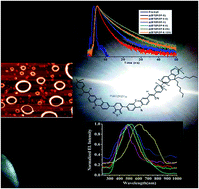
Introduction
Conjugated polymers have been used as the emissive layer in polymer light emitting diodes (PLEDs) for use in full-color flat panel displays and lighting applications.1,2 Recently, white PLEDs (WPLEDs) have also found promising applications in full-color displays coupled with color filters, backlighting sources for liquid crystal displays, and solid state lighting sources.3–6 Polyfluorene (PF) is the most promising blue light emitter for PLED applications because of its high photoluminescence quantum efficiency and good chemical and thermal stability.7,8 In reference to conventional white light emission based PF co-polymers, Park et al., fabricated white light emitting diodes for single component copolyfluorene containing red emitting (0.1%) chromophores, which showed a broad emission in the entire visible region.9 Chen et al., reported yellow, orange and white light emitting diodes from a single polymer synthesized by incorporating a small amount of 4,7-dithienylbenzotriazole into the main chain of polyfluorene.10 Lee et al., fabricated a white phosphorescent device by blending Ir(PIQ)3 with PF.11 However, we report white light emission that is significantly different, exhibiting electroluminescence by the combination of phenothiazine and benzothiadiazole. Phenothiazine is a well-known hetero cyclic compound with an electron rich sulphur and nitrogen hetero atoms. Due to being electron rich in nature, an increase in the conjugation and electron withdrawing nature cause the molecule to act as a good emitting material.12 Nevertheless, the incorporation of phenothiazine in polymeric systems was found to impart a reduced hole injection barrier and a balanced charge carrier mobility on white light emitting polymers.13–16 Phenothiazine and other building blocks exhibited alterations in the recombination zone and field dependent mobility, leading to voltage dependent electroluminescence.17–19 Benzothiadiazole has been widely investigated in constructions of various conjugated polymers showing multi-functional optoelectronic properties.20 The reported conjugated polymers with 4,7 linkages of benzothiadiazole on the main chain were synthesized and showed a strong fluorescence in a solution and thin films.21,22
Here in, we reported a D–A compound (BTZPZP), in which phenothiazine serves as the electron donor and benzothiadiazole acts as the electron acceptor.23 We synthesised a series of novel random conjugated copolymer P(BTZPZP)s from dihexylfluorene and the BTZPZP chromophore, resulting in high efficiency PLEDs with different colors, including red and white light emissions (Scheme 1). The BTZPZP guest moiety is incorporated into six energy transfer random copolymers with varying compositions (0.125% to 5.0%), which possess good absolute photoluminescence quantum yields (ΦPL) and longer lifetime fluorescence decays in thin films. An efficient white light emission was achieved by the incorporation of very low BTZPZP content (0.25%) from the copolymer P-BTZPZP due to the incomplete energy transfer from higher energy dihexylfluorene segments to the lower energy BTZPZP moiety. Notably, the copolymer device (BTZPZP-0.25) showed no surplus long wavelength emission between EL and PL due to a significant reduction in charge trapping, which is attributed to the balanced charge injection. Interestingly, the results from atomic force microscopy revealed that the formation of hollow spherical supramolecular self-assemblies appeared in all copolymers due to the formation of J-aggregates, which supports the good absolute quantum yields in solid state.
 |
| | Scheme 1 Synthetic route for the monomer and copolymers with name designations. | |
Results and discussion
Synthesis and characterization of the polymers
The synthetic route and structures of the monomer and polymers are shown in Scheme 1. The series of conjugated polymers were synthesized through palladium-catalyzed Suzuki coupling reactions. The actual compositions of the polymers were determined by elemental analysis. The calculated feed ratios of the BTZPZP monomer in the copolymer are almost similar to experimental values and are given in the ESI.† All the copolymers were found to be soluble in common organic solvents such as tetrahydrofuran (THF), chloroform and toluene with no evidence of gel formation. Each copolymer was spin coated onto an ITO substrate and found to produce transparent and homogeneous thin films. The numbers of the average molecular weight (Mn) of the copolymers, determined by gel permeation chromatography using a polystyrene standard, were found to range from 10
000 to 15
000 with poly dispersity indices ranging from 2 to 3. The yields of the copolymers ranged from 69% to 78%.
Optical and photoluminescence properties
The normalized UV-vis absorption and PL emission spectra of the polymers in a chloroform solution and a thin film are shown in Fig. 1. The absorption spectra of the monomer in a solution show a strong absorption peak at 452 nm due to intra molecular charge transfer (ICT)24 and a lower wavelength peak at 313 nm due to π–π* transition. The absorption spectra of the copolymers showed the more characteristic absorption of poly (9,9-dihexylfluorene)-2,7-diyl.25 The absorption peak for P(BTZPZP-0.125) is at 373 nm due to the π–π* transition of the polyfluorene backbone, which has a low composition of BTZPZP units. The π–π* transitions of P(BTZPZP-0.25), P(BTZPZP-0.5), P(BTZPZP-1), P(BTZPZP-2.5), P(BTZPZP-5) copolymers were observed at 367, 368, 372, 373 and 376 nm, respectively. The absorption spectrum of the monomer in the thin film state also shows two peaks at 334 and 502 nm, which are red shifted up to 50 nm compared to the solution state due to π–π stacking. Similarly, the absorption bands of the all copolymers were observed at 380–389 nm in the solid state and were slightly red shifted up to 10 nm relative to the solution state absorption.
 |
| | Fig. 1 Absorption and PL spectra of the BTZPZP monomer and copolymers in solutions (a) and (c), in thin films (b) and (d). | |
The emission spectrum of the monomer in a solution and in a thin film is 638 and 640 nm, respectively. In the solution state, in the case of BTZPZP-5, BTZPZP-2.5 and BTZPZP-1 (highest percentage of the BTZPZP unit) exhibited two characteristic emission peaks that correspond to the emission of poly(9,9-dihexyl fluorene)-2,7-diyl (DHFP) at 416, 415 and 415 nm. In addition to the abovementioned emission peaks, the BTZPZP-5, BTZPZP-2.5 and BTZPZP-1 copolymers elicited emission peaks at 632, 637 and 626 nm (very low intensity) respectively, and these values closely correspond to that of the BTZPZP unit. These findings clearly indicate that there is a partial energy transfer from the DHFP units to the BTZPZP units. The normalized PL spectrum of the copolymers in a solution and in the thin film state is quite different. In thin films, the copolymers exhibited two distinct emission bands at about 430 and 570–595 nm. This result indicates that the polymer chains are closely packed in the thin film state, assisting in inter chain energy transfer from the fluorene segments to the BTZPZP chromophore. The shorter wavelength (∼430 nm) originates from fluorene segments, whereas the longer wavelength can be attributed to the BTZPZP chromophore. The PL emission maxima of the copolymers shifted towards longer wavelength as the number of BTZPZP units increased in the copolymers.
Life time and quantum yield studies
The fluorescence lifetimes (τ) and quantum yields (Φ) are the most important characteristics of organic light emitting fluorophores. To quantitatively evaluate the copolymer's emission, we investigated the fluorescence lifetime of all the copolymers in a chloroform solution and in the thin film, shown in Fig. 2. In the solution state, the pumping wavelength of all copolymers ranged from 367 to 373 nm, with a probing wavelength of ∼415 nm. All copolymers in the solution state show lifetimes of <1 ns; these unique ultrafast decay channels are very similar to those observed in PF. These ultrafast decay channels with lifetimes <1 ns are predominant in solution PF and P-BTZPZP copolymers.26 In thin films, the pumping wavelength of all copolymers ranged from 380 to 389 nm, with probing wavelengths of 595, 587, 580, 580, 577 and 570 nm for copolymer BTZPZP with compositions of −5, 2.5, 1.0, 0.5, 0.25 and 0.125, respectively. The fluorescence lifetime decay in thin films is entirely different relative to the solution. Notably, the white light emission of the copolymer BTZPZP-0.25 showed the longest lifetime, 6.58 ns, which is attributed to the copolymer having the highest composition of fluorenyl substituents, supressing the concentration quenching and increasing the lifetime of the excited state.27 The observed lifetime of other copolymers P(BTZPZP-5), P(BTZPZP-2.5), P(BTZPZP-1), P(BTZPZP-0.5) and P(BTZPZP-0.125) is 4.333, 4.168, 4.353, 5.829 and 5.932 ns, respectively.
 |
| | Fig. 2 (a) and (b) are the fluorescence lifetime decays of the copolymers in solution and in the thin film. | |
The fluorescence quantum yield is the ratio of the number of photons emitted to the number of photons absorbed. PL quantum yields in a chloroform solution were obtained by using quinine sulphate in 0.1 H2SO4 (quantum yield = 0.55) as a standard. The absolute PL quantum yield in thin films was measured by using an integrating sphere. The resultant data are summarized in Table 1. The PL quantum yields in a solution of P(BTZPZP-5), P(BTZPZP-2.5), P(BTZPZP-1), P(BTZPZP-0.5), P(BTZPZP-0.25) and P(BTZPZP-0.125) are 0.47, 0.45, 0.63, 0.59, 0.57 and 0.60, respectively. The copolymers containing the BTZPZP unit in the back bone have lower quantum yields than that of polyfluorene. The absolute quantum yields of copolymers BTZPZP-5, 2.5, 1.0, 0.5, 0.25, and 0.125 are 0.22, 0.14, 0.37, 0.14, 0.18 and 0.23, respectively. The quantum yield of P(BTZPZP-1) is the highest among these copolymers both in a solution and thin film states, indicating that it has the optimum ratio of BTZPZP chromophore incorporation into polyfluorenes for resisting fluorescence quenching.28
Table 1 Spectral properties of BTZPZP monomer and copolymers
| Monomer/copolymers |
Abs λmaxa (nm) |
Emissionb (nm) |
Lifetimec (ns) |
Quantum yieldd (ΦPL) |
| Solution |
Thin film |
Solution |
Thin film |
Solution |
Thin film |
Solution |
Thin film |
| Absorption maxima in CHCl3 solutions and thin films. Emission maxima in CHCl3 solution and thin films. Fluorescence life in solutions and thin films. Quantum yield in THF solution estimated using quinine sulphate standard (error ± 0.2%) and absolute quantum yield in spun thin films in % (error ± 0.4%). |
| BTZPZP |
313, 452 |
334, 502 |
638 |
640 |
|
|
|
|
| BTZPZP-5 |
376 |
382 |
416, 632 |
595, 430 |
0.689 |
4.333 |
0.47 |
0.22 |
| BTZPZP-2.5 |
373 |
389 |
415, 637 |
587, 428 |
0.706 |
4.168 |
0.45 |
0.14 |
| BTZPZP-1 |
372 |
381 |
415, 626 |
580, 428 |
0.709 |
4.353 |
0.63 |
0.37 |
| BTZPZP-0.5 |
368 |
380 |
413 |
580, 426 |
0.766 |
5.829 |
0.59 |
0.14 |
| BTZPZP-0.25 |
367 |
380 |
414 |
577, 435 |
0.823 |
6.584 |
0.57 |
0.18 |
| BTZPZP-0.125 |
373 |
386 |
416 |
570, 433 |
0.769 |
5.932 |
0.60 |
0.23 |
Film morphology
The morphology of the copolymers was studied using atomic force microscopy (AFM). The copolymers were found to show variations in morphology with changes in percentage composition of the BTZPZP monomer units in the polymer backbone. The microscopic image revealed circular domains with different size ranges that are clearly visible, depicted in Fig. 3. It is evident from the morphological features that the composition of the BTZPZP monomer units influenced the size of the circular domains for all the copolymers in the thin films.
 |
| | Fig. 3 AFM micrographs (a) P-BTZPZP-0.125, (b) P-BTZPZP-0.25, (c) P-BTZPZP-0.5, (d) P-BTZPZP-1, (e) P-BTZPZP-2.5 and (f) P-BTZPZP-5.0. | |
The copolymer BTZPZP-5 showed large sized circular domains with uniform size and the copolymer BTZPZP-2.5 showed a slight change in morphology relative to that of BTZPZP-5. It is clear from the AFM micrograph that BTZPZP-1% showed a well ordered morphology wherein supramolecular circular domain structures are aligned normal to the surface. This high ordered morphology is responsible for the higher absolute quantum yield (37.33%) of copolymer BTZPZP-1. In the case of lower composition samples, BTZPZP-0.5, BTZPZP-0.25 and BTZPZP-0.125, even fewer assemblies with small radii were visible, signifying the effect of BTZPZP content on the main chain of the copolymers. These findings clearly indicate the formation of hierarchical supramolecular self-assemblies of circular domains while increasing the feed ratios of the BTZPZP monomer units.29 The red shifts that appeared in the solid state may cause strong inter/intramolecular interactions, e.g. dipole–dipole interactions, between the polymer chains.
We conducted statistical analysis on the P-BTZPZP copolymers from the AFM micrograph and provided it in the ESI.† Statistical analysis results revealed the circular domains with different size ranges and small variations in morphology change with percent composition of the BTZPZP monomer in the polymer backbone.
Electrochemical properties
To investigate the energy levels of their highest occupied molecular orbitals (HOMO) and lowest unoccupied molecular orbitals (LUMO), the electrochemical properties of the copolymer, P(BTZPZP)s, were investigated by cyclic voltammetry (CV). The copolymers were coated on the platinum electrode, used as the working electrode, with a platinum wire counter electrode and Ag/AgCl (0.01 M) electrode as the reference electrode. The electrochemical properties of the copolymers were investigated in an electrolyte consisting of a solution of 0.1 M tetrabutylammoniumhexafluorophosphate in acetonitrile at room temperature under nitrogen with a scan rate of 50 mV s−1. The HOMO energy levels were calculated from the onset of the oxidation potential curve according to the equation of HOMO (eV) = −(Eonsetox + 4.82 eV) and LUMO energy levels were calculated from the onset of the reduction potential curve according to the equation LUMO (eV) = −(Eonsetred + 4.8 eV), and for all copolymers, the values were estimated to be from −5.82 to 6.00 eV and 3.00 to 3.20 eV, respectively. The band gaps of all the copolymers were estimated from the HOMO and LUMO levels to be 2.62 to 2.93 eV. The electrochemical band gaps of all copolymers show very little variation due to all the copolymers having very low BTZPZP monomer content. The detailed electrochemical data of these copolymers are listed in Table 2 (Fig. 4).
Table 2 Device characteristics of copolymers
| Polymer |
HOMOa (eV) |
LUMOb (eV) |
Eele/Eoptc (eV) |
ηmaxcd (cd A−1) |
ηmaxpe (lm W−1) |
Lmaxf (cd m−2) |
Turn-on voltageg (V) |
CIEELh |
CIEPLi |
| Highest occupied molecular orbital. Lowest unoccupied molecular orbital. Electrochemical band gap/optical band gap. Current efficiency. Power efficiency. Maximum brightness. Turn-on voltage. CIE coordinates for EL. CIE coordinates for PL. |
| P(BTZPZP-5) |
−6.01 |
−3.16 |
2.85/2.87 |
2.9 |
2.3 |
9066.7 |
4.27 |
(0.49, 0.44) |
(0.47, 0.39) |
| P(BTZPZP-2.5) |
−5.82 |
−3.20 |
2.62/2.81 |
3.8 |
3.2 |
9248.7 |
4.25 |
(0.41, 0.40) |
(0.35, 0.37) |
| P(BTZPZP-1) |
−5.83 |
−3.15 |
2.68/2.83 |
3.3 |
2.9 |
7909.8 |
3.79 |
(0.39, 0.38) |
(0.39, 0.41) |
| P(BTZPZP-0.5) |
−5.93 |
−3.00 |
2.93/2.79 |
3.1 |
2.8 |
3656.3 |
3.95 |
(0.26, 0.29) |
(0.29, 0.27) |
| P(BTZPZP-0.25) |
−5.95 |
−3.05 |
2.90/2.76 |
4.5 |
4.2 |
9224.0 |
4.94 |
(0.32, 0.37) |
(0.31, 0.32) |
| P(BTZPZP-0.125) |
−5.83 |
−3.07 |
2.76/2.75 |
3.3 |
3.2 |
9517.2 |
4.41 |
(0.24, 0.23) |
(0.25, 0.24) |
 |
| | Fig. 4 Cyclic voltammetry spectrum of BTZPZP copolymers. | |
Electroluminescence properties and current–voltage–luminescence characteristics
To investigate the electroluminescence properties and performances of the copolymers, real devices with the configuration ITO/PEDOT:PSS/POLYMER/Al were fabricated. Fig. 5 shows the normalized EL spectra of the copolymer devices from BTZPZP 5 to 0.125. The EL spectra of the synthesised copolymers are different from the PL spectra for lower compositions due to energy transfer from the higher energy state of the dihexylfluorene to the low energy state of BTZPZP units, in which the low energy state unit acts as charge trapping sites.30 The wavelength of the EL spectra evidently increases as the BTZPZP moiety gradually increases from 0.125% to 5%. When the monomer concentration is reduced to 0.25%, the device shows a balanced emission from both the host and dopant, as indicated by the EL spectra shown in Fig. 5. From Fig. 5a, we can see that the copolymer P(BTZPZP-0.25) has an emission maxima observed at 528 nm related to the BTZPZP monomer, which is slightly higher in intensity than the other peak at an operating voltage of 8 V. These results suggest that a few more charges are trapped on the BTZPZP monomer at this voltage. In addition, the narrow band gap red emitters are capable of balancing the charge carrier ratio, creating ohmic contact for hole injection, thereby improving the power efficiency by decreasing power depletion.31 The significance difference between EL and PL is attributed to the dominance of the charge trapping mechanism in the EL process.32 The copolymer P(BTZPZP-0.25) device exhibited a bright white light with CIE coordinates of (0.32, 0.37) and exhibited a maximum luminance (Lmax) of 9224 cd m−2 at 8 V. Moreover, the EL emission spectrum of P(BTZPZP-0.25) is broad, covering the visible range from the blue to red emission regions. The observation of electroluminescence and PL results revealed that there is no surplus long wavelength emission between electroluminescence and PL, which is attributed to the ambipolar charge injection. The outputs of WPLEDs were studied for their spectral ability. The OLED fabricated with BTZPZP-0.25 as an emissive layer showed a very stable spectrum with no change in relative intensity of long and short wavelength emissions when driving voltage from 4 V to 9 V, as shown in Fig. 5b. These results indicate that the use of this polymer ensures the color transparency of the EL device, which makes it of great interest for display applications. The typical voltage required to turn on and conduct current in the forward direction of the diode is defined as the turn on voltage. The turn on voltage of all the copolymers, P(BTZPZP)s devices, range from 3.79 to 4.94 volts and their maximum brightness are in the range from 3656 to 9517 cd m−2.
 |
| | Fig. 5 (a) EL spectra of BTZPZP copolymers (b) EL spectra of P(BTZPZP-0.25) with different applied voltages, (c) and (d) are current densities (log scale)–voltage (log scale) (J–V) and luminescence (log scale)–voltage (log scale) (L–V) plots of OLEDs for BTZPZP copolymers. | |
Theoretical study
To gain more insights into ground and excited properties, DFT calculations were performed on model systems. Optimized geometries of the model systems are shown in the ESI.† The calculated structures and properties of organic electronic materials in the ground and excited states using the Lee–Yang–Parr functional (B3LYP) often provides a good agreement with the experiments compared with other functionals.33–35 Hence, all the calculations were performed by B3LYP functionals. The computational details are given in the ESI.† The HOMO and LUMO contour plots of the model system are displayed in Fig. 6. It can be the seen from Fig. 6 that the HOMO is mainly delocalized on the electron donating phenothiazine moiety and the LUMO is solely concentrated on the electron withdrawing benzothiadiazole unit. From Fig. 6, close analysis clearly reveals that there is a charge separation in the HOMOs and LUMOs. Thus, this feature confirms that there is an intramolecular charge transfer (ICT) character exhibited from the phenothiazine electron donor unit to the benzothiadiazole electron acceptor moiety. The calculated vertical excitation energies for the monomer and dimer using the TDDFT approach are listed in Table 3. It can be seen from Table 1, the calculated spectral properties of both monomer and dimer are in close agreement with the experimental values. It can be seen from Table 1 that the calculated spectral properties of both monomer and dimer are in close agreement with the experimental values. For the parent compound (BTZPZP), the ICT peak is predicted to be at 452 nm (f = 0.5522), which arises from combination of HOMO to LUMO+2 and HOMO−1 to LUMO+1 transitions. Another peak is found to be at 314 nm, which is attributed to the π–π* transition, which arises from a combination of HOMO to LUMO+5 and HOMO−6 to LUMO transitions. In the dimer, the maximum absorption peak is found to be at 431 nm (f = 0.9649). For the same system, the intramolecular charge transfer peak can be seen at 574 nm (f = 0.9649). This transition arises from the H−2 → L+2 and H → L. The emission spectra of the monomer and dimer were calculated from the optimized excited state geometries. For the dimer, the LUMO to HOMO transition mainly contributes to the emission at 618 nm (f = 0.17) which is close to the experimental value of 632 nm. However, for the monomer, a significant deviation in the calculated value (749 nm (f = 0.15)) with respect to the experimental peak (640 nm) is observed.
 |
| | Fig. 6 FMO distribution of model systems at B3LYP/6-31G* level of theory. The hydrogen atoms omitted here for clarity. | |
Table 3 Summary of the excited state electronic transitions obtained from the TD-DFT calculations at the B3LYP/6-31G* level
| Compounds |
Solvent |
States |
Absorption (nm) |
Energy (eV) |
Oscillator strength (f) |
Dominant contributiona (%) |
Exp (nm) |
| H denotes HOMO and L denotes LUMO. |
| BTZPZP |
CHCl3 |
S3 |
462 |
2.68 |
0.5522 |
H → L+2 (77%), H−1 → L+1 (19%) |
452 |
| S4 |
459 |
2.69 |
0.2010 |
H → L+1 (74%), H−1 → L (11%) |
| S18 |
314 |
3.94 |
0.4039 |
H → L + 5 (162%), H−6 → L (17%) |
313 |
| P(BTZPZP) |
CHCl3 |
S1 |
571 |
2.16 |
0.6664 |
H → L (97%), H−4 → L+2 (35%), H−3 → L+1 (28%) |
367 |
| S13 |
345 |
3.58 |
0.5245 |
| P(BTZPZP) (dimer) |
CHCl3 |
S1 |
574 |
2.16 |
0.9649 |
H → L (71%), H−1 → L (13%) |
367 |
| S15 |
431 |
2.88 |
0.2373 |
H−2 → L+2 (45%), H → L+2 (21%) |
Conclusion
We successfully synthesized a series of new fluorene based copolymers P(BTZPZP)s with varying molar ratios of the narrow energy band gap monomer (BTZPZP). An efficient white light emission was achieved in a single layer polymer device by decorating BTZPZP, as the red emit moiety, with polyfluorene as a blue host, which exhibits good device performance in the optimized conditions. The white light emitting copolymer P(BTZPZP-0.25) showed effective electroluminescence with CIE coordinates of (0.32, 0.37), which is close to that of the standard white light emission (0.33, 0.33). The observed maximum luminance, power efficiency and current efficiency of the white light emitting copolymer P(BTZPZP0.25) are 9224 cd m−2, 4.5 cd A−1 and 4.2 lm W−1, respectively. Interestingly, other copolymers exhibited valuable characteristics, including molecular ordered supramolecular self-assembly, relatively long lifetimes in the aggregate state, medium turn-on voltages and very low EL operating voltages with high efficiencies in device form. These findings are well supported by the current study on PLEDs. The simplicity of a single emissive layer polymer light emitting device architecture with high efficiency attributes to the valuable observations, which makes white emitting PLEDs promising candidates for lighting applications.
Experiment details
Measurements
NMR spectra were obtained using a Bruker AM 400 MHz spectrometer with tetramethylsilane as an internal reference. UV-visible absorption spectra were obtained on a Varian Cary-50 Bio UV-visible spectrometer. Photoluminescence (PL) spectra were obtained on a Varian Cary Eclipse fluorescence spectrometer. The number and weight average molecular weights of polymers were determined by gel permeation chromatography (GPC) on a Viscotek T60A instrument using tetrahydrofuran (THF) as the eluent and polystyrene as a standard. Cyclic voltammetry was conducted on CH instruments, CH1600D electro chemical work station with a platinum working electrode by forming a thin film of the polymers on the surface of the platinum working electrode. OLEDs of the polymers for all devices were fabricated on glass substrates pre-coated with indium tin oxide (ITO) with a sheet resistance of 10 Ω per square. The substrates were cleaned with ultra-purified water in an ultrasonic solvent bath and baked in a heating chamber at 120 °C. The PEDOT-PSS (10–30 nm) solution was spin coated on cleaned ITO substrates and baked in a heating chamber at 200 °C for one hour. After the above process, 300 μl of polymer solutions with 3 mg per ml concentrations in CHCl3 were spin coated at 2000 rpm for 60 seconds to obtain uniform films of polymers (with thickness 100–150 nm) and aluminium was coated at 10–5 Torr. Current–voltage (I–V) characteristics were studied on a Keithley 2400 source meter. Luminescence–voltage (L–V) characteristics of the OLEDs were studied using NUCLEONIX type 168 PMT housing with drawer assembly. Electroluminescence spectra of the OLEDs were further measured using a Carey Eclipse fluorescence spectrophotometer.
Materials
Phenothiazine, ethyl hexyl bromide, N,N-dimethyl formamide, 4-bromophenyl acetonitrile, 2,7-dibromodihexyl fluorene, 2,1,3-benzothiadiazole, 4,7 diboronicester, tetrakis(triphenylphosphine)palladium(0) and 9,9-dihexylfluorene-2,7-diboronic acid bis(1,3 propane diol)ester were purchased from Aldrich. Solvents with analytical grade were used during the entire experiments and all chemicals were used without further purification.
Acknowledgements
The authors thank Dr S. Easwaramoorthi for the timely help and Dr Aruna Dhathathreyan for providing fluorescence lifetimes, absolute quantum yield and AFM studies. The authors are grateful to the Council of Scientific and Industrial Research (CSIR), India, for financial support through NWP 55. The timely help from Dr R. Dhamodharan and Mr E. Ramachandran, Department of Chemistry, IIT Madras is gratefully acknowledged. Sandu Nagaraju acknowledges the financial support from the Council of Scientific and Industrial Research (CSIR), New Delhi in the form of the Senior Research Fellowship.
Notes and references
- A. C. Grimsdale, K. L. Chan, R. E. Martin, P. G. Jokis and A. B. Holmes, Chem. Rev., 2009, 109, 89 CrossRef PubMed.
- Organic light-emitting devices: synthesis, properties and applications, ed. K. Mullen and U. Scherf, Wiley-VCH, Weinheim, 2006 Search PubMed.
- H. B. Wu, L. Ying, W. Yang and Y. Cao, Chem. Soc. Rev., 2009, 38, 3391 RSC.
- X. Gong, W. Ma, J. C. Ostrowski, G. C. Bazan, D. Moses and A. J. Heeger, Adv. Mater., 2004, 16, 615 CrossRef CAS.
- L. Q. Zhou, Y. Cheng, Y. Geng, L. Wang, D. Ma, X. Jing and F. Wang, Adv. Mater., 2005, 17, 2974 CrossRef.
- K. T. Kamtekar, A. P. Monk man and M. R. Bryce, Adv. Mater., 2010, 22, 572 CrossRef CAS PubMed.
- U. Scherf and E. J. W. List, Adv. Mater., 2002, 14, 477 CrossRef CAS.
- A. Babel and S. A. jenekhe, Macromolecules, 2003, 36, 7759 CrossRef CAS.
- M.-J. Park, J. G. Lee, I.-H. Jung, J.-H. Park, D. Hwang and H.-K. Shim, Macromolecules, 2008, 41, 9643 CrossRef CAS.
- L. Zhang, S. Hu, J. Chen, Z. Chen, H. Wu, J. Peng and Y. Cao, Adv. Funct. Mater., 2011, 21, 3760 CrossRef CAS.
- H. K. Lee, T.-H. Kima, J. H. Park, J.-K. Kim and O. O. Park, Org. Electron., 2011, 12, 8916 Search PubMed.
- S. A. Jenekhe, L. Lu and M. M. Alam, Macromolecules, 2001, 34, 7315 CrossRef CAS.
- P. Shen, H. Bin, Y. Zhang and Y. Li, Polym. Chem., 2014, 5, 567 RSC.
- S. J. Ananthakrishnan, E. Varathan, V. Subramanian, N. Somanathan and A. B. Mandal, J. Phys. Chem. C, 2014, 118, 28084 CAS.
- Y. Park, B. Kim, C. Lee, A. Hyun, S. Jang, J.-H. Lee, Y. S. Gal, T. H. Kim, K.-S. Kim and J. Park, J. Phys. Chem. C, 2011, 115, 4843 CAS.
- D.-H. Hwang, S. K. Kim, M. J. Park, J. H. Lee, B. W. Koo, I.-N. Kang, S. H. Kim and T. Zyung, Chem. Mater., 2004, 16, 1298 CrossRef CAS.
- M. J. Park, J. Lee, J. Park, S. K. Lee, J. Lee, H. Y. Chu, D. H. Hwang and H.-K. Shim, Macromolecules, 2008, 41, 9643 CrossRef CAS.
- M.-J. Park, J. Lee, J.-H. Park, S. K. Lee, J. I. Lee, H. Y. Chu, D.-H. Hwang and H.-K. Shim, Macromolecules, 2008, 41, 3063 CrossRef CAS.
- S. Chen, Q. Wu, M. Kong, X. Zhao, Z. Yu, P. Jiaa and W. Huang, J. Mater. Chem. C, 2013, 1, 3508 RSC.
- S. A. Elkassih, P. Sista, H. D. Magurudeniya, A. Papadimitratos, A. A. Zakhidov, M. C. Biewer and M. C. Stefan, Macromol. Chem. Phys., 2013, 214, 572 CrossRef CAS.
- Q. Hou, Q. Zhou, Y. Zhang, W. Yang, R. Yang and Y. Cao, Macromolecules, 2004, 17, 37 Search PubMed.
- R. Yang, R. Tian, J. Yan, Y. Zhang, J. Yang, Q. Hou, W. Yang, C. Zhang and Y. Cao, Macromolecules, 2005, 38, 2 Search PubMed.
- L. Yao, S. Zhang, R. Wang, W. Li, F. Shen, B. Yang and Y. Ma, Angew. Chem., Int. Ed, 2014, 53, 2119 CrossRef CAS PubMed.
- S. Agrawal, M.-C. Past ore, G. Marotta, M. Anil Reddy, M. Chandrasekharam and F. De Angelis, J. Phys. Chem. C, 2013, 117, 9613 CAS.
- K. Su, L. Hong and L. Lin, J. Appl. Polym. Sci., 2007, 106, 3308 CrossRef.
- J. Geng, K. Li, W. Qin, L. Ma, G. G. Gurzadyan, B. Z. Tang and B. Liu, Small, 2013, 9, 2012 CrossRef CAS PubMed.
- C. Rothe, C.-J. Chiang, V. Jankus, K. Abdullah, X. S. Zeng, R. t. Jitchati, A. S. Batsanov, M. R. Bryce and A. P. Monk man, Adv. Funct. Mater., 2009, 19, 2038 CrossRef CAS.
- J. Shi, Y. Wu, S. Sun, B. Tong, J. Zhi and Y. Dong, J. Polym. Sci., Part A: Polym. Chem., 2013, 51, 229 CrossRef CAS.
-
(a) E. Ravindran, S. J. Ananthakrishnan, E. varathan, V. Subramanian and N. Somanathan, J. Mater. Chem.C, 2015, 3, 4359 RSC;
(b) C. Suryanarayanan, E. Ravindran, S. J. Ananthakrishnan, N. Somanathan and A. B. Mandal, J. Mater. Chem., 2012, 22, 18975 RSC;
(c) E. Ravindran, E. Varathan, V. Subramanian and N. Somanathan, J. Mater. Chem. C, 2016, 4, 8027 RSC.
-
(a) F.-I. Wu, X.-H. Yang, D. Neher, R. Dodda, Y.-H. Tseng and C.-F. Shu, Adv. Funct. Mater., 2007, 17, 1085 CrossRef CAS;
(b) M. Uchida, C. Adachi, T. Koyama and Y. Taniguchi, J. Appl. Phys., 1999, 86, 1680 CrossRef CAS;
(c) P. A. Lane, L. C. Palilis, D. F. O'Brien, C. Giebeler, A. J. Cadby, D. G. Lidzey, A. J. Campbell and D. D. Bradley, Phys. Rev. B: Condens. Matter Mater. Phys., 2002, 63, 235206 CrossRef;
(d) X. Gong, J. C. Ostrowski, D. Moses, G. C. Bazan and A. Heeger, Adv. Funct. Mater., 2003, 13, 439 CrossRef CAS;
(e) J. Liang, S. Zhao, X.-F. Jiang, T. Guo, H.-L. Yip, L. Ying, F. Huang, W. Yang and Y. Cao, ACS Appl. Mater. Interfaces, 2016, 8, 6164–6173 CrossRef CAS PubMed.
- H. Wu, J. Zou, F. Liu, L. Wang, A. Mikhailovsky, G. C. Bazan, W. Yang and Y. Cao, Adv. Mater., 2008, 20, 696 CrossRef CAS.
- L. Ying, C.-L. Ho, H. Wu, Y. Cao and W.-Y. Wong, Adv. Mater., 2014, 26, 2459–2473 CrossRef CAS PubMed.
- D. Vijay, E. Varathan and V. Subramanian, J. Mater. Chem A, 2013, 1, 4358 CAS.
- E. Varathan, D. Vijay, P. S. V. Kumar and V. Subramanian, J. Mater. Chem. C, 2013, 1, 4261 RSC.
- E. Varathan, D. Vijay and V. Subramanian, J. Phys. Chem. C, 2014, 118, 21741 CAS.
Footnote |
| † Electronic supplementary information (ESI) available: Detailed synthetic strategy and procedure for the synthesis of monomer and copolymers H1 and C13 spectra of monomer and H1 spectra of copolymers, computational details and GPC results. See DOI: 10.1039/c6ra13546c |
|
| This journal is © The Royal Society of Chemistry 2016 |
Click here to see how this site uses Cookies. View our privacy policy here.