α-Fe2O3 nanospheres: facile synthesis and highly efficient photo-degradation of organic dyes and surface activation by nano-Pt for enhanced methanol sensing

Bibhutibhushan Showac, Nillohit Mukherjee*b and Anup Mondal*c
aDepartment of Chemistry, Jadavpur University, Kolkata 700032, India
bCentre of Excellence for Green Energy and Sensor Systems, Indian Institute of Engineering Science and Technology, Shibpur, Botanic Garden, Howrah 711103, India. E-mail: nilsci@yahoo.co.uk
cDepartment of Chemistry, Indian Institute of Engineering Science and Technology, Shibpur, Botanic Garden, Howrah 711103, India. E-mail: anupmondal2000@yahoo.co.in; Fax: +91-33-2668-2916

Received 23rd May 2016 , Accepted 25th July 2016

First published on 26th July 2016


Abstract

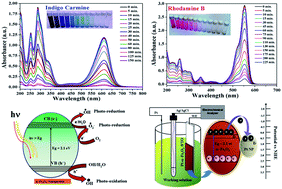
We report a simplified electrochemical route to synthesize thin films of nanosphere α-Fe2O3 from a suitable electrolytic solution. X-ray diffraction studies revealed the formation of pure hematite phase (hexagonal structure) α-Fe2O3 films. Field emission scanning electron microscopy revealed a highly compact surface morphology with evenly distributed almost spherical grains. Raman, electron paramagnetic resonance and Fourier transform infrared spectroscopic analyses confirmed the presence of α phase Fe2O3 (hematite). Optical analysis revealed a band gap energy of 2.15 eV; this is most suitable for visible light driven photocatalysis towards the degradation of Indigo Carmine (IC) and Rhodamine B (Rh B) dyes, which are widely used in the textile industry and were taken as model organic compounds. About 90% photodegradation was achieved at rates of 0.0188 min−1 for IC and 0.0133 min−1 for Rh B. The synthesized films were used as modified electrodes, and their catalytic activity towards methanol oxidation was investigated. A comparison was also made between Pt modified FTO/Fe2O3 and unmodified FTO/Fe2O3 electrodes towards dye degradation and methanol oxidation, and it was found that the Pt modified FTO/Fe2O3 electrode yielded superior results.

1. Introduction

Iron oxide in the α phase, i.e. α-Fe2O3 (hematite), is an attractive semiconductor for many cutting edge applications; among these, photoelectrochemical and photocatalytic applications are of major importance due to the stability, abundance, and environmental compatibility of α-Fe2O3, as well as its suitable band gap and the position of its valence band edge.1–8 In general, hematite exhibits an n-type character, which can be due to the tendency of α-Fe2O3 to become oxygen deficient, irrespective of the preparation method. α-Fe2O3 is a promising candidate for photocatalytic applications due to its narrow band gap energy of about 2.0 to 2.2 eV, which leads to absorption mainly in the visible region. It absorbs light up to 600 nm and collects up to 40% of solar spectrum energy. α-Fe2O3 is cost effective, with low toxicity and high photo/heat-stability; it also has a suitable valence band edge position. This makes hematite a promising anode material for photochemical, photoelectrochemical and electrochemical applications, such as methanol electrooxidation.9 Nanoparticles of α-Fe2O3 perform photocatalytic reactions through the generation of electron–hole pairs upon visible light irradiation, which leads to a better charge transfer process from (LUMO)dye to (HOMO)catalyst. Various techniques have been investigated for the synthesis of hematite nanocrystalline thin films, viz. thermal evaporation,10 chemical vapor deposition,10 aqueous chemical growth,10 spray-pyrolysis,11 ultrasonic spray-pyrolysis,11 the sol–gel method12 and plasma enhanced atomic layer deposition.13 Electrodeposition is a technique that is well suited to the preparation of nanostructures.14 In fact, through proper parameter control, electrodeposited materials can form nanostructured to even epitaxial films with superior properties.15 Moreover, the electrodeposition technique is currently emerging as an important low-cost and low temperature method for preparing semiconducting thin films.16

In recent years, several reports have appeared concerning the electrodeposition of iron oxide thin films onto foreign substrates, such as Fe3O4 (magnetite), α-FeOOH (goethite), and γ-FeOOH (lepidocrocite).17 Among the various oxides of iron, such as hematite (α-Fe2O3), maghemite (γ-Fe2O3) and wustite (Fe1−xO), α-Fe2O3 is of special interest due to its unique catalytic properties; however, γ-Fe2O3 nanoparticles are excellent candidates for nanoscale magnetism.18 Owing to its suitable electronic properties, such as flatband potential, surface current density and doping density, α-Fe2O3 is a very important material for the electrooxidation of various toxic chemicals, such as methanol.9,19 It also serves as a good photocatalyst for aniline20 and promotes the photopolymerization reaction of acrylamide through a radical mechanism.21 α-Fe2O3 with different nanostructures can act as an efficient photocatalyst for the degradation of phenolic compounds and other dyes, such as methylene blue (MB),22 Rose Bengal (RB)23 and Methyl Orange (MO).24 Xu et al.25 and Tang et al.26 have also investigated the UV-light driven photocatalytic performance of hollow spindle25 and flowerlike26 α-Fe2O3 towards phenol degradation. α-Fe2O3 is also used to improve the photocatalytic efficiency of other semiconductors, such as TiO2, by forming composites, because Fe3+ can act as a better electron scavenger than O2, and there is significant matching of band structures between Fe2O3 and TiO2.27 Hematite is also very important for the synthesis of composite heterostructures, such as Fe2O3/SnO2 (ref. 28) and Fe2O3/CdS,29 for superior photocatalytic performance through effective charge carrier separation.

Over the past few decades, our society has become increasingly sensitive towards the protection of the environment against adverse industrial effects. The effluents of the dyeing, textile, and pulp and paper industries contain various dye pigments and methanol, which should be removed before discharging the effluents to the environment to avoid health hazards and protect ecosystems. Due to the low biodegradability of dyes, conventional biological wastewater treatment pathways are not very efficient. To solve this problem, scientists have developed semiconductor photocatalysis. The main advantage of this technology is its environmental compatibility, as its main reagent, electrons, is a clean reagent. Also, semiconductor photocatalysis has a faster degradation rate than biodegradation. In this regard, efficient, stable, low-cost and environmentally friendly photocatalysts must be developed. These are the motivations behind this work. In this work, the deposition of nanocrystalline thin films of α-Fe2O3 on fluorine-doped tin oxide (FTO) coated glass was carried out by a simple electrochemical method using the chemicals FeCl2·4H2O, KCl and H2O2. The method reported here is cheaper, simpler and less time consuming for large scale production. In the electrochemical synthesis of iron oxides, accurate control of growth potential and pH is necessary, which has been addressed in this work. The catalytic behavior of the deposited α-Fe2O3 films for the photo-degradation of hazardous organic dyes, such as Indigo Carmine (IC) and Rhodamine B (Rh B), has been explored. A comparison was also made between the Pt modified FTO/Fe2O3 and unmodified FTO/Fe2O3 electrodes in methanol electrooxidation, and the former was found to give superior performance.

2. Experimental procedure

2.1. Materials

All chemicals and solvents were of analytical reagent grade and were used as received, without any further purification. Commercially available FTO substrates with ∼10 ohm per sq. surface resistivity were cleaned properly and were used as the cathode for the deposition.

2.2. Deposition of α-Fe2O3 thin films

The working solution was prepared by thoroughly mixing 1 mL of 0.1 M FeCl2·4H2O and 1 mL 0.1 M KCl in 100 mL double distilled water. KCl was taken as the supporting electrolyte to stabilize the redox system. Next, 0.5 mL 0.02 M H2O2 was added dropwise with stirring at 500 rpm for 15 minutes. The pH of the working solution was maintained at around 2.5 by adding dilute hydrochloric acid (1[thin space (1/6-em)]:[thin space (1/6-em)]30) dropwise. The working solution was brownish yellow in color.

The electrochemical cell was constructed by immersing the FTO glass and a Zn rod (99.8% pure) in the solution, which were short-circuited externally through a copper wire. The Zn rod served as the self-decaying anode to produce Zn2+ ions and the FTO glass served as the cathode (the schematic is reported elsewhere30). As soon as the two electrodes were short-circuited, the deposition started very slowly and was continued for around 24 hours at room temperature without stirring to obtain almost pinhole-free compact films with good adherence. After deposition, the films were washed thoroughly with double distilled water and dried in a hot air oven at 60 °C for 15 minutes.

The mechanism for α-Fe2O3 deposition involves two reactions that take place simultaneously on the FTO cathode surface when the electrodes are short circuited externally.

FeCl2·4H2O dissolves in water at low pH (ca. 2.5) and dissociates as:

 
FeCl2·4H2O → Fe2+ + Cl + 4H2O (i)

When a Zn rod is used as the sacrificial anode and is dipped into a low pH (ca. 2.5) medium, metallic Zn will dissociate in the following manner:

 
Zn → Zn2+ + 2e, E0 = +0.76 V (ii)

The Zn2+ ions will enter the solution, and the two electrons that were released on the Zn surface will flow to the FTO cathode through the external path; these, in turn, will reduce the Fe2+ ions present in the vicinity of the cathode, as the E0 value of Fe2+/Fe0 is much lower (−0.41 V) than that of Zn2+/Zn0 (−0.76 V).

 
Fe2+ + 2e → Fe0 (iii)

In the presence of H2O2, the Fe0 formed on the FTO surface will undergo the following series of reactions to finally produce Fe2O3, as described earlier by Schrebler-Guzman et al. and Kelly et al.31,32 According to their study, H2O2 first reacts with the dissolved electrons (Photo-Fenton reaction) in the following manner to produce active species such as OH and OH*:

 
H2O2 + e (aq) → OH* + OH (iv)
 
Fe0 + OH ⇄ [FeOH] + e (v)
 
[FeOH] ⇄ [FeOH]+ + e (vi)
 
[FeOH]+ + OH ⇄ Fe(OH)2 (vii)
 
Fe(OH)2 + OH → [FeOOH] + H2O + e (viii)
 
2[FeOOH] ⇄ Fe2O3·H2O (ix)

The Cl ions released by Fe2+ ions during reduction capture the free Zn2+ ions present in the solution, thus restricting their deposition along with Fe and enhancing the purity of the deposited films.

To avoid ‘poisoning’ of the catalyst, i.e. the deposited Fe2O3 films in this case, Pt nanoparticles were deposited on the film surface by dipping the film in a beaker containing 1% H2PtCl6·H2O solution for 2 minutes. After removal, the films were washed thoroughly with distilled water and dried at 200 °C.

2.3. Characterization techniques

The crystalline structures and phases of the deposited films were determined by X-ray diffraction (XRD) using a Bruker D8 advance X-ray diffractometer with Bragg–Brentano goniometer geometry and a Cu-Kα X-radiation source (λ = 1.5418 Å). Morphological analyses of the films were carried out using both field emission scanning electron microscopy (FESEM) (JEOL, JSM-6700F) and atomic force microscopy (AFM) (NT-MDT Solver Next). The AFM measurements were performed in semicontact mode, and a silicon probe (length = 95 μm, width = 30 μm, thickness = 2 μm, resonance frequency = 240 kHz, force constant = 18 N m−2) was used for scanning purposes. The scans were performed with a scanning speed of 0.5 Hz. Electron paramagnetic resonance (EPR) spectra were recorded using an EPR spectrometer (JEOL-JES FA200) with X-Band frequency: 8.75 to 9.65 GHz, sensitivity: 7 × 10⁹ spins/0.1 mT, and resolution: 2.35 μT. UV-Vis spectroscopic measurements were carried out using a Perkin-Elmer Lambda 25 UV-Vis spectrophotometer to evaluate the optical properties of the deposited films. Infrared spectra were recorded using a Perkin-Elmer Spectrum Two with ATR Mode. Raman analysis (NXR FT-RAMAN MODULE, Thermo Electron Corporation, USA, operating with a 1064 nm Nd:YVO4 excitation laser source at 0.1 W power) was also carried out to establish the phase of the deposited material. A Perkin Elmer LS-55 fluorescence spectrophotometer was used to study the ˙OH radical trapping phenomenon. The electrochemical measurements were carried out using a CHI 620D (USA) electrochemical analyzer.

2.4. Photocatalytic measurement

The photocatalytic behavior of the deposited thin films was measured by noting the gradual decrease of the characteristic absorption peak of the test dye in the presence of light. Standard aqueous solutions of Indigo Carmine (IC) (100 ppm, pH ca. 6) and Rhodamine B (RhB) (100 ppm, pH ca. 5.5) were prepared and allowed to attain equilibrium in the dark for 30 minutes to study the photocatalytic performance of the films. Two prototype films, each with areas of 2 cm × 3 cm, were placed at the bottom of two 100 mL beakers containing 50 mL of 100 ppm IC and RhB dye solutions, respectively. The same technique was also applied for the Pt activated films. As Fe2O3 is a semiconductor whose main electronic transitions are in the visible region, a 200 W tungsten filament lamp (Philips) was used as the source of visible light; it was placed 2.0 cm above the beaker to produce an intensity of 1 Sun. The entire experimental setup was maintained in a water bath at 30 °C with a constant flow of air to the beaker to eliminate any heating effects that might be caused by the light source. At certain time intervals, specific amounts of the solution were withdrawn, and the changes in the concentration of the dye were observed using a UV-Vis spectrophotometer by noting the decrease in intensity of the characteristic absorption peak of the respective dye.

2.5. Electrocatalytic activity measurement

The electrochemical oxidation and chronoamperometric detection of CH3OH by α-Fe2O3 and Pt modified α-Fe2O3 thin films (FTO/α-Fe2O3 and FTO/Pt-α-Fe2O3), each with 1.0 cm2 active areas, were monitored with an electrochemical analyzer using a conventional three electrode system with Ag/AgCl as the reference electrode. Cyclic voltamograms (CV) were recorded in a cell containing 10 mL of 0.1 M phosphate buffer solution (PBS) (pH ca. 7.4, 32 °C) with a scan rate of 0.1 V s−1. For chronoamperometric measurements, a similar cell setup was used with an applied potential of −1.0 V (vs. Ag/AgCl).

3. Results and discussion

3.1. Structural and morphological properties of α-Fe2O3 and Pt activated α-Fe2O3 thin films

The compositions and purities of the deposited films were examined by X-ray diffraction (XRD), and the resulting diffractograms are displayed in Fig. 1. The diffraction pattern of the as deposited film (Fig. 1a) showed characteristic peaks of the (104), (202), (116), (214), (300), (119) and (223) planes, which can be indexed to the pure hematite phase (hexagonal structure), i.e. α-Fe2O3 (JCPDS ID: 33-0664). The sharpness of the peak indicates the crystallinity of the deposited material. The diffraction peaks marked “*” correspond to SnO2 from the bottom of the FTO coated glass substrate (JCPDS ID 21-1250). However, two diffraction peaks of α-Fe2O3, viz. (104) and (116), were found to overlap with the diffractions from SnO2. The crystallite size corresponding to the most intense diffraction was estimated using the Debye–Scherrer equation:32 D = 0.9λ/β[thin space (1/6-em)]cos[thin space (1/6-em)]θ, where D is the crystallite size, λ is the wavelength of the Cu-Kα radiation used (λ = 1.5418 Å), β is the experimentally observed diffraction peak width at half maximum (FWHM), and θ is the Bragg's angle; the average crystallite size was estimated to be around 10 nm. The dislocation density (δ), which is the length of the dislocation lines per unit volume, was also estimated using the equation33 δ = 1/D2 and was found to be significantly low (0.0 nm−2), indicating fewer crystal defects and good crystallinity of the deposited films. The high value (3.83 × 10⁻²) of microstrain (ε) obtained using the relation ε = (β[thin space (1/6-em)]cos[thin space (1/6-em)]θ)/4 also supports the formation of crystallites with low dimensions.
image file: c6ra13385a-f1.tif
Fig. 1 X-ray diffraction patterns of (a) the as deposited α-Fe2O3 thin film and (b) the Pt-activated α-Fe2O3 thin film.

After activating the surface of the deposited Fe2O3 films with Pt, the samples were also subjected to XRD analysis, and the result is given in Fig. 1b; this figure reveals the presence of diffractions from the (111), (200) and (220) planes of metallic Pt (JCPDS ID: 04-0802) corresponding to the 2θ values of 39.76, 46.24 and 67.45°, respectively. The deposition of metallic Pt leads to the suppression of some peaks corresponding to α-Fe2O3. The standard diffraction ID indicates the presence of quasi-spherical metallic platinum on the surface of the deposited α-Fe2O3 film. The small intensity of the diffraction peaks indicates the presence of metallic platinum in small amounts.

The 2D and 3D surface morphologies and the average particle sizes of the as deposited α-Fe2O3 films were investigated using field emission scanning electron microscopy (FESEM) and atomic force microscopy (AFM); the results are shown in Fig. 2. One can see from the FESEM image (Fig. 2a) that the FTO surface is fully covered with uniformly distributed spherical grains of α-Fe2O3 with diameters in the range of 40 to 60 nm. The grains are distinct, and the grain boundaries are prominent. To study the nature of an individual grain, a high magnification image (Fig. 2a inset) was captured, and it has been found that this grain is composed of crystallites with an average diameter of 15 nm. This value of the crystallite diameter agrees well with that obtained from the XRD analysis. However, the average grain size as obtained from low magnification FESEM is somewhat larger than that calculated from XRD analysis, which is attributed to the formation of larger grains from smaller crystallites, which is essential for spontaneous lowering of Gibbs free energy in the system to gain stability. The total free energy of a system containing nanoparticles (NPs) is given by:

Gtotal = μNP × NNP + γ × S
where μNP is the chemical potential of the nanoparticles and NNP is the total number of nanoparticles. γ is the interfacial tension (or the interfacial energy per unit area) and S is the surface area. Thus, γ × S denotes the total surface energy of the system. As we know, NPs have high surface-to-volume ratios; therefore, the total surface energy of the system is significantly high. As every system has a tendency to decrease its free energy spontaneously, the γ × S part of the free energy for a system consisting of nanoparticles also has a tendency to decrease by means of forming larger grains (which reduces the value of S) from smaller crystallites by agglomeration. For this reason, from FESEM image analysis, we see grains that are somewhat larger than the crystals.


image file: c6ra13385a-f2.tif
Fig. 2 Microstructural analyses. (a) FESEM and (b) AFM images of the as deposited α-Fe2O3 thin film. (c) FESEM and (d) AFM images of the Pt-activated α-Fe2O3 thin film.

AFM studies were also carried out to find the salient topographical and surface features of the as deposited films, and the typical 3D AFM image is shown in Fig. 2b. From this image also, we can see the average grain size is about 50 nm, which is in good agreement with the value obtained from the FESEM analysis. AFM revealed a significantly undulated topography along with the presence of numerous finer crystallites in the grains of the as deposited α-Fe2O3 films.

On the other hand, the FESEM image of the Pt activated α-Fe2O3 film (Fig. 2c) clearly reveals the presence of numerous almost-spherical Pt nanoparticles with an average diameter of 50 nm. This is in good agreement with the X-ray diffraction pattern of quasi-spherical Pt nanoparticles (JCPDS ID: 04-0802), as explained previously. The spikes in the 3D AFM image of the Pt activated α-Fe2O3 sample (Fig. 2d) also indicate the growth of distinct nanoparticles on the surface of the deposited semiconductor. Various parameters obtained from XRD, FESEM and AFM analyses relating to the structure of the deposited α-Fe2O3 thin films before and after Pt activation are summarized in Table 1. It has been observed from the AFM measurements and can be seen from Table 1 that the both the root mean square (RMS) and average (Ra) roughness increased significantly after Pt activation. This increase in surface roughness indicates that the Pt activated α-Fe2O3 thin films may serve as superior candidates for photochemical and electrochemical applications.

Table 1 Comparison of the parameters obtained from XRD, FESEM and AFM analyses
Name of the sample Crystallite size (nm) calculated from XRD Grain size (nm) obtained from FESEM Grain size (nm) obtained from AFM Root mean square (RMS) roughness (nm) obtained from AFM Average (Ra) roughness (nm) obtained from AFM
α-Fe2O3 thin film 10 40–60 50 8.055 6.208
Pt activated α-Fe2O3 thin film 20 for Pt 50 for Pt 70 for Pt 14.648 9.148


3.2. Electron paramagnetic resonance studies (EPR)

The room temperature electron paramagnetic resonance (EPR) spectrum of α-Fe2O3 is shown in Fig. 3; it exhibits an intense resonance signal at g ≈ 2.30 within 300 to 325 mT. This confirms the oxidation state of +3 in the deposited material, as the Fe3+ ions belong to the d5 configuration with 6S as the ground state, and there is no spin–orbit coupling. The theoretical g value for the free Fe3+ ion is 2.0023. Our experimentally observed value is in good agreement with the theoretical value. The slightly high experimentally obtained g value can be attributed to the formation of clusters of Fe3+ ions, which causes exchange interactions between the coupled ions.34 A previous report34 indicates that if the Fe2O3 crystallites remain within a few nanometers of the domain, as is the case here (Section 3.2), a broad spectrum of g (≈2.3) may be observed. Therefore, the observed resonance signal at g ≈ 2.3 in this study justifies that the oxidation state of Fe in the deposited iron oxide is +3, which is in good agreement with the XRD analysis, confirming the presence of α-Fe2O3. The broad nature and slightly higher value of g also indicate the formation of small clusters of Fe2O3 with nano-dimensions, which in turn supports the findings from the FESEM and AFM studies.
image file: c6ra13385a-f3.tif
Fig. 3 EPR analyses. Plots for (a) Lande g-factor vs. intensity and (b) magnetic field strength vs. intensity.

3.3. Fourier transform infrared (FTIR) and Raman spectroscopy

For further detection of the phase and purity of the deposited iron oxide films, FTIR analysis was carried out within the range of 500 to 4000 cm−1 (Fig. 4). The absorption band at ∼3340 cm−1 is assigned to the presence of adsorbed water.35 The band around ∼1626 cm−1 can be attributed to the O–H bending vibrations of the adsorbed H2O molecules (moisture) and the band around 1100 cm−1 is attributed to the Fe–OH vibrational mode of iron oxide in the presence of moisture. The bands at ∼540 and ∼462 cm−1 correspond to the characteristic metal–oxygen (Fe–O) vibrational modes of spinel iron oxide. The small intensity of the Fe–O bands agrees well with the previous report.36 The observed shift is gradual and depends on the particle size. The main band has been attributed to the Fe–O or Fe–O–Fe bindings of hematite. This confirms the formation of Fe2O3 films with α phase.
image file: c6ra13385a-f4.tif
Fig. 4 FTIR spectrum of the as deposited α-Fe2O3 thin film.

The Raman spectra of the various phases of iron oxides (viz. α-Fe2O3, Fe3O4 and γ-Fe2O3) are distinctly different from each other, and this technique can be used effectively to determine the phase of the deposited iron oxide.37 Iron oxide belongs to the D3d6 space group; typically, seven phonon lines are expected in the Raman spectrum, viz. two A1g and five Eg phonon modes.38 The spectrum is normally dominated by the overtones of the longitudinal optical (LO) phonons. First, a background scan within the range of 200 to 700 cm−1 was performed; a blank was taken with FTO glass, and then the spectrum was acquired for the iron oxide sample deposited on FTO glass. The spectrum (Fig. 5) reveals the presence of five strong resonant Raman peaks at 220, 285, 408, 491 and 608 cm−1. These values are typical for α-Fe2O3 and are in good agreement with previous reports. The Raman lines are broader and are found to be shifted to low wavenumbers with respect to the values obtained for commercial hematite (α-Fe2O3). The broader line width and the shifting of wavenumbers of the Raman peaks are due to the phonon confinement effect in the nanocrystals, as was described previously. Bersani et al.39 proved that the peak that appears at 660 cm−1 is typical for hematite iron (α-Fe2O3) and seems to be related to disorder effects and/or to the presence of nanocrystals. Xu et al.40 recorded the Raman spectrum of α-Fe2O3 nanoleaves synthesized by oxygenating pure iron; they observed Ag at 225 and 498 cm−1 and Eg at 252, 293, 411, 612 cm−1. Therefore, in our case, Raman analysis confirms the presence of α-Fe2O3 in the deposited films.


image file: c6ra13385a-f5.tif
Fig. 5 Raman spectrum of the as deposited α-Fe2O3 thin film.

3.4. UV-Vis analysis

As displayed in Fig. 6, the absorption spectrum showed a moderately sharp onset in absorbance at around 580 nm, which represents the typical band to band transition for α-Fe2O3. The band gap energy for the α-Fe2O3 thin film was calculated using Tauc's relation: [(αhν)1/n = A(Eg)], where A is a constant related to the effective masses of the charge carriers, h is the Planck constant, Eg is the band gap energy, is the incident photon energy and 1/n is an exponent that depends on the nature of the optical transition (n = 0.5 and 2 for direct and indirect transitions, respectively). The Tauc's plot (Fig. 6 inset) indicates a direct band gap energy of 2.15 eV for the deposited α-Fe2O3 films. The higher band gap energy compared to that of the bulk material (∼1.8 eV) is due to the presence of smaller particles (∼50 nm) in our case. The band structure of the semiconductors changes from a continuous to a discrete pattern as the crystallite size decreases, and the lowest transition energy (El) is blue shifted with respect to the original band gap energy (Eg). The quantum confined or blue shifted energy (ΔE) can be expressed by the standard equation as:
ΔE = ElEg = (ħ2π2/2μR2) − (1.8e2/4πεR)
where El is the lowest transition level, Eg is the original band gap energy, ħ is the reduced Planck's constant, R is the radius of the nanocrystal, μ is the effective mass of an electron, ε is the permittivity of the material and e is the electronic charge. Since (ΔE) is inversely proportional to R, the reduction of the crystallite size leads to an increase in the band gap energy, which we have also observed in this case.

image file: c6ra13385a-f6.tif
Fig. 6 Absorption spectrum of the as deposited α-Fe2O3 thin film (inset: Tauc's plot for band gap determination).

3.5. Photochemical activities toward toxic organic dyes

The photocatalytic activities of the α-Fe2O3 thin films were evaluated by observing the photodegradation of Indigo Carmine (IC) and Rhodamine B (RhB) dyes under simulated irradiation, as mentioned in Section 2.4. The photocatalytic degradations were evaluated by measuring the successive decrease of the characteristic absorbance peaks for IC and RhB at different time intervals in the presence of light and the catalyst. Significant decreases in the absorption intensity with increasing irradiation time were observed for IC and RhB, as shown in Fig. 7a and 8a, respectively. Two sets of blank experiments, taking the dye solution in the absence of α-Fe2O3 films but in the presence of light and the dye solution in the presence of α-Fe2O3 but in the absence of light, were also carried out for each dye to confirm the roles of both the catalyst and light in the degradation process.
image file: c6ra13385a-f7.tif
Fig. 7 For Indigo Carmine: (a) spectrophotometric degradation curves in the presence of light and catalyst; (b) degradation efficacy with respect to time; (c) relative change in concentration with time; and (d) rate kinetics curves.

image file: c6ra13385a-f8.tif
Fig. 8 For Rhodamine B: (a) spectrophotometric degradation curves in the presence of light and catalyst; (b) degradation efficacy with respect to time; (c) relative change in concentration with time; and (d) rate kinetics curves.

No new absorption peaks appeared during the whole process, which indicates complete photolysis in the presence of the proposed catalyst. No degradation of these dyes was observed in the dark, and very slow degradations were observed in the absence of the catalyst, i.e. α-Fe2O3 thin films. About 90% degradation of the dye IC was observed after 150 minutes, and about 95% degradation of RhB was achieved after 225 minutes, which is evident from Fig. 7b and 8b. Fig. 7c and 8c show the extent of the photocatalytic degradation of IC and RhB, respectively, by the α-Fe2O3 thin films in the form of the relative concentration (Ct/C0) change with irradiation time under three different conditions, viz. (a) in the absence of both light and catalyst, (b) in the presence of light but in the absence of catalyst, and (c) in the presence of both light and catalyst. Here, C0 is the initial concentration of the dye and Ct is the concentration of the dye at time ‘t’. To determine the nature of the degradation kinetics, ln(C0/Ct) was plotted against irradiation time (Fig. 7d and 8d), and the negative slopes in each case indicate pseudo-first order kinetics. The rate constant ‘k’ for IC was found to be about 0.0188 min−1, and the same for RhB was about 0.0133 min−1. These two values are notably higher than many other previous reports (Table 2) on the degradation of IC and RhB. Significant enhancements of the degradation rate in the presence of both catalyst and light, as seen from Fig. 7c and 8c, indicate that the α-Fe2O3 thin film can act as an excellent photocatalyst towards the degradation of Indigo Carmine and Rhodamine B dyes under visible light irradiation.

Table 2 Comparison of the photocatalytic performances of different systems towards RhB and IC
Sl. No. Type of catalyst Dye Degradation time (min) Degradation rate (min−1) Reference
1 Titania–silica nanosol   240 0.01719 41
SiO2@TiO2 (590 nm)   720 0.00348
SiO2@TiO2 (470 nm)   480 0.00465
SiO2@TiO2 (220 nm)   480 0.00473
2 Peptide I xerogel RhB 1440 Not mentioned 42
3 50 at% Bi2WO6/BiOBr RhB 150 Not mentioned 43
4 LaFeO3 RhB 180 0.01237 44
5 Bi2WO6 RhB     45
1 × 10⁻⁴ mL−1   60 0.0146  
5 × 10⁻⁵ mL−1 60 0.0218
1 × 10⁻⁵ mL−1 60 0.0517
5 × 10⁻⁶ mL−1 60 0.0592
1 × 10⁻⁶ mL−1 60 0.0714
6 TiO2–zeolite (TZ) composite RhB 360 0.0155 46
7 Nb2O5 IC 90 Not mentioned 47
8 Ti/TiO2 IC 90 0.33 48
9 α-Fe2O3 IC 150 0.0188 This work
10 α-Fe2O3 RhB 225 0.0133 This work


Fig. 9 depicts a plausible schematic of the band structure and charge transfer process for the generation of active species leading to the photodegradation of organic dye molecules on the surface of α-Fe2O3 nanoparticles. Firstly, electron–hole pairs are generated in the α-Fe2O3 nanoparticles by light irradiation;49,50 the electrons occupy the conduction band (CB) and the holes occupy the valence band (VB). The photogenerated electrons (e) thus produced in the conduction band of α-Fe2O3 are scavenged by O2 to produce the O2˙ anion radical, which on protonation yields HOO˙ in the presence of water. On the other hand, the holes (h+) which are produced in the valence band of α-Fe2O3 react with H2O or –OH ions originating from H2O to produce a highly active species, ˙OH radical. The hydroxyl radicals thus produced are responsible for the complete mineralization of the dye, thereby producing products such as CO2 and H2O. The degradation processes normally follow both oxidative (using holes) and reductive (using electrons) pathways which may be summarized as follows:51–53

α-Fe2O3 + → eCB + hVB+

eCB + O2 → O2˙

O2˙ + H+ → HOO˙

HOO˙ → H2O2 + O2

H2O2 + e → ˙OH + –OH

hVB+ + OH/H2O → ˙OH

˙OH + dye-intermediates → CO2 + H2O


image file: c6ra13385a-f9.tif
Fig. 9 Schematic of active species formation by the absorption of light in α-Fe2O3 nanoparticles.
3.5.1. Evaluation of active oxidative species. In photocatalysis studies, there are two common pathways for the degradation of organic pollutants: through a direct oxidation reaction by photogenerated holes, and through oxidative radicals. It can also be concluded that the activity of a particular catalyst is expected to be higher if it generates reactive species, such as O2˙ and ˙OH, at higher rates.54,55 Here, the hydroxyl radicals perform the key function for the decomposition reactions mentioned above. Therefore, it is necessary to investigate the presence of hydroxyl radicals in the medium produced by the catalyst, to support the above mechanism. We used a fluorescence probe technique to establish the formation of ˙OH radicals by the deposited α-Fe2O3 films; terephthalic acid (TPA) was used as the fluorescent probe. TPA was illuminated with the same light source used for the photocatalysis in slightly alkaline medium (pH ≈ 8). The fluorescence intensity was measured by a fluorescence spectrophotometer, and the emission spectrum upon excitation at 320 nm was measured at 10 min. intervals during irradiation (Fig. 10). TPA is directly attacked by the ˙OH radicals to form 2-hydroxy-terephthalic acid (TPAOH), giving a fluorescence signal at ∼425 nm. The fluorescence intensity is directly related to the number of hydroxyl radicals formed by the photocatalyst, i.e. α-Fe2O3 in this case. This means that the higher the rate of hydroxyl radical formation, the greater the yield of TPAOH and the greater the intensity of the fluorescence peak. An intense fluorescence signal, on the other hand, indicates enrichment of the degradation efficiency (Table 3).
image file: c6ra13385a-f10.tif
Fig. 10 Fluorescence spectrum upon excitation at 320 nm showing ˙OH radical trapping in a 2 × 10⁻⁵ M alkaline solution of terephthalic acid.
Table 3 Comparison of methanol electrooxidation properties
Sl. No. Composition of the electrode material Sensitivity Reference
1 Pt–CeO2 0.45 mA cm−2 57
2 10% Pt/TiO2-NFs 0.110 mA cm−2 58
16% Pt/TiO2-NFs 0.161 mA cm−2
21% Pt/TiO2-NFs 0.336 mA cm−2
27% Pt/TiO2-NFs 0.277 mA cm−2
Pt/C 0.259 mA cm−2
3 Pt–CePO4 0.1 mA cm−2 59
5 Pt–Fe2O3 0.748 mA cm−2 This work


3.5.2. Reactive oxygen species (ROS) scavenging studies. In order to obtain insight into the mechanism of photocatalytic dye degradation by the α-Fe2O3 thin films, specific ROS scavengers, e.g., tertiary butyl alcohol (TBA) as a hydroxyl radical scavenger, were added to the reaction medium. As the ROS generation study was based on scavenging action, it is necessary to confirm the evidence for the photocatalytic mechanism; therefore, TBA was chosen for the detection and quantification of ˙OH radicals. The effects of different concentrations of TBA (0.01 M, 0.1 M and 1 M) on dye degradation were observed, and the results showed quenching of the degradation efficiency of both IC and Rh B with increasing concentration of the scavenger (Fig. 11). Therefore, it can be concluded that the drastic inhibition of dye degradation is due to the scavenging of hydroxyl species (˙OH) which were produced in the reaction medium by the α-Fe2O3 films. Mitigating hydroxyl radical generation towards dye degradation with radical scavengers in various concentrations affects the rate of the reaction. This provides evidence to support the proposed photocatalytic mechanism.
image file: c6ra13385a-f11.tif
Fig. 11 Relative concentration profiles of the photocatalytic degradation of (a) IC and (b) Rh B as a function of irradiation time in the presence of α-Fe2O3 thin films and different concentrations of the scavenger.

3.6. Comparative study on methanol oxidation by the as deposited and Pt-activated α-Fe2O3 thin films

The electrocatalytic activities of the bare FTO/α-Fe2O3 and Pt-activated α-Fe2O3/FTO electrodes (designated as FTO/α-Fe2O3–Pt hereafter) towards methanol were also studied. These measurements were carried out using conventional three electrode systems, where a platinum wire acted as the counter electrode and an Ag/AgCl electrode acted as the reference electrode. The FTO/α-Fe2O3 and FTO/Pt–α-Fe2O3 electrodes were taken as the working electrodes in each case. The reaction bath was prepared by placing 10 mL 0.1 M phosphate buffer solution (PBS, pH = 7.4) and 10 mL of 1 M CH3OH in a 25 mL beaker in which the electrodes were dipped, and the solution was degassed by purging with pure N2 for 15 min Fig. 12a–c represent the cyclic voltammograms (CV) of blank FTO, FTO/α-Fe2O3 and FTO/α-Fe2O3–Pt electrodes in this working solution. The characteristic CV curve for the FTO-PBS system shows a maximum current in the nano-ampere range (Fig. 12a), whereas, when the FTO electrode was modified with α-Fe2O3, it was found to show a moderate enhancement in current to the micro-ampere range (Fig. 12b). A notable increase in peak current was observed (Fig. 12c) when the FTO/α-Fe2O3 electrode was further modified with nano-Pt to produce FTO/α-Fe2O3–Pt electrode. From the CV studies, it is clear that the catalytic activity of FTO/Pt–α-Fe2O3 electrode towards methanol is the highest among the three. The lower reactivity of the FTO/α-Fe2O3 electrode towards methanol may be attributed to the restricted movement of electrons from the surface to the bulk and may also be due to poisoning of the electrode in the presence of the oxidized byproducts.
image file: c6ra13385a-f12.tif
Fig. 12 Cyclic voltammograms in 10 mL 0.1 M PBS and 10 mL 1.0 M CH3OH for (a) blank FTO (b) FTO/α-Fe2O3 (c) FTO/α-Fe2O3–Pt electrode. (d) Cyclic voltammograms of FTO/α-Fe2O3–Pt electrode with successive addition of CH3OH with different concentrations.

Fig. 12d represents the cyclic voltammograms of FTO/α-Fe2O3–Pt in the same working solution with the gradual addition of 10, 30, 50, 100, 200, 300, 400, 500, 1000, 1500 and 2000 micromolar methanol solutions, respectively. A steady increase in current occurs with increasing methanol concentration, which indicates the stability of the FTO/α-Fe2O3–Pt electrode even with gradual addition of methanol. In this process, the anodic current (ipc) increases sharply due to the fast electro-oxidation of methanol on the electrode surface and reaches the anodic current height (ipa) at a peak potential of around −1.0 V (vs. Ag/AgCl). The electro-oxidation of methanol was significantly fast within the potential range of −0.85 to −1.0 V (vs. Ag/AgCl). The CV curves also indicate the quasi-reversibility of the electro-oxidation process using FTO/α-Fe2O3–Pt electrodes with a progressive increase in analyte concentration, where the anodic peak current (ipa) increases with a concomitant increase in the cathodic peak current (ipc) to achieve quasi-reversibility. Thus, the Pt nanostructures on α-Fe2O3 serve as foreign domains for modifying the physicochemical properties and consequently enhance the methanol electro-oxidation reactions.

3.6.1. Explanation for enhanced electro-oxidation by Pt-activation. The activity of the FTO/α-Fe2O3 electrode may be enhanced by modifying the electrode surface with noble metal nanoparticles such as Pt, which aids the chemisorption of oxidized byproducts such as carbon monoxide (CO) on the metal surface by the following reactions,9,19,56 thus minimizing catalyst (α-Fe2O3) poisoning.
Pt + CH3OH → Pt–COads + 4H+ + 4e

α-Fe2O3 + H2O → α-Fe2O3–OH + H+ + e

Coupling Pt with α-Fe2O3 increases the rate of methanol oxidation by decreasing the cathodic peak current and increasing the anodic peak current. Continuous removal of adsorbed CO from the Pt active sites also favors the oxidation. During the electrochemical process, reactions between the chemisorbed CO and OH take place to produce CO2, which is removed from the electrode surface according to the following scheme, and the Pt active sites return to their initial positions:

Pt–CO + α-Fe2O3–OH → Pt + α-Fe2O3 + CO2 + H+ + e

From the AFM analyses (Section 3.2), it has been observed that the activation of the α-Fe2O3 film surface by Pt nanoparticles increases both the RMS and average roughness significantly. Enhanced surface roughness in turn aids the adsorption of the analyte molecules on the electrode surface, leading to better electrochemical performance.

On the other hand, the decoration of the α-Fe2O3 surface with noble metals, in this case Pt nanoparticles, can enhance the electro-oxidation performance due to the difference in Fermi levels (Ef) of α-Fe2O3 and the metal nanoparticles, where the energy difference at the semiconductor/metal interface drives the electrons from the CB of the α-Fe2O3 into the metal nanoparticles (Fig. 13). In other words, the metal acts as an electron trap, promoting interfacial charge transfer and therefore minimizing recombination of the e/h+ pairs, as shown in Fig. 13. The effective band alignment between the semiconductor (Fe2O3) and the metal (Pt) in the presence of the redox system improves the electrocatalytic activity towards methanol oxidation.


image file: c6ra13385a-f13.tif
Fig. 13 Schematic for energy level alignment and electron trapping by Pt nanoparticles towards enhanced methanol electrooxidation.

4. Conclusion

Polycrystalline α-Fe2O3 thin films with hematite (hexagonal) phase were deposited on FTO coated glass substrates by a modified electrochemical technique. The morphologies of the deposited films were highly dense with a regular distribution of spherical nanoparticles. The material showed a direct band gap energy of about 2.2 eV. These films were found to efficiently degrade toxic dyes, viz. Indigo Carmine and Rhodamine B, in the presence of visible light. The degradation followed pseudo first order kinetics, and the measured rate coefficient was found to be 0.0188 min−1 for Indigo Carmine and 0.0133 min−1 for Rhodamine B, respectively. After activating the surface of the FTO/α-Fe2O3 electrodes with Pt nanoparticles, significant enhancement in methanol oxidation has been observed. This indicates that the deposited thin films can act as good photocatalysts for the degradation of Indigo Carmine and Rhodamine B and are also good candidates for methanol detection and electro-oxidation.

Acknowledgements

The author BS would like to acknowledge the Department of Chemistry, IIEST, Shibpur and the Department of Chemistry, Jadavpur University, for infrastructural support.

References

  1. P. S. Shinde, G. H. Go and W. J. Lee, J. Mater. Chem., 2012, 22, 10469–10471 RSC.
  2. A. Duret and M. Gratzel, J. Phys. Chem. B, 2005, 109, 17184–17191 CrossRef CAS PubMed.
  3. B. Scrosati, Nature, 1995, 373, 557–558 CrossRef CAS.
  4. M. G. Walter, E. L. Warren, J. R. McKone, S. W. Boettcher, Q. X. Mi, E. A. Santori and N. S. Lewis, Chem. Rev., 2010, 110, 6446–6473 CrossRef CAS PubMed.
  5. Z. S. Li, W. J. Luo, M. L. Zhang, J. Y. Feng and Z. G. Zou, Energy Environ. Sci., 2013, 6, 347–370 CAS.
  6. T. Hisatomi, J. Kubota and K. Domen, Chem. Soc. Rev., 2014, 43, 7520–7535 RSC.
  7. K. Sivula, F. L. Formal and M. Graetzel, ChemSusChem, 2011, 4, 432–449 CrossRef CAS PubMed.
  8. A. Kay, I. Cesar and M. Gratzel, J. Am. Chem. Soc., 2006, 128, 15714–15721 CrossRef CAS PubMed.
  9. S. J. Hoseini, M. Bahramia and M. Roushanib, RSC Adv., 2014, 4, 46992–46999 RSC.
  10. Z. R. Dai, Z. W. Pan and Z. L. Wang, Adv. Funct. Mater., 2003, 13, 9–24 CrossRef CAS.
  11. J. D. Desai, H. M. Pathan, S.-K. Min, K.-D. Jung and O. S. Joo, Appl. Surf. Sci., 2005, 252, 1870–1875 CrossRef CAS.
  12. L. Armelao, R. Bertoncello, L. Crociani, G. Depaoli, G. Granozzi, E. Tondello and M. Bettinelli, J. Mater. Chem., 1995, 5(1), 79–83 RSC.
  13. R. K. Ramachandran, J. Dendooven and C. Detavernier, J. Mater. Chem. A, 2014, 2, 10662–10667 CAS.
  14. G. Hodes, Electrochem. of Nanomater, Wiley-VCH Verlag Gmb, Weinheim, 2001, pp. 201–228 Search PubMed.
  15. T. Pauporte and D. Lincot, Appl. Phys. Lett., 1999, 75, 3817–3819 CrossRef CAS.
  16. M. Kosa, H. N. Barad, V. Singh, D. A. Keller, K. Shimanovich, S. Ruhle, A. Y. Anderson, A. Zaban and D. T. Major, Phys. Chem. Chem. Phys., 2016, 18, 781–791 RSC.
  17. L. Martinez, D. Leinen, F. Martin, M. Gabas, J. R. Ramos-Barrado, E. Quagliata and E. A. Dalchiele, J. Electrochem. Soc., 2007, 154, D126–D133 CrossRef CAS.
  18. L. S. Zhong, J. S. Hu, H. P. Liang, A. M. Cao, W. G. Song and L. J. Wan, Adv. Mater., 2006, 18, 2426–2431 CrossRef CAS.
  19. F. W. Chang, H. Y. Yu, L. S. Roseline, H. C. Yang and T. C. Ou, Appl. Catal., A, 2006, 302, 157–167 CrossRef CAS.
  20. C. Karunakaran and S. Senthilvelan, Electrochem. Commun., 2006, 8, 95–101 CrossRef CAS.
  21. A. L. Stroyuk, I. V. Sobran and S. Ya Kuchmiy, J. Photochem. Photobiol., A, 2007, 192, 98–104 CrossRef CAS.
  22. A. Qurashi, Z. Zhong and M. W. Alam, Solid State Sci., 2010, 12, 1516–1519 CrossRef CAS.
  23. S. K. Maji, N. Mukherjee, A. Mondal and B. Adhikary, Polyhedron, 2012, 33, 145–149 CrossRef CAS.
  24. X. Xie, H. Yang, F. Zhang, L. Li, J. Ma, H. Jiao and J. Zhang, J. Alloys Compd., 2009, 477, 90–99 CrossRef CAS.
  25. X. Li, X. Yu, J. H. He and Z. Xu, J. Phys. Chem. C, 2009, 113, 2837–2845 CAS.
  26. S. Y. Zeng, K. B. Tang, T. W. Li, Z. H. Liang, D. Wang, Y. K. Wang, Y. X. Qi and W. W. Zhou, J. Phys. Chem. C, 2008, 112, 4836–4843 CAS.
  27. Q. Sun, W. Leng, Z. Li and Y. Xu, J. Hazard. Mater., 2012, 229–230, 224–232 CrossRef CAS PubMed.
  28. M. T. Niu, F. Huang, L. F. Cui, P. Huang, Y. L. Yu and Y. S. Wang, ACS Nano, 2010, 4, 681–688 CrossRef CAS PubMed.
  29. L. Wang, H. W. Wei, Y. J. Fan, X. Gu and J. H. Zhan, J. Phys. Chem. C, 2009, 113, 14119–14125 CAS.
  30. A. Mondal, N. Mukherjee and S. K. Bhar, Mater. Lett., 2006, 60, 1748–1752 CrossRef CAS.
  31. R. S. Schrebler-Guzman, J. R. Vilche and A. J. Arvia, Electrochim. Acta, 1979, 24, 395–403 CrossRef.
  32. E. J. Kelly, J. Electrochem. Soc., 1965, 112(2), 124–131 CrossRef CAS.
  33. G. B. Williamson and R. C. Smallmam, Philos. Mag., 1956, 1, 34–45 CrossRef CAS.
  34. G. Piazzesi, D. Nicosia, M. Devadas, O. Krocher, M. Elsener and A. Wokaun, Catal. Lett., 2007, 115, 33–39 CrossRef CAS.
  35. E. Darezereshki, Mater. Lett., 2011, 65, 642–645 CrossRef CAS.
  36. H. M. Pathan and C. D. Lokhande, Bull. Mater. Sci., 2004, 27, 85–111 CrossRef CAS.
  37. D. L. A. de Faria, S. V. Silva and M. T. de Olliveria, J. Raman Spectrosc., 1997, 28, 873–878 CrossRef CAS.
  38. M. Chakrabarti, A. Banerjee, D. Sanyal, M. Sutradhar and A. Chakrabarti, J. Mater. Sci., 2008, 43, 4175–4181 CrossRef CAS.
  39. D. Bersani, P. P. Lottici and A. Montenero, J. Raman Spectrosc., 1999, 30, 355–360 CrossRef CAS.
  40. Y. Y. Xu, D. Zhao, X. J. Zhang, W. T. Jin, P. Kashkarov and H. Zhang, Phys. E, 2009, 41, 806–811 CrossRef CAS.
  41. P. Wilhelm and D. Stephan, J. Photochem. Photobiol., A, 2007, 185, 19–25 CrossRef CAS.
  42. P. Koley and A. Pramanik, Soft Matter, 2012, 8, 5364–5374 RSC.
  43. J. Xia, J. Di, S. Yin, H. Xu, J. Zhang, Y. Xu, L. Xu, H. Li and M. Ji, RSC Adv., 2014, 4, 82–90 RSC.
  44. S. Thirumalairajan, K. Girija, V. R. Mastelaro and N. Ponpandian, New J. Chem., 2014, 38, 5480–5490 RSC.
  45. H. Fu, C. Pan, W. Yao and Y. Zhu, J. Phys. Chem. B, 2005, 109, 22432–22439 CrossRef CAS PubMed.
  46. L. You-ji and C. Wei, Catal. Sci. Technol., 2011, 1, 802–809 Search PubMed.
  47. A. G. S. Prado, L. B. Bolzon, C. P. Pedroso, A. O. Moura and L. L. Costa, Appl. Catal., B, 2008, 82, 219–224 CrossRef CAS.
  48. T. T. Guaraldo, S. H. Pulcinelli and M. V. B. Zanoni, J. Photochem. Photobiol., A, 2011, 217, 259–266 CrossRef CAS.
  49. S. Mohan, B. Subramanian and G. Sarveswaran, J. Mater. Chem. C, 2014, 2, 6835–6842 RSC.
  50. Q. Zeng, J. Bai, J. Li, L. Xia, K. Huang, X. Li and B. Zhou, J. Mater. Chem. A, 2015, 3, 4345–4353 CAS.
  51. J. Zhao, P. Yang, H.-S. Chen, J. Li, Q. Che, Y. Zhu and R. Shi, J. Mater. Chem. C, 2015, 3, 2539–2547 RSC.
  52. S. Chabri, A. Dhara, B. Show, D. Adak, A. Sinha and N. Mukherjee, Catal. Sci. Technol., 2016, 2016(6), 3238–3252 Search PubMed.
  53. K. D. Malviya, H. Dotan, D. Shlenkevich, A. Tsyganok, H. Mor and A. Rothschild, J. Mater. Chem. A, 2016, 4, 3091–3099 CAS.
  54. T. Wang, J. Lang, Y. Zhao, Y. Su, Y. Zhao and X. Wang, CrystEngComm, 2015, 17, 6651–6660 RSC.
  55. A. Sharmaa and R. K. Dutta, RSC Adv., 2015, 5, 43815–43823 RSC.
  56. Q. G. He, W. Chen, S. Mukherjee, S. W. Chen and F. Laufek, J. Power Sources, 2009, 187, 298–304 CrossRef CAS.
  57. X. M. Qu, L. X. You, X. C. Tian, B. W. Zhang, G. D. Mahadevan, Y. X. Jiang and S. G. Sun, Electrochim. Acta, 2015, 182, 1078–1084 CrossRef CAS . mailto: E-mail: sgsun@xmu.edu.cn.
  58. Y. Zheng, H. Chen, Y. Dai, N. Zhang, W. Zhao, S. Wang, Y. Lou, Y. Li and Y. Sun, Electrochim. Acta, 2015, 178, 74–79 CrossRef CAS.
  59. J. Park, Y. Oh, Y. Park, S. Nam, J. Moon, J. Kang, D.-R. jung, S. Byun and B. Park, Curr. Appl. Phys., 2011, 11, S2–S5 CrossRef.

This journal is © The Royal Society of Chemistry 2016
Click here to see how this site uses Cookies. View our privacy policy here.