
Chao Xuea,
Xiaoqing Yana,
Shujiang Dingb and
Guidong Yang*a
aDepartment of Chemical Engineering, School of Chemical Engineering and Technology, Xi'an Jiaotong University, Xi'an, 710049, China. E-mail: guidongyang@xjtu.edu.cn
bDepartment of Applied Chemistry, School of Science, State Key Laboratory for Mechanical Behavior of Materials, Xi'an Jiaotong University, Xi'an, 710049, China
First published on 13th July 2016
The broadening light absorption and efficient separation of photo-generated electron–hole pairs are crucial factors for the substantial applications of efficient artificial photocatalysts. Constructing novel nanoarchitectures with an appropriate interfacial junction and enhanced plasmonic fields exhibit promising behavior in photodegradation. Herein, we successfully synthesize a novel ternary Ag–AgBr/TiO2 plasmonic nanotube heterojunction photocatalyst by a facile deposition–precipitation strategy. Compared with the previously reported photocatalysts, the ternary Ag–AgBr/TiO2 plasmonic heterojunctions can thoroughly eliminate the organic pollutant RhB at an ultrafast degradation rate (the first-order reaction rate constant was calculated to be 0.1846 min−1). The main mechanism for the enhanced photocatalytic activity is that the unique tubular configuration not only provides a large specific surface area but also can contribute to the multiple diffractions and reflections of light and finally improve the light harvesting capability. Additionally, visible-light-driven AgBr anchored on the surface of TiO2 nanotubes, resulting in an intimate contact interface junction. Moreover, the stronger SPR effect of Ag nanoparticles significantly increases the production of photo-induced electron–hole pairs and effectively facilitates the plasmon-mediated interfacial electron transfer.
Although the 1D TiO2 NTs composites as a remarkable photocatalyst have been shown the potential prospect for the practical application, there exists a strong necessity to tailor its intrinsic electronic and optical properties with the purpose of further improving the photocatalytic efficiency and visible light absorption, finally making them more effectively use in air and water purification. In recent years, assembling noble metal nanoparticles (NPs) such as Ag, or Au on the surface of semiconductor materials has been considered to be a potential alternative for the enhancement of the visible-light-driven photocatalytic performance due to its strong localized surface plasmon resonance (SPR) property.11–14 For instance, silver halide-based plasmonic composites (Ag–AgX; X = Cl, Br) shows stronger photoactivity owing to their appropriate energy bandgap for visible light absorption, good stability and excellent photoactivity.15–17 Study results indicate that the existence of plasmonic Ag NPs on the silver halides, especially silver bromide (AgBr) not only effectively facilitate the separation of photo-induced electron–hole pairs but also can promote electrons transfer to the photocatalyst surface which may enhance the stability of photosensitive silver halides during the photocatalytic process.18–20 Especially, the construction of multi-semiconductor system can bring a more satisfied effect. For one thing, Ag–AgBr nanocomposites dispersed on a semiconductor or support not only avoid the nanoparticles aggregated into the micrometer-scale granules, but also make it easy to separate and recycle the photocatalyst from the catalytic system. For another, a potential multiplex synergism in multi-semiconductor heterostructures configuration will be beneficial to the separation of photo-generated charge carriers and lead to larger specific surface area, which significantly improved the quantum yield and enhanced the visible-light photocatalytic activity to some extent.21–23 Motivated by the above concerns, assembling plasmonic Ag–AgBr nanostructures on TiO2 NTs to construct a novel ternary 1D Ag–AgBr/TiO2 heterostructured nanotubes would provide an ideal system for enhancing charge separation and improving the photocatalytic efficiency.
In the present work, we constructed a distinctive Ag–AgBr/TiO2 heterostructure by direct chemical deposition method without any additives. Large amounts of plasmonic Ag–AgBr NPs homogenously dispersed on the surface of 1D TiO2 NTs resulting in the formation of intimately interfacial junctions in the ternary compound system. The systematical research results revealed that the combination effects of the unique structural advantage and the intrinsic SPR property as well as the matchable energy band structure not only beneficial to the rapid transfer of photo-induced charge carriers but also contributed to the significant separation efficiency of the photo-generated electron–hole pairs. Thus, the plasmonic Ag–AgBr/TiO2 heterojunctions exhibited the highest photocurrent response and superior photocatalytic activity for Rhodamine B (RhB) decomposition under visible-light irradiation.
:
1). A sinusoidal AC voltage of 5 mV amplitude was applied to the electrode with the frequency range of 100 kHz to 1 Hz.
![]() | ||
| Fig. 1 (a) SEM image and (b) TEM image of the PNTs; (c) SEM image and (d) TEM image of titanate precursor@SPNT composite nanocables. | ||
Fig. 2a and b shows the SEM images of the as-prepared plasmonic Ag–AgBr/TiO2 NTs. The cross-sectional locations exhibited that the 1D TiO2 NTs with open tube mouths can be successfully achieved by completely decomposing of sulfonated polymer at 450 °C. Numerous tiny Ag–AgBr NPs with grain size about 15–20 nm attached onto the surface of 1D TiO2 NTs, indicating that the formation of the ternary Ag–AgBr/TiO2 NTs. The TEM images in Fig. 2c and d further confirmed that dense and uniform distributed Ag–AgBr NPs grew on the TiO2 NTs without agglomeration. In addition, the selected area electron diffraction (SAED) presented in inset of Fig. 2c clearly showed that the resultant Ag–AgBr/TiO2 NTs possessed good crystallinity. As can be seen from high-resolution transmission electron microscopy (HRTEM) images (Fig. 2e and f), the one set of lattice fringe of 0.236 nm can be well corresponding to the (111) plan of cubic Ag NPs, while the other two lattice fringes of 0.204 nm and 0.352 nm were agreed with (220) plane of AgBr with cubic structure, and (101) crystal plane of anatase TiO2, respectively. And thus the HRTEM results clearly shows that the spherical Ag–AgBr NPs were mainly deposited on the exterior surface of TiO2 NTs resulting in the tightly contact junction in the aforementioned ternary catalytic system. It is considered that the constructed 1D TiO2-based heterostructured nanotubes not only facilitate the efficient interfacial charge transportation but also can reduce the recombination of the photo-induced electron–hole pairs, which was crucial for enhancing the photocatalytic activity.28
Fig. 2g and h shows the SEM images of the Ag–AgBr/TiO2 after participating in photocatalytic reaction. It can be clearly observed that the Ag–AgBr NPs with irregular shapes were randomly strew on the surface of 1D TiO2 NTs and the particle was grown up with size ranging from 30 to 50 nm, which was much larger than that of the original photocatalyst (Fig. 2a and b). This phenomenon could be ascribed to partial photoreduction of the AgBr NPs to form metallic Ag0 species under visible light irradiation.
The elemental composition and the amount of distribution of elements present in the Ag–AgBr/TiO2 nanotube heterostructures were further confirmed by energy dispersive X-ray (EDX) spectroscopy and scanning transmission electron microscopy (STEM). As clearly shown in Fig. 3a, Ti, O, Br and Ag elements coexisted in the resultant Ag–AgBr/TiO2 NTs. Meanwhile, Ti and O elementals with strong signals (Fig. 3c and d) demonstrated a completely homogeneous distribution in the Ag–AgBr/TiO2 NTs, indicating the successful fabrication of defined TiO2 tubular structure. Obviously, the relative weaker signals of Br and Ag elements were detected in the same region and both Br and Ag elements were clearly concentrated in the granular aggregates which evenly distributed on the TiO2 NTs (Fig. 3e and f). Thus, the combinatorial characterization results were in agreement with the configuration of the as-synthesized ternary Ag–AgBr/TiO2 NTs heterostructures.
Fig. 4a demonstrates the X-ray diffraction (XRD) patterns of the pure TiO2 NTs, as-prepared Ag–AgBr NPs and Ag–AgBr/TiO2 NTs. The XRD pattern of pure TiO2 NTs displays distinct diffraction peaks at 2θ = 25.2°, 37.8°, 48.0°, 55.0°, 62.6°, 70.3°, 75.0°, corresponding to the (101), (004), (200), (211), (204), (220) and (215) crystal planes of anatase phase TiO2 (JCPDS no. 21-1272). As for ternary Ag–AgBr/TiO2 NTs heterojunctions, the intensity of the characteristic peaks of anatase phase TiO2 was much lower in comparison with the XRD data of pure TiO2 NTs, which may be caused by lots of Ag–AgBr nanocrystals with higher crystallization covered the surface of TiO2 NTs.29 Moreover, the diffraction peaks at 26.7°, 30.9°, 44.3°, 52.4°, 55.0°, 64.4°, 73.2° could be exactly indexed to the (111), (200), (220), (311), (222), (400) and (420) planes of the face-centered cubic structure of AgBr (JCPDS no. 06-0438), respectively.30 Identical characteristic diffraction peaks of the cubic phase AgBr crystals are also obtained for the as-prepared Ag–AgBr NPs. It is noteworthy that the strong peaks at (220), (222) and (400) observed in the XRD patterns of as-prepared Ag–AgBr NPs and Ag–AgBr/TiO2 NTs catalyst may hide (200), (006) and (220) crystal planes of metallic Ag (JCPDS no. 65-2871) probably owing to its relative low content and high dispersity.31 These results were in agreement with EDX analysis (Fig. 4b).
Fig. 5a shows the Fourier transform infrared spectra (FT-IR) of as-prepared samples. It could be seen that the FT-IR spectrum of TiO2 NTs was similar to that of ternary Ag–AgBr/TiO2 heterojunction composites. The strong broad absorption band at approximately 3250–3500 cm−1 and the band at 1630 cm−1 can be ascribed to O–H stretching and bending vibration of superficial free OH group, respectively.19,32 Additionally, the peak at 1143 cm−1 corresponds to the C–O (alkoxy) functional group.33,34 Furthermore, the broad absorption band with stronger intensity can be observed in the range of 400–800 cm−1 region, which can be associated to the characteristic peaks of Ti–O–Ti stretching vibrations mode.35,36 No typical FT-IR band corresponding to AgBr was observed in the spectra of Ag–AgBr/TiO2 heterojunctions.
The surface elemental compositions and chemical states of as-synthesized samples Ag–AgBr/TiO2 NTs and Ag–AgBr/TiO2 NTs-1 (obtained after the sixth run recycled photocatalytic reaction) were investigated by X-ray photoelectron spectroscopy (XPS) analysis. The whole XPS survey spectra (Fig. 5b) confirmed that O, Ti, Br and Ag elements coexist in both the samples before and after the photocatalytic reaction. Meanwhile, the binding energy of C 1s at 284.6 eV was also detected, which can be ascribed to the remaining carbonaceous species during the preparation. As seen from the high-resolution O 1s XPS spectra (Fig. 5c), the asymmetric spectrum of Ag–AgBr/TiO2 NTs sample consisted of two main peaks—one located around 531.5 eV and the other at 529.6 eV, corresponding to adsorbed oxygen and crystal lattice oxygen.17,20 Our previous research indicates that the oxygen adsorbed on the surface of the photocatalyst is an important active species involved in the photocatalytic reaction process.37,38 As indicated in Fig. 5d, Ti 2p spectra present two main peaks concentrated at 464.1 and 458.6 eV in each spectrum, which are in good agreement with Ti 2p1/2 and Ti 2p3/2, respectively.39 Additionally, two specific peaks at 68.9 and 67.9 eV in Br 3d XPS spectrum (Fig. 5e) are assigned to Br 3d3/2 and Br 3d5/2, respectively, which can be attributed to Br− in AgBr.18,19 After a photocatalytic reaction, the wide peaks corresponding to Br 3d were slightly shifted towards lower binding energy approximately 68.6 and 67.5 eV. As shown in Fig. 5f, Ag 3d located at around 373 and 367 eV can be assigned to Ag 3d3/2 and Ag 3d5/2, respectively. Furthermore, the two peaks observed in Ag–AgBr/TiO2 NTs sample can be further split into four peaks at 373.6, 374.6, 367.6 and 368.6 eV, respectively. The two peaks located at 373.6 eV and 367.6 eV are attributed to the presence of Ag+ in AgBr, whereas the peaks at 374.6 and 368.6 eV are ascribed to metallic Ag0.24 Similarly, the spectrum of Ag 3d in Ag–AgBr/TiO2 NTs-1 sample was also deconvolved into four peaks, and the peaks at 374.2 and 368.2 eV can be assigned to Ag 3d3/2 and Ag 3d5/2 for Ag+, while the characteristics peaks corresponding to metallic Ag0 were identified at 374 and 368 eV, respectively. Most noteworthy is that the atomic relative concentration of metallic Ag0 in Ag–AgBr/TiO2 NTs-1 sample was 0.14 at%, which was larger than that of Ag–AgBr/TiO2 NTs (the calculated value was 0.08 at%). Inversely, the calculated atomic concentration of Ag+ in Ag–AgBr/TiO2 NTs-1 sample was 1.0 at%, which was slightly lower than 1.4 at% that calculated from the original content of Ag+ in Ag–AgBr/TiO2 NTs. Meanwhile, the relative concentration of Br+ decreased from original 0.71 at% to 0.61 at% after the sixth run recycled photodegradation. The results further confirm that small amounts of Ag+ was photoreduced and finally converted to metallic Ag decorating on the surface of TiO2 NTs, which is agreement with SEM and XRD measurements. Moreover, both the Br 3d and Ag 3d core level for Ag–AgBr/TiO2 NTs-1 were exhibit a negative shift, owing to the interaction between Ag NPs and AgBr NPs.40,41
Optical properties of the different as-prepared TiO2-based photocatalysts were evaluated by the UV-Vis diffuse reflectance spectra (DRS). As presented in Fig. 6A. Both TiO2 NTs and P25 TiO2 samples exhibited a distinct absorption band throughout the UV region, while negligible optical response could be observed in the visible light region due to their large band-gap energy as previously mentioned. It is obvious that the resultant Ag–AgBr NPs and Ag–AgBr/TiO2 NTs displayed a broad and strong light absorption both in UV and visible-light regions. This phenomenon can be attributed to the following two aspects: for one thing, the AgBr with narrow band gap can be used to harvest the most of visible light;13,15 for another, the presence of Ag NPs condensed on the surface of AgBr have a strong SPR effect to enhance visible light absorption.42,43 Further observation can be found that the absorption band edges of Ag–AgBr/TiO2 NTs exhibited slightly blue shift relative to the Ag–AgBr NPs, which was considered to be significantly affected by the metal species, mutual distance, granule size and morphology of the particles.44,45 According to the XRD and SEM analysis, there are lower content of Ag–AgBr NPs and longer interparticle Ag NPs distances as well as smaller sized Ag NPs existed in the Ag–AgBr/TiO2 NTs, which may result in diminished SPR absorptions.46–48 On the other hand, the significant quantum confinement effect of the smaller sized plasmonic Ag NPs also limited the visible light absorption of Ag–AgBr/TiO2 NTs.49 Accordingly, the estimated band gap energies (Eg) of different photocatalysts were calculated by the transformed Kubelka–Munk function.40,50 As is shown in inset of Fig. 6A, the corresponding values of Eg were estimated to be 2.44 eV for Ag–AgBr NPs and 2.53 eV for the resultant Ag–AgBr/TiO2 NTs, respectively, which are much smaller than those of TiO2 NTs (3.17 eV) and P25 TiO2 (3.11 eV). These results are consistent with the previous qualitative observation of DRS.
Photoluminescence (PL) spectra excited at 250 nm are applied to elucidate the separation efficiency of photo-generated electron–hole pairs for the prepared photocatalysts. As shown in Fig. 6B, pure TiO2 NTs and commercial P25 TiO2 displayed stronger intensities of the emission peaks at approximately 398 and 404 nm, respectively, indicative of a high recombination rate of photo-generated electron–hole pairs. However, the Ag–AgBr NPs show much lower PL emission intensity than TiO2 NTs, and the characteristic PL emission peak appeared at around 463 nm, suggesting an enhanced charge transfer and separation. When plasmonic Ag–AgBr NPs covered the surface of the TiO2 nanotube to form ternary Ag–AgBr/TiO2 heterojunctions, the sample showed the lowest PL emission intensity. The decrease of peak intensity indicates that the introduction of Ag–AgBr NPs and the fabrication of heterojunction structure not only significantly facilitate photo-induced charge transfer between the interface but also can effectively inhibit the recombination of photo-generated electron–hole pairs, resulting in outstanding photocatalytic performance.34,51,52
Furthermore, the separation efficiency of photo-generated charge carries has been further investigated by the photocurrent (Iph) measurement. It can be seen clearly from Fig. 7a that both P25 TiO2 and the pure TiO2 NTs samples displayed negligible transient photocurrent responses with typical on–off cycles of intermittent visible light irradiation. On the contrary, upon illuminating the photoelectrodes surface, the Ag–AgBr electrode generated continuous and stable photocurrents density, and its value is approximately 6.8 μA cm−2. As expected, the ternary plasmonic Ag–AgBr/TiO2 heterojunctions exhibited a fast and sharp photocurrent response with a photocurrent density of 16.8 μA cm−2 after five on–off cycles of visible light irradiation, which is much higher than that of the Ag–AgBr NPs. The notable enhancement of photocurrent response for Ag–AgBr/TiO2 sample can be attributed to the fact that the heterostructure was built and thus promoted a better photo-induced electrons and holes separation efficiency, leading to superior photocatalytic activity.53–55 Unfortunately, after six run recycled photocatalytic reaction, the transient photocurrent response of the Ag–AgBr/TiO2 NTs-1 sample has been decreased to a minimum value, due to the photo-reduction of Ag+ via a long period of illumination.
![]() | ||
| Fig. 7 (a) Transient photocurrent response of as-prepared samples under visible light (λ ≥ 420 nm) irradiation at 0.5 V vs. Ag/AgCl; (b) Nyquist plots of EIS for different electrodes. | ||
Fig. 7b shows the electrochemical impedance spectra (EIS) of P25 TiO2, TiO2 NTs, Ag–AgBr NPs and Ag–AgBr/TiO2 NTs, respectively. The radius of the arc on the Nyquist plot of EIS reflects the resistance of the solid/liquid interfacial charge transfer and separation efficiency of photo-generated electron–hole pairs in the surface of different photoelectrodes.56,57 As displayed in Fig. 7b, the commercial P25 TiO2 exhibited the biggest arc radius in middle frequency range, indicating the largest charge transfer resistance among these samples. Meanwhile, the arc radius of the TiO2 NTs and Ag–AgBr NPs was much smaller than that of P25 TiO2, suggesting an increased electron transfer at solid/liquid interface. As anticipated, the introduction of Ag–AgBr NPs on the TiO2 NTs causes obvious decrease of the radius of semicircle at high frequencies in the plot of Ag–AgBr/TiO2 NTs, suggesting the highest effective charge separation and rapid charge transfer at intimately interfacial junction.58–61 Meanwhile, the line with a slight slope in low frequency was related to a semi-infinite Warburg diffusion process,35,55,62 which attributed to the lower diffusion resistance of inside the photocatalyst. Based on the Iph and EIS results, it is evident that the separation efficiency of photo-generated electron–hole pairs and the interfacial charge transfer rate can be greatly enhanced by depositing the plasmonic Ag–AgBr NPs onto the surface of TiO2 NTs, thus constructing the ternary tubular heterojunctions. The results of photoelectric measurements are in good accordance with that of the PL analysis.
The visible light photocatalytic activities of various photocatalysts for RhB degradation were investigated as depicted in Fig. 8a. The photolysis experiment in the absence of photocatalyst revealed that only 3.6% of RhB was degraded with 9 min visible-light irradiation, and the efficiency of self-degradation was 3.8% when the illumination time extended to 160 min. It shows that organic dye RhB has good photo-stability. Compared with the commercial P25 TiO2 (3.7% of degradation efficiency), almost no photo-degradation was occurred in presence of pure TiO2 NTs under visible light irradiation for 9 min. However, nearly 35.3% of RhB was degraded over TiO2 NTs when the irradiation time extended to 160 min (inset of Fig. 8a), suggesting that photosensitization effect of RhB was very low within such a short reaction time (9 min). As can be seen, the ternary plasmonic Ag–AgBr/TiO2 nanotube heterostructures showed the highest photocatalytic activity, and the photocatalytic degradation efficiency of RhB increased sharply to around 97.3%, which was about 4.4 times higher than that of the plasmonic Ag–AgBr NPs. It can be inferred that the introduction of TiO2 NTs into the ternary photocatalytic system not only contribute to the mass transmission but also can provide a large specific surface area for photocatalytic reaction. Moreover, the plasmonic Ag–AgBr NPs tightly loaded on the surface of TiO2 NTs and formed the heterojunctions, which were beneficial to total absorption efficiency of visible light and effective separation of photo-generated electron–hole pairs.
As shown in Fig. 8b, according the Langmuir–Hinshelwood (L–H) kinetics, the photocatalytic degradation kinetic plots display distinct linear dependence between ln(Co/C) and irradiation time. It indicated that the RhB photodegradation over different samples followed the pseudo-first-order kinetics model.63,64 It is clear that (Fig. 8c) the rate constants of the photocatalytic degradation of RhB over the plasmonic Ag–AgBr/TiO2 heterojunctions was calculated to be 0.1846 min−1, which is considerably higher than that of the other samples. In other word, the ternary plasmonic Ag–AgBr/TiO2 nanotube heterostructures exhibited the best photocatalytic performance among the resultant samples. Furthermore, the reusability and long-term stability of Ag–AgBr/TiO2 NTs was investigated under the same reaction conditions. As demonstrated in Fig. 8d, the plasmonic Ag–AgBr/TiO2 heterojunctions exhibited considerable high photocatalytic activity in the first two cycling tests. Nevertheless, the photocatalytic efficiency gradually reduced with the increasing of recycling runs and photocatalytic decomposition of RhB decreased from the initial 97.3% to nearly 39.9% after six recycling runs. The drastically decrease in photocatalytic activity can be ascribed to the deactivation of AgBr. As a typical photosensitive material, AgBr is instable under visible-light irradiation. During the photocatalytic process, AgBr deposited on the surface of TiO2 NTs were easily deactivated and photoreduced, resulting in the formation and aggregation of metallic Ag0. The destroyed heterojunctions structure lead to the inferior SPR property of plasmonic Ag NPs and the subdued efficiency of charge transfer at the interface of conjunction. Thus, it gave rise to the poor stability of the resultant photocatalyst.
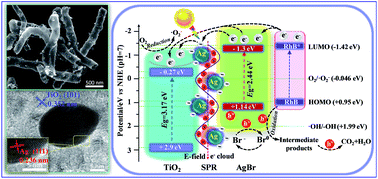
In order to demonstrate the main active species involved in the photocatalytic degradation of RhB and the principle correlated with the enhanced photocatalytic performance of the ternary plasmonic Ag–AgBr/TiO2 heterojunctions, various scavengers ethylenediamine tetraacetic acid disodium (EDTA–2Na; 10 mM), p-benzoquinone (BQ; 1 mM), and isopropyl alcohol (IPA; 10 mM) were was utilized for quenching the possible active species, such as photo-generated holes (h+), superoxide radical anions (˙O2−) and hydroxyl radicals (˙OH), respectively.65–67 As illustrated in Fig. 9a, the experiment results show that the photodegradation efficiency of RhB was not obviously affected by the addition of IPA, which indicated that the indiscriminate oxidizing agent ˙OH is not the primary reactive species in the photocatalytic reaction. However, the photocatalytic activity of Ag–AgBr/TiO2 photocatalyst was significantly inhibited in the presence of EDTA–2Na and BQ, and the degradation rate of RhB was drastically decreased from 97.3% to 58.1% and 71.8%, respectively. These results show that both h+ and ˙O2− were the main active species which play a leading role in the photocatalytic degradation process. The position of conduction band and valence band of ternary heterostructure would further help us to understand the real active species in the photoreaction. According to the UV-Vis DRS results, the indirect band gap energies (Eg) of Ag–AgBr NPs and TiO2 NTs are about 2.44 eV and 3.17 eV, respectively. And the conduction band (CB) edge (ECB) and valence band (VB) edge (EVB) positions at the point of zero charge can be calculated according to the atom's Mulliken electronegativity formula.67 Therefore, ECB of AgBr and TiO2 NTs were calculated to be −1.3 eV and −0.27 eV, respectively. Simultaneously, the corresponding EVB of AgBr and TiO2 NTs also can be estimated at approximately +1.14 eV and +2.9 eV, respectively. It can be found that the VB potential of AgBr is lower than that of ˙OH/OH− (+1.99 eV vs. NHE) and H2O2 (+1.77 eV vs. NHE), indicating that the photo-generated holes accumulated in the VB of AgBr cannot oxidize OH− to produce ˙OH. The results once again explained that the hole and ˙O2− are the primary reactive species in the photodecomposition of dye with using Ag–AgBr/TiO2 NTs photocatalysts, which is agreement with the results of trapping experiment. In addition, due to the matchable energy band structure between AgBr and TiO2, a type II heterojunctions can be formed in such ternary Ag–AgBr/TiO2 composition. This type II band alignment can easily enhance the charge separation, as result of leading to high photocatalytic activity.63,68
Fig. 9b shows the possible charge transfer mechanism of the significantly enhanced photocatalytic activity for the ternary plasmonic Ag–AgBr/TiO2 NTs with staggered type II heterojunction. The photocatalytic degradation process of RhB over Ag–AgBr/TiO2 heterojunction photocatalyst can be performed via the following routes. First, under visible light irradiation, organic dye RhB absorbed on the surface of the Ag–AgBr/TiO2 NTs could be easily excited to form its excited state (RhB*) due to the non-dominant photosensitization effect. Obviously, the CB potentials of both AgBr and TiO2 were more positive than the LUMO energy level of the RhB (around −1.42 eV). As a consequence, the excited state RhB* would inject electrons into the CB of both AgBr and TiO2, simultaneously. And the excited state RhB* was subsequently converted to the cationic dye radical (RhB˙+). Second, the photosensitive AgBr with a narrow band gap can also be excited by visible light to generate the electrons and holes in its corresponding CB and VB, respectively. Third, the plasmonic Ag NPs anchored to the surface of the resultant photocatalyst not only significantly enhanced the visible light scattering and absorption but also can produce photo-generated electrons and holes under the influence of SPR. The plasmon-induced electrons from Ag NPs would immediately migrate to the CB of TiO2 rather than AgBr through the Schottky barrier, owing to the more negative CB potential of AgBr as compared to that of TiO2.13,15,67 While the plasmon-induced holes remain on the Ag NPs. Conversely, part of the photo-generated electrons originating from the CB of AgBr directly transferred to the CB of TiO2, while the rest of excited electrons can be injected into the Ag, concomitantly, which can be ascribed to that Fermi level of the loaded metallic Ag NPs was more positive than CB potential of AgBr.17,19,21 In a word, the photo-generated electrons eventually aggregated in the CB of TiO2. It's worth noting that Ag NPs played a crucial role as a bridge in the ternary Ag–AgBr/TiO2 plasmonic heterojunctions. For one thing, a steady stream of plasmon-induced electrons from Ag NPs could be produced under the effect of SPR, and subsequently injected into other components through this interface nanochannel. For another, Ag NPs also acted as an electron capture trap specifically to capture electrons from AgBr, thus effectively inhibited the recombination of photo-generated electron–hole pairs. Clearly, the interfacial migration of electrons is faster and long-ranger than the electron–hole recombination between the VB and CB of AgBr, which is attributed to the fabrication of intimate contact interfaces between AgBr and TiO2.63 Furthermore, the electrons in the CB of TiO2 could directly reduce dissolved O2 to form ˙O2−, due to the CB potential of TiO2 is more negative than the reduction potential of O2/˙O2− (−0.046 eV vs. NHE).48,64 Of course, the existent ˙O2− acted as the main reactive species which would directly reduce cationic dye radical (RhB˙+) and result in a high photocatalytic degradation rate. Additionally, the photo-generated holes can directly oxidize RhB molecules into intermediate products and further mineralize them to CO2 and H2O.63,69,70 Furthermore, the photo-generated holes were also beneficial to the oxidation of Br− ions to form Br0 atoms which were responsible for oxidation of organic contaminant.38,65 As such, the superior photocatalytic performance of Ag–AgBr/TiO2 heterojunctions mainly thanks to the multiple factors interacting with one another, such as the extraordinary visible-light responses of AgBr, the generated intimately contact interfaces junction, and SPR effect of Ag NPs.
| This journal is © The Royal Society of Chemistry 2016 |