Synthesis of azo linked polymers by a diazotization-coupling reaction and its application for CO2 capture

Narmadha Manoranjana and Seong Ihl Woo*ab
aGraduate School of EEWS, Korea Advanced Institute of Science and Technology, Daejeon 34141, Republic of Korea. E-mail: siwoo@kaist.ac.kr
bDepartment of Chemical and Biomolecular Engineering, Korea Advanced Institute of Science and Technology, Daejeon 34141, Republic of Korea

Received 22nd May 2016 , Accepted 8th September 2016

First published on 23rd September 2016


Abstract

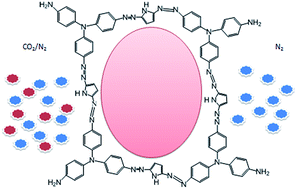
Azo bridged, heterocyclic, microporous polymers were synthesized by a metal catalyst-free direct one-step coupling reaction of a diazotized amine group with the five-membered ring. The two polymers were synthesized by incorporating pyrrole and imidazole groups. These polymers are amorphous in nature and exhibited surface areas between the range 100–300 m2 g−1. The CO2 adsorption capacity was investigated and it was 3.5 mmol g−1 at 298 K at 1 bar. Meanwhile, the CO2/N2 selectivity of the polymers was measured between 20 and 41 and the interactions of the polymers with gas molecules are discussed.

Introduction

Porous materials play a vital role in various fields. It has attained attention for its advanced molecular design and synthesis. From the view of molecular design, the building blocks range from simple phenyl rings to arenes and heterocyclic aromatic rings. From a functional perspective, various functional groups and micro/nanoporous materials are explored. Recently, microporous organic polymers (MOP) came to prominence in CO2 capture because of their high thermal and chemical stability, low density, and large surface area.1–3 These materials have attained more attraction than other adsorbents due to challenges in tuning the porosity and higher surface area for improving CO2 uptake. Moreover, an important advantage of porous polymers is the potential to incorporate a wide range of functional groups into pore walls and easy sorbent regeneration compared to solid adsorbents. Many strategies are being carried out to design and synthesis of microporous organic polymers to increase CO2 capture capacity and physicochemical stability. They find wide application in various areas such as energy storage and conversion,4–6 gas storage and separation,7–11 heterogeneous catalysis,12–17 gas or chemical sensors18–20 and optochemical devices21 and so on. In the present day, there is an urgent need for strategies to reduce the global atmospheric concentration of greenhouse gasses, microporous polymers have become a promising material, finding a major application in carbon capture and storage (CCS). The increase in the carbon dioxide concentration from the rapid consumption of fossil fuels has led to drastic environmental issues, which increase the attention and challenges in CCS.22,23 Thus, many new effective material are synthesized by incorporating CO2-philic moieties like heteroatoms24,25 such as azo bond,26 benzimidazole,27 amino,28 benzothiazole,29 dicarboximide,30 carboxy,31 triazole,32 imine33,34 and troger base segments19,35 etc., to enhance the interaction between polymer surface and gas molecules.

The attraction between a CO2 molecule and a polymer is mainly due to the attraction of carbon in CO2 and the negative atoms present in the polymer network. This plays a vital role in adsorption capacity of the network. In addition to this, the attractive force of oxygen in a CO2 gas molecule and the positively charged group in the network can also be considered to enhance the uptake of gas molecules. Usually, Lewis base is CO2-philic groups are incorporated in the polymer network. Previously, only amine groups were introduced into the polymer network, but, it has some major drawbacks like a time consuming and also needs a higher temperature to recover the polymer. Then, many conjugated micro- and mesoporous polymer network are built with the Π-conjugated bond to form 2D and 3D structures. In order to increase the adsorption capacity, many active sites were increased by introducing many nitrogen atoms containing groups like triazole, tetrazole, imidazole etc. These nitrogen incorporated materials showed higher uptake than previously reported materials. Among these, azo-based microporous polymers exhibited higher CO2 adsorption capacity up to 236 mg g−1. Moreover, these azo-based microporous polymers are credible candidates as adsorbents and also find application as a heterogeneous catalyst for the conversion of carbon dioxide to value-added chemicals. These azo-based polymers are usually synthesized by homo-coupling of amines in the presence of CuBr/pyridine, Zn/NaOH or hetero-coupling of nitro and amines in the presence of KOH. These synthetic methods have an advantage of a simple and efficient way of synthesis. So far, the multiple nitro-containing monomers used for azo-bridged MOPs are limited to tetrakis(4-nitrophenyl)methane,1,3,5,7-tetrakis(4-aminophenyl)adamantane,2,6,12-triaminotriptycene, 1,3,5-tris(4-aminophenyl)benzene, and 1,1,2,2-tetrakis(4-nitrophenyl)ethane, namely the 3D and 2D linkages, respectively.36,37 Therefore, building blocks with multi-functionalities are highly desirable. All these reactions required a metal catalyst or inert atmosphere or high temperatures to synthesize a porous polymer.

In considering all the concepts mentioned above, we tried to synthesize azo-linked polymers by coupling reactions of a simple heterocyclic compound with diazonium salt without any metal catalyst. The simple five-membered ring compounds like pyrrole and imidazole were selected and heterocyclic azo polymers were synthesized by simple diazotization reaction of the aromatic amine as core and followed by coupling reaction at room temperature. We predicted that the lone pairs of electrons in the azo bond and additional active sites in the heterocyclic ring to increase the uptake of CO2. Here, the synthesis, surface area and pore structure properties and adsorption/selectivity had been discussed in detail.

Experimental

Materials

Tris(4-nitrophenyl)amine and tris(4-aminophenyl)amine was synthesized in our laboratory according to the previously reported literature.38,39 Triphenylamine was purchased from Alfa Aesar imidazole, pyrrole, sodium hydroxide, sodium nitrite, and hydrochloric acid were purchased from Sigma Aldrich and used without any purification.

Synthesis of polymer NPY

The starting material tris(4-aminophenyl)amine was synthesized and characterized by NMR. This amine (2 mmol, 0.58 g) was dissolved in 20 ml of cold water acidified with 1 ml of conc. hydrochloric acid to get a clear solution. To this solution, sodium nitrite (2.1 mmol, 0.145 g) dissolved in 2 ml of cold water was added in drops. The reaction temperature was maintained below 0 °C. The solution was stirred at same temperature for one hour. Pyrrole (2 mmol, 0.13 g) and sodium hydroxide (10 mmol, 0.4 g) was dissolved in 150 ml of water. The diazotization mixture was added to the later mixture in drops and stirred vigorously maintaining a temperature 0–5 °C for 1 h. Later the reaction mixture was stirred at room temperature for 36 h. Afterward, the solution is filtered to obtain the product and washed with water and chloroform. Then it was extracted with chloroform in Soxhalet extraction for 24 h in order to remove the residual monomers and/or low molecular weight by-products.

Synthesis of polymer NIM

The starting material tris(4-aminophenyl)amine was synthesized and characterized by NMR. This amine (2 mmol, 0.58 g) was dissolved in 20 ml of cold water acidified with 1 ml of conc. hydrochloric acid to get a clear solution. To this solution, sodium nitrite (2.1 mmol, 0.145 g) dissolved in 2 ml of cold water was added in drops. The reaction temperature was maintained below 0 °C. The solution was stirred at same temperature for one hour. Imidazole (2 mmol, 0.136 g) and sodium hydroxide (10 mmol, 0.4 g) was dissolved in 150 ml of water. The diazotization mixture was added to the later mixture in drops and stirred vigorously maintaining a temperature 0–5 °C for 1 h. Later the reaction mixture was stirred at room temperature for 36 h. Afterward, the solution is filtered to obtain the product and washed with water and chloroform. Then it was extracted with chloroform in Soxhalet extractor for 24 h in order to remove the residual monomers and/or low molecular weight by-products.

Characterization

The solid state NMR was carried out in Agilent 400 MHz, 54 mm NMR DD2 instrument. The FTIR spectroscopy was recorded in Bruker instrument. X-ray powder diffraction patterns were recorded at a 3θ scan rate of 3° min−1 in transmission geometry using an RIGAKU, D/MAX-2500 with 18 kW rotation anodes and thermogravimetric analysis was performed using a Setsys instrument at a heating rate of 10 °C min−1 in an air atmosphere. The SEM images were obtained from field emission scanning electron microscopy (FE-SEM), Hitachi S-4800. Nitrogen sorption studies were carried out in Micromeritics Tristar III. Prior to the measurement, the samples were degassed in a vacuum at 150 °C for 7 h. The surface area was calculated by Brunauer–Emmett–Teller (BET) equation (P/P0 = 0.1–0.3) and pore volume was determined by the t-plot method. The CO2 and N2 adsorption measurements were carried out using a Micromeritics Tristar III apparatus at 0 or 25 °C and up to 1 bar. The temperature during adsorption and desorption was kept constant using a circulator.

Results and discussions

Synthesis and characterization of the azo polymers

We synthesized azo polymers by diazotization reaction and followed by a coupling reaction with heterocycles in an aqueous medium. Here, the hetero amines are first converted to diazonium group by sodium nitrite, and then it was coupled with heterocyclic compounds like pyrrole and imidazole to give the polymer (Scheme 1). The molar ratio of amine and heterocyclic compounds is taken in 1[thin space (1/6-em)]:[thin space (1/6-em)]1 and the reactions were carried out at room temperature. The polymer yield was moderate about 60% and comparable to other reported results.40 The polymer thus formed was characterized by solid-state 13C NMR, FTIR, PXRD, and thermogravimetric analysis to confirm the structure. The chemical shifts in solid state 13C NMR of azo polymers located at 147 and 149 ppm which confirmed the formation of the azo bond.41 The peak found at 120 and 119 ppm corresponds to the carbon atom of pyrrole and imidazole42,43 (Fig. 1). The peaks at 130 ppm correspond to the central core phenyl carbon of triphenyl amine.44 The formation of an azo bond is also confirmed by FTIR spectra. The band at 1360 cm−1, 1410 cm−1, and 1147 cm−1 confirmed the formation of the azo bond. The strong band at 1500 cm−1 is due to the C[double bond, length as m-dash]N and aromatic carbon stretching frequency. At the same time, the peak at 3000–3300 cm−1 corresponding to an amine group, where the intensity is found reduced. This confirms the formation of azo product and completion of the reaction (Fig. 2).
image file: c6ra13267g-s1.tif
Scheme 1 Schematic representation of the synthesis of the NPY and NIM.

image file: c6ra13267g-f1.tif
Fig. 1 Solid state 13C NMR spectra of (a) NPY and (b) NIM.

image file: c6ra13267g-f2.tif
Fig. 2 The expand FTIR spectra of polymers between 2000 and 500 cm−1.

To investigate the thermal stability of the polymers, thermogravimetric analysis was carried out (Fig. 3). It was performed in the air atmosphere at the heating rate of 10 °C up to 900 °C. It shows both polymers are stable up to 200 °C. The weight loss around 2% at 100 °C is due moisture present in the polymer. These two azo polymers exhibited similar thermal stabilities as previously reported azo networks.40,45 It shows two weight loss stages, first at 340 °C and second at 460 °C and 480 °C for NIM and NPY respectively. The initial weight loss at 340 °C represents the degradation of lower molecular weight compounds and later, the degradation of the polymer network. In the case of both polymers, there is no visible glass transition temperature curve before the decomposition of polymers, which confirms the rigid structure of the polymer. The PXRD (Fig. 4) patterns suggest that all azo networks are amorphous in nature with a broad peak at 2θ = 20 degree, corresponding distance valve of 4.6 Å showing stacking of aromatic rings forming a rigid structure, which is in agreement with previous results. The SEM images of azo polymers are shown in the Fig. 5. In the case of both polymers, the small particles of irregular shapes and size are aggregated.


image file: c6ra13267g-f3.tif
Fig. 3 Thermogravimetric analysis (TGA) of polymers under air up to 800 °C at a heating rate 10 °C min−1.

image file: c6ra13267g-f4.tif
Fig. 4 PXRD patterns of azo polymers.

image file: c6ra13267g-f5.tif
Fig. 5 SEM images of azo polymers (a) NPY and (b) NIM.

Porosity and gas sorption studies of polymers

The porous properties of polymers were studied by nitrogen adsorption–desorption isotherm at 77 K. Both polymers were degassed at 100 °C for five hours under vacuum prior to all measurements. Both isotherms in Fig. 6a show a steep increase resembling type II isotherm, which confirms the presence of micropores. The Brunauer–Emmett–Teller (BET) surface area of NPY and NIM are 178 m2 g−1 and 307 m2 g−1 respectively, which was comparable to the previously reported azo polymers.44–46 The two polymers exhibited dominant pore size at 3.84 and 3.95 nm. The total pore volume was calculated with nitrogen gas adsorbed at P/P0 = 0.99 of NPY and NIM was 0.34 cm3 g−1 and 0.54 cm3 g−1 respectively as shown in Table 1. These polymers are comparable or higher than the previously reported azo microporous polymers synthesized by the condensation reaction.26,41 The pore size distribution analysis agrees with the nitrogen adsorption isotherm at 77 K, indicates the presence of micropores in the polymer network.
image file: c6ra13267g-f6.tif
Fig. 6 (a) Porosity properties of polymers: (a) nitrogen adsorption and desorption isotherms at 77.3 K; (b) pore size distributions (PSD) calculated by the NLDFT method; (c) CO2 and N2 adsorption isotherms at 273 K; (d) CO2 and N2 adsorption isotherms at 298 K.
Table 1 Porosity data, CO2 and N2 capture capacities, CO2/N2 selectivities for the polymers
Polymer SABETa m2 g−1 Vtotb m3 g−1 CO2 uptakec mmol g−1 N2 uptakec mmol g−1 CO2/N2d
273 K 298 K 273 K 298 K 273 K 298 K
a BET surface areas were calculated at 77.3 K N2 adsorption isotherm.b Vtot, pore volume at P/P0 = 0.1 at 77.3 K.c Absorbance of polymers at 1 bar pressure.d Selectivity calculated by initial slope method of adsorption isotherm.
NPY 178 0.34 4.4 3.18 0.91 1.29 21 43
NIM 307 0.54 4.44 3.54 0.33 0.26 40 52


The porous materials attain importance for its advanced molecular design and synthesis. From the view of molecular design, many building blocks ranging from phenyl rings to heterocyclic groups are incorporated. From functional perspective, various functional groups are explored. In this way, we incorporated CO2-philic groups like nitrogen sites containing heterocyclic five-membered ring pyrrole and imidazole and the azo bond formed during the polymerization reaction. Similarly, the porosity and pore volume plays a crucial effect on gas capture. Apart from nitrogen containing sites, the pore size, surface area and structural properties are analyzed and found these polymers can be considered for the carbon dioxide adsorption capacity and selectivity studies. Thus, we tested the polymers for CO2 and N2 adsorption/desorption isotherms at 273 and 298 K up to one bar. The azo polymers NPY and NIM showed CO2 adsorption capacity of 3.1 and 3.5 mmol g−1 respectively (Fig. 6d). Our results are comparable to the previously reported microporous polymers like ALP-1-4 (3.2 mmol g−1),37 furan-based polymers FOF (1.7 mmol g−1),47 hydroxyl-containing fused aromatic polymer (1.8–3.9 mmol g−1),48 BILP (4.2 mmol g−1),49 Azo-MOP (2.4 mmol g−1),46 Azo-CMP (3.72 mmol g−1).50 Both linkers' imidazole and pyrrole possessing similar ring structure, surface area and pore volume, shows a rapid increase at initial stages of CO2 adsorption isotherm. In the case of these polymers, the uptake of CO2 was found more than 1.3 mmol g−1 at 0.15 bar. This is higher than many porous polymers and high adsorption capacity may be due to the small pore size and CO2-philic of the azo group. This adsorption capacity at low pressure, makes the polymer can find application in CO2 capture in the post combustion flue gas. Apart from surface area, the molecular structure and chemical nature of monomers plays an essential role in increasing the uptake of gas molecules. Thus, the building blocks selection plays a vital role in designing porous polymer.50 Moreover, the isotherms of CO2 are fully irreversible. The higher uptake amount shown by NPY and NIM, than the reported polymers with a higher surface area is due to the higher binding energy of NH (sp2 hybridization), which has higher binding energy towards CO2 gas molecules in addition to azo bond.51 The NIM shows little higher uptake because of the presence of another active site N atom with higher binding energy towards CO2 gas molecules. The uptake is higher at lower temperature, which shows adsorption up to 4 mmol g−1 as summarized in Table 1 and Fig. 6c. Generally, for the sorbents possessing narrow pore size shows stronger CO2–polymer interactions due to the higher number of interactions between pore walls and the adsorbed gas molecules.52 These synthesized polymers have narrow and dominant pore size of 3.84 and 3.95 nm. This factor makes these polymer networks as a better sorbent for CO2 uptake. This is also confirmed by the higher heat of adsorption value.

To study the interaction between the carbon dioxide gas molecules and the active sites in the polymer network, a heat of adsorption was calculated by Clausius–Clapeyron method from the CO2 isotherm collected at 273 and 298 K and shown in the Fig. 7. The heat of adsorption plays a major in determining the selectivity of a polymer and the energy required for desorption. The heat of adsorption ranges in between 18 and 27 kJ mol−1, the ideal range for CO2 sorbents according to Wilmer et al.53 To investigate the gas selectivity of polymers, CO2 and N2 adsorption at 273 K was carried out. The uptake of nitrogen gas at 273 K was observed as 0.91 and 0.33 mmol g−1 for NPY and NIM respectively. The selectivity was calculated by initial slope method and the results were shown in Table 1. The calculated selectivities are from 20–52 for both polymers and these values are still comparable to other polymers such as triazine-based frameworks (14–41)54 and some nitrogen containing microporous organic polymers (17.3–30.6).55,56 Some polymers with same the azo functional group has shown higher selectivity than these polymers, may be caused by the sieving effect of the pore size obtained in these polymers.


image file: c6ra13267g-f7.tif
Fig. 7 CO2 isosteric heat of adsorption calculated for polymers NPY and NIM.

Conclusions

In conclusion, we synthesized two polymers with the azo linkages by diazotization of amines followed by the coupling reaction of heterocycles. Both polymers were amorphous and exhibited moderate surface area with pore volume 0.34 cm3 g−1 and 0.54 cm3 g−1 for NPY and NIM respectively. The uptake capacity of the polymers were studied at 273 K and 298 K towards carbon dioxide and nitrogen gas, which showed positive results up to 4 mmol g−1 approximately. The selectivity calculated by initial slope method indicates that these two synthesized polymers NPY and NIM can be potential candidates for carbon dioxide capture and separations.

Acknowledgements

This research is supported by Graduate School of EEWS, Korea Advanced Institute of Science and Technology.

References

  1. R. Dawson, A. I. Cooper and D. J. Adams, Prog. Polym. Sci., 2012, 37, 530–563 CrossRef CAS.
  2. X. Feng, X. Ding and D. Jiang, Chem. Soc. Rev., 2012, 41, 6010–6022 RSC.
  3. D. Wu, F. Xu, B. Sun, R. Fu, H. He and K. Matyjaszewski, Chem. Rev., 2012, 112, 3959–4015 CrossRef CAS PubMed.
  4. Y. Kou, Y. Xu, Z. Guo and D. Jiang, Angew. Chem., Int. Ed., 2011, 50, 8753–8757 CrossRef CAS PubMed.
  5. J. P. Paraknowitsch and A. Thomas, Energy Environ. Sci., 2013, 6, 2839–2855 CAS.
  6. C. R. DeBlase, K. E. Silberstein, T. T. Truong, H. D. Abruna and W. R. Dichtel, J. Am. Chem. Soc., 2013, 135, 16821–16824 CrossRef CAS PubMed.
  7. J. Stejskal, Prog. Polym. Sci., 2015, 41, 1–31 CrossRef CAS.
  8. N. Huang, X. Chen, R. Krishna and D. Jiang, Angew. Chem., Int. Ed., 2015, 54, 2986–2990 CrossRef CAS PubMed.
  9. Y. Liao, J. Weber and C. F. J. Faul, Macromolecules, 2015, 48, 2064–2073 CrossRef CAS.
  10. S. Wu, Y. Liu, G. Yu, J. Guan, C. Pan, Y. Du, X. Xiong and Z. Wang, Macromolecules, 2014, 47, 2875–2882 CrossRef CAS.
  11. G. Liu, Y. Wang, C. Shen, Z. Ju and D. Yuan, J. Mater. Chem. A, 2015, 3, 3051–3058 CAS.
  12. P. Kaur, J. T. Hupp and S. T. Nguyen, ACS Catal., 2011, 1, 819–835 CrossRef CAS.
  13. Y. Zhang and S. N. Riduan, Chem. Soc. Rev., 2012, 41, 2083–2094 RSC.
  14. Y. Wang, X. Wang and M. Antonietti, Angew. Chem., Int. Ed., 2012, 51, 68–89 CrossRef CAS PubMed.
  15. Y. Wu, H. Xu, X. Chen, J. Gao and D. Jiang, Chem. Commun., 2015, 51, 10096–10098 RSC.
  16. H. Lee, H. Kim, T. J. Choi, H. W. Park and J. Y. Chang, Chem. Commun., 2015, 51, 9805–9808 RSC.
  17. L. Li, H. Zhao and R. Wang, ACS Catal., 2015, 5, 948–955 CrossRef CAS.
  18. L.-M. Tao, F. Niu, D. Zhang, T.-M. Wang and Q.-H. Wang, New J. Chem., 2014, 38, 2774–2777 RSC.
  19. J. L. Novotney and W. R. Dichtel, ACS Macro Lett., 2013, 2, 423–426 CrossRef CAS.
  20. X. Liu, Y. Xu and D. Jiang, J. Am. Chem. Soc., 2012, 134, 8738–8741 CrossRef CAS PubMed.
  21. C. Gu, Y. Chen, Z. Zhang, S. Xue, S. Sun, K. Zhang, C. Zhong, H. Zhang, Y. Pan, Y. Lv, Y. Yang, F. Li, S. Zhang, F. Huang and Y. Ma, Adv. Mater., 2013, 25, 3443–3448 CrossRef CAS PubMed.
  22. L. Huang, X. Zeng and D. Cao, J. Mater. Chem. A, 2014, 2, 4899–4902 CAS.
  23. S. Yao, X. Yang, M. Yu, Y. Zhang and J.-X. Jiang, J. Mater. Chem. A, 2014, 2, 8054–8059 CAS.
  24. Y. Luo, B. Li, W. Wang, K. Wu and B. Tan, Adv. Mater., 2012, 24, 5703–5737 CrossRef CAS PubMed.
  25. H. A. Patel, F. Karadas, J. Byun, J. Park, E. Deniz, A. Canlier, Y. Jung, M. Atilhan and C. T. Yavuz, Adv. Funct. Mater., 2013, 23, 2270–2276 CrossRef CAS.
  26. H. A. Patel, S. Hyun Je, J. Park, D. P. Chen, Y. Jung, C. T. Yavuz and A. Coskun, Nat. Commun., 2013, 4, 1357–1360 CrossRef PubMed.
  27. M. Zhang, Z. Perry, J. Park and H.-C. Zhou, Polymer, 2014, 55, 335–339 CrossRef CAS.
  28. V. Guillerm, L. J. Weselinski, M. Alkordi, M. I. Mohideen, Y. Belmabkhout, A. J. Cairns and M. Eddaoudi, Chem. Commun., 2014, 50, 1937–1940 RSC.
  29. V. S. P. K. Neti, X. Wu, P. Peng, S. Deng and L. Echegoyen, RSC Adv., 2014, 4, 9669–9672 RSC.
  30. S. Makhseed and J. Samuel, J. Mater. Chem. A, 2013, 1, 13004–13010 CAS.
  31. H. Ma, H. Ren, X. Zou, S. Meng, F. Sun and G. Zhu, Polym. Chem., 2014, 5, 144–152 RSC.
  32. L. H. Xie and M. P. Suh, Chem.–Eur. J., 2013, 19, 11590–11597 CrossRef CAS PubMed.
  33. Y. Zhu, H. Long and W. Zhang, Chem. Mater., 2013, 25, 1630–1635 CrossRef CAS.
  34. F. J. Uribe-Romo, J. R. Hunt, H. Furukawa, C. Klock, M. O'Keeffe and O. M. Yaghi, J. Am. Chem. Soc., 2009, 131, 4570–4571 CrossRef CAS PubMed.
  35. Z. G. Wang, X. Liu, D. Wang and J. Jin, Polym. Chem., 2014, 5, 2793–2800 RSC.
  36. J. Lu and J. Zhang, J. Mater. Chem. A, 2014, 2, 13831–13834 CAS.
  37. P. Arab, M. G. Rabbani, A. K. Sekizkardes, T. İslamoğlu and H. M. El-Kaderi, Chem. Mater., 2014, 26, 1385–1392 CrossRef CAS.
  38. Y.-T. Tsai, C.-T. Lai, R.-H. Chien, J.-L. Hong and A.-C. Yeh, J. Polym. Sci., Part A: Polym. Chem., 2012, 50, 237–249 CrossRef CAS.
  39. B. Wu, F. Cui, Y. Lei, S. Li, S. Amadeu Nde, C. Janiak, Y. J. Lin, L. H. Weng, Y. Y. Wang and X. J. Yang, Angew. Chem., Int. Ed., 2013, 52, 5096–5100 CrossRef CAS PubMed.
  40. L. Tao, F. Niu, D. Zhang, J. Liu, T. Wang and Q. Wang, RSC Adv., 2015, 5, 96871–96878 RSC.
  41. Y. Xu, Z. Li, F. Zhang, X. Zhuang, Z. Zeng and J. Wei, RSC Adv., 2016, 6, 30048–30055 RSC.
  42. F. L. Pissetti, P. L. D. Araujo, F. A. B. Silvaa and G. Y. Poirierb, J. Braz. Chem. Soc., 2015, 26, 266–272 CAS.
  43. X. Liu, A. Seing, Y. Zhang, X. Luo, H. Xia, H. Li and Y. Mu, RSC Adv., 2014, 4, 6447–6453 RSC.
  44. Z. Yang, B. Yu, H. Zhang, Y. Zhao, Y. Chen, Z. Ma, G. Ji, X. Gao, B. Han and Z. Liu, ACS Catal., 2016, 6, 1268–1273 CrossRef CAS.
  45. H. A. Patel, S. H. Je, J. Park, Y. Jung, A. Coskun and C. T. Yavuz, Chem.–Eur. J., 2014, 20, 772–780 CrossRef CAS PubMed.
  46. Z. Yang, H. Zhang, B. Yu, Y. Zhao, Z. Ma, G. Ji, B. Han and Z. Liu, Chem. Commun., 2015, 51, 11576–11579 RSC.
  47. J. Ma, M. Wang, Z. Du, C. Chen, J. Gao and J. Xu, Polym. Chem., 2012, 3, 2346–2349 RSC.
  48. R. Dawson, L. A. Stevens, T. C. Drage, C. E. Snape, M. W. Smith, D. J. Adams and A. I. Cooper, J. Am. Chem. Soc., 2012, 134, 10741–10744 CrossRef CAS PubMed.
  49. M. G. Rabbani and H. M. El-Kaderi, Chem. Mater., 2011, 23, 1650–1653 CrossRef CAS.
  50. X. Wang, Y. Zhao, L. Wei, C. Zhang and J.-X. Jiang, J. Mater. Chem. A, 2015, 3, 21185–21193 CAS.
  51. Z. Tian, T. Saito and D. E. Jiang, J. Phys. Chem. A, 2015, 119, 3848–38452 CrossRef CAS PubMed.
  52. R. Dawson, A. I. Cooper and D. J. Adams, Polym. Int., 2013, 62, 345–352 CrossRef CAS.
  53. C. E. Wilmer, O. K. Farh, Y.-S. Bae, J. T. Huppb and R. Q. Snurr, Energy Environ. Sci., 2012, 5, 9849–9856 CAS.
  54. X. Yang, S. Yao, M. Yu and J. X. Jiang, Macromol. Rapid Commun., 2014, 35, 834–839 CrossRef CAS PubMed.
  55. S. Ren, M. J. Bojdys, R. Dawson, A. Laybourn, Y. Z. Khimyak, D. J. Adams and A. I. Cooper, Adv. Mater., 2012, 24, 2357–2361 CrossRef CAS PubMed.
  56. A. Bhunia, I. Boldog, A. Mollerb and C. Janiak, J. Mater. Chem. A, 2013, 1, 14990–14999 CAS.

This journal is © The Royal Society of Chemistry 2016
Click here to see how this site uses Cookies. View our privacy policy here.