Harnessing the maximum reinforcement of graphene oxide for poly(vinylidene fluoride) nanocomposites via polydopamine assisted novel surface modification

Sunanda Roya, Tanya Das*b, Liying Zhanga and Xiao Matthew Hu*a
aSchool of Materials Science and Engineering, Nanyang Technological University, Singapore 639798, Singapore. E-mail: asxhu@ntu.edu.sg; Tel: +65 6790 4610
bBerkeley Education Alliance for Research in Singapore (BEARS), Singapore 138602, Singapore. E-mail: tanya.das@bears-berkeley.sg; Tel: +65 8575 8498

Received 19th May 2016 , Accepted 8th July 2016

First published on 11th July 2016


Abstract

Surface modification of graphene oxide (GO) is imperative in modern composite research progress due to its poor surface chemistry. However, a facile, scalable and appropriate functionalization process which empowers molecule-level dispersion and maximum interfacial interaction between matrix and nanofiller at lowest loading is a major challenge up to now. This paper presents a novel functionalized GO through a combination of mussel-inspired chemistry, thiol-ene chemistry and Michael addition reaction with the aim to overcome the aforementioned problems and harness the maximum capability of GO to fabricate advanced nanocomposites. The functionalization process is carried out through a simple, fast and environmental-friendly way and is capable of producing a large quantity of highly exfoliated reactive GO. The modified GO displayed substantial interactions and excellent dispersion when incorporated into poly(vinylidene fluoride) (PVDF) matrix, leading to attain super strong, tough and thermally stable PVDF nanocomposites even at only 0.4 wt% filler loading. Furthermore, the functionalized GO renders outstanding barrier performance and durability to the composite coatings while being tested under various harsh conditions. The nanocomposites are noted to retain their original strength even when subjected to hot seawater for 60 days. Hence, we believe that this approach could open a new avenue to explore GO for other new age polymer nanocomposites with multifunctional capability.

1. Introduction

Graphene, a one atom thick planar 2D material is expected to display some extraordinary and unusual properties.1–3 It is predicted that graphene, the thinnest material on earth, can possess some remarkable properties such as superior mechanical strength, excellent electrical and optical capability and high thermal conductivity. However, it is extremely difficult to utilize these properties in applications. In order to harness these properties, especially in the area of polymer nanocomposites and advanced coatings, graphene should be fully compatible and capable of uniform incorporation in a matrix. A major obstacle that prevents graphene for applications in this area is its poor compatibility, non-uniform dispersion and low stability in non-polar organic solvents, as well as in polymer matrices, due to lack of adequate surface functionalities. Moreover, strong van der Waals forces cause the graphene sheets to be highly agglomerated making it extremely difficult to handle, and prevention of restacking should be attained prior to incorporation in any system. In order to overcome these drawbacks, surface modification of the graphene sheets is a necessity and is under intensive study. GO is the most widely preferred material over other conventional graphene-based materials, including graphene nanoplatelets (GNPs) and graphene nanosheets (GNSs), as it contains a range of oxygen functional groups (e.g. hydroxyl, epoxide, carbonyl and carboxylic acid groups) both on the basal planes and at the edges of the sheets.4,5 However, even with this advantage, sometimes GO may not display the best capability as a material for many advanced applications including preparation of strong polymer nanocomposites and durable coatings. Therefore, further surface modification of GO is highly desirable. Up to now, several approaches are employed for GO modification which mainly includes nucleophilic addition,6 free radical addition,7 cycloaddition,8 nitrene addition,9 and Friedel–Crafts acylation10 and thiol-ene reaction.11–14 However, most of these procedures either follow burdensome conditions or use extremely hazardous chemicals to obtain the final products. Therefore, it is of utmost importance to search for other alternative modification strategies to produce more advanced multifunctional materials in a simple, efficient and environmentally friendly way. In addition, the recognition of an appropriate surface chemistry that can maximise the filler-matrix compatibility, dispersion and interface bonding is also necessary before there can be wider adoption of GO based composite materials.

Polydopamine (PDA), a mussel-inspired protein is identified as a unique material which has the ability to modify virtually any material surface.15–17 More interestingly, the PDA coating could further react with amino or thiol-contained molecules via Michael addition or Schiff-base reaction17–19 leading to tailor the coatings for diverse functional use. Recently, several articles have reported the outstanding ability of PDA in mechanical reinforcement of composites,15,16 corrosion protection,20 and antifouling properties.21 Thus, polydopamine induced modification has become an emerging area of interest in various research fields.

In this article, we present a novel and unique surface modification process for GO that has not been attempted previously. The modification process includes a combination of three popular chemistry routes, i.e. mussel-inspired chemistry, thiol-ene chemistry and the Michael addition reaction on a single GO platform. The process is quite straightforward along with the capability to produce a large amount of modified GO with controlled surface chemistry. Also, throughout this process no hazardous chemicals have been utilized. Furthermore, this process largely prevents the restacking of graphene nanosheets, which is highly desirable for many advanced applications. The purpose of this specific modification process for GO was not only to establish a novel surface modification strategy but also to develop a high performance filler material with multifunctional capability that can be largely employed for marine applications, in particular, as a liner material for a flexible riser. It has been found that incorporation of this functionalized graphene oxide (f-rGO) even at typically low amounts (0.3, 0.4 wt%) into a PVDF matrix can dramatically increase the mechanical strength as well as a toughness level which has not been achieved before in any PVDF nanocomposites. Furthermore, the f-rGO/PVDF composite shows superior chemical resistance and corrosion resistance properties when exposed to various harsh conditions as compared to unmodified PVDF, and the composite showed high stability even when dipped into hot seawater over a period of 60 days. Subsequently, when we used the above composite as a coating on a metal substrate, good adherence associated with durable and smooth surfaces was also achieved. PVDF was chosen as the matrix polymer as it is a widely used engineering thermoplastic material and is largely used for various exterior applications. Moreover, the hydrophobic PVDF polymer has a characteristic of poor adhesion to fillers, thus there has been a great necessity to find appropriate surface functionalization of fillers to enhance the matrix–filler interface interaction or adhesion so as to achieve useful PVDF nanocomposites.

2. Experimental section

2.1. Materials

GO used in this study was prepared from graphite powder following a modified Hummers’ method.22 Dopamine hydrochloride (99%) and 2-amino-2-(hydroxymethyl)-1,3-propanediol hydrochloride (Tris·HCl) were purchased from Regent Chemicals Pte Ltd. PVDF (44080) was purchased from Alfa Aesar. Allylamine (AA, >99%) was kindly provided by a neighbour lab. 1,5-Pentanedithiol (PDT, 96%), 2,2-dimethoxy-2-phenylacetophenone (DMPA, 99%) and all other chemicals including solvents were purchased from Sigma Aldrich, Singapore.

2.2. Synthesis of PDT-DA, AA-rGO and f-rGO

To prepare AA-rGO, about 100 mg (1 mg mL−1) of GO solution was thoroughly mixed with 30 wt% of AA and bath sonicated for 20 min to form a stable GO suspension. The mixture was then heated at 80 °C for 8 h in the presence of 1-[bis(dimethylamino)methylene]-1H-1,2,3-triazolo[4,5-b]pyridinium 3-oxide hexafluorophosphate (HATU, 5 mg) in a nitrogen atmosphere. This led to formation of black allyl terminated exfoliated reduced graphene oxide (AA-rGO). The solution was then thoroughly washed with water and alcohol and then filtered and dried. In the next step, AA-rGO powder was thoroughly dispersed into the PDT-DA solution and then treated under a UV lamp (λ = 365 nm, Techno Digm, Singapore) for 10 min in order to complete the thiol-ene reaction in which DMPA was used as a photoinitiator. The above-used PDT-DA solution was prepared by dissolving 150 mg of dopamine hydrochloride into 60 mL of 10 mM Tris buffer solution (pH 8.5) that contained PDT (PDT : DA was in a 1.1 : 1 ratio). Subsequently, the mixture solution was bath-sonicated for 30 min and further stirred for 10 h at room temperature to complete the reaction. Finally, this functionalized graphene oxide (f-rGO) was freeze-dried for 48 h after being washed several times with ultrapure distilled water.

2.3. Preparation of f-rGO/PVDF nanocomposites

PVDF nanocomposites (0.3 and 0.4 wt% f-rGO) were prepared by solution casting followed by melt mixing using a micromixer (HAAKE MiniLab II) equipped with two counter rotating screws at a temperature of 183 °C with a screw speed of 100 rpm for 12 min under N2 gas flow. First, the f-rGO was dispersed in dimethyl formamide (DMF) solution (1% w/v). The PVDF powder which was pre-dried in an oven for 6 h at 70 °C to eliminate moisture was also dissolved in DMF solution. Then the PVDF solution was added into the f-rGO solution to achieve different compositions of f-rGO in PVDF (0.3 and 0.4 wt%). Subsequently, the mixture was stirred vigorously for 1 h at 70 °C to obtain a good dispersion. After casting and solvent evaporation, the films were dried in an oven for 2 days at 70 °C. Next, the films were chopped into small pieces and melt blended in the twin-screw extruder to obtain the desired nanocomposites. The extruded strips were then made into films (thickness 0.18–0.21 mm) by compression molding in a hot press at a temperature of 183 °C with a holding pressure of ∼10 MPa for 3 min. For comparative study, two further nanocomposites i.e. GO/PVDF and AA-rGO/PVDF were also prepared under identical conditions.

2.4. Barrier property test

The chemical resistance or barrier properties of the composites were studied by immersing the composite films (1 cm × 1 cm size and ∼0.19 mm thick) into various solvents including acetone, toluene, paraffin oil, nitric acid (HNO3, 70%) and methanol over a period of 72 h with constant boiling at 50 °C and the weight changes were recorded over time. The stability and durability was checked by subjecting the film to hot seawater for 60 days. Raw seawater was collected from a nearby beach, East Coast Park, Singapore.

2.5. Preparation of coating on aluminum

Nanocomposite coating was performed by drop casting of the final dispersion on a 0.5 mm thick aluminium substrate. Prior to the coating, the surface of the aluminium substrate was cleaned and activated by atmospheric plasma treatment. The coating suspension was prepared by uniformly mixing of f-rGO into a PVDF solution (soluble in DMF) using a bath sonicator. After coating, the aluminium plates were dried inside the fume hood. The thickness of the coating layer could be controlled by the application method.

2.6. Characterization

The elemental compositions of the graphene powders were determined by X-ray photoelectron spectroscopy (XPS), on a Kratos-Axis spectrometer with monochromatic Al-Kα ( = 1486.71 eV) X-ray radiation (15 kV and 10 mA). All XPS spectra were corrected according to the C[thin space (1/6-em)]1s line at 284.6 eV. Fourier-transform infrared (FTIR) spectra were recorded using a Perkin-Elmer GX FTIR. Spectra were measured in the range from 800 to 4000 cm−1 at 16 scan rate with 4 cm−1 resolution. Samples were mixed with KBr powder and pressed into pellets for measurement. The thermal stability of different specimens was investigated by a TA Instrument high-resolution thermogravimetric analyzer (TGA) Q500 over a temperature range from 30 to 800 °C under nitrogen (60 mL min−1) at a heating rate of 10 °C min−1. The thermal stability of different specimens was investigated by a TA Instrument high-resolution thermogravimetric analyzer (TGA) Q500 over a temperature range from 30 to 800 °C under nitrogen gas at a heating rate of 10 °C min−1. The surface morphology and the cross sections of nanocomposites were investigated by a JEOL JSM-7600F field emission scanning electron microscope (FESEM). Transmission electron microscopy (TEM) observations were conducted on a JEM-2100F electron microscope. X-Ray diffraction (XRD) patterns of the samples were obtained by a Bruker D8 Powder X-ray diffractometer. Dynamic mechanical analysis tests of the nanocomposites were carried out on DMA Q800 TA Instruments in tension mode at a heating rate of 5 °C min−1 from −100 to 150 °C. Tensile testing was performed on dumbbell samples according to the ASTM D638-V method with a crosshead speed of 50 mm min−1 using an Instron machine (Instron Micro Tester 5848) at room temperature. The nanohardness tests were performed using the Nano Test™ (Micro Materials, UK). A Berkovich (three-sided pyramidal) diamond indenter tip manufactured by MicroMaterials was used throughout the tests. For each sample, ten cycles were performed and the average data were presented. The static water contact angles were measured by applying a 6 μL deionized water drop to a film using a OCA 15 plus contact angle.

3. Results and discussion

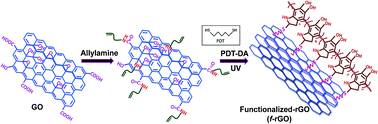
Modification of GO is an essential step in the preparation of strong polymer nanocomposites. Confirmation has been achieved by analyzing several characterization data. Fig. 1 shows the schematic representation of preparation of modified GO. An efficient protocol of thiol conjugation with PDA through Michael addition occurs through the attachment of the thiol to the α,β-unsaturated carbonyl of dopamine. Separately, allylamine (AA) was successfully attached to GO via an amidation process. The purpose of using AA as an intermediate coupling agent has multiple advantages: as it can (i) facilitate in the processing of the thiol-ene reaction and also (ii) protect the C[double bond, length as m-dash]C bonds in the graphene backbone from the direct attack of –SH groups,12 and thus largely helps in retaining the inherent electrical and thermal conductivity of the graphene sheets. In addition, the AA can enhance in the exfoliation of graphene layers. The thio-ene reaction took place when AA-rGO and PDT-DA were mixed together and exposed under UV light.
image file: c6ra12997h-f1.tif
Fig. 1 Schematic illustrations for the preparation of functionalized and exfoliated GO. Schematic inside the dotted box illustrates the plausible mechanism of Michael adduct formation with polydopamine. Here, PDT, PDT-DA, AA-rGO and f-rGO correspond to 1,5-pentanedithiol, pentanedithiol attached dopamine, allylamine attached reduced graphene oxide and functionalized reduced graphene oxide, respectively.

Fig. 2a shows the detailed ATR-FTIR spectra of GO, PDT coated dopamine (PDT-DA), AA-rGO and f-rGO, respectively. The FTIR spectrum of pure GO shows prominent peaks for –COOH and –OH at 3200–3640 cm−1 (overlapped broad peak), –C[double bond, length as m-dash]O (ketonic), C[double bond, length as m-dash]C bond (in-plane vibrations), C–OH stretching, epoxy, C–O vibrations and alkoxy at 1726, 1624, 1351, 1224 and 1039 cm−1, respectively, owing to various oxygenated functional groups. After modifying the GO with AA, some changes including the appearance of some new absorption bands, are observed. For AA-rGO, the absorption band at 1551 cm−1 corresponded to the –NH band of amide.4 Another interesting observation was the total disappearance of the –C[double bond, length as m-dash]O band at 1726 cm−1 as well as the appearance of a new broad peak at 1615 cm−1.23 This broad peak is attributed to the overlapped peak of the –CH[double bond, length as m-dash]CH2 group of allylamine and the amide carbonyl groups, indicating the successful amidation reaction between GO and AA through which carboxylic acid groups of GO were substituted. The C–N stretching band of AA-rGO was also noticed at 1228 cm−1. The occurrence of thiol-functionalized dopamine (PDT-DA) was also confirmed by the appearance of a sharp –SH peak at around 2562 cm−1 (since one –SH group remains free on the dopamine surface). The new peaks at 2846 and 2916 cm−1 are assigned to the symmetric vibrational mode and asymmetric vibrational mode of the CH2 band which arises from the alkyl chain of PDT. The peaks between 1520 and 1600 cm−1 are assigned to the C–C vibration of the benzene ring moiety in the dopamine molecules.16 The FTIR spectrum of f-rGO further corroborated the successful occurrence of the thiol-ene reaction as can be seen by the disappearance of the C[double bond, length as m-dash]C double bond and the absorption band of the S–H stretching vibration as a result of the covalent bonding between them.


image file: c6ra12997h-f2.tif
Fig. 2 (a) FTIR spectra and (b) XPS survey spectra of GO, AA-rGO, f-rGO and PDT-DA. (c) XPS high-resolution C1[thin space (1/6-em)]s, O[thin space (1/6-em)]1s, N[thin space (1/6-em)]1s and S[thin space (1/6-em)]2p spectra of f-rGO, respectively.

To further confirm the successful accomplishment of the above modification of GO, a detailed XPS analysis was performed. Fig. 2b illustrates the XPS survey spectra of GO, AA-rGO and f-rGO. The XPS spectrum of GO showed strong peaks at 284.8 and 532 eV, assigned to C[thin space (1/6-em)]1s and O[thin space (1/6-em)]1s, respectively, indicating that GO is not contaminated and is highly oxidized with substantial oxygen content. After reaction with allylamine, a sharp new peak at binding energy of 399.8 eV assigned to the N[thin space (1/6-em)]1s signal was observed in the AA-rGO spectrum. This peak is believed to originate due to completion of the amidation reaction between –NH2 and –COOH and the ring opening reaction of epoxides and –NH2. Moreover, the intensity of O[thin space (1/6-em)]1s peak was found to be little reduced, indicating the occurrence of simultaneous reduction and functionalization of GO. After thiol-ene reaction, the XPS spectra of f-rGO confirmed two new peaks at 228 and 163.2 eV, which correspond to S[thin space (1/6-em)]2s and S[thin space (1/6-em)]2p,24,25 respectively. The presence of sulfur, oxygen and nitrogen atoms together confirmed the successful accomplishment of the thiol-ene reaction on the graphene surface. Similar peaks were also been observed for PDT-DA though the peak intensities and atomic percentages were different. Fig. 2c displays the high-resolution core-level XPS spectra of C[thin space (1/6-em)]1s, O[thin space (1/6-em)]1s, N[thin space (1/6-em)]1s and S[thin space (1/6-em)]2p for f-rGO in order to further validate the surface composition. The detailed surface compositions from XPS analysis are given in Table S1 in the ESI. As expected, this modification could facilitate exfoliation of graphene layers, and to confirm the exfoliation, X-ray diffractogram patterns of f-rGO and pristine GO was recorded (Fig. S1 in the ESI). The pristine GO powder showed a strong peak centered at 2θ = 10.8° (001), corresponding to a d-spacing of 0.823 nm. The shifting of this peak towards a lower value (2θ = 10°) for the f-rGO sample clearly indicates the successful attaining of exfoliated graphene sheets which results in an increase of interlayer spacing to 0.895 nm. The broad peak at 21.7° probably originates from the peak of AA bound PDT-DA moieties.

Fig. 3a and b show typical FESEM and TEM images of pristine GO, AA-rGO and f-rGO surfaces, respectively, in order to examine the morphological changes resulting from surface functionalization. From both sets of data, a clear difference in the surface morphologies was observed between the three graphene specimens. In the case of AA-rGO and f-rGO an uneven surface topology with many wrinkles, as well as a lower transparency was observed as compared to the pristine GO surface (see Fig. 3a). Similarly, the TEM image of pristine GO shows a more smooth, clean and transparent surface as compared to those of AA-rGO and f-rGO surfaces, which can be attributed to the covalent attachment of different organic molecules on the surface. Nevertheless, the surface of f-rGO was found to be more dark, rough, and wrinkled than that of the AA-rGO, probably owing to the presence of a higher number of different functional groups.


image file: c6ra12997h-f3.tif
Fig. 3 (a) FESEM and (b) TEM images of GO, AA-rGO and f-rGO nanosheets, respectively.

TGA can provide more insight into the surface modifications of GO. As can be seen from Fig. 4, GO is thermally unstable and starts to lose weight at about 150 °C followed by a major loss at around 170–200 °C, presumably due to the evaporation of adsorbed water and loss of oxygen containing functional groups attached to the graphene surface. The total weight loss of GO was found to be 57.3 wt%. The AA-rGO powder exhibits higher thermal stability after modification and reduction. The weight loss of AA-rGO in the temperature range 200–800 °C is about 27.9%, which suggested that AA has been successfully attached on the GO surface via amidation chemistry. Upon further modification of AA-rGO with PDT-DA, the weight loss increased to 48.7%. Moreover, the sample (f-rGO) exhibits an improved thermal stability throughout (no significant weight loss till about 188 °C) with slower decomposition rate, which is possibly due to the build-up of strong molecular interactions (see Fig. 1) within the graphene sheets (as the composition of PDA is rather complex). These results once again illustrate the successful modification of GO through mussel inspired chemistry, Michael addition reaction and thiol-ene chemistry, respectively.


image file: c6ra12997h-f4.tif
Fig. 4 TGA weight loss curves of GO, AA-rGO and f-rGO.

As graphene is a 2D flake type material, it is expected that films made from graphene or its chemical derivatives can show barrier properties against gas or liquid permeation, as reported in a few recent articles.26,27 Taking advantage of this property, we mixed f-rGO with PVDF matrix to develop a new protective coating material. Prior to making the coating material, we mix-blended the f-rGO powder with PVDF matrix to prepare the nanocomposites and studied its reinforcing effect. Considering the widespread use of PVDF for various engineering applications, it was chosen as the polymer matrix in our system. Moreover, PVDF is a thermoplastic material in the fluoropolymer family; and has very good resistance to solvents, acids, bases and shows low smoke generation during combustion. In addition, PVDF offers a hydrophobic surface, thus it prevents sticking of various substances of the surfaces. It is obvious that the addition of graphene into the polymer matrix can increase the mechanical properties due to its intrinsic reinforcing ability. This reinforcement is exclusively dependent on the surface functionality of the filler, their distributions, alignments, adhesion and interactions with the matrix. Fig. 5a presents the stress–strain curves of neat PVDF and various nanocomposites made of GO/PVDF, AA-rGO/PVDF and f-rGO/PVDF nanocomposites. It is apparent from the plots that despite using the same amount of filler loading (0.4 wt%), the reinforcing effect of the f-rGO is much more pronounced than that of other GO nanocomposites. From the plot it is seen that the tensile strength of neat PVDF is 47 MPa whereas that for 0.3 and 0.4 wt% of f-rGO loading rises to 67.8 and 71.8 MPa i.e. the tensile strength increased by 44 and 53%, respectively. The Young’s modulus was also increased significantly by 31 and 37% (see the bar diagram of Fig. 5b). More interestingly, we noticed that the elongation at break, i.e. toughness (as calculated from area under the curve) increased substantially at the same time for the f-rGO/PVDF nanocomposites while the other samples showed no particular trends. For curiosity when we also measured the tensile strength of simple polydopamine coated GO (0.4 wt%)/PVDF nanocomposite as another reference sample, with the tensile strength and Young’s modulus being only 51.7 and 564.9 MPa, respectively.


image file: c6ra12997h-f5.tif
Fig. 5 (a) Stress–strain curves of (i) neat PVDF, (ii) 0.4 wt% GO/PVDF, (iii) 0.4 wt% AA-rGO/PVDF (iv) 0.3 wt% f-rGO/PVDF and (v) 0.4 wt% f-rGO/PVDF nanocomposite. Inset shows the tensile specimens of the corresponding samples. (b) Young’s modulus of the analogous samples.

It is noteworthy to mention here that achieving this scale of improvement in mechanical strength and toughness for PVDF nanocomposites with such a low amount of filler content has not been reported elsewhere. Though there are several articles on graphene/PVDF nanocomposites, only a few have reported the tensile values of the nanocomposites, and thus we could not directly compare our results with other graphene/PVDF composites. Nevertheless, we compared our results with some other types of PVDF nanocomposites including CNTs, to provide a clear demonstration of the high reinforcing capability of f-rGO (see Table S2 in the ESI). This result clearly focuses the necessity of appropriate functionalization of GO in polymer nanocomposites.

Fig. 6a and b show the temperature dependent storage modulus and tan[thin space (1/6-em)]δ curves for neat PVDF and its nanocomposites, respectively. As can be seen, the storage modulus of PVDF within the set temperature range (−100–150 °C) is considerably lower than that of the nanocomposites. After incorporation of GO into PVDF, either raw or modified, the storage modulus of the nanocomposites increased noticeably in the glassy region. Nevertheless, the storage modulus of the f-rGO/PVDF nanocomposites exhibited much higher values than that of the other nanocomposites (see Table 1) despite having similar GO content. It is also apparent from the Fig. 6a that the storage modulus decreases with an increase in temperature for all the samples (though the decrease was not linear). The reason for the decrease in all the samples can be attributed to the melting of PVDF matrix. The storage modulus of neat PVDF at −100 °C was 6937.4 MPa, while for the nanocomposite containing GO, AA-rGO and f-rGO with 0.3, 0.4 wt%, values were 7421.5, 7807.4, 8904.9, 9207.7 MPa, respectively (here note that the storage modulus of PDA coated GO (0.4 wt%)/PVDF nanocomposite was found to be only 7779.34 MPa, results not shown). Therefore, compared with the GO/PDVF and AA-rGO/PVDF nanocomposites, the substantial increase in the storage modulus for the f-rGO/PVDF nanocomposite clearly demonstrates the excellent dispersion of f-rGO into the matrix and the formation of a strong interface interaction between the f-rGO and PVDF matrix (see the inset in Fig. 6a) which eventually facilitates the effective load transfer capacity. It is well known that the peak of the tan[thin space (1/6-em)]δ curve is considered as the glass transition temperature (Tg) of polymers. It is interesting to observe from Fig. 6b that while the addition of GO and AA-rGO did not significantly influence Tg of the PVDF matrix, the Tg value increased significantly (about 9.8 °C, see Table 1) upon addition of f-rGO. This increase in Tg can be explained by the fact that upon inclusion of f-rGO this causes hindrance in the free movement of polymer chains within the matrix owing to strong filler–matrix interface interaction and homogeneous distribution. Another reason for the increase could be the modified texture of GO in the composite. The nanometer scale surface roughness and increased wrinkling on the graphene surface caused by functionalization can induce additional interfacial interactions through mechanical interlocking with the polymer chains and so apparently hinder the molecular mobility, leading to increased Tg of the polymer matrix.28 The increased thermal stability of f-rGO nanocomposites is also demonstrated in Fig. S2, ESI. It has been observed that upon inclusion of only 0.4 wt% f-rGO into PVDF matrix the onset degradation temperature of the nanocomposite increased (defined by 5% weight loss) by ∼14 °C with respect to neat PVDF while incorporation of untreated GO made the nanocomposite thermally less stable. This result also provided indirect evidence for a high degree of dispersion of f-rGO into the PVDF matrix.4


image file: c6ra12997h-f6.tif
Fig. 6 DMA curves of (a) storage modulus and (b) tan[thin space (1/6-em)]δ versus temperature for (i) neat PVDF, (ii) 0.4 wt% GO/PVDF, (iii) 0.4 wt% AA-rGO/PVDF (iv) 0.3 wt% f-rGO/PVDF and (v) 0.4 wt% f-rGO/PVDF nanocomposite. (c) Typical loading–unloading curves (from nanoindentation measurement) for (i) PVDF, (ii) 0.4 wt% GO/PVDF nanocomposite and (iii) 0.4 wt% f-rGO/PVDF nanocomposite. Inset in (a) demonstrates the interactions between PVDF and f-rGO and also the intermolecular interactions between polydopamine moieties on f-rGO.
Table 1 Summary of the storage modulus and glass transition temperature of PVDF and its nanocomposites obtained from dynamic mechanical analysis
Sample Storage modulus (MPa) Increment (%) Tan delta value or Tg (°C)
PVDF 6937.4 −39.81
0.4 wt% GO/PVDF 7421.5 7 −38.20
0.4 wt% AA-rGO/PVDF 7807.4 13 −37.60
0.3 wt% f-rGO/PVDF 8904.9 28 −32.80
0.4 wt% f-rGO/PVDF 9207.7 33 −30.00


To further investigate the performance of f-rGO in mechanical reinforcement, a nanohardness test of the nanocomposites was performed. The nanohardness of neat PVDF is found to be 0.156 (±0.02) GPa while for the GO and f-rGO reinforced composites this value increases to 0.159 (±0.03) and 0.165 (±0.03) GPa (Fig. 6c), respectively. The reduced modulus also increased from 2.29 (±0.3) GPa for neat PVDF to 2.33 (±0.4) and 2.39 (±0.4) GPa for the GO and f-rGO reinforced composites. These results clearly indicate that f-rGO has an immense effect in the reinforcement of PVDF nanocomposites and could be a promising protective material against physical damage toward a substrate.

Looking at such overall high mechanical values of the f-rGO/PVDF nanocomposites, we have also investigated the morphologies of the nanocomposites, as the mechanical strength and load transfer capacity of nanocomposite depends strongly on the molecular-level dispersion of graphene sheets into the matrix polymer. Fig. 7 shows the FESEM images of the cryo-fractured surfaces of neat PVDF, GO 0.4 wt%/PVDF and f-rGO 0.4 wt%/PVDF nanocomposites, respectively. A very distinct morphology can be seen between the three surfaces. It can be seen from the images that the fracture surface of neat PVDF is smooth and featureless whereas the surfaces for the nanocomposites are rough and irregular. However, the roughness was found to be higher, more prominent and sharp in the case of the f-rGO/PVDF nanocomposite. The higher surface roughness on the f-rGO/PVDF nanocomposite is clearly attributed to the strong interfacial adhesion between the f-rGO and PVDF matrix which resists the fracture propagation, and hence increasing of mechanical strength. Further examination of the images shows that for the f-rGO 0.4 wt%/PVDF nanocomposite (Fig. 7c), most of the graphene nanosheets are well dispersed and tightly embedded throughout the matrix, while there are some aggregations of graphene sheets found for the unmodified GO/PVDF nanocomposite. As a result of such strong interfacial interactions and excellent molecular-level dispersion, super enhancement on the tensile strength, Young’s modulus, storage modulus and nanohardness was achieved for the f-rGO based nanocomposites.


image file: c6ra12997h-f7.tif
Fig. 7 Scanning electron microscopy images of the fractured surface of (a) neat PVDF (ii) GO 0.4 wt%/PVDF and (iii) f-rGO 0.4 wt%/PVDF nanocomposite.

Encouraged by the above findings, in the next step we thus utilized the f-rGO/PVDF suspension as a coating material to coat a metal substrate (aluminium plate). Coating was performed by the drop casting process as can be seen by the schematic representation of Fig. 8a. A uniform and smooth coating was obtained by an appropriate deposition process. Moreover, the coating was found to adhere well to the metal surface (see the inset of Fig. 8a) which may be due to the combined effect of (i) the unique adhesion ability of polydopamine towards all substrates that are present on the surface of f-rGO which is also uniformly dispersed in the coating suspension and (ii) mechanical interlocking. In our recent article, we have also shown the synergistic role of polydopamine (PDA) coating in bond strengthening for an epoxy adhesive.15 Fig. 8b(i) and (ii) show the surface morphologies of the coatings by pure PVDF solution and f-rGO/PVDF suspension, respectively. From the micrograph it is also evident that owing to the strong filler-matrix interfacial adhesion, the graphene sheets are firmly embedded within the polymer matrix.


image file: c6ra12997h-f8.tif
Fig. 8 (a) Schematic illustration of drop casting coating process. (b) FESEM images illustrate the surface morphologies of the neat PVDF and f-rGO/PVDF based coating, respectively. Arrows shows the dispersion of GO nanosheets within the matrix.

One of the main requirements of a polymer coating for extreme outdoor applications is good resistance against liquid permeation (or barrier property). Moreover, to achieve a durable coating, it is important to sustain the surface property (wetting property) during the practical application. To examine the solvent permeability or the chemical resistance property, the nanocomposite films were immersed into various solvents including acetone, toluene, paraffin oil, nitric acid (HNO3, 70%) and methanol with constant boiling and shaking at 50 °C over a period of 72 h. The changes in weight gain due to solvent absorption were recorded and the results are presented in Fig. 9a. It is apparent that incorporation of f-rGO can remarkably increase the chemical resistance property of the PVDF matrix by reducing the permeability of the solvents. As a result, there was hardly any change of weight during the experiment. We have also investigated the durability of the composite coating by subjecting the nanocomposite films in a hot seawater bath (60 °C) with continuous shaking for 60 days. The change of the initial contact angle (see Fig. 9b) was used to monitor the stability of the film. As can be seen, the contact angle value remains almost unchanged until 45 days but increases slightly (1.9°) thereafter, suggesting high durability of the composite film for extreme operation under seawater. The presence of polydopamine at the outer layer of GO is probably a key factor for the above high stability and barrier performances as also stated earlier.20 After measuring these performances, we remeasured tensile test values of the nanocomposite (for tensile test measurement separate treatments were carried out with dumbbell shaped samples) as this can provide necessary information about the potential for practical applications. It was exciting to observe that samples which had been treated in hot seawater above 45 days show only little loss (<5%) in the tensile stress value, while values remained the same for treatment up to 45 days (see Fig. 9c). Having such exciting features of the composite, our ongoing research is now actively looking for ways to integrate this material as a liner material in flexible risers for offshore applications. Apart from this, we also believe that this composite material could also be useful as a jacketing material for various cables and piping such in diesel tubes and chemical vapor tubes for various automotive engine parts, etc. due to excellent mechanical strength and chemical resistance properties.


image file: c6ra12997h-f9.tif
Fig. 9 (a) Bar diagram illustrating the barrier properties of PVDF and f-rGO/PVDF nanocomposite films as illustrated by weight of the polymer films before and after soaking in various solvents. Inset shows the tortuous path for solvent molecules in a graphene nanocomposite. (b) Effect of long-time seawater treatment on surface wettability of an f-rGO based nanocomposite. (c) Stress–strain curves of nanocomposites (0.4 wt% f-rGO/PVDF) those were subjected to hot seawater for (i) 0, (ii) 40 and (iii) 60 days. Inset shows the tensile specimens immersed into hot seawater.

4. Conclusions

We have demonstrated a novel and facile strategy for synthesizing large scale functionalized GO via sequential mussel inspired chemistry, thiol-ene chemistry and Michael addition reaction to fabricate super strong PVDF nanocomposites and coatings for offshore applications. The modification was performed through an environmentally benign process. A series of characterization techniques including FTIR spectroscopy, XPS, TGA, FESEM, TEM and XRD were conducted to confirm the modification process. When incorporating the modified GO into a PVDF matrix, dramatic enhancement in the mechanical properties of the nanocomposites was obtained at fairly low concentrations of GO. Addition of only 0.4 wt% f-rGO improved the tensile strength and Young’s modulus of the composites by 53 and 37%, respectively, which are much higher than many recent reported values for graphene–polymer composites. Furthermore, this graphene composite exhibited excellent surface stability and durability when subjected continuously to hot seawater for 60 days, and this nanocomposite as a coating material on metal substrate revealed good adhesion with smooth and uniform surface coating. Excitingly, these results clearly demonstrated that our modification process is indeed a promising approach to produce large-scale high performance functionalized GO for future development of advanced polymer composites as well as new coating materials. Also, due to the simple, convenient and inexpensive processes, we hope that this approach could be a universal strategy for surface modification of various nanomaterials for diverse applications. Finally, it is extremely important to recognize suitable surface functionalization of nanofillers in order to exploit maximum performances at minimum loading to achieve high strength polymer nanocomposites.

Acknowledgements

The authors gratefully acknowledge the financial support from the A*STAR MIMO thematic grant, through NTU, Singapore.

Notes and references

  1. K. S. Novoselov, A. K. Geim, S. V. Morozov, D. Jiang, Y. Zhang, S. V. Dubonos, I. V. Grigorieva and A. A. Firsov, Science, 2004, 306, 666–669 CrossRef CAS PubMed.
  2. D. Li and R. B. Kaner, Science, 2008, 320, 1170–1171 CrossRef CAS PubMed.
  3. C. Lee, X. Wei, J. W. Kysar and J. Hone, Science, 2008, 321, 385–388 CrossRef CAS PubMed.
  4. S. Roy, X. Tang, T. Das, L. Zhang, Y. Li, S. Ting, X. Hu and C. Y. Yue, ACS Appl. Mater. Interfaces, 2015, 7, 3142–3151 CAS.
  5. D. Cai and M. Song, J. Mater. Chem., 2010, 20, 7906–7915 RSC.
  6. S. P. Economopoulos, G. Rotas, Y. Miyata, H. Shinohara and N. Tagmatarchis, ACS Nano, 2010, 4, 7499–7507 CrossRef CAS PubMed.
  7. J. R. Lomeda, C. D. Doyle, D. V. Kosynkin, W. F. Hwang and J. M. Tour, J. Am. Chem. Soc., 2008, 130, 16201–16206 CrossRef CAS PubMed.
  8. C. K. Chua, A. Ambrosi and M. Pumera, Chem. Commun., 2012, 48, 5376–5378 RSC.
  9. T. A. Strom, E. P. Dillon, C. E. Hamilton and A. R. Barron, Chem. Commun., 2010, 46, 4097–4099 RSC.
  10. C. K. Chua and M. Pumera, Chem.–Asian J., 2012, 7, 1009–1012 CrossRef CAS PubMed.
  11. M. Castelaín, G. Martínez, C. Marco, G. Ellis and H. J. Salavagione, Macromolecules, 2013, 46, 8980–8987 CrossRef.
  12. N. D. Luong, L. H. Sinh, L.-S. Johansson, J. Campell and S. Jukka, Chem.–Eur. J., 2015, 21, 3183–3186 CrossRef PubMed.
  13. B. Yu, X. Wang, W. Xing, H. Yang, X. Wang, L. Song and Y. Hu, Chem. Eng. J., 2013, 228, 318–326 CrossRef CAS.
  14. B. Yu, Y. Shi, B. Yuan, L. Liu, H. Yang, Q. Tai, S. Lo, L. Song and Y. Hu, RSC Adv., 2015, 5, 13502–13506 RSC.
  15. A. S. Subramanian, J. N. Tey, L. Zhang, B. H. Ng, S. Roy, J. Wei and X. Matthew Hu, Polymer, 2016, 82, 285 CrossRef CAS.
  16. L. Zhang, S. Roy, Y. Chen, E. K. Chua, K. Y. See, X. Hu and M. Liu, ACS Appl. Mater. Interfaces, 2014, 6, 18644–18652 CAS.
  17. H. Lee, J. Rho and P. B. Messersmith, Adv. Mater., 2009, 21, 431–434 CrossRef CAS PubMed.
  18. H. Lee, S. M. Dellatore, W. M. Miller and P. B. Messersmith, Science, 2007, 318, 426–430 CrossRef CAS PubMed.
  19. L. Q. Xu, W. J. Yang, K.-G. Neoh, E.-T. Kang and G. D. Fu, Macromolecules, 2010, 43, 8336–8339 CrossRef CAS.
  20. J. Ou, J. Wang, J. Zhou, S. Liu, Y. Yu, X. Pang and S. Yang, Prog. Org. Coat., 2010, 68, 244–247 CrossRef CAS.
  21. J. Jiang, P. Zhang, L. Zhu, B. Zhu and Y. Xu, J. Mater. Chem. B, 2015, 3, 7698–7706 RSC.
  22. W. S. Hummers and R. E. Offeman, J. Am. Chem. Soc., 1958, 80, 1339 CrossRef CAS.
  23. T. Das, S. Roy, S. Ting, L. Zhang, Y. Li, C. Y. Yue and X. Hu, RSC Adv., 2015, 5, 15524–15533 RSC.
  24. S. Roy, T. Das, C. Y. Yue and X. Hu, ACS Appl. Mater. Interfaces, 2014, 6, 664–670 CAS.
  25. S. Roy, T. Das, Y. Ming, X. Chen, C. Y. Yue and X. Hu, J. Mater. Chem. A, 2014, 2, 3961–3970 CAS.
  26. N. T. Kirkland, T. Schiller, N. Medhekar and N. Birbilis, Corros. Sci., 2012, 56, 1–4 CrossRef CAS.
  27. B. M. Yoo, H. J. Shin, H. W. Yoon and H. B. Park, J. Appl. Polym. Sci., 2014, 131, 39628 CrossRef.
  28. M. Naebe, J. Wang, A. Amini, H. Khayyam, N. Hameed, L. Hua Li, Y. Chen and B. Fox, Sci. Rep., 2014, 4, 4375 Search PubMed.

Footnote

Electronic supplementary information (ESI) available. See DOI: 10.1039/c6ra12997h

This journal is © The Royal Society of Chemistry 2016
Click here to see how this site uses Cookies. View our privacy policy here.