Large scale and facile sonochemical synthesis of magnetic graphene oxide nanocomposites and their dual electro/magneto-stimuli responses

Wen Ling Zhang*ac, Yu Tianb, Ying Dan Liuc, Zhong Qian Songa, Jing Quan Liu*a and Hyoung Jin Choi*d
aCollege of Materials Science and Engineering, Laboratory of Fiber Materials and Modern Textile, Growing Base for State Key Laboratory, Qingdao University, Qingdao 266071, China. E-mail: wlzhangqd@qdu.edu.cn; jliu@qdu.edu.cn
bState Key Laboratory of Tribology, Tsinghua University, Beijing 100084, China
cState Key Laboratory of Metastable Materials Science and Technology, Yanshan University, Qinhuangdao 066004, China
dDepartment of Polymer Science and Engineering, Inha University, Incheon 402-751, Korea. E-mail: hjchoi@inha.ac.kr

Received 19th May 2016 , Accepted 30th July 2016

First published on 1st August 2016


Abstract

Graphene based magnetic nanoparticles (NPs) have attracted considerable attention in numerous applications owing to their splendid chemical and physical properties. However, the synthesis approaches are often complex and relatively expensive. In the present study, we report the fabrication of magnetic graphene oxide (GO) nanocomposites (denoted as Fe3O4/GO) via an effective electrostatic strategy under ultrasonic waves using the bare Fe3O4 NPs initially synthesized via a co-precipitation method. The Fe3O4 NPs were uniformly covered by the crumpled-like GO matrix, as confirmed by transmission electron microscopy. Their structure and magnetic behaviors were investigated via Fourier transform infrared spectroscopy and vibrating sample magnetometer curves. The appealing dual electro/magnetorheological performance of the as-prepared Fe3O4/GO dispersed in silicone oil was investigated using a rotational rheometer under applied electric or magnetic fields, respectively. Their dynamic yield stress values were analyzed using a universal equation, and the MR efficiency was observed to be higher than that of the ER.

1. Introduction

An endeavor of discovery focused on graphene has created an entirely new branch of materials science and technology. Being a two-dimensional structure of carbon sheet, graphene has high specific area, prominent electrical/thermal conductivity, as well as excellent flexibility.1–4 Benefiting from these interesting properties, graphene provides great potential for a vast array of applications, including supercapacitors, batteries, fuel cells, sensors and actuators. Graphene oxide (GO) has been considered as one of the most desirable precursors to achieve the mass production of graphene through exfoliation and reduction treatment. The surface bound oxygenous functional groups can be employed as active sites to render chemical modification or functionalization of GO sheets via covalent (chemical grafting) or noncovalent (π–π stacking, hydrogen bonding, electrostatic interactions) approaches.5–7 On the other hand, the polar oxygenous functional groups will result in some loss in electrical conductivity. In recent years, extensive efforts have been made to attach magnetic nanoparticles (NPs) to GO or reduced GO (rGO) sheets by in situ co-precipitation, physical affinities, microwave-heated synthesis, solvothermal routes and even mechanochemical procedures.8–12 Fe3O4 NPs have attracted intensive research interest, due to their paramagnetic behaviors, cost-efficient and environmentally friendly properties.13–17 However, their uncontrollable aggregation problems compromise their applications in nanotechnology and biomedical fields. To overcome these issues, considerable strategies have been developed. For instance, Zhong et al.14 have reported 3D flower-like Fe3O4 NPs for water treatment. Fungus-like Fe3O4 NPs have also been fabricated for the removal of radionuclides,18 and magnetic NPs have been decorated on layered double hydroxide (LDH) for a drug release system.19 Dai's group20 have reported the in situ fabrication of Fe3O4/rGO composites using Fe2+ as a reducing agent. Besides, various other Fe3O4/GO composites have also been synthesized via metal–carbonyl coordination using functional solvent (1-methyl-2-pyrrolidone, NMP)21 or the electrostatic self-assembly approach.22 Regarding other methods, the electrostatic approach is considered as a suitable and economic choice to attach magnetic NPs to the GO matrix. While the zeta potential of the GO colloid is negative, due to the surface-attached functional groups, Fe3O4 NPs can simultaneously be positively charged, even in weakly acidic solution. Therefore, it is possible to integrate magnetic particles on the GO sheets via electrostatic attraction.22,23 In the present work, the pH of the GO suspension was adjusted to 4 to create a favorable acidic environment for preparing positively charged Fe3O4 NPs.

Stimuli-responsive materials that respond to external stimuli such as temperature, anion binding, pH, redox changes, mechanical forces and electric or magnetic fields etc., especially those with multiple responses, have recently attracted increasing attention from scientists and engineers.24–29 In general, the ER suspensions are typically composed of polarizable particles within an insulating liquid, while the dispersed phase of MR fluids is made up of magnetizable particles.30–33 Under an applied electric or magnetic field, the particles will be polarized due to the dielectric constant mismatch between solid particles and medium oils. The dipole–dipole interaction among the polarized particles makes them align in the column-like structure, which changes their rheological properties (shear stress, shear viscosity, modulus, etc.) dramatically.34–37 These controllable characteristics of both ER and MR fluids have been developed in diverse engineering devices, such as clutches, engine mounts, brakes, dampers, valves, and even in bullet proof jackets.38–41 In this paper, we report the fabrication of Fe3O4/GO via an electrostatic interaction, and their dual electro/magneto-stimuli characteristics are critically discussed.

2. Experimental

2.1 Preparation of Fe3O4 nanoparticles

The magnetic Fe3O4 NPs were prepared using a chemical co-precipitation method.9 FeCl3·6H2O and FeCl2·4H2O were dissolved in water under mechanical stirring in a N2 atmosphere. Aqueous ammonia was added quickly to precipitate Fe2+/Fe3+ ions at 85 °C. After being rapidly stirred for 45 min, the black magnetic NPs were collected by a magnet, washed with water/ethanol, and lyophilized for 24 h.

2.2 Fabrication of Fe3O4/GO

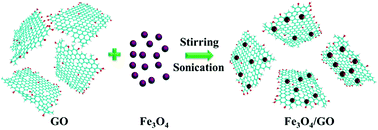
GO sheets were synthesized by a modified Hummers' method42 and washed until pH 4 was achieved. As shown in Scheme 1, the Fe3O4/GO was prepared using the following procedure: GO sheets were re-dispersed in water by sonication for 30 min, then the resultant Fe3O4 NPs were added. The mixture of GO and Fe3O4 (mass ratio of Fe3O4 and GO is 8[thin space (1/6-em)]:[thin space (1/6-em)]1) was stirred constantly under sonication by an ultrasonic generator (the operation power was 100 W and frequency was 40 kHz) for another 4 h. The product was collected via centrifugation and dried in an oven.
image file: c6ra12985d-s1.tif
Scheme 1 Preparation procedure of Fe3O4/GO.

2.3 Synthesis of Fe3O4/GO based ER and MR fluids

The Fe3O4 NPs and Fe3O4/GO were dried in a vacuum oven at 60 °C for 24 h prior to their use. The electrical conductivity of Fe3O4/GO was about 10−7 S cm−1, which is in the suitable range for ER candidates (10−6 to 10−10 S cm−1). ER (15 wt%, particle concentration) and MR suspensions (20 vol%, particle concentration) were prepared by mixing the target Fe3O4/GO in silicone oil (100 cS, ρ = 0.965). The suspensions were sonicated for 10 min before rheological measurements.

In general, the electro/magnetorheological (ER/MR) behaviors can be influenced by controlling the dispersed particle size, density, mass ratio and even their conductivities (especially for ER candidates). To achieve ideal ER/MR effects, ER fluid was prepared with 15 wt% particle concentration to avoid electrical short circuit during the ER measurement, while the MR fluid was prepared with 20 vol% particle concentration, aiming to achieve high magnetic field-induced yield stress.

2.4 Characterization

The morphology of the nanocomposite samples was examined by field emission transmission electron microscopy (FETEM, Tecnai G2 F20), while the chemical structures were measured by Fourier transform infrared spectroscopy (FT-IR, VERTEX 80v, Bruker). The resultant sample was pressed to a pellet and its electrical conductivity was measured using a four-probe type of resistivity meter (LORESTA-GP, MCP-T610). The magnetic characteristics were examined using a vibrating sample magnetometer (VSM, Lake Shore 7307). X-ray photoelectron spectroscopy (XPS) signals were acquired on a Thermo Escalab 250XI spectrometer. Raman spectra were measured using a Renishaw RM2000 Raman system. The thermal stability was studied using a thermal gravimetric analyzer (TGA, TA Q50, heating rate 10 °C min−1) in the N2 environment. Inductive coupled plasma emission spectrometry (ICP-MS, Agilent 7500ce) was applied to study the accurate composition of the sample. As for main topics in this study, the ER behaviors were examined using a rotational rheometer (Physica MCR300, Anton Paar) equipped with a high-voltage generator using a Couette-type cylinder geometry (CC 17, gap distance 0.71 mm), while the same type of rheometer, equipped with a MR device (Physica MRD180) using a parallel-plate cell (PP 20, gap distance is 1 mm), was employed for the MR measurements. The ultrasonic generator (KQ-100DE, Kunshan Ultrasonic Instruments Co., Ltd) was used during the sonication process.

3. Results and discussion

The morphologies of bare Fe3O4 NPs and Fe3O4/GO were measured by TEM images. As shown in Fig. 1a, the Fe3O4 NPs were seriously aggregated, with an average single particle diameter of ca. 10 nm. In the case of Fe3O4/GO (Fig. 1b), the Fe3O4 nanoparticles were observed to be uniformly distributed on the crumpled-like GO sheets. As shown in the inset of Fig. 1b, the adjacent lattice spacing of Fe3O4 was 0.25 nm, which was assigned to the (311) plane.43 The EDX elemental mapping of Fe3O4/GO (Fig. 3c) indicated that the Fe and O elements were homogeneously distributed on C element, confirming that the GO sheets were decorated by Fe3O4 nanoparticles. The attachment of Fe3O4 on GO sheets can avoid the re-stacking of GO and aggregation of Fe3O4 NPs, leading to good dispersion stability for preparing the ER/MR fluids.
image file: c6ra12985d-f1.tif
Fig. 1 TEM images of Fe3O4 (a) and Fe3O4/GO (b). Inset in (b) is the HRTEM image of single Fe3O4. (c) HRTEM image of Fe3O4/GO, and EDX elemental mapping of C, Fe and O, taken on the marked area.

image file: c6ra12985d-f2.tif
Fig. 2 FT-IR spectra (a), magnetic hysteresis loops (b), XRD patterns (inset: Fe3O4/GO with mass ratio = 2[thin space (1/6-em)]:[thin space (1/6-em)]1) (c), TGA curves (d) of bare Fe3O4 NPs, GO, and Fe3O4/GO.

image file: c6ra12985d-f3.tif
Fig. 3 Raman spectra of GO and Fe3O4/GO (a), XPS spectra scans of C 1s (b), O 1s (c) and Fe 2p (d) of Fe3O4/GO.

In order to verify the combination of Fe3O4 with GO, FT-IR spectra of bare Fe3O4 NPs, Fe3O4/GO and GO sheets were collected. As shown in Fig. 2a, the hydroxyl band was observed at 3440 cm−1, along with epoxy (1228 cm−1) and carbonyl (1730 cm−1) groups associated with GO sheets.44 In the Fe3O4 spectrum, the strong peak at 584 cm−1 corresponds to the stretching vibration of the Fe–O bond.45 In the Fe3O4/GO spectrum, the peaks for GO sheets at 1234 cm−1 and 1732 cm−1 corresponding to the epoxy and carbonyl groups were observed. An obvious peak at about 586 cm−1 was attributed to the Fe–O bond, evidencing the presence of Fe3O4 NPs.

The magnetic hysteresis curves of bare Fe3O4 NPs and Fe3O4/GO at room temperature were recorded as shown in Fig. 2b. It can be seen that both of the samples exhibited paramagnetic behavior, which is suitable for MR applications. The saturation magnetization (Ms) of Fe3O4/GO (52.2 emu g−1) decreased by 9.2 emu g−1, compared to that of bare Fe3O4 NPs (61.4 emu g−1), due to the presence of weak or non-magnetic GO sheets. If we ignore the magnetic behavior of GO, the mass ratio of Fe3O4 NPs in the Fe3O4/GO calculated from the VSM curve was 85 wt%, which is close to the feed ratio for the experiment (∼88.89 wt%).

The concentration of Fe was accurately measured using ICP-MS, and the value was 59.72 wt%, which was a little lower compared to the value calculated from the experimental ratio (Fe ∼64.36 wt%). The mass ratio between Fe3O4 and GO (∼5[thin space (1/6-em)]:[thin space (1/6-em)]1) in Fe3O4/GO from the ICP-MS measurement was then calculated. A deviation from the experimental ratio (∼8[thin space (1/6-em)]:[thin space (1/6-em)]1) and ICP-MS measurement (∼5[thin space (1/6-em)]:[thin space (1/6-em)]1) was observed, which may be due to the unavoidable experimental errors.

The elemental composition of the as-prepared samples was analysed by X-ray diffraction (XRD). As shown in Fig. 2c, the XRD patterns of both the bare Fe3O4 NPs and Fe3O4/GO exhibited the intense diffraction peaks indexed to (220), (311), (400), (422), (511), and (440) planes appearing at 2θ = 30.20°, 35.76°, 43.40°, 53.75°, 57.31° and 62.89°, respectively, which were consistent with the standard XRD data for face-centered cubic crystals of Fe3O4 (JCPDS 19-0629).46,47 The broad diffraction peaks indicate that the size of the Fe3O4 NPs is small. The peak at 10.64° is a characteristic peak of GO.48,49 It is difficult to find the typical peak of GO in Fe3O4/GO, probably because of its low content. To confirm our conjecture, the Fe3O4/GO with higher mass ratio of GO to Fe3O4 (GO[thin space (1/6-em)]:[thin space (1/6-em)]Fe3O4 = 1[thin space (1/6-em)]:[thin space (1/6-em)]2) was prepared and the XRD pattern was measured. As shown in the inset of Fig. 2c, the GO peak can be clearly detected.

Thermal stabilities of the samples were determined by a thermogravimetric analyzer (TGA) in nitrogen atmosphere (Fig. 2d). The initial weight loss for GO below 150 °C was associated with the evaporation of water molecules physically adsorbed onto the hydrophilic GO surface. The remaining Fe3O4/GO was about 85.4 wt%, which is higher than that of bare GO sheets (41.42 wt%), confirming the enhanced thermal stability of the loaded Fe3O4 NPs.

Based on the fact that Raman spectra provide reliable evidence to characterize the structural changes of carbonaceous materials, Fig. 3a shows the Raman spectra of GO and Fe3O4/GO. Two prominent peaks of GO located at 1600 and 1357 cm−1 were observed, corresponding to the G and D bands, respectively. Generally, the G band is attributed to the first-order scattering of the C sp2 atom domains of graphite, and the D band is ascribed to the vibration of sp3-hybridized carbon bonds of the disordered GO.50 From the Raman spectrum of Fe3O4/GO, typical peaks of GO at 1580 and 1355 cm−1 were also observed, confirming the presence of GO. The intensity ratio of D and G bands (ID/IG) can be utilized to study the graphitization degree and the defect density of the carbonaceous materials. The Fe3O4/GO exhibited a decreased value of ID/IG (0.62), in comparison to that of the bare GO (∼0.78), implying that the decoration of Fe3O4 on GO layers did not introduce more defects into the Fe3O4/GO.

The XPS pattern of Fe3O4/GO is shown in Fig. 3b–d. From the C 1s spectrum (Fig. 3b), the peak located at 286.7 eV was assigned to the C–OH or C–O–C, while the peak at 284.6 eV was attributed to the characteristic peak of C[double bond, length as m-dash]C sp2. The O 1s spectrum of Fe3O4/GO (Fig. 3c) exhibited a sharp peak at 530.2 eV, which was ascribed to the lattice oxygen of Fe3O4 (Fe–O). The peak at 532.8 eV was assigned to the oxygen in carbonyl or carboxylate (O–C[double bond, length as m-dash]O; C[double bond, length as m-dash]O). For the high-resolution XPS spectrum of the Fe 2p scan (Fig. 3d), the binding energy peaks at 711.2 and 724.7 eV correspond to Fe 2p3/2 and Fe 2p1/2, respectively. There is no charge transfer satellite around 720 eV for γ-Fe2O3, revealing the existence of Fe3O4 in Fe3O4/GO.51

The Fe3O4/GO based ER fluid was measured using a rotational rheometer. As described in Fig. 4a, the shear stress increased linearly with the increased shear rate under the free electric field, indicating typical Newtonian behavior. When an external electric field stress was applied, yield stress appeared. The shear stress was enhanced with the increasing external electric fields, confirming the formation of a robust fibril-like structure in response to external electric stimulus. From Fig. 4b, the viscosity of the Fe3O4/GO based ER fluid was derived to be 0.14 Pa s. Typical shear-thinning behaviors were observed under an applied electric field.


image file: c6ra12985d-f4.tif
Fig. 4 Rotational measurements: shear stress (a) and shear viscosity (b) vs. shear rate. Oscillation measurements: amplitude (c) and frequency (d) for Fe3O4/GO based ER fluid (γ = 0.004%).

Dynamic oscillation tests of the Fe3O4/GO based ER fluid were conducted to characterize its viscoelastic properties. As shown in Fig. 4c and d, the storage modulus (G′) was observed to be larger than the loss modulus (G′′), and these values were independent of the frequency within the regions of strain applied (0.004%) under different electric fields (Fig. 4c). From the frequency sweep (Fig. 4d), the increase of G′ with the applied electric field indicated that the ER fluid became more elastic under its linear viscoelastic conditions. In addition, the G′ and G′′ increased linearly with the increasing frequency under the free electric field, indicating a fluid-like state.

The flow curves of bare Fe3O4 NPs and Fe3O4/GO based MR fluids were investigated and compared. As shown in Fig. 5, similar shear stress tendencies for these two MR fluids were observed with and without the application of external magnetic fields, proving their characteristic MR performances. The bare Fe3O4 NPs based MR fluids reached saturation at 257 kA m−1 (Fig. 5a and c) while Fe3O4/GO based MR fluid reached saturation at 222 kA m−1, due to the weakened magnetic properties resulting from the presence of GO sheets (Fig. 5b and d).


image file: c6ra12985d-f5.tif
Fig. 5 The shear stress and viscosity vs. shear rate for bare Fe3O4 NPs (a and c) and Fe3O4/GO (b and d) based MR fluid.

The yield stress τy, which is associated with electric/magnetic field strength (E/H), particle volume fraction ϕ and other parameters, is an important factor to evaluate the ER or MR effects. A correlation between the dynamic yield stress and electric field strength of Fe3O4/GO based ER fluid is represented in Fig. 6a. The slope was derived to be 1.5, revealing a conduction model.52,53


image file: c6ra12985d-f6.tif
Fig. 6 Dynamic yield stress for Fe3O4/GO based ER fluid (a), bare Fe3O4 NPs and Fe3O4/GO based MR fluids (b). Universal fitting lines for these MR fluids using a scaling parameter (c and d).

Similar to ER fluids,54 a universal yield stress equation (eqn (1)) was proposed to correlate the relationship between dynamic yield stress (τy) and magnetic field strengths (H0) for MR fluids:55

 
image file: c6ra12985d-t1.tif(1)
where, α depends on the volume fraction and other analogous physical parameters of the MR fluids. τy possesses two regimes with respect to H0:
 
τy = αH02, for H0Hc (2.1)
 
image file: c6ra12985d-t2.tif(2.2)

As for the analysis of bare Fe3O4 NPs and Fe3O4/GO based MR fluids, their dynamic yield stresses were obtained. As shown in Fig. 6b the slope decreased from 2 (at low magnetic field strength) to 1.5 (at high magnetic field strength). A critical magnetic field strength (Hc) of 171 kA m−1 was obtained from the crossover point of the slope.

In order to illustrate the data using a single curve, a generalized scaling expression was proposed by normalizing eqn (1) using Hc and τy(Hc) = 0.762αHc2:

 
image file: c6ra12985d-t3.tif(3)
where ĤH0/Hc and [small tau, Greek, circumflex]τy(H0)/τy(Hc)

The data obtained from Fig. 6b were fit via eqn (3) to derive a single curve as shown in Fig. 6c. However, the points ([small tau, Greek, circumflex], Ĥ) deviated from the curves of eqn (3). To fit these data more precisely, one additional parameter, b, was employed and eqn (3) was then modified as follows:

 
image file: c6ra12985d-u1.tif(4)

Fig. 6d shows the universal fitting using eqn (4) with b = 0.56; all the points image file: c6ra12985d-u2.tif showed excellent agreement with the universal line.

Besides yield stress, ER or MR efficiency is another parameter for evaluating the electro/magneto responsive performances under electric or magnetic stimuli. The ER or MR efficiency can be defined as I = (τE/Mτ0)/τ0 or I = (ηE/Mη0)/η0, where τE/M or ηE/M is the shear stress or shear viscosity with an electric/magnetic field and τ0 or η0 is the shear stress or shear viscosity without an electric/magnetic field, respectively.31 In Fig. 7, ER and MR efficiencies of Fe3O4/GO based suspensions are plotted as a function of shear rate. It can be seen that the ER or MR efficiency decreased sharply with the increasing shear rate, which is attributed to the progressively destroyed gap-spanning particle chains. In addition, the MR efficiency was lower than that of the ER, which should be due to its high free-field shear stress (τ0) originating from the high particle concentrations.


image file: c6ra12985d-f7.tif
Fig. 7 The ER efficiency (a) and MR efficiency (b) of Fe3O4/GO based ER and MR fluids.

4. Conclusions

Magnetic GO nanocomposites (Fe3O4/GO) were successfully synthesized via an effective electrostatic attraction strategy. The loading of Fe3O4 nanoparticles on the GO surface effectively avoids the re-stacking process of GO sheets. The excellent dual electro/magneto-responsive behaviors of the as-prepared Fe3O4/GO based suspensions were achieved, which can be ascribed to the paramagnetic properties of Fe3O4 and polarization properties of GO sheets. Our future research will focus on the rheological behaviors of Fe3O4/GO based suspensions under electric and magnetic fields simultaneously. It will be a great challenge in the mechanical control fields.

Acknowledgements

This work was supported by Qingdao Innovation Leading Expert Program, Qingdao Basic & Applied Research project (15-9-1-100-jch), National Natural Science Foundation of China (Grant No. 51323006), the Open Fund of State Key Laboratory of Metastable Materials Science and Technology (Yanshan University, 201608) and the Tribology Science Fund of State Key Laboratory of Tribology (SKLTKF15A10). HJ Choi was partially supported by National Research Foundation, Korea (2016R1A2B4008438).

Notes and references

  1. S. Bi, M. Chen, X. Jia and Y. Dong, Nanoscale, 2015, 7, 3745 RSC.
  2. M. D. Stoller, S. J. Park, Y. W. Zhu, J. H. An and R. S. Ruoff, Nano Lett., 2008, 8, 3498 CrossRef PubMed.
  3. X. Huang, X. Qi, F. Boey and H. Zhang, Chem. Soc. Rev., 2012, 41, 666 RSC.
  4. Y. C. Fan, W. Jiang and A. Kawasaki, Adv. Funct. Mater., 2012, 22, 3882–3889 CrossRef.
  5. P. Kumar, H. P. Mungse, S. Cordier, R. Boukherroub, O. P. Khatri and S. L. Jain, Carbon, 2015, 94, 91 CrossRef.
  6. D. R. Dreyer, S. Park, C. W. Bielawski and R. S. Ruoff, Chem. Soc. Rev., 2010, 39, 228 RSC.
  7. L. Zhang, J. Xia, Q. Zhao, L. Liu and Z. Zhang, Small, 2010, 6, 537 CrossRef PubMed.
  8. T. Jiao, Y. Liu, Y. Wu, Q. Zhang, X. Yan, F. Gao, A. J. P. Bauer, J. Liu, T. Zeng and B. Li, Sci. Rep., 2015, 5, 12451 CrossRef PubMed.
  9. X. Y. Yang, X. Y. Zhang, Y. F. Ma, Y. Huang, Y. S. Wang and Y. S. Chen, J. Mater. Chem., 2009, 19, 2710–2714 RSC.
  10. X. J. Fan, G. Z. Jiao, W. Zhao, P. F. Jin and X. Li, Nanoscale, 2013, 5, 1143 RSC.
  11. G. Cheng, Y.-L. Liu, Z.-G. Wang, J.-L. Zhang, D.-H. Sun and J.-Z. Ni, J. Mater. Chem., 2012, 22, 21998 RSC.
  12. B. Karagoz, J. Yeow, L. Esser, S. M. Prakash, R. P. Kuchel, T. P. Davis and C. Boyer, Langmuir, 2014, 30, 10493 CrossRef PubMed.
  13. S. H. Sun and H. Zeng, J. Am. Chem. Soc., 2002, 124, 8204 CrossRef PubMed.
  14. L. S. Zhong, J. S. Hu, H. P. Liang, A. M. Cao, W. G. Song and L. J. Wan, Adv. Mater., 2006, 18, 2426 CrossRef.
  15. M. Mahmoudi, S. Sant, B. Wang, S. Laurent and T. Sen, Adv. Drug Delivery Rev., 2011, 63, 24 CrossRef PubMed.
  16. A. Perez del Pino, E. Gyoergy, C. Logofatu, J. Puigmarti-Luis and W. Gao, Carbon, 2015, 93, 373 CrossRef.
  17. C. Ding, W. Cheng, Y. Sun and X. Wang, J. Hazard. Mater., 2015, 295, 127 CrossRef PubMed.
  18. F. Lv, L. Xu, Y. Zhang and Z. Meng, ACS Appl. Mater. Interfaces, 2015, 7, 19104 Search PubMed.
  19. S. K. Sahu, B. Huang, K. Lilova, B. F. Woodfield and A. Navrotsky, Phys. Chem. Chem. Phys., 2015, 17, 22286 RSC.
  20. Y. H. Xue, H. Chen, D. S. Yu, S. Y. Wang, M. Yardeni, Q. B. Dai, M. M. Guo, Y. Liu, F. Lu, J. Qu and L. M. Dai, Chem. Commun., 2011, 47, 11689 RSC.
  21. J. F. Shen, Y. Z. Hu, M. Shi, N. Li, H. W. Ma and M. X. Ye, J. Phys. Chem. C, 2010, 114, 1498 Search PubMed.
  22. Q. Han, Z. H. Wang, J. F. Xia, S. Chen, X. Q. Zhang and M. Y. Ding, Talanta, 2012, 101, 388 CrossRef PubMed.
  23. X. Han, L. G. Gai, H. H. Jiang, L. C. Zhao, H. Liu and W. Zhang, Synth. Met., 2013, 171, 1 CrossRef CAS.
  24. M. Cabuk, M. Yavuz and H. I. Unal, J. Intell. Mater. Syst. Struct., 2015, 26, 1799–1810 CrossRef CAS.
  25. P. Chen and N. Holten-Andersen, Adv. Opt. Mater., 2015, 3, 1041–1046 CrossRef CAS.
  26. Ubaidillah, J. Sutrisno, A. Purwanto and S. A. Mazlan, Adv. Eng. Mater., 2015, 17, 563 CrossRef CAS.
  27. V. A. Pletneva, V. S. Molchanov and O. E. Philippova, Langmuir, 2015, 31, 110 CrossRef CAS PubMed.
  28. H. Wang, B. Tan, H. Zhang and J. Wang, RSC Adv., 2015, 5, 65583 RSC.
  29. C.-M. Yoon, K. Lee, J. Noh, S. Lee and J. Jang, J. Mater. Chem. C, 2016, 4, 1713 RSC.
  30. J. L. Jiang, Y. Tian and Y. G. Meng, Langmuir, 2011, 27, 5814 CrossRef CAS PubMed.
  31. J. Yin, Y. Shui, Y. Dong and X. Zhao, Nanotechnology, 2014, 25, 045702 CrossRef PubMed.
  32. C. Guo, X. Gong, S. Xuan, Q. Yan and X. Ruan, Smart Mater. Struct., 2013, 22, 045020 CrossRef.
  33. W. J. Wen, X. X. Huang, S. H. Yang, K. Q. Lu and P. Sheng, Nat. Mater., 2003, 2, 727 CrossRef CAS PubMed.
  34. D. E. Park, H. S. Chae, H. J. Choi and A. Maity, J. Mater. Chem. C, 2015, 3, 3150 RSC.
  35. T. Plachy, M. Mrlik, Z. Kozakova, P. Suly, M. Sedlacik, V. Pavlinek and I. Kuritka, ACS Appl. Mater. Interfaces, 2015, 7, 3725 CAS.
  36. S. H. Kim, J. H. Kim, H. J. Choi and J. Park, RSC Adv., 2015, 5, 72387 RSC.
  37. X. Dong, N. Ma, H. Yang, B. Han and M. Qi, RSC Adv., 2015, 5, 74656 RSC.
  38. S. Ryu, J.-H. Koo, T.-H. Yang, D. Pyo, K.-U. Kyung and D.-S. Kwon, J. Intell. Mater. Syst. Struct., 2015, 26, 1670 CrossRef CAS.
  39. G. Hu, Y. Ru and W. Li, J. Intell. Mater. Syst. Struct., 2015, 26, 527–540 CrossRef.
  40. W. L. Zhang, J. Liu and H. J. Choi, J. Nanomater., 2015, 2015, 574637 Search PubMed.
  41. J. S. Oh, S. H. Choi and S. B. Choi, Smart Mater. Struct., 2014, 23, 095032 CrossRef.
  42. B. Neppolian, C. Wang and M. Ashokkumar, Ultrason. Sonochem., 2014, 21, 1948 CrossRef CAS PubMed.
  43. F. Gu, M. Liang, D. Han and Z. Wang, RSC Adv., 2015, 5, 39964 RSC.
  44. Y. Wang, D. Zhang, Q. Bao, J. Wu and Y. Wan, J. Mater. Chem., 2012, 22, 23106 RSC.
  45. F. Zhang, Y. Song, S. Song, R. Zhang and W. Hou, ACS Appl. Mater. Interfaces, 2015, 7, 7251 CAS.
  46. M. Liu, C. Chen, J. Hu, X. Wu and X. Wang, J. Phys. Chem. C, 2011, 115, 25234 CAS.
  47. X. Xu, H. Li, Q. Zhang, H. Hu, Z. Zhao, J. Li, J. Li, Y. Qiao and Y. Gogotsi, ACS Nano, 2015, 9, 3969 CrossRef CAS PubMed.
  48. D. C. Marcano, D. V. Kosynkin, J. M. Berlin, A. Sinitskii, Z. Z. Sun, A. Slesarev, L. B. Alemany, W. Lu and J. M. Tour, ACS Nano, 2010, 4, 4806 CrossRef CAS PubMed.
  49. Z. Bo, X. Shuai, S. Mao, H. Yang, J. Qian, J. Chen, J. Yan and K. Cen, Sci. Rep., 2014, 4, 4684 Search PubMed.
  50. Y. Shao, T. Jing, J. Tian and Y. Zheng, RSC Adv., 2015, 5, 103943 RSC.
  51. B. Yang, J. Zhao, J. Chen, M. He and S. Xu, RSC Adv., 2015, 5, 57906 RSC.
  52. M. Sedlacik, M. Mrlik, V. Pavlinek, P. Saha and O. Quadrat, Colloid Polym. Sci., 2012, 290, 41 CAS.
  53. W. L. Zhang and H. J. Choi, Soft Matter, 2014, 10, 6601 RSC.
  54. H. J. Choi, M. S. Cho, J. W. Kim, C. A. Kim and M. S. Jhon, Appl. Phys. Lett., 2001, 78, 3806 CrossRef CAS.
  55. F. F. Fang, H. J. Choi and M. S. Jhon, Colloids Surf., A, 2009, 351, 46 CrossRef CAS.

This journal is © The Royal Society of Chemistry 2016
Click here to see how this site uses Cookies. View our privacy policy here.