Reactivity of hydroxylamine ionic liquid salts in the direct synthesis of caprolactam from cyclohexanone under mild conditions

Zhihui Liab, Qiusheng Yanga, Liya Gaoa, Yuanyuan Xua, Dongsheng Zhang*a, Shufang Wanga, Xinqiang Zhaoa and Yanji Wang*a
aHebei Provincial Key Lab of Green Chemical Technology and Efficient Energy Saving, School of Chemical Engineering and Technology, Hebei University of Technology, Tianjin 300130, China. E-mail: zds1301@hebut.edu.cn; yjwang@hebut.edu.cn
bSchool of Energy and Environmental Engineering, Hebei University of Technology, Tianjin 300130, China

Received 18th May 2016 , Accepted 29th August 2016

First published on 29th August 2016


Abstract

The reactivity of several sulfobutyl hydrosulfate hydroxylamine ionic liquid salts in the direct synthesis of caprolactam from cyclohexanone under mild conditions was investigated. The results showed that the cyclohexanone conversion was mainly affected by cation species in the molecules of the hydroxylamine ionic liquid salts, and hydroxylamine N,N,N-trimethyl-N-sulfobutyl hydrosulfate salt was a better choice for the direct synthesis of caprolactam. The optimum reaction condition was at 80 °C for 4 h, and the suitable molar ratio of cyclohexanone[thin space (1/6-em)]:[thin space (1/6-em)]hydroxylamine ionic liquid salt[thin space (1/6-em)]:[thin space (1/6-em)]ZnCl2 was 2[thin space (1/6-em)]:[thin space (1/6-em)]1[thin space (1/6-em)]:[thin space (1/6-em)]3. Under the optimal reaction conditions, cyclohexanone was almost completely converted into caprolactam, corresponding to 99.1% cyclohexanone conversion and 92.0% caprolactam selectivity. Furthermore, the reaction medium acetonitrile, and the ionic liquid which was combined in the hydroxylamine salt, can be recovered after the reaction, achieving an eco-friendly route for the direct synthesis of caprolactam.

Introduction

Caprolactam (CPL) is an important precursor for nylon-6 fibers and plastics.1,2 Traditionally, it is produced from cyclohexanone (CYC) by a double-step process (Scheme S1) with the disadvantages of complex routes, serious corrosion problems and large amounts of by-products.3,4 Recently direct routes to CPL from CYC has attracted rising interest. Among these one-step process, when air and ammonia was used as oxidant,5–7 the maximum CYC conversion of 68% and CPL selectivity of 78% were achieved. And when H2O2 and NH3 was used as oxidant,8 the CYC conversion and CPL selectivity were 7.3% and 66%, respectively. These routes are very interesting consideration from an industrial point of view. However, the CYC conversion and CPL selectivity need to be further improved. More recently, hydroxylamine salts,9–12 such as hydroxylamine sulfate (HAS) and hydroxylamine hydrochloride (HAL), were used to synthesis CPL from CYC, excellent results have been obtained.13–16 The maximum CYC conversions and CPL selectivity were 100% and 99%, respectively.17 Nevertheless, the using of these hydroxylamine inorganic acid salts will inevitably lead to problems of equipment corrosion and environmental pollution because the salts release strong acids.

To overcome the above-mentioned problems, we have previously employed a ionic liquid (1-sulfobutyl-3-methyl imidazole hydrosulfate ([HSO3-b-mim]·HSO4)) as an alternative to conventional inorganic acids in hydroxylamine stabilization, and therefore a novel hydroxylamine 1-sulfobutyl-3-methyl imidazole hydrosulfate salt ((NH2OH)2·[HSO3-b-mim]·HSO4) had been obtained and used in the one-step, solvent-free synthesis of CPL from CYC with satisfactory CYC conversions and CPL selectivity.18 However, there are still several problems need to be improved: (1) the [HSO3-b-mim]·HSO4 is very costly, and this remains a barrier for its wider large-scale industrial application; (2) when the reaction was completed, the [HSO3-b-mim]·HSO4 that combined in the hydroxylamine ionic liquid salt, could be recovered but not as well as the fresh one in the color and viscosity due to the influence of high reaction temperature (150 °C).18

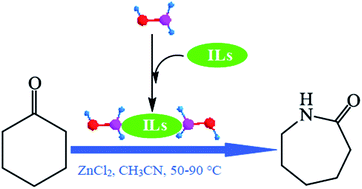
Herein, we report the stabilization of hydroxylamine with several relatively low-cost sulfobutyl hydrosulfate ionic liquids (ILs),19 which results in the formation of a series of hydroxylamine ionic liquid salts (denoted (NH2OH)2·ILs). Furthermore, the obtained hydroxylamine ionic liquid salts were successfully applied in direct synthesis of CPL from CYC under mild conditions (below 100 °C), as shown in Scheme 1.


image file: c6ra12918h-s1.tif
Scheme 1 A direct and mild route to CPL from CYC and (NH2OH)2·ILs.

Experimental section

Preparation of the (NH2OH)2·ILs

The (NH2OH)2·ILs were prepared according to the method described in the literature.18 The synthesis of hydroxylamine N,N,N-trimethyl-N-sulfobutyl hydrosulfate salt (as shown in Scheme 2) is given here as an example. N,N,N-trimethyl-N-sulfobutyl hydrosulfate ([HSO3-b-N(CH3)3]·HSO4, 33.5 mmol) was added into a 250 mL three-necked flask equipped with a dropping funnel and a stirrer. The flask was then placed in a low-temperature reaction bath, and the temperature was continuously kept under 2 °C. The aqueous solution of hydroxylamine (83.8 mmol) was added dropwise to the three-necked flask that contained the [HSO3-b-N(CH3)3]·HSO4 while stirring. When the neutralization process was completed, a clear solution was obtained. The solution was then evaporated to dryness under reduced pressure to obtain the white hydroxylamine N,N,N-trimethyl-N-sulfobutyl hydrosulfate salt ((NH2OH)2·C7H19O7NS2, denoted (NH2OH)2·[HSO3-b-N(CH3)3]·HSO4, 90.8%), mp 166.8–167.7 °C. Found: C, 23.64; H, 6.76; N, 11.6. Calc. for (NH2OH)2·C7H19O7NS2: C, 23.40; H, 6.96; N, 11.7. Hydroxylamine 1-sulfobutyl pyridine hydrosulfate salt ((NH2OH)2·C9H15O7NS2, denoted (NH2OH)2·[HSO3-b-Py]·HSO4, 88.9%) was prepared by the same method. The only difference was to replace the [HSO3-b-N(CH3)3]·HSO4 with [HSO3-b-Py]·HSO4, mp 146.4–146.6 °C. Found: C, 28.84; H, 5.77; N, 10.99. Calc. for (NH2OH)2·C9H15O7NS2: C, 28.50; H, 5.54; N, 11.08. The ionic liquid [HSO3-b-N(CH3)3]·HSO4 and [HSO3-b-Py]·HSO4 were synthesized according to previous literature.20
image file: c6ra12918h-s2.tif
Scheme 2 Synthesis route of (NH2OH)2·ILs.

Characterization of the (NH2OH)2·ILs

The melting point was determined on a WRS-1B numeral melting point instrument. Element analysis was conducted with a Flash EA1112 elemental analyzer. The 1H NMR and 13C NMR spectra were recorded on a Bruker AMX FT 400 MHz NMR spectrometer using DMSO-d6 and D2O as solvents, and the chemical shifts were expressed in ppm. FTIR spectra were recorded on a Bruker Vector 22 FTIR spectrometer in the 4000–400 cm−1 range using liquid film or KBr tablet. A DXR Raman Microscope (Thermo Scientific) with a 532 nm excitation laser was used to record the Raman spectra. TG was carried out on a SDT Q600 simultaneous DSC-TGA instrument at 10 K min−1 heating rate under a flow of air.

Direct synthesis of caprolactam

The reaction was performed in a 100 mL three-necked flask equipped with a stirrer and a reflux condenser. Typically, 5 mmol CYC, 2.5 mmol (NH2OH)2·ILs, 7.5 mmol ZnCl2 and 10 mL acetonitrile were charged into the flask, and the reaction mixture was heated in an oil bath at 50–90 °C and kept for 1–5 h. At the end of the reaction, the resulting mixture was cooled and then the ZnCl2 was removed by centrifugal separation. The concentrations of the obtained clear reaction liquid were analyzed with an Agilent 7890B gas chromatograph.

Results and discussion

Synthesis and characterization of the (NH2OH)2·ILs

Several (NH2OH)2·ILs, such as (NH2OH)2·[HSO3-b-N(CH3)3]·HSO4 and (NH2OH)2·[HSO3-b-Py]·HSO4, were synthesized and characterized by NMR, FTIR and Raman spectra. 1H NMR and 13C NMR spectra (Fig. S1(a–d)) demonstrated that each H and C atom could find the corresponding contribution in the (NH2OH)2·ILs, and the resonance observed at the chemical shifts of 8–9 ppm in the 1H NMR was attributed to the NH3+.18,21 The FTIR spectra of (NH2OH)2·[HSO3-b-N(CH3)3]·HSO4, (NH2OH)2·[HSO3-b-Py]·HSO4 and (NH2OH)2·H2SO4 was presented in Fig. 1(a). The NH3+ stretching mode (peaks at 3036 and 2729 cm−1), the NH3+ deformation frequencies (peaks at 1620 and 1544 cm−1) and the characteristic peaks of primary ammonium (the minor peak at approximately 2228 cm−1) were all observed in the two (NH2OH)2·ILs, indicating the existence of the NH3+ group from NH2OH in the two (NH2OH)2·ILs.18,22,23 Furthermore, the Raman spectra of (NH2OH)2·[HSO3-b-N(CH3)3]·HSO4 and (NH2OH)2·[HSO3-b-Py]·HSO4 was offered in Fig. 1(b). It showed clearly that the NH3OH+ species vibration bands existed in the two (NH2OH)2·ILs, which provided another evidence for the presence of NH3OH+.18,24,25
image file: c6ra12918h-f1.tif
Fig. 1 FTIR spectra (a) and Raman spectra (b) of the novel (NH2OH)2·ILs and HAS. (A) (NH2OH)2·[HSO3-b-N(CH3)3]·HSO4; (B) (NH2OH)2·[HSO3-b-Py]·HSO4; (C) (NH2OH)2·H2SO4.

The thermal stability of (NH2OH)2·[HSO3-b-N(CH3)3]·HSO4 and (NH2OH)2·[HSO3-b-Py]·HSO4 was investigated in a temperature range between 25 and 1000 °C (Fig. 2). As shown in Fig. 2(a) and (b), the TG curves of the two (NH2OH)2·ILs were much the same. Both of the mass loss process included four stages. The initial and final decomposition temperatures of (NH2OH)2·[HSO3-b-N(CH3)3]·HSO4 were at about 160 °C and 592 °C. The values were 150 °C and 623 °C respectively for the (NH2OH)2·[HSO3-b-Py]·HSO4. The weight loss at about 260 °C (with theoretical value of 18.4% for (NH2OH)2·[HSO3-b-N(CH3)3]·HSO4 and 17.4% for (NH2OH)2·[HSO3-b-Py]·HSO4) corresponded to the NH2OHs stabilized by the [HSO3-b-N(CH3)3]·HSO4 and [HSO3-b-Py]·HSO4. Besides, the main mass loss occurred between 260–380 °C, which was resulted from the decomposition of the two sulfobutyl hydrosulfate ionic liquids that were used to stabilize the hydroxylamine. For comparison, the TG curves of (NH2OH)2·HCl and (NH2OH)2·H2SO4 (Fig. 2(c) and (d)) were also presented.18 Their initial decomposition temperatures were close to those of the two (NH2OH)2·ILs. Their final decomposition temperatures were 270 °C and 400 °C, respectively, which were much lower than those of the two (NH2OH)2·ILs. Moreover, their mass loss mainly occurred at about 200 °C, therefore their TG curves were much steeper than those of the two (NH2OH)2·ILs. In summary, (NH2OH)2·[HSO3-b-N(CH3)3]·HSO4 and (NH2OH)2·[HSO3-b-Py]·HSO4 had gentler weight loss curves and much higher final decomposition temperatures, indicating that their thermal stability were much better than those of (NH2OH)2·HCl and (NH2OH)2·H2SO4.


image file: c6ra12918h-f2.tif
Fig. 2 TG curves of the (NH2OH)2·[HSO3-b-N(CH3)3]·HSO4 (a), (NH2OH)2·[HSO3-b-Py]·HSO4 (b), (NH2OH)2·H2SO4 (c) and (NH2OH)2·HCl (d).

Direct synthesis of caprolactam from cyclohexanone and (NH2OH)2·ILs

Effect of solvent on direct synthesis of caprolactam. First of all, the reaction was performed with (NH2OH)2·[HSO3-b-mim]·HSO4 as the hydroxylamine salt. The effect of solvent on direct synthesis of CPL was summarized in Table 1. It could be seen that solvent strongly affected the results. When toluene or N,N-dimethylformamide was used as solvent, the product was mainly cyclohexanone oxime (COX), the CPL selectivity was no more than 35.5%. While acetonitrile was used as solvent, the CPL selectivity was improved to 96.3%.
Table 1 Effect of solvent on direct synthesis of CPLa
No Solvent XCYC (%) SCPL (%) SCOX (%)
a Reaction conditions: CYC 5 mmol, n(CYC)[thin space (1/6-em)]:[thin space (1/6-em)]n((NH2OH)2·[HSO3-b-mim]·HSO4)[thin space (1/6-em)]:[thin space (1/6-em)]n(ZnCl2) = 2[thin space (1/6-em)]:[thin space (1/6-em)]1[thin space (1/6-em)]:[thin space (1/6-em)]3, solvent 10 mL, 80 °C, 4 h.b Homogeneous phase, others are all heterogeneous phase.
1 Toluene 27.3 35.5 64.5
2 N,N-Dimethylformamideb 79.2 19.0 81.0
3 Acetonitrile 82.5 96.3 3.1


The present reaction includes oximation of CYC to COX, followed by the Beckmann rearrangement of COX to CPL. Being a multistep process, the outcome of the reaction depends on the reactivity of the substrate towards both oximation and Beckmann rearrangement.15 As for the first step, it is believed that COX is produced through the nucleophilic attack of nitrogen electron pairs in the NH2OH to the C[double bond, length as m-dash]O carbon in the CYC.26–28 Free NH2OH,16,27 resulted from the decomposition of hydroxylamine salt, is the nucleophile necessary for conversion of CYC to the corresponding COX. It was evident that, the aprotic polar solvents, such as acetonitrile and N,N-dimethylformamide, demonstrated an obvious promotion on the decomposition of hydroxylamine salt to form free NH2OH29–31 since high CYC conversions were obtained in these solvents. This solvent-promoted decomposition in aprotic polar solvents with high ability of electron pairs donor was probably due to the formation of hydrogen bond between the nitrogen electron pairs in the solvent and hydroxyl in the hydroxylamine salts.29,32

Furthermore, solvent also played an important role in the subsequent Beckmann rearrangement. Acetonitrile was found to be a suitable solvent for the rearrangement reaction.33–35 Most probably the beneficial effect of acetonitrile was ascribed to its high reagent solubility,16 especially that of [HSO3-b-mim]·H2SO4 (an in situ catalyst component for the Beckmann rearrangement) resulting from the decomposition of (NH2OH)2·[HSO3-b-mim]·H2SO4. Hence, when acetonitrile was used as solvent, more COX was converted to CPL, which in turn promoted the oximation step (a reversible process) and improved the CYC conversion.17 As for N,N-dimethylformamide, it could promote the oximation reaction. However, its weak basicity probably poisoned the acid catalyst and hindered the Beckmann rearrangement.36–38 Hence, only trace amount of CPL was obtained when N,N-dimethylformamide was used as solvent. Considering the influence on oximation reaction as well as Beckmann rearrangement, acetonitrile seems to be a better choice for direct synthesis of CPL.

Effect of zinc compound as catalyst on direct synthesis of caprolactam. The effect of zinc compound as catalyst on direct synthesis of CPL was shown in Fig. 3. When Zn(OAc)2, ZnSO4·7H2O or ZnO was used, the CPL selectivity was very low. An interesting finding was that when ZnCl2 was used, most of the product was CPL, only trace COX was existed. Zhang et al.33 reported that the form of a seven-ring intermediate compound was probably the reason for the catalytic function of ZnCl2, which may also be helpful to understand the catalytic activity of ZnCl2 herein. Hence, ZnCl2 was a better catalyst for the present Beckmann rearrangement reaction.
image file: c6ra12918h-f3.tif
Fig. 3 Effect of Zinc compound as catalyst on direct synthesis of CPL. Reaction conditions: CYC 5 mmol, n(CYC)[thin space (1/6-em)]:[thin space (1/6-em)]n((NH2OH)2·[HSO3-b-mim]·HSO4)[thin space (1/6-em)]:[thin space (1/6-em)]n(zinc compound) = 2[thin space (1/6-em)]:[thin space (1/6-em)]1[thin space (1/6-em)]:[thin space (1/6-em)]3, acetonitrile 10 mL, 80 °C, 4 h.
Effect of molar ratio of ZnCl2 to CYC, reaction temperature and time on direct synthesis of caprolactam. The effect of molar ratio of ZnCl2 to CYC on CPL synthesis was studied and the result was displayed in Fig. 4(a). As we can see, the CYC conversion was close to 80% without adding ZnCl2. Most of the product was COX and the CPL selectivity was only 17.8%.
image file: c6ra12918h-f4.tif
Fig. 4 Effect of molar ratio of ZnCl2 to CYC, temperature and time on direct synthesis of CPL. Reaction conditions: CYC 5 mmol, n(CYC)[thin space (1/6-em)]:[thin space (1/6-em)]n((NH2OH)2·[HSO3-b-mim]·HSO4) = 2[thin space (1/6-em)]:[thin space (1/6-em)]1, acetonitrile 10 mL; (a) 80 °C, 4 h; (b) n(CYC)[thin space (1/6-em)]:[thin space (1/6-em)]n(ZnCl2) = 2[thin space (1/6-em)]:[thin space (1/6-em)]3, 4 h; (c) n(CYC)[thin space (1/6-em)]:[thin space (1/6-em)]n(ZnCl2) = 2[thin space (1/6-em)]:[thin space (1/6-em)]3, 80 °C.

With increasing of ZnCl2 ratio, the CYC conversions changed a little. But the CPL selectivity increased greatly and reached a maximum value of 96.3% when the molar ratio of ZnCl2 to CYC was 1.5, indicating that ZnCl2 and the [HSO3-b-mim]·HSO4 was an excellent composite catalyst for the Beckmann rearrangement. Most of the COX produced from the CYC and (NH2OH)2·[HSO3-b-mim]·HSO4 could be transformed to CPL. Nevertheless, when ZnCl2 amount was further increased, the CPL selectivity decreased a little. As a result, 1.5 molar ratio of ZnCl2 to CYC was sufficient to achieve a high CYC conversion and CPL selectivity.

The influence of reaction temperature and time were also investigated systematically. As depicted in Fig. 4(b) and (c), the CPL selectivity depended greatly on the reaction temperature and time. It increased rapidly with rising temperature from 50 to 80 °C, and then increased slightly when further rising the temperature. Concerning the reaction time, the CPL selectivity first increased, passing through a maximum at 4 h, and then decreased slightly by further prolonging reaction time. Hence, higher temperature (80–90 °C) and longer time (4 h) was suitable for CPL selectivity. The CYC conversion was less affected by the reaction temperature and time. It increased slightly from 50 to 70 °C, and then reduced a little with the temperature above 70 °C. This may be due to easier self-catalysis decomposition of hydroxylamine ionic liquid salt at higher temperature.39,40 As for the influence of reaction time, the CYC conversion was nearly constant with prolonging reaction time, and a relatively higher CYC conversion can be obtained at a longer time. Hence, considering the CYC conversion and CPL selectivity, the optimum reaction condition was at 80 °C for 4 h.

Under the above mentioned optimal conditions, the CYC conversion and CPL selectivity were 82.5% and 96.3%, respectively. Our previous result was 100% CYC conversion and 91.3% CPL selectivity under solvent free conditions.18 As we can see, when acetonitrile was used as solvent, the reaction temperature was remarkably decreased from 150 to 80 °C. Although the CYC conversion was decreased a little, the CPL selectivity was increased to 96.3%. Then the reactivity of the two novel prepared hydroxylamine ionic liquid salts on direct synthesis of CPL was also investigated as a contrast under the above optimal conditions.

Reactivity comparison of the three (NH2OH)2·ILs. The effect of different (NH2OH)2·ILs on direct synthesis of CPL was shown in Table 2. When (NH2OH)2·[HSO3-b-Py]·HSO4 or (NH2OH)2·[HSO3-b-mim]·HSO4 was used as the hydroxylamine salt, the CYC conversion was relatively lower. While (NH2OH)2·[HSO3-b-N(CH3)3]·HSO4 was used, the CYC conversion was significantly increased to 99.1%, the CPL selectivity was as high as 92.0%, and the only by-product was COX, indicating that [HSO3-b-N(CH3)3]·HSO4 was superior in hydroxylamine stabilization and CPL synthesis than the other two ILs.
Table 2 Effect of different (NH2OH)2·ILs on direct synthesis of CPLa
No (NH2OH)2·ILs XCYC (%) SCPL (%) SCOX (%)
a Reaction conditions: CYC 5 mmol, n(CYC)[thin space (1/6-em)]:[thin space (1/6-em)]n((NH2OH)2·ILs)[thin space (1/6-em)]:[thin space (1/6-em)]n(ZnCl2) = 2[thin space (1/6-em)]:[thin space (1/6-em)]1[thin space (1/6-em)]:[thin space (1/6-em)]3, acetonitrile 10 mL, 80 °C, 4 h.
1 (NH2OH)2·[HSO3-b-mim]·HSO4 82.5 96.3 3.1
2 (NH2OH)2·[HSO3-b-Py]·HSO4 86.2 83.4 16.6
3 (NH2OH)2·[HSO3-b-N(CH3)3]·HSO4 99.1 92.0 8.0


The present reaction was carried out in the presence of a strong Lewis acid ZnCl2, together with the acid ionic liquid that released from the hydroxylamine ionic liquid salt. In order to demonstrate the role of ZnCl2 and the acid ionic liquid in the rearrangement process, Beckmann rearrangement of COX was performed using catalytic amount of [HSO3-b-(CH3)3]·H2SO4 and/or ZnCl2 as shown in Table S1. It could be seen that ZnCl2 was the main catalytic species for the Beckmann rearrangement. [HSO3-b-(CH3)3]·H2SO4 alone showed little catalytic activity. However, when combined with ZnCl2, it could effectively enhance the catalytic activity of ZnCl2. The results suggested that the cooperative effect between ZnCl2 and ionic liquid played an important role in the rearrangement.41 Furuya et al.42 reported that HCl and ZnCl2 could promote the rearrangement probably due to their chelation with nitrogen atoms of oxime. The intermediate formed through this process, respected to the COX, has a lower electronic density on the nitrogen atom and consequently a greater tendency to rearrange even without Brønsted acid.37,43 Accordingly, it could be inferred that the cooperative effect between [HSO3-b-(CH3)3]·H2SO4 and ZnCl2 was probably better than the other two ionic liquids and ZnCl2, which was favor for the formation of the intermediate. Therefore, (NH2OH)2·[HSO3-b-(CH3)3]·H2SO4 was found to be the best hydroxylamine salt in the present study.

Reactivity comparison of (NH2OH)2·[HSO3-b-N(CH3)3]·HSO4 and hydroxylamine inorganic acid salts. A comparison between the (NH2OH)2·[HSO3-b-N(CH3)3]·HSO4 and the traditional hydroxylamine inorganic acid salts, such as (NH2OH)2·H2SO4 and NH2OH·HCl, was shown in Table 3. As we can see, no matter which kind of hydroxylamine salt was used, the CPL selectivity was almost the same. The CYC conversion was slightly increased in the order NH2OH·HCl < (NH2OH)2·H2SO4 < (NH2OH)2·[HSO3-b-N(CH3)3]·HSO4. Specifically, when NH2OH·HCl was used, the CYC conversion and CPL selectivity were the lowest.
Table 3 Effect of different hydroxylamine salts on direct synthesis of CPLa
No Hydroxylamine salt XCYC (%) SCPL (%) SCOX (%)
a Reaction conditions: CYC 5 mmol, n(CYC)[thin space (1/6-em)]:[thin space (1/6-em)]n(NH2OH)[thin space (1/6-em)]:[thin space (1/6-em)]n(ZnCl2) = 2[thin space (1/6-em)]:[thin space (1/6-em)]2[thin space (1/6-em)]:[thin space (1/6-em)]3, acetonitrile 10 mL, 80 °C, 4 h.
1 NH2OH·HCl 93.2 91.2 8.8
2 (NH2OH)2·H2SO4 96.6 91.8 8.2
3 (NH2OH)2·[HSO3-b-N(CH3)3]·HSO4 99.1 92.0 8.0


While (NH2OH)2·H2SO4 was used, the CYC conversion and CPL selectivity were higher than those of HAL, meaning that CPL could be efficiently produced from CYC and (NH2OH)2·H2SO4. As for (NH2OH)2·[HSO3-b-N(CH3)3]·HSO4, the CYC conversion and CPL selectivity were the highest, which were 99.1% and 92.0%, respectively. It shows that [HSO3-b-N(CH3)3]·HSO4 not only can stabilize the hydroxylamine, but also can catalytic the Beckmann rearrangement of COX to CPL. Additionally, its reactivity is much the same, even better than H2SO4. Furthermore, as (NH2OH)2·[HSO3-b-N(CH3)3]·HSO4 was employed in CPL production, no strong acids was released. Therefore, less equipment corrosion and environmental pollution problems were encountered and no ammonium sulfate by-product was produced.

Recovery of the solvent, catalyst and ionic liquid. To determine whether the solvent, catalyst and the ionic liquid combined in the (NH2OH)2·ILs could be recovered, a one-step synthesis of CPL from CYC and (NH2OH)2·[HSO3-b-N(CH3)3]·HSO4 with ZnCl2 as catalyst and acetonitrile as solvent was carried out under the optimal reaction conditions.

At the end of the reaction, the resulting mixture was cooled to room temperature. ZnCl2 and acetonitrile were recovered by centrifugal separation and vacuum distillation, respectively. Then the substrate was extraction four times with diethyl ether to sufficiently remove the possible organic compound, such as CYC, COX or CPL.34 The leaving mixture was distilled with a rotary evaporator under vacuum to recover the [HSO3-b-N(CH3)3]·HSO4. The FTIR spectra of the recovered and fresh [HSO3-b-N(CH3)3]·HSO4 was presented in Fig. 5. It can be seen that they were highly similar except for a little peak at 3175 cm−1 from characteristic vibrations of CPL.33,44 It was thus deduced that a little amount of CPL left in the recovered ionic liquid led to the subtle difference in the two FTIR spectra. The ionic liquid was structurally stable after the reaction. Further study was undertaken to understand the recyclability of the reaction media.


image file: c6ra12918h-f5.tif
Fig. 5 FTIR spectra of the recovered and fresh [HSO3-b-N(CH3)3]·HSO4.

Conclusions

From the above results, some key conclusions could be outlined:

• Several novel relatively low-price hydroxylamine ionic liquid salts, (NH2OH)2·[HSO3-b-N(CH3)3]·HSO4 and (NH2OH)2·[HSO3-b-Py]·HSO4 were prepared, which proved to a certain degree that all of the sulfobutyl hydrosulfate ionic liquids with different cation could be used in hydroxylamine stabilization to form hydroxylamine ionic liquid salts.

• The three sulfobutyl hydrosulfate hydroxylamine ionic liquid salts were successfully applied in direct synthesis of CPL from CYC under mild conditions. (NH2OH)2·[HSO3-b-N(CH3)3]·HSO4 demonstrated improved reactivity than NH2OH·HCl and (NH2OH)2·H2SO4, the highest CYC conversion and CPL selectivity were 99.1% and 92.0%, respectively.

• When (NH2OH)2·[HSO3-b-N(CH3)3]·HSO4 was used in CPL production, the ionic liquid that combined in the (NH2OH)2·[HSO3-b-N(CH3)3]·HSO4 could be recovered. Therefore, less equipment corrosion and environmental pollution problems were encountered and no ammonium sulfate by-product was produced, achieving an eco-friendly route for direct synthesis of caprolactam.

Acknowledgements

The authors are grateful for the financial support of the National Natural Science Foundation of China (21236001, 21106029 and 21576069), National Natural Science Foundation of Tianjin (12JCQNJC03000) and National Natural Science Foundation of Hebei Province (B2016202335 and B2015202369).

Notes and references

  1. N. C. Marzianom, L. Ronchin, C. Tortato, A. Vavasori and C. Badetti, J. Mol. Catal. A: Chem., 2007, 277, 221–232 CrossRef.
  2. D. Mao, Z. Long, Y. Zhou, J. Li, X. Wang and J. Wang, RSC Adv., 2014, 4, 15635–15641 RSC.
  3. Y. Li, K. Wang, K. Qin and T. Wang, RSC Adv., 2015, 5, 25365–25371 RSC.
  4. J. Zhang, K. Wang, Y. Lu and G. Luo, AIChE J., 2012, 58, 925–931 CrossRef CAS.
  5. J. N. Armor, J. Catal., 1981, 70, 72–83 CrossRef CAS.
  6. R. Raja, G. Sankar and J. M. Tomas, J. Am. Chem. Soc., 2001, 123, 8153–8154 CrossRef CAS PubMed.
  7. J. M. Tomas and R. Raja, Proc. Natl. Acad. Sci. U. S. A., 2005, 102, 13732–13736 CrossRef PubMed.
  8. M. Anilkumar and W. F. Hoelderich, Appl. Catal., B, 2015, 165, 87–93 CrossRef CAS.
  9. L. O. Cisneros, W. J. Rogers and M. Sam Mannan, Thermochim. Acta, 2004, 414, 177–183 CrossRef CAS.
  10. W. Zhang, X. Su, Z. Hao, S. Qin, W. Qing and C. Xia, Ind. Eng. Chem. Res., 2015, 54, 100–107 CrossRef CAS.
  11. F. Zhao, K. You, C. Peng, S. Tan, R. Li, P. Liu, J. Wu and H. Luo, Chem. Eng. J., 2015, 272, 102–107 CrossRef CAS.
  12. Y. Xu, Z. Li, L. Gao, D. Zhang, X. Zhao, S. Wang and Y. Wang, Ind. Eng. Chem. Res., 2015, 54, 1068–1073 CrossRef CAS.
  13. H. Sharghi and M. Hosseini, Synthesis, 2002, 8, 1057–1060 CrossRef.
  14. S. Mahajan, B. Sharma and K. K. Kapoor, Tetrahedron Lett., 2015, 56, 1915–1918 CrossRef CAS.
  15. F. Aricò, G. Quartarone, E. Rancan, L. Ronchin, P. Tundo and A. Vavasori, Catal. Commun., 2014, 49, 47–51 CrossRef.
  16. E. Rancan, F. Aricò, G. Quartarone, L. Ronchin, P. Tundo and A. Vavasori, Catal. Commun., 2014, 54, 11–16 CrossRef CAS.
  17. J. Zhang, Y. Lu, K. Wang and G. Luo, Ind. Eng. Chem. Res., 2013, 52, 6377–6381 CrossRef CAS.
  18. Z. Li, Q. Yang, X. Qi, Y. Xu, D. Zhang, Y. Wang and X. Zhao, Chem. Commun., 2015, 51, 1930–1932 RSC.
  19. A. A. Hullio and G. M. Mastoi, Orient. J. Chem., 2011, 27, 1591–1612 CAS.
  20. Y. Geng, L. Hu, X. Zhao, H. An and Y. Wang, Chin. J. Chem. Eng., 2009, 17, 756–760 CrossRef CAS.
  21. E. D. Bates, R. D. Mayton, I. Ntai and J. H. Davis Jr, J. Am. Chem. Soc., 2002, 124, 926–927 CrossRef CAS PubMed.
  22. J. Xie, Application of Infrared Spectroscopy in Organic Chemistry and Medicinal Chemistry, Science Press, Beijing, 1987, pp. 91–92 Search PubMed.
  23. S. Weng, Fourier Transform Infrared Spectrometer, Chemical Industry Press, Beijing. 2005, pp. 332–333 Search PubMed.
  24. C. A. Vandijk and R. G. Priest, Combust. Flame, 1984, 57, 15–24 CrossRef CAS.
  25. L. Courthéoux, D. Amariei, S. Rossignol and C. Kappenstein, Appl. Catal., B, 2006, 62, 217–225 CrossRef.
  26. H. Zang, M. Wang, B. Cheng and J. Song, Ultrason. Sonochem., 2009, 16, 301–303 CrossRef CAS PubMed.
  27. D. Lorenzo, A. Romero and A. Santos, Ind. Eng. Chem. Res., 2016, 55, 6586–6594 CrossRef CAS.
  28. A. Elmakssoudi, K. Abdelouahdi, M. Zahouily, J. Clark and A. Solhy, Catal. Commun., 2012, 29, 53–57 CrossRef CAS.
  29. M. Matsumoto, M. Tanimura, T. Akimoto, N. Watanabe and H. K. Ijuin, Tetrahedron Lett., 2008, 49, 4170–4173 CrossRef CAS.
  30. O. Phillips, J. M. Schwartz and P. A. Kohl, Polym. Degrad. Stab., 2016, 125, 129–139 CrossRef CAS.
  31. R. Meng, S. Hu, X. Cao, F. Liu, F. Jin and P. Qu, J. North Univ. China, Nat. Sci. Ed., 2016, 37, 162–165 Search PubMed.
  32. J. Wang, X. Zhang, F. Wang and W. Cai, Chem. Ind. Eng. Prog., 2016, 35, 1309–1313 Search PubMed.
  33. X. Zhang, D. Mao, Y. Leng, Y. Zhou and J. Wang, Catal. Lett., 2013, 143, 193–199 CrossRef CAS.
  34. R. Core and R. Srivastava, J. Mol. Catal. A: Chem., 2013, 376, 90–97 CrossRef.
  35. X. Liu, L. Xiao, H. Wu, Z. Li, J. Chen and C. Xia, Catal. Commun., 2009, 10, 424–427 CrossRef CAS.
  36. K. You, L. Mao, D. Yin, P. Liu and H. Luo, Catal. Commun., 2008, 9, 1521–1526 CrossRef CAS.
  37. L. Ronchin and A. Vavasori, J. Mol. Catal. A: Chem., 2009, 313, 22–30 CrossRef CAS.
  38. X. Wang, C. Chen, S. Chen, Y. Mou and S. Cheng, Appl. Catal., A, 2005, 281, 47–54 CrossRef CAS.
  39. Q. Wang, C. Wei, L. M. Pérez, W. J. Rogers, M. B. Hall and M. Sam Mannan, J. Phys. Chem. A, 2010, 114, 9262–9269 CrossRef CAS PubMed.
  40. L. Zhu, B. Guo, D. Tang, X. Hu, G. Li and C. Hu, J. Catal., 2007, 245, 446–455 CrossRef CAS.
  41. E. Rancan, F. Aricò, G. Quartarone, L. Ronchin and A. Vavasori, Catal. Lett., 2015, 145, 939–946 CrossRef CAS.
  42. Y. Furuya, K. Ishihara and H. Yamamoto, J. Am. Chem. Soc., 2005, 127, 11240–11241 CrossRef CAS PubMed.
  43. L. Ronchin, A. Vavasori and M. Bortoluzzi, Catal. Commun., 2008, 10, 251–256 CrossRef CAS.
  44. Z. Du, Z. Li, Y. Gu, J. Zhang and Y. Deng, J. Mol. Catal. A: Chem., 2005, 237, 80–85 CrossRef CAS.

Footnote

Electronic supplementary information (ESI) available. See DOI: 10.1039/c6ra12918h

This journal is © The Royal Society of Chemistry 2016
Click here to see how this site uses Cookies. View our privacy policy here.