
Impact of surface arrangement and composition on ethylene adsorption over Pd–Ag surface alloys: a computational study

Qiang Liab, Yang Maa, Hui Qia, Zhousheng Moc, Xiaotong Zhanga and Lijuan Song*abc
aKey Laboratory of Petrochemical Catalytic Science and Technology, Liaoning Shihua University, Fushun 113001, Liaoning Province, PR China. E-mail: lsong56@263.net; qli0218@163.com
bBeijing University of Chemical Technology, Beijing, 100029, PR China
cCollege of Chemistry & Chemical Engineering, China University of Petroleum (East China), Qingdao 266555, Shandong, PR China

Received 18th May 2016 , Accepted 18th July 2016

First published on 18th July 2016


Abstract

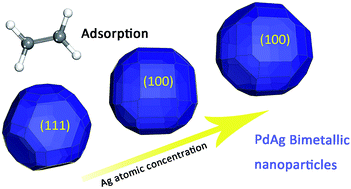
The adsorption of ethylene on three low-index Pd–Ag bimetallic surfaces, which are the (111), (100), and (110) facets, is investigated using gradient-corrected periodic density functional calculations with dispersion correction. The surfaces have been modeled by 5 layers of Pd atoms and different Ag atomic concentrations, allowing us to study ethylene adsorption from 100% Pd to 25% Pd on the surfaces. The adsorption energy and the geometry have been computed for different adsorption sites (on top of a Pd or bridging two Pd atoms) for different facets and Ag atomic concentrations. For bare Pd surfaces and their surface alloys, the bridge site is always found to be more stable than any other site. For the surface alloys, the local density of states, charges of ethylene and Pd atom, and differential electron density have been investigated to illustrate the importance of ligand and ensemble effects of the guest metal Ag atoms. The adsorption is weakened because of the ensemble effect when the surface Ag atomic concentration increases. The amount of electrons transferred to the ethylene molecules from the surface increases slightly when the concentration of the surface atomic Ag increases. The ligand effect becomes more significant when the surface is closer, and its effect is not the same for different surface facets.

1. Introduction

Ethylene, which is of great importance in the petrochemical and polymer industries, is typically purified by selective hydrogenation of acetylene from ethylene feeds in industry.1,2 The most commonly employed catalysts for this process are supported Pd–Ag bimetallic catalysts, which have been widely applied in industry.3–5 The addition of an Ag atom on the catalyst increases the selectivity of ethylene formation and prevents the formation of green oil.2,6 The challenge is to develop highly selective catalysts that have both low ethane production and low green oil formation, which are both attributed to the competing secondary reactions of strongly adsorbed ethylene.7,8

With the development of catalyst preparation methods, active centres can be rationally achieved with fine control of both their size and shape experimentally. The selective hydrogenation of acetylene over a Pd-base catalyst is also structure sensitive,9,10 which has been corroborated by the fact that the (111), (100), and (110) surfaces of Pd exhibit different behaviours for the formation of C2 intermediates.11–13 Zhang's group has found that PdAg bimetallic nanoparticles with an optimal surface composition and surface ensembles are accepted for the selective hydrogenation of acetylene.14 Kim et al. found that the selective hydrogenation of acetylene over Pd nanoparticles with a Pd(100) surface showed higher activity and selectivity than with a Pd(111) surface.15 However, the theoretical calculations support the opposite side that the Pd(111) surface should result in higher activity and ethylene selectivity compared with those of the Pd(100) surface.16 This inconsistency between the experimental and theoretical results had led to the surface arrangement of the active centre becoming a new subject for many experimental and theoretical investigations.

For the adsorption of ethylene, experimentally, the π-type interaction of ethylene with Pd(111) and Pd(110) surfaces has been found to be unstable so that ethylene can be decomposed at room temperature.17–19 The adsorption energies of ethylene on Pd(111), Pd(100), and Pd(110) surfaces have been estimated to be lower than 100 kJ mol−1.20–22 Okuyama et al.23 studied the orientation and symmetry of ethylene adsorption on a Pd(110) surface by using high-resolution electron energy loss spectroscopy (HREELS) and near-edge X-ray absorption fine structure (NEXAFS). The π-bonded ethylene is also stable with the C–C axis aligned along the [1[1 with combining macron]1] row. Periodic density functional theory (DFT) calculations of ethylene adsorption on these three low Miller index surfaces of Pd with the corresponding d-band centre have been examined theoretically by Neurock24 et al. For the Pd(100) surface, the adsorption energy of the ethylene molecule on the di-σ mode is larger than that on the π mode.25 For the Pd(110) surface, the short di-σ mode adsorption is the most favourable site with the hybridization of the C atoms toward sp3, indicating that this bridge structure cannot be referred to as a complete di-σ case.26,27

Most of the research has focused on pure Pd surfaces. The PdAg bimetallic surface, however, has only been studied for a few years. For the PdAg bimetallic surface, both ligand and ensemble effects can affect the adsorption properties. The previous studies on the PdAg(111) surface have found that ligand effects, which describe the changes in the chemical properties of the atoms in the surface owing to alloying,28,29 can decrease the interaction energies of acetylene on the surface by decreasing the local density of states and shift the d-band centre of the surface Pd atoms.30,31 Neurock studied the adsorption properties of both acetylene and ethylene molecules on PdAg(111) surface alloys. It was found that both ligand and ensemble effects could play an important role with the addition of Ag atoms to a Pd(111) surface.31–33 For the more open surfaces, namely PdAg/Pd(100) and PdAg/Pd(110) surfaces, few theoretical or in situ studies have been carried out for the adsorption of ethylene, particularly on the comparison of surface electronic properties. The selective hydrogenation of acetylene to ethylene on PdAg/Pd(111) and PdAg/Pd(211) surfaces has been investigated by Hardacre et al. using density functional theory calculations to understand both the acetylene hydrogenation activity and the selectivity of ethylene formation.16

For the case of the influence of surface structures on the adsorption of ethylene molecule, Yang16 found that adsorption on the Pd(100) surface is stronger than that on the Pd(111) surface, which leads to the low selectivity of ethylene formation. Adsorption on the Ag-alloyed Pd(100) surface, however, was not considered, though it was calculated for the PdAg/Pd(111) surface. Regarding the adsorption of ethylene on the PdAg/Pd(111) surface, it has been calculated by Sheth that the adsorption strength is weakened gradually but the length of the C[double bond, length as m-dash]C double bond is not changed with the addition of Ag atoms.31 However, the crucial role of the surface structures and the effect of alloying on the adsorption have yet to be described in detail. In our previous work, the electronic and chemical properties of low-index Pd–Ag surface alloys of the (111), (100) and (110) facets have been estimated.34 It is essential to systematically study the adsorption of ethylene on PdxAg1−x/Pd (100), (111), and (110) surface alloys.

Therefore, in the current work, ethylene adsorption on all three low Miller index surfaces has been studied. In order to explain the effect of the alloy composition, all the possible cases have been considered by the structural arrangements and the adsorption configurations of ethylene, as well as the arrangement of Ag on the surfaces. Both the overall energetics and electronic properties have been investigated as a function of both the surface structure and the concentration of the Ag atoms on the surface, aiming at further assessing the relative importance of ligand and ensemble effects of Ag atoms on the adsorption.

2. Computational details and models

Density functional theory (DFT-D) calculations, including the long-range dispersion correction approach by OBS,35 were employed to simulate the palladium surface structure as well as the ethylene adsorption. All calculations reported in this work were carried out in the Cambridge Serial Total Energy Package (CASTEP) using plane-wave code36,37 with the generalized gradient approximation (GGA) based on the Perdew–Wang 91 exchange-correlation functional.38,39 The wave functions of the valence electrons were expanded using a plane-wave basis set within a specified cutoff energy of 400 eV. Electron ion interactions were described by the ultra-soft pseudopotential, with valence electron configurations of Pd 4d10, Ag 4d105s1, C 2s22p2, and H 1s1. The following convergence criteria for the structure optimization and energy calculation were set: (a) a self-consistent field (SCF) tolerance of 5.0 × 10⁻⁷ eV per atom, (b) a total energy difference tolerance of 5.0 × 10⁻⁶ eV per atom, (c) a maximum force tolerance of 1.0 × 10⁻² eV Å−1, and (d) a maximum displacement tolerance of 5.0 × 10⁻⁴ Å.

All the surfaces were modelled by five periodic layers with the bottom two layers maintained at DFT-bulk geometry and the top three layers allowed to relax. A slab with a 2 × 2 supercell was used to represent the Pd(111), Pd(100), and Pd(110) surfaces, achieving the coverage of adsorbates of 1/4 of the monolayer (ML). The Ag/Pd system was a bimetallic system with alloying only on the surfaces rather than in the bulk. Different models of the surface alloy models with various Ag concentrations were, thus, designed. The Pd atoms in the topmost layer were replaced with 1, 2, and 3 Ag atoms, respectively, resulting in the ratio of the Ag atom to the total number of atoms on the surface being 0.25, 0.5, and 0.75, respectively. Each slab was separated from its periodic image in the z-direction by a vacuum space of 12 Å, which was found to be adequate to eliminate any interaction between adjacent metal slabs. A Monkhorst–Pack mesh of 5 × 5 × 1 k-points was used for the cell and the k-points density was maintained as constant as possible for all the adsorption superlattices.40

The adsorption energy, Ea, was defined as the difference between the energy of the whole system, Et, and that of the bare slab, Es, and the isolated acetylene, Ei:

 
Ea = EtEsEi (1)

The electronic structures of the acetylene/surface interaction were analysed by calculating the local density of states (LDOS) and the change in the electron density spatial distribution (also called the differential electron density).

3. Results and discussion

3.1. Ethylene adsorption on pure Pd(111), (100), and (110) surfaces

Firstly, ethylene adsorption on the pure Pd surfaces is summarized in order to compare with the adsorption properties on PdAg surface alloys. All the stable structures for the adsorption of ethylene molecule are presented in Fig. 1, with structural and energetic details listed in Table 1 compared with some previous results. According to Table 1, though the adsorption energies for the ethylene on Pd surfaces are lower than the previous results, which is mainly because of the different computational method and different exchange-correlation functional used in these calculations, the adsorption structure agrees with that shown in previous work. Thus, the calculation method used to compare the properties of the three different surfaces is appropriate.
image file: c6ra12912a-f1.tif
Fig. 1 Top views of possible adsorption sites for ethylene on Pd(111), (100), and (110) surfaces. The dashed lines are the boundaries of the unit cells used in the calculations. (T) stands for top site, (B) for bridge site, (LB) for long bridge site, and (SB) for short bridge site. The numbers after the T denote the rotation degrees corresponding to the T site.
Table 1 Structural parameters, adsorption energies and Hirshfeld charges of ethylene adsorbed in the stable configurations on each Pd surface
Surface Label Ead (eV) C[double bond, length as m-dash]C bond (Å) C–Pd bond (Å) Charge(|e|)
C2H4 Pd ΔPda
a ΔPd is the change of Hirshfeld charges when ethylene is adsorbed on Pd atoms. The data is normalised to one Pd atom.b Ref. 31.c Ref. 41.d Ref. 26.
(111) C2H4 1.330 0
T −1.28 1.397 2.181 −0.18 0.13 −0.14
T30 −1.29 1.397 2.179 −0.18 0.13 −0.14
B −1.51 1.447 2.105 −0.24 0.10 −0.11
−0.85b 1.44b 2.13b      
(100) T −1.28 1.397 2.183 −0.20 0.14 −0.15
−0.26c 1.362c        
T45 −1.27 1.393 2.186 −0.18 0.14 −0.15
B −1.42 1.434 2.116 −0.22 0.11 −0.12
−0.60c 1.443c        
(110) T −1.41 1.389 2.181 −0.18 0.13 −0.13
T90 −1.45 1.395 2.184 −0.20 0.13 −0.13
−1.01d 1.39d 2.21d      
SB −1.63 1.432 2.112 −0.20 0.11 −0.11
−1.20d 1.44d 2.13d      
LB −1.33 1.443 2.105 −0.28 0.11 −0.11
−0.93d 1.44d 2.13d      


The ethylene molecule is positioned parallel at the top or the bridge sites on the (111), (100), and (110) surfaces of the Pd slab, and geometry optimizations are performed for all the adsorption sites, as presented in Fig. 1. The bridge adsorption structure is the most stable one, but the top adsorption is only about 0.22, 0.14, and 0.18 eV higher for Pd(111), (100), and (110) surfaces, respectively, according to the data in Table 1. The hollow site for all the surfaces are not stable, and the tiny turbulence can move the ethylene molecule to the top or bridge adsorption sites.

On the Pd(111) surface, the adsorption of ethylene on three-fold coordinated site (for fcc and hcp sites) was not stable after the geometry optimization. So, only the top (T) and bridge (B) adsorption sites can be obtained. For the top adsorption position, the rotation of the ethylene molecule has been considered. It was found that the stable adsorption mode is T30, in which the ethylene molecule exactly bisects the Pd–Pd–Pd angle (60°), as Fig. 1 shows. For this adsorption configuration, the repulsive force between the adsorbed ethylene molecule and surface Pd–Pd bond is insignificant.

Similar to for the Pd(111) surface, three symmetric ethylene adsorption geometries have been explored on the Pd(100) surface, including top and bridge sites. There are also two different orientations for the top adsorption mode, labelled as T and T45 adsorption, where the number 45 indicates the direction tilted by an angle of 45° to the [010] direction. The bridge adsorption site is also parallel to the Pd–Pd bond. Unlike Pd(111), the T adsorption geometry is a little more stable than the T45 adsorption geometry, in which the ethylene molecule bisects the Pd–Pd–Pd right angle. The top adsorption mode does not change the main structure of the ethylene molecule whereby both the C[double bond, length as m-dash]C length (1.39 Å) and the <(H–C–C) (120°) are nearly the same as those for a pure ethylene molecule in the gas phase (1.33 Å and 120° respectively). The bridge adsorption mode has the longest C[double bond, length as m-dash]C bond (1.434 Å) and the bent upward <(H–C–C) angle (117°), implying a rehybridization of the C atoms from sp2 (120°) to sp3 (109°) mode.

For the adsorption of ethylene on a bare Pd(110) surface, the short bridge structure (SB) is the most stable adsorption mode, but the top adsorption is only about 0.18 eV higher. For the π adsorption modes, the T90 adsorption mode, in which adsorbed ethylene are along the [1[1 with combining macron] 0] direction, is more stable than the T adsorption mode, which is well consistent with the calculation by Simon et al.26

By comparing the adsorption energies on three low-index surfaces, it was found that the adsorption on the Pd(110) surface is more stable than on the other two surfaces for both the bridge and top adsorption modes. The adsorption on the Pd(100) surface is a little weaker than that on the Pd(111) surface. This result verified that the catalyst with cube morphology, which contains mainly (100) index surface, will be beneficial for the selectivity of ethylene during the hydrogenation of acetylene, which is fully consistent with the experimental studies.15 Moreover, the charge transference from the Pd atom is a little greater for the (100) than the (111) and (110) surfaces, indicating a strong back-donation effect from the Pd atom to the ethylene molecule.

3.2. Ethylene adsorption on the PdxAg1−x/Pd(111) surface alloys

For the most packed (111) surface, each Pd atom is enclosed with six atoms on the top layer, and the distance between each nearest neighbor Pd atom is 2.776 Å. In that case, there is only one kind of Pd top site when the Ag concentration grows on the surface. For the linear ethylene molecule, its rotation on the top site is considered in this research. All the possible adsorption configurations are optimized and presented in Fig. 2, and the structural and energetic details are listed in Table 2. For the top adsorption mode, the adsorption energy is varied with the rotation of the ethylene molecule, which is reflected in Table 2. By analyzing the adsorption energies, it can be seen that the stable adsorption mode is the place that the ethylene molecule exactly bisects the M–Pd–M angle. The most stable adsorption structures of the top modes are T for Pd3Ag/Pd(111), T30 for PdAg/Pd(111), and T for PdAg3/Pd(111) surface alloys, all of which correspond to Fig. 2.
image file: c6ra12912a-f2.tif
Fig. 2 Top views of possible adsorption sites for ethylene on PdxAg1−x/Pd(111) surface alloys. The dashed lines are the boundaries of the unit cells used in the calculations. (T) stands for top site and (B) for bridge site. The numbers after the T denote the clockwise angle corresponding to the T site.
Table 2 Structural parameters, adsorption energies and Hirshfeld charges of ethylene adsorbed in the stable configurations on PdxAg1−x/Pd(111) surface alloys
Surface Label Ead (eV) C[double bond, length as m-dash]C bond (Å) C–Pd bond (Å) Charge(|e|)
C2H4 Pd ΔPd
Pd3Ag T −1.19 1.394 2.196 −0.18 0.15 −0.14
T30 −1.16 1.392 2.204 −0.17 0.15 −0.14
T60 −1.17 1.394 2.200 −0.17 0.16 −0.15
T90 −1.16 1.391 2.208 −0.18 0.15 −0.14
B −1.34 1.443 2.131 −0.22 0.12 −0.22
PdAg T −1.08 1.391 2.212 −0.14 0.17 −0.14
T30 −1.10 1.390 2.218 −0.15 0.17 −0.14
T60 −1.09 1.390 2.216 −0.16 0.17 −0.14
T90 −1.08 1.388 2.224 −0.13 0.17 −0.14
B −1.17 1.438 2.146 −0.22 0.13 −0.20
PdAg3 T −1.03 1.391 2.228 −0.14 1.18 −1.13
T30 −1.01 1.389 2.237 −0.14 0.18 −0.13


With the increase of the surface Ag atomic content, the adsorption energies of ethylene on both top and bridge sites are increased, and the length of the carbon–carbon double bond is decreased. The distance of the adsorbed ethylene molecules above the surface, which can be reflected by the distance between C and Pd atoms, also indicates the strength of the interaction between the sorbate molecule and the surface. The closer the distance, the stronger the interaction. For the (111) surface, the distance between C and Pd atoms increases as the Ag atomic concentration increases. This behavior is fully consistent with surface-mediated repulsion between Ag atoms and ethylene molecules. The main reason is that the cubic lattice constant of bulk silver (4.09 Å) is a little larger than that of palladium (3.89 Å), so the Ag atoms are deviated from the original positions to the vacuum layer34 (i.e. about 0.2 Å corresponding to the Pd atom for the Pd3Ag/Pd(111) surface) and also repulse the ethylene molecule. On the other hand, there are more outermost electrons of Ag (4d105s1) than of Pd, which is the electron repulsion that pushes ethylene molecules.

Recent calculations showed that, with the Ag concentration increasing, the charge of ethylene is increased from −0.18 to −0.14, meaning that the ethylene molecule gains fewer electrons from the surface when the Ag atomic concentration grows. The net transference for the top site Pd atoms, however, does not change (−0.14), implying that the addition of Ag atoms does not enhance the ability of electron transfer of Pd atoms, though the electrons are transferred from Ag to Pd for the surface alloys.34 These situations also occurred similarly for the bridge adsorption mode. The electrons transfer from Pd atoms to ethylene molecules is not influenced by Ag atoms, which conflicts with the earlier discussion that the ligand effect would play an important role. The electronic properties for the ethylene adsorption need to be discussed in the subsequent sections.

3.3. Ethylene adsorption on PdxAg1−x/Pd(100) surface alloys

When the surface Pd atom is substituted with an Ag atom, the environment of unsubstituted Pd will be different on the (100) facet because of the atomic arrangement. Fig. 3 presents all the possible adsorption configurations for an ethylene molecule on PdxAg1−x/Pd(100) surface alloys, and the structural and energetic details are listed in Table 3. There are two kinds of replacement locations for an Ag atom to substitute for the surface Pd atom. The first place is the nearest place, abbreviated as the N site, where the Pd–Pd distance is 2.776 Å; and the other place is the next nearest place, abbreviated as the NN site, where the Pd–Pd distance is 3.926 Å. For this reason, there are two kinds of surface arrangements of Ag atoms for PdAg/Pd(100) surface alloys, which are labelled as PdAg/Pd(100)-1 and PdAg/Pd(100)-2, respectively, as presented in Fig. 3.
image file: c6ra12912a-f3.tif
Fig. 3 Top views of possible adsorption sites for ethylene on PdxAg1−x/Pd(100) surface alloys. The dashed lines are the boundaries of the unit cells used in the calculations. (T) stands for top site and (B) for bridge site. The numbers following the T denote the clockwise angle corresponding to the T site.
Table 3 Structural parameters, adsorption energies and Hirshfeld charges of ethylene adsorbed in the stable configurations on PdxAg1−x/Pd(100) surface alloys
Surface Label Ead (eV) C[double bond, length as m-dash]C bond (Å) C–Pd bond (Å) Charge(|e|)
C2H4 Pd ΔPd
Pd3Ag T −1.32 1.399 2.177 −0.20 0.14 −0.14
T′ −1.28 1.396 2.189 −0.20 0.15 −0.14
T45 −1.28 1.395 2.190 −0.18 0.15 −0.14
T′45 −1.26 1.392 2.194 −0.18 0.15 −0.14
T′90 −1.28 1.395 2.190 −0.18 0.15 −0.14
B −1.43 1.435 2.117 −0.22 0.12 −0.22
PdAg-1 T −1.19 1.391 2.217 −0.16 0.16 −0.13
T45 −1.17 1.389 2.213 −0.15 0.16 −0.13
PdAg-2 T −1.26 1.395 2.193 −0.20 0.15 −0.14
T45 −1.27 1.393 2.192 −0.18 0.15 −0.14
T90 −1.26 1.394 2.197 −0.18 0.15 −0.14
B −1.33 1.433 2.128 −0.22 0.12 −0.22
PdAg3 T −1.19 1.393 2.210 −0.14 0.16 −0.13
T45 −1.19 1.389 2.212 −0.15 0.16 −0.13


In the most favourable configuration for the π adsorption mode, which is the same as that for pure Pd(100), the ethylene molecule lies parallel to the surface, having rotated the C–C bond to the [010] direction. It binds to the surface through both carbon atoms with Pd–C distances of around 2.17 to 2.19 Å. Although the adsorption on pure Pd(100) is weaker than that on Pd(111), the molecule adsorbs more strongly on the PdxAg1−x/Pd(100) surfaces by about 0.1 eV than on the (111) orientation. By comparing with the adsorption energy on Pd(100) in Table 1, it can be pointed out that the adsorption becomes stronger when the Ag atomic concentration is 25% on the surface, indicating a different effect for Ag atoms on the more open surface. However, the two kinds of environments of Pd atom have different adsorption characters. By distinguishing the differences, the adsorption energies for T(or T90) adsorption modes, as well as B sites, are selected to determine the influence of the atom in the NN site and N site, as presented in Fig. 4, while the T45 geometry has nearly the same trend as that observed for the T geometry according to the data in Table 3.


image file: c6ra12912a-f4.tif
Fig. 4 Adsorption energies for ethylene adsorption on top and bridge sites of PdAg/Pd(100) surfaces as a function of the number of Ag atoms at the nearest site.

Let's start from the T adsorption configuration on the pure Pd(100) surface. When Ag atoms are replaced on the NN site of the adsorption site, the adsorption energy is decreased by about 0.04 eV, which is the same as in our previous work about the acetylene molecule adsorbed on Pd3Ag/Pd(100) surface alloys.42 The electrons of the ethylene molecule, however, are not changed as the Ag atom is added, demonstrating that the ligand effect of the Ag atom on this Pd atom is weaker than the ensemble effect, which can enhance the adsorption of ethylene. For another case, if Ag atoms are replaced on the N site, the adsorption is rarely changed, indicating that the effect of the Ag atom at the N site decrease the activity of the Pd atom obviously compared to that for the NN site, which enhances the activity of the Pd atom.

Generally speaking, the addition of a small amount of Ag atoms can enhance the activity of the Pd atoms, which is well correlated with the conclusion of our study of PdAg surface alloys. When the Ag atomic concentration increases further, the circumstances are a little different. If the NN site is replaced by Ag atoms, the adsorption energy increases about 0.06 eV as the Ag content grows (cf. from T/Pd3Ag to T/PdAg-2 and T/PdAg-2 to T/PdAg3). If the NN site remains as a Pd atom (cf. T′/Pd3Ag), the influence of the Ag atom on the adsorption is more obvious than if the NN site is an Ag atom. From another perspective, take T′/Pd3Ag as an example, if the NN (N) site is changed to an Ag atom, the adsorption energy is increased by about 0.02 eV (0.09 eV) for the adsorption configuration of T/PdAg-2 (T/PdAg-1). It seems like the Ag atom on the N site can influence the adsorption much greater than in the NN site, indicating a stronger ensemble effect on ethylene adsorption. The electron population of adsorbed ethylene for T/PdAg-1 is less than those for T′/Pd3Ag and T/PdAg-2, demonstrating that the electron transfer from the Pd atom to the ethylene molecule is suppressed by the Ag atom, which is a little bit contrary to the results that the electrons on PdAg surface alloys are transferred from Ag to Pd, but the nearest Ag atom does not enhance the electron transfer to the adsorbed molecule.

For the B adsorption configuration, the addition of a small amount of Ag atoms can enhance the adsorption of ethylene, which is the same as the top adsorption mode. This result also indicates a positive influence of the ligand effect whereby a low concentration of Ag atoms improves the activity of the Pd atoms. When the concentration of Ag atom is increased to 50%, the adsorption is weakened significantly because of the ensemble effect of Ag atoms, which is the same as the circumstances of the T adsorption mode, but the electron properties do not change as the Ag atom content increases.

3.4. Ethylene adsorption on PdxAg1−x/Pd(110) surface alloys

For the most open plain (110) facet, the replacement of a Pd atom by an Ag atom can increase the types of Pd atoms with different environments and the types of surface arrangements of the Pd and Ag atoms of the surface alloys. Fig. 5 presents all the possible adsorption configurations for an ethylene molecule on PdxAg1−x/Pd(110) surface alloys, and the calculated adsorption energies for the various geometries are reported in Table 4 together with the structural parameters and Hirshfeld charges. As presented in Fig. 5, when the surface Ag atomic concentration is 25%, there are three kinds of Pd atoms with different environments, which is distinguished by a label of three different top adsorption sites. The top adsorption on Pd atoms is labelled as T, T′, and T′′ when the distance between the Pd atom and Ag atom is 4.816, 3.934, and 2.787 Å, respectively. When the second Ag is added in the surface slab, in which the concentration of Ag atoms increases from 25% to 50%, there are three different places to substitute. The Ag–Ag distance is descended from PdAg/Pd(110)-1 to PdAg/Pd(110)-3, corresponding to Fig. 5.
image file: c6ra12912a-f5.tif
Fig. 5 Top views of possible adsorption sites for ethylene on PdxAg1−x/Pd(110) surface alloys. The dashed lines are the boundaries of the unit cells used in the calculations. (T) stands for top site, (LB) for long bridge site, and (SB) for short bridge site. The numbers following the T denote the clockwise angle corresponding to the T site.
Table 4 Structural parameters, adsorption energies and Hirshfeld charges of ethylene adsorbed in the stable configurations on PdxAg1−x/Pd(110) surface alloys
Surface Label Ead (ev) C[double bond, length as m-dash]C bond (Å) C–Pd bond (Å) Charge(|e|)
C2H4 Pd ΔPd
Pd3Ag T −1.35 1.388 2.184 −0.19 0.13 −0.13
T′ −1.38 1.389 2.182 −0.18 0.14 −0.11
T′′ −1.29 1.386 2.200 −0.18 0.15 −0.15
T90 −1.40 1.395 2.186 −0.18 0.13 −0.13
T′90 −1.43 1.394 2.185 −0.18 0.13 −0.10
T′′90 −1.34 1.394 2.202 −0.14 0.15 −0.15
LB −1.21 1.443 2.117 −0.26 0.12 −0.21
SB −1.57 1.432 2.112 −0.20 0.12 −0.20
PdAg-1 T −1.32 1.394 2.203 −0.14 0.16 −0.13
T90 −1.26 1.386 2.200 −0.16 0.15 −0.12
PdAg-2 T −1.23 1.386 2.201 −0.18 0.15 −0.12
T90 −1.28 1.394 2.204 −0.14 0.15 −0.12
LB −1.08 1.440 2.128 −0.24 0.13 −0.20
PdAg-3 T −1.32 1.388 2.186 −0.18 0.13 −0.13
T90 −1.36 1.395 2.184 −0.20 0.13 −0.13
SB −1.51 1.432 2.114 −0.22 0.12 −0.24
PdAg3 T −1.21 1.387 2.208 −0.15 0.15 −0.12
T90 −1.27 1.393 2.206 −0.14 0.16 −0.13


For each adsorption geometry, T, T90, LB, and SB configurations, the adsorption energy decreases as the Ag concentration increases by comparing the data with those on pure Pd(110) in Table 1. These findings are also fully consistent with surface-mediated repulsion between surface silver atoms and ethylene molecules.

For the top sites, attributed to π adsorption modes, the ensemble effect can be excluded as they consist of only Pd atoms. The addition of Ag atoms to the surface weakens the adsorption remarkably and the adsorption is also influenced by both the ethylene direction and the Ag site. For all the π adsorption modes, the T90 adsorption mode, in which adsorbed ethylenes are along the [1[1 with combining macron]0] direction, is more stable than the T adsorption mode, which is the same as the adsorption on the pure Pd(110) surface. When the Ag atomic concentration is 25%, the most stable top site is the Pd atom with a distance of 3.934 Å to the Ag atom. The Pd atom located nearest to the Ag atom has the weakest ethylene adsorption according to Table 4. The charge transference for the Pd atom is influenced by the Ag atom whereby the Pd atom of the T′′ site lost more electrons than the T and T′ sites when an ethylene molecule is adsorbed on it, indicating a strong ligand effect by the Ag atom. When the Ag atomic concentration grows to 50%, the adsorption energy continues to increase, and the ethylene adsorption is less stable if the Pd atom along the [1[1 with combining macron]0] direction is separated by an Ag atom (for the case of PdAg/Pd(110)-1 and PdAg/Pd(110)-2 in Fig. 5). The charge of the ethylene is back to −0.20, which is the same as the adsorption on the Pd(110) surface for the PdAg/Pd(110)-3, indicating that, if the atom along the [1[1 with combining macron]0] direction is not separated by an Ag atom, the electron properties are barely changed by the Ag atom. It can also be concluded from this that the ligand effect plays an important role for the (110) surface. The adsorption of the T90 configuration on the PdAg3/Pd(110) surface also proves the strong ligand effect whereby the adsorption energy is substantially equal to the one on PdAg/Pd(110)-1 and PdAg/Pd(110)-2 surfaces because of the separated Pd atoms, but it is increased obviously compared with PdAg/Pd(110)-3. It also indicates that the replacement of the Next Next Neighbour (NNN) site by Ag atoms has little influence on the Pd atom.

There are two kinds of bridge adsorption sites on the (110) surface index, the long bridge and short bridge adsorption configurations. The long bridge adsorption is much weaker than the short one because the distance of Pd atoms of this site (3.934 Å) is much larger than the C–C double bond (3.330 Å). The same as for the (111) and (100) indexes, the Pd–Ag bridge is not stable for ethylene adsorption. Though the adsorption energy for these two adsorption site increases as the Ag atomic concentration grows, its rate of change is relatively large for the long bridge adsorption mode because the nearest neighbour Pd is changed to Ag, which destroys the environments of Pd atom, the same as discussed for the top adsorption mode. However, for the short bridge adsorption, the Ag atom can just replace the other row, which is the next neighbour Pd atoms.

3.5. Electronic structure

The electronic density of states (DOS) is presented to investigate if the electronic structures of the Pd d-orbitals of the adsorption sites in the three different index surface alloys remain identical or become different upon the addition of Ag atoms. The results of the bridge adsorption configuration for each index surface alloys are selected because the ensemble effect for this adsorption mode is less obvious than the top adsorption mode, whose results are also presented in the ESI. Fig. 6 represents the d-band local electronic density of states projections (LDOS) of both Pd atoms, which are directly connected with the ethylene molecule. All the three kinds of low-index surfaces are considered. For the (111) and (100) surface indexes, only one bridge adsorption configuration is obtained; the most stable short bridge adsorption configuration on the (110) surface is selected to verify the electronic properties.
image file: c6ra12912a-f6.tif
Fig. 6 Electronic LDOS of the bridge adsorbed structures on the (a) (111), (b) (100), and (c) (110) surfaces of pure Pd surface and its surface alloys with Ag atom for Pd d-band.

For the adsorption on the (111) surface, as presented in Fig. 6(a), the d orbital shows two independent peaks, which are located at −7.6 eV and −6.4 eV, and an area from the Fermi level to −5.5 eV. Compared with the clean surface, presented in Fig. S4 together with the LDOS of the p-orbital of the C atom in the adsorbed ethylene molecule, it can be seen that the independent peaks are also presented in the LDOS of the C p orbital of ethylene, indicating a strong interaction between the surface and ethylene.

When the surface Ag content is 25%, the states of Pd atoms are not changed for the independent peaks and most areas range from the Fermi level to −3.7 eV, indicating that the addition of the Ag atom does not influence the electronic properties of the Pd atoms. The states around −4.3 eV are delocalized to the range of −4.0 eV to −5.0 eV with the p-orbital of the C atom, as shown in Fig. S4. When the Ag atomic concentration grows to 50%, where all the Ag atoms are lined in a row, all the electron states are shifted backward to the Fermi level, and the electrons around the Fermi level to −5.5 eV are localized, indicating a restricted electron because of the relative and linear isolation of the Pd atom row.

The change in the electronic density spatial distribution as an ethylene molecule adsorb on a bridge geometry on PdxAg1−x/Pd(111) is also obtained to analyse the electron transference between the surface and the ethylene molecule and to deliberate the influence of the Ag atom, as presented in Fig. 7 together with the adsorption on (100) and (110) facets. Owing to the formation of covalent bonds, the electron distribution is changed. The positive (in blue) or negative (in yellow) (in the web version) regions indicate where the electron density is enriched or depleted, respectively. Around the ethylene molecule, the loss of electrons clearly concerns the π orbital, and the two Pd atoms, directly interacted with ethylene, lose electrons in dz2-like orbitals. For the blue areas, an increase of the electronic density is observed on the ethylene with a π*-like distribution, and in dxz and dyz combinations on the Pd atoms. In reality, a strongly distorted π*-like orbital is found in the zone of increased electronic density on the molecules, which looks like a combination of two sp3 orbitals on the carbon atoms. Finally, the local character of the electron transfer can be emphasized because only the surface Pd atoms in contact with the carbon atoms show an important density variation. When the Ag atomic concentration increases, the Pd dxy orbital lost more electrons according to the differential electron density, where the yellow ring around the Pd atoms becomes large, indicating that the back-donation effect from the Pd atom to the ethylene molecule is diminished. The isosurfaces on ethylene are little changed as the Ag atomic concentration grows. These results indicate that the influence of the Ag atom is apparent for the Pd atoms and for the ethylene molecule. The ligand effect is somewhat significant even though both the charge of ethylene and the change of Pd atoms remained almost the same.


image file: c6ra12912a-f7.tif
Fig. 7 Isosurfaces of the differential electron densities of ethylene adsorbed on the bridge configuration on Pd surfaces and PdAg surface alloys with respect to the distorted geometries. The blue and yellow regions (in the web version) indicate where the electron density is enriched or depleted, respectively.

When the ethylene molecule is adsorbed on the pure Pd(100) surface, the d orbital shows the same circumstances as on the Pd(111) surface and shifts to the lower energy by about 0.2 eV. Fig. S5 also presents the DOS of the d orbital of the Pd atom and the p orbital of the C atoms. It can be seen that the C p orbital, which shows four main sharp peaks at −10.8 eV, −7.7 eV, −6.5 eV, and −5.0 eV below the Fermi level, are overlapped well with the LDOS of the Pd d orbital, indicating a strong interaction between the surface and ethylene. There is small state between the Fermi level and −4.5 eV for the p orbital of the C atom when the ethylene is adsorbed in bridge mode, indicating a strong localized adsorption state. When the Ag atom is added on the surface, all the states move toward the Fermi level by about 0.2 eV and the states around −5.0 eV become more localized. However, when the Ag concentration grows to 50%, the states around −5.0 eV becomes delocalized and all the other states move backward to the Fermi level, which are even lower than the adsorption on the pure Pd(100) surface. These changes lead to the adsorption change for the bridge when the Ag concentration increases, and it corresponds with the adsorption energy whereby the ethylene adsorbs more stably as the Ag atomic concentration increases to 25% while becomes unstable speedily as the Ag atomic concentration increases to 50%.

The change in the electronic density spatial distribution as an ethylene molecule is adsorbed in bridge geometry is also presented in Fig. 7. For the adsorption on the pure Pd(100) surface, the circumstances of electron transfer are the same as for on the Pd(111) surface. When the Ag concentration is 25%, the Pd atom, which doesn't connect with the Ag atom, loses fewer electrons than the Pd(100) surface, indicating that the surface back-donated more electrons to ethylene than the pure Pd(100) surface, which is consistent with Hirshfeld charge whereby the charge on the Pd atom changes from 0.13 for the Pd(100) to 0.12 for the Pd3Ag/Pd(100) surface. When the Ag atomic concentration increases to 50%, the Pd dxy orbital lost more electrons according to the differential electron density. The charge for both ethylene and Pd atoms, however, is not changed when the Ag atomic concentration grows from 25% to 50%, indicating that the electron transfer between the surface and the adsorbate is in a considerable equivalence when the Ag atom concentration is increasing. There is no change in the differential electron density of the ethylene molecule according to Fig. 7, as well as its Hirshfeld charge, indicating that the influence of the Ag atom does not have any effect on the ethylene molecule. The influence on the Pd atom is obvious to a certain extent, which affects the adsorption of ethylene indirectly.

For the (110) surface, the short bridge adsorption configuration is more stable than the bridge adsorption on the (111) and (100) surfaces, which can be seen in Fig. 6(c) where the electron states at −7.4 eV and −6.3 eV are all nearer the Fermi level than those for the (111) and (100) surfaces. However, the addition of Ag atoms on the (110) surface hardly changes the electron states, indicating that the ligand effect of the Ag atom for the (110) index surface is relatively insignificant. This can also be proved from the differential electron density, as shown in Fig. 7, where little change is observed because of the addition of Ag atoms, indicating that the ligand effect for the (110) surface is very small.

3.6. Morphology and composition effects

For the growth of metal nanocrystals, both the surface energy and the related growth rate of the various surfaces play important roles in the morphology. The surface energies can be assumed to determine the equilibrium morphology of the crystal, which has been employed in the calculation of the effect of surface adsorbates on the thermodynamic morphologies of many different materials.43 As in our previous work, when the surface Ag concentration is increased on the PdAg surface alloys, the close-packed (111) surface was not as stable as the more open (100) and (110) surfaces.34 So, the morphology will be different with varying surface compositions, and the adsorption also changes with both the morphology and surface composition.

Fig. 8 summarizes the adsorption energies of ethylene on top and bridge adsorption modes for three different Miller indices, which are (111), (100), and (110) surfaces, as a function of surface Pd concentration. As Jens K. Nørskov said, there is only ligand effect when CO is in atop adsorption on Pd(111) and various Au/Pd(111) surfaces, because CO bonds to the same metal atom in that case.28 For the ethylene molecule, the top adsorption on Pd surfaces also bonds with only one Pd atom. The situation for the ethylene molecule, however, is different because it is a linear molecule that also has another degrees of freedom about the rotation of the molecule. Owing to this effects of rotation, the adsorption energies of ethylene in the top adsorption mode have an energy range, as shown in Fig. 1(a). Top adsorption on the (100) and (110) surfaces not only has rotation degrees of freedom, but also different Pd top sites depending on the distance of the Ag atom, which has been discussed in detail in Fig. 3 and 5. Fig. 8(a) also presents the main trend whereby the adsorption is weakened by the addition of Ag atoms, which seems to show that the ensemble effect also plays an important role. In addition, the energy range is enlarged when the concentration of Ag atoms is 25% and 50%, especially for more open (100) and (110) surfaces.


image file: c6ra12912a-f8.tif
Fig. 8 The adsorption energies of ethylene on top (a) and bridge (b) adsorption modes for three different low-Miller indices as a function of surface Pd concentration. Lines are added to guide the eye.

The bridge adsorption geometry for ethylene is proved to be the most stable mode on the Pd surfaces. Fig. 8(b) presents the adsorption energies for bridge adsorption of ethylene on the three kinds of surface alloys. The adsorption strength is weakened as the Ag atomic concentration grows, except that from the Pd(100) to the Pd3Ag/Pd(100) surface. The slope of the lines in Fig. 8(b) reflects the weight of the two effects. As discussed in Section 3.5, the ensemble effect is the main effect for the short bridge adsorption mode on the (110) facet, representing a slight increase in the rate. The ligand effect is more significant for the (111) and (100) facets than for the (110) facet.

4. Conclusions

First-principles DFT-D studies were used to establish and quantify the effects of alloying Pd with Ag on (111), (100), and (110) surfaces on the adsorption energies and electronic properties of ethylene. It can be concluded that both the ensemble effect and the ligand effect are important for ethylene adsorption, and the ligand effect weakens in the order of (100) > (111) > (110) for low-index surface alloys. The ligand effects reduce the adsorption strength of the ethylene on the (111) surface but strengthen the adsorption on the (100) surface when the Ag atomic concentration is at a low level. The ensemble effect for the Ag atom is much more pronounced depending on the position of the Ag atoms in the ethylene adsorption ensemble for both top and bridge adsorption modes on the more closed (111) and (100) surfaces.

The research described in this article provides theoretical aspects about the preparation of catalyst for both the selective hydrogenation of acetylene and ethylene. Catalyst shapes with exposed (111) and (100) surfaces will have better selectivity for ethylene; those catalysts with the most exposed (110) and (100) surfaces will be profitable for the hydrogenation of ethylene.

Acknowledgements

This work was supported by the National Natural Science Foundation of China (20976077) and Key Laboratory Basic Research Foundation of Department of Education of Liaoning Province (LZ2014026). The computational resources utilized in this research were provided by Shanghai Supercomputer Centre.

References

  1. A. Borodzinki and G. C. Bond, Catal. Rev.: Sci. Eng., 2006, 48, 91–144 Search PubMed.
  2. A. Borodzinski and G. C. Bond, Catal. Rev.: Sci. Eng., 2008, 50, 379–469 CAS.
  3. R. N. Lamb, B. Ngamsom, D. L. Trimm, B. Gong, P. L. Silveston and P. Praserthdam, Appl. Catal., A, 2004, 268, 43–50 CrossRef CAS.
  4. B. Ngamsom, N. Bogdanchikova, M. A. Borja and P. Praserthdam, Catal. Commun., 2004, 5, 243–248 CrossRef CAS.
  5. P. Praserthdam, B. Ngamsom, N. Bogdanchikova, S. Phatanasri and M. Pramotthana, Appl. Catal., A, 2002, 230, 41–51 CrossRef CAS.
  6. F. Studt, F. Abild-Pedersen, T. Bligaard, R. Z. Sorensen, C. H. Christensen and J. K. Nørskov, Science, 2008, 320, 1320–1322 CrossRef CAS PubMed.
  7. Z. X. Chen, H. A. Aleksandrov, D. Basaran and N. Rosch, J. Phys. Chem. C, 2010, 114, 17683–17692 CAS.
  8. G. C. Bond, Appl. Catal., A, 1997, 149, 3–25 CrossRef CAS.
  9. A. E. Yarulin, R. M. Crespo-Quesada, E. V. Egorova and L. L. K. Minsker, Kinet. Catal., 2012, 53, 253–261 CrossRef CAS.
  10. M. Crespo-Quesada, A. Yarulin, M. S. Jin, Y. N. Xia and L. Kiwi-Minsker, J. Am. Chem. Soc., 2011, 133, 12787–12794 CrossRef CAS PubMed.
  11. S. K. Kim, J. Shin, S. H. Moon, J. Kim and S. C. Lee, J. Phys. Chem. C, 2013, 117, 18131–18138 CAS.
  12. H. Zhang, M. S. Jin, Y. J. Xiong, B. Lim and Y. N. Xia, Acc. Chem. Res., 2013, 46, 1783–1794 CrossRef CAS PubMed.
  13. M. Tsuji, C. Shiraishi, M. Hattori, A. Yajima, M. Mitarai, K. Uto, K. Takemura and Y. Nakashima, Chem. Commun., 2013, 49, 10941–10943 RSC.
  14. G. X. Pei, X. Y. Liu, A. Q. Wang, A. F. Lee, M. A. Isaacs, L. Li, X. L. Pan, X. F. Yang, X. D. Wang, Z. J. Tai, K. Wilson and T. Zhang, ACS Catal., 2015, 5, 3717–3725 CrossRef CAS.
  15. S. K. Kim, C. Kim, J. H. Lee, J. Kim, H. Lee and S. H. Moon, J. Catal., 2013, 306, 146–154 CrossRef CAS.
  16. B. Yang, R. Burch, C. Hardacre, G. Headdock and P. Hu, J. Catal., 2013, 305, 264–276 CrossRef CAS.
  17. L. L. Kesmodel, G. D. Waddill and J. A. Gates, Surf. Sci., 1984, 138, 464–474 CrossRef CAS.
  18. J. A. Gates and L. L. Kesmodel, Surf. Sci., 1983, 124, 68–86 CrossRef CAS.
  19. J. A. Gates and L. L. Kesmodel, Surf. Sci., 1982, 120, L461–L467 CrossRef CAS.
  20. E. M. Stuve and R. J. Madix, J. Phys. Chem., 1985, 89, 105–112 CrossRef CAS.
  21. T. M. Gentle and E. L. Muetterties, J. Phys. Chem., 1983, 87, 2469–2472 CrossRef CAS.
  22. T. Zheng, D. Stacchiola, H. C. Poon, D. K. Saldin and W. T. Tysoe, Surf. Sci., 2004, 564, 71–78 CrossRef CAS.
  23. H. Okuyama, S. Ichihara, H. Ogasawara, H. Kato, T. Komeda, M. Kawai and J. Yoshinobu, J. Chem. Phys., 2000, 112, 5948–5956 CrossRef CAS.
  24. Q. Ge and M. Neurock, Chem. Phys. Lett., 2002, 358, 377–382 CrossRef CAS.
  25. C. Bernardo and J. Gomes, J. Mol. Struct.: THEOCHEM, 2001, 542, 263–271 CrossRef CAS.
  26. J. S. Filhol, D. Simon and P. Sautet, J. Phys. Chem. B, 2003, 107, 1604–1615 CrossRef CAS.
  27. C. Bernardo and J. Gomes, J. Mol. Struct.: THEOCHEM, 2002, 582, 159–169 CrossRef CAS.
  28. P. Liu and J. K. Nørskov, Phys. Chem. Chem. Phys., 2001, 3, 3814–3818 RSC.
  29. F. Maroun, F. Ozanam, O. M. Magnussen and R. J. Behm, Science, 2001, 293, 1811–1814 CrossRef CAS PubMed.
  30. F. Studt, F. Abild-Pedersen, T. Bligaard, R. Z. Sorensen, C. H. Christensen and J. K. Nørskov, Angew. Chem., Int. Ed., 2008, 47, 9299–9302 CrossRef CAS PubMed.
  31. P. A. Sheth, M. Neurock and C. M. Smith, J. Phys. Chem. B, 2005, 109, 12449–12466 CrossRef CAS PubMed.
  32. D. Mei, P. A. Sheth, M. Neurock and C. M. Smith, J. Catal., 2006, 242, 1–15 CrossRef CAS.
  33. D. H. Mei, M. Neurock and C. M. Smith, J. Catal., 2009, 268, 181–195 CrossRef CAS.
  34. Q. Li, L. J. Song, L. H. Pan, Y. C. Chen, M. L. Ling, X. L. Zhuang and X. T. Zhang, Appl. Surf. Sci., 2014, 288, 69–75 CrossRef CAS.
  35. F. Ortmann, F. Bechstedt and W. G. Schmidt, Phys. Rev. B: Condens. Matter Mater. Phys., 2006, 73, 10 CrossRef.
  36. S. J. Clark, M. D. Segall, C. J. Pickard, P. J. Hasnip, M. I. J. Probert, K. Refson and M. C. Payne, Z. Kristallogr., 2005, 220, 567–570 CAS.
  37. M. D. Segall, P. J. D. Lindan, M. J. Probert, C. J. Pickard, P. J. Hasnip, S. J. Clark and M. C. Payne, J. Phys.: Condens. Matter, 2002, 14, 2717–2744 CrossRef CAS.
  38. J. P. Perdew, K. Burke and Y. Wang, Phys. Rev. B: Condens. Matter Mater. Phys., 1996, 54, 16533–16539 CrossRef CAS.
  39. J. P. Perdew, K. Burke and M. Ernzerhof, Phys. Rev. Lett., 1996, 77, 3865–3868 CrossRef CAS PubMed.
  40. H. J. Monkhorst and J. D. Pack, Phys. Rev. B: Condens. Matter Mater. Phys., 1976, 13, 5188–5192 CrossRef.
  41. P. Matczak, React. Kinet., Mech. Catal., 2012, 105, 317–334 CrossRef CAS.
  42. Q. Li, L. J. Song, L. H. Pan, X. L. Zhuang, M. L. Ling and L. H. Duan, Phys. Chem. Chem. Phys., 2013, 15, 20345–20353 RSC.
  43. S. S. Tafreshi, A. Roldan and N. H. de Leeuw, J. Phys. Chem. C, 2014, 118, 26103–26114 CAS.

Footnote

Electronic supplementary information (ESI) available. See DOI: 10.1039/c6ra12912a

This journal is © The Royal Society of Chemistry 2016
Click here to see how this site uses Cookies. View our privacy policy here.