The impact of structural variation in simple lanthanide binding peptides

Jessica Veliscek-Carolan*a, Tracey L. Hanleya and Katrina A. Jolliffeb
aAustralian Nuclear Science and Technology Organisation, Locked Bag 2001, Kirrawee DC, NSW 2232, Australia. E-mail: Jessica.Veliscek-Carolan@ansto.gov.au; Tel: +61 2 9717 7251
bSchool of Chemistry, The University of Sydney, NSW 2006, Australia

Received 18th May 2016 , Accepted 18th July 2016

First published on 3rd August 2016


Abstract

A series of di-, tri- and tetra-peptides were synthesised using L- and D-glutamic acid in order to determine the effects of peptide length and stereochemistry on lanthanide binding affinity. Binding studies with Eu were performed at neutral pH, which is relevant to biological applications, and also under industrially relevant acidic conditions. Increasing peptide length resulted in higher binding affinity but the effect of stereochemistry was dependent on the peptide length. Modelling and experimental characterisation of the peptide[thin space (1/6-em)]:[thin space (1/6-em)]Eu complexes formed suggested that multiple modes of binding were present, with the Eu cation coordinated by the terminal and side chain carboxylic acids of the peptides as well as by backbone carbonyl groups. The peptide with the strongest binding affinity was the tetra-peptide with alternating L- and D-glutamic acid residues, which was able to bind Eu at pH values as low as 4. This peptide was appended with a long-chain alkene and used to covalently functionalise titania nanoparticles. The resulting peptide functionalised titania demonstrated selective sorption of lanthanides over Ca, Ni, Sr and Cs ions. Overall, a deeper understanding of how peptide structure affects lanthanide binding affinity has been gained and the potential of these peptides as selective ligands for separations at acidic pH has been demonstrated.
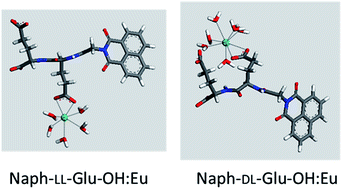

1. Introduction

Lanthanide elements (Ln) are of increasing industrial relevance due to their utility in clean energy technology,1 catalysis,2 nuclear3 and as biological probes.4 The Ln ions Eu and Tb are commonly used in biotechnological luminescence applications due to their ideal luminescence properties such as high quantum yields and long luminescence lifetimes.5,6 Lanthanide binding peptides (LnBP) are commonly used as structural probes in biological systems4 due to the uniquely useful properties of peptide[thin space (1/6-em)]:[thin space (1/6-em)]Ln complexes such as luminescence, nuclear magnetic resonance (NMR), and X-ray contrast.7 Peptides with carboxylic acid side chains such as glutamic acid (Glu) and aspartic acid (Asp) in particular form strong and in some cases selective complexes with Ln4,8,9 via coordination of the oxygen atoms of carboxylic acid side chains and/or carbonyl groups on the peptide backbone.10

A considerable amount of research has been undertaken developing LnBP with high affinity.4 Optimisation of the sequence of LnBP by screening methods led to development of a 17 amino acid peptide with one of the highest Ln binding constants measured and strong fluorescence.11 The origins of these desirable properties were explained retrospectively after the X-ray crystal structure of the peptide–Ln complex was solved.8 The high luminescence and selectivity were attributed to the closed-shell coordination of the Ln with water excluded, hydrophobic amino acids at the C and N termini that caused the peptide to fold into a loop structure ideal for binding, and the position of the tryptophan residue being optimal for sensitising luminescence. However, predictive design of efficient and selective LnBP has not yet been demonstrated.

Development of shorter LnBP still able to demonstrate efficient and selective Ln binding properties would be highly valuable, since this would dramatically reduce the synthetic effort required to generate LnBP. Delangle et al. have designed and synthesised hexapeptides with strong binding efficiencies using unnatural amino acid side chains.12,13 This work demonstrated that the position of the unnatural binding residue in the sequence as well as the length and denticity of the unnatural polyaminocarboxylate side chains affected the affinity and structure of the resulting Ln[thin space (1/6-em)]:[thin space (1/6-em)]peptide complexes.12–14 However, the decrease in synthetic effort afforded by decreasing the length of the peptide chain was offset by the increased effort required for the inclusion of unnatural amino acids.

Overall, previous studies have provided some insight into the effects of peptide structure on Ln binding properties, but the effects of simple parameters such as peptide length and stereochemistry have yet to be systematically explored. Therefore, a simple model system of di-, tri- and tetra-glutamic acid (Glu) peptides were synthesised in this work, with varying stereochemistry introduced via use of both the natural “left-handed” L-Glu and the unnatural “right-handed” D-Glu enantiomers. Peptides of Glu were selected as this amino acid is a common motif in LnBP and has been observed to be involved in bidentate coordination to Ln.8 The Eu binding properties (stoichiometry, binding affinity, complex structure) of these peptides in neutral and acidic solutions were investigated via luminescence spectroscopy, circular dichroism (CD), NMR and density functional theory (DFT) modelling. Europium was chosen for the binding studies because information about the symmetry of its complexes can be obtained from its luminescence spectra and energy transfer to Eu is more efficient at longer chromophore-Ln distances than for Tb.6

Investigations of LnBP have previously focussed on Ln binding under the neutral conditions relevant to biological applications. However, binding under acidic conditions was also investigated in this work since many industrial Ln separation applications such as mineral ore processing,15,16 wastewater cleanup17 and nuclear industry processes3 occur under acidic conditions. The insight gained into how peptide length and stereochemistry affect Ln binding affinity will assist in future design of high affinity, strongly luminescent, selective LnBP.

The peptide which displayed the strongest binding of Eu in aqueous solutions was then covalently attached to the surface of titania nanoparticles. The solid-phase sorbent material produced was used to determine whether functionalization of the titania nanoparticles with the peptide induced selective affinity for Ln. If so, the functionalised titania nanoparticles would have potential utility as a material for separation and/or purification. Competitive sorption experiments were performed with transition and post-transition metals Ni2+ and Al3+, alkali and alkaline earth metals Ca+, Sr2+ and Cs+, Ln elements La3+, Nd3+, Eu3+, Ho3+, Yb3+ and actinide UO22+. The pH dependence of sorption by the peptide functionalised titania nanoparticles was also investigated.

2. Experimental

2.1 Materials

All chemicals used for synthesis were reagent grade or higher and were used as purchased, without further purification unless otherwise mentioned. Solvents used were ≥98% pure. Dichloromethane for peptide synthesis was distilled prior to use. Water was purified with a Millipore Milli-Q system to give a resistivity > 18 MΩ cm at 25 °C.

2.2 Methods

Nuclear Magnetic Resonance (NMR) 1H and 13C spectra were recorded using a Bruker AV400 NMR spectrometer or a Bruker Avance DPX 300 spectrometer. NMR titrations were performed using 300 μM peptide and 10 mM HEPES buffer in D2O at pH 6. High resolution mass spectra (HRMS) were recorded on a Bruker BioApex Fourier Transform Ion Cyclotron Resonance mass spectrometer (FT-ICR) with an analytical ESI source, operating at 4.7 T. Melting points were obtained using a Stanford Research Systems Optimelt melting point apparatus and are uncorrected. Optical rotations were obtained using a Perkin Elmer model 341 polarimeter at 589 nm and 20 °C, using the indicated spectroscopic grade solvent.

Circular Dichroism (CD) measurements were performed on a JASCO J-710 Spectropolarimeter via 8 accumulations from 180 to 260 nm with a step resolution of 0.5 nm and a speed of 100 nm min−1. The response time was 4 s, the bandwidth was 1 nm and the sensitivity was 50 mdeg. The CD spectrum of 10 mM HEPES buffer was measured as a blank and automatically subtracted from the spectra of the samples.

Elemental concentrations of solutions were measured using ICP-MS with a Varian 820-MS instrument equipped with nickel cones, Micromist low flow nebuliser, double-glass Scott spray chamber, and SPS3 autosampler. Elemental microanalyses of C, H, and N content for the functionalised titania materials were performed using a Model PE2400 CHNS/O elemental analyser, PE Datamanager 2400 for Windows™ and a PerkinElmer AD-6 Ultra Micro Balance (CHNS/O Microanalysis Service at Macquarie University).

Fluorescence spectroscopy titrations were performed using a Cary Eclipse Fluorescence Spectrometer, typically in phosphorescence mode from 550 to 750 nm using an excitation wavelength of 345 nm, PMT voltage 800 V, excitation slit 20 nm, emission slit 5 nm, emission filter open, excitation filter on automatic. The delay time was 0.1 ms, flash count was 1, total decay time was 0.02 s and gate time was 0.01 s. The scan averaging time was 0.1 s and the data interval was 1 nm. A Savitzky–Golay smoothing factor of 5 was applied. To determine equilibrium constants, global analysis of the spectrophotometric data was carried out using a non-linear least-squares fitting procedure using the commercially available software program HypSpec® (Hyperquad® package). This application assumes that the spectral intensity of each chemical species is proportional to the concentration of that species in solution.

Structure optimisations were performed using the DFT program DMol3,18 which is part of the Materials Studio modelling software distributed by Accelrys. Details of these calculations are given in the ESI.

Cross-polarised 13C–1H solid-state NMR spectra of the functionalised titania materials were recorded on a Bruker Biospin Avance III solids-300 MHz instrument using a Bruker 4 mm double resonance magic-angle spinning (MAS) probehead with a MAS frequency of 12 kHz. Zeta potential measurements were performed on 1 mg mL−1 aqueous solutions in Malvern folded capillary cells (DTS1061) using a Nano Series ZS Zen 3600.

Batch sorption experiments were performed using solutions containing 1 ppm each of Al3+, Ca+, Ni2+, Sr2+, Cs+, La3+, Nd3+, Eu3+, Ho3+, Yb3+ and UO22+ in HEPES buffer (10 mM), pH adjusted with nitric acid if necessary. For TiO2–peptide, the sorbent was pre-equilibrated with 10 mM HEPES buffer to pH 4.2 or 4.8 before a spike of the multi-element stock solution (100 ppm) was added. All sorption experiments were performed in duplicate using 0.01 g titania nanoparticles and 2.0 mL solution. Samples were shaken on a vertical mixer at approx. 50 rpm for 24 h then filtered through an individual 0.45 μm syringe filter. Errors in the reported percentage extraction values were calculated from the largest standard deviation of the analytical results or assuming 5% error if the standard deviation was lower than this.

2.3 Synthesis

Synthesis of the 1,8-naphthalimide tag and the general methods used for solid phase peptide synthesis (SPPS) are given in the ESI.
2.3.1 Naphthalimide modified peptides. Details of the synthesis and characterisation of the naphthalimide modified di-, tri- and tetra-Glu peptides are given in the ESI. A representative example is given below.

Naph-L-Glu(OH)-D-Glu(OH)-D-Glu(OH)-L-Glu(OH)-OH (naph-LDDL-Glu-OH) was synthesised on Wang resin utilising the general methods for SPPS (ESI) to give the desired tetra-peptide as a white powder (86 mg, 100%); mp 174–176 °C; [α]20D −16.0° (c 0.1, H2O); 1H NMR (300 MHz, DMSO-d6) δ (ppm): 8.49 (m, 4H), 8.51 (m, 1H, NH), 8.10 (d, J = 8.0 Hz, 1H, NH), 8.02 (dd, J = 8.0, 8.2 Hz, 2H, NH), 7.89 (t, J = 7.8 Hz, 2H), 4.74 (s, 2H), 4.31 (m, 4H), 2.24 (m, 8H), 1.84 (m, 8H); 13C NMR (125 MHz, DMSO-d6) δ (ppm): 174.4, 174.3, 174.3, 174.1, 173.5, 171.5, 171.4, 167.5, 163.9, 162.9, 135.0, 131.8, 131.4, 128.0, 127.8, 122.4, 52.6, 52.4, 52.3, 51.5, 42.9, 30.5, 30.3, 28.3, 27.9, 27.9, 26.9 (2 signals obscured or overlapping); HRMS (ESI) calcd for C34H37N5O16 [M + Na]+ m/z 794.2134, found 794.2128.

2.3.2 Undecene-L-Glu(OtBu)-D-Glu(OtBu)-D-Glu(OtBu)-L-Glu(OtBu)-OH (undecene-LDDL-Glu(tBu)-OH). To load the first amino acid, 2-chlorotrityl chloride resin (0.30 g, 1.2 mmol g−1, 0.36 mmol) was shaken with a solution of Fmoc-Glu(tBu)-OH (0.15 g, 0.36 mmol) and DIPEA (0.25 mL, 1.4 mmol) in anhydrous CH2Cl2 (3 mL) at room temperature for 75 min. The resin was drained and then washed with 17[thin space (1/6-em)]:[thin space (1/6-em)]2[thin space (1/6-em)]:[thin space (1/6-em)]1 v/v CH2Cl2/MeOH/DIPEA (3 × 2 mL), CH2Cl2 (3 × 2 mL), DMF (2 × 2 mL) and CH2Cl2 (4 × 2 mL). Fmoc deprotection was performed as described in the general methods (ESI) and indicated a loading of 0.9 mmol g−1. Coupling of the second, third and fourth Glu residues was also performed as described in the general methods (ESI) but using approx. double the amount of reagents such that L- or D-Fmoc-Glu(tBu)-OH (0.62 g, 1.5 mmol), HBTU (0.54 g, 1.4 mmol) and DIPEA (0.50 mL, 2.9 mmol) in DMF (11 mL) were used. To couple undecenoic acid to the fourth Glu residue, a solution of undecenoic acid (0.11 g, 0.58 mmol), HBTU (0.22 g, 0.58 mmol) and DIPEA (0.30 mL, 1.8 mmol) in DMF (6 mL) was added to the loaded resin. The resin was then shaken at room temperature for 24 h before washing with DMF (5 × 5 mL), CH2Cl2 (5 × 5 mL) and DMF (5 × 5 mL). To cleave the modified peptide from the resin, a mixture of 2[thin space (1/6-em)]:[thin space (1/6-em)]2[thin space (1/6-em)]:[thin space (1/6-em)]6 v/v/v acetic acid/trifluoroethanol/CH2Cl2 (7 mL) was added to the resin and shaken at room temperature for 4 h. The cleaved products were separated from the resin by filtration and combined with 2[thin space (1/6-em)]:[thin space (1/6-em)]2[thin space (1/6-em)]:[thin space (1/6-em)]6 v/v/v acetic acid/trifluoroethanol/CH2Cl2 washings (3 × 2 mL). Hexane (100 mL) was added to the product solution and the solvent subsequently removed under reduced pressure. Residual acetic acid was removed from the product by forming an azeotrope with toluene (3 × 50 mL). This afforded the desired product as a yellow oil (0.24 g, 99%); 1H NMR (400 MHz, CDCl3) δ (ppm): 7.80 (d, J = 6.4 Hz, 1H, NH), 7.64 (d, J = 8.1 Hz, 1H, NH), 7.38 (d, J = 7.5 Hz, 1H, NH), 7.03 (d, J = 6.4 Hz, 1H, NH), 5.78 (m, 1H), 4.92 (m, 2H), 4.48 (m, 2H), 4.31 (m, 2H), 2.32 (m, 8H), 2.19 (m, 4H), 2.00 (m, 8H), 1.41 (s, 36H), 1.25 (m, 12H); 13C NMR (400 MHz, CDCl3) δ (ppm): 174.7, 173.6, 173.2, 172.8, 172.7, 172.5, 172.3, 171.8, 171.4, 139.1, 114.1, 81.2, 81.0, 80.7, 80.5, 53.9, 53.4, 52.7, 52.2, 36.0, 33.8, 31.9, 31.7, 31.7, 31.6, 29.3, 29.3, 29.1, 28.9, 28.1, 26.8, 26.7, 25.4 (6 signals obscured or overlapping); HRMS (ESI) calcd for C47H80N4O14 [M + Na]+ m/z 947.5570, found 947.5577 (Fig. 1).
image file: c6ra12880g-f1.tif
Fig. 1 Chemical structure of undecene-LDDL-Glu(tBu)-OH.
2.3.3 Functionalisation and deprotection of titania nanoparticles. The titania nanoparticle framework material was synthesised and functionalised as described previously.19 For example, titania nanoparticles (0.40 g) were suspended in a dry, degassed solution of undecene-LDDL-Glu(tBu)-OH (37 mg, 0.04 mmol) and 1-undecene (56 mg, 0.36 mmol) in mesitylene (4.0 mL) and heated in an oil bath at 110 °C for 24 h. The functionalised nanoparticles were then washed with petroleum ether (3 mL), MeOH (3 mL) and CH2Cl2 (3 mL) before drying in air overnight. To remove the tert-butyl (tBu) groups from the peptide after functionalization, a solution of 95[thin space (1/6-em)]:[thin space (1/6-em)]2.5[thin space (1/6-em)]:[thin space (1/6-em)]2.5 TFA[thin space (1/6-em)]:[thin space (1/6-em)]TIS[thin space (1/6-em)]:[thin space (1/6-em)]water was added to the functionalised nanoparticles (0.37 g) and stirred at room temperature for 4 h. The supernatant liquid was then removed and the deprotected, functionalised nanoparticles (TiO2–peptide) were washed multiple times with water until the pH of the washing solution was >4. Air drying afforded TiO2–peptide as an off-white solid (0.32 g).

3. Results and discussion

3.1 Synthesis

Naphthalimide tagged peptides (Fig. 2) were synthesised and used for solution binding studies with Eu in order to produce peptide[thin space (1/6-em)]:[thin space (1/6-em)]Eu complexes with sufficient luminescence to calculate binding affinities. The enhanced luminescence signal upon addition of the naphthalimide moiety to LLLL-Glu-OH is shown in the ESI.
image file: c6ra12880g-f2.tif
Fig. 2 Chemical structure of di-, tri- and tetra-Glu peptides.

3.2 Lanthanide binding in solution at neutral pH

The formation of peptide[thin space (1/6-em)]:[thin space (1/6-em)]Eu complexes was monitored by carrying out spectroscopic titrations. Phosphorescence emission spectra were recorded upon addition of 0 to 10 equiv. of 3 mM Eu nitrate to a 30 μM solution of the naph modified peptides in pH 6.9 10 mM HEPES buffer. The binding of Eu to the naph modified peptides was monitored using the Eu ΔJ = 1 transition at 592 nm as this transition has a purely magnetic dipole character and is insensitive to the chemistry and symmetry of the environment of the Eu ion, unlike the hypersensitive ΔJ = 2 transition at 615 nm.20

The integrated intensity of the ΔJ = 1 emission at 592 nm as Eu nitrate was added to a solution of each naph modified peptide is shown in Fig. 3. Increasing luminescence was observed as the Eu was added due to the increasing presence of luminescent peptide[thin space (1/6-em)]:[thin space (1/6-em)]Eu complexes. However, as higher equivalents of Eu were added the luminescence intensity reached a plateau. This indicated that a larger proportion of the Eu added initially was complexed by the peptide than the subsequent Eu additions, or that weaker peptide[thin space (1/6-em)]:[thin space (1/6-em)]Eu complexes were formed with the later Eu additions. Added Eu ions complexed by water molecules do not contribute to the luminescence signal because the water molecules provide a lower energy vibrational pathway for excited state relaxation.21


image file: c6ra12880g-f3.tif
Fig. 3 Titration profiles of all naph modified peptides in pH 6.9 10 mM HEPES buffer.

All the titration profiles in Fig. 3 showed a second increase in luminescence after a plateau had begun to develop. This indicated that multiple peptide[thin space (1/6-em)]:[thin space (1/6-em)]Eu complexes were formed. Similar shaped luminescence titration profiles were previously observed for Tb binding by a phosphorylated peptide fragment, for which the second increase in luminescence was attributed to the binding of a second Tb ion to the peptide.22 Therefore it was assumed that polymetallic complexes also formed between the present naph modified peptides and Eu in the presence of excess Eu ions.

Unfortunately, a unique solution could not be obtained from HypSpec23 modelling of the luminescence titrations in Fig. 3, as there were more than two species present in these solutions and hence the number of unknown parameters was too high. As such, binding constants and speciation could not be determined. Attempts to identify the stoichiometry of the complexes present in solution by mass spectrometry were also unsuccessful, most likely due to dissociation of the complexes upon ionisation. Nevertheless, some trends in the data were noted. For example, decreasing the length of the peptide chain decreased the luminescence intensity of the peptide[thin space (1/6-em)]:[thin space (1/6-em)]Eu complexes formed (Fig. 3). The higher luminescence of the larger peptides suggests that they provided a higher denticity of coordination and hence displaced more of the water molecules that quench Eu luminescence.6 The stronger luminescence of the tetra-peptides was expected given that these larger peptides had more carboxylic acid binding sites available to coordinate the Eu ions. Increasing the number of acidic residues in LnBP has previously been shown to yield increased binding constants.24

Decreasing the length of the peptide chain also delayed the onset of the second increase in luminescence (Fig. 3), which was attributed to the formation of polymetallic complexes.22 As such, the higher number of carboxylic acid binding sites in the larger peptides appeared to facilitate formation of polymetallic complexes. A similar effect has been observed previously for coordination of Cr(III) with acidic peptides, although in that case bimetallic complexes did not form until more than 4 acidic residues were present.25 Given that the pKa of terminal carboxylic acids is on average 3.3 ± 0.8 and of Glu side chains is 4.2 ± 0.9,26,27 all of the carboxylic acids in the poly-Glu peptides were expected to be deprotonated at pH 6.9. Thus, the tetra-, tri- and di-peptides had overall charges of −5, −4 and −3, respectively, since the amine terminus was replaced with a non-ionisable naph moiety. Upon binding of an Eu3+ cation, which is the dominant Eu species at this pH,28 the tetra- and tri-peptide complexes would still be negative. This explains why further Eu cations were attracted to bind and form polymetallic complexes. On the other hand, a 1[thin space (1/6-em)]:[thin space (1/6-em)]1 di-peptide[thin space (1/6-em)]:[thin space (1/6-em)]Eu complex would be neutral. Therefore, the di-peptides did not form polymetallic complexes until there was a large excess (4 equiv.) of Eu present.

Changing the stereochemistry of a single amino acid has previously been shown to have a significant effect on the binding affinities of peptides for copper,29,30 nickel31 and calcium32 ions. Also, introducing D-amino acids has been shown to affect metal binding affinities in both cyclic30 and linear31 tetra-peptides. The data in Fig. 3 show that for the tetra- and tri-peptides in this work, alternating L- and D-Glu residues produced complexes with higher luminescence than all L-Glu residues. This effect was more pronounced for the tetra-peptides than for the tri-peptides and was not observed at all for the di-peptides. Thus, the tetra-peptides with alternating L- and D-Glu residues provided the most luminescent complexes and the strongest Eu binding.

3.3 Lanthanide binding in solution at acidic pH

3.3.1 Fluorescence spectroscopy. The luminescence titration profiles from experiments at acidic pH were lower in intensity than those performed at neutral pH and were a single step, without an inflection point (Fig. 4). This suggested that the binding was weaker and that polymetallic peptide[thin space (1/6-em)]:[thin space (1/6-em)]Eu complexes did not form, likely because in acidic solutions some of the carboxylic acid side chains of the peptides were protonated and unavailable to bind Eu. In addition, since the pH was lowered using nitric acid, there were more nitrate anions in the acidic solutions, which compete with the peptides to complex Eu.33
image file: c6ra12880g-f4.tif
Fig. 4 Titration profiles of all naph modified peptides in 10 mM HEPES buffer at acidic pH fitted via HypSpec modelling.

The pH at which Ln binding experiments were performed was chosen for each peptide as the pH that gave a luminescence titration with a single step and showed luminescence intensity > 25 at the initial step of the titration (0.1 equiv. Eu). According to these conditions, luminescence titrations were performed with naph-DLDL- and naph-LDDL-Glu-OH at pH 4.1, with naph-LLLL-Glu-OH at pH 4.7, with naph-LDL- and naph-LLL-Glu-OH at pH 4.9 and with naph-DL- and naph-LL-Glu-OH at pH 5.9 (Fig. 4). The shorter peptides required less acidic conditions to achieve single step titration profiles because they were less inclined to form polymetallic complexes, as discussed in Section 3.2. The data in Fig. 4 also shows that the titration profiles of the shorter peptides at higher pH reached a plateau earlier in the titration than the longer peptides at lower pH. This could be due to the higher pH of these titrations or the shorter length of the peptides.

The single step titration profiles at acidic pH enabled HypSpec modelling and hence calculation of binding constants log[thin space (1/6-em)]βxy = [LnxPy]/([Ln]x[P]y) where ‘P’ represents the peptide. The modelled fits of the titration profiles are shown in Fig. 4 and the modelled binding constants are shown in Table 1. Speciation diagrams from the modelling are given in the ESI.

Table 1 Binding constants for all peptides in 10 mM HEPES buffer at varying pH
Peptide pH Species (peptide[thin space (1/6-em)]:[thin space (1/6-em)]Eu) log[thin space (1/6-em)]β21 Species (peptide[thin space (1/6-em)]:[thin space (1/6-em)]Eu) log[thin space (1/6-em)]β11 σ
LDDL 4.1 2[thin space (1/6-em)]:[thin space (1/6-em)]1 7.8     0.08
DLDL 4.1 2[thin space (1/6-em)]:[thin space (1/6-em)]1 7.7     0.10
LLLL 4.7 2[thin space (1/6-em)]:[thin space (1/6-em)]1 8.7 1[thin space (1/6-em)]:[thin space (1/6-em)]1 3.6 0.09
LDL 4.9 2[thin space (1/6-em)]:[thin space (1/6-em)]1 9.9 1[thin space (1/6-em)]:[thin space (1/6-em)]1 4.8 0.10
LLL 4.9 2[thin space (1/6-em)]:[thin space (1/6-em)]1 9.8 1[thin space (1/6-em)]:[thin space (1/6-em)]1 4.7 0.09
DL 5.9 2[thin space (1/6-em)]:[thin space (1/6-em)]1 9.6 1[thin space (1/6-em)]:[thin space (1/6-em)]1 4.9 0.09
LL 5.9 2[thin space (1/6-em)]:[thin space (1/6-em)]1 10.5 1[thin space (1/6-em)]:[thin space (1/6-em)]1 5.3 0.09


HypSpec fitting of the titration profiles of naph-LDDL- and naph-DLDL-Glu-OH at pH 4.1 indicated that a 2[thin space (1/6-em)]:[thin space (1/6-em)]1 peptide[thin space (1/6-em)]:[thin space (1/6-em)]Eu complex with a binding constant of approx. 8 was present (Table 1). This weak binding constant corresponded to approx. 40% of each peptide being complexed in the presence of 10 equiv. Eu (Fig. S3). At pH 4.1, half of the carboxylic acid side chains (pKa ∼ 4.2) and the terminal carboxylic acid (pKa ∼ 3.3) of the tetra-peptides are expected to be deprotonated,26 resulting in an overall charge of −3. Thus, binding to Eu3+ can be attributed to electrostatics. The weak binding of naph-DLDL- and naph-LDDL-Glu-OH to Eu at pH 4.1 can be attributed to the concentration of competing nitrate ions (approx. 100 μM) being more than three times the peptide concentration (30 μM). Indeed, the fact that formation of an inner-sphere peptide[thin space (1/6-em)]:[thin space (1/6-em)]Eu complex occurred at all at pH 4.1 is remarkable. No other reports on the binding constants of LnBP below pH 6 could be found for comparison.

Luminescence lifetimes of naph-LDDL- and naph-DLDL-Glu-OH with between 0.5 and 4 equiv. Eu added were measured at pH 4 in 10 mM HEPES H2O/D2O solutions to determine the number of coordinated water molecules.6 For both tetra-peptides, the measured lifetimes corresponded to a hydration number of 9.2 (ESI).21 Thus, given that Eu typically has a coordination number of 8–9 in solution,6 most of the Eu in solution was completely hydrated. This was consistent with the luminescence titration results. Lifetime measurements were not performed for the other peptides as they formed multiple peptide[thin space (1/6-em)]:[thin space (1/6-em)]Eu complexes (Table 1) and it was not possible to decouple their luminescence decay signals.

HypSpec fitting of the titration profile for naph-LLLL-Glu-OH at pH 4.7 indicated the presence of both 2[thin space (1/6-em)]:[thin space (1/6-em)]1 and 1[thin space (1/6-em)]:[thin space (1/6-em)]1 peptide[thin space (1/6-em)]:[thin space (1/6-em)]Eu complexes. The presence of the 1[thin space (1/6-em)]:[thin space (1/6-em)]1 complex and the modelled binding constants in Table 1 indicated that the affinity between naph-LLLL-Glu-OH and Eu at pH 4.7 was higher than between the other tetra-peptides and Eu at pH 4.1. This was attributed to the fact that at pH 4.7, naph-LLLL-Glu-OH is expected to have an overall charge of −4,26 which is more negative than that of the other tetra-peptides at pH 4.1. This does not however indicate that under conditions of the same pH, naph-LLLL-Glu-OH would bind Eu more strongly than naph-LDDL- and naph-DLDL-Glu-OH. In fact, the data collected at neutral pH (Fig. 3) suggests the opposite.

Hypspec fitting of the titration profiles for the tri-peptides at pH 4.9 and the di-peptides at pH 5.9 indicated the presence of both 2[thin space (1/6-em)]:[thin space (1/6-em)]1 and 1[thin space (1/6-em)]:[thin space (1/6-em)]1 peptide[thin space (1/6-em)]:[thin space (1/6-em)]Eu complexes, as for naph-LLLL-Glu-OH (Table 1). The modelled binding constants for naph-LDL- and naph-LLL-Glu-OH were similar, so for the tri-peptides stereochemistry had little impact on binding affinity. However, for the di-peptides log[thin space (1/6-em)]β21 and log[thin space (1/6-em)]β11 were approx. 8 and 3 times higher for naph-LL-Glu-OH than naph-DL-Glu-OH, respectively (Table 1). Thus, for the di-peptides, having the carboxylic acid side chains on “opposite sides” of the molecule (naph-LL-Glu-OH) produced a higher binding affinity for Eu than having them on the “same side” (naph-DL-Glu-OH). This was the opposite effect to what was observed for the tetra-peptides. Overall, the binding behaviour of these peptides was complex and difficult to predict, as the effect of alternating L- and D-residues was different for the di-, tri- and tetra-peptides. Alternating L- and D-residues may only be beneficial in larger peptides with four or more amino acids.

In terms of peptide length, the binding constants in Table 1 were generally not comparable as the luminescence titrations were performed at difference acidities. However, the binding constants for the tri-peptides at pH 4.9 were more than an order of magnitude greater than the binding constants of naph-LLLL-Glu-OH measured at the similar pH of 4.7. This could not be attributed to electrostatics as the overall charge of the tri-peptides at pH 4.9 (−3.5) was slightly lower than that of naph-LLLL-Glu-OH at pH 4.7 (−4). Thus, this result showed that increasing the number of Glu residues does not necessarily improve metal binding affinity. Indeed, previous work has shown that the position of charged metal binding residues is also highly influential.12,34

3.3.2 Circular dichroism (CD) spectroscopy. Circular dichroism spectra of the di-, tri- and tetra-peptides were measured in 10 mM HEPES buffer (ESI). The CD spectrum of naph-LLLL-Glu-OH was different to the known spectrum of LLLL-Glu,35 suggesting that the presence of the naph group altered the secondary structure of these peptides. Circular dichroism titrations were also performed for the di- and tri-peptides and showed that the structure of these peptides changed upon Eu binding (ESI). However, the peptides were too short to assign secondary structures such as alpha helix or beta sheet. The di-peptides reached equilibrium earlier in the CD titrations than the tri-peptides, consistent with the luminescence titration results in Section 3.3.1.
3.3.3 Characterisation of peptide[thin space (1/6-em)]:[thin space (1/6-em)]Eu complex structures. In order to understand how the peptides coordinated the Eu ions in solution, NMR titrations and DFT modelling were performed. Since the signals from the methylene groups of the side chains of the tri- and tetra-peptides could not be distinguished, NMR titrations were only performed for the di-peptides. Similarly, DFT modelling was only performed for the 1[thin space (1/6-em)]:[thin space (1/6-em)]1 di-peptide[thin space (1/6-em)]:[thin space (1/6-em)]Eu complexes, as the larger number of atoms in the structures of the tri- and tetra-peptides or the 2[thin space (1/6-em)]:[thin space (1/6-em)]1 complexes made the DFT calculations prohibitively slow.

The changes in the chemical shifts of the 1H NMR signals of naph-LL-Glu-OH and naph-DL-Glu-OH in 10 mM HEPES buffer at pH 6 upon Eu addition are shown in Fig. 5 and S10, respectively. The titrations were stopped when addition of further Eu caused precipitation. The magnitude of the Eu-induced chemical shifts in the 1H NMR spectra depend on both the distance between the proton and the Eu ion as well as the angle between the vector joining the proton and Eu ion and the principal magnetic axis of the molecular complex.36 As such, upfield or downfield shifts can indicate the proximity of an Eu ion but if the critical angle is 55° the chemical shift can be zero even for protons close to the Eu ion. The NMR titration data in Fig. 5 and S10 show that the methylene protons closest to the carboxylic acids of the side chains (C and F) and the methine protons (A and D) underwent upfield shifts upon Eu addition. This indicated that both of the carboxylic side chains, the terminal carboxylic acid and the carbonyl group next to methine D of the di-peptides were involved in binding Eu. On the other hand, none of the protons on the naph moiety (G, H, I or J) shifted significantly upon Eu addition. Thus, the carbonyl groups of the naph were unlikely to be involved in binding Eu. Since the changes in chemical shift shown in Fig. 5 and S10 were due to formation of both 2[thin space (1/6-em)]:[thin space (1/6-em)]1 and 1[thin space (1/6-em)]:[thin space (1/6-em)]1 di-peptide[thin space (1/6-em)]:[thin space (1/6-em)]Eu complexes, the observed changes cannot be ascribed to a single complex.


image file: c6ra12880g-f5.tif
Fig. 5 Changes in chemical shift of 1H NMR signals from naph-LL-Glu-OH upon Eu addition (pH 6, 10 mM HEPES, D2O). The protons at positions B and E are not plotted as these signals were too broad and flat to accurately determine their chemical shifts.

To model the di-peptide[thin space (1/6-em)]:[thin space (1/6-em)]Eu complexes, the di-peptides and Eu were first modelled separately using the DFT program DMol3. The geometry optimised structures of the di-peptides are shown in the ESI and their structural energies were −319.45 eV for naph-LL-Glu-OH and −319.43 eV for naph-DL-Glu-OH. As such, neither isomer was more energetically favourable than the other. The Eu–water complex was initially surrounded by nine water molecules but after optimisation contained eight coordinated water molecules with Eu–O bond distances of 2.5 Å each and had a structural energy of −89.23 eV.

The 1[thin space (1/6-em)]:[thin space (1/6-em)]1 di-peptide[thin space (1/6-em)]:[thin space (1/6-em)]Eu complexes with the Eu in several possible binding positions were then modelled by bringing together the geometry optimised Eu–water complex and di-peptide structures and performing simulated annealing and geometry optimisation on the resulting complex. Four possible binding positions were evaluated for each di-peptide. Structures A to D are 1[thin space (1/6-em)]:[thin space (1/6-em)]1 naph-LL-Glu-OH[thin space (1/6-em)]:[thin space (1/6-em)]Eu complexes, shown in Fig. 6, while structures E to H are 1[thin space (1/6-em)]:[thin space (1/6-em)]1 naph-DL-Glu-OH[thin space (1/6-em)]:[thin space (1/6-em)]Eu complexes, shown in Fig. S11. For structures A and E, the Eu–water complex was initially placed >3 Å from a side chain carboxylic acid of the di-peptide. For structures B, C, F and G, the Eu–water complex was initially placed within 2 Å of a side chain carboxylic acid (B and F) or the terminal carboxylic acid (C and G) of the di-peptide. Finally, for structures D and H, the geometry optimised structures of the Eu–water complex and di-peptides were not used. Instead, the peptide structure was arranged such that all three of its carboxylic acids had at least one oxygen atom within 2.5 Å of the Eu ion and nine water molecules were then added in random positions. The calculated binding energies (defined as the difference between the structural energy of the di-peptide–Eu complex and the sum of the separate structural energies of the di-peptide and the Eu–water complex), coordination numbers and bond distances for all the complexes are given in Table 2.


image file: c6ra12880g-f6.tif
Fig. 6 Optimised geometry of 1[thin space (1/6-em)]:[thin space (1/6-em)]1 naph-LL-Glu-OH[thin space (1/6-em)]:[thin space (1/6-em)]Eu complexes. Non-binding water molecules are not shown.
Table 2 DFT calculated binding energies, coordination numbers and bond distances for 1[thin space (1/6-em)]:[thin space (1/6-em)]1 naph-LL-Glu-OH[thin space (1/6-em)]:[thin space (1/6-em)]Eu (A to D) and naph-DL-Glu-OH[thin space (1/6-em)]:[thin space (1/6-em)]Eu (E to H) complexes
Complex Binding energy (eV) Eu coordination no. Eu–O bond distances
Peptide Water
A 3.18 8   2.5 Å (2), 2.6 Å (6)
B 2.73 7 2.5 Å (2) 2.5 Å (4), 2.6 Å (1)
C 3.31 7 2.5 Å (2) 2.5 Å (4), 2.6 Å (1)
D 3.15 7 2.4 Å (2), 2.5 Å (1), 2.6 Å (1) 2.5 Å (2), 2.6 Å (1)
E 3.19 7   2.5 Å (4), 2.6 Å (3)
F 3.09 8 2.5 Å (2) 2.5 Å (3), 2.6 Å (3)
G 3.14 7 2.5 Å (2) 2.5 Å (4), 2.6 Å (1)
H 3.28 7 2.4 Å (1), 2.5 Å (2) 2.5 Å (2), 2.6 Å (2)


The data in Table 2 showed that all of the complexes had a similar Eu coordination number of 7–8. For naph-LL-Glu-OH (Fig. 6), complexes A, C and D demonstrated similar binding energies, while complex B had a somewhat lower binding energy (Table 2). This suggests that Eu binding at a single carboxylic acid side chain was somewhat energetically disfavoured for naph-LL-Glu-OH. On the other hand, the NMR titration data in Fig. 5 suggested that the carboxylic acid side chains of naph-LL-Glu-OH were involved in binding Eu, although this could have been due to the 2[thin space (1/6-em)]:[thin space (1/6-em)]1 or 1[thin space (1/6-em)]:[thin space (1/6-em)]1 peptide[thin space (1/6-em)]:[thin space (1/6-em)]Eu complex (or both). Complexes A, C and D had zero, two and four Eu–peptide bonds, respectively, but were all energetically similar. Thus, it is likely that all of these possible binding positions, and others, were present to some extent in the experimental solutions.

For naph-DL-Glu-OH (Fig. S11), all of the complexes were similar in energy (within 0.2 eV) (Table 2). Thus, all the calculated binding positions were equally favourable. As a result, binding of Eu by a carboxylic acid side chain was more favourable for naph-DL-Glu-OH than naph-LL-Glu-OH, which can be explained by the proximity of the second side chain carboxylic acid to the Eu ion in complex F relative to complex B. Binding Eu at the terminal carboxylic acid was similar energetically for both di-peptides. As for naph-LL-Glu-OH, the number of bonds between the peptide and Eu did not substantially affect the binding energy and multiple binding geometries with naph-DL-Glu-OH appear likely. This was consistent with the NMR titration data, which suggested that all three carboxylic acids of the di-peptides and some of the backbone carbonyl oxygens were involved in Eu binding. Also, the fact that complexes A and E, in which the Eu was coordinated by water only, had similar energies to the inner-sphere peptide–Eu complexes, was consistent with the luminescence titration data, which suggested that not all of the added Eu was coordinated by the di-peptides.

3.4 Peptide functionalised titania nanoparticles for selective lanthanide sorption

Naph-LDDL-Glu-OH provided the strongest complex with Eu of all the peptides synthesised in this work. Therefore, its naph moiety was replaced with 1-undecanoic acid, to give undecene-LDDL-Glu(OtBu)-OH, and used to covalently functionalise titania nanoparticles to form a solid phase sorbent material. Due to the bulky nature of the peptide functional group, 1-undecene was also used as ‘filler’ between the functional molecules, so that self-assembly of the alkyl chains would not be interrupted. The Glu side chains were protected with tert-butyl esters during functionalization to prevent coordination of the carboxylic acids to the titania surface. After functionalisation, the tert-butyl esters were removed as shown in Scheme 1 and the resulting material was referred to as TiO2–peptide. To confirm that functionalisation occurred via reaction of the alkene rather than a carboxylic acid at the titania surface, the sorption behaviour of titania nanoparticles functionalised with 1-undecene (TiO2–alkyl) was measured.
image file: c6ra12880g-s1.tif
Scheme 1 Deprotection of undecene-LDDL-Glu(tBu)-OH on titania surface to give TiO2–peptide.
3.4.1 Characterisation. The functionalization of the titania nanoparticles was confirmed by solid-state 13C–1H CP MAS-NMR of TiO2–alkyl and TiO2–peptide (Fig. S12). Peaks due to aliphatic CH2 groups (15–45 ppm)37 were seen in the NMR spectra of both TiO2–alkyl and TiO2–peptide and the NMR spectrum of TiO2–peptide also showed peaks corresponding to –CH groups in the peptide backbone (50 ppm) and the carboxylic acid or amide groups (180 ppm).37,38 The level of functionalization of TiO2–peptide was quantitatively determined by CHN microanalysis and showed a total organic content of 1.2% (Table S1). This corresponded to a calculated area per molecule of 1.6 nm2, a similar molecular density to what has been achieved previously for covalent functionalisation of titania nanoparticles.19 Zeta potential measurements in aqueous nitrate media showed that the isoelectric points for non-functionalised titania nanoparticles (TiO2–NF) and TiO2–peptide were 4.2 and pH 1.5, respectively (Fig. S13). The lower isoelectric point of TiO2–peptide was expected as the peptide had five acidic carboxylic acid groups while the surface of titania consisted of both acidic and basic reaction sites.39
3.4.2 Sorption studies. The results of batch sorption experiments in 10 mM HEPES buffer at pH 4.2 are given in Fig. 7. For TiO2–NF, the surface charge was expected to be negligible at this pH given its isoelectric point of 4.2. Therefore, the sorption of Al and U by TiO2–NF was attributed to coordination with the hard oxygen donor atoms of the titania rather than ionic bonding. The existence of inner-sphere U–titania complexes has been previously demonstrated40,41 and for Al it is possible that the Al3+ ions28 were hydrolysed at the titania surface to form polynuclear species or precipitates.42 TiO2–alkyl showed no sorption of Ca, Ni, Sr or Cs at pH 4.2 but demonstrated increased sorption of Al, Ln and U relative to TiO2–NF. This was attributed to weak interactions between water and surfaces covered in hydrophobic self-assembled monolayers creating an interfacial potential and causing migration of ions to the interfacial region.43,44
image file: c6ra12880g-f7.tif
Fig. 7 Percentage extraction of 1 ppm Al, Ca, Ni, Sr, Cs, Ln and U from pH 4.2 10 mM HEPES buffer by TiO2–NF, TiO2–alkyl and TiO2–peptide.

TiO2–peptide showed enhanced Ln sorption but decreased U sorption relative to TiO2–NF and TiO2–alkyl (Fig. 7). This difference in sorption behaviour relative to TiO2–alkyl confirmed that the TiO2–peptide functionalization had occurred via the alkene, as desired. The Ln sorption by TiO2–peptide was selective over Ca, Ni, Sr and Cs but was similar to Al sorption and lower than the sorption of U. Similar sorption of Al and Ln by TiO2–peptide can be explained by the fact that both of these cations have the same trivalent charge. The high U sorption by TiO2–peptide was also expected, as previous literature has shown that peptides of amino acids with carboxylic acid side chains, in particular Glu, have high affinities for the uranyl cation.45 However, U was sorbed less by TiO2–peptide than by TiO2–NF or TiO2–alkyl, possibly due to the higher sorption of Ln by TiO2–peptide resulting in saturation of the nanoparticle surface such that not all the U could also be sorbed.

Batch sorption experiments were also performed at pH 4.8 in 10 mM HEPES buffer and the result are given in Fig. S14. The sorption behaviour at pH 4.8 showed the same trends as were observed at pH 4.2, but percentage extraction values were generally higher at pH 4.8 than at pH 4.2. This was expected given the higher negative surface charges of TiO2–NF and TiO2–peptide at pH 4.8 (Fig. S13).

Many examples of peptides being used for functionalization of solids exist in the literature, using a variety of substrates.46–51 However, most of these studies have not investigated the sorbent properties of the peptide functionalised materials. Previous studies that have investigated the utility of amino acids and peptides on solid supports as sorbents mostly focus on remediation of heavy metals such as Pb and Cd.52 The few examples that do exist of peptide functionalised materials being used for Ln sorption include peptide coated gold nanoparticles,48 as well as poly-L-aspartic acid functionalised controlled pore glass and gold surfaces.53,54 Selectivity was only investigated for the poly-L-aspartic acid immobilised on controlled pore glass, which demonstrated selectivity for Al > Cu > La > Pb > Ni > Cd at pH 7.52 This selectivity was similar to what was observed under the more acidic conditions of pH 4–5 with TiO2–peptide in the present work.

4. Conclusions

A systematic investigation of the effects of peptide length and stereochemistry on the Ln binding properties of simple peptides was performed using a model system of di-, tri- and tetra-Glu. Both the length and stereochemistry of the peptides affected the structure of the Eu complexes formed. Luminescence and CD titrations at neutral and acidic pH showed that the tetra-peptides with alternating L- and D-Glu residues coordinated Ln most strongly. This was most likely due to their higher number of carboxylic acid binding sites and a higher incidence of cooperative binding when the carboxylic acid side chains were on the same side of the molecule. However, tri-peptides with alternating L- and D-Glu residues demonstrated similar binding strength to tri-peptides with all L-Glu residues and for the di-peptides naph-LL-Glu-OH in fact showed somewhat stronger binding than naph-LD-Glu-OH. Thus, the advantageous effect of alternating L- and D-Glu residues appeared to only be present for the longer peptides. Overall, it was demonstrated that peptides based on Glu bind Ln and that increasing peptide length generally increased Ln affinity but stereochemistry had an inconsistent effect.

NMR titrations and DFT modelling of the di-peptide[thin space (1/6-em)]:[thin space (1/6-em)]Eu complexes provided some insight into the mode of binding. According to the NMR titration data, both carboxylic acid side chains, the terminal carboxylic acid and possibly even backbone carbonyl groups of the di-peptides were involved in Eu binding. Similarly, DFT modelling indicated that multiple possible binding sites produced 1[thin space (1/6-em)]:[thin space (1/6-em)]1 di-peptide[thin space (1/6-em)]:[thin space (1/6-em)]Eu complexes with similar energies. Thus, it is probable that multiple modes of binding existed in the experimental solutions. Lanthanide binding by these short peptides was complex and difficult to characterise.

The LnBP that showed the highest affinity for Eu according to the luminescence titration experiments, naph-LDDL-Glu-OH, was modified with 1-undecene to allow self-assembly and covalent attachment of the peptide to the surface of titania nanoparticles. The resulting solid-phase sorbent material (TiO2–peptide) was used to investigate the selectivity of the peptide for Ln over other metal cations at pH 4–5. As expected, the presence of the peptide on the titania surface enhanced the affinity of the material for Ln, even at pH 4. TiO2–peptide also sorbed Al and U, but was selective for Ln over Ca, Ni, Sr and Cs.

Acknowledgements

Simon Middleburgh for help with DFT modelling, Rob Elmes for help with luminescence spectroscopy, Aditya Rawal for provision of solid state NMR, Nick Proschogo for provision of mass spectroscopy.

References

  1. B. Puchy, Briefing Paper: Rare Earth Elements, Department of Environmental Quality, Oregon, 2011 Search PubMed .
  2. Molecular Catalysis of Rare Earth Elements, ed. P. W. Roesky, Springer, Berlin, 2010 Search PubMed .
  3. F. W. Lewis, M. J. Hudson and L. M. Harwood, Synlett, 2011, 2609–2632 CAS .
  4. L. Ancel, A. Niedzwiecka, C. Lebrun, C. Gateau and P. Delangle, Cron. Chim., 2013, 16, 515–523 CrossRef CAS .
  5. E. G. Moore, A. P. S. Samuel and K. N. Raymond, Acc. Chem. Res., 2009, 42, 542–552 CrossRef CAS PubMed .
  6. F. S. Richardson, Chem. Rev., 1982, 82, 541–552 CrossRef CAS .
  7. K. N. Allen and B. Imperiali, Curr. Opin. Chem. Biol., 2010, 14, 247–254 CrossRef CAS PubMed .
  8. M. Nitz, M. Sherawat, K. J. Franz, E. Peisach, K. N. Allen and B. Imperiali, Angew. Chem., Int. Ed., 2004, 43, 3682–3685 CrossRef CAS PubMed .
  9. S. Ozcubukcu, K. Mandal, S. Wegner, M. P. Jensen and C. He, Inorg. Chem., 2011, 50, 7937–7939 CrossRef CAS PubMed .
  10. J. S. Prell, T. G. Flick, J. Oomens, G. Berden and E. R. Williams, J. Phys. Chem. A, 2010, 114, 854–860 CrossRef CAS PubMed .
  11. M. Nitz, K. J. Franz, R. L. Maglathlin and B. Imperiali, ChemBioChem, 2003, 4, 272–276 CrossRef CAS PubMed .
  12. A. Niedzwiecka, F. Cisnetti, C. Lebrun, C. Gateau and P. Delangle, Dalton Trans., 2012, 41, 3239–3247 RSC .
  13. A. Niedzwiecka, F. Cisnetti, C. Lebrun and P. Delangle, Inorg. Chem., 2012, 51, 5458–5464 CrossRef CAS PubMed .
  14. F. Cisnetti, C. Lebrun and P. Delangle, Dalton Trans., 2010, 39, 3560–3562 RSC .
  15. U. S. E. P. A. (EPA), Rare Earth Elements: A Review of Production, Processing, Recycling, and Associated Environmental Issues, Cincinnati, OH, 2012 Search PubMed .
  16. NRMRL, Rare Earth Elements: A Review of Production, Processing, Recycling, and Associated Environmental Issues, United States Environmental Protection Agency, Cincinnati, 2012 Search PubMed .
  17. W. Yantasee, G. E. Fryxell, R. S. Addleman, R. J. Wiacek, V. Koonsiripaiboon, K. Pattamakomsan, V. Sukwarotwat, J. Xu and K. N. Raymond, J. Hazard. Mater., 2009, 168, 1233–1238 CrossRef CAS PubMed .
  18. B. Delley, J. Chem. Phys., 2000, 113, 7756–7764 CrossRef CAS .
  19. J. Veliscek-Carolan, K. A. Jolliffe and T. L. Hanley, ACS Appl. Mater. Interfaces, 2013, 5, 11984–11994 CAS .
  20. J.-C. G. Bunzli and G. R. Choppin, Lanthanide Probes in Life, Chemical and Earth Sciences. Theory and Practice, Elsevier, Amsterdam, 1989 Search PubMed .
  21. A. Beeby, I. M. Clarkson, R. S. Dickins, S. Faulkner, D. Parker, L. Royle, A. S. de Sousa, J. A. G. Williams and M. Woods, J. Chem. Soc., Perkin Trans. 2, 1999, 493–503 RSC .
  22. L. L. Liu and K. J. Franz, J. Am. Chem. Soc., 2005, 127, 9662–9663 CrossRef CAS PubMed .
  23. P. Gans, A. Sabatini and A. Vacca, Talanta, 1996, 43, 1739–1753 CrossRef CAS PubMed .
  24. B. J. Marsden, R. S. Hodges and B. D. Sykes, Biochemistry, 1988, 27, 4198–4206 CrossRef CAS PubMed .
  25. D. Pu, J. B. Vincent and C. J. Cassady, J. Mass Spectrom., 2008, 43, 773–781 CrossRef CAS PubMed .
  26. G. R. Grimsley, J. M. Scholtz and C. N. Pace, Protein Sci., 2009, 18, 247–251 CAS .
  27. D. Bashford, D. A. Case, C. Dalvit, L. Tennant and P. E. Wright, Biochemistry, 1993, 32, 8045–8056 CrossRef CAS PubMed .
  28. C. F. Baes Jr and R. E. Mesmer, The hydrolysis of cations, John Wiley and Sons, Inc., New York, 1976 Search PubMed .
  29. I. Schiopu, S. Iftemi and T. Luchian, Langmuir, 2015, 31, 387–396 CrossRef CAS PubMed .
  30. J. Brasun, A. Matera, S. Oldziej, J. Swiatek-Kozlowska, L. Messori, C. Gabbiani, M. Orfei and M. Ginanneschi, J. Inorg. Biochem., 2007, 101, 452–460 CrossRef CAS PubMed .
  31. A. Matera-Witkiewicz, J. Brasun and M. Cebrat, Polyhedron, 2010, 29, 3052–3058 CrossRef CAS .
  32. R. M. Cusack, L. Grondahl, D. P. Fairlie, L. R. Gahan and G. R. Hanson, J. Chem. Soc., Perkin Trans. 2, 2002, 556–563 RSC .
  33. S. Andersson, K. Eberhardt, C. Ekberg, J. O. Liljenzin, M. Nilsson and G. Skarnemark, Radiochim. Acta, 2006, 94, 469–474 CAS .
  34. C. H. Lin, F. C. H. Chan, J. K. Hwang and P. C. Lyu, Protein Eng., 1999, 12, 589–595 CrossRef CAS PubMed .
  35. M. Rinaudo and A. Domard, J. Am. Chem. Soc., 1976, 98, 6360–6364 CrossRef CAS PubMed .
  36. A. F. Cockerill, G. L. O. Davies, R. C. Harden and D. M. Rackham, Chem. Rev., 1973, 73, 553–587 CrossRef CAS .
  37. E. Breitmaier and W. Voelter, Carbon-13 NMR Spectroscopy - High Resolution Methods and Applications in Organic Chemistry and Biochemistry, VCH, Weinheim, 3rd edn, 1987 Search PubMed .
  38. F. A. Bovey, L. Jelinski and P. A. Mirau, Nuclear Magnetic Resonance Spectroscopy, Academic Press, Inc., San Diego, 2nd edn, 1988 Search PubMed .
  39. K. I. Hadjiivanov and D. G. Klissurski, Chem. Soc. Rev., 1996, 25, 61–69 RSC .
  40. J. Vandenborre, R. Drot and E. Simoni, Inorg. Chem., 2007, 46, 1291–1296 CrossRef CAS PubMed .
  41. H. Geckeis, J. Lutzenkirchen, R. Polly, T. Rabung and M. Schmidt, Chem. Rev., 2013, 113, 1016–1062 CrossRef CAS PubMed .
  42. The environmental chemistry of aluminium, ed. G. Sposito, CRC Press, Inc., Boca Raton, 1996 Search PubMed .
  43. A. J. Hopkins, C. L. McFearin and G. L. Richmond, J. Phys. Chem. C, 2011, 115, 11192–11203 CAS .
  44. A. Gray-Weale and J. K. Beattie, Phys. Chem. Chem. Phys., 2009, 11, 10994–11005 RSC .
  45. C. Lebrun, M. Starck, V. Gathu, Y. Chenavier and P. Delangle, Chem.–Eur. J., 2014, 20, 16566–16573 CrossRef CAS PubMed .
  46. C. F. Chan, M. K. Tsang, H. G. Li, R. F. Lan, F. L. Chadbourne, W. L. Chan, G. L. Law, S. L. Cobb, J. H. Hao, W. T. Wong and K. L. Wong, J. Mater. Chem. B, 2014, 2, 84–91 RSC .
  47. D. J. Lewis and Z. Pikramenou, Coord. Chem. Rev., 2014, 273, 213–225 CrossRef .
  48. A. C. Savage and Z. Pikramenou, Chem. Commun., 2011, 47, 6431–6433 RSC .
  49. A. P. Katsoulidis, K. S. Park, D. Antypov, C. Marti-Gastaldo, G. J. Miller, J. E. Warren, C. M. Robertson, F. Blanc, G. R. Darling, N. G. Berry, J. A. Purton, D. J. Adams and M. J. Rosseinsky, Angew. Chem., Int. Ed., 2014, 53, 193–198 CrossRef CAS PubMed .
  50. M. Dettin, A. Zamuner, G. Iucci, G. M. L. Messina, C. Battocchio, G. Picariello, G. Gallina, G. Marletta, I. Castagliuolo and P. Brun, J. Pept. Sci., 2014, 20, 585–594 CrossRef CAS PubMed .
  51. C. Gaillard, H. A. Girard, C. Falck, V. Paget, V. Simic, N. Ugolin, P. Bergonzo, S. Chevillard and J. C. Arnault, RSC Adv., 2014, 4, 3566–3572 RSC .
  52. L. Malachowski, J. L. Stair and J. A. Holcombe, Pure Appl. Chem., 2004, 76, 777–787 CrossRef CAS .
  53. E. Gutierrez, T. C. Miller, J. R. Gonzalez-Redondo and J. A. Holcombe, Environ. Sci. Technol., 1999, 33, 1664–1670 CrossRef CAS .
  54. T. C. Miller and J. A. Holcombe, Anal. Chem., 1999, 71, 2667–2671 CrossRef CAS .

Footnote

Electronic supplementary information (ESI) available. See DOI: 10.1039/c6ra12880g

This journal is © The Royal Society of Chemistry 2016
Click here to see how this site uses Cookies. View our privacy policy here.