DOI:
10.1039/C6RA12831A
(Paper)
RSC Adv., 2016,
6, 78487-78495
Oxidation of cyclohexanol to adipic acid with molecular oxygen catalyzed by ZnO nanoparticles immobilized on hydroxyapatite†
Received
17th May 2016
, Accepted 3rd August 2016
First published on 4th August 2016
Abstract
One of the most important aliphatic diacids is adipic acid, which is produced industrially because of its application in the manufacture of nylon-6 and nylon-66. In the present work, a green methodology for the direct oxidation of cyclohexanol to adipic acid in a one-step reaction using ZnO nanoparticles supported on hydroxyapatite was developed. This work could be one of the very few articles on the use of ZnO nanoparticles for preparing adipic acid by using molecular oxygen as the greenest oxidant. The ZnO nanoparticles were prepared using different methods, such as reverse micelle, osmosis, alkaline hydrolysis, and impregnation, to compare their catalytic performances. We believe that oxygen deficiency in the ZnO nanocatalyst plays the main role in this oxidation reaction. The catalysts were characterized by different methods, such as FESEM, XRD, TEM, BET, and ICP. Among all the investigated catalysts, ZnO nanoparticles prepared by the reverse micelle method exhibited superior activity over all the other tested catalysts. To obtain the optimized conditions for the maximum conversion and selectivity, the reaction parameters, such as temperature, time, oxygen pressure, the amount of catalyst, amount of ZnO loaded on hydroxyapatite, and the method of preparation of the catalyst, were optimized. Under the found optimized conditions, a maximum conversion of 86% and selectivity of 96% was achieved for the production of adipic acid with ZnO/hydroxyapatite catalyst prepared by the reverse micelle method. The optimum conditions for the oxidation of cyclohexanol were 25 mg of catalyst, 120 °C, 15 bar oxygen pressure, and 8 h. Furthermore, this catalyst retained its catalytic activity with 84% conversion and 70% selectivity for adipic acid production after four cycles.
1. Introduction
Adipic acid is one of the most important dicarboxylic acids and is used mostly in the production of nylon 6,6.1 In addition, it is utilized in the preparation of many other products, such as foams,2 synthetic lubricants,3 paper additives,4 polyurethanes,5 resins,6 adiponitrile,7 and cyclopentanone.8 Adipic acid has a variety of uses, such as increasing heat stability,9 corrosion reduction,10 moisture resistance,11 glass protection,12 air pollutants reduction,13 gas desulfurization,14 detergent synthesis,15 food protection,16 and increasing the longevity and stability of food.17,18 It could also be used as a stability multiplier.19 Over the years, the global production of adipic acid has greatly increased, such that since 2010 the worldwide capacity of its production reached around 2.6 million metric tons per year, and it is expected to reach 3.3 million metric ton per year in 2016.20 Therefore, designing processes with a high yield and selectivity for this valuable product has always been considered important. To this end, it is necessary to design and construct appropriate catalysts and/or nanocatalysts to achieve better yields. Heterogeneous solid catalysts, which are being increasingly used today, are the best option to achieve this goal. Industrially, adipic acid can be prepared using two methods: (1) ring cleavage of the cyclohexanol/cyclohexanone mixture, and (2) cyclohexane oxidation. Economically, adipic acid is produced from cyclohexane through a two-step process. In the first step, cyclohexane is oxidized to a cyclohexanol/cyclohexanone mixture (KA = alcohol/ketone) at 125–165 °C and 8–15 bar oxygen pressure in the presence of Mn- or Co-salts, with 10–12% conversion and 80–85% selectivity to KA. Here though, the use of acetic acid as a solvent is environmentally unfavorable because of its corrosion effects. In the second step, the KA mixture undergoes further oxidation to give adipic acid using a ring cleavage method.20–22 In this stage, air or nitric acid can act as oxidants, and the reaction is catalyzed using Cu-salts or Cu–Mn-acetate. Today, nitric acid is mostly utilized in the oxidation of the KA mixture to adipic acid on an industrial scale. However, HNO3 as an oxidant emits NOx, which makes it an inappropriate reagent to be used on a large scale due to environmental problems and concerns, such as global warming, corrosion effects, ozone depletion, and costliness.23 Today, to overcome these problems, scientists use green oxidants such as molecular oxygen and compressed air, which are not only compatible with green chemistry but are also considered to be economically suitable reagents with high activity and efficiency and without any chemical waste or pollutants.24
During the last few decades, efforts have been made to prepare adipic acid in a one-pot process because of the economical and operational needs. The major focus of this effort has been on the oxidation reaction of cyclohexane, which is more desirable industrially.25–31 However, this process lacks a high conversion rate because of the absence of any active functional groups on the cyclohexane ring, which ultimately leads to the reduction of the adipic acid yield, especially in cases where molecular oxygen or compressed air are used as oxidants. In addition, choosing cyclohexane as a starting material for preparing adipic acid through oxidation leads to more by-products compared with other starting materials like cyclohexanol or cyclohexanone, and as a result the selectivity of adipic acid is reduced. On the other hand, the catalytic oxidation of cyclohexanol to adipic acid has always involved a low selectivity to adipic acid.32 In this respect, catalytic systems such as Mn-MCM-41,32 Cr(salten),33 WO3,34 V2O5–MoO3–M2O (M = Na, K, Cs),35 Au NP@pion,36 ZrO2–Y2O3,37 CoO/SBA-15,38 CeO2,39 oxovanadium(V) or (V)-complex, heteropoly acid H5-[PMo10V2O40], vanadium-containing heteropoly anions (with Kegging structures) and copper-complex40–42 have been utilized that altogether have resulted in obtaining cyclohexanone with a high conversion and selectivity. All of these studies, which have been done in the presence of acetic acid as the solvent or co-solvent and promoter reagents like HMPA, have cyclohexanone as the major product. Furthermore, the aforementioned catalysts contain hazardous species and pollutant materials, even though in small amounts, so using them on a large scale is not advised. Cyclohexanol oxidation to cyclohexanone is mostly performed through dehydrogenation. This process is performed over a Zn or Cu catalyst at 400–500 °C and at atmospheric pressure.35,43 The current industrial production of cyclohexanone from cyclohexanol dehydrogenation is performed using ZnO and Cu/MgO catalysts. This reaction, which results in 75% conversion and 99% selectivity to cyclohexanone, needs a temperature of 200–450 °C to proceed. In addition, the selectivity to adipic acid in these systems is very low, and thus a purification stage for obtaining a pure product is essential.37 Therefore, designing an appropriate catalyst for the selective oxidation of cyclohexanol and/or cyclohexanone to adipic acid is a favorable option.37 Hence, adipic acid and caprolactam production has been the topic of many studies into the oxidation of cyclohexanol on a large scale. In addition, increasing the catalyst lifetime, decreasing the operational temperatures, and improving adipic acid selectivity should be considered.44 Furthermore, the studies to date on cyclohexanol oxidation have often utilized hydrogen peroxide as an oxidizing agent. However, although this oxidizing agent has a high oxygen content and low price, its usage on a large scale is not appropriate environmentally and economically.45,46 Among the studies reported on the preparation of adipic acid through cyclohexanol oxidation in the liquid phase, one mentioned the use of carbon-supported platinum (Pt/C) as a heterogeneous catalyst for oxidation by molecular oxygen, which led to 50% conversion and 50% selectivity to adipic acid.47 Regardless of the relatively high content of expensive platinum metal, the low conversion and selectivity observed in this study is still not convincing. In addition, the very low solubility of cyclohexanol in water solvent remains a major challenge.
Sato and Usuai (2003) investigated the one-step oxidation of cyclohexanol and cyclohexanone to adipic acid separately using H2O2 as the oxidant in the presence of H2WO4 as the catalyst. They ultimately obtained adipic acid as the main product with an 87% yield for cyclohexanol and a 91% yield for cyclohexanone as the starting materials during a 20 h reaction.48 These reported conversions were obtained in relatively harsh conditions, and adipic acid was produced along with other dicarboxylic acid by-products. Therefore, the use of a purification step for the final product could be questionable. In addition, despite the fact that only a small amount of tungstic acid was used, the use of a high amount of H2O2 might create special environmental problems.
Herein, we prepared ZnO nanoparticles by different techniques, such as microemulsion (reverse micelle), and studied their catalytic activity in the oxidation of cyclohexanol. The use of the microemulsion phenomenon as the media for the synthesis of the catalyst applied in this study is a very useful strategy for preparing nanoparticles with a good distribution on the support. In the other words, by constructing droplets on the nanometer scale, the agglomeration of nanoparticles could be avoided. However, it is necessary to use appropriate amounts of surfactant, organic solvent, and aqueous solution of the metal salt to create the desired droplets with appropriate sizes.49,50 Because of the high cost of using a surfactant on a large scale, efforts have been made to use cheaper pathways instead of the reverse micelle method in preparing the catalysts. To this end, osmosis, impregnation, and simple alkaline hydrolysis methods were also used in this study. All of these methods are cheap, simple, and can be performed in a short period of time.
The use of hydroxyapatite as a support for the catalysts offers a number of advantages, including very low price and ease of preparation.51 These properties make it a suitable support for immobilization of the catalysts.52 Hydroxyapatite is a natural material with the formula Ca5(PO4)3(OH) and is used by researchers in different fields as an adsorbent and catalyst.53,54
ZnO is mostly known as an important semiconductor with a wide direct band gap of 3.37 eV. This material exists in various nanostructural forms,55–57 which have obtained significant utilization in applications in optoelectronic, energy harvesting, electrochemical, electromechanical devices,58,59 and catalysis.60,61 Increasing the surface area of zinc oxide in its nanoparticles undoubtedly can improve its atomic surface and catalytic properties, although the density of the active sites could also influence the catalytic activity. As a general understanding, in a heterogeneous catalyst, the solid-state defects could be proposed as the active sites of the catalyst.61,62 We believe that oxygen deficiency of the ZnO plays the main role in this oxidation reaction; however, analysis of the oxygen deficiency of the catalysts is beyond the scope of this article. Our results show that a uniform size distribution of ZnO nanoparticles results in a decrease in the dehydrogenation temperature and reaction time as well as achieving very high cyclohexanol conversion and adipic acid selectivity in the presence of molecular oxygen as an oxidant. The result obtained in this work, in comparison with other studies conducted on the production of adipic acid from cyclohexanol oxidation, is very high and suggests the potential for use on a large scale. Moreover, among all the catalysts prepared via different techniques in this work, the use of a microemulsion catalyst yielded the best result for the related reaction. On the other hand, a high conversion of cyclohexanol with very low selectivity to cyclohexanone and other diacids by-products, including succinic acid and glutaric acid, leads to nearly pure adipic acid after being directly cooled, which finally eliminates the need for a purification step in our new proposed catalytic system.
2. Experimental
2.1. Materials
All the chemicals, reagents, and solvents were synthetic grade and were purchased from Merck Company, and used without any extra purification. Compounds such as cyclohexane and n-hexane were just dried before use. Deionized water with a conductivity of about 0.07 μs was used for dissolving the metal salts and preparing the related solutions. Fresh bone was obtained from the rib bone of a cow and was washed by dilute hydrochloric acid and deionized water, respectively, before calcination.
2.2. Equipments and characterization
The oxidation reaction was performed in a batch system in a 200 mL-volume reactor made of titanium and equipped with a digital thermometer. Furthermore, this reactor had inlet and outlet ports for importing and vacating oxygen gas before and after the reaction, respectively. This system was heated by a mantel containing paraffin oil. The exact amount of required oxygen for the reaction and accurate pressure of this reactor were provided by a pressure gauge.63
To analyze the quantity and kind of products produced during the reaction, an Agilent gas chromatograph equipped with a FID detector and OV-17 capillary column with 60 m length, and a gas chromatograph coupled with a mass spectrometer (Fisons Instruments 8060, USA) were used. The initial temperature for the gas chromatograph analysis was 50 °C for 1 min and then, by a ramp of 15 °C min−1, this was increased to 150 °C, and then maintained at this temperature for 1 min, then it was further ramped at 25 °C min−1 to 220 °C, and then a Hewlett-Packard 1090-II liquid chromatograph (Agilent, Palo Alto, CA, USA) equipped with a UV-Vis DAD (210 nm wavelength) was used for determination of the amounts of products and of unconsumed material during the oxidation reaction of cyclohexanol. Field emission scanning electron micrographs were obtained using a Cambridge Oxford 7060 Scanning Electron Microscope (SEM) connected to a four-quadrant backscattered electron detector with a resolution of 1.38 eV in order to analyze the morphology and particle size of the synthesized catalysts. In fact, it was necessary to dust the samples on a double-sided carbon tape that was placed on a metal stub and coated with a layer of gold to prevent a charging effect. X-ray diffraction patterns of the powders were taken on a Phillips diffractometer with Cu Kα radiation (40 kV, 30 mA) over a 2θ range from 10° to 80° connected to a DACO-MP microprocessor using the Diffract-AT software. To measure the specific surface area and pore size distribution, a micrometric digisorb 2600 system was used at 196 °C with nitrogen gas.
2.3. Preparation of hydroxyapatite-supported ZnO nanocatalyst by the reverse micelle method (Mic-ZnO/HAP)
In the first step, in order to prepare hydroxyapatite as a support for the catalysts, pieces of cow bone were cleaned so that all the carbonic and fat portions were removed from the surfaces. Then, the sample was burned on the flame and calcined at 700 °C for 48 h. The resultant powder was used as a support for the immobilization of ZnO nanoparticles in the reverse micelle and alkaline hydrolysis methods.
To prepare Mic-ZnO/HAP nanocatalyst, a microemulsion solution was prepared as follows: 4.63 g (10.4 mmol) of AOT (Dioctyl sodium sulfosuccinate) was dissolved in 100 mL dry n-hexane and stirred for 1 h. This solution was named solution A. On the other hand, solution B was prepared through dissolving 0.28 g of Zn(NO3)2·6H2O in 5 mL of deionized water. In this step, solution B was added dropwise to solution A during 1 h. Then, it was necessary to let the resultant solution be stirred for 1 h so that the zinc nitrate was trapped in the droplets of microemulsion solution. In the next step, to hydrolyze Zn2+ cations, an aqueous solution of ammonia (25% w/w) was added to the reverse micelle solution during 2 h to give a molar ratio of ammonia/metal as four. Then, the microemulsion solution was stirred for 12 h. In order to immobilize the prepared Zn(OH)2 over the hydroxyapatite support, 2.16 g hydroxyapatite was added to the microemulsion solution by stirring. The mixture was sonicated for 30 min, and stirred overnight. The precipitate was centrifuged and washed by absolute ethanol, dried at 120 °C, and finally calcinated for 4 h at 500 °C under vacuum.
2.4. Preparation of hydroxyapatite-supported ZnO nanocatalyst by the osmosis method (Os-ZnO/HAP)
To prepare Os-ZnO/HAP nanocatalyst, a 100 mL aqueous solution of Zn(NO3)2·6H2O (0.01 M) was prepared, and 2.16 g of cleaned and piecemealed cow bone was immersed into the solution for a period of one week. During this time, Zn2+ cations could penetrate into the pores of the cow bone. After one week, the bone pieces were extracted from solution and, after washing with deionized water, they were burned under a flame. In the next step, the bone pieces were calcinated at 700 °C for 48 h.
2.5. Preparation of ZnO/hydroxyapatite by the impregnation method (Imp-ZnO/HAP)
In the first step, a 100 mL aqueous solution of Zn(NO3)2·6H2O (0.01 M) was prepared and 2.16 g hydroxyapatite (prepared from calcination of the cow bone) was added to this solution. This solution was heated to dryness, and the bone pieces were burned. In the next step, the pieces were calcinated at 700 °C for 48 h.
2.6. Synthesis of ZnO/hydroxyapatite by the alkaline hydrolysis method (Ah-ZnO/HAP)
An aqueous solution of Zn(NO3)2·6H2O (0.01 M) was prepared by dissolving 0.28 g of Zn(NO3)2·6H2O salt in 100 mL deionized water and adding 2.16 g of hydroxyapatite (prepared from calcination of the cow bone) to the above solution on stirring. The solution was sonicated for 30 min and then hydrolyzed by adding a 25% w/w ammonia solution dropwise during 24 h under continuous stirring. The reaction mixture was maintained at room temperature until a gel was formed, and then the precipitate was centrifuged. After drying at 120 °C for 12 h, it was calcinated at 500 °C for 5 h.
2.7. Catalytic reaction
In the optimized conditions, an appropriate amount of the catalyst, cyclohexanol, and solvent were added to a titanium batch reactor that was described previously. The correct pressure was provided by oxygen and the temperature of the reaction flask was set to the desired value. After completion of the reaction, in the reaction mixture, two phases were observed: an organic phase containing the solvent, unreacted cyclohexanol, cyclohexanone, and a solid phase containing adipic acid and the catalyst. The solid phase was dissolved in ethanol, and after separating the catalyst, the sample was analyzed by high performance liquid chromatography (HPLC). In the case of the organic phase, the components were determined by GC and identified with GC-MS.
3. Results and discussion
3.1. Characterization of the catalysts
3.1.1. XRD data. XRD patterns of the prepared catalysts and the hydroxyapatite from the cow bone after calcination are presented in Fig. 1. In the XRD patterns of the catalysts, the diffraction lines corresponding to crystalline ZnO, which are not hidden under the lines of hydroxyapatite, are marked. According to the reference data (JCPDS card, no. 780-0075), the main peaks of the crystalline zinc oxide appear at 31.7°, 34.2°, 36.3°, 46.7°, 66.4°, 65.5°, and 75.9° and are related to the (100), (002), (101), (102), (110), and (202) diffraction levels, respectively.64 All the diffraction peaks correspond to the characteristic hexagonal wurtzite structure of the zinc oxide particles (a = 0.315 nm and c = 0.529 nm). Since the significant lines of the crystalline zinc oxide overlap with the diffraction peaks of the hydroxyapatite, and the amount of ZnO is very low in the catalysts, not all of the lines corresponding to zinc oxide could be exactly identified.
 |
| | Fig. 1 X-ray diffraction images of ZnO/HAP nanocatalyst prepared by different methods: Mic-ZnO/HAP (a and b), Imp-ZnO/HAP (c), Os-ZnO/HAP (d) and X-ray diffraction of calcined bone (e). | |
3.1.2. FE-SEM and TEM images. FE-SEM images of the ZnO catalysts synthesized by the different methods are shown in Fig. 2. As observed, the morphology of the catalyst prepared by the alkaline hydrolysis of the zinc aqueous solution in the presence of hydroxyapatite, could be imagined as hydroxyapatite particles covered by ZnO particles, Fig. 2g and h. On the other hand, in the SEM images of the catalysts prepared by the osmosis (Fig. 2e and f) and reverse micelle (Fig. 2a and b) techniques, an aggregation of hydroxyapatite particles with the size of less than 1 μm can be observed, also without the roughness that clearly can be seen in the catalyst prepared by the alkaline hydrolysis method. Also for some reason, in these two catalysts, the hydroxyapatite particles are much smaller than the particles with the other two catalysts. This point in regard to the particle size can be seen in Fig. 2c and d. As a matter of fact, in the catalysts prepared by the impregnation and osmosis methods, we just used zinc nitrate as the source of ZnO, but in the other two catalysts we used aqueous ammonia or sodium hydroxide, which might have caused a breaking of the crystalline size of the hydroxyapatite.
 |
| | Fig. 2 FE-SEM images of Mic-ZnO/HAP (a and b), Imp-ZnO/HAP (c and d), Os-ZnO/HAP (e and f), and Ah-ZnO/HAP (g and h). | |
Since a high catalytic activity of the optimized catalyst depends on the particle size of the ZnO and the porosity of the catalyst, TEM images of the best catalyst, i.e., Mic-ZnO/HAP, were studied. The images in different magnifications are shown in Fig. 3. In these images, it can be observed that the ZnO nanoparticles have spherical shapes, with a size lower than 50 nm and a narrow size distribution; the data of the elemental analysis are given in the ESI.†
 |
| | Fig. 3 TEM images of Mic-ZnO/HAP at different magnifications (A and B). | |
3.1.3. BET and ICP. The respective N2 adsorption/desorption isotherm of the Mic-ZnO/HAP (Fig. 4) show an isotherm similar to type II with a typical H3 hysteresis loop, which demonstrates simultaneously the properties of typical non-porous and macro-porous materials. An hysteresis loop between adsorption and desorption isotherms is associated with differences in the rates of capillary condensation and evaporation.52,65 The textural parameters of the corresponding catalyst, such as the specific surface area (SBET), total pore volume (Vtot), average pore size (daverage), and Barrett–Joyner–Halenda (dBJH) desorption average pore diameter of the catalyst, are summarized in Table 1. Even when having a low surface area, the oxidative activity of this catalyst was significant.
 |
| | Fig. 4 Adsorption/desorption isotherm of the Mic-ZnO/HAP catalyst. | |
Table 1 Textural properties of the Mic-ZnO/HAP nanocatalyst (actual wt% of ZnO is 1.11%)
| Sample |
SBETa (m2 g−1) |
dBJHb (nm) |
Vtotc (cm3 g−1) |
daveraged (nm) |
| Brunauer–Emmet–Teller (BET) surface area. Pore diameter calculated by the Barrett–Joyner–Halenda (BJH) method utilizing the adsorption branches. Total pore volume calculated as the amount of nitrogen adsorbed at a relative pressure of 0.99. Average pore diameter. |
| Mic-ZnO/HAP catalyst |
2.3 |
2.7 |
3.6 |
6.2 |
To determine the content of zinc in the Mic-ZnO/HAP and Os-ZnO/HAP as well as in pure hydroxyapatite, the ICP-AES technique was applied and the data are shown in Table 2. As observed, the amount of zinc in the selected catalyst for the oxidation of cyclohexanol was 0.177 mmol g−1, or in other words this catalyst has 1.11 wt% zinc oxide.
Table 2 Analytical data of the nanocatalysts and support
| Sample (1 g) |
Analysis (mmol) |
| Ca |
Na |
Mg |
Li |
K |
Sr |
Fe |
Se |
B |
Zn |
| Calcined bone |
7.77 |
0.26 |
0.24 |
0.068 |
0.021 |
0.015 |
0.013 |
0.01 |
0.007 |
0 |
| Mic-ZnO/HAP |
|
|
|
|
|
|
|
|
|
0.177 |
| Os-ZnO/HAP |
|
|
|
|
|
|
|
|
|
0.066 |
| Imp-ZnO/HAP |
|
|
|
|
|
|
|
|
|
2.92 |
| Ah-ZnO/HAP |
|
|
|
|
|
|
|
|
|
2.92 |
3.2. Catalytic performance
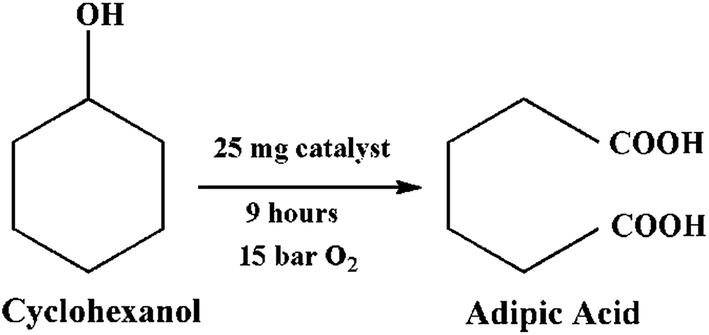
The catalytic performance of the Mic-ZnO/HAP was tested in the one-step oxidation reaction of cyclohexanol to adipic acid in the presence of molecular oxygen without any other oxidant. The results are shown in Table 3. In order to determine the optimized condition, factors such as the temperature (°C), time (hours), amount of catalyst (mg), oxygen pressure (bar), amount of zinc oxide immobilized on hydroxyapatite (wt% of ZnO), and the method used for preparation of the ZnO/HAP catalyst were investigated. The transformation of cyclohexanol to adipic acid could be achieved through a multistep oxidation involving the oxidation of cyclohexanol to cyclohexanone, a Baeyer–Villiger type oxidation, hydrolysis, and by the oxidation of the probable intermediate, 6-hydroxy-hexanoic acid, to adipic acid (Scheme 1). The oxidation of C-2 carbon adjacent to the carboxyl group will end up in glutaric acid and other by-products.66,67 The amount of products, conversion of cyclohexanol, and selectivity toward each of the products were followed by gas chromatography and liquid chromatography, and each product was identified by GC-mass and LC-mass analysis.
Table 3 Effect of the reaction parametersa
| Entry |
Temperature (°C) |
Pressure (bar) |
Time (h) |
Catalyst (mg) |
Conversion (%) |
Selectivity (%) |
Others |
| Cyclohexanone |
Adipic acid |
| Reaction conditions: amount of cyclohexanol, 9.6 mmol (1 mL) and amount of solvent, 5 mL cyclohexane. |
| 1 |
100 |
15 |
5 |
50 |
14 |
100 |
0 |
0 |
| 2 |
120 |
15 |
5 |
50 |
71 |
43 |
43 |
14 |
| 3 |
140 |
15 |
5 |
50 |
75 |
40 |
25 |
35 |
| 4 |
120 |
15 |
7 |
50 |
76 |
24 |
76 |
0 |
| 5 |
120 |
15 |
9 |
50 |
72 |
13 |
87 |
0 |
| 6 |
120 |
15 |
11 |
50 |
73 |
22 |
68 |
10 |
| 7 |
120 |
15 |
9 |
15 |
60 |
20 |
80 |
0 |
| 8 |
120 |
15 |
9 |
25 |
86 |
4 |
96 |
0 |
| 9 |
120 |
15 |
9 |
50 |
71 |
14 |
86 |
0 |
| 10 |
120 |
5 |
9 |
25 |
77 |
70 |
30 |
0 |
| 11 |
120 |
10 |
9 |
25 |
85 |
67 |
33 |
0 |
| 12 |
120 |
15 |
9 |
25 |
86 |
4 |
96 |
0 |
| 13 |
120 |
20 |
9 |
25 |
86 |
32 |
68 |
0 |
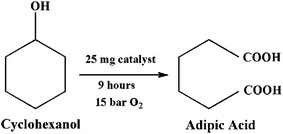 |
| | Scheme 1 Oxidation reaction of cyclohexanol to adipic acid catalyzed by ZnO/HAP nanocatalyst. | |
3.2.1. Effect of temperature. The oxidation reaction was performed at 100, 120, and 140 °C. The results are shown in Table 3. As shown, the results indicate that a temperature higher than 100 °C was necessary for the formation of adipic acid. As the temperature was increased, the conversion rate of cyclohexane increased gradually while the selectivity of adipic acid first increased and then decreased. It was really interesting that the yield of adipic acid and the formation of tarry materials was highly sensitive to the reaction temperature. At higher temperatures, after the formation of a certain amount of adipic acid, its degradation increases, which decreases the selectivity of the adipic acid sharply. Therefore, the temperature is probably the most important reaction parameter for achieving the desired selectivity to the adipic acid. Thus, the optimized temperature for this reaction was chosen as 120 °C.
3.2.2. Effect of time. Table 3 represents the results of the reactions performed at 120 °C temperature and at different times (h). As the time (h) of the reaction was increased, although the conversion did not change appreciably, the selectivity for adipic acid production increased up to 9 h, then after this time, the selectivity reduced. The reduction in selectivity to adipic acid with increasing time is related to the catalytic conversion of adipic acid to other diacids, such as succinic acid and glutaric acid, by decarboxylation, and tarry materials. Therefore, 9 h was chosen for the other experiments in this work.
3.2.3. Effect of the amount of catalyst. To examine the effect of the catalyst amount on the adipic acid production, we carried out the oxidative reaction of cyclohexanol at 120 °C and 15 bar oxygen pressure for 9 h with various amounts of catalyst. As shown in Table 3, the conversion of cyclohexanol and the selectivity of adipic acid first increased, and then decreased when the amount of catalyst increased. This decrease in the conversion and selectivity of the reaction by increasing the amount of catalyst might be solved by using a more efficient mixing device. Since the media is hydrophobic and the catalyst has a high tendency to coagulate in the reaction condition, one would think of losing some active sites of the catalyst because of coagulation. Based on these results, 25 mg of the Mic-ZnO/HAP catalyst (containing 0.0044 mmol zinc oxide) was chosen as the optimized amount of the catalyst in these reactions and leads to 86% conversion and 96% selectivity to adipic acid.
3.2.4. Effect of pressure. Table 3 also shows the results for optimization of the pressure in the oxidation reaction of cyclohexanol by the ZnO/HAP catalyst at 120 °C. An increase in pressure from 5 to 15 bar leads to an increase in both reaction conversion and adipic acid selectivity because of the presence of more oxidant molecules in the reactor. By increasing the oxygen pressure to 20 bar, there was no noticeable change in the conversion or selectivity, therefore the optimized pressure for this reaction was chosen at 15 bar.
3.2.5. Effect of wt% of ZnO immobilized on the Mic-ZnO/HAP catalyst. In this step, different amounts of ZnO were immobilized on hydroxyapatite through the reverse micelle method and were then tested in the oxidation reaction of cyclohexanol to adipic acid. Among these catalysts, as observed, the amount of 4 wt% ZnO immobilized on HAP was enough to increase the conversion and selectivity to 86% and 96%, respectively. Probably, enhancing the load of zinc oxide on hydroxyapatite aggregation of the catalyst particles causes the catalyst to lose some of its active sites, which lowers the conversion considerably (Table 4).
Table 4 Effect of the type of nanocatalysta
| Entry |
Catalystb |
Conversion (%) |
Selectivity (%) |
Others |
| Cyclohexanone |
Adipic acid |
| Reaction conditions: temperature, 120 °C; time, 9 h; oxygen pressure, 15 bar; amount of catalyst, 25 mg; amount of cyclohexanol, 9.6 mmol (1 mL); and amount of solvent, 5 mL cyclohexane. All of the catalysts in these experiments were prepared by the reverse micelle method. The amount of zinc in this catalyst is 0.177 mmol (based on ICP analysis), and so is 1.11 wt% zinc oxide rather as support. |
| 1 |
4% Mic-ZnO/HAPc |
86 |
4 |
96 |
0 |
| 2 |
6% Mic-ZnO/HAP |
76 |
2 |
94 |
0 |
| 3 |
8% Mic-ZnO/HAP |
59 |
7 |
88 |
0 |
| 4 |
10% Mic-ZnO/HAP |
52 |
4 |
86 |
0 |
3.2.6. Effect of the method of catalyst preparation. The catalytic activities of Os-ZnO/HAP, Imp-ZnO/HAP, and Ah-ZnO/HAP were also investigated. Hence, the reaction with each of the prepared catalysts was performed at 120 °C, 15 bar oxygen pressure, 25 mg of catalyst, and 9 h time. The results are shown in Table 5. As observed, Mic-ZnO/HAP showed the best conversion and selectivity for this reaction.
Table 5 Effect of the method of nanocatalyst preparationa
| Entry |
Catalyst |
Method of preparation |
Conversion (%) |
Selectivity (%) |
Others |
| Cyclohexanone |
Adipic acid |
| Reaction conditions: temperature, 120 °C; time, 9 h; pressure, 15 bar; amount of catalyst, 25 mg; amount of cyclohexanol, 9.6 mmol (1 mL), and amount of solvent, 5 mL cyclohexane. |
| 1 |
1.11% ZnO/HAP |
Reverse micelle |
86 |
4 |
96 |
0 |
| 2 |
0.08% ZnO/HAP |
Osmosis |
75 |
10 |
88 |
2 |
| 3 |
4% ZnO/HAP |
Impregnation |
70 |
13 |
84 |
3 |
| 4 |
4% ZnO/HAP |
Alkaline hydrolysis |
71 |
12 |
87 |
>1 |
| 5 |
HAP |
— |
N.R |
— |
— |
— |
3.2.7. Reusability of the catalyst. For this purpose, the catalytic activity of the Mic-ZnO/HAP nanocatalyst was studied in the oxidation reaction of cyclohexanol for four cycles and the stability of the catalyst was examined. The results are shown in Fig. 5. Because of the heterogeneity of the ZnO catalyst, it could be easily separated from the reaction mixture, and then, after being washed with chloroform and dried at 100 °C, it could be used for the next cycle. According to these data, both the selectivity and conversion remain approximately steady after four runs. The decrease in the catalytic activity in this reaction is related to deactivation of some active sites in the catalyst, and as this reaction is carried in free solvent conditions, probably leaching cannot be the sole reason for activity reduction. However, the tarry materials produced during the reaction might be the main reason for deactivation of the catalyst.
 |
| | Fig. 5 Reusability of the nanocatalyst at optimized conditions: temperature, 120 °C; pressure, 15 bar; amount of catalyst, 25 mg; time, 9 h; and kind of nanocatalyst, 4% Mic-ZnO/HAP nanocatalyst. | |
3.3. Kinetics analysis
The Langmuir–Hinshelwood kinetic model was used to calculate the rate constant of the catalytic oxidation of cyclohexanol. In this regard, we assumed that cyclohexanol and molecular oxygen react with each other at the surface of the catalyst.68–70 According to this kinetics model, the rate constant is proportional to the fraction of the active sites covered by the substrates. Time profile investigations of cyclohexanol oxidation in the presence of solvent are shown in Fig. 6. The rate constants and adsorption coefficient calculated at various temperatures are listed in Table 6 (ESI†).
 |
| | Fig. 6 Time profile investigation for the oxidation reaction of cyclohexanol in solvent, reaction conditions: cyclohexanol 9.6 mmol (1 mL); oxygen pressure, 15 bar; amount of catalyst, 25 mg. | |
Table 6 Rate constants and adsorption coefficient calculated by fitting eqn (1) to the time profile data from Fig. 6a
| |
Temperature (K) |
| 373 |
383 |
393 |
403 |
| Reaction conditions: cyclohexanol 9.6 mmol (1 mL); oxygen pressure, 15 bar, and solvent, 5 mL cyclohexane, K is the adsorption coefficient, k is the rate constant. |
| K (L mol−1) |
0.066 |
0.081 |
0.049 |
0.017 |
| k (min−1) |
0.00094 |
0.005 |
0.0159 |
0.055 |
4. Conclusion
In summary, a one-step green synthesis of adipic acid from cyclohexanol by using zinc oxide nanoparticles as the catalyst and molecular oxygen as a green oxidant under different temperatures and oxygen pressure were reported here. On the one hand, we showed that the ZnO nanoparticles prepared by the reverse micelle method had a better performance than ZnO nanoparticles prepared by other methods. Probably, the oxygen deficiency of the catalyst plays an important role in this reaction, which could be a new platform for our research group and other researchers to do some in-depth studies on defects that can be produced on the ZnO nanoparticles. Finally, under the optimized conditions, the best catalyst (4 wt% ZnO/HAP) that was prepared by the reverse micelle method showed 86% conversion and 96% selectivity to adipic acid at 120 °C, 15 bar oxygen pressure, 25 mg catalyst, and 9 h time.
Acknowledgements
Thanks are due to the Research Council of Isfahan University of Technology and the Center of Excellence in the Chemistry Department of Isfahan University of Technology for supporting this work.
References
- G. Xou, W. Zhong, L. Mao, Q. Xu, J. Xiao, D. Yin, Z. Xiao, S. Kirk and S. Shu, Green Chem., 2015, 17, 1884–1892 RSC.
- A. Castellan, J. C. J. Bart and S. Cavallaro, Catal. Today, 1991, 9, 237–254 CrossRef CAS.
- J. E. Fairbrother and D. J. W. Grant, J. Pharm. Pharmacol., 1978, 30, 19 CrossRef.
- J. C. Bonnet and G. Tesson, US Pat., No. 4075177A, 1978.
- J. K. Chung, R. Farwaha and S. P. Lee, US Pat., No. 6031041A, 2000.
- D. Ratna, A. B. Samui and B. C. Chakraborty, Polym. Int., 2004, 53, 1882–1887 CrossRef CAS.
- W. A. Lazier, US Pat., No. 2144340, 1939.
- S. Liang, R. Fischer, F. Stein and J. Wulff-Doring, US Pat., No. 6429339B1, 2002.
- M. Ajioka, Y. Kitahara, K. Suzuki and T. Watanabe, US Pat., No. 5691424A, 1997.
- G. R. H. Florence, A. N. Anthony, J. W. Sahayaraj, A. J. Amalraj and S. Rajendran, Indian J. Chem. Technol., 2005, 12, 472–476 CAS.
- W. Kubitza, H. Reiff and J. Schwindt, CA Pat., No. 2090144A1, 2004.
- H. Franz, J. H. Hanlon and L. G. Shick, US Pat., No. 5026597, 1991.
- W. R. Epperly, J. D. Peter-Hoblyn, G. F. Shulof Jr, B. N. Sprague and J. C. Sullivan, CA Pat., No. 1317090C, 1989.
- O. Erga, Ind. Eng. Chem. Fundam., 1986, 25, 692–695 CAS.
- Y. J. Nedonchelle, Justia Pat., No. 4581161, 1985.
- J. F. Andrews, US Pat., No. 5569461A, 1996.
- H. J. Horn, E. G. Holland and L. W. Hazleton, J. Agric. Food Chem., 1957, 5, 759–762 CrossRef CAS.
- J. E. Draper, T. J. Mann, J. A. Oxley, J. J. M. Rasmussen and B. R. Samuels, US Pat. No. 5207608, 1992.
- C. Oriol-Hemmerlin and Q. T. Pham, Polymer, 2000, 41, 4401–4407 CrossRef CAS.
- A. Alshammari, A. Köckritz, V. N. Kalevaru, A. Bagabas and A. Martin, Appl. Petrochem. Res., 2012, 2, 61–67 CrossRef CAS.
- T. Polen, M. Spelberg and M. Bott, J. Biotechnol., 2013, 167, 75–84 CrossRef CAS PubMed.
- S. A. H. Zaidi, Appl. Catal., 1998, 42, 247–254 CrossRef.
- A. A. Einstein, Appl. Catal., A, 1996, 135, 9–13 Search PubMed.
- W. Zhu, H. Li, X. He and Q. Zhang, Catal. Commun., 2008, 9, 551–555 CrossRef CAS.
- A. Alshammari, A. Köckritz, V. N. Kalevaru, A. Bagabas and A. Martin, Appl. Petrochem. Res., 2012, 2, 61–67 CrossRef CAS.
- G. Lu, R. Zhao, G. Qian, Y. Qi, X. Wang and J. A. Suo, Catal. Lett., 2004, 97, 115–118 CrossRef.
- J. Xie, Y. Wang, Y. Li and Y. Wei, React. Kinet., Mech. Catal., 2011, 102, 143–154 CrossRef CAS.
- L. Liberatore, L. Tonucci, M. Bressan, G. Universita, I. A. Li and V. Pindaro, New J. Chem., 2001, 25, 1319–1324 RSC.
- R. Raja, M. Thomas, M. Xu, K. D. M. Harris and M. Greenhill-hooper, Chem. Commun., 2006, 4, 448–450 RSC.
- H. Lu, W. Ren, P. Liu, S. Qi, W. Wang, Y. Feng, F. Sun and Y. Wang, Appl. Catal., A, 2012, 441, 136–141 CrossRef.
- G. Zou, W. Zhong, Q. Xu, J. Xiao, C. Liu, Y. Li, L. Mao and S. Kirk, Catal. Commun., 2015, 58, 46–52 CrossRef CAS.
- D. Santhanaraj, C. Suresh, P. Vijayan, N. Venkatathri and K. Shanthi, React. Kinet., Mech. Catal., 2010, 99, 439–446 CAS.
- X. Wang, G. Wu, Y. Xue, F. Zhang, X. Liu and K. Ding, Catal. Lett., 2013, 143, 219–224 CrossRef CAS.
- L. Chen, T. Zhou, L. Chen, Y. Ye, Z. Qi, H. Freund and K. Sundmacher, Chem. Commun., 2011, 47, 9354–9356 RSC.
- Y. K. Vyawahare, V. R. Chumbhale, S. A. Pardhy, V. Samuel and A. S. Asware, Indian J. Chem. Technol., 2010, 17, 43–49 CAS.
- P. Zhang, Z.-A. Qiao, X. Jiang, G. M. Veith and S. Die, Nano Lett., 2015, 15, 823–828 CrossRef CAS PubMed.
- S. Sugunan and A. Paul, React. Kinet. Catal. Lett., 1998, 65, 343–348 CrossRef CAS.
- J. Taghavimoghaddam, G. P. Knowles and A. L. Chaffee, J. Mol. Catal. A: Chem., 2012, 358, 79–88 CrossRef CAS.
- H. C. Shen and H. S. Weng, Ind. Eng. Chem. Res., 1990, 29, 713 CrossRef CAS.
- A. Atlamsani and J.-M. Bregeault, J. Org. Chem., 1993, 58, 5663–5665 CrossRef CAS.
- B. E. Ali, J.-M. Bregeault, J. Mercier, J. Martin, C. Martin and O. Convert, J. Chem. Soc., Chem. Commun., 1989, 825–826 RSC.
- A. Atlamsani and J.-M. Bregeault, Synthesis, 1993, 1, 79–81 CrossRef.
- K. Weissermel and H. J. Arpe, Industrial Organic Chemistry, Verlag C. W, New York, 1978 Search PubMed.
- L. Smith, D. I. Richards, C. B. Thomas and M. Whittaker, J. Chem. Soc., Perkin Trans. 2, 1992, 2, 605 RSC.
- J. O. Metzger, Angew. Chem., 1998, 37, 2975–2978 CrossRef CAS.
- J. I. Kroscwitz and M. Howe-Grant, Kirk–Othmer Encyclopedia of Chemical Technology, John Wiley & Sons, Inc., New York, 4th edn, 1995, vol. 13, 961–995 Search PubMed.
- J. C. Boziat, M. Besson and P. Gallezot, Appl. Catal., A, 1996, 135, 7–11 CrossRef.
- Y. Usui and K. Sato, Green Chem., 2003, 5, 373–375 RSC.
- M. Ghiaci, B. Aghabarari, A. M. B. do Rego, A. M. Ferraria and S. Habibollahi, Appl. Catal., A, 2011, 393, 225–230 CrossRef CAS.
- M. Ghiaci, H. Aghaei and A. Abbaspourrad, Mater. Res. Bull., 2008, 43, 1255–1262 CrossRef CAS.
- A. Mitsionis, T. Vaimakis, C. Trapalis, N. Todorova, D. Bahnemann and R. Dillert, Appl. Catal., B, 2011, 106, 398–404 CrossRef CAS.
- B. H. Monjezi, M. E. Yazdani, M. Mokfi and M. Ghiaci, J. Mol. Catal. A: Chem., 2014, 383–384, 58–63 CrossRef CAS.
- S. A. Hutchens, R. S. Benson, B. R. Evans, H. M. O'Neill and C. J. Rawn, Biomaterials, 2006, 27, 4661–4670 CrossRef CAS PubMed.
- A. M. Ghahfarrokhi, P. Moshiri and M. Ghiaci, Appl. Catal., A, 2013, 456, 51–58 CrossRef.
- B. Kumar and S. W. Kim, Nano Energy, 2012, 1, 342–355 CrossRef CAS.
- S. Xu and Z. L. Wang, Nano Res., 2011, 4, 1013–1098 CrossRef CAS.
- Z. L. Wang, J. Mater. Chem., 2005, 15, 1021–1024 RSC.
- M. T. Chen, M. P. Lu, Y. J. Wu, J. Song, C. Y. Lee, M. Y. Lu, Y. C. Chang, L. J. Chou, Z. L. Wang and L. J. Chen, Nano Lett., 2010, 10, 4387–4393 CrossRef CAS PubMed.
- Y. Wei, C. Xu, S. Xu, C. Li, W. Wu and Z. L. Wang, Nano Lett., 2010, 10, 2092–2096 CrossRef CAS PubMed.
- S. Polarz, J. Strunk, V. Ischenko, M. W. E. van den Berg, O. Hinrichsen, M. Muhler and M. Driess, Angew. Chem., Int. Ed., 2006, 45, 2965–2969 CrossRef CAS PubMed.
- V. Ischenko, S. Polarz, D. Grote, V. Stavarache, K. Fink and M. Driess, Adv. Funct. Mater., 2005, 15, 1945–1954 CrossRef CAS.
- H. Kaftelen, K. Ocakoglu, R. Thomann, S. Tu, S. Weber and E. Erdem, Phys. Rev., 2012, 86, 14113 CrossRef.
- M. Ghiaci, M. Mostajeran and A. Gil, Ind. Eng. Chem. Res., 2012, 51, 15821–15831 CrossRef CAS.
- R. K. Dutta, P. K. Sharma and J. Pandey, Nanopart. Res., 2010, 12, 1211–1219 CrossRef CAS.
- G. M. S. E. Shafei, C. A. Philip and N. A. Moussa, J. Colloid Interface Sci., 2004, 277, 410–416 CrossRef PubMed.
- A. Germain, Ó. Fajula, E. Fache and S. F. Cedex, J. Chem. Soc., Faraday Trans., 1998, 94, 1761–1764 RSC.
- S. A. Chavan, D. Srinivas and P. Ratnasamy, J. Catal., 2002, 45, 39–45 CrossRef.
- V. D. Makwana, Y.-C. Son, A. R. Howell and S. L. Suib, J. Catal., 2002, 210, 46–52 CrossRef CAS.
- M. Ilyas, M. Saeed, M. Sadiq and M. Siddique, Prog. React. Kinet. Mech., 2014, 39, 375–390 CrossRef CAS.
- M. Ilyas and M. Saeed, Int. J. Chem. React. Eng., 2010, 8, 77 Search PubMed.
Footnote |
| † Electronic supplementary information (ESI) available. See DOI: 10.1039/c6ra12831a |
|
| This journal is © The Royal Society of Chemistry 2016 |
Click here to see how this site uses Cookies. View our privacy policy here.