One-step deposition of a melanin-like polymer on individual Escherichia coli cells exhibiting a special UV resistance effect

Bai Zhang , Zhou Sun, Yuting Bai, Hanqiong Zhuang, Dongtao Ge, Wei Shi and Yanan Sun*
Department of Biomaterials, Fujian Key Laboratory of Materials Genome, College of Materials, Xiamen University, No. 422 Siming South Road, Xiamen 361005, P. R. China. E-mail: sunyanan@xmu.edu.cn; Fax: +86 592 2188502; Tel: +86 158 05912545

Received 12th May 2016 , Accepted 1st August 2016

First published on 1st August 2016


Abstract

Melanin has an excellent ability to absorb UV radiation and to convert harmful radiant energy into heat or antioxidants. Therefore, melanin has a significant potential to endow fragile organisms such as recombinant or bioengineered microbes with a photoprotective ability. Inspired by mussel adhesive foot protein, a dopamine monomer (DA) was reported to self-polymerize into a melanin-like polymer, named polydopamine (PDA). Herein, combining the similarity to natural melanin and chemical adhesivity of the melanin-like PDA polymer, we prepared PDA encapsulated Escherichia coli cells (E. coli@PDA) with a simple method. The PDA encapsulation could retain E. coli cells viability and inhibited cell division. More importantly, the aromatic PDA shells could absorb the UV light and protect the cells against damage from UV radiation. After a prolonged exposure time to UV radiation, the protein stability, cellular metabolically active and cell viability of the E. coli cells were preserved. We believe that our work provides new insights for both fundamental research and applications of cell encapsulation for UV resistance.

1. Introduction

Naturally, almost all organisms suffer from cellular UV irradiated photo-damage, which directly or indirectly destroys their nucleic acids, although UV radiation comes from only a minor proportion of the sunlight.1,2 Some microorganisms have evolved photo-protective mechanisms such as chemical protection or behavior modifications against UV radiation.3 For example, cyanobacteria can generate enzymatic antioxidants (carotenoid pigments) to detoxify reactive oxygen species (ROS)4,5 produced during UV stress, and some motile microorganisms can migrate to low exposure areas or grow in colonies to minimize the UV exposure.5,6 Without sunscreen protection, UV radiation produces hydroxyl radicals7 and induces DNA strand breaks, base damage and crosslinkage,8 which are lethal and mutagenic and lead to excessive cell damage.9,10 As a result, these protection mechanisms are vital to organisms. However, these native photo-protective mechanisms are not sufficient for microorganisms used for biotechnological applications.

Among the mechanisms known to act as sunscreens both in microorganisms and higher organisms, the most effective one is melanin, a well-known macro-biopolymer widely distributed in almost all living organisms.11–14 Melanin exhibits a broad absorption property from ultraviolet (UV) to NIR wavelengths15 and acts as a UVA or UVB-induced free radical scavenger,16–18 rendering it highly superior to other photo-protective mechanisms. Natural melanin is usually classified into two types according to their different precursors and colors: black-brown eumelanin, which is believed to protect against UV-induced photo-damage, and red-yellow pheomelanin, which is known as a photo- and radio-sensitizer.19 Both of them are produced in melanocytes through a complicated synthesis process that involves different enzymes,20 amino acids and intermediate products.21–23 To the best of our knowledge, the photo-protective eumelanin can be mimicked by synthesising, through air oxidation and self-polymerization, a dopamine monomer under a slightly alkaline environment.24–27 The polydopamine (PDA) exhibits excellent dispersion stability in water and great biocompatibility.15,25 More importantly, it can provide an important platform for further applications, since the PDA is chemically active and can be easily modified with thiol- and amino-terminated molecules through a Michael addition or Schiff base reaction.28

Inspired by this, we reported a simple but versatile approach for endowing individual living cells with a biocompatible and functionalizable photo-protective melanin-like artificial shell by encapsulating dopamine polymerization on the surface of Escherichia coli cells (E. coli@PDA). Scanning electron microscope (SEM), transmission electron microscopy (TEM), Fourier transform infrared spectroscopy (FT-IR) and ultraviolet and visible spectroscopy (UV-vis) were chosen to define the melanin-like PDA cells on the surface of the E. coli cells. Coated and uncoated cells were then exposed to UV light (UVC) and monitored for their cell growth curve, metabolic activity and viability.

2. Experimental

2.1 Chemicals

All chemical reagents (analytical grade) were purchased from J&K Chemicals and Sinopharm Chemical (Shanghai, China). Dopamine hydrochloride (DA) was purchased from Sigma-Aldrich (USA). ATP assay kits were obtained from Beyotime (Shanghai, China). All other chemicals were used as received. Water was deionized by a Millipore Direct-Q apparatus, and ultrapure water was used for cell cultures.

2.2 Bacterial strains and culture conditions

Escherichia coli strains DH5α and DH5α containing pGFPuv were used in this study. A single colony of E. coli cells was picked from a solid LB agar plate and suspended in an LB medium at 37 °C with shaking at 250 rpm in a shaking incubator overnight; for pGFPuv cells, LB contained 100 mg L−1 ampicillin. For UV exposure and activity assays, a solution of 0.85% saline was used.

2.3 Melanin-like PDA shell assembly on E. coli cell surfaces

For encapsulation of living E. coli cells, cells from a 50 mL overnight culture were added to a sterile tube and centrifuged for 5 min at 4500 g at 4 °C, and the supernatant was abandoned. The cells were washed three times by resuspending the pellet in a 0.85% saline solution, and finally resuspended in 10 mL of 10 mM Tris buffer (pH 8.5, including 1 or 2 mg mL−1 dopamine) and incubated for 3 hours for polydopamine shell formation. Encapsulated cells were collected by centrifugation and washed with a 0.85% saline solution as described above to remove any debris from the reaction solution. This was followed by resuspension in a Tris buffer for further use. The uncoated cells were processed in the same manner without the addition of dopamine to the solution.

2.4 Melanin-like PDA shell characterization

UV-vis spectra of control and PDA-coated E. coli cells were collected using a UV1750 spectrophotometer (SHIMADZU, Japan). FT-IR spectra were recorded on a Nicolet 380 FT-IR spectrometer (Thermo, USA). To verify the assembly of the PDA shells, the surface charge was analyzed by the zeta-potential using a Zetasizer Nano ZS (Malvern Instruments Ltd., Worchestershire, U.K.) at an operating temperature of 25 °C with at least 10 measurements for each independent sample. For SEM of the control and PDA-coated E. coli cells, cells were placed on a silicon coupon surface and air-dried for 10 min following by incubation in 2.5% glutaraldehyde in 10 mM PBS (pH 7.2) for at least two hours under ambient temperature. After the glutaraldehyde treatment, these pre-fixed cells were dehydrated by a series of ethanol for 10 min each. After the ethanol evaporated at 4 °C, the dried cells were coated with platinum (5–10 nm) before examination with a SEM U-70 Scanning Electron Microscope (HITACHI, Japan). For TEM examination, the cell were prefixed with glutaraldehyde, then fixed with OsO4 and dehydrated in an ethanol, acetone and resin series. The specimens were embedded in Spurr resin and Epon618. Thin sections (60–80 nm) were cut by an LKB Nova (Bromma, Sweden) and were stained with uranyl acetate and lead citrate. Then the examination was performed using a Tecnai-G2 Spirit Twin instrument (FEI Co., The Netherlands).

2.5 Cell-division, UV exposure and viability

The optical density at 600 nm for the E. coli cells or E. coli@PDA was used for the cell-division tests. The cell density was adjusted to ∼1.0 at 600 nm by dilution with 0.85% saline and the same amounts of the E. coli mixture was suspended in the LB medium cultured in a shaking incubator at 37 °C. The optical density was measured at 600 nm by UV-visible spectroscopy (SHIMADZU, Japan) at different time intervals. For UV exposure, six-well plates containing 3 mL of encapsulated or unencapsulated cells were placed on a clean bench (Suzhou Purification Equipment Corp, CN) with a sterilizing lamp (Phillips 30W G30 T8 UV bulb), which radiated short-wave UVC radiation with a peak at 253.7 nm. The viability of the E. coli cells was determined by the colony forming units (CFU) method. In addition, we used DH5α (pGFPuv) cells to determine the direct UV absorption effect of the melanin-like PDA polymer. Fluorescence was measured with emission and excitation wavelengths of 400 and 512 nm, respectively. Besides, the relative GFP activity in the cells with UV exposure was also measured to determine the protein stability in coated and uncoated cells. At set intervals the cells were disrupted using an Ultrasonic Cell Disruptor (JY92-II, Scientz, 200W for 35 times). The relative GFP fluorescence was then measured as mentioned before. Moreover, the relative ATP activity was measured using ATP assay kits by luminescence according to the manufacture's instruction (Biyotime, Shanghai, CN).

3. Results and discussion

3.1 Melanin-like PDA shell characterization

E. coli cells were coated by PDA to mimic a shell of eumelanin, which was expected to give a photo-protective ability against UV radiation. After PDA coating, it was visible to the naked eye that the samples became opaque to light, which was attributed to the molecular structure of the PDA shells, which feature highly conjugated aromatic rings.29–32 Comparing the UV-vis spectra of native E. coli cells, PDA coated E. coli cells and PDA itself in Fig. 1, the peak at 280 nm tends to disappeared, which implies that the conjugated double bond of the cell-wall proteins has been totally sheltered by the PDA shells. More importantly, the samples coated by PDA showed similar optical properties to natural melanin, which has a broad absorption ranging from UV to NIR; this result suggests that a potential melanin-like photo-protective shell may have been formed on the cell surface.
image file: c6ra12307d-f1.tif
Fig. 1 UV-vis spectra of PDA (black line), E. coli@PDA 2 mg mL−1 (dash line), E. coli@PDA 1 mg mL−1 (dotted line) and native E. coli cells (dash-dot line).

SEM and TEM images show the general morphologies of the coated and uncoated cells. As shown in Fig. 2, the cells were encapsulated separately and individually within the PDA shells and the samples were highly dependent on the initial concentrations of the dopamine monomer. Specifically, the native E. coli cells showed a relatively smooth surface, whereas the PDA coated cells exhibited a much rougher surface as the initial dopamine concentrations increased from 1 mg mL−1 to 2 mg mL−1. TEM analysis revealed in Fig. 3 that the native E. coli cells show a relatively smooth surface, whereas the PDA coated cells consisted of a layer of thin film coated cell walls. In addition, the thickness is about ∼15 nm for the initial dopamine concentrations at 1 mg mL−1 and ∼30 nm for 2 mg mL−1. Moreover, it is worth noting that significant aggregation of the cells can be observed in the SEM images after the PDA coating, which was not consistent with the native E. coli cells. We believe that the result of the cell aggregation was attributed to the inherent adhesive property of the formed PDA shells, which led to cell to cell adhesion.


image file: c6ra12307d-f2.tif
Fig. 2 The SEM images of uncoated E. coli cells (A–C); PDA-coated E. coli cells at 1 mg mL−1 of initial dopamine concentration (D–F); PDA-coated E. coli cells at 2 mg mL−1 of initial dopamine concentration (G–I).

image file: c6ra12307d-f3.tif
Fig. 3 TEM images of thin sections of uncoated E. coli cells (A and B), PDA-coated E. coli cells at 1 mg mL−1 of initial dopamine concentration (C and D), and PDA-coated E. coli cells at 2 mg mL−1 of initial dopamine concentration (E and F). The insets show magnified images (scale bar = 100 nm).

The successful PDA layering was further defined by measuring the surface potential and investigating the FT-IR analysis of the coated and uncoated cells. As shown in Fig. 4, the surface potential of the native E. coli cells was −46.8 mV, and such a high negative potential suggests an excellent dispersion stability of the native E. coli cells in water. After the PDA coating, the surface potential slowly increased from −46.3 mV to −28.9 mV as the initial dopamine concentration increased from 1 to 2 mg mL−1, which was very close to the surface potential value of pure PDA nanoparticles (−30 mV). This result implies that dopamine has polymerized into a continuous PDA layer, totally covering the underlying E. coli cells. The overlay FT-IR spectra of native E. coli cells, PDA and PDA coated E. coli cells are shown in Fig. 5. By comparing the FT-IR spectra of the coated and uncoated E. coli cells, a discernible absorption feature at 1200–1500 cm−1 emerged after the PDA coating, and the peak at 3500 cm−1 becomes much wider, which represented the C–C, C–O, C–N region and the N–H, catechol–OH stretching of the primary amine, as reported previously.33,34 These FT-IR results further proved that the PDA layer successfully formed on the cell surfaces.


image file: c6ra12307d-f4.tif
Fig. 4 The zeta potential of PDA coated and uncoated E. coli cells.

image file: c6ra12307d-f5.tif
Fig. 5 The FTIR spectra of native E. coli cells, PDA and PDA coated E. coli cells.

Additionally, it was reported that the PDA shell could inhibit normal cell division,24 and the inhibitory activity was tested by recording the growth curves of the coated and uncoated cells. As shown in Fig. 6, E. coli cells maintained their ability to divide even after the PDA coating. The native cells immediately proliferated without a lag phase, while the growth curves of coated cells (2 mg mL−1 of initial dopamine concentration) remained in the lag phase for more than 10 h, which was approximately 1.5 times longer than the coated cells for the 1 mg mL−1 initial dopamine concentration.


image file: c6ra12307d-f6.tif
Fig. 6 The growth curves of E. coli and E. coli@PDA for different initial dopamine concentrations.

This result suggests that the PDA shell could prevent E. coli cells from dividing and proliferating, and this inhibitory effect could be simply controlled by adjusting the initial concentration of the dopamine monomer. However, the concentration of the dopamine should not exceed 10 mg mL−1, because this critical concentration can totally inhibit cell dividing and leads to excessive cells death.34

3.2 UV exposure and sensitivity tests

To determine the direct UV stimulation effect of E. coli cells after PDA coating, we used the green fluorescent protein (GFPuv) in the living E. coli cells, which could emit green fluorescent (512 nm) under UV light (400 nm) excitation. The result is observed in Fig. 7. Compared to the uncoated E. coli cells, the relative GFPuv fluorescence of the coated cells declined rapidly as the initial concentrations of dopamine increased. The result indicates that the formed PDA shells could absorb the UV light and decreased the radiant energy of the E. coli cells.
image file: c6ra12307d-f7.tif
Fig. 7 The GFP fluorescence of E. coli and E. coli@PDA under UV exposure.

To further demonstrate that the PDA shells generated a cytoprotective ability against UV radiation on the cell surfaces, the relative GFP activity, relative ATP concentrations and cell viability were measured over the course of the UV exposure. The relative GFP activity in the cells changes with UV exposure and is shown in Fig. 8. The GFP fluorescence intensity partially decreased at 0 min, indicating the quenching effect of PDA in the cell lysate. The uncoated cells showed an almost 60% activity loss in the first 20 minutes while the coated cells remained at 70% GFP activity. At the end of 60 min, the uncoated cells had lost about 80% of their GFP activity, while the coated cells remained at 50% and 37% relative GFP activity for 2 mg mL−1 and 1 mg mL−1 initial dopamine concentrations, respectively. GFP fluorescence rapidly declined over the course of the experiment for the uncoated cells, but not as steadily as the reduction in fluorescence recorded for the coated cells. These indicate that the cells coated with PDA provide protection against UV radiation, allowing cells to retain protein stability, and the resistance property of the cells improved as the initial dopamine concentration increased.


image file: c6ra12307d-f8.tif
Fig. 8 (A) The histogram of the GFP activity of E. coli and E. coli@PDA under UV exposure; (B) the relative GFP activity of E. coli and E. coli@PDA under UV exposure.

The relative ATP concentrations were measured through the luminescence assay shown in Fig. 9. ATP levels in the coated cells partially decreased after the PDA coating. The decrease in viability at 0 min could be explained by physical stress from the centrifugation and a PDA quenching affect in the solution, which absorbs the fluorescence generated from the ATP-based luminescence. The PDA-coated cells showed a 40–50% decrease in the first 20 min and then decreased at a slow rate at 40 min, while ATP levels in the uncoated cells decreased rapidly. At the end of 60 min, the uncoated cells had lost about 95% of the initial concentration of the intercellular ATP, while the coated cells retained at least 40% of their ATP concentrations.


image file: c6ra12307d-f9.tif
Fig. 9 (A) The histogram of ATP activity changes in E. coli and E. coli@PDA under UV exposure; (B) the relative ATP activity changes of E. coli and E. coli@PDA under UV exposure.

For cell viability tests, we calculated the colony-forming unit (CFU) of the coated and uncoated cells. As shown in Fig. 10, the uncoated cells were unable to proliferate after 60 min of UV exposure. The CFU of the coated cells began with a small decline at 0 min, and the decrease in viability could be explained by physical stress from centrifugation and/or chemical stress from dopamine in the solution. After 40 min of UV exposure, the CFU of the coated and uncoated cells was 3 orders of magnitude lower than that at 0 min. At the end of 60 min, the uncoated cells had lost 100% of their cell activity, while the coated cells remained at 1.95 × 10⁵ cells per mL and 2.61 × 10⁵ cells per mL for 1 mg mL−1 and 2 mg mL−1 initial dopamine concentration, respectively. These results show that the cells coated with PDA have a UV resistance property, and the resistance property of the cells with 2 mg mL−1 initial dopamine concentration in the experimental group was much better than the 1 mg mL−1 group.


image file: c6ra12307d-f10.tif
Fig. 10 The CFU changes of E. coli and E. coli@PDA under UV exposure.

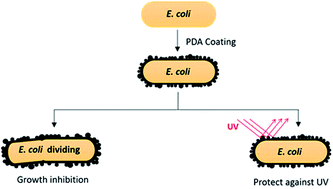
As briefly shown in Fig. 11, the encapsulation of individual cells with polydopamine will affect E. coli cells in two ways: (1) the PDA shells were found to be effective in controlling cell division. (2) PDA, a biocompatible coating material inspired by the adhesive protein in mussels, displays many striking properties of naturally occurring melanin and could protect cells from UV radiation like melanin does.


image file: c6ra12307d-f11.tif
Fig. 11 The two main functions of the PDA coating on the E. coli cell.

4. Conclusions

This work demonstrated that PDA coatings inspired by adhesive protein in mussels can be used to coat individual cells. The coating procedure is benign, and the PDA shell is mechanically durable and selectively permissible, retaining cellular metabolic activity and viability. The aromatic PDA shells provide protection against UV radiation, allowing cells to remain metabolically active and viable after prolonged exposure to UV radiation. More importantly, on the basis of the chemical reactivity of PDA, the cell surfaces can be further functionalized for applications of interest. We believe our work provides new insights for both fundamental research and applications of individual cell encapsulation.

Acknowledgements

This work was supported by the National Nature Science Foundation of China (31271009, 81271689 and 30900305), the Fundamental Research Funds for the Central Universities (no. 20720150087), the Natural Science Foundation of Fujian Province (2012J05066), and the Program for New Century Excellent Talents in University, and the Program for New Century Excellent Talents in Fujian Province University.

References

  1. Q. Gao and F. Garcia-Pichel, Microbial ultraviolet sunscreens, Nat. Rev. Microbiol., 2011, 9(11), 791–802 CrossRef CAS PubMed.
  2. D. M. Eby, S. Harbaugh, R. N. Tatum, K. E. Farrington, N. Kelley-Loughnane and G. R. Johnson, Bacterial Sunscreen: Layer-by-Layer Deposition of UV-Absorbing Polymers on Whole-Cell Biosensors, Langmuir, 2012, 28(28), 10521–10527 CrossRef CAS PubMed.
  3. B. Pattanaik, R. Schumann and U. Karsten, Effects of Ultraviolet Radiation on Cyanobacteria and their Protective Mechanisms, Springer, Netherlands, 2007, pp. 29–45 Search PubMed.
  4. H. Yu-Ying and H. D. Donatp, Reactive oxygen species and UV-B: effect on cyanobacteria, Photochem. Photobiol. Sci., 2002, 1(10), 729–736 Search PubMed.
  5. M. O. Elasri and R. V. Miller, Study of the response of a biofilm bacterial community to UV radiation, Appl. Environ. Microbiol., 1999, 65(5), 2025–2031 CAS.
  6. B. M. Bebout and F. Garciapichel, UV B-induced vertical migrations of cyanobacteria in a microbial mat, Appl. Environ. Microbiol., 1995, 61(12), 4215–4222 CAS.
  7. R. H. Reed, The Inactivation of Microbes by Sunlight: Solar Disinfection as a Water Treatment Process, Adv. Appl. Microbiol., 2004, 54(1), 333–365 CAS.
  8. J. E. Cleaver and G. H. Thomas, Single strand interruptions in DNA and the effects of caffeine in Chinese hamster cells irradiated with ultraviolet light, Biochem. Biophys. Res. Commun., 1969, 36(2), 203–208 CrossRef CAS PubMed.
  9. P. E. Hockberger, The discovery of the damaging effect of sunlight on bacteria, J. Photochem. Photobiol., B, 2000, 58(2–3), 185–191 CrossRef CAS.
  10. R. H. Reed, The Inactivation of Microbes by Sunlight: Solar Disinfection as a Water Treatment Process, in Advances in Applied Microbiology, Academic Press, 2004, vol. 54, pp. 333–365 Search PubMed.
  11. K. Sung Min, R. Junsung, I. S. Choi, P. B. Messersmith and L. Haeshin, Norepinephrine: Material-Independent, Multifunctional Surface Modification Reagent, J. Am. Chem. Soc., 2009, 131(131), 13224–13225 Search PubMed.
  12. H. Lee, J. Rho and P. B. Messersmith, Facile Conjugation of Biomolecules onto Surfaces via Mussel Adhesive Protein Inspired Coatings, Adv. Mater., 2009, 21(4), 431–434 CrossRef CAS PubMed.
  13. J. H. Waite, Surface chemistry Mussel power, Nat. Mater., 2008, 7(1), 8–9 CrossRef CAS PubMed.
  14. H. Lee, S. M. Dellatore, W. M. Miller and P. B. Messersmith, Mussel-inspired surface chemistry for multifunctional coatings, Science, 2007, 318(5849), 426–430 CrossRef CAS PubMed.
  15. Y. Liu, K. Ai, J. Liu, M. Deng, Y. He and L. Lu, Dopamine-Melanin Colloidal Nanospheres: An Efficient Near-Infrared Photothermal Therapeutic Agent for In Vivo Cancer Therapy, Adv. Mater., 2013, 25(9), 1353–1359 CrossRef CAS PubMed.
  16. A. Pezzella, M. D'Ischia, A. Napolitano, A. Palumbo and G. Prota, An integrated approach to the structure of Sepia melanin. Evidence for a high proportion of degraded 5,6-dihydroxyindole-2-carboxylic acid units in the pigment backbone, Tetrahedron, 1997, 53(24), 8281–8286 CrossRef CAS.
  17. M. R. Chedekel and L. Zeise, Sunlight, melanogenesis and radicals in the skin, Lipids, 1988, 23(6), 587–591 CrossRef CAS PubMed.
  18. G. Prota, The Chemistry of Melanins and Melanogenesis, Springer, Vienna, 1995, pp. 93–148 Search PubMed.
  19. E. S. Krol and D. C. Liebler, Photoprotective actions of natural and synthetic melanins, Chem. Res. Toxicol., 1998, 11(12), 1434–1440 CrossRef CAS PubMed.
  20. S. Kobayashi and A. Makino, Enzymatic polymer synthesis: an opportunity for green polymer chemistry, Chem. Rev., 2009, 109(11), 5288–5353 CrossRef CAS PubMed.
  21. V. Ball, D. D. Frari, M. Michel, M. J. Buehler, V. Toniazzo, M. K. Singh, J. Gracio and D. Ruch, Deposition Mechanism and Properties of Thin Polydopamine Films for High Added Value Applications in Surface Science at the Nanoscale, J. Bionanosci., 2012, 2(1), 16–34 CrossRef.
  22. M. E. Lynge, V. D. W. Rebecca, P. Almar and S. D. Brigitte, Polydopamine–a nature-inspired polymer coating for biomedical science, Nanoscale, 2011, 3(12), 4916–4928 RSC.
  23. S. Josep, S. P. Javier, B. Felix and R. M. Daniel, Catechol-based biomimetic functional materials, Adv. Mater., 2013, 25(5), 653–701 CrossRef PubMed.
  24. S. H. Yang, S. M. Kang, K.-B. Lee, T. D. Chung, H. Lee and I. S. Choi, Mussel-inspired encapsulation and functionalization of individual yeast cells, J. Am. Chem. Soc., 2011, 133(9), 2795–2797 CrossRef CAS PubMed.
  25. S. H. Ku, J. Ryu, S. K. Hong, H. Lee and B. P. Chan, General functionalization route for cell adhesion on non-wetting surfaces, Biomaterials, 2010, 31(9), 2535–2541 CrossRef CAS PubMed.
  26. A. Postma, Y. Yan, Y. Wang, A. N. Zelikin, E. Tjipto and F. Caruso, Self-Polymerization of Dopamine as a Versatile and Robust Technique to Prepare Polymer Capsules, Chem. Mater., 2009, 21(14), 3042–3044 CrossRef CAS.
  27. S. H. Dong, J. H. Waite and M. Tirrell, Promotion of osteoblast proliferation on complex coacervation-based hyaluronic acid - recombinant mussel adhesive protein coatings on titanium, Biomaterials, 2010, 31(6), 1080–1084 CrossRef PubMed.
  28. M. J. Lavoie, B. L. Ostaszewski, A. Weihofen, M. G. Schlossmacher and D. J. Selkoe, Dopamine covalently modifies and functionally inactivates parkin, Nat. Med., 2005, 11(11), 1214–1221 CrossRef CAS PubMed.
  29. A. Marjasvaara, M. Torvinen, H. Kinnunen and P. Vainiotalo, Laccase-catalyzed polymerization of two phenolic compounds studied by matrix-assisted laser desorption/ionization time-of-flight and electrospray ionization Fourier transform ion cyclotron resonance mass spectrometry with collision-induced dissociation experiments, Biomacromolecules, 2006, 7(5), 1604–1609 CrossRef CAS PubMed.
  30. M. Hosny and J. P. Rosazza, Novel oxidations of (+)-catechin by horseradish peroxidase and laccase, J. Agric. Food Chem., 2002, 50(20), 5539–5545 CrossRef CAS PubMed.
  31. Y. Tan, W. Deng, Y. Li, Z. Huang, Y. Meng, Q. Xie, M. Ma and S. Yao, Polymeric bionanocomposite cast thin films with in situ laccase-catalyzed polymerization of dopamine for biosensing and biofuel cell applications, J. Phys. Chem. B, 2010, 114(15), 5016–5024 CrossRef CAS PubMed.
  32. C. Crestini and D. S. Argyropoulos, The early oxidative biodegradation steps of residual kraft lignin models with laccase, Bioorg. Med. Chem., 1998, 6(11), 2161–2169 CrossRef CAS PubMed.
  33. Q. Liu, B. Yu and W. Ye, et al., Highly Selective Uptake and Release of Charged Molecules by pH-Responsive Polydopamine Microcapsules, Macromol. Biosci., 2011, 11(9), 1227–1234 CrossRef CAS PubMed.
  34. Z. Iqbal, E. P. C. Lai and T. J. Avis, Antimicrobial effect of polydopamine coating on Escherichia coli[J], J. Mater. Chem., 2012, 22(22), 21608–21612 RSC.

Footnote

These authors contributed equally to this work.

This journal is © The Royal Society of Chemistry 2016
Click here to see how this site uses Cookies. View our privacy policy here.