
Joyati Das and
Priyabrata Sarkar*
Biosensor Laboratory, Department of Polymer Science and Technology, University of Calcutta, 92, A. P. C. Road, Kolkata-700009, West Bengal, India. E-mail: sarkarpriya@gmail.com; Fax: +91 3323519755; Tel: +91 3323508386
First published on 7th September 2016
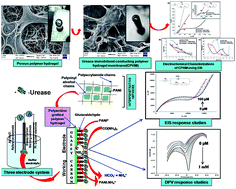
Conducting polymer hydrogels (CPH) are a unique class of materials, which have both the advantageous features of hydrogels and organic conductors. Herein, we report a new urea biosensor in which the working electrode is modified by a CPH, specifically a composite made of conducting electro-polymerized aniline in the non-conducting hydrogel of polyacrylamide and polyvinyl alcohol for immobilization of the enzyme urease. Scanning electron microscopy (SEM) and atomic force microscopy (AFM) studies depict the porous structure of the hydrogel, which favours the high density immobilization of enzymes. Fourier transform infrared spectroscopy (FTIR) studies confirmed the grafting of polyaniline within the matrix. Electrochemical impedance spectroscopy (EIS), differential pulse voltammetry (DPV) and cyclic voltammetry (CV) predict high enzyme loading in the hydrogel. Bode plot analysis with the [FeCN6]3−/4− redox couple shows the partial capacitive behaviour of the bioelectrode in the frequency range of 102 to 103 Hz. Factors, such as scan rate and pH of the electrolyte, were optimized to give the best results. DPV could detect 1.5–1000 μM urea with the lowest detection limit (LOD) of 60 nM and sensitivity of 878 μA mM−1 cm−2. The relatively low Michaelis–Menten constant (Km) value of 113 μM indicates the high affinity of the enzyme for urea. EIS depicts an increase in charge transfer resistance (RCT) with an increase in urea concentration (LOD = 14 μM). The proposed sensor exhibits a very good performance with respect to detection limit, sensitivity, Km value, preparation method, cost, sample preparation, stability, selectivity and reproducibility. This sensor was successfully applied for the detection of urea in milk, puffed rice, soil and human blood. Statistical analysis of the results shows good agreement with commercial spectrophotometric analysis.
Urea is used as an adulterant in milk for commercial benefit. It increases the level of fat in milk and at the same time lowers the nutritive value of the milk and may cause a great threat to human health. The cut off limit for the urea level in milk is 11.7 mM.4
When used as fertilizer, an excess dosage may lead to pest problems by increasing the birth rate, longevity and overall fitness of certain pests and thus poses major threats to annual food production. Urea may cause a reduction in soil pH and hence reduce its natural fertility which results in the lower productivity of food grains.5 A number of methods are available for the detection of urea including e.g. spectrophotometry, calorimetry and fluorimetric analysis.6 However, most of these laboratory based procedures need complicated sample pre-treatment steps which restrict on-site monitoring. On the contrary, electrochemical biosensors may overcome these problems since they are reliable, portable, highly sensitive, selective, cost effective and very responsive.
Various matrices, such as conducting polymers,7,8 non-conducting polymers,9 metal oxides,5,10–12 and metal nanoparticles,13 have been developed using several techniques, such as sol–gel,14 Langmuir–Blodgett,15 chemical deposition and sputtering,16 to construct urea biosensors. Recently Khan and co-workers17 used a transmission electron microscopy (TEM) grid filled with 4-cyano-4′-pentylbiphenyl (5CB) on an octadecyltrichlorosilane-coated glass substrate in aqueous media to construct a urea biosensor. Shalini et al.6 developed an amperometric urea biosensor based on the covalent immobilization of urease on an N2 incorporated diamond nanowire electrode. Verma and Gupta18 detected urea using a surface plasmon resonance (SPR) based optical fibre multianalyte sensor. Ahmad et al.19 developed a urea biosensor using vertically aligned zinc oxide nanorods (ZnO NRs) grown on an Ag sputtered glass electrode. The use of sophisticated instruments or accessories, such as TEM, SPR, diamond nanowire electrodes and Ag glass electrodes, makes all these processes costly and also restricts their onsite performance. Tyagi et al.3 used NiO nanoparticles for the development of a urea biosensor, however the Michaelis–Menten constant (Km) value of 0.34 mM for their system was high. A functionalized multilayered graphene platform based urea sensor was developed by Srivastava et al.20 using dual enzymes, namely urease and glutamate dehydrogenase. Kaushik et al.21 used an iron-oxide chitosan nanobiocomposite for urea sensor using the same enzymes. However, the use of dual enzymes made these processes expensive. Some researchers tried to make urea sensors with a poly(N-glycidylpyrrole-co-pyrrole) conducting film,22 and biocompatible zirconia (ZrO2) for urease immobilization.23 Jha et al.24 developed a urea biosensor by the entrapment of live microbial cells in an electropolymerized polyaniline (PANI) matrix. It should be noted that traditional PANI did not show a better enzyme loading capacity than its chemically modified form. Also, the potentiometric determination of urea in serum by a polyvinyl alcohol modified electrode has been reported.9 Jha et al.25 used a polyvinyl alcohol–polyacrylamide composite membrane for the immobilization of urease in the potentiometric sensing of urea. Gabrovska et al.26 used a nano-rhodium coated polymer membrane composed of chitosan and acrylonitrile for the immobilization of urease to develop a urea biosensor.
Conducting polymer hydrogels (CPH) are unique materials that combine the advantages of both soft hydrogel materials and organic conductors and hence may be used as excellent electrode modifiers. The potential advantages of CPH are the combination of solvation and diffusion, which makes the conducting hydrogel permeable to water-soluble molecules; good biocompatibility of hydrogels, which facilitates the immobilization of biomolecules (e.g. high enzyme loading capacity) and preserves their bioactivity; excellent electronic properties of conducting polymers due to their long π-conjugated backbone, which facilitate rapid electron transfer; and scalable and rapid synthesis and fabrication of CPH, which enable low cost electrochemical biosensor technologies.
In the present study, a urea biosensor using a unique conducting polymer hydrogel matrix is reported, in which the conducting monomer aniline is electropolymerized within a non-conducting hydrogel composed of polyacrylamide (PAM)–polyvinyl alcohol (PVA) to form a conducting PANI grafted PAM–PVA hydrogel membrane (CPHM). We used this CPHM for urease immobilization on the working electrode of a three-electrode electrochemical cell and performed electrochemical measurements (CV, DPV and EIS).
SEM experiments were conducted on an EVO-18 Special Edition-CARL ZEISS (GERMANY) instrument. SEM images of the hydrogel membrane, CPHM and urease immobilized CPHM (UCPHM) were examined. Samples were prepared by freeze-drying at −20 °C and lyophilizing in a vacuum chamber at −110 °C for 12 h. After drying, they were placed in a QUORUM Q 150 TES-QUORUM (UK) sputter coater and covered by a thin platinum film (10 nm). The samples were then fixed in one of the stubs of a 9 stub holder by carbon tape and the 9 stub holder was placed within the microscope. Work distance, spot size, pressure and accelerating voltage were controlled for each sample in order to obtain the best resolution.
FTIR spectroscopy was used to characterize the grafting of PANI within the PAM–PVA composite hydrogel membrane and its interaction with urease. FTIR spectra were recorded on a Thermo Scientific Nicolet iS10 (UK) spectrophotometer.
All experiments were performed in compliance with the relevant laws and institutional guidelines. The institutional committee of the University of Calcutta also approved the experiments. No human or animal handling was done in these experiments. The samples of human serum and urine were collected from a pathological laboratory (Drs Trivedi and Roy diagnostic Laboratory, 93, Park Street, Kolkata-700016, India).
When the aniline monomer was electropolymerized through the hydrogel membrane onto the GCE, the aniline initially became protonated with HCl and propagated to form an intermediate called PANI radical cation. This PANI radical cation formed bonds with either the –OH or –NH2 groups of the composite hydrogel membrane and this led to the formation of the CPHM on the GCE (Fig. 1). Urease has multi-active sites which are composed of a 3
:
3 (α
:
β) stoichiometry with a 2-fold symmetric structure. Urease was covalently immobilized over the CPHM matrix using glutaraldehyde as a linker (Fig. 1). The enzyme immobilization mechanism is schematically illustrated in ESI Fig. S2.† The CPHM possessed an abundance of amino groups at the surface of the PANI fibers, and glutaraldehyde acted as a cross-linker. The aldehyde group in one end of glutaraldehyde bound covalently with the end amino group of the PANI and the other aldehyde group of glutaraldehyde bound with the end amino group of urease with the formation of covalent C
N bonds. Thus urease enzyme could be efficiently immobilized on the CPHM matrices.30
The FTIR spectra of the PAM–PVA composite hydrogel, CPHM and urease immobilized CPHM (UCPHM) are presented in Fig. 5. The FTIR spectrum of the PAM–PVA composite hydrogel [Fig. 5a] displays bands at 3197.76 cm−1 and 3323.52 cm−1 which might be due to the stretching vibrations of unreacted –OH groups of the PVA polymer. The peak at 2942.22 cm−1 is due to the C–H stretching vibration of –CH2 groups. The signature peak at 1651.69 cm−1 is for the C
O bending (amide band I), 1605.42 cm−1 is attributed to N–H in-plane bending in the –CONH2 group (amide band II) and 1423.47 cm−1 corresponds to C–N stretching (amide band III) for PAM and this confirms the proper synthesis of the PVA–PAM composite hydrogel membrane.31 Proper grafting of PANI within the hydrogel membrane and formation of the CPHM was confirmed by the presence of a characteristic band at 1505.83 cm−1 [Fig. 5b] which is due to the C
N stretching vibration mode of the quinonoid structure of PANI. The peak at 1446.05 cm−1 is due to the C
C stretching vibration mode of the benzenoid structure of PANI and the band at 1119.17 cm−1 is assigned to the vibration mode of the –NH+
structure formed during protonation of PANI.23 By comparison with the spectrum of the PAM–PVA hydrogel membrane in Fig. 5a, the absorption peak at 1651.69 cm−1 (corresponding to the νC
O group, amide band 1) became broader and shifted to 1650.52 cm−1 for the UCPHM GCE in Fig. 5c. The peak at 1605.42 cm−1 (attributed to N–H in-plane bending in the –CONH2 group, amide band II) disappeared, and also the peak at 1423.47 cm−1 (corresponding to C–N stretching, amide band III) shifted to 1413.90 cm−1 for the spectrum of UCPHM shown in Fig. 5c. All the above mentioned findings confirm the proper attachment of urease within the CPHM. The peak broadening at 3323.52 cm−1 in Fig. 5a to 3279.29 cm−1 in Fig. 5c was due to the addition of N–H stretching vibration due to the immobilization of urease onto the CPHM. The presence of peaks at 1547.89 cm−1 (corresponding to the C
N stretching vibration mode of the quinonoid structure of PANI) and 1450.86 cm−1 (corresponding to the C
C stretching vibration mode of the benzenoid structure of PANI) in Fig. 5c confirm the presence of PANI within the UCPHM.
![]() | ||
| Fig. 5 FTIR spectra of (a) PAM–PVA composite polymer hydrogel membrane having a smooth surface, (b) CPHM, and (c) UCPHM. | ||
| Ipa = 2.13 μA (s mV−1)1/2 × [scan rate (mV s−1)]1/2 − 3.01 μ(A) | (1) |
| Ipc = −2.51 μA (s mV−1)1/2 × [scan rate (mV s−1)]1/2 + 2.61 μ(A) | (2) |
The surface concentration (I*) of the ionic species per unit surface area of the UCPHM bioelectrode was estimated using the Brown–Anson model33 equation:
| Ipa = n2F2I*Aν/4RT | (3) |
485 C mol−1), R the gas constant (8.314 J mol−1 K−1), A the surface area of the bioelectrode (0.07065 cm2), ν is the scan rate in V s−1, and T is the temperature (298 K). From the slope of the plot of anodic peak current vs. scan rate, the estimated surface concentration of the ionic species (I*) on the UCPHM bioelectrode was 2.40 × 10⁻⁹ mol cm−2, which is a higher value than that reported for urea biosensors using other matrices.34 I* is the surface concentration of the active species involved in the redox reaction, as depicted in eqn (4) and (5). In this case it is the concentration of NH4+ and OH− (details are discussed in Section 3.6.1.). This high value clearly indicates large numbers of redox species are available in the bioelectrode for the redox reaction.
The details of the electrochemical characterization using EIS are given in the (ESI†).
DPV experiments were performed with a three-electrode system in 1 mM [Fe(CN)6]3−/4− in 10 mM KCl in the potential range of 0.4 to −0.4 V at a scan rate of 30 mV s−1. Fig. 6a shows the DPV of the UCPHM-GCE (curve a) and urease immobilized PANI (UPANI) GCE (curve c). The decrease in electron transfer in the UCPHM GCE (Fig. 6a, curve a) compared to the only urease immobilized PANI modified GCE (Fig. 6a, curve c) is due to the better binding of urease and hence greater electrostatic repulsive force between the redox probe of [Fe(CN)6]3−/4− ions and the negatively charged urease. The decrease in electron transfer from the CPHM GCE [Fig. 6a, curve b] to UCPHM GCE [Fig. 6a, curve a] confirms the proper immobilization of urease onto the CPHM.
CV studies were carried out using the enzyme modified CPHM GCE and PANI GCE with Fe[(CN)6]3−/4−, as above, in the potential range of −0.4 to 0.4 V at the scan rate of 30 mV s−1 [Fig. 6b]. A decrease in electron transfer was observed in the CPHM GCE [Fig. 6b, curve a] compared to the PANI modified GCE [Fig. 6b, curve b]. This was obviously due to the greater electrostatic repulsive force between the redox probe of [Fe(CN)6]3−/4− ions and the negatively charged urease in the case of the CPHM GCE compared to the PANI modified GCE, which also proves the better urease binding capacity of the CPHM GCE than the PANI GCE. The obtained results are in agreement with the EIS and DPV studies discussed earlier.
The biosensor response without the presence of the analyte (urea) was also investigated in a control experiment, in which a sharp peak was obtained at −0.05 V. This could be attributed to the de-doping nature of the PANI emeraldine salt (most conducting form) in the buffer system. We conducted control experiments with only CPHM and PANI electrodes in the presence of urea along with UCPHM in buffer, and the result is shown in ESI Fig. S5.† ESI Fig. S5† predicts that the CPHM and PANI electrodes alone have no effect on urea, which therefore proves that there were no discrepancies in the response of these control experiments.
The enzymatic reactions involved in the hydrolysis of urea are shown in the following equations:35
![]() | (4) |
![]() | (5) |
PANI is a pH-sensitive conducting polymer. PANI exists in various forms, which differ in chemical and physical properties. The electroactivity and the electronic conductivity of PANI are strongly dependent on its electrochemical state and solution pH.36 The conductivity of PANI is sufficiently high in acidic solution but becomes weaker when the solution pH increases. Thus in alkaline solution, PANI becomes electro-inactive and non-conducting. The hydrolysis of urea by urease produced ammonium hydroxide (NH4+, OH−, eqn (4)) which increased the solution pH and hence protonated PANI (e.g., PANI hydrochloride or green PANI emeraldine salt) was converted to a non-conducting blue emeraldine base (neutral form) (eqn (5)). It is due to this deprotonation or dedoping reaction of PANI,37 i.e. gain of electron of PANI, PANI+ → PANI, that the flow of the reduction current would be induced.38 There is an increase in the reduction peak current in the DPV for the UCPHM bioelectrode with an increase in urea concentration from 0 to 1000 μM in 100 mM phosphate buffer solution, at pH = 7.1. The observed increase in the reduction peak current an increase in the concentration of urea (Fig. 7) could therefore be attributed to the increase in the number of accepted electrons during the reduction of PANI. Fig. 7 shows the variation in peak reduction current with urea concentration for the UCPHM.
Good linearity was obtained for urea concentrations in the range of 1.5–6 μM, which is represented by the linear regression equations: current (μA) = 0.062 × urea concentration (μM) + 0.004, R2 = 0.992 [inset (a)]; 6–100 μM with current (μA) = 0.007 × urea concentration (μM) + 0.333, R2 = 0.983 [inset (b)]; and 100–1000 μM with current (μA) = 0.001 × urea concentration (μM) + 0.636, R2 = 0.987 [inset (c)]. It was also observed that with an increase in the concentration of urea the reduction peak potential of PANI shifted towards a higher potential.39 The linear enhancement in the peak reduction current with an increase in urea concentration suggests that the CPHM bioelectrode provides a favourable microenvironment to the immobilized enzyme.
Although in real samples (e.g. cow milk, puffed rice, blood serum and urine) urea is present in higher concentrations (generally in mM levels), we performed the test in the low concentration range by diluting the samples in order to get high accuracy. Most importantly, only a drop of blood would be needed to do the test as compared to several mL of blood in conventional procedures.
The sensitivity of the UCPHM based biosensor was 878 μA mM−1 cm−2. This was calculated by evaluating the ratio of the slope of the calibration curve (i.e. in the concentration range of 1.5–6 μM) to the surface are of the electrode. Due to its high sensitivity, a very small amount of sample was needed and the actual concentration could be evaluated by multiplying by the dilution factor (as shown in Table 1).
| Sample no. and description | Urea concentrations detected by the proposed biosensor method (mean ± std dev) (n = 4) | Urea concentrations detected by a spectrophotometric method (mean ± std dev) (n = 4) |
|---|---|---|
| a Higher ranges detected via the dilution of samples. | ||
| 01 (milk sample) | (10 ± 0.16)a mM | (11 ± 0.82)a mM |
| 02 (puffed rice ∼85 mg, 5 grains soaked in buffer) | (3 ± 0.08)a mM | (3.5 ± 0.29)a mM |
| 03 (soil seepage sample) | (625 ± 0.24)a mM | (626 ± 0.41)a mM |
| 04 (human urine sample) | (120 ± 0.41)a mM | (121 ± 0.41)a mM |
| 05 (human blood sample) | (4 ± 0.08)a mM | (4.65 ± 0.29)a mM |
The lowest detection limit (LOD) and limit of quantification (LOQ) for the bioelectrode were obtained using the following expressions:
| LOD = (3 × SD)/S | (6) |
| LOQ = (10 × SD)/S | (7) |
The LOD and LOQ of urea were found to be 60 nM and 199 nM, respectively, for the UCPHM bioelectrode. All experiments were carried out in triplicate on different electrodes fabricated under similar conditions and the obtained results revealed that the reproducibility of the system was under 3% error. The apparent Michaelis–Menten constant (Km) gives an idea of the enzyme–substrate kinetics and it is obtained from the Lineweaver–Burk plot (1/I versus 1/[C]),22 which is given in the [ESI Fig. S6†]. The response time of the UCPHM bioelectrode was found to be about 10 s.
The value of Km is highly dependent on the nature of the matrix, which often exhibits favourable conformational changes in the immobilized enzyme.40 In the present work, the estimated value of Km for the UCPHM-GCE (113 μM) was much lower than the reported values by other researchers (Table 2). This low value of Km advocates high catalytic efficiency at low substrate concentrations and hence depicts fast biochemical reaction kinetics. Thus, the CPHM based matrix offers a better platform for enzyme immobilization for the biosensing of urea.
| Transducer | Urease immobilization matrix | Linear detection range (mM) | Technique | Detection limit (μM) | Sensitivity (μA mM−1 cm−2) | Km (μM) | Shelf-life (days) | Ref. |
|---|---|---|---|---|---|---|---|---|
| (1) Indium-tin-oxide (ITO) electrode | Iron oxide–chitosan nanobiocomposite | 0.83–6.65 | DPV | 831 | 12.5 | 560 | 56 | 21 |
| (2) Platinum electrode | Rhodium nanoparticle incorporated chitosan grafted acrylonitrile copolymer membrane | 1.60–8.20 | Amperometry | 500 | 3.19 | 52 600 |
10 | 26 |
| (3) Platinum electrode | Electrodeposited rhodium incorporated acrylonitrile–methylmethacrylate–sodium vinylsulfonate copolymer membrane | 0.1–1.75 | Amperometry | 50 | 1.85 | 6500 | 27 | 41 |
| (4) Diamond nanowire electrode | N2 incorporated diamond nanowire film | 1.66–16.63 | Amperometry | 643 | 37.2 | — | <30 | 6 |
| (5) Indium-tin-oxide (ITO) electrode | Zinc oxide–multiwalled carbon nanotubes hybrid nanocomposite | 0.8–16.63 | Cyclic voltammetry | 230 | 43 | 850 | >112 | 5 |
| (6) Indium-tin-oxide (ITO) electrode | Functionalized multilayered graphene platform | 1.66–16.63 | Amperometry | 647 | 32 | — | 40 | 20 |
| (7) Pencil graphite disk electrode | Polyaniline–multiwalled carbon nanotube composite | 0.01–10 | Amperometry | 40 | 120 | 2020 | 12 | 43 |
| (8) ITO glass electrode | Pt–Rh multiwalled carbon nanotube composite | 0.05–20 | Amperometry | 50 | 1.7 | — | 20 | 44 |
| (9) Carbon electrode | Copper–polyaniline nano-composite | 0.001–0.125 | Amperometry | 0.5 | 112 | 139 | — | 45 |
| (10) Glassy carbon electrode | PANI grafted PAM–PVA conducting hydrogel membrane | 0.0015–1 | DPV EIS | 0.060 | 878 | 113 | 60 | Present work |
The calibration curve obtained for the UCPHM bioelectrode was fitted to the linear regression equation as follows:
| RCT (kΩ) = 0.021 × urea concentration (μM) + 15.1; R2 = 0.942 | (8) |
The LOD for this process was calculated to be 14 μM of urea using eqn (8).
The variation of the capacitive behavior of the UCPHM GCE with the change in urea concentrations in phosphate buffer, at pH = 7.1, could be explained by the Bode phase angle diagram (Fig. 8c). The frequency range of 10 to 103 Hz (log
f = 1 to log
f = 3) produced the highest phase angle value by the UCPHM GCE (50.4°) with 100 μM urea. Also, the phase angle of the UCPHM GCE gradually increased with an increase in urea concentration (0–100 μM), which signifies the increase in capacitive behaviour within this frequency range. Fig. 8d shows the Bode plot of the UCPHM GCE in varying urea concentrations. The different positions of the Bode plot corresponding to ZW, RCT, Cdl and RS are shown in Fig. 8d. Thus with increasing concentrations of urea, the dominant Cdl value was observed in the frequency range of 10 to 103 Hz in the case of the UCPHM GCE.
| Interference (%) = (|Ii − Iu|/Iu) × 100 | (9) |
The obtained results clearly demonstrate that the presence of common interfering substances has a negligible effect on the biosensing response of the UCPHM-GCE bioelectrode for urea with only 1.65% and 2.48% of interference from Na+ and K+, respectively. It might be inferred that the prepared bioelectrode is highly selective for the measurement of urea.
The stability of the prepared sensor was evaluated by storage in clean and dry conditions at 4 °C in a refrigerator. Periodical (once a week) measurement of the electrode current density for 1 mM urea was conducted (Fig. 10) to assess the stability of the electrode. The UCPHM-GCE showed a little decrease in response up to a period of one month. The UCPHM bioelectrode could retain 97% and 94% of its initial enzyme activity after 2 weeks and 2 months, respectively, when stored at 4 °C in a refrigerator. This long-term stability of the UCPHM bioelectrode is either comparable with or higher than the reported biosensors.41,42
![]() | ||
| Fig. 10 Stability of the UCPHM GCE (fresh, after 2 weeks and after 2 months) in the presence of 1 mM urea in 100 mM phosphate buffer solution, at pH = 7.1. | ||
To check the applicability of the developed biosensor in soil urea compost seepage, some amount of soil sample was collected from fields where urea was applied as a compost to grow vegetables. About five grams of this soil was mixed with 15 mL of 100 mM phosphate buffer and filtered through Whatman filter paper twice. The filtrate was diluted and subjected to urea measurement by the proposed biosensor, and the results are shown in Table 1. The urea content in a human urine sample was also determined by the proposed biosensor. The urine sample was diluted 4000 times and applied to the proposed biosensor.
In the case of the blood samples, the serum was extracted and diluted 100 fold before analysis. In all these cases, the actual concentrations were evaluated by dilution factor correction.
To validate the accuracy of the fabricated urea biosensor, the results from the present biosensor were compared with that measured by the commercial spectrophotometric method.3 A statistical t-test [independent two-sample t-test, degrees of freedom − (2n − 2)] was conducted considering the P-value of 0.05 (i.e., 95% confidence limit) and the results are tabulated in Table 3. In all the cases we found that the calculated t-values did not exceed the t-value from the table with the number of samples 8 (4 for the present method and 4 for the conventional spectrophotometric method) and degrees of freedom 6 (2n −2) at the 95% confidence level. The t-test predicted that there was no significant difference between the spectrophotometric results and the proposed biosensing, which yielded a confidence limit of 95%.
| Sample no. | Calculated t-value | Tabulated t-value (P = 0.05) for degrees of freedom = 6 (n = 4) |
|---|---|---|
| 01 | 1.2 | 2.45 |
| 02 | 1.63 | 2.45 |
| 03 | 2.1 | 2.45 |
| 04 | 0.87 | 2.45 |
| 05 | 2.21 | 2.45 |
Footnote |
| † Electronic supplementary information (ESI) available. See DOI: 10.1039/c6ra12159d |
| This journal is © The Royal Society of Chemistry 2016 |