Chemical composition characterization of poly(vinylidene fluoride-chlorotrifluoroethylene)-based copolymers with F–H decoupled 1H NMR

Honghong Gong, Xiaomeng Zhang, Yanan Zhang, Aqun Zheng, Shaobo Tan and Zhicheng Zhang*
Department of Applied Chemistry, MOE Key Laboratory for Nonequilibrium, Synthesis and Modulation of Condensed Matter, School of Science, Xi'an Jiaotong University, Xi'an, P. R. China. E-mail: zhichengzhang@mail.xjtu.edu.cn

Received 6th May 2016 , Accepted 27th July 2016

First published on 28th July 2016


Abstract

Poly(vinylidene fluoride-chlorotrifluoroethylene) (P(VDF–CTFE)) has been widely utilized to synthesize functionalized fluoropolymers, including trifluoroethylene (TrFE) containing ferroelectric polymers and other vinyl monomer grafted copolymers, exploiting C–Cl as active sites. The chemical composition of the functionalized copolymers has been found to exhibit a remarkable influence on their properties. With the absence of protons on the CTFE units and the complicated linking sequence of multiple monomers, the precise composition, especially the molar content of CTFE in the resultant copolymers, has to be determined indirectly by measuring the TrFE molar content converted from the remaining CTFE through an extra hydrogenation reaction. In this study, F–H decoupled 1H NMR spectra are obtained to directly detect the molar content of CTFE units in the resultant copolymers. After decoupling from F atoms, the overlapped proton peaks on VDF connected CTFE and VDF due to the strong coupling of H atoms between the finely separated F atoms, which allowed their integrals to be obtained accurately. The composition determined with the present method is found to be consistent with the results obtained from 19F NMR and the indirect CTFE hydrogenation strategy. The CTFE content was underestimated by about 10%, due to CTFE being connected with VDF in the –CH2CF2–CFClCF2– sequence. For the possible connection of CTFE with another CTFE at a high loading molar ratio of the CTFE in P(VDF–CTFE), the method could be utilized for determining the CTFE content below 20 mol% with promising accuracy (the relative systematic error being within 10%). The successful application of this method in calculating the CTFE content in not only P(VDF–CTFE) copolymers and P(VDF–TrFE–CTFE) terpolymers but also their grafted copolymers strongly suggests that the method might provide a robust and facile tool for quickly determining the composition of P(VDF–CTFE) based copolymers.

Introduction

Since the discovery of the unique piezoelectricity of poly(vinylidene fluoride) (PVDF) by Kawai et al. in 1969,1 PVDF-based polymers have attracted significant attention, due to their excellent dielectric, ferroelectric, piezoelectric, pyroelectric properties and broad applications in high permittivity capacitors, piezoelectric or electrostrictive transducers/actuators, and ferroelectric memories.2–7 Over the past few decades, the dielectric and ferroelectric properties of fluoro-copolymers synthesized from the direct copolymerization of VDF with other monomers, including hexafluoropropylene (HFP), chlorotrifluoroethylene (CTFE), tetrafluoroethylene (TFE), trifluoroethylene (TrFE), chlorofluoroethylene (CFE) and bromotrifluoroethylene (BTFE) have been well investigated.8–12 Among all the co-monomers, TrFE has been recognized as one of the most efficient ones to tune the chain conformation, crystalline and ferroelectric phases of PVDF. Incorporating over 20 mol% of TrFE into PVDF would result in the all-trans (TTTT) chain conformation, β-type crystal domains, and normal ferroelectric behavior in the resultant P(VDF–TrFE) copolymer, independent of the fabrication conditions.13,14 The copolymers with excellent piezoelectric properties (d33 = −25 pC N−1) could be widely utilized as sensors, actuators, and transducers with large areas for their flexible and processable properties.15,16 Recently, it was found that introducing a third monomer, such as CTFE, CFE and HFP into the P(VDF–TrFE) polymer chains could change the ferroelectric behavior of P(VDF–TrFE) from normal ferroelectric to relaxor ferroelectric, characterized by minimized hysteresis loops under elevated electric field. The stored electric energy could be effectively released as the electric field is removed, and the third monomer (e.g. CTFE) has been clearly demonstrated to be responsible for the tailored ferroelectric domain size and the energy releasing efficiency.17–19 This allows the terpolymers to be applied as high dielectric films for energy storage capacitors, besides the piezoelectric materials. More recent results indicate that high energy density could be realized in uniaxially oriented P(VDF–CTFE) films as well, without TrFE monomers.20

P(VDF–TrFE) and P(VDF–TrFE–CTFE) could be synthesized directly from the copolymerization of VDF, TrFE and CTFE monomers, via free radical polymerization in suspension. With respect to the low productivity, poor stability at ambient temperature, high cost and large reactivity ratio difference of TrFE with VDF units, directly copolymerized P(VDF–TrFE) and P(VDF–TrFE–CTFE) suffer from disadvantages including high price, low productivity and poor composition consistency, which limit their wide application in many fields.21 An alternative method, involving the dehydrochlorination reaction, by converting Cl on CTFE of P(VDF–CTFE) into H to synthesize TrFE containing copolymers or terpolymers, was developed in 1984 and applied to prepare P(VDF–TrFE) and P(VDF–TrFE–CTFE) dielectric materials with the desired chemical composition from P(VDF–CTFE)s.22–24 The VDF and TrFE units in the resultant copolymers were found to be mostly connected in the –CF2CH2–CFHCF2– sequence, which is different from the directly copolymerized ones in the –CF2CH2–CF2CFH– connection. This could account for the rather different dielectric properties obtained in the resultant copolymers with consistent chemical composition, but synthesized from direct copolymerization and post copolymerization strategies.25,26 Instead of using the toxic AIBN/n-Bu3SnH catalysis system, an environmentally friendly, copper metal complex based free radical reagent has been successfully developed to synthesize TrFE bearing copolymers from P(VDF–CTFE).27

Besides converting the Cl atoms in P(VDF–CTFE) into H atoms, Cl–C bonds could be initiated with copper based ATRP catalysts, followed by grafting other monomers, which was first developed by M. F. Zhang in 2006.28 Using this strategy, many side chains, including polystyrene (PS), poly(methacrylate ester)s (PXMA)s, polyacrylnitrile (PAN), poly(sulfonated polystyrene) (PSPS), poly(oxyethylene methacrylate) (POEM), etc., have been introduced on P(VDF–CTFE) and P(VDF–TrFE–CTFE) as side chains.29–36 By varying the chemical composition of the main chain and side chain, the dielectric, ferroelectric, proton conductivity, water uptake and even mechanical properties of the grafted copolymers would be tuned in a wide range for varied applications.

To determine the exact molar ratio of different monomers in PVDF based copolymers, two methods are most commonly utilized. One is 19F NMR, based on the different characteristic chemical shifts belonging to each fluorinated monomer, which is widely utilized to measure the chemical composition of VDF copolymerized with other fully fluorinated monomers, or those bearing no H atoms, such as HFP, CTFE, TFE, and BTFE.16,37,38 Usually, the assignment of 19F NMR and distinguishing the characteristic peaks of one monomer from the other is rather difficult, since the same F atom may show several signal peaks at different chemical shifts for the different monomer unit linkages. The poorly fitted base line on the 19F NMR spectra of PVDF based polymers, due to the rather broad chemical shift ranging from −50 ppm to −300 ppm, results in the inaccurate integration of the peaks as well. This means that the chemical composition can hardly be precisely determined by 19F NMR. The other method is using 1H NMR to determine the chemical composition of units bearing H atoms, such as TrFE, for the rather different chemical shift of TrFE from that of VDF monomers in 1H NMR.34 Compared to the complicated 19F NMR assignment and calculation formula, 1H NMR is a more facile and precise way to determine the molar ratio of different monomers. However, it could hardly be utilized for the chemical composition calculation of the copolymer with no H atoms, such as P(VDF–CTFE). Although the introduction of co-monomers bearing no H atom may lead to the chemical shift difference of adjacent VDF, the chemical shift change is usually not significant for the precise integral for the large F–H coupling constant. In a Bruker (Advance III) 400 MHz spectrometer, the 3JF–H coupling constant for the –CF2CH2–CF2CH2– sequence is about 27 Hz and the peak width is about 0.31 ppm, because of the strong F–H coupling. Similarly, for the –CF2CFCl–CH2–CF2– sequence, they are 32 Hz and 0.25 ppm, respectively, and this makes their chemical shift have a significant overlap. Meanwhile, the exact chemical composition of the grafted copolymers synthesized from P(VDF–CTFE) or P(VDF–TrFE–CTFE) could hardly be directly determined from either 19F NMR or 1H NMR. In these cases, another post-hydrogenation process of the resultant terpolymers or grafted copolymers has to be conducted to convert CTFE into TrFE units for the chemical composition calculation from 1H NMR, which was firstly reported by our group.34

Given the close dependence of electric performance on the chemical composition of P(VDF–CTFE) based copolymers and the current characterization difficulty, we would like to present a facile method using F–H decoupled 1H NMR, instead of 1H NMR and 19F NMR for the calculation of these copolymers with complicated chemical composition. By eliminating the coupling between F and H atoms located either on the same or the adjacent carbon atoms, the proton peak widths of VDF units connected with another VDF or CTFE unit dramatically narrows and the values are about 0.06 ppm and 0.03 ppm, respectively. As a result the overlapped signals in the 1H NMR spectra are finely split. This allows the integral of each peak to be obtained precisely for the calculation of the CTFE molar content in these copolymers. This method could be applied to effectively determine the CTFE content and the chemical composition of not only the P(VDF–CTFE) copolymer, but also the other P(VDF–CTFE) based terpolymers bearing TrFE units and even PMMA and PS grafted P(VDF–CTFE) copolymers. Most importantly, the extra hydrogenation reaction in the hydrogenation method is no longer required to convert CTFE into TrFE units. With respect to its high efficiency and convenience, this characterization method could be facilely applied in determining the chemical composition of PVDF based copolymers.

Experimental

Materials

P(VDF–CTFE)s (31[thin space (1/6-em)]508) with 9 mol% and 20 mol% CTFE were purchased from Solvay Solexis. CuCl (99.99% from Sigma-Aldrich) was stored in a N2 atmosphere and used as received. Styrene (St) was washed three times with aqueous 5% NaOH and twice with water, dried overnight with MgSO4, distilled under reduced pressure, and stored under N2 at −20 °C. Tetrahydrofuran (THF) was commercially available and distilled under reduced pressure from CaH2 before use. 2,2-Bipyridine (BPy, Alfa Aesar, 99%), N-methylpyrrolidinone (NMP, Tianjin Reagents Co. Ltd., AR grade) and the other chemicals were commercially available and used as received.

Synthesis of P(VDF-CTFE) grafted copolymers

A typical synthesis procedure for P(VDF-CTFE) grafted copolymers was previously reported in literature.28 Into a N2 purged 250 mL three-necked glass bottle, 2 g of P(VDF-CTFE) (VDF/CTFE = 91/9 mol%) (containing 2.6 mmol Cl atoms), 60 mL of NMP, 2.6 mmol of CuCl, 5.2 mmol of BPy and the required amount of monomer were introduced and heated at the required temperatures in N2 atmosphere with vigorous stirring. Samples were taken at regular time intervals, followed by precipitation in a H2O/CH3OH (1[thin space (1/6-em)]:[thin space (1/6-em)]1, volume) mixture, and washing five times with methanol and drying for 8 h at 50 °C under reduced pressure. The hydrogenation of the grafted copolymers using nBu3SnH/AIBN was conducted to determine the content of CTFE uninitiated in the resultant copolymer following the procedure reported in our previous work.34 A general procedure for the synthesis of P(VDF-CTFE)-g-PS is shown in Scheme 1. 1H NMR and F–H decoupling 1H NMR were applied to determine the exact composition of the grafted copolymers.
image file: c6ra11757k-s1.tif
Scheme 1 Schematic of the synthesis and hydrogenation processes of the P(VDF-CTFE)-g-PS copolymer.

Instrumentation and characterization

1H NMR, 19F NMR and F–H decoupled 1H NMR spectra were obtained using a Bruker (Advance III) 400 MHz spectrometer with acetone-d6 as solvent and tetramethylsilane as an internal standard. In the F–H decoupled 1H NMR test, the PROF19DEC Experiment Mode was selected and the parameters of time domain size (TD), number of scans (NS) and number of dummy scans (DS) were set to 64 K, 256 and 10, respectively. The system default was adopted for the other parameters.

Results and discussion

Composition calculation of P(VDF-CTFE) with F–H decoupling 1H NMR

For P(VDF-CTFE) copolymers, 19F NMR spectra were usually used to determine the molar ratio of VDF and CTFE units. Fig. 1 shows the 19F NMR spectrum of a P(VDF–CTFE) copolymer and the assignments of the signal are listed in Table 1. The chemical composition of P(VDF–CTFE) was calculated to be VDF/CTFE = 80.0/21.3 molar ratio, from the integrals of the characteristic peaks of VDF and CTFE in the 19F NMR spectrum using eqn (1) as follows:25,35
 
image file: c6ra11757k-t1.tif(1)
where I1 is the integral intensity of the resonance area of −92.4 to −96.2 ppm, I2 = −106.0 to −113.1 ppm, I3 = −114.7 ppm, I4 = −117.0 ppm, I5 = −118.2 to −123.3 ppm, I6 = −129.5 to −137.2 ppm.

image file: c6ra11757k-f1.tif
Fig. 1 19F NMR spectrum of the P(VDF–CTFE) copolymer with a VDF/CTFE of 80.0/20.0 mol%.
Table 1 Chemical shifts and assignments of 19F NMR signals of P(VDF–CTFE) copolymers
Spectrum range Signal Sequence Chemistry shift (ppm)
I1 a –CF2CH2CF2CH2CF2 −92.4
b –CFClCH2CF2CH2CF2 −93.2 to −93.5
c –CH2CH2CF2CH2CF2 −94.0 to −96.2
I2 d –CF2CFClCF2CFClCF2 −106.0 to −107.8
e –CF2CH2CF2CF2CFCl– −108.0 to −109.3
f –CF2CFClCF2CFClCH2 −109.3 to −113.1
I3 g –CF2CH2CF2CF2CH2 −114.7
I4 h –CH2CF2CF2CH2CH2 −117.0
I5 i –CH2CF2CF2CFClCH2 −118.2 to −120.3
j –CF2CF2CFClCH2CF2 −120.3 to −123.3
I6 k –CF2CH2CFClCF2CH2 −129.5 to −130.1
l –CH2CF2CFClCF2CH2 −137.2


Alternatively, P(VDF–CTFE) could be firstly hydrogenated by converting Cl on the CTFE units into H atoms, which could be realized in several ways.26,27 The molar ratio of VDF/CTFE in P(VDF–CTFE) could be obtained from the 1H NMR of the resultant fully hydrogenated P(VDF–TrFE), as shown in Fig. 2 for the characteristic signals of TrFE appearing at 5.0–6.0 ppm, which is easily distinguished from H on VDF units at 2.3–2.6 ppm and 2.6–3.4 ppm corresponding to the H–H and H–T connections of VDF. The chemical composition (VDF/TrFE) of P(VDF–TrFE) synthesized from P(VDF–CTFE) was calculated to be 80.0/20.0 using the following eqn (2):

 
image file: c6ra11757k-t2.tif(2)
where I1, I2 and I3 refer to the integral of signals at 2.3–2.6 ppm, 2.6–3.4 ppm and 5.0–6.0 ppm, respectively. Apparently, the value of TrFE/VDF in P(VDF–TrFE) is equal to CTFE/VDF in P(VDF–CTFE), since all the TrFE units are converted from CTFE. The composition results calculated from both methods agree very well. However, the hydrogenation method is more often utilized to determine the chemical composition of P(VDF–CTFE) for the complicated assignment and calculation of 19F NMR, although an extra hydrogenation reaction of P(VDF–CTFE) has to be conducted. In the present work, the CTFE content obtained from the hydrogenation method is taken as a standard for the evaluation of the various methods.


image file: c6ra11757k-f2.tif
Fig. 2 1H NMR of P(VDF–TrFE) fully hydrogenated from P(VDF–CTFE).

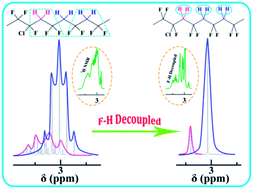
Because the spin quantum number of F and H atoms is 1/2, there is spin–spin coupling between them, and the proton signals split into multiplets in the same signal position, as a result of the existence of the spin–spin coupling. If the chemical shift is closer to two protons, their signals may overlap each other because of the stronger coupling effect and bigger coupling constant between F and H atoms and the results make quantitative analysis difficult. As shown in Fig. 3A, although no H is contributed by CTFE, the connection of CTFE to VDF does lead to the change in chemical shift of H on VDF units. The broad shoulder peak appearing at 3.5 ppm is assigned to the H on VDF prominently connected with CTFE in the –CF2CH2–CFClCF2 sequence. However, due to the coupling of F atoms with H atoms located either on the same or adjacent C atoms on 1H NMR, the peaks of VDF adjacent to CTFE at 3.5 ppm and the peak of VDF–VDF in the H–T connection at 3.1 ppm are rather broad. The integral of this peak could hardly be obtained precisely since it overlapped significantly with the peak at 3.1 ppm. The effect of spin–spin coupling can be removed by the decoupling technique. The effect of decoupling is to mask the presence of F atoms and a spectrum is acquired as if F atoms were absent. This is achieved by transmitting the full-wave band decoupling pulse sequence at the F resonance frequency and thereby permanently changing the spin orientation of F atoms and removing the coupling effect between the F and H atoms. The NMR spectra before and after F–H decoupling is shown in Scheme 2. In order to separate the two peaks, F–H decoupling 1H NMR of P(VDF–CTFE) was conducted as shown in Fig. 3B. Apparently, the signals at 3.1 ppm and 3.5 ppm are both narrowed and split into several isolated peaks after the coupling between F and H is eliminated. Therefore, the CTFE/VDF molar ratio could be obtained as VDF/CTFE = 80.0/18.2 mol% from eqn (3) as follows:

 
image file: c6ra11757k-t3.tif(3)
where I4 refers to the integral of the signal at 3.5 ppm, I1 and I2 refer to the integral of signals at 2.3–2.6 ppm and 2.6–3.7 ppm, respectively. The slightly smaller VDF/CTFE molar ratio (80.0/18.2 mol%) than the other two methods (80.0/21.3 mol% and 80.0/20.0 mol%) could be attributed to the small portion (about 10 mol%) of CTFE connected with VDF in the –CF2CFCl–CF2CH2–CF2CH2– sequence, where the H on CH2 has been neglected in the above equation. That would result in CTFE content systematically underestimated by about 10%. Meanwhile, the connection of CTFE to CTFE was not taken into account. Therefore, the above equation could only be utilized for the P(VDF–CTFE) bearing relatively low CTFE molar content, where the connection of CTFE to CTFE could be neglected. For the P(VDF–CTFE) containing about 20.0 mol% CTFE units, the CTFE content measured from the F–H decoupled 1H NMR was 18.2 mol% with an acceptable error of 14.5% and 9.0%, compared with the results obtained from the 19F NMR method and the hydrogenation method. Therefore, we could demonstrate that for the P(VDF–CTFE) copolymer bearing less CTFE, below 20 mol%, the systematic error of the CTFE content calculated from F–H decoupled 1H NMR should be less than 10%, compared with the hydrogenation method. It is acceptable for its relatively high accuracy and convenience of having an extra hydrogenation reaction with multiple operations.


image file: c6ra11757k-f3.tif
Fig. 3 (A) 1H NMR and (B) F–H decoupled 1H NMR spectra of P(VDF–CTFE).

image file: c6ra11757k-s2.tif
Scheme 2 The NMR spectra before and after F–H decoupling.

Chemical composition calculation of hydrogenated P(VDF–TrFE–CTFE) from F–H decoupled 1H NMR

Besides P(VDF–TrFE) copolymers, TrFE containing PVDF based terpolymers have been widely investigated during the last few decades for their tunable ferroelectric and dielectric performances, by altering the chemical compositions of three monomers. Among them, P(VDF–TrFE–CTFE)s have attracted the most attention, which can be tuned from normal ferroelectric P(VDF–TrFE) to relaxor ferroelectric P(VDF–TrFE–CTFE) with optimized composition. Converting Cl atoms on CTFE of P(VDF–CTFE) into H atoms is found to be an economical and practical way to synthesize TrFE containing copolymers through the dechlorination reaction. In these terpolymers, the ferroelectric performance shows close dependence on their chemical composition. However, it is hard to precisely determine the chemical composition of these terpolymers from 19F NMR, since some of the peaks belonging to TrFE and CTFE, including −93.5 ppm to −97.2 ppm, −112.4 ppm to −116.8 ppm and −120.1 ppm to −126.8 ppm, overlap significantly as indicated in Fig. S1. Therefore, the CTFE in the terpolymer has to be converted into TrFE to obtain the molar ratio of VDF/(TrFE + CTFE) by calculating the VDF/TrFE molar ratio of the resultant P(VDF–TrFE) from 1H NMR using eqn (2), as discussed above. The 1H NMR of pristine P(VDF–TrFE–CTFE) has to be applied to obtain the VDF/TrFE molar ratio. Therefore, the individual molar ratio of TrFE/VDF and CTFE/VDF in terpolymers could be determined. For example, the 1H NMR spectra of a P(VDF–TrFE–CTFE) terpolymer and P(VDF–TrFE) synthesized from fully hydrogenated P(VDF–TrFE–CTFE) are presented in Fig. 4. TrFE/VDF molar ratios in P(VDF–TrFE–CTFE) and P(VDF–TrFE) are calculated to be 15.5/80.0 and 20.0/80.0, respectively. Therefore, the CTFE/VDF molar ratio in the terpolymer is 4.5/80.0 and the molar ratio of VDF/TrFE/CTFE in pristine P(VDF–TrFE–CTFE) terpolymer is 80.0/15.5/4.5.
image file: c6ra11757k-f4.tif
Fig. 4 1H NMR spectra of a (A) P(VDF–TrFE–CTFE) terpolymer and (B) P(VDF–TrFE) from fully hydrogenated P(VDF–TrFE–CTFE).

As discussed above, the molar content of CTFE could be directly calculated from F–H decoupled 1H NMR. As shown in Fig. 5, the F–H decoupled 1H NMR spectra of P(VDF–TrFE–CTFE) and P(VDF–TrFE) hydrogenated from P(VDF–TrFE–CTFE) are presented. Compared with 1H NMR spectra, the peaks of the protons on VDF units linked with TrFE units (–CF2CH2CFHCF2–) appearing at 2.6–2.9 ppm were separated from the main peaks of the VDF units in the H–T connection at 2.7–3.2 ppm. The integral area of the signal at 2.6–2.9 ppm is twice that of the signal at 5.0–6.0 ppm, corresponding to the protons from TrFE, since one TrFE bears one proton, while the adjacent VDF contains two protons. Similarly, the previous shoulder peaks at 3.2–3.6 ppm assigned to the proton on VDF connected with CTFE in the –CF2CH2CFClCF2– connection were separated from the main peak at 2.7–3.2 ppm in the F–H decoupled 1H NMR of P(VDF–TrFE–CTFE) as well. Therefore, the molar ratio of TrFE/CTFE/VDF could be directly obtained from the following eqn (4):

 
VDF/TrFE/CTFE in moles = (I1 + I2)/2I3/I4 (4)
where I1I4 refer to the integrals of signals at 2.3–2.6 ppm, 2.6–3.7 ppm, 5.0–6.0 ppm and 3.3–3.5 ppm, respectively. The calculated VDF/TrFE/CTFE molar ratio from eqn (4) is 80.0/15.5/4.0, where the slightly underestimated CTFE content (about 10%) is attributed to the same reason as discussed above in P(VDF–CTFE). This means that F–H decoupled 1H NMR could be utilized to directly determine the CTFE content, as well as the chemical composition of P(VDF–TrFE–CTFE) synthesized from P(VDF–CTFE) as well.


image file: c6ra11757k-f5.tif
Fig. 5 F–H decoupled 1H NMR spectra of (A) P(VDF–TrFE–CTFE) and (B) P(VDF–TrFE) hydrogenated from P(VDF–TrFE–CTFE).

Grafting composition determination of PMMA and PS grafted P(VDF–CTFE) copolymers from F–H decoupled 1H NMR

The ATRP strategy was firstly reported by M. F. Zhang to synthesize PtBA and PS grafted P(VDF–CTFE) copolymers using the C–Cl bonds on CTFE units as active sites.28 Poly(acrylnitrile) (PAN) and poly(methacrylic ester)s were grafted onto P(VDF–CTFE), based on the similar living radical polymerization strategy.32 The grafted copolymers have been prepared for application in high energy density capacitors, adhesives, proton exchange membranes, etc.31,39–42 In these works, only the grafting content of side chains comparable to the P(VDF–CTFE) main chain in weight or molar ratio were calculated and the detailed grafting structure was barely mentioned, due to the absence of a characterization method. Using the hydrogenation process of P(VDF–CTFE) as discussed above, the detailed structural information, including the grafting density, average chain length, average molecular weight and distribution of P(VDF–CTFE)-g-PMMA were studied systematically in our group.34 It was found that the activity of C–Cl on CTFE is rather low and only a small portion of CTFEs were initiated. As a result, the grafting structure of P(VDF–CTFE)-g-PMMA is highly dependent on not only the catalyst system, but also the reaction conditions. As shown in Fig. 6, the 1H NMR spectra of a P(VDF–CTFE)-g-PMMA sample and its fully hydrogenated copolymer P(VDF–TrFE)-g-PMMA are given as an example.
image file: c6ra11757k-f6.tif
Fig. 6 1H NMR of a (A) P(VDF–CTFE)-g-PMMA sample and (B) its fully hydrogenated copolymer P(VDF–TrFE)-g-PMMA.

In addition to the signals at 2.2–2.7 ppm, 2.7–3.2 ppm and the shoulder peak at 3.2–3.6 ppm from P(VDF–CTFE), the new signals at 3.6–3.8 ppm and 0.8–2.0 ppm are assigned to the protons on the –OCH3 and –CH2–C(CH3)COOCH3 of the PMMA side chain. After the hydrogenation process catalyzed with nBu3SnH/AIBN, the Cl atoms in the CTFE units were completely converted into H atoms. The disappearance of the shoulder peak at 3.2–3.6 ppm in P(VDF–CTFE)-g-PMMA and the emergence of new peaks at 5.0–6.0 ppm in P(VDF–TrFE)-g-PMMA indicate that the unreacted CTFEs have been fully converted into TrFE. Therefore, the molar concentration of unreacted CTFE ([CTFE]un), the molar concentration of initiated CTFE ([CTFE]in) and average side chain polymerization degree image file: c6ra11757k-t4.tif of P(VDF–CTFE)-g-PMMA could be calculated as follows:

 
image file: c6ra11757k-t5.tif(5)
 
[CTFE]in = [CTFE]0 − [CTFE]un (6)
 
image file: c6ra11757k-t6.tif(7)
where I1I3 and I5 are the integrals of signals at 2.2–2.7 ppm, 2.7–3.7 ppm, 5.0–6.0 ppm and 3.6–3.8 ppm, respectively. The CTFE molar ratio in the pristine P(VDF–CTFE) ([CTFE]0) is known to be 9 mol% (see Fig. S2 and S3). Therefore, by measuring the composition of the grafted copolymers taken from the increased reaction time intervals, more detailed information, including the grafting density, the average side chain length, the average molecular weight and its distribution could be determined and the calculation method and results were published in our previous work.34 This allows us to give a clearer and deeper understanding of the grafting reaction process as reported in literature.

Apparently, the key to obtaining the above structural information is determining the exact CTFE content involved in the grafting polymerization or the content of uninitiated CTFE units. Therefore, the F–H decoupled 1H NMR method as discussed above should be able to directly determine the CTFE content in P(VDF–CTFE)-g-PMMAs without the hydrogenation of the grafted copolymers being necessary. As shown in Fig. 7, the F–H decoupled 1H NMR spectra of the pristine P(VDF–CTFE) and grafted product P(VDF–CTFE)-g-PMMA are presented. Compared with the pristine polymer, besides the new signal emerging at 3.6–3.8 ppm and 0.8–2.0 ppm assigned to the protons on the –OCH3 and –CH3/–CH2– of PMMA side chains, extra new signals emerging at 2.8–2.9 ppm could be assigned to the protons on VDF connected with initiated CTFE in the –CF2CF(PMMA)CH2CF2– connection. Therefore, the molar concentration of initiated CTFE units ([CTFE]in) could be calculated from the following eqn (8):

 
image file: c6ra11757k-t7.tif(8)
where I6 refers to the integral of the signal at 2.8–2.9 ppm, and I1 and I2 refer to the integral of signals at 2.3–2.6 ppm and 2.6–3.7 ppm respectively. Once the [CTFE]in was obtained, the other related kinetic data could be easily calculated via the above mentioned method. The percentages of CTFE initiated at different reaction times are summarized in Table 2. For comparison purposes, the results calculated from the hydrogenation method are also provided in Table 2.


image file: c6ra11757k-f7.tif
Fig. 7 F–H decoupled 1H NMR spectra of (A) pristine P(VDF–CTFE) and (B) P(VDF–CTFE)-g-PMMA.
Table 2 The percentage of CTFE initiated at different reaction times in the P(VDF–CTFE)-g-PMMA reaction, from the hydrogenation method and F–H decoupled 1H NMR method
Calculated method (P(VDF–CTFE)-g-PMMA) Percentage of CTFE initiated at different reaction times (%)
t = 10 min t = 20 min t = 30 min t = 40 min t = 50 min t = 60 min
Hydrogenation 13.73 23.92 31.56 37.61 41.68 43.63
F–H decoupled 1H NMR 15.04 26.13 35.26 41.59 46.37 52.62


As shown in Table 2, the values of the percentages of CTFE initiated, obtained from the F–H decoupled 1H NMR method, agree well with those of the hydrogenation method when the reaction time is within 40 min.

When the samples were synthesized with reaction time greater than 40 min, increased error was found between the two methods. This could be attributed to the large quantity of grafted PMMA side chains, which lead to the broadened peak at 3.7 ppm and the elevated error in obtaining the integral of the peak at 3.3–3.5 ppm associated with the unreacted CTFE.

Besides determining the grafting structure information of P(VDF–CTFE)-g-PMMA, the F–H decoupling 1H NMR method could be utilized to calculate the composition of the other polymers, such as PS grafted P(VDF–CTFE) copolymers synthesized from the ATRP process as well. F–H decoupled 1H NMR spectra of a P(VDF–CTFE)-g-PS sample and 1H NMR of its full hydrogenation product P(VDF–TrFE)-g-PS are presented in Fig. 8. The new signals at 1.2–2.0 ppm and 6.3–7.6 ppm are assigned to the protons on the–CH2–, –CH– and –C6H5 of PS chains, respectively. From eqn (8), the molar ratio of initiated CTFE to VDF units was calculated to be 6.2/91.0, which is rather close to 5.9/91.0 calculated from the hydrogenation method. Meanwhile, the integral ratio of TrFE to benzyl groups (5I3/I7) in the hydrogenated product was found to be 1/11.6, which is rather close the value of 5I4/2I7 (1/12.0), referring to the molar ratio of unreacted CTFE units to grafted St units. This could confirm the great coincidence of the results calculated from both methods. A series of P(VDF–CTFE)-g-PS samples taken from the same reaction, but at increased reaction intervals, were utilized for comparison, as listed in Table 3. The percentage of CTFE initiated at different reaction times, calculated from the two methods were found to be rather close, which could further confirm the accuracy of the F–H decoupled 1H NMR results and the accuracy of the strategy.


image file: c6ra11757k-f8.tif
Fig. 8 (A) F–H decoupled 1H NMR spectra of a P(VDF–CTFE)-g-PS sample and (B) 1H NMR of its full hydrogenation product P(VDF–TrFE)-g-PS.
Table 3 Percentage of CTFE initiated at different reaction times in the P(VDF–CTFE)-g-PS reaction from the hydrogenation method and the F–H decoupled 1H NMR method
Calculated method (P(VDF–CTFE)-g-PS) Percentage of CTFE initiated at different reaction times (%)
t = 10 min t = 20 min t = 30 min t = 40 min t = 50 min t = 60 min
Hydrogenation 29.48 35.85 43.26 48.81 51.48 52.30
F–H decoupling 1H NMR 31.56 40.22 46.22 51.85 56.15 58.74


Grafting composition determination of PMMA grafted P(VDF–TrFE–CTFE) copolymers from F–H decoupled 1H NMR

Other than P(VDF–CTFE), P(VDF–TrFE–CTFE) terpolymers synthesized from P(VDF–CTFE)s have also been utilized to synthesize grafted polymers via ATRP, for the high polar all-trans chain conformation controlling capabilities of the TrFE units in the PVDF chains. To determine the exact grafting composition of the resultant grafted copolymers, more difficulties would be faced for the complicated monomers. Similar to that of P(VDF–CTFE) grafted copolymers, full hydrogenation of the resultant copolymers had to be conducted before this work. By comparing the 1H NMR results of pristine grafted copolymers and the hydrogenated copolymers, the detailed grafting structure, including the grafting density, average chain lengths, and the molar ratio of VDF/TrFE/(unreacted CTFE)/(grafted CTFE), were obtained by measuring the exact content of CTFE involved in grafting. For example, 1H NMR spectra of a P(VDF–TrFE–CTFE)-g-PMMA and its full hydrogenation copolymer P(VDF–TrFE)-g-PMMA are presented in Fig. 9. The disappearance of the shoulder peak at 3.2–3.6 ppm in P(VDF–TrFE–CTFE)-g-PMMA indicates that the unreacted CTFEs have been completely converted into TrFE. Therefore, the molar ratio of the main chain, could be calculated from eqn (9) as follows:
 
VDF/TrFE/(unreacted CTFE)/(grafted CTFE) = (I1 + I2)/2I3/2(I3I3)/2(20.0 − I3) (9)
where I1I3 refer to the integrals of signals at 2.2–2.7 ppm, 2.7–3.7 ppm, 5.0–6.0 ppm of P(VDF–TrFE–CTFE)-g-PMMA, respectively. I3 refers to the integral of the signal at 5.0–6.0 ppm of P(VDF–TrFE)-g-PMMA. The molar content of CTEF in pristine P(VDF–CTFE) is 20.0 as mentioned above. The molar ratio between grafted CTFE and VDF units was calculated to be 3.2/80.0.

image file: c6ra11757k-f9.tif
Fig. 9 1H NMR spectra of (A) P(VDF–TrFE–CTFE)-g-PMMA and (B) its fully hydrogenated copolymer, P(VDF–TrFE)-g-PMMA.

As shown in Fig. 10, using the F–H decoupled 1H NMR method, the grafted CTFE content ([CTFE]g) of the P(VDF–TrFE–CTFE)-g-PMMA sample could be calculated from eqn (10) as follows:

 
image file: c6ra11757k-t8.tif(10)


image file: c6ra11757k-f10.tif
Fig. 10 F–H decoupled 1H NMR spectra of a P(VDF–TrFE–CTFE)-g-PMMA sample.

The molar ratio of VDF, TrFE, unreacted CTFE and grafted CTFE could be calculated from eqn (11) as follows:

 
VDF/TrFE/(unreacted CTFE)/(grafted CTFE) = (I1 + I2)/2I3/I4/(I6 − 2I3) (11)
where I1I4 and I6 refer to the integrals of signals at 2.2–2.7 ppm, 2.7–3.7 ppm, 5.0–6.0 ppm, 3.2–3.6 ppm and 2.6–2.9 ppm, respectively. The molar ratio between grafted CTFE and VDF units was calculated to be 3.5/80.0, agreeing well with 3.2/80.0 obtained from the hydrogenation method. This confirms the accuracy of the F–H decoupled 1H NMR results and the efficiency of the strategy.

Conclusions

Due to the strong coupling of F atoms with H atoms located either on the same C or the adjacent C atom in 1H NMR spectra, the peaks of VDF adjacent to CTFE at 3.5 ppm and the peaks of VDF–VDF in the H–T connection at 3.1 ppm are rather broad. The significant overlapping of these peaks makes it impossible to obtain their accurate integrals for composition calculation. A facile and quick strategy involving the decoupling of F and H atoms in 1H NMR is presented in this work to calculate the CTFE content in P(VDF–CTFE). The broad peak related to VDF connected with CTFE could be finely narrowed and separated from the peak of VDF connected with VDF. Therefore, without it being necessary to convert CTFE into TrFE by an extra hydrogenation reaction, the CTFE molar content of the copolymers can be directly calculated from their F–H decoupled 1H NMR spectra. The CTFE content obtained from this strategy is found to be rather accurate and efficient, compared with the results from the 19F NMR and the hydrogenation method. The presented method is found to be functional in determining the CTFE content and the detailed chemical composition of the other P(VDF–CTFE) based terpolymers bearing TrFE units and even PMMA and PS grafted P(VDF–CTFE) copolymers. With respect to its high efficiency and convenience, this characterization method may provide a robust tool for obtaining detailed chemical composition information.

Acknowledgements

This work was financially supported by the National Nature Science Foundation of China-NSFC (No. 51573146, 51103115, 50903065), Fundamental Research Funds for the Central Universities (xjj2013075), the National Basic Research Program of China (No. 2009CB623306), International Science & Technology Cooperation Program of China (2013DFR50470), Natural Science Basic Research Plan in Shaanxi Province of China (No. 2013JZ003).

Notes and references

  1. H. Kawai, Jpn. J. Appl. Phys., 1969, 8, 975–976 CrossRef CAS .
  2. Z. Cui, N. T. Hassankiadeh, Y. Zhang, E. Drioli and Y. M. Lee, Prog. Polym. Sci., 2015, 51, 94–126 CrossRef CAS .
  3. W. C. Gan, W. H. A. Majid and T. Furukawa, Polymer, 2016, 82, 156–165 CrossRef CAS .
  4. Q. M. Zhang, V. Bharti and X. Zhao, Science, 1998, 280, 2101–2104 CrossRef CAS PubMed .
  5. Z. Yu, C. Ang, L. E. Cross, A. Petchsuk and T. C. Chung, Appl. Phys. Lett., 2004, 84, 1737–1739 CrossRef CAS .
  6. R. L. Moreira, Appl. Phys. Lett., 2012, 100, 152901 CrossRef .
  7. P. Martins, A. C. Lopes and S. Lanceros-Mendez, Prog. Polym. Sci., 2014, 39, 683–706 CrossRef CAS .
  8. T. C. Chung, A. Petchsuk and G. W. Taylor, Ferroelectr., Lett. Sect., 2001, 28, 135–143 CrossRef CAS .
  9. Z. C. Zhang and T. C. Chung, Macromolecules, 2006, 39, 5187–5189 CrossRef CAS .
  10. B. J. Chu, X. Zhao, K. Ren, B. Neese, M. Lin, Q. Wang, F. Bauer and Q. M. Zhang, Science, 2006, 313, 334–336 CrossRef CAS PubMed .
  11. Z. C. Zhang and T. C. Chung, Macromolecules, 2007, 40, 9391–9397 CrossRef CAS .
  12. Z. C. Zhang and T. C. Chung, Macromolecules, 2007, 40, 783–785 CrossRef CAS .
  13. E. Fukada, Ferroelectrics, 1995, 171, 1–3 CrossRef CAS .
  14. R. C. G. Naber, C. Tanase, P. W. M. Blom, G. H. Gelinck, A. W. Marsman, F. J. Touwslager, S. Setayesh and D. M. de Leeuw, Nat. Mater., 2005, 4, 243–248 CrossRef CAS .
  15. B. Améduri, B. Boutevin and G. Kostov, Prog. Polym. Sci., 2001, 26, 105–187 CrossRef .
  16. H. G. Kassa, R. Cai, A. Marrani, B. Nysten, Z. Hu and A. M. Jonas, Macromolecules, 2013, 46, 8569–8579 CrossRef CAS .
  17. P. Sukwisute, N. Muensit, S. Soontaranon and S. Rugmai, Appl. Phys. Lett., 2013, 103, 063905 CrossRef .
  18. F. Guan, J. Wang, L. Zhu, J. Pan and Q. Wang, IEEE Trans. Dielectr. Electr. Insul., 2011, 18, 1293–1300 CrossRef .
  19. F. Guan, J. Wang, L. Yang, J. K. Tseng, K. Han, Q. Wang and L. Zhu, Macromolecules, 2011, 44, 2190–2199 CrossRef CAS .
  20. H. H. Gong, B. Miao, X. Zhang, J. Y. Lu and Z. C. Zhang, RSC Adv., 2016, 6, 1589–1599 RSC .
  21. B. Ameduri, Chem. Rev., 2009, 109, 6632–6686 CrossRef CAS PubMed .
  22. R. E. Cais and J. M. Kometani, Macromolecules, 1984, 17, 1932–1939 CrossRef CAS .
  23. R. E. Cais and J. M. Kometani, Macromolecules, 1985, 18, 1354–1357 CrossRef CAS .
  24. A. J. Lovinger, D. D. Davis, R. E. Cais and J. M. Kometani, Polymer, 1987, 28, 617–626 CrossRef CAS .
  25. Y. Lu, J. Claude, Q. Zhang and Q. Wang, Macromolecules, 2006, 39, 6962–6968 CrossRef CAS .
  26. Y. Lu, J. Claude, B. Neese, Q. Zhang and Q. Wang, J. Am. Chem. Soc., 2006, 128, 8120–8121 CrossRef CAS PubMed .
  27. S. B. Tan, E. Q. Liu, Q. P. Zhang and Z. C. Zhang, Chem. Commun., 2011, 47, 4544–4546 RSC .
  28. M. Zhang and T. P. Russell, Macromolecules, 2006, 39, 3531–3539 CrossRef CAS .
  29. F. Guan, L. Yang, J. Wang, B. Guan, K. Han, Q. Wang and L. Zhu, Adv. Funct. Mater., 2011, 21, 3176–3188 CrossRef CAS .
  30. L. Yang, E. Allahyarov, F. Guan and L. Zhu, Macromolecules, 2013, 46, 9698–9711 CrossRef CAS .
  31. Z. Zhang, E. Chalkova, M. Fedkin, C. Wang, S. N. Lvov, S. Komarneni and T. C. Chung, Macromolecules, 2008, 41, 9130–9139 CrossRef CAS .
  32. X. Hu, J. J. Li, H. Y. Li and Z. C. Zhang, J. Polym. Sci., Part A: Polym. Chem., 2012, 50, 3126–3134 CrossRef CAS .
  33. J. J. Li, X. Hu, G. X. Gao, S. J. Ding, H. Y. Li, L. J. Yang and Z. C. Zhang, J. Mater. Chem. C, 2013, 1, 1111–1121 RSC .
  34. H. H. Gong, J. J. Li, D. M. Di, N. Li and Z. C. Zhang, RSC Adv., 2015, 5, 19117–19127 RSC .
  35. J. K. Koh, Y. W. kim, S. H. Anh, B. R. Min and J. H. Kim, J. Polym. Sci., Part B: Polym. Phys., 2010, 48, 183–189 CrossRef CAS .
  36. F. X. Guan, Z. Z. Yuan, E. W. Shu and L. Zhu, Appl. Phys. Lett., 2009, 94, 052907 CrossRef .
  37. E. B. Twum, E. F. McCord, P. A. Fox, D. F. Lyons and P. L. Rinaldi, Macromolecules, 2013, 46, 4892–4908 CrossRef CAS .
  38. E. B. Twum, E. F. McCord, D. F. Lyons and P. L. Rinaldi, Macromolecules, 2015, 48, 3563–3576 CrossRef CAS .
  39. Y. J. Shin, R. H. Kim, H. J. Jung, S. J. Kang, Y. J. Park, I. Bae and C. Park, ACS Appl. Mater. Interfaces, 2011, 3, 4736–4743 CAS .
  40. F. Liu, M. R. M. Abed and K. Li, Chem. Eng. Sci., 2011, 66, 27–35 CrossRef CAS .
  41. J. S. Lee, G. H. Kim, S. M. Hong, H. J. Choi and Y. Seo, ACS Appl. Mater. Interfaces, 2009, 1, 2902–2908 CAS .
  42. J. A. Seo, Y. W. Kim, D. K. Roh, Y. G. Shul and J. H. Kim, Polym. Adv. Technol., 2011, 22, 1434–1441 CrossRef CAS .

Footnote

Electronic supplementary information (ESI) available. See DOI: 10.1039/c6ra11757k

This journal is © The Royal Society of Chemistry 2016
Click here to see how this site uses Cookies. View our privacy policy here.