Hierarchical alginate biopolymer papers produced via lanthanide ion coordination

Shunli Liua, Jun Lingb, Kewen Lia, Fang Yaoa, Olayinka Oderindea, Zhihong Zhang*c and Guodong Fu*a
aSchool of Chemistry and Chemical Engineering Southeast University, Jiangning District, Nanjing, Jiangsu Province, P.R. China 211189. E-mail: fu7352@seu.edu.cn
bSchool of Polymer Science and Engineering, Zhejiang University, Hangzhou, Zhejiang Province, China 310027
cHenan Provincial Key Laboratory of Surface and Interface Science, Zhengzhou University of Light Industry, No. 166, Science Avenue, Zhengzhou 450001, China. E-mail: mainzhh@163.com

Received 5th May 2016 , Accepted 27th June 2016

First published on 28th June 2016


Abstract

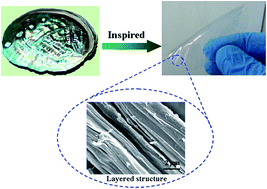
Inspired by the heterogeneous architectures of biological composites, mimicking the hierarchical structure of nacre is a powerful strategy to construct high-performance materials. This paper presents a lightweight and nacre-like hierarchical paper which was fabricated via lanthanide ion coordination. Sodium alginate (SA) biopolymers and lanthanide ions (Nd3+, Gd3+, Ce3+ and Yb3+) were used as ideal building blocks and connection points, respectively. SA biopolymers and lanthanide ions rapidly self-assembled into an aligned hydrogel. The synthesized hydrogel was subsequently dried to form layered alginate-based papers. The formation mechanism of the layered paper was investigated and demonstrated that lanthanide ion coordination can produce the hierarchical structure. The as-prepared layered SA–Nd(III) nanopaper exhibited a high strength of 124.2 ± 5.2 MPa, toughness of 8.2 ± 0.4 MJ m−3, and Young's modulus of 5.2 ± 0.2 GPa, as well as excellent resistance to solvents. Owing to their outstanding mechanical properties and easy and fast fabrication, the layered SA–Nd(III) papers demonstrated a potential application in the fields of biomaterials. This new strategy based on lanthanide ion coordination, can also be used to construct integrated, high-performance, and biopolymer materials.

1. Introduction

Natural materials, such as spider silk, bone, wood, and nacre, provide ingenious methods of producing specific lightweight structural materials exhibiting strong and exceptional mechanical properties.1–4 Bio-mimicking these natural materials to construct lightweight, high-performance materials is beneficial in various applications, such as in sensor devices,5 flexible energy devices,6 protection materials,7 and tissue engineering.8,9 Owing to its hierarchical architecture and high mechanical performance, nacre has recently become a remarkable biological composite and has attracted tremendous interest as a model system in materials science research.10–12 A “brick and mortar” layered architecture and the different interface interactions between inorganic platelets and organic protein make nacre a source of biomimetic materials.13 A series of bio-inspired layered materials have been fabricated, including graphene oxide (GO)/sodium alginate (SA) papers fabricated through vacuum-assisted flocculation,10 montmorillonite/poly(vinyl alcohol) through layer-by-layer (LBL) assembly,14 Al2O3/poly(methyl methacrylate) (PMMA) through ice-templating,15 and GO-DWNT-PCDO (10,12-pentacosadiyn-1-ol) nanocomposite through UV irradiation.16 All of these layered materials exhibit remarkably high mechanical properties (Young's modulus and ultimate stress). However, nearly all processes employed to fabricate bio-mimetic layered structures are time and energy consuming. A problem must also be addressed to realize large-scale production of layered structures. For instance, LBL assembly of 300-bilayer papers requires dipping a glass slide into beakers for 1800 times, and this process requires several days.17 Al2O3/PMMA composites also require extensive amounts of energy during rapid freezing (−80 °C) and sintering (1500 °C).15 Therefore, develop a new method to fabricate nacre-mimetic materials is necessary.

Alginate, a seaweed-derived linear unbranched polysaccharide containing repeating units of 1,4-linked α-L-guluronic acid and β-D-mannuronic acid, is one of the most common natural materials used to fabricate alginate-based and composite materials.18–20 In addition, alginate-based materials are natural, inexpensive, nontoxic, nonvolatile, and thermally stable. Gelling using divalent metal ions is widely applied in the medical field. These divalent metal ions include Ca(II), Ba(II), Zn(II), and Cu(II) ions.21,22 However, alginate gel complexes of trivalent metal ions were seldom reported. Lanthanide ions (Nd, Gd, Ce and Yb) are trivalent metal ions, and their complexes, which are luminescent materials, have been attracting a great deal of attention owing to their coordination ability and excellent luminescence characteristics.23,24 Lanthanide coordination hybrid polymer materials not only possess the unique fluorescence properties of lanthanide ions but also demonstrate mechanical flexibility, good chemical stability, and excellent processability.25,26

This work proposes a new strategy and a feasible method to fabricate a large-scale, transparent, lightweight, and SA-based layered paper through lanthanide ions coordination. The proposed strategy demonstrates two advantages: (i) a simple, rapid, economical, and green pathway was used to fabricate the layered paper and (ii) the hierarchical layered heterogeneous architectures render superior strength, toughness, and modulus to the paper. In addition, the layered paper demonstrates excellent solvent resistance properties. We believe that this work can offer an insight into the innovative design and preparation of high-performance layered paper.

2. Experimental

2.1. Materials

SA (90%, with a molecular weight of ∼398.31 g mol−1), NdCl3·6H2O, Gd(NO3)3·6H2O, Ce(NO3)3·6H2O and Yb(NO3)3·6H2O were purchased from Aladdin Industrial Corporation. (Ethylenedinitrilo)tetraacetic acid (EDTA) was purchased from Chemical Reagent Company of National Pharmaceutica Group. Tetrahydrofuran (THF) and N,N-dimethylformamide (99.9%) were purchased from Shanghai Chemical Reagent. All other reagents were of analytical grade and used without further purification.

2.2. Preparation of aqueous SA and lanthanide ion solutions

Aqueous SA solution was obtained by adding SA power into deionized water and dissolved fully by stirring for 60 min at 50 °C. Different concentrations of aqueous SA solutions (1, 2, and 4 wt%) were prepared. Aqueous solution of lanthanide ion was prepared by dissolving NdCl3·6H2O, Gd(NO3)3·6H2O, Ce(NO3)3·6H2O and Yb(NO3)3·6H2O in deionized water and then ultrasonicated for 10 min. Different concentrations of lanthanide ion solution (0.01, 0.02, 0.05, 0.1, and 0.2 mol L−1) were prepared.

2.3. Preparation of SA–Nd(III) hydrogel and SA–Nd(III) paper

SA–Nd(III) hydrogels were obtained from SA solutions through lanthanide ion coordination. Briefly, SA solution was injected into a rectangular mold (50 cm × 20 cm × 0.5 cm in length, width, and height) or circular mold (50 cm) and carefully immersed in Nd3+ ion solution. The hydrogel was allowed to form for 12 h at room temperature, avoiding concussion of the mold. The hydrogel bodies were subsequently immersed in deionized water several times to remove the unreacted ions. The as-prepared SA–Nd(III) hydrogel contains a large amount of water, and the layered SA–Nd(III) paper was obtained after drying the SA–Nd(III) hydrogel at 50 °C for 12 h. A series of layered SA–Nd(III) papers was obtained by tuning the concentration of the SA solutions and Nd3+ ions. SA–Ce(III), SA–Gd(III) and SA–Yb(III) papers were prepared by the same process. Different thickness of the papers can be obtained by controlled the reaction time.

2.4. Characterization

A JSM-6490LV scanning electron microscope (SEM, Japan) was used for field-emission SEM analysis. X-ray photoelectron spectroscopy (XPS) data were characterized by AXIS HIS 165 Spectrometer (Kratos Analytical, Manchester, UK) with a monochromatized Al Kα X-ray source (1486.71 eV photons). Fourier transform infrared (FTIR) spectra of the samples were recorded from samples in KBr pellets using a Nicolet 5700 FTIR instrument in the range of 400 to 4000 cm−1. Ions solutions were analysed on an Agilent 7500ce ICP-MS equipped with AS100 model E auto-sampler. The thermal stability of the composite papers were determined by an thermogravimetric analyzer (TA, SDT Q-600) at 50–600 °C and at a heating rate of 10 °C min−1 under N2 atmosphere.

2.5. Gelation time test

Gelation time was determined through inversion method. Different concentrations (1, 2, and 4 wt%) of SA solution (5 mL) were added into small cylinder vial. Different concentrations of Nd3+ ion solutions (5 mL) were then added into the vial, which was stored at different temperatures (20–50 °C). Gelation time is the time required for the sample to completely turn into a gel.

2.6. Mechanical properties of the layered SA–Nd(III) paper

Mechanical properties were measured using a Shimadzu AGS-X Tester with a gauge length of 30–40 mm and a loading rate of 1 mm min−1. All measurements were conducted at room temperature. The layered SA–Nd(III) paper was cut into strips with a width, length, and thickness of 5, 20, and 0.2 mm, respectively. Toughness was calculated from the area under the stress–strain curves. The mechanical properties of each sample were determined from the average value of three to five specimens.

2.7. Solvent resistance properties of layered SA–Nd(III) paper

The solvent resistance of the layered SA–Nd(III) papers was determined using the following procedure. The samples were freeze-dried and then immersed in solvents at different temperatures for a given time; excess solvent was removed. The amount of absorbed solvent was calculated from the increase in weight of the samples.

3. Results and discussion

3.1. Preparation of layered SA–Nd(III) paper

A large-scale, lightweight, and nacre-like paper demonstrating superior properties was fabricated via a simple and rapid methodology. Fig. 1 shows the schematic of the fabrication of layered SA–Nd(III) paper. First, SA solution was injected into a circular mold and then carefully immersed in Nd3+ ion solution. To explore the effect of SA concentrations, we fabricated a series of layered papers containing different SA concentrations, including SA–Nd(III)-1 (4 wt% SA), SA–Nd(III)-2 (2 wt% SA), and SA–Nd(III)-3 (1 wt% SA). After immersion of the SA solution in Nd3+ ions solution for 12 h, a circular SA–Nd(III) hydrogel with high water content was obtained through lanthanide ion coordination (Step 1). In this process, interaction in SA is generally multiple Nd3+ ion coordination and hydrogen bonding. However, Nd3+ ion coordination was a crucial procedure. Before coordination, only weak hydrogen bonds existed in SA solution. After immersion in Nd3+ ion solution, coordination occurred, forming solid hydrogel. COOH/COO groups in SA mainly participated in the coordination, whereas some H2O molecules also participated in this process. Given that Nd3+ ions diffused from the top to bottom, a layered structure formed. The SA–Nd(III) hydrogel was then dried under vacuum, forming into a nacre-like layered SA–Nd(III) paper (Step 2). Finally, a large-scale, lightweight, and transparent paper displaying a hierarchical structure was obtained (Fig. 1e). Fig. 1f shows the cross-sectional morphology of the SA–Nd(III) paper exhibiting a well-aligned layered structure.
image file: c6ra11729e-f1.tif
Fig. 1 (a–c) Fabrication of nacre-like layered SA–Nd(III) paper. From left to right: SA solution in a mold was immerged into Nd3+ ion solution and successfully assembled into hydrogel through ion coordination. Close-grained layered SA–Nd(III) paper was obtained after drying. (d) Schematic of SA biopolymers coordinated with rare earth ions. (e) Digital photograph of the layered SA–Nd(III) paper. (f) Cross-sectional morphology of the layered SA–Nd(III) paper.

3.2. Different factors affecting gelation time

During fabrication of SA–Nd(III) hydrogel, the concentration of SA and Nd3+ ions and the reaction temperature exerted a significant effect on gelation rate (Fig. S1). Gelation time is the time required for the SA biopolymer solution to completely form into a hydrogel. The results indicated that increasing SA concentration requires longer gelation time. This finding can be attributed to the formation of a dense layer on the top layers when high SA concentration was used, further reducing diffusion of Nd3+ ions. Moreover, high Nd3+ ion concentration resulted in faster coordination (Fig. S1a). The results of the gelation time test demonstrated that more Nd3+ ions were available for rapid coordination with SA biopolymers. However, when the concentration of Nd3+ ion solution was higher than 0.05 mol L−1, gelation time gradually decreased. Nd3+ ion solution at a concentration of 0.05 mol L−1 was used in the reaction. Fig. S1b shows the effect of temperature on gelation behavior. The concentration of Nd3+ ion solution was 0.05 mol L−1. Gelation time of the hydrogel decreased with increasing temperature. High temperature enhanced the mobility of molecules or formed more active cross-linking sites during coordination. However, temperature exerted a slight effect on gelation behavior. Hence, the suitable temperature was 20 °C.

3.3. Chemical structures of the layered SA–Nd(III) paper

The chemical structures and components of the layered SA–Nd(III) paper were characterized by FTIR and XPS, respectively. The FTIR spectra of the SA biopolymer display a broad band at 3430 cm−1 (Fig. S2), which is assigned to the hydroxyl (–OH) stretching modes. The strong peaks at 1617 and 1410 cm−1 corresponded to the symmetric and asymmetric –COO stretching vibration of the carboxylic group, respectively, and the peak at 1030 cm−1 was assigned to the stretching vibration of the C–O–C groups. The absorption bands at 1034 cm−1 corresponded to the stretching vibrations of C–O. Similar to that of SA biopolymer, the FTIR spectrum of the SA–Nd(III) paper exhibits bands of –OH, –COO, and C–O–C at 3430, 1617, and 1030 cm−1 regions, respectively. Furthermore, the FTIR spectrum of the SA–Nd(III) paper shows different fingerprint regions owing to the formation of Nd–O coordinate bonds in the low-frequency region (600–800 cm−1).27

To evaluate the variation in element types and to understand the variations in chemical bond type of the main elements in the layered SA–Nd(III) papers, we obtained peak-fitted C1s, O1s, and Nd3d core-level XPS spectra. Regarding the C1s spectra of SA–Nd(III), the fits mainly contained four component peaks, which were assigned to different chemical environments present in the sample (Fig. S3a). The peak at ∼284.6 eV was attributed to C–C or C–H bond, whereas the peak at ∼286.4 eV was due to C–O or C–O–C bond. Additionally, the peak at ∼287.8 eV was possibly caused by C[double bond, length as m-dash]O (carbonyl), and the peak at ∼288.6 eV corresponded to O–C[double bond, length as m-dash]O. Moreover, the core-level XPS spectra of O1s showed two main peaks at ∼531.6 and ∼532.6 eV, which were attributed to the C[double bond, length as m-dash]O/O–C[double bond, length as m-dash]O and C–O groups, respectively. Interestingly, a new peak at a high chemical shift of ∼533.4 eV was also obtained and can be attributed to the formation of Nd–O coordinate bonds (Fig. S3b).28 An apparent signal was also observed in the samples (Fig. 2b), where the peaks at 983.6 and 1005.7 eV corresponded to Nd3d.29


image file: c6ra11729e-f2.tif
Fig. 2 (a) XPS spectra of the layered SA–Nd(III) papers containing different SA concentrations. (b) XPS spectra of core-level Nd3d of the layered SA–Nd(III) papers containing different SA concentrations.

The chemical compositions of the layered SA–Nd(III) papers that formed under 0.05 mol L−1 Nd3+ ion solution at various SA concentrations were also studied. All of the layered SA–Nd(III) papers were rich in carbon and oxygen. Under the same Nd3+ ion concentration, the atom content of carbon was maintained at ∼67.46–56.21%. Moreover, the atom content of Nd in the layered SA–Nd(III) papers were 1.27%, 2.61%, and 3.92% (the concentrations of SA were 1, 2, and 4 wt%). The resultant atom content indicated that high SA concentration increases Nd ions in the layered SA–Nd(III) paper.

3.4. Morphology of layered SA–Nd(III) papers

The cross-sectional morphologies of the as-prepared layered SA–Nd(III) papers were characterized by scanning electron microscopy (SEM). Fig. 3 shows the SEM images of the cross-sectional morphologies of the layered SA–Nd(III) papers containing different SA concentrations as revealed by SEM. All of the papers displayed a laminated structure that could be clearly distinguished as SA concentration decreases. The sheet-like layers are parallel to the paper surface and interpenetrate into adjacent layers. Fig. 3a–a2 shows that at a high concentration of SA (4 wt%), an almost integrated layered structure was produced, resulting in the formation of relatively thick laminated structure (∼300 ± 50 nm). A laminated structure was evident at low SA concentration (2 wt%) (Fig. 3b–b2) and the paper exhibited a well-aligned and laminated structure at a thickness of 200 ± 20 nm. When the SA concentration was low (1 wt%), a layered structure was more obvious in Fig. 3c–c2 and the layer was thicker (∼100 ± 20 nm). The results indicated that varied thicknesses of the SA–Nd(III) layered papers can be controlled by tuning the SA concentrations. Except for the SA–Nd(III) layered papers, the structure of papers which formed by other lanthanide ions (Gd3+, Ce3+ and Yb3+) were also investigated. As shown in Fig. S4a–c, SA–Gd(III), SA–Ce(III) and SA–Yb(III) papers also display a well-aligned laminated structure. SA-based papers were nearly formed by Ca2+ coordination, however no well-aligned layered structure was observed in SA–Ca(II), as shown in Fig. S4d. In comparison, the cross-sectional morphologies of SA-based paper which was formed by trivalent metal ions (Fe3+ and Al3+) were also investigated. As shown in Fig. S4d and e, there is no obvious laminated structure to SA–Fe(III) and SA–Al(III) papers as well as forming many fragments. This could be attributed to the formation of ionic bonds between Fe3+ and –COO in SA and formation of precipitates.30
image file: c6ra11729e-f3.tif
Fig. 3 Comparison of the cross-sectional morphology and structure of the layered SA–Nd(III) papers. From left to right: low- and high-resolution SEM images (a–c, a1–c1, and a2–c2) at SA concentrations of 4, 2, and 1 wt%, respectively.

3.5. Formation mechanism of layered SA–Nd(III) paper

Before investigating the formation mechanism of SA–Ca(II) paper and layered SA–Nd(III) paper, the ions exchanges between Ca2+ and Na+, Nd3+ and Na+ was studied. Equal in quality of SA–Ca(II) and layered SA–Nd(III) paper was immersed into 0.1 mol L−1 NaCl solutions, respectively. As the time progresses, the ions exchange was occurred. Fig. 4 displayed the content of Ca2+ and Nd3+ ions in 20 mL 0.1 mol L−1 NaCl solutions with the ions exchange time progress. The data of Ca2+ and Nd3+ ions contents was obtained by ICM-MS. There is no ions exchange between Nd3+ and Na+ ions, but showed higher ions exchange between Ca2+ and Na+ ions. Based on these data, the ions exchange equilibrium constant (K) between Ca2+ and Na+ ions was calculated, K = 6.975 × 10⁻⁴. Because there is no ions exchange between Nd3+ and Na+ ions, so the ions exchange equilibrium constant (K) between Nd3+ and Na+ ions was very small and negligible. Based on the ions exchanges, two equations were obtained in eqn (1) and (2).
 
Ca2+ + 2Na+Alg ⇌ Ca2+(Alg)2 + 2Na+ (1)
 
Nd3+ + 3Na+Alg → Nd3+(Alg)3 + 3Na+ (2)

image file: c6ra11729e-f4.tif
Fig. 4 The content of Ca2+ and Nd3+ ions in 0.1 mol L−1 NaCl solutions with the prolong ions exchanges.

The formation mechanism was mainly based on the high coordination ability of Nd3+ ions and the higher stability of the nanolayers of the SA-based paper formed under the Nd3+ ions coordination. In this work, the Ca2+ ions crosslinked SA paper was chosen as control. It is well known that ionically crosslinked mechanism of sodium alginate has been largely investigated in the case of calcium ions. As calcium ions bind fundamentally to G residues, the process involves preferentially G blocks of the alginate according to “egg-box” model.31–33 On the other hand, the ions exchange between Ca2+ ions and Na+ ions in the alginate-based hydrogel was confirmed by the previous reports.34,35 As for the Nd3+ ions, there are eight-coordinated or more coordinated bonds in the compound.36,37 The stability of the as-prepared SA-based paper under the Nd3+ ions coordination was investigated. However, there is no ions exchange between Nd3+ ions and Na+ ions in the sodium chloride solution. Furthermore, the chemical compositions of the SA–Nd(III) paper before and after dipping in sodium chloride solution was characterized by XPS and summarized in Table S1. The atomic% of Nd and Na was similar. It also indicated that the stability of the formed layers in the SA–Nd(III) paper.

Based on the ions exchange and coordination ability of Nd3+ and Ca2+ ions, the formation mechanism of the SA–Ca(II) and layered SA–Nd(III) paper is schematically presented in Fig. 5. As shown in Fig. 5A, the scheme revealed the formation mechanism of SA–Ca(II) paper. Due to the weak coordination ability of Ca2+ and the ions exchange between Ca2+ ions and Na+ ions in the SA solution (eqn (1)), the first formed layer of SA–Ca(II) was not stability. The coordinated Ca2+ ions were replaced by the Na+ ions in the SA solution then diffused to the bottom, so there is no hierarchical structure in the SA–Ca(II) paper. Fig. 5B shows the formation mechanism of SA–Nd(III) paper. In the coordination process, the Nd3+ ion diffused from the top to the bottom of the SA solution. Due to the high coordination ability of lanthanide ions to COOH/COO groups,38,39 the SA biopolymers were self-assembled into a layer rapidly by Nd3+ ions coordination. The Nd3+ ions replaced the Na+ ions directly, and no ions exchange was occurred between Nd3+ and Na+ ions (eqn (2)). So the first layer was formed with high stability, the coordinated Nd3+ ions was grasped by SA biopolymers firmly. As the time progresses, the Nd3+ ions penetrated the formed layer and continue diffusion in SA solution, more layered SA layers was formed. On the other hand, along with COOH/COO groups in SA, some H2O molecules were also participated in the coordination. In the drying process, redundant water (free water and partial bound water) was removed from the gel, hence a hierarchical structure was obtained. The well-aligned layered structure rendered excellent mechanical property to the SA–Nd(III) paper.


image file: c6ra11729e-f5.tif
Fig. 5 Illustration of formation of nacre-like layered SA–Nd(III) paper during the coordination process.

3.6. Mechanical properties of the layered SA–Nd(III) papers

The mechanical properties of the layered SA–Nd(III) papers were evaluated at room temperature. Fig. 6a showed the typical stress–strain curves of the layered SA–Nd(III) papers. All of the layered SA–Nd(III) papers displayed a perfect combination of high tensile strength and toughness. The layered SA–Nd(III)-1 paper exhibited a tensile strength of 124.2 ± 5.2 MPa, toughness of 8.2 ± 0.4 MJ m−3, and Young's modulus of 5.2 ± 0.2 GPa, which were considerably higher than those of other SA-based papers.40,41 The ultimate strength of the layered SA–Nd(III)-1 paper was also close to that of the natural nacre (130 MPa), and its toughness was higher than that of natural nacre (1.8 MJ m−3).42 Moreover, different SA concentrations rendered varying mechanical strengths.43 A decreasing SA concentration reduced the tensile strength of the layered SA–Nd(III) papers, and the changes in toughness were similar to those in tensile strength. The resultant can be attributed to high concentration of SA, which can bond with more Nd3+ ions, forming compact layers. In addition, the mechanical properties of the SA-based papers, which formed from coordination of different metal ions, were also studied. Fig. 6b shows the stress–strain curves of SA–Nd(III)-1, SA–Ca(II), SA–Co(II), and SA–Ni(II) papers, which formed under coordination of different metal ions. The tensile strength of the layered SA–Nd(III)-1 paper was much higher than that of the SA–Ca(II), SA–Co(II), and SA–Ni(II) papers. Owing to the high coordination ability of Nd3+ ions, more COO groups in SA was coordinated, forming a denser cross-linking in the SA–Nd(III) paper and thus enhancing its tensile strength (Fig. 7).
image file: c6ra11729e-f6.tif
Fig. 6 (a) Typical strain–stress curves of the layered SA–Nd(III)-1, SA–Nd(III)-2, and SA–Nd(III)-3 papers; (a1 and a2) toughness and Young's modulus of the layered SA–Nd(III) papers containing different SA concentrations. (b) Strain–stress curves of the SA-based papers (SA–Nd(III)-1, SA–Ca(II), SA–Co(II), and SA–Ni(II)) formed from different metal ions; (b1 and b2) toughness and Young's modulus of the SA-based papers formed from different metal ions.

image file: c6ra11729e-f7.tif
Fig. 7 Comparison of the tensile strength and toughness of the SA–Nd(III) paper with those of other alginate-based nanocomposites, including SA/GO,40 Al/GO,41 SA–rGO,45 GO/SA,46 alginate paper,47 alginate-based nanofibrous scaffolds,48 alginate-based paper,49 and alginate/pectin papers.50

The mechanical properties of the layered SA–Nd(III) papers with different water contents and the layered SA–Nd(III) papers that formed under different Nd3+ ion concentrations were also studied. As a comparison, the mechanical properties of these samples in high water content are much lower (Fig. S5a). The effect of water content is possibly caused by a large number of water molecules that participated in the coordination in the integration layers, resulting in reduced distance between the SA biopolymers. Nd3+ ion concentration also affected the mechanical properties of the layered SA–Nd(III) papers. High Nd3+ ions concentration resulted in high tensile strength (Fig. S5c). In addition, the mechanical properties of layered SA–Ce(III), SA–Gd(III) and SA–Yb(III) papers were also investigated and the data was added in Fig. S5(e and f). All of those layered papers showed a high mechanical strength and toughness.

The synergetic effect of strengthening and toughening of SA biopolymers and ion coordination offers the advantage of integrated high strength and toughness of the SA–Nd(III) paper, which exhibited an ultimate stress of 124.2 ± 5.2 MPa, toughness of 8.2 ± 0.4 MJ m−3, and Young's modulus of 5.2 ± 0.2 GPa. Other alginate-based nanocomposites exhibiting different interface interactions (e.g., ionic bonding, hydrogen bonding, and covalent bonding) are summarized in Fig. 7. The ultimate stress of the SA–Nd(III) paper was much higher than that of other composite materials. Detailed mechanical properties of those materials are listed in Table S2.

3.7. Stability of the layered SA–Nd(III) papers

We also investigated the thermal stability of the layered SA–Nd(III) papers (Fig. S6). The TGA results revealed that the layered SA–Nd(III) paper demonstrated a high decomposition temperature of 215 °C. With decreasing SA concentration, more SA was decomposed and the residual weight also decreased. Solvent uptake was measured by using two series of solvent. One series included conventional solvents, such as water and ethanol, whereas the other series included non-protonic polar solvents, such as THF, DMF, and DMSO. The results of the measurement are listed in Table S3. Samples of known weight were treated using two different procedures.44 In one procedure, the samples were immersed in solvents at 25 °C for 24 h. In the other procedure, the samples were immersed in solvents at 25 °C for three days and at 90 °C for 2 h. We aimed to investigate the solvent resistance properties at a relatively high temperature and to determine the saturated solvent uptake of the SA–Nd(III) papers. Given that the SA–Nd(III) papers formed from hydrogels, the solvent uptake ratio in water was obviously higher. By contrast, the solvent uptake in other solvents was lower.

4. Conclusions

In summary, a layered SA-based paper was prepared using a feasible method involving coordination between carboxylic groups in SA and lanthanide ions (Nd, Ce, Gd and Yb). The present method renders two advantages to the layered paper, namely, a hierarchical structure and excellent mechanical properties. The layered SA-based papers produced using this method exhibited excellent solvent resistance. Owing to the outstanding mechanical properties, easy and rapid fabrication of the layered SA-based papers, its application can be extended to the fields of biological membranes and scaffolds. The strategy described in this work demonstrated that lanthanide ion coordination can be employed to construct integrated, high-performance, and biopolymer materials.

Acknowledgements

This work was supported by National Natural Science Foundation of China under the Grant 21274020 and 21304019.

Notes and references

  1. F. Vollrath and D. P. Knight, Nature, 2001, 410, 541–548 CrossRef CAS PubMed.
  2. M. Wiens, X. Wang, F. Natalio, H. C. Schröder, U. Schloßmacher, S. Wang, K. Michael, G. Werner and W. E. Müller, Adv. Eng. Mater., 2010, 12, 438–450 CrossRef.
  3. E. I. S. Flores and M. I. Friswell, J. Mech. Phys. Solids, 2012, 60, 1296–1309 CrossRef.
  4. Y. Q. Li, T. Yu, T. Y. Yang, L. X. Zheng and K. Liao, Adv. Mater., 2012, 24, 3426–3431 CrossRef CAS PubMed.
  5. H. B. Muhammad, C. M. Oddo, L. Beccai, C. Recchiuto, C. J. Anthony, M. J. Adams and M. C. L. Ward, Sens. Actuators, A, 2011, 165, 221–229 CrossRef CAS.
  6. X. Wang, X. Lu, B. Liu, D. Chen, Y. Tong and G. Shen, Adv. Mater., 2014, 26, 4763–4782 CrossRef CAS PubMed.
  7. T. Sun, L. Feng, X. Gao and L. Jiang, Acc. Chem. Res., 2005, 38, 644–652 CrossRef CAS PubMed.
  8. Y. Zhang, J. R. Venugopal, A. El-Turki, S. Ramakrishna, B. Su and C. T. Lim, Biomaterials, 2008, 29, 4314–4322 CrossRef CAS PubMed.
  9. C. Sanchez, H. Arribart and M. M. G. Guille, Nat. Mater., 2005, 4, 277–288 CrossRef CAS PubMed.
  10. K. Chen, B. Shi, Y. Yue, J. Qi and L. Guo, ACS Nano, 2015, 9, 8165 CrossRef CAS PubMed.
  11. D. Kang, Z. Cai, Q. Jin and H. Zhang, Carbon, 2015, 91, 445–457 CrossRef CAS.
  12. A. Walther, I. Bjurhager, J. M. Malho, J. Pere, J. Ruokolainen, L. A. Berglund and O. Ikkala, Nano Lett., 2010, 10, 2742–2748 CrossRef CAS PubMed.
  13. U. G. K. Wegst, H. Bai, E. Saiz, A. P. Tomsia and R. O. Ritchie, Nat. Mater., 2015, 14, 23–36 CrossRef CAS PubMed.
  14. P. Podsiadlo, A. K. Kaushik, E. M. Arruda, A. M. Waas, B. S. Shim, J. Xu, H. Nandivada, B. G. Pumplin, J. Lahann, A. Ramamoorthy and N. A. Kotov, Science, 2007, 318, 80–83 CrossRef CAS PubMed.
  15. E. Munch, M. E. Launey, D. H. Alsem, E. Saiz, A. P. Tomsia and R. O. Ritchie, Science, 2008, 322, 1516–1520 CrossRef CAS PubMed.
  16. S. Gong, W. Cui, Q. Zhang, A. Cao, L. Jiang and Q. Cheng, ACS Nano, 2015, 9, 11568–11573 CrossRef CAS PubMed.
  17. P. Podsiadlo, M. Michel, K. Critchley, S. Srivastava, M. Qin, J. W. Lee and N. A. Kotov, Angew. Chem., Int. Ed., 2009, 121, 7207–7211 CrossRef.
  18. Y. Yu, S. Zhihuai, S. Chen, C. Bian, W. Chen and G. Xue, Langmuir, 2006, 22, 3899–3905 CrossRef CAS PubMed.
  19. A. Srivastava, J. H. Waite, G. D. Stucky and A. Mikhailovsky, Macromolecules, 2009, 42, 2168–2176 CrossRef CAS PubMed.
  20. J. Zlopasa, B. Norder, E. A. Koenders and S. J. Picken, Macromolecules, 2015, 48, 1204–1209 CrossRef CAS.
  21. Ý. A. Mørch, I. Donati, B. L. Strand and G. Skjåk-Bræk, Biomacromolecules, 2006, 7, 1471–1480 CrossRef PubMed.
  22. S. K. Papageorgiou, E. P. Kouvelos, E. P. Favvas, A. A. Sapalidis, G. E. Romanos and F. K. Katsaros, Carbohydr. Res., 2010, 345, 469–473 CrossRef CAS PubMed.
  23. S. Petoud, S. M. Cohen, J. C. G. Bünzli and K. N. Raymond, J. Am. Chem. Soc., 2003, 125, 13324–13325 CrossRef CAS PubMed.
  24. V. Bachmann, C. Ronda and A. Meijerink, Chem. Mater., 2009, 21, 2077–2084 CrossRef CAS.
  25. Z. Zheng, A. Daniel, W. Yu, B. Weber, J. Ling and A. H. E. Müller, Chem. Mater., 2013, 25, 4585–4594 CrossRef CAS.
  26. F. Cao, T. Huang, Y. Wang, F. Liu, L. Chen, J. Ling and J. Sun, Polym. Chem., 2015, 6, 7949–7957 RSC.
  27. S. Yanagida, Y. Hasegawa, K. Murakoshi, Y. Wada, N. Nakashima and T. Yamanaka, Coord. Chem. Rev., 1998, 171, 461–480 CrossRef CAS.
  28. D. A. Pawlak, M. Ito, M. Oku, K. Shimamura and T. Fukuda, J. Phys. Chem. B, 2002, 106, 504–507 CrossRef CAS.
  29. T. M. Pan and C. H. Lu, Appl. Phys. Lett., 2012, 100, 076102 CrossRef.
  30. P. Xu, C. Pan, Y. Zhao, X. Kong, J. Sun, M. Xu and Z. Shi, Luminescence, 2012, 27, 307–309 CrossRef CAS PubMed.
  31. M. D. Cathell and C. L. Schauer, Biomacromolecules, 2007, 8(1), 33–41 CrossRef CAS PubMed.
  32. I. Braccini and S. Pérez, Biomacromolecules, 2001, 2(4), 1089–1096 CrossRef CAS PubMed.
  33. C. Kuo and P. Ma, Biomaterials, 2001, 22(6), 511–521 CrossRef CAS PubMed.
  34. S. K. Bajpai and R. Tankhiwale, React. Funct. Polym., 2006, 66(6), 645–658 CrossRef CAS.
  35. K. I. Draget, K. Steinsvåg and E. Onsøyen, Carbohydr. Polym., 1998, 35(1), 1–6 CrossRef CAS.
  36. A. Habenschuss and F. H. Spedding, J. Chem. Phys., 1979, 70(8), 3758–3763 CrossRef CAS.
  37. D. G. Karraker, Inorg. Chem., 1967, 6(10), 1863–1868 CrossRef CAS.
  38. W. Feng, L. D. Sun, Y. W. Zhang and C. H. Yan, Coord. Chem. Rev., 2010, 254, 1038–1053 CrossRef CAS.
  39. X. Guo, G. Zhu, Q. Fang, M. Xue, G. Tian, J. Sun, X. Li and S. Qiu, Inorg. Chem., 2005, 44, 3850–3855 CrossRef CAS PubMed.
  40. L. Nie, C. Liu, J. Wang, Y. Shuai, X. Cui and L. Liu, Carbohydr. Polym., 2015, 117, 616–623 CrossRef CAS PubMed.
  41. M. Ionita, M. A. Pandele and H. Iovu, Carbohydr. Polym., 2013, 94, 339–344 CrossRef CAS PubMed.
  42. Z. Tang, N. A. Kotov, S. Magonov and B. Ozturk, Nat. Mater., 2003, 2, 413–418 CrossRef CAS PubMed.
  43. C. W. Lou, C. L. Huang, C. K. Chen, C. F. Liu, S. P. Wen and J. H. Lin, Materials, 2015, 8, 8768–8779 CrossRef.
  44. J. C. Huang, Z. K. Zhu, J. Yin, X. F. Qian and Y. Y. Sun, Polymer, 2001, 42, 873–877 CrossRef CAS.
  45. K. Cao, Z. Jiang, J. Zhao, C. Zhao, C. Gao, F. Pa and J. Yang, J. Membr. Sci., 2014, 469, 272–283 CrossRef CAS.
  46. Y. Wan, X. Chen, G. Xiong, R. Guo and H. Luo, Mater. Express, 2014, 4, 429–434 CrossRef CAS.
  47. M. J. Fabra, P. Talens and A. Chiralt, Carbohydr. Polym., 2008, 74, 419–426 CrossRef CAS.
  48. N. Bhattarai, Z. Li, D. Edmondson and M. Zhang, Adv. Mater., 2006, 18, 1463–1467 CrossRef CAS.
  49. M. A. Rojas-Graü, R. J. Avena-Bustillos, C. Olsen, M. Friedman, P. R. Henika, O. Martín-Belloso and T. H. McHugh, J. Food Eng., 2007, 81, 634–641 CrossRef.
  50. M. A. da Silva, A. C. K. Bierhalz and T. G. Kieckbusch, Carbohydr. Polym., 2009, 77, 736–742 CrossRef.

Footnote

Electronic supplementary information (ESI) available. See DOI: 10.1039/c6ra11729e

This journal is © The Royal Society of Chemistry 2016
Click here to see how this site uses Cookies. View our privacy policy here.