Direct functionalization of cellulose nanocrystals with polymer brushes via UV-induced polymerization: access to novel heterogeneous visible-light photocatalysts

Liman Houab, Hang Biana, Qiliao Wangab, Ning Zhang*ac, Yongjiu Lianga and Dewen Dong*ac
aKey Laboratory of Synthetic Rubber, Changchun Institute of Applied Chemistry, Chinese Academy of Sciences, Changchun, 130022, P. R. China. E-mail: ning.zhang@ciac.ac.cn
bUniversity of the Chinese Academy of Sciences, Beijing 100864, P. R. China
cChangzhou Institute of Energy Storage Materials & Devices, Changzhou, 213000, P. R. China

Received 3rd May 2016 , Accepted 25th May 2016

First published on 26th May 2016


Abstract

Cellulose nanocrystals (CNCs) are an exciting class of bio-based materials attracting increasing interest for a wide range of potential applications due to their nanoscale dimensions, biocompatibility, biodegradability and large surface area. In this work, we report a universal and facile strategy for the preparation of polymer brushes on CNCs via photopolymerization in the absence of any initiator immobilization. The reported procedure is applicable to a series of vinyl monomers, leading to the direct creation of homogeneous and stable polymer coatings on CNCs. Characterization of the resulting polymer-grafted CNCs by FTIR spectroscopy, XRD, AFM and TGA indicates a high grafting density, enhanced dispersing ability and thermal stability without altering the crystalline structure of the intrinsic CNCs. Finally, we have demonstrated the possibility to covalently attach 4,4-difluoro-4-bora-3a,4a-diaza-s-indacene to the grafted polymer chain ends through polymer analogous reactions. The afforded nano-objects show visible-light photocatalytic activity and chemoselectivity in the oxidization reaction of thioanisole to methyl phenyl sulfoxide.

Introduction

Cellulose nanocrystals (CNCs) are rod-like nano-objects obtained by hydrolysis of amorphous domains of cellulose.1,2 Owing to their abundance, biocompatibility, unique morphology, high strength and stiffness, CNCs have gained great attention in material science, nanotechnology, sensing and biomedical fields.3–11 Being a crystalline aggregate of polysaccharides, CNCs lack some of the versatile properties of synthetic polymers, e.g. abundant functional moieties and superior processing ability.12,13 To overcome these shortcomings and driven by environmental awareness, much effort has been made to modify CNCs in order to incorporate functionalities and further broaden the application fields. Taking the advantage of the high concentration of reactive hydroxyl groups on the surface of CNCs, a wide variety of methods have been developed involving physical adsorption, chemically anchoring small molecule or polymer chains onto the surface.14–18

Among all the established methods, modification by polymers provides a possibility to alter the physical and chemical properties, e.g. enriching the functionalities, increasing the processability of the pristine CNCs, and improving the poor compatibility between the hydrophilic polysaccharides and the typically hydrophobic polymer matrices.19 A particularly versatile approach is to create polymer brushes with a high density of functional groups onto CNCs through surface-initiated polymerizations.20,21 In the past decades, almost all the controlled polymerization techniques have been successfully transplanted into the preparation of polymer brushes on CNCs.19 Since there are plenty of hydroxyl groups on CNCs, surface-initiated ring-opening polymerization of lactones is the most straightforward and adopted method to graft polylactones using these exterior hydroxyl functionalities. For instance, Dufresne et al. prepared polylactone brushes on CNCs at 95 °C using Sn(Oct)2 as the catalyst.22 The attaching of polylactones improves the dispersion ability of CNCs and the compatibility between the polymer matrix and CNCs in bionanocomposites.

Controlled radical polymerizations have been intensively studied in regard to their employment for surface modification, as they are relatively tolerant with impurities yet allow the preparation of defined polymer brushes. Malmström successfully introduced poly(methyl methacrylate) (PMMA) brushes onto the surface of cellulose fibers via surface-initiated atom transfer radical polymerization (SI-ATRP) using 2-bromoisobutyrate as the surface bound initiator.23 The resulting polymer-grafted papers were extremely hydrophobic, and the amount of grafted polymer can be controlled by adding a sacrificial initiator to the polymerizing system. Similarly, Thielemans reported that polystyrene (PS) modified CNCs obtained via SI-ATRP show greater and faster adsorption capacity of pollutant in comparison to nonmodified CNCs.24

Reversible addition–fragmentation chain transfer (RAFT) polymerization, another widely used controlled radical polymerization, has also been successfully transplanted onto the surface of CNCs in forming polymer brushes. The modification of cellulose via surface-initiated reversible addition–fragmentation chain transfer (SI-RAFT) polymerization was first carried out by Lewis et al.25 A RAFT agent needs to be firstly anchored onto the filter paper to mediate the polymerization of styrene, methyl acrylate and methyl methacrylate. Later on, Rojas obtained poly(N-isopropylacrylamide) brushes on CNCs by surface-initiated single-electron transfer living radical polymerization.26 The method provides a platform for further development of stimuli–responsive nanomaterials. Likewise, the use of the potassium persulfate–sodium bisulfite system was found to be efficient in in situ grafting polyacrylamide from the surface of CNCs in order to access new hydrogels.27 Grafting of conducting polyaniline from CNCs was achieved by in situ polymerization of aniline onto CNCs in hydrochloric acid aqueous solution via an oxidative polymerization using ammonium peroxydisulfate as the initiator.28 It is worth noting that the grafting of polymer chains from CNCs via ionic polymerization is still challenging, as the reactions conditions required are very stringent.29 The use of carbanions for grafting demands the complete protection of the cellulose hydroxyl moieties to avoid side reactions.19 Among all the established strategies, the CNC surface needs to be more or less modified with initiators or catalysts prior to the successive surface-initiated polymerization. Moreover, transition-metals, harsh condition i.e. elevated temperature, base or acids are indispensible for the successful grafting polymerizations. For a long-term and environmentally friendly run, novel grafting strategies involving mild reaction conditions and initiator/transition metal free procedures are highly demanded.

Compared with many other protocols, photochemical reactions exhibit fast rates, environmental friendliness, high efficiency and chemoselectivity, and tolerance with complex reactions conditions.30 Photochemical reactions also provide the possibility for activation of both inert and active bonds, leading to both transformation reaction in solution and the functionalization of bulk materials.31 Recently, Jordan and other research groups developed a facile and versatile approach to graft polymers on surfaces simply using UV-light irradiation without the introduction of specific surface-bonded initiators at room temperature.32,33 Thus, many different types of monomers have been successfully utilized to prepare polymer brushes on various substrates including silicon carbide, glassy carbon, diamond, graphene, polymer substrates and self-assembled monolayers (SAMs).34–39 The only requirement is the presence of abstractable hydrogen atoms on the surfaces.

Inspired by the pioneering work and the potential abstractable hydrogen atoms presented on CNCs, we herein present a straightforward strategy for the preparation of polymer coatings directly onto CNCs using the UV-light induced approach with methyl methacrylate (MMA), styrene (St), 2-isopropenyl-2-oxazoline (IPOx) and N-hydroxysuccinimide methacrylate (NHSMA) as monomers. We additionally show the possibility to incorporate functional moieties with visible-light photocatalytic activity into the polymer layer by polymer analogous reactions. This might pave the way for the ease modification of CNCs and their further use as efficient carriers for the immobilization of catalysts, medicines and other functional groups.

Experimental

Materials and methods

All substances were purchased from Aladdin (China) and used without further purification unless otherwise noted. A photochemical reactor (model RPR-100) with a spectral distribution from 300 to 400 nm, λmax = 350 nm, was purchased from the Southern New England Ultraviolet Company Branford, CT, USA. Cotton roll was purchased from Winner Medical Group Co., Ltd., China. N-Hydroxysuccinimide methacrylate (NHSMA),40 and 4,4-difluoro-4-bora-3a,4a-diaza-s-indacene (BODIPY)41 were synthesized according to reported procedures. 1H NMR spectra were obtained using Varian NMR Spectrophotometer (300 MHz). Fourier transform infrared spectra (FTIR) were obtained with a Vertex 70 spectrometer (Bruker, Germany) with a resolution of 4 cm−1 at room temperature over the frequency range 500–4000 cm−1 using KBr pellets. Atomic Force Microscopy (AFM) images were recorded on a dimension icon scanning probe microscope (Bruker, Germany) equipped with a Nanoscope V controller at room temperature in tapping mode with a commercial silicon probe. Samples were prepared by depositing a drop of the CNC solution (0.01 wt%) onto a freshly cleaved mica substrate. Thermogravimetric analysis (TGA) was performed in nitrogen/air atmosphere at a heating rate of 10 °C min−1 from room temperature to 600 °C using a Perkin Elmer Pyris 1 instrument. Laser scanning confocal microscope (LSCM) images were observed with an Olympus FV1000 confocal laser scanning microscope imaging system (Japan). X-ray diffraction (XRD) analysis was performed on a Bruker D8 ADVANCE diffractometer. Diffractograms were recorded over an angular range of 2θ = 5−50° and a step size of 0.1° with Cu Kα (λ = 1.54 Å) radiation generated at an anode voltage and current of 40 kV and 40 mA, respectively.

Synthetic procedures

CNCs preparation. Three types of CNCs i.e. (1) CNCs from sulfuric acid hydrolysis (CNCsulf), (2) partially desulfated CNCs (CNCdesulf) and (3) uncharged CNCs (CNCHCl) were prepared in this work.

CNCsulf were obtained from cotton roll, which was acid hydrolyzed with 64 wt% aqueous sulfuric acid solution (45 °C, 3 h).42 The resulting dispersion was diluted 10-fold with distilled water to quench the reaction and centrifuged at 7000 rpm for 20 minutes to concentrate the cellulose solution and to remove the excess acid. The resultant precipitate was rinsed, re-centrifuged and dialyzed against deionized water using a Viskase standard regenerated cellulose dialysis membrane with a molecular weight cutoff value of 3 × 10⁵ g mol−1 from Shanghai Qiaoxing Trading Co., LTD. for 5 days until constant neutral pH was achieved in the effluent. CNCdesulf were obtained by catalyzed desulfation according to the previous procedure.42 Briefly, the CNCsulf suspension (4.5 wt%) was diluted to give a 1 wt% suspension, acidified to 0.025 M by the addition of HCl and reacted at 80 °C for 20 h, after which the reaction was quenched by immersion into an ice bath. The reaction was neutralized by dialysis against deionized water until the pH of the suspension no longer fluctuated. Finally, the resultant suspension was sonicated and freeze-dried for further characterization and use.

CNCHCl were prepared from cotton powder (α-cellulose, Aladdin) using a reported procedure.42 Cotton powder (10 g) was mixed with HCl (100 mL, 2.5 N) and reacted at 100 °C for 15 min. The reaction was quenched by immersion in an ice bath. The cellulosic material was collected and neutralized by vacuum filtration through glass microfiber filters. Approximately 200 mL of deionized water was combined with the filtered solids, and the mixture was blended for 30 min in a Waring-type blender. Finally, the cellulosic slurry was centrifuged repeatedly (ca. 20 times). The supernatant was collected and freeze-dried for further characterization and use.

UV-light induced photopolymerization with N-hydroxysuccinimide methacrylate (NHSMA) as an example. Briefly, 100 mg of freeze-dried CNCs and 500 mg of NHSMA were dispersed into 5 mL of N,N-dimethylformamide (DMF) in a round-bottom flask. CNCs exhibit superior dispersibility in DMF, thus all the photopolymerization were performed in DMF rather than in other organic solvents or bulk monomer. The monomer solution was then degassed thoroughly and placed in the photochemical reactor under constant stirring with a magnetic bar. After photopolymerization, dispersions were diluted with large amount of acetone to facilitate the successive centrifugation. Afterwards, CNCs were redispersed and sonicated in acetone for the next centrifugation. This process was repeated for 5 times to ensure a thorough removal of any unreacted monomer and physisorbed polymers originating from bulk polymerization of NHSMA. Finally, the samples were freeze-dried for further characterization and use. The resulting polymer brushes are referred to as PNHSMA-g-CNC. Poly(methyl methacrylate) modified CNCs (PMMA-g-CNC), poly(2-isopropenyl-2-oxazoline) modified CNCs (PIPOx-g-CNC) and polystyrene modified CNCs (PS-g-CNC) were prepared analogously according to the above procedure and purified by centrifugation in acetone, ethanol and toluene, respectively.
Immobilization of 4,4-difluoro-4-bora-3a,4a-diaza-s-indacene (BODIPY). 100 mg of PNHSMA-g-CNC, 120 mg of BODIPY and 4 mg of 4-dimethylaminopyridine were dispersed in 30 mL of DMF, and the mixture was stirred at 60 °C for 24 h. The obtained BODIPY functionalized CNCs were then rinsed by acetone and centrifuged. This process was repeated until no colour could be observed in the supernatant. BODIPY modified CNCs were finally dried in air for characterization and further use. The resulting nano-objects are referred to as BODIPY-g-CNC.
Photocatalytic oxidation of thioanisole. Catalytic oxidation reactions were performed as described in ref. 43. 20 mg of BODIPY-g-CNC, 62 mg of thioanisole and 0.5 mL of CH3OH were mixed in a 10 mL round-bottom flask and stirred at room temperature. The suspension was capped by a rubber plug with a needle to make the system connected with air. The reaction system was irradiated by two 45 W household lamps. The distance between the light source and the round-bottom flask was fixed at 5 cm. The reaction mixture was monitored by thin layer chromatography. BODIPY-g-CNC were recycled by centrifugation. The final yields of the product methyl phenyl sulfoxide were calculated from 1H NMR spectra.
Conductometric titration. Titrations were done by using 0.05 g CNC with 75 g of 1 mM sodium chloride aqueous solution following a reported procedure.42 For the titration, the CNC suspension was placed in a 100 mL three-neck round-bottom flask, and a conductivity electrode was inserted through the two peripheral necks. The suspension was titrated with a 2 mM sodium hydroxide solution. The conductivity values were recorded when the meter (DDS-11A, Rex, Shanghai INESA Scientific INstrument Co., Ltd.) showed a stable reading. The percent sulphur content was calculated according to the reported equation as indicated below:
image file: c6ra11403b-t1.tif
where VNaOH is the volume of NaOH at the equivalence point, CNaOH is the concentration of NaOH, MW(S) is the molecular weight of sulfur, msusp and Csusp are the mass and concentration of the suspension solution, respectively.

Results and discussion

Three types of CNCs were obtained from acid hydrolysis of cotton wool or cotton powder as described in the experimental part: (I) negatively charged CNCs from sulfuric acid hydrolysis (CNCsulf), (II) partially desulfated CNCs (CNCdesulf) prepared by additional reaction of CNCsulf with HCl and (III) uncharged CNCs (CNCHCl) prepared by direct HCl hydrolysis.

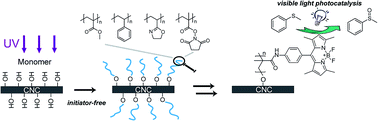
The preparation of polymer brushes on CNCs is schematically outlined in Scheme 1. First, UV-induced photopolymerizations of MMA on CNCHCl, CNCsulf and CNCdesulf were attempted by subjecting degassed CNCs, MMA and DMF to UV-light irradiation with a spectral distribution between 300 and 400 nm (λmax = 350 nm). After photopolymerization, PMMA modified CNCs (PMMA-g-CNC) dispersions were diluted with large amount of acetone and centrifuged. The deposited CNCs were redispersed in acetone and sonicated for successive centrifugation. This washing step was repeated for 4 more times to ensure the thorough removal of unreacted monomers and physical adsorbed polymers.


image file: c6ra11403b-s1.tif
Scheme 1 Schematic illustration for the preparation of polymer brushes on CNCs.

It was found that all the photopolymerizations led to the successful formation of PMMA brushes on CNCs, which was verified by Fourier transform infrared spectroscopy (FTIR) and atomic force microscopy (AFM). As shown in Fig. 1, the strong bands at 1738 cm−1 and 1490–1451 cm−1 assigned to the (C[double bond, length as m-dash]O) and (CH3–O) stretching modes originated from PMMA are in agreement with the FTIR spectrum of PMMA as reported earlier.44 Fig. 2 shows the morphologies of CNCs and PMMA-g-CNC after 10 h of photopolymerization of MMA. In comparison to pristine CNCs, PMMA modified CNCs show a broader diameter of 114 nm increased from 42 nm, while the length increased to 260 nm from 167 nm. In spite of the size increase, the contour of CNCs almost retains.


image file: c6ra11403b-f1.tif
Fig. 1 FTIR spectra of polymer brushes on CNCs.

image file: c6ra11403b-f2.tif
Fig. 2 (a) Conversion from pristine CNCs to PMMA grafted CNCs by UV-induced photopolymerization. (b) Tapping mode AFM 5 × 5 μm height images of unmodified CNCs (left) and PMMA-g-CNC (right) deposited on freshly cleaved mica substrates.

The formation of polymer brushes might proceed via the self-initiated photografting and photopolymerization (SIPGP) process.45 In this course, the monomer absorbs a photon and acts as a photosensitizer to activate a surface functional group by hydrogen abstraction. The radical formed on the surface initiates a free radical surface-initiated polymerization of the monomer.46 In this work, all the photopolymerizations were performed by mixing CNCs, monomer and DMF, and the successive constant UV-irradiation using a UV-lamp. Due to presence of hydroxyls on CNCs surface, it is most likely that hydrogen atoms are abstracted radically from these surface-bound OH functionalities during the UV irradiation process. It was reported that UV irradiation may generate surface-bound OH˙, which can also initiate a grafting polymerization.19 Hence, a very facile technique for the direct polymer modification of CNCs surface is now available.

To determine the effect of polymer modification on CNCs, the crystalline structure and the solution behaviour of PMMA-g-CNC were investigated. X-ray diffraction (XRD) analysis shows that both the nonmodified CNCs and the PMMA modified CNCs display typical patterns of the intrinsic crystalline form of cellulose. The 2θ diffraction peaks at 14.8 (0.60 nm), 16.5 (0.54 nm), 22.6 (0.39 nm), and 34.5° (0.258 nm) as indicated in Fig. 3 is in good agreement with the previous report,47 which confirms that the crystalline structure of CNCs was not affected by the attachment of polymer brushes. Solution behaviour investigation indicates that pristine CNCs tend to aggregate and precipitate rapidly in a variety of polar and apolar solvents e.g. toluene and ethyl acetate. PMMA-modified CNCs could be well dispersed in ethyl acetate, and no significant aggregation/precipitation was observed in the suspension solution even after being placed for 24 h, as shown in Fig. 4 (bottom). This phenomenon demonstrates that grafted polymer chains could efficiently stabilize CNCs and prevent the occurrence of aggregation.


image file: c6ra11403b-f3.tif
Fig. 3 X-ray diffractograms of nonmodified CNCs and PMMA-g-CNC.

image file: c6ra11403b-f4.tif
Fig. 4 Optical photographs of dispersion solutions of pristine CNCs and PMMA-g-CNC in ethyl acetate after different placing time.

To investigate the thermal degradation behaviour of the as-prepared polymer modified CNCs, thermogravimetric analyses (TGA) were conducted. Fig. 5 shows the thermograms of nonmodified CNCs, PMMA-g-CNC and bulk PMMA. Nonmodified CNCs exhibit an onset temperature of 240 °C, which is typical for CNCs obtained from acid hydrolysis and is in consistence with the previous report.26 Bulk PMMA exhibits an onset temperature of 330 °C, which is also typical and expectable according to literature.48 The two distinct onset points of temperature for pristine CNCs and bulk PMMA are observable in the weight loss curve of PMMA-g-CNC.


image file: c6ra11403b-f5.tif
Fig. 5 Thermogravimetric analysis curves for CNCdesulf, PMMA-g-CNCdesulf and PMMA.

In order to demonstrate the effect of surface-bound sulfur on the grafting polymerization, weight gains and thermogravimetric analyses of PMMA modified CNCHCl, CNCdesulf and CNCsulf were investigated. After photopolymerizations of MMA, i.e. by keeping the CNC concentration, UV-light intensity and polymerization time identical, weight gains of PMMA grafted CNCs were calculated to be 11.0%, 6.5% and 3.0% compared to nonmodified CNCHCl (% S = 0), CNCdesulf (% S = 0.15%) and CNCsulf (% S = 0.4%), respectively. For the UV-induced grafting polymerization, the grafted polymer layer thickness is proportional to the surface concentration of grafting sites.37 Thus, the weight gain decreased with the sulphur content, which also indicates that the surface hydroxyl groups on CNCs are responsible for the grafting polymerization. It is known that the neutral cellulose has a higher thermal stability in comparison to the CNCs obtained from sulphuric acid hydrolysis, because the in situ formed acid induces thermal degradation at lower temperatures.49 In our work, onset temperatures of 250, 270 and 330 °C were found from thermograms of PMMA modified CNCsulf, CNCdesulf and CNCHCl as shown in ESI. This trend in the thermal stability increase is due to the decrease of the sulphur content on CNC surfaces.

To demonstrate the general applicability of the method, UV-induced photopolymerization of styrene (St), 2-isopropenyl-2-oxazoline (IPOx) and relatively bulky N-hydroxysuccinimide methacrylate (NHSMA) were performed following the above-described procedure. The successful formation of corresponding poly(2-isopropenyl-2-oxazoline) PIPOx, polystyrene (PS) and poly(N-hydroxysuccinimide methacrylate) (PNHSMA) brushes was confirmed by IR spectroscopy. As shown in Fig. 1, after the photopolymerization of IPOx, a strong and new band at 1659 cm−1 originated from the C[double bond, length as m-dash]N stretching mode (from the oxazoline ring) demonstrates the successful grafting of PIPOx on CNC. Similarly, after photopolymerization of St, the stretching vibrational modes of aromatic group of ν(CC) at 1459–1606 cm−1 are observed, corroborating that the photopolymerization of St resulted in the formation of PS on CNCs. Moreover, typical signals from the N-oxysuccinimide ester groups found at 1812 and 1785 cm−1, as well as the strong band at 1741 cm−1 assignable to the carbonyl double bond of the acrylate, indicate the covalent modification of CNC by PNHSMA. So far, we have successfully prepared PMMA, PIPOx, PS and PNHSMA brushes on CNCs.

Polymer analogous reactions represent deliberate changes of functionalities and play a key role for the design of functional materials.50,51 Compared with the free polymer chains with a random coil conformation in solution, the crowding environment inside the polymer brushes will decrease the mobility of the grafted polymer chains and the accessibility of functionalities in the brush layer for other molecules. To investigate the succinimidyl group in PNHSMA brushes can be functionalized even with steric demanding organic molecules, polymer analogue reaction of PNHSMA grafted CNCs with 4,4-difluoro-4-bora-3a,4a-diaza-s-indacene (BODIPY) was conducted as shown in Fig. 6. After the reaction and thorough cleaning of the dye-modified CNCs, fluorescence spectrum shows a maximum emission at 512 nm (Fig. 7), which is typical for BODIPY-based materials.52 Moreover, the laser scanning confocal microphotograph shows that no crosslinking or morphology change were observed after the incorporation of the BODIPY functionalities (Fig. 7). The successful reaction was further corroborated by IR (Fig. 8) and XPS (ESI) spectroscopy. Two new bands at 1514 and 1544 cm−1, characteristic for the aromatic (CC) stretching vibrational modes of BODIPY, are clearly observed.53 This indicates that even large molecules can effectively be incorporated into the polymer grafts on CNCs. Moreover, both PNHSMA-g-CNCdesulf and BODIPY-g-CNCdesulf exhibit good and enhanced thermal stability compared to CNCdesulf as can be observed from the thermogravimetric analysis (ESI).


image file: c6ra11403b-f6.tif
Fig. 6 (a) Conversion from PNHSMA-g-CNC to BODIPY-g-CNC, and (b) conversion from thioanisole to methyl phenyl sulfoxide catalyzed by CNC-g-BODIPY under a household fluorescent lamp irradiation.

image file: c6ra11403b-f7.tif
Fig. 7 Laser scanning confocal microphotograph of BODIPY-g-CNC dispersed on a freshly cleaved mica substrate (a), and photoluminescence spectrum of BODIPY-g-CNC (b) [scale bar: 20 μm].

image file: c6ra11403b-f8.tif
Fig. 8 FTIR spectra of PNHSMA brushes on CNCs (PNHSMA-g-CNC) and BODIPY functionalized CNCs (BODIPY-g-CNC).

Due to the unique properties e.g. high fluorescence quantum yields, large molar absorption coefficients and stabilities, BODIPY have found many applications in areas such as fluorescent switches, solar cells, as well as drug delivery agents.54 In recent years, BODIPY has been recognized as an novel visible-light-driven and efficient photocatalysts.52,53 However, like many other homogeneous catalysts, the recovery is still open questions in view of both the environmental and economical regards.

Therefore, the photocatalytic activity and the reusability of the as-prepared BODIPY-g-CNCs were investigated by oxidation reaction of thioanisole under visible-light irradiation. The results showed that the photocatalyst system exhibited high photocatalytic activity and selectivity for the oxidation reaction of thioanisole to yield the corresponding methyl phenyl sulfoxide. It is known that BODIPY can accept a photon under the visible light to form a BODIPY radical, which can subsequently generate singlet oxygen through energy transfer to complete the oxidation. The oxidation reaction could be completed within 50 h at room temperature with an almost quantitative conversion (see ESI). More importantly, the BODIPY functionalized CNCs could be easily separated from the reaction solutions simply by centrifugation. To explore the stability and reusability, the recycled BODIPY-g-CNC was put into a new oxidation reaction of thioanisole. The recycled BODIPY-g-CNC did not show significant deterioration for the conversion from thioanisole to the corresponding sulfoxide after five cycles (see ESI).

Conclusions

In summary, we have demonstrated a straightforward and universal method to efficiently prepare polymer brushes on CNCs via UV-induced photopolymerizations. The facile method is applicable to monomers that can be polymerized by radical polymerizations and thus a series of polymer brushes are available. Moreover, the introduced polymer pendant chemical functions are accessible for small molecules. As a result, the bulky BODIPY can be efficiently incorporated into CNCs through polymer analogous reactions, leading to the formation of a hybrid system with visible-light photocatalytic activity. The BODIPY functionalized CNCs show high efficiency and chemoselectivity in thioanisole oxidation reactions. The facile strategy together with the ease of post-functionalization allows the direct modification of CNCs with tailored functionalities. Due to the large surface area, stability and the biocompatibility of CNCs, the method reported here might paves the way for the application of functionalized CNCs in diverse application area e.g. CNC based composite fabrication and carriers for catalysts and medicines.

Acknowledgements

The financial support of this research by the National Natural Science Foundation of China (51373170 and 21304086), Departments of Science and Technology of Jilin Province (20140520094JH) and Jiangsu Province (BK20151189) are greatly acknowledged. H. B. is thankful for the support of China Postdoctoral Science Foundation (2014M561309). N. Z. acknowledges the support of Youth Innovation Promotion Association, Chinese Academy of Sciences (2016207).

Notes and references

  1. Y. Habibi, L. A. Lucia and O. J. Rojas, Chem. Rev., 2010, 110, 3479 CrossRef CAS PubMed.
  2. D. Klemm, F. Kramer, S. Moritz, T. Lindström, M. Ankerfors, D. Gray and A. Dorris, Angew. Chem., Int. Ed., 2011, 50, 5438 CrossRef CAS PubMed.
  3. K. E. Shopsowitz, W. Y. Hamad and M. J. MacLachlan, Angew. Chem., Int. Ed., 2011, 50, 10991 CrossRef CAS PubMed.
  4. A. G. Dumanli, H. M. van der Kooij, G. Kamita, E. Reisner, J. J. Baumberg, U. Steiner and S. Vignolini, ACS Appl. Mater. Interfaces, 2014, 6, 12302 CAS.
  5. B. Schyrr, S. Pasche, G. Voirin, C. Weder, Y. C. Simon and E. J. Foster, ACS Appl. Mater. Interfaces, 2014, 6, 12674 CAS.
  6. S. Dong, H. J. Cho, Y. W. Lee and M. Roman, Biomacromolecules, 2014, 15, 1560 CrossRef CAS PubMed.
  7. J. PF Lagerwall, C. Schütz, M. Salajkova, J. Noh, J. H. Park, G. Scalia and L. Bergström, NPG Asia Mater., 2014, 6, 80 CrossRef.
  8. K. H. M. Kan, J. Li, K. Wijesekera and E. D. Cranston, Biomacromolecules, 2013, 14, 3130 CrossRef CAS PubMed.
  9. R. M. A. Domingues, M. E. Gomes and R. L. Reis, Biomacromolecules, 2014, 15, 2327 CrossRef CAS PubMed.
  10. S. Eyley, S. Shariki, S. E. C. Dale, S. Bending, F. Marken and W. Thielemans, Langmuir, 2012, 28, 6514 CrossRef CAS PubMed.
  11. S. Dong and M. Roman, J. Am. Chem. Soc., 2007, 129, 13810 CrossRef CAS PubMed.
  12. G. Siqueira, J. Bras and A. Dufresne, Biomacromolecules, 2009, 10, 425 CrossRef CAS PubMed.
  13. Y. Habibi, Chem. Soc. Rev., 2014, 43, 1519 RSC.
  14. S. Eyley and W. Thielemans, Nanoscale, 2014, 6, 7764 RSC.
  15. L. Chen, R. M. Berry and K. C. Tam, ACS Sustainable Chem. Eng., 2014, 2, 951 CrossRef CAS.
  16. S. Eyley and W. Thielemans, Chem. Commun., 2011, 47, 4177 RSC.
  17. W. Wu, F. Huang, S. Pan, W. Mu, X. Meng, H. Yang, Z. Xu, A. J. Ragauskas and Y. Deng, J. Mater. Chem. A, 2015, 3, 1995 CAS.
  18. U. D. Hemraz, K. A. Campbell, J. S. Burdick, K. Ckless, Y. Boluk and R. Sunasee, Biomacromolecules, 2015, 16, 319 CrossRef CAS PubMed.
  19. D. Roy, M. Semsarilar, J. T. Guthrie and S. Perrier, Chem. Soc. Rev., 2009, 38, 2046 RSC.
  20. R. C. Advincula, W. J. Brittain, K. C. Caster and J. Rühe, Polymer Brushes, Wiley-VCH, Weinheim, 2004 Search PubMed.
  21. Surface-initiated Polymerization Iⅈ Advances in Polymer Science, ed. R. Jordan, Springer-Verlag, Berlin, 2006, vol. 197 & 198 Search PubMed.
  22. Y. Habibi, A.-L. Goffin, N. Schiltz, E. Duquesne, P. Dubois and A. Dufresne, J. Mater. Chem., 2008, 18, 5002 RSC.
  23. A. Carlmark and E. Malmström, J. Am. Chem. Soc., 2002, 124, 900 CrossRef CAS PubMed.
  24. G. Morandi, L. Heath and W. Thielemans, Langmuir, 2009, 25, 8280 CrossRef CAS PubMed.
  25. S. Perrier, P. Takolpuckdee, J. Westwood and D. M. Lewis, Macromolecules, 2004, 37, 2709 CrossRef CAS.
  26. J. O. Zoppe, Y. Habibi, O. J. Rojas, R. A. Venditti, L.-S. Johansson, K. Efimenko, M. Österberg and J. Laine, Biomacromolecules, 2010, 11, 2683 CrossRef CAS PubMed.
  27. A. C. W. Leung, E. Lam, J. Chong, S. Hrapovic and J. H. T. Luong, J. Nanopart. Res., 2013, 15, 1636 CrossRef.
  28. X. Liu, W. Zhou, X. Qian, J. Shen and X. An, Carbohydr. Polym., 2013, 92, 659 CrossRef CAS PubMed.
  29. K. C. Gupta and S. Sahoo, Cellulose, 2001, 8, 233 CrossRef CAS.
  30. P. Yang and W. Yang, Chem. Rev., 2013, 113, 5547 CrossRef CAS PubMed.
  31. N. J. Turro and G. Schuster, Science, 1975, 187, 303 CAS.
  32. J. Deng, W. Yang and B. Rånby, Macromol. Rapid Commun., 2001, 22, 535 CrossRef CAS.
  33. M. Steenackers, S. Q. Lud, M. Niedermeier, P. Bruno, D. M. Gruen, P. Feulner, M. Stutzmann, J. A. Garrido and R. Jordan, J. Am. Chem. Soc., 2007, 129, 15655 CrossRef CAS PubMed.
  34. N. Zhang, M. Steenackers, R. Luxenhofer and R. Jordan, Macromolecules, 2009, 42, 5345 CrossRef CAS.
  35. M. Steenackers, A. Küller, S. Stoycheva, M. Grunze and R. Jordan, Langmuir, 2009, 25, 2225 CrossRef CAS PubMed.
  36. M. Steenackers, S. Q. Lud, M. Niedermeier, P. Bruno, D. M. Gruen, P. Feulner, M. Stutzmann, J. A. Garrido and R. Jordan, J. Am. Chem. Soc., 2011, 133, 10490 CrossRef CAS PubMed.
  37. M. Steenackers, R. Jordan, A. Küller and M. Grunze, Adv. Mater., 2009, 21, 2921 CrossRef CAS.
  38. J. Chen, K. Chen, D. Tong, Y. Huang, J. Zhang, J. Xue, Q. Huang and T. Chen, Chem. Commun., 2015, 51, 314 RSC.
  39. J. Ma, S. Luan, L. Song, S. Yuan, S. Yan, J. Jin and J. Yin, Chem. Commun., 2015, 51, 6749 RSC.
  40. H.-G. Batz, G. Franztnann and H. Ringsdorf, Angew. Chem., Int. Ed., 1972, 11, 1103 CrossRef CAS PubMed.
  41. A. Cui, X. Peng, J. Fan, X. Chen, Y. Wu and B. Guo, J. Photochem. Photobiol., A, 2007, 186, 85 CrossRef CAS.
  42. T. Abitbol, A. Palermo, J. M. Moran-Mirabal and E. D. Cranston, Biomacromolecules, 2013, 14, 3278 CrossRef CAS PubMed.
  43. W. Li, W. Zhang, X. Dong, L. Yan, R. Qi, W. Wang, Z. Xie and X. Jing, J. Mater. Chem., 2012, 22, 17445–17448 RSC.
  44. N. Zhang, S. Salzinger, F. Deubel, R. Jordan and B. Rieger, J. Am. Chem. Soc., 2012, 134, 7333 CrossRef CAS PubMed.
  45. H. L. Wang and H. R. Brown, Macromol. Rapid Commun., 2004, 25, 1095 CrossRef CAS.
  46. J. L. Garnett, L.-T. Ng and V. Viengkhou, Radiat. Phys. Chem., 1999, 56, 387 CrossRef CAS.
  47. C. Tian, S. Fu, Y. Habibi and L. A. Lucia, Langmuir, 2014, 30, 14670 CrossRef CAS PubMed.
  48. F. Chen, X. Jiang, R. Liu and J. Yin, ACS Appl. Mater. Interfaces, 2010, 2, 1031 CAS.
  49. M. Roman and W. T. Winter, Biomacromolecules, 2004, 5, 1671 CrossRef CAS PubMed.
  50. K. Thiel, R. Zehbe, J. Roeser, P. Strauch, S. Enthalerd and A. Thomas, Polym. Chem., 2013, 4, 1848 RSC.
  51. A. S. Goldmann, M. Glassner, A. J. Inglis and C. Barner-Kowollik, Macromo. Rapid Commun., 2013, 34, 810 CrossRef CAS PubMed.
  52. W. Li, Z. Xie and X. Jing, Catal. Commun., 2011, 16, 94 CrossRef CAS.
  53. L. Quan, W. Lin, T. Sun, Z. Xie, Y. Huang and X. Jing, Catal. Lett., 2014, 144, 308 CrossRef CAS.
  54. G. Ulrich, R. Ziessel and A. Harriman, Angew. Chem., Int. Ed., 2008, 47, 1184 CrossRef CAS PubMed.

Footnote

Electronic supplementary information (ESI) available: 1H NMR spectra of the oxidation reaction, XPS spectra, thermal stability and reusability properties of the polymer modified CNCs. See DOI: 10.1039/c6ra11403b

This journal is © The Royal Society of Chemistry 2016
Click here to see how this site uses Cookies. View our privacy policy here.