DOI:
10.1039/C6RA11193A
(Paper)
RSC Adv., 2016,
6, 67495-67501
Wormlike micelle templated synthesis of mono- and bi-metallic nanochain networks with adjustable structure and constituents†
Received
30th April 2016
, Accepted 11th July 2016
First published on 12th July 2016
Abstract
A wormlike micelle templated attachment growth approach for the preparation of mono- and bi-metallic nanochain networks is reported. Zwitterionic wormlike micelles with PtCl62− and PdCl42− counterions were fabricated for the first time as soft-templates. A possible soft-template assisted attachment-based growth mechanism for nanochain formation is proposed for the morphological replica process. The present strategy was further extended to synthesize alloyed noble-metal such as Pt–Au, Pd–Au, and Pt–Pd nanochain networks. The results presented may provide inspirations and strategies for the fabrication of noble metal nanostructures with adjustable structures and constituents through soft templated attachment growth.
Introduction
Noble metal nanostructures with superior physical and chemical properties have received extensive attention in the past several decades due to their promising applications in a variety of multidisciplinary studies.1–5 It is well recognized that the unique properties of noble metal nanomaterials strongly depend on their shape and size.6,7 Significant efforts have been devoted to the morphology-controlled synthesis of noble metal nanomaterials through either bottom-up or top-down approaches. Among the various methods, solution-phase synthesis is considered to be the most versatile method on account of its capability to exert precise control over the nucleation and growth processes.8,9 Noble metal nanomaterials with a myriad of different morphologies and sizes have been successfully designed and synthesized through solution-phase synthesis methods. Among these various nanostructures, anisotropic noble metal nanostructures such as nanowires and nanochains have drawn considerable attention owing to their unique photonic, electronic, magnetic and catalytic properties.10,11 The oriented attachment growth mechanism is an effective approach for the synthesis of anisotropic nanostructures.12 Up to now, many successful demonstrations of oriented attachment growth driven by dipolar interaction for the facile synthesis of anisotropic inorganic nanomaterials have been reported.13 However, utilization of the oriented attachment growth mechanism for anisotropic noble metal nanostructures still remains a challenge. One of the possible reasons is that noble metal nanoparticles do not have permanent dipoles.14 Nevertheless, there have been several successful demonstrations of attachment growth mechanism for anisotropic noble metal nanostructures. Yang and co-workers obtained Pt–Ag alloy nanowires in the presence of oleylamine and oleic acid through oriented attachment.15 Yu and co-workers reported facile synthesis of Pt nanochain networks assisted by polyvinylpyrrolidone molecules.16 Xia's group reported polyol synthesis of ultrathin Pd nanowires via attachment-based growth.14 It is not difficult to find that all these reported synthesis methods involve the use of additional surface capping agents. The restriction arises from specific interactions between surface capping agents and noble metal facets inevitably limit their applications for other noble metal systems.
Template assistant synthesis is one of the most effective strategies for the controlled synthesis of nanostructured materials.17 Currently, the template-assisted syntheses mostly involve the use of hard templates or solid substrates, such as porous membranes, polymers, mesoporous silica, nanoparticles and biomolecules.18 The subsequent requirement for template removal and the difficulty in scaling up inevitably limit their practical applications.19 Although surfactant based synthesis also require post-processing of residual adsorbed surfactant, a conventional and general soft-template method taking advantage of various surfactant aggregate structures may well be the more versatile method.20–22 The advantages of soft-template method typically include its capacity to synthesize different materials with various morphologies, relatively mild experimental conditions, and its straightforward implementation.17 It should be noted that the instability of the soft templates and the weak interactions between the soft templates and the metal precursors significantly hindered the structural transcription from soft templates to metal nanomaterials.23 To this end, our group recently reported a new strategy using zwitterionic self-assemblies with precursor counterions as soft-templates while zwitterionic surfactants with reductive counterions were used as reductants.24,25 More significantly, this convenient and universal strategy is not restricted to specific interactions between surface capping agents and noble metal facets, which makes it more versatile for the synthesis of noble metal nanostructures as well as their alloyed nanostructures.
In the present work, we demonstrated the soft-template assistant attachment-based growth by using platinum-group metals as a model system, which are of central importance in industrial catalysis and green-energy technologies.26–28 Zwitterionic wormlike micelles with PtCl62− or PdCl42− counterions were obtained by mixing equimolar 3-(N,N-dimethyl-palmitylammonio)propanesulfonate (PAPS) and H2PtCl6 or K2PdCl4 in aqueous solution without any additives. The transcription from wormlike micelle soft-templates to noble metal nanochain networks was achieved using zwitterionic surfactants with reductive counterions as reductants. A possible soft-template assistant attachment-based growth mechanism for nanochain formation is proposed. It is also demonstrated that the present strategy can be extended to synthesize alloyed noble-metal such as Pt–Au, Pd–Au, and Pt–Pd nanochain networks. The as-prepared nanochain networks with adjustable structure and constituent exhibit enhanced electrocatalytic activity toward the oxidation of small fuel molecules such as methanol and formic acid.
Experimental
Materials
3-(N,N-Dimethylpalmitylammonio)propanesulfonate (PAPS), chloroplatinic acid (H2PtCl6), potassium chloropalladite (K2PdCl4), chloroauric acid (HAuCl4), ascorbic acid (AA) and sodium borohydride (NaBH4) were purchased from J&K Scientific Ltd. Deionized water was used throughout the experiment. All chemicals were analytical grade and used without further purification.
Synthesis of mono- and bi-metallic nanochain networks
As a representative demonstration, the preparation of Pt nanochain networks based on zwitterionic wormlike micelles with PtCl62− counterions will be discussed in detail. A typical procedure for synthesis of Pt nanochain networks is as follows. The wormlike micelle solution with PtCl62− counterions was obtained by mixing equimolar PAPS and H2PtCl6 in aqueous solution without any additives. The freshly prepared viscoelastic transparent PAPS–H2PtCl6 solution was incubated at 25 °C for 24 hours, then 0.2 mL of 10 mM ascorbic acid (AA)–PAPS equimolar mixture solution was added into 2.0 mL of 1 mM PAPS–H2PtCl6 wormlike micelle solution using a pipette under magnetic stirring, after that, 0.2 mL of 10 mM NaBH4–PAPS equimolar mixture solution was rapidly injected. The products were collected by centrifugation and washed several times with ethanol and re-suspended in ethanol with the help of sonication for further characterization. Other types of mono- and bi-metallic nanochain networks were also prepared using the same procedure except for the use of different precursors or different reductant, which are described in detail in the Results and discussion section.
Characterization
The wormlike micelles were characterized using Cryogenic temperature-transmission electron microscopy (cryo-TEM). The cryo-TEM samples were prepared in a controlled environment vitrification system (CEVS) at 25 °C. A micropipette was utilized to load 5 μL of the solution onto a TEM carbon grid, which was blotted with two pieces of filter paper, resulting in the formation of thin films suspended on the mesh holes. After waiting for about 5 s, the samples were quickly plunged into a reservoir of liquid ethane (cooled by nitrogen) at −165 °C. The vitrified samples were then stored in liquid nitrogen until they were transferred to a cryogenic sample holder (Gatan 626) and examined with a FEI Tecnai 20 TEM (120 kV) at about −174 °C. The images were recorded on a Gatanmultiscan CCD and processed with a Digital Micrograph. The obtained mono- and bi-metallic nanochain networks were characterized using transmission electron microscopy (TEM) (JEOL JEM-100CX II) and high resolution TEM (HRTEM) (JEOL JEM-2100F) by drop casting the nanochain networks dispersions on carbon-coated Cu grids and drying under ambient conditions. Elemental mapping images were acquired by energy dispersive X-ray spectroscopy (EDX) using a JEOL JEM-2100F electron microscope equipped with a STEM unit.
Electrochemical measurements
Cyclic voltammetry experiments were performed in a standard three-electrode cell using a CHI760D workstation. A freshly polished glassy carbon electrode (GCE) modified by the as-prepared mono- and bi-metallic nanochain networks was employed as the working electrode while an Ag/AgCl electrode and Pt wire were used as the reference electrode and counter electrode, respectively. All cyclic voltammograms were obtained at room temperature. High-purity N2 gas was used for the deaeration of the electrolyte solutions.
Results and discussion
All the noble metal precursor solutions exhibit a low viscosity at all concentrations. However, after the addition of equimolar zwitterionic surfactant PAPS, the waterlike solution turns into a viscoelastic fluid. The significant change in viscoelasticity strongly indicates the formation of surfactant aggregates such as wormlike micelles.29 Since all the noble metal precursors have strong corrosiveness to the metallic coaxial cylinder sensor system of rheometer, it is difficult to conduct rheological measurements. To determine the formation of surfactant aggregates, cryo-TEM is employed for the direct visualization of aggregates morphology. Fig. 1a–d present the images of zwitterionic wormlike micelles with different counterions observed via cryo-TEM at a concentration of 1 mM. As shown in Fig. 1a, a large number of long flexible cylindrical micelles are evidenced in the PAPS–H2PtCl6 solution. The zwitterionic wormlike micelles with PtCl62− counterions are about 5 nm in diameter, which is comparable to double the extended length of the surfactant molecule (about 24 Å). These wormlike micelles can reach to hundreds of nanometers in length and are found to overlap and entangle with each other. Critical packing parameter (P) is usually employed to explain the phase transition mechanism as raised by Israelachvili.30 P is determined as P = v/al, where v is the effective hydrophobic chain volume, l is the alkyl chain length, and a is the effective headgroup area of the surfactant molecules. Surfactants with P below 1/3 tend to form spherical micelles, while P values between 1/3 and 1/2 prefer to form cylindrical aggregates, such as wormlike micelles. Betaine-like zwitterionic surfactant PAPS can only form spherical micelles and liquid crystals in aqueous solutions without additives.31,32 It is obvious that H2PtCl6 plays an essential role in the phase transition process from spherical micelles to wormlike micelles, which can be attributed to the strong intermolecular electrostatic interactions between PtCl62− and PAPS. PtCl62− anions is a soft Lewis base which has a high affinity for a soft Lewis acid, such as a quaternary ammonium cation. The PtCl62− anions would bind to the quaternary ammonium cations strongly and thus the electrostatic repulsions among the quaternary ammonium cations are effectively screened. As a consequence, the effective headgroup area of the surfactant molecules is decreased, which ultimately increases the molecular packing parameter and induces the transformation from spherical micelles to wormlike micelles. Fig. 1b shows cryo-TEM image of a typical sample of the zwitterionic wormlike micelles with PdCl42− counterions, which is similar to the PAPS–H2PtCl6 system in morphology and size except that it shows a lower atomic number contrast. Fig. 1c shows cryo-TEM image of zwitterionic wormlike micelles with AuCl4− counterions, the wormlike micelles here are much longer than those in PAPS–H2PtCl6 system and PAPS–K2PdCl4 system, which imparts higher viscoelastic property to the PAPS–HAuCl4 solution. As shown in Fig. 1d, mixed wormlike micelles with PtCl62−, and AuCl4− counterions (the precursor ratio is 3
:
1) were also evidenced by cryo-TEM. These results indicate that the formation of wormlike micelles based on electrostatic interactions is not restricted to specific noble metal precursors, which makes it a universal approach for soft template synthesis.
 |
| | Fig. 1 Cryo-TEM images of wormlike micelles with different counterions: (a) H2PtCl6–PAPS system (1 mM), (b) H2PdCl4–PAPS system (1 mM), (c) HAuCl4–PAPS system (1 mM) and (d) mixed wormlike micelles system (1 mM) with PtCl62− and AuCl4− counterions. | |
A morphological replica from wormlike micelle with PtCl62− counterions to Pt nanochain networks was achieved following a stepwise reduction approach that we previously reported.22 Zwitterionic surfactants with reductive counterions were used as reductants to minimize the interference on the surfactant aggregates, first by a weak reductant AA–PAPS and then a strong reductant NaBH4–PAPS. Fig. 2a and b shows TEM images of a typical sample of the Pt nanochain networks under low- and high-magnifications, respectively. The nanochains were about 10 nm in width and hundreds of nanometers in length, which are found to interconnect with each other and entangle into a three-dimensional porous mass. As shown in Fig. 2c and d, Pd nanochain networks with similar morphologies were also obtained from wormlike micelle with PdCl42− counterions via a stepwise reduction approach, which basically inherited the soft template's structural characteristics.
 |
| | Fig. 2 TEM images of Pt nanochain networks at lower (a) and higher (b) magnifications. TEM images of Pd nanochain networks at lower (c) and higher (d) magnifications. | |
Ingenious combinations of mild and strong reductants during the stepwise reduction approach play a key role in the efficient morphological replica process. As a critical parameter for the control of morphological replica, we systematically studied the effect of reduction rate on the formation of Pt nanochains. Fig. 3 shows TEM images of the products obtained following the standard procedure except for the different combination of mild and strong reductants. Fig. 3b shows the Pt nanochains obtained following the same AA–PAPS and NaBH4–PAPS stepwise reduction procedure as Fig. 2a and b. A higher magnification reveals that the polycrystalline nanochains are composed of irregular polygon particles with an average particle size about 5 nm, which are attached and coalesced with each other. Branching points with fission into 3 or 4 branches are frequently part of the wide-spreading network structures. By changing the reduction rate, detail structure of the Pt nanochains could be controlled effectively. Fig. 3a shows the products obtained via a strong reducing condition. The Pt nanochains exhibit similar nanochain morphology to Fig. 3b, except the nanochains are composed of smaller spherical nanoparticles with an average particle size about 2 nm. By contrast, when halving the dosage of reducing agent, a core–shell like structure was observed in the obtained nanochain networks (Fig. 3c). The differences in detailed structure of the nanochains were further confirmed by high-resolution TEM. In HR-TEM images, the coalescence of the initial spherical (Fig. 4a and b) or irregular (Fig. 4c and d) particles into chainlike structures is obvious. Plenty of grain boundaries could be readily observed along each nanochain, which are of great interest for catalytic applications. Metallic wavy nanochains with a high density of accessible grain boundaries exhibiting unusual catalytic activities were already shown in literatures.33,34
 |
| | Fig. 3 TEM images of Pt nanochain networks obtained via different reduction rate: (a) NaBH4–PAPS (10 mM) reduction, (b) AA–PAPS and NaBH4–PAPS (10 mM) stepwise reduction, (c) AA–PAPS and NaBH4–PAPS (5 mM) stepwise reduction, (d) AA–PAPS (10 mM) reduction. | |
 |
| | Fig. 4 HR-TEM images of Pt nanochain networks obtained via fast reduction (a and b) and slow reduction (c and d). | |
It was found that a relatively fast reduction rate plays a key role in the morphological replica process. When equivalent of AA–PAPS was used to replace NaBH4–PAPS, irregular thick Pt nanoplates (Fig. 3d) were obtained rather than the nanochain networks, suggesting that the template mechanism cannot work well at a lower reduction rate. A similar phenomenon was also observed in the morphological replica process from wormlike micelle with PdCl42− counterions to Pd nanochain networks. As shown in Fig. 5a–d, along with the weakening of reducing condition, the templating effect provided by zwitterionic wormlike micelles decreased gradually. Strong reducing condition affords nanochain products (Fig. 5a), which basically inherited the soft template's structural characteristics; while mild reducing condition leads to agglomerated spherical nanoparticles (Fig. 5d).
 |
| | Fig. 5 TEM images of Pd nanochain networks obtained via different reduction rate: (a) NaBH4–PAPS (10 mM) reduction, (b) AA–PAPS and NaBH4–PAPS (10 mM) stepwise reduction, (c) AA–PAPS and NaBH4–PAPS (5 mM) stepwise reduction, (d) AA–PAPS (10 mM) reduction. | |
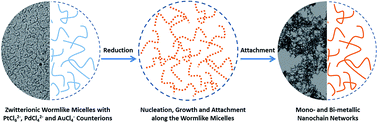
A possible soft-template assistant attachment-based growth mechanism for nanochain formation is summarized in Scheme 1. Due to the strong intermolecular electrostatic interactions between precursors and zwitterionic surfactants, the noble metal precursors were concentrated around the zwitterionic wormlike micelles, thus the following nucleation and growth steps will be performed mainly along the wormlike micelle soft templates. It has been demonstrated that a relatively fast reduction rate plays a key role in the morphological replica process. A large number of small nanoparticles could be generated within a short period of time owing to the strong reducing condition and, at the same time, rapid depletion of the precursor hinders the growth pathway via atomic addition.9,14 As a result, a large number of small and uniform nanoparticles were generated along the zwitterionic wormlike micelles. The as-formed small nanoparticles were highly unstable owing to their relatively high surface energy and low surface charge, and thus had a strong tendency to coalesce into wavy nanochains through an attachment pathway.35 Besides particle attachment, surface diffusion and cold welding might also contribute to the formation of the nanochains.36,37 In contrast, the templating effect provided by the wormlike micelles become ineffective through a mild reducing condition. The relatively slow reduction rate allowed the nucleation and growth steps to take place over a much longer period of time. In this case, the atoms generated through slow reduction could be continuously deposited onto the existing nuclei through heterogeneous nucleation, allowing them to grow into larger particles with relatively lower surface energy.38,39
 |
| | Scheme 1 A schematic illustrating how the wormlike micelles affect the nucleation, growth, attachment, and thus the final morphology of mono- and bi-metallic nanochain networks. | |
As so far, Pt catalysts are still the most commonly used efficient catalysts in proton exchange membrane fuel cells such as direct methanol fuel cells and direct formic acid fuel cells.1,40 Among the various morphologies, porous Pt network nanostructures were found to be more effective in electrochemical catalysis applications owing to their superior structural advantages such as large surface area, excellent structural stability and better precious-metal utilization.41 However, pure Pt catalysts for methanol oxidation reaction (MOR) or formic acid oxidation reaction (FAOR) easily suffer from CO poisoning. This drawback is often overcome by coupling Pt with other metals such as Au and Pd. The bimetallic catalysts can greatly improve the resistance towards CO poisoning benefiting from the synergic effect of both components.42–44 Meanwhile, the addition of a second metal can enhance the catalytic activity due to the electronic or strain effect.45 Therefore, our work was further extended to synthesize bimetallic nanochain networks with an adjustable constituent ratio using mixed wormlike micelles as soft templates. Bimetallic Pt–Au, Pd–Au, and Pt–Pd nanochain networks were obtained following the similar stepwise reduction protocols. HAADF (high-angle annular dark field) as well as EDX (energy-dispersive X-ray) analysis in STEM (scanning transmission electron microscopy) are used to reveal the spatial distribution of Pt and Au domains inside the Pt–Au nanochains networks (Fig. 6). An overall distribution of both Pt and Au metals along the nanochains in the investigated network section is observed. HAADF STEM and STEM-EDX mapping results of Pd–Au and Pt–Pd nanochain networks are presented in ESI.†
 |
| | Fig. 6 HAADF STEM and STEM-EDX mapping of Pt–Au nanochain networks (green for Pt and red for Au). | |
Pt nanochain networks with different detail structures obtained via fast reduction and slow reduction were evaluated using the CV method in 0.5 M H2SO4 solution in the absence (Fig. 7a) and presence (Fig. 7b) of 0.5 M methanol. Electrochemical data of a commercial Pt black (10% on carbon black, Alfa Aesar) were also recorded as benchmarks. The current densities were all normalized by the loading amount of Pt. Pt nanochain networks with different detail structures are expected to show different electrocatalytic performance on methanol oxidation due to their difference in electrochemical active surface area (ECSA). As expected, Pt nanochain networks obtained via fast reduction demonstrates much broader electrochemical signals, especially in the hydrogen adsorption/absorption region. Similarly, the GCE modified by Pt nanochain networks composed of smaller spherical nanoparticles exhibits higher electrocatalytic activity towards MOR than the Pt nanochain networks composed of irregular polygon particles under the same conditions.
 |
| | Fig. 7 Pt-Mass-normalized CV curves of GCEs modified by Pt nanochain networks obtained via fast reduction (red curve) and slow reduction (black curve) measured in 0.5 M H2SO4 solution in the absence (a) and presence (b) of 0.5 M methanol. CV curves recorded at 50 mV s−1 for Pt–Au nanochain networks with different Pt/Au molar ratios coated on GCEs in 0.5 M H2SO4 solution containing 0.5 M methanol (c) and 0.5 M formic acid (d). | |
As a preliminary demonstration of the electrocatalytic ability of the obtained bi-metallic nanochain networks, the electrocatalytic activity of Pt–Au nanochains networks toward the MOR and FAOR were tested using the CV method in 0.5 M H2SO4 solution containing 0.5 M methanol and 0.5 M formic acid, respectively. Fig. 7c shows the CVs of bimetallic Pt–Au nanochain networks with different compositions. Monometallic Pt and Au nanochain networks were also recorded as reference. The GCE modified by monometallic Pt exhibits typical characteristic peaks of MOR in both positive and negative directions while monometallic Au nanochain networks had no catalytic activity toward MOR. The Pt-mass-normalized activity of bimetallic nanochain networks with molar ratios of Pt0.85Au0.15 and Pt0.75Au0.25 exhibited superior catalytic activity. The peak of the Pt-mass-normalized current density of bimetallic Pt0.75Au0.25 nanochain networks (about 121 mA mg−1) is about 2-fold larger than that of monometallic Pt nanochain networks (about 57 mA mg−1) in the positive-going scan. The enhancement of the catalytic activity could be attributed to the d-center theory.46 The electronegativities of Pt and Au are 2.28 and 2.54, respectively. Potential electron-withdrawing effect from Au to the surrounding Pt may cause an increase of 5d vacancies in Pt, which effectively improving the adsorption of methanol on the surface of Pt sites and thus promoting the methanol oxidation.47 However, with the further increase of Au/Pt molar ratios, the catalytic activity of Pt0.65Au0.35 nanochain networks is dramatically decreased, which may attribute to the decrease in surface accessible Pt structural defects.44 Consequently, the optimum Pt/Au molar ratio was determined to be 3
:
1. The catalytic activities of the bimetallic Pt–Au nanochain networks toward FAOR were also investigated. Fig. 7d shows the Pt-mass-normalized activities of FAOR in 0.5 M H2SO4 solution containing 0.5 M formic acid. Among the bimetallic nanochain networks with different molar ratios, the Pt0.75Au0.25 exhibit the highest activity while the Pt0.65Au0.35 show the lowest mass activity, which is similar to the results for MOR. These preliminary results prove the feasibility of the wormlike micelle templated synthesis of nanochain networks with adjustable structure and constituent, and present a good example for the design of noble metal nanostructures through soft templated attachment growth method.
Conclusions
In conclusion, a wormlike micelle templated attachment growth approach for the preparation of mono- and bi-metallic nanochain networks is demonstrated. Zwitterionic wormlike micelles with PtCl62− and PdCl42− counterions were evidenced for the first time. Benefiting from this simple and convenient strategy, transcription from wormlike micelle soft-templates to noble metal nanochain networks was achieved. A possible soft-template assistant attachment-based growth mechanism for nanochain formation is proposed in which a relatively fast reduction rate plays a key role in the morphological replica process. Inspired by the mixed micelle structure, the present strategy was further extended to synthesize alloyed noble-metal such as Pt–Au, Pd–Au, and Pt–Pd nanochain networks. The as-prepared nanochain networks with adjustable structure and constituent exhibit enhanced electrocatalytic activity toward the oxidation of small fuel molecules such as methanol and formic acid. We hope that this study may provide inspirations and strategies for the design and fabrication of noble metal nanostructures through soft templated attachment growth for a broad range of applications.
Acknowledgements
This work was supported by the National Natural Science Foundation of China (No. 21573132), the National Basic Research Program (2013CB834505) and the Specialized Research Fund for the Doctoral Program of Higher Education of China (No. 20120131130003).
Notes and references
- Y. Xu and B. Zhang, Chem. Soc. Rev., 2014, 43, 2439 RSC.
- H. You, S. Yang, B. Ding and H. Yang, Chem. Soc. Rev., 2013, 42, 2880 RSC.
- X. Zhao, M. Yin, L. Ma, L. Liang, C. Liu, J. Liao, T. Lu and W. Xing, Energy Environ. Sci., 2011, 4, 2736 CAS.
- E. Antolini and J. Perez, J. Mater. Sci., 2011, 46, 4435 CrossRef CAS.
- X. Lai, J. E. Halpert and D. Wang, Energy Environ. Sci., 2012, 5, 5604 CAS.
- Y. Xia, X. Xia and H.-C. Peng, J. Am. Chem. Soc., 2015, 137, 7947 CrossRef CAS PubMed.
- M. Grzelczak, J. Perez-Juste, P. Mulvaney and L. M. Liz-Marzan, Chem. Soc. Rev., 2008, 37, 1783 RSC.
- Y. Xia, Y. Xiong, B. Lim and S. E. Skrabalak, Angew. Chem., Int. Ed., 2009, 48, 60 CrossRef CAS PubMed.
- J. Xiao and L. Qi, Nanoscale, 2011, 3, 1383 RSC.
- N. Li, P. Zhao and D. Astruc, Angew. Chem., Int. Ed., 2014, 53, 1756 CrossRef CAS PubMed.
- Y. Xia, P. Yang, Y. Sun, Y. Wu, B. Mayers, B. Gates, Y. Yin, F. Kim and H. Yan, Adv. Mater., 2003, 15, 353 CrossRef CAS.
- R. L. Penn and J. F. Banfield, Science, 1998, 281, 969 CrossRef CAS PubMed.
- J. J. D. Yoreo, P. U. P. A. Gilbert, N. A. J. M. Sommerdijk, R. L. Penn, S. Whitelam, D. Joester, H. Zhang, J. D. Rimer, A. Navrotsky, J. F. Banfield, A. F. Wallace, F. M. Michel, F. C. Meldrum, H. Colfen and P. M. Dove, Science, 2015, 349, aaa6760 CrossRef PubMed.
- Y. Wang, S. Choi, X. Zhao, S. Xie, H.-C. Peng, M. Chi, C. Z. Huang and Y. Xia, Adv. Funct. Mater., 2014, 24, 131 CrossRef CAS.
- Z. Peng, H. You and H. Yang, ACS Nano, 2010, 4, 1501 CrossRef CAS PubMed.
- M. Gao, S. Zhang, Y. Xu, Y. Zheng, J. Jiang and S. Yu, Adv. Funct. Mater., 2014, 24, 916 CrossRef CAS.
- Y. Liu, J. Goebl and Y. Yin, Chem. Soc. Rev., 2013, 42, 2610 RSC.
- C. Zhu, D. Du, A. Eychmuller and Y. Lin, Chem. Rev., 2015, 115, 8896 CrossRef CAS PubMed.
- L. Cademartiri and G. A. Ozin, Adv. Mater., 2009, 21, 1013 CrossRef CAS.
- Y. Qiao, Y. Wang, Z. Yang, Y. Lin and J. Huang, Chem. Mater., 2011, 23, 1182 CrossRef CAS.
- Y. Qiao, Y. Lin, Y. Wang, Z. Li and J. Huang, Langmuir, 2011, 27, 1718 CrossRef CAS PubMed.
- M. Sasidharan, P. Bhanja, C. Senthil and A. Bhaumik, RSC Adv., 2016, 6, 11370 RSC.
- W. Wang, Y. Han, M. Tian, Y. Fan, Y. Tang, M. Gao and Y. Wang, ACS Appl. Mater. Interfaces, 2013, 5, 5709 CAS.
- X. Gao, F. Lu, B. Dong, T. Zhou, W. Tian and L. Zheng, Chem. Commun., 2014, 50, 8783 RSC.
- X. Gao, F. Lu, B. Dong, Y. Liu, Y. Gao and L. Zheng, Chem. Commun., 2015, 51, 843 RSC.
- K. Jiang, H.-X. Zhang, S. Zou and W.-B. Cai, Phys. Chem. Chem. Phys., 2014, 16, 20360 RSC.
- M. E. Scofield, C. Koenigsmann, L. Wang, H. Liu and S. S. Wong, Energy Environ. Sci., 2015, 8, 350 CAS.
- M. E. Scofield, Y. Zhou, S. Yue, L. Wang, D. Su, X. Tong, M. B. Vukmirovic, R. R. Adzic and S. S. Wong, ACS Catal., 2016, 6, 3895 CrossRef CAS.
- Z. Chu, C. A. Dreiss and Y. Feng, Chem. Soc. Rev., 2013, 42, 7174 RSC.
- J. N. Israelachvili, D. J. Mitchell and B. W. Ninham, J. Chem. Soc., Faraday Trans. 2, 1976, 72, 1525 RSC.
- C. L. Mesa, B. Sesta, M. G. Bonicelli and G. F. Ceccaroni, Langmuir, 1990, 6, 728 CrossRef.
- J. G. Weers, J. F. Rathman, F. U. Axe, C. A. Crichlow, L. D. Foland, D. R. Scheuing, R. J. Wiersema and A. G. Zielske, Langmuir, 1991, 7, 854 CrossRef CAS.
- A. K. Herrmann, P. Formanek, L. Borchardt, M. Klose, L. Giebeler, J. Eckert, S. Kaskel, N. Gaponi and A. Eychmuller, Chem. Mater., 2014, 26, 1074 CrossRef CAS.
- X. Huang, Z. Zhao, Y. Chen, C. Chiu, L. Ruan, Y. Liu, M. Li, X. Duan and Y. Huang, Nano Lett., 2014, 14, 3887 CrossRef CAS PubMed.
- C. Zhu, H. C. Peng, J. Zeng, J. Liu, Z. Gu and Y. Xia, J. Am. Chem. Soc., 2012, 134, 20234 CrossRef CAS PubMed.
- Z. S. Pereira and E. Z. da Silva, J. Phys. Chem. C, 2011, 115, 22870 CAS.
- L. Uson, V. Sebastian, A. Mayoral, J. L. Hueso, A. Eguizabal, M. Arruebo and J. Santamaria, Nanoscale, 2015, 7, 10152 RSC.
- X. Huang, H. Zhang, C. Guo, Z. Zhou and N. Zheng, Angew. Chem., 2009, 121, 4902 CrossRef.
- W. Wang, Y. Zhao and Y. Ding, Nanoscale, 2015, 7, 11934 RSC.
- L. Zhao, Z. Wang, J. Li, J. Zhang, X. Sui and L. Zhang, RSC Adv., 2015, 5, 98160 RSC.
- J. Zhang and C. M. Li, Chem. Soc. Rev., 2012, 41, 7016 RSC.
- G. V. Reddy, P. Raghavendra, P. S. Chandana and L. S. Sarma, RSC Adv., 2015, 5, 100522 RSC.
- P. Song, S. Li, L. He, J. Feng, L. Wu, S. Zhong and A. Wang, RSC Adv., 2015, 5, 87061 RSC.
- Y. Li, W. Ding, M. Li, H. Xia, D. Wang and X. Tao, J. Mater. Chem. A, 2015, 3, 368 CAS.
- C. Xu, L. Wang, R. Wang, K. Wang, Y. Zhang, F. Tian and Y. Ding, Adv. Mater., 2009, 21, 2165 CrossRef CAS.
- B. Hammer and J. K. Norskov, Adv. Catal., 2000, 45, 71 CAS.
- X. G. Ding, Y. Zou, F. Ye, J. Yang and J. Jiang, J. Mater. Chem. A, 2013, 1, 11880 CAS.
Footnote |
| † Electronic supplementary information (ESI) available: HAADF STEM and STEM-EDX mapping results of Pd–Au and Pt–Pd nanochain networks. See DOI: 10.1039/c6ra11193a |
|
| This journal is © The Royal Society of Chemistry 2016 |
Click here to see how this site uses Cookies. View our privacy policy here.