DOI:
10.1039/C6RA10622F
(Paper)
RSC Adv., 2016,
6, 61029-61036
Phosphoric acid doped imidazolium silane crosslinked poly(epichlorihydrin)/PTFE as high temperature proton exchange membranes†
Received
25th April 2016
, Accepted 19th June 2016
First published on 20th June 2016
Abstract
Low cost poly(epichlorohydrin) (PECH) was modified with imidazolium groups to prepare high temperature proton exchange membranes. Chloromethyl groups in the structure of the PECH benefit its modification with no need for highly toxic and carcinogenic chloromethylation reagents. Both methylimidazole (MeIm) and triethoxysilylpropyldihydroimidazole (SiIm) were used to carry out the SN2 nucleophilic substitution for grafting the imidazolium groups onto the PECH. Meanwhile crosslinking of the modified PECH was achieved by forming a crosslinked silane network via the hydrolysis reaction of SiIm in an acid medium. Moreover, porous poly(tetrafluoroethylene) (PTFE) was used as the membrane matrix to enhance the mechanical strength of the fabricated membranes. The obtained PECH–SiIm–MeIm/PTFE membranes displayed phosphoric acid doping capacities of 110–170 wt% with low volume swelling ratios of less than 120%. Anhydrous proton conductivities of 0.010–0.063 S cm−1 were reached at elevated temperatures of 100–180 °C by the membranes with adequate mechanical strength. Fuel cell tests demonstrated the technical feasibility of acid doped PECH–SiIm–MeIm/PTFE membranes for high temperature proton exchange membrane fuel cells.
1. Introduction
High temperature proton exchange membrane fuel cells (HT-PEMFCs) operating at temperatures of 120–200 °C under anhydrous conditions possess several advantages, such as fast electrode kinetics, high tolerance to CO and simplified management systems of fuel, water and heat.1–3 A critical challenge in developing HT-PEMFCs is to develop low cost high temperature proton exchange membranes (HT-PEMs) mainly with high proton conductivity, excellent mechanical properties, and good durability under working conditions. The complexes of a basic polymer and a non-volatile liquid acid have been proposed to achieve the requirements of the high temperature polymer electrolytes.1 Phosphoric acid (PA) is the most favorite acid and PA doped polybenzimidazole (PBI) membranes have been regarded as the most promising polymer electrolytes for HT-PEMFCs.1,4–9 Great efforts have been recently focused on the physical and chemical modification of PBIs to prepare membrane electrolytes for improved properties. Nevertheless, PBI polymers, especially those with high molecular weights, have the poor solubility in organic solvents, which thus results in the difficult processability for the membrane casting. In addition, the commonly used monomer for PBI synthesis is 3,3′,4,4′-tetraaminobiphenyl, which is toxic and carcinogenic.1 Therefore, alternative polymers with more superior properties, facile membrane fabrication and lower cost are still desired for the development of high temperature PEMs as well as the PEMFCs.
To form PA based HT-PEMs, alternative thermo-stable polymers containing such as N-heterocyclic groups of pyridine10,11/pyrrolidone12,13 in the main-chain, or active species of quaternary ammonium14–17/imidazolium18–23 in the side-chain, have been employed to prepare HT-PEMs. Compared with the polymer synthesis from functional monomers, functionalization of existing thermally stable aromatic polymers is a more convenient and efficient way to obtain HT-PEMs. For instance, chloromethylation of polymers first and following quaternization with functional groups are commonly adopted to prepare the matrix materials for HT-PEMs. Among numbers of grafted functional groups, imidazolium groups have attracted much attention due to their great structure designability from imidazole derivatives. It is relatively straightforward to tailor the polymer structures by changing the chemical nature of grafted imidazoles to modify physicochemical properties of electrolyte membranes such as thermo-oxidative stability, acid doping capacity, mechanical properties and film-processing behavior. For example, our recent work indicated that the imidazolium polysulfone based membranes with electron-withdrawing or long hydrophobic alkyl groups in the imidazolium pendants exhibited higher chemical stability than those with electron donating short alkyl groups.23 However, it should be noted that the chloromethylation reaction, the critical process to introduce halogen groups for the quaternization, is discommodious to handle and the chloromethylation reagent is highly toxic and carcinogenic.15,18,24
Poly(epichlorohydrin) (PECH) is a kind of widely used polymer in industry with low cost, which contains the chloromethyl group in the polymer repeat unit and possesses excellent solubility in polar solvents. Using PECH as the polymer electrolyte material, the chloromethyl groups containing in the structure benefit the polymer to carry out a SN2 nucleophilic substitution on the site of the dangling chlorine atom, avoiding the use of highly toxic and carcinogenic chloromethylation reagents. Recently, it has been employed to fabricate anion exchange membranes after reinforced by chemical crosslinking and/or weaved with other polymers since highly quaternized PECH membranes undergo serious swellings in water.24–28 However, no researches relating to PECH based HT-PEMs have been reported yet to our best knowledge.
In the present work, we fabricated novel PA doped composite HT-PEMs based on the imidazolium functionalized PECH with methylimidazole (MeIm) and triethoxysilylpropyldihydro-imidazole (SiIm). The benefit to adopt the SiIm compound as the imidazolium regent for PECH is that the crosslinked silane network could be formed in an acid or basic medium by the hydrolysis of siloxane moieties.29 Thus reinforcing mechanical and dimensional stabilities of PECH membranes would dispense with additional cross-linking agents. Meanwhile, a porous PTFE membrane was employed as the supporting material to further reinforce the composite membrane for an enhanced mechanical strength of the electrolyte membrane.12,14,26,27,30,31 The specific benefits of novel composite PECH–SiIm–MeIm/PTFE electrolytes include (i) a facile synthetic approach for imidazolium groups functionalized electrolytes avoiding chloromethylation reaction; (ii) high conductivities accompanying with good mechanical strengths by using a kind of imidazole based crosslinker of SiIm; (iii) good stability and low swelling due to the further enhancement of the supporting material PTFE. The properties of the PA doped novel HT-PEMs were comprehensively investigated including primary fuel cell tests at temperatures up to 180 °C without humidification.
2. Experimental
2.1. Materials
Polyepichlorohydrin (PECH, M.W.: 700![[thin space (1/6-em)]](https://www.rsc.org/images/entities/char_2009.gif) 000), methylimidazole (MeIm, 99%) and triethoxysilylpropyldihydroimidazole (SiIm, 97%) were purchased from J&K Scientific. Polytetrafluoroethylene (PTFE) membranes were supplied from Donaldson Company, Inc. (thickness 10 μm, average pore size 0.15 μm, porosity 80%). All other chemicals were obtained from Sinopharm Chemical Reagent Co., Ltd and used without further purification.
000), methylimidazole (MeIm, 99%) and triethoxysilylpropyldihydroimidazole (SiIm, 97%) were purchased from J&K Scientific. Polytetrafluoroethylene (PTFE) membranes were supplied from Donaldson Company, Inc. (thickness 10 μm, average pore size 0.15 μm, porosity 80%). All other chemicals were obtained from Sinopharm Chemical Reagent Co., Ltd and used without further purification.
2.2. Fabrication of membranes
The PECH solution in dimethyl sulfoxide (DMSO, 99.8%) (2 wt%) was prepared by dissolving PECH in DMSO at 80 °C for 24 h under stirring. Then the imidazole compounds, i.e. MeIm and SiIm, were added to the PECH/DMSO solution in a certain mole ratio. The mixture was ultrasonicated for 1 h at room temperature (RT) to obtain a homogenous solution. In order for the resulted solution to have a high compatibility with the hydrophobic porous PTFE, a certain amount of isopropanol (99.7%) was added into the above solution, which was further ultrasoniced at RT for 30 min. Meanwhile, the porous PTFE membrane was separately pretreated by immersing it in the anhydrous isopropanol for 24 h. Subsequently, the prepared solution was cast onto the PTFE membrane to fill the pores with the assist of the isopropanol for preparation of the composite membrane in a Petri dish. After evaporating the solvent at 80 °C for 24 h, the obtained membrane was then peeled off, washed thoroughly with demineralized water and further dried at 60 °C for 24 h. The nucleophilic reaction between PECH and imidazole based compounds (MeIm and SiIm) was accomplished during the membrane formation procedure simultaneously. The crosslinked silane network was achieved in the membrane by a hydrolysis process in 1 M H2SO4 at 80 °C. The finally obtained membranes having a thickness of 60–80 μm, expressed as PECH–xMeIm–ySiIm, were all uniform and flexible with excellent mechanical strength. The molar ratio of MeIm and SiIm to chloromethyl contained in the PECH is denoted as x and y, respectively. Similarly, PECH–100MeIm and PECH–100SiIm membranes were prepared according to the procedure above. The mole ratio of MeIm or SiIm to the chlorine (–CH2Cl) on PECH was 1:1.
2.3. Acid doping and swelling
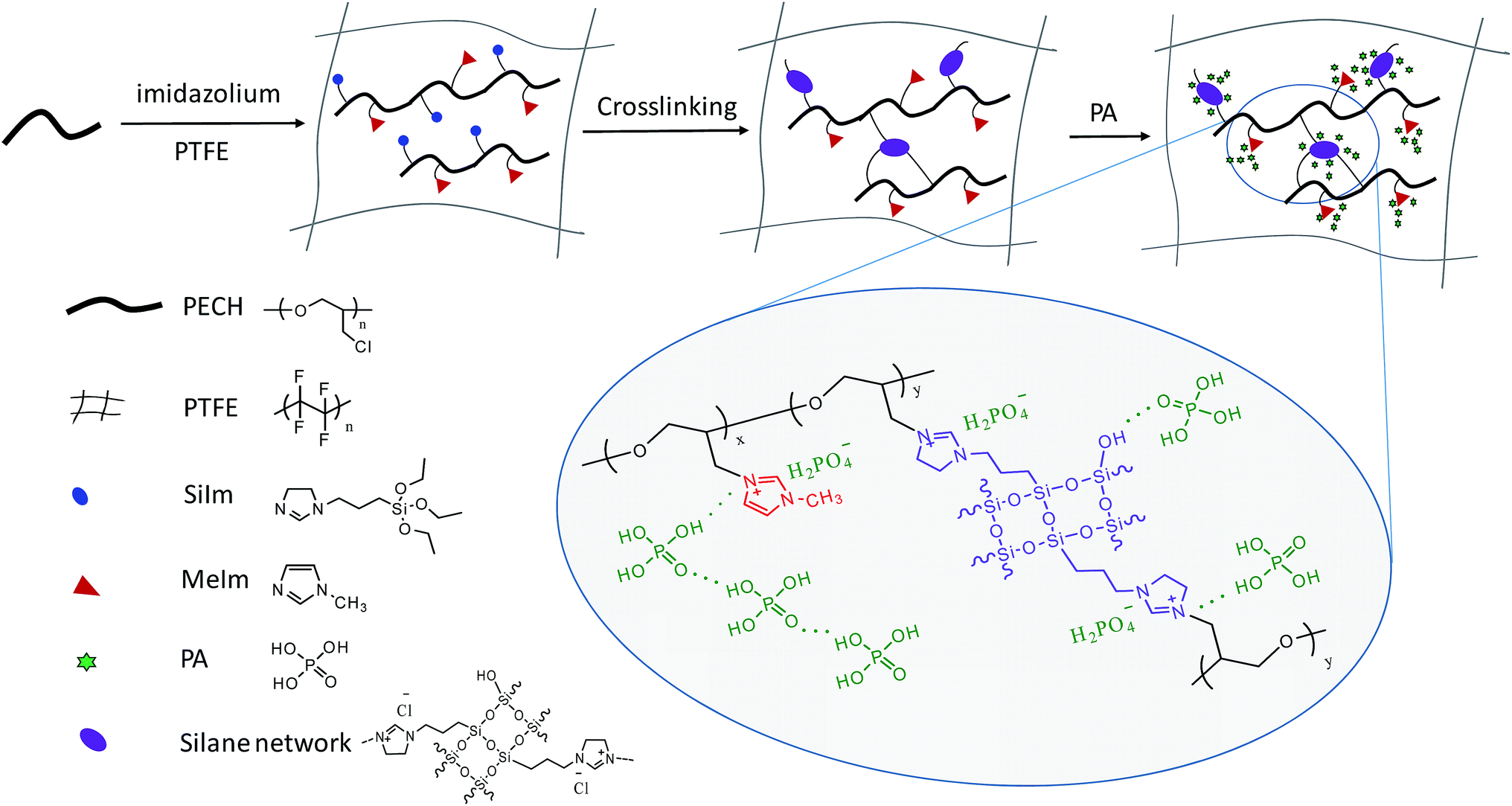
The acid doping process was carried out by immersing the membranes in concentrated PA solutions (85 wt%) at RT. The acid doping content of a membrane was calculated according to the mass gain of the sample during the acid doping. The swellings in area and volume of a membrane sample were determined by measuring dimensional changes by the doped acids. The thickness of the acid doped membranes ranged from about 90 to 100 μm. The preparation procedure of PA doped PECH–MeIm–SiIm/PTFE composites is shown in Fig. 1.
 |
| | Fig. 1 Schematic of the preparation procedure of PA doped PECH–SiIm–MeIm/PTFE composite membranes. | |
2.4. Characterizations
The 1H NMR spectra of the PECH, PECH–100MeIm and PECH–100SiIm polymers were recorded on a Bruker AVANCE 600 MHz instrument with an internal standard of tetramethylsilane (TMS) using a solvent of deuterated dimethylsulfoxide (DMSO-d6). Fourier transform infrared spectra (FT-IR) of various membranes were recorded on a Bruker VERTEX70 spectrometer equipped with a DTGS detector and a ZnSe crystal as the attenuated total reflection (ATR) accessory. The surface morphology and cross section microstructure of the membranes were observed on a scanning electron microscopy (SEM, Ultra Plus). Before observations, membranes were sputtered with gold. The physical structure of membranes was studied by the X-ray powder diffraction (XRD, PM3040/60X, Panalytical X'pert) using Cu Kα radiation with a step size of 0.0334° in the range of 5–60°. Thermogravimetric analysis (TGA, HT/808, METTLER-TOLEDO) was performed in an air atmosphere at a heating rate of 10 °C min−1. All the samples were pre-heated at 120 °C for 2 h before testing. A four-probe method was used to determine the membrane conductivity by using platinum electrodes. All the conductivity measurements were performed under dry air without humidification. To eliminate the deviation generated from the relative humidity and the absorbed water by the membrane, the membrane sample was pre-heated at 100 °C for about 2 h until a stable value of the conductivity was reached. The mechanical strength of membranes was measured with a tensile strength instrument (CMT6502, SANS Company, China). The initial dimension of dumb-bell shaped membrane samples was 25 mm in length and 4 mm in width. Measurements were performed with a constant separating speed of 5 mm min−1 in the ambient atmosphere. The membrane-electrode assemblies (MEAs) with an active electrode area of 6.25 cm2 were fabricated at 120 °C with a pressure of 1 MPa for duration of 3 min. The gas diffusion electrodes of anode and cathode were prepared according to the previous work,18 and the platinum loading was about 0.6 mg cm−2 for each electrode. Hydrogen and oxygen at flow rates of 120 and 60 mL min−1, respectively, were supplied to the fuel cell without any pre-humidification. Polarization curves were obtained using a current step potentiometry.
3. Results and discussion
3.1. Fabrication of membranes
Similar to the preparation of PECH–SiIm–MeIm/PTFE membranes as shown in Fig. 1, the PECH–100MeIm and PECH–100SiIm membranes were prepared accordingly. The chemical structures of PECH, PECH–100MeIm and PECH–100SiIm–Un (PECH–100SiIm without hydrolysis) were characterized using 1H NMR as shown in Fig. S1,† and the characteristic peaks have been assigned and indicated in the figure.27,32–34 For the polymer matrix PECH, the peaks around 3.8 and 3.7 ppm were assigned to methyne (CH) and methylene (CH2) of the main chain, respectively. The chemical shift of 3.6 ppm was attributed to the protons of the chloromethyl groups.27 After reaction with the imidazole compounds, new peaks in different fields of the spectra of PECH–100MeIm and PECH–100SiIm–Un were observed. Taking PECH–MeIm as an example, its 1H NMR analysis is as follows (600 MHz, DMSO-d6; δ, ppm): 9.1 (1H), 7.7 (2H), 3.8 (1H), 3.7–3.6 (7H). As there is a C![[double bond, length as m-dash]](https://www.rsc.org/images/entities/char_e001.gif) C double bond on the MeIm ring, the chemical shifts of the three imidazolium protons appeared in the low field. For the PECH–SiIm polymer, the single proton bonding to C2 of the imidazolium ring gave a chemical shift of 8.9 in low field. The other two imidazolium protons bonding to the saturated carbons showed chemical shifts of around 3.7–3.8. The peaks arising from methylene and methyl are observed within 3.7–3.5 and 0.9–1.5, respectively.
C double bond on the MeIm ring, the chemical shifts of the three imidazolium protons appeared in the low field. For the PECH–SiIm polymer, the single proton bonding to C2 of the imidazolium ring gave a chemical shift of 8.9 in low field. The other two imidazolium protons bonding to the saturated carbons showed chemical shifts of around 3.7–3.8. The peaks arising from methylene and methyl are observed within 3.7–3.5 and 0.9–1.5, respectively.
However, the PECH–100MeIm membrane was too weak to handle, obviously due to its less compact linear structure.26,27 The obtained PECH–100SiIm membrane was uniform and transparent with light yellow color. Here SiIm served dual roles. One was to introduce imidazolium functional groups onto PECH; the other was to form crosslinked silane network via the hydrolysis of siloxane moieties,17,35–37 enhancing mechanical strength of the PECH–100SiIm membrane. The membrane solubility in DMSO was used to estimate the occurrence of the crosslinking the membranes. The cross-linked PECH–100SiIm membrane survived in DMSO and only exhibited swelling. More than 90% of the weight was maintained for the PECH–100SiIm membrane after the dissolution test in DMSO for 12 h. In contrast, PECH–100MeIm was completely dissolved in DMSO at 80 °C within about 4 h. These results confirmed that the covalent crosslinking occurred between PECH macromolecular chains via forming the silane networks.
The PA doped PECH–100SiIm membrane with crosslinked silane network (in 85 wt% PA) was strong enough at RT. Nevertheless, this membrane underwent significant thermoplastic deformation at 120 °C or above it. The thermoplastic distortion made the PECH–100SiIm membrane useless as HT-PEMs. In order to achieve the membrane with adequate mechanical strength, the porous PTFE film was employed as the supporting material of imidazolium groups functionalized PECH to fabricate the composite membranes with sufficient mechanical strengths at elevated temperatures. The prepared membranes with different components are summarized in Table 1.
Table 1 Summary of fabrication of various membranes
| Membrane |
MeIm (mol%) |
SiIm (mol%) |
Comment |
| PECH–100MeIm |
100 |
0 |
Poor film |
| PECH–100SiIm |
0 |
100 |
Good film until 120 °C |
| PECH–100SiIm/PTFE |
100 |
0 |
Excellent film |
| PECH–70SiIm–30MeIm/PTFE |
70 |
30 |
Excellent film |
| PECH–50SiIm–50MeIm/PTFE |
50 |
50 |
Excellent film |
| PECH–10SiIm–90MeIm/PTFE |
10 |
90 |
Excellent film |
3.2. FT-IR
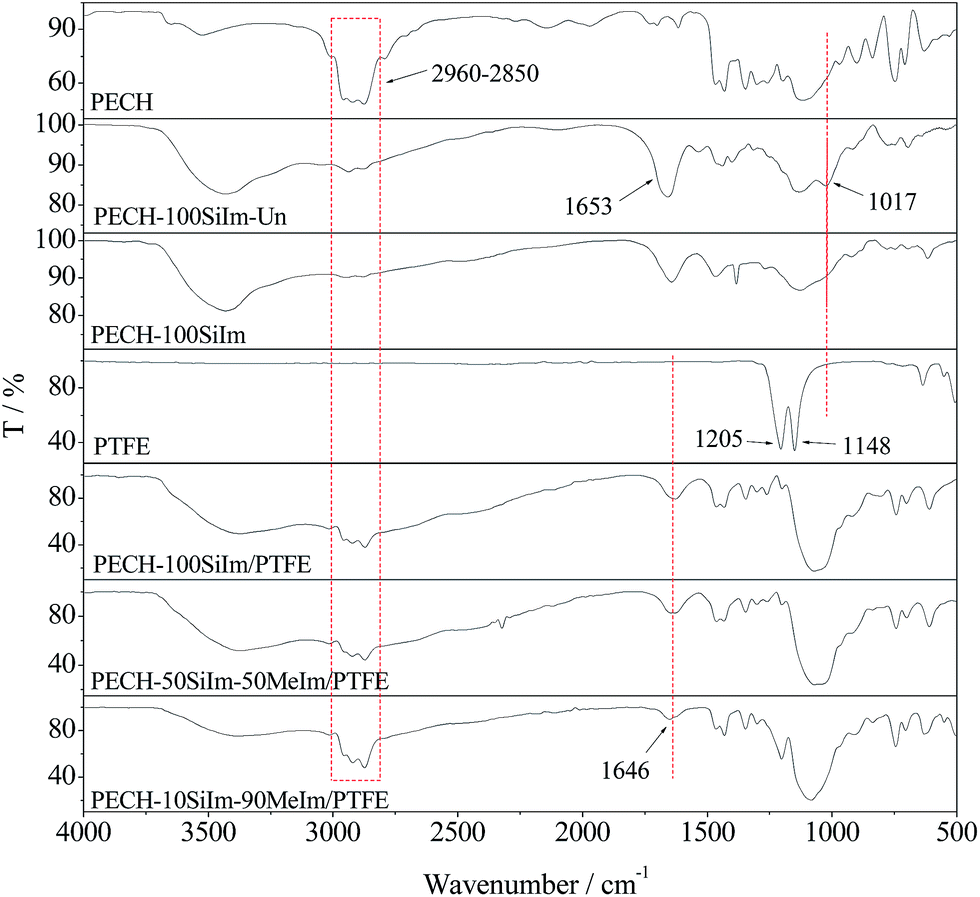
FTIR-ATR spectra of PECH, PECH–100SiIm with and without hydrolysis, PTFE, and PECH–SiIm–MeIm/PTFE membranes are shown in Fig. 2. PECH exhibited characteristic absorption bands at around 2850–2960 cm−1 due to the stretching vibration of methylene groups. Compared to PECH, PECH–100SiIm–Un showed the stretching vibration peaks of CN at 1653 cm−1 and Si–O at 1017 cm−1 resulting from the imidazolium groups26 and triethoxysilane structure,35–37 respectively. Furthermore, a broad absorption bond at around 3400 cm−1 was observed for the imidazolium functionalized membranes, which was ascribed to the stretching vibrations of O–H groups, originating from the absorbed water due to the hydrophilicity of membranes.24 These results indicate the successful imidazolium functionalization of the PECH. After hydrolysis reaction of the PECH–100SiIm–Un membrane, the cross-linked PECH–100SiIm membrane was fabricated. The absorption at 1017 cm−1 for Si–O was weaken, which probably resulted from the condensation reaction occurred between Si–OCH3 groups and the formation of the crosslinked silane structure. For the spectrum of PTFE, peaks at 1148 and 1205 cm−1 were associated with C–F groups.26,27 However, these characteristic peaks of C–F groups were not detected on the surface of the PECH–SiIm–MeIm/PTFE composite membranes since the PTFE surface was covered by PECH–SiIm–MeIm as seen from SEM images in the next section. The typical absorptions of CN, –CH2–/–CH3 and –OH groups were recognized in the spectra of the PECH–SiIm–MeIm/PTFE at around 1646, 2850–2960 and 3400 cm−1, respectively. These results suggest successful grafting of the imidazolium groups and effective integration of various components for the composite membranes.
 |
| | Fig. 2 FTIR-ATR spectra of PECH, PECH–100SiIm with and without hydrolysis (PECH–100SiIm–Un), PTFE and PECH–SiIm–MeIm/PTFE membranes. | |
3.3. SEM and EDX
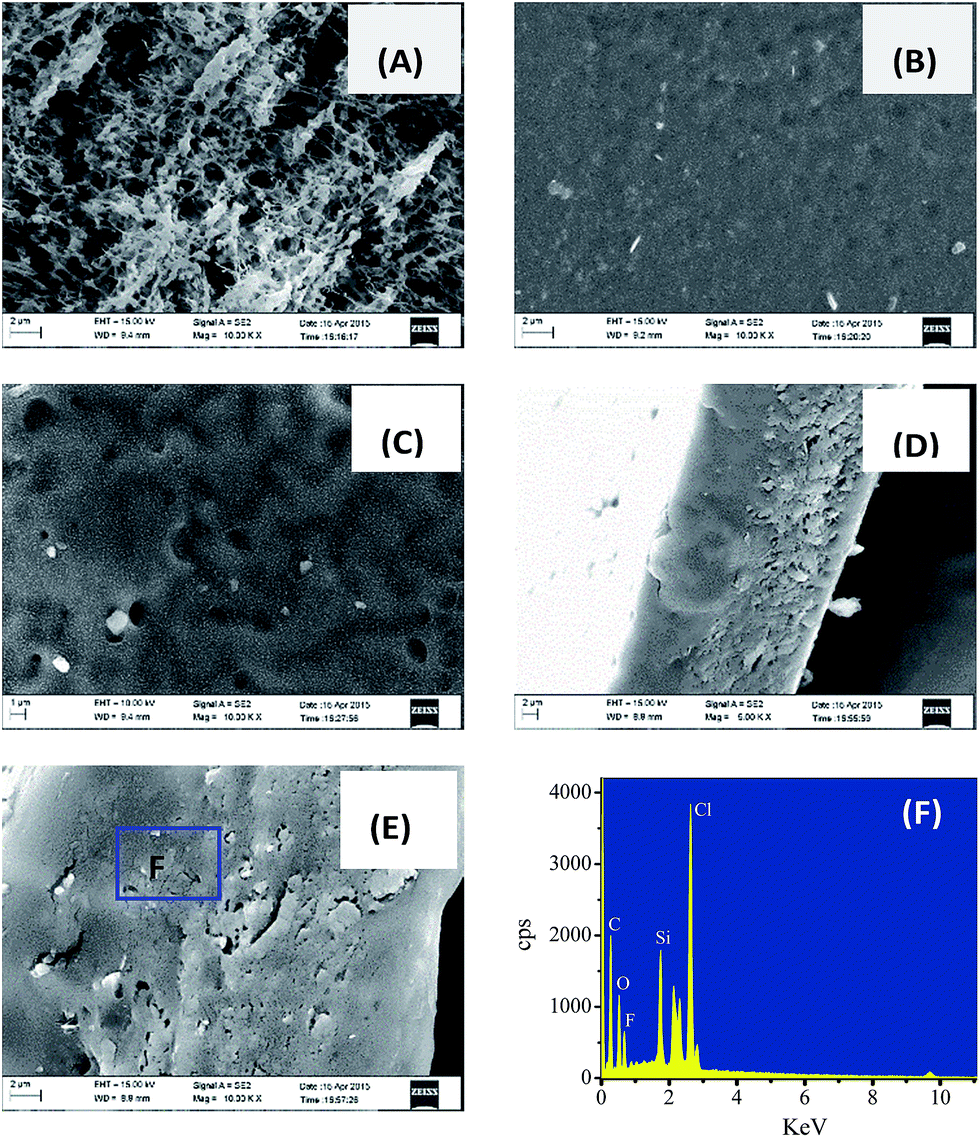
Fig. 3 shows the SEM and EDX results of PTFE and its composite membranes with PECH–SiIm–MeIm. As shown in Fig. 3A, the pure PTFE membrane exhibited its highly porous structure in an agreement with previous results.14,27,30 Fig. 3B and C shows the uniform surface feature of PECH–100SiIm/PTFE and PECH–10SiIm–90MeIm/PTFE composite membranes forming on the PTFE matrix, respectively. Meanwhile, the cross-sectional images of the PECH–10SiIm–90MeIm/PTFE composite membrane (Fig. 3D and E) indicate that the PECH–SiIm–MeIm distributed well throughout pores of PTFE without the phase separation. These results indicate that the PECH–SiIm–MeIm penetrated into pores of PTFE membranes completely. Fig. 3F shows the EDX element analysis of the cross-section of the PECH–10SiIm–90MeIm/PTFE membrane. The presence of elements O, Si and Cl (that of N is too weak to identify) at 0.54, 1.75 and 2.63 keV was obviously resulted from PECH–10SiIm–90MeIm since no one of those elements exists in the PTFE matrix. This result further confirmed that PECH–SiIm–MeIm had been perfused into the pores of PTFE membranes, and also demonstrated that PECH–SiIm–MeIm was compatible with PTFE pretreated by isopropanol. It is essential to fabricate non-porous membrane electrolytes in order to separate the fuel and oxidant during fuel cell operation and benefit the fuel cell performance.
 |
| | Fig. 3 SEM of the surface of PTFE ((A), ×10000), PECH–100SiIm/PTFE ((B), ×10000), PECH–10SiIm–90MeIm/PTFE ((C), ×10000) membranes, respectively; the cross-section of PECH–10SiIm–90MeIm/PTFE composite membrane with different magnifications ((D), ×5000; (E), ×10000); EDX element analysis (F) in the selected area for the cross-section of PECH–10SiIm–90MeIm/PTFE composite membrane (E). | |
3.4. XRD
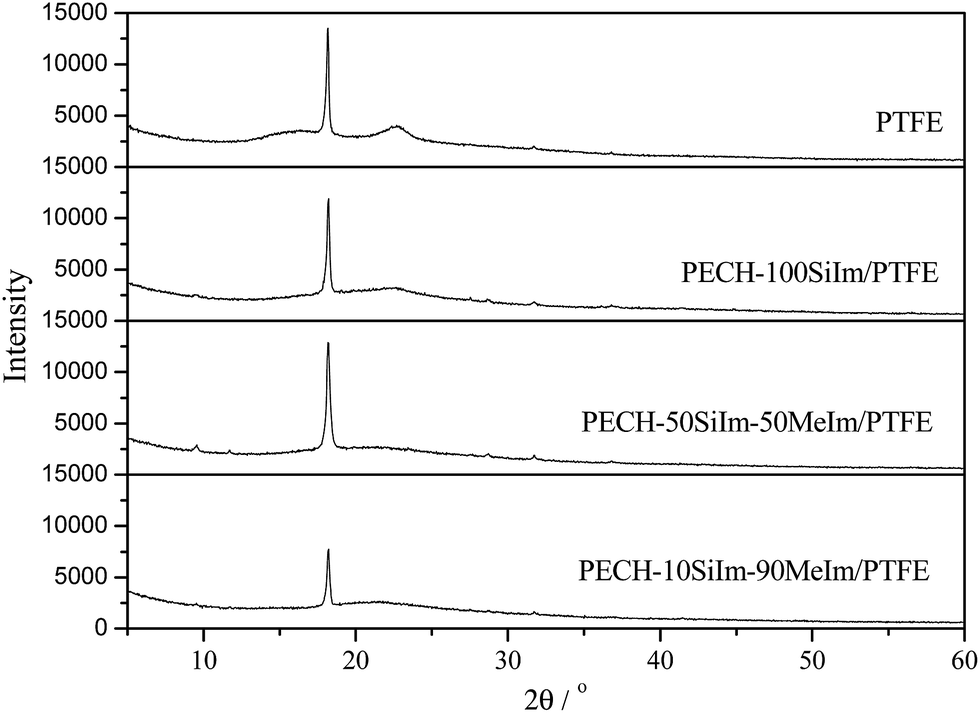
The structural information of membranes was further investigated by XRD (Fig. 4). PTFE showed a sharp peak and an abroad diffraction peak at 2θ of around 18° and 23°, respectively, which were the crystalline region of the polyfluorocarbon matrix.26 The PECH–SiIm–MeIm/PTFE composite membranes demonstrated the similar XRD patterns with PTFE. But the intensities, especially at 2θ of around 23°, became weaker than that of the pristine PTFE membrane. In addition, slightly increased typical amorphous patterns were observed for the PECH–SiIm–MeIm/PTFE composite membranes, obviously resulting from the amorphous PECH–SiIm–MeIm component.
 |
| | Fig. 4 XRD spectra of PTFE and PECH–SiIm–MeIm/PTFE membranes. | |
3.5. TGA
Fig. 5 shows TGA curves of PTFE, PECH and PECH–SiIm–MeIm/PTFE membranes. The pristine PTFE and PECH decomposed at around 510 °C and 320 °C, respectively. The aliphatic main chain and chloromethyl groups started to decompose at around 300 °C,18,27 which brought on the lower thermal stability of PECH than that of PTFE. All the PECH–SiIm–MeIm/PTFE membranes were thermally stable up to 250 °C and the decomposition of the imdazolium groups resulted in the first weight loss within about 250–310 °C.18,21,38 The decomposition corresponding to PECH chains at about 310 °C and the degradation relating to the PTFE at approximately 510 °C were observed as the second and the third weight losses of the composite membranes, respectively. Compared to those of PECH–50SiIm–50MeIm/PTFE and PECH–10SiIm–90MeIm/PTFE membranes, the second weight loss of the PECH–100SiIm/PTFE membrane was less. This difference on mass loss indicates that the imidazolium groups adjoining crosslinked silane networks exhibited higher thermal-stability than methylimidaozlium groups. Consideration of the typically operational temperatures of the HT-PEMFC, the prepared PECH–SiIm–MeIm/PTFE membranes possess the sufficient thermal stability as HT-PEMs.1,2
 |
| | Fig. 5 TGA curves of PTFE, PECH and PECH–SiIm–MeIm/PTFE membranes at a heating rate of 10 °C min−1 in air. | |
3.6. Acid doping and swellings
Table 2 shows the acid content and swellings of PECH–SiIm–MeIm/PTFE composite membranes with various crosslinking degrees of the imidazolium silane. As widely known, the PTFE membrane is hydrophobic. The acid content of greater than 110% for the composite membranes indicates that the highly hydrophilic composite membranes generated from the well perfused PECH–SiIm–MeIm throughout the porous PTFE film. As seen from the table, the PECH–100SiIm/PTFE membrane with a crosslinking degree of 100%, still exhibited high acid doping content of up to 113% due to the strong interactions, i.e. hydrogen bonding and acid–base interaction, of imidazolium groups in the crosslinker with PA molecules. The superior acid doping capacity and content would benefit high proton conductivity of the PECH–SiIm–MeIm membranes. Moreover, the acid content of composite membranes increased with the decrease in the crosslinking degree of the PECH–SiIm–MeIm membranes. This is because that the covalent crosslinking gave rise to limited chain separation of the membrane materials, which apparently resulted in the limitation on acid doping.8
Table 2 Acid doping percent and swelling of the PECH–SiIm–MeIm/PTFE membranes after immersing in 85 wt% PA solutions at RT
| Membrane |
Acid% |
Area% |
Volume% |
| PECH–100SiIm/PTFE |
113 |
31.9 |
38.9 |
| PECH–70SiIm–30MeIm/PTFE |
126 |
35.0 |
50.7 |
| PECH–50SiIm–50MeIm/PTFE |
145 |
38.1 |
88.3 |
| PECH–10SiIm–90MeIm/PTFE |
169 |
49.0 |
119.2 |
In respect to the membrane swelling by doped acids, all the PECH–SiIm–MeIm/PTFE membranes showed a volume swelling of below 120%. This value is obviously lower than that of mPBI based membranes (about 215% after immersing in 85 wt% PA solution18). The low volume swellings of the acid doped PECH–SiIm–MeIm/PTFE membranes are probably profited from their crosslinked structures and the dimensionally stable PTFE supporting matrix. Those results suggest that introducing of the SiIm onto the polymer electrolyte could not only improve the dimensional and mechanical stabilities, but also benefit the acid doping and proton conductivity.
3.7. Conductivity
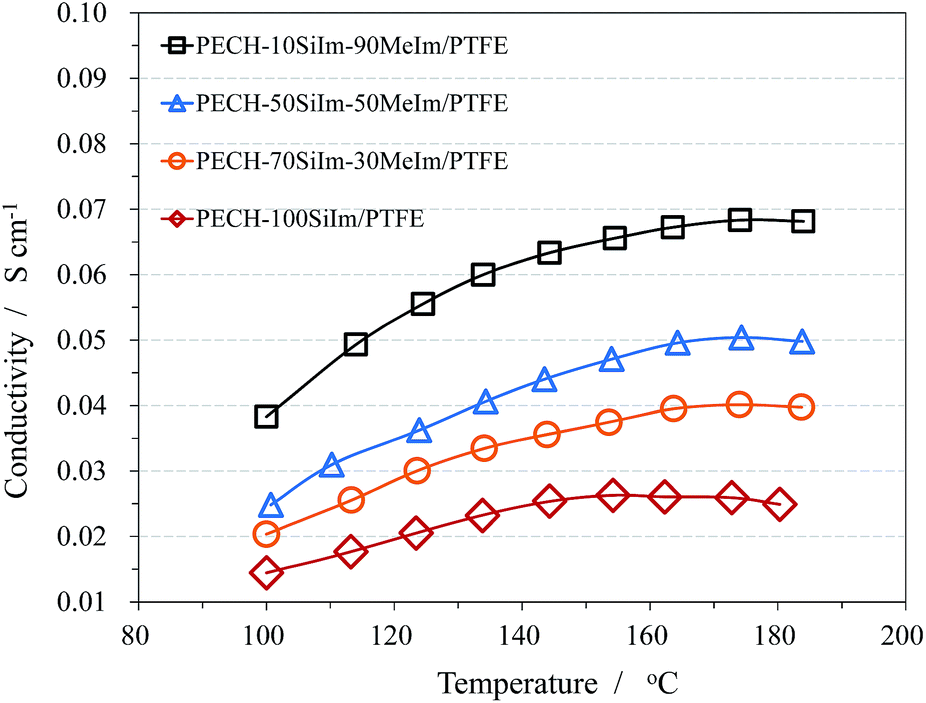
The proton conductivities of composite membranes under anhydrous condition at elevated temperatures are shown in Fig. 6. The composite membranes showed an increased proton conductivity of above 10−2 S cm−1 when temperatures ranged from 100 °C to 180 °C. For example, the conductivity of the PECH–10SiIm–90MeIm/PTFE membrane increased from 0.033 S cm−1 at 100 °C to 0.063 S cm−1 at 180 °C. Moreover, in good agreement with the acid doping percent, the conductivity of composite membranes increased as the increase in the concentration of the methylimidazolium groups in the membranes under the same temperature. The interaction of the grafted imidazolium groups and doped PA molecules are responsible for the formation of proton transport channels in the membrane.4,18,39,40 Compared with other imidazolium based polymer membranes, the prepared PECH–SiIm–MeIm/PTFE membranes exhibited a comparable conductivity under the same temperature. For example, the conductivity of pendent imidazole grafted poly(arylene ether sulfone) with a crosslinking degree of 15% and an acid content of 313.2% was 0.063 S cm−1 at 140 °C;19 that of imidazole-functionalized poly(2,6-dimehyl-1,4-phenylen oxide) with an crosslinking degree of 15% and acid content of 438% was around 0.052 S cm−1 at 140 °C.22
 |
| | Fig. 6 Conductivities of acid doped PECH–SiIm–MeIm/PTFE membranes as a function of temperatures without humidifying. | |
3.8. Mechanical properties
It is essential for HT-PEMs to possess adequate mechanical strength to withstand fabrication of the MEA and maintain long-term operation.1,2 Fig. 7 shows tensile strengths of acid doped PECH–SiIm–MeIm/PTFE membranes (doping in 85 wt% PA solutions) at room temperature and 120 °C. It is seen from the figure that the membrane with the low crosslinking degree possessed the low tensile strength. For example, the tensile strength was 13.4, 11.2, 8.9 and 6.1 MPa for PA doped PECH–100SiIm, PECH–70SiIm–30MeIm, PECH–50SiIm–50MeIm and PECH–10SiIm–90MeIm, respectively. This is reasonable because the membrane with a low crosslinking degree had a high PA doping content and the doped acids would dramatically deteriorate the mechanical strength of membranes due to the plasticizing effect, especially at elevated temperatures.6,40 As a result, the mechanical strengths of the membranes at 120 °C were lower than those at RT. Moreover, the influence of the chemical structure of the membrane on its stress should also take into account. As reported, the crosslinked membranes are in general mechanically superior in terms of tensile strength and stiffness, as compared with the non-crosslinked ones.8,10,16,19,21 Therefore, the PECH–SiIm–MeIm/PTFE membrane with higher imidazolium silane crosslinking degree displayed higher tensile strength at both RT and 120 °C.
 |
| | Fig. 7 Mechanical properties of acid doped PECH–100SiIm/PTFE (1#), PECH–70SiIm–30MeIm/PTFE (2#), PECH–50SiIm–50MeIm/PTFE (3#) and PECH–10SiIm–90MeIm/PTFE (4#) membranes at RT and 120 °C. | |
3.9. Fuel cell performance
The technical feasibility of acid doped PECH–SiIm–MeIm/PTFE membranes for HT-PEMFCs was demonstrated via a single cell test. Considering the comprehensive performance of proton conductivity and mechanical stabilities, the PECH–50SiIm–50MeIm/PTFE membrane was chosen for the investigation of fuel cell performance, as shown in Fig. 8. The open circuit voltages (OCVs) for the membrane at 120 to 180 °C were ranging from 0.87 to 0.91 V, which are comparable or slightly higher than those of other basic group grafted HT-PEMs. For instance, an OCV of around 0.85 V has been reported for the MEAs based on the PA doped quaternized polysulfone/PTFE composite membrane,14 quaternary ammonium group containing poly(arylene ether ketone) membrane16 and 1-decyl-2-methylimidazolium group grafted polysulfone membrane,23 respectively. The slightly high OCV of the PECH–50SiIm–50MeIm/PTFE/PA membrane based fuel cell is presumably due to the relatively low gas (H2 and O2) crossover.41 This result also evidenced that the PECH–50SiIm–50MeIm/PTFE composite membrane achieved the dense structure, which was consistent with SEM results.
 |
| | Fig. 8 Polarization curves of PECH–50SiIm–50MeIm/PTFE/PA based fuel cell operated ranging from 120 to 180 °C with anhydrous H2/O2 under atmospheric pressure. Pt loading: 0.6 mg cm−2. | |
The MEA based on the PECH–50SiIm–50MeIm/PTFE/PA membrane showed increased fuel cell performance with the increase in temperatures. For example, at an operating voltage of 0.5 V, the current density of PECH–50SiIm–50MeIm/PTFE/PA based MEA increased from 128 mA cm−2 to 225 mA cm−2 when the temperature increased from 120 °C to 180 °C. It is apparently related to both increased membrane conductivity and faster electrode kinetics. However, the fuel cell performance of the PA doped PECH–50SiIm–50MeIm/PTFE membrane in the present work was still lower than those of acid doped PBI membranes.6,8,9,18 For example, the MEA based on PBI/11.0 PA membrane displayed a current density of around 320 mA cm−2 with an operating voltage of 0.5 V at 150 °C under H2-air condition.18 From the linear region of the polarization curves in Fig. 8, the specific cell resistance was obtained and assumed to be primarily attributable to the membrane, from which the membrane conductivity was estimated to be about 0.0056–0.0082 S cm−1 for the PECH–50SiIm–50MeIm/PTFE/PA membranes ranging from 120 °C to 180 °C. The values are obviously lower than those one could read from Fig. 6. Part of the reason could be that the used gas diffusion electrode was made for PBI membranes, i.e. with PBI as the catalyst binder (0.07 mg cm−2). Therefore, optimization on the fabrication of gas diffusion electrodes and MEA fabrication procedure would be done in order to further improve the overall fuel cell performance. In addition, reducing the thickness of the composite membranes would decrease the area specific resistance and improve the fuel cell performance as well.42
4. Conclusions
The poly(epichlorohydrin) (PECH) was directly functionalized with MeIm and SiIm via chloromethyl groups containing in the structure of the polymer. The crosslinked membranes of PECH–SiIm–MeIm were obtained by hydrolysis of the introduced siloxane moieties in an acid medium. The composite HT-PEMs were fabricated by combing PECH–SiIm–MeIm with the porous PTFE to achieve enhanced mechanical strength. The specific benefits of using PECH as based materials include low cost of the PECH and absent highly toxic and carcinogenic chloromethylation reagents. The existed SiIm played dual functionalization roles, i.e. achievement of imidazolium and crosslinking simultaneously. Porous PTFE was employed as supporting material to enhance the mechanical strength and to improve dimensional stability. The results of FTIR, XRD, SEM and EDX indicated successful grafting of the imidazolium groups into PECH matrix and effective integration of the various components for the composite membranes. The SEM results showed that PECH–SiIm–MeIm/PTFE membranes exhibited uniform and dense morphology, indicating that the PECH–SiIm–MeIm distributed well throughout pores of PTFE without the phase separation. All the PECH–SiIm–MeIm/PTFE membranes were thermally stable up to 250 °C according to the TGA data. All the PECH–SiIm–MeIm/PTFE composite membranes exhibited the superior acid doping capacity of greater than 110%. Moreover, the acid content of the composite membranes increased with the decrease in the crosslinking degree of the PECH–SiIm–MeIm membranes. The high PA doping contents resulted in high proton conductivities at elevated temperatures. Meanwhile, due to the crosslinked structure and the dimensionally stable PTFE supporting matrix, acid doped PECH–SiIm–MeIm/PTFE membranes showed low volume swellings of below 120% and improved mechanical strength. A single H2/O2 fuel cell test was made based on the prepared membranes without optimizing electrodes and MEA fabrication process. These results revealed the great potential of the PECH–SiIm–MeIm/PTFE/PA membranes for application in high temperature proton exchange membrane fuel cells.
Acknowledgements
We are grateful for the financial support by the Natural Science Foundation of China (51572044 and 51172039), the Scientific Research Funds of Liaoning Provincial Education Department (LZ2015031 and L2014103) and the Fundamental Research Fund for the Central Universities of China (N140506001).
References
- Q. Li, J. O. Jensen, R. F. Savinell and N. J. Bjerrum, Prog. Polym. Sci., 2009, 34, 449–477 CrossRef CAS.
- S. Bose, T. Kuila, T. X. H. Nguyen, N. H. Kim, K. Lau and J. H. Lee, Prog. Polym. Sci., 2011, 36, 813–843 CrossRef CAS.
- H. Zhang and P. K. Shen, Chem. Rev., 2012, 112, 2780–2832 CrossRef CAS PubMed.
- J. A. Asensio, E. M. Sánchez and P. Gómez-Romero, Chem. Soc. Rev., 2010, 39, 3210–3239 RSC.
- L. Vilčiauskas, M. E. Tuckerman, G. Bester, S. J. Paddison and K. D. Kreuer, Nat. Chem., 2012, 4, 461–466 CrossRef PubMed.
- J. Yang, Q. Li, L. N. Cleemann, C. Xu, J. O. Jensen, C. Pan, N. J. Bjerrum and R. He, J. Mater. Chem., 2012, 22, 11185–11195 RSC.
- S. Maity and T. Jana, Macromolecules, 2013, 46, 6814–6823 CrossRef CAS.
- J. Yang, Q. Li, L. N. Cleemann, J. O. Jensen, C. Pan, N. J. Bjerrum and R. He, Adv. Energy Mater., 2013, 3, 622–630 CrossRef CAS.
- E. Quartarone, D. C. Villa, S. Angioni and P. Mustarelli, Chem. Commun., 2015, 51, 1983–1986 RSC.
- K. D. Papadimitriou, F. Paloukis, S. G. Neophytides and J. K. Kallitsis, Macromolecules, 2011, 44, 4942–4951 CrossRef CAS.
- C. I. Morfopoulou, A. K. Andreopoulou, M. K. Daletou, S. G. Neophytides and J. K. Kallitsis, J. Mater. Chem. A, 2013, 1, 1613–1622 RSC.
- S. Lu, R. Xiu, X. Xu, D. Liang, H. Wang and Y. Xiang, J. Membr. Sci., 2014, 464, 1–7 CrossRef CAS.
- Z. Guo, R. Xiu, S. Lu, X. Xu, S. Yang and Y. Xiang, J. Mater. Chem. A, 2015, 3, 8847–8854 RSC.
- M. Li and K. Scott, J. Power Sources, 2011, 196, 1894–1898 CrossRef CAS.
- X. Wang, C. Xu, B. T. Golding, M. Sadeghi, Y. Cao and K. Scott, Int. J. Hydrogen Energy, 2011, 36, 8550–8556 CrossRef CAS.
- W. Ma, C. Zhao, J. Yang, J. Ni, S. Wang, N. Zhang, H. Lin, J. Wang, G. Zhang, Q. Li and H. Na, Energy Environ. Sci., 2012, 5, 7617–7625 Search PubMed.
- N. Zhang, B. Wang, C. Zhao, Y. Zhang, F. Bu, Y. Cui, X. Li and H. Na, J. Power Sources, 2015, 275, 815–822 CrossRef CAS.
- J. Yang, Q. Li, J. O. Jensen, C. Pan, L. N. Cleemann, N. J. Bjerrum and R. He, J. Power Sources, 2012, 205, 114–121 CrossRef CAS.
- J. Wang, J. Zheng, Z. Zhao and S. Zhang, J. Mater. Chem., 2012, 22, 22706–22712 RSC.
- M. Song, X. Zhu and M. Liu, J. Power Sources, 2013, 241, 219–224 CrossRef CAS.
- Z. Si, F. Gu, J. Guo and F. Yan, J. Polym. Sci., Part B: Polym. Physics, 2013, 51, 1311–1317 CrossRef CAS.
- Q. Li, L. Liu, S. Liang, Q. Li, B. Jin and R. Bai, Polym. Chem., 2014, 5, 2425–2432 RSC.
- J. Yang, J. Wang, C. Liu, L. Gao, Y. Xu, Q. Che and R. He, J. Membr. Sci., 2015, 493, 80–87 CrossRef CAS.
- E. Guler, Y. Zhang, M. Saakes and K. Nijmeijer, ChemSusChem, 2012, 5, 2262–2270 CrossRef CAS PubMed.
- D. Stoica, F. Alloin, S. Marais, D. Langevin, C. Chappey and P. Judeinstein, J. Phys. Chem. B, 2008, 112, 12338–12346 CrossRef CAS PubMed.
- T. Y. Guo, Q. H. Zeng, C. H. Zhao, Q. L. Liu, A. M. Zhu and I. Broadwell, J. Membr. Sci., 2011, 371, 268–275 CrossRef CAS.
- J. Hu, D. Wan, W. Zhu, L. Huang, S. Tan, X. Cai and X. Zhang, ACS Appl. Mater. Interfaces, 2014, 6, 4720–4730 Search PubMed.
- B. Bertolotti, H. Messaoudi, L. Chikh, C. Vancaeyzeele, S. Alfonsi and O. Fichet, J. Power Sources, 2015, 274, 488–495 CrossRef CAS.
- T. Feng, B. Lin, S. Zhang, N. Yuan, F. Chu, M. A Hickner, C. Wang, L. Zhu and J. Ding, J. Membr. Sci., 2016, 508, 7–14 CrossRef CAS.
- H.-L. Lin, T. L. Yu, W.-K. Chang, C.-P. Cheng, C.-R. Hu and G.-B. Jung, J. Power Sources, 2007, 164, 481–487 CrossRef CAS.
- Y. Zhao, H. Yu, D. Xing, W. Lu, Z. Shao and B. Yi, J. Membr. Sci., 2012, 421–422, 311–317 CrossRef CAS.
- C. Qu, H. Zhang, F. Zhang and B. Liu, J. Mater. Chem., 2012, 22, 8203–8207 RSC.
- S. Omar and R. Abu-Reziq, J. Phys. Chem. C, 2014, 118, 30045–30056 CrossRef CAS.
- P. Kadhirvel, M. Azenha, S. Shinde, E. Schillinger, P. Gomes, B. Sellergren and A. F. Silva, J. Chromatogr. A, 2013, 1314, 115–123 CrossRef CAS PubMed.
- S. Wang, C. Zhao, W. Ma, N. Zhang, Y. Zhang, G. Zhang, Z. Liu and H. Na, J. Mater. Chem. A, 2013, 1, 621–629 RSC.
- S. Chisca, P. H. H. Duong, A.-H. Emwas, R. Sougrat and S. P. Nunes, Polym. Chem., 2015, 6, 543–554 RSC.
- C.-H. Shen and S. L.-C. Hsu, J. Membr. Sci., 2013, 443, 138–143 CrossRef CAS.
- J. Yang, Q. Che, L. Zhou, R. He and R. F. Savinell, Electrochim. Acta, 2011, 56, 5940–5946 CrossRef CAS.
- Y. L. Ma, J. S. Wainright, M. H. Litt and R. F. Savinell, J. Electrochem. Soc., 2004, 151, A8–A16 CrossRef CAS.
- J. Yang, D. Aili, Q. Li, Y. Xu, P. Liu, Q. Che, J. O. Jensen, N. J. Bjerrum and R. He, Polym. Chem., 2013, 4, 4768–4775 RSC.
- M. Watanabe, H. Uchida and M. Emori, J. Phys. Chem. B, 1998, 102, 3129–3137 CrossRef CAS.
- J. Yang, L. N. Cleemann, T. Steenberg, C. Terkelsen, Q. Li, J. O. Jensen, H. A. Hjuler, N. J. Bjerrum and R. He, Fuel Cells, 2014, 14, 7–15 CrossRef CAS.
Footnotes |
| † Electronic supplementary information (ESI) available. See DOI: 10.1039/c6ra10622f |
| ‡ These authors contributed equally to this work. |
|
| This journal is © The Royal Society of Chemistry 2016 |
Click here to see how this site uses Cookies. View our privacy policy here.