DOI:
10.1039/C6RA10551C
(Paper)
RSC Adv., 2016,
6, 45193-45201
A new approach for the synthesis of sulfur-bridged polysiloxanes via thiol–ene “click” reaction and their post-functionalization to obtain luminescent materials†
Received
23rd April 2016
, Accepted 2nd May 2016
First published on 4th May 2016
Abstract
Polysiloxanes, also known as “silicones”, have received widespread attention as specialty and inorganic backbone polymers since their commercial introduction. However, traditional synthesis routes can only produce polymers with Si–O–Si bonds in the main chains; this limitation influences the rapid development of the silicone industry. As such, new methods for the synthesis of silicones must be developed. This study is the first to introduce the thiol–ene reaction as a modular, efficient, and highly orthogonal method for polymerization. Novel polysiloxanes bearing sulfur atoms in the main chain with adjustable molecular weight were synthesized by the thiol–ene “click” reaction of 1,3-divinyl-1,1,3,3-tetramethyldisiloxane. 1,2-Ethanedithiol was subsequently functionalized using the same method. The structure of these polysiloxanes was characterized by 1H NMR, 13C NMR, and GPC analyses. The new structures of polysiloxanes bearing sulfur atoms in the main chain confer novel properties and applications. Furthermore, incorporating sulfur atoms could linearly increase the refractive index of polysiloxane. Finally, hybrid luminescent materials obtained from functionalized polysiloxanes and lanthanide ions exhibited narrow-width green or red emissions.
1. Introduction
The unsustainability of traditional petroleum-based chemical feedstocks has impelled chemical researchers to determine alternative feedstocks and design concise reaction processes to reduce the negative impact on the environment.1–3 Polysiloxanes are unique hybrid inorganic and semi-inorganic polymers that exhibit distinctive properties, such as high flexibility, hydrophobicity, low surface tension, high gas permeability, low glass transition temperature, chemical and biological compatibility, and superior thermal stability.4–6 The earth's crust contains 25.8% silicon, which is a suitable alternative to petroleum-based products in the future. Traditional ring-opening polymerization of cyclosiloxanes cannot meet the requirements for rapid development of macromolecule synthesis and increasing industrial demand for functional polysiloxanes.7–9 Precise fabrication of complex polymers with well-defined siloxane-containing structures is widely employed in nanotechnology and bioscience fields.10,11 Synthesis of polysiloxanes (or organosilicon polymers) with varied structures and desired functional groups through polymerization techniques or specific processing conditions has been a significant challenge in silicon chemistry. In this regard, rapid and precise method for synthesis of macromolecules with desired functional groups must be developed. For the strong interactions between mercapto groups and gold or silver metals, macromolecules containing thiol groups have broad application prospects in many areas, such as in biosciences and optic materials.12,13 The thiol–ene “click” chemistry is a click reaction applied as a facile and easy method in polymer chemistry.14–18 In addition, thiol–ene reactions are rapid and can be conducted in the presence of air and moisture to produce thioethers in near-quantitative yield; thioethers are regarded as prerequisite for obtaining polymers with fixed molecular weight.19–22 Considering the significance of sulfur-containing polymers and the versatility of thiol–ene reaction,23,24 we present a novel and facile method for synthesis of sulfur-containing polysiloxane derivatives (P1) with adjustable molecular weight.
Post-functionalization after polymerization in the chain end is a prerequisite for modular construction of polymers.3,25 Thus, developing novel routes for synthesis of well-defined macromolecules with specific chain-end functional groups has gained increased attention.26 In contrast to traditional polymerization techniques, post-functionalization of macromolecules could be employed to introduce other functional groups into the chain-end of the polymers.27 Polymer purification methods are limited; as such, only those highly orthogonal and very efficient reactions, which fulfill the click criterion, can be used in post-functionalization. The utilization of “click” chemistry techniques in synthesis and post-functionalization of complex polymers has enabled the development of easy synthesis routes. Carboxyl-functionalized polymers exhibit potential for several applications, such as acidic catalysts, ion channels, and ligands for inorganic ions.28 Therefore, carboxyl groups are incorporated into the terminal end of P1 to serve as lanthanide coordination sites in functional material synthesis using commercial available mercapto compounds through the thiol–ene reaction. This study aims to devise an easy but efficient “one-pot” method for the accelerated synthesis of well-defined chain-end functionalized polysiloxanes by using two sequential thiol–ene “click” reactions: step-growth photo-polymerization and end-group post-functionalization. This method is a rapid, efficient, and green method for synthesis of novel siloxane-based polymers with various functionalities.
Luminescent materials activated by rare-earth ions are important in many applications, such as fluorescent tubes, laser materials, field-emission displays, luminescent labels, and other molecular devices;29–31 lanthanide ions (Eu3+, and Tb3+) are incorporated into functionalized P1 at the last step by an easy coordination method to obtain rare earth hybrid materials. The hybrid materials obtained show intense photoluminescence under UV light.
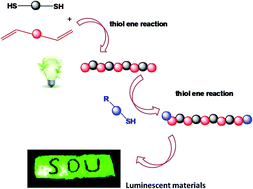
In contrast to classical polymerization method of polysiloxanes, UV-induced conditions allow to perform thiol–ene reactions in the absence of acid or base catalysts (e.g., tetramethylammonium hydroxide) at ambient temperature. Furthermore, the thiol–ene methodology offers an orthogonal and reasonable alternative to other post-functionalization methods. We thus report the first time use of thiol–ene reactions for preparation of sulfur-containing polysiloxanes with adjustable molecular weight. Moreover, thiol–ene reactions are used to synthesize functionalized P1 in the chain end. Synthesis of well-defined polymers via the “click” approach illustrates the versatility, high efficiency, and simplicity of this novel polymerization method (Scheme 1).
 |
| | Scheme 1 Synthesis route of P1 and P1-Vi. | |
2. Experimental
2.1 Materials
2,2-Dimethoxy-2-phenylacetophenone (DMPA) and 1,2-ethanedithiol (EDT) were purchased from Aladdin Co. (China) and used as received. 1,3-Divinyl-1,1,3,3-tetramethyldisiloxane (MMVi) was obtained as commercial products and used directly. EDT (95%) was provided by Sigma-Aldrich and used as received. N-Acetyl-L-cysteine (99%) (NL), trimethoxysilylpropanethiol (95%) (MS), 3-mercatopropionic acid (98%) (TSP), methyl 3-mercaptopropionate (98%) (MPE), tetrahydrofuran (THF) was purified according to routine procedure and distilled over sodium before use. Europium and terbium nitrates were obtained from their corresponding oxides in strong nitric acid.
2.2 Characterization and measurements
The thiol–ene reaction was irradiated by UV on a Spectroline Model SB-100P/FA lamp (365 nm, 100 W). UV intensity is 4500 μW cm−2 at a distance of 38 cm. Proton nuclear magnetic resonance (1H NMR, 13C NMR) spectra were recorded on a Bruker AVANCE 400 spectrometer at 25 °C using CDCl3 as solvent and without tetramethylsilane as an interior label. DSC measurements were studied using SDTQ 600 of TA Instruments. The samples were loaded in aluminum pans, heated from −100 to 40 °C. The heating and cooling temperature ramping rates were 10 °C min−1. Thermogravimetric analysis (TGA) was performed under N2 using a TA SDTQ600 at a temperature range of room temperature to 800 °C with a heating rate of 10 °C min−1. The luminescence (excitation and emission) spectra of the samples were determined with a Hitachi F-4500 fluorescence spectrophotometer using a monochromated Xe lamp as an excitation source. Excitation and emission slits measured 5 nm and 2.5 nm, respectively. X-ray photoelectron spectroscopy was performed using a Thermo Fisher Scientific Escalab 250 spectrometer with a monochromated Al Kα X-ray source at a residual pressure of 10−7 Pa. The survey and high-resolution scans were generated at 100 eV pass energy with 1 eV step and 20 eV pass energy with 0.05 eV step, respectively.
2.2.1 Synthesis of P1. A cooled oven-dried 25 mL glass vessel was added with MMVi (1.86 g, 10 mmol), EDT (0.94 g, 10 mmol), and DMPA (1 wt%, 0.04 g) and then capped. The vessel was placed under a 100 W UV light (λmax = 365 nm). The reaction mixture was irradiated for 15 min with gentle stirring to yield P1 with high conversion (95%). After the thiol–ene reaction, the product was purified by precipitation in methanol to eliminate the photoinitiator. P1-Vi was synthesized by the same approach with altered molar ratio of MMVi and EDT [MMVi (2.23 g, 12 mmol), EDT (0.94 g, 10 mmol)].
Data of P1. 1H NMR (400 MHz, CDCl3): 0.05–0.17 (SiCH3), 0.87–0.93 (SiCH2CH2), 2.58–2.61 (SCH2CH2Si), 2.72–2.77 (SCH2CH2S). 13C NMR (100.62 MHz, CDCl3, ppm): δ = 0.40, (SiCH3), 19.08, (–SiCH2CH2), 27.01, (SCH2CH2Si), 31.89, (SCH2CH2S).
Data of P1-Vi. 1H NMR (400 MHz, CDCl3): 0.05–0.14 (SiCH3), 0.86–0.91 (SiCH2CH2), 2.56–2.62 (SCH2CH2Si), 2.71–2.77 (SCH2CH2S), 5.71–6.35 (SiCH
CH2). 13C NMR (100.62 MHz, CDCl3, ppm): δ = 0.50 (SiCH3), 19.21 (–SiCH2CH2), 26.98 (SCH2CH2Si), 31.80 (SCH2CH2S), 131.80 (–CH
CH2), 139.30 (–CH
CH2).
2.2.2 Post-functionalization of P1-Vi. The structure and synthesis route are shown in Scheme 3. NL-functionalized P1 (P1-NL) was synthesized using a previously reported procedure.17 Briefly, 1.62 g of (10 mmol) N-acetyl-cysteine, 8.00 g of (21.7 mmol) P1-Vi, and 0.08 g of (0.3 mmol) DMPA were dissolved in glass vessels containing a mixed solvent of dry THF and CH3OH with a volume ratio of 4
:
1. The vessels were placed under UV light irradiation (365 nm, 100 W) and stirred gently for 10 min. The product was purified by hexane precipitation, followed by vacuum drying at room temperature for 24 h. The yield was 92%.
Data of P1-NL. 1H NMR (400 MHz, CDCl3): 0.05–0.17 (SiCH3), 0.87–0.93 (SiCH2CH2), 2.58–2.61 (SCH2CH2Si), 2.72–2.77 (SCH2CH2S) 3.04–3.13 (m, –SCH2CH–), 4.75–4.80 (m, –CH(COOH)–), 6.38–6.40 (d, –NHCOCH3). 13C NMR (100.62 MHz, CDCl3, ppm): δ = 0.40, (SiCH3), 19.08, (–SiCH2CH2), 22.97 (–NHCOCH3), 27.01, (SCH2CH2Si), 31.89, (SCH2CH2S), 51.92 (–CH(COOH)NH–), 170.94 (–NHCO–), 172.92 (–COOH).P1-MPE, P1-TSP, and P1-MS were obtained by a similar procedure.
Data of P1-MPE. 1H NMR (400 MHz, CDCl3): 0.05–0.17 (SiCH3), 0.87–0.93 (SiCH2CH2), 2.58–2.61 (SCH2CH2Si), 2.72–2.77 (SCH2CH2S) 2.80–2.84 (t, –SCH2CH2COOCH3), 3.70–3.74 (s, –COOCH3). 13C NMR (100.62 MHz, CDCl3, ppm): δ = 0.40, (SiCH3), 19.08, (–SiCH2CH2), 22.97 (–NHCOCH3), 27.01, (SCH2CH2Si), 31.89, (SCH2CH2S), 34.55 (–CH2COOCH3), 51.66 (–COOCH3), 171.87 (–COOCH3).
Data of P1-TSP. 1H NMR (400 MHz, CDCl3): 0.05–0.17 (SiCH3), 0.87–0.93 (SiCH2CH2), 2.58–2.61 (SCH2CH2Si), 2.72–2.77 (SCH2CH2S) 3.04–3.13 (m, –SCH2CH2–), 3.30 (s, –SCH2 CH2COOH). 13C NMR (100.62 MHz, CDCl3, ppm): δ = 0.40, (SiCH3), 19.08, (–SiCH2CH2), 27.01, (SCH2CH2Si), 31.89, (SCH2CH2S), 33.51 (–SCH2CH2COOH), 172.4 (–SCH2CH2COOH).
Data of P1-MS. 1H NMR (400 MHz, CDCl3): 0.05–0.17 (SiCH3), 0.87–0.93 (SiCH2CH2), 2.58–2.61 (SCH2CH2Si), 2.72–2.77 (SCH2CH2S) 0.77–0.81 (t, –CH2Si(OMe)3), 1.66–1.76 (t, –SCH2CH2CH2Si(OCH3)3), 3.58–3.61 (Si(OCH3)3). 13C NMR (100.62 MHz, CDCl3, ppm): δ = 0.40, (SiCH3), 8.44, (–CH2Si(OCH3)3), 19.08, (–SiCH2CH2), 23.02, (SCH2CH2CH2Si(OCH3)3), 27.01, (SCH2CH2Si), 31.89, (SCH2CH2S), 50.59 (–Si(OCH3)3).
2.3 Preparation of P1-NL–Lns by lanthanide ion coordination
A series of materials (Table 3) were prepared following the same procedure.32 For P1-NL–Eu2:1, P1-NL (5.28 g) was dissolved in 50 mL of THF with stirring, and Eu(NO3)3·6H2O (2.69 g, 6.07 mmol) was added to the solution. The mixture was refluxed for 4 h under magnetic stirring. The solvent was removed by vacuum to obtain a white solid powder (called P1-NL–Eu2:1), with a yield of 95%. P1-NL–Tb was obtained by the similar procedure.
3. Results and discussion
3.1 Thiol–ene polymerization
Thiols react with terminal C
C bonds in radical-initiated reactions; thus, the reaction between 1,3-divinyl-1,1,3,3-tetramethyldisiloxane (MMVi) and 1,2-ethanedithiol (EDT) was investigated in the presence of DMPA as photoinitiator to develop an alternative polymerization route for synthesis of polysiloxanes. Thiol–ene polymerization was carried out by UV irradiation with a UV light (365 nm, 100 W). The polymerization method is a solvent-free reaction, which satisfies the requirement of “green chemistry”. UV-initiated reaction proceeded rapidly that the reaction system became viscous within 5 min. The obtained products were subsequently purified by precipitation using methanol as a poor solvent to remove the photoinitiator and the unreacted monomers.
After polymerization and purification, the product was analyzed by different techniques to assess thiol–ene polymerization and identify the products. As shown in the FT-IR data (Fig. S1†), the data of EDT show the S–H vibration at 2570 cm−1; the peaks at 1598 and 3051 cm−1 in the curve of MMVi are attributed to the ν(C
C) and the ν(C
C–H) vibrations, respectively. After polymerization, the peak of SH disappeared, and the peak of C
C became smaller. This finding indicates the occurrence of the thiol–ene reaction between MMVi and EDT, whereas spare vinyl groups were left in the chain end. Fig. 1 presents the 1H NMR and 13C NMR spectra of the final product P1 with a molar ratio of 1
:
1 of initial reactants. The signal centered at 5.3 ppm (CH
CH2) disappeared. Meanwhile, the appearance of multiple peaks at 2.5 ppm (CH2–S) indicates the Markovnikov β addition product.33 Notably, a small amount of peaks were observed around 1.3 ppm. These peaks could be attributed to Markovnikov α addition products. The possible procedure of thiol–ene click chemistry between MMVi and EDT is illustrated in Scheme 2. As shown in Scheme 2(a), the mechanism for thiol–ene “click” reaction follows a radical addition mechanism, where the addition of a thiyl radical to a double bond is followed by chain transfer to thiol.34,35 The thiol–ene reaction proceeded under free radical step-growth mechanism; as such, the thiol radicals can react with vinyl groups from different parts. After calculation of the integral area of the peak from two different addition models, the proportion of Markovnikov addition products versus anti-Markovnikov addition products is about 6
:
94. The result showed the fine selectivity toward anti-Markovnikov (β) addition; meanwhile, the α-addition product minimally influenced the mainchain structure of the products. These reactions are traditional thiol–ene reactions because the C
C group did not readily homopolymerize via a radical mode. Step-growth is the main polymerization route because homopolymerization is restricted by oxygen inhibition in the typical polymerization procedure.
 |
| | Fig. 1 1H-NMR data of P1 (a) and 13C-NMR data P1 (b). | |
 |
| | Scheme 2 Possible mechanism for thiol–ene click chemistry between MMVi and EDT. | |
Thiol- and ene monomers are used in a 1
:
1 molar ratio to fulfill the full conversion of thiol–ene reactions and maximize the mechanical performance of polymers. However, in this situation, the resultant polymers usually do not have reactive sites. Non-stoichiometric thiol-to-ene molar ratios lead to the polymers bearing spare functional groups in their chain end. Using these maintained groups for post-functionalization could result in interesting and tunable properties of the polymers.36
The resulting vinyl-terminated P1 (P1-Vi) was used as a basic reactant in the next step of the thiol–ene reactions. Reactions between MMVi and EDT result in linear poly(siloxane-thioester)s. The molecular weight (Mw) of P1 with varied molar ratios of MMVi and EDT was determined using eqn (1):37
where
A2 is the integration area of the H proton in Si–C
H3 (0.20–0.25), and
A1 is the integration area of the H proton in Si–C
H![[double bond, length as m-dash]](https://www.rsc.org/images/entities/char_e001.gif)
C
H2 (5.73–6.30).
M1 is the molecular weight of MM
Vi, and
M2 is the molecular weight of EDT.
Table 1 shows that molecular weights between 2100 and 9100 g mol−1 were obtained by controlling the molar ratio of the two monomers under standard reaction conditions. Mn increases to a maximum value even in a 1
:
1 molar ratio. Side reactions may occur because sequential chain extension does not often proceed efficiently. In addition, the presence of the photoinitiator hampers the chain extension. Initially, the thiol–ene reaction is efficient for small molecular reaction. However, when the molecular weight reached a certain value, the existence of photoinitiator and the low initial ene or thiol concentrations enhance the occurrence of the side reactions. Therefore, obtaining high molecular weight is restricted.
Table 1 Molecular weight data of P1 with molar ratios varied of MMVi and EDT
| Molar ratio Vi/SH |
GPC data |
By 1H-NMR |
Theoretical data |
| Mn (g mol−1) |
Mw (g mol−1) |
PDI |
1.2 : 1 |
2200 |
3100 |
1.39 |
1730 |
1640 |
1.1 : 1 |
6800 |
10 200 |
1.48 |
3900 |
3000 |
1 : 1 |
9100 |
15 200 |
1.60 |
— |
— |
1 : 1.1 |
5200 |
8300 |
1.59 |
— |
3000 |
1 : 1.2 |
2600 |
3200 |
1.24 |
— |
1640 |
3.2 Optical properties
Regulation of refractive index is an important issue in optical data storage instruments, such as digital discs, compact discs, and holographic recording materials; therefore, polymers with tunable refractive index must be developed.38 Moreover, processable polymers with high refractive index are promising candidates for applications such as prisms, lenses, and holographic image recording materials. Incorporating S into the main polymer chain could enhance the refractive index.12 Refractive indices were characterized using an Abbe refractometer at 25 °C. The RIs of P1 with variable sulfur contents were tested, and the values were recorded in Fig. 3. As predicted, the n values increased from 1.5057 to 1.5426 with increasing sulfur content. The RIs of P1 series are higher than those of PDMS; moreover, the RI of P1 series linearly increased with increasing sulfur loading. The result indicated that the introduction of sulfur segment could promote the RIs of traditional PDMS, and RIs could be easily tuned by altering sulfur loading.
3.3 Post-functionalization of vinyl-terminated P1
Compared with traditional backbone functionalized polymers, synthesis of chain-end functional macromoleculars presents challenges, such as control of orthogonally and efficiency. Nevertheless, if succeed, the ability to construct polymers with onefold chain-end functional groups, which can be functionalized with any other thiol-moieties, may lead to an effective synthesis route for many applications, mainly in interface and surface science. One of the key advantages of this route is that with terminal vinyl groups in hand, various functional P1 derivatives are accessible by using commercially available thiols. All of the thiols adopted were purchased from commercial sources.
As illustrated in Scheme 3, the thiol–ene reaction to ene-functionalized P1 is carried out photochemically. With P1-NL as an example, NL, P1-Vi, and DMPA were dissolved in a mixed solvent of dry THF and CH3OH with a volume ratio of 4
:
1. The vessels were placed under UV light irradiation with gentle stirring for 10 min. The product was purified by poor solvent precipitation and vacuum drying. The success of the reaction was illustrated by the 1H NMR spectrum of the obtained product. With P1-NL as an example, Fig. 2 shows the 1H NMR data of P1-Vi and P1-NL. The olefin protons of P1 are located between 5.7 and 6.3 ppm vanished after post functionalization; meanwhile, the peak attributed to the characteristic signal of NL emerged, which indicates the complete conversion of terminal vinyl groups of P1.
 |
| | Scheme 3 Post-functionalization route of P1-Vi. | |
 |
| | Fig. 2 1H-NMR data of P1-Vi and P1-NL. | |
 |
| | Fig. 3 Refractive Index of P1 with sulfur mass fraction varied. | |
The molar percentages of P1 after functionalization were calculated using the ratio of the integral area recorded on 1H NMR. The content degree of P1 in each product is listed in Table 2. The peaks corresponding to the protons in vinyl groups vanished in all samples, and the degree of each thioethers calculated is more than 93%.39
Table 2 Various ratios of P1-NL–Lns (Ln = Eu, and Tb) complexes
| Sample |
Molar ratios P1-NL : Ln3+ |
P1-NL (g) |
Ln(NO3)3·6H2O (g) |
|
| P1-NL–Eu4:1 |
6.43 : 1 |
5.28 |
1.34 |
|
| P1-NL–Eu3:1 |
4.31 : 1 |
5.28 |
2.00 |
|
| P1-NL–Eu2:1 |
3.22 : 1 |
5.28 |
2.69 |
|
| P1-NL–Tb4:1 |
6.43 : 1 |
5.28 |
1.37 |
|
| P1-NL–Tb3:1 |
4.31 : 1 |
5.28 |
2.05 |
|
| P1-NL–Tb2:1 |
3.22 : 1 |
5.28 |
2.75 |
|
Table 3 Characteristics of functionalized polymer synthesized using P1 and different thiols
| Sample |
Thiol |
Mn (g mol−1) |
PDIa |
% P1b |
% yield |
| Mn tested by GPC using THF as eluent (1 mL min−1) calibrated by polyethylene as standard. Molar percentage of thioether-functionalized P1 calculated from 1H NMR. |
| P1-MS |
HSCH2CH2COOH |
2630 |
1.8 |
95.5 |
95 |
| P1-MPE |
HSCH2CH2COOCH3 |
1630 |
1.8 |
94.1 |
97 |
| P1-TSP |
HSCH2CH2CH2Si(OMe)3 |
1500 |
1.9 |
93.7 |
94 |
| P1-NL |
HSCH2CH(NHCOCH3)COOH |
1570 |
1.8 |
93.0 |
92 |
Basing on the excellent crystallization property of NL and the extremely flexible backbones of P1 containing polysiloxanes and thioether bridge, we concluded that micro phase-separation phenomenon may exist after functionalization in P1-NL. Polarized optical microscopy (POM) was performed to understand the phase-separation of P1-NL. P1-NL was first dissolved in THF and added dropwised to the clean glass slide, after the solvent volatiled off, the sample was analyzed by POM. As illustrated in Fig. 4(a) and (b), acicular part was found and was denoted as the crystallization phases, which was dominated by NL, meanwhile, the homogenous part was corresponded to the soft polymer matrixes; hence, P1-NL exhibited phase-separation property at room temperature.
 |
| | Fig. 4 POM images of P1-NL at (a) ×200 magnification and (b) ×50 magnification and DSC thermograms of P1-NL (c) and P1 (d). | |
Analysis of thermal transitions in polymers is used to determine whether the individual components of the copolymer form a homogeneous compound or become phase-separated.40 Thus, the glass transition behavior of P1 and P1-NL were described by DSC thermogram in Fig. 4(c) and (d), respectively. Polysiloxane is a polymer that possesses extremely flexible backbones, resulting in low thermal transitions of P1 at about −67 °C. The curves of P1-NL are similar to those of P1 at temperatures lower than −20 °C. However, another glass temperature at about 10 °C was detected from P1-NL. The DSC curves of a phase-separated polymer show transitions representative of each component. The thermal transitions of P1-NL clearly confirm that P1-NL contains two intrinsic separate phases with concomitant Tgs, which corresponds to glass transition temperature of soft and hard segments, respectively.
3.4 Preparation of luminescent hybrid materials based on P1-NL
P1-NL was selected for coordinating with Eu(NO3)3·6H2O and Tb(NO3)3·6H2O to obtain various luminescent hybrid materials and investigate the application of functionalized P1 in material science. The preparation method using a simple coordination approach is shown in Scheme 4. The mixture of P1-NL and Eu(NO3)3·6H2O was refluxed for 4 h under gentle stirring. The solvent was removed by vacuum to obtain a white solid powder (P1-NL–Eu2:1). The product illuminated by a 365 nm laboratory UV light at room temperature displayed intense luminescence.
 |
| | Scheme 4 Synthesis of P1-NL–Lns. | |
The XRD results (Fig. S2†) show that P1-NL–Eu exhibited no long-range order and was amorphous from 10 to 70. P1-NL–Eu2:1 exhibited broad diffraction peaks at 23°, which is typically observed in amorphous silica nanocomposites and associated with Si–O–Si bond. Meanwhile, a wide peak at 13° should be ascribed to the peak of Eu(NO3)3, which indicates the successful functionalization of P1-NL by using Eu(NO3)3. UV absorption of these luminescent materials was determined at room temperature. The UV spectra of P1-NL and P1-NL–Tb are shown in Fig. 5. Two absorption peaks could be found in Fig. 5. A strong absorption appearing at 247 nm corresponds to the π → π* electronic transition of carbonyl; the maximum absorption occurred with a shoulder at 275 nm, was could be assigned to the n → π* electronic transition of the keto–enol structure.41 The UV spectra could confirm that the lanthanide ions were successfully coordinated with P1-NL.
 |
| | Fig. 5 UV spectra of P1-NL and P1-NL–Eu2:1. | |
XPS is used to determine the coordination condition by detecting binding energies between ligand and central ions.42 XPS measurements were performed to further confirm that coordination occurred between P1-NL and the Eu ions. XPS spectra of Eu(NO3)3·6H2O and P1-NL–Eu4:1 were selected because of the coordination state similarity of these complexes. As shown in Fig. 6, the binding energy curves of Eu 3d5/2 in Eu(NO3)3·6H2O and P1-NL–Eu4:1 were shown in Fig. 6. The peak of Eu 3d5/2 appeared at 1140.3 eV in Eu(NO3)3·6H2O but then shifted to lower binding energy at about 1136.6 eV (double-bond equivalent = 3.7 eV) in P1-NL–Eu4:1. This finding could be attributed to the carbonyl groups coordinated with lanthanide ions and changes in the former coordination environment of lanthanide nitrate. This apparent shift confirmed the well coordination of lanthanide ion and P1-NL.
 |
| | Fig. 6 XPS of Eu 3d5/2 spectral regions in P1-NL–Eu4:1 and Eu(NO3)3·6H2O. | |
The luminescent properties of P1-NL–Lns were investigated by testing their multicolor emission in the visible region with mono-wavelength light excitation. When the complexes were excited at 365 nm, strong luminescence was found for efficient energy transfer from the carbonyl groups to the central ions. The emission spectrum of P1-NL–Lns in the solid state is shown in Fig. 7. We excited solutions at 365 nm. P1-NL–Eus exhibits photoluminescence with two emissions. Strong 5D0 → 7F2 transition is a dipole transition, called as hypersensitive transition, which is responsible for the bright red emission. Although the magnetic dipole transition of 5D0 → 7F1 at 591 nm, which is almost insensitive to the coordination environment of the Eu3+ ion, is also present, the intensity is weaker than that of the 5D0 → 7F2 transition.43 No polymer-based emission was found in the luminescent emission spectra of the materials, illustrating that energy transfer from P1-NL to the rare-earth ions is very effective and can sensitize the photoluminescence of Eu3+ and Tb3+ ions by UV radiation.
 |
| | Fig. 7 Emission spectra of P1-NL–Eu (a), and P1-NL–Tb (b) with molar ratio varied in solid state. | |
P1-NL–Tb2:1 exhibits strong narrow-width green emission. The emission peaks were obtained from the transitions between different energy levels of Tb3+ and corresponding to the 5D4 → 7F6 (487 nm), 5D4 → 7F5 (545 nm), 5D4 → 7F4 (581 nm), and 5D4 → 7F3 (620 nm) transitions.44 Efficient energy transfer from the ligands to the central Tb ions in these complexes also occurred; this could be ascribed to the coordination of the “antenna” ligand to the Tb3+ ions. In addition, P1-NL–Lns with varied molar ratios of lanthanide ions were investigated to analyze factors affecting emission properties. Emission intensity increased with increasing Ln contents and reached the maximum value at 2
:
1. Emission intensity could be tuned easily by altering the lanthanide ions contents. These Ln-doped complexes are expected to play a significant role in the applications of novel luminescent materials.
3.5 Thermogravimetric analysis (TGA)
TGA analysis was performed to evaluate the thermal stability of the obtained polymers and lanthanide ion-incorporated hybrid materials (Fig. 8). The spectra of P1, P1-NL, and P1-NL–Eu2:1 were selected for analysis. The initial thermal decomposition temperature (Td) of P1 is at about 380 °C. The weight loss step could be ascribed to the sublimation process, which is not related to the state of sulfur atom. The Td of P1-NL is about 320 °C, which indicated that introduction of NL reduced the thermal performance. P1-NL–Eu2:1 exhibited two main degradation steps. The first weight loss step before 150 °C could be ascribed to the loss of chemically conjugated or physically absorbed water. The second one can be attributed to the decomposition of organic groups (SCH2CH(NHCOCH3)COOH), and the sublimation of the main chain. The TG data indicated that the thermal decomposition temperature of these materials is higher than 320 °C; hence, the device can be easily fabricated using vacuum evaporation.45
 |
| | Fig. 8 TGA curves of P1, P1-NL, and P1-NL–Eu. | |
4. Conclusions
We present a facile method based on efficient, robust, and orthogonal thiol–ene reaction for synthesis of linear sulfur containing polysiloxanes with varied molecular weights. A library of chain-end functionalized linear sulfur-bridged polysiloxanes was prepared by thiol–ene polymerization and underwent quantitative conversions. These functional polysiloxanes could function as building blocks in macromolecular structure design and material science. This study confirms that the thiol–ene “click” chemistry is a green and easy methodology suitable for synthesis and postfunctionalization of silicon materials with specific properties. The ability to prepare modified linear siloxane–sulfur containing polymers represents exhibits improved features compared with traditional routes, thereby validating the potential of the synthetic utility of thiol–ene click reactions in polymerization techniques and material science.
Acknowledgements
This work was financially supported by the National Natural Science Foundation of China (No. 21274080 and 21502105) and Special Fund for Shandong Independent Innovation and Achievements transformation (No. 2014ZZCX01101), and the National Science Foundation of Shandong Province (ZR2015BQ008).
Notes and references
- C. H. Christensen, J. Rass-Hansen, C. C. Marsden, E. Taarning and K. Egeblad, ChemSusChem, 2008, 1, 283–289 CrossRef CAS PubMed.
- M. Firdaus, L. Montero de Espinosa and M. A. Meier, Macromolecules, 2011, 44, 7253–7262 CrossRef CAS.
- C. Lluch, J. C. Ronda, M. Galià, G. Lligadas and V. Cádiz, Biomacromolecules, 2010, 11, 1646–1653 CrossRef CAS PubMed.
- M. A. Cole, K. C. Jankousky and C. N. Bowman, Dent. Mater., 2014, 30, 449–455 CrossRef CAS PubMed.
- J. Zhang, Y. Chen and M. A. Brook, Langmuir, 2013, 29, 12432–12442 CrossRef CAS PubMed.
- J. E. Mark, Acc. Chem. Res., 2004, 37, 946–953 CrossRef CAS PubMed.
- W. Patnode and D. F. Wilcock, J. Am. Chem. Soc., 1946, 68, 358–363 CrossRef CAS.
- W. Grubb and R. C. Osthoff, J. Am. Chem. Soc., 1955, 77, 1405–1411 CrossRef CAS.
- J. Chojnowski and M. Cypryk, in Silicon-Containing Polymers, Springer, 2000, pp. 3–41 Search PubMed.
- A. J. Inglis and C. Barner-Kowollik, Macromol. Rapid Commun., 2010, 31, 1247–1266 CrossRef CAS PubMed.
- M. Winkler, L. M. de Espinosa, C. Barner-Kowollik and M. A. Meier, Chem. Sci., 2012, 3, 2607–2615 RSC.
- J. Shin, H. Matsushima, J. W. Chan and C. E. Hoyle, Macromolecules, 2009, 42, 3294–3301 CrossRef CAS.
- M. Liras, O. García, I. Quijada-Garrido and R. París, Macromolecules, 2011, 44, 1335–1339 CrossRef CAS.
- L. M. Campos, T. T. Truong, D. E. Shim, M. D. Dimitriou, D. Shir, I. Meinel, J. A. Gerbec, H. T. Hahn, J. A. Rogers and C. J. Hawker, Chem. Mater., 2009, 21, 5319–5326 CrossRef CAS.
- H. Yang, J.-J. Liu, Z.-F. Wang, L.-X. Guo, P. Keller, B.-P. Lin, Y. Sun and X.-Q. Zhang, Chem. Commun., 2015, 51, 12126–12129 RSC.
- C. E. Hoyle and C. N. Bowman, Angew. Chem., Int. Ed., 2010, 49, 1540–1573 CrossRef CAS PubMed.
- J. W. Chan, C. E. Hoyle and A. B. Lowe, J. Am. Chem. Soc., 2009, 131, 5751–5753 CrossRef CAS PubMed.
- L. M. Campos, I. Meinel, R. G. Guino, M. Schierhorn, N. Gupta, G. D. Stucky and C. J. Hawker, Adv. Mater., 2008, 20, 3728–3733 CrossRef CAS.
- H. Yang, Q. Zhang, B. Lin, G. Fu, X. Zhang and L. Guo, J. Polym. Sci., Part A: Polym. Chem., 2012, 50, 4182–4190 CrossRef CAS.
- K. L. Killops, L. M. Campos and C. J. Hawker, J. Am. Chem. Soc., 2008, 130, 5062–5064 CrossRef CAS PubMed.
- C. E. Hoyle, T. Y. Lee and T. Roper, J. Polym. Sci., Part A: Polym. Chem., 2004, 42, 5301–5338 CrossRef CAS.
- E. C. Hagberg, M. Malkoch, Y. Ling, C. J. Hawker and K. R. Carter, Nano Lett., 2007, 7, 233–237 CrossRef CAS PubMed.
- H. Yang, M. Xu, L.-X. Guo, H.-F. Ji, J.-Y. Wang, B.-P. Lin, X.-Q. Zhang and Y. Sun, RSC Adv., 2015, 5, 7304–7310 RSC.
- H. Yang, M.-X. Liu, Y.-W. Yao, P.-Y. Tao, B.-P. Lin, P. Keller, X.-Q. Zhang, Y. Sun and L.-X. Guo, Macromolecules, 2013, 46, 3406–3416 CrossRef CAS.
- A. S. Goldmann, M. Glassner, A. J. Inglis and C. Barner-Kowollik, Macromol. Rapid Commun., 2013, 34, 810–849 CrossRef CAS PubMed.
- L. Xue, D. Wang, Z. Yang, Y. Liang, J. Zhang and S. Feng, Eur. Polym. J., 2013, 49, 1050–1056 CrossRef CAS.
- L. M. Campos, K. L. Killops, R. Sakai, J. M. Paulusse, D. Damiron, E. Drockenmuller, B. W. Messmore and C. J. Hawker, Macromolecules, 2008, 41, 7063–7070 CrossRef CAS.
- Y. Wu, D. Wang, L. Li, W. Yang, S. Feng and H. Liu, J. Mater. Chem. A, 2014, 2, 2160–2167 CAS.
- X. Zhang, S. Wen, S. Hu, Q. Chen, H. Fong, L. Zhang and L. Liu, J. Phys. Chem. C, 2010, 114, 3898–3903 CAS.
- C. Y. Yang, V. Srdanov, M. R. Robinson, G. C. Bazan and A. J. Heeger, Adv. Mater., 2002, 14, 980–983 CrossRef CAS.
- J. Pei, X.-L. Liu, W.-L. Yu, Y.-H. Lai, Y.-H. Niu and Y. Cao, Macromolecules, 2002, 35, 7274–7280 CrossRef CAS.
- Q. Lai, H. Lu, D. Wang, H. Wang, S. Feng and J. Zhang, Macromol. Chem. Phys., 2011, 212, 1435–1442 CrossRef CAS.
- M. Desroches, S. Caillol, V. Lapinte, R. Auvergne and B. Boutevin, Macromolecules, 2011, 44, 2489–2500 CrossRef CAS.
- H. Yang, Y. J. Lv, B. P. Lin, X. Q. Zhang, Y. Sun and L. X. Guo, J. Polym. Sci., Part A: Polym. Chem., 2014, 52, 1086–1098 CrossRef CAS.
- H. Mutlu, A. N. Parvulescu, P. C. Bruijnincx, B. M. Weckhuysen and M. A. Meier, Macromolecules, 2012, 45, 1866–1878 CrossRef CAS.
- A. Štorha, E. A. Mun and V. V. Khutoryanskiy, RSC Adv., 2013, 3, 12275–12279 RSC.
- Y. Zuo, Z. Gou, J. Cao, Z. Yang, H. Lu and S. Feng, Chem.–Eur. J., 2015, 21, 10972–10977 CrossRef CAS PubMed.
- L. Li and H. Liu, RSC Adv., 2014, 4, 46710–46717 RSC.
- J. Mazzolini, O. Boyron, V. Monteil, D. Gigmes, D. Bertin, F. D'Agosto and C. Boisson, Macromolecules, 2011, 44, 3381–3387 CrossRef CAS.
- H. R. Allcock and R. Prange, Macromolecules, 2001, 34, 6858–6865 CrossRef CAS.
- Y. Zuo, H. Lu, L. Xue, X. Wang, L. Ning and S. Feng, J. Mater. Chem. C, 2014, 2, 2724–2734 RSC.
- Y. Yue, Y. Liang, H. Wang, L. Feng, S. Feng and H. Lu, Photochem. Photobiol., 2013, 89, 5–13 CrossRef CAS PubMed.
- J.-M. Zhou, W. Shi, N. Xu and P. Cheng, Inorg. Chem., 2013, 52, 8082–8090 CrossRef CAS PubMed.
- L. Li, S. Feng and H. Liu, RSC Adv., 2014, 4, 39132–39139 RSC.
- Y. Zuo, H. Lu, L. Xue, X. Wang, L. Wu and S. Feng, Chem.–Eur. J., 2014, 20, 12924–12932 CrossRef CAS PubMed.
Footnote |
| † Electronic supplementary information (ESI) available. See DOI: 10.1039/c6ra10551c |
|
| This journal is © The Royal Society of Chemistry 2016 |
Click here to see how this site uses Cookies. View our privacy policy here.